
Assignment
1
Solution to problems
on page 175 of
Multinational
Financial
Management by
Shapiro

Gaurav Sharma
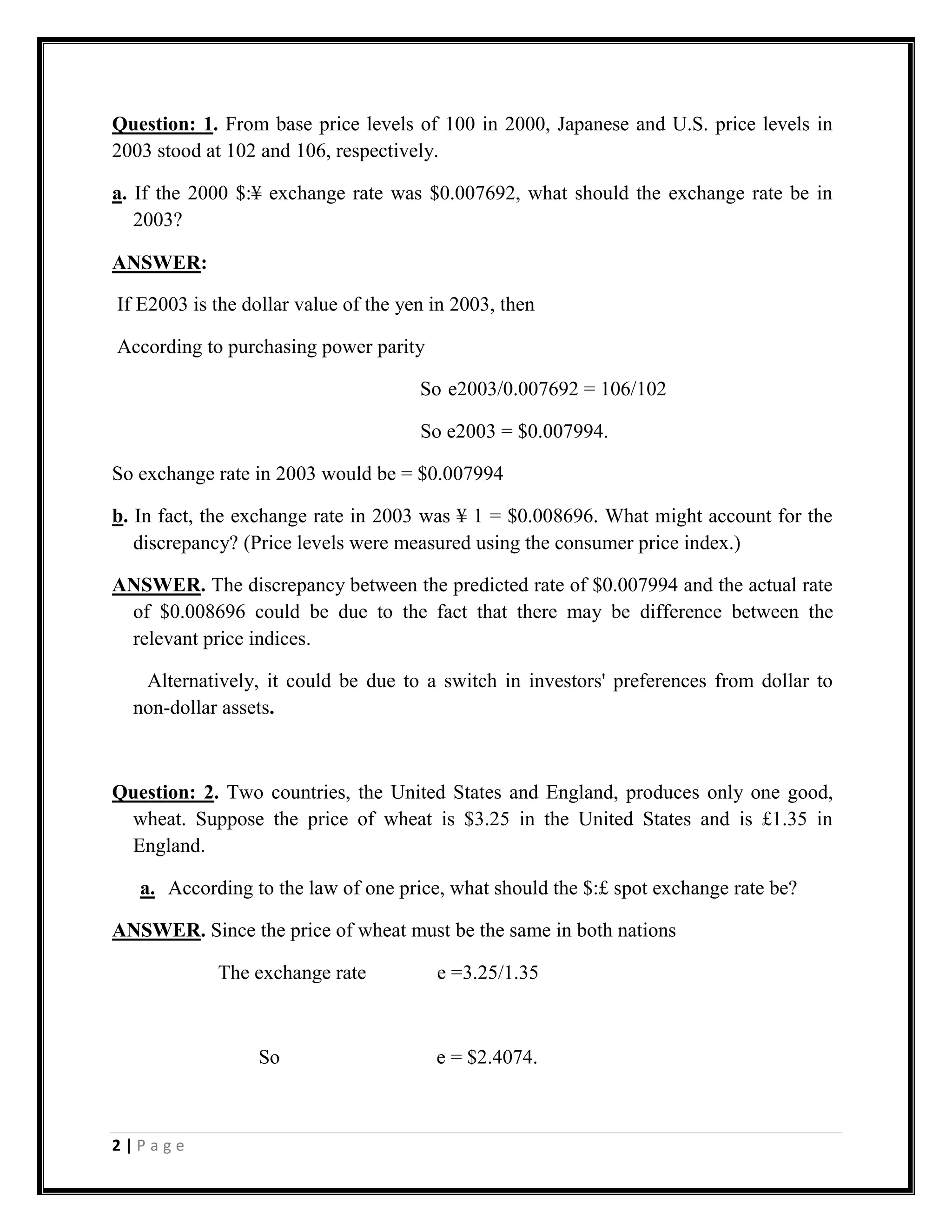
Question: 1. From base price levels of 100 in 2000, Japanese and U.S. price levels in
2003 stood at 102 and 106, respectively.

a. If the 2000 $:¥ exchange rate was $0.007692, what should the exchange rate be in
   2003?

ANSWER:

If E2003 is the dollar value of the yen in 2003, then

According to purchasing power parity

                                      So e2003/0.007692 = 106/102

                                      So e2003 = $0.007994.

So exchange rate in 2003 would be = $0.007994

b. In fact, the exchange rate in 2003 was ¥ 1 = $0.008696. What might account for the
   discrepancy? (Price levels were measured using the consumer price index.)

ANSWER. The discrepancy between the predicted rate of $0.007994 and the actual rate
 of $0.008696 could be due to the fact that there may be difference between the
 relevant price indices.

   Alternatively, it could be due to a switch in investors' preferences from dollar to
  non-dollar assets.


Question: 2. Two countries, the United States and England, produces only one good,
 wheat. Suppose the price of wheat is $3.25 in the United States and is £1.35 in
 England.

   a. According to the law of one price, what should the $:£ spot exchange rate be?

ANSWER. Since the price of wheat must be the same in both nations

            The exchange rate           e =3.25/1.35


                 So                     e = $2.4074.


2|Page
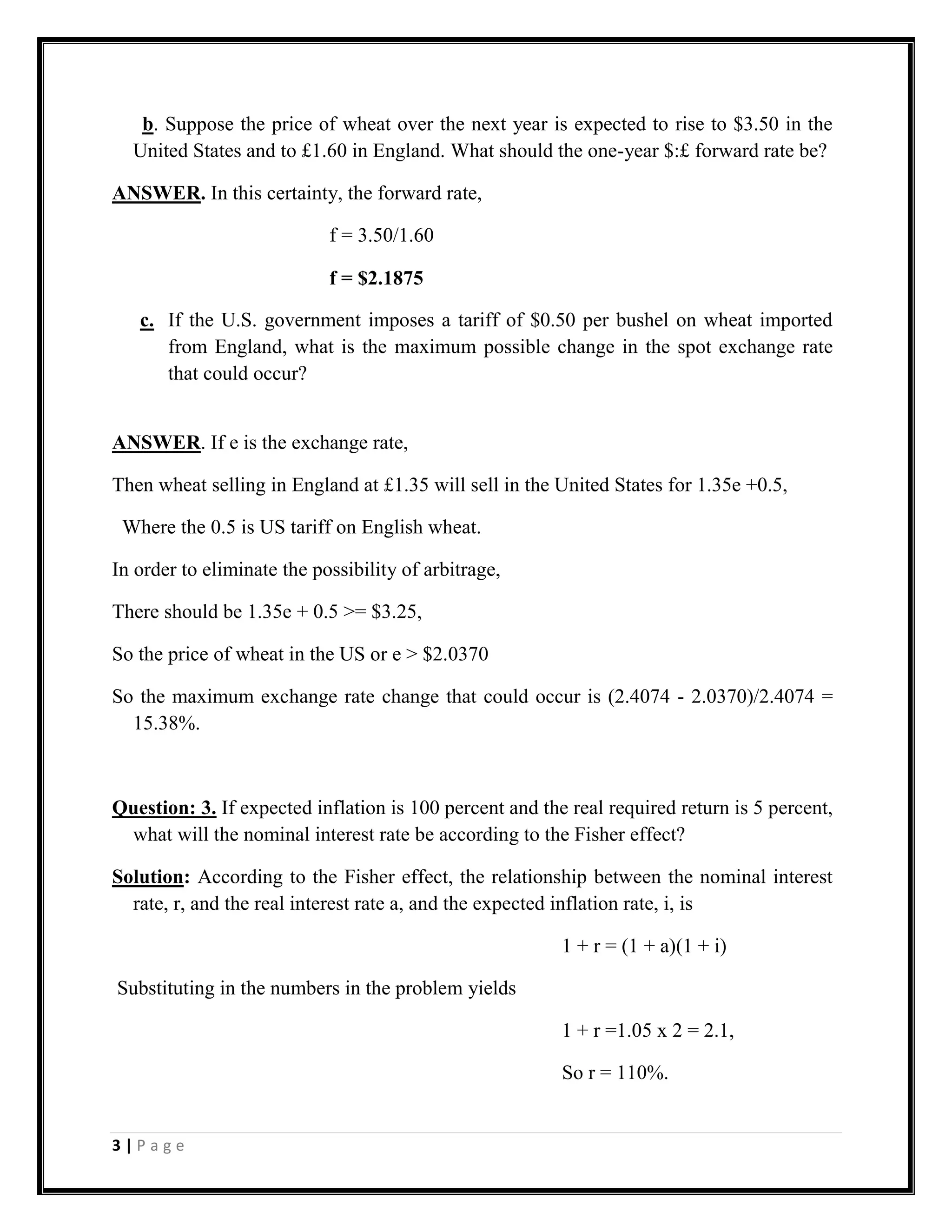
b. Suppose the price of wheat over the next year is expected to rise to $3.50 in the
  United States and to £1.60 in England. What should the one-year $:£ forward rate be?

ANSWER. In this certainty, the forward rate,

                            f = 3.50/1.60

                            f = $2.1875

   c. If the U.S. government imposes a tariff of $0.50 per bushel on wheat imported
      from England, what is the maximum possible change in the spot exchange rate
      that could occur?


ANSWER. If e is the exchange rate,

Then wheat selling in England at £1.35 will sell in the United States for 1.35e +0.5,

 Where the 0.5 is US tariff on English wheat.

In order to eliminate the possibility of arbitrage,

There should be 1.35e + 0.5 >= $3.25,

So the price of wheat in the US or e > $2.0370

So the maximum exchange rate change that could occur is (2.4074 - 2.0370)/2.4074 =
  15.38%.


Question: 3. If expected inflation is 100 percent and the real required return is 5 percent,
 what will the nominal interest rate be according to the Fisher effect?

Solution: According to the Fisher effect, the relationship between the nominal interest
  rate, r, and the real interest rate a, and the expected inflation rate, i, is

                                                         1 + r = (1 + a)(1 + i)

Substituting in the numbers in the problem yields

                                                         1 + r =1.05 x 2 = 2.1,

                                                         So r = 110%.


3|Page
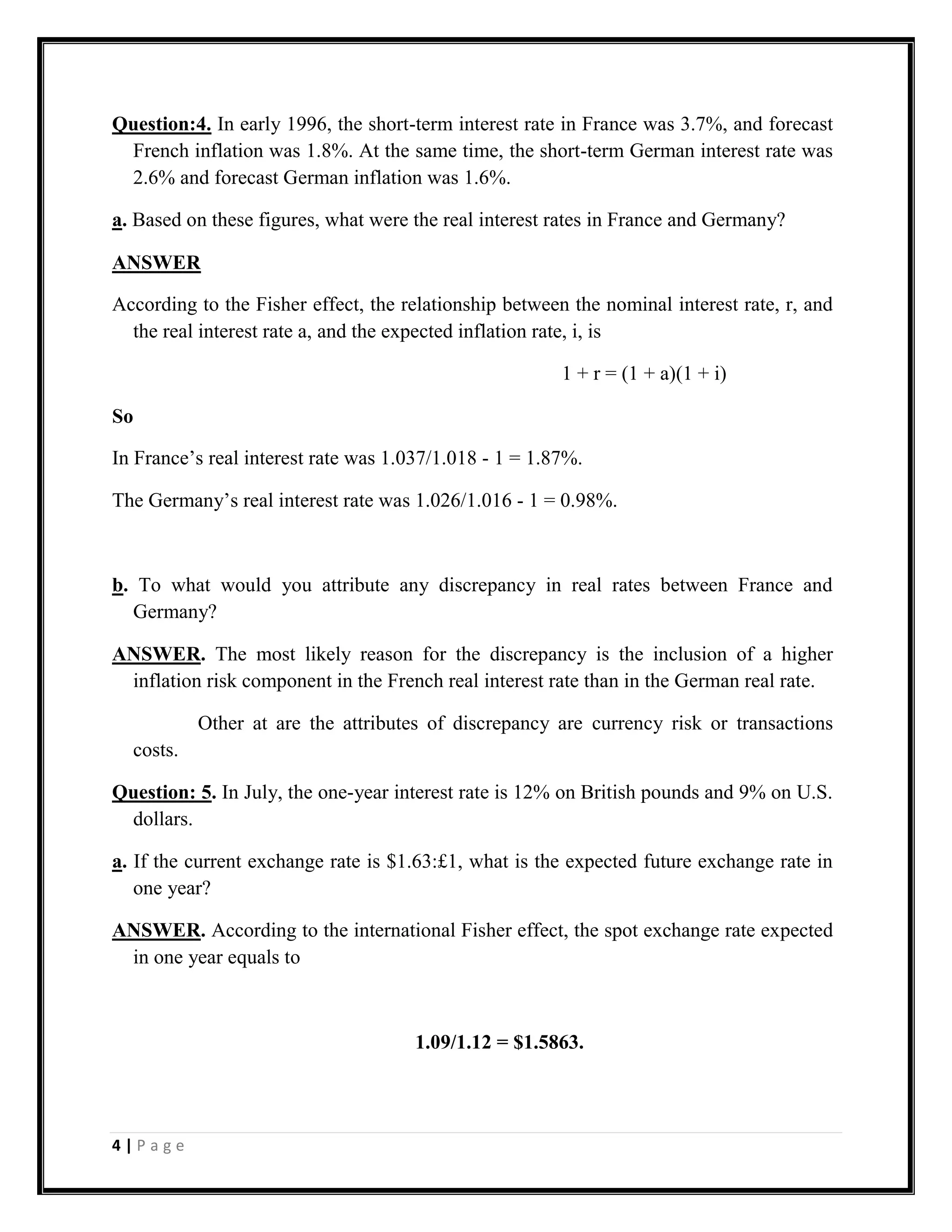
Question:4. In early 1996, the short-term interest rate in France was 3.7%, and forecast
 French inflation was 1.8%. At the same time, the short-term German interest rate was
 2.6% and forecast German inflation was 1.6%.

a. Based on these figures, what were the real interest rates in France and Germany?

ANSWER

According to the Fisher effect, the relationship between the nominal interest rate, r, and
  the real interest rate a, and the expected inflation rate, i, is

                                                        1 + r = (1 + a)(1 + i)

So

In France’s real interest rate was 1.037/1.018 - 1 = 1.87%.

The Germany’s real interest rate was 1.026/1.016 - 1 = 0.98%.


b. To what would you attribute any discrepancy in real rates between France and
  Germany?

ANSWER. The most likely reason for the discrepancy is the inclusion of a higher
 inflation risk component in the French real interest rate than in the German real rate.

           Other at are the attributes of discrepancy are currency risk or transactions
  costs.

Question: 5. In July, the one-year interest rate is 12% on British pounds and 9% on U.S.
 dollars.

a. If the current exchange rate is $1.63:£1, what is the expected future exchange rate in
   one year?

ANSWER. According to the international Fisher effect, the spot exchange rate expected
 in one year equals to


                                      1.09/1.12 = $1.5863.


4|Page
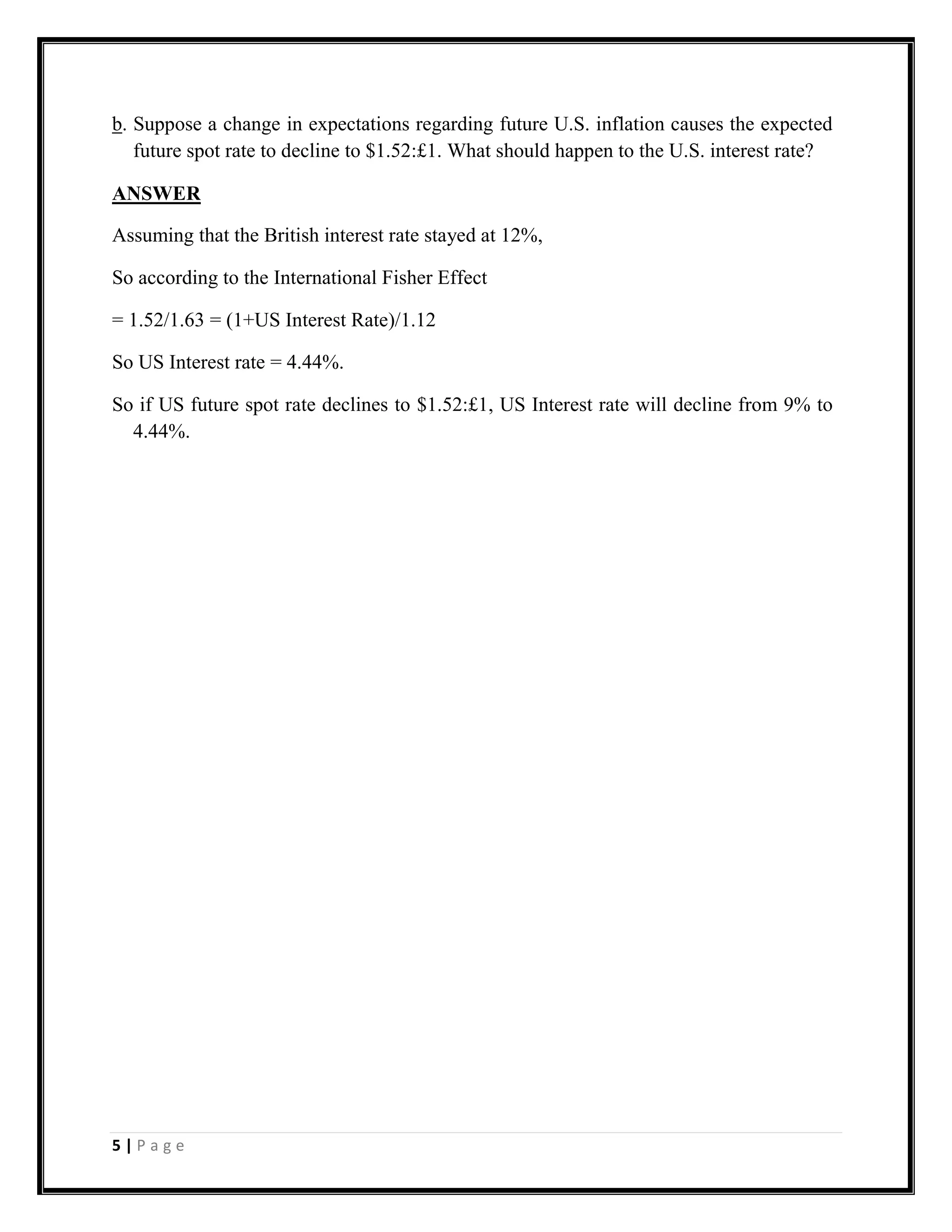
b. Suppose a change in expectations regarding future U.S. inflation causes the expected
   future spot rate to decline to $1.52:£1. What should happen to the U.S. interest rate?

ANSWER

Assuming that the British interest rate stayed at 12%,

So according to the International Fisher Effect

= 1.52/1.63 = (1+US Interest Rate)/1.12

So US Interest rate = 4.44%.

So if US future spot rate declines to $1.52:£1, US Interest rate will decline from 9% to
  4.44%.


5|Page

Solution to problems on page 175 of multinational financial management by shapiro

  • 1.
    Assignment 1 Solution to problems onpage 175 of Multinational Financial Management by Shapiro Gaurav Sharma
  • 2.
    Question: 1. Frombase price levels of 100 in 2000, Japanese and U.S. price levels in 2003 stood at 102 and 106, respectively. a. If the 2000 $:¥ exchange rate was $0.007692, what should the exchange rate be in 2003? ANSWER: If E2003 is the dollar value of the yen in 2003, then According to purchasing power parity So e2003/0.007692 = 106/102 So e2003 = $0.007994. So exchange rate in 2003 would be = $0.007994 b. In fact, the exchange rate in 2003 was ¥ 1 = $0.008696. What might account for the discrepancy? (Price levels were measured using the consumer price index.) ANSWER. The discrepancy between the predicted rate of $0.007994 and the actual rate of $0.008696 could be due to the fact that there may be difference between the relevant price indices. Alternatively, it could be due to a switch in investors' preferences from dollar to non-dollar assets. Question: 2. Two countries, the United States and England, produces only one good, wheat. Suppose the price of wheat is $3.25 in the United States and is £1.35 in England. a. According to the law of one price, what should the $:£ spot exchange rate be? ANSWER. Since the price of wheat must be the same in both nations The exchange rate e =3.25/1.35 So e = $2.4074. 2|Page
  • 3.
    b. Suppose theprice of wheat over the next year is expected to rise to $3.50 in the United States and to £1.60 in England. What should the one-year $:£ forward rate be? ANSWER. In this certainty, the forward rate, f = 3.50/1.60 f = $2.1875 c. If the U.S. government imposes a tariff of $0.50 per bushel on wheat imported from England, what is the maximum possible change in the spot exchange rate that could occur? ANSWER. If e is the exchange rate, Then wheat selling in England at £1.35 will sell in the United States for 1.35e +0.5, Where the 0.5 is US tariff on English wheat. In order to eliminate the possibility of arbitrage, There should be 1.35e + 0.5 >= $3.25, So the price of wheat in the US or e > $2.0370 So the maximum exchange rate change that could occur is (2.4074 - 2.0370)/2.4074 = 15.38%. Question: 3. If expected inflation is 100 percent and the real required return is 5 percent, what will the nominal interest rate be according to the Fisher effect? Solution: According to the Fisher effect, the relationship between the nominal interest rate, r, and the real interest rate a, and the expected inflation rate, i, is 1 + r = (1 + a)(1 + i) Substituting in the numbers in the problem yields 1 + r =1.05 x 2 = 2.1, So r = 110%. 3|Page
  • 4.
    Question:4. In early1996, the short-term interest rate in France was 3.7%, and forecast French inflation was 1.8%. At the same time, the short-term German interest rate was 2.6% and forecast German inflation was 1.6%. a. Based on these figures, what were the real interest rates in France and Germany? ANSWER According to the Fisher effect, the relationship between the nominal interest rate, r, and the real interest rate a, and the expected inflation rate, i, is 1 + r = (1 + a)(1 + i) So In France’s real interest rate was 1.037/1.018 - 1 = 1.87%. The Germany’s real interest rate was 1.026/1.016 - 1 = 0.98%. b. To what would you attribute any discrepancy in real rates between France and Germany? ANSWER. The most likely reason for the discrepancy is the inclusion of a higher inflation risk component in the French real interest rate than in the German real rate. Other at are the attributes of discrepancy are currency risk or transactions costs. Question: 5. In July, the one-year interest rate is 12% on British pounds and 9% on U.S. dollars. a. If the current exchange rate is $1.63:£1, what is the expected future exchange rate in one year? ANSWER. According to the international Fisher effect, the spot exchange rate expected in one year equals to 1.09/1.12 = $1.5863. 4|Page
  • 5.
    b. Suppose achange in expectations regarding future U.S. inflation causes the expected future spot rate to decline to $1.52:£1. What should happen to the U.S. interest rate? ANSWER Assuming that the British interest rate stayed at 12%, So according to the International Fisher Effect = 1.52/1.63 = (1+US Interest Rate)/1.12 So US Interest rate = 4.44%. So if US future spot rate declines to $1.52:£1, US Interest rate will decline from 9% to 4.44%. 5|Page