 waste tires
 septage
 scrap metal
 latex paints
 furniture and toys
 garbage
 appliances and vehicles
 oil and anti-freeze
 empty aerosol cans
EXAMPLES
IMPACTS OF WASTE IF NOT
MANAGED WISELY
o Affects our health
o Affects our socio-economic
conditions
o Affects our coastal and marine
environment
o Affects our climate
o Rise in global temperatures
o Leads to water pollution and air
pollution
CLASSIFIED IN TO
•HAZARDOUS SOLID WASTE
•NON –HAZARDOUS SOLID
WASTE / MUNICIPAL SOLID
WASTE (MSW)
HAZARDOUS WASTES
Waste produced by chemical manufacturing
companies, petroleum refineries, paper mills, smelters and
other industries.
They cause harm to human and environment.
Characteristics
• Toxicity
• Reactivity
• Ignitability
• Corrosivity
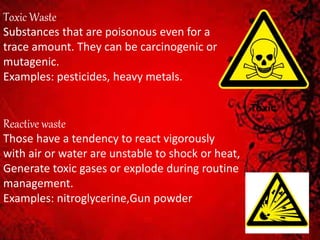
Toxic Waste
Substances that are poisonous even for a
trace amount. They can be carcinogenic or
mutagenic.
Examples: pesticides, heavy metals.
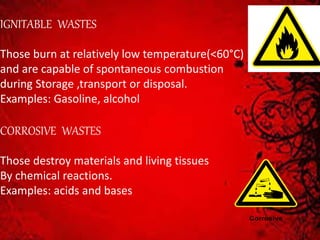
Reactive waste
Those have a tendency to react vigorously
with air or water are unstable to shock or heat,
Generate toxic gases or explode during routine
management.
Examples: nitroglycerine,Gun powder
INFECTIOUS WASTES
Includes human tissue from surgery,
used Bandages and hypodermic
needles.
RADIOACTIVE WASTES
It is basically the output from
nuclear power plants and can
persist in the environment .
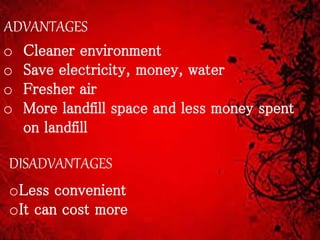
IGNITABLE WASTES
Those burn at relatively low temperature(<60°C)
and are capable of spontaneous combustion
during Storage ,transport or disposal.
Examples: Gasoline, alcohol
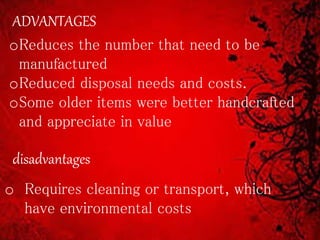
CORROSIVE WASTES
Those destroy materials and living tissues
By chemical reactions.
Examples: acids and bases
NON –HAZARDOUS SOLID WASTE
Municipal solid wastes are the solid wastes
from a city ,Town or village that requires
routine collection and transport to a
processing or disposal sites.
SOURCES
• Private homes
• Commercial establishments
• Industrial facilities
WASTE MANAGEMENT INCLUDES
• REDUCTION
• REUSE
• RECYCLING
• DISPOSAL
REDUCTION
Waste Reduction refers to
reducing the amount of waste
produced.
An example of waste reduction is
to use china and silverware
instead of disposal paper plates
and plastic flatware.
ADVANTAGES
o Cleaner environment
o Save electricity, money, water
o Fresher air
o More landfill space and less money spent
on landfill
DISADVANTAGES
oLess convenient
oIt can cost more
REUSE
Reusing is using a product or
item in its original form more
than once. e.g: reusing a mug
instead of using a disposable
cup.
ADVANTAGES
oReduces the number that need to be
manufactured
oReduced disposal needs and costs.
oSome older items were better handcrafted
and appreciate in value
disadvantages
o Requires cleaning or transport, which
have environmental costs
RECYCLING
Recycling is nothing but
process of using old or waste
products into new products.
This morning's newspaper
can be recycled for another
morning's news or other
paper products.
ADVANTAGES
o Protects environment.
o Reduces energy consumption.
o Reduces pollution.
o Reduces Global warming.
DISADVANTAGES
o Not always cost effective.
o Recycled products may not last for
long.
o High initial cost.
DISPOSAL
Disposal of MSW is done commonly
through
• SANITARY LANDFILL
• INCINERATION
SANITARY LANDFILL
• Most traditional method of waste disposal.
• Waste is directly dumped into disused quarries,
mining voids or borrow pits.
• Disposed waste is compacted and covered with
soil.
• Gases generated by the decomposing waste
materials are often burned to generate power.
• It is generally used for domestic waste.
PROBLEMS
• Ground water pollution
• Production of methane gas which is toxic and
highly explosive
• It can cause infectious diseases
• Difficult to find landfilling sites
• Air pollution
• Sites might not be able to be reused
INCINERATION
Waste treatment process that involves the
Combustion of solid waste at 1000°C.
Waste materials are converted into bottom ash, flue gas,
And heat.
The ash is mostly formed by the inorganic constituents
of the waste and gases due to organic waste.
The heat generated by incineration is used to
Generate electric power.
ADVANTAGES
• Minimum of land is needed compared to other
disposal method.
• The weight of the waste is reduced to 25%.
• No risk of pollution to local streams and ground
water as in landfills.
• Can be located close to residential areas.
• Gases are used to generate power.
DISADVANTAGES
• Expensive
• Require skilled labour
• The chemicals that would be released into the
air could be strong pollutants and may destroy
Ozone layer.
• High energy requirement
Solid waste managment

Solid waste managment

  • 6.
     waste tires septage  scrap metal  latex paints  furniture and toys  garbage  appliances and vehicles  oil and anti-freeze  empty aerosol cans EXAMPLES
  • 8.
    IMPACTS OF WASTEIF NOT MANAGED WISELY o Affects our health o Affects our socio-economic conditions o Affects our coastal and marine environment o Affects our climate o Rise in global temperatures o Leads to water pollution and air pollution
  • 9.
    CLASSIFIED IN TO •HAZARDOUSSOLID WASTE •NON –HAZARDOUS SOLID WASTE / MUNICIPAL SOLID WASTE (MSW)
  • 10.
    HAZARDOUS WASTES Waste producedby chemical manufacturing companies, petroleum refineries, paper mills, smelters and other industries. They cause harm to human and environment. Characteristics • Toxicity • Reactivity • Ignitability • Corrosivity
  • 11.
    Toxic Waste Substances thatare poisonous even for a trace amount. They can be carcinogenic or mutagenic. Examples: pesticides, heavy metals. Reactive waste Those have a tendency to react vigorously with air or water are unstable to shock or heat, Generate toxic gases or explode during routine management. Examples: nitroglycerine,Gun powder
  • 12.
    INFECTIOUS WASTES Includes humantissue from surgery, used Bandages and hypodermic needles. RADIOACTIVE WASTES It is basically the output from nuclear power plants and can persist in the environment .
  • 13.
    IGNITABLE WASTES Those burnat relatively low temperature(<60°C) and are capable of spontaneous combustion during Storage ,transport or disposal. Examples: Gasoline, alcohol CORROSIVE WASTES Those destroy materials and living tissues By chemical reactions. Examples: acids and bases
  • 14.
    NON –HAZARDOUS SOLIDWASTE Municipal solid wastes are the solid wastes from a city ,Town or village that requires routine collection and transport to a processing or disposal sites. SOURCES • Private homes • Commercial establishments • Industrial facilities
  • 15.
    WASTE MANAGEMENT INCLUDES •REDUCTION • REUSE • RECYCLING • DISPOSAL
  • 16.
    REDUCTION Waste Reduction refersto reducing the amount of waste produced. An example of waste reduction is to use china and silverware instead of disposal paper plates and plastic flatware.
  • 17.
    ADVANTAGES o Cleaner environment oSave electricity, money, water o Fresher air o More landfill space and less money spent on landfill DISADVANTAGES oLess convenient oIt can cost more
  • 19.
    REUSE Reusing is usinga product or item in its original form more than once. e.g: reusing a mug instead of using a disposable cup.
  • 20.
    ADVANTAGES oReduces the numberthat need to be manufactured oReduced disposal needs and costs. oSome older items were better handcrafted and appreciate in value disadvantages o Requires cleaning or transport, which have environmental costs
  • 22.
    RECYCLING Recycling is nothingbut process of using old or waste products into new products. This morning's newspaper can be recycled for another morning's news or other paper products.
  • 23.
    ADVANTAGES o Protects environment. oReduces energy consumption. o Reduces pollution. o Reduces Global warming. DISADVANTAGES o Not always cost effective. o Recycled products may not last for long. o High initial cost.
  • 25.
    DISPOSAL Disposal of MSWis done commonly through • SANITARY LANDFILL • INCINERATION
  • 26.
    SANITARY LANDFILL • Mosttraditional method of waste disposal. • Waste is directly dumped into disused quarries, mining voids or borrow pits. • Disposed waste is compacted and covered with soil. • Gases generated by the decomposing waste materials are often burned to generate power. • It is generally used for domestic waste.
  • 28.
    PROBLEMS • Ground waterpollution • Production of methane gas which is toxic and highly explosive • It can cause infectious diseases • Difficult to find landfilling sites • Air pollution • Sites might not be able to be reused
  • 29.
    INCINERATION Waste treatment processthat involves the Combustion of solid waste at 1000°C. Waste materials are converted into bottom ash, flue gas, And heat. The ash is mostly formed by the inorganic constituents of the waste and gases due to organic waste. The heat generated by incineration is used to Generate electric power.
  • 31.
    ADVANTAGES • Minimum ofland is needed compared to other disposal method. • The weight of the waste is reduced to 25%. • No risk of pollution to local streams and ground water as in landfills. • Can be located close to residential areas. • Gases are used to generate power.
  • 32.
    DISADVANTAGES • Expensive • Requireskilled labour • The chemicals that would be released into the air could be strong pollutants and may destroy Ozone layer. • High energy requirement