SEMINAR
ON
SOLID WASTE MANAGEMENT THROUGH
COMPOSTING
DEPARTMENT OF RURAL TECHNOLOGY AND SOCIAL DEVELOPMENT
G.G.V. BILASPUR (C.G.)
SESSION 2018-19
PRESENTING BY :-
FARHEEN BANO
M.Sc. (RT) 2nd SEM
Contents
Introduction
Definition
Classification of solid waste
Composting
 Vermicomposting
Conclusions
References
Waste:
Depending on their physical state they are classified as:
 Liquid wastes
 Gaseous wastes
 Solid wastes.
Solid waste: Solid waste is the unwanted or useless solid materials
generated from combined residential, industrial and commercial activities
in a given area.
3
1. Introduction:
[Ref: T. Srinivas, Environmental Biotechnology, www.cyen.org]
Definition
•Compost is organic matter that has been
decomposed in a process called composting.
•Composting is nature's way of recycling. Composting
biodegrades organic waste. i.e. food waste, manure,
leaves, grass trimmings, paper, wood, feathers, crop
residue etc., and turns it into a valuable organic
fertilizer.
2. Classification of Solid Waste:
5
Solid wastes are classified as:
 Based on their sources of origin:
 Residential wastes
 Commercial wastes
 Institutional waste
 Municipal wastes
 Industrial wastes
 Agricultural wastes
 Based on physical nature:
 Garbage
 Ashes
 Combustible and non-combustible wastes
 Demolition and construction wastes
 Hazardous wastes
4. Methods for the treatment of the solid waste:
6
With different types of wastes, different treatment methods are applied.
These treatment processes has been listed below:
 Open Dumps
 Composting
 Vermicomposting
 Encapsulation
 Incineration
•Open dumps refer to uncovered
areas that are used to dump solid
waste of all kinds.
• The waste is untreated, and not
segregated.
•It is the breeding ground for
files, rats, and other insects that
spread disease.
from• The
these
rainwater run-off
dumps contaminates
nearby land and water, thereby
spreading disease. In some
countries, open dumps are being
phased out.
i. Open Dumps:
[Ref: Indu Shekhar Thakur- Environmental Biotechnology]
Open dump site
7
biologicalComposting is the
decomposition of organic waste
under controlled aerobic condition.
Industries as paper,
agricultural and food processing
give out wastes which are almost
100% organic. This organic matter
can be composted to yield good
manure.
Compost is the end
product obtained after subjecting
the organic fraction of solid waste
to aerobic or anaerobic
decomposition to yield humus like
solid, carbon dioxide, water vapour
and energy.
Composting
Fig: Compost cycle
14
[Ref: Indu Shekhar Thakur- Environmental Biotechnology and www.cuesa.org]
[Ref: T. Srinivas, Environmental Biotechnology]
 Different stages of composting:
 Separation of solid waste
 Processing the compostable matter
 Preparation for compost
 Digestion
 Creation of compost
9
10
• Composting is a very complex
involving the participation of
process
several
microorganisms like bacteria and fungi.
[Ref: U.Satayanarayan, Biotechnology, and S.V.SRana, environmentalBiotechnology]
 Mechanism of composting:
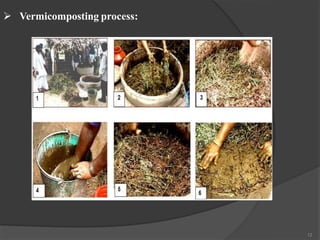
•Vermicomposting is a simple biotechnological process of composting, in
which certain species of earthworms are used to enhance the process of
waste conversion and produce a better end product.
•Vermicomposting differs from composting in several ways.
Utilizing microorganism’s (earthworms that are active at 10–
32°C).
The process is faster than composting (Because the material passes
through the earthworm gut, a significant but not yet fully understood
transformation takes place, whereby the resulting earthworm
castings (worm manure) are rich in microbial activity and plant
growth regulators).
11
v. Vermicomposting:
[Ref: Indu Shekhar Thakur- Environmental Biotechnology]
 Vermicomposting process:
12
Vermicomposting Process
13
[Ref: www.icrisat.org]
 Incineration:
•Incineration is the most common thermal treatment process. It is
burning of the waste at a temperature of 1000°C ± 100°C in the
presence of oxygen so as to eliminate all odours and to ensure good
combustion.
•After incineration, the wastes are converted to carbon dioxide, water
vapour and ash.
•It converts hazardous organic substances into less hazardous
components.
14
4. Management of Solid waste:
15
The fundamental objective of waste processing is to reduce the amount
of wastes through recycling and disposal of waste in a way not to impair
environmental conservation.
Four R’s should be followed for waste management:
 Refuse
 Reuse
 Recycle
 Reduce
[Ref: Indu Shekhar Thakur- Environmental Biotechnology]
6. Conclusion:
16
Solid waste management is the process of removal of solid waste in such
a manner that it does not cause any problem to environment and the
living organism as well. It is done through different methods as per the
category of the solid waste.

solid waste management through composting

  • 1.
    SEMINAR ON SOLID WASTE MANAGEMENTTHROUGH COMPOSTING DEPARTMENT OF RURAL TECHNOLOGY AND SOCIAL DEVELOPMENT G.G.V. BILASPUR (C.G.) SESSION 2018-19 PRESENTING BY :- FARHEEN BANO M.Sc. (RT) 2nd SEM
  • 2.
    Contents Introduction Definition Classification of solidwaste Composting  Vermicomposting Conclusions References
  • 3.
    Waste: Depending on theirphysical state they are classified as:  Liquid wastes  Gaseous wastes  Solid wastes. Solid waste: Solid waste is the unwanted or useless solid materials generated from combined residential, industrial and commercial activities in a given area. 3 1. Introduction: [Ref: T. Srinivas, Environmental Biotechnology, www.cyen.org]
  • 4.
    Definition •Compost is organicmatter that has been decomposed in a process called composting. •Composting is nature's way of recycling. Composting biodegrades organic waste. i.e. food waste, manure, leaves, grass trimmings, paper, wood, feathers, crop residue etc., and turns it into a valuable organic fertilizer.
  • 5.
    2. Classification ofSolid Waste: 5 Solid wastes are classified as:  Based on their sources of origin:  Residential wastes  Commercial wastes  Institutional waste  Municipal wastes  Industrial wastes  Agricultural wastes  Based on physical nature:  Garbage  Ashes  Combustible and non-combustible wastes  Demolition and construction wastes  Hazardous wastes
  • 6.
    4. Methods forthe treatment of the solid waste: 6 With different types of wastes, different treatment methods are applied. These treatment processes has been listed below:  Open Dumps  Composting  Vermicomposting  Encapsulation  Incineration
  • 7.
    •Open dumps referto uncovered areas that are used to dump solid waste of all kinds. • The waste is untreated, and not segregated. •It is the breeding ground for files, rats, and other insects that spread disease. from• The these rainwater run-off dumps contaminates nearby land and water, thereby spreading disease. In some countries, open dumps are being phased out. i. Open Dumps: [Ref: Indu Shekhar Thakur- Environmental Biotechnology] Open dump site 7
  • 8.
    biologicalComposting is the decompositionof organic waste under controlled aerobic condition. Industries as paper, agricultural and food processing give out wastes which are almost 100% organic. This organic matter can be composted to yield good manure. Compost is the end product obtained after subjecting the organic fraction of solid waste to aerobic or anaerobic decomposition to yield humus like solid, carbon dioxide, water vapour and energy. Composting Fig: Compost cycle 14 [Ref: Indu Shekhar Thakur- Environmental Biotechnology and www.cuesa.org]
  • 9.
    [Ref: T. Srinivas,Environmental Biotechnology]  Different stages of composting:  Separation of solid waste  Processing the compostable matter  Preparation for compost  Digestion  Creation of compost 9
  • 10.
    10 • Composting isa very complex involving the participation of process several microorganisms like bacteria and fungi. [Ref: U.Satayanarayan, Biotechnology, and S.V.SRana, environmentalBiotechnology]  Mechanism of composting:
  • 11.
    •Vermicomposting is asimple biotechnological process of composting, in which certain species of earthworms are used to enhance the process of waste conversion and produce a better end product. •Vermicomposting differs from composting in several ways. Utilizing microorganism’s (earthworms that are active at 10– 32°C). The process is faster than composting (Because the material passes through the earthworm gut, a significant but not yet fully understood transformation takes place, whereby the resulting earthworm castings (worm manure) are rich in microbial activity and plant growth regulators). 11 v. Vermicomposting: [Ref: Indu Shekhar Thakur- Environmental Biotechnology]
  • 12.
  • 13.
  • 14.
     Incineration: •Incineration isthe most common thermal treatment process. It is burning of the waste at a temperature of 1000°C ± 100°C in the presence of oxygen so as to eliminate all odours and to ensure good combustion. •After incineration, the wastes are converted to carbon dioxide, water vapour and ash. •It converts hazardous organic substances into less hazardous components. 14
  • 15.
    4. Management ofSolid waste: 15 The fundamental objective of waste processing is to reduce the amount of wastes through recycling and disposal of waste in a way not to impair environmental conservation. Four R’s should be followed for waste management:  Refuse  Reuse  Recycle  Reduce [Ref: Indu Shekhar Thakur- Environmental Biotechnology]
  • 16.
    6. Conclusion: 16 Solid wastemanagement is the process of removal of solid waste in such a manner that it does not cause any problem to environment and the living organism as well. It is done through different methods as per the category of the solid waste.