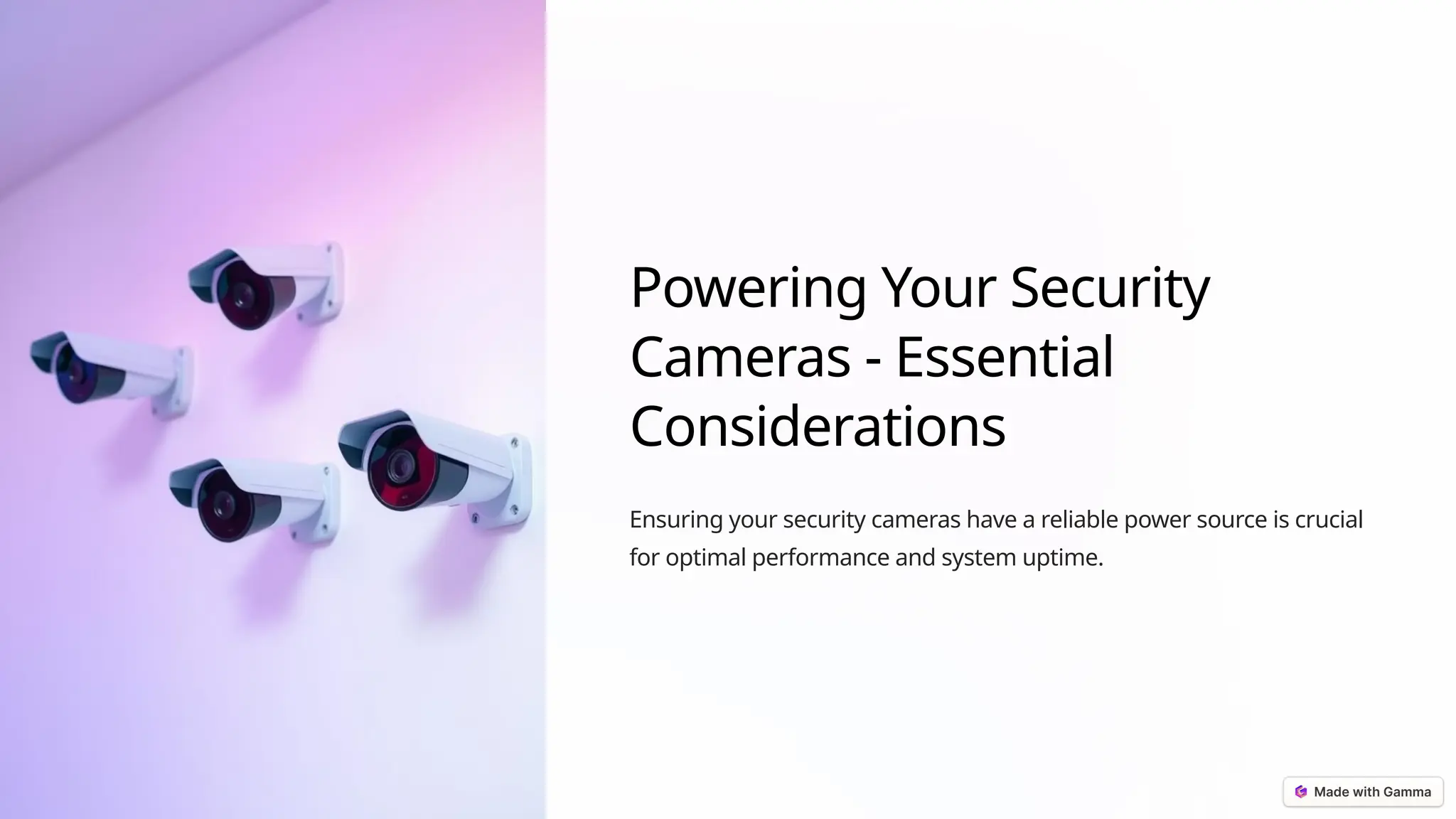
Powering Your Security
Cameras - Essential
Considerations
Ensuring your security cameras have a reliable power source is crucial
for optimal performance and system uptime.
Selecting the Right Power Supply
Camera Wattage
Determine the total wattage
required for your camera system,
taking into account each camera's
power consumption.
Voltage Compatibility
Ensure the power supply's output
voltage matches the cameras'
voltage requirements, typically
12VDC or 24VDC.
Power Output Capacity
Choose a power supply with
sufficient output capacity to meet
the total wattage requirement of
your camera system.
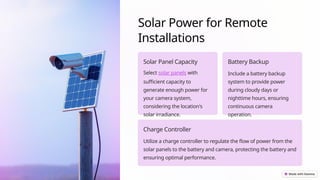
Solar Power for Remote
Installations
Solar Panel Capacity
Select solar panels with
sufficient capacity to
generate enough power for
your camera system,
considering the location's
solar irradiance.
Battery Backup
Include a battery backup
system to provide power
during cloudy days or
nighttime hours, ensuring
continuous camera
operation.
Charge Controller
Utilize a charge controller to regulate the flow of power from the
solar panels to the battery and camera, protecting the battery and
ensuring optimal performance.
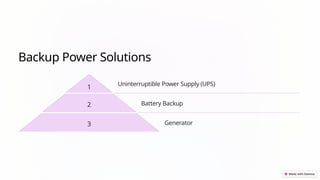
Backup Power Solutions
1 Uninterruptible Power Supply (UPS)
2 Battery Backup
3 Generator
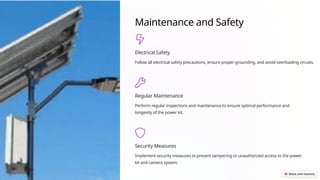
Maintenance and Safety
Electrical Safety
Follow all electrical safety precautions, ensure proper grounding, and avoid overloading circuits.
Regular Maintenance
Perform regular inspections and maintenance to ensure optimal performance and
longevity of the power kit.
Security Measures
Implement security measures to prevent tampering or unauthorized access to the power
kit and camera system.

Solar Power Supply For Security Camera - Sun-In-One

  • 1.
    Powering Your Security Cameras- Essential Considerations Ensuring your security cameras have a reliable power source is crucial for optimal performance and system uptime.
  • 2.
    Selecting the RightPower Supply Camera Wattage Determine the total wattage required for your camera system, taking into account each camera's power consumption. Voltage Compatibility Ensure the power supply's output voltage matches the cameras' voltage requirements, typically 12VDC or 24VDC. Power Output Capacity Choose a power supply with sufficient output capacity to meet the total wattage requirement of your camera system.
  • 3.
    Solar Power forRemote Installations Solar Panel Capacity Select solar panels with sufficient capacity to generate enough power for your camera system, considering the location's solar irradiance. Battery Backup Include a battery backup system to provide power during cloudy days or nighttime hours, ensuring continuous camera operation. Charge Controller Utilize a charge controller to regulate the flow of power from the solar panels to the battery and camera, protecting the battery and ensuring optimal performance.
  • 4.
    Backup Power Solutions 1Uninterruptible Power Supply (UPS) 2 Battery Backup 3 Generator
  • 5.
    Maintenance and Safety ElectricalSafety Follow all electrical safety precautions, ensure proper grounding, and avoid overloading circuits. Regular Maintenance Perform regular inspections and maintenance to ensure optimal performance and longevity of the power kit. Security Measures Implement security measures to prevent tampering or unauthorized access to the power kit and camera system.