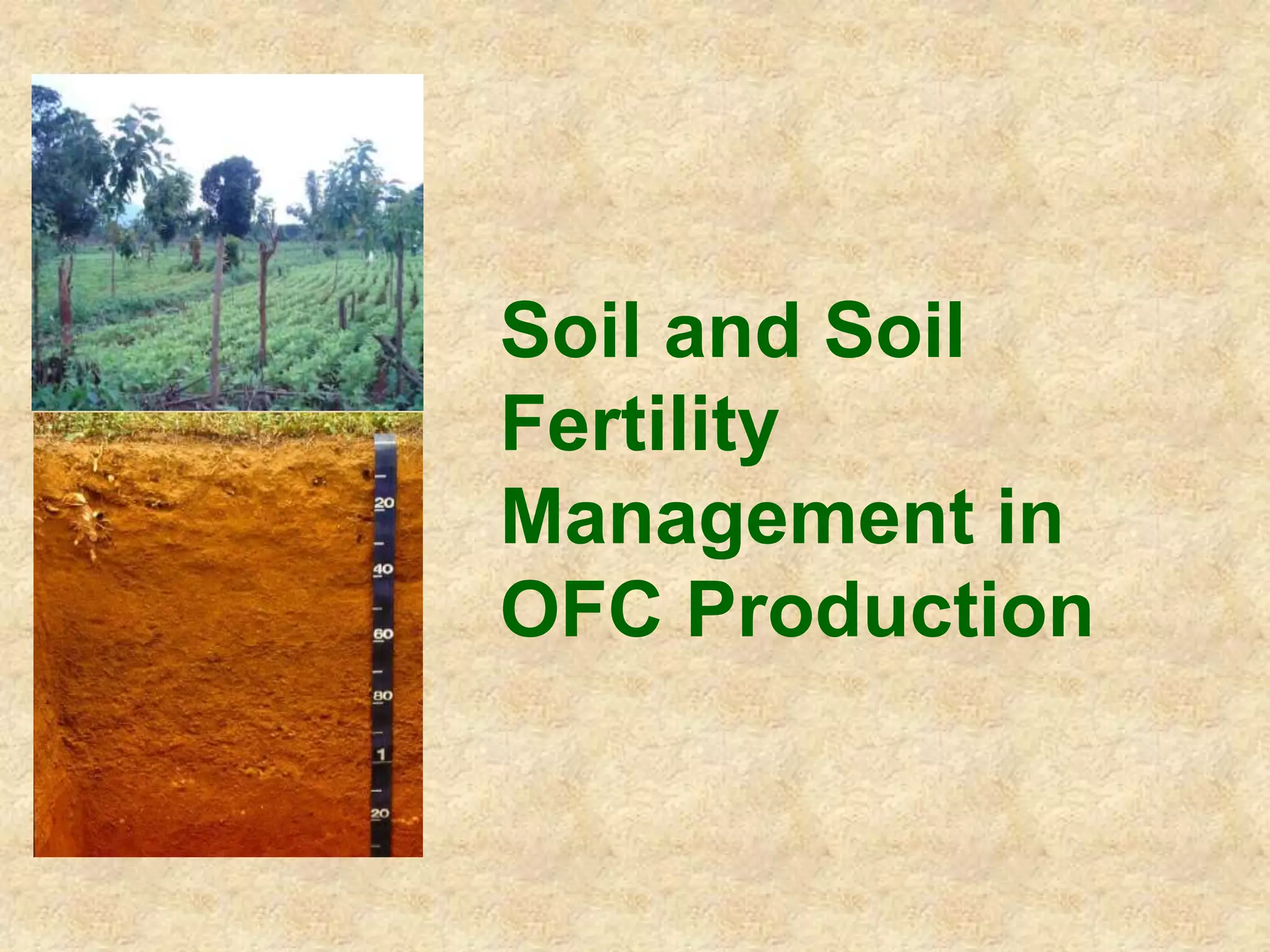
Soil and Soil 
Fertility 
Management in 
OFC Production
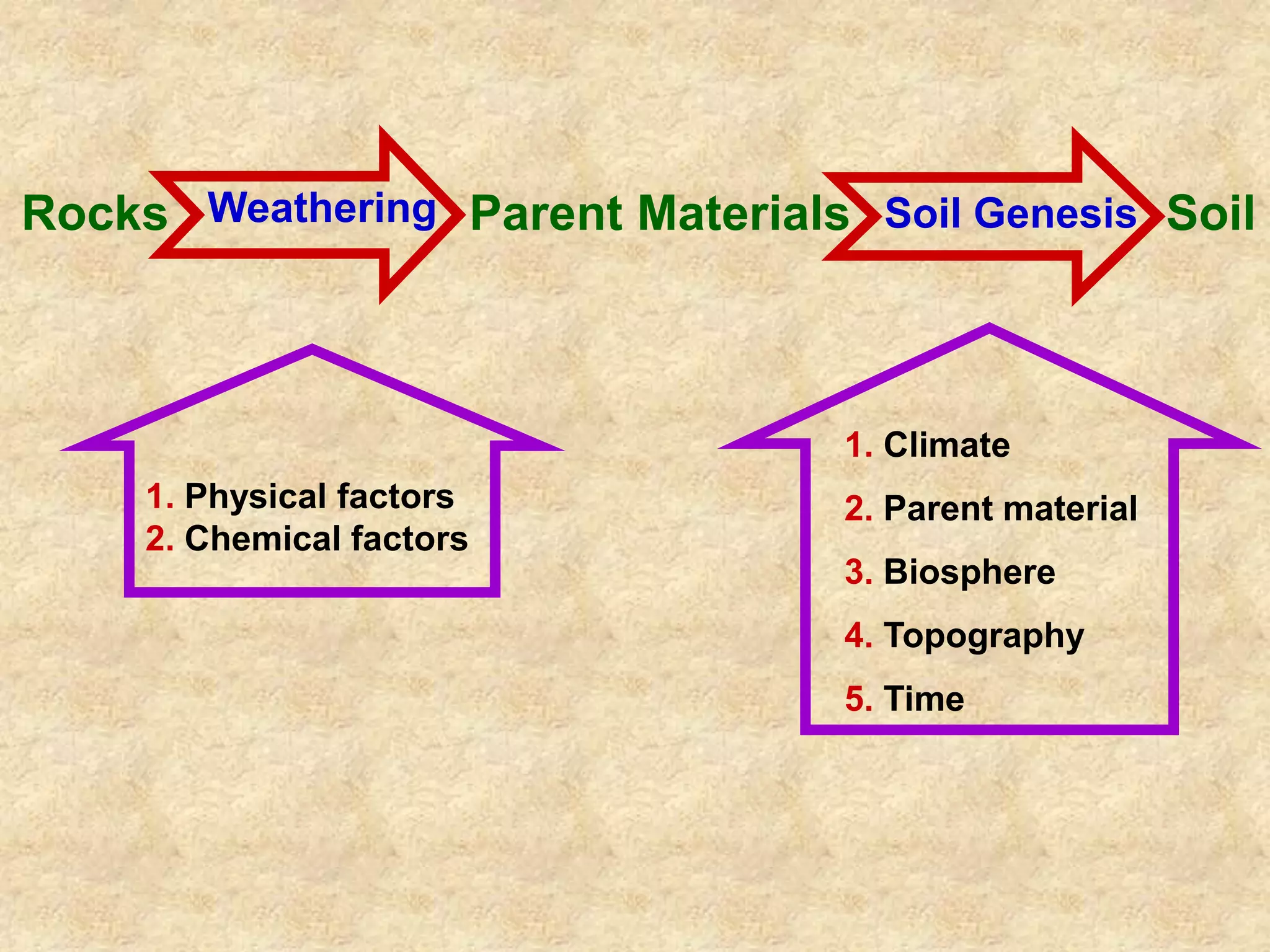
Rocks Weathering Parent Materials Soil Genesis Soil 
1. Physical factors 
2. Chemical factors 
1. Climate 
2. Parent material 
3. Biosphere 
4. Topography 
5. Time
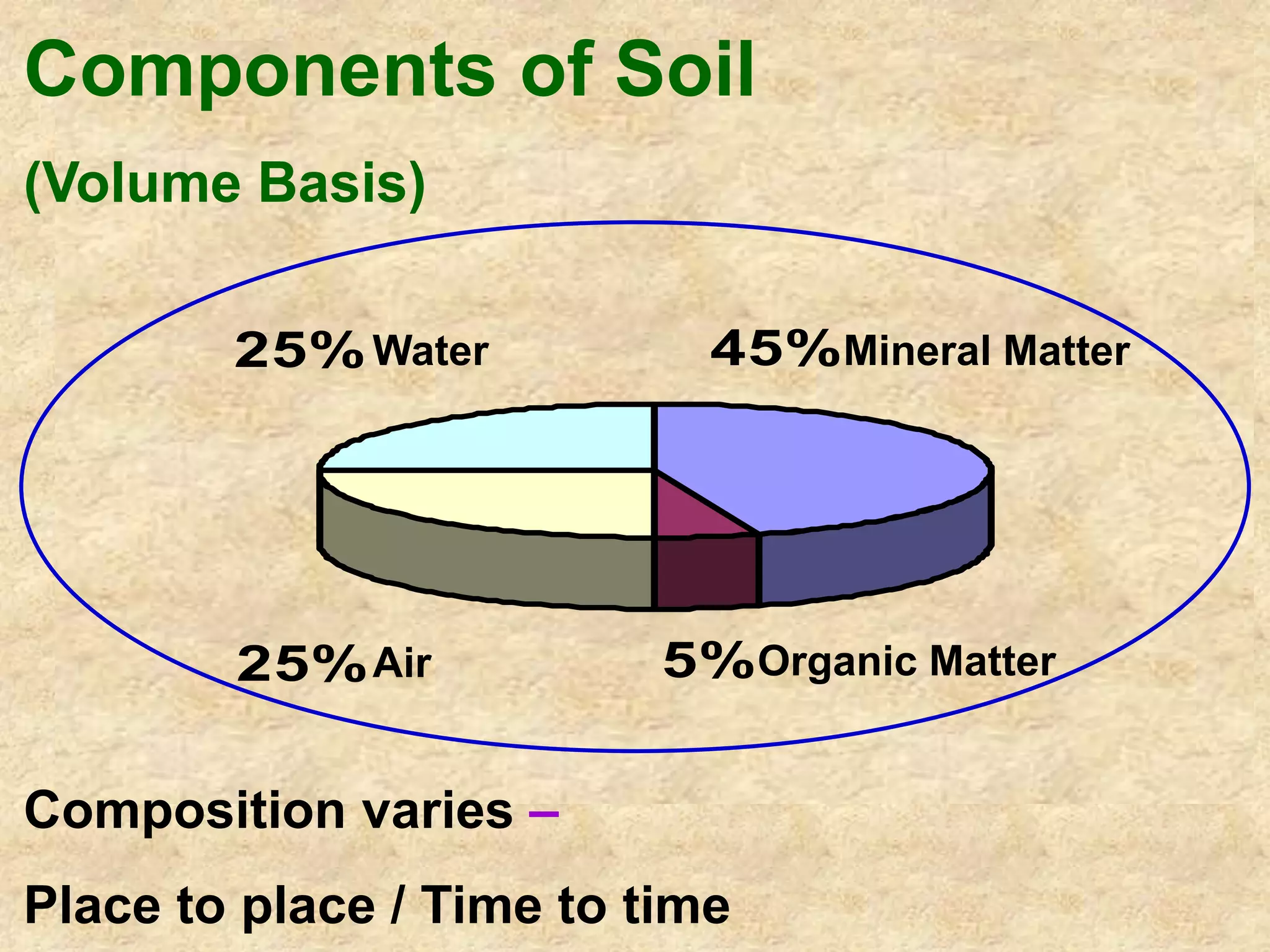
Components of Soil 
(Volume Basis) 
25% Water 
45% 
25% Air 
5% 
Composition varies – 
Place to place / Time to time 
Mineral Matter 
Organic Matter
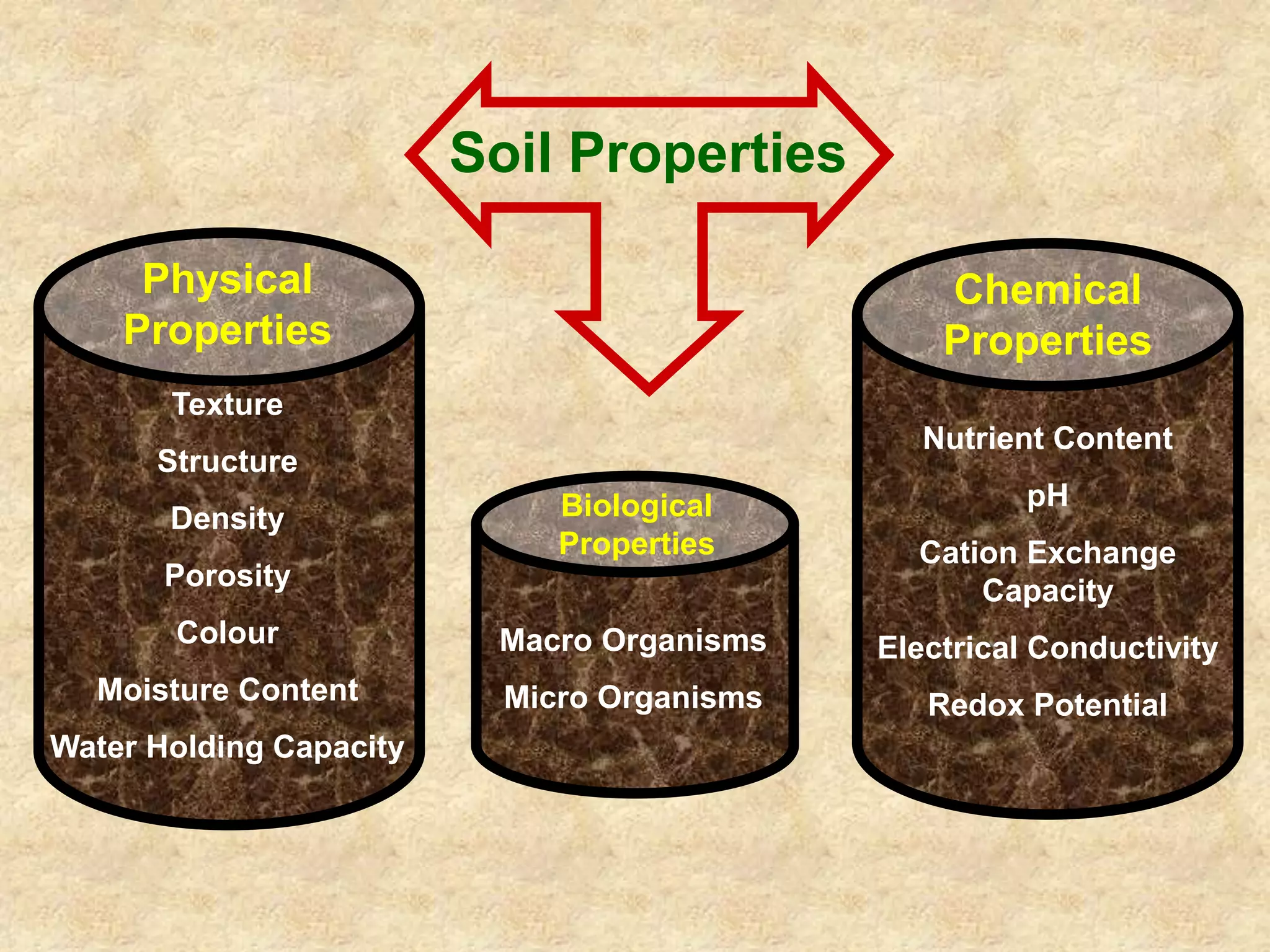
Soil Properties 
Physical 
Properties 
Texture 
Structure 
Density 
Porosity 
Colour 
Moisture Content 
Water Holding Capacity 
Chemical 
Properties 
Nutrient Content 
pH 
Cation Exchange 
Capacity 
Electrical Conductivity 
Redox Potential 
Biological 
Properties 
Macro Organisms 
Micro Organisms
Soils of the Dry Zone
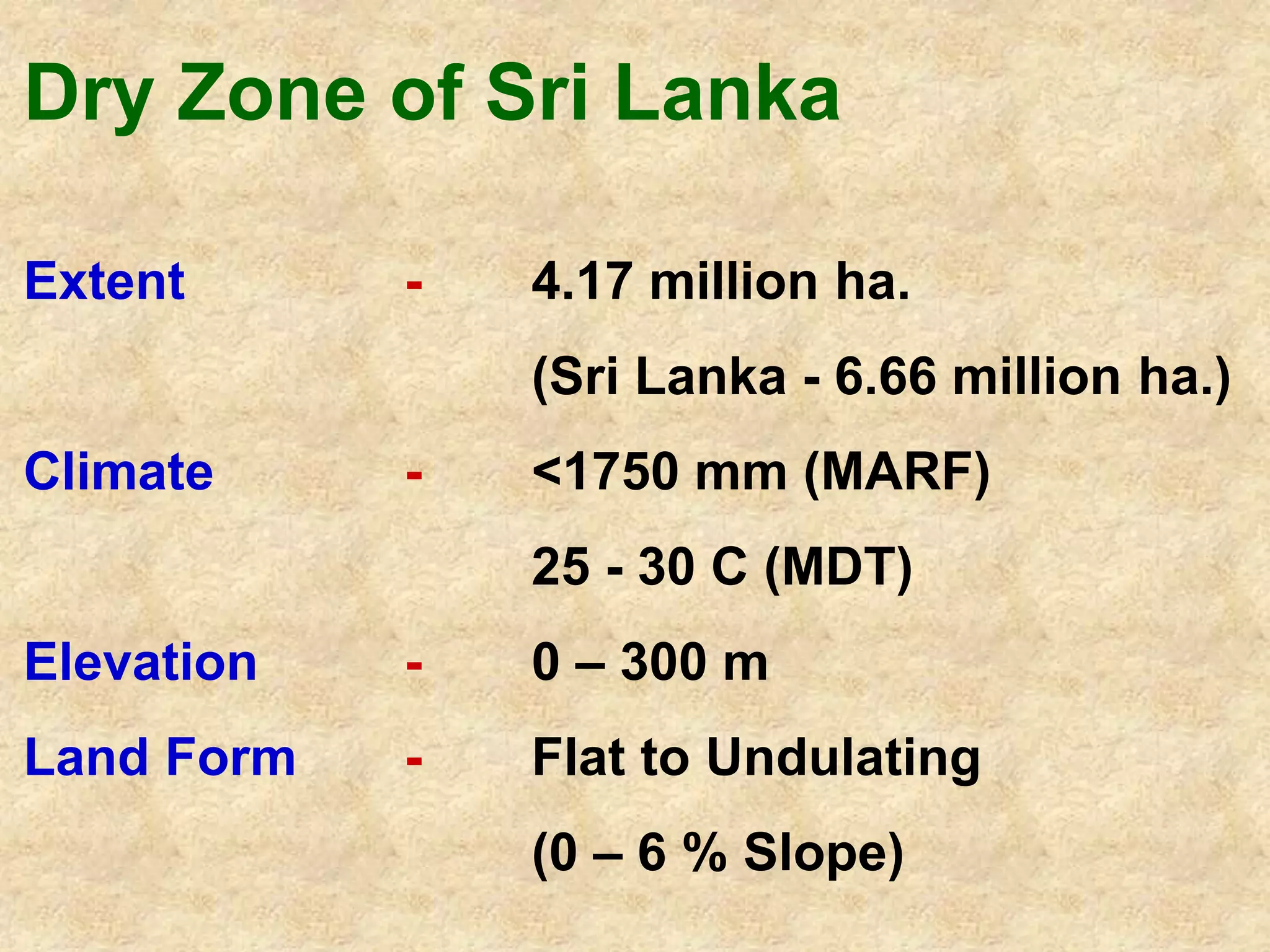
Dry Zone of Sri Lanka 
Extent - 4.17 million ha. 
(Sri Lanka - 6.66 million ha.) 
Climate - <1750 mm (MARF) 
25 - 30 C (MDT) 
Elevation - 0 – 300 m 
Land Form - Flat to Undulating 
(0 – 6 % Slope)
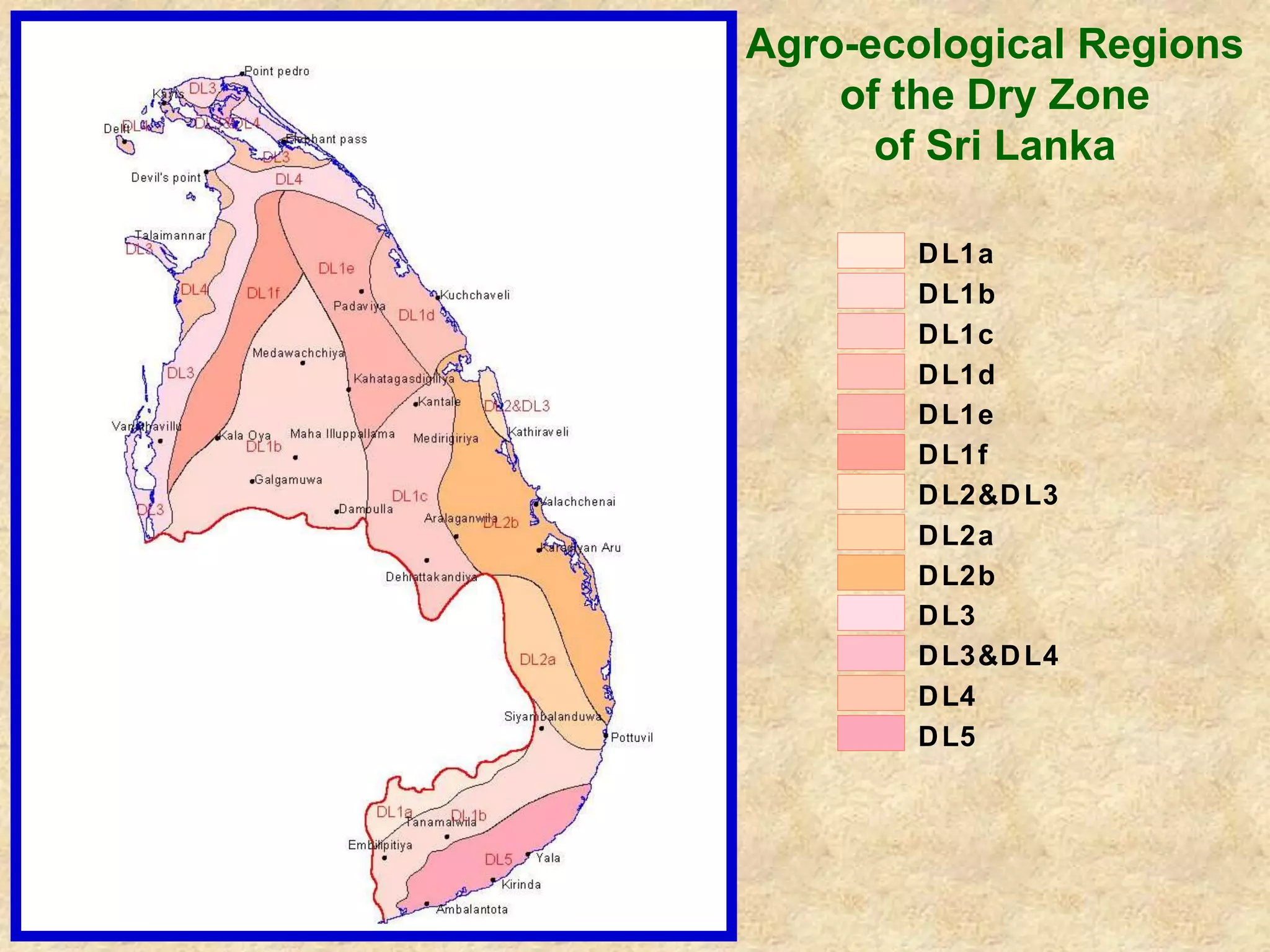
DL1a 
DL1b 
DL1c 
DL1d 
DL1e 
DL1f 
DL2&DL3 
DL2a 
DL2b 
DL3 
DL3&DL4 
DL4 
DL5 
Agro-ecological Zones of 
Dry Zone of Sri Lanka 
Agro-ecological Regions 
of the Dry Zone 
of Sri Lanka
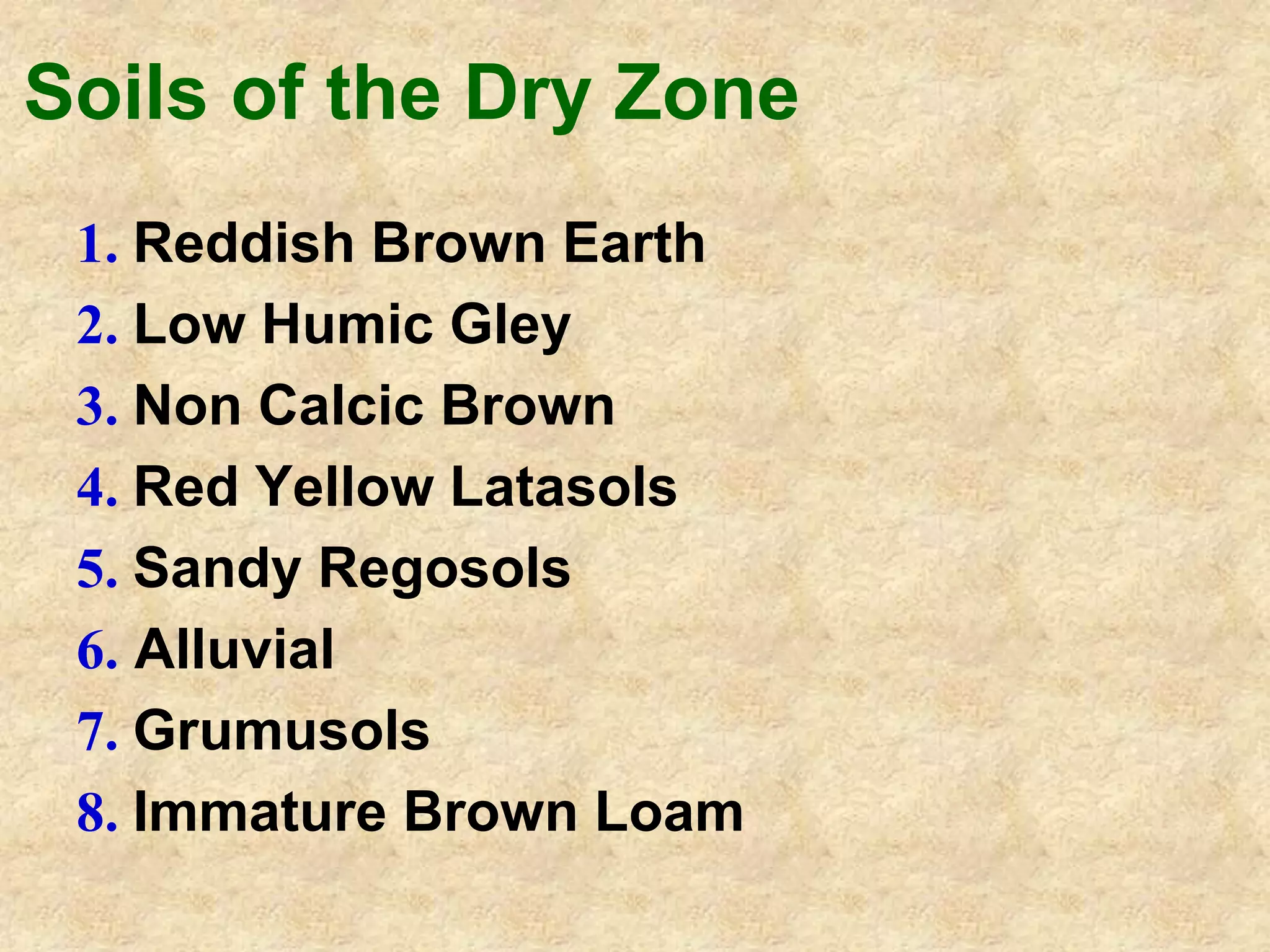
Soils of the Dry Zone 
1. Reddish Brown Earth 
2. Low Humic Gley 
3. Non Calcic Brown 
4. Red Yellow Latasols 
5. Sandy Regosols 
6. Alluvial 
7. Grumusols 
8. Immature Brown Loam
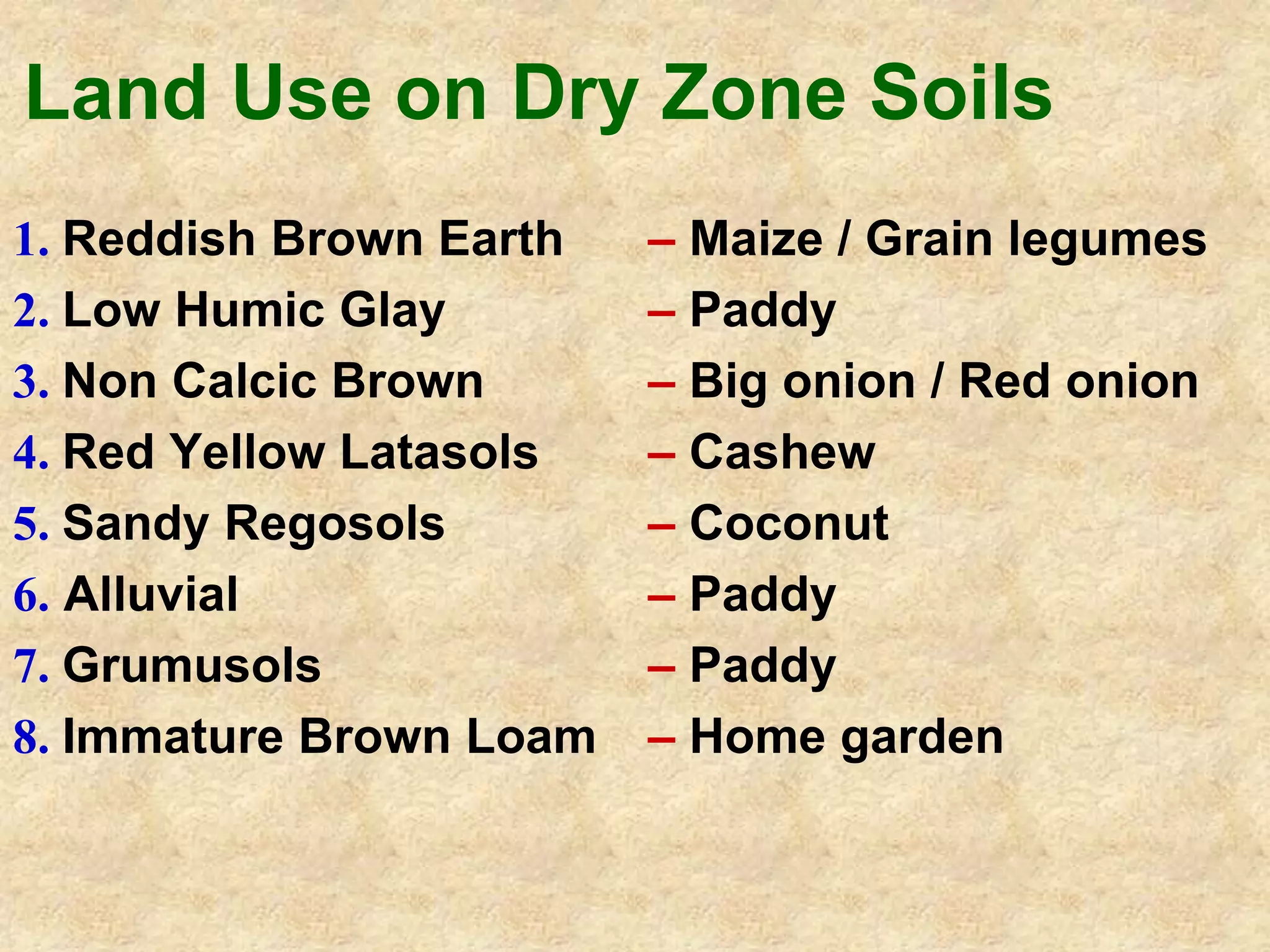
Land Use on Dry Zone Soils 
1. Reddish Brown Earth – Maize / Grain legumes 
2. Low Humic Glay – Paddy 
3. Non Calcic Brown – Big onion / Red onion 
4. Red Yellow Latasols – Cashew 
5. Sandy Regosols – Coconut 
6. Alluvial – Paddy 
7. Grumusols – Paddy 
8. Immature Brown Loam – Home garden
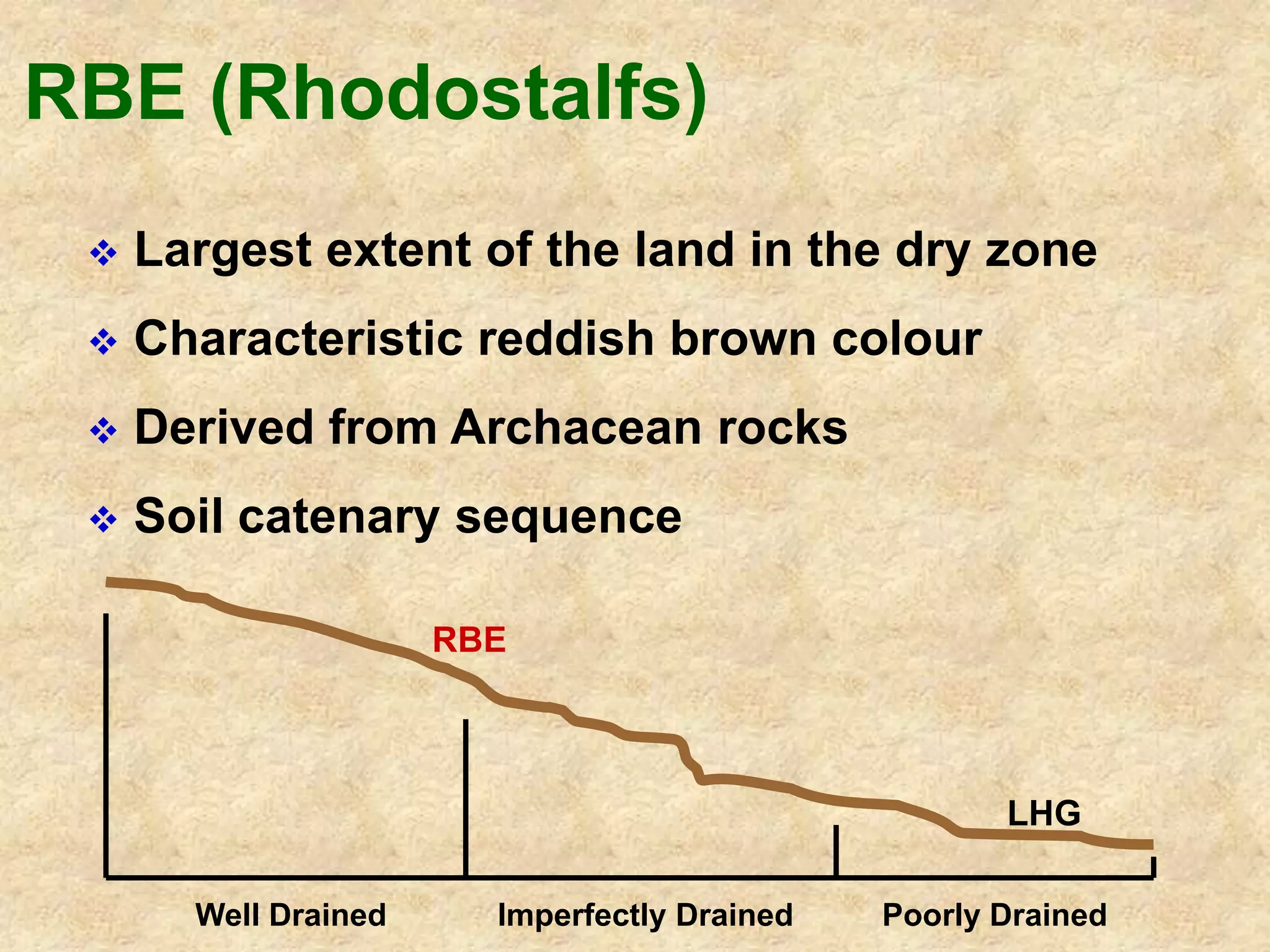
RBE (Rhodostalfs) 
 Largest extent of the land in the dry zone 
 Characteristic reddish brown colour 
 Derived from Archacean rocks 
 Soil catenary sequence 
RBE 
LHG 
Well Drained Imperfectly Drained Poorly Drained
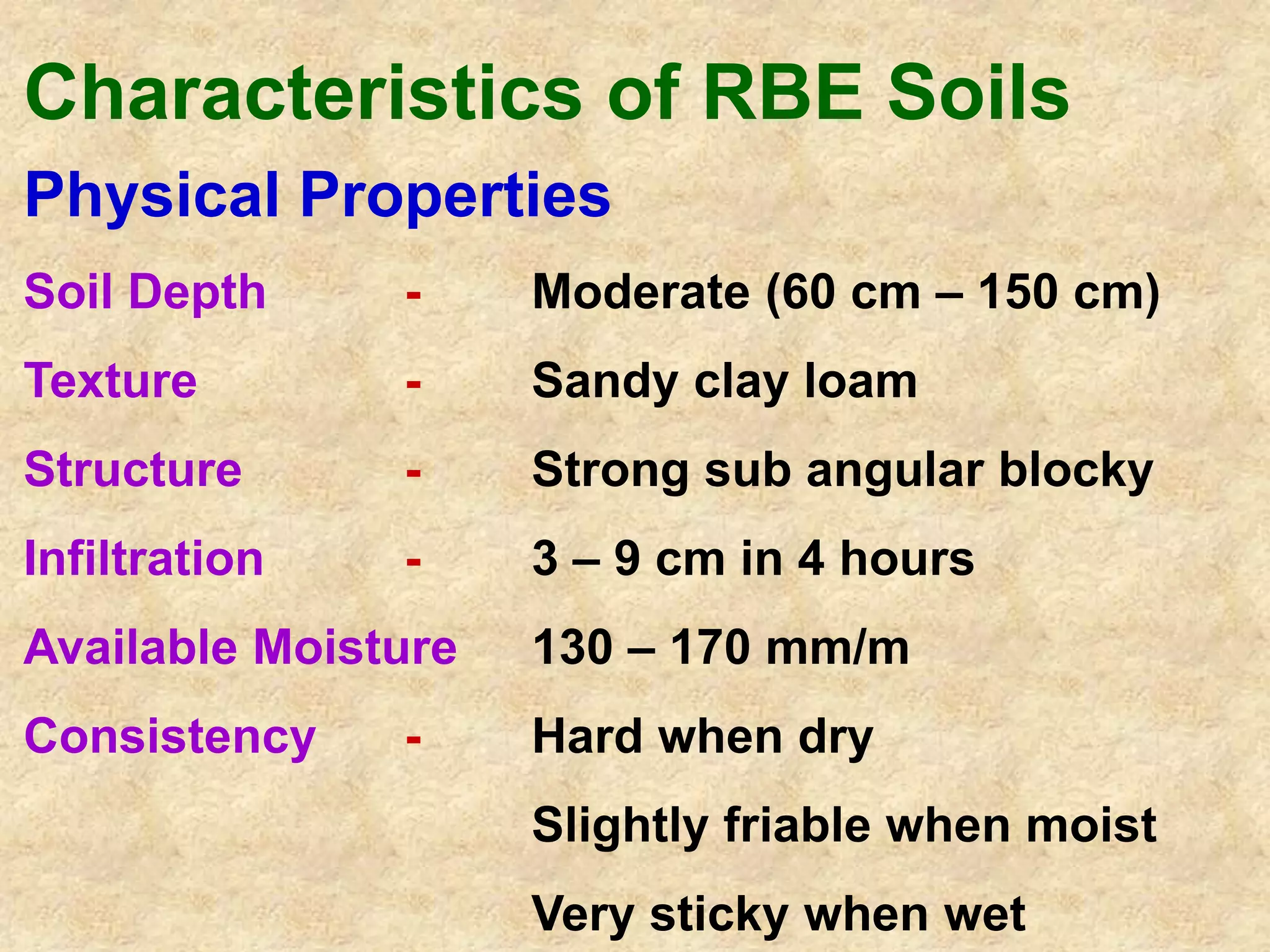
Characteristics of RBE Soils 
Physical Properties 
Soil Depth - Moderate (60 cm – 150 cm) 
Texture - Sandy clay loam 
Structure - Strong sub angular blocky 
Infiltration - 3 – 9 cm in 4 hours 
Available Moisture 130 – 170 mm/m 
Consistency - Hard when dry 
Slightly friable when moist 
Very sticky when wet
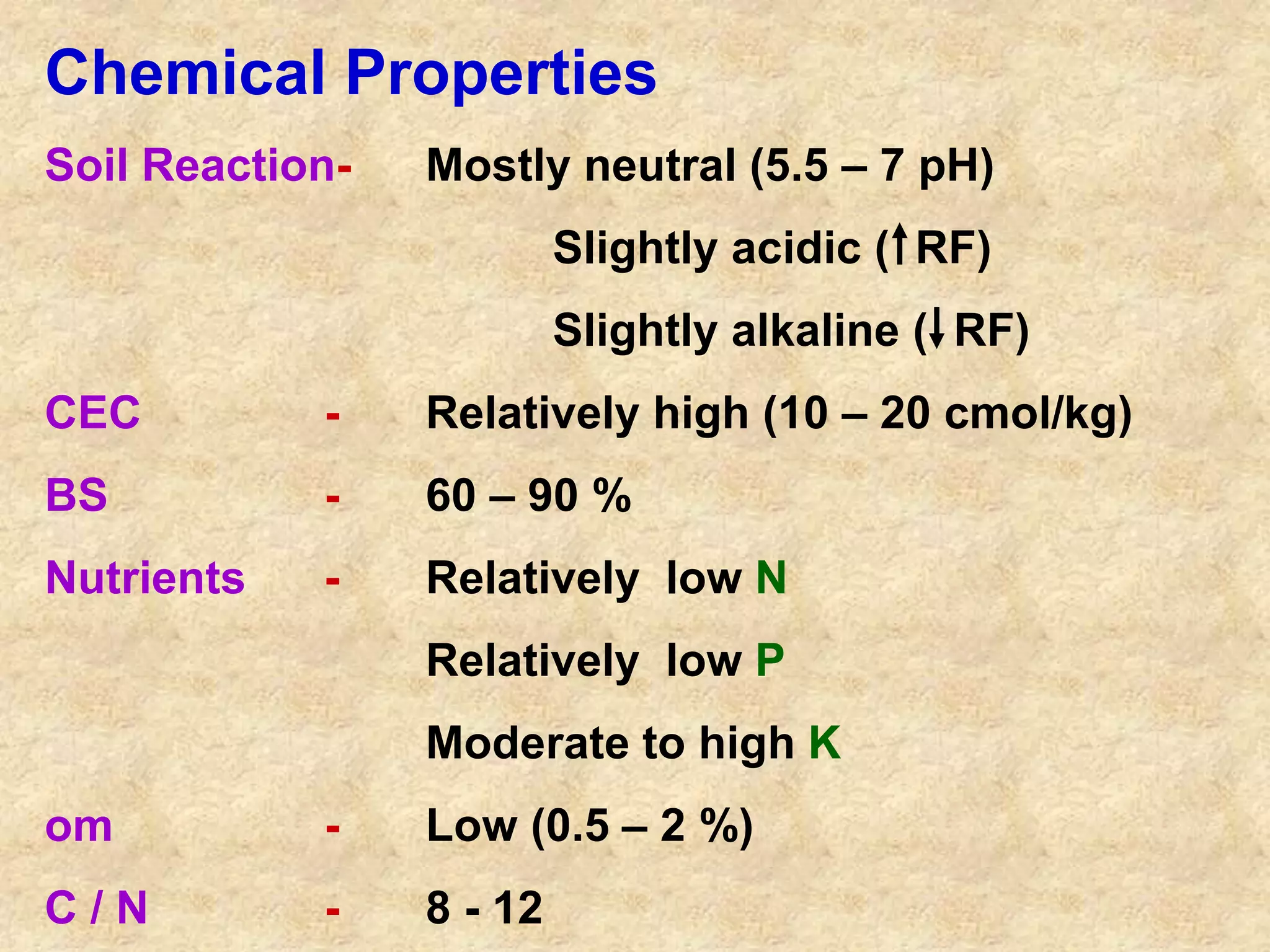
Chemical Properties 
Soil Reaction- Mostly neutral (5.5 – 7 pH) 
Slightly acidic ( RF) 
Slightly alkaline ( RF) 
CEC - Relatively high (10 – 20 cmol/kg) 
BS - 60 – 90 % 
Nutrients - Relatively low N 
Relatively low P 
Moderate to high K 
om - Low (0.5 – 2 %) 
C / N - 8 - 12
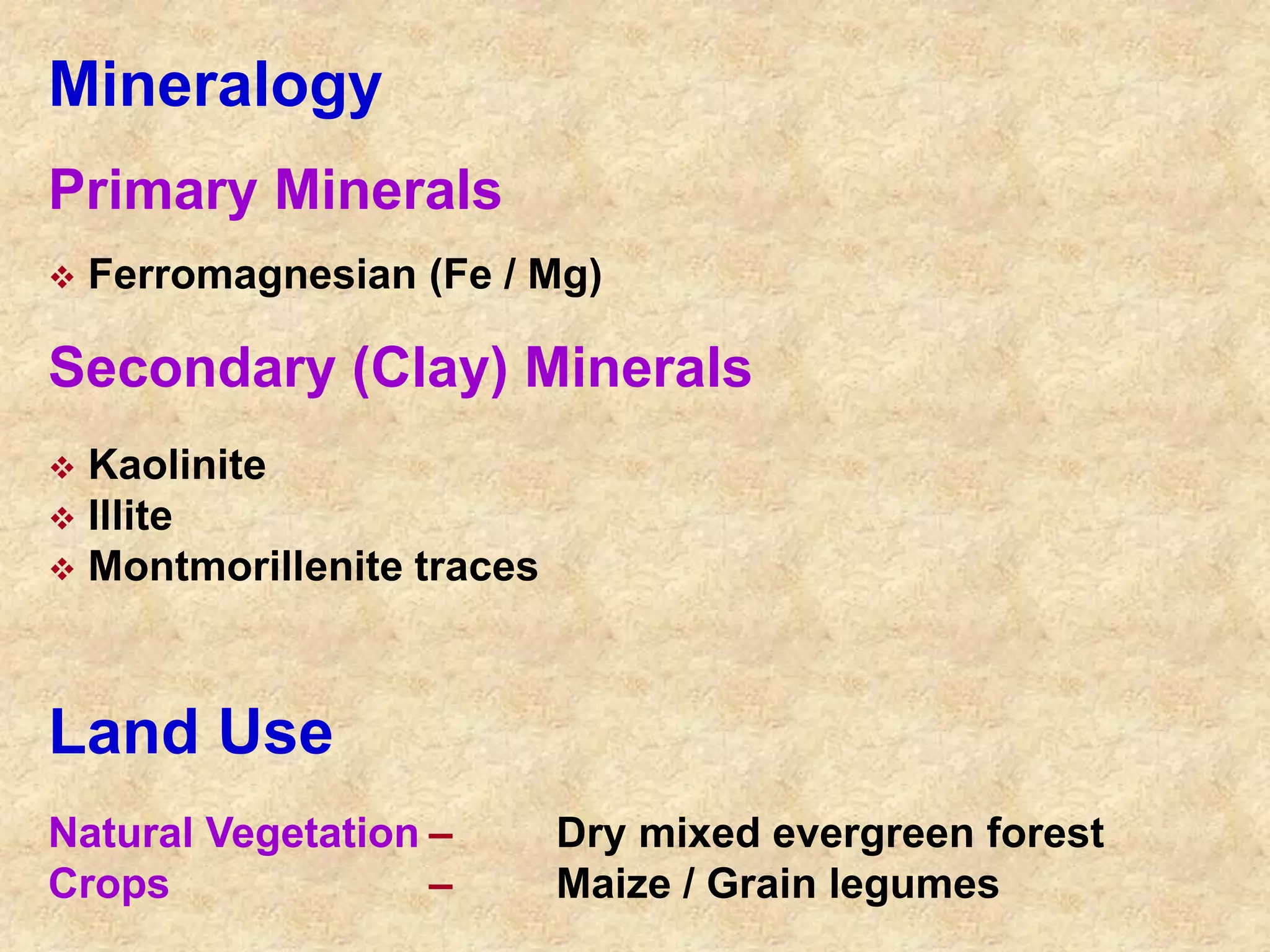
Mineralogy 
Primary Minerals 
 Ferromagnesian (Fe / Mg) 
Secondary (Clay) Minerals 
 Kaolinite 
 Illite 
 Montmorillenite traces 
Land Use 
Natural Vegetation – Dry mixed evergreen forest 
Crops – Maize / Grain legumes
Problems Associated with RBE 
Soils in the Dry Zone 
• Depth 
• Erosion 
• Workability 
• Crusting 
• Fertility 
• Irrigation 
?
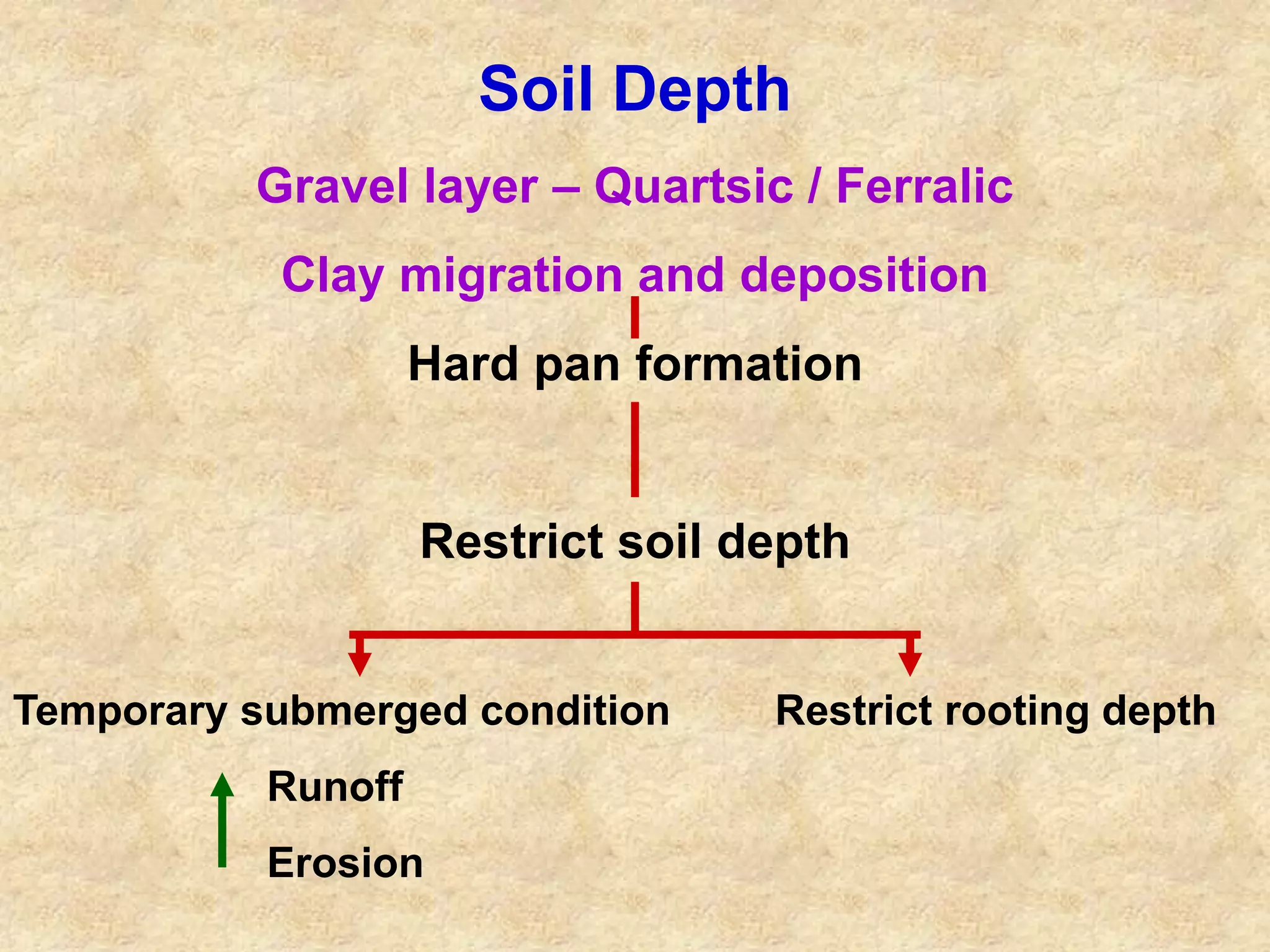
Soil Depth 
Gravel layer – Quartsic / Ferralic 
Clay migration and deposition 
Hard pan formation 
Restrict soil depth 
Temporary submerged condition Restrict rooting depth 
Runoff 
Erosion
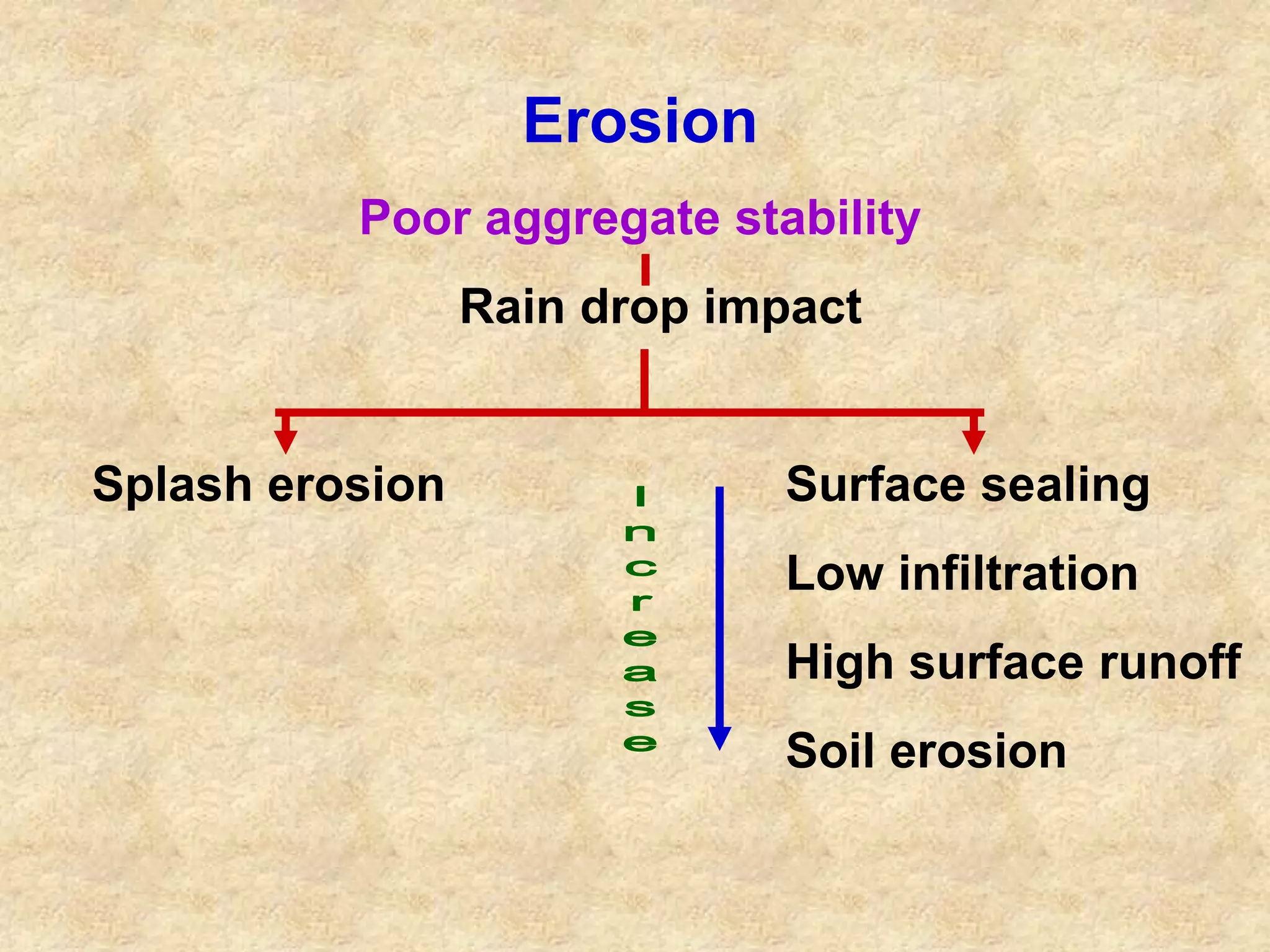
Erosion 
Poor aggregate stability 
Rain drop impact 
Splash erosion Surface sealing 
Low infiltration 
High surface runoff 
Soil erosion
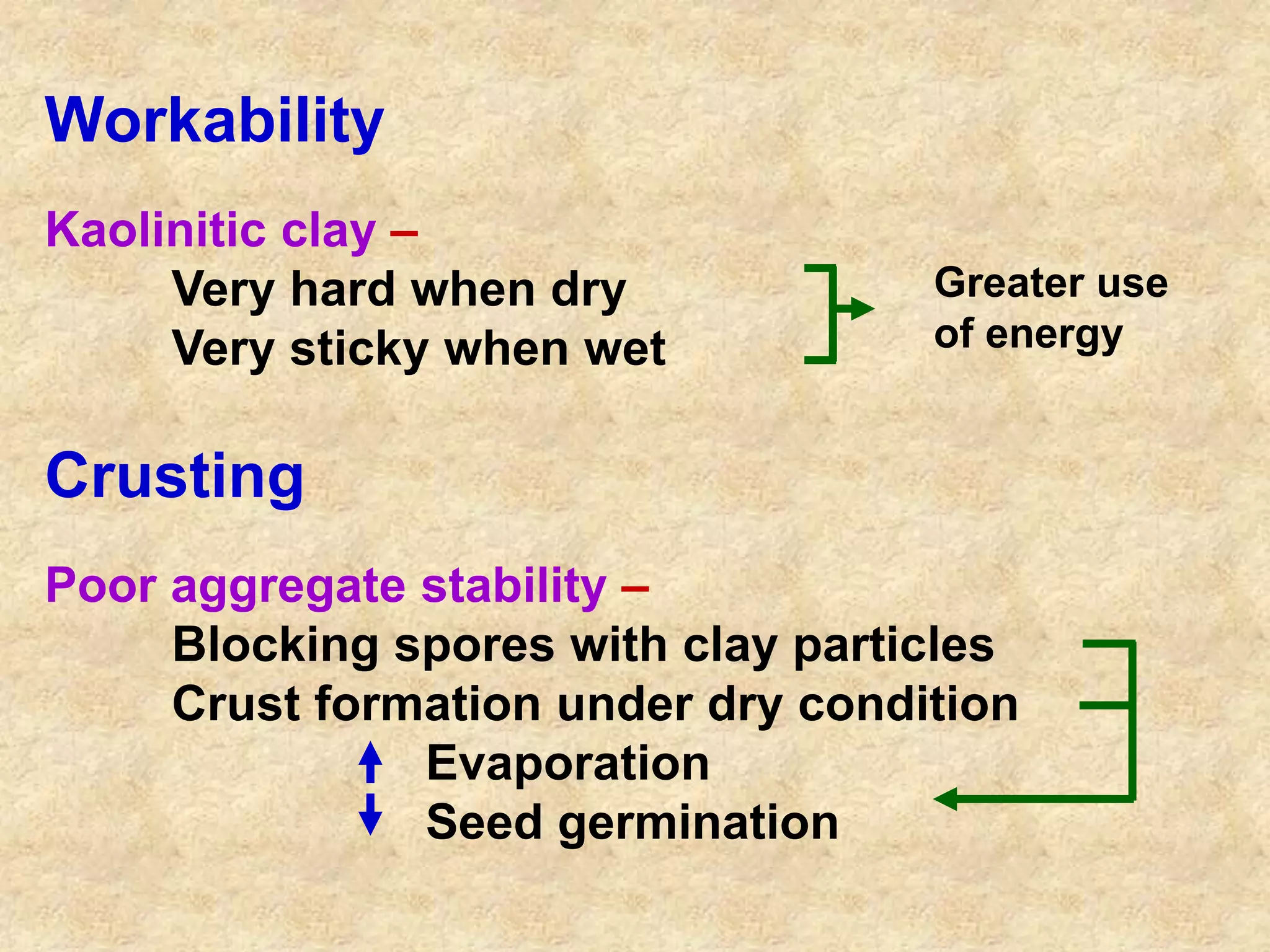
Workability 
Kaolinitic clay – 
Very hard when dry 
Very sticky when wet 
Crusting 
Poor aggregate stability – 
Blocking spores with clay particles 
Crust formation under dry condition 
Evaporation 
Seed germination 
Greater use 
of energy
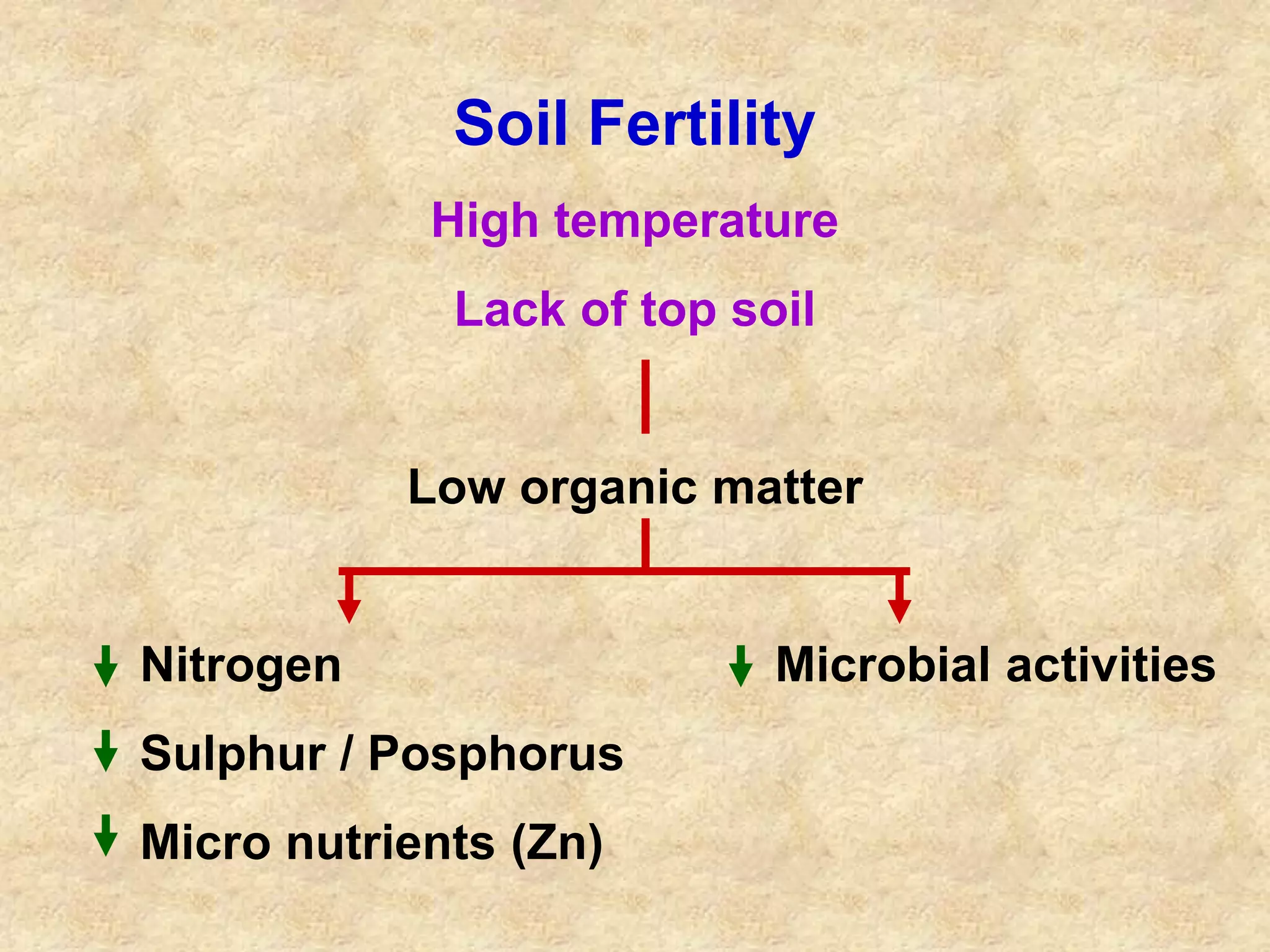
Soil Fertility 
High temperature 
Lack of top soil 
Low organic matter 
Nitrogen Microbial activities 
Sulphur / Posphorus 
Micro nutrients (Zn)
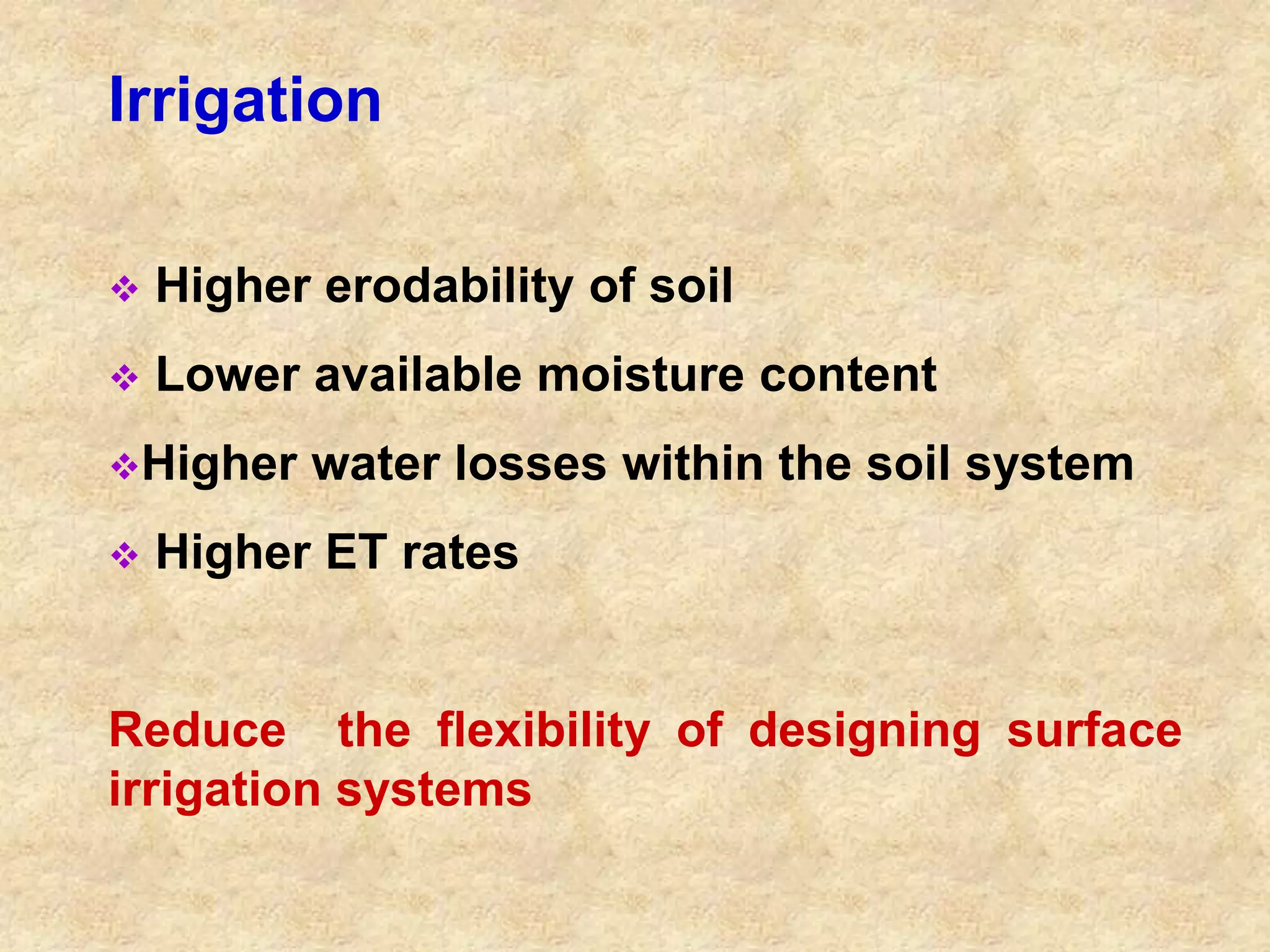
Irrigation 
 Higher erodability of soil 
 Lower available moisture content 
Higher water losses within the soil system 
 Higher ET rates 
Reduce the flexibility of designing surface 
irrigation systems
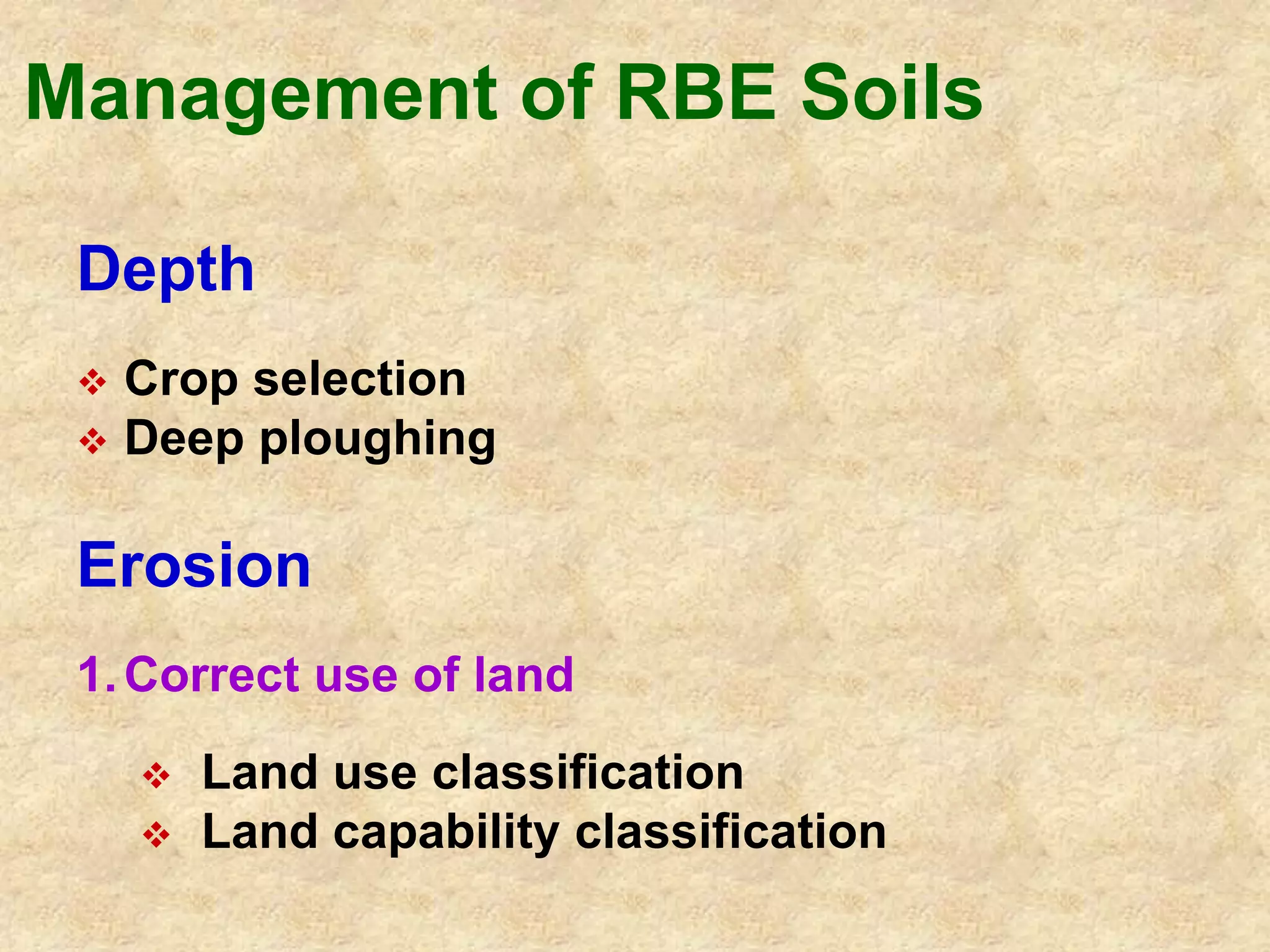
Management of RBE Soils 
Depth 
 Crop selection 
 Deep ploughing 
Erosion 
1.Correct use of land 
 Land use classification 
 Land capability classification
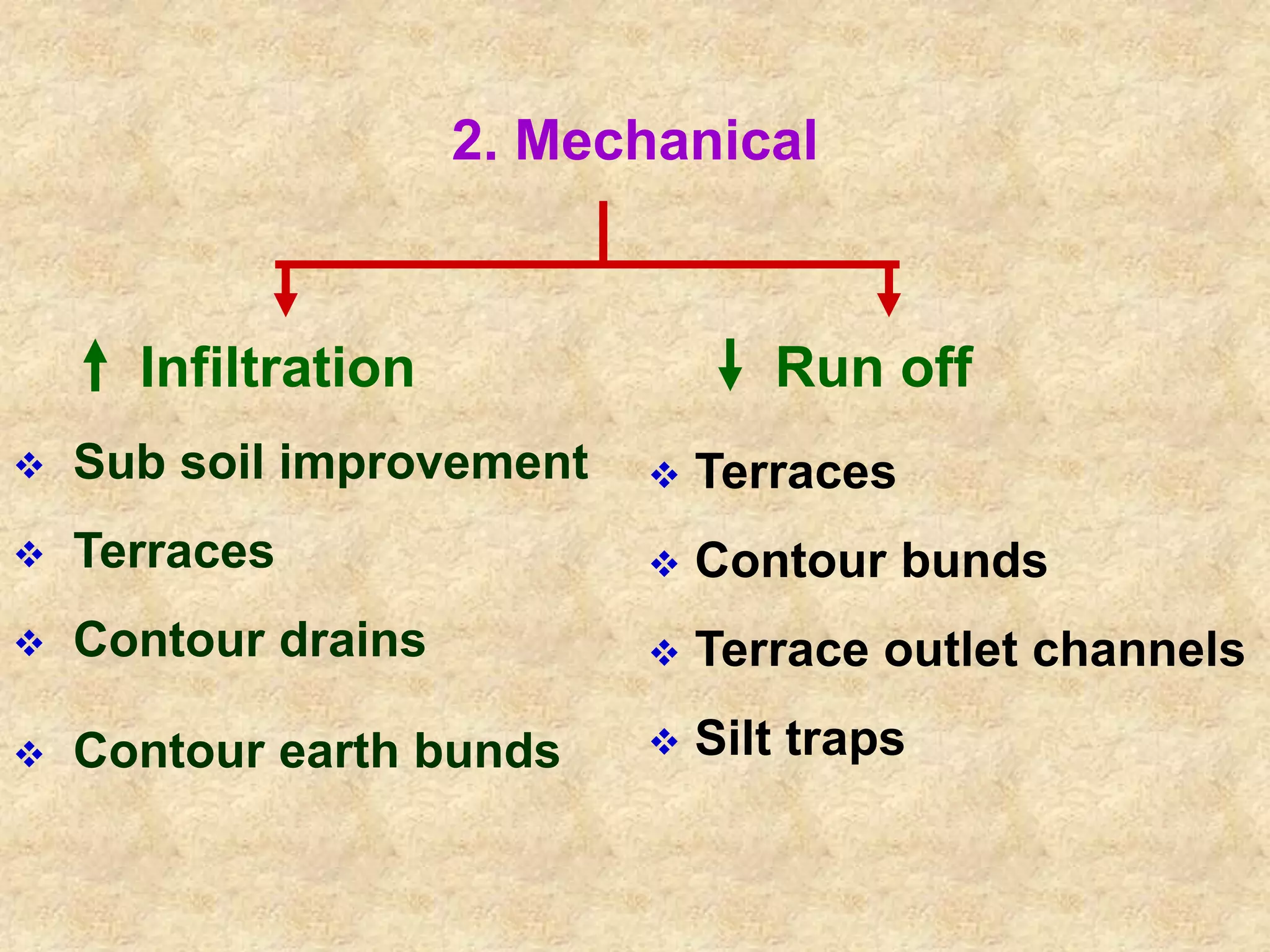
2. Mechanical 
Infiltration Run off 
 Sub soil improvement 
 Terraces 
 Contour drains 
 Contour earth bunds 
 Terraces 
 Contour bunds 
 Terrace outlet channels 
 Silt traps
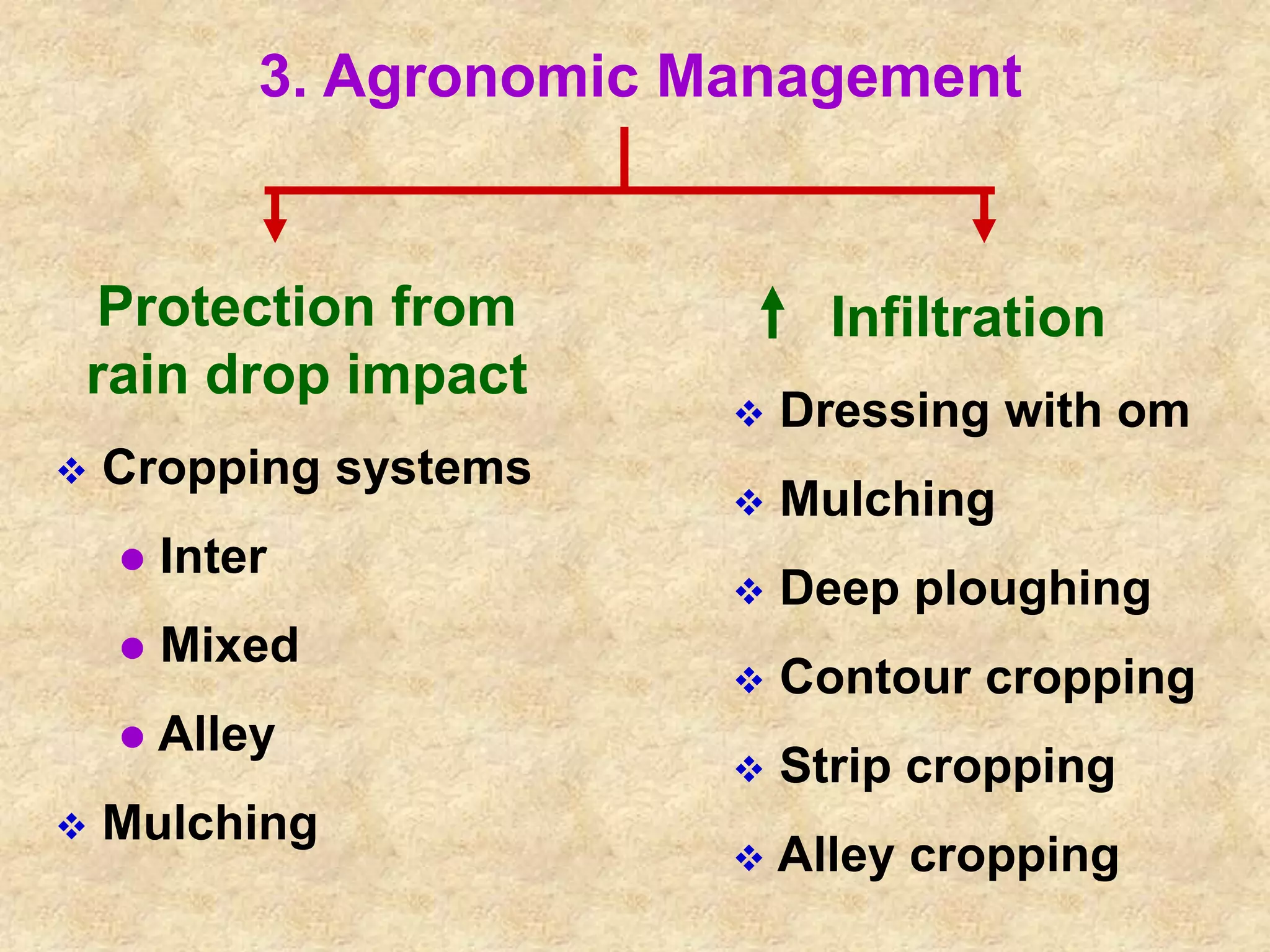
3. Agronomic Management 
Protection from 
rain drop impact 
 Cropping systems 
 Inter 
 Mixed 
 Alley 
 Mulching 
Infiltration 
 Dressing with om 
 Mulching 
 Deep ploughing 
 Contour cropping 
 Strip cropping 
 Alley cropping
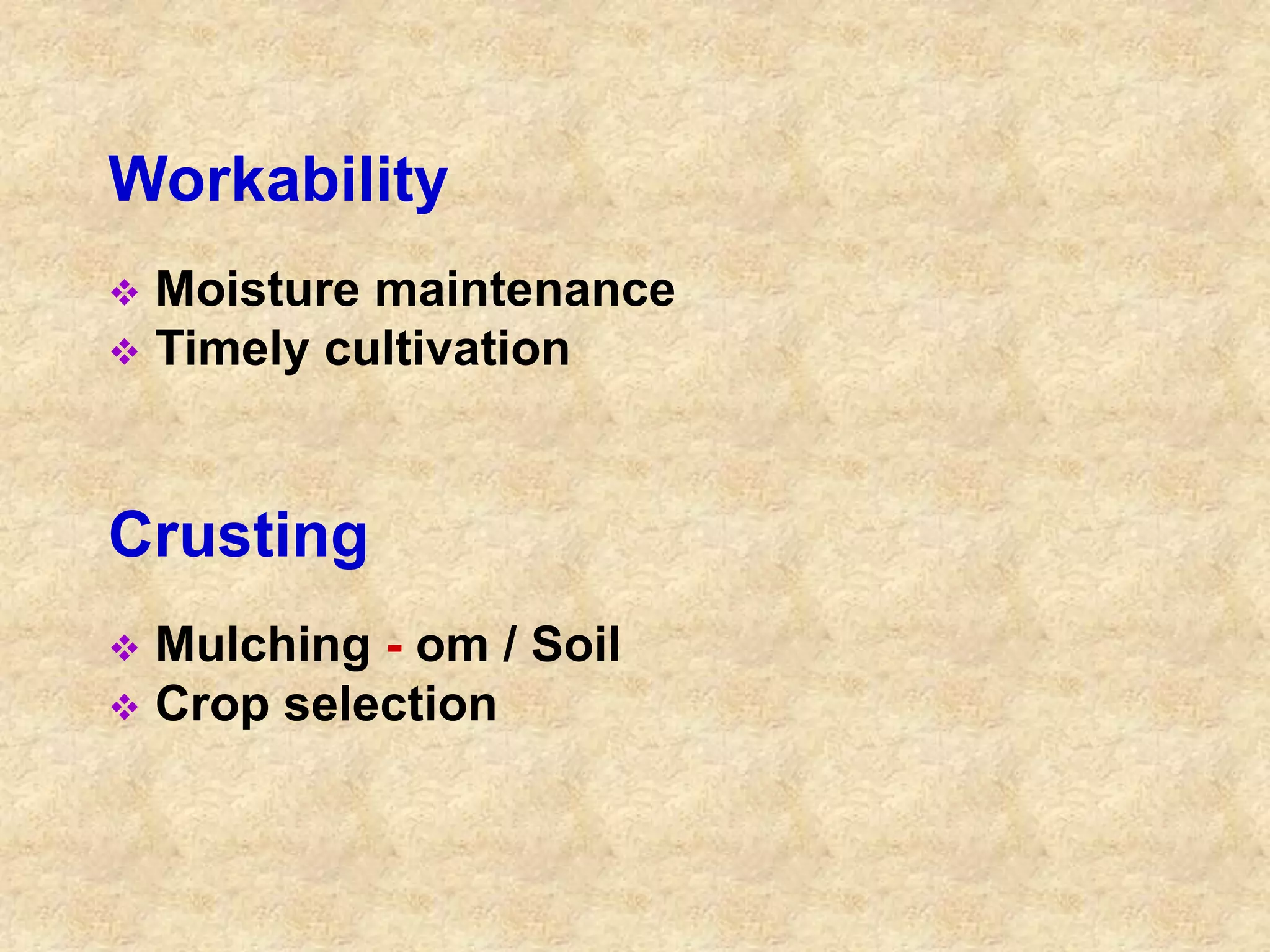
Workability 
 Moisture maintenance 
 Timely cultivation 
Crusting 
 Mulching - om / Soil 
 Crop selection
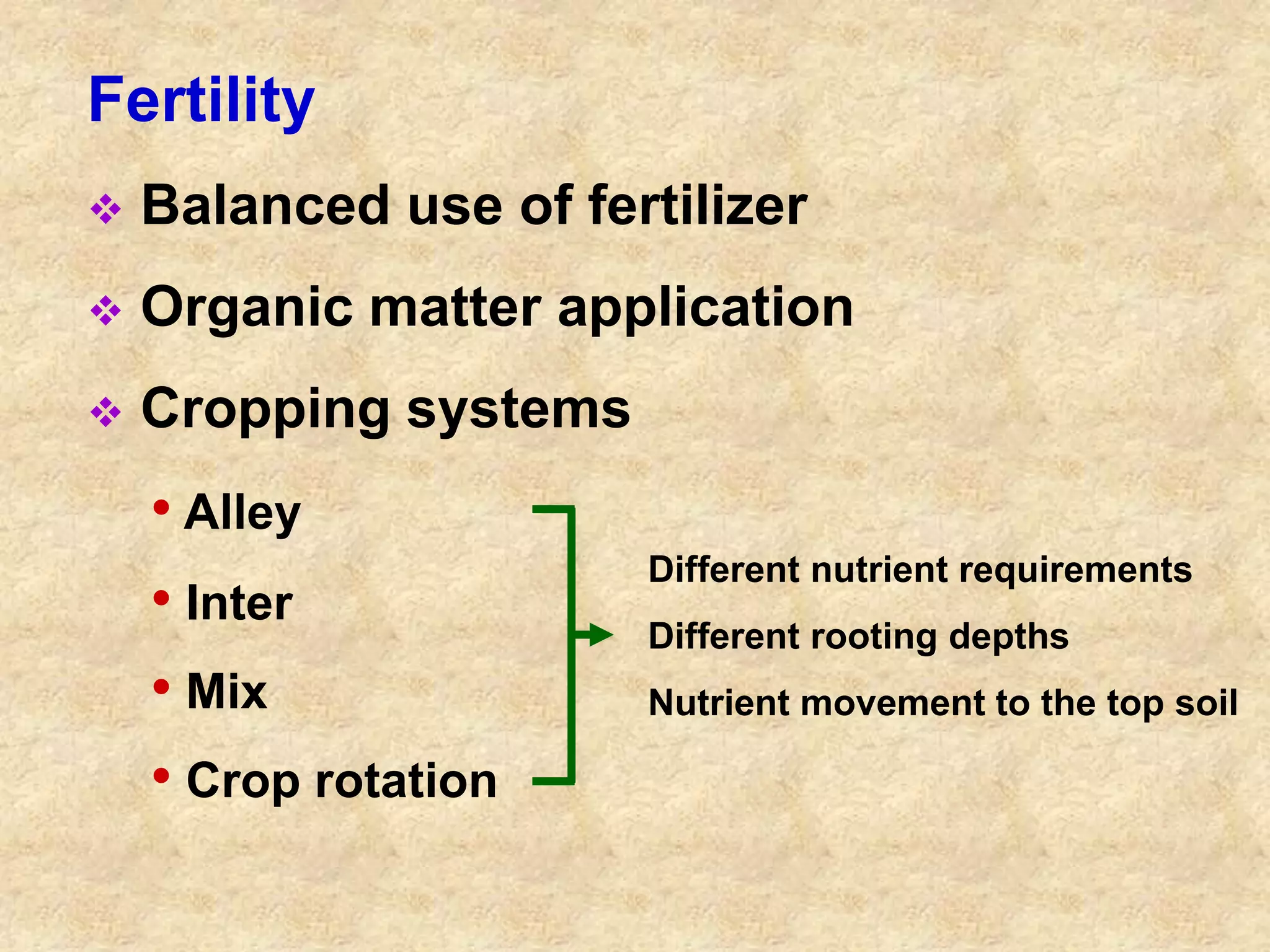
Fertility 
 Balanced use of fertilizer 
 Organic matter application 
 Cropping systems 
• Alley 
• Inter 
• Mix 
• Crop rotation 
Different nutrient requirements 
Different rooting depths 
Nutrient movement to the top soil
Irrigation 
 Drip irrigation 
 Sprinkler irrigation 
 Minimizing water losses 
 Emphasis on crop water requirement
Low Humic Gley Soils 
(Tropaqualfs) 
 Second most extensive soil group in Sri Lanka 
 Located at the foot slopes of the undulating landscape 
 Characterized by the wetness or gleying through the 
profile 
 Availability of calcite concretions 
Physical Properties 
Texture - Sandy clay to clay 
Structure - Sub angular blocky to massive 
WHC - Fairly good
Chemical Properties 
Soil reaction - Moderately alkaline 
Base saturation - 90-100 % 
Mineralogy 
Primary Minerals 
 Calcite 
Secondary (Clay) Minerals 
 Kaolinite 
 Montmorillanite
Importance of Soil Fertility 
Continuous cultivation 
Soil fertility degradation 
Soil Fertility 
Inherent capacity of a soil to supply nutrients to 
plants in 
1) Adequate amounts 
2) Suitable proportions
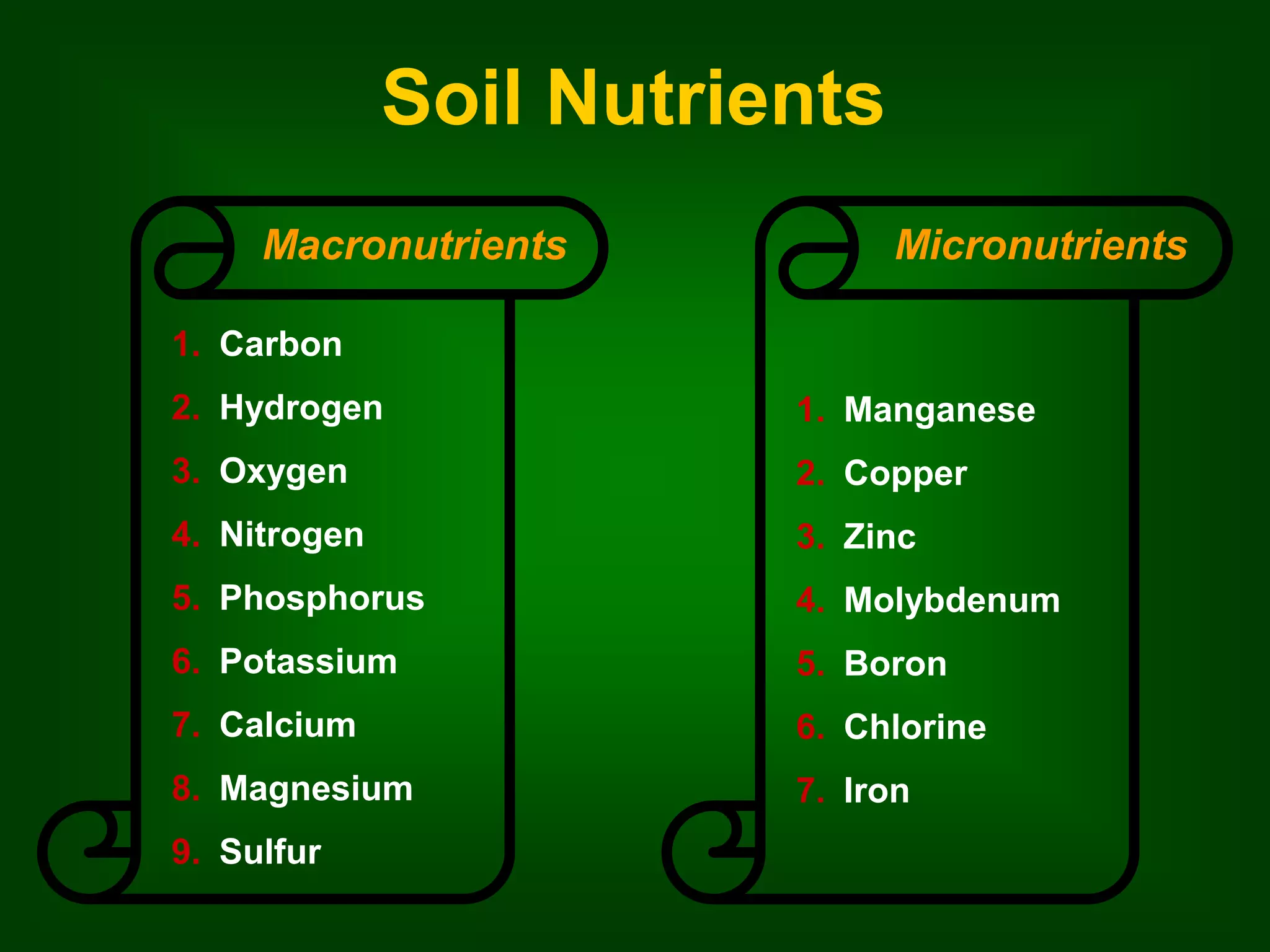
Soil Nutrients 
Macronutrients 
1. Carbon 
2. Hydrogen 
3. Oxygen 
4. Nitrogen 
5. Phosphorus 
6. Potassium 
7. Calcium 
8. Magnesium 
9. Sulfur 
Micronutrients 
1. Manganese 
2. Copper 
3. Zinc 
4. Molybdenum 
5. Boron 
6. Chlorine 
7. Iron
Nutrient Deficiencies 
Inadequate amounts and unsuitable 
proportions of soil nutrients 
Nutrient Deficiencies 
Identification of Deficiencies 
1) Observation of visible symptoms 
2) Plant tissue analysis 
3) Soil analysis
Visual Observation of Nutrient 
Deficiencies 
1) Leaf growth and colour 
2) Plant height 
3) Tillering 
4) Root growth 
Important growth stages for identification of Deficiencies 
1) Tillering stage 
2) Flowering stage
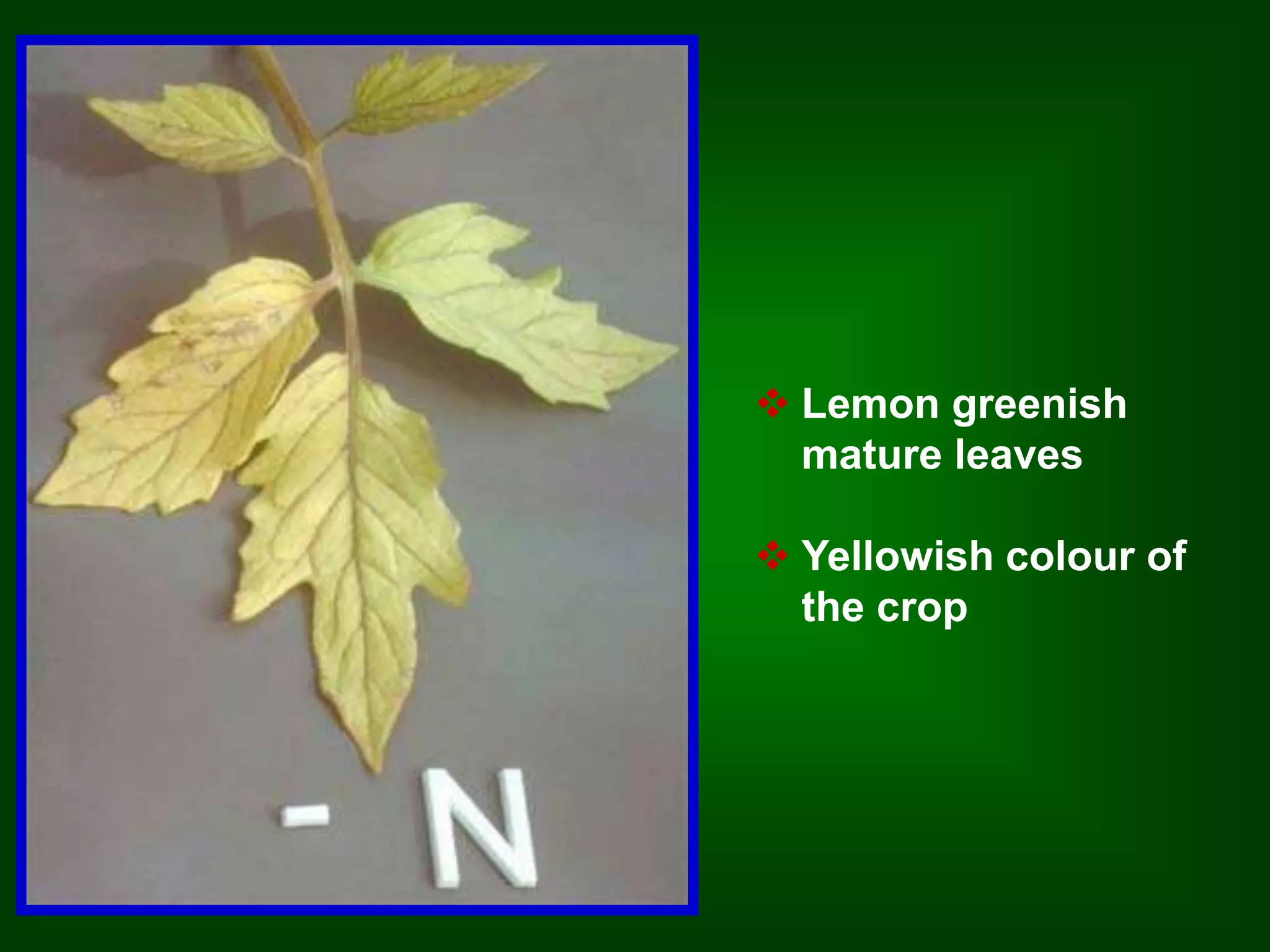
 Lemon greenish 
mature leaves 
 Yellowish colour of 
the crop
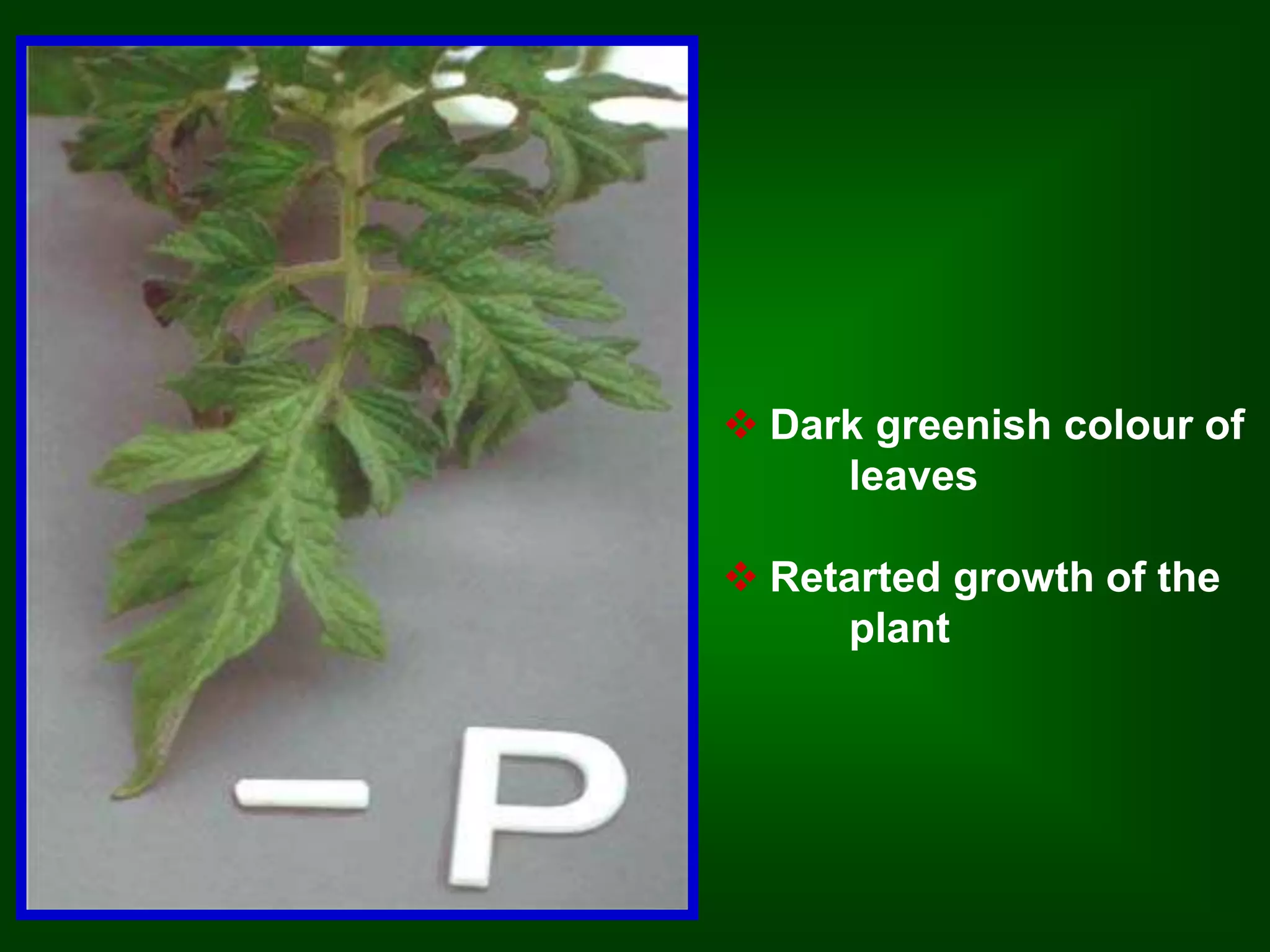
 Dark greenish colour of 
leaves 
 Retarted growth of the 
plant
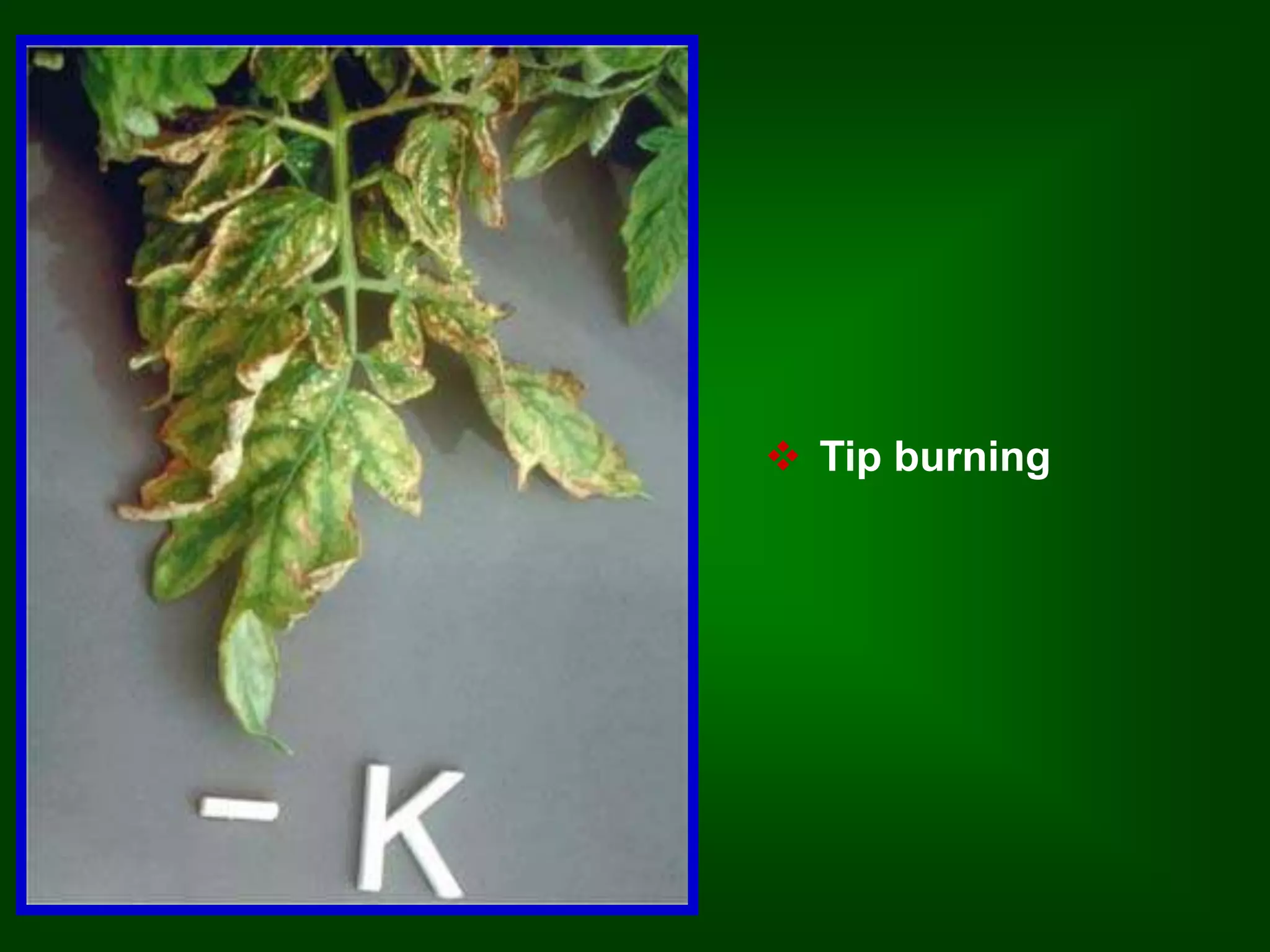
 Tip burning
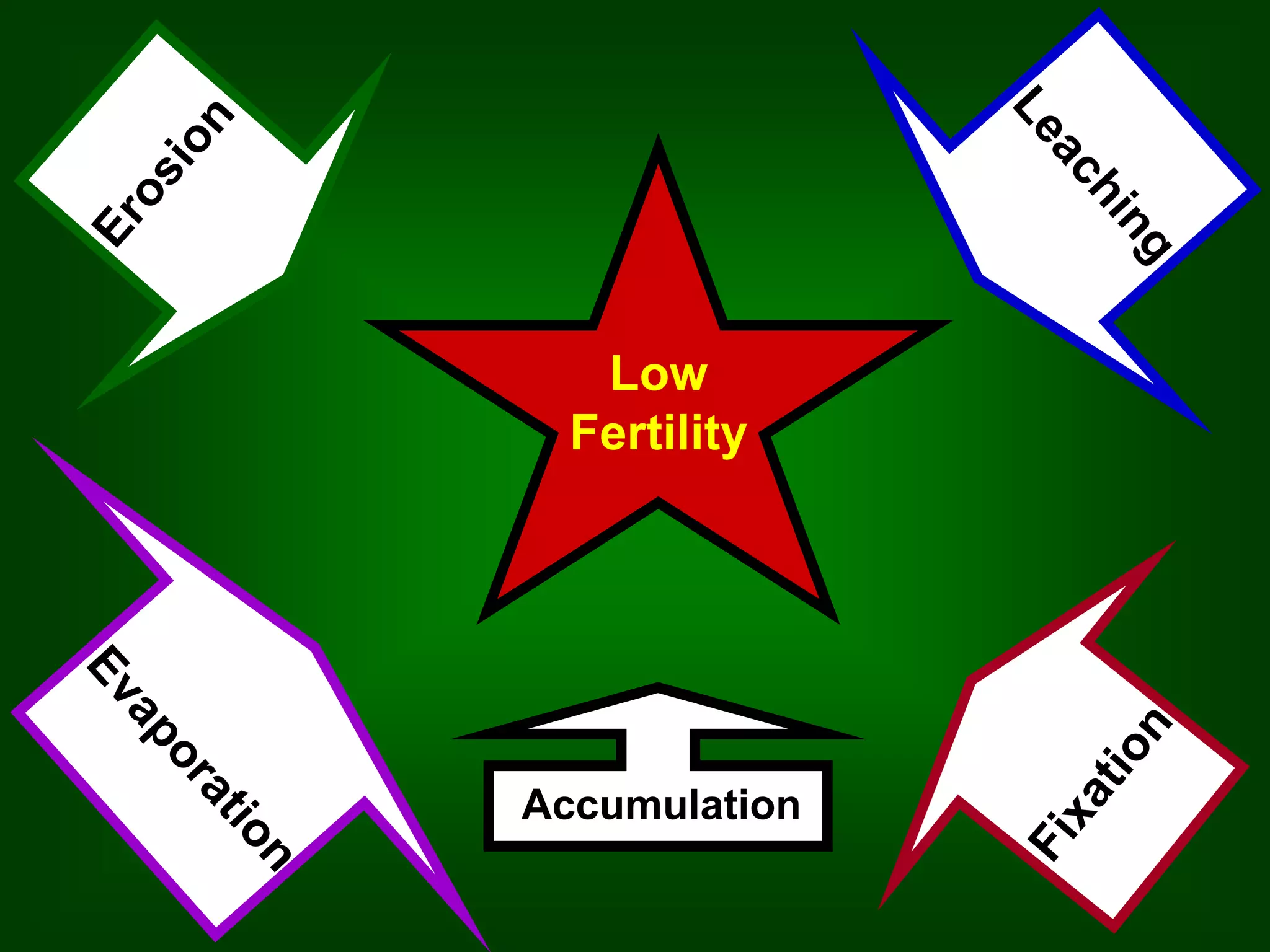
Low 
Fertility 
Accumulation
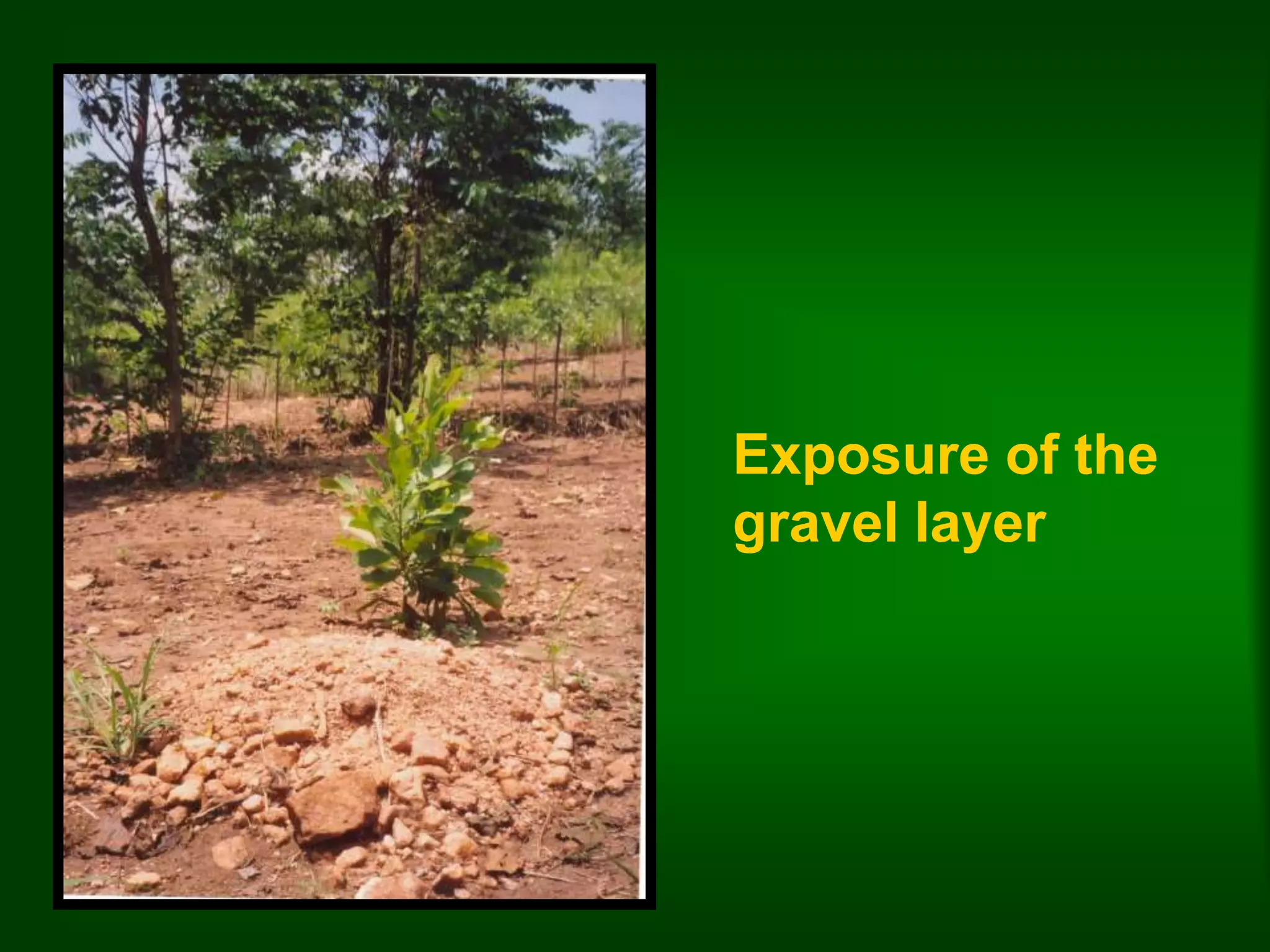
Exposure of the 
gravel layer
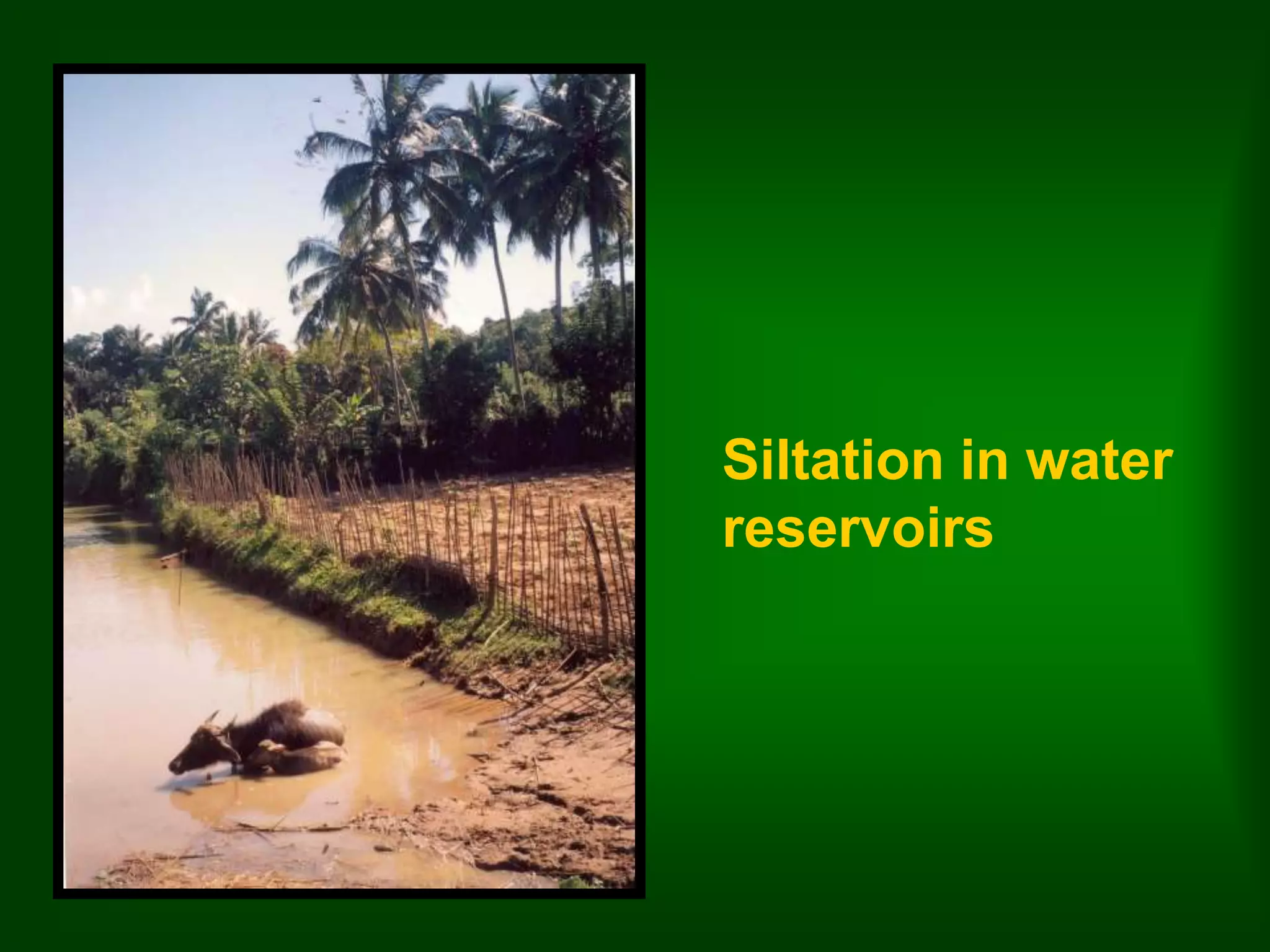
Siltation in water 
reservoirs
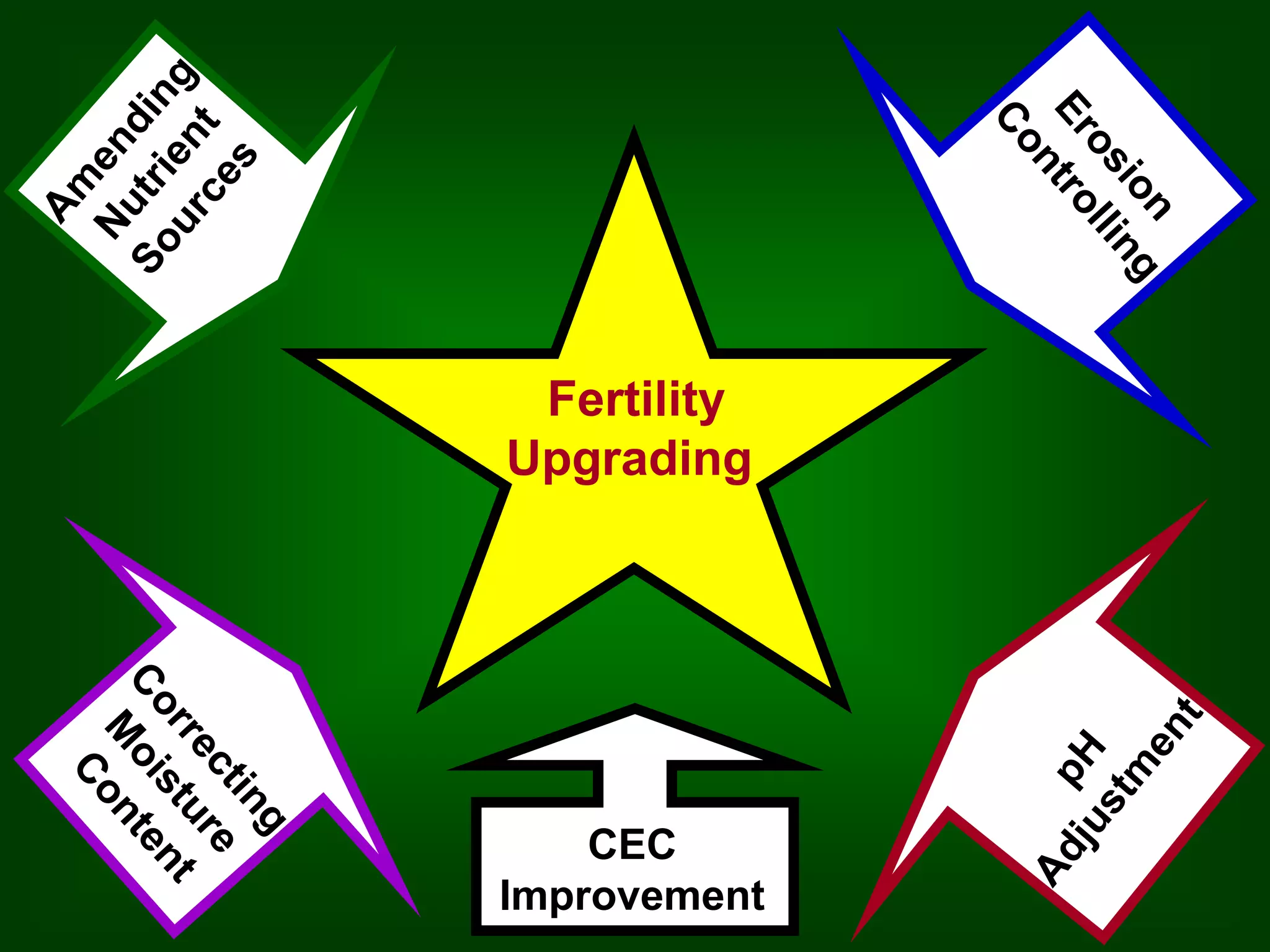
Fertility 
Upgrading 
CEC 
Improvement
Fertilizer Recommendation 
1) Plant analysis 
Nitrogen recommendation 
2) Soil analysis 
Available nutrient level in the soil 
Soil Test Based Fertilizer Recommendation
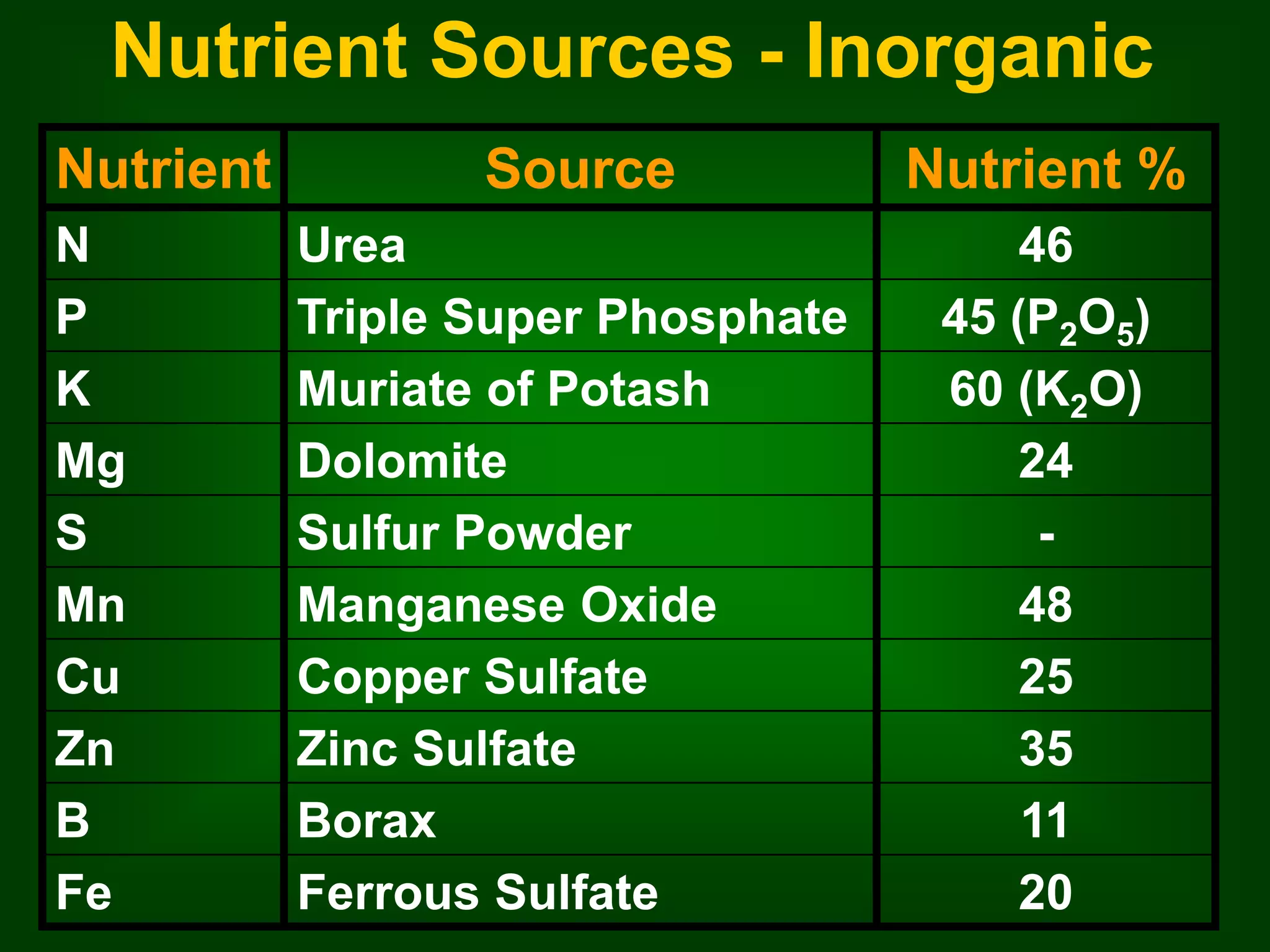
Nutrient Sources - Inorganic 
Nutrient Source Nutrient % 
N Urea 46 
P Triple Super Phosphate 45 (P2O5) 
K Muriate of Potash 60 (K2O) 
Mg Dolomite 24 
S Sulfur Powder - 
Mn Manganese Oxide 48 
Cu Copper Sulfate 25 
Zn Zinc Sulfate 35 
B Borax 11 
Fe Ferrous Sulfate 20
Nutrient Sources – Organic 
 Green manure - 
Insitu – Sunhemp / Mukuna 
Exsitu – Gliricedia / Erithrina / Wild sunflower 
 Crop residues 
 Mulch 
 Compost 
 Farmyard manure
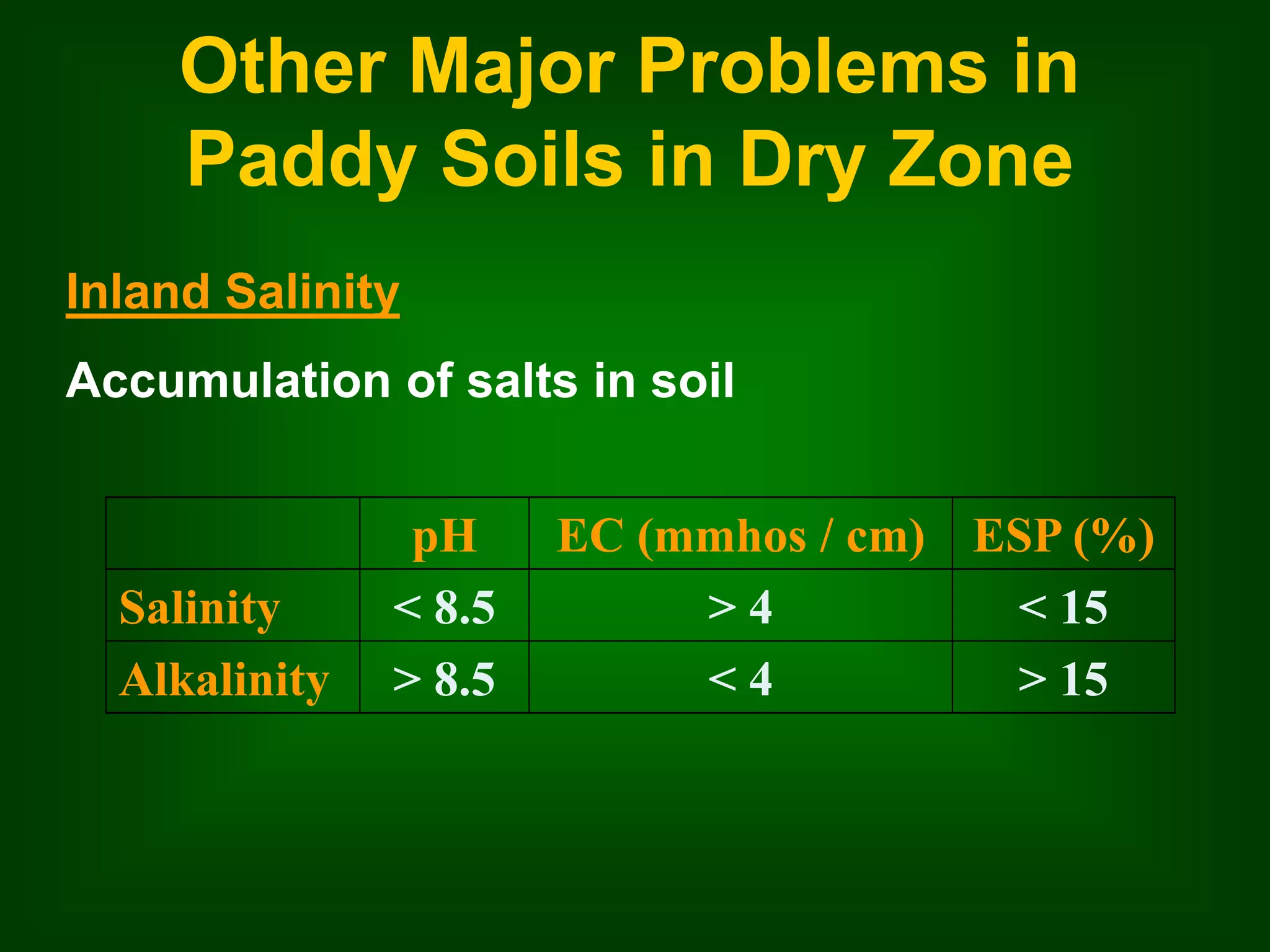
Other Major Problems in 
Paddy Soils in Dry Zone 
Inland Salinity 
Accumulation of salts in soil 
pH EC (mmhos / cm) ESP (%) 
Salinity < 8.5 > 4 < 15 
Alkalinity > 8.5 < 4 > 15
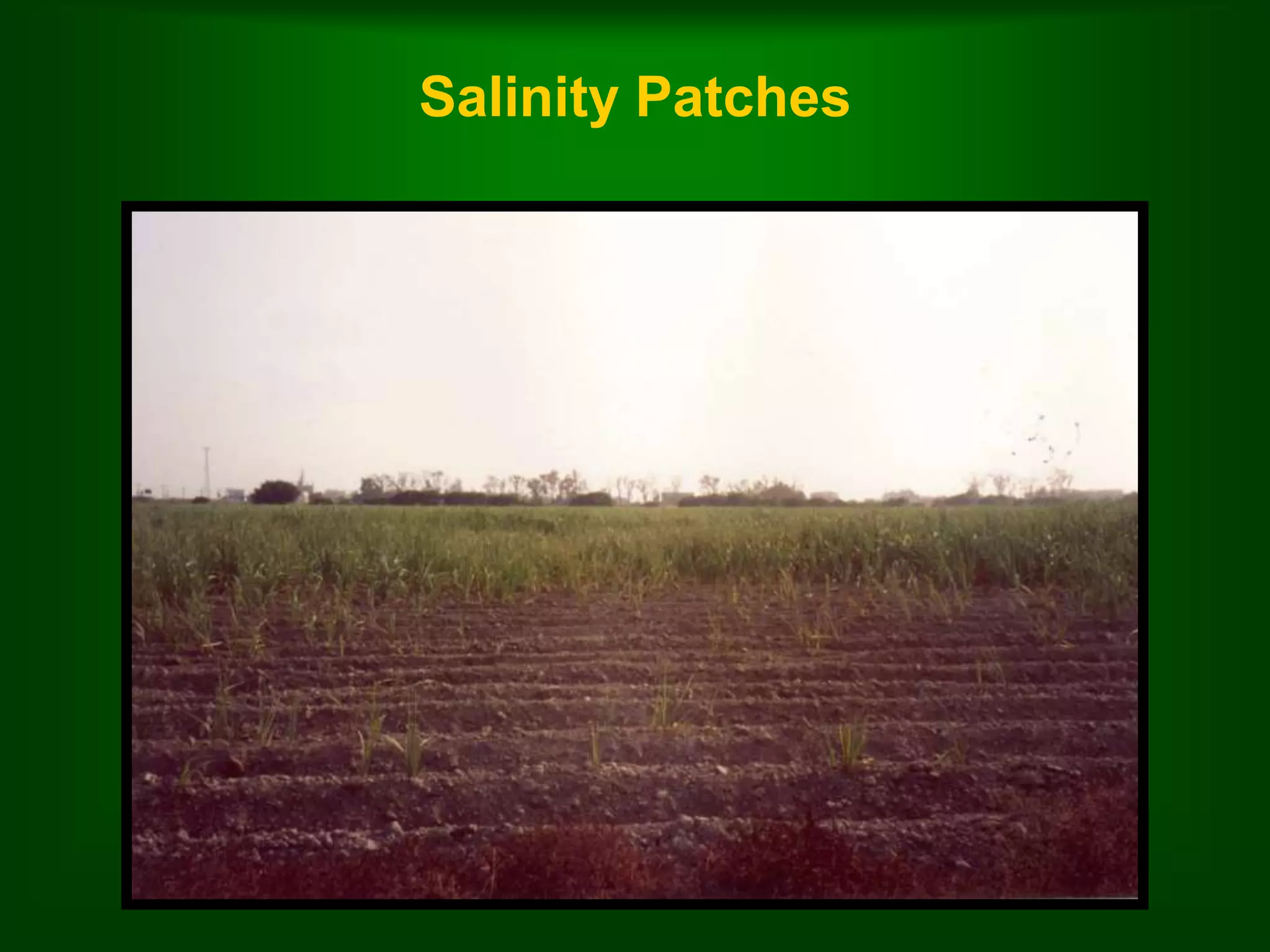
Salinity Patches
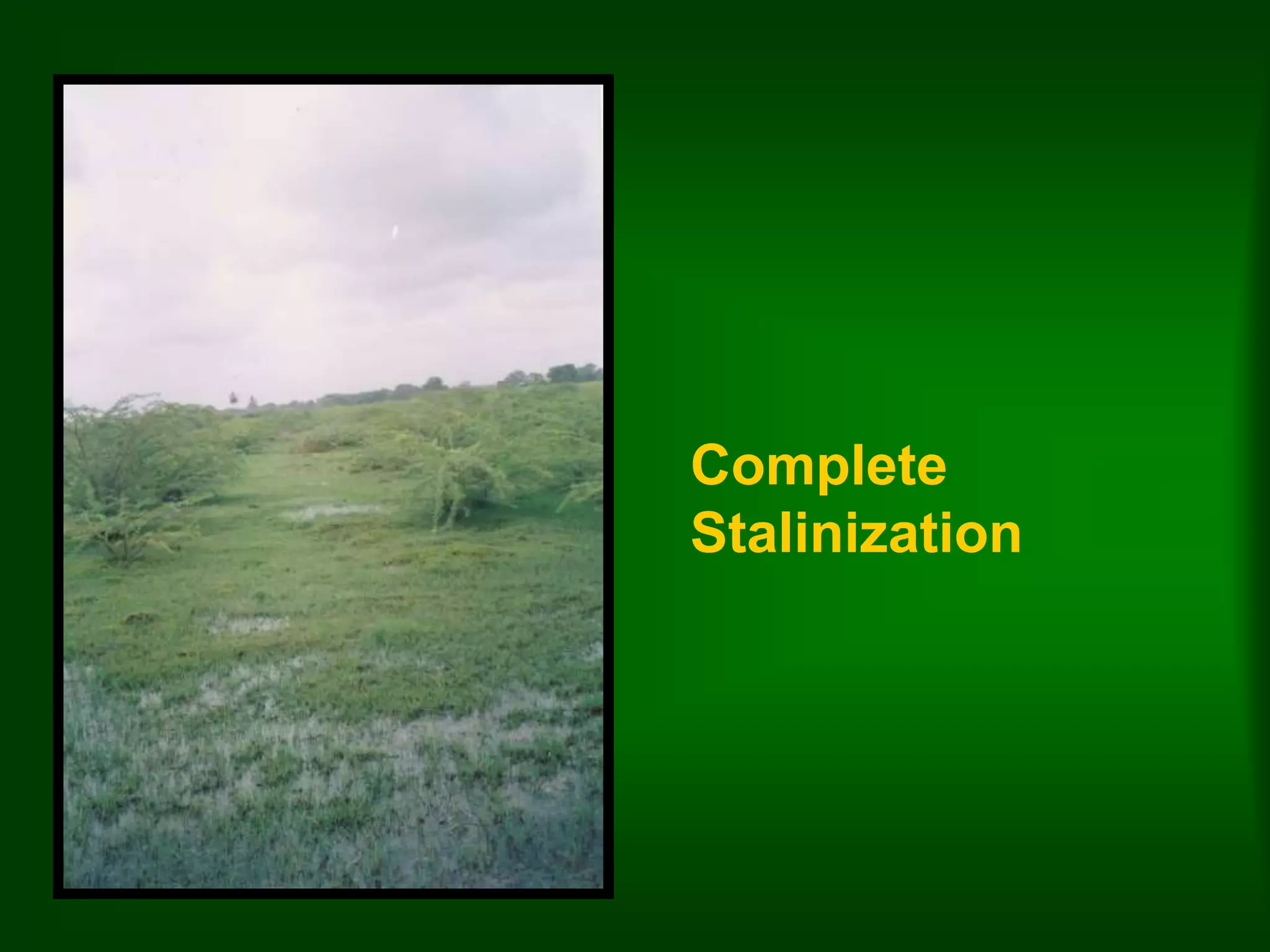
Complete 
Stalinization
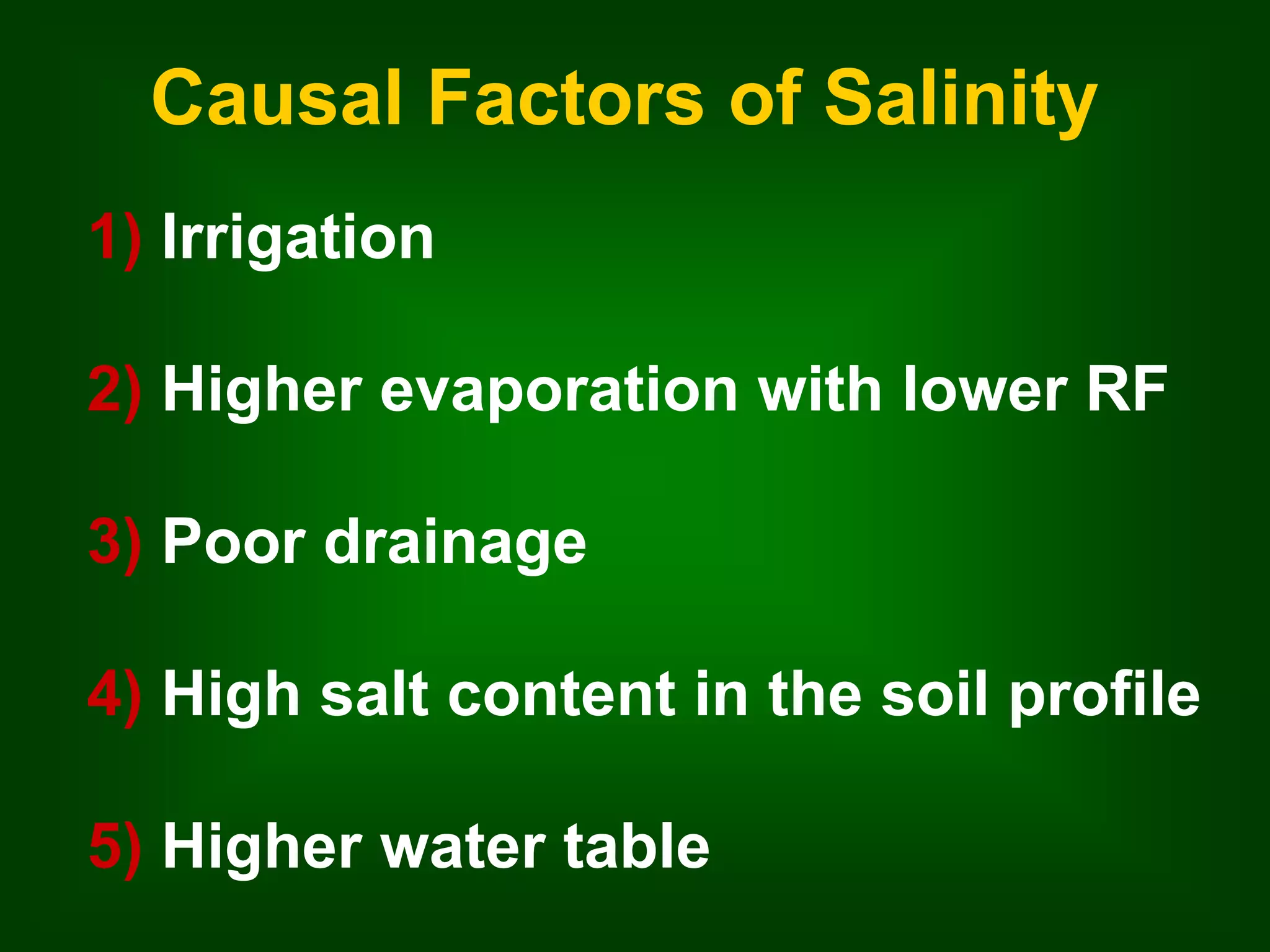
Causal Factors of Salinity 
1) Irrigation 
2) Higher evaporation with lower RF 
3) Poor drainage 
4) High salt content in the soil profile 
5) Higher water table
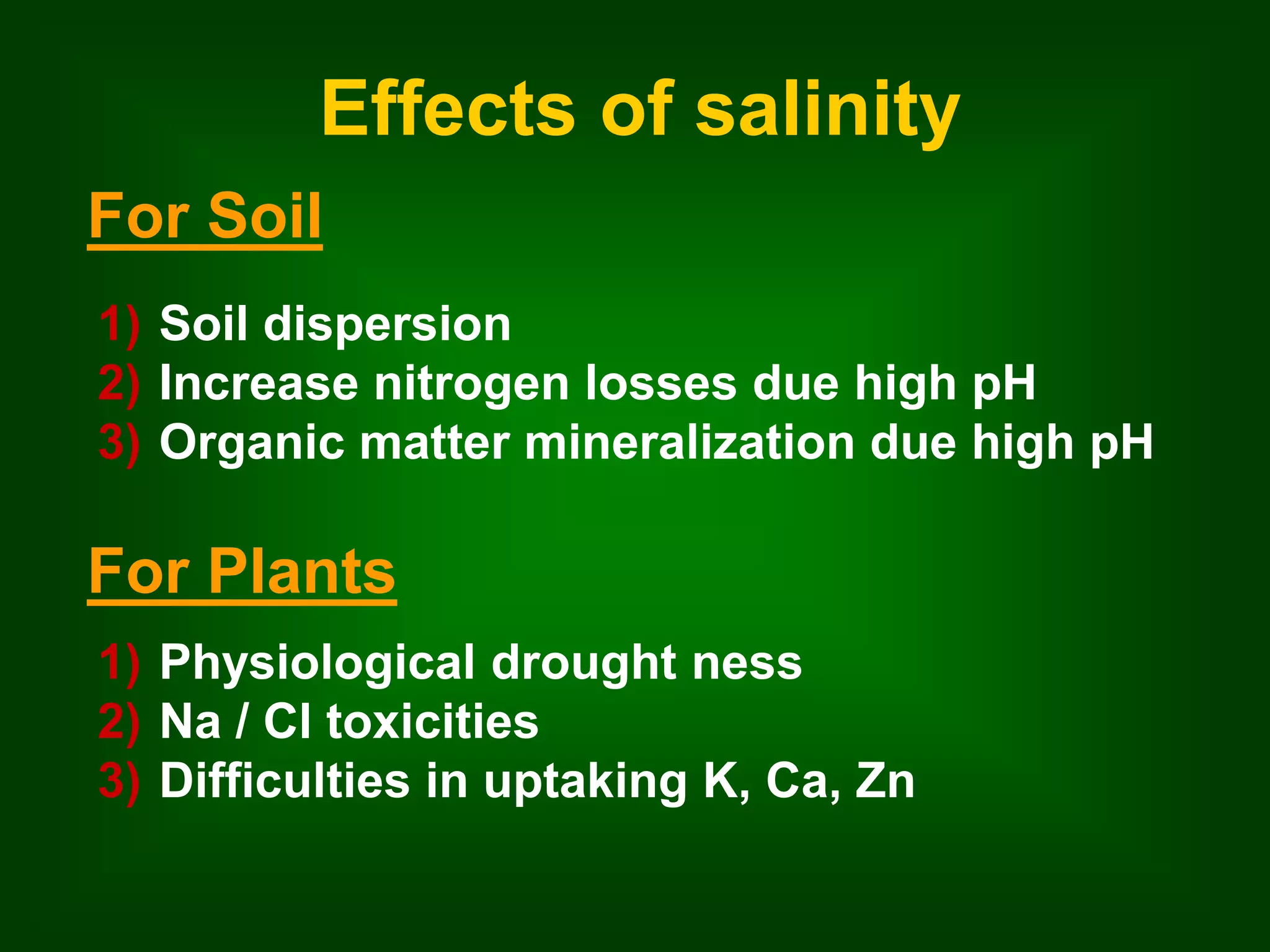
Effects of salinity 
For Soil 
1) Soil dispersion 
2) Increase nitrogen losses due high pH 
3) Organic matter mineralization due high pH 
For Plants 
1) Physiological drought ness 
2) Na / Cl toxicities 
3) Difficulties in uptaking K, Ca, Zn
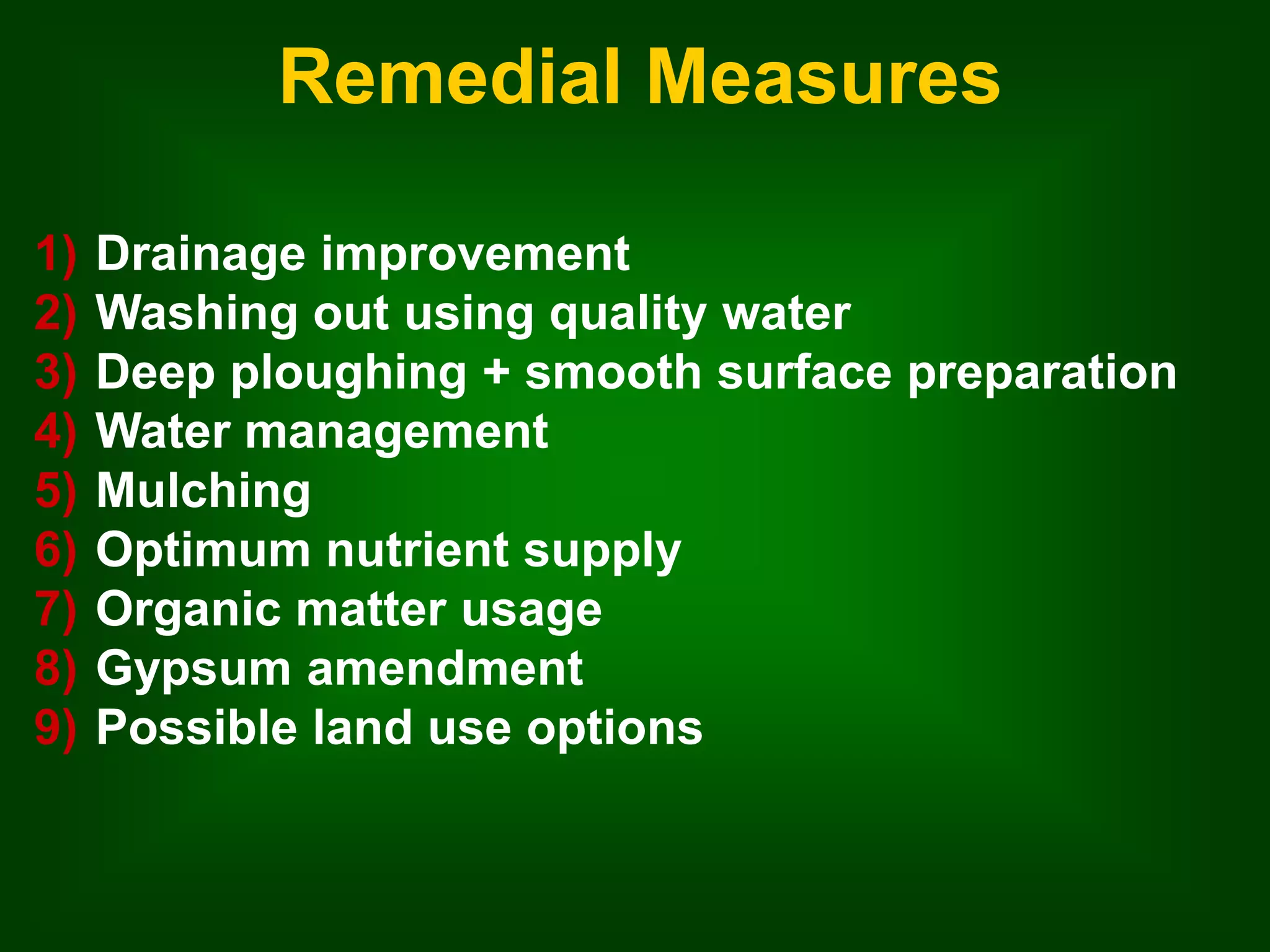
Remedial Measures 
1) Drainage improvement 
2) Washing out using quality water 
3) Deep ploughing + smooth surface preparation 
4) Water management 
5) Mulching 
6) Optimum nutrient supply 
7) Organic matter usage 
8) Gypsum amendment 
9) Possible land use options
Thank You

Soil and soil nutrient management in ofc production

  • 1.
    Soil and Soil Fertility Management in OFC Production
  • 2.
    Rocks Weathering ParentMaterials Soil Genesis Soil 1. Physical factors 2. Chemical factors 1. Climate 2. Parent material 3. Biosphere 4. Topography 5. Time
  • 3.
    Components of Soil (Volume Basis) 25% Water 45% 25% Air 5% Composition varies – Place to place / Time to time Mineral Matter Organic Matter
  • 4.
    Soil Properties Physical Properties Texture Structure Density Porosity Colour Moisture Content Water Holding Capacity Chemical Properties Nutrient Content pH Cation Exchange Capacity Electrical Conductivity Redox Potential Biological Properties Macro Organisms Micro Organisms
  • 5.
    Soils of theDry Zone
  • 6.
    Dry Zone ofSri Lanka Extent - 4.17 million ha. (Sri Lanka - 6.66 million ha.) Climate - <1750 mm (MARF) 25 - 30 C (MDT) Elevation - 0 – 300 m Land Form - Flat to Undulating (0 – 6 % Slope)
  • 7.
    DL1a DL1b DL1c DL1d DL1e DL1f DL2&DL3 DL2a DL2b DL3 DL3&DL4 DL4 DL5 Agro-ecological Zones of Dry Zone of Sri Lanka Agro-ecological Regions of the Dry Zone of Sri Lanka
  • 8.
    Soils of theDry Zone 1. Reddish Brown Earth 2. Low Humic Gley 3. Non Calcic Brown 4. Red Yellow Latasols 5. Sandy Regosols 6. Alluvial 7. Grumusols 8. Immature Brown Loam
  • 9.
    Land Use onDry Zone Soils 1. Reddish Brown Earth – Maize / Grain legumes 2. Low Humic Glay – Paddy 3. Non Calcic Brown – Big onion / Red onion 4. Red Yellow Latasols – Cashew 5. Sandy Regosols – Coconut 6. Alluvial – Paddy 7. Grumusols – Paddy 8. Immature Brown Loam – Home garden
  • 10.
    RBE (Rhodostalfs) Largest extent of the land in the dry zone  Characteristic reddish brown colour  Derived from Archacean rocks  Soil catenary sequence RBE LHG Well Drained Imperfectly Drained Poorly Drained
  • 11.
    Characteristics of RBESoils Physical Properties Soil Depth - Moderate (60 cm – 150 cm) Texture - Sandy clay loam Structure - Strong sub angular blocky Infiltration - 3 – 9 cm in 4 hours Available Moisture 130 – 170 mm/m Consistency - Hard when dry Slightly friable when moist Very sticky when wet
  • 12.
    Chemical Properties SoilReaction- Mostly neutral (5.5 – 7 pH) Slightly acidic ( RF) Slightly alkaline ( RF) CEC - Relatively high (10 – 20 cmol/kg) BS - 60 – 90 % Nutrients - Relatively low N Relatively low P Moderate to high K om - Low (0.5 – 2 %) C / N - 8 - 12
  • 13.
    Mineralogy Primary Minerals  Ferromagnesian (Fe / Mg) Secondary (Clay) Minerals  Kaolinite  Illite  Montmorillenite traces Land Use Natural Vegetation – Dry mixed evergreen forest Crops – Maize / Grain legumes
  • 14.
    Problems Associated withRBE Soils in the Dry Zone • Depth • Erosion • Workability • Crusting • Fertility • Irrigation ?
  • 15.
    Soil Depth Gravellayer – Quartsic / Ferralic Clay migration and deposition Hard pan formation Restrict soil depth Temporary submerged condition Restrict rooting depth Runoff Erosion
  • 16.
    Erosion Poor aggregatestability Rain drop impact Splash erosion Surface sealing Low infiltration High surface runoff Soil erosion
  • 17.
    Workability Kaolinitic clay– Very hard when dry Very sticky when wet Crusting Poor aggregate stability – Blocking spores with clay particles Crust formation under dry condition Evaporation Seed germination Greater use of energy
  • 18.
    Soil Fertility Hightemperature Lack of top soil Low organic matter Nitrogen Microbial activities Sulphur / Posphorus Micro nutrients (Zn)
  • 19.
    Irrigation  Highererodability of soil  Lower available moisture content Higher water losses within the soil system  Higher ET rates Reduce the flexibility of designing surface irrigation systems
  • 20.
    Management of RBESoils Depth  Crop selection  Deep ploughing Erosion 1.Correct use of land  Land use classification  Land capability classification
  • 21.
    2. Mechanical InfiltrationRun off  Sub soil improvement  Terraces  Contour drains  Contour earth bunds  Terraces  Contour bunds  Terrace outlet channels  Silt traps
  • 22.
    3. Agronomic Management Protection from rain drop impact  Cropping systems  Inter  Mixed  Alley  Mulching Infiltration  Dressing with om  Mulching  Deep ploughing  Contour cropping  Strip cropping  Alley cropping
  • 23.
    Workability  Moisturemaintenance  Timely cultivation Crusting  Mulching - om / Soil  Crop selection
  • 24.
    Fertility  Balanceduse of fertilizer  Organic matter application  Cropping systems • Alley • Inter • Mix • Crop rotation Different nutrient requirements Different rooting depths Nutrient movement to the top soil
  • 25.
    Irrigation  Dripirrigation  Sprinkler irrigation  Minimizing water losses  Emphasis on crop water requirement
  • 26.
    Low Humic GleySoils (Tropaqualfs)  Second most extensive soil group in Sri Lanka  Located at the foot slopes of the undulating landscape  Characterized by the wetness or gleying through the profile  Availability of calcite concretions Physical Properties Texture - Sandy clay to clay Structure - Sub angular blocky to massive WHC - Fairly good
  • 27.
    Chemical Properties Soilreaction - Moderately alkaline Base saturation - 90-100 % Mineralogy Primary Minerals  Calcite Secondary (Clay) Minerals  Kaolinite  Montmorillanite
  • 28.
    Importance of SoilFertility Continuous cultivation Soil fertility degradation Soil Fertility Inherent capacity of a soil to supply nutrients to plants in 1) Adequate amounts 2) Suitable proportions
  • 29.
    Soil Nutrients Macronutrients 1. Carbon 2. Hydrogen 3. Oxygen 4. Nitrogen 5. Phosphorus 6. Potassium 7. Calcium 8. Magnesium 9. Sulfur Micronutrients 1. Manganese 2. Copper 3. Zinc 4. Molybdenum 5. Boron 6. Chlorine 7. Iron
  • 30.
    Nutrient Deficiencies Inadequateamounts and unsuitable proportions of soil nutrients Nutrient Deficiencies Identification of Deficiencies 1) Observation of visible symptoms 2) Plant tissue analysis 3) Soil analysis
  • 31.
    Visual Observation ofNutrient Deficiencies 1) Leaf growth and colour 2) Plant height 3) Tillering 4) Root growth Important growth stages for identification of Deficiencies 1) Tillering stage 2) Flowering stage
  • 32.
     Lemon greenish mature leaves  Yellowish colour of the crop
  • 33.
     Dark greenishcolour of leaves  Retarted growth of the plant
  • 34.
  • 35.
  • 36.
    Exposure of the gravel layer
  • 37.
    Siltation in water reservoirs
  • 38.
  • 39.
    Fertilizer Recommendation 1)Plant analysis Nitrogen recommendation 2) Soil analysis Available nutrient level in the soil Soil Test Based Fertilizer Recommendation
  • 40.
    Nutrient Sources -Inorganic Nutrient Source Nutrient % N Urea 46 P Triple Super Phosphate 45 (P2O5) K Muriate of Potash 60 (K2O) Mg Dolomite 24 S Sulfur Powder - Mn Manganese Oxide 48 Cu Copper Sulfate 25 Zn Zinc Sulfate 35 B Borax 11 Fe Ferrous Sulfate 20
  • 41.
    Nutrient Sources –Organic  Green manure - Insitu – Sunhemp / Mukuna Exsitu – Gliricedia / Erithrina / Wild sunflower  Crop residues  Mulch  Compost  Farmyard manure
  • 42.
    Other Major Problemsin Paddy Soils in Dry Zone Inland Salinity Accumulation of salts in soil pH EC (mmhos / cm) ESP (%) Salinity < 8.5 > 4 < 15 Alkalinity > 8.5 < 4 > 15
  • 43.
  • 44.
  • 45.
    Causal Factors ofSalinity 1) Irrigation 2) Higher evaporation with lower RF 3) Poor drainage 4) High salt content in the soil profile 5) Higher water table
  • 46.
    Effects of salinity For Soil 1) Soil dispersion 2) Increase nitrogen losses due high pH 3) Organic matter mineralization due high pH For Plants 1) Physiological drought ness 2) Na / Cl toxicities 3) Difficulties in uptaking K, Ca, Zn
  • 47.
    Remedial Measures 1)Drainage improvement 2) Washing out using quality water 3) Deep ploughing + smooth surface preparation 4) Water management 5) Mulching 6) Optimum nutrient supply 7) Organic matter usage 8) Gypsum amendment 9) Possible land use options
  • 48.