SOC Analyst Tier 1 Interview
Questions
www.infosectrain.com | sales@infosectrain.com
Security Operations Center (SOC) Analysts play a crucial role in identifying, analyzing,
responding, and mitigating cyber attacks in an organization. The Tier 1 SOC Analysts
are triaged, which means the first responders who identify, manage, and configure the
security tools to analyze and define the nature of the attack. This article provides the
interview questions for SOC Analysts L1 and helps to take a quick revision before
cracking an interview.
www.infosectrain.com | sales@infosectrain.com
1. What is a threat?
A Threat is defined as a malicious activity intended to achieve unauthorized access to the
system, disrupt the organization's assets, steal data, and damage the network operation.
The threats are categorized into the following types:
โ€ข Adversarial Threat
โ€ข Accidental Threat
โ€ข Environmental Threat
โ€ข Structured Threat
2. What is vulnerability?
Vulnerability is a weakness or security flaw in a system or network that allows attackers to
exploit the system and can lead to unauthorized access, malware injection, DDoS attacks,
or data compromise. It creates a possible way to violate the system's security policy.
3. Explain the difference between event and incident.
An event is an occurrence in time that is analyzed, verified, and documented. An incident
is a series of events that negatively affect organizational assets.
4. How is Incident management different from Problem management?
Incident Management is defined as minimizing the negative impact of incidents by
restoring security operations. In contrast, problem management is defined as the cause
of one or more incidents that further deals with identifying the root cause of an incident.
www.infosectrain.com | sales@infosectrain.com
5. Define a Brute force attack and a Dictionary attack.
In a Brute force attack, several possible key permutations or trial and error methods are
used to get the login info, access to a web page, or encryption keys. Whereas, in a
Dictionary attack, words are used to break the password-protected network, system, or IT
resource.
6. What are the various types of Brute Force Attacks?
The following are the various types of Brute Force Attacks:
โ€ข Credential Stuffing
โ€ข Dictionary Attack
โ€ข Simple Brute Force Attack
โ€ข Hybrid Brute Force Attack
โ€ข Reverse Brute Force Attack
โ€ข Rainbow Table Attack
7. What is the difference between DOS & DDOS?
DOS is a Denial of Service attack in which the attackers send an enormous amount of
traffic to make the server or website services unavailable. In contrast, the DDoS attack is a
Distributed denial-of-service that uses multiple systems to inject massive traffic into the
target system. Both DoS and DDoS attacks aim to interrupt the services provided by the
websites.
www.infosectrain.com | sales@infosectrain.com
9. Define Firewall, and what are the different types of firewalls?
โ€ข A Firewall is a security solution used to protect the network from malicious activities. It
is connected with the systems or devices through a network to monitor the network
traffic.
โ€ข Different types of firewalls are as follows:
โ€ข Packet-filtering firewall
โ€ข Cloud firewall
โ€ข Application layer firewall
โ€ข Stateful Inspection firewall
โ€ข Hardware firewall
โ€ข Software firewall
10. What is WAF?
A Web Application Firewall (WAF) protects the web application from cyberattacks such as
cookie poisoning, Cross-site scripting, SQL injection, etc.
SOC Expert Combo Training with InfosecTrain
InfosecTrain is the best training and consultancy service provider in IT security and
cybersecurity domains. It offers a SOC Expert Combo training program on two levels: SOC
Specialist and SOC Analyst, which covers all the core concepts of SOC techniques, such
as incident response, SIEM, digital forensics, and threat intelligence solutions. Check out
and enroll now.
About InfosecTrain
โ€ข Established in 2016, we are one of the finest
Security and Technology Training and
Consulting company
โ€ข Wide range of professional training programs,
certifications & consulting services in the IT
and Cyber Security domain
โ€ข High-quality technical services, certifications
or customized training programs curated with
professionals of over 15 years of combined
experience in the domain
www.infosectrain.com | sales@infosectrain.com
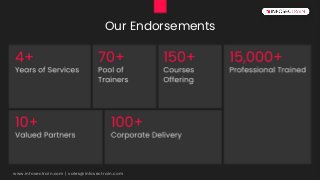
Our Endorsements
www.infosectrain.com | sales@infosectrain.com
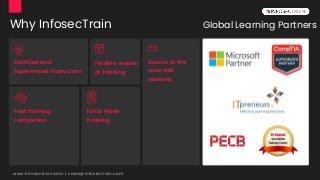
Why InfosecTrain Global Learning Partners
Flexible modes
of Training
Tailor Made
Training
Post training
completion
Certified and
Experienced Instructors
Access to the
recorded
sessions
www.infosectrain.com | sales@infosectrain.com
Our Trusted Clients
www.infosectrain.com | sales@infosectrain.com
Contact us
Get your workforce reskilled
by our certified and
experienced instructors!
IND: 1800-843-7890 (Toll Free) / US: +1 657-722-11127 /
UK : +44 7451 208413
sales@infosectrain.com
www.infosectrain.com

SOC Analyst Tier 1 Interview Questions.pptx

  • 1.
    SOC Analyst Tier1 Interview Questions www.infosectrain.com | sales@infosectrain.com
  • 2.
    www.infosectrain.com | sales@infosectrain.com SecurityOperations Center (SOC) Analysts play a crucial role in identifying, analyzing, responding, and mitigating cyber attacks in an organization. The Tier 1 SOC Analysts are triaged, which means the first responders who identify, manage, and configure the security tools to analyze and define the nature of the attack. This article provides the interview questions for SOC Analysts L1 and helps to take a quick revision before cracking an interview.
  • 3.
    www.infosectrain.com | sales@infosectrain.com 1.What is a threat? A Threat is defined as a malicious activity intended to achieve unauthorized access to the system, disrupt the organization's assets, steal data, and damage the network operation. The threats are categorized into the following types: โ€ข Adversarial Threat โ€ข Accidental Threat โ€ข Environmental Threat โ€ข Structured Threat 2. What is vulnerability? Vulnerability is a weakness or security flaw in a system or network that allows attackers to exploit the system and can lead to unauthorized access, malware injection, DDoS attacks, or data compromise. It creates a possible way to violate the system's security policy. 3. Explain the difference between event and incident. An event is an occurrence in time that is analyzed, verified, and documented. An incident is a series of events that negatively affect organizational assets. 4. How is Incident management different from Problem management? Incident Management is defined as minimizing the negative impact of incidents by restoring security operations. In contrast, problem management is defined as the cause of one or more incidents that further deals with identifying the root cause of an incident.
  • 4.
    www.infosectrain.com | sales@infosectrain.com 5.Define a Brute force attack and a Dictionary attack. In a Brute force attack, several possible key permutations or trial and error methods are used to get the login info, access to a web page, or encryption keys. Whereas, in a Dictionary attack, words are used to break the password-protected network, system, or IT resource. 6. What are the various types of Brute Force Attacks? The following are the various types of Brute Force Attacks: โ€ข Credential Stuffing โ€ข Dictionary Attack โ€ข Simple Brute Force Attack โ€ข Hybrid Brute Force Attack โ€ข Reverse Brute Force Attack โ€ข Rainbow Table Attack 7. What is the difference between DOS & DDOS? DOS is a Denial of Service attack in which the attackers send an enormous amount of traffic to make the server or website services unavailable. In contrast, the DDoS attack is a Distributed denial-of-service that uses multiple systems to inject massive traffic into the target system. Both DoS and DDoS attacks aim to interrupt the services provided by the websites.
  • 5.
    www.infosectrain.com | sales@infosectrain.com 9.Define Firewall, and what are the different types of firewalls? โ€ข A Firewall is a security solution used to protect the network from malicious activities. It is connected with the systems or devices through a network to monitor the network traffic. โ€ข Different types of firewalls are as follows: โ€ข Packet-filtering firewall โ€ข Cloud firewall โ€ข Application layer firewall โ€ข Stateful Inspection firewall โ€ข Hardware firewall โ€ข Software firewall 10. What is WAF? A Web Application Firewall (WAF) protects the web application from cyberattacks such as cookie poisoning, Cross-site scripting, SQL injection, etc. SOC Expert Combo Training with InfosecTrain InfosecTrain is the best training and consultancy service provider in IT security and cybersecurity domains. It offers a SOC Expert Combo training program on two levels: SOC Specialist and SOC Analyst, which covers all the core concepts of SOC techniques, such as incident response, SIEM, digital forensics, and threat intelligence solutions. Check out and enroll now.
  • 6.
    About InfosecTrain โ€ข Establishedin 2016, we are one of the finest Security and Technology Training and Consulting company โ€ข Wide range of professional training programs, certifications & consulting services in the IT and Cyber Security domain โ€ข High-quality technical services, certifications or customized training programs curated with professionals of over 15 years of combined experience in the domain www.infosectrain.com | sales@infosectrain.com
  • 7.
  • 8.
    Why InfosecTrain GlobalLearning Partners Flexible modes of Training Tailor Made Training Post training completion Certified and Experienced Instructors Access to the recorded sessions www.infosectrain.com | sales@infosectrain.com
  • 9.
  • 11.
    Contact us Get yourworkforce reskilled by our certified and experienced instructors! IND: 1800-843-7890 (Toll Free) / US: +1 657-722-11127 / UK : +44 7451 208413 sales@infosectrain.com www.infosectrain.com