Smart, sustainable and affordable
housing as a tool for local authorities
to face multiple challenges
The European Commitee of the Regions
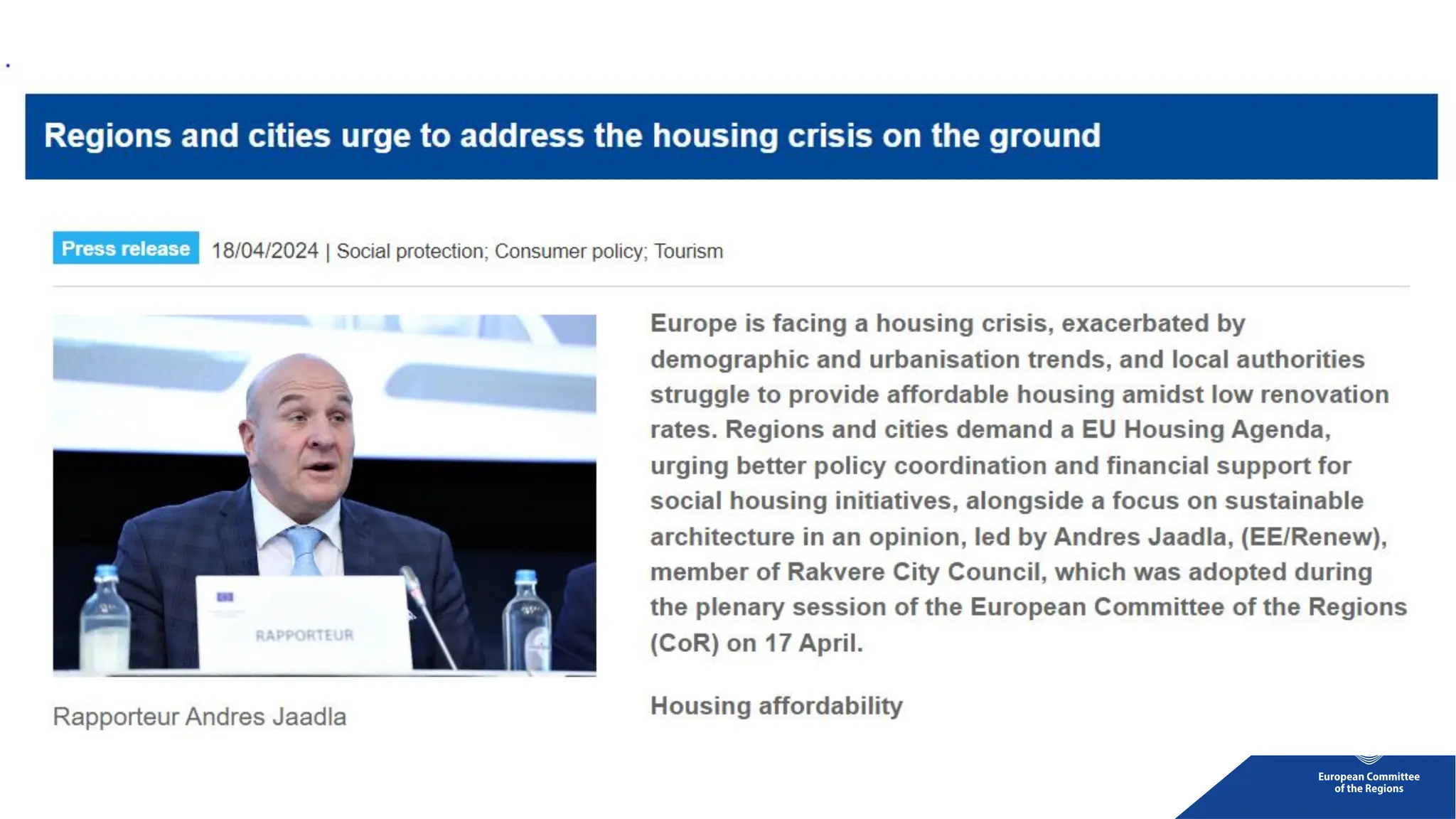
Rapporteur: Andres Jaadla
Forum
“ Smart, Energy-Efficient, and Accessible Housing Future“
September 20, 2024
Jūrmala, Latvia
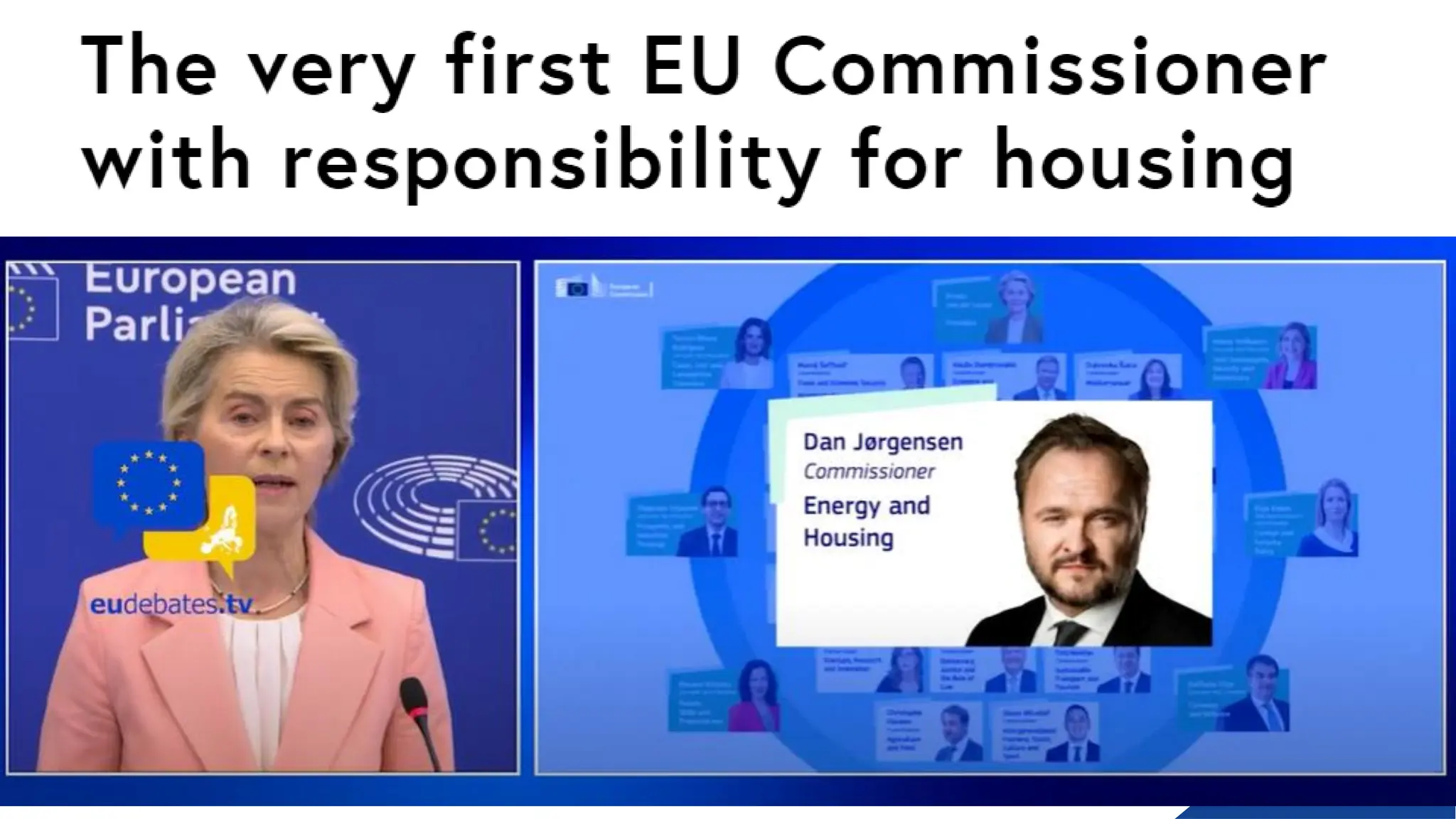
The appointment of Dan Jørgensen as Commissioner-
designate for Energy and Housing marks a crucial
opportunity to tackle the European housing crisis and
ensure that the drive for affordable, sustainable
homes and investing in people become central to the
future of Europe.
As President Ursula von der Leyen stated in her
mission letter to the designated Commissioner:
"Millions of young people and families struggle to
find affordable housing throughout Europe. We
urgently need to address this, supporting Member
States to address structural drivers and unlocking
public and private investment for affordable and
sustainable housing."
Housing in the spotlight
Persisting shortage of accessible and affordable housing is
worsening
The COVID-19 pandemic, inflation, the migration crisis, and the
conflict in Ukraine have intensified the challenges
Several EU initiatives related thow effective they are and what are
synergies between them?o housing:
Climate goals, energy efficiency and renovation
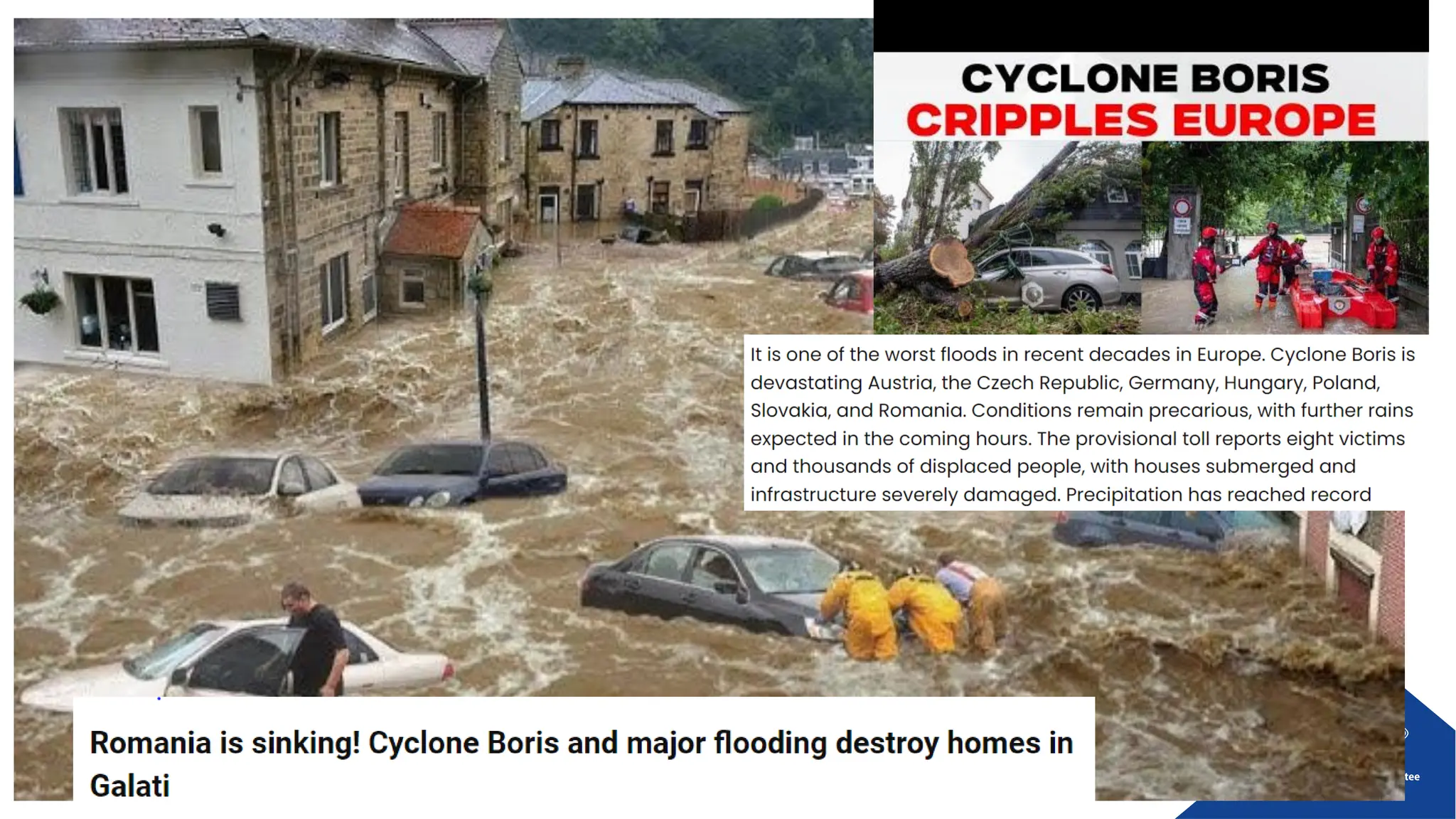
Climate resilience and extreme weather events (floods,
earthquakes, heat waves…)
Housing as a policy tool for LRAs
Local and Regional Authorities (LRAs) unable to
meaningfully invest into public housing stock or
support private housing initiative
With the means to invest into smart, sustainable and
affordable housing, the LRAs could potentially face
cost-of-living crisis, the refugee and migration inflow
combined with accelerated demographic trends, and
climate change and increasingly pronounced
weather extremes.
Housing as a policy tool for LRAs
CoR opinion therefore aims at taking stock of
the ongoing initiatives related to housing - on
private, cooperative and public housing, which
could boost the local economic base and help
reverse demographic trends.
It could help cities and regions to respond to
various challenges, such as migration, climate
resilience,renovation, impact of platform rentals,
slow spatial planning, etc.
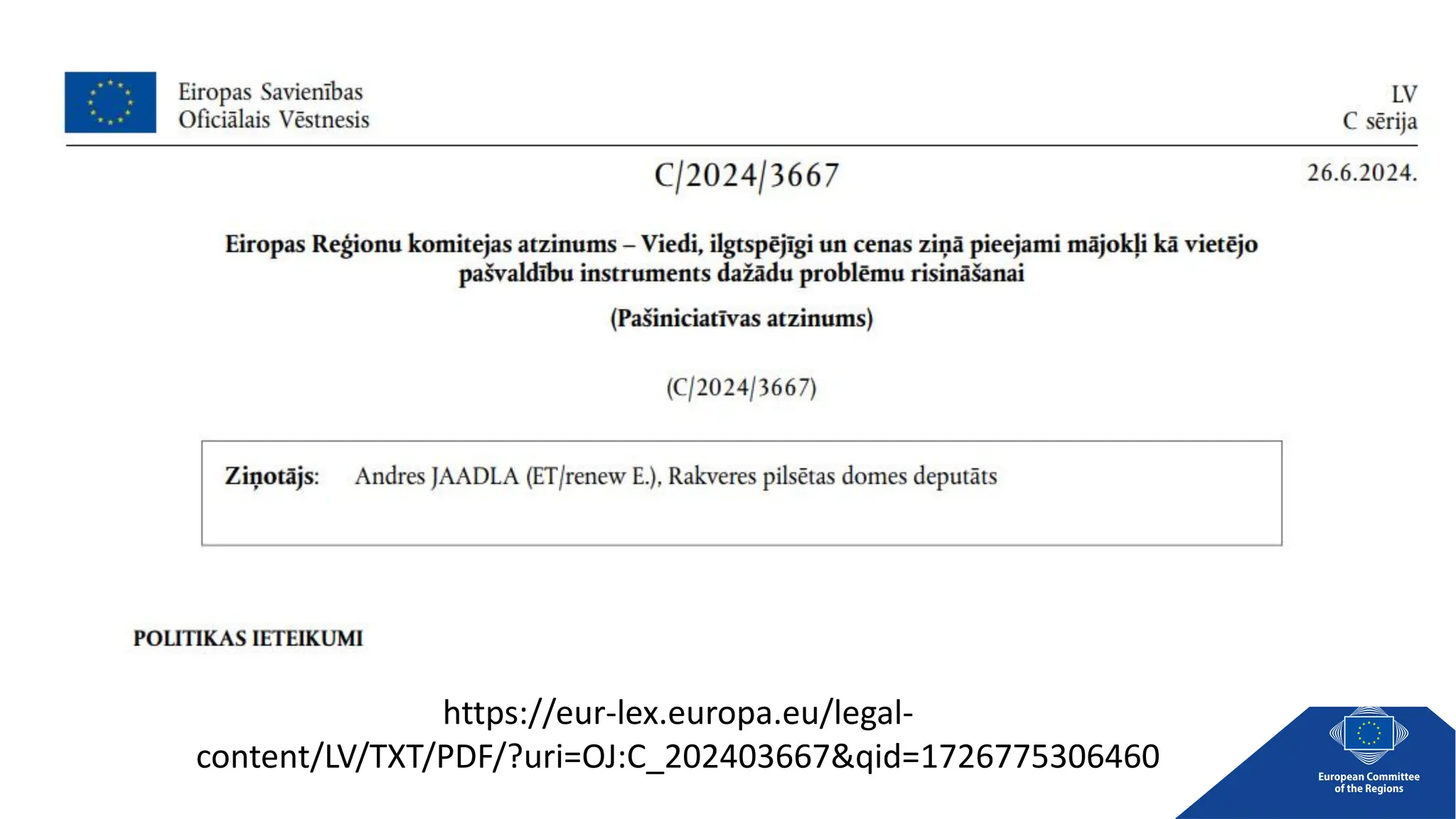
https://eur-lex.europa.eu/legal-
content/LV/TXT/PDF/?uri=OJ:C_202403667&qid=1726775306460
Affordable housing !
Affordable housing
• Increasing cost of leaving.
Expenditure on housing costs represents the highest share of household budgets in
the vast majority of EU countries with an average 32.7% of total consumption
expenditure.
• House prices have followed a steady upwards trend especially between 2015
and 2021.
The largest increases have been observed in Estonia (+139 %), Hungary (+122 %),
Luxembourg (+115 %), Latvia (+101 %) and Austria (+100 %)
• In 2021, 30 % of EU population lived in rented housing and they have faced
an increase of rents.
In percentage, highest inflation of rents is observed in Hungary (+33 %), Romania
(+31 %), Estonia (+30 %) and Lithuania (+25 %) and lowest – in Greece (+2 %),
Cyprus (+7 %) and Ireland (+8 %).
Affordable housing
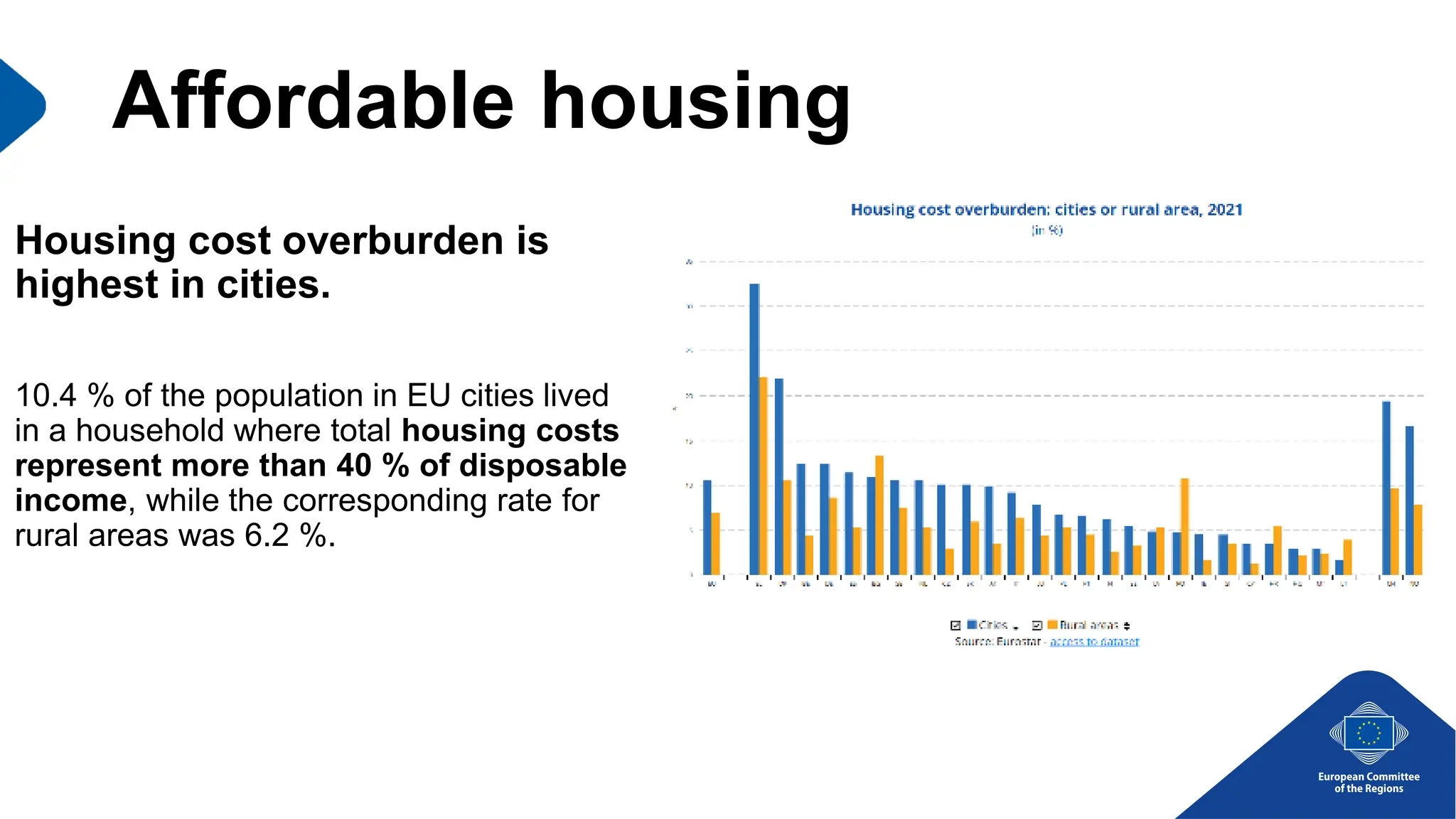
Housing cost overburden is
highest in cities.
10.4 % of the population in EU cities lived
in a household where total housing costs
represent more than 40 % of disposable
income, while the corresponding rate for
rural areas was 6.2 %.
Affordable housing
The housing affordability becomes a major
challenge not only for the low-income and
vulnerable groups (such as young people,
senior citizens, large families with children), but
also for middle-income earners, especially in
large cities where rents skyrockets, while the
quality of available housing remains low.
Affordable housing
How affordable is housing in your city or region and
what are the factors influencing the trend?
What is the home ownership trend in your in your
region/city, has the public housing expanded or
reduced and does the market of private housing works?
What is "touristification" of European city centres doing
to the local housing market? Share any policies to control
the trends.
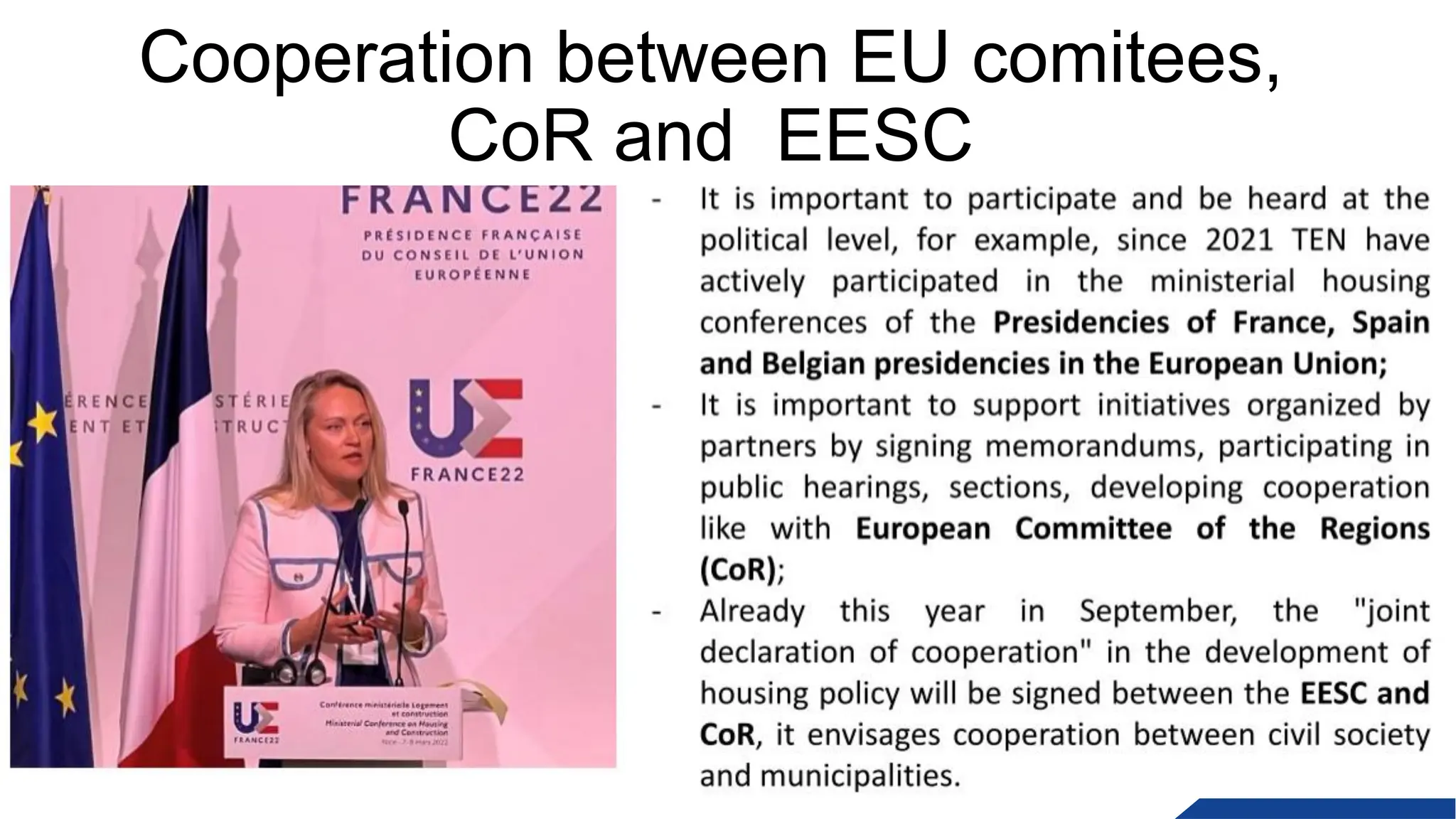
Cooperation between EU comitees,
CoR and EESC
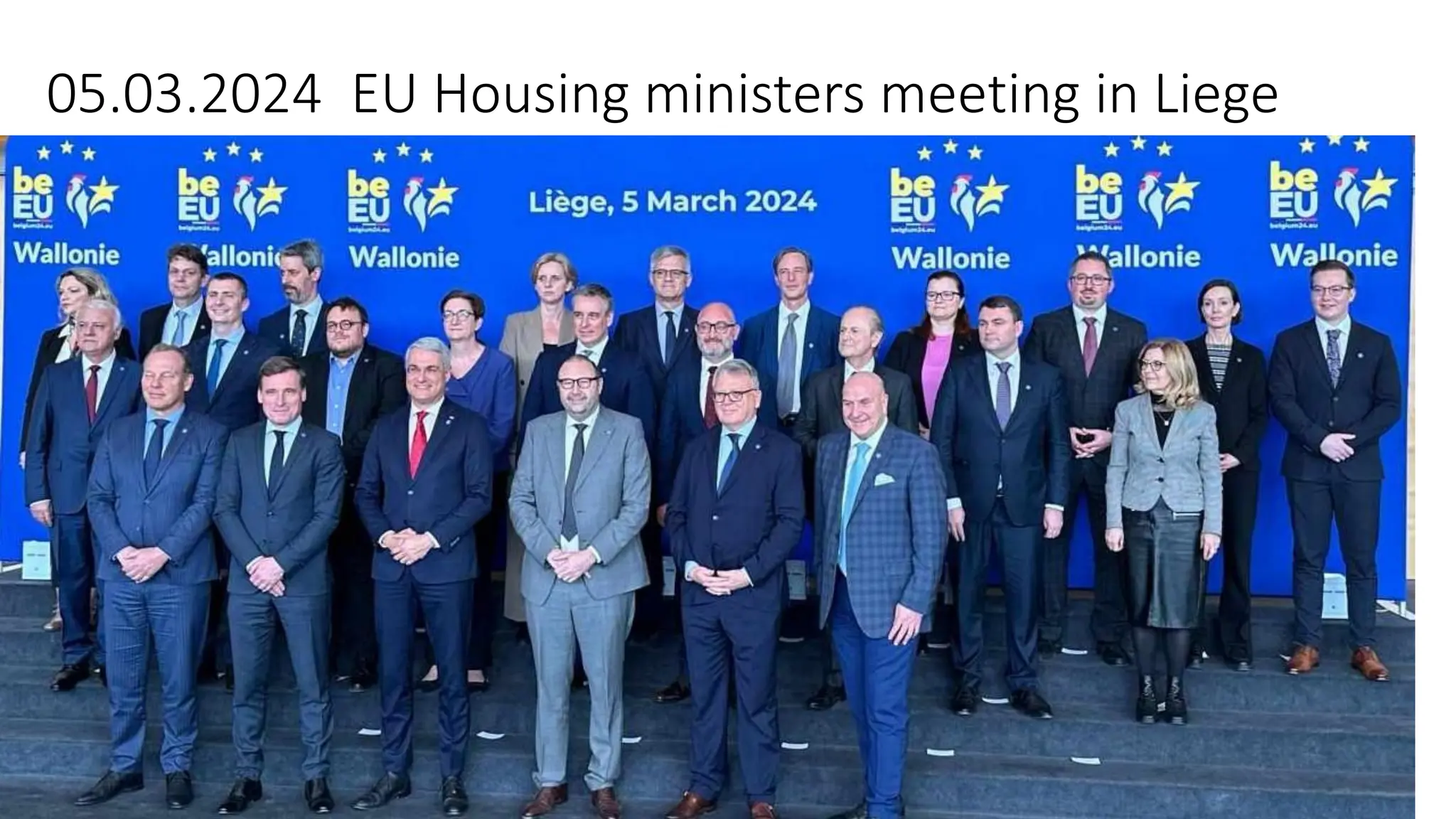
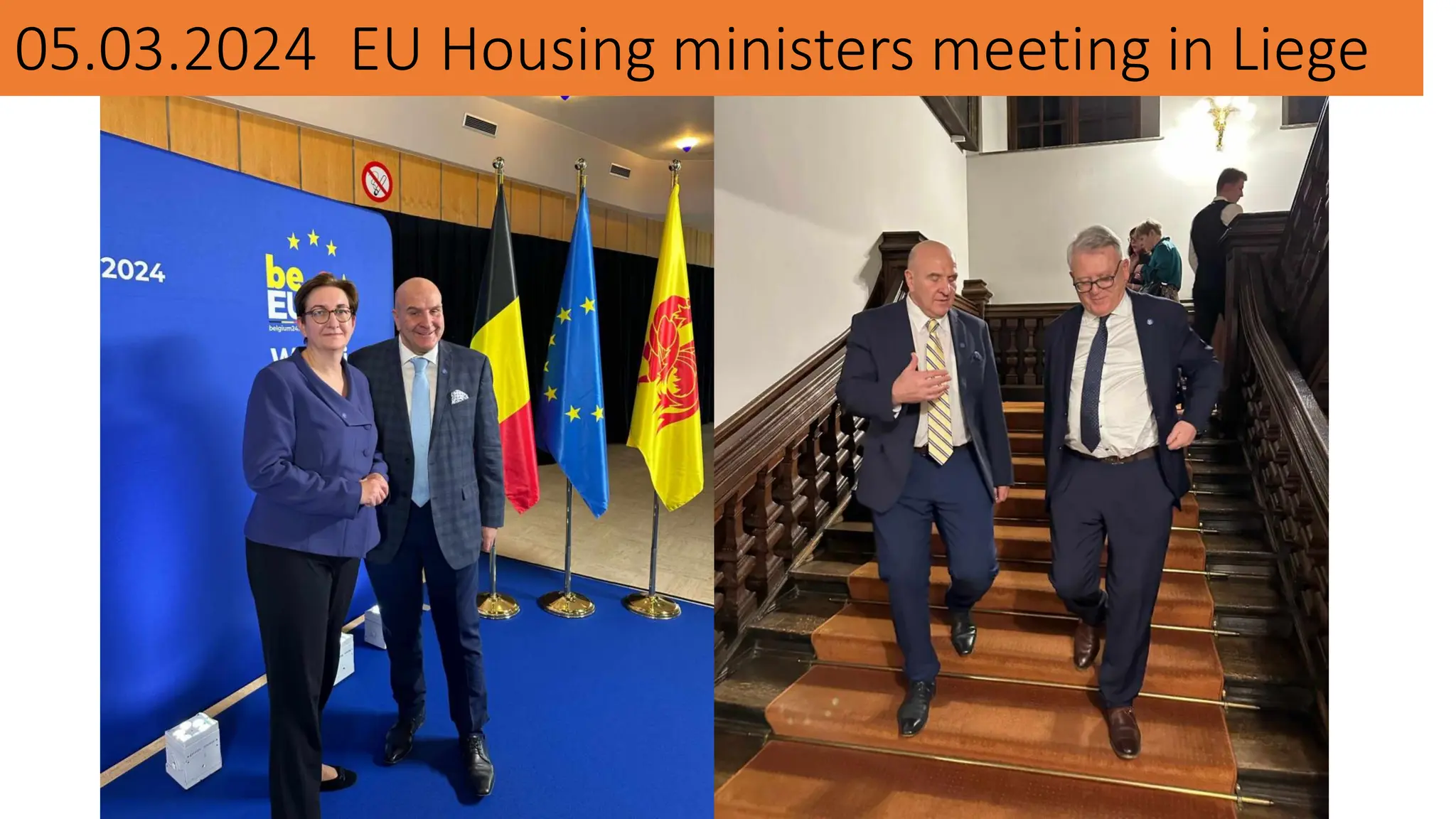
05.03.2024 EU Housing ministers meeting in Liege
Andres Jaadla
Andres Jaadla
05.03.2024 EU Housing ministers meeting in Liege
Andres Jaadla
Smart, energy efficient
and sustainable
housing!
Smart, energy efficient and sustainable
• The European Union building stock encompasses of more than 220 million
building units (85% of the EU’s building stock) built before 2001 and the
share of residential buildings (floor area) represents more than 66% of the
building stock in all Member States, except Estonia, where it is 25.67 %.
• Total renovation rate for residential buildings remains quite below 20% for all
EU countries and deep renovation are lagging behind with rates in times lower
than for the non-residential deep renovations.
• Energy poverty remains a major challenge for millions of Europeans. Overall,
buildings are responsible for about 40% of the EU’s total energy consumption,
and for 36% of its greenhouse gas emissions from energy
• The greenhouse gas emissions from households for heating and cooling are
the highest in Luxembourg (1 564.3 kg per capita), followed by Ireland (1 402.8)
and Belgium (1 137.7), and the lowest value in Sweden (29.7).
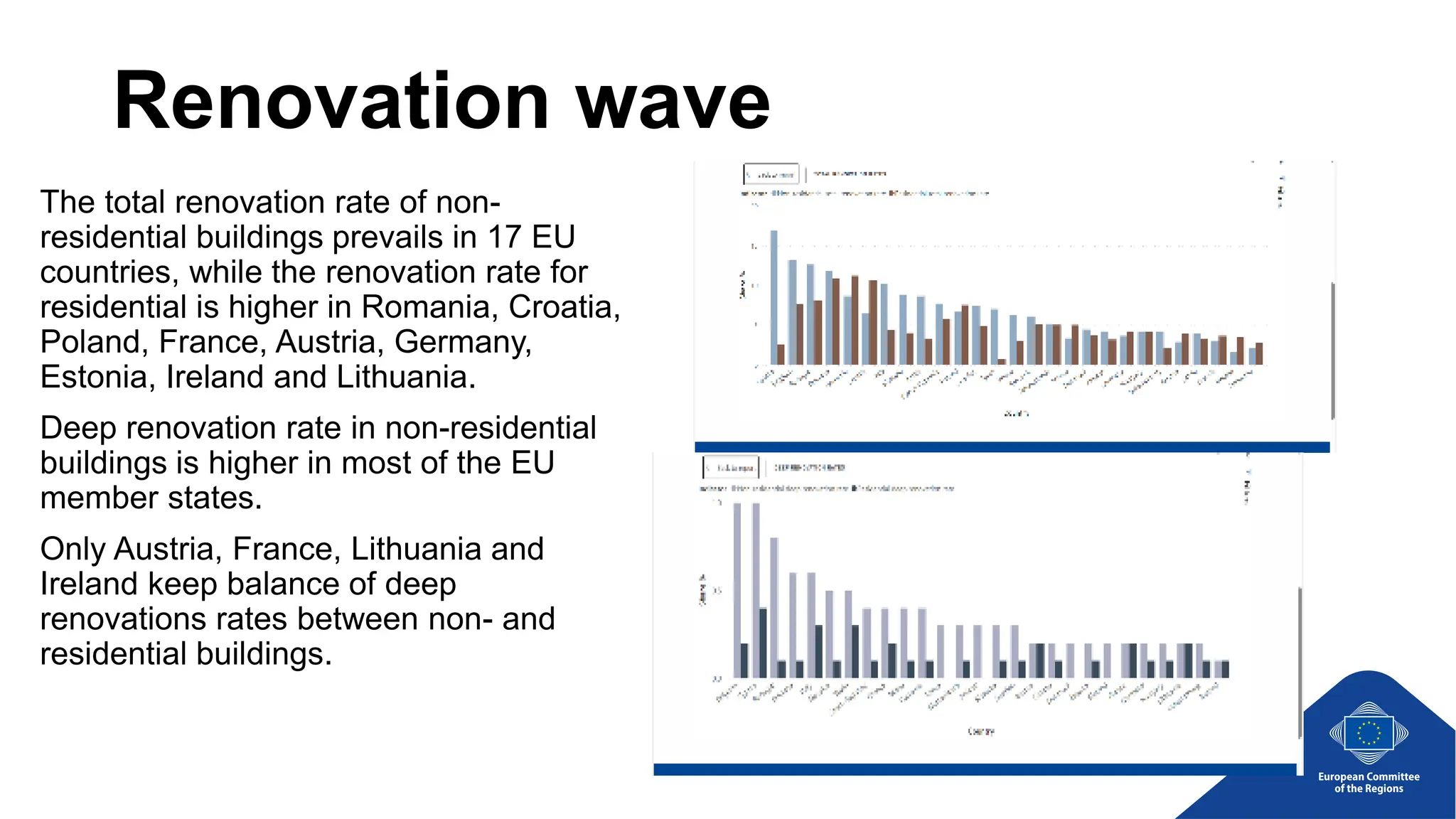
Renovation wave
The total renovation rate of non-
residential buildings prevails in 17 EU
countries, while the renovation rate for
residential is higher in Romania, Croatia,
Poland, France, Austria, Germany,
Estonia, Ireland and Lithuania.
Deep renovation rate in non-residential
buildings is higher in most of the EU
member states.
Only Austria, France, Lithuania and
Ireland keep balance of deep
renovations rates between non- and
residential buildings.
©EU Building Stock Observatory, European Commission,
Smart, energy efficient and
sustainable
What are the key challenges of maintaining housing infrastructure,
especially in older or densely populated areas?
Is the Renovation Wave/national renovation plans supporting
affordable housing and what are the success programs and supports for
low-income but also for middle-income population groups?
Are smart home solutions worthy of streamlined public support, and a
wider rollout, and does your region/city have a specific body or lab to
promote new solutions?
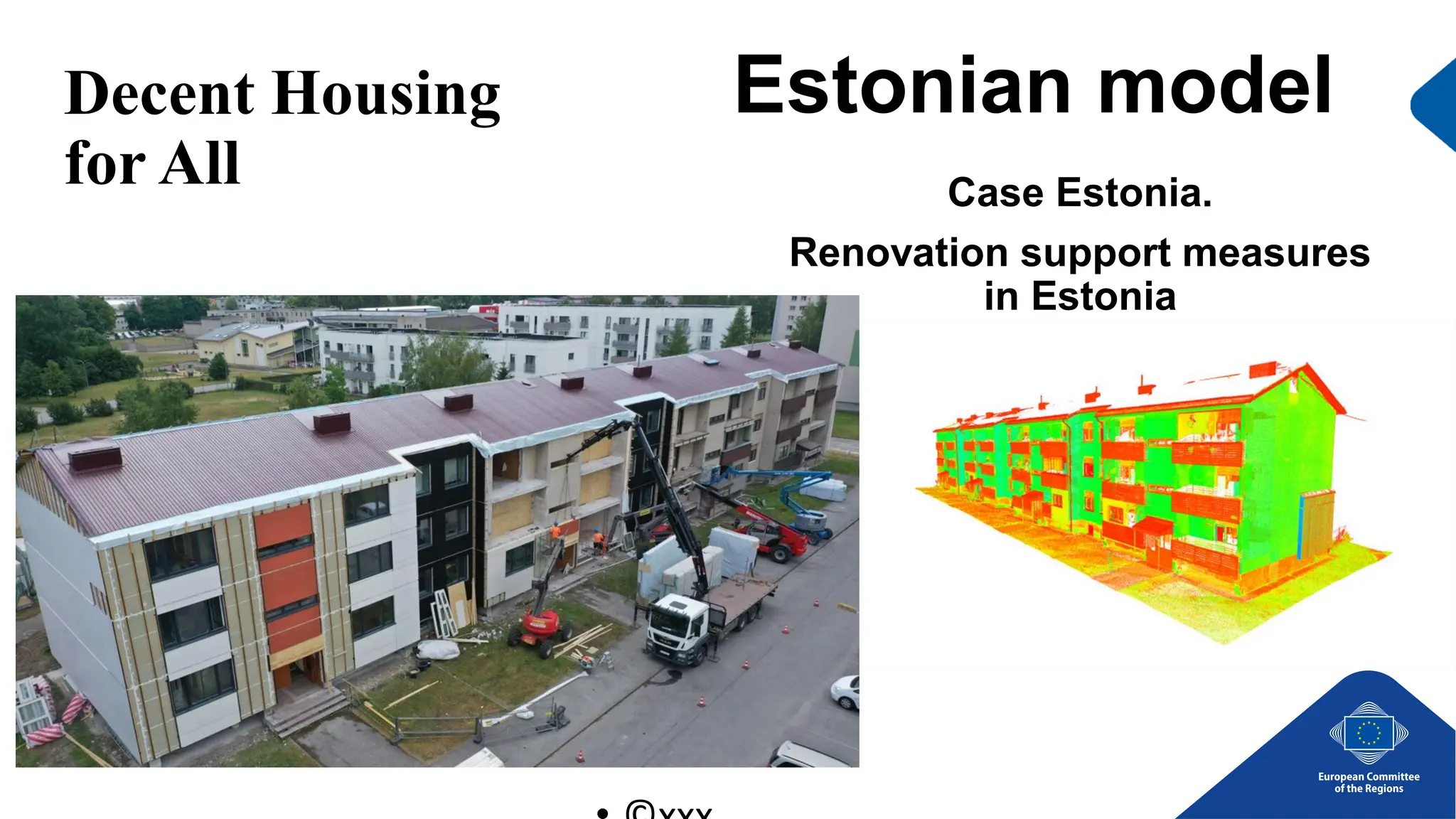
Case Estonia.
Renovation support measures
in Estonia
Decent Housing
for All
Estonian model
© European Commission
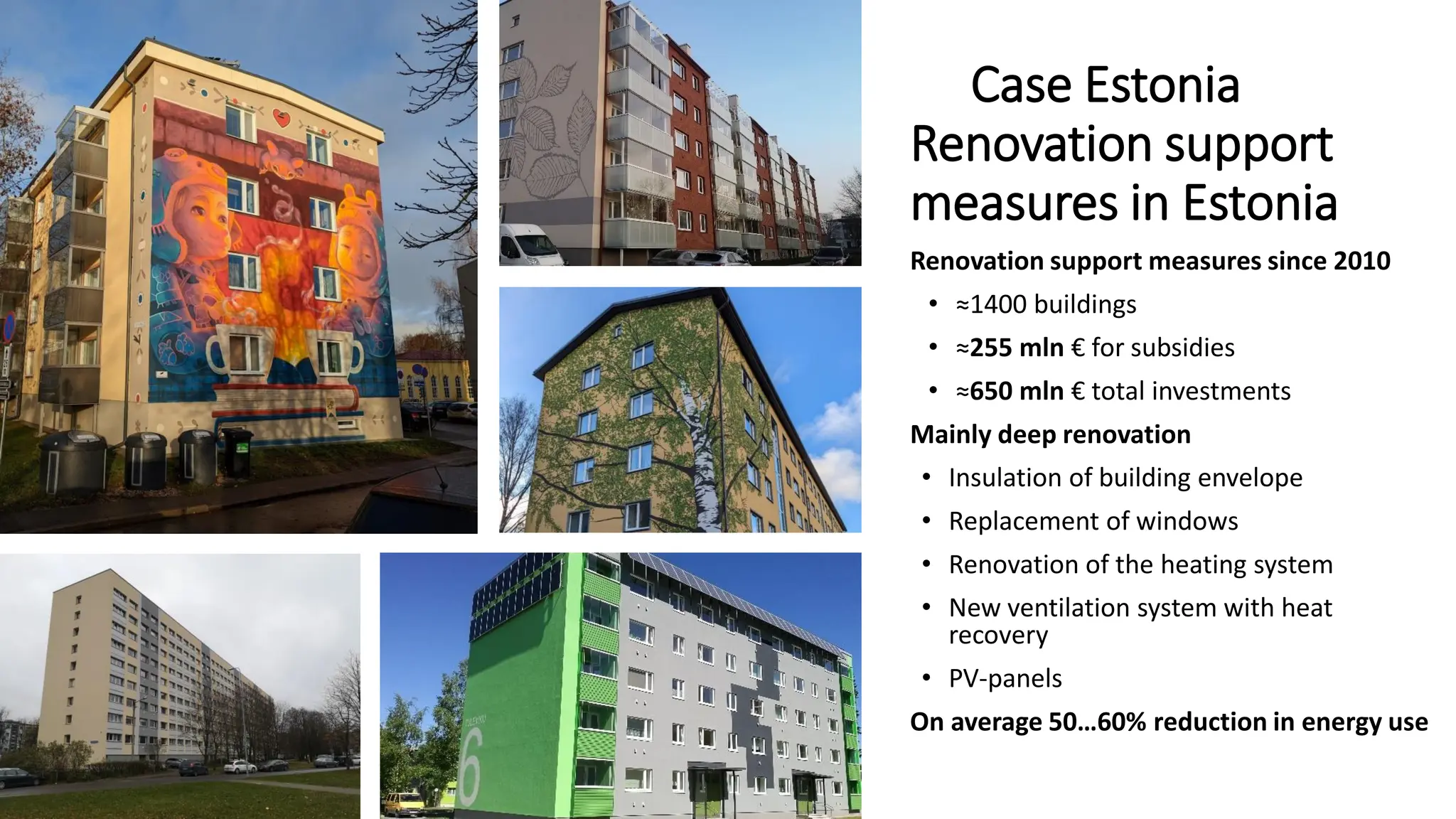
Case Estonia
Renovation support
measures in Estonia
Renovation support measures since 2010
• ≈1400 buildings
• ≈255 mln € for subsidies
• ≈650 mln € total investments
Mainly deep renovation
• Insulation of building envelope
• Replacement of windows
• Renovation of the heating system
• New ventilation system with heat
recovery
• PV-panels
On average 50…60% reduction in energy use
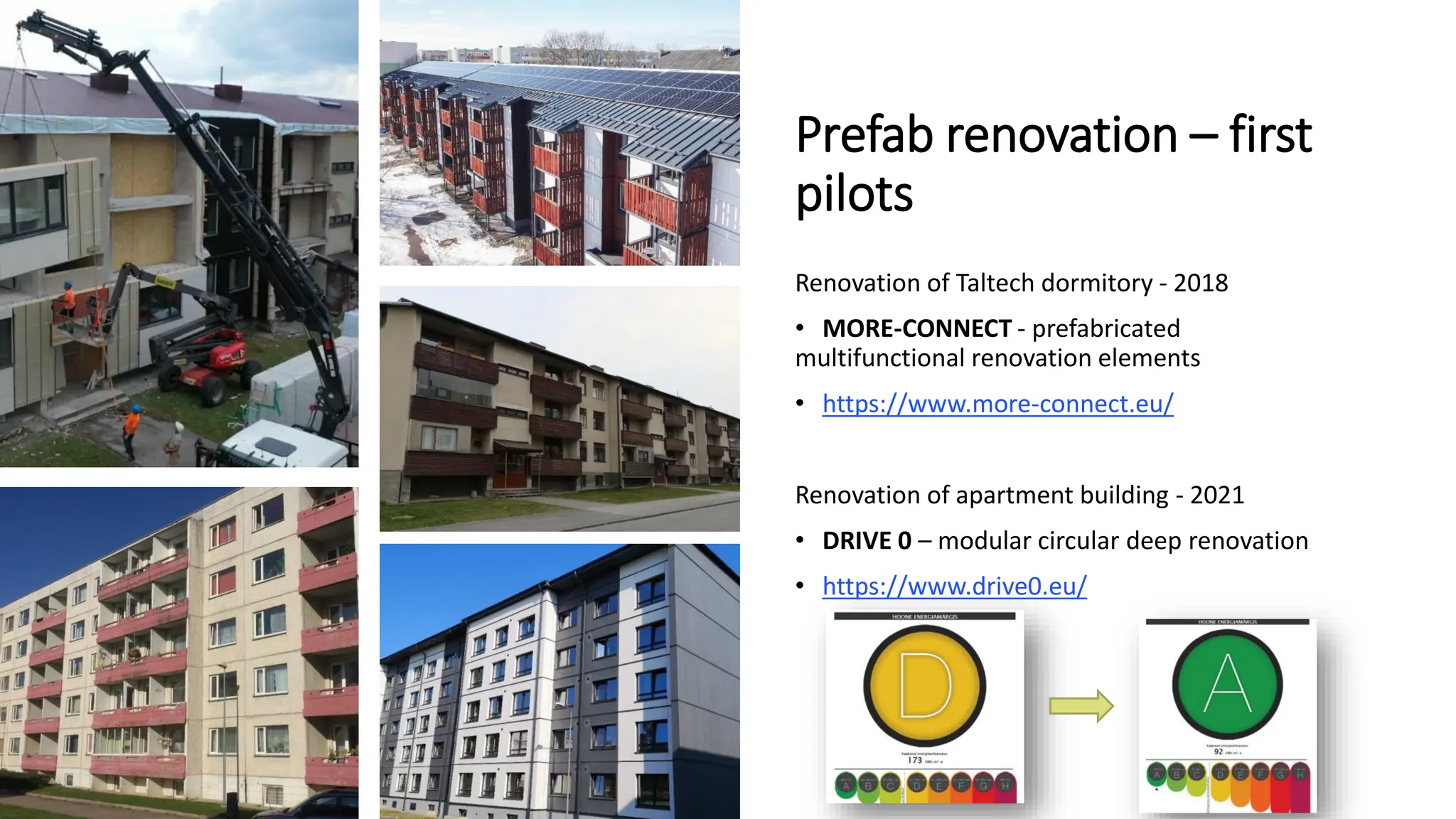
Prefab renovation – first
pilots
Renovation of Taltech dormitory - 2018
• MORE-CONNECT - prefabricated
multifunctional renovation elements
• https://www.more-connect.eu/
Renovation of apartment building - 2021
• DRIVE 0 – modular circular deep renovation
• https://www.drive0.eu/
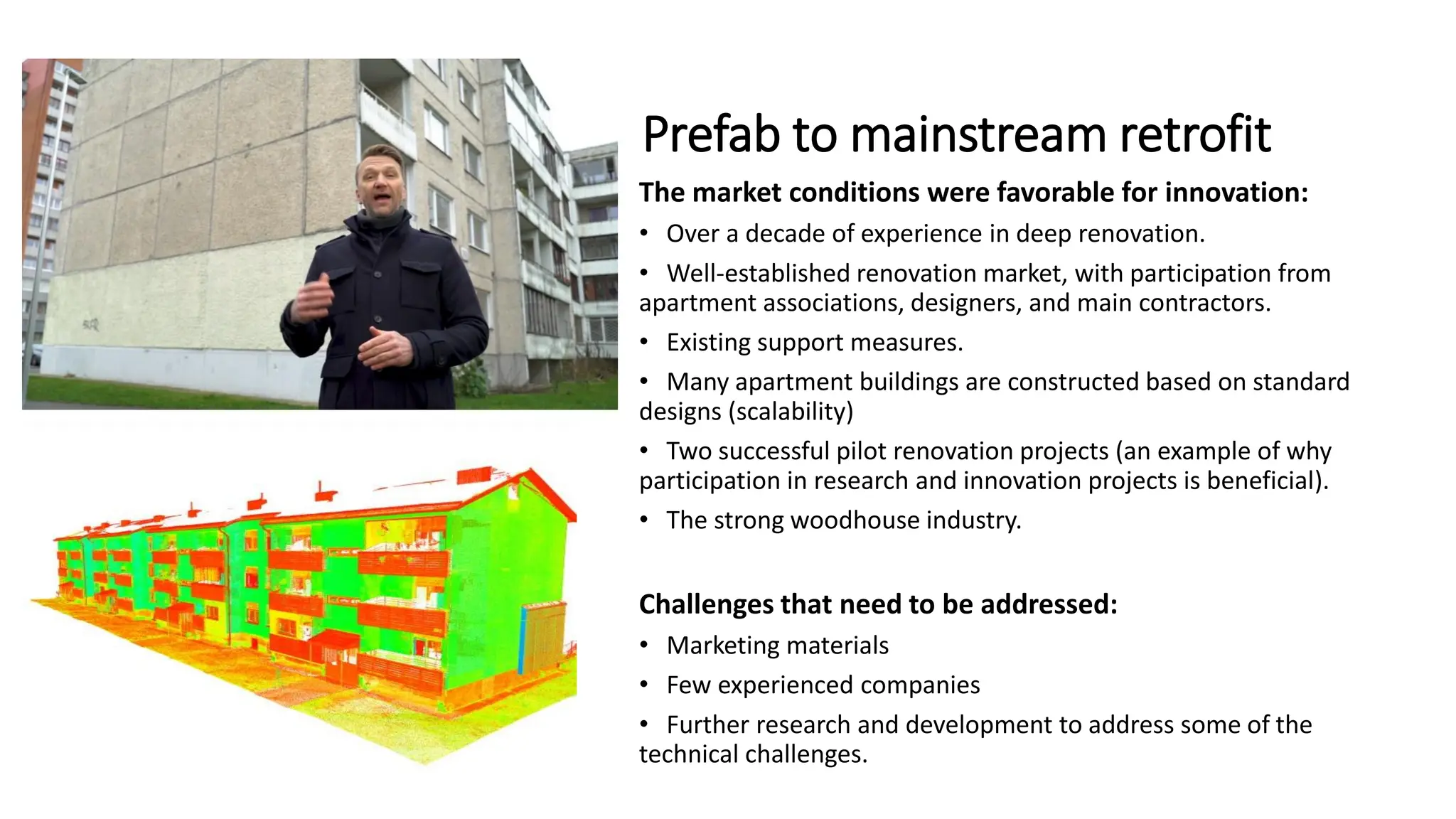
Prefab to mainstream retrofit
The market conditions were favorable for innovation:
• Over a decade of experience in deep renovation.
• Well-established renovation market, with participation from
apartment associations, designers, and main contractors.
• Existing support measures.
• Many apartment buildings are constructed based on standard
designs (scalability)
• Two successful pilot renovation projects (an example of why
participation in research and innovation projects is beneficial).
• The strong woodhouse industry.
Challenges that need to be addressed:
• Marketing materials
• Few experienced companies
• Further research and development to address some of the
technical challenges.
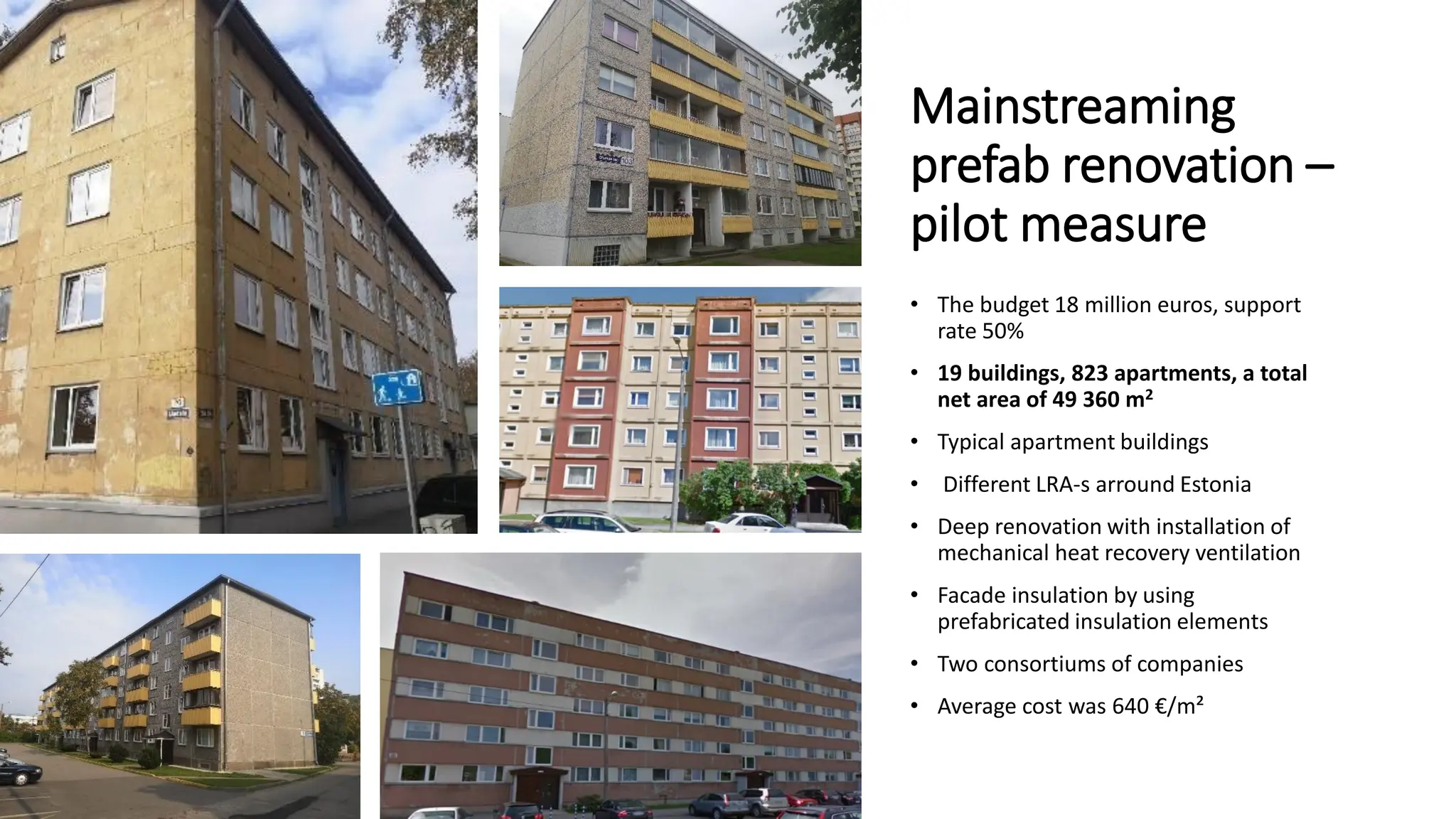
Mainstreaming
prefab renovation –
pilot measure
• The budget 18 million euros, support
rate 50%
• 19 buildings, 823 apartments, a total
net area of 49 360 m2
• Typical apartment buildings
• Different LRA-s arround Estonia
• Deep renovation with installation of
mechanical heat recovery ventilation
• Facade insulation by using
prefabricated insulation elements
• Two consortiums of companies
• Average cost was 640 €/m²
M1_introduction_22-10-2019
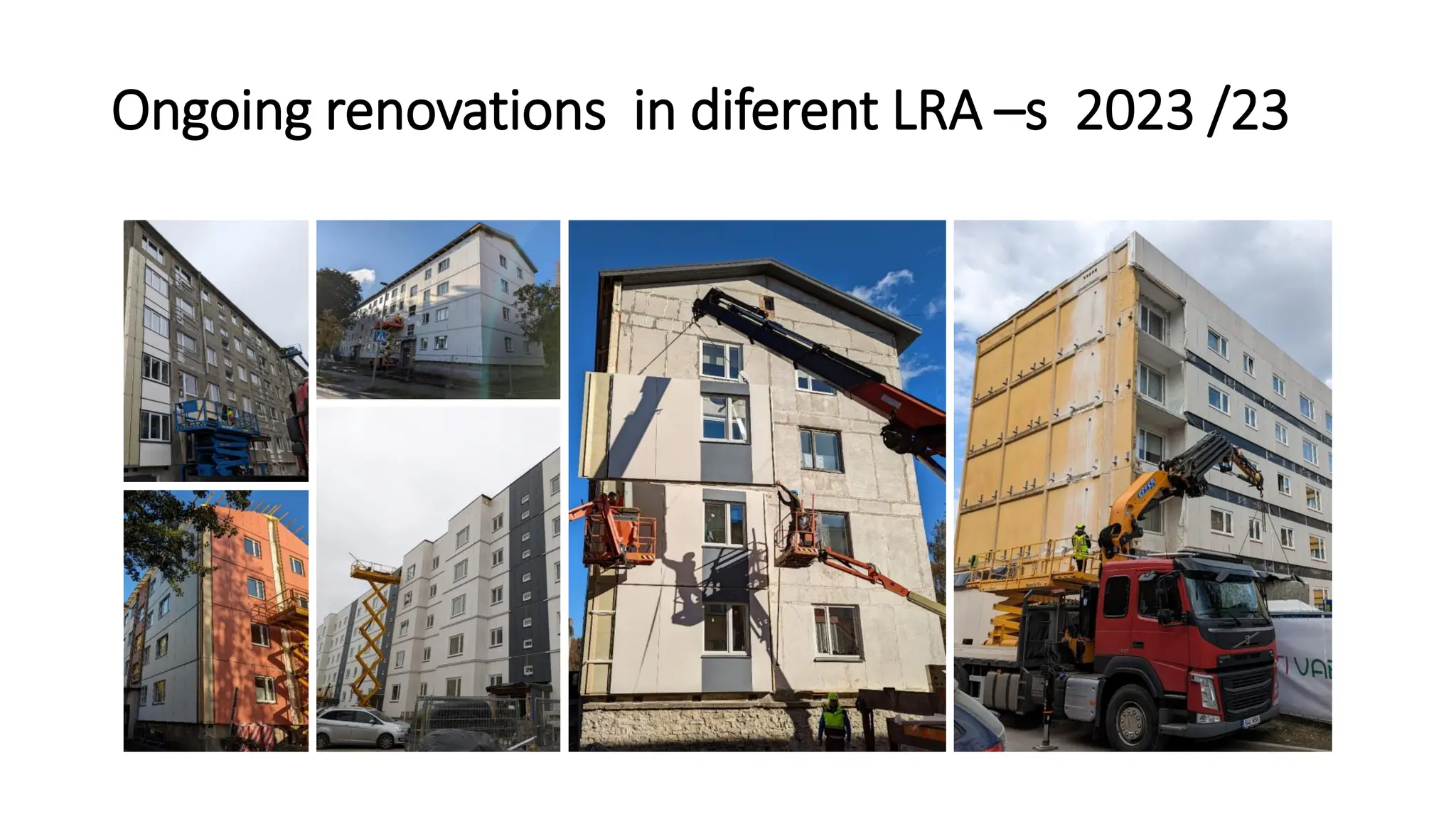
Ongoing renovations in diferent LRA –s 2023 /23
M1_introduction_22-10-2019
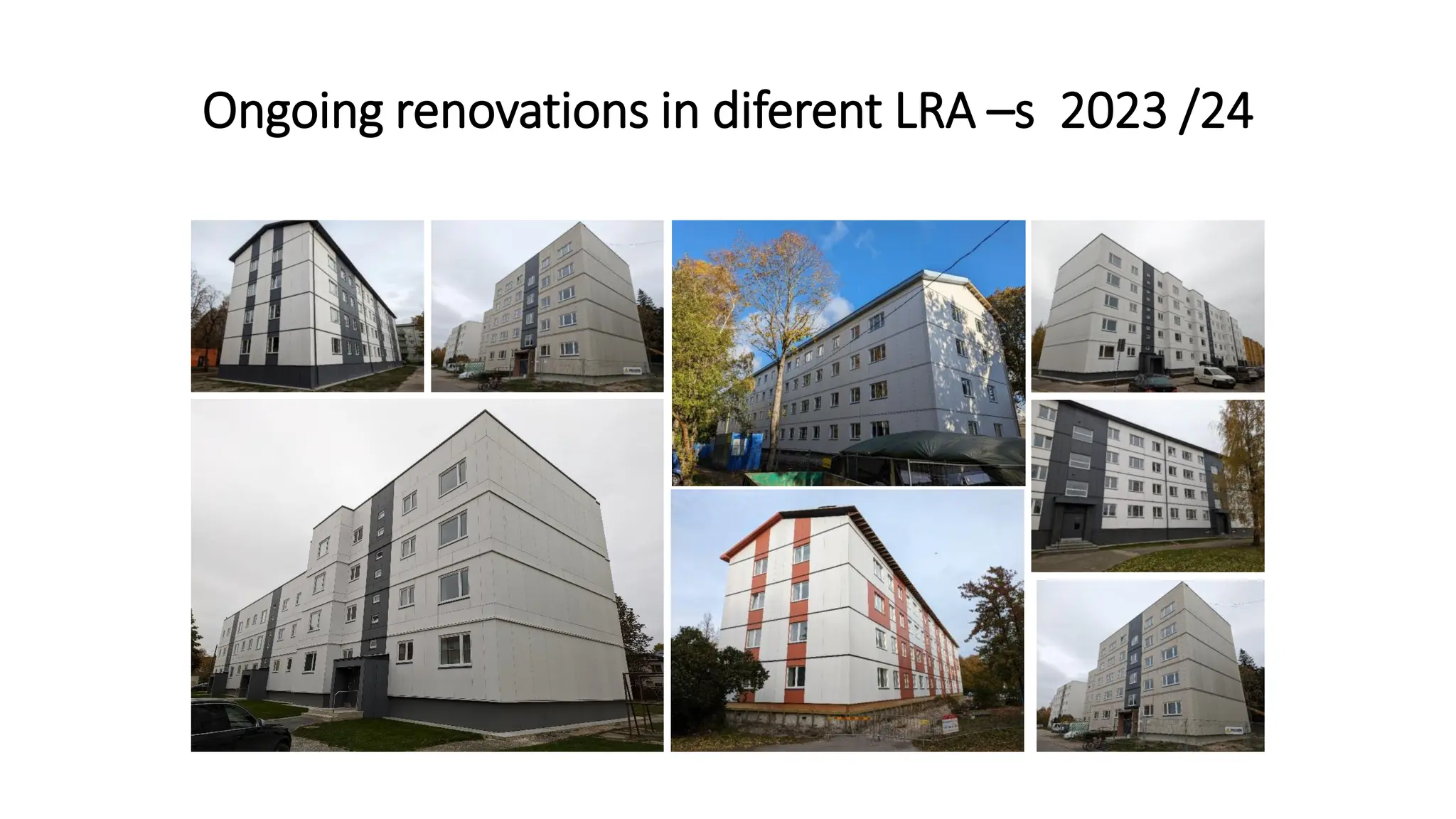
Ongoing renovations in diferent LRA –s 2023 /24
Conclusions and future plans
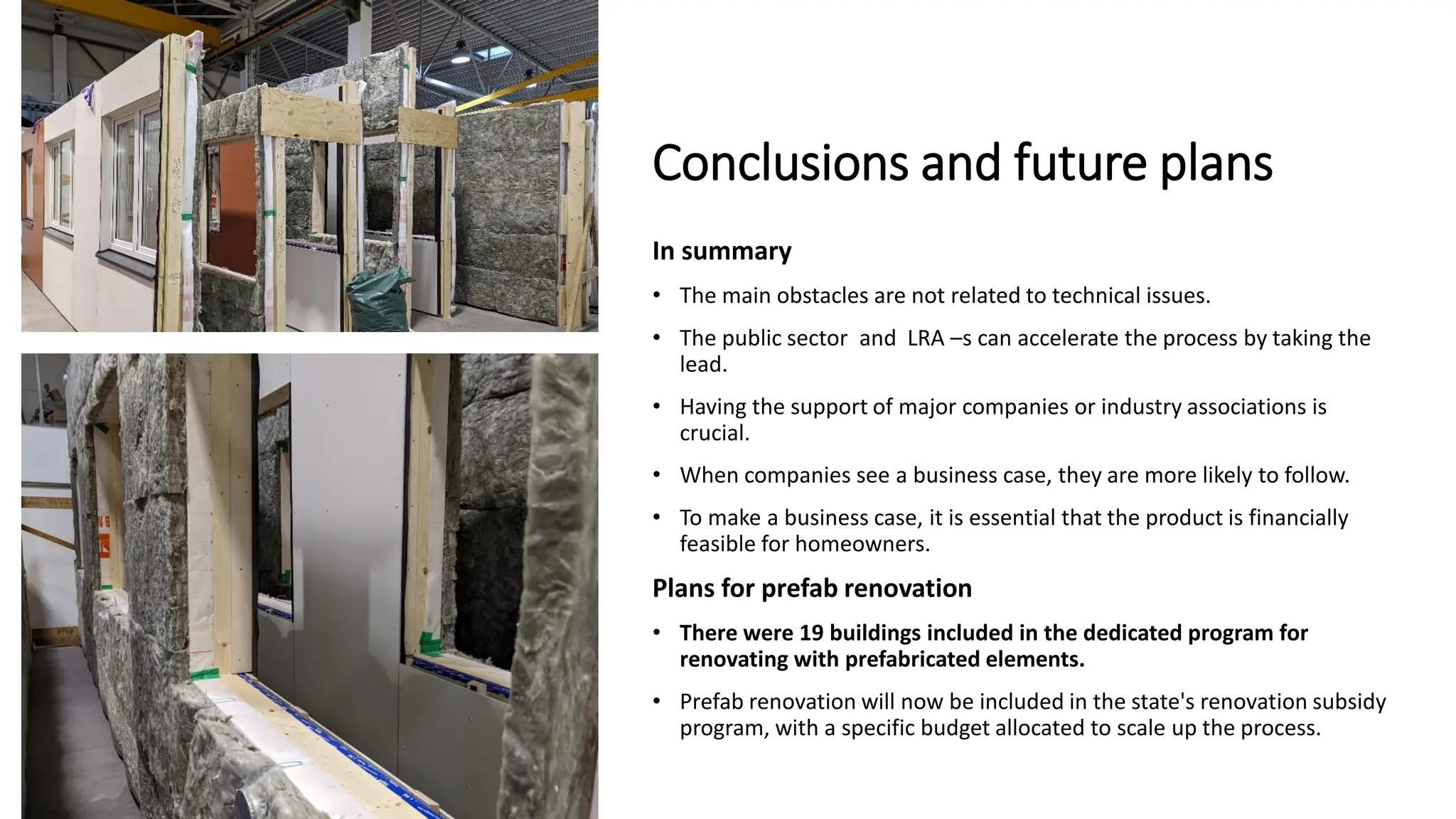
In summary
• The main obstacles are not related to technical issues.
• The public sector and LRA –s can accelerate the process by taking the
lead.
• Having the support of major companies or industry associations is
crucial.
• When companies see a business case, they are more likely to follow.
• To make a business case, it is essential that the product is financially
feasible for homeowners.
Plans for prefab renovation
• There were 19 buildings included in the dedicated program for
renovating with prefabricated elements.
• Prefab renovation will now be included in the state's renovation subsidy
program, with a specific budget allocated to scale up the process.
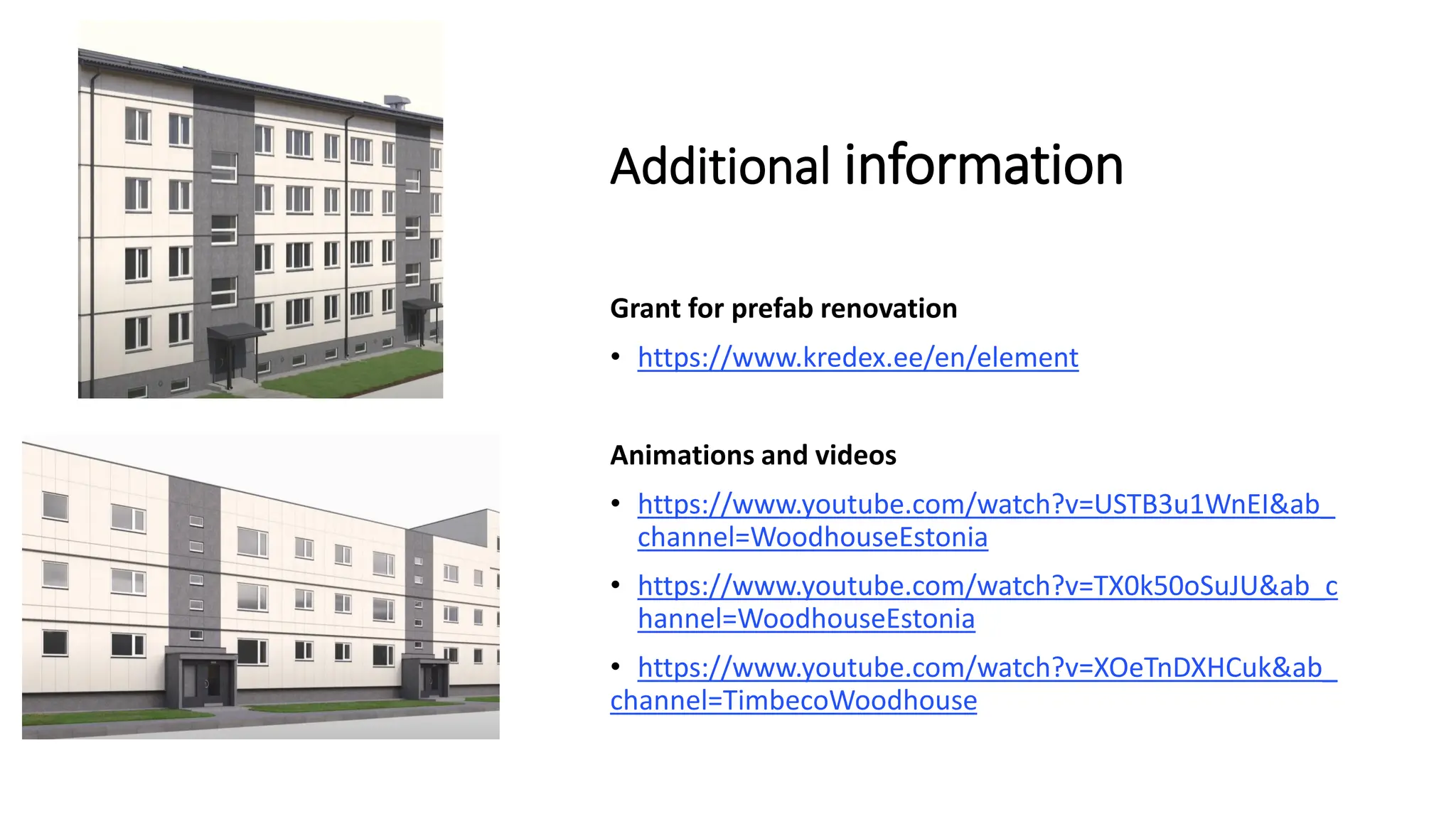
Additional information
Grant for prefab renovation
• https://www.kredex.ee/en/element
Animations and videos
• https://www.youtube.com/watch?v=USTB3u1WnEI&ab_
channel=WoodhouseEstonia
• https://www.youtube.com/watch?v=TX0k50oSuJU&ab_c
hannel=WoodhouseEstonia
• https://www.youtube.com/watch?v=XOeTnDXHCuk&ab_
channel=TimbecoWoodhouse
EKYL Jaadla
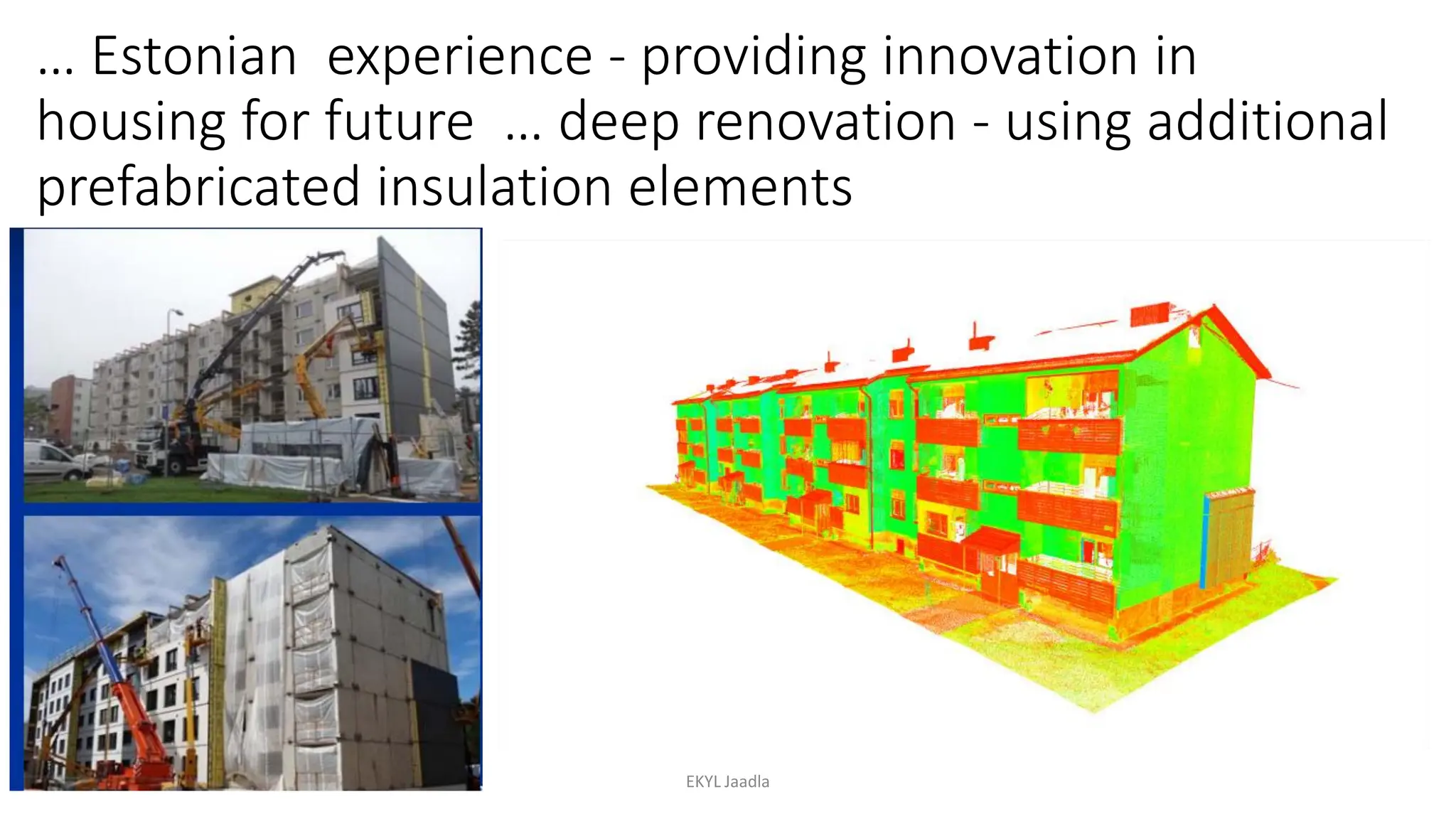
… Estonian experience - providing innovation in
housing for future … deep renovation - using additional
prefabricated insulation elements
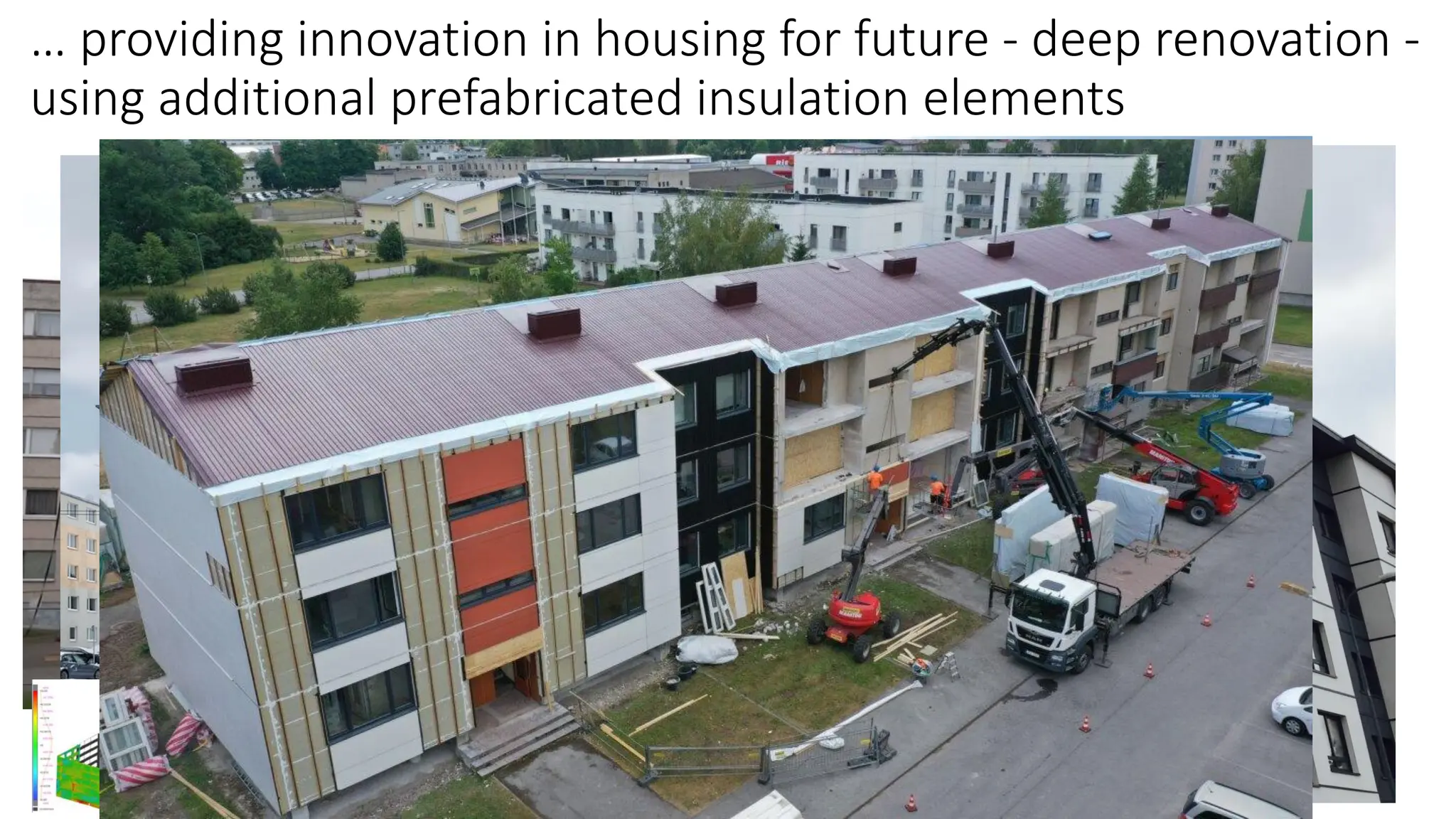
… providing innovation in housing for future - deep renovation -
using additional prefabricated insulation elements
EKYL Jaadla
Smart, energy efficient and
sustainable
New European Bauhaus - how does architecture of housing in relation
to public spaces and transport help create livable neighborhoods, how
does social innovation and mixed housing communities help create and
maintain the social fabric etc…
How is your city/region experiencing gentrification of previously
neglected, particularly central and formerly industrial neighborhoods? What
are the positives, what architectural and urban planning solutions work
best, and what are the risks?
Housing, EU
neighbourhood and
security !
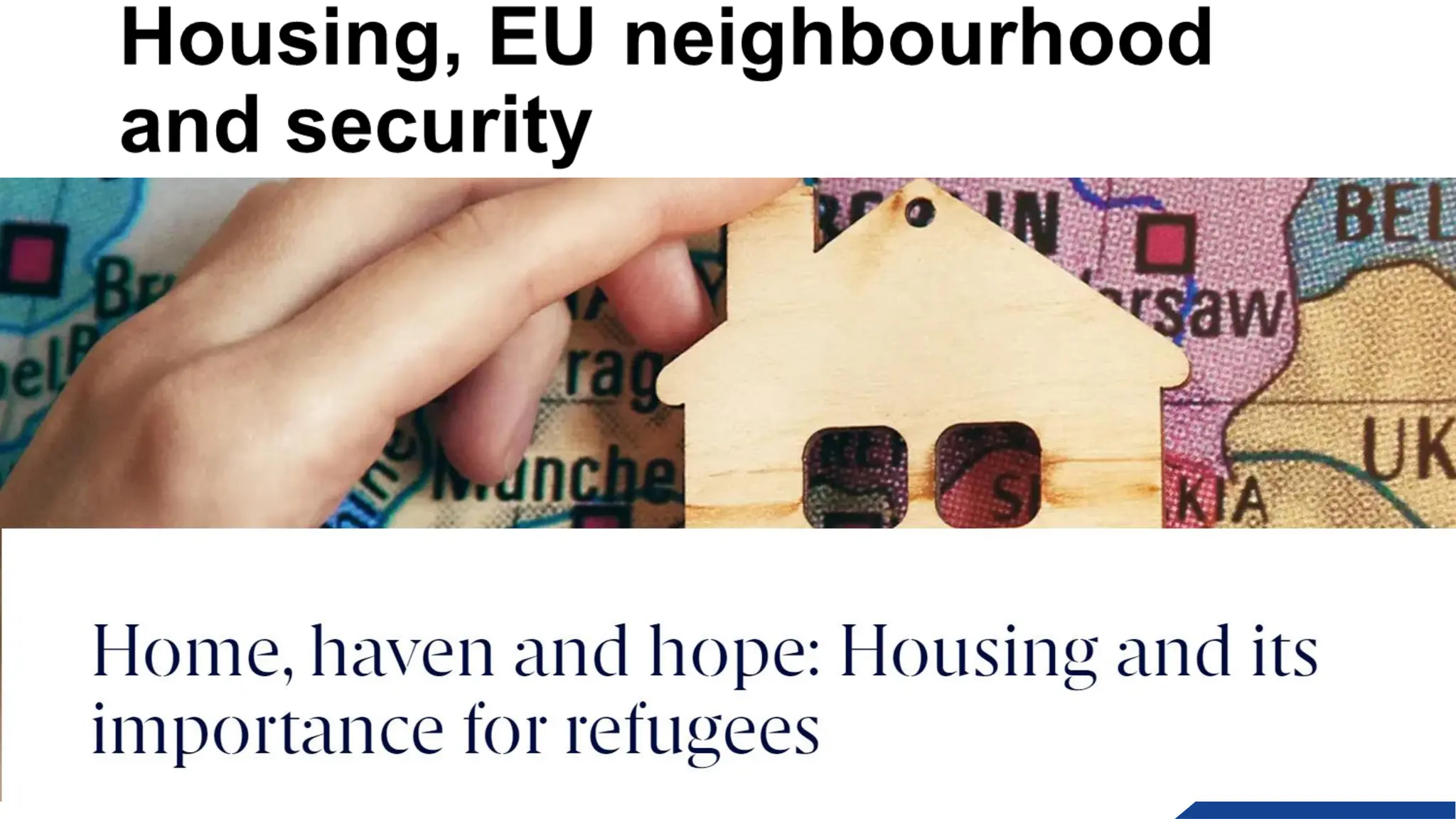
Housing, EU neighbourhood
and security
What are the challenges regarding the housing availability in your
region – for migrants, refugees and displaced people, and also
for youths and students?
In terms of helping the reconstruction of Ukraine, what support do
you think is needed for ensuring that Ukrainians can return to
homes built to the highest EU standards.
EKYL Andres Jaadla
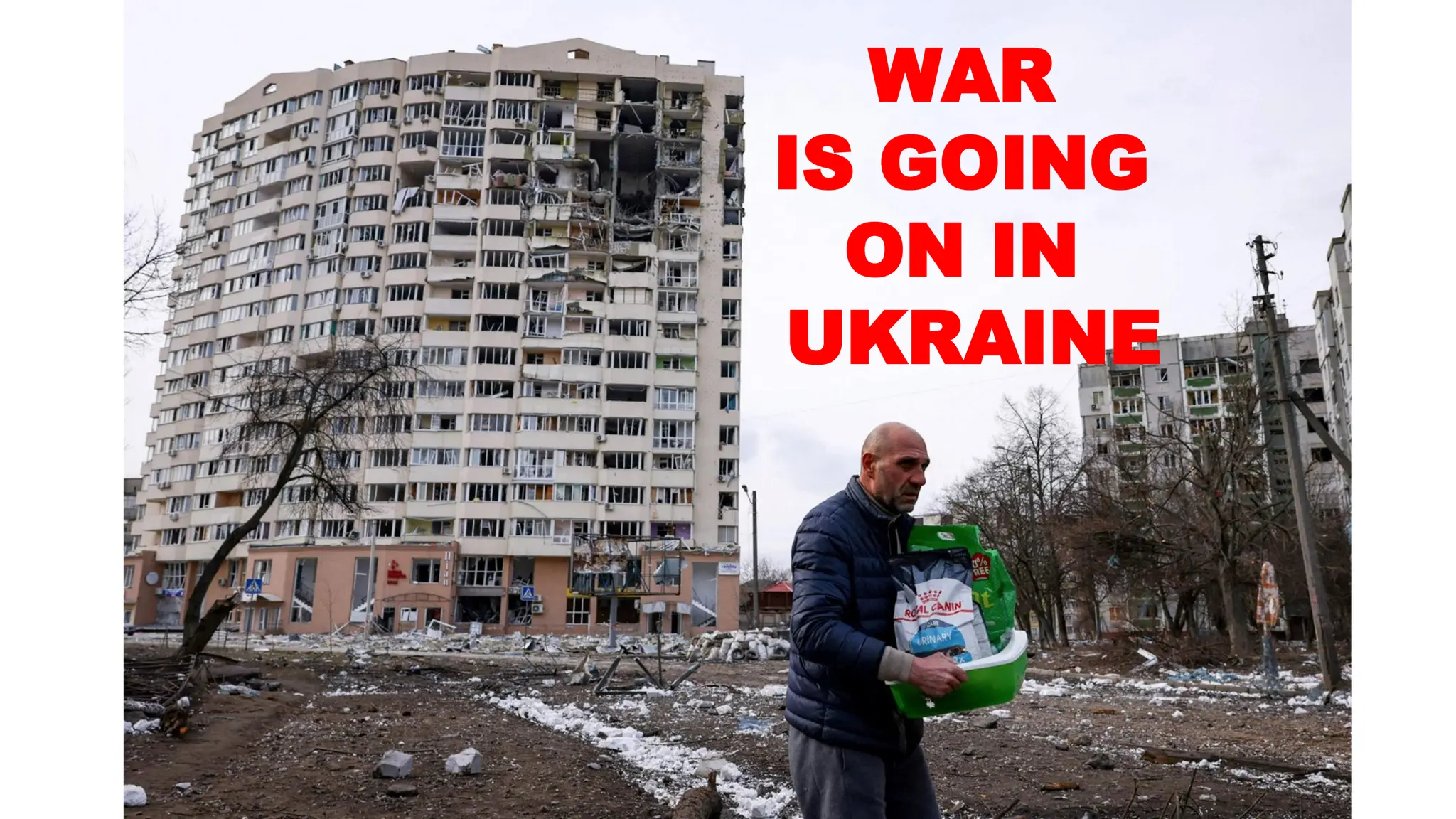
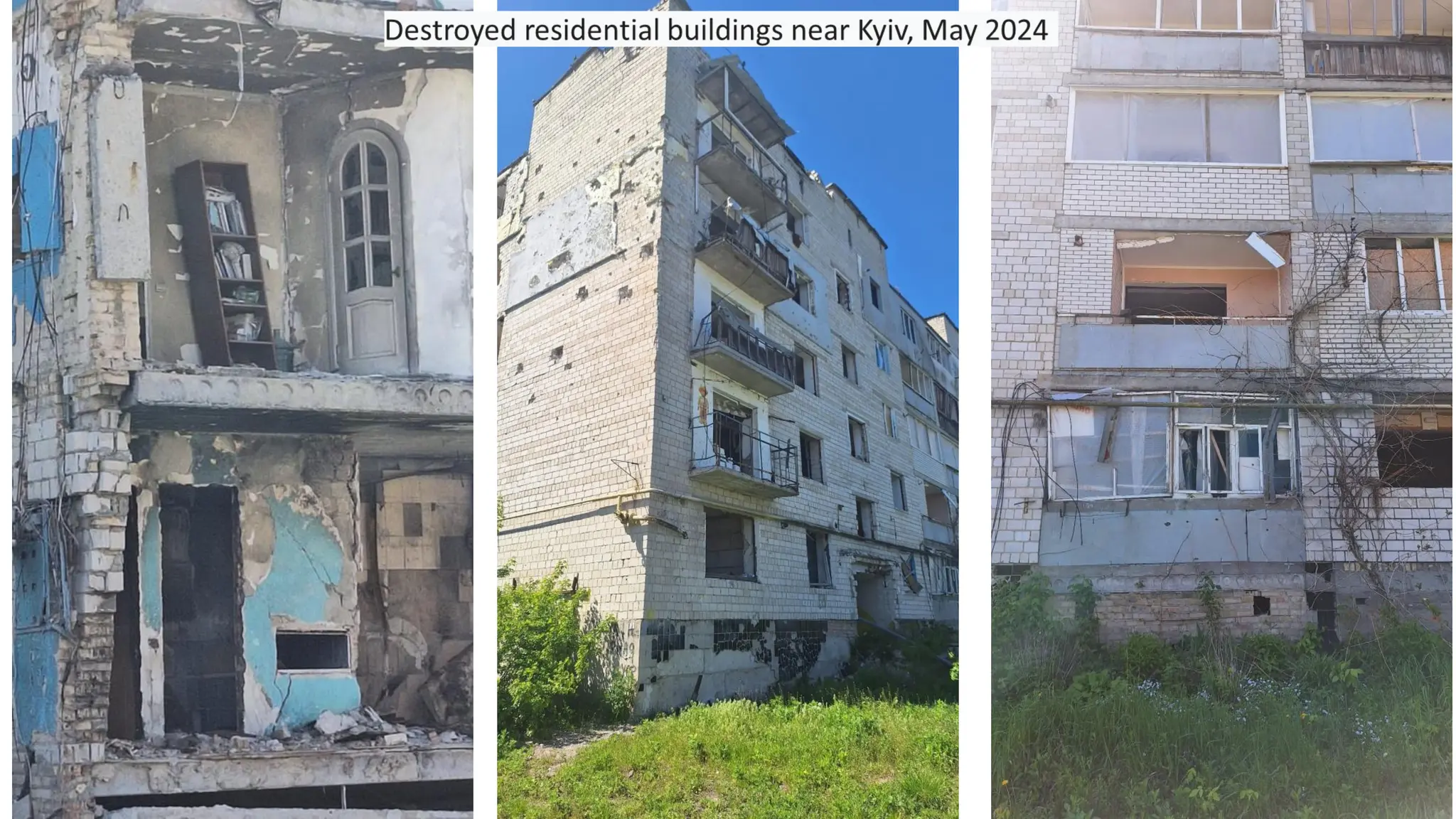
WAR
IS GOING
ON IN
UKRAINE
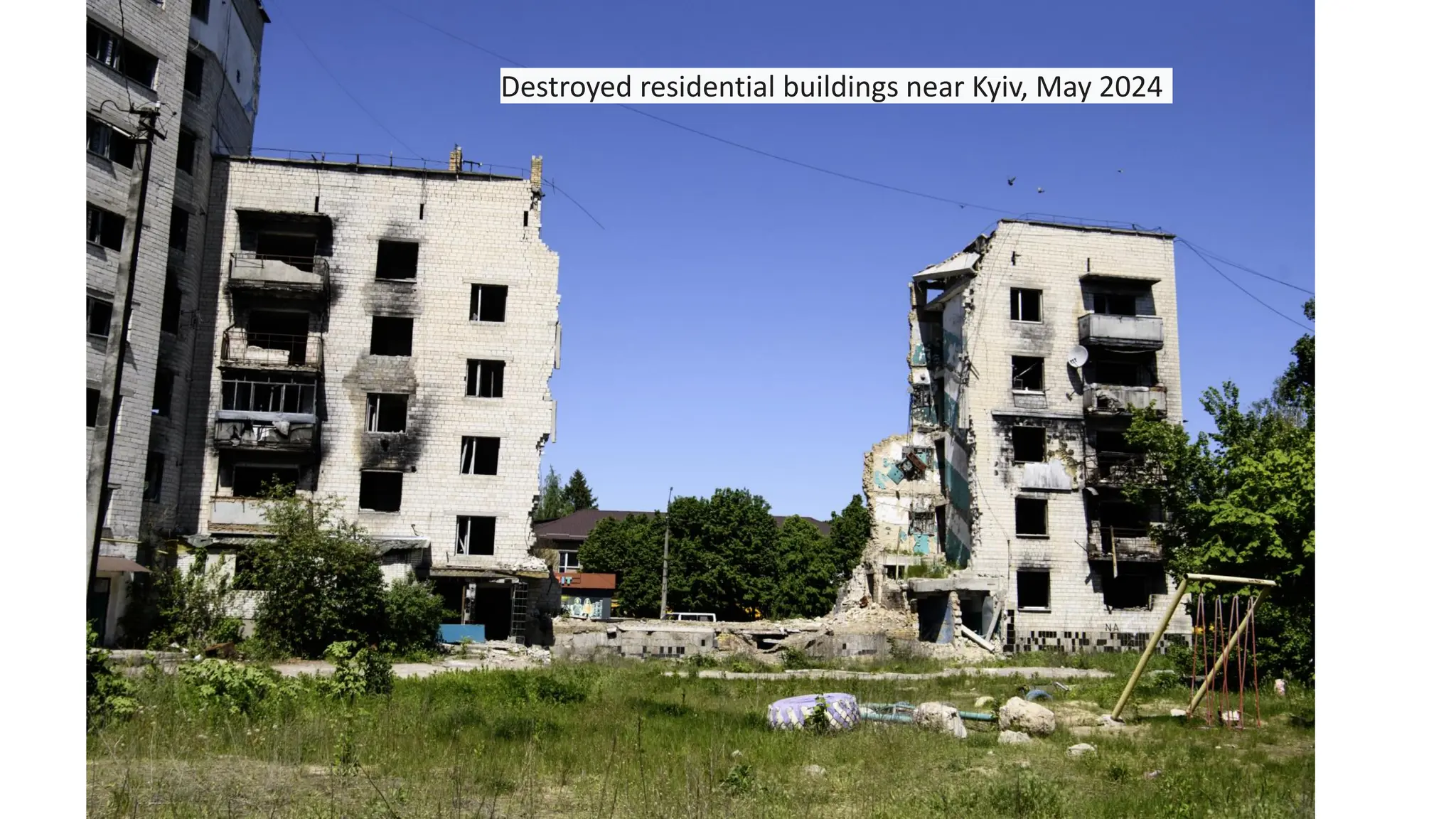
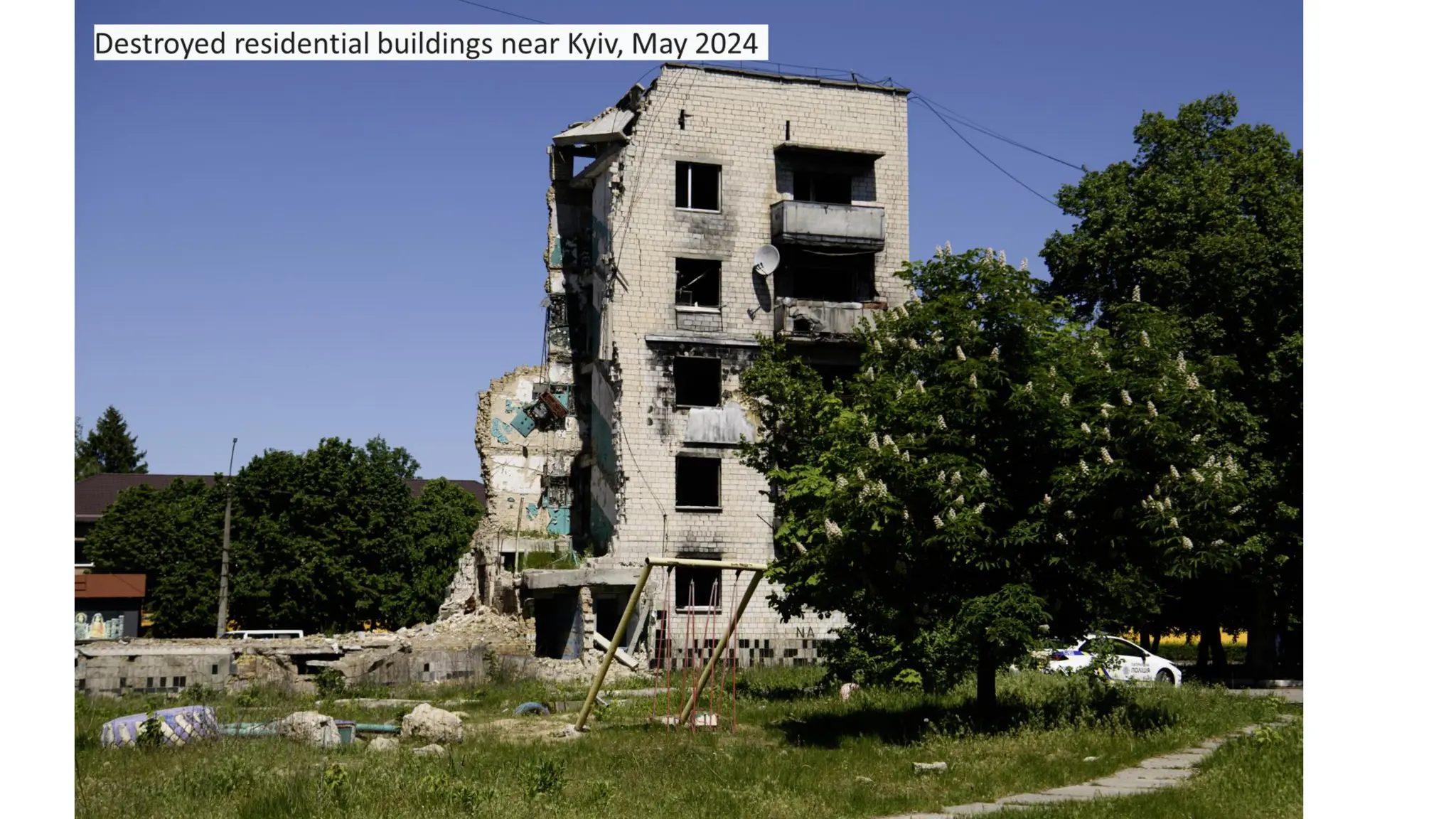
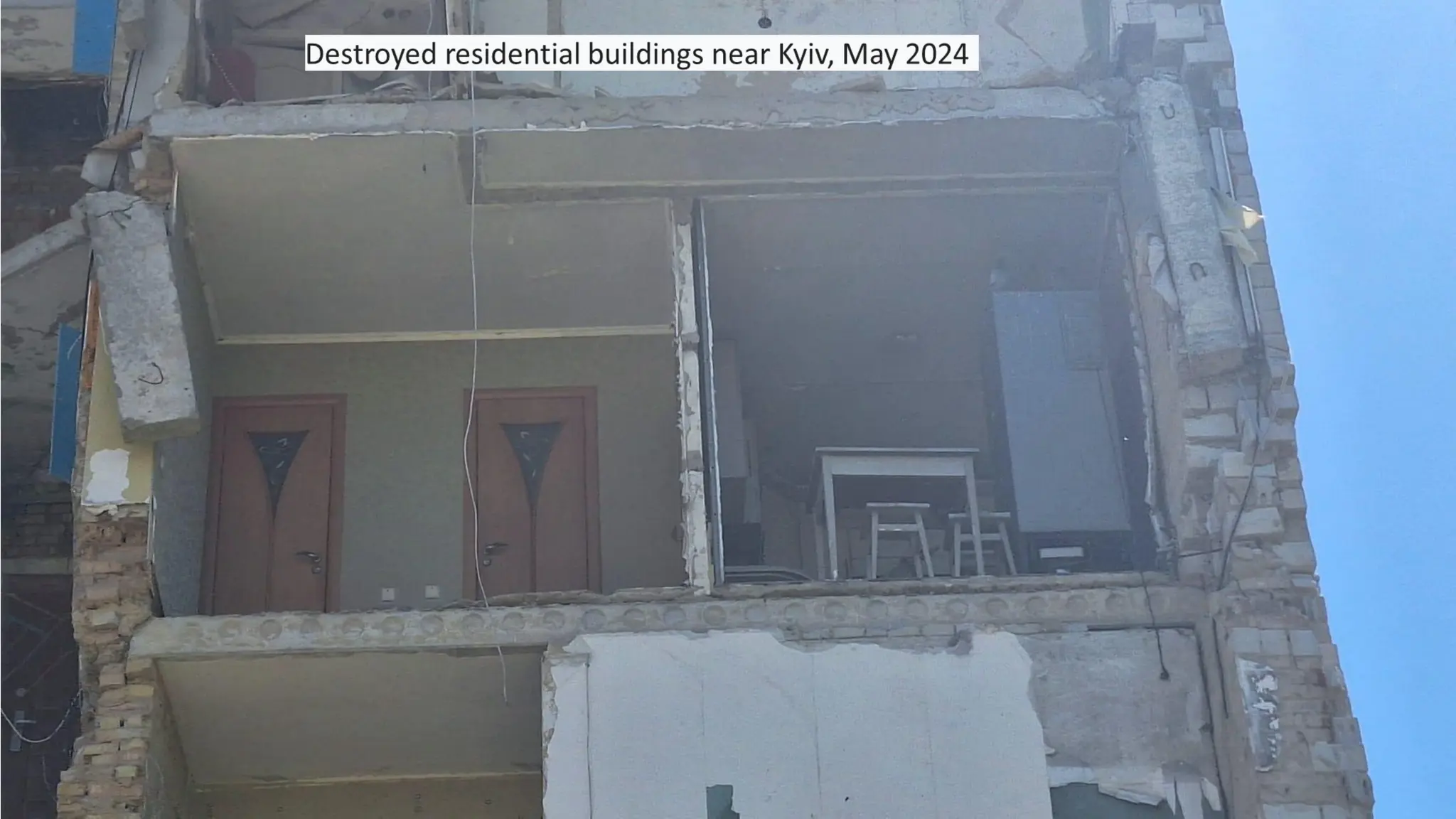
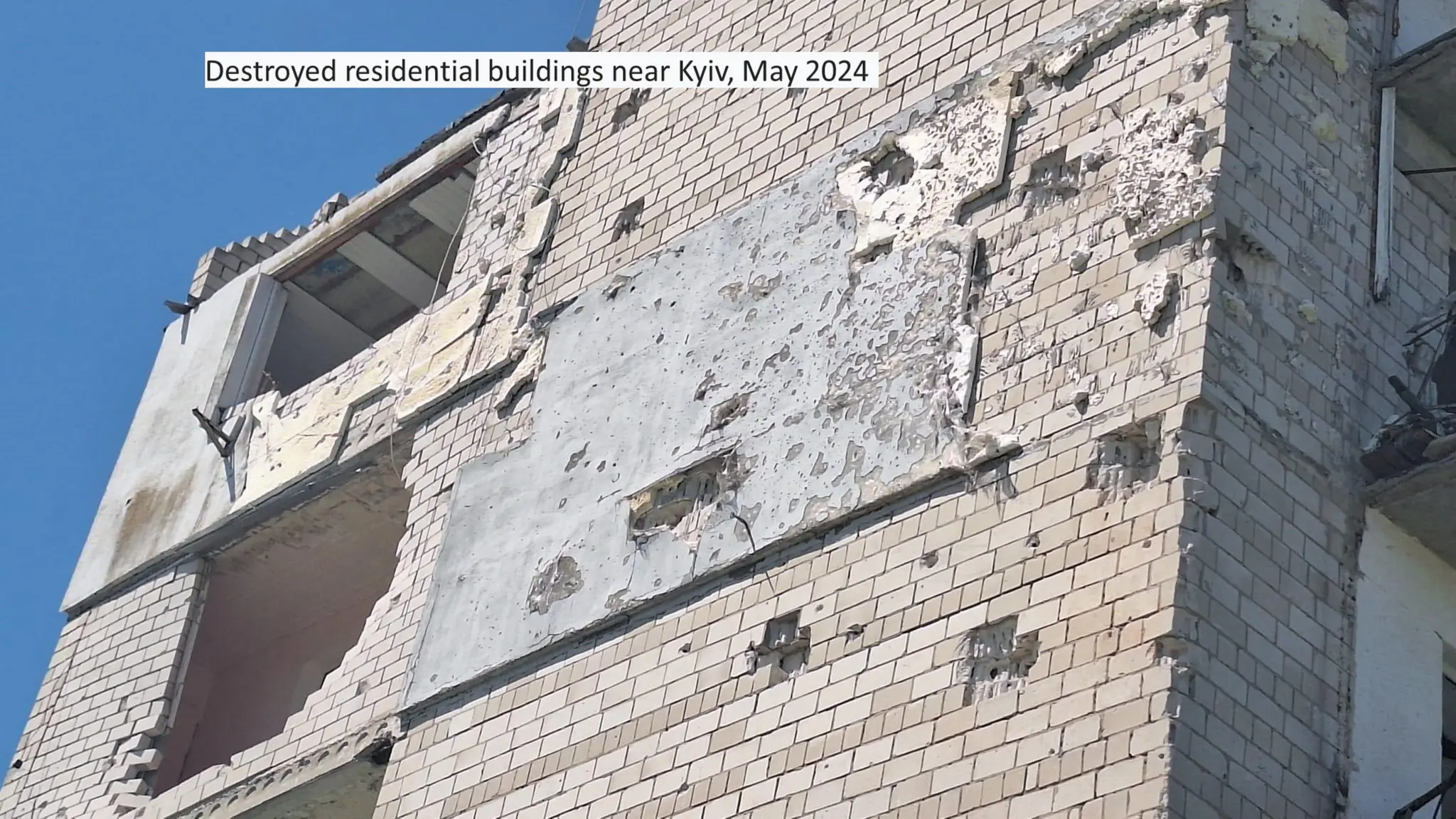
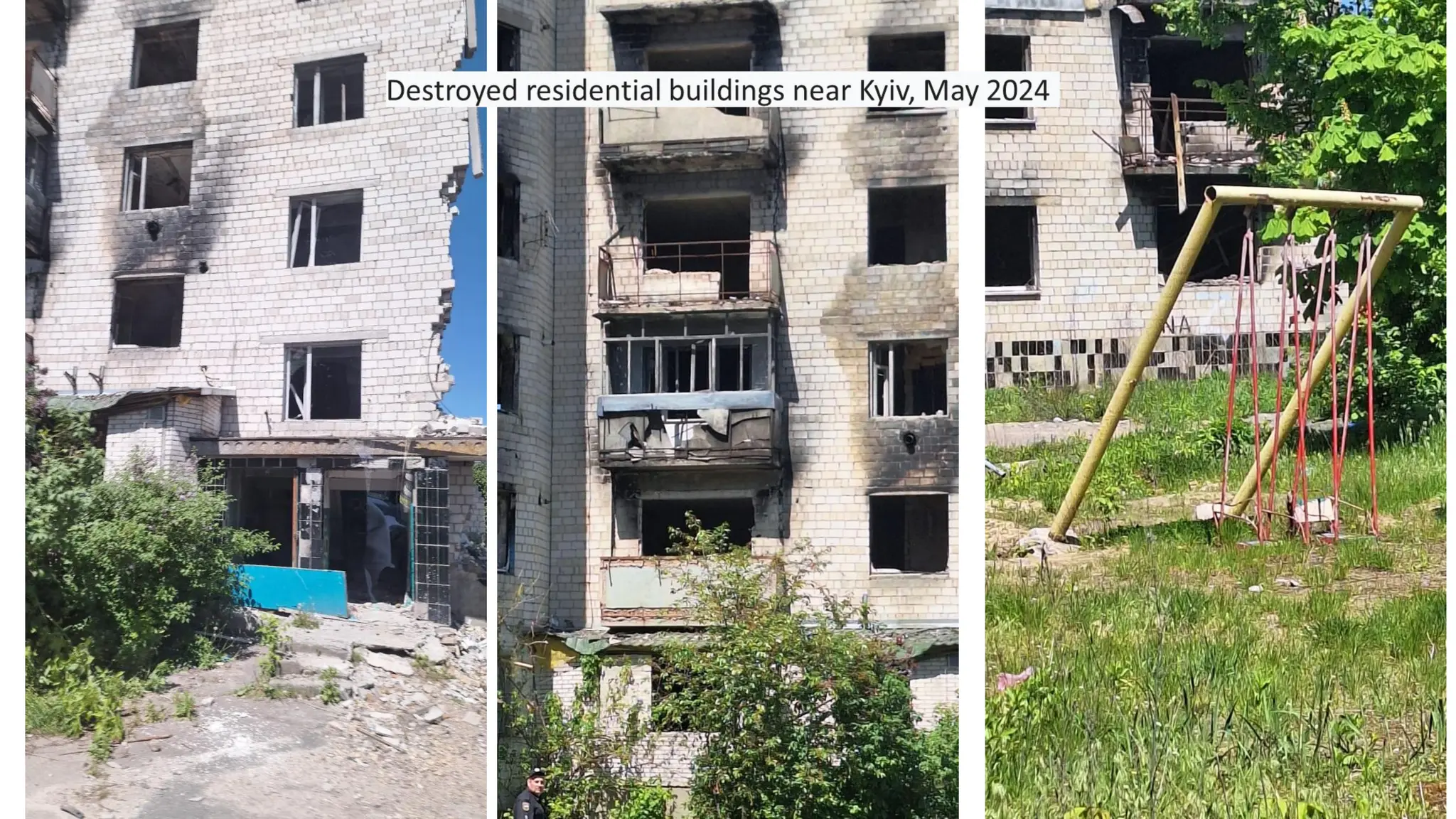
Destroyed residential buildings near Kyiv, May 2024
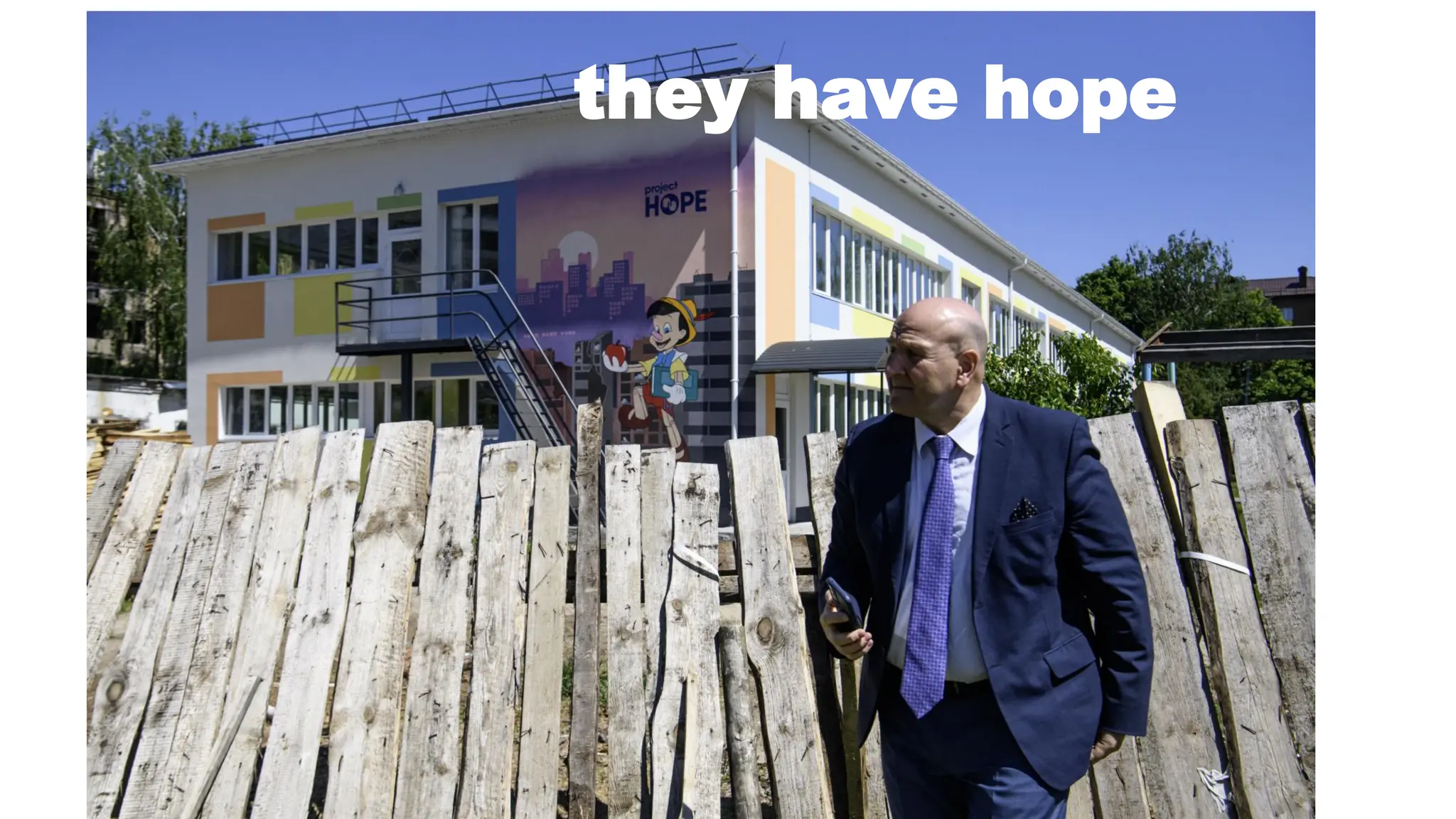
they have hope
Project:
Towards Ukraine’s Residential Reconstruction: a Capacity
Building and Cooperation Programme for Housing Recovery
in Kharkiv, Mykolaiv and Zhytomyr
Supported by ESTDEV – Estonian Center for International Development
Cooperation
June 2023 - October 2024
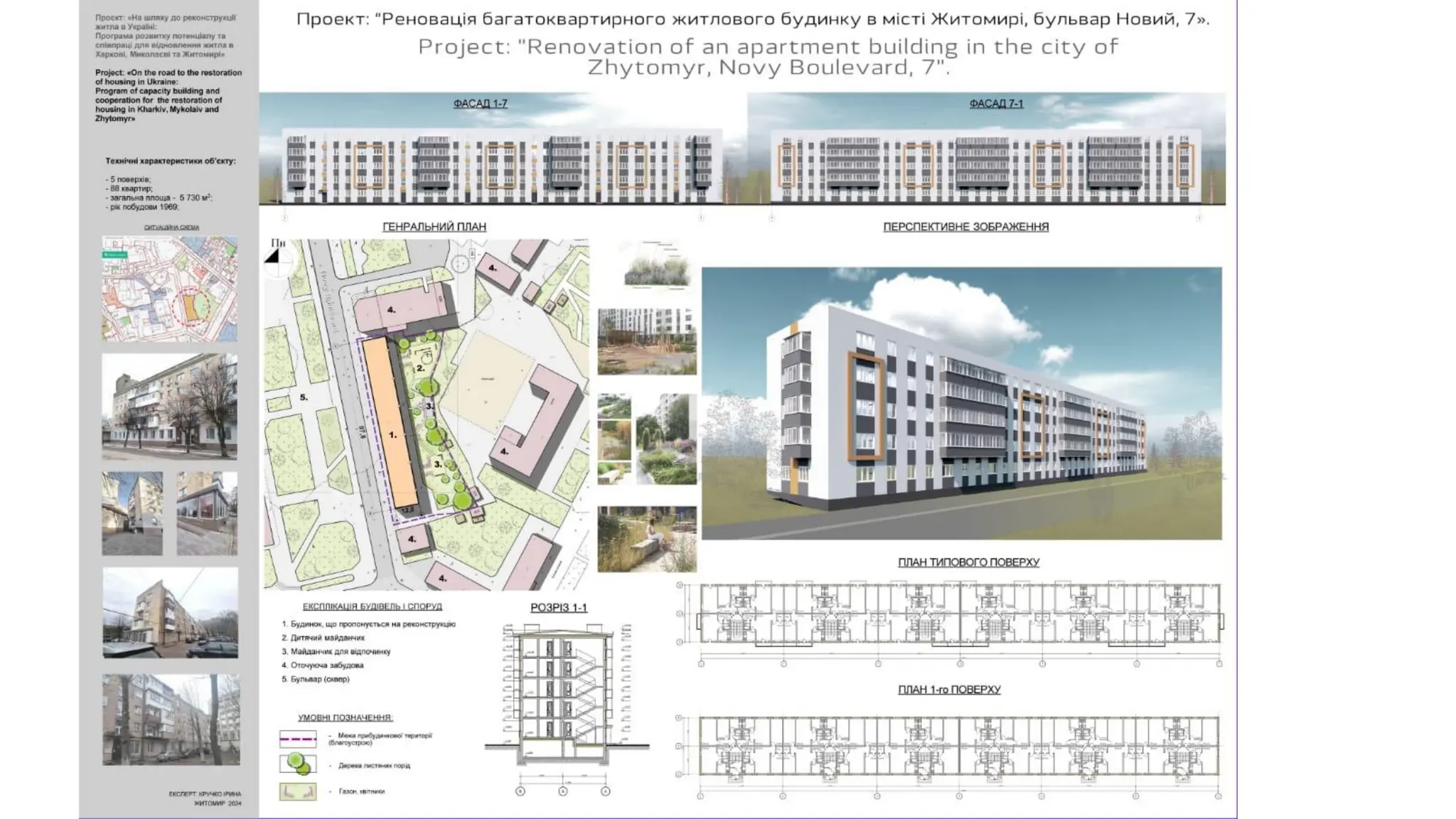
EKYL Jaadla
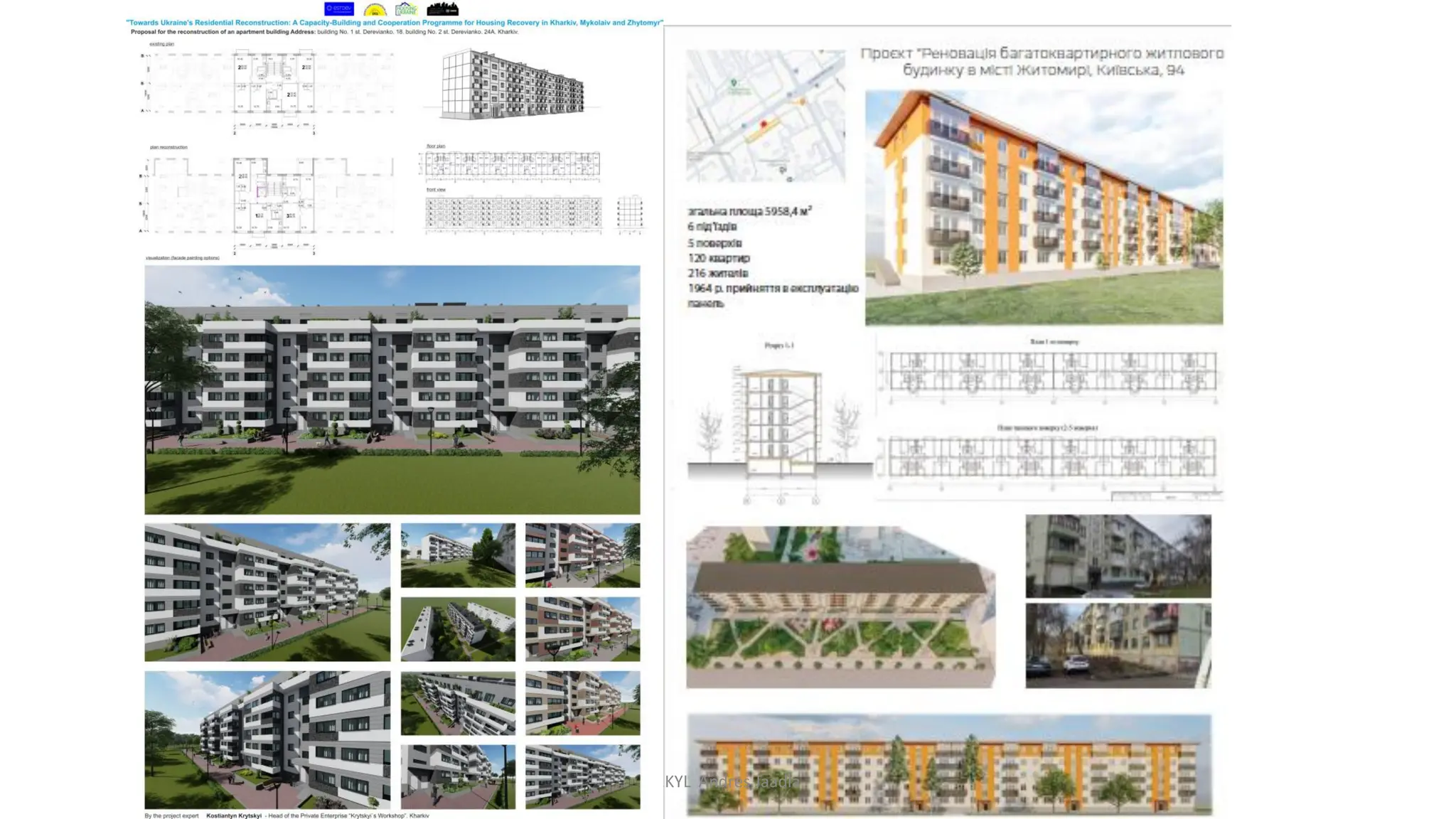
EKYL Andres Jaadla
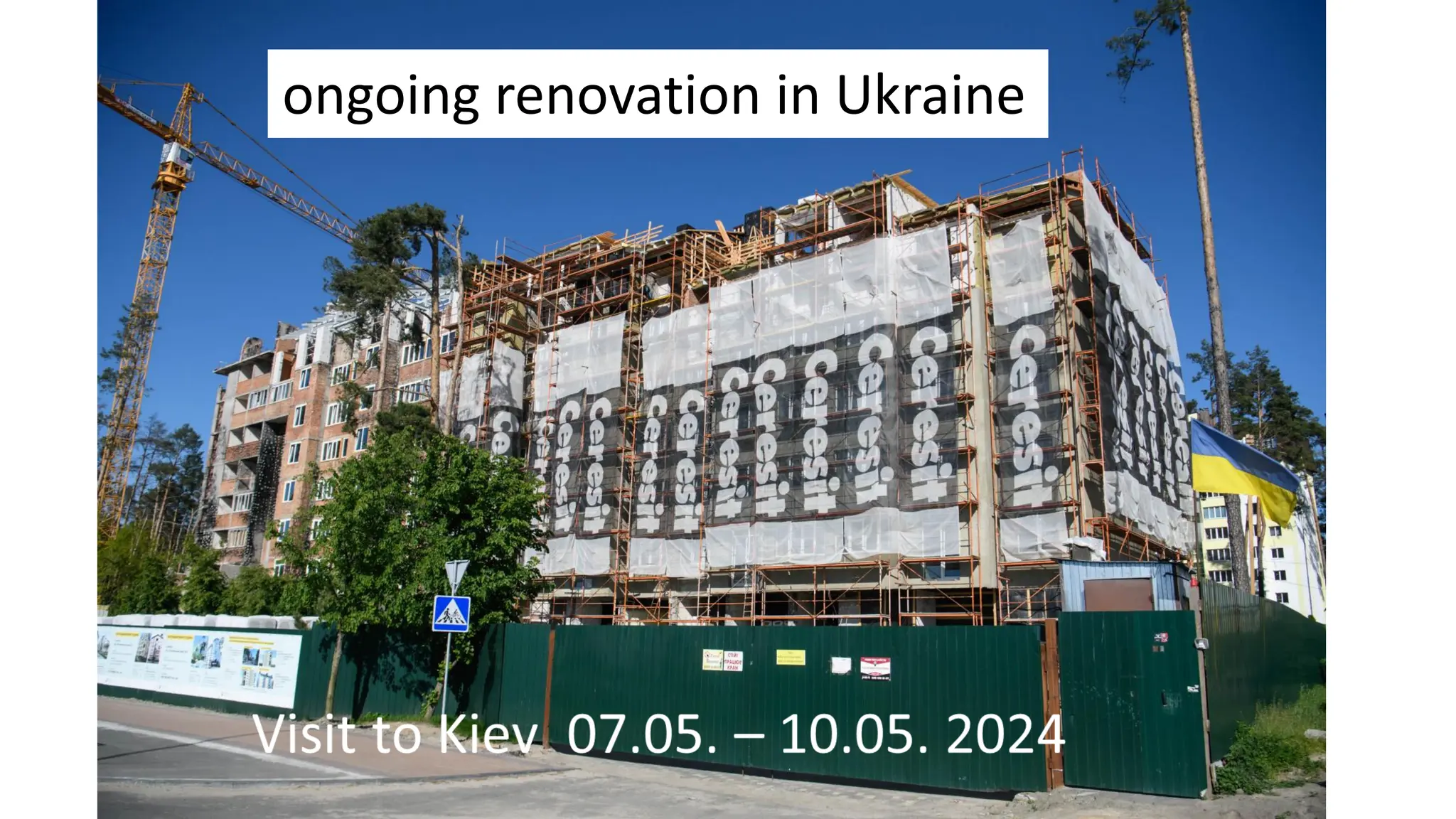
EKYL Andres Jaadla
ongoing renovation in Ukraine
www.cor.europa.eu
EU_CoR
European.Committee.of.the.Regions
european-committee-of-the-regions
eu_regions_cities
andres.jaadla@gmail.com
Tel : +3725203987

Smart, sustainable and affordable housing as a tool for local authorities to face multiple challenges

  • 1.
    Smart, sustainable andaffordable housing as a tool for local authorities to face multiple challenges The European Commitee of the Regions Rapporteur: Andres Jaadla Forum “ Smart, Energy-Efficient, and Accessible Housing Future“ September 20, 2024 Jūrmala, Latvia
  • 3.
    The appointment ofDan Jørgensen as Commissioner- designate for Energy and Housing marks a crucial opportunity to tackle the European housing crisis and ensure that the drive for affordable, sustainable homes and investing in people become central to the future of Europe.
  • 4.
    As President Ursulavon der Leyen stated in her mission letter to the designated Commissioner: "Millions of young people and families struggle to find affordable housing throughout Europe. We urgently need to address this, supporting Member States to address structural drivers and unlocking public and private investment for affordable and sustainable housing."
  • 5.
    Housing in thespotlight Persisting shortage of accessible and affordable housing is worsening The COVID-19 pandemic, inflation, the migration crisis, and the conflict in Ukraine have intensified the challenges Several EU initiatives related thow effective they are and what are synergies between them?o housing: Climate goals, energy efficiency and renovation Climate resilience and extreme weather events (floods, earthquakes, heat waves…)
  • 6.
    Housing as apolicy tool for LRAs Local and Regional Authorities (LRAs) unable to meaningfully invest into public housing stock or support private housing initiative With the means to invest into smart, sustainable and affordable housing, the LRAs could potentially face cost-of-living crisis, the refugee and migration inflow combined with accelerated demographic trends, and climate change and increasingly pronounced weather extremes.
  • 8.
    Housing as apolicy tool for LRAs CoR opinion therefore aims at taking stock of the ongoing initiatives related to housing - on private, cooperative and public housing, which could boost the local economic base and help reverse demographic trends. It could help cities and regions to respond to various challenges, such as migration, climate resilience,renovation, impact of platform rentals, slow spatial planning, etc.
  • 10.
  • 11.
  • 12.
    Affordable housing • Increasingcost of leaving. Expenditure on housing costs represents the highest share of household budgets in the vast majority of EU countries with an average 32.7% of total consumption expenditure. • House prices have followed a steady upwards trend especially between 2015 and 2021. The largest increases have been observed in Estonia (+139 %), Hungary (+122 %), Luxembourg (+115 %), Latvia (+101 %) and Austria (+100 %) • In 2021, 30 % of EU population lived in rented housing and they have faced an increase of rents. In percentage, highest inflation of rents is observed in Hungary (+33 %), Romania (+31 %), Estonia (+30 %) and Lithuania (+25 %) and lowest – in Greece (+2 %), Cyprus (+7 %) and Ireland (+8 %).
  • 13.
    Affordable housing Housing costoverburden is highest in cities. 10.4 % of the population in EU cities lived in a household where total housing costs represent more than 40 % of disposable income, while the corresponding rate for rural areas was 6.2 %.
  • 14.
    Affordable housing The housingaffordability becomes a major challenge not only for the low-income and vulnerable groups (such as young people, senior citizens, large families with children), but also for middle-income earners, especially in large cities where rents skyrockets, while the quality of available housing remains low.
  • 15.
    Affordable housing How affordableis housing in your city or region and what are the factors influencing the trend? What is the home ownership trend in your in your region/city, has the public housing expanded or reduced and does the market of private housing works? What is "touristification" of European city centres doing to the local housing market? Share any policies to control the trends.
  • 17.
    Cooperation between EUcomitees, CoR and EESC
  • 18.
    05.03.2024 EU Housingministers meeting in Liege Andres Jaadla
  • 19.
    Andres Jaadla 05.03.2024 EUHousing ministers meeting in Liege
  • 20.
  • 21.
    Smart, energy efficient andsustainable housing!
  • 22.
    Smart, energy efficientand sustainable • The European Union building stock encompasses of more than 220 million building units (85% of the EU’s building stock) built before 2001 and the share of residential buildings (floor area) represents more than 66% of the building stock in all Member States, except Estonia, where it is 25.67 %. • Total renovation rate for residential buildings remains quite below 20% for all EU countries and deep renovation are lagging behind with rates in times lower than for the non-residential deep renovations. • Energy poverty remains a major challenge for millions of Europeans. Overall, buildings are responsible for about 40% of the EU’s total energy consumption, and for 36% of its greenhouse gas emissions from energy • The greenhouse gas emissions from households for heating and cooling are the highest in Luxembourg (1 564.3 kg per capita), followed by Ireland (1 402.8) and Belgium (1 137.7), and the lowest value in Sweden (29.7).
  • 23.
    Renovation wave The totalrenovation rate of non- residential buildings prevails in 17 EU countries, while the renovation rate for residential is higher in Romania, Croatia, Poland, France, Austria, Germany, Estonia, Ireland and Lithuania. Deep renovation rate in non-residential buildings is higher in most of the EU member states. Only Austria, France, Lithuania and Ireland keep balance of deep renovations rates between non- and residential buildings. ©EU Building Stock Observatory, European Commission, ©EU Building Stock Observatory, European Commission,
  • 24.
    Smart, energy efficientand sustainable What are the key challenges of maintaining housing infrastructure, especially in older or densely populated areas? Is the Renovation Wave/national renovation plans supporting affordable housing and what are the success programs and supports for low-income but also for middle-income population groups? Are smart home solutions worthy of streamlined public support, and a wider rollout, and does your region/city have a specific body or lab to promote new solutions?
  • 25.
    Case Estonia. Renovation supportmeasures in Estonia Decent Housing for All Estonian model © European Commission
  • 26.
    Case Estonia Renovation support measuresin Estonia Renovation support measures since 2010 • ≈1400 buildings • ≈255 mln € for subsidies • ≈650 mln € total investments Mainly deep renovation • Insulation of building envelope • Replacement of windows • Renovation of the heating system • New ventilation system with heat recovery • PV-panels On average 50…60% reduction in energy use
  • 27.
    Prefab renovation –first pilots Renovation of Taltech dormitory - 2018 • MORE-CONNECT - prefabricated multifunctional renovation elements • https://www.more-connect.eu/ Renovation of apartment building - 2021 • DRIVE 0 – modular circular deep renovation • https://www.drive0.eu/
  • 28.
    Prefab to mainstreamretrofit The market conditions were favorable for innovation: • Over a decade of experience in deep renovation. • Well-established renovation market, with participation from apartment associations, designers, and main contractors. • Existing support measures. • Many apartment buildings are constructed based on standard designs (scalability) • Two successful pilot renovation projects (an example of why participation in research and innovation projects is beneficial). • The strong woodhouse industry. Challenges that need to be addressed: • Marketing materials • Few experienced companies • Further research and development to address some of the technical challenges.
  • 29.
    Mainstreaming prefab renovation – pilotmeasure • The budget 18 million euros, support rate 50% • 19 buildings, 823 apartments, a total net area of 49 360 m2 • Typical apartment buildings • Different LRA-s arround Estonia • Deep renovation with installation of mechanical heat recovery ventilation • Facade insulation by using prefabricated insulation elements • Two consortiums of companies • Average cost was 640 €/m²
  • 30.
  • 31.
  • 32.
    Conclusions and futureplans In summary • The main obstacles are not related to technical issues. • The public sector and LRA –s can accelerate the process by taking the lead. • Having the support of major companies or industry associations is crucial. • When companies see a business case, they are more likely to follow. • To make a business case, it is essential that the product is financially feasible for homeowners. Plans for prefab renovation • There were 19 buildings included in the dedicated program for renovating with prefabricated elements. • Prefab renovation will now be included in the state's renovation subsidy program, with a specific budget allocated to scale up the process.
  • 33.
    Additional information Grant forprefab renovation • https://www.kredex.ee/en/element Animations and videos • https://www.youtube.com/watch?v=USTB3u1WnEI&ab_ channel=WoodhouseEstonia • https://www.youtube.com/watch?v=TX0k50oSuJU&ab_c hannel=WoodhouseEstonia • https://www.youtube.com/watch?v=XOeTnDXHCuk&ab_ channel=TimbecoWoodhouse
  • 34.
    EKYL Jaadla … Estonianexperience - providing innovation in housing for future … deep renovation - using additional prefabricated insulation elements
  • 35.
    … providing innovationin housing for future - deep renovation - using additional prefabricated insulation elements EKYL Jaadla
  • 36.
    Smart, energy efficientand sustainable New European Bauhaus - how does architecture of housing in relation to public spaces and transport help create livable neighborhoods, how does social innovation and mixed housing communities help create and maintain the social fabric etc… How is your city/region experiencing gentrification of previously neglected, particularly central and formerly industrial neighborhoods? What are the positives, what architectural and urban planning solutions work best, and what are the risks?
  • 37.
  • 38.
    Housing, EU neighbourhood andsecurity What are the challenges regarding the housing availability in your region – for migrants, refugees and displaced people, and also for youths and students? In terms of helping the reconstruction of Ukraine, what support do you think is needed for ensuring that Ukrainians can return to homes built to the highest EU standards.
  • 41.
    EKYL Andres Jaadla WAR ISGOING ON IN UKRAINE
  • 42.
  • 48.
  • 49.
    Project: Towards Ukraine’s ResidentialReconstruction: a Capacity Building and Cooperation Programme for Housing Recovery in Kharkiv, Mykolaiv and Zhytomyr Supported by ESTDEV – Estonian Center for International Development Cooperation June 2023 - October 2024 EKYL Jaadla
  • 50.
  • 51.
  • 52.
  • 54.