Introduction
The Rev. Dr. Theodore O. Wedel,
a canon at the Washington National Cathedral,
penned this little story in 1953.
It is a parable.
Do not analyze. Do not judge. Just listen.
Let it paint for you a picture
of the tensions in which we and our churches find ourselves
about doing the work to which God is calling us
and the ways we get in our own way
when we try to align with what our limited vision is telling us
about where the Spirit is trying to move.
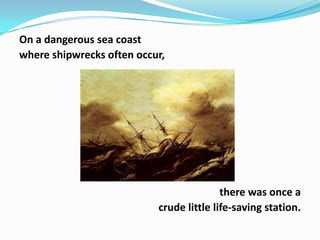
On a dangerous sea coast
where shipwrecks often occur,

there was once a
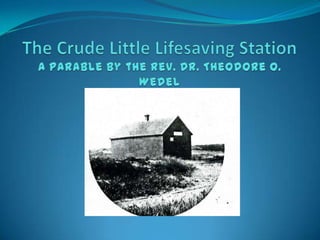
crude little life-saving station.
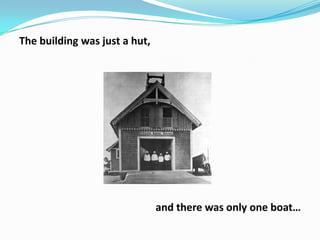
The building was just a hut,

and there was only one boat…
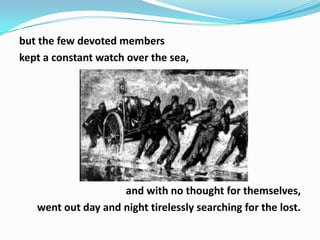
but the few devoted members
kept a constant watch over the sea,

and with no thought for themselves,
went out day and night tirelessly searching for the lost.
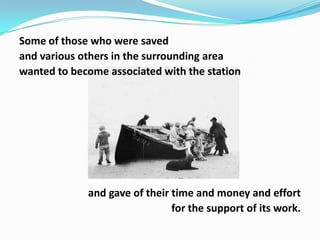
Some of those who were saved
and various others in the surrounding area
wanted to become associated with the station

and gave of their time and money and effort
for the support of its work.
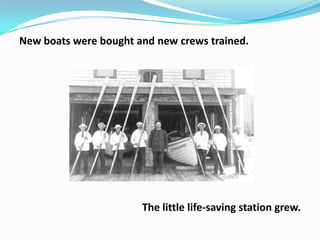
New boats were bought and new crews trained.

The little life-saving station grew.
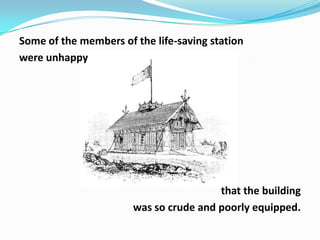
Some of the members of the life-saving station
were unhappy

that the building
was so crude and poorly equipped.
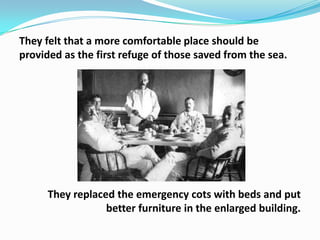
They felt that a more comfortable place should be
provided as the first refuge of those saved from the sea.

They replaced the emergency cots with beds and put
better furniture in the enlarged building.
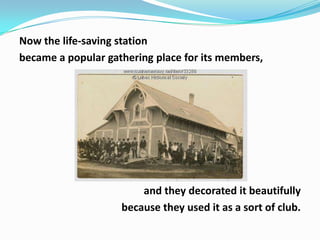
Now the life-saving station
became a popular gathering place for its members,

and they decorated it beautifully
because they used it as a sort of club.
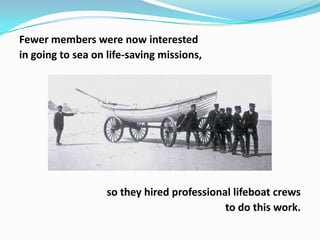
Fewer members were now interested
in going to sea on life-saving missions,

so they hired professional lifeboat crews
to do this work.
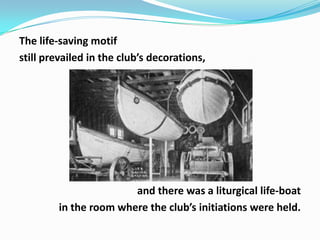
The life-saving motif
still prevailed in the club’s decorations,

and there was a liturgical life-boat
in the room where the club’s initiations were held.
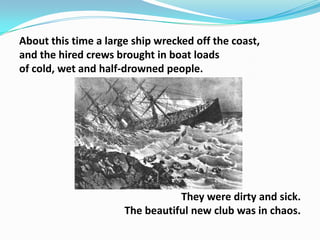
About this time a large ship wrecked off the coast,
and the hired crews brought in boat loads
of cold, wet and half-drowned people.

They were dirty and sick.
The beautiful new club was in chaos.
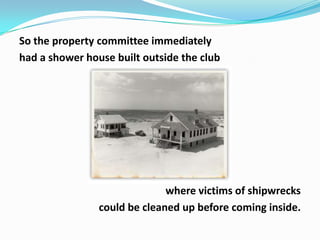
So the property committee immediately
had a shower house built outside the club

where victims of shipwrecks
could be cleaned up before coming inside.
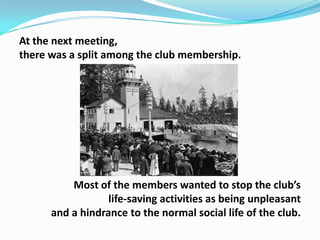
At the next meeting,
there was a split among the club membership.

Most of the members wanted to stop the club’s
life-saving activities as being unpleasant
and a hindrance to the normal social life of the club.
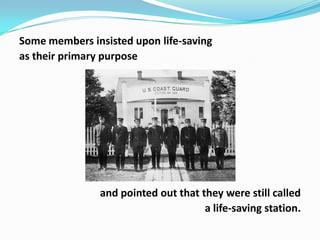
Some members insisted upon life-saving
as their primary purpose

and pointed out that they were still called
a life-saving station.
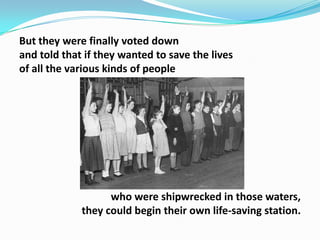
But they were finally voted down
and told that if they wanted to save the lives
of all the various kinds of people

who were shipwrecked in those waters,
they could begin their own life-saving station.
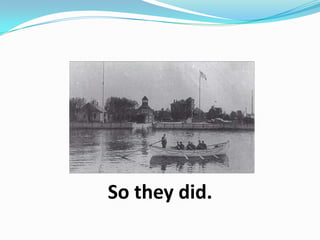
So they did.
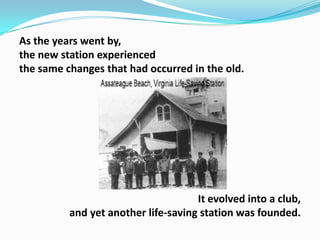
As the years went by,
the new station experienced
the same changes that had occurred in the old.

It evolved into a club,
and yet another life-saving station was founded.
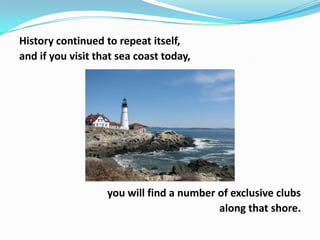
History continued to repeat itself,
and if you visit that sea coast today,

you will find a number of exclusive clubs
along that shore.
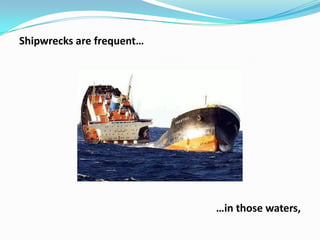
Shipwrecks are frequent…

…in those waters,
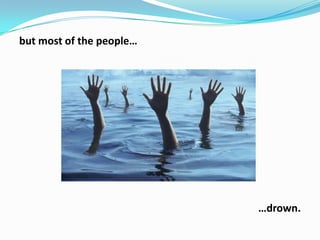
but most of the people…

…drown.
About the Author
The Rev. Dr. Canon Theodore O. Wedel, son of a Mennonite
minister, was ordained an Episcopal priest in 1931. He served as
canon of the Washington National Cathedral and warden of the
College of Preachers from 1939 until 1960.
President of the House of Deputies of the Church's General
Convention from 1952 to 1961, he was active in the ecumenical
movement and served as chairman of evangelism for the World
Council of Churches.

His books include: The Coming Great Church, The Christianity of
Main Street, and The Pulpit Rediscovers Theology.

Slideshow theparableofthecrudelittlelifesavingstation-120120104706-phpapp01

  • 2.
    Introduction The Rev. Dr.Theodore O. Wedel, a canon at the Washington National Cathedral, penned this little story in 1953. It is a parable. Do not analyze. Do not judge. Just listen. Let it paint for you a picture of the tensions in which we and our churches find ourselves about doing the work to which God is calling us and the ways we get in our own way when we try to align with what our limited vision is telling us about where the Spirit is trying to move.
  • 3.
    On a dangeroussea coast where shipwrecks often occur, there was once a crude little life-saving station.
  • 4.
    The building wasjust a hut, and there was only one boat…
  • 5.
    but the fewdevoted members kept a constant watch over the sea, and with no thought for themselves, went out day and night tirelessly searching for the lost.
  • 6.
    Some of thosewho were saved and various others in the surrounding area wanted to become associated with the station and gave of their time and money and effort for the support of its work.
  • 7.
    New boats werebought and new crews trained. The little life-saving station grew.
  • 8.
    Some of themembers of the life-saving station were unhappy that the building was so crude and poorly equipped.
  • 9.
    They felt thata more comfortable place should be provided as the first refuge of those saved from the sea. They replaced the emergency cots with beds and put better furniture in the enlarged building.
  • 10.
    Now the life-savingstation became a popular gathering place for its members, and they decorated it beautifully because they used it as a sort of club.
  • 11.
    Fewer members werenow interested in going to sea on life-saving missions, so they hired professional lifeboat crews to do this work.
  • 12.
    The life-saving motif stillprevailed in the club’s decorations, and there was a liturgical life-boat in the room where the club’s initiations were held.
  • 13.
    About this timea large ship wrecked off the coast, and the hired crews brought in boat loads of cold, wet and half-drowned people. They were dirty and sick. The beautiful new club was in chaos.
  • 14.
    So the propertycommittee immediately had a shower house built outside the club where victims of shipwrecks could be cleaned up before coming inside.
  • 15.
    At the nextmeeting, there was a split among the club membership. Most of the members wanted to stop the club’s life-saving activities as being unpleasant and a hindrance to the normal social life of the club.
  • 16.
    Some members insistedupon life-saving as their primary purpose and pointed out that they were still called a life-saving station.
  • 17.
    But they werefinally voted down and told that if they wanted to save the lives of all the various kinds of people who were shipwrecked in those waters, they could begin their own life-saving station.
  • 18.
  • 19.
    As the yearswent by, the new station experienced the same changes that had occurred in the old. It evolved into a club, and yet another life-saving station was founded.
  • 20.
    History continued torepeat itself, and if you visit that sea coast today, you will find a number of exclusive clubs along that shore.
  • 21.
  • 22.
    but most ofthe people… …drown.
  • 23.
    About the Author TheRev. Dr. Canon Theodore O. Wedel, son of a Mennonite minister, was ordained an Episcopal priest in 1931. He served as canon of the Washington National Cathedral and warden of the College of Preachers from 1939 until 1960. President of the House of Deputies of the Church's General Convention from 1952 to 1961, he was active in the ecumenical movement and served as chairman of evangelism for the World Council of Churches. His books include: The Coming Great Church, The Christianity of Main Street, and The Pulpit Rediscovers Theology.