






Simple Present
  Negative Form
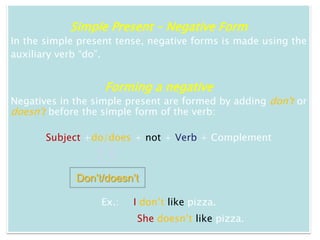
Simple Present – Negative Form
In the simple present tense, negative forms is made using the
auxiliary verb “do”.


                   Forming a negative
Negatives in the simple present are formed by adding don't or
doesn't before the simple form of the verb:

       Subject +do/does + not + Verb + Complement


             Don’t/doesn’t

                  Ex.:   I don’t like pizza.
                          She doesn’t like pizza.
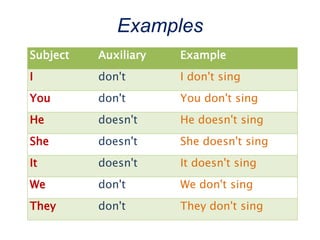
Examples
Subject   Auxiliary   Example
I         don't       I don't sing
You       don't       You don't sing
He        doesn't     He doesn't sing
She       doesn't     She doesn't sing
It        doesn't     It doesn't sing
We        don't       We don't sing
They      don't       They don't sing
Interrogative Form
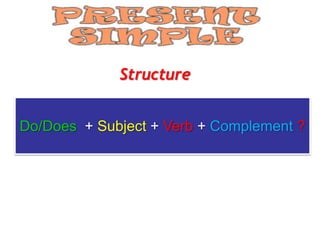
Structure


Do/Does + Subject + Verb + Complement ?
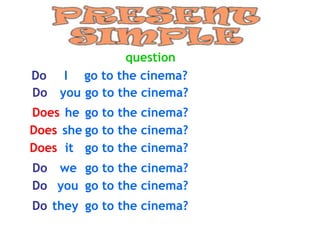
question
Do    I go to the cinema?
Do   you go to the cinema?
Does he go to the cinema?
Does she go to the cinema?
Does it go to the cinema?
Do we go to the cinema?
Do you go to the cinema?
Do they go to the cinema?
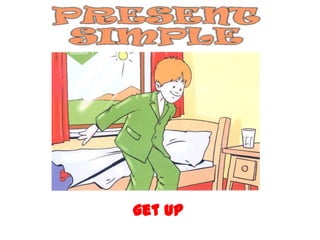
get up
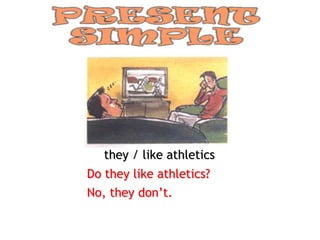
they / like athletics
Do they like athletics?
No, they don’t.
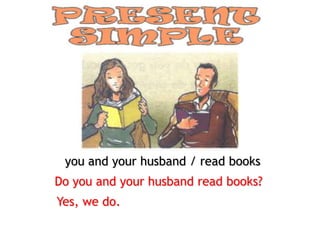
you and your husband / read books
Do you and your husband read books?
Yes, we do.
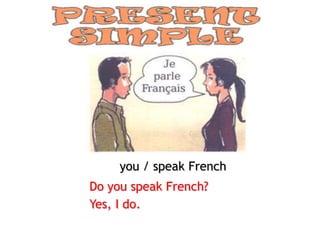
you / speak French
Do you speak French?
Yes, I do.
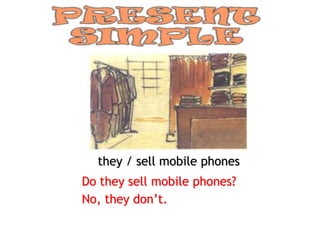
they / sell mobile phones
Do they sell mobile phones?
No, they don’t.
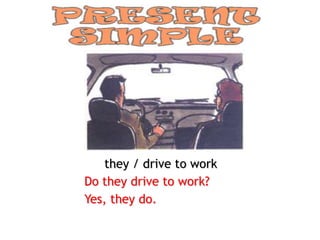
they / drive to work
Do they drive to work?
Yes, they do.
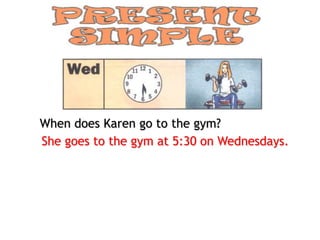
When does Karen go to the gym?
She goes to the gym at 5:30 on Wednesdays.
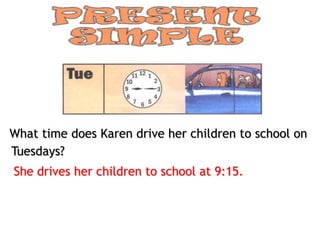
What time does Karen drive her children to school on
Tuesdays?
She drives her children to school at 9:15.
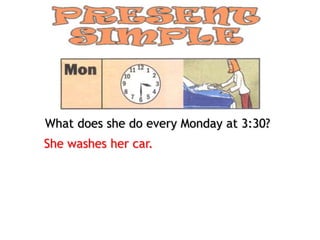
What does she do every Monday at 3:30?
She washes her car.
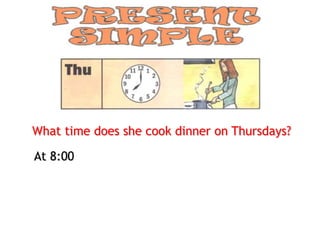
What time does she cook dinner on Thursdays?

At 8:00
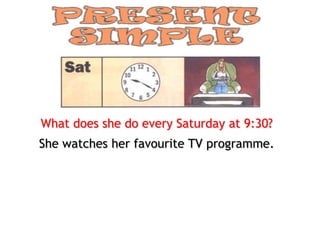
What does she do every Saturday at 9:30?
She watches her favourite TV programme.
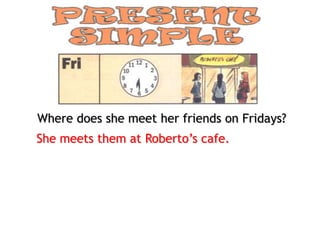
Where does she meet her friends on Fridays?
She meets them at Roberto’s cafe.
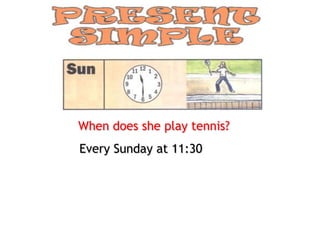
When does she play tennis?
Every Sunday at 11:30
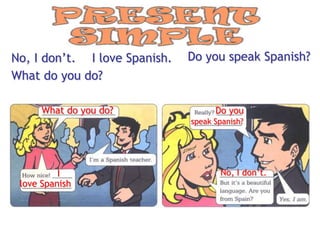
No, I don’t. I love Spanish.   Do you speak Spanish?
What do you do?

      What do you do?                Do you
                               speak Spanish?


          I                           No, I don’t.
 love Spanish
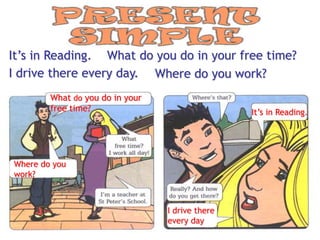
It’s in Reading. What do you do in your free time?
I drive there every day. Where do you work?
        What do you do in your
        free time?                               It’s in Reading.


Where do you
work?


                                 I drive there
                                 every day
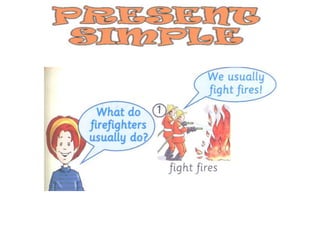
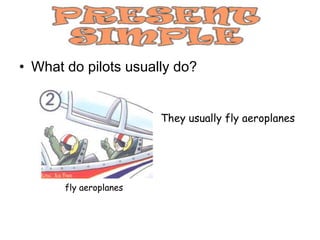
• What do pilots usually do?


                        They usually fly aeroplanes


       fly aeroplanes
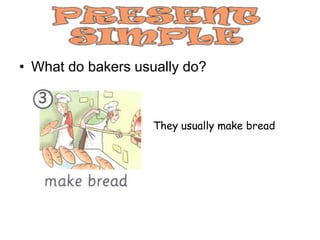
• What do bakers usually do?


                    They usually make bread
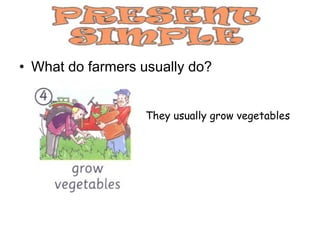
• What do farmers usually do?


                   They usually grow vegetables
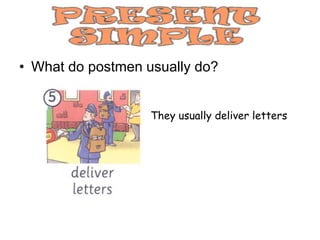
• What do postmen usually do?


                   They usually deliver letters
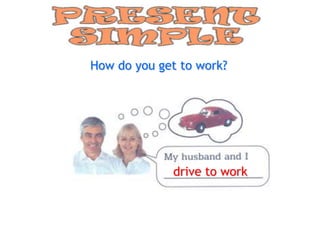
How do you get to work?


             drive to work
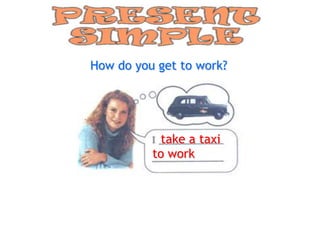
How do you get to work?


            take a taxi
          to work
How do you get to school?


                 take the bus
                  to school.
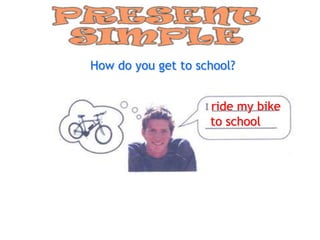
How do you get to school?


                    ride my bike
                    to school
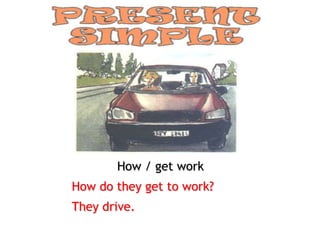
How / get work
How do they get to work?
They drive.
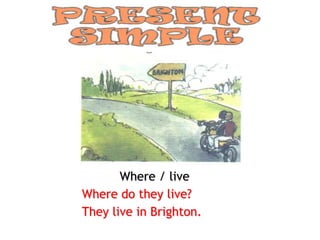
Where / live
Where do they live?
They live in Brighton.
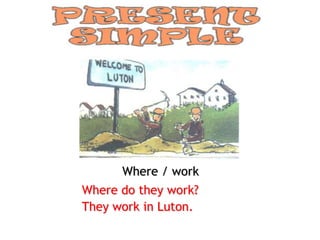
Where / work
Where do they work?
They work in Luton.
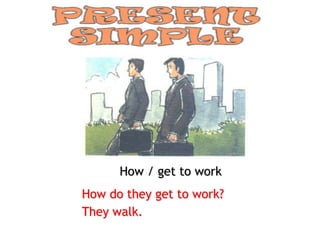
How / get to work
How do they get to work?
They walk.
Slide   simple present neg and int

Slide simple present neg and int

  • 1.
    Simple Present Negative Form
  • 2.
    Simple Present –Negative Form In the simple present tense, negative forms is made using the auxiliary verb “do”. Forming a negative Negatives in the simple present are formed by adding don't or doesn't before the simple form of the verb: Subject +do/does + not + Verb + Complement Don’t/doesn’t Ex.: I don’t like pizza. She doesn’t like pizza.
  • 3.
    Examples Subject Auxiliary Example I don't I don't sing You don't You don't sing He doesn't He doesn't sing She doesn't She doesn't sing It doesn't It doesn't sing We don't We don't sing They don't They don't sing
  • 4.
  • 5.
    Structure Do/Does + Subject+ Verb + Complement ?
  • 6.
    question Do I go to the cinema? Do you go to the cinema? Does he go to the cinema? Does she go to the cinema? Does it go to the cinema? Do we go to the cinema? Do you go to the cinema? Do they go to the cinema?
  • 7.
  • 8.
    they / likeathletics Do they like athletics? No, they don’t.
  • 9.
    you and yourhusband / read books Do you and your husband read books? Yes, we do.
  • 10.
    you / speakFrench Do you speak French? Yes, I do.
  • 11.
    they / sellmobile phones Do they sell mobile phones? No, they don’t.
  • 12.
    they / driveto work Do they drive to work? Yes, they do.
  • 13.
    When does Karengo to the gym? She goes to the gym at 5:30 on Wednesdays.
  • 14.
    What time doesKaren drive her children to school on Tuesdays? She drives her children to school at 9:15.
  • 15.
    What does shedo every Monday at 3:30? She washes her car.
  • 16.
    What time doesshe cook dinner on Thursdays? At 8:00
  • 17.
    What does shedo every Saturday at 9:30? She watches her favourite TV programme.
  • 18.
    Where does shemeet her friends on Fridays? She meets them at Roberto’s cafe.
  • 19.
    When does sheplay tennis? Every Sunday at 11:30
  • 20.
    No, I don’t.I love Spanish. Do you speak Spanish? What do you do? What do you do? Do you speak Spanish? I No, I don’t. love Spanish
  • 21.
    It’s in Reading.What do you do in your free time? I drive there every day. Where do you work? What do you do in your free time? It’s in Reading. Where do you work? I drive there every day
  • 23.
    • What dopilots usually do? They usually fly aeroplanes fly aeroplanes
  • 24.
    • What dobakers usually do? They usually make bread
  • 25.
    • What dofarmers usually do? They usually grow vegetables
  • 26.
    • What dopostmen usually do? They usually deliver letters
  • 28.
    How do youget to work? drive to work
  • 29.
    How do youget to work? take a taxi to work
  • 30.
    How do youget to school? take the bus to school.
  • 31.
    How do youget to school? ride my bike to school
  • 32.
    How / getwork How do they get to work? They drive.
  • 33.
    Where / live Wheredo they live? They live in Brighton.
  • 34.
    Where / work Wheredo they work? They work in Luton.
  • 35.
    How / getto work How do they get to work? They walk.