Sleep
Dr. Humaira kamal
Associate professor
Learning objective
 Define sleep.
 Describe slow wave sleep, REM sleep.
 Describe the neuronal centers, neurohormonal
substances and mechanism that cause sleep.
 Describe the brain waves
Consciousness
 –awareness of the external world &self including
awareness of thoughts, perception and dreams
 Following states of consciousness are listed in
decreasing order of arousal level, based on the
extent of interaction between peripheral stimuli
and the brain:
 maximum alertness
 Wakefulness
 sleep (several different types)
 coma
Definition:
 A natural periodic state of rest for the mind and
body, in which the eyes usually close and
consciousness is completely or partially lost, so
that there is a decrease in bodily movement and
responsiveness to external stimuli
 A state of unconsciousness but still able to
awaken by normal sensory stimuli
 Sleep is an active process
 Brain’s overall activity is not reduced
 During certain stages of sleep, O2 uptake by the
brain is even increased above normal waking
levels
 Types of sleep
 Slow wave sleep
 Rapid-eye-movement sleep
SLEEP
 Types of Sleep
 Slow wave Sleep
 Low level of cerebral cortex activity, vital signs
decline
 REM (rapid eye movement) sleep
 Active dreaming, vital signs change, inhibition
of somatic motor neurons
Slow wave sleep
 Occurs during first hours after sleep
 Exceedingly restful
 Decrease in vascular tone& vegetative functions
Characteristics of Non-REM sleep
 Stage1: stage of drowsiness
 α waves are diminished and abolished
 EEG shows only low voltage and
infrequent delta waves
 Stage2(light sleep)
 Judged by the difficulty of awakening the
sleeper
 12-15HZ
 Sleep spindles are seen
 Stage 3(Medium sleep)
 High amplitude δ waves
 Frequency decreases to 1-2 /sec and
amplitude increases to about 100 υV
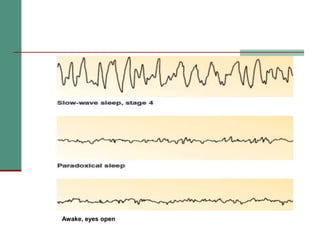
 Stage IV:
 δ waves become prominent with low
frequency and high amplitude
REM Sleep
 Paradoxical sleep, Desynchronized sleep
 Characterized by high-frequency& low amplitude EEG
pattern seen in waking hours
 Presence of rapid eye movement
 Dream sleep
 Individual is difficult to arouse
 Muscle tone is depressed-inhibition of excitator
areas of brain stem
 Heart rate & respiratory rate is irregular
Awake, eyes open
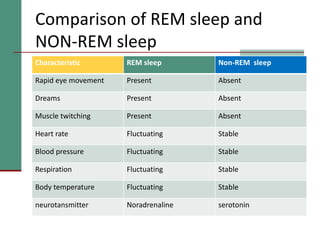
Comparison of REM sleep and
NON-REM sleep
Characteristic REM sleep Non-REM sleep
Rapid eye movement Present Absent
Dreams Present Absent
Muscle twitching Present Absent
Heart rate Fluctuating Stable
Blood pressure Fluctuating Stable
Respiration Fluctuating Stable
Body temperature Fluctuating Stable
neurotansmitter Noradrenaline serotonin
 Mechanisms of sleep
Theories of sleep
 Passive theorey
 Sleep is caused by active inhibitory process
 Neuronal Centers, Neurohumoral Substances
 Neuronal centers
 Raphe nuclei in the lower half of the pons & medulla
 Activation results in Non-REM Sleep
 many nerve endings of fibers from these raphe
neurons secrete Serotonin
 Locus Cereleus of Pons
 Activation causes REM sleep
 Noradrenaline is released
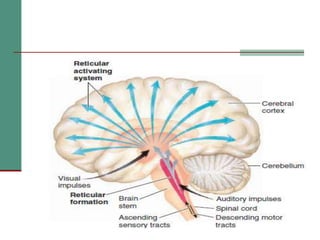
 Inhibition of Ascending reticular activating
system
 Responsible for wakefulness because of its
afferent and efferent connections with
cerebral cortex
 Other transmitters related to sleep
 Muramyl peptide
 Low molecular peptide
 Adenosine
 Back bone of ATP
 Increased levels inactivate the arousal
centers
 Hypocretin also known as orexin
 group of neurons in the hypothalamus that
secrete the excitatory neurotransmitter
Cause of REM sleep
 Large acetylcholine-secreting neuron in the
upper brain stem reticular formation activates
brain
 Importance :to accomplish the long term
structural and chemical adjustments for
learning and memory
Sleep cycle
 The sleep–wake cycle as well as the various
stages of sleep are due to the cyclic interplay of
three different neural systems:
 Arousal system: regulated by a group of
neurons in the hypothalamus and involves the
reticular activating system originating in the brain
stem
 A slow-wave sleep center: in the hypothalamus
that contains sleep-on neurons that induce sleep
 A paradoxical sleep center in the brain stem that
houses REM sleep-on neurons, which become
very active during REM sleep.
 When the sleep centers are not activated, the
mesencephalic and upper pontile reticular
activating nuclei are released from inhibition,
which allows the reticular activating nuclei to
become spontaneously active
 This in turn excites both the cerebral cortex and
the peripheral nervous system, both of which
send numerous positive feedback signals back to
the same reticular activating nuclei to activate
them still further.
 Once wakefulness begins, it has a natural
tendency to sustain itself because of all this
positive feedback activity
 Physiological effects of sleep
 Effects on the nervous system
 Progressive malfunction of thoughts
 Irritable & psychotic behaviour
 Effects on the structure
 The principal value of sleep is to restore natural
balances among the neuronal centers
Sleep disorders
 Narcolepsy
 REM sleep is entered directly
 Intense desire to sleep
 Individual may become paralyzed
 Presence of dream-like state
 Other problem are related with slow wave sleep
 Sleepwalking (somnambulism)
 Bed-wetting (nocturnal enuresis)
Brain waves
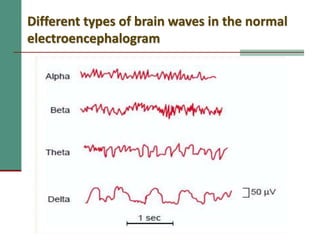
Different types of brain waves in the normal
electroencephalogram
 In normal healthy people, most waves in the EEG
can be classified as alpha, beta, theta, and delta
waves
Alpha waves
 Are rhythmical waves
 Occur at frequencies between 8 and 13 cycles/s
 Are found in the EEGs of almost all normal adult
people when they are awake and in a quiet,
resting state of cerebration
 Occur most intensely in the occipital region
Beta waves
 Occur at frequencies greater than 14 cycles /s
 And as high as 80 cycles per second.
 They are recorded mainly from the parietal and
frontal regions during specific activation of these
parts of the brain
Theta waves
 Have frequencies between 4 and 7 cycles /s
 Occur normally in the parietal and temporal
regions in children, but they also occur during
emotional stress in some adults, particularly
during disappointment and frustration.
 Theta waves also occur in many brain disorders,
often in degenerative brain states
Delta waves
 Include all the waves of the EEG with frequencies less than
3.5 cycles /s
 Have voltages two to four times greater than most other
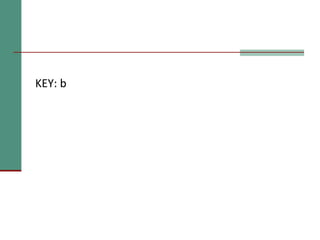
types of brain waves.
 Occur in very deep sleep, in infancy, and in serious organic
brain disease.
 Also in the cortex of animals that have had subcortical
transections separating the cerebral cortex from the
KEY: b
THANK YOU

Sleep

  • 1.
  • 2.
    Learning objective  Definesleep.  Describe slow wave sleep, REM sleep.  Describe the neuronal centers, neurohormonal substances and mechanism that cause sleep.  Describe the brain waves
  • 3.
    Consciousness  –awareness ofthe external world &self including awareness of thoughts, perception and dreams  Following states of consciousness are listed in decreasing order of arousal level, based on the extent of interaction between peripheral stimuli and the brain:  maximum alertness  Wakefulness  sleep (several different types)  coma
  • 4.
    Definition:  A naturalperiodic state of rest for the mind and body, in which the eyes usually close and consciousness is completely or partially lost, so that there is a decrease in bodily movement and responsiveness to external stimuli  A state of unconsciousness but still able to awaken by normal sensory stimuli
  • 5.
     Sleep isan active process  Brain’s overall activity is not reduced  During certain stages of sleep, O2 uptake by the brain is even increased above normal waking levels  Types of sleep  Slow wave sleep  Rapid-eye-movement sleep
  • 6.
    SLEEP  Types ofSleep  Slow wave Sleep  Low level of cerebral cortex activity, vital signs decline  REM (rapid eye movement) sleep  Active dreaming, vital signs change, inhibition of somatic motor neurons
  • 7.
    Slow wave sleep Occurs during first hours after sleep  Exceedingly restful  Decrease in vascular tone& vegetative functions
  • 8.
    Characteristics of Non-REMsleep  Stage1: stage of drowsiness  α waves are diminished and abolished  EEG shows only low voltage and infrequent delta waves
  • 9.
     Stage2(light sleep) Judged by the difficulty of awakening the sleeper  12-15HZ  Sleep spindles are seen  Stage 3(Medium sleep)  High amplitude δ waves  Frequency decreases to 1-2 /sec and amplitude increases to about 100 υV
  • 10.
     Stage IV: δ waves become prominent with low frequency and high amplitude
  • 11.
    REM Sleep  Paradoxicalsleep, Desynchronized sleep  Characterized by high-frequency& low amplitude EEG pattern seen in waking hours  Presence of rapid eye movement  Dream sleep  Individual is difficult to arouse  Muscle tone is depressed-inhibition of excitator areas of brain stem  Heart rate & respiratory rate is irregular
  • 12.
  • 13.
    Comparison of REMsleep and NON-REM sleep Characteristic REM sleep Non-REM sleep Rapid eye movement Present Absent Dreams Present Absent Muscle twitching Present Absent Heart rate Fluctuating Stable Blood pressure Fluctuating Stable Respiration Fluctuating Stable Body temperature Fluctuating Stable neurotansmitter Noradrenaline serotonin
  • 14.
  • 15.
    Theories of sleep Passive theorey  Sleep is caused by active inhibitory process  Neuronal Centers, Neurohumoral Substances  Neuronal centers  Raphe nuclei in the lower half of the pons & medulla  Activation results in Non-REM Sleep  many nerve endings of fibers from these raphe neurons secrete Serotonin
  • 16.
     Locus Cereleusof Pons  Activation causes REM sleep  Noradrenaline is released  Inhibition of Ascending reticular activating system  Responsible for wakefulness because of its afferent and efferent connections with cerebral cortex
  • 18.
     Other transmittersrelated to sleep  Muramyl peptide  Low molecular peptide  Adenosine  Back bone of ATP  Increased levels inactivate the arousal centers  Hypocretin also known as orexin  group of neurons in the hypothalamus that secrete the excitatory neurotransmitter
  • 19.
    Cause of REMsleep  Large acetylcholine-secreting neuron in the upper brain stem reticular formation activates brain  Importance :to accomplish the long term structural and chemical adjustments for learning and memory
  • 20.
    Sleep cycle  Thesleep–wake cycle as well as the various stages of sleep are due to the cyclic interplay of three different neural systems:  Arousal system: regulated by a group of neurons in the hypothalamus and involves the reticular activating system originating in the brain stem
  • 21.
     A slow-wavesleep center: in the hypothalamus that contains sleep-on neurons that induce sleep  A paradoxical sleep center in the brain stem that houses REM sleep-on neurons, which become very active during REM sleep.
  • 22.
     When thesleep centers are not activated, the mesencephalic and upper pontile reticular activating nuclei are released from inhibition, which allows the reticular activating nuclei to become spontaneously active
  • 23.
     This inturn excites both the cerebral cortex and the peripheral nervous system, both of which send numerous positive feedback signals back to the same reticular activating nuclei to activate them still further.  Once wakefulness begins, it has a natural tendency to sustain itself because of all this positive feedback activity
  • 24.
     Physiological effectsof sleep  Effects on the nervous system  Progressive malfunction of thoughts  Irritable & psychotic behaviour  Effects on the structure  The principal value of sleep is to restore natural balances among the neuronal centers
  • 25.
    Sleep disorders  Narcolepsy REM sleep is entered directly  Intense desire to sleep  Individual may become paralyzed  Presence of dream-like state  Other problem are related with slow wave sleep  Sleepwalking (somnambulism)  Bed-wetting (nocturnal enuresis)
  • 26.
  • 27.
    Different types ofbrain waves in the normal electroencephalogram
  • 28.
     In normalhealthy people, most waves in the EEG can be classified as alpha, beta, theta, and delta waves
  • 29.
    Alpha waves  Arerhythmical waves  Occur at frequencies between 8 and 13 cycles/s  Are found in the EEGs of almost all normal adult people when they are awake and in a quiet, resting state of cerebration  Occur most intensely in the occipital region
  • 30.
    Beta waves  Occurat frequencies greater than 14 cycles /s  And as high as 80 cycles per second.  They are recorded mainly from the parietal and frontal regions during specific activation of these parts of the brain
  • 31.
    Theta waves  Havefrequencies between 4 and 7 cycles /s  Occur normally in the parietal and temporal regions in children, but they also occur during emotional stress in some adults, particularly during disappointment and frustration.  Theta waves also occur in many brain disorders, often in degenerative brain states
  • 32.
    Delta waves  Includeall the waves of the EEG with frequencies less than 3.5 cycles /s  Have voltages two to four times greater than most other types of brain waves.  Occur in very deep sleep, in infancy, and in serious organic brain disease.  Also in the cortex of animals that have had subcortical transections separating the cerebral cortex from the
  • 33.
  • 35.