1
SKINRELATINGPROBLEMS
Presented by:
MANEESH BANYAL (Asst. professor)
SWATI JOSHI (Asst. professor)
CONTENTS..
• Structure of skin
• Dry skin
• Acne
• Prickly heat
• Wrinkles
• Pigmentation
• Moisturizers
• References
2
SKIN..
• The skin is the largest organ in the body.
• It comprising about 15% of body weight.
• The total skin surface of an adult ranges from
12-20 square feet.
• In term of chemical composition the skin is
about 70% water, 25% protein and 2% lipids.
3
4
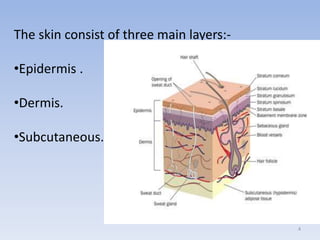
The skin consist of three main layers:-
•Epidermis .
•Dermis.
•Subcutaneous.
5
DRY SKIN..
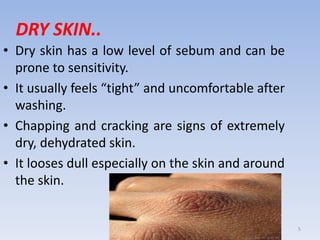
• Dry skin has a low level of sebum and can be
prone to sensitivity.
• It usually feels “tight” and uncomfortable after
washing.
• Chapping and cracking are signs of extremely
dry, dehydrated skin.
• It looses dull especially on the skin and around
the skin.
CAUSES..
• The oil glands do not supply enough
lubrication to the skin. As a result, the skin
becomes dehydrated.
• Dry skin could be due to genetic condition.
• Nutritional deficiences especially, deficiences
of vitamin A and B.
• Environmental factors such as; exposure to
sunlight, cold, chemicals or cosmetics or
excessive bathing with harsh soap.
6
ACNE..
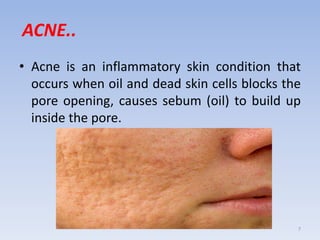
• Acne is an inflammatory skin condition that
occurs when oil and dead skin cells blocks the
pore opening, causes sebum (oil) to build up
inside the pore.
7
CAUSES..
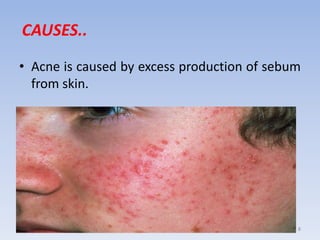
• Acne is caused by excess production of sebum
from skin.
8
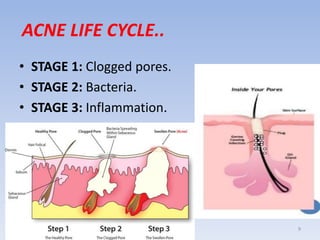
ACNE LIFE CYCLE..
• STAGE 1: Clogged pores.
• STAGE 2: Bacteria.
• STAGE 3: Inflammation.
9
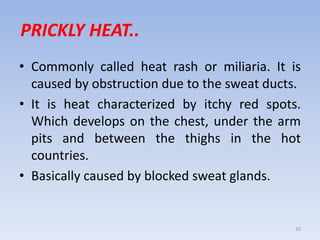
PRICKLY HEAT..
• Commonly called heat rash or miliaria. It is
caused by obstruction due to the sweat ducts.
• It is heat characterized by itchy red spots.
Which develops on the chest, under the arm
pits and between the thighs in the hot
countries.
• Basically caused by blocked sweat glands.
10
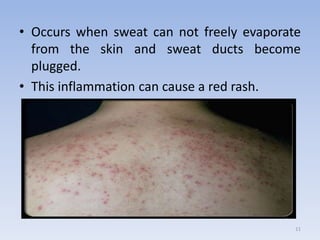
• Occurs when sweat can not freely evaporate
from the skin and sweat ducts become
plugged.
• This inflammation can cause a red rash.
11
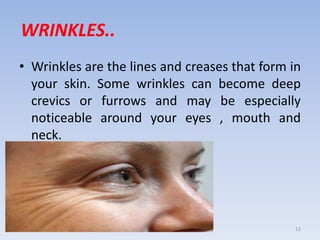
WRINKLES..
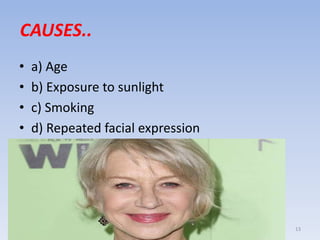
• Wrinkles are the lines and creases that form in
your skin. Some wrinkles can become deep
crevics or furrows and may be especially
noticeable around your eyes , mouth and
neck.
12
CAUSES..
• a) Age
• b) Exposure to sunlight
• c) Smoking
• d) Repeated facial expression
13
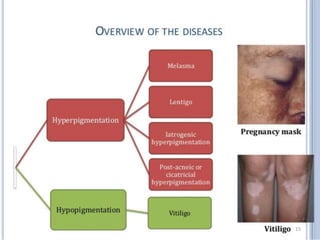
PIGMENTATION..
• Skin color is generally due to melanin.
• Melanin is synthesized by melanocytes within
melanosomes and transferred to
keratinocytes.
• Human being come in glorious spectrum of
different colors: light, dark, plain or freckly
skin.
• Skin pigmentation has far- reaching social and
psychological implications.
14
15
HYPOPIGMENTATION DISORDERS…
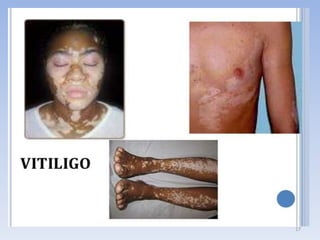
• Vitiligo.
High prevalence : 0.5 – 2 % of population
• 3 major hypothesis : -
a) immunological factor
b) oxidative stress
c) sympathetic neurogenic disorders
16
17
18
19
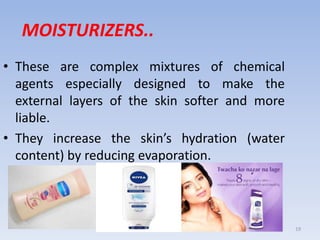
MOISTURIZERS..
• These are complex mixtures of chemical
agents especially designed to make the
external layers of the skin softer and more
liable.
• They increase the skin’s hydration (water
content) by reducing evaporation.
20
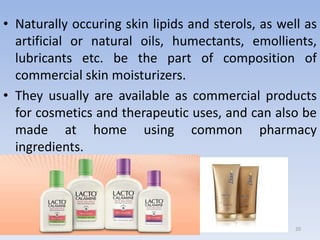
• Naturally occuring skin lipids and sterols, as well as
artificial or natural oils, humectants, emollients,
lubricants etc. be the part of composition of
commercial skin moisturizers.
• They usually are available as commercial products
for cosmetics and therapeutic uses, and can also be
made at home using common pharmacy
ingredients.
21
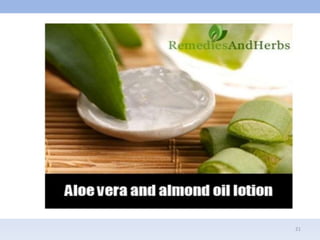
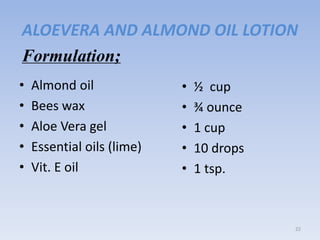
ALOEVERA AND ALMOND OIL LOTION
• Almond oil
• Bees wax
• Aloe Vera gel
• Essential oils (lime)
• Vit. E oil
22
• ½ cup
• ¾ ounce
• 1 cup
• 10 drops
• 1 tsp.
Formulation;
REFERENCES..
• http://www.dermacaredirect.co.uk.../the
psychological_and_social_impact_of_skin_dis
ease.
• www.nes.scot.nhs.uk/media/705715/dermato
logy.
• http://medicine.uiowa.edu/dermatology/educ
ation/clinical_skin_disease.
• www2.highlands.edu/academics/divisions/sco
pe/biology/…/skin_disease ppt.pptx.
23
24
THANK YOU

SKIN RELATING PROBLEMS

  • 1.
    1 SKINRELATINGPROBLEMS Presented by: MANEESH BANYAL(Asst. professor) SWATI JOSHI (Asst. professor)
  • 2.
    CONTENTS.. • Structure ofskin • Dry skin • Acne • Prickly heat • Wrinkles • Pigmentation • Moisturizers • References 2
  • 3.
    SKIN.. • The skinis the largest organ in the body. • It comprising about 15% of body weight. • The total skin surface of an adult ranges from 12-20 square feet. • In term of chemical composition the skin is about 70% water, 25% protein and 2% lipids. 3
  • 4.
    4 The skin consistof three main layers:- •Epidermis . •Dermis. •Subcutaneous.
  • 5.
    5 DRY SKIN.. • Dryskin has a low level of sebum and can be prone to sensitivity. • It usually feels “tight” and uncomfortable after washing. • Chapping and cracking are signs of extremely dry, dehydrated skin. • It looses dull especially on the skin and around the skin.
  • 6.
    CAUSES.. • The oilglands do not supply enough lubrication to the skin. As a result, the skin becomes dehydrated. • Dry skin could be due to genetic condition. • Nutritional deficiences especially, deficiences of vitamin A and B. • Environmental factors such as; exposure to sunlight, cold, chemicals or cosmetics or excessive bathing with harsh soap. 6
  • 7.
    ACNE.. • Acne isan inflammatory skin condition that occurs when oil and dead skin cells blocks the pore opening, causes sebum (oil) to build up inside the pore. 7
  • 8.
    CAUSES.. • Acne iscaused by excess production of sebum from skin. 8
  • 9.
    ACNE LIFE CYCLE.. •STAGE 1: Clogged pores. • STAGE 2: Bacteria. • STAGE 3: Inflammation. 9
  • 10.
    PRICKLY HEAT.. • Commonlycalled heat rash or miliaria. It is caused by obstruction due to the sweat ducts. • It is heat characterized by itchy red spots. Which develops on the chest, under the arm pits and between the thighs in the hot countries. • Basically caused by blocked sweat glands. 10
  • 11.
    • Occurs whensweat can not freely evaporate from the skin and sweat ducts become plugged. • This inflammation can cause a red rash. 11
  • 12.
    WRINKLES.. • Wrinkles arethe lines and creases that form in your skin. Some wrinkles can become deep crevics or furrows and may be especially noticeable around your eyes , mouth and neck. 12
  • 13.
    CAUSES.. • a) Age •b) Exposure to sunlight • c) Smoking • d) Repeated facial expression 13
  • 14.
    PIGMENTATION.. • Skin coloris generally due to melanin. • Melanin is synthesized by melanocytes within melanosomes and transferred to keratinocytes. • Human being come in glorious spectrum of different colors: light, dark, plain or freckly skin. • Skin pigmentation has far- reaching social and psychological implications. 14
  • 15.
  • 16.
    HYPOPIGMENTATION DISORDERS… • Vitiligo. Highprevalence : 0.5 – 2 % of population • 3 major hypothesis : - a) immunological factor b) oxidative stress c) sympathetic neurogenic disorders 16
  • 17.
  • 18.
  • 19.
    19 MOISTURIZERS.. • These arecomplex mixtures of chemical agents especially designed to make the external layers of the skin softer and more liable. • They increase the skin’s hydration (water content) by reducing evaporation.
  • 20.
    20 • Naturally occuringskin lipids and sterols, as well as artificial or natural oils, humectants, emollients, lubricants etc. be the part of composition of commercial skin moisturizers. • They usually are available as commercial products for cosmetics and therapeutic uses, and can also be made at home using common pharmacy ingredients.
  • 21.
  • 22.
    ALOEVERA AND ALMONDOIL LOTION • Almond oil • Bees wax • Aloe Vera gel • Essential oils (lime) • Vit. E oil 22 • ½ cup • ¾ ounce • 1 cup • 10 drops • 1 tsp. Formulation;
  • 23.
    REFERENCES.. • http://www.dermacaredirect.co.uk.../the psychological_and_social_impact_of_skin_dis ease. • www.nes.scot.nhs.uk/media/705715/dermato logy. •http://medicine.uiowa.edu/dermatology/educ ation/clinical_skin_disease. • www2.highlands.edu/academics/divisions/sco pe/biology/…/skin_disease ppt.pptx. 23
  • 24.