1/30/2024 © R R INSTITUTIONS , BANGALORE 1
SUBJECT – MEDICALAND SURGICAL NURSING
TOPIC -SINUSITIS
PREPARED BY DOLISHA WARBI
1/30/2024 © R R INSTITUTIONS , BANGALORE
2
DEFINITION:
CAUSES:
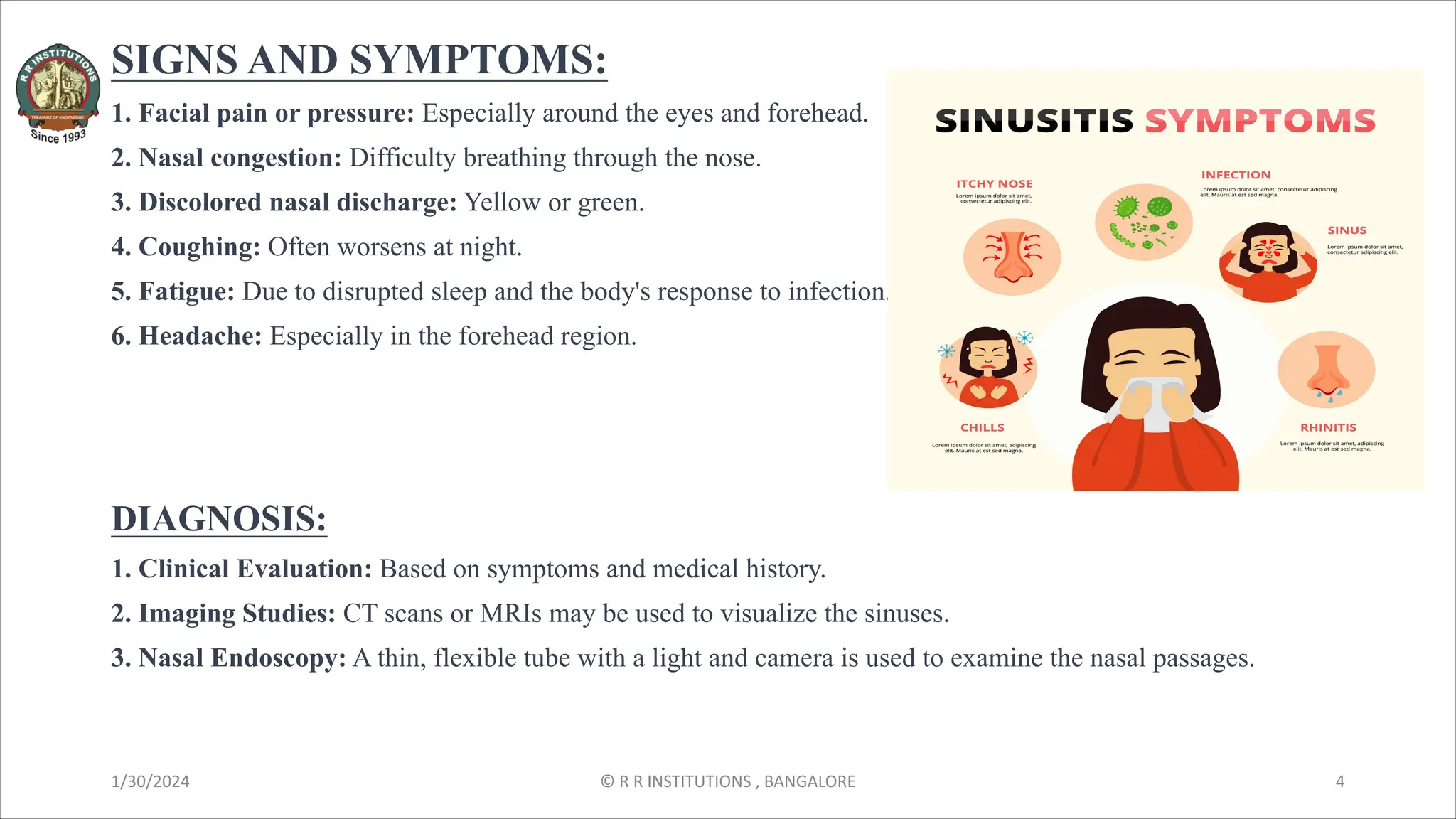
1. Viral Infections: Often triggered by the common cold or flu viruses.
2. Bacterial Infections: Secondary bacterial infections may develop after a viral infection.
3. Fungal Infections: Less common, but can occur, especially in individuals with weakened immune systems.
4. Allergies: Allergic reactions can cause swelling and congestion in the nasal passages.
5. Nasal Polyps: Benign growths in the nasal passages that can block the sinuses.
TYPES:
1. Acute Sinusitis: Lasts for a short duration, usually after a cold or flu.
2. Chronic Sinusitis: Persists for an extended period, often for more than 12 weeks.
1/30/2024 © R R INSTITUTIONS , BANGALORE 3
SIGNS AND SYMPTOMS:
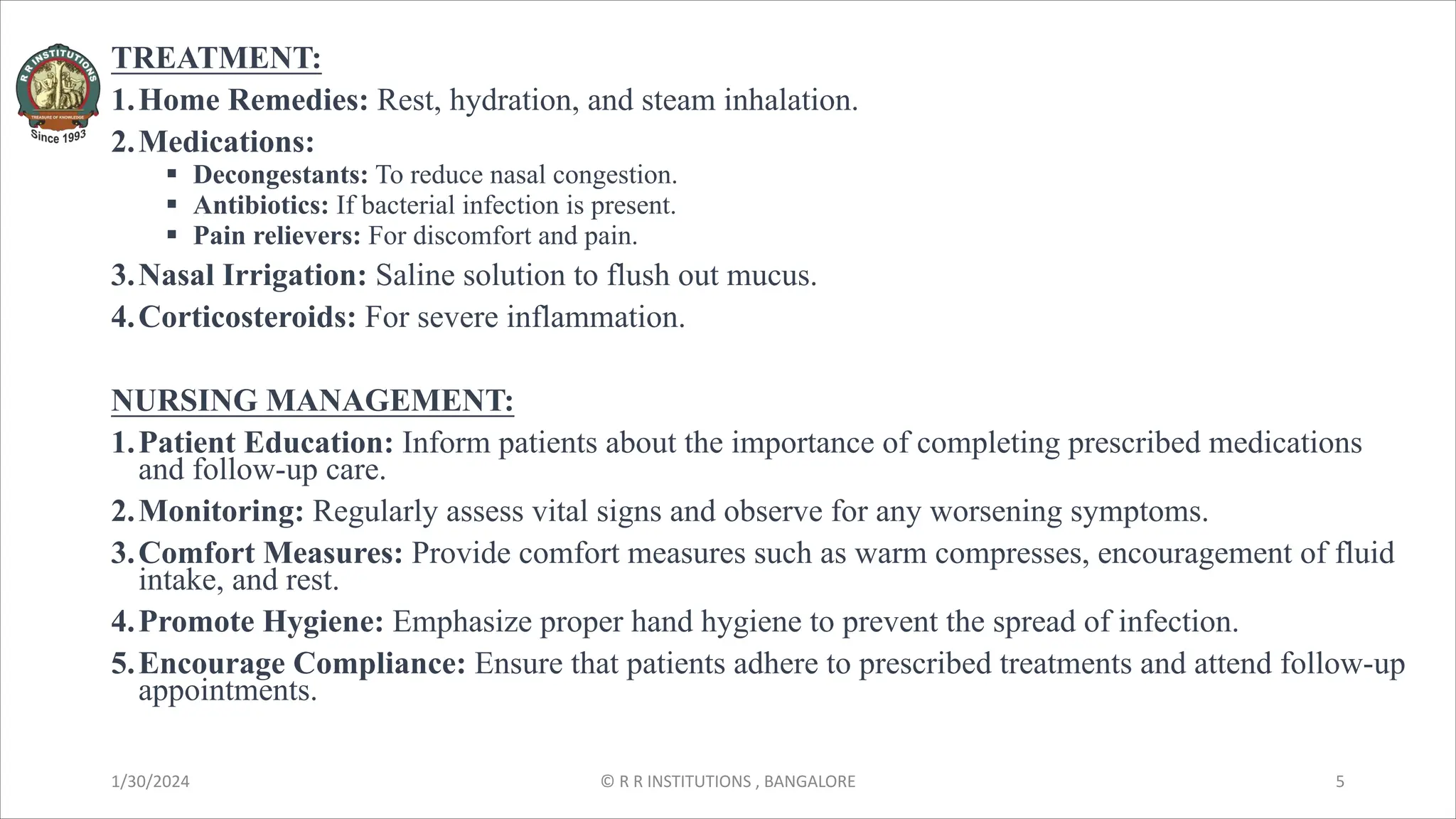
1. Facial pain or pressure: Especially around the eyes and forehead.
2. Nasal congestion: Difficulty breathing through the nose.
3. Discolored nasal discharge: Yellow or green.
4. Coughing: Often worsens at night.
5. Fatigue: Due to disrupted sleep and the body's response to infection.
6. Headache: Especially in the forehead region.
DIAGNOSIS:
1. Clinical Evaluation: Based on symptoms and medical history.
2. Imaging Studies: CT scans or MRIs may be used to visualize the sinuses.
3. Nasal Endoscopy: A thin, flexible tube with a light and camera is used to examine the nasal passages.
1/30/2024 © R R INSTITUTIONS , BANGALORE 4
TREATMENT:
1.Home Remedies: Rest, hydration, and steam inhalation.
2.Medications:
§ Decongestants: To reduce nasal congestion.
§ Antibiotics: If bacterial infection is present.
§ Pain relievers: For discomfort and pain.
3.Nasal Irrigation: Saline solution to flush out mucus.
4.Corticosteroids: For severe inflammation.
NURSING MANAGEMENT:
1.Patient Education: Inform patients about the importance of completing prescribed medications
and follow-up care.
2.Monitoring: Regularly assess vital signs and observe for any worsening symptoms.
3.Comfort Measures: Provide comfort measures such as warm compresses, encouragement of fluid
intake, and rest.
4.Promote Hygiene: Emphasize proper hand hygiene to prevent the spread of infection.
5.Encourage Compliance: Ensure that patients adhere to prescribed treatments and attend follow-up
appointments.
1/30/2024 © R R INSTITUTIONS , BANGALORE 5

SINUSITIS AND ITS NURSING MANAGEMENT.pdf

  • 1.
    1/30/2024 © RR INSTITUTIONS , BANGALORE 1 SUBJECT – MEDICALAND SURGICAL NURSING TOPIC -SINUSITIS PREPARED BY DOLISHA WARBI
  • 2.
    1/30/2024 © RR INSTITUTIONS , BANGALORE 2 DEFINITION:
  • 3.
    CAUSES: 1. Viral Infections:Often triggered by the common cold or flu viruses. 2. Bacterial Infections: Secondary bacterial infections may develop after a viral infection. 3. Fungal Infections: Less common, but can occur, especially in individuals with weakened immune systems. 4. Allergies: Allergic reactions can cause swelling and congestion in the nasal passages. 5. Nasal Polyps: Benign growths in the nasal passages that can block the sinuses. TYPES: 1. Acute Sinusitis: Lasts for a short duration, usually after a cold or flu. 2. Chronic Sinusitis: Persists for an extended period, often for more than 12 weeks. 1/30/2024 © R R INSTITUTIONS , BANGALORE 3
  • 4.
    SIGNS AND SYMPTOMS: 1.Facial pain or pressure: Especially around the eyes and forehead. 2. Nasal congestion: Difficulty breathing through the nose. 3. Discolored nasal discharge: Yellow or green. 4. Coughing: Often worsens at night. 5. Fatigue: Due to disrupted sleep and the body's response to infection. 6. Headache: Especially in the forehead region. DIAGNOSIS: 1. Clinical Evaluation: Based on symptoms and medical history. 2. Imaging Studies: CT scans or MRIs may be used to visualize the sinuses. 3. Nasal Endoscopy: A thin, flexible tube with a light and camera is used to examine the nasal passages. 1/30/2024 © R R INSTITUTIONS , BANGALORE 4
  • 5.
    TREATMENT: 1.Home Remedies: Rest,hydration, and steam inhalation. 2.Medications: § Decongestants: To reduce nasal congestion. § Antibiotics: If bacterial infection is present. § Pain relievers: For discomfort and pain. 3.Nasal Irrigation: Saline solution to flush out mucus. 4.Corticosteroids: For severe inflammation. NURSING MANAGEMENT: 1.Patient Education: Inform patients about the importance of completing prescribed medications and follow-up care. 2.Monitoring: Regularly assess vital signs and observe for any worsening symptoms. 3.Comfort Measures: Provide comfort measures such as warm compresses, encouragement of fluid intake, and rest. 4.Promote Hygiene: Emphasize proper hand hygiene to prevent the spread of infection. 5.Encourage Compliance: Ensure that patients adhere to prescribed treatments and attend follow-up appointments. 1/30/2024 © R R INSTITUTIONS , BANGALORE 5