Intelligence
• The word "Intelligence" is derived from the
Latin word "Intelligentia" which means the
capacity of understanding and reasoning.
• "Intelligence is an innate ability to solve
problems”.
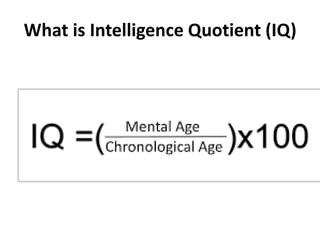
What is Intelligence Quotient (IQ)
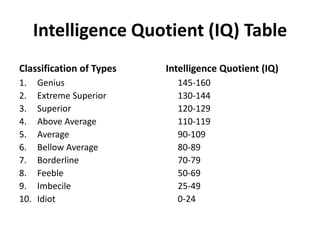
Intelligence Quotient (IQ) Table
Classification of Types
1. Genius
2. Extreme Superior
3. Superior
4. Above Average
5. Average
6. Bellow Average
7. Borderline
8. Feeble
9. Imbecile
10. Idiot
Intelligence Quotient (IQ)
145-160
130-144
120-129
110-119
90-109
80-89
70-79
50-69
25-49
0-24
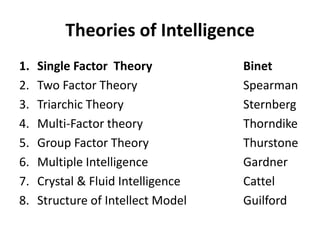
Theories of Intelligence
1. Single Factor Theory Binet
2. Two Factor Theory Spearman
3. Triarchic Theory Sternberg
4. Multi-Factor theory Thorndike
5. Group Factor Theory Thurstone
6. Multiple Intelligence Gardner
7. Crystal & Fluid Intelligence Cattel
8. Structure of Intellect Model Guilford
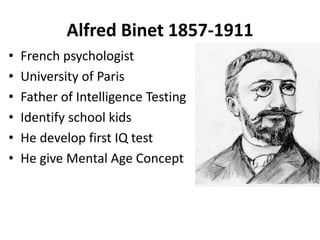
Alfred Binet 1857-1911
• French psychologist
• University of Paris
• Father of Intelligence Testing
• Identify school kids
• He develop first IQ test
• He give Mental Age Concept
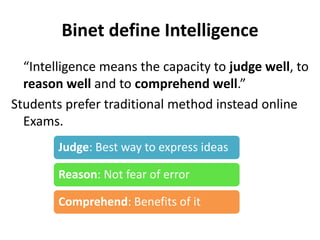
Binet define Intelligence
“Intelligence means the capacity to judge well, to
reason well and to comprehend well.”
Students prefer traditional method instead online
Exams.
Judge: Best way to express ideas
Reason: Not fear of error
Comprehend: Benefits of it
Single Factor Theory Intro
• Presented by Alfred Binet
• Theory is known Monarchic, uni-factor and
traditional theory of intelligence
• Binet, Johnson, Darwin, Herbert Spencer,
Ebbinghaus, Terman and Stern emphasized
that intelligence consists of one factor which is
universal for all activities of the individual.
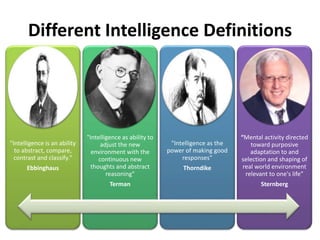
Different Intelligence Definitions
"Intelligence is an ability
to abstract, compare,
contrast and classify."
Ebbinghaus
"Intelligence as ability to
adjust the new
environment with the
continuous new
thoughts and abstract
reasoning"
Terman
"Intelligence as the
power of making good
responses"
Thorndike
“Mental activity directed
toward purposive
adaptation to and
selection and shaping of
real world environment
relevant to one's life”
Sternberg
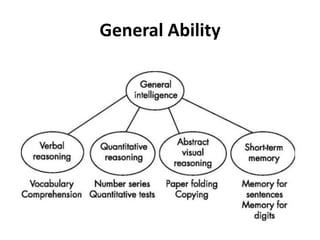
General Ability
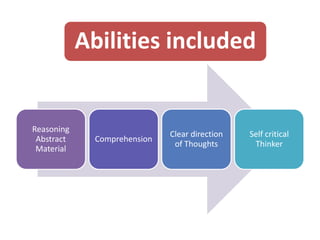
Abilities included
Reasoning
Abstract
Material
Comprehension
Clear direction
of Thoughts
Self critical
Thinker
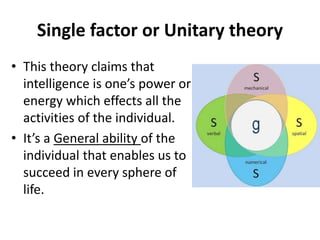
Single factor or Unitary theory
• This theory claims that
intelligence is one’s power or
energy which effects all the
activities of the individual.
• It’s a General ability of the
individual that enables us to
succeed in every sphere of
life.
Criticism
Charles Spearman criticize this theory and
claim that "Intelligence is the combination of g
and s Factors, Intelligence is the general ability
made of several different abilities“. Like
• Muhammad Ali
• Abraham Lincoln
• Robert Sternberg

Single factor theory

  • 2.
    Intelligence • The word"Intelligence" is derived from the Latin word "Intelligentia" which means the capacity of understanding and reasoning. • "Intelligence is an innate ability to solve problems”.
  • 3.
    What is IntelligenceQuotient (IQ)
  • 4.
    Intelligence Quotient (IQ)Table Classification of Types 1. Genius 2. Extreme Superior 3. Superior 4. Above Average 5. Average 6. Bellow Average 7. Borderline 8. Feeble 9. Imbecile 10. Idiot Intelligence Quotient (IQ) 145-160 130-144 120-129 110-119 90-109 80-89 70-79 50-69 25-49 0-24
  • 5.
    Theories of Intelligence 1.Single Factor Theory Binet 2. Two Factor Theory Spearman 3. Triarchic Theory Sternberg 4. Multi-Factor theory Thorndike 5. Group Factor Theory Thurstone 6. Multiple Intelligence Gardner 7. Crystal & Fluid Intelligence Cattel 8. Structure of Intellect Model Guilford
  • 6.
    Alfred Binet 1857-1911 •French psychologist • University of Paris • Father of Intelligence Testing • Identify school kids • He develop first IQ test • He give Mental Age Concept
  • 7.
    Binet define Intelligence “Intelligencemeans the capacity to judge well, to reason well and to comprehend well.” Students prefer traditional method instead online Exams. Judge: Best way to express ideas Reason: Not fear of error Comprehend: Benefits of it
  • 8.
    Single Factor TheoryIntro • Presented by Alfred Binet • Theory is known Monarchic, uni-factor and traditional theory of intelligence • Binet, Johnson, Darwin, Herbert Spencer, Ebbinghaus, Terman and Stern emphasized that intelligence consists of one factor which is universal for all activities of the individual.
  • 9.
    Different Intelligence Definitions "Intelligenceis an ability to abstract, compare, contrast and classify." Ebbinghaus "Intelligence as ability to adjust the new environment with the continuous new thoughts and abstract reasoning" Terman "Intelligence as the power of making good responses" Thorndike “Mental activity directed toward purposive adaptation to and selection and shaping of real world environment relevant to one's life” Sternberg
  • 10.
  • 11.
  • 12.
    Single factor orUnitary theory • This theory claims that intelligence is one’s power or energy which effects all the activities of the individual. • It’s a General ability of the individual that enables us to succeed in every sphere of life.
  • 13.
    Criticism Charles Spearman criticizethis theory and claim that "Intelligence is the combination of g and s Factors, Intelligence is the general ability made of several different abilities“. Like • Muhammad Ali • Abraham Lincoln • Robert Sternberg