Camera shots and angles
Carrie (2013)
Insidious 3 (2015)
Don’t Breathe (2016)
Long/establishing shot
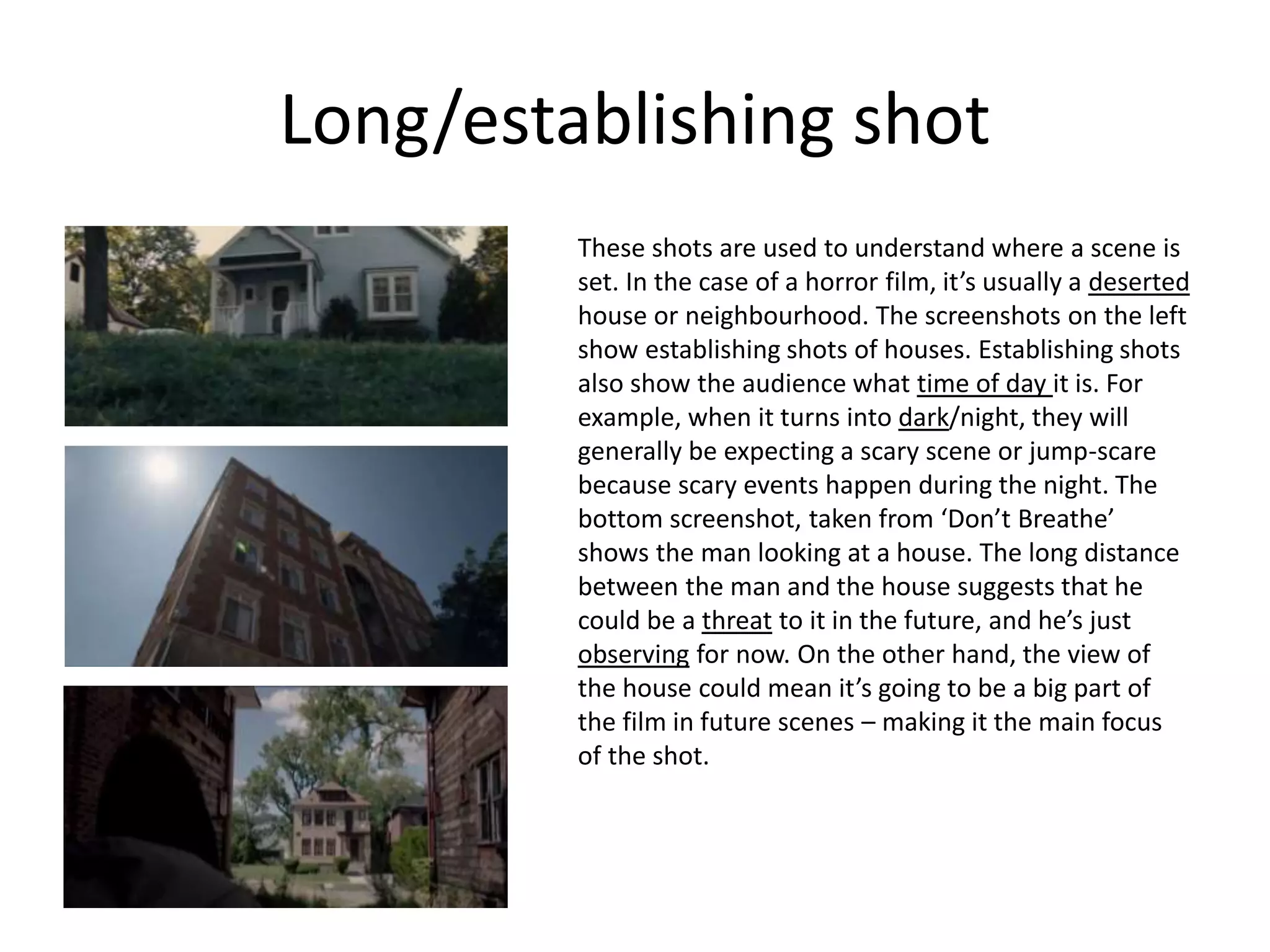
These shots are used to understand where a scene is
set. In the case of a horror film, it’s usually a deserted
house or neighbourhood. The screenshots on the left
show establishing shots of houses. Establishing shots
also show the audience what time of day it is. For
example, when it turns into dark/night, they will
generally be expecting a scary scene or jump-scare
because scary events happen during the night. The
bottom screenshot, taken from ‘Don’t Breathe’
shows the man looking at a house. The long distance
between the man and the house suggests that he
could be a threat to it in the future, and he’s just
observing for now. On the other hand, the view of
the house could mean it’s going to be a big part of
the film in future scenes – making it the main focus
of the shot.
High angle/birds eye
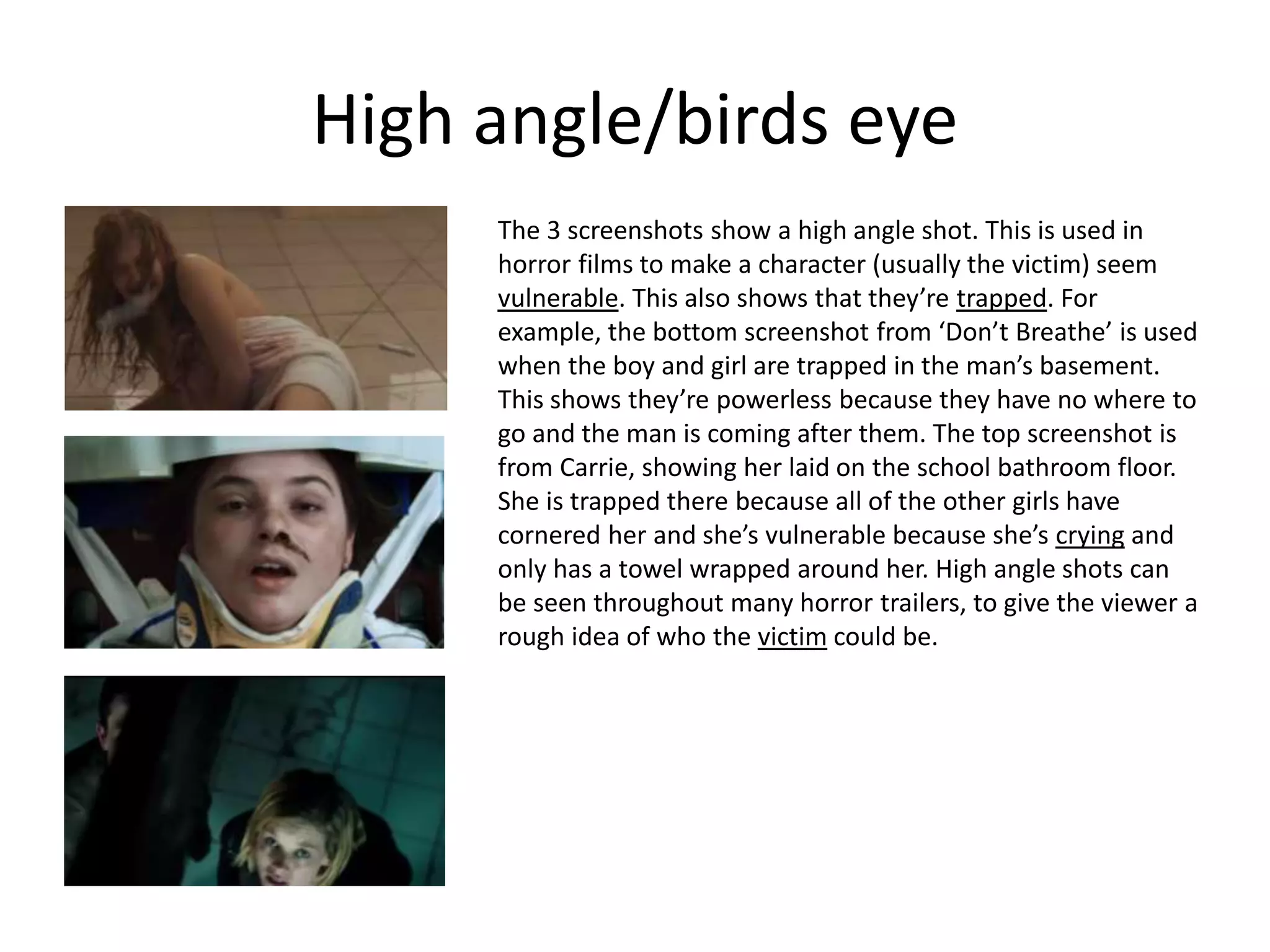
The 3 screenshots show a high angle shot. This is used in
horror films to make a character (usually the victim) seem
vulnerable. This also shows that they’re trapped. For
example, the bottom screenshot from ‘Don’t Breathe’ is used
when the boy and girl are trapped in the man’s basement.
This shows they’re powerless because they have no where to
go and the man is coming after them. The top screenshot is
from Carrie, showing her laid on the school bathroom floor.
She is trapped there because all of the other girls have
cornered her and she’s vulnerable because she’s crying and
only has a towel wrapped around her. High angle shots can
be seen throughout many horror trailers, to give the viewer a
rough idea of who the victim could be.
Close up
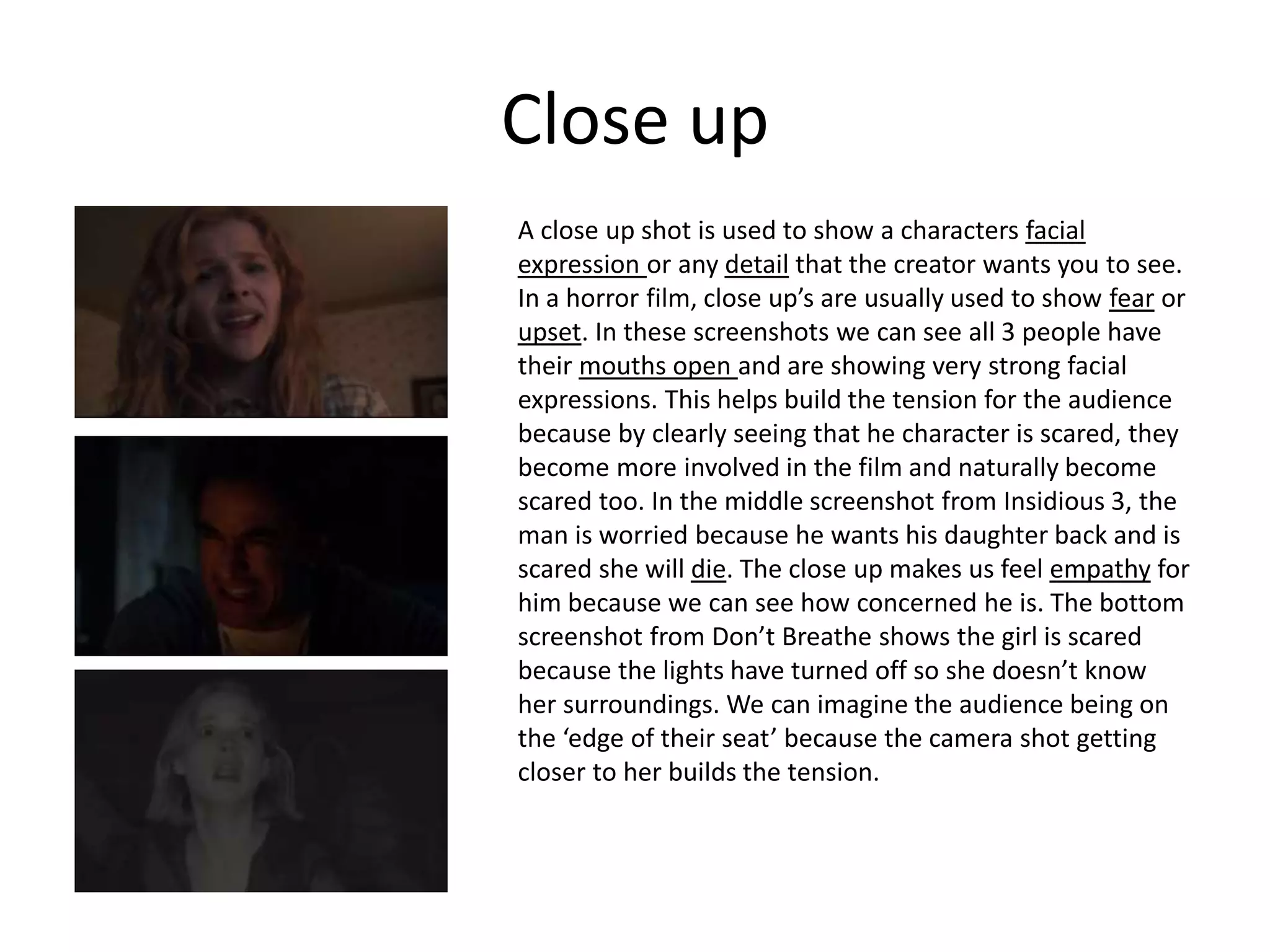
A close up shot is used to show a characters facial
expression or any detail that the creator wants you to see.
In a horror film, close up’s are usually used to show fear or
upset. In these screenshots we can see all 3 people have
their mouths open and are showing very strong facial
expressions. This helps build the tension for the audience
because by clearly seeing that he character is scared, they
become more involved in the film and naturally become
scared too. In the middle screenshot from Insidious 3, the
man is worried because he wants his daughter back and is
scared she will die. The close up makes us feel empathy for
him because we can see how concerned he is. The bottom
screenshot from Don’t Breathe shows the girl is scared
because the lights have turned off so she doesn’t know
her surroundings. We can imagine the audience being on
the ‘edge of their seat’ because the camera shot getting
closer to her builds the tension.
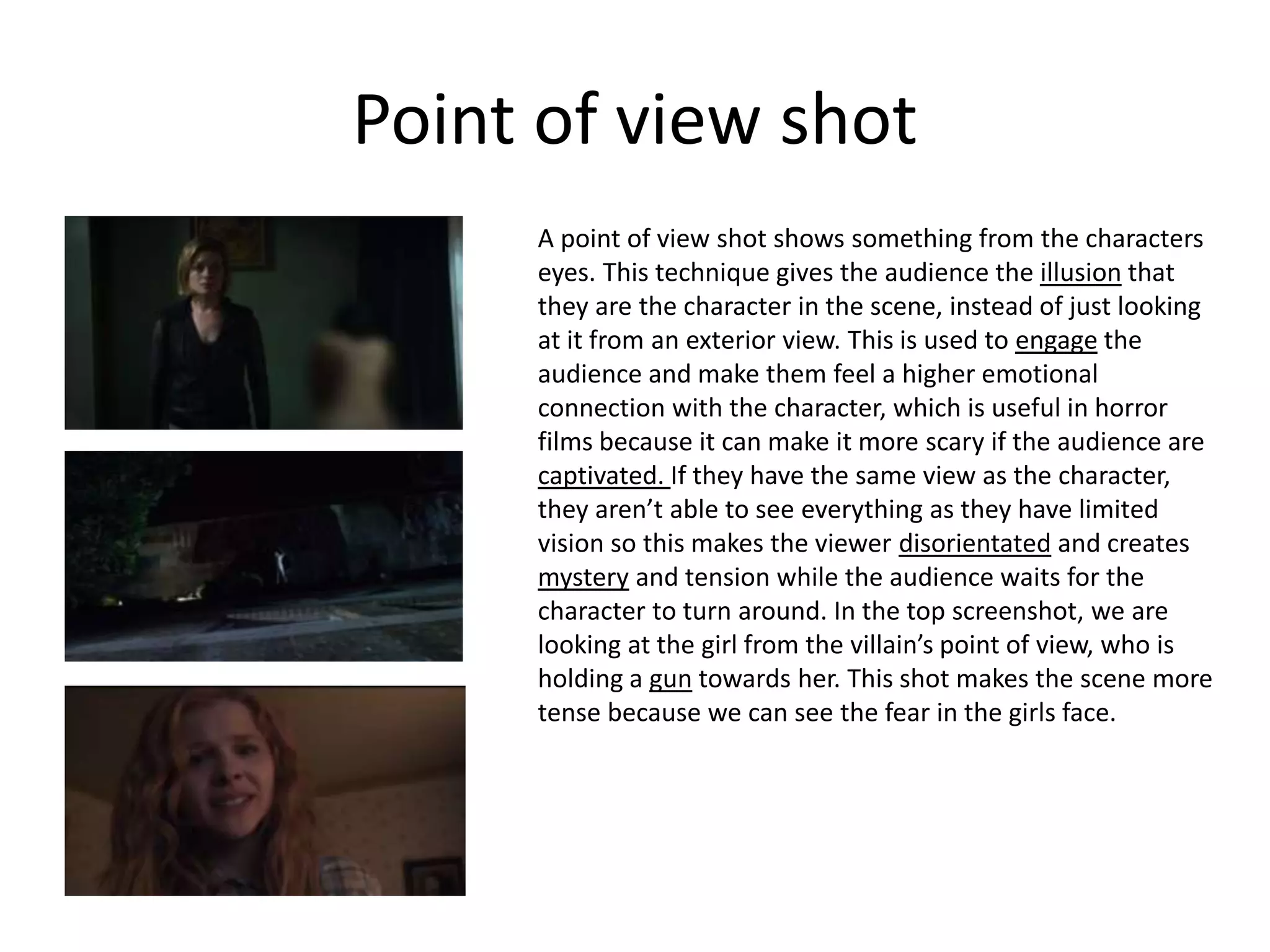
Point of view shot
A point of view shot shows something from the characters
eyes. This technique gives the audience the illusion that
they are the character in the scene, instead of just looking
at it from an exterior view. This is used to engage the
audience and make them feel a higher emotional
connection with the character, which is useful in horror
films because it can make it more scary if the audience are
captivated. If they have the same view as the character,
they aren’t able to see everything as they have limited
vision so this makes the viewer disorientated and creates
mystery and tension while the audience waits for the
character to turn around. In the top screenshot, we are
looking at the girl from the villain’s point of view, who is
holding a gun towards her. This shot makes the scene more
tense because we can see the fear in the girls face.
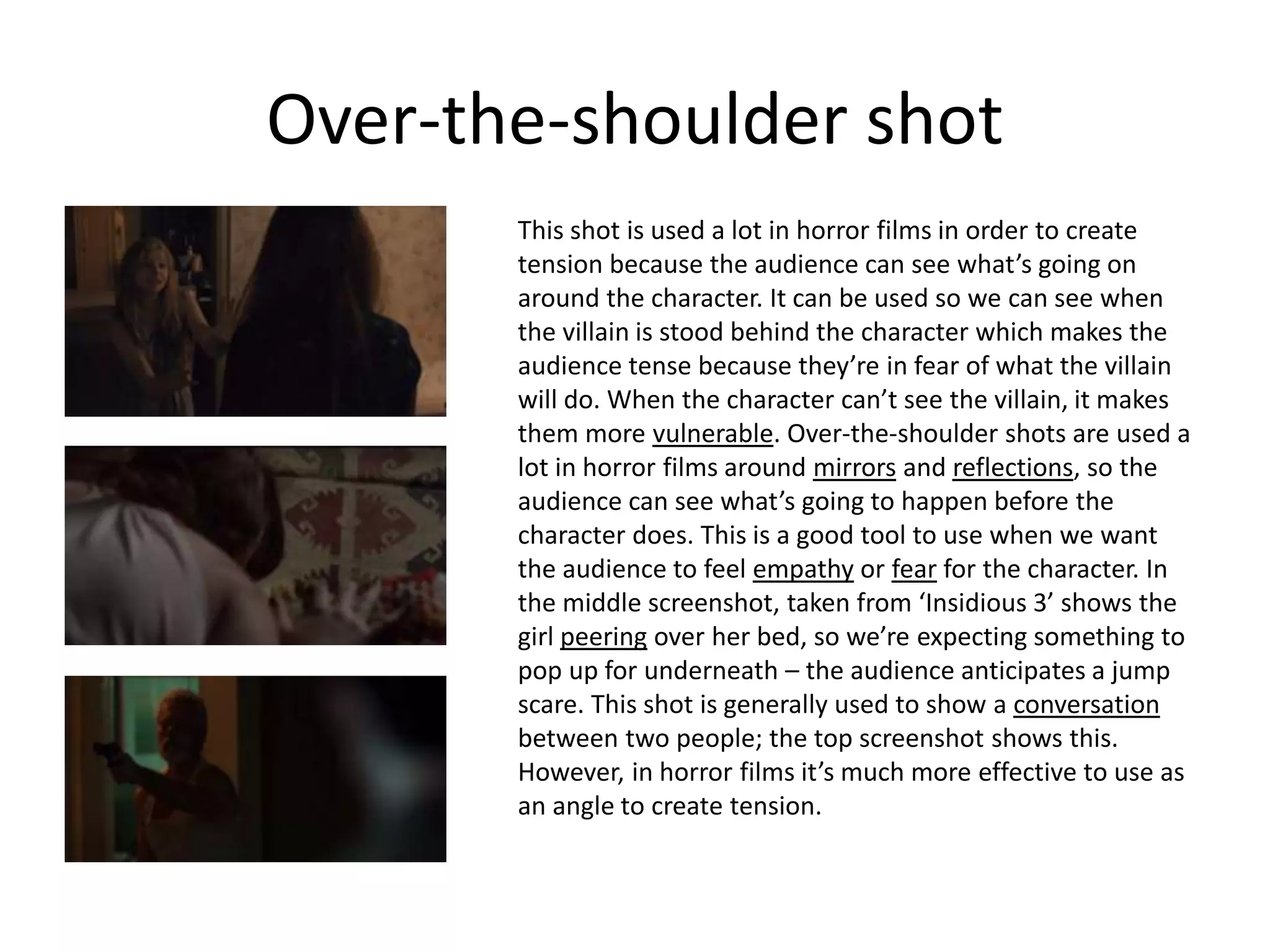
Over-the-shoulder shot
This shot is used a lot in horror films in order to create
tension because the audience can see what’s going on
around the character. It can be used so we can see when
the villain is stood behind the character which makes the
audience tense because they’re in fear of what the villain
will do. When the character can’t see the villain, it makes
them more vulnerable. Over-the-shoulder shots are used a
lot in horror films around mirrors and reflections, so the
audience can see what’s going to happen before the
character does. This is a good tool to use when we want
the audience to feel empathy or fear for the character. In
the middle screenshot, taken from ‘Insidious 3’ shows the
girl peering over her bed, so we’re expecting something to
pop up for underneath – the audience anticipates a jump
scare. This shot is generally used to show a conversation
between two people; the top screenshot shows this.
However, in horror films it’s much more effective to use as
an angle to create tension.

Shots and angles analysis

  • 1.
    Camera shots andangles Carrie (2013) Insidious 3 (2015) Don’t Breathe (2016)
  • 2.
    Long/establishing shot These shotsare used to understand where a scene is set. In the case of a horror film, it’s usually a deserted house or neighbourhood. The screenshots on the left show establishing shots of houses. Establishing shots also show the audience what time of day it is. For example, when it turns into dark/night, they will generally be expecting a scary scene or jump-scare because scary events happen during the night. The bottom screenshot, taken from ‘Don’t Breathe’ shows the man looking at a house. The long distance between the man and the house suggests that he could be a threat to it in the future, and he’s just observing for now. On the other hand, the view of the house could mean it’s going to be a big part of the film in future scenes – making it the main focus of the shot.
  • 3.
    High angle/birds eye The3 screenshots show a high angle shot. This is used in horror films to make a character (usually the victim) seem vulnerable. This also shows that they’re trapped. For example, the bottom screenshot from ‘Don’t Breathe’ is used when the boy and girl are trapped in the man’s basement. This shows they’re powerless because they have no where to go and the man is coming after them. The top screenshot is from Carrie, showing her laid on the school bathroom floor. She is trapped there because all of the other girls have cornered her and she’s vulnerable because she’s crying and only has a towel wrapped around her. High angle shots can be seen throughout many horror trailers, to give the viewer a rough idea of who the victim could be.
  • 4.
    Close up A closeup shot is used to show a characters facial expression or any detail that the creator wants you to see. In a horror film, close up’s are usually used to show fear or upset. In these screenshots we can see all 3 people have their mouths open and are showing very strong facial expressions. This helps build the tension for the audience because by clearly seeing that he character is scared, they become more involved in the film and naturally become scared too. In the middle screenshot from Insidious 3, the man is worried because he wants his daughter back and is scared she will die. The close up makes us feel empathy for him because we can see how concerned he is. The bottom screenshot from Don’t Breathe shows the girl is scared because the lights have turned off so she doesn’t know her surroundings. We can imagine the audience being on the ‘edge of their seat’ because the camera shot getting closer to her builds the tension.
  • 5.
    Point of viewshot A point of view shot shows something from the characters eyes. This technique gives the audience the illusion that they are the character in the scene, instead of just looking at it from an exterior view. This is used to engage the audience and make them feel a higher emotional connection with the character, which is useful in horror films because it can make it more scary if the audience are captivated. If they have the same view as the character, they aren’t able to see everything as they have limited vision so this makes the viewer disorientated and creates mystery and tension while the audience waits for the character to turn around. In the top screenshot, we are looking at the girl from the villain’s point of view, who is holding a gun towards her. This shot makes the scene more tense because we can see the fear in the girls face.
  • 6.
    Over-the-shoulder shot This shotis used a lot in horror films in order to create tension because the audience can see what’s going on around the character. It can be used so we can see when the villain is stood behind the character which makes the audience tense because they’re in fear of what the villain will do. When the character can’t see the villain, it makes them more vulnerable. Over-the-shoulder shots are used a lot in horror films around mirrors and reflections, so the audience can see what’s going to happen before the character does. This is a good tool to use when we want the audience to feel empathy or fear for the character. In the middle screenshot, taken from ‘Insidious 3’ shows the girl peering over her bed, so we’re expecting something to pop up for underneath – the audience anticipates a jump scare. This shot is generally used to show a conversation between two people; the top screenshot shows this. However, in horror films it’s much more effective to use as an angle to create tension.