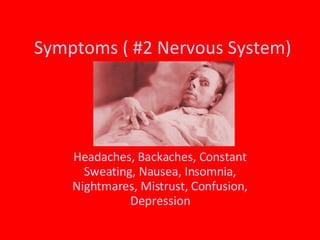
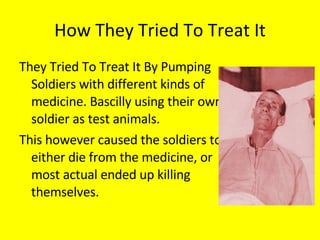
During World War I, many soldiers developed shell shock (now known as PTSD) due to the trauma they experienced in the trenches. Over 300 British soldiers were executed for shell shock during the war because it was initially viewed as a physical illness rather than a psychological response to trauma. Common symptoms included fatigue, headaches, sweating, nightmares, and confusion. Early attempts to treat soldiers involved giving them experimental medications, which often harmed or killed them. The real cause of shell shock was determined to be the stressful and terrifying conditions of serving in the trenches, including witnessing death, explosions, and living in constant fear of attack. Shell shock continued to impact veterans after the war and therapy remains one of the most effective treatments today