Virtually Anywhere Sharing Effective Practices for Innovation in Liberal EducationNancy Millichap and Rebecca DavisNational Institute for Technology in Liberal Education (NITLE)
NITLEAn initiative working with 128 liberal arts colleges and universities, as well as with partner organizations and consortiaHelping liberal arts colleges explore and implement digital technologiesConcerned with the integration of technology into teaching and learning
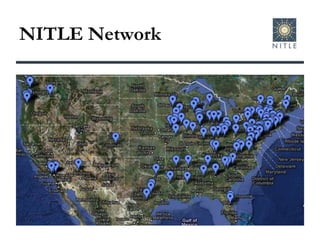
NITLE Network
Plan for This Session …In a discussion of videoconferences that faculty have used to share their teaching innovations …We’ll show two clips from a sessionWe’ll share their impact as faculty developmentWe’ll invite discussion of such sharing on your campusesWe’ll pull you back together for a final discussion
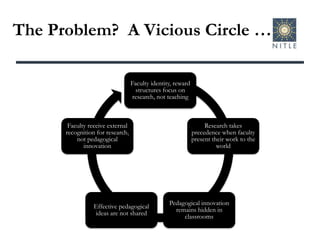
The Problem?  A Vicious Circle …
One Solution: Sharing Classroom Innovations DigitallyAt NITLE colleges, faculty lead short interactive videoconferences over the Internet on their pedagogical practicesBrief (60 to 90 minute) presentations reach faculty in their offices22 such programs over past 2 academic years, in several series
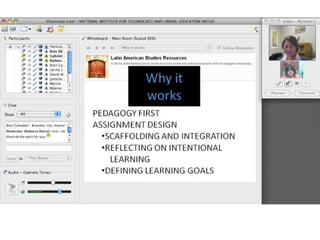
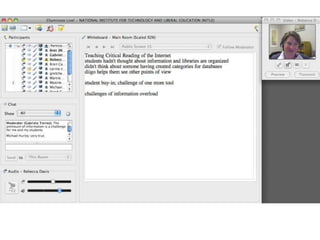
Experience a Virtual EventHighlights, Notes, Tags, & Comments: Teaching Critical Reading of the Internet with DiigoSocial Bookmarking & Website AnnotationGabriela Torres, Assistant Professor of Anthropology, Wheaton College
Why Faculty LeadGain recognition, exposure for pedagogical innovation without expense, time commitment of conference attendanceDiscuss innovations with interested peers (campus colleagues may not share the specific interest)Develop connections with other early adopters – eventual goal is to forward inter-institutional collaboration
Why Participants Take PartOpportunity to gain fresh ideas without leaving campusOpportunity to engage in discussion with peers from other campuses who share an interest in the innovation/technology being consideredEasy to fit into busy professional life
Professional Development PreferencesEvaluations of these programs, recent surveys of faculty, observations by academic support staff suggest thatfaculty today care about specific affordances of technology, not technology in general faculty learn most readily from other faculty
Response to these programsTopics are rated highlyMean, 4.38; median, 5Time is the scarcest resource: faculty want immediately useful information directly available to them
Representative TopicsTeaching with BlogsHistory Engine: Tools for Promoting Collaborative Education and Research among StudentsImagining the Unseeable: Molecular Visualization with UCSF ChimeraTechnology and Less Commonly Taught LanguagesDigital Identities: Maintenance, Boundaries and Ethics for Students and Faculty
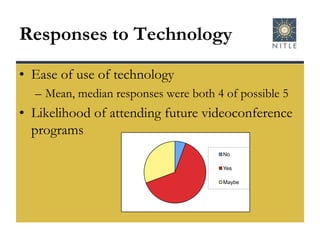
Responses to TechnologyEase of use of technologyMean, median responses were both 4 of possible 5Likelihood of attending future videoconference programs
MIV Sessions as Campus ResourcesAre webcams scary? Not so much …Some groups participate as faculty/campus “brown bags”Recordings, whiteboards available after the program for review, sharing
Discussion: Sharing InnovationInnovative Practices on your campusSmall groups of 4-6 eachTake 10-15 minutes to discuss your questionShare results with the full group
Questions, follow-up?NITLE – www.nitle.orgNancy Millichap – nancy.millichap@nitle.orgRebecca Frost Davis – rebecca.davis@nitle.org

Sharing Effective Innovations AAC&U

  • 1.
    Virtually Anywhere SharingEffective Practices for Innovation in Liberal EducationNancy Millichap and Rebecca DavisNational Institute for Technology in Liberal Education (NITLE)
  • 2.
    NITLEAn initiative workingwith 128 liberal arts colleges and universities, as well as with partner organizations and consortiaHelping liberal arts colleges explore and implement digital technologiesConcerned with the integration of technology into teaching and learning
  • 3.
  • 4.
    Plan for ThisSession …In a discussion of videoconferences that faculty have used to share their teaching innovations …We’ll show two clips from a sessionWe’ll share their impact as faculty developmentWe’ll invite discussion of such sharing on your campusesWe’ll pull you back together for a final discussion
  • 5.
    The Problem? A Vicious Circle …
  • 6.
    One Solution: SharingClassroom Innovations DigitallyAt NITLE colleges, faculty lead short interactive videoconferences over the Internet on their pedagogical practicesBrief (60 to 90 minute) presentations reach faculty in their offices22 such programs over past 2 academic years, in several series
  • 7.
    Experience a VirtualEventHighlights, Notes, Tags, & Comments: Teaching Critical Reading of the Internet with DiigoSocial Bookmarking & Website AnnotationGabriela Torres, Assistant Professor of Anthropology, Wheaton College
  • 10.
    Why Faculty LeadGainrecognition, exposure for pedagogical innovation without expense, time commitment of conference attendanceDiscuss innovations with interested peers (campus colleagues may not share the specific interest)Develop connections with other early adopters – eventual goal is to forward inter-institutional collaboration
  • 11.
    Why Participants TakePartOpportunity to gain fresh ideas without leaving campusOpportunity to engage in discussion with peers from other campuses who share an interest in the innovation/technology being consideredEasy to fit into busy professional life
  • 12.
    Professional Development PreferencesEvaluationsof these programs, recent surveys of faculty, observations by academic support staff suggest thatfaculty today care about specific affordances of technology, not technology in general faculty learn most readily from other faculty
  • 13.
    Response to theseprogramsTopics are rated highlyMean, 4.38; median, 5Time is the scarcest resource: faculty want immediately useful information directly available to them
  • 14.
    Representative TopicsTeaching withBlogsHistory Engine: Tools for Promoting Collaborative Education and Research among StudentsImagining the Unseeable: Molecular Visualization with UCSF ChimeraTechnology and Less Commonly Taught LanguagesDigital Identities: Maintenance, Boundaries and Ethics for Students and Faculty
  • 15.
    Responses to TechnologyEaseof use of technologyMean, median responses were both 4 of possible 5Likelihood of attending future videoconference programs
  • 16.
    MIV Sessions asCampus ResourcesAre webcams scary? Not so much …Some groups participate as faculty/campus “brown bags”Recordings, whiteboards available after the program for review, sharing
  • 17.
    Discussion: Sharing InnovationInnovativePractices on your campusSmall groups of 4-6 eachTake 10-15 minutes to discuss your questionShare results with the full group
  • 18.
    Questions, follow-up?NITLE –www.nitle.orgNancy Millichap – nancy.millichap@nitle.orgRebecca Frost Davis – rebecca.davis@nitle.org

Editor's Notes

  • #2 Today we will be talking a
  • #3 Need map here!
  • #5 We’ll discuss a series of limited-enrollment videoconferences that faculty have used since 2008 to share their innovations in teaching with peersWe’ll begin by showing two clips from a sessionWe’ll share the impact of this program in the context of faculty developmentWe’ll invite you to discuss how you share innovative practices on your campusesWe’ll pull you back together with a final discussion
  • #6 Administrators, parents, and students increasingly value effective, innovative teaching practices … BUT … Faculty use scarce professional development resources first to engage as scholars/researchersFaculty members’ pedagogical innovations may remain hidden on their own campuses, in their departments, in their classroomsShould add graphic …
  • #7 (might mention emerging technology)OVER TO REBECCA/CLIPSOrganized in series format:digital teaching, science, data analysis and mapping, global teaching, emerging technologies