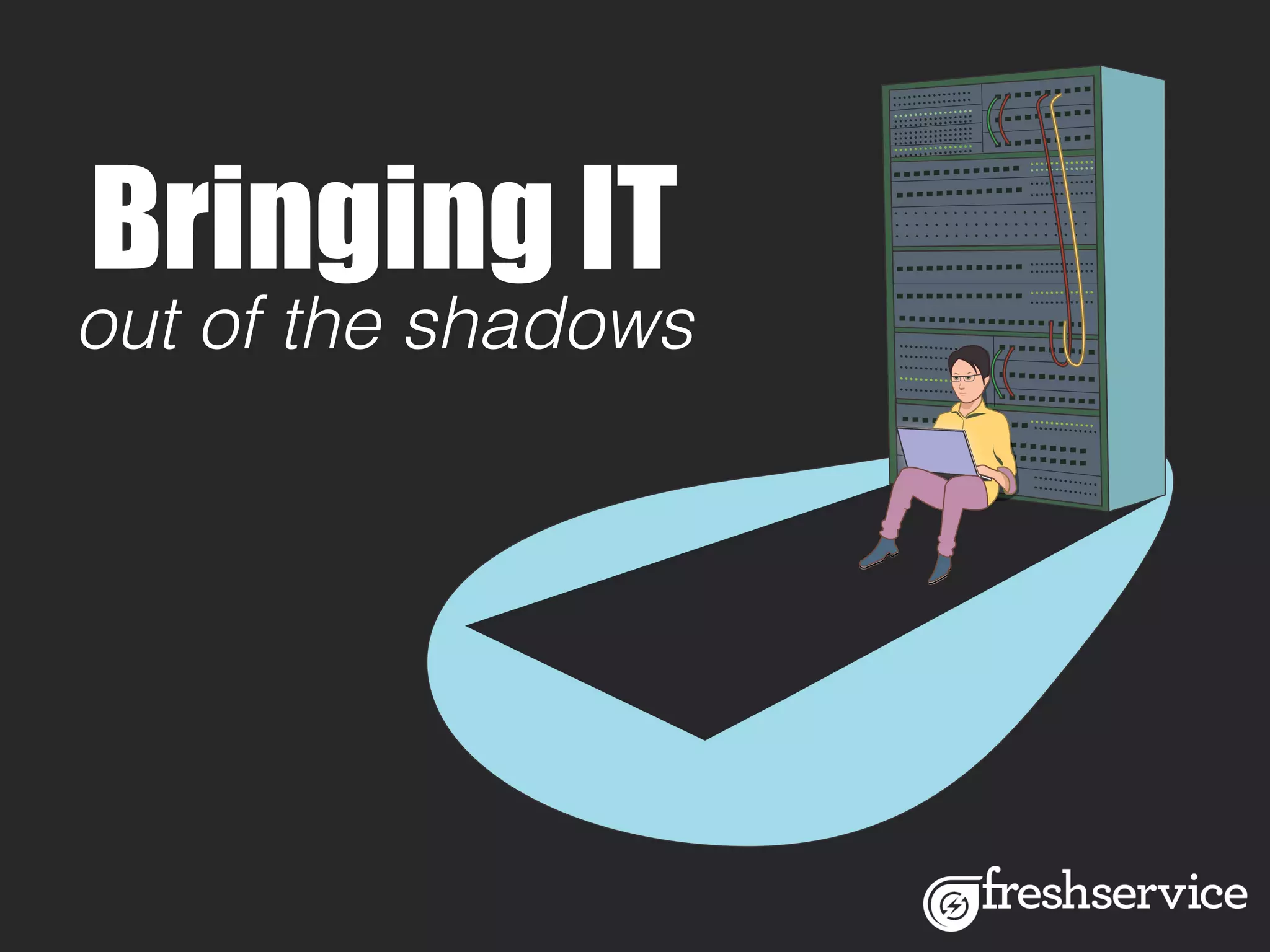
Bringing IT 
out of the shadows
What is Shadow IT? 
The act of purchasing or using technology for the 
workplace without the approval or knowledge of the IT 
department is called Shadow IT.
Examples 
• DevOps team purchasing an instance of a caching 
server to balance load bypassing IT in order to not 
have users suffer downtime 
• Sales team sharing crucial customer data, even 
internally, using a personal account of Google Drive 
• Using an unauthorised pen drive. Yep!
WHY DOES THIS HAPPEN? 
• IT Department is considered slow and bureaucratic by 
business units in some organizations. 
• With the market moving at breakneck speed, business 
units don’t want to wait for IT to fulfil service 
requests. 
• Overzealous employees with (mostly) good intentions 
Why does this happen?
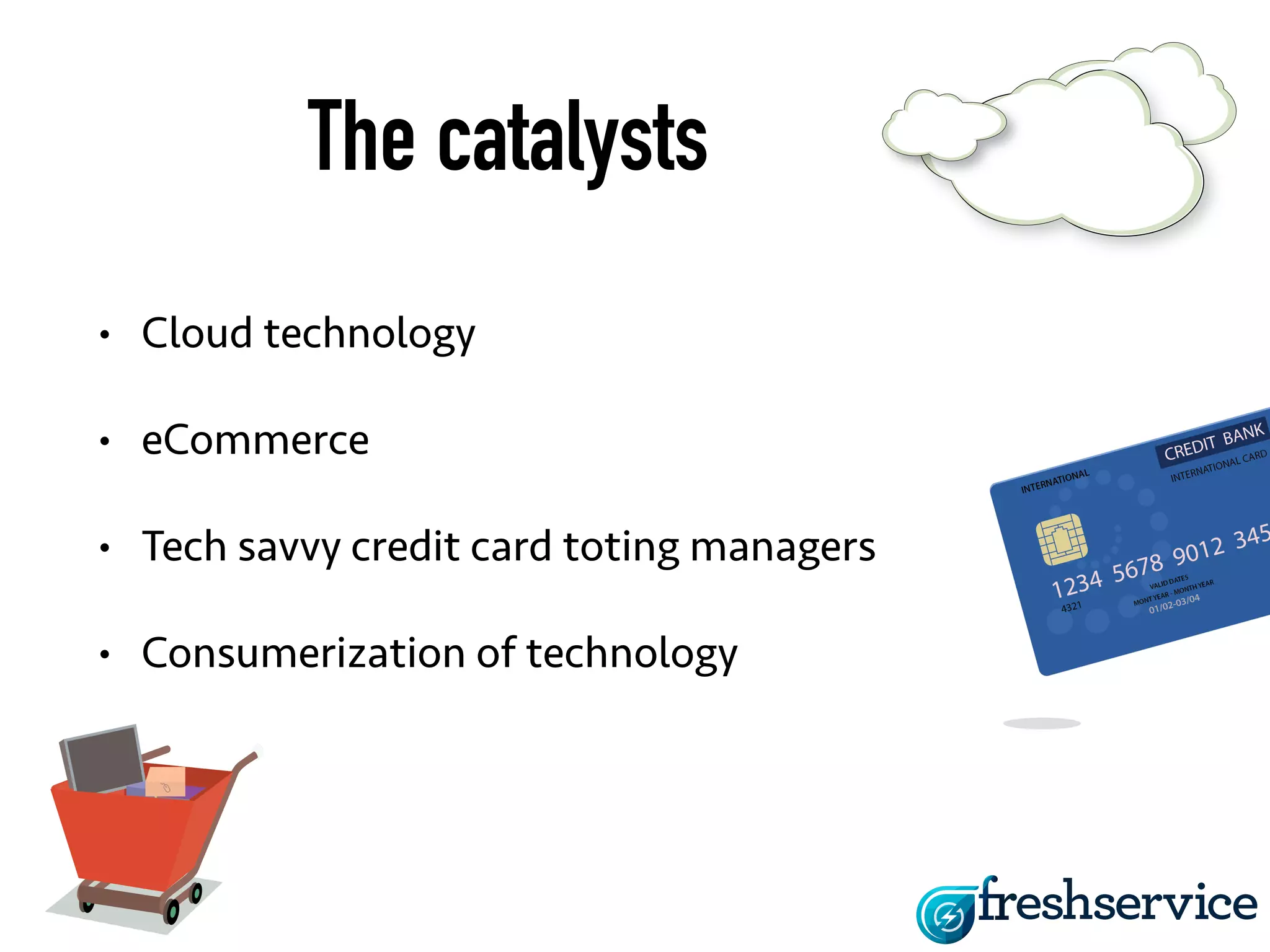
The catalysts 
• Cloud technology 
• eCommerce 
• Tech savvy credit card toting managers 
• Consumerization of technology
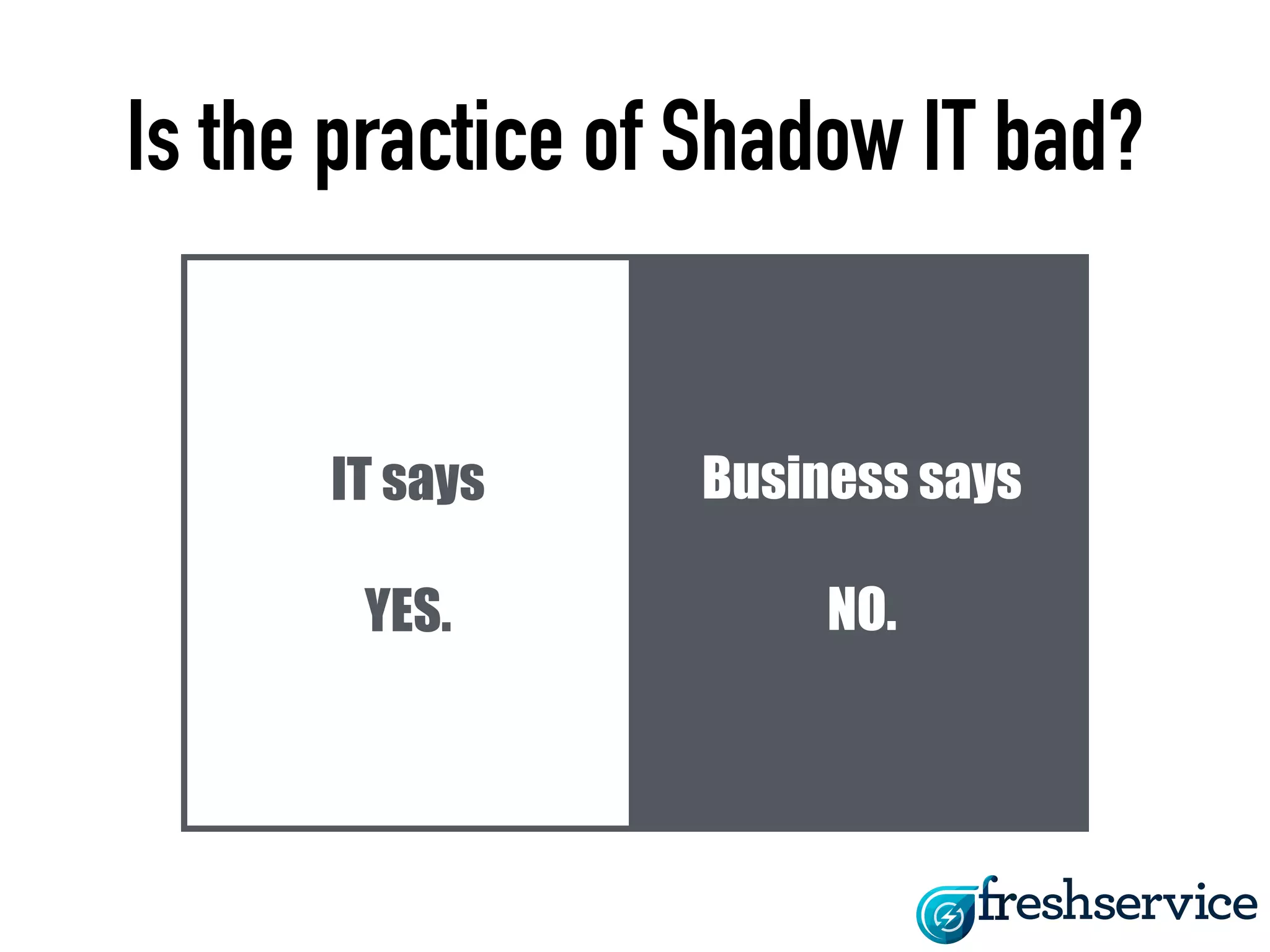
Is the practice of Shadow IT bad? 
Business says 
NO. 
IT says 
YES.
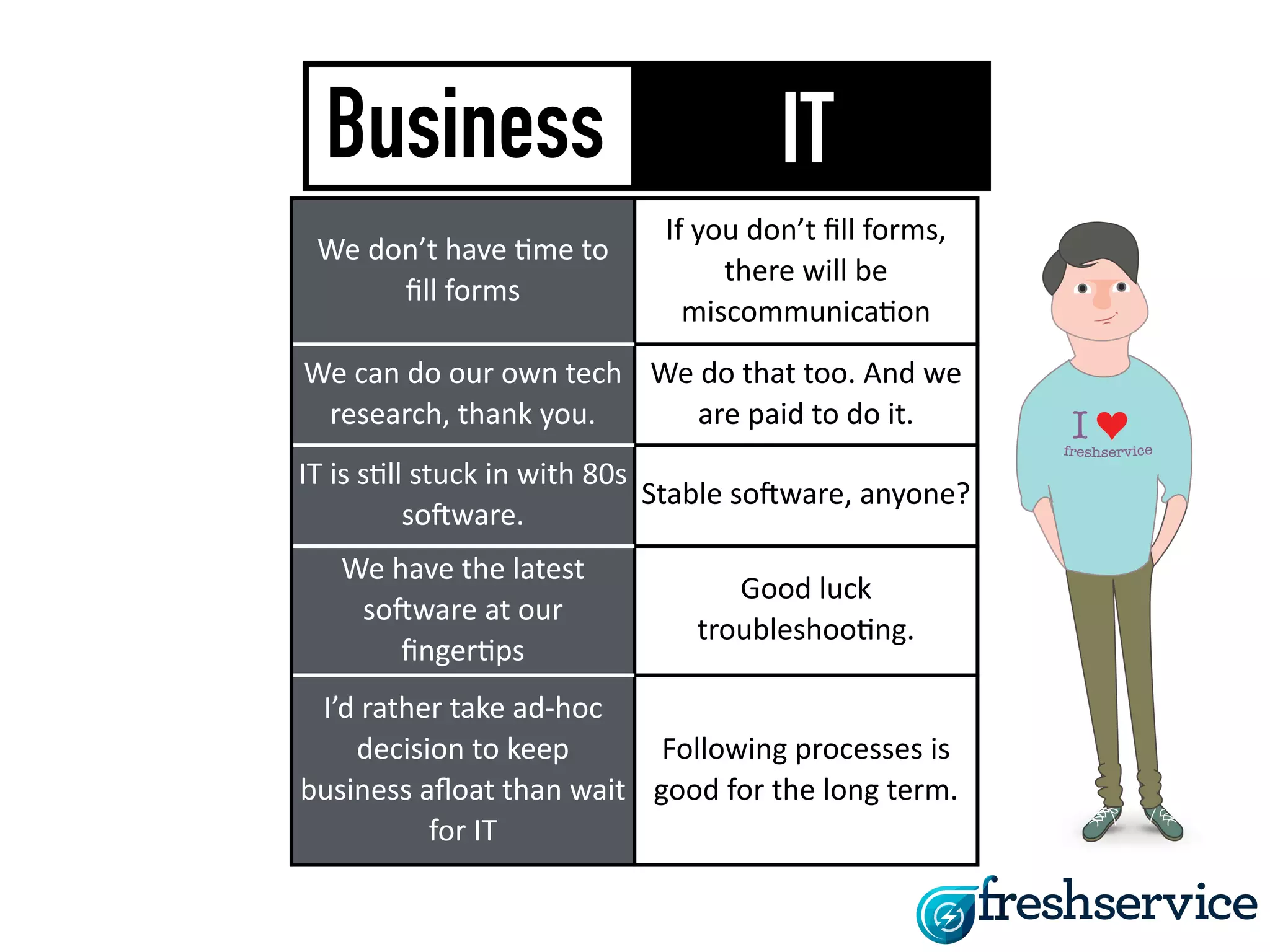
Business IT 
We 
don’t 
have 
,me 
to 
fill 
forms 
If 
you 
don’t 
fill 
forms, 
there 
will 
be 
miscommunica,on 
We 
can 
do 
our 
own 
tech 
research, 
thank 
you. 
We 
do 
that 
too. 
And 
we 
are 
paid 
to 
do 
it. 
IT 
is 
s,ll 
stuck 
in 
with 
80s 
soBware. Stable 
soBware, 
anyone? 
We 
have 
the 
latest 
soBware 
at 
our 
finger,ps 
Good 
luck 
troubleshoo,ng. 
I’d 
rather 
take 
ad-­‐hoc 
decision 
to 
keep 
business 
afloat 
than 
wait 
for 
IT 
Following 
processes 
is 
good 
for 
the 
long 
term.
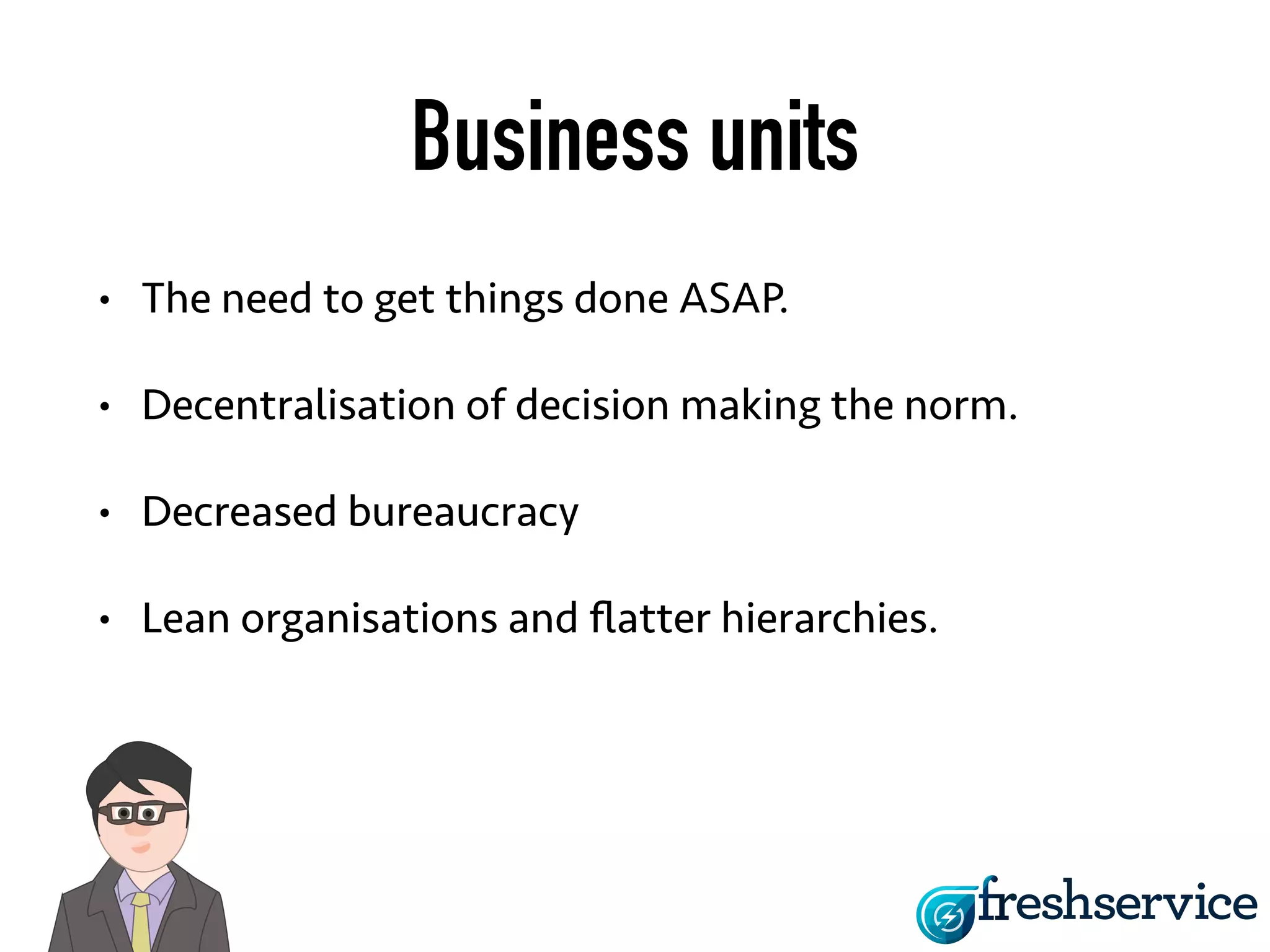
Business units 
• The need to get things done ASAP. 
• Decentralisation of decision making the 
norm. 
• Decreased bureaucracy 
• Lean organisations and flatter hierarchies.
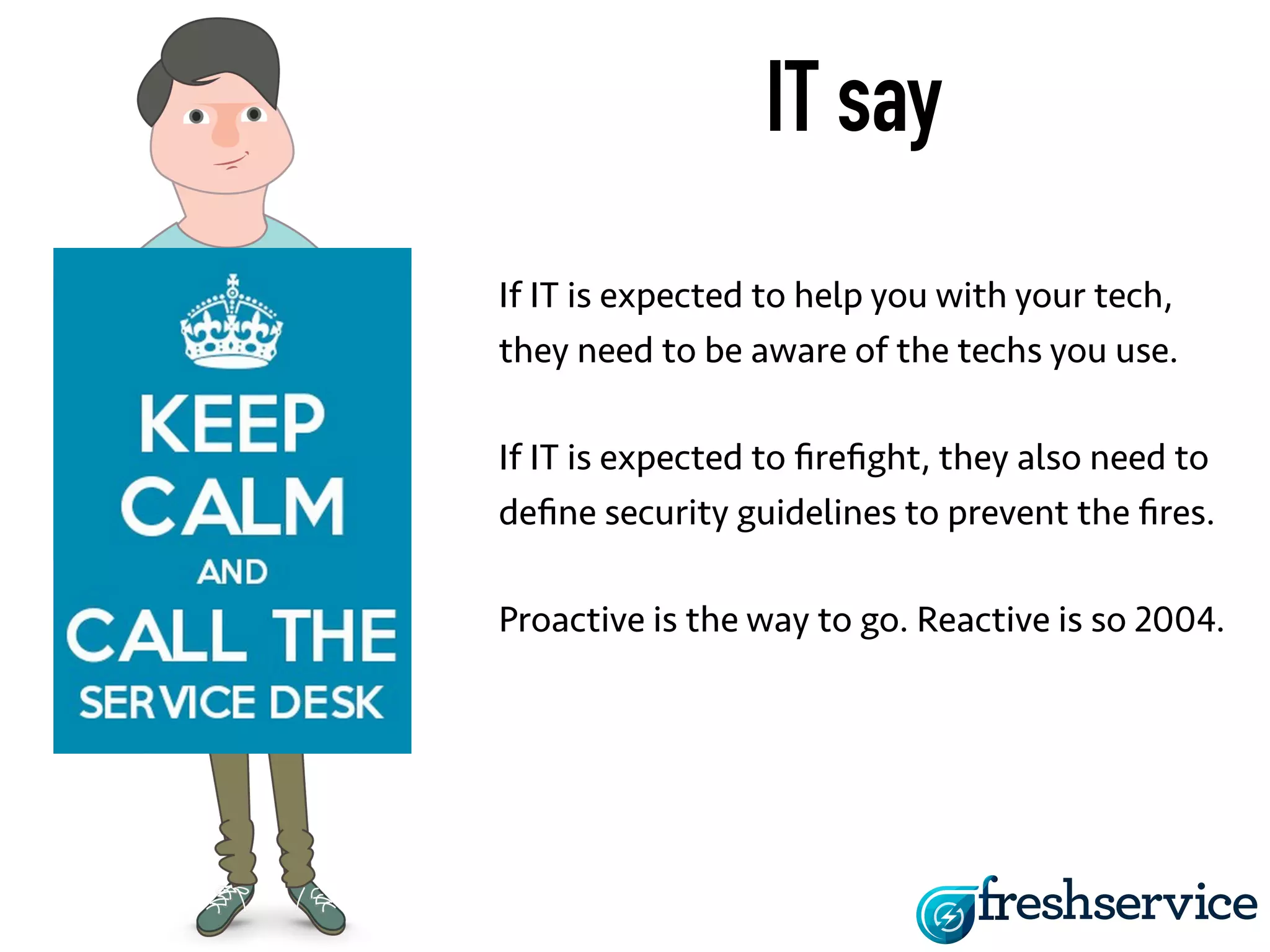
IT say 
If IT is expected to help you with your tech, 
they need to be aware of the techs you use. 
If IT is expected to firefight, they also need to 
define security guidelines to prevent the fires. 
Proactive is the way to go. Reactive is so 2004.
Risks involved 
• Acquisition of software from dubious sources – 
download sites, cloud services with poor security 
• Ill-researched information leading to bad tech choices 
• Bug infested software 
• Obvious data security risks 
• Risk of malware or virus infiltrating the corporate 
network
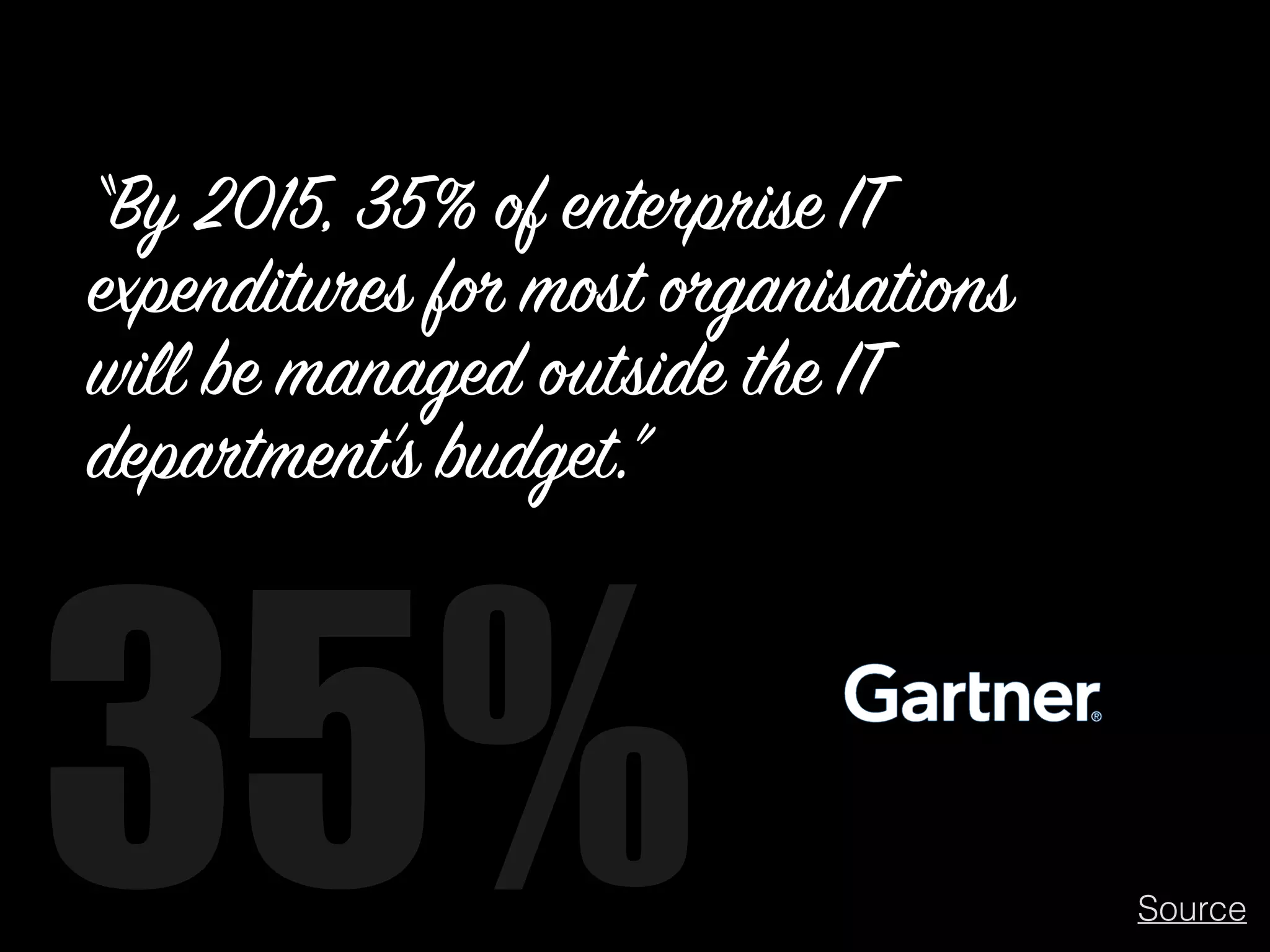
“By 2015, 35% of enterprise IT 
expenditures for most organisations 
will be managed outside the IT 
department’s budget.” 35% Source
How to resolve 
• Broad-minded CIO 
The CIO is to the IT organization what the CEO is to the business. 
• Openness of the IT department 
Processes should be designed around the business and not the other way round. 
• Communication 
Let business know the repercussions of bypassing IT. Earn their respect. 
• Protect and to serve 
After all, IT can’t fight something if we don’t know what we are fighting.
In conclusion 
• Shadow IT is necessary evil. 
• Look at Shadow IT as something that takes burden off 
IT while ensuring necessary processes are followed. 
• IT and business units should work together to ensure a 
smooth and productive work environment. 
Bring IT out of the shadows.
This article was originally published in 
Learn more about managing assets in your organisation here. 
freshservice.com hello@freshservice.com

Shadow IT - What is it, why it happens and how to resolve

  • 1.
    Bringing IT outof the shadows
  • 2.
    What is ShadowIT? The act of purchasing or using technology for the workplace without the approval or knowledge of the IT department is called Shadow IT.
  • 3.
    Examples • DevOpsteam purchasing an instance of a caching server to balance load bypassing IT in order to not have users suffer downtime • Sales team sharing crucial customer data, even internally, using a personal account of Google Drive • Using an unauthorised pen drive. Yep!
  • 4.
    WHY DOES THISHAPPEN? • IT Department is considered slow and bureaucratic by business units in some organizations. • With the market moving at breakneck speed, business units don’t want to wait for IT to fulfil service requests. • Overzealous employees with (mostly) good intentions Why does this happen?
  • 5.
    The catalysts •Cloud technology • eCommerce • Tech savvy credit card toting managers • Consumerization of technology
  • 6.
    Is the practiceof Shadow IT bad? Business says NO. IT says YES.
  • 7.
    Business IT We don’t have ,me to fill forms If you don’t fill forms, there will be miscommunica,on We can do our own tech research, thank you. We do that too. And we are paid to do it. IT is s,ll stuck in with 80s soBware. Stable soBware, anyone? We have the latest soBware at our finger,ps Good luck troubleshoo,ng. I’d rather take ad-­‐hoc decision to keep business afloat than wait for IT Following processes is good for the long term.
  • 8.
    Business units •The need to get things done ASAP. • Decentralisation of decision making the norm. • Decreased bureaucracy • Lean organisations and flatter hierarchies.
  • 9.
    IT say IfIT is expected to help you with your tech, they need to be aware of the techs you use. If IT is expected to firefight, they also need to define security guidelines to prevent the fires. Proactive is the way to go. Reactive is so 2004.
  • 10.
    Risks involved •Acquisition of software from dubious sources – download sites, cloud services with poor security • Ill-researched information leading to bad tech choices • Bug infested software • Obvious data security risks • Risk of malware or virus infiltrating the corporate network
  • 11.
    “By 2015, 35%of enterprise IT expenditures for most organisations will be managed outside the IT department’s budget.” 35% Source
  • 12.
    How to resolve • Broad-minded CIO The CIO is to the IT organization what the CEO is to the business. • Openness of the IT department Processes should be designed around the business and not the other way round. • Communication Let business know the repercussions of bypassing IT. Earn their respect. • Protect and to serve After all, IT can’t fight something if we don’t know what we are fighting.
  • 13.
    In conclusion •Shadow IT is necessary evil. • Look at Shadow IT as something that takes burden off IT while ensuring necessary processes are followed. • IT and business units should work together to ensure a smooth and productive work environment. Bring IT out of the shadows.
  • 14.
    This article wasoriginally published in Learn more about managing assets in your organisation here. freshservice.com hello@freshservice.com