
Learning Objectives of this topic learn what assertiveness is. Understand the difference between assertiveness and aggression.  Know  how to be assertive
Assertiveness Quiz Do you buy things you do not want because you are afraid to say no to the salesperson? When you do not understand the meaning of a word, do you ask about it? Do you feel responsible when things go wrong, even if it is not your fault? Do you look directly at others when you talk to them?
 
5. Do you often text or email someone about a conflict instead of talking to them face to face? 6. Do you feel intimidated by people in authority? 7. Do you generally have good posture? 8. Do you often feel so angry you could scream? 9. Do you know how to ask for help without feeling dependent? 10. If someone cuts in front of you in line, do you usually tell them off?
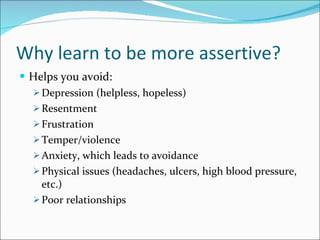
Why learn to be more assertive? Helps you avoid: Depression (helpless, hopeless) Resentment Frustration Temper/violence Anxiety, which leads to avoidance Physical issues (headaches, ulcers, high blood pressure, etc.) Poor relationships
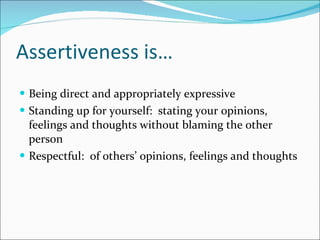
Assertiveness is… Being direct and appropriately expressive Standing up for yourself:  stating your opinions, feelings and thoughts without blaming the other person Respectful:  of others’ opinions, feelings and thoughts
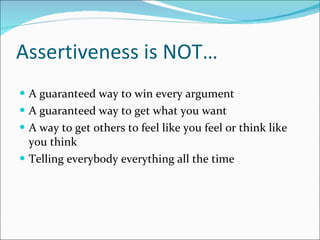
Assertiveness is NOT… A guaranteed way to win every argument A guaranteed way to get what you want A way to get others to feel like you feel or think like you think Telling everybody everything all the time
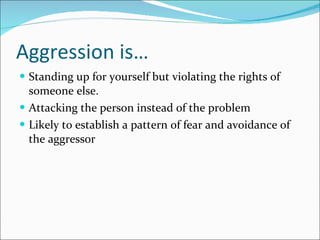
Aggression is… Standing up for yourself but violating the rights of someone else. Attacking the person instead of the problem Likely to establish a pattern of fear and avoidance of the aggressor
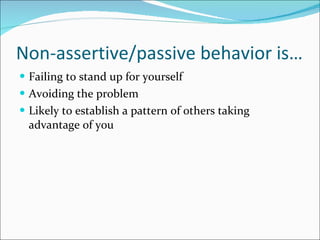
Non-assertive/passive behavior is… Failing to stand up for yourself Avoiding the problem Likely to establish a pattern of others taking advantage of you
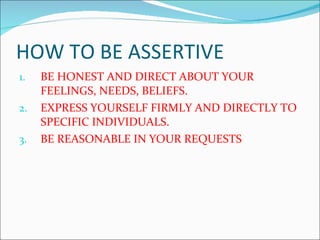
HOW TO BE ASSERTIVE BE HONEST AND DIRECT ABOUT YOUR FEELINGS, NEEDS, BELIEFS. EXPRESS YOURSELF FIRMLY AND DIRECTLY TO SPECIFIC INDIVIDUALS. BE REASONABLE IN YOUR REQUESTS
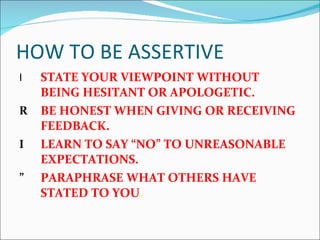
HOW TO BE ASSERTIVE STATE YOUR VIEWPOINT WITHOUT BEING HESITANT OR APOLOGETIC. BE HONEST WHEN GIVING OR RECEIVING FEEDBACK. LEARN TO SAY “NO” TO UNREASONABLE EXPECTATIONS. PARAPHRASE WHAT OTHERS HAVE STATED TO YOU .
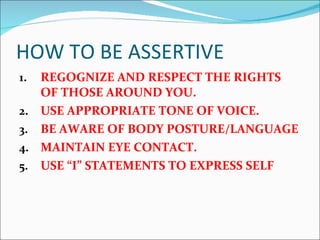
HOW TO BE ASSERTIVE REGOGNIZE AND RESPECT THE RIGHTS OF THOSE AROUND YOU. USE APPROPRIATE TONE OF VOICE. BE AWARE OF BODY POSTURE/LANGUAGE MAINTAIN EYE CONTACT. USE “I” STATEMENTS TO EXPRESS SELF
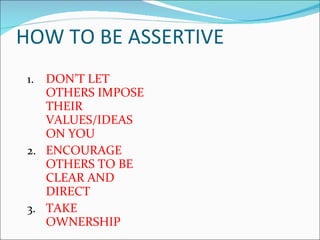
HOW TO BE ASSERTIVE DON’T LET OTHERS IMPOSE THEIR VALUES/IDEAS ON YOU ENCOURAGE OTHERS TO BE CLEAR AND DIRECT TAKE OWNERSHIP
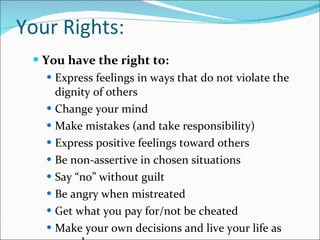
Your Rights: You have the right to: Express feelings in ways that do not violate the dignity of others Change your mind Make mistakes (and take responsibility) Express positive feelings toward others Be non-assertive in chosen situations Say “no” without guilt Be angry when mistreated Get what you pay for/not be cheated Make your own decisions and live your life as you choose

Session 12 assertiveness ( SMS )

  • 1.
  • 2.
    Learning Objectives ofthis topic learn what assertiveness is. Understand the difference between assertiveness and aggression. Know how to be assertive
  • 3.
    Assertiveness Quiz Doyou buy things you do not want because you are afraid to say no to the salesperson? When you do not understand the meaning of a word, do you ask about it? Do you feel responsible when things go wrong, even if it is not your fault? Do you look directly at others when you talk to them?
  • 4.
  • 5.
    5. Do youoften text or email someone about a conflict instead of talking to them face to face? 6. Do you feel intimidated by people in authority? 7. Do you generally have good posture? 8. Do you often feel so angry you could scream? 9. Do you know how to ask for help without feeling dependent? 10. If someone cuts in front of you in line, do you usually tell them off?
  • 6.
    Why learn tobe more assertive? Helps you avoid: Depression (helpless, hopeless) Resentment Frustration Temper/violence Anxiety, which leads to avoidance Physical issues (headaches, ulcers, high blood pressure, etc.) Poor relationships
  • 7.
    Assertiveness is… Beingdirect and appropriately expressive Standing up for yourself: stating your opinions, feelings and thoughts without blaming the other person Respectful: of others’ opinions, feelings and thoughts
  • 8.
    Assertiveness is NOT…A guaranteed way to win every argument A guaranteed way to get what you want A way to get others to feel like you feel or think like you think Telling everybody everything all the time
  • 9.
    Aggression is… Standingup for yourself but violating the rights of someone else. Attacking the person instead of the problem Likely to establish a pattern of fear and avoidance of the aggressor
  • 10.
    Non-assertive/passive behavior is…Failing to stand up for yourself Avoiding the problem Likely to establish a pattern of others taking advantage of you
  • 11.
    HOW TO BEASSERTIVE BE HONEST AND DIRECT ABOUT YOUR FEELINGS, NEEDS, BELIEFS. EXPRESS YOURSELF FIRMLY AND DIRECTLY TO SPECIFIC INDIVIDUALS. BE REASONABLE IN YOUR REQUESTS
  • 12.
    HOW TO BEASSERTIVE STATE YOUR VIEWPOINT WITHOUT BEING HESITANT OR APOLOGETIC. BE HONEST WHEN GIVING OR RECEIVING FEEDBACK. LEARN TO SAY “NO” TO UNREASONABLE EXPECTATIONS. PARAPHRASE WHAT OTHERS HAVE STATED TO YOU .
  • 13.
    HOW TO BEASSERTIVE REGOGNIZE AND RESPECT THE RIGHTS OF THOSE AROUND YOU. USE APPROPRIATE TONE OF VOICE. BE AWARE OF BODY POSTURE/LANGUAGE MAINTAIN EYE CONTACT. USE “I” STATEMENTS TO EXPRESS SELF
  • 14.
    HOW TO BEASSERTIVE DON’T LET OTHERS IMPOSE THEIR VALUES/IDEAS ON YOU ENCOURAGE OTHERS TO BE CLEAR AND DIRECT TAKE OWNERSHIP
  • 15.
    Your Rights: Youhave the right to: Express feelings in ways that do not violate the dignity of others Change your mind Make mistakes (and take responsibility) Express positive feelings toward others Be non-assertive in chosen situations Say “no” without guilt Be angry when mistreated Get what you pay for/not be cheated Make your own decisions and live your life as you choose