Dr Vijayakumari
Associate Professor
Farook Training College
Aju Rajendran
M. Ed Student
Farook Training College
Naturalistic intelligence or nature smart
involves how sensitive individual is towards
nature and the world around him.
People’s delinking from earth has deeply
affected Bio-diversity and Ecology.
The present study analyses the level of
Naturalistic Intelligence among Upper
primary school children.
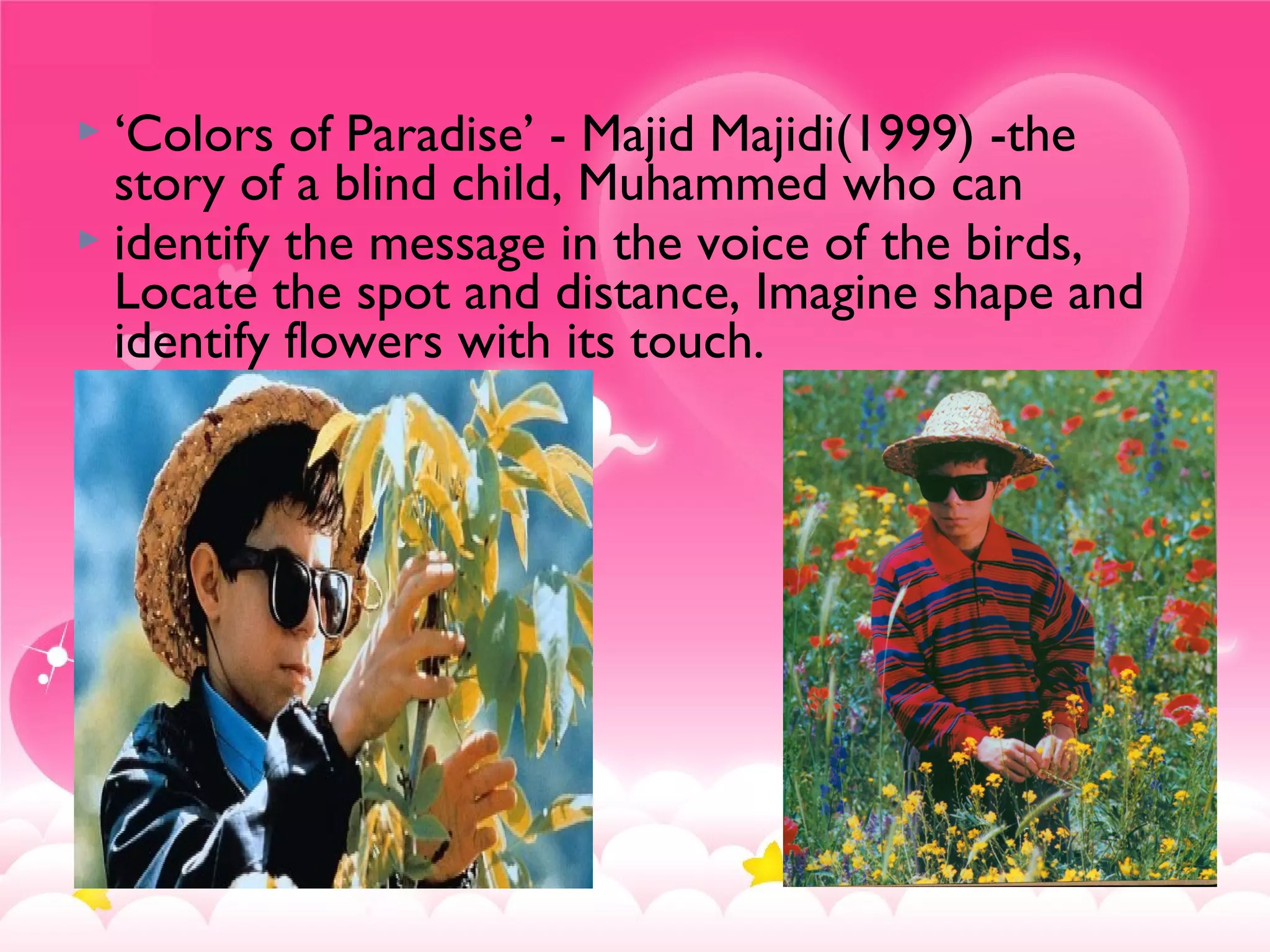
 ‘Colors of Paradise’ - Majid Majidi(1999) -the
story of a blind child, Muhammed who can
 identify the message in the voice of the birds,
Locate the spot and distance, Imagine shape and
identify flowers with its touch.
Gardner defines …
• Natural intelligence is the ability to see the patterns in
nature and work in natural environment with live stock,
wildlife, plants etc .
• It acts as a strong tie between the nature and humanity.
 Naturalistic intelligence or in other terms nature smart
involves how sensitive individual is towards nature and
the world around him.
 Deals with sensing patterns and making connections to
elements in nature.
 One with Naturalistic Intelligence will be very much
interested in other species or in the environment and the
earth.
 Children are usually interested in stories and
programmes with animals and plants as the characters.
 Naturalistic Intelligence can be observed in children
during their early stages of life, when they express a
strong affinity to the outside world or to animals.
 The future citizen are the hope of tomorrow and
the Mother Earth is to be safe in their littlie
hands.
 Educational system as a whole must make them
know more of their environment.
 A skilled interaction with nature is essential for
sustainable development.
 The environment studies must create among children a
sense of interconnection with the nature and familiarity
in their immediate environment.
 This will help them develop the naturalistic intelligence as
coined by Gardner.
A nature smart will …..
 Notice patterns and things from nature easily.
 Be with keen senses and will observe and remember
things from his environment.
 Like animals and be eager to know and remember things
about them.
 Really appreciate being outside and doing things like
camping, climbing, even just like sitting quietly and
noticing the subtle differences in the world of nature.
 Make observations about natural changes,
interconnections and patterns.
Method
 Research design
 Survey method was used for conducting the study.
 Participants
 Population is upper primary school students from
rural schools following Kerala Syllabus. 100 seventh
standard students of Malappuram District constituted
the sample
Method contd…
 Instruments
‘Test on Natural Intelligence’ with three
items based on the learners experience with
nature.
- the sounds that can be perceived in a paddy field
- plants that can be seen in a paddy field and their
procedure of reproduction
- draw a figure of a ground including various
animals, birds, plants etc with suitable colors and
dialogue boxes
 The assumption is that all students are familiar with
paddy fields and have the experience of walking through
it.
 The test covers major aspects of naturalistic intelligence
at the basic level only.
The scoring was done under four dimensions:
 Number of possible sounds identified.
 Number of plants identified that are seen in paddy
fields.
 Their procedure of reproduction ( ie., whether by
seeds, stems, roots or any other)
 Picture: Color combinations, variety, accuracy
and the dialogues made
Results and Discussion
 Most common sound identified by students in the paddy
field is that of frog and no body achieved a zero score.
 49 students out of hundred were able to identify more
than four sounds.
 Thirteen students made only one or two responses
under this category.
Results….
 Students were asked to write at least five plants they see
in the paddy field.
 Only 21 students have written five or more plants
correctly.
 The common response was ‘paddy’.
 But three got zero score in this dimension. That is,
three of the hundred children can not list any one plant
correctly
Results….
Analysis of responses on reproduction of the plants they
listed revealed,
- only eight children responded correctly for
almost all the plants they listed.
 But 25 students was not able to respond
correctly even for one plant and hence have the
score ‘zero’.
Conclusion
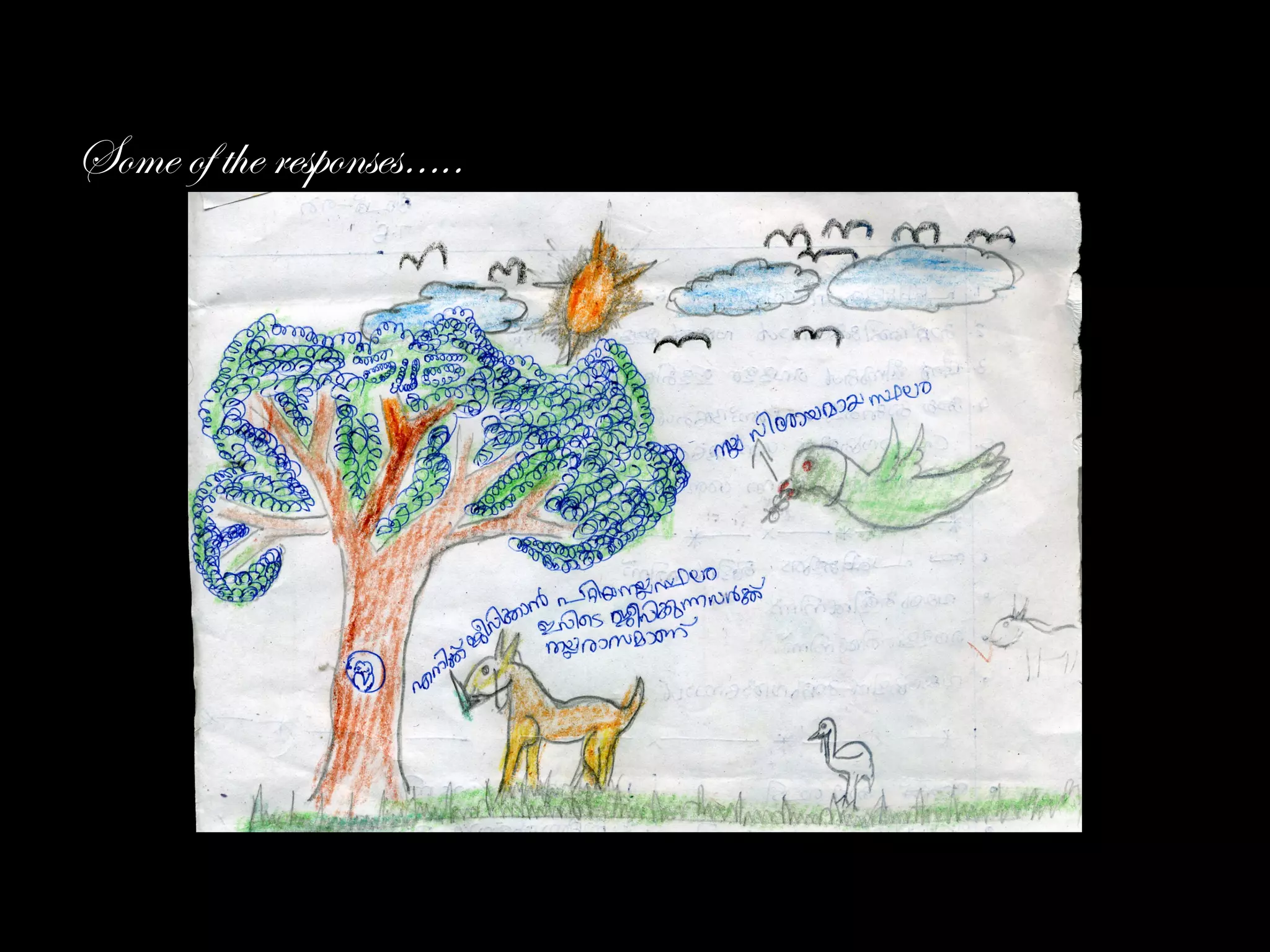
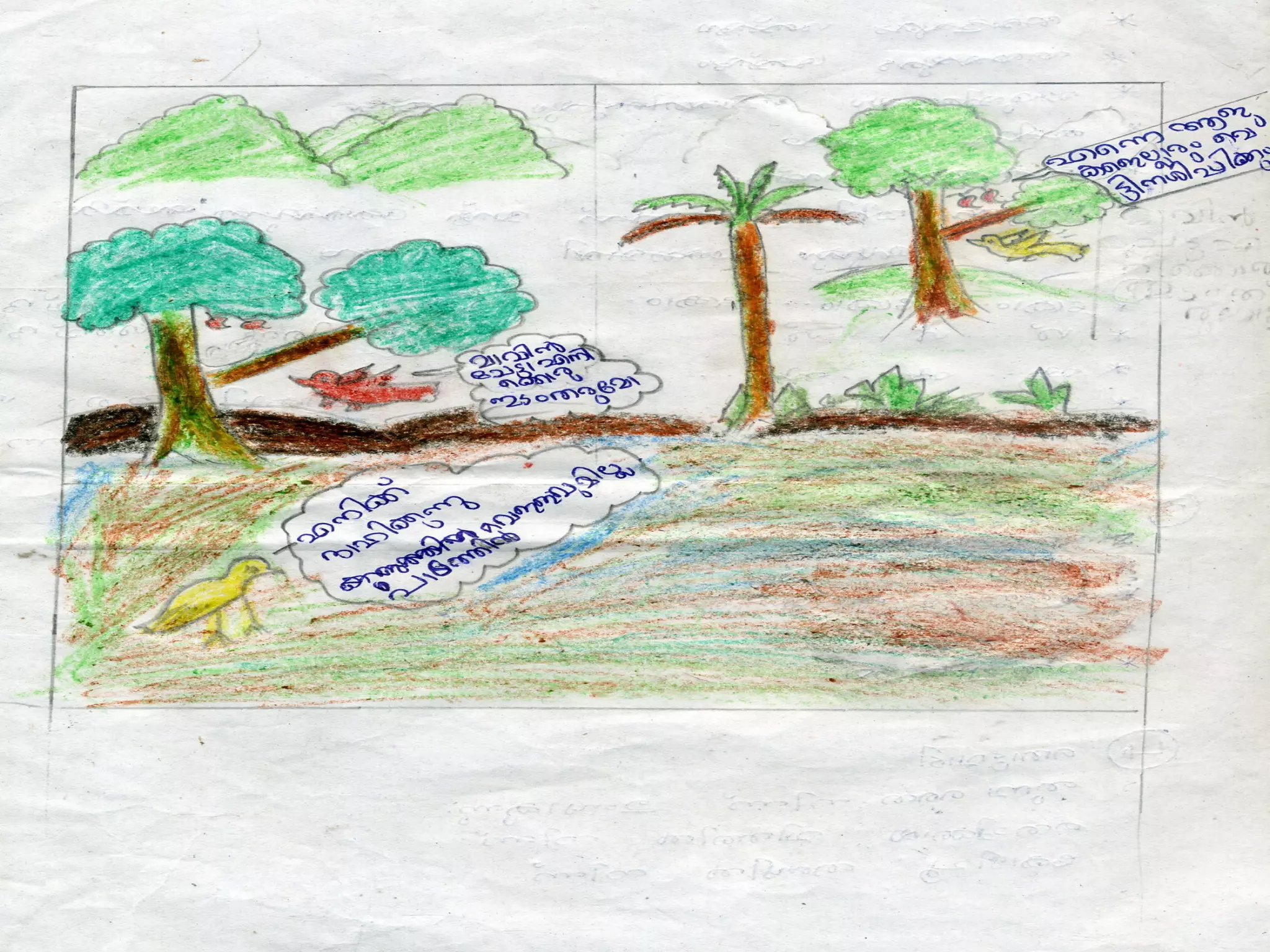
 Picture of a meadow with possible plants, animals
and birds will help to know awareness about an
ecosystem
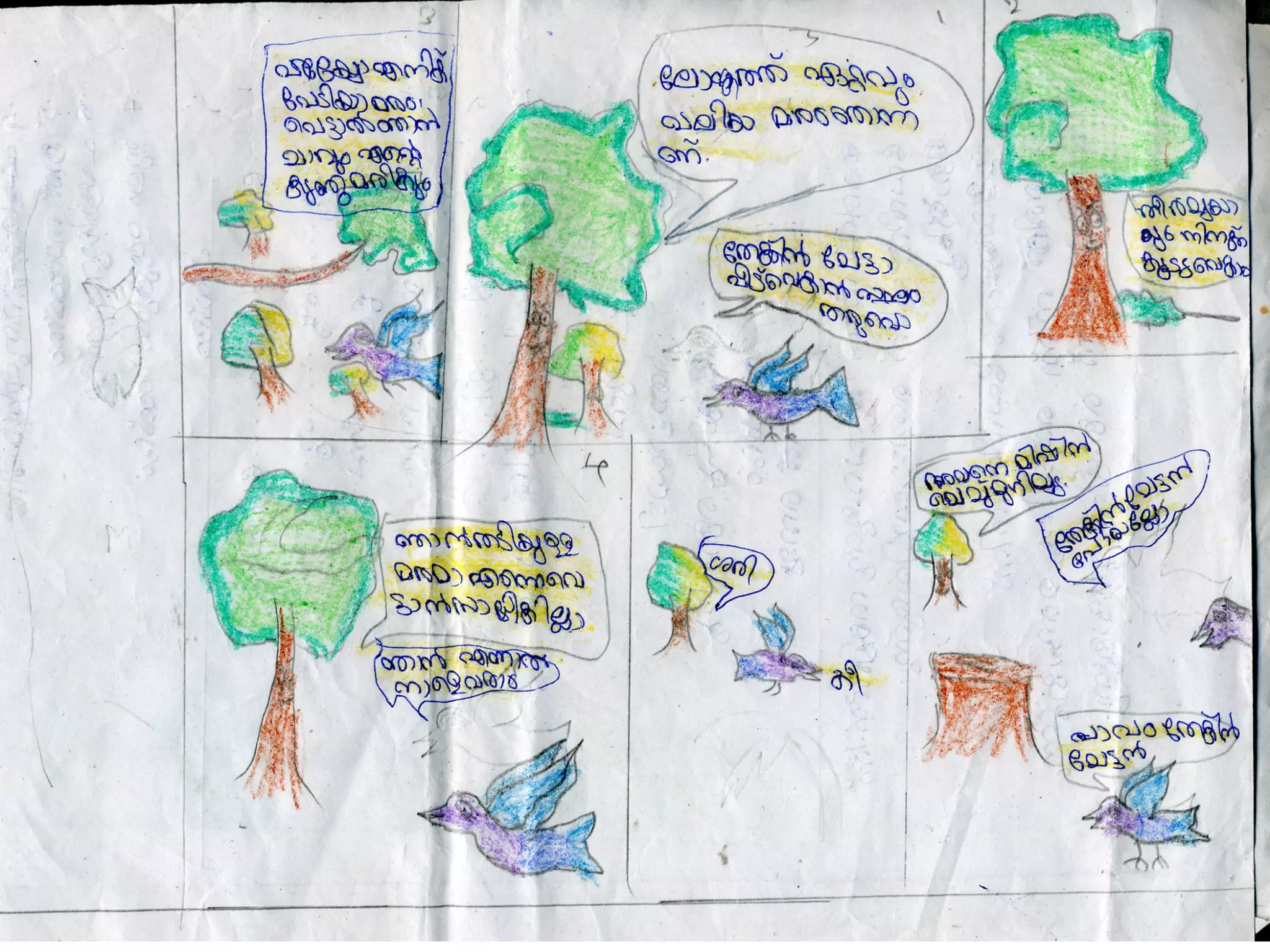
 The dialogue between the elements will suggest
their knowledge about the relation between
various elements of the ecosystem.
 The empathetic feeling will also be revealed
through these dialogues.
Conclusion…
But majority of students were not able to find the
relationship between various elements
 Not expressed any empathy towards the elements.
 Three of the students draw pictures of cricket
ground with out a blade of grass.
 The pictures drawn by 14 students revealed their
knowledge and attitude and it was satisfactory to
some extent.
Conclusion
.
 Forty nine percent of rural upper primary
school students are aware of various
organisms in the paddy field and the activities
going on there.
 But more than fifty percent of students are
unaware of these.
Conclusion….
 Students’ awareness about various plants in a
paddy field is not satisfactory. Only 21
percent recollected five and more plants in
the field.
 But the details regarding these plants are
not collected by majority of the students.
This indicates lack of scientific enquiry
among the students.
Conclusion….
 Only 14 percent of students are
aware of the interrelationship
between various components of
an ecosystem.
 Majority of these students do
not possess any empathetic
feeling towards the nature and its
elements.
Some of the responses…..
Implication
 If this condition continues, one cannot put hope in the
future that the environment will be protected by the
coming generation.
 The visions of RIO Earth Summits will be rewarded only if
the intelligent beings on the Earth are more naturalistic
than materialistic.
Some suggestions are….
 Make the class room teaching learning
process more connected with
environment.
 Give direct experience as far as possible
or make use of technology to get a virtual
experience.
 More importance should be given to the
affective part / values especially in
environmental studies.
Suggestions…..
• The governmental programmes like
BALA should focus on environmental
issues and the nature.
• Activities like visiting a zoo, a paddy
field, river side/beach etc., can be
given in schools with proper
reporting students on what they
experienced and promote their
imagination about various biotic
elements they observed there.
Naturalistic intelligence among the upper primary students studying in rural schools following Kerala syllabus

Naturalistic intelligence among the upper primary students studying in rural schools following Kerala syllabus

  • 1.
    Dr Vijayakumari Associate Professor FarookTraining College Aju Rajendran M. Ed Student Farook Training College
  • 2.
    Naturalistic intelligence ornature smart involves how sensitive individual is towards nature and the world around him. People’s delinking from earth has deeply affected Bio-diversity and Ecology. The present study analyses the level of Naturalistic Intelligence among Upper primary school children.
  • 3.
     ‘Colors ofParadise’ - Majid Majidi(1999) -the story of a blind child, Muhammed who can  identify the message in the voice of the birds, Locate the spot and distance, Imagine shape and identify flowers with its touch.
  • 4.
    Gardner defines … •Natural intelligence is the ability to see the patterns in nature and work in natural environment with live stock, wildlife, plants etc . • It acts as a strong tie between the nature and humanity.
  • 5.
     Naturalistic intelligenceor in other terms nature smart involves how sensitive individual is towards nature and the world around him.  Deals with sensing patterns and making connections to elements in nature.  One with Naturalistic Intelligence will be very much interested in other species or in the environment and the earth.
  • 6.
     Children areusually interested in stories and programmes with animals and plants as the characters.  Naturalistic Intelligence can be observed in children during their early stages of life, when they express a strong affinity to the outside world or to animals.
  • 7.
     The futurecitizen are the hope of tomorrow and the Mother Earth is to be safe in their littlie hands.  Educational system as a whole must make them know more of their environment.  A skilled interaction with nature is essential for sustainable development.
  • 8.
     The environmentstudies must create among children a sense of interconnection with the nature and familiarity in their immediate environment.  This will help them develop the naturalistic intelligence as coined by Gardner.
  • 9.
    A nature smartwill …..  Notice patterns and things from nature easily.  Be with keen senses and will observe and remember things from his environment.  Like animals and be eager to know and remember things about them.  Really appreciate being outside and doing things like camping, climbing, even just like sitting quietly and noticing the subtle differences in the world of nature.  Make observations about natural changes, interconnections and patterns.
  • 11.
    Method  Research design Survey method was used for conducting the study.  Participants  Population is upper primary school students from rural schools following Kerala Syllabus. 100 seventh standard students of Malappuram District constituted the sample
  • 12.
    Method contd…  Instruments ‘Teston Natural Intelligence’ with three items based on the learners experience with nature. - the sounds that can be perceived in a paddy field - plants that can be seen in a paddy field and their procedure of reproduction - draw a figure of a ground including various animals, birds, plants etc with suitable colors and dialogue boxes
  • 13.
     The assumptionis that all students are familiar with paddy fields and have the experience of walking through it.  The test covers major aspects of naturalistic intelligence at the basic level only.
  • 14.
    The scoring wasdone under four dimensions:  Number of possible sounds identified.  Number of plants identified that are seen in paddy fields.  Their procedure of reproduction ( ie., whether by seeds, stems, roots or any other)  Picture: Color combinations, variety, accuracy and the dialogues made
  • 15.
    Results and Discussion Most common sound identified by students in the paddy field is that of frog and no body achieved a zero score.  49 students out of hundred were able to identify more than four sounds.  Thirteen students made only one or two responses under this category.
  • 16.
    Results….  Students wereasked to write at least five plants they see in the paddy field.  Only 21 students have written five or more plants correctly.  The common response was ‘paddy’.  But three got zero score in this dimension. That is, three of the hundred children can not list any one plant correctly
  • 17.
    Results…. Analysis of responseson reproduction of the plants they listed revealed, - only eight children responded correctly for almost all the plants they listed.  But 25 students was not able to respond correctly even for one plant and hence have the score ‘zero’.
  • 18.
    Conclusion  Picture ofa meadow with possible plants, animals and birds will help to know awareness about an ecosystem  The dialogue between the elements will suggest their knowledge about the relation between various elements of the ecosystem.  The empathetic feeling will also be revealed through these dialogues.
  • 19.
    Conclusion… But majority ofstudents were not able to find the relationship between various elements  Not expressed any empathy towards the elements.  Three of the students draw pictures of cricket ground with out a blade of grass.  The pictures drawn by 14 students revealed their knowledge and attitude and it was satisfactory to some extent.
  • 20.
    Conclusion .  Forty ninepercent of rural upper primary school students are aware of various organisms in the paddy field and the activities going on there.  But more than fifty percent of students are unaware of these.
  • 21.
    Conclusion….  Students’ awarenessabout various plants in a paddy field is not satisfactory. Only 21 percent recollected five and more plants in the field.  But the details regarding these plants are not collected by majority of the students. This indicates lack of scientific enquiry among the students.
  • 22.
    Conclusion….  Only 14percent of students are aware of the interrelationship between various components of an ecosystem.  Majority of these students do not possess any empathetic feeling towards the nature and its elements.
  • 23.
    Some of theresponses…..
  • 26.
    Implication  If thiscondition continues, one cannot put hope in the future that the environment will be protected by the coming generation.  The visions of RIO Earth Summits will be rewarded only if the intelligent beings on the Earth are more naturalistic than materialistic.
  • 27.
    Some suggestions are…. Make the class room teaching learning process more connected with environment.  Give direct experience as far as possible or make use of technology to get a virtual experience.  More importance should be given to the affective part / values especially in environmental studies.
  • 28.
    Suggestions….. • The governmentalprogrammes like BALA should focus on environmental issues and the nature. • Activities like visiting a zoo, a paddy field, river side/beach etc., can be given in schools with proper reporting students on what they experienced and promote their imagination about various biotic elements they observed there.