Semantic Web Technologies
for Business and Industry
Challenges
Dr.U.Kanimozhi
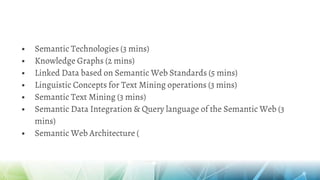
Agenda
• Semantic Technologies
• Knowledge Graphs
• Linked Data based on Semantic Web
Standards
• Linguistic Concepts for Text Mining
operations
• Semantic Text Mining
• Semantic Data Integration
• Query language of the Semantic Web
• Semantic Web Architecture
• Useful Resources
• Conclusion
Semantic AI
• Semantic Technologies (3 mins)
• Knowledge Graphs (2 mins)
• Linked Data based on Semantic Web Standards (5 mins)
• Linguistic Concepts for Text Mining operations (3 mins)
• Semantic Text Mining (3 mins)
• Semantic Data Integration & Query language of the Semantic Web (3
mins)
• Semantic Web Architecture (
Major Focus
• Overview of semantic Technologies
• What differentiates Semantic Technologies
• Organizational considerations
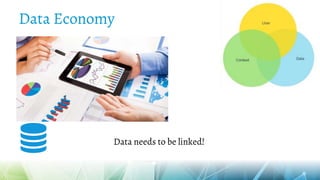
Data Economy
Data needs to be linked!
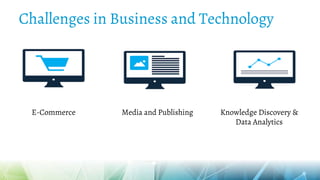
Challenges in Business and Technology
E-Commerce Media and Publishing Knowledge Discovery &
Data Analytics
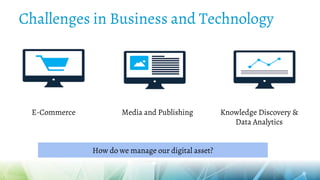
Challenges in Business and Technology
E-Commerce Media and Publishing Knowledge Discovery &
Data Analytics
How do we manage our digital asset?
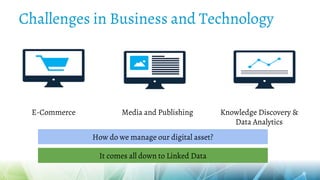
Challenges in Business and Technology
E-Commerce Media and Publishing Knowledge Discovery &
Data Analytics
It comes all down to Linked Data
How do we manage our digital asset?
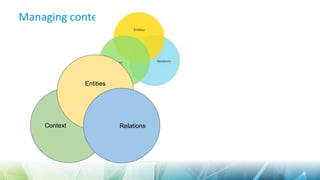
Managing contents by entities
Context
Entities
Relations
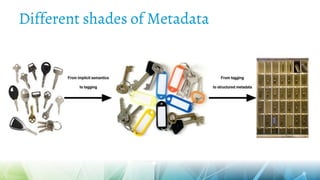
Different shades of Metadata
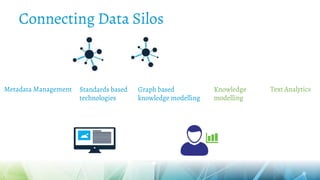
Connecting Data Silos
Metadata Management Standards based
technologies
Graph based
knowledge modelling
Knowledge
modelling
Text Analytics
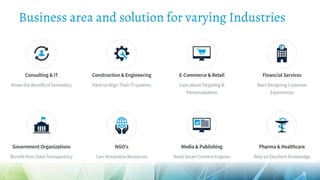
Business area and solution for varying Industries
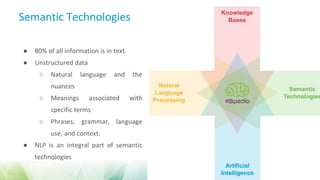
Semantic Technologies
● 80% of all information is in text.
● Unstructured data
○ Natural language and the
nuances
○ Meanings associated with
specific terms
○ Phrases, grammar, language
use, and context.
● NLP is an integral part of semantic
technologies
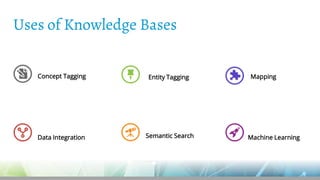
Uses of Knowledge Bases
Concept Tagging Entity Tagging Mapping
Data Integration Semantic Search Machine Learning
Knowledge Engineer; Data Architect; Data Engineer
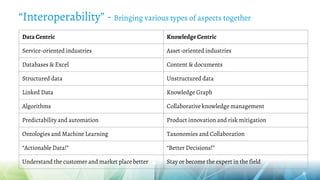
“Interoperability” - Bringing various types of aspects together
Data Centric Knowledge Centric
Service-oriented industries Asset-oriented industries
Databases & Excel Content & documents
Structured data Unstructured data
Linked Data Knowledge Graph
Algorithms Collaborative knowledge management
Predictability and automation Product innovation and risk mitigation
Ontologies and Machine Learning Taxonomies and Collaboration
“Actionable Data!” “Better Decisions!”
Understand the customer and market place better Stay or become the expert in the field
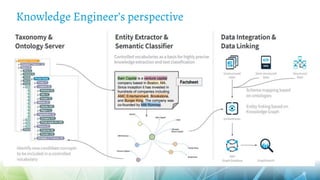
Knowledge Engineer’s perspective
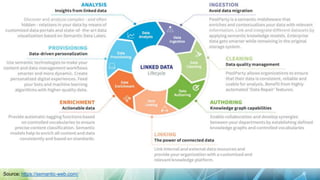
Source: https://semantic-web.com/
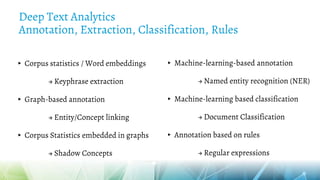
Deep Text Analytics
Annotation, Extraction, Classification, Rules
▸ Corpus statistics / Word embeddings
→ Keyphrase extraction
▸ Graph-based annotation
→ Entity/Concept linking
▸ Corpus Statistics embedded in graphs
→ Shadow Concepts
▸ Machine-learning-based annotation
→ Named entity recognition (NER)
▸ Machine-learning based classification
→ Document Classification
▸ Annotation based on rules
→ Regular expressions
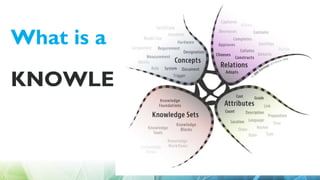
What is a
KNOWLEDGE GRAPH
“The Knowledge Graph is a knowledge base used by
Google and its services to enhance its search engine's
results with information gathered from a variety of
sources.” (Wikipedia)
"For knowledge graphs in information science, see
https://en.wikipedia.org/wiki/Ontology_(information_science)"
“A knowledge graph
1.mainly describes realworld entitiesand theirinterrelations, organized in a graph.
2.definespossible classesand relations ofentities in a schema.
3.allows for potentially interrelatingarbitraryentities with each other.
4.covers various topical domain
The first two criteria clearly define the focus of a knowledge graph to be the actual instances
(A-box in description logic terminology), with the schema (T- box) playing only a minor
role.” (Paulheim)
Building Blocks of a Knowledge Graph
“A Knowledge Graph is a model of a knowledge domain”
Model means: "A representation, formal naming and definition
of the categories, properties and relations between the concepts,
data and entities"
Building Block One: Conceptual/Domain model (Ontology)
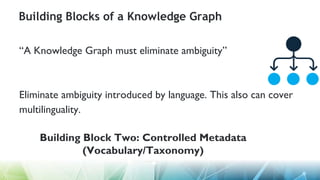
Building Blocks of a Knowledge Graph
“A Knowledge Graph must eliminate ambiguity”
Eliminate ambiguity introduced by language. This also can cover
multilinguality.
Building Block Two: Controlled Metadata
(Vocabulary/Taxonomy)
Building Blocks of a Knowledge Graph
“A Knowledge Graph is unified information across
an organization”
Unified information across an organization, enriched with contextual and semantic
relevance across the silos.
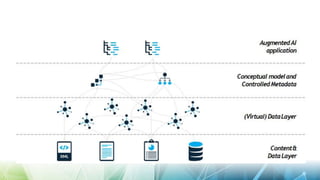
Building Block Three: (Virtual) Data Layer
Semantic Web Technologies

Semantic Web Technologies

  • 1.
    Semantic Web Technologies forBusiness and Industry Challenges Dr.U.Kanimozhi
  • 2.
    Agenda • Semantic Technologies •Knowledge Graphs • Linked Data based on Semantic Web Standards • Linguistic Concepts for Text Mining operations • Semantic Text Mining • Semantic Data Integration • Query language of the Semantic Web • Semantic Web Architecture • Useful Resources • Conclusion Semantic AI
  • 3.
    • Semantic Technologies(3 mins) • Knowledge Graphs (2 mins) • Linked Data based on Semantic Web Standards (5 mins) • Linguistic Concepts for Text Mining operations (3 mins) • Semantic Text Mining (3 mins) • Semantic Data Integration & Query language of the Semantic Web (3 mins) • Semantic Web Architecture (
  • 4.
    Major Focus • Overviewof semantic Technologies • What differentiates Semantic Technologies • Organizational considerations
  • 5.
  • 6.
    Challenges in Businessand Technology E-Commerce Media and Publishing Knowledge Discovery & Data Analytics
  • 7.
    Challenges in Businessand Technology E-Commerce Media and Publishing Knowledge Discovery & Data Analytics How do we manage our digital asset?
  • 8.
    Challenges in Businessand Technology E-Commerce Media and Publishing Knowledge Discovery & Data Analytics It comes all down to Linked Data How do we manage our digital asset?
  • 9.
    Managing contents byentities Context Entities Relations
  • 10.
  • 11.
    Connecting Data Silos MetadataManagement Standards based technologies Graph based knowledge modelling Knowledge modelling Text Analytics
  • 12.
    Business area andsolution for varying Industries
  • 13.
    Semantic Technologies ● 80%of all information is in text. ● Unstructured data ○ Natural language and the nuances ○ Meanings associated with specific terms ○ Phrases, grammar, language use, and context. ● NLP is an integral part of semantic technologies
  • 14.
    Uses of KnowledgeBases Concept Tagging Entity Tagging Mapping Data Integration Semantic Search Machine Learning
  • 15.
    Knowledge Engineer; DataArchitect; Data Engineer
  • 16.
    “Interoperability” - Bringingvarious types of aspects together Data Centric Knowledge Centric Service-oriented industries Asset-oriented industries Databases & Excel Content & documents Structured data Unstructured data Linked Data Knowledge Graph Algorithms Collaborative knowledge management Predictability and automation Product innovation and risk mitigation Ontologies and Machine Learning Taxonomies and Collaboration “Actionable Data!” “Better Decisions!” Understand the customer and market place better Stay or become the expert in the field
  • 17.
  • 19.
  • 20.
    Deep Text Analytics Annotation,Extraction, Classification, Rules ▸ Corpus statistics / Word embeddings → Keyphrase extraction ▸ Graph-based annotation → Entity/Concept linking ▸ Corpus Statistics embedded in graphs → Shadow Concepts ▸ Machine-learning-based annotation → Named entity recognition (NER) ▸ Machine-learning based classification → Document Classification ▸ Annotation based on rules → Regular expressions
  • 21.
  • 22.
    “The Knowledge Graphis a knowledge base used by Google and its services to enhance its search engine's results with information gathered from a variety of sources.” (Wikipedia) "For knowledge graphs in information science, see https://en.wikipedia.org/wiki/Ontology_(information_science)"
  • 23.
    “A knowledge graph 1.mainlydescribes realworld entitiesand theirinterrelations, organized in a graph. 2.definespossible classesand relations ofentities in a schema. 3.allows for potentially interrelatingarbitraryentities with each other. 4.covers various topical domain The first two criteria clearly define the focus of a knowledge graph to be the actual instances (A-box in description logic terminology), with the schema (T- box) playing only a minor role.” (Paulheim)
  • 24.
    Building Blocks ofa Knowledge Graph “A Knowledge Graph is a model of a knowledge domain” Model means: "A representation, formal naming and definition of the categories, properties and relations between the concepts, data and entities" Building Block One: Conceptual/Domain model (Ontology)
  • 25.
    Building Blocks ofa Knowledge Graph “A Knowledge Graph must eliminate ambiguity” Eliminate ambiguity introduced by language. This also can cover multilinguality. Building Block Two: Controlled Metadata (Vocabulary/Taxonomy)
  • 26.
    Building Blocks ofa Knowledge Graph “A Knowledge Graph is unified information across an organization” Unified information across an organization, enriched with contextual and semantic relevance across the silos. Building Block Three: (Virtual) Data Layer