Discuss Semantic Web 
By 
Umang Shukla 
(U11CO015)
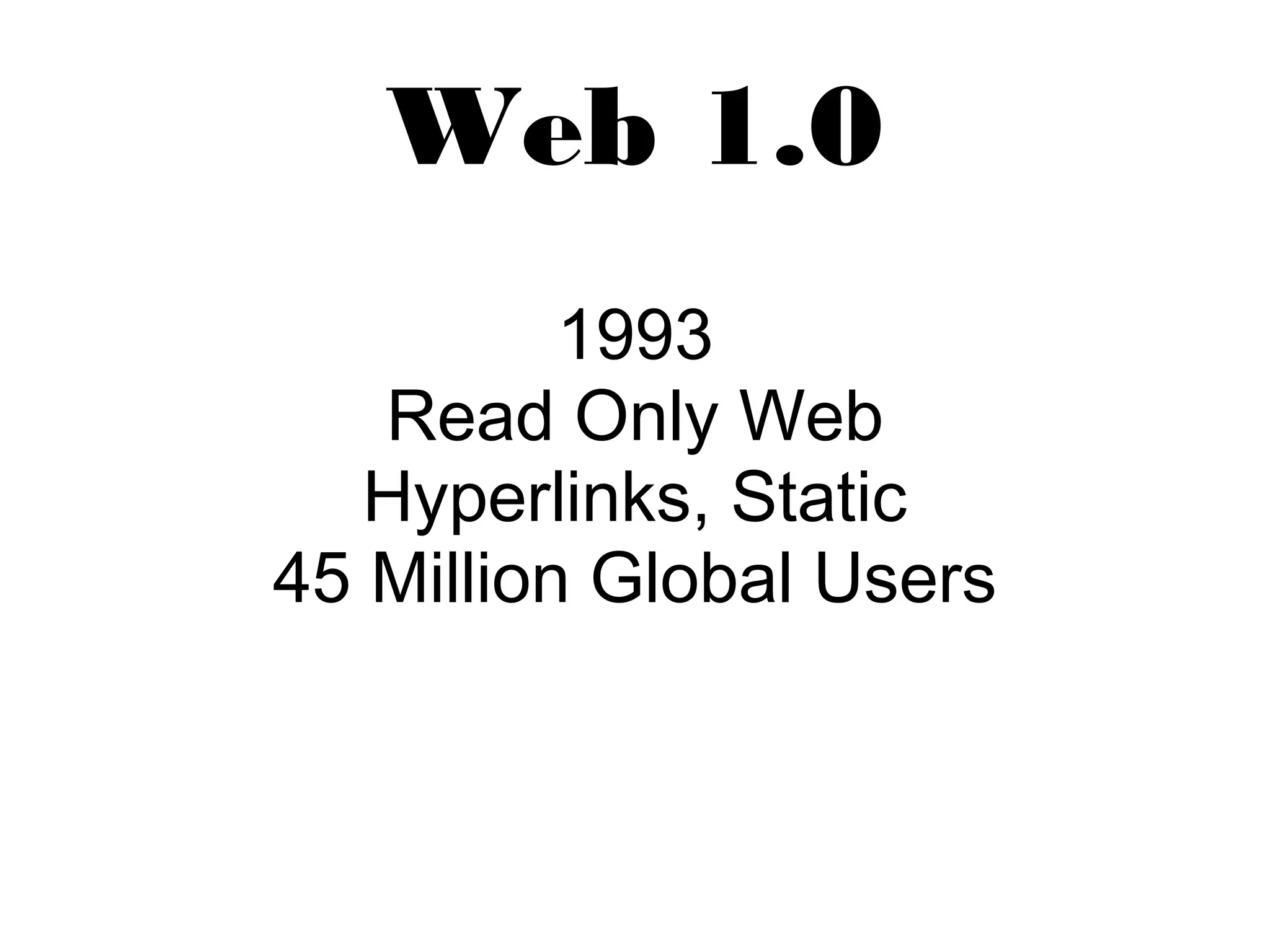
Web 1.0 
1993 
Read Only Web 
Hyperlinks, Static 
45 Million Global Users
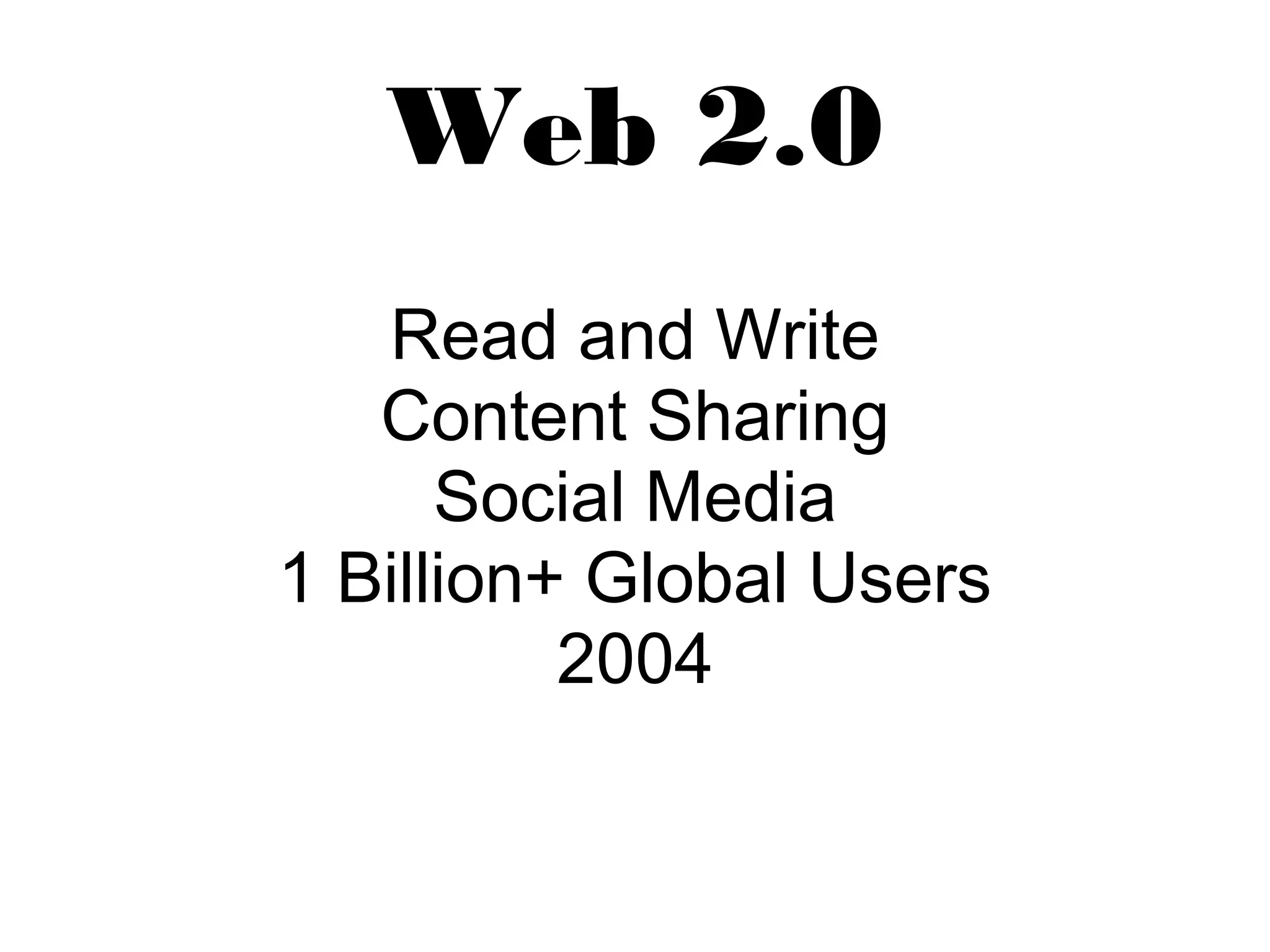
Web 2.0 
Read and Write 
Content Sharing 
Social Media 
1 Billion+ Global Users 
2004
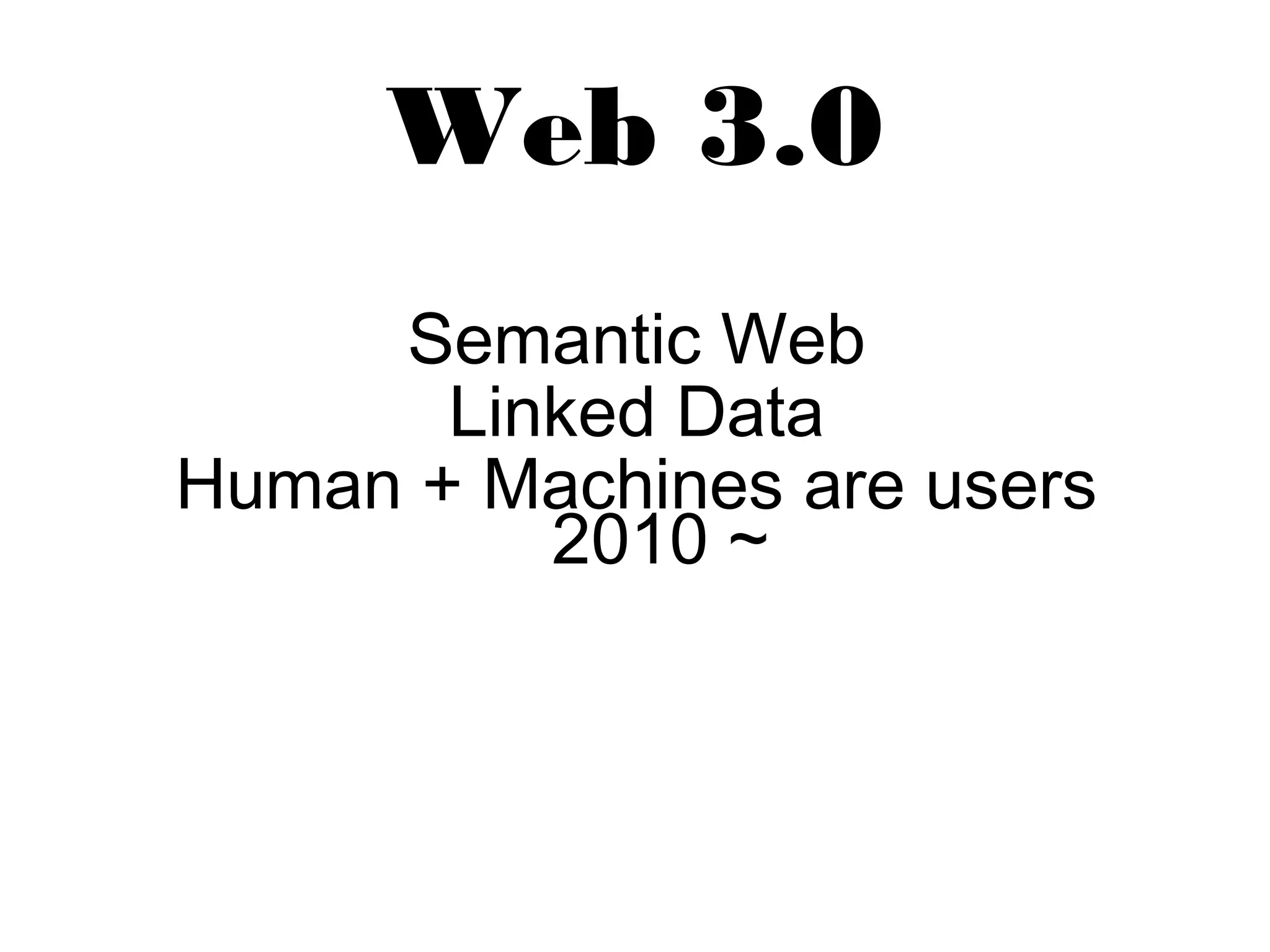
Web 3.0 
Semantic Web 
Linked Data 
Human + Machines are users 
2010 ~
Semantics 
means relating to meaning in 
language or logic 
HTML descibes the syntax not 
the semantics
The Semantic Web 
An extension of the 
current Web that 
provides an easier way 
to find, share, reuse and 
combine information 
more easily
History 
• The concept of the Semantic 
Network Model was formed in the 
early 1960s by people of different 
professions by publishing about 
them 
• The term "Semantic Web" was 
coined by Tim Berners-Lee in 
2008 
• Schema.org launched on June 2, 
2011 by Bing, Google and Yahoo 
to provides a collection of
Purpose 
The Semantic Web was 
envisioned as a system that 
enables machines to "understand" 
and respond to complex human 
requests based on their meaning 
It is regarded as an integrator 
across different content, 
information applications and 
systems
Whose job is it ? 
The Webmaster's as its their 
site and they need newer 
applications to understand 
them
How do we get 
semantic web 
• Applications getting better at 
understanding human semantics 
(‘Top Down’) 
• More structured formats are 
gaining wider use (‘Bottom Up’) 
• More database driven sites, so 
less need for humans to 
understand it all 
• ‘Semantic web’ applications 
appearing
Top Down 
Depends of ‘more intelligent’ 
computers 
–Google Book Search 
–LibX Toolbar
Bottom Up 
Depends on more structured data 
using agreed standards 
–URIs 
–RDF 
–OWL 
–HTML5 microformat 
–SPARQL
Advantages 
• Premanent increase in data 
quality 
• Better search visibility and higher 
ranking 
• Empower collaboration, data 
sharing and integration for 
bussiness applications
Challenges 
Some of the challenges of 
semantic web include 
–Vastness 
–Vagueness 
–Uncertainity 
–Inconsistency 
–Deciet

Semantic Web

  • 1.
    Discuss Semantic Web By Umang Shukla (U11CO015)
  • 2.
    Web 1.0 1993 Read Only Web Hyperlinks, Static 45 Million Global Users
  • 3.
    Web 2.0 Readand Write Content Sharing Social Media 1 Billion+ Global Users 2004
  • 4.
    Web 3.0 SemanticWeb Linked Data Human + Machines are users 2010 ~
  • 5.
    Semantics means relatingto meaning in language or logic HTML descibes the syntax not the semantics
  • 6.
    The Semantic Web An extension of the current Web that provides an easier way to find, share, reuse and combine information more easily
  • 7.
    History • Theconcept of the Semantic Network Model was formed in the early 1960s by people of different professions by publishing about them • The term "Semantic Web" was coined by Tim Berners-Lee in 2008 • Schema.org launched on June 2, 2011 by Bing, Google and Yahoo to provides a collection of
  • 8.
    Purpose The SemanticWeb was envisioned as a system that enables machines to "understand" and respond to complex human requests based on their meaning It is regarded as an integrator across different content, information applications and systems
  • 9.
    Whose job isit ? The Webmaster's as its their site and they need newer applications to understand them
  • 10.
    How do weget semantic web • Applications getting better at understanding human semantics (‘Top Down’) • More structured formats are gaining wider use (‘Bottom Up’) • More database driven sites, so less need for humans to understand it all • ‘Semantic web’ applications appearing
  • 11.
    Top Down Dependsof ‘more intelligent’ computers –Google Book Search –LibX Toolbar
  • 12.
    Bottom Up Dependson more structured data using agreed standards –URIs –RDF –OWL –HTML5 microformat –SPARQL
  • 13.
    Advantages • Premanentincrease in data quality • Better search visibility and higher ranking • Empower collaboration, data sharing and integration for bussiness applications
  • 14.
    Challenges Some ofthe challenges of semantic web include –Vastness –Vagueness –Uncertainity –Inconsistency –Deciet