Name: Khondoker Zahidul Hossain 
ID: 13103061 
Section: H
Topic Discussed: 
 Cryptography 
 Security Services 
 Security in the Internet
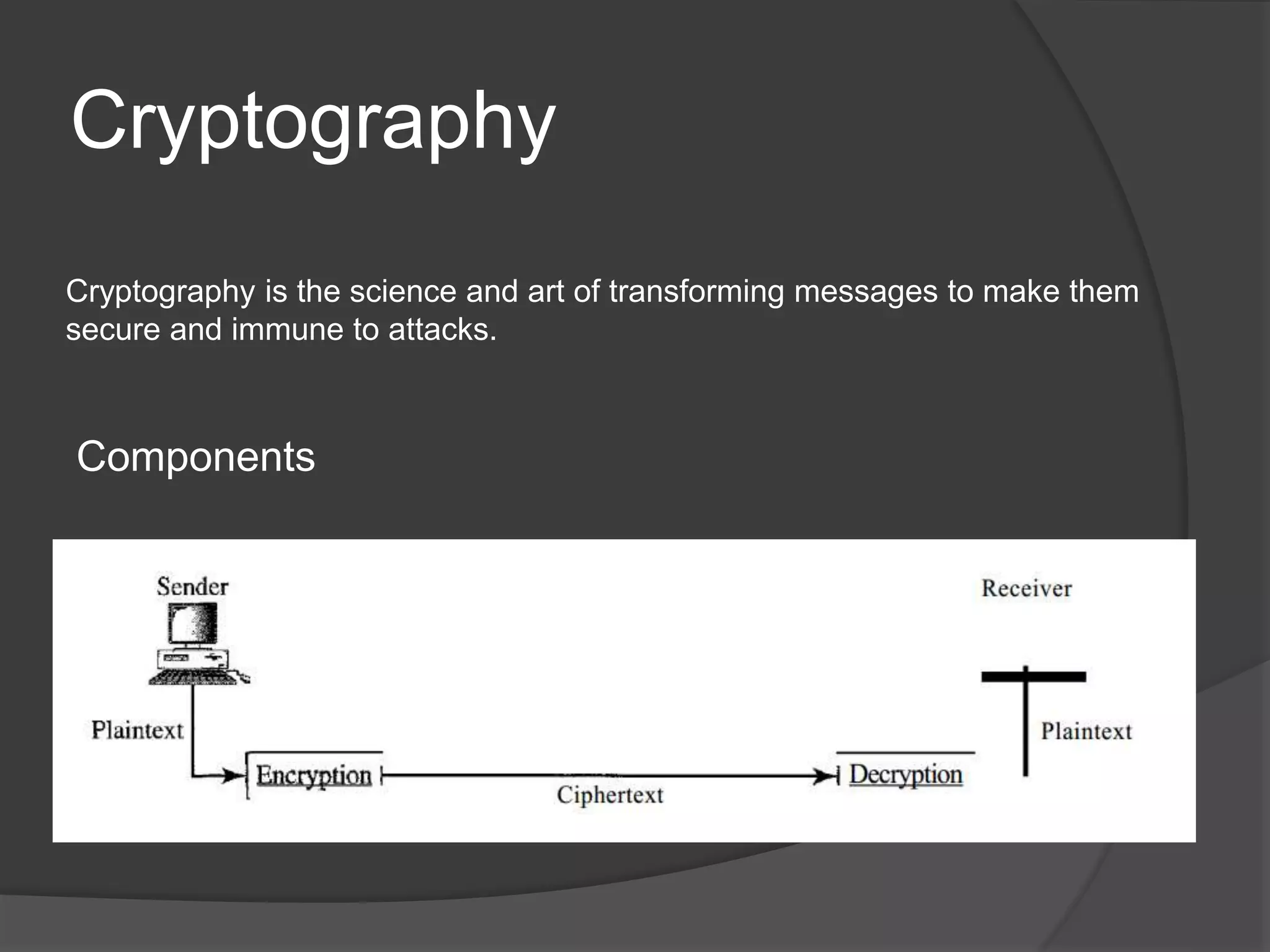
Cryptography 
Cryptography is the science and art of transforming messages to make them 
secure and immune to attacks. 
Components
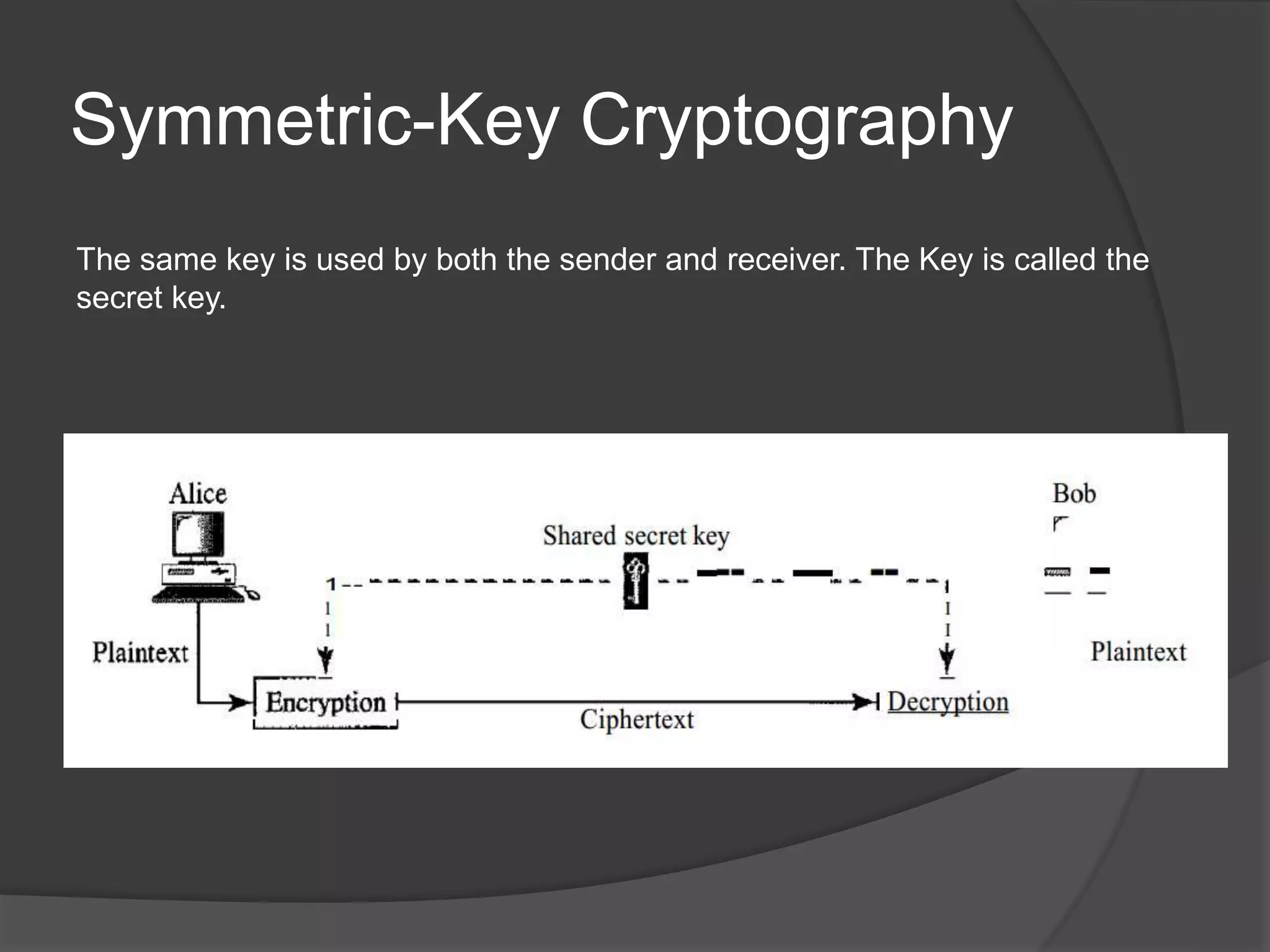
Symmetric-Key Cryptography 
The same key is used by both the sender and receiver. The Key is called the 
secret key.
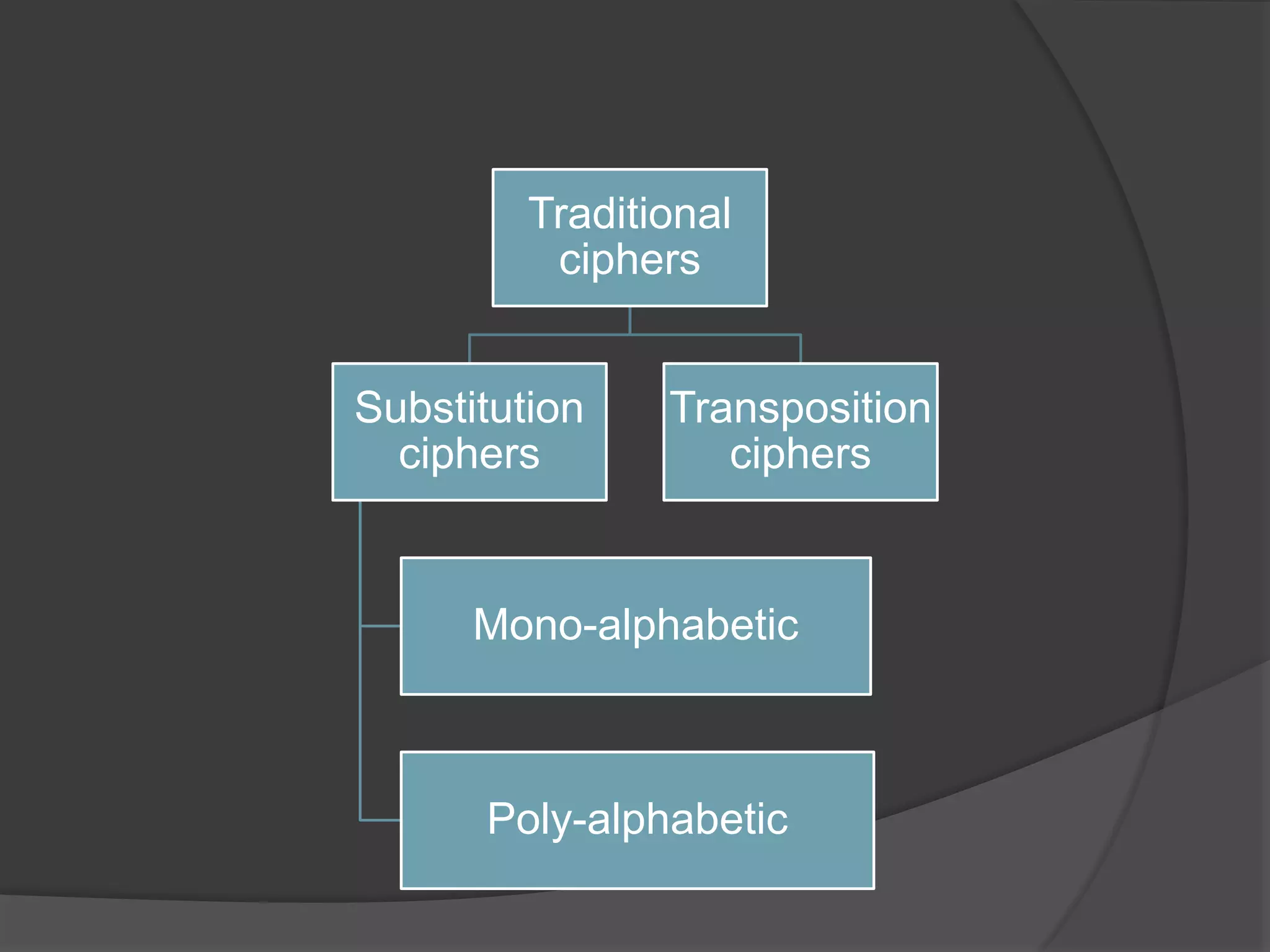
Traditional 
ciphers 
Substitution 
ciphers 
Transposition 
ciphers 
Mono-alphabetic 
Poly-alphabetic
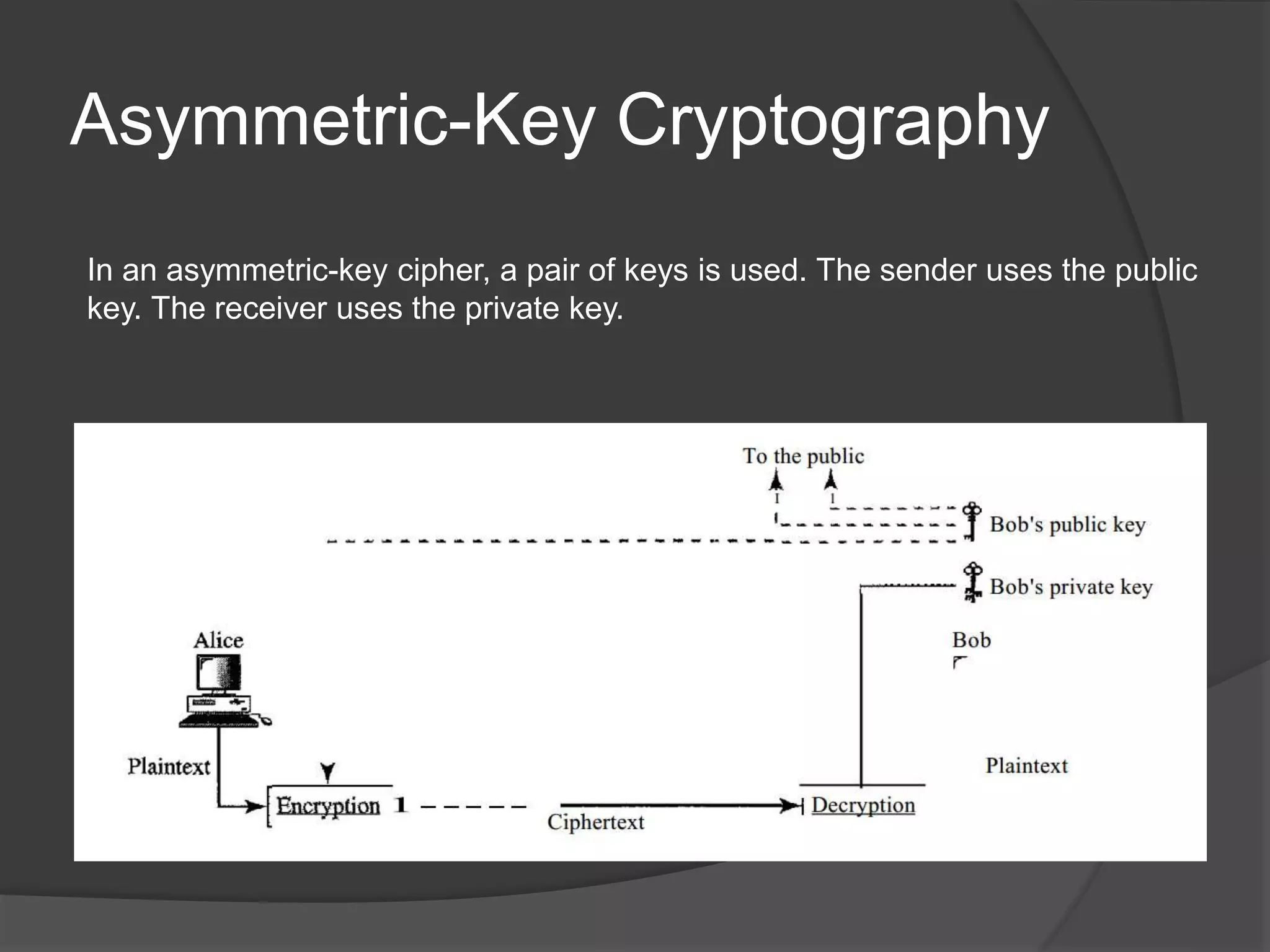
Asymmetric-Key Cryptography 
In an asymmetric-key cipher, a pair of keys is used. The sender uses the public 
key. The receiver uses the private key.
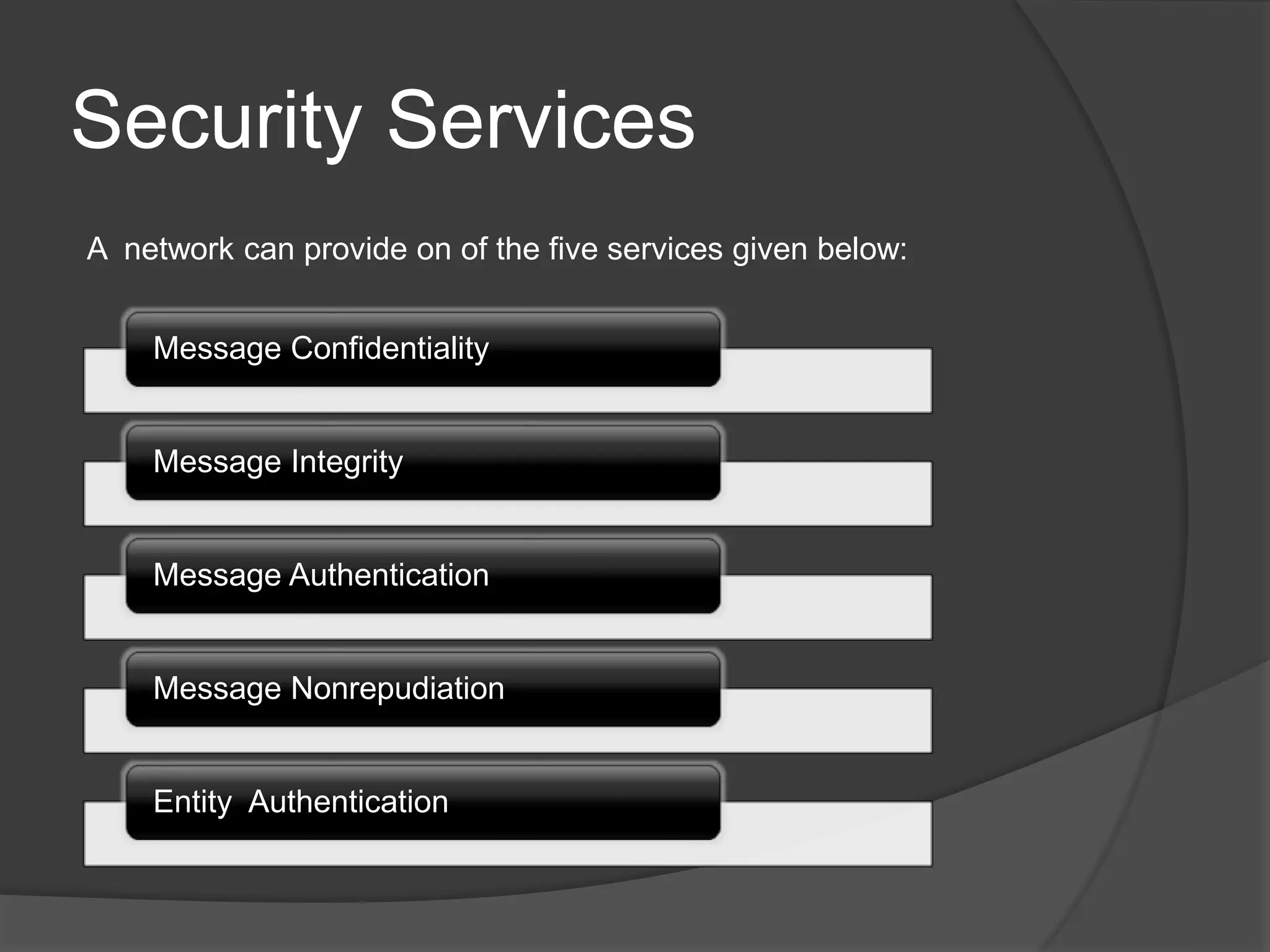
Security Services 
A network can provide on of the five services given below: 
Message Confidentiality 
Message Integrity 
Message Authentication 
Message Nonrepudiation 
Entity Authentication
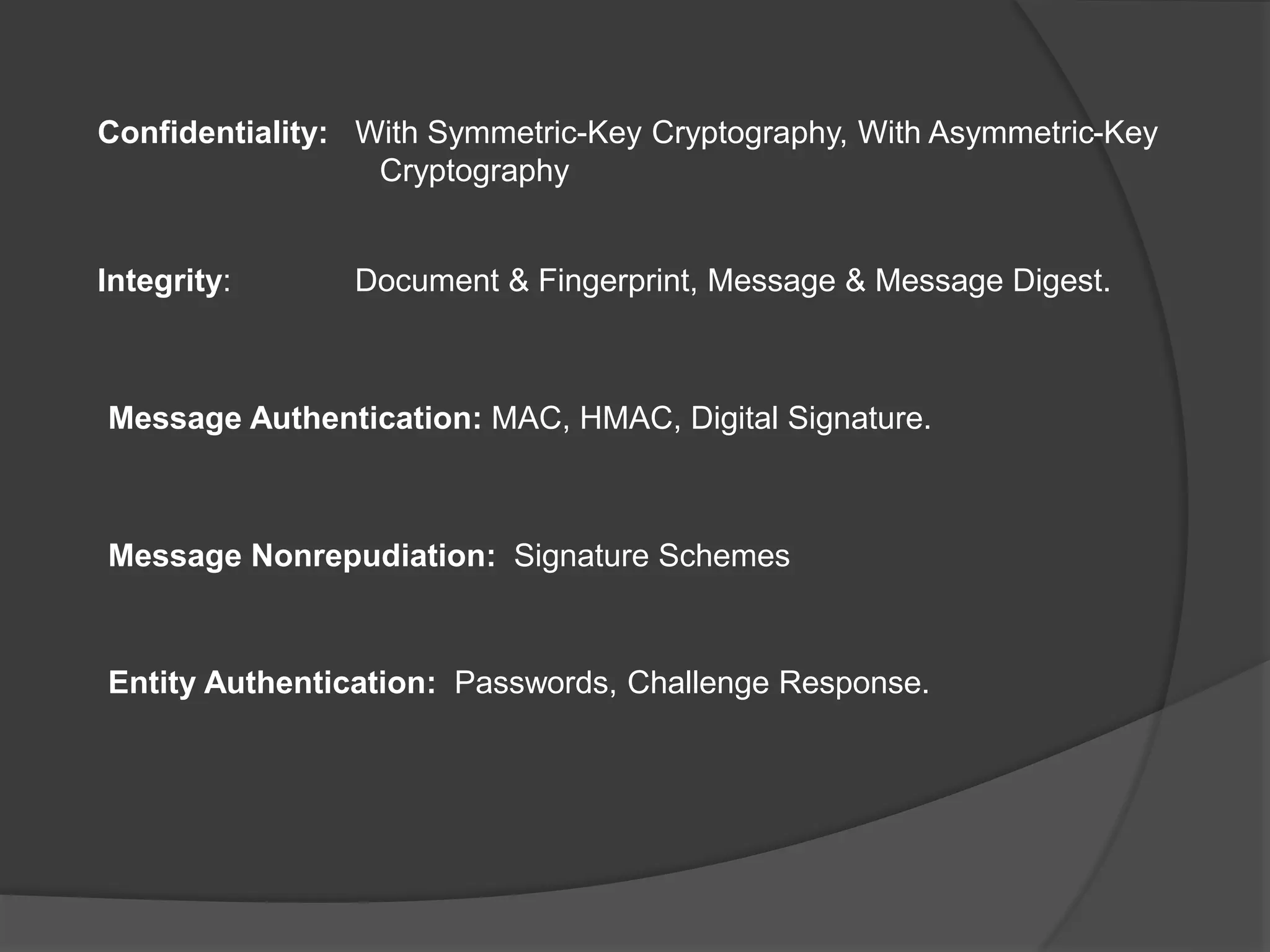
Confidentiality: With Symmetric-Key Cryptography, With Asymmetric-Key 
Cryptography 
Integrity: Document & Fingerprint, Message & Message Digest. 
Message Authentication: MAC, HMAC, Digital Signature. 
Message Nonrepudiation: Signature Schemes 
Entity Authentication: Passwords, Challenge Response.
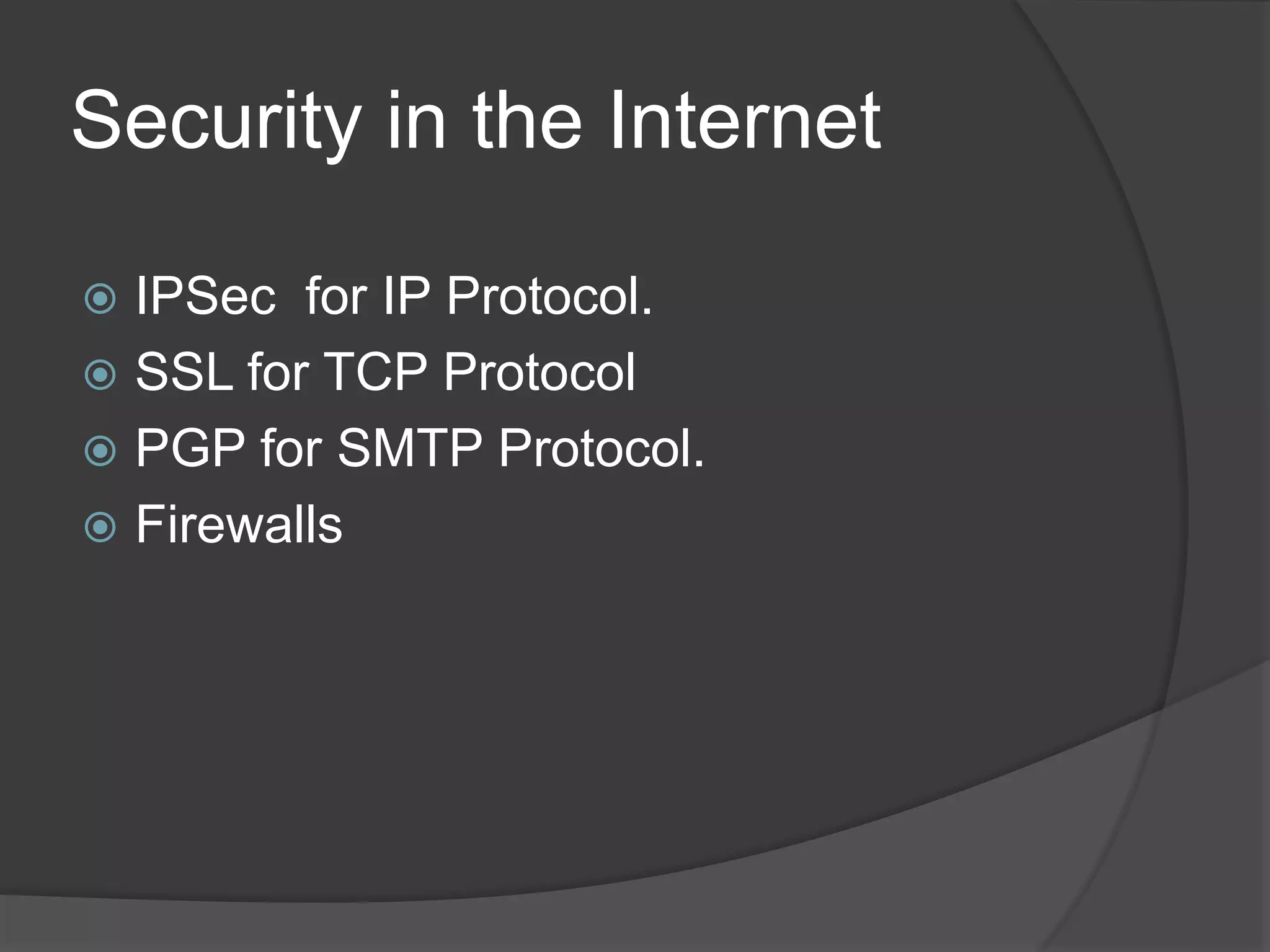
Security in the Internet 
 IPSec for IP Protocol. 
 SSL for TCP Protocol 
 PGP for SMTP Protocol. 
 Firewalls
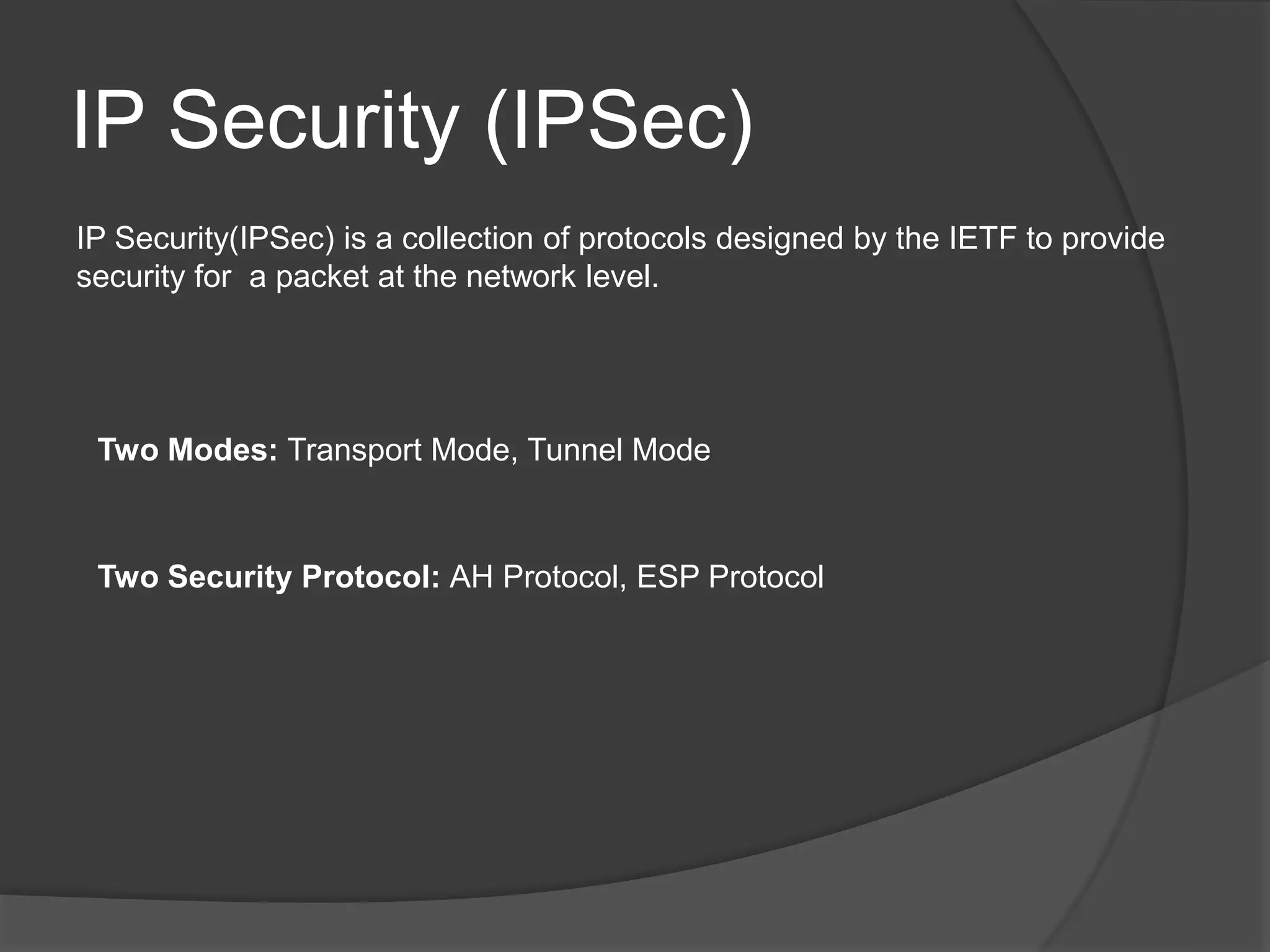
IP Security (IPSec) 
IP Security(IPSec) is a collection of protocols designed by the IETF to provide 
security for a packet at the network level. 
Two Modes: Transport Mode, Tunnel Mode 
Two Security Protocol: AH Protocol, ESP Protocol
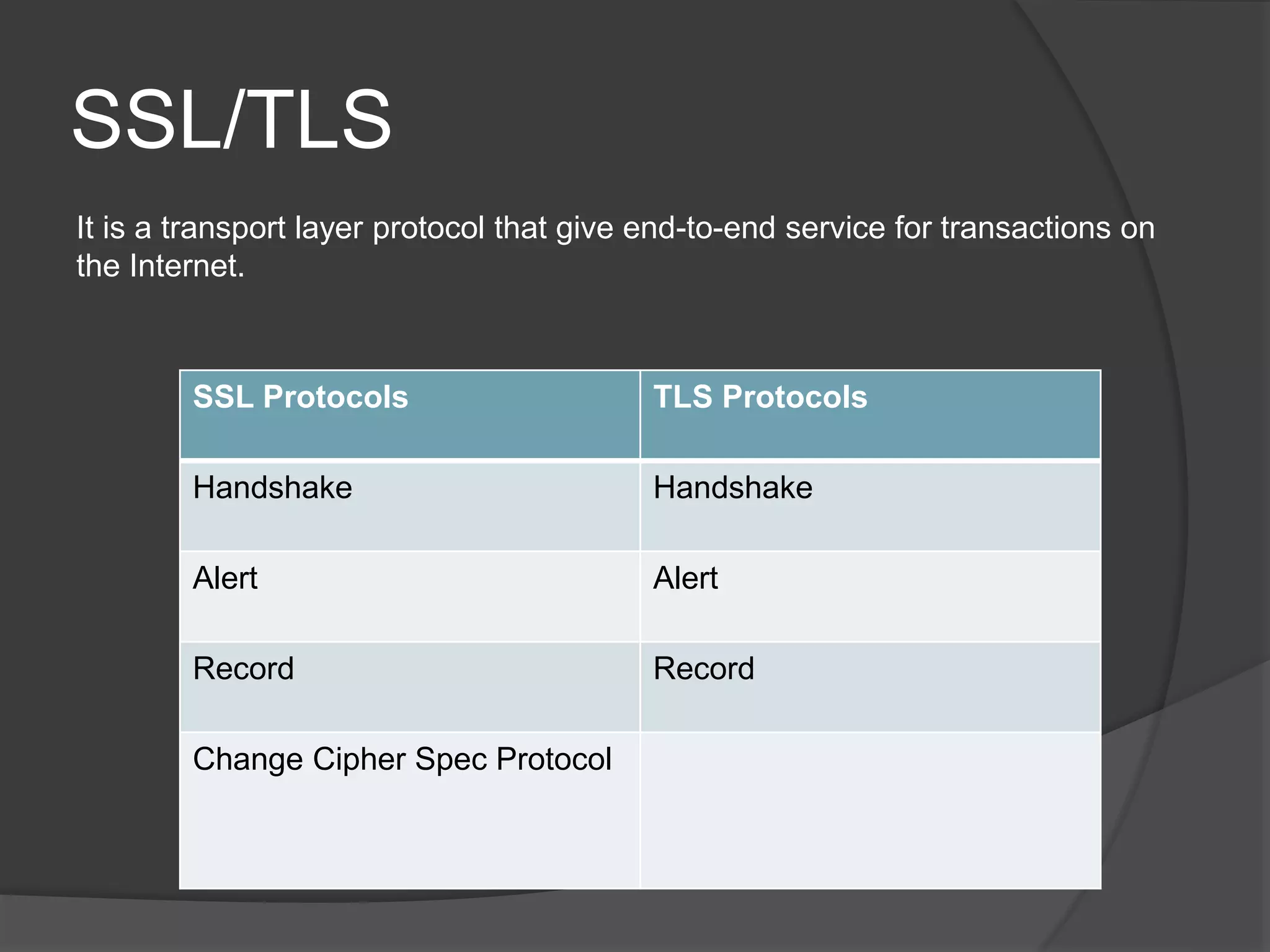
SSL/TLS 
It is a transport layer protocol that give end-to-end service for transactions on 
the Internet. 
SSL Protocols TLS Protocols 
Handshake Handshake 
Alert Alert 
Record Record 
Change Cipher Spec Protocol
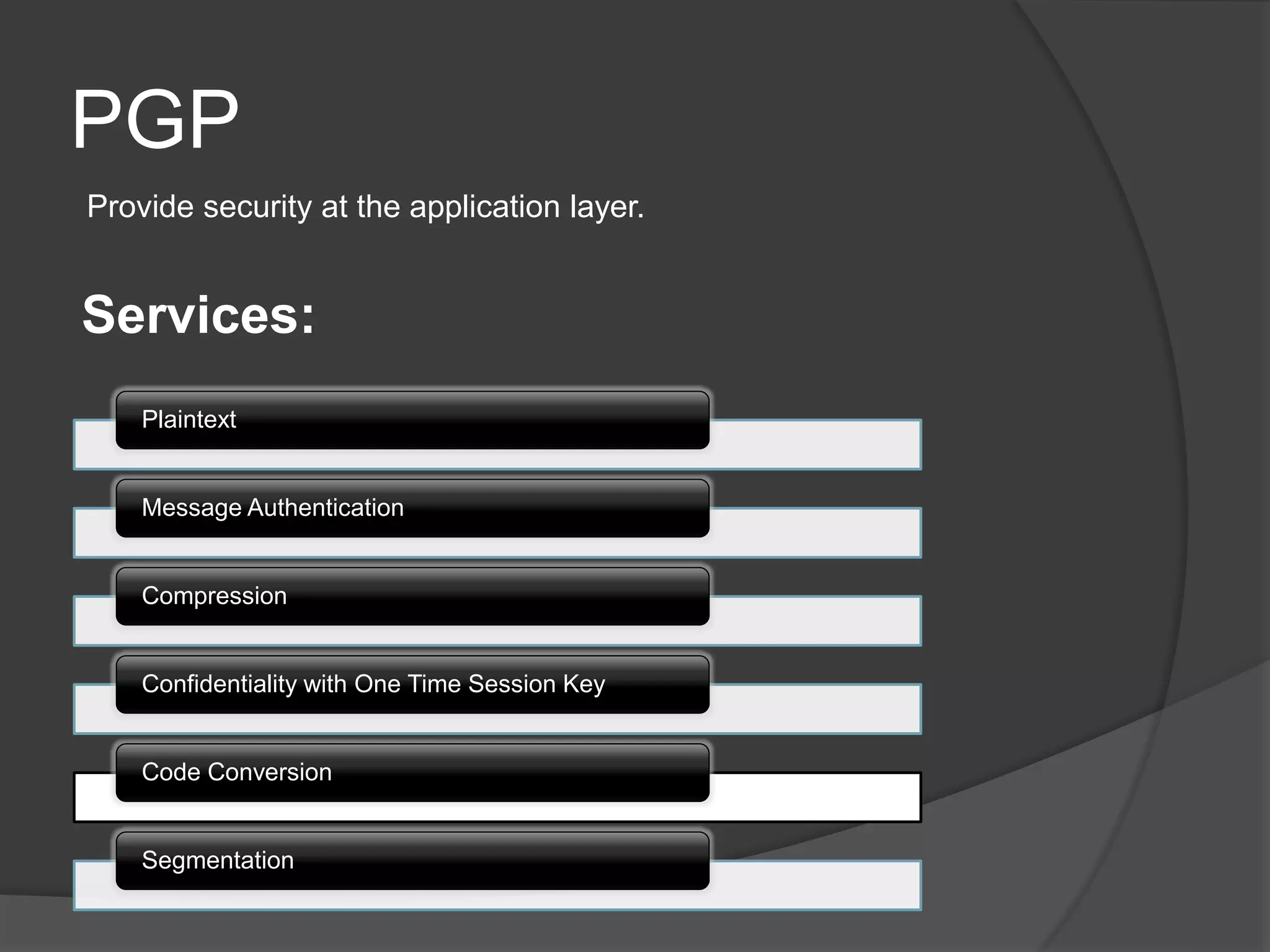
PGP 
Provide security at the application layer. 
Services: 
Plaintext 
Message Authentication 
Compression 
Confidentiality with One Time Session Key 
Code Conversion 
Segmentation
Firewalls 
A firewall is a device installed between the internal network of an organization and 
the rest of the Internet. 
Packet-Filter Firewall: It filters at the network or transport layer. 
Proxy-Filter Firewall: It filters at the application layer.
Security in Data Communication and Networking

Security in Data Communication and Networking

  • 1.
    Name: Khondoker ZahidulHossain ID: 13103061 Section: H
  • 2.
    Topic Discussed: Cryptography  Security Services  Security in the Internet
  • 3.
    Cryptography Cryptography isthe science and art of transforming messages to make them secure and immune to attacks. Components
  • 4.
    Symmetric-Key Cryptography Thesame key is used by both the sender and receiver. The Key is called the secret key.
  • 5.
    Traditional ciphers Substitution ciphers Transposition ciphers Mono-alphabetic Poly-alphabetic
  • 6.
    Asymmetric-Key Cryptography Inan asymmetric-key cipher, a pair of keys is used. The sender uses the public key. The receiver uses the private key.
  • 7.
    Security Services Anetwork can provide on of the five services given below: Message Confidentiality Message Integrity Message Authentication Message Nonrepudiation Entity Authentication
  • 8.
    Confidentiality: With Symmetric-KeyCryptography, With Asymmetric-Key Cryptography Integrity: Document & Fingerprint, Message & Message Digest. Message Authentication: MAC, HMAC, Digital Signature. Message Nonrepudiation: Signature Schemes Entity Authentication: Passwords, Challenge Response.
  • 9.
    Security in theInternet  IPSec for IP Protocol.  SSL for TCP Protocol  PGP for SMTP Protocol.  Firewalls
  • 10.
    IP Security (IPSec) IP Security(IPSec) is a collection of protocols designed by the IETF to provide security for a packet at the network level. Two Modes: Transport Mode, Tunnel Mode Two Security Protocol: AH Protocol, ESP Protocol
  • 11.
    SSL/TLS It isa transport layer protocol that give end-to-end service for transactions on the Internet. SSL Protocols TLS Protocols Handshake Handshake Alert Alert Record Record Change Cipher Spec Protocol
  • 12.
    PGP Provide securityat the application layer. Services: Plaintext Message Authentication Compression Confidentiality with One Time Session Key Code Conversion Segmentation
  • 13.
    Firewalls A firewallis a device installed between the internal network of an organization and the rest of the Internet. Packet-Filter Firewall: It filters at the network or transport layer. Proxy-Filter Firewall: It filters at the application layer.