POSTMODERNIST ARCHITECTURE
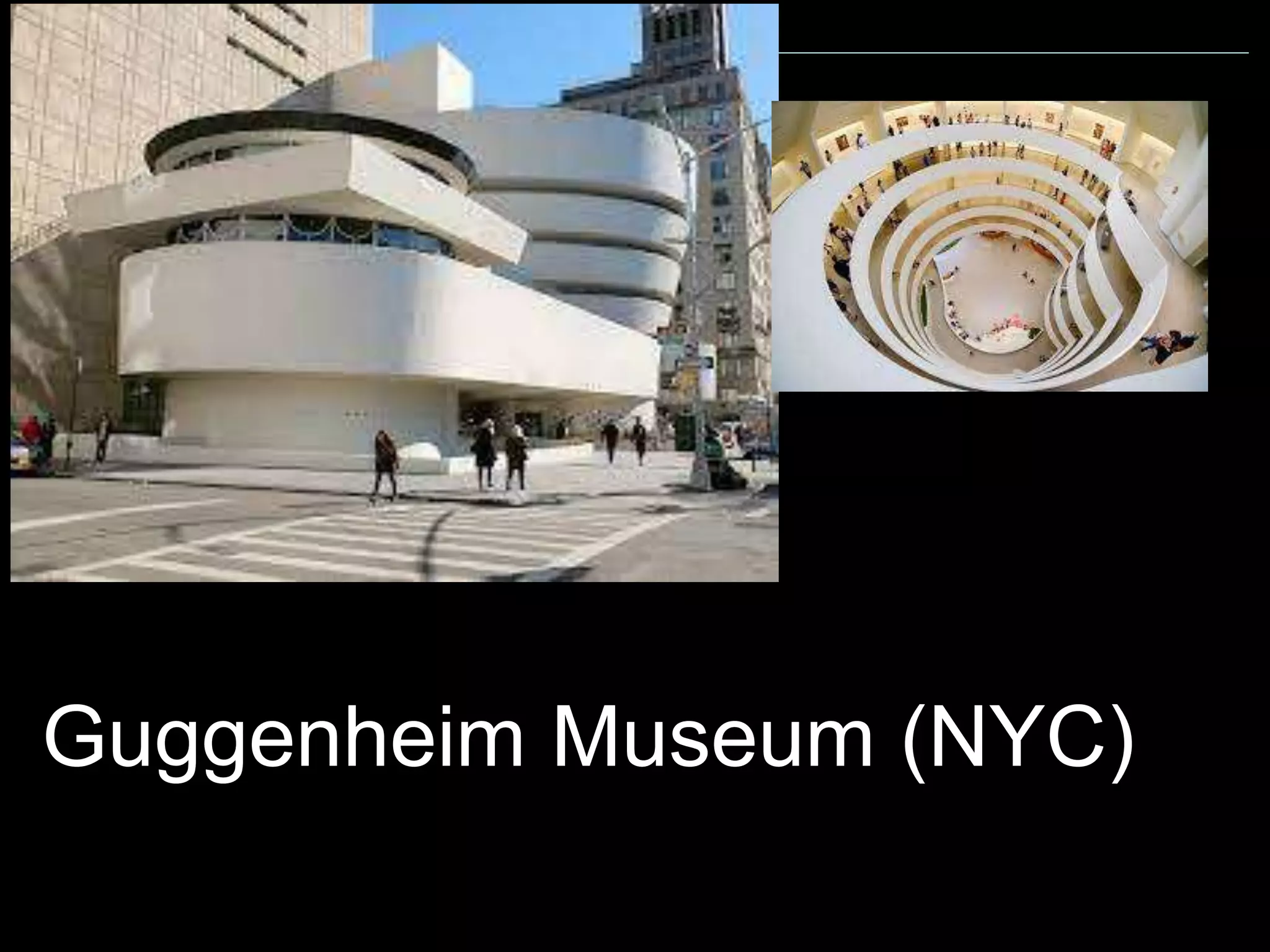
Guggenheim Museum (NYC)
POSTMODERNIST ARCHITECTURE
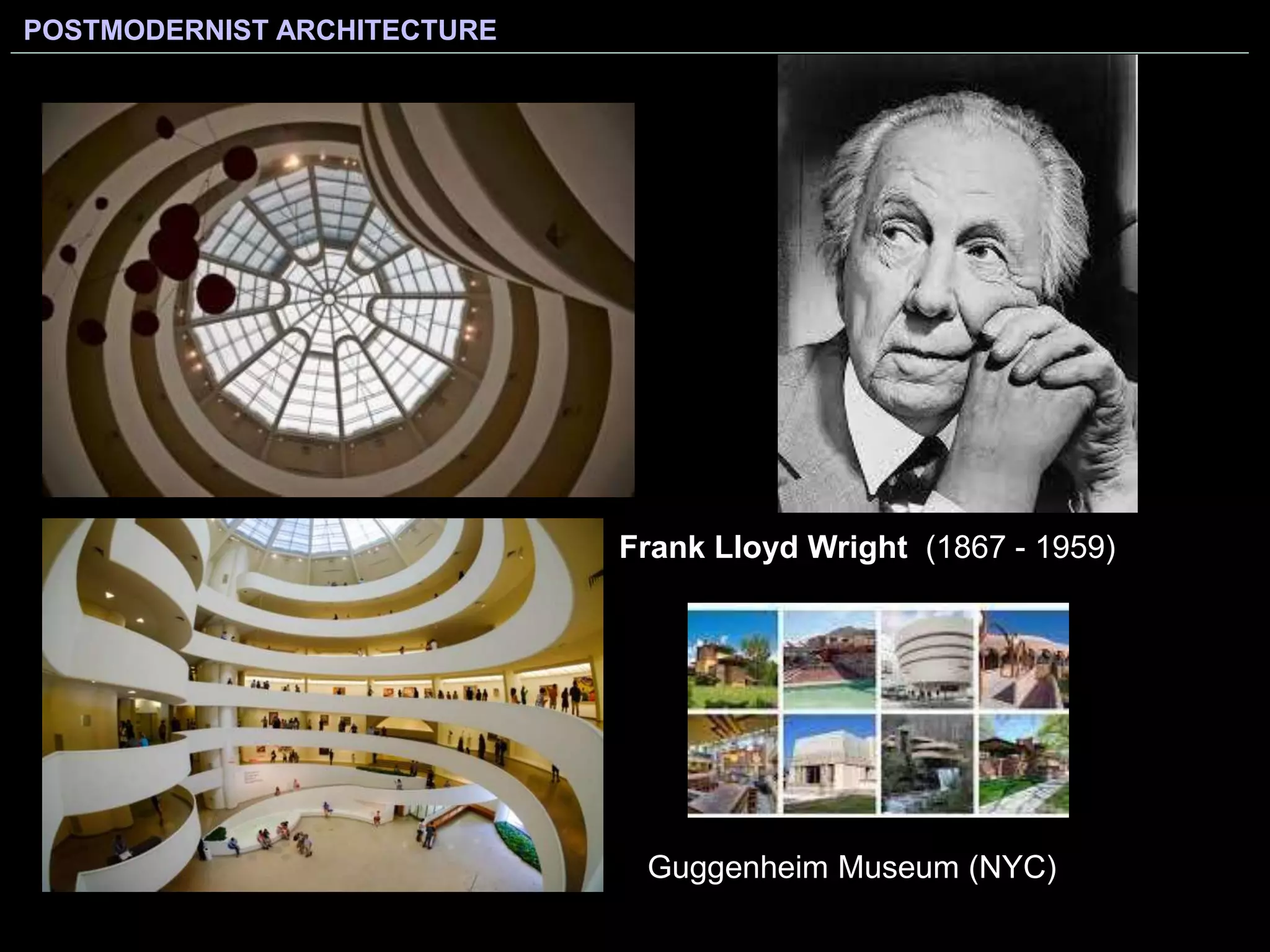
Guggenheim Museum (NYC)
Frank Lloyd Wright (1867 - 1959)
POSTMODERNIST ARCHITECTURE
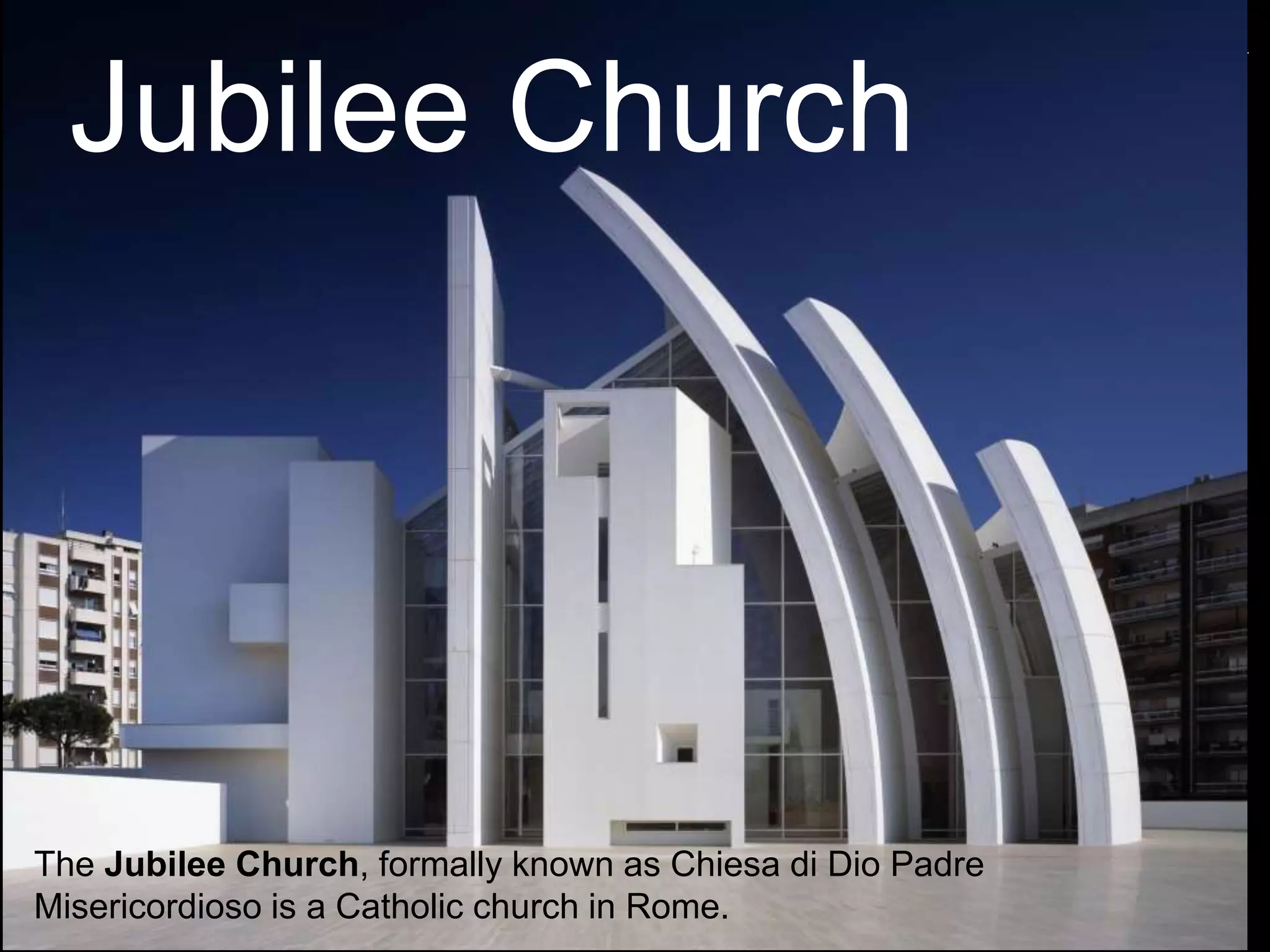
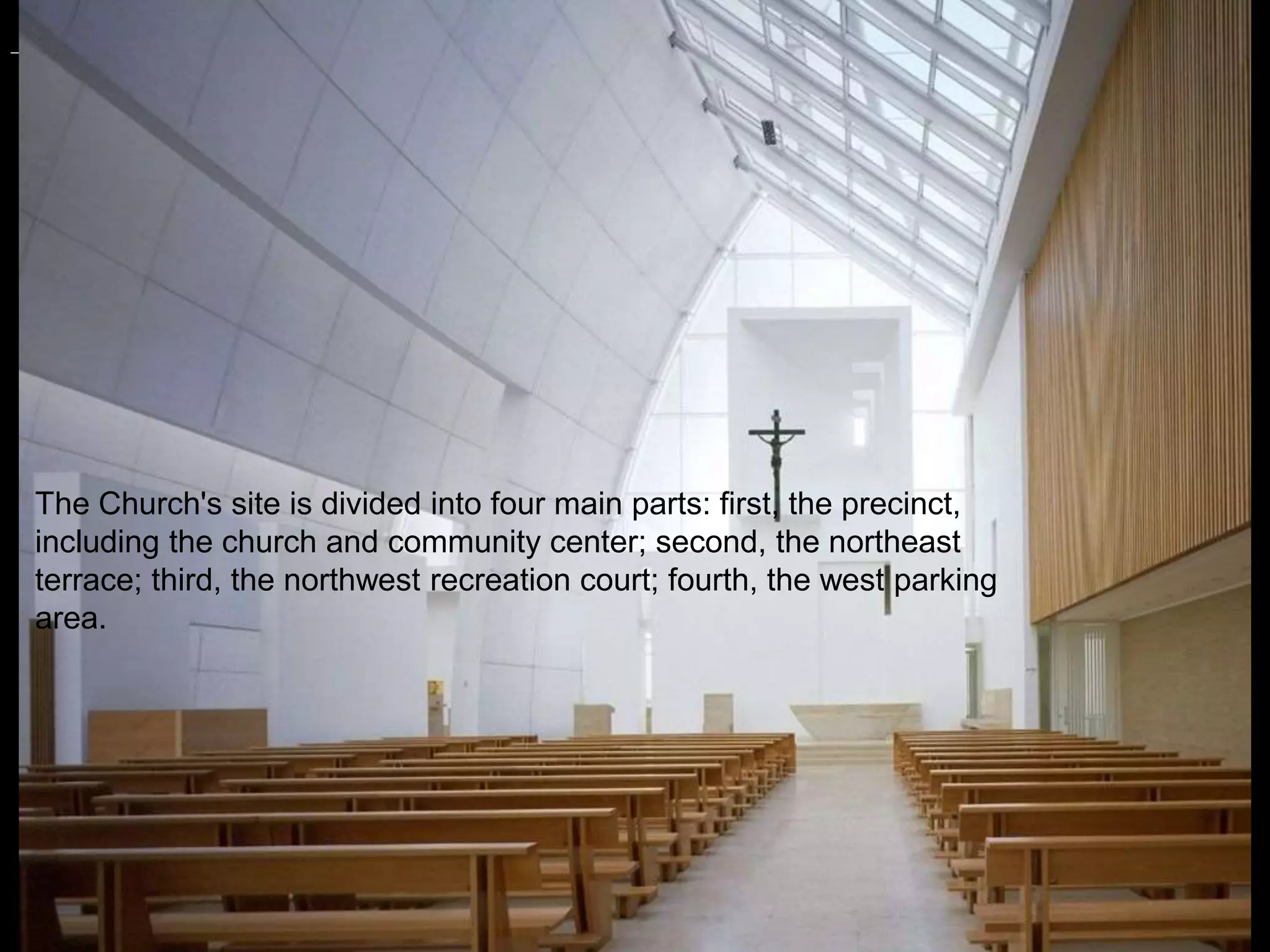
Jubilee Church
The Jubilee Church, formally known as Chiesa di Dio Padre
Misericordioso is a Catholic church in Rome.
POSTMODERNIST ARCHITECTURE
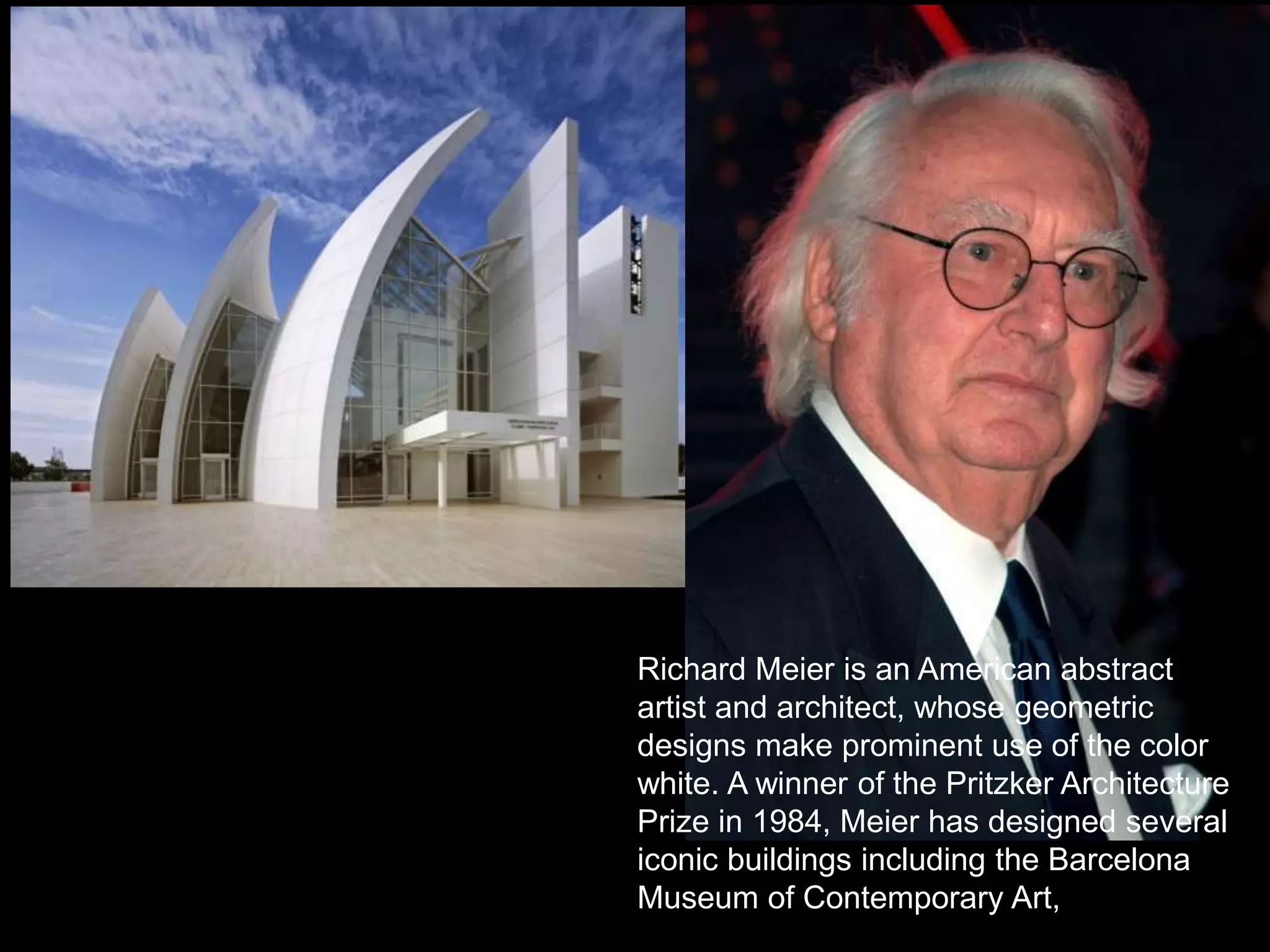
Richard Meier is an American abstract
artist and architect, whose geometric
designs make prominent use of the color
white. A winner of the Pritzker Architecture
Prize in 1984, Meier has designed several
iconic buildings including the Barcelona
Museum of Contemporary Art,
POSTMODERNIST ARCHITECTURE
Jubilee Church
The Church's site is divided into four main parts: first, the precinct,
including the church and community center; second, the northeast
terrace; third, the northwest recreation court; fourth, the west parking
area.
POSTMODERNIST ARCHITECTURE
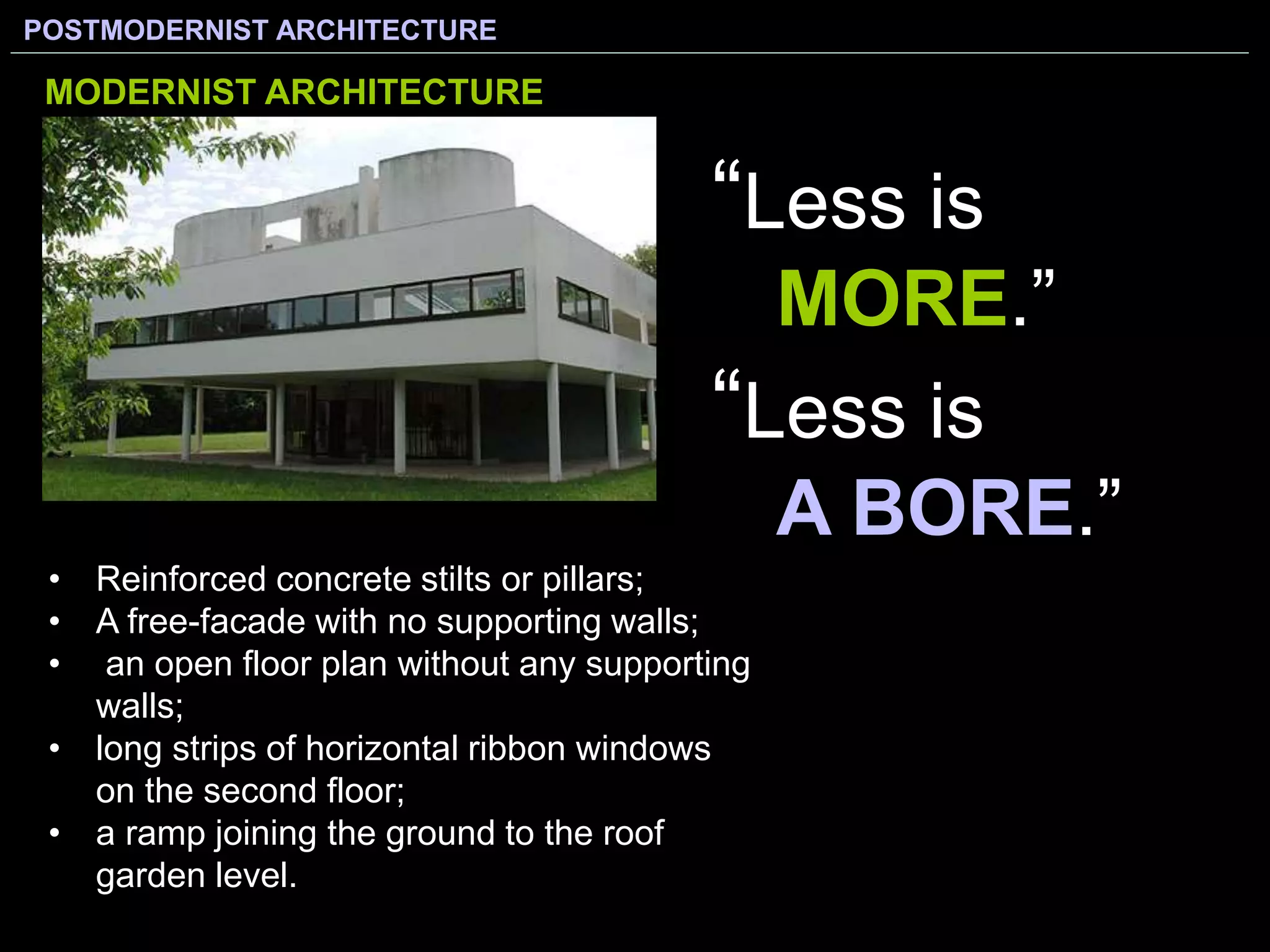
MODERNIST ARCHITECTURE
“Less is
MORE.”
“Less is
A BORE.”
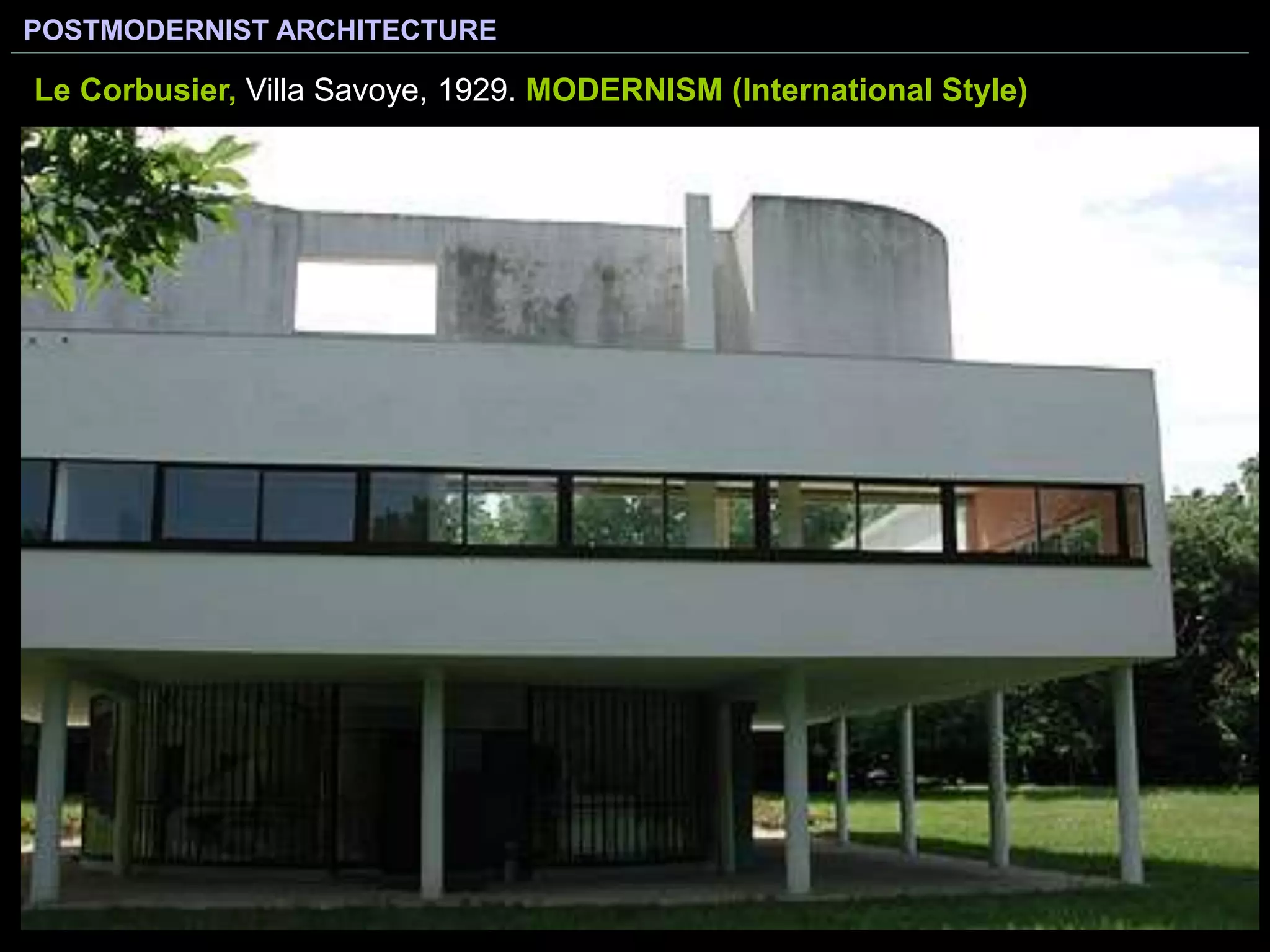
• Reinforced concrete stilts or pillars;
• A free-facade with no supporting walls;
• an open floor plan without any supporting
walls;
• long strips of horizontal ribbon windows
on the second floor;
• a ramp joining the ground to the roof
garden level.
POSTMODERNIST ARCHITECTURE
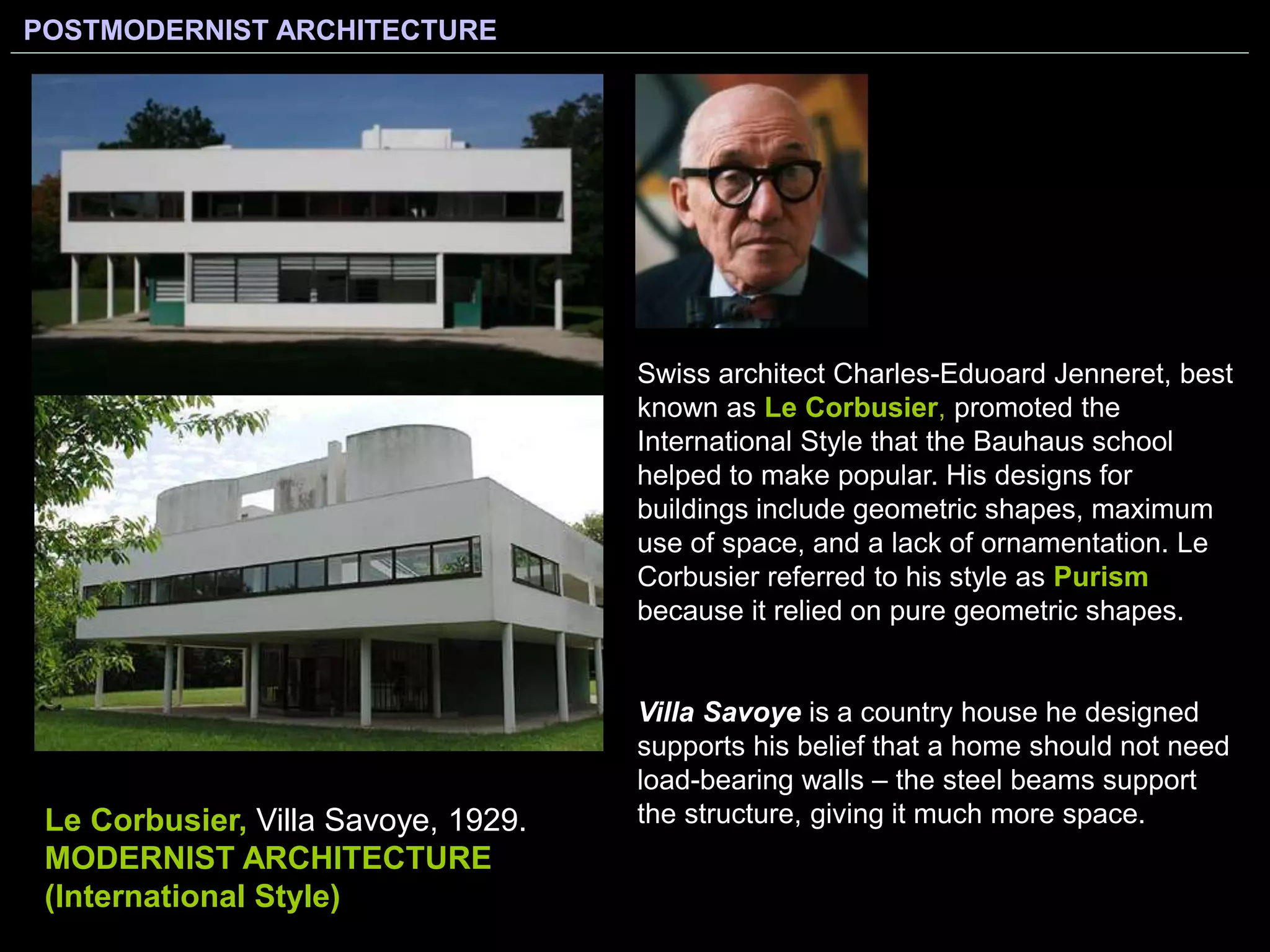
Swiss architect Charles-Eduoard Jenneret, best
known as Le Corbusier, promoted the
International Style that the Bauhaus school
helped to make popular. His designs for
buildings include geometric shapes, maximum
use of space, and a lack of ornamentation. Le
Corbusier referred to his style as Purism
because it relied on pure geometric shapes.
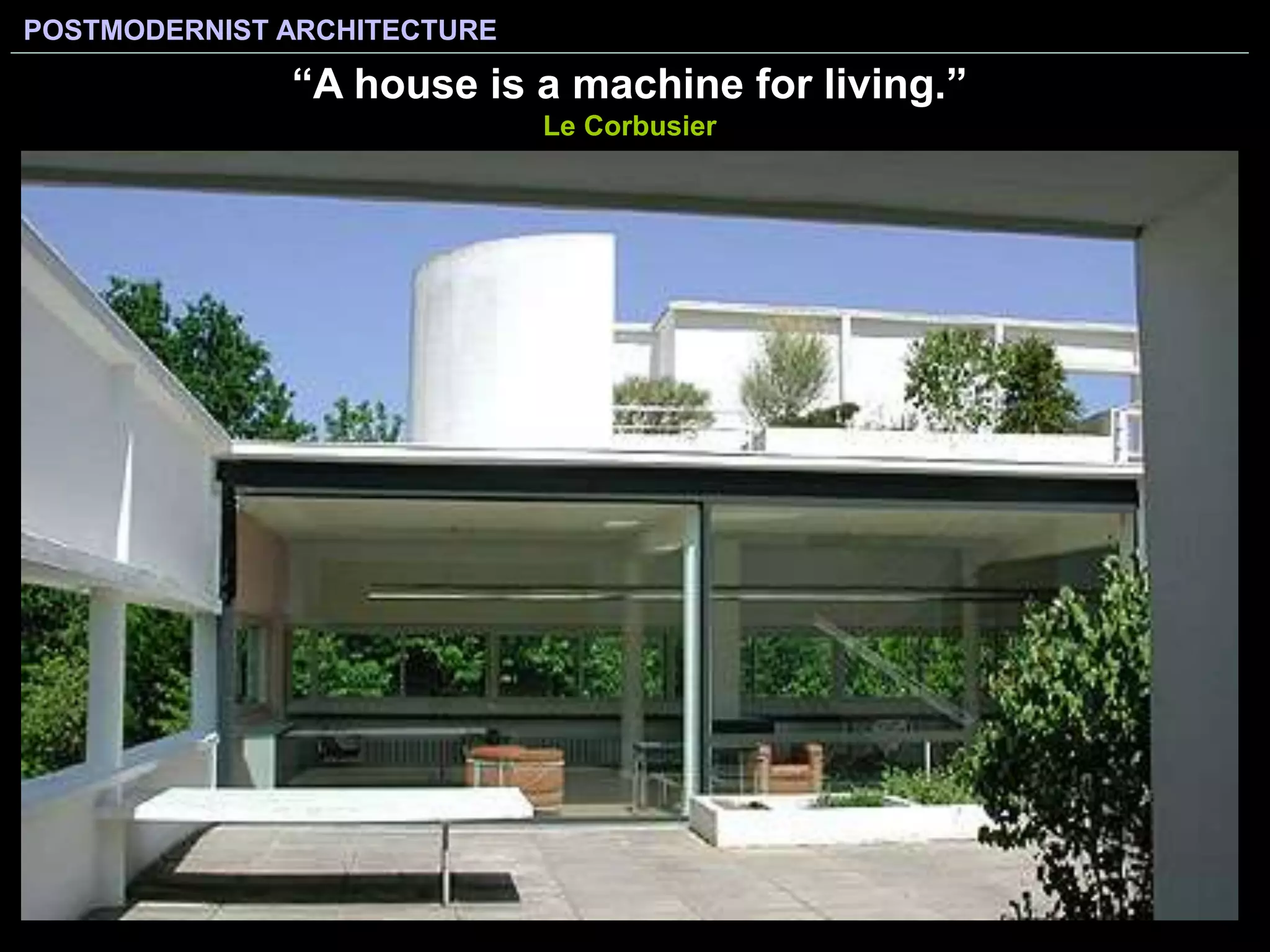
Villa Savoye is a country house he designed
supports his belief that a home should not need
load-bearing walls – the steel beams support
the structure, giving it much more space.
Le Corbusier, Villa Savoye, 1929.
MODERNIST ARCHITECTURE
(International Style)
POSTMODERNIST ARCHITECTURE
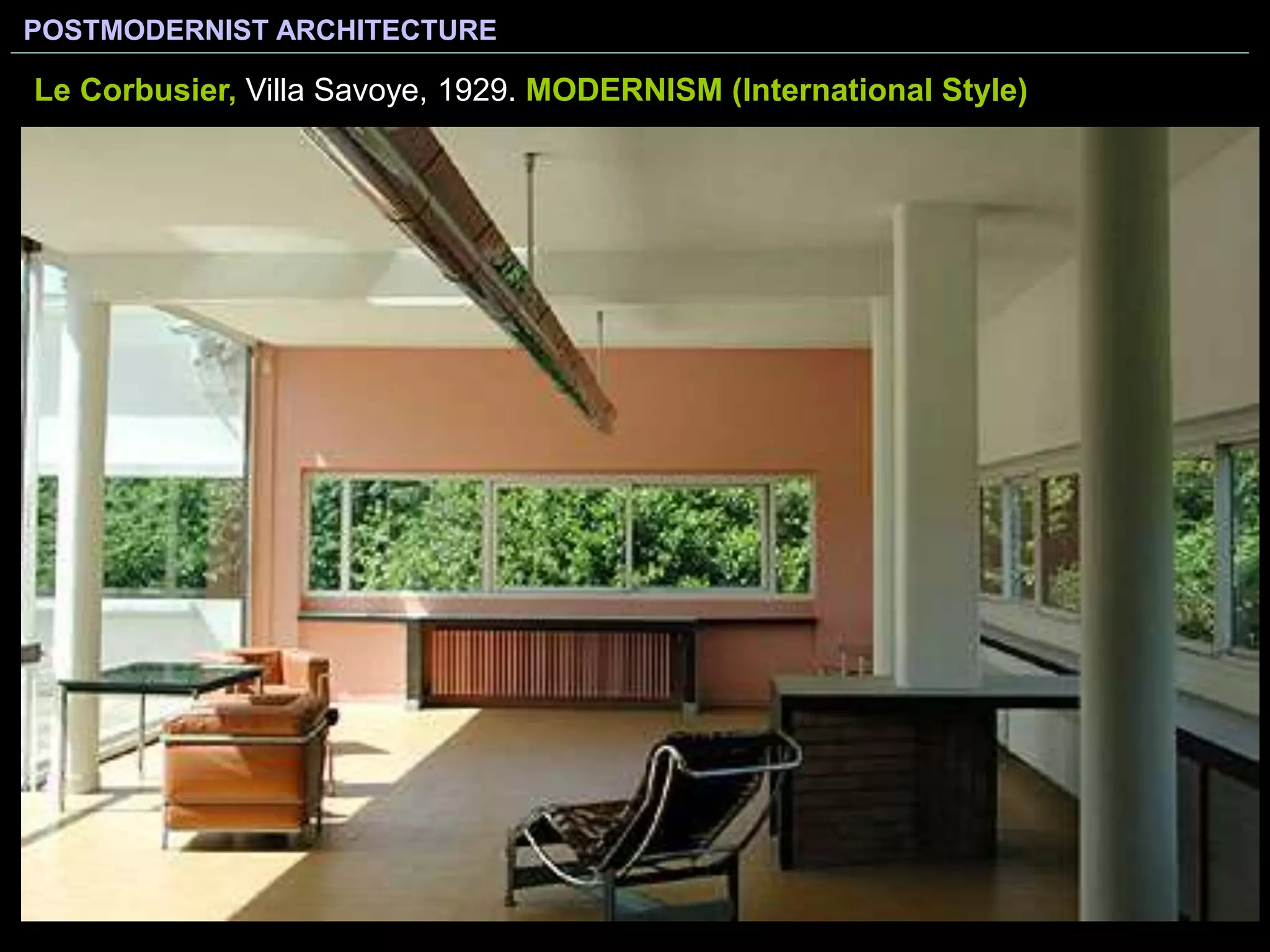
Le Corbusier, Villa Savoye, 1929. MODERNISM (International Style)
POSTMODERNIST ARCHITECTURE
“A house is a machine for living.”
Le Corbusier
POSTMODERNIST ARCHITECTURE
Le Corbusier, Villa Savoye, 1929. MODERNISM (International Style)
POSTMODERNIST ARCHITECTURE
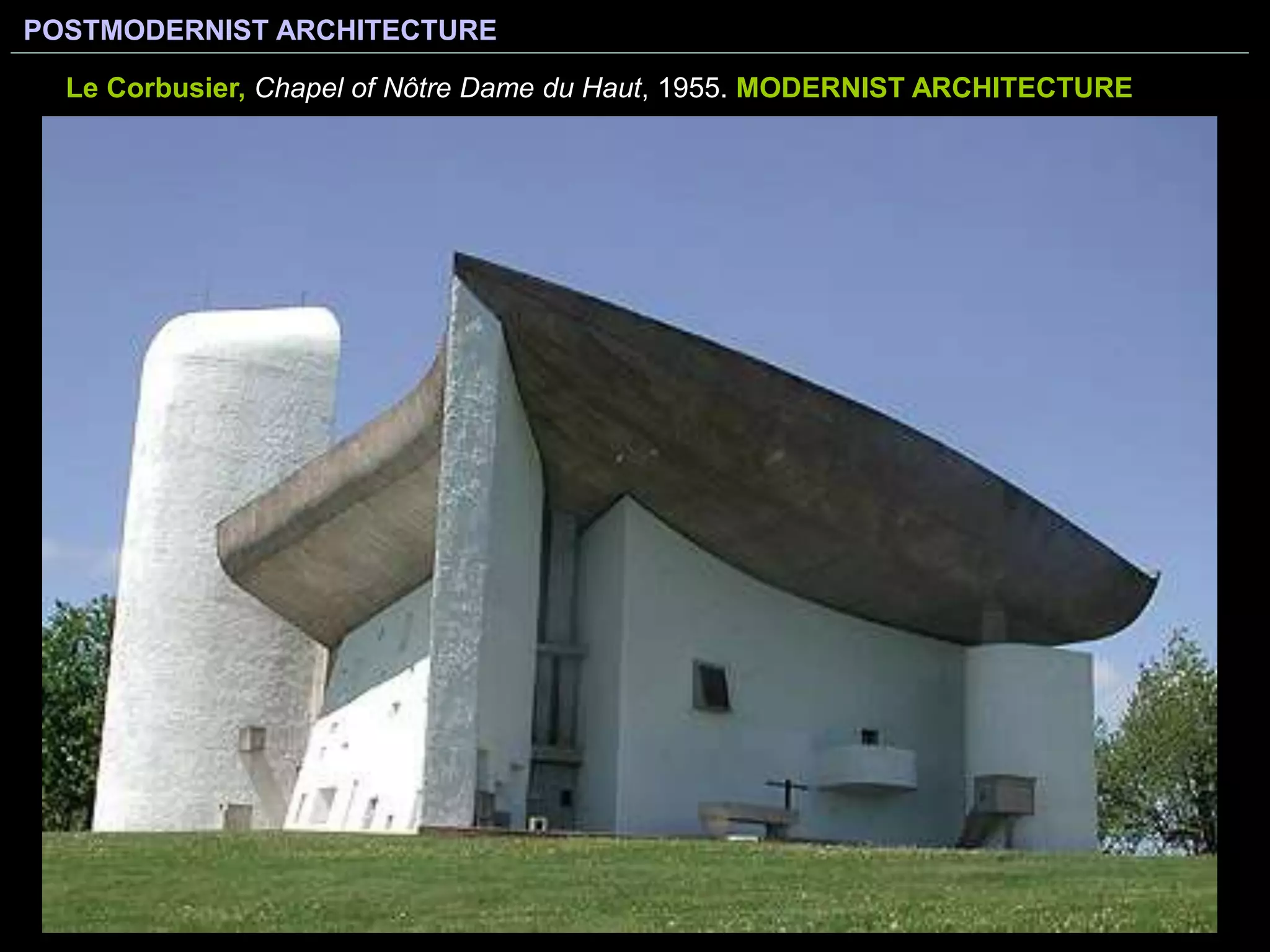
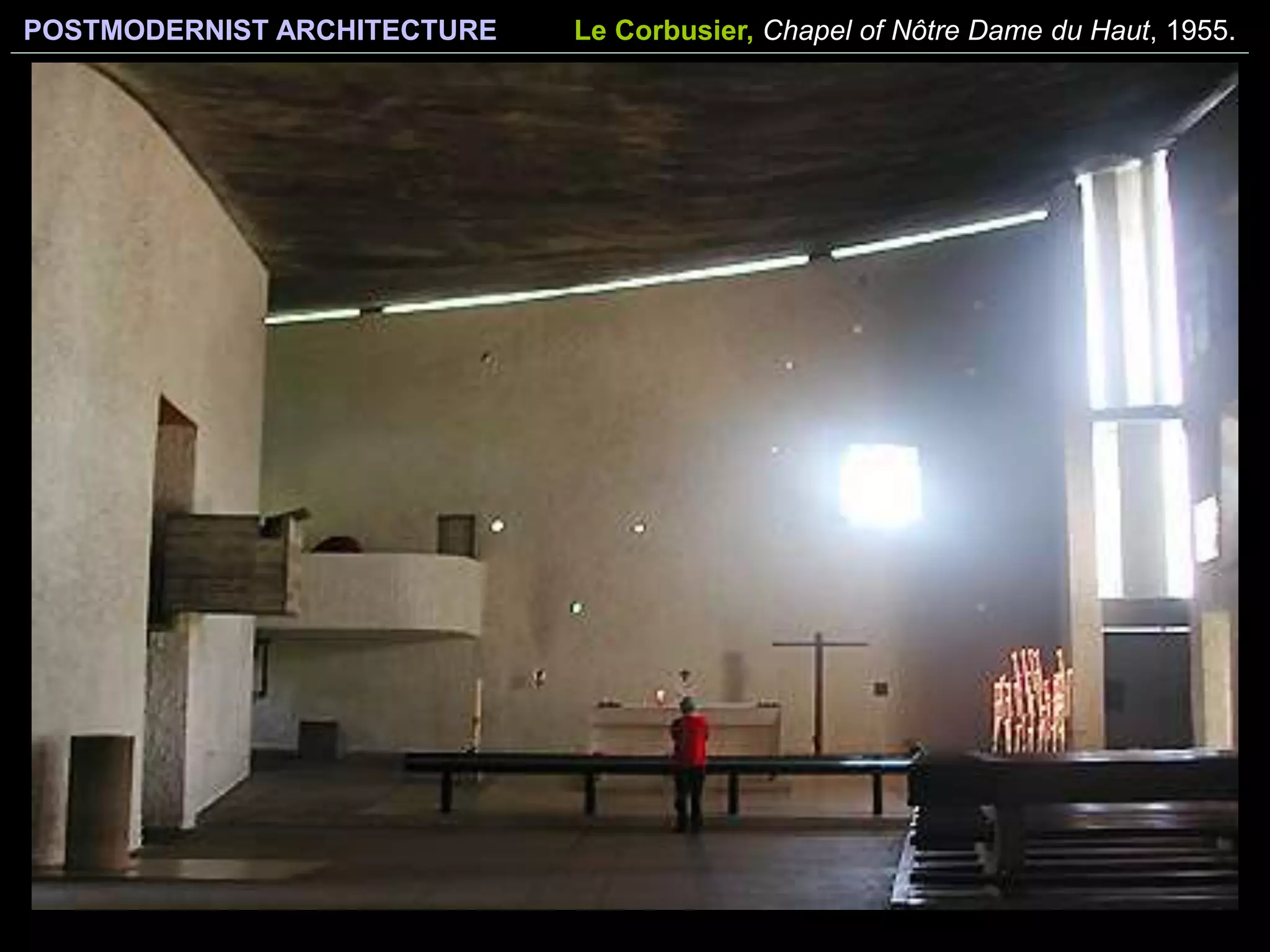
Le Corbusier, Chapel of Nôtre Dame du Haut, 1955. MODERNIST ARCHITECTURE
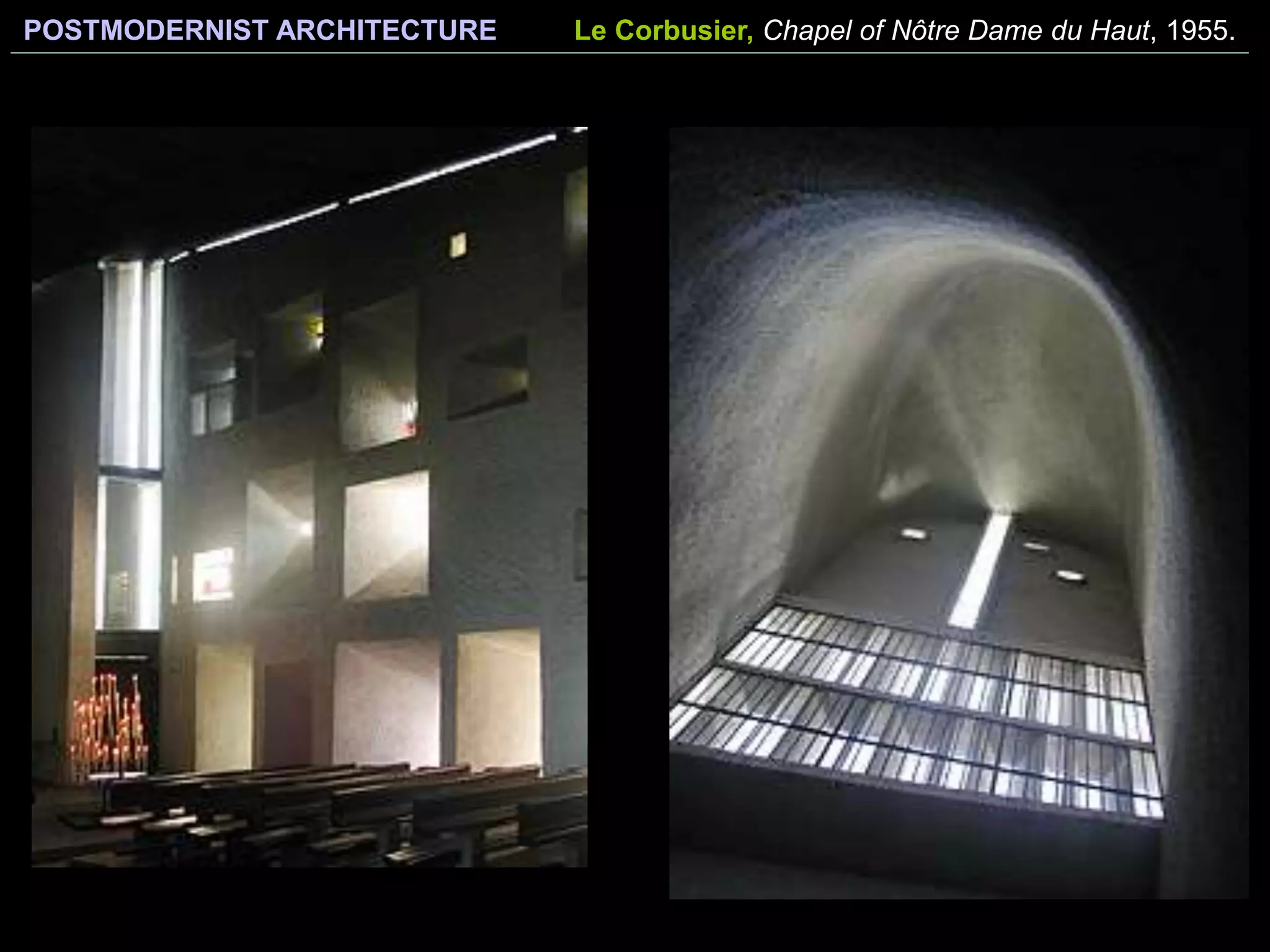
POSTMODERNIST ARCHITECTURE Le Corbusier, Chapel of Nôtre Dame du Haut, 1955.
POSTMODERNIST ARCHITECTURE
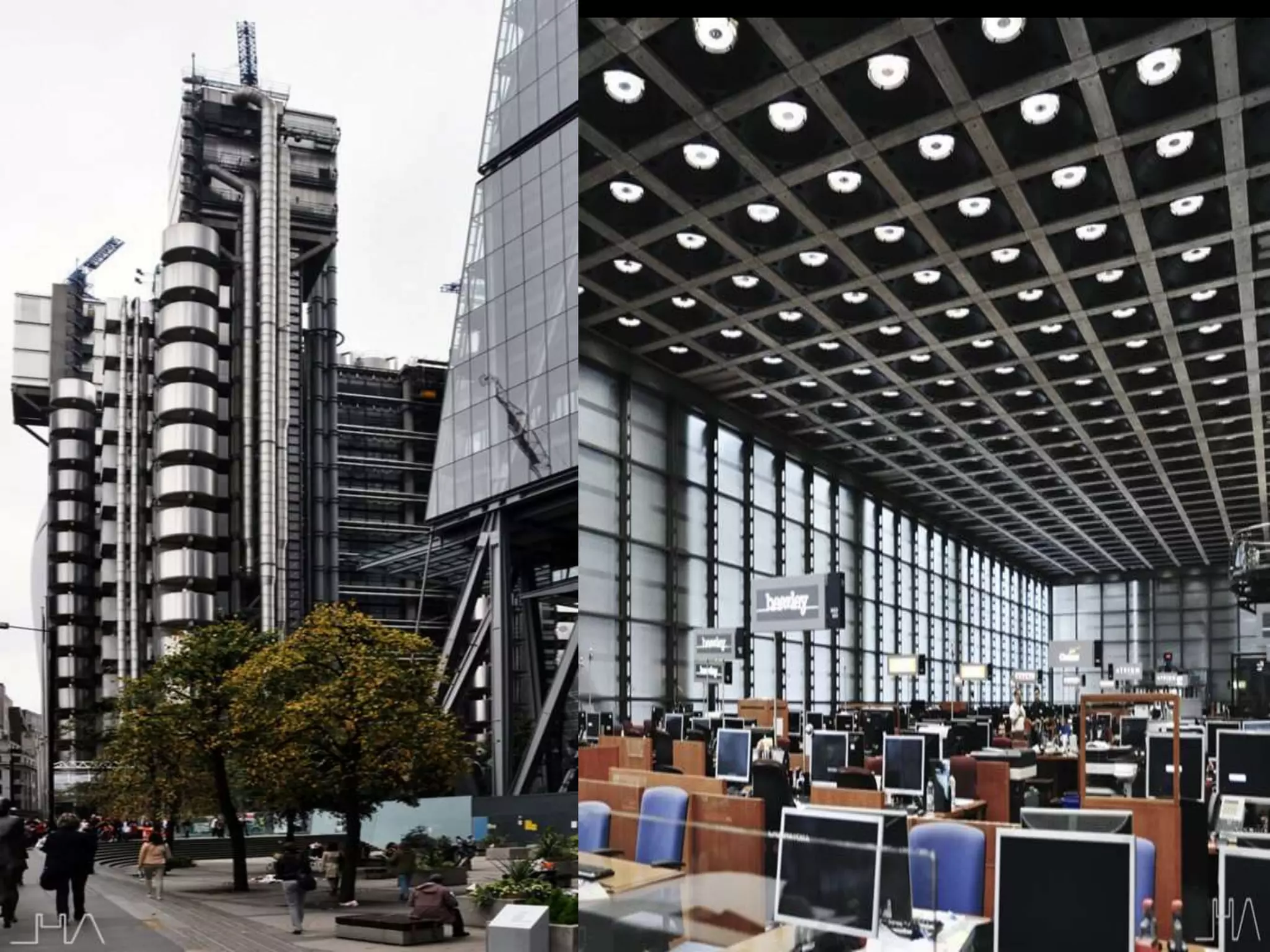
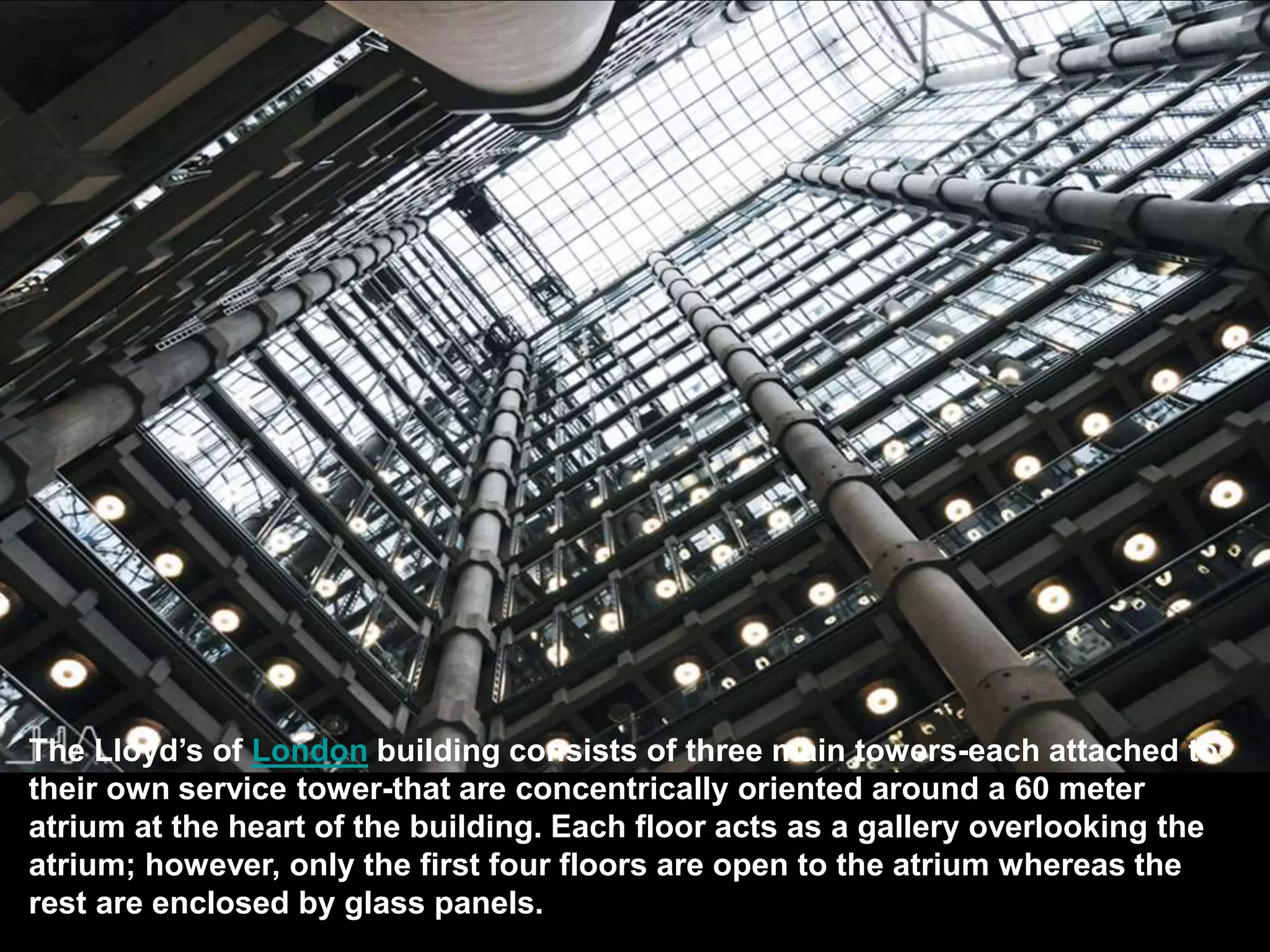
The Lloyd’s of London building consists of three main towers-each attached to
their own service tower-that are concentrically oriented around a 60 meter
atrium at the heart of the building. Each floor acts as a gallery overlooking the
atrium; however, only the first four floors are open to the atrium whereas the
rest are enclosed by glass panels.
POSTMODERNIST ARCHITECTURE
Richard Rogers |
London [1978-1986]
POSTMODERNIST ARCHITECTURE
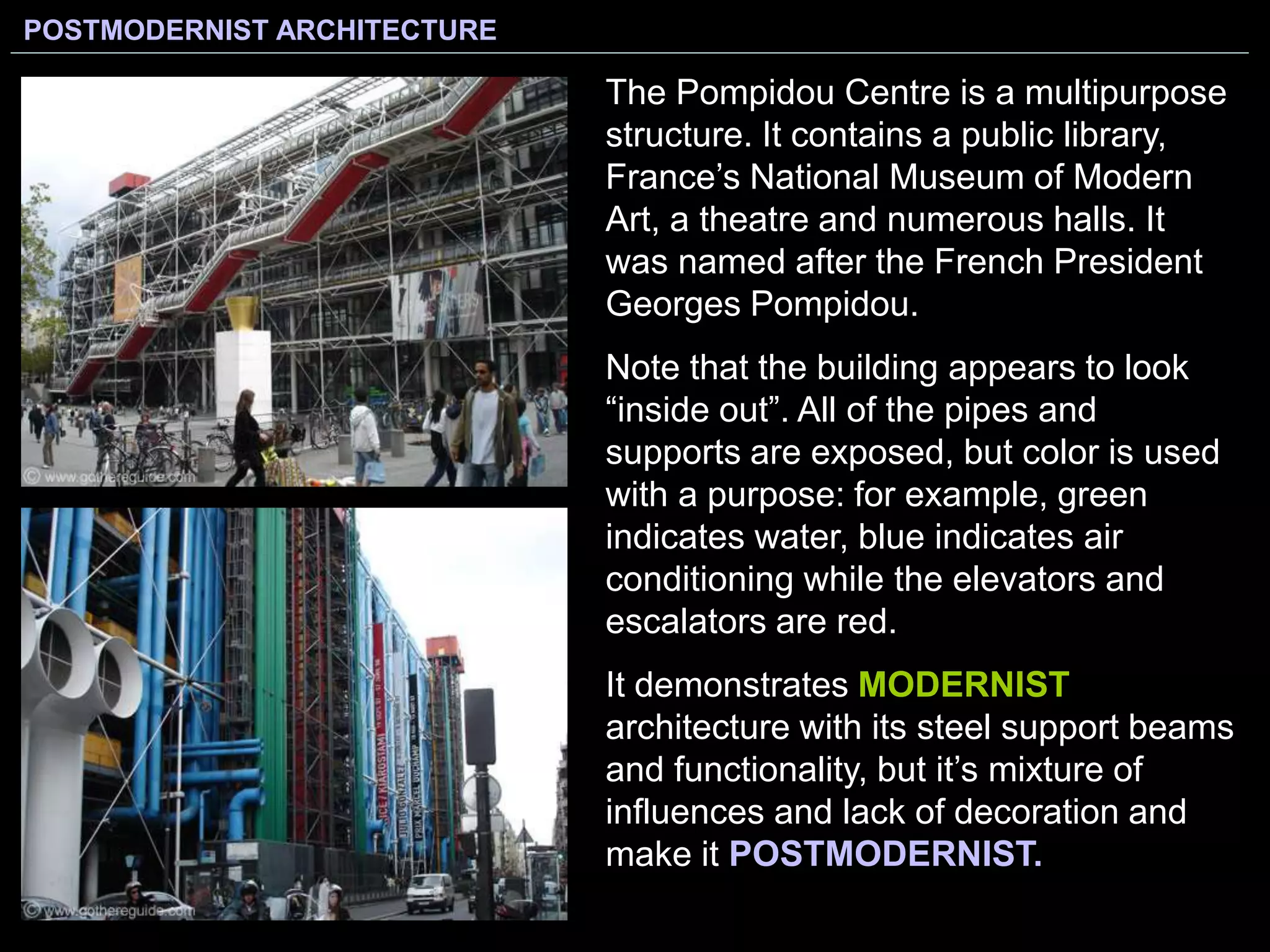
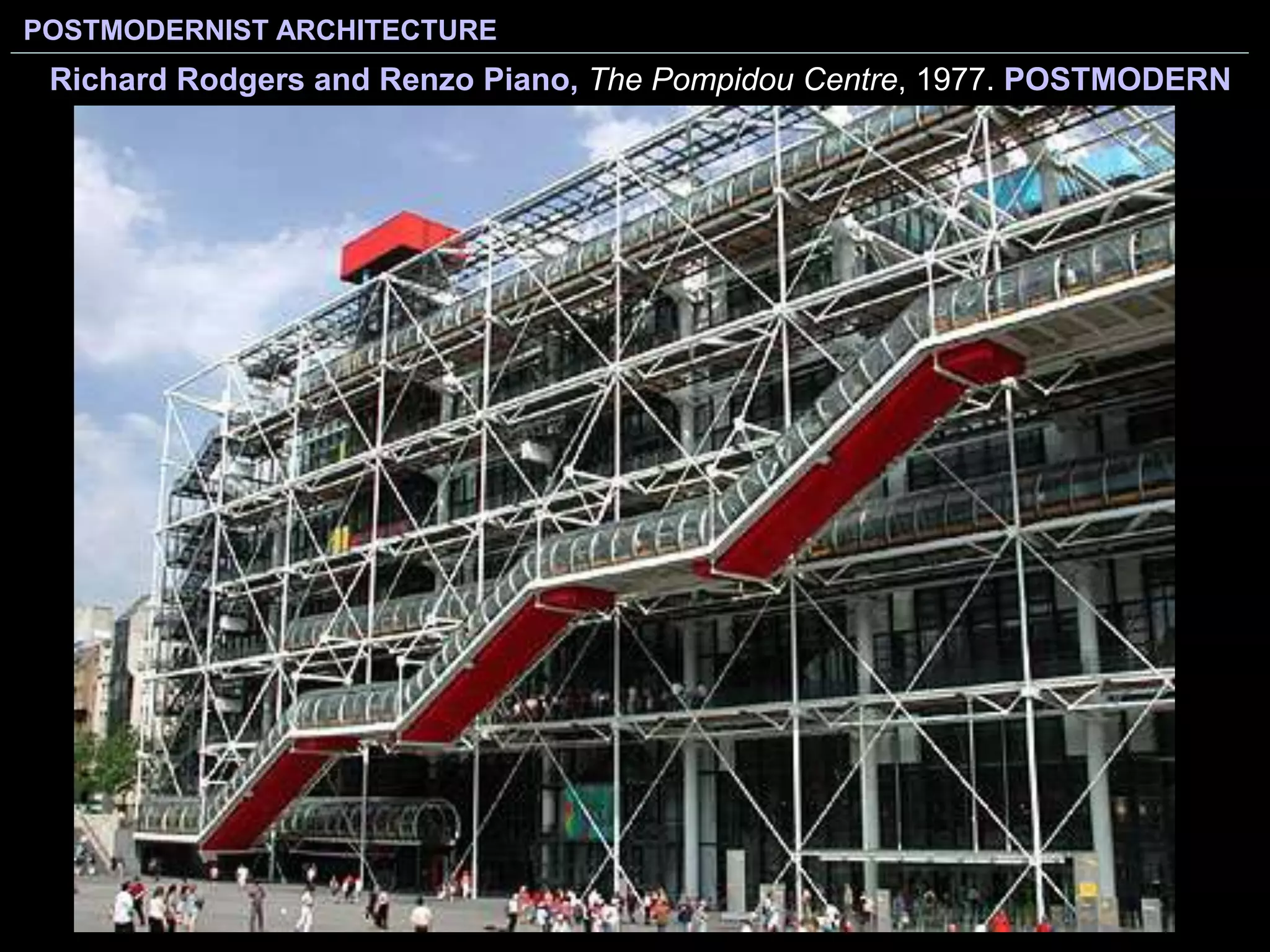
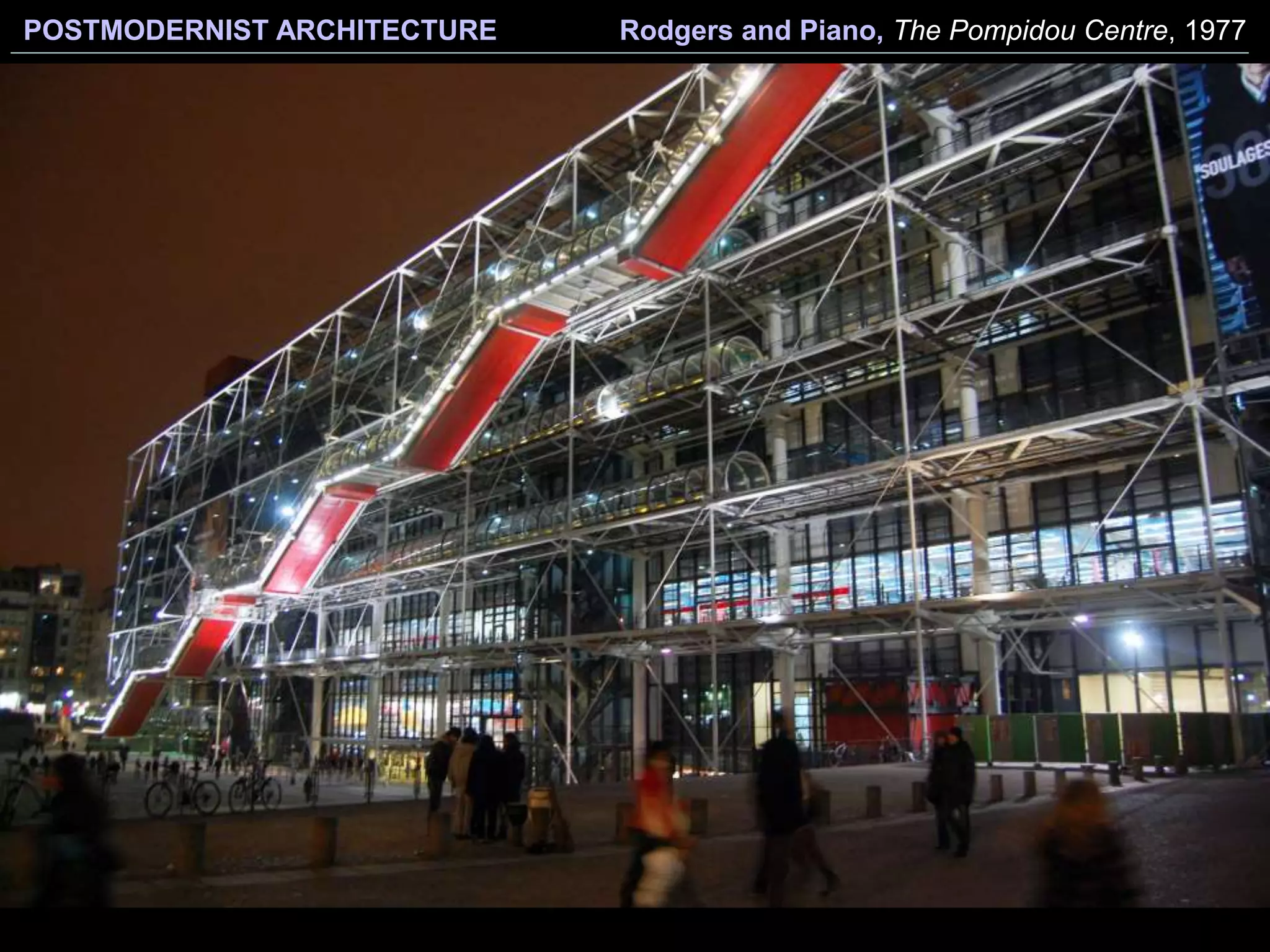
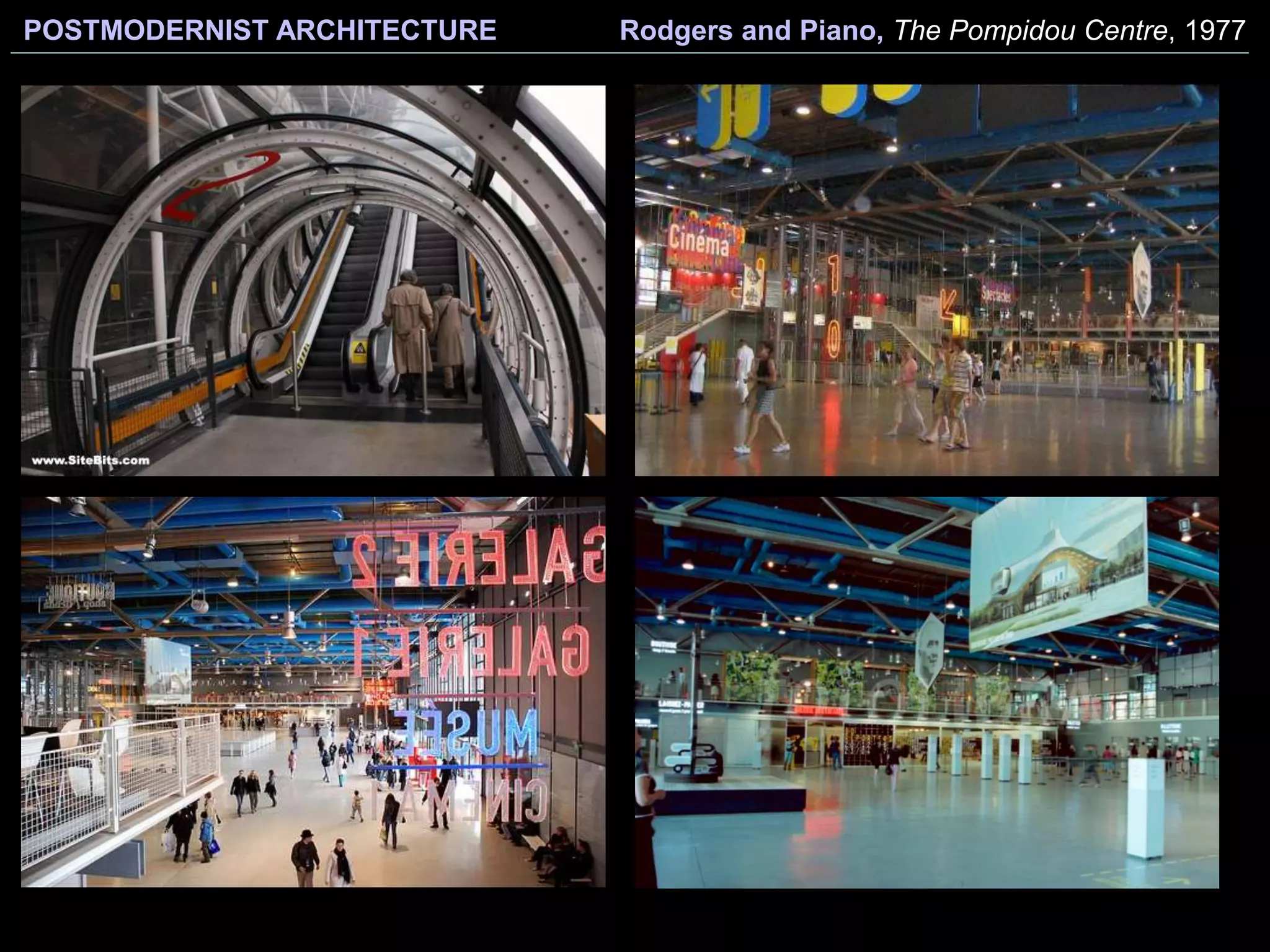
The Pompidou Centre is a multipurpose
structure. It contains a public library,
France’s National Museum of Modern
Art, a theatre and numerous halls. It
was named after the French President
Georges Pompidou.
Note that the building appears to look
“inside out”. All of the pipes and
supports are exposed, but color is used
with a purpose: for example, green
indicates water, blue indicates air
conditioning while the elevators and
escalators are red.
It demonstrates MODERNIST
architecture with its steel support beams
and functionality, but it’s mixture of
influences and lack of decoration and
make it POSTMODERNIST.
POSTMODERNIST ARCHITECTURE
Richard Rodgers and Renzo Piano, The Pompidou Centre, 1977. POSTMODERN
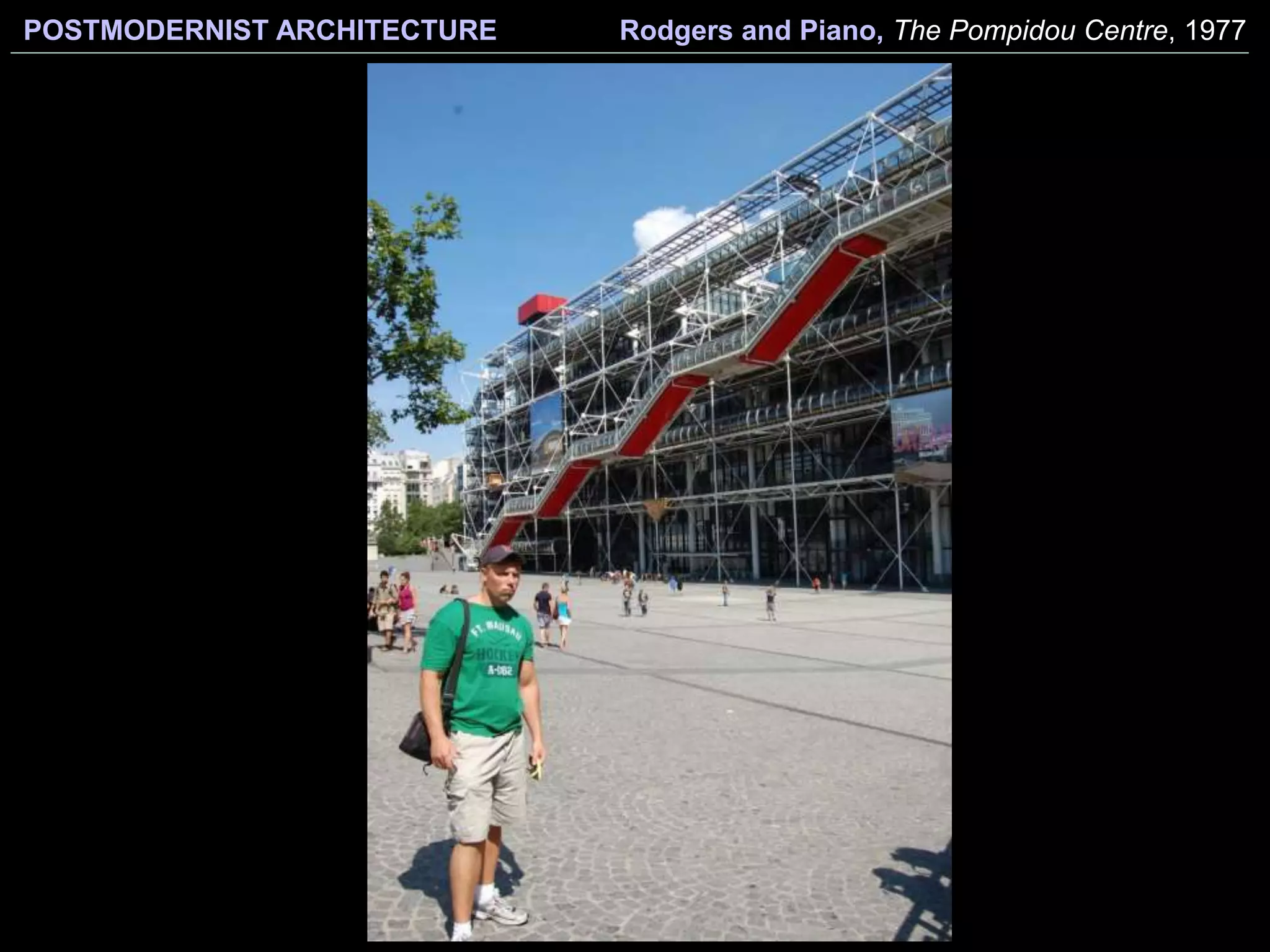
POSTMODERNIST ARCHITECTURE Rodgers and Piano, The Pompidou Centre, 1977
POSTMODERNIST ARCHITECTURE
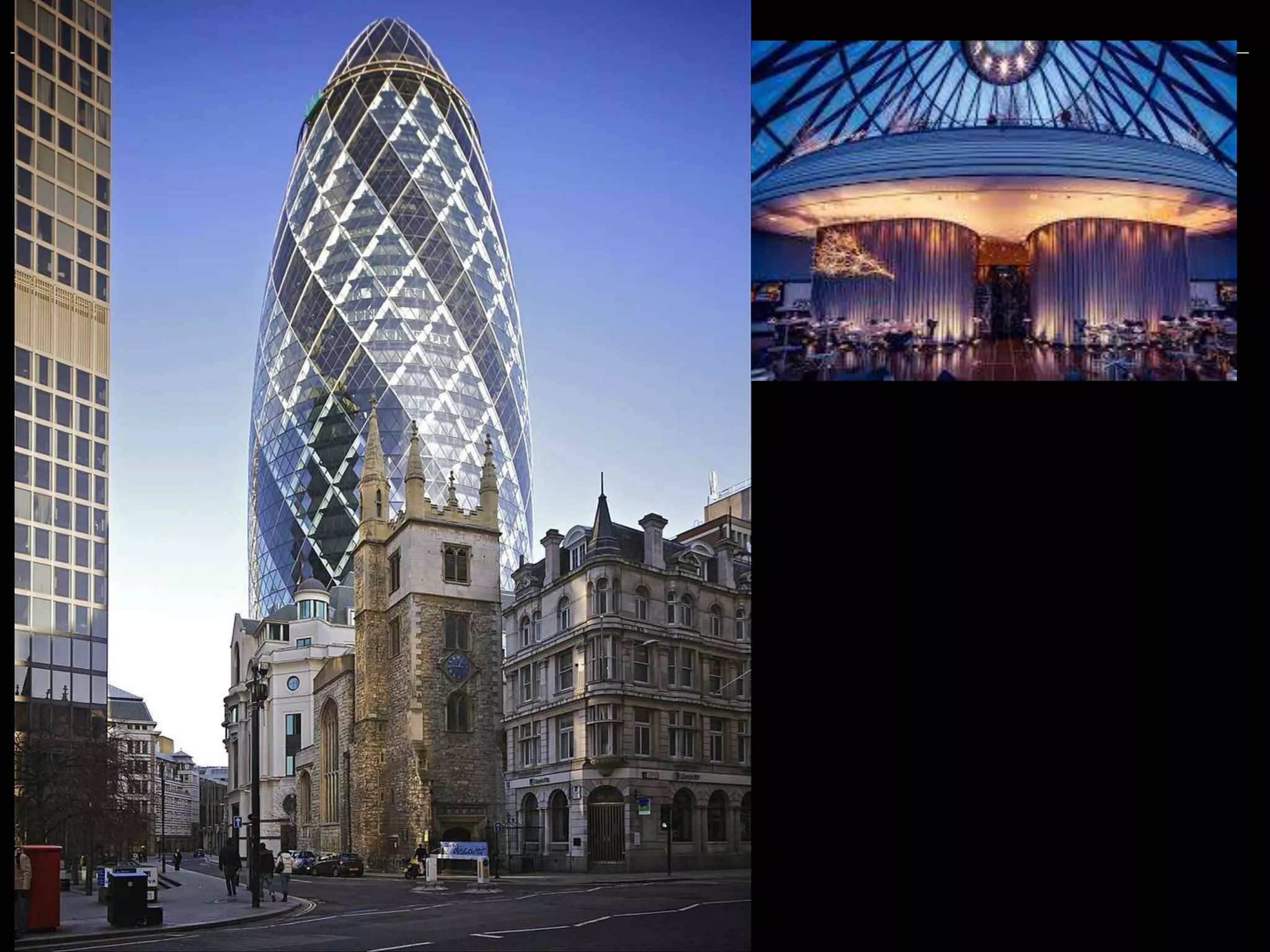
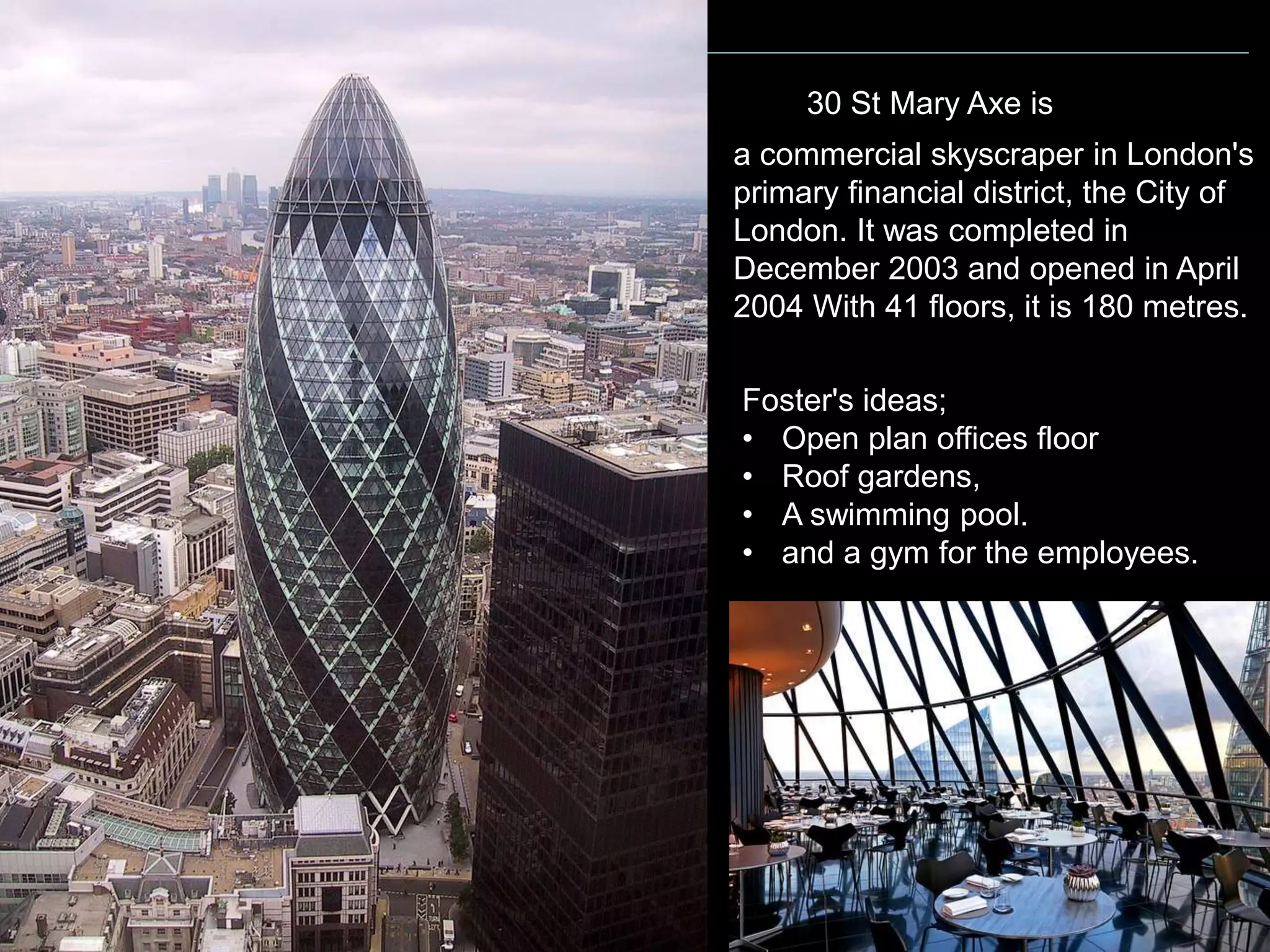
a commercial skyscraper in London's
primary financial district, the City of
London. It was completed in
December 2003 and opened in April
2004 With 41 floors, it is 180 metres.
Foster's ideas;
• Open plan offices floor
• Roof gardens,
• A swimming pool.
• and a gym for the employees.
30 St Mary Axe is
POSTMODERNIST ARCHITECTURE
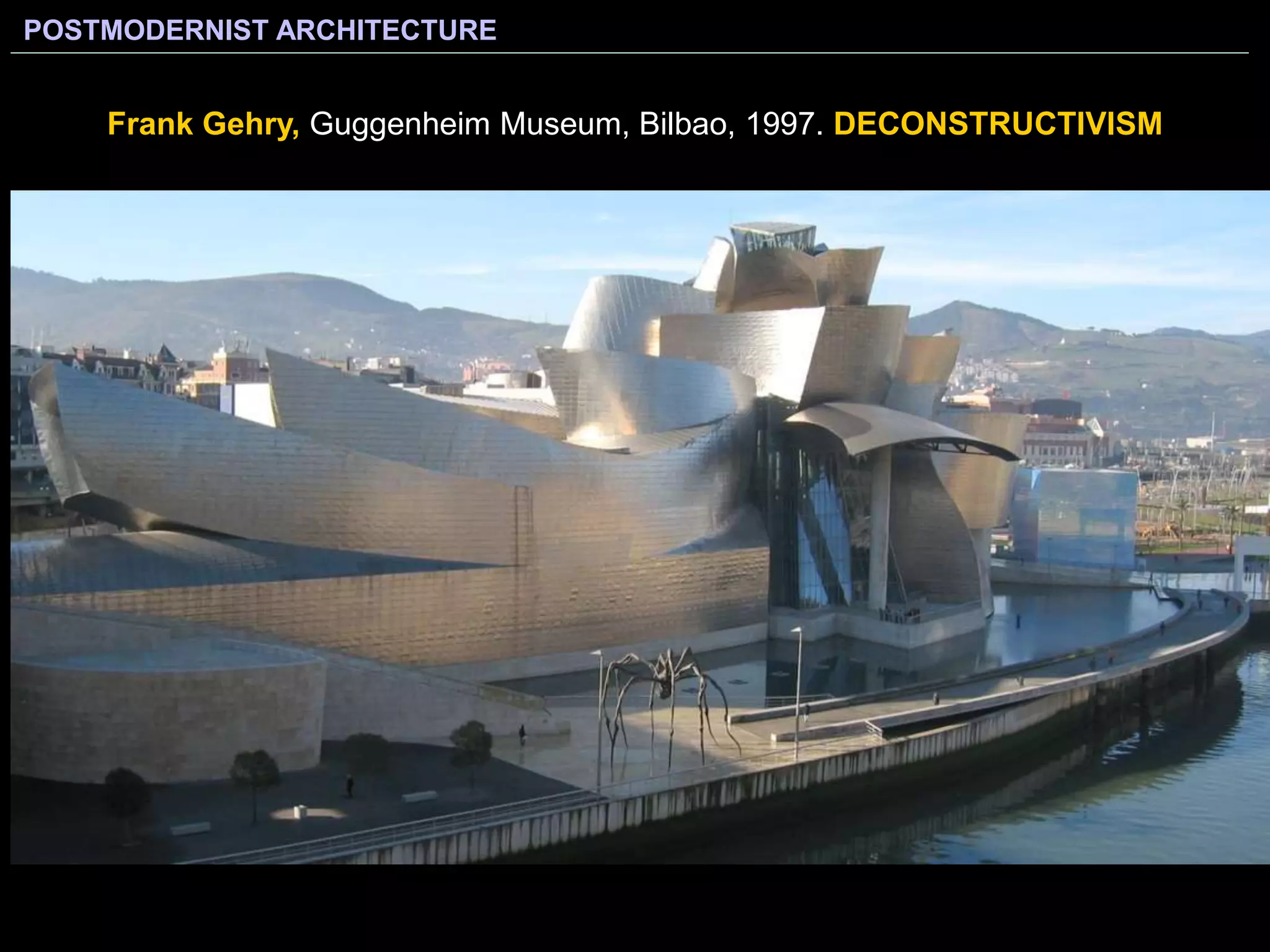
Frank Gehry, Guggenheim Museum, Bilbao, 1997. DECONSTRUCTIVISM
POSTMODERNIST ARCHITECTURE
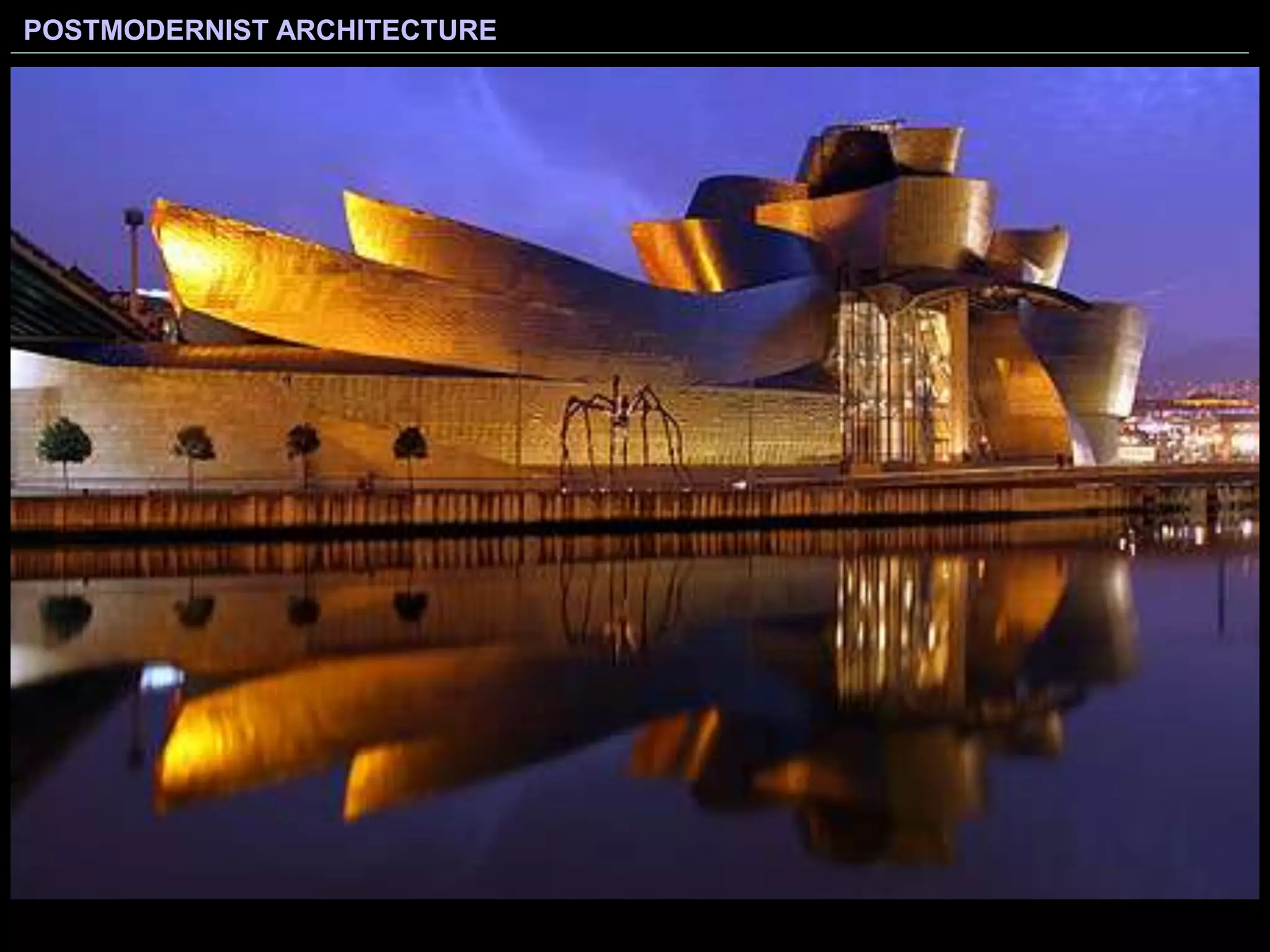
Frank Gehry used titanium
on the outside to imply fish
scales since fishing is a part
of bilbao’s economy. (Note
the long ship-like form of the
building, too.) This type of
work is often considered
deconstructivist since it’s
goal is to eliminate
continuous lines and normal
shapes.
POSTMODERNIST ARCHITECTURE

section20_PostModernArch_.ppt