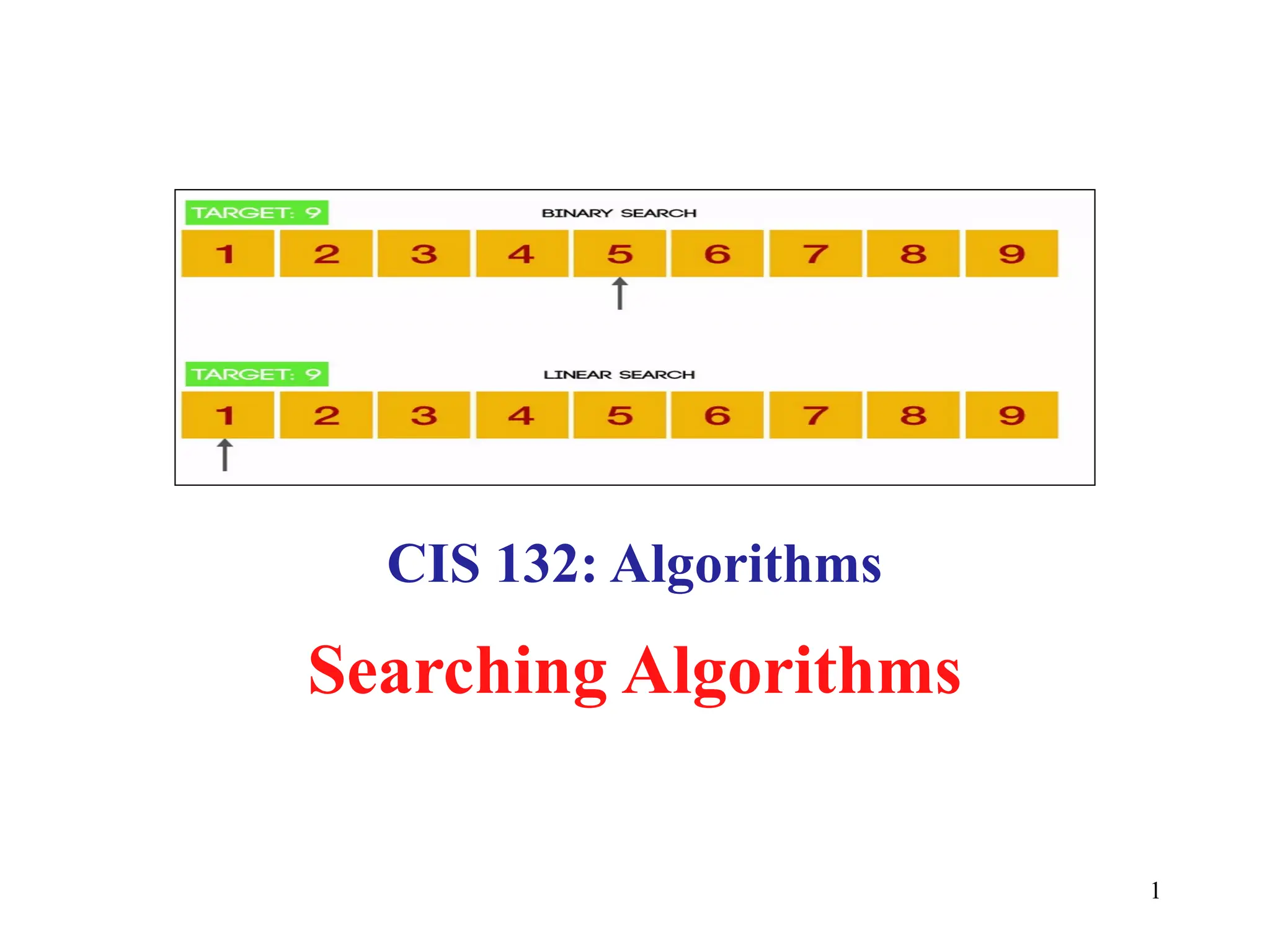
Searching Algorithms
5
▪ Searchfor a target data from a data set.
▪ Searching Algorithms are designed to check for an
element or retrieve an element from any data structure
where it is stored.
▪ Two possible outcomes
▪ Target data is Found (Success)
▪ Target data is not Found (Failure)
6.
Types of SearchingAlgorithms
6
▪ Based on the type of search operation, two popular
algorithms available:
1. Linear Search / Sequential Search
2. Binary Search
7.
1. Linear Search
7
▪It is also known as Sequential Search
▪ Linear search is a very basic and simple search algorithm.
▪ The data list or array is traversed sequentially and every
element is checked.
8.
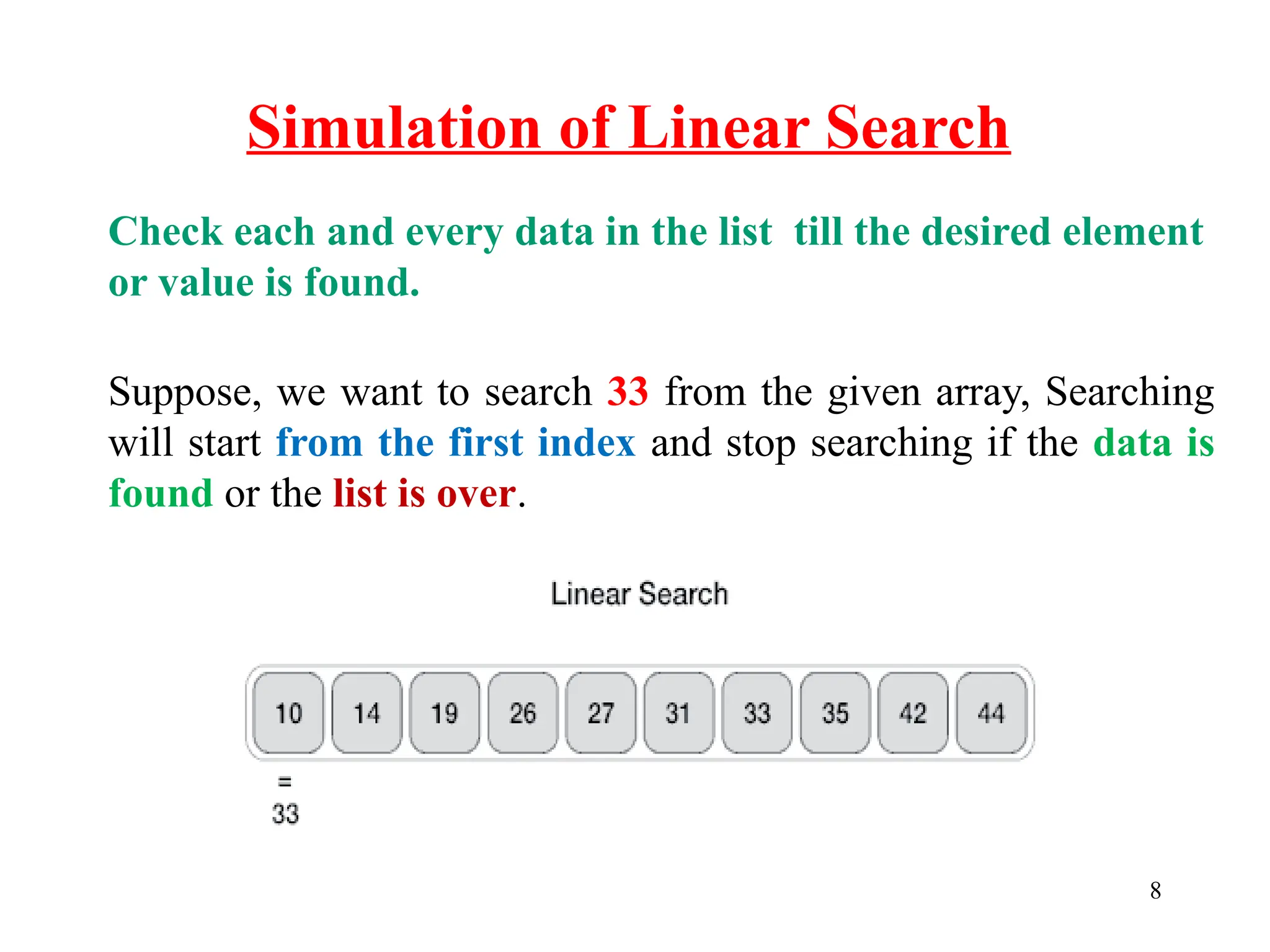
Simulation of LinearSearch
8
Check each and every data in the list till the desired element
or value is found.
Suppose, we want to search 33 from the given array, Searching
will start from the first index and stop searching if the data is
found or the list is over.
9.
Algorithm of LinearSearch
9
Algorithm:
i = 1
while i <= n && Z != X[i]
do
i = i+1
if i <= n then
FOUND
else
NOT FOUND
flag = FALSE
for i = 1 to n
if A[i] == key
flag = TRUE;
if flag == TRUE
FOUND
else
NOT FOUND
10.
Complexity Analysis ofLinear Search
10
Algorithm:
flag = FALSE
for i = 1 to n
if A[i] == key
flag = TRUE;
if flag == TRUE
FOUND
else
NOT FOUND
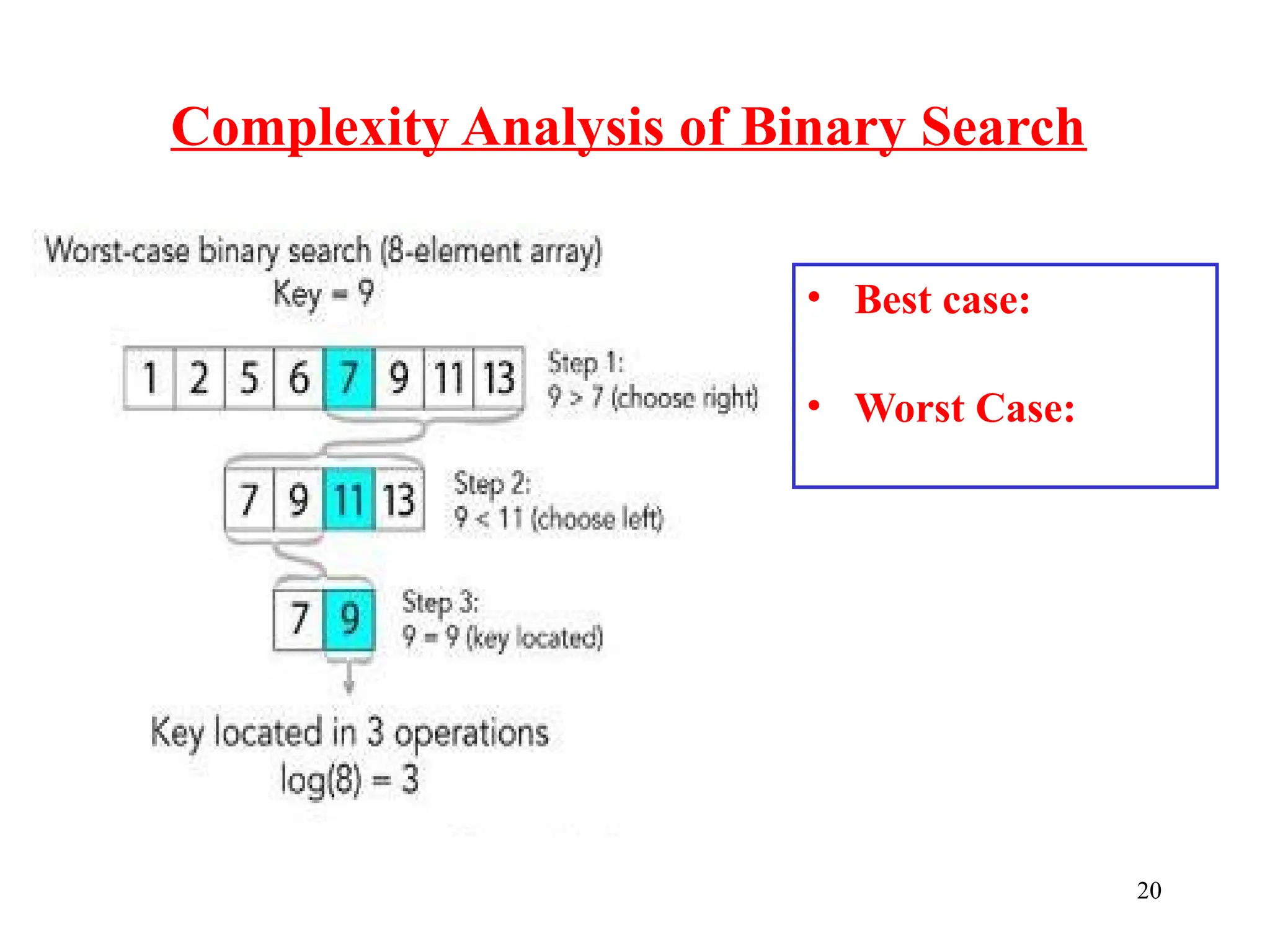
• Best case: O(1)
• Worst Case: O(n)
11.
Features of LinearSearch Algorithm
11
▪ It is used for unsorted and unordered small list of
elements.
▪ It has a time complexity of O(n), which means the time is
linearly dependent on the number of elements, which is
not bad, but not that good too.
▪ It has a very simple implementation.
12.
2. Binary Search
12
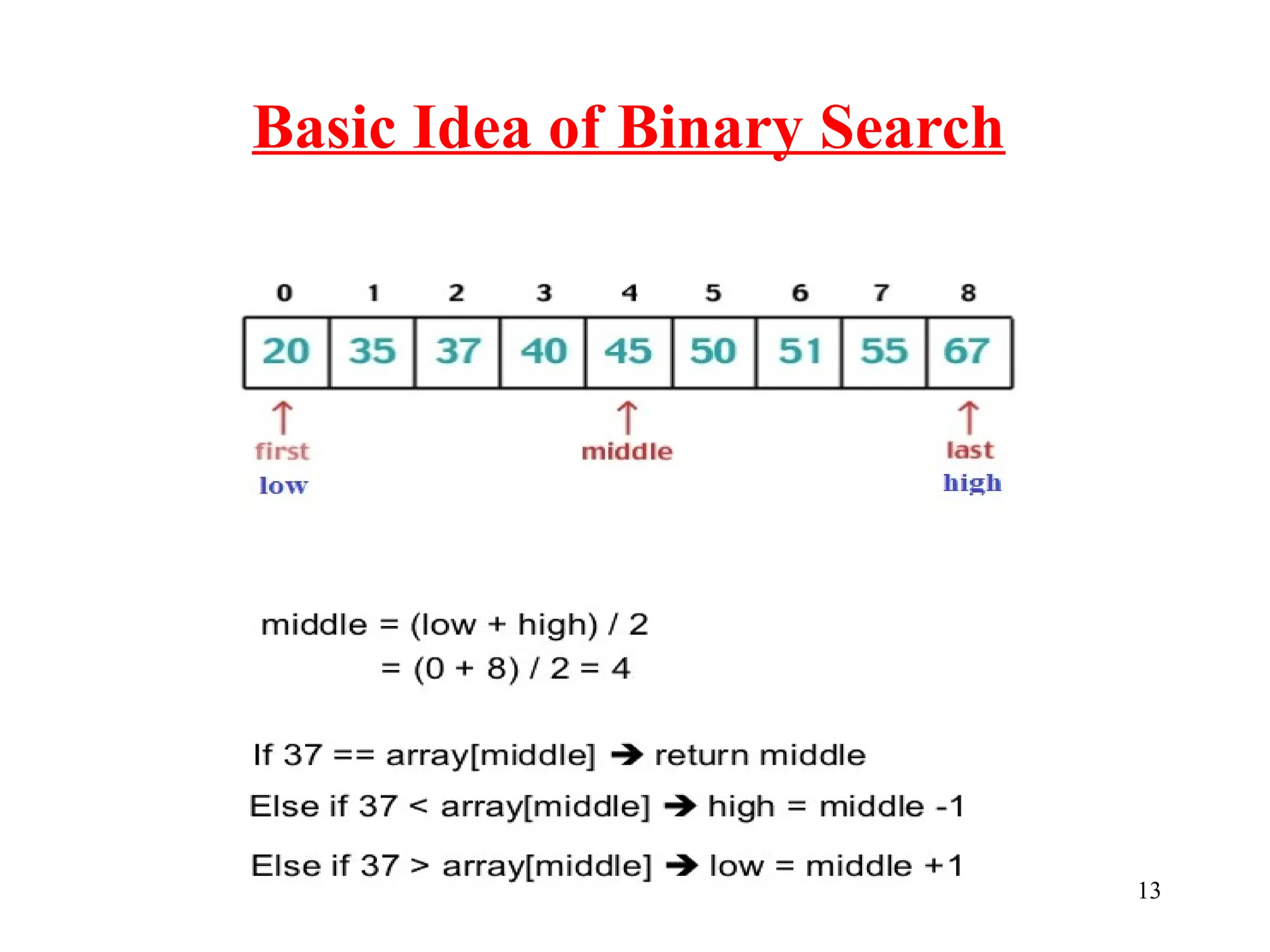
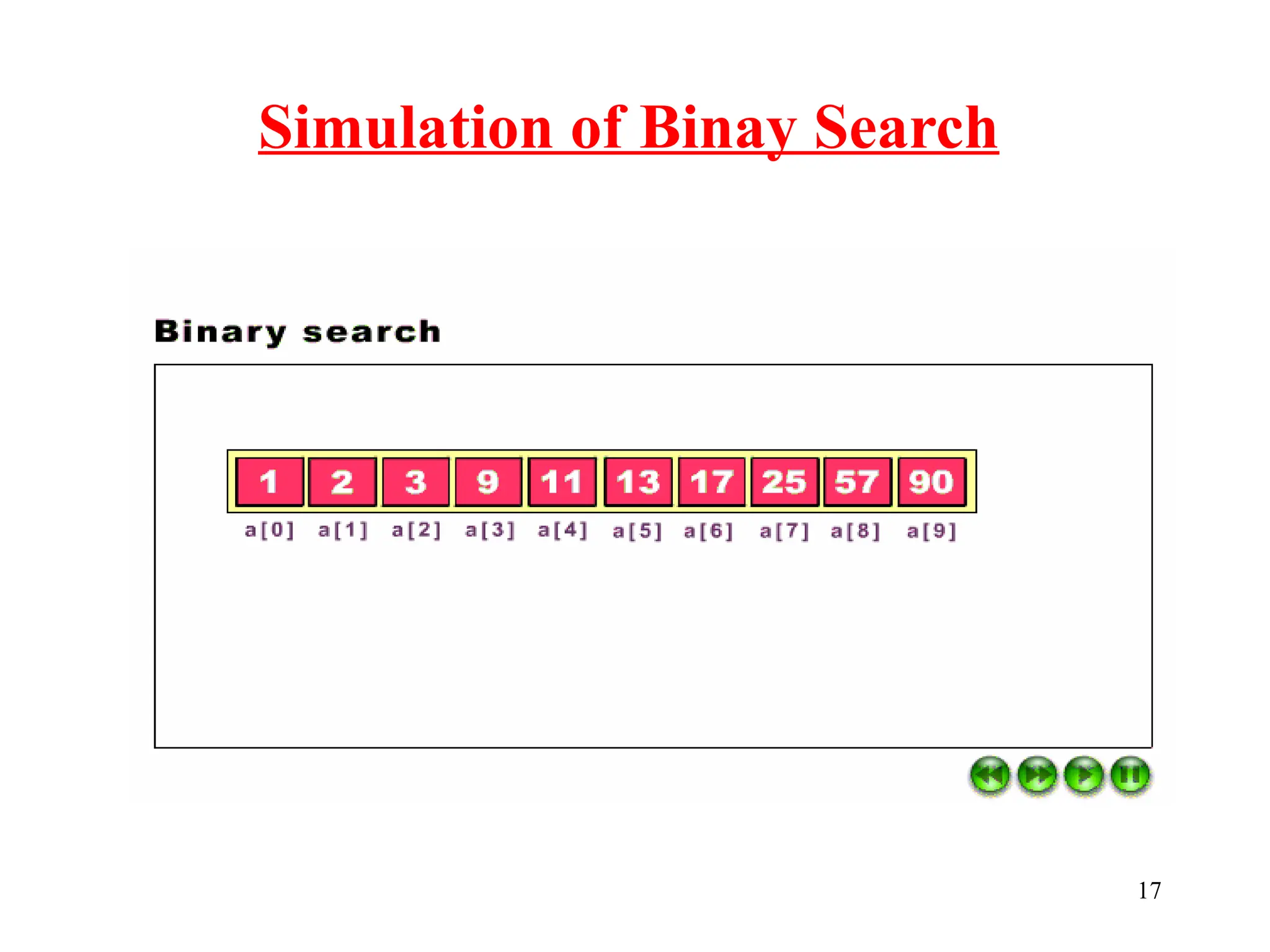
▪Binary Search is used with sorted array or list.
▪ In binary search, we follow the following steps:
– We start by comparing the element to be searched with the element in the
middle of the list/array.
– If we get a match, we return the index of the middle element.
– If we do not get a match, we check whether the element to be searched is less
or greater than in value than the middle element.
– If the element/number to be searched is greater in value than the middle
number, then we pick the elements on the right side of the middle element (as
the list/array is sorted, hence on the right, we will have all the numbers greater
than the middle number), and start again from the step 1.
– If the element/number to be searched is lesser in value than the middle number,
then we pick the elements on the left side of the middle element, and start again
from the step 1.
Algorithm of BinarySearch
18
Algorithm: low = 1 //[Start position]
high = n //[Last position]
flag = false
while low <= high and flag = = false do
mid = (l+h) / 2
Xm = A[mid]
case:
Xm < Z : low = mid + 1
Xm > Z : high = mid - 1
Xm = = Z : flag = true
if flag = = true
FOUND
else
NOT FOUND
19.
19
low = 0
high= n-1
flag = false
while low <= high and flag = = false do
mid = (low +high) / 2
Xm = A[mid]
case:
Xm < Z : low = mid
+ 1
Xm > Z : high = mid
- 1
Xm = = Z : flag = true
if flag = = true
FOUND
else
NOT FOUND
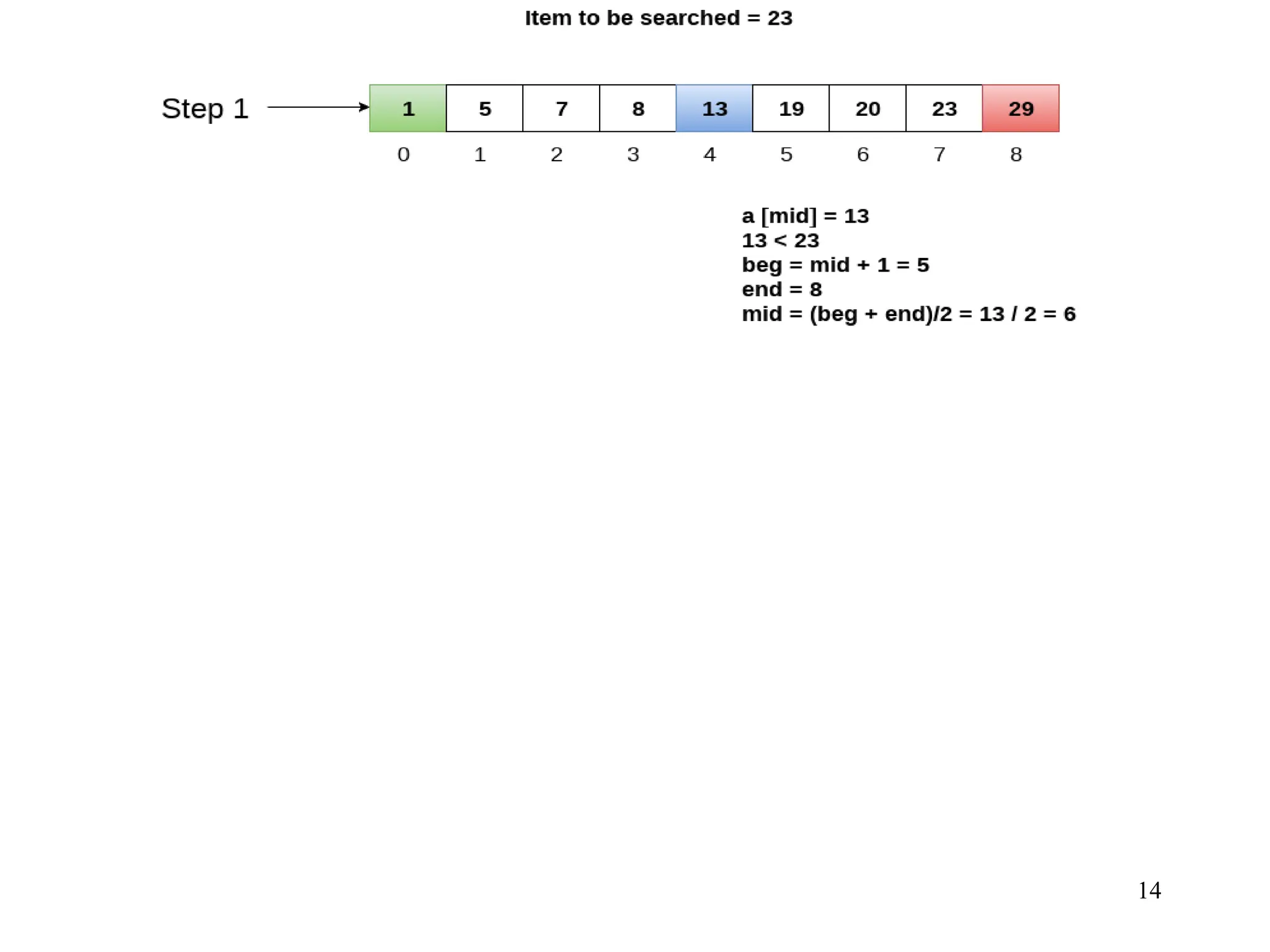
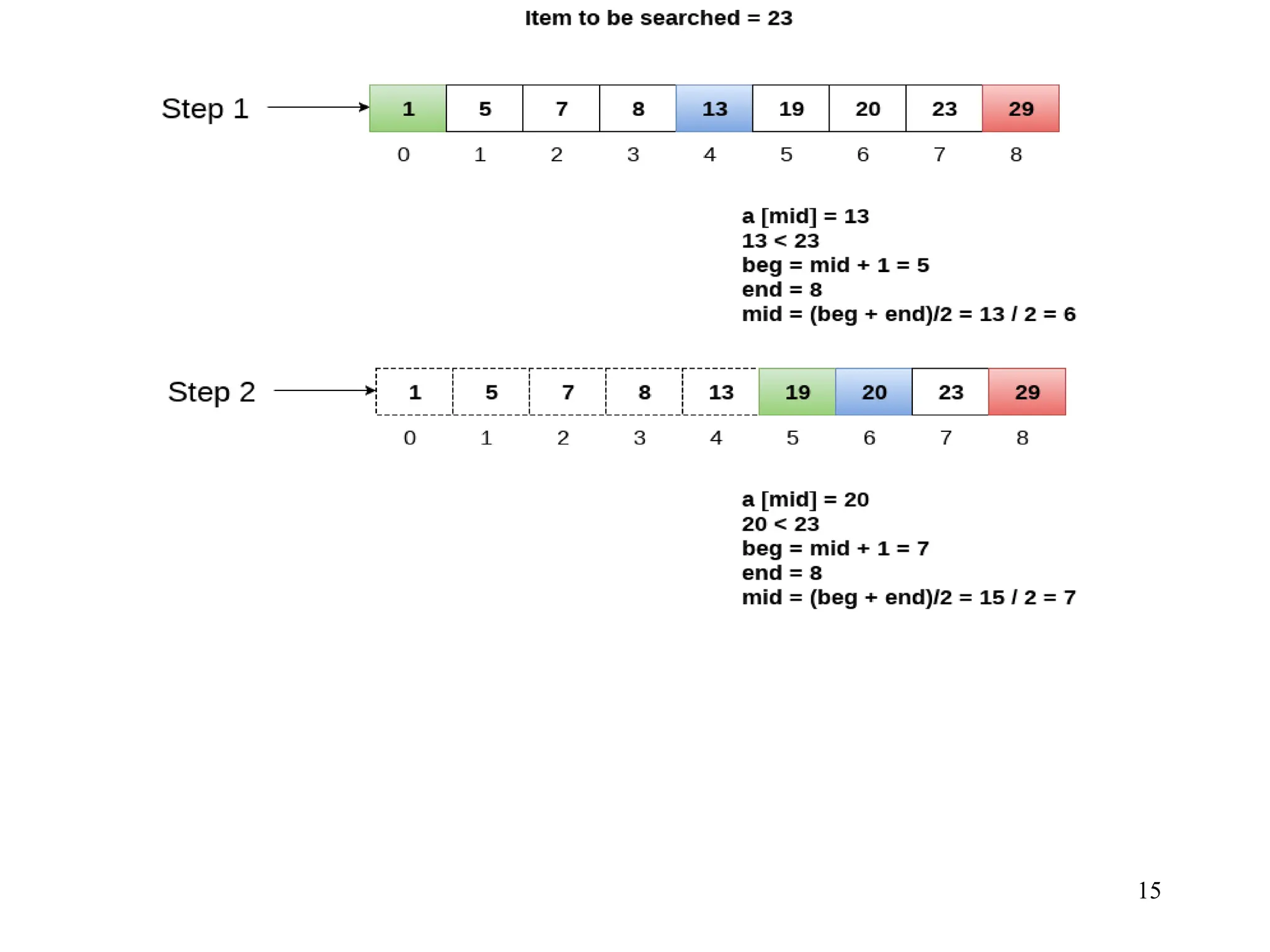
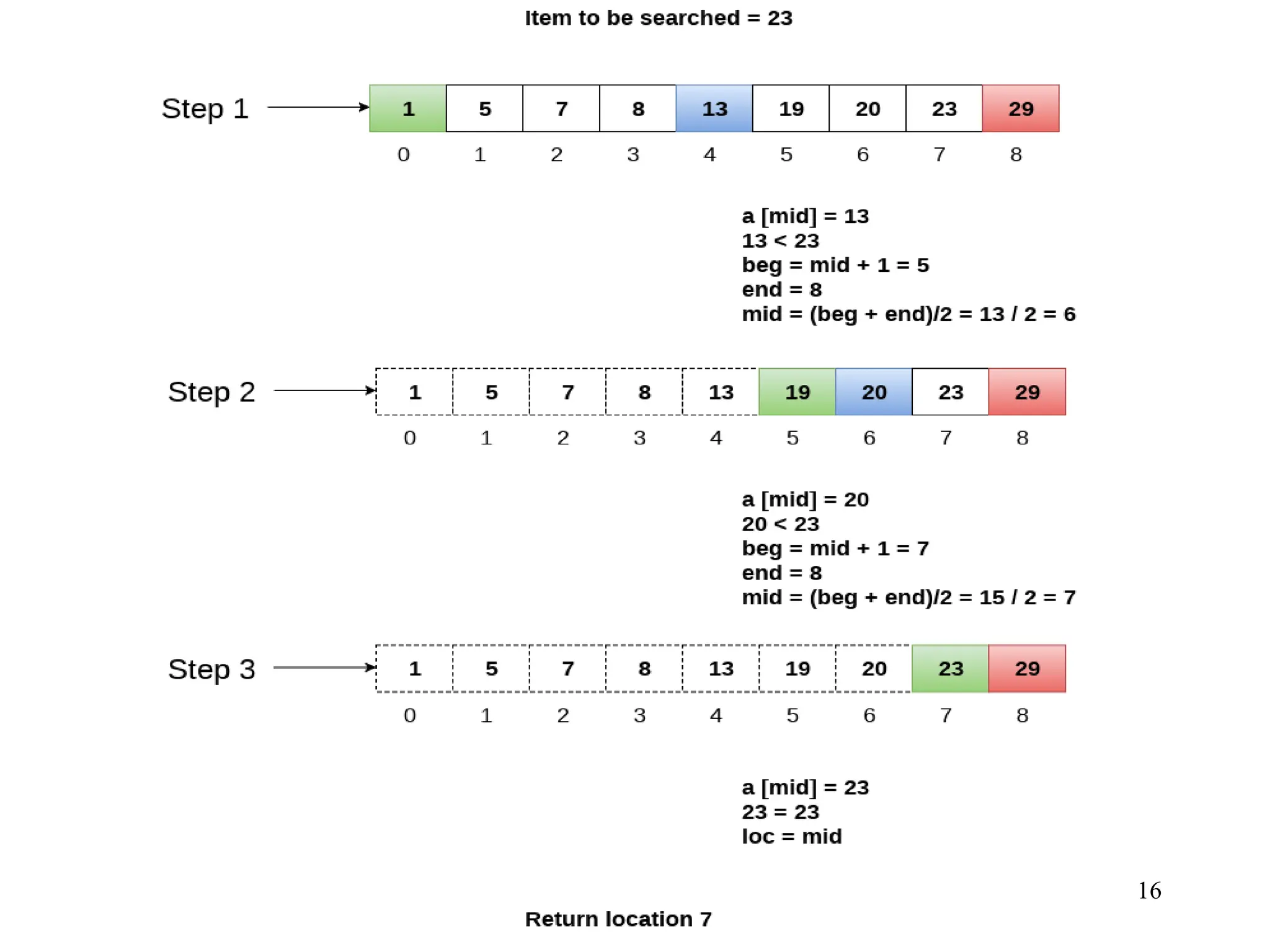
Step-1: mid = (low + high ) / 2 = (0 + 8) /2 = 4
A[mid] = 45 < 55
low = mid + 1 = 5
mid low
Step-2: mid = (low + high ) / 2 = (5 + 8) /2 = 6
A[mid] = 51 < 55
low = mid + 1 = 7
low
Step-3: mid = (low + high ) / 2 = (7 + 8) /2 = 7
A[mid] = 55 == 55
found
mid
mid
Search 55
Features of BinarySearch
21
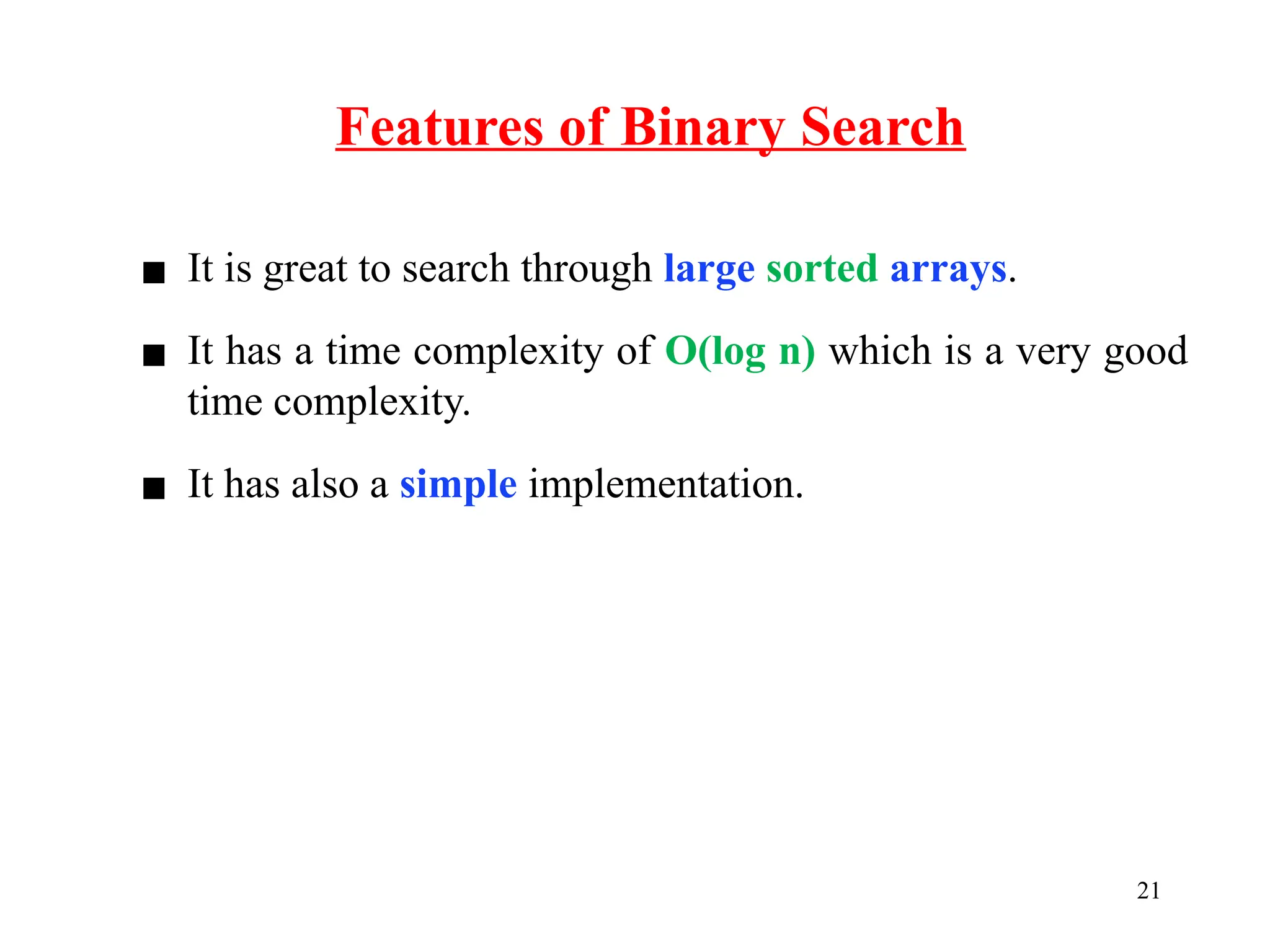
▪ It is great to search through large sorted arrays.
▪ It has a time complexity of O(log n) which is a very good
time complexity.
▪ It has also a simple implementation.
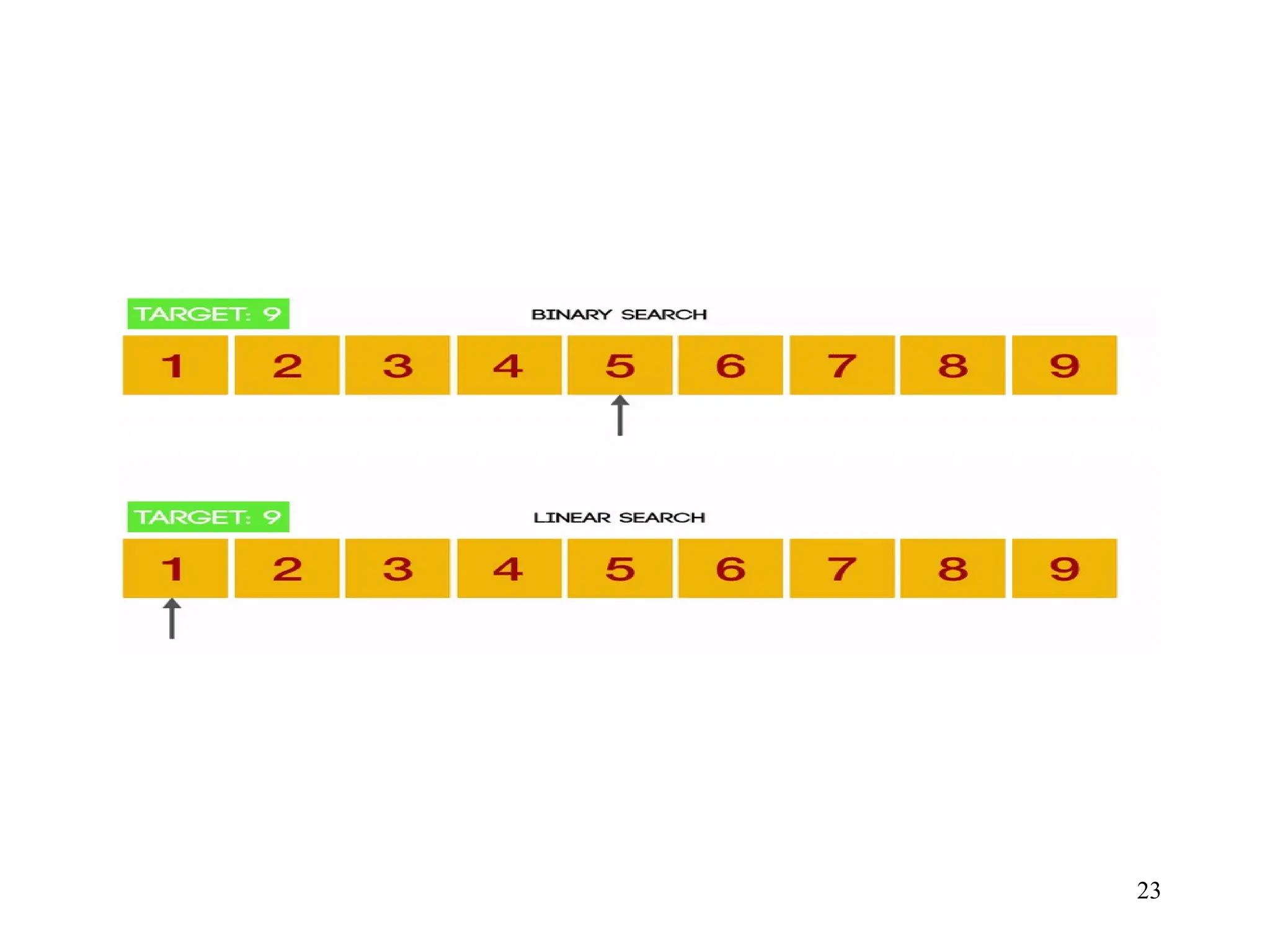
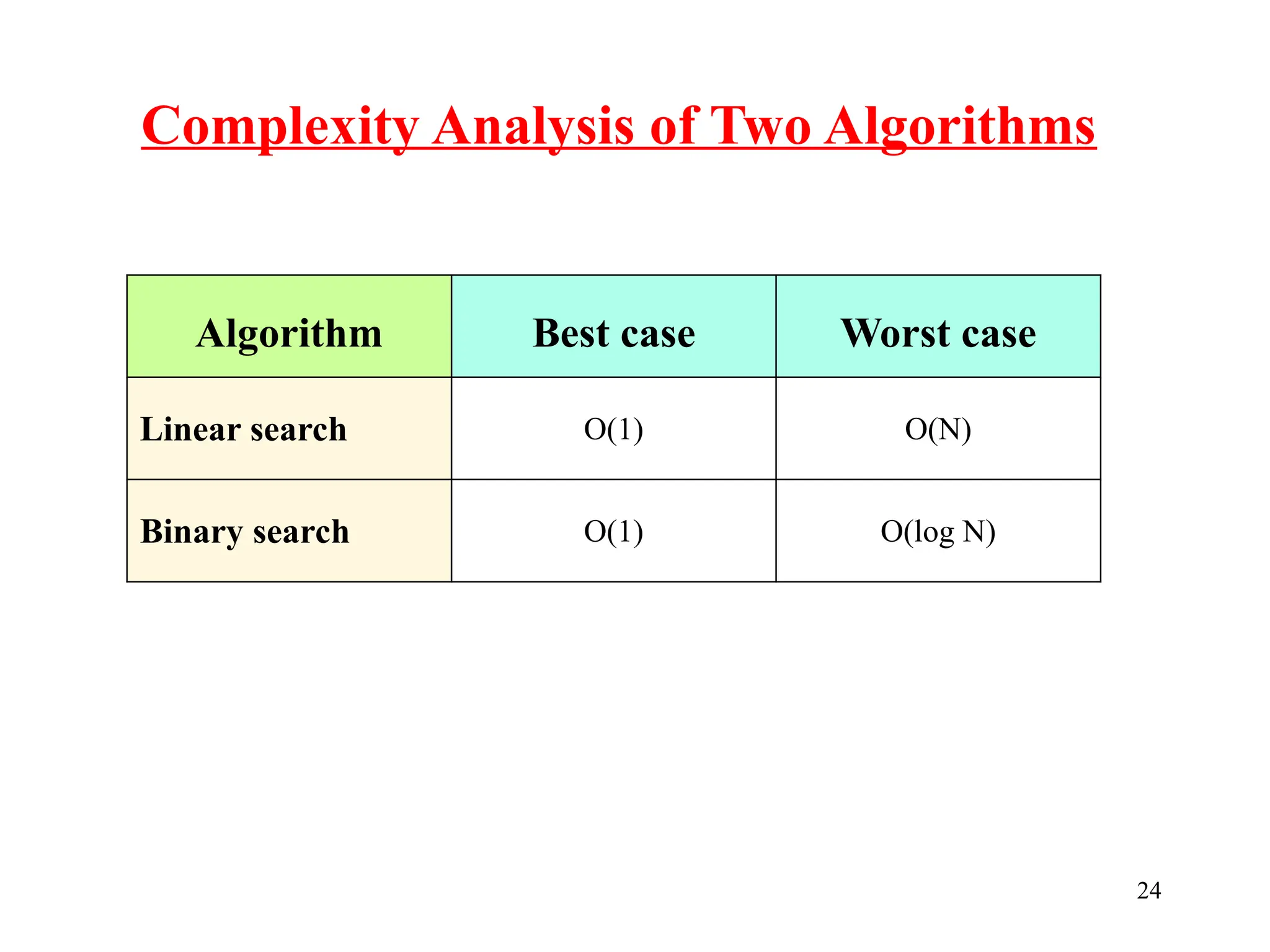
Complexity Analysis ofTwo Algorithms
24
Algorithm Best case Worst case
Linear search O(1) O(N)
Binary search O(1) O(log N)
25.
• If wehave an array of length 70000000 but sorted, which
searching algorithm will work fast and why??
• Which Searching Algorithm is followed to search any data
from a Dictionary?
• Search item 75 using binary search algorithm from the
following list.
A= [22, 3, 127, 515, 163, 69, 75, 88, 96, 10]
25
Try to answer!
26.
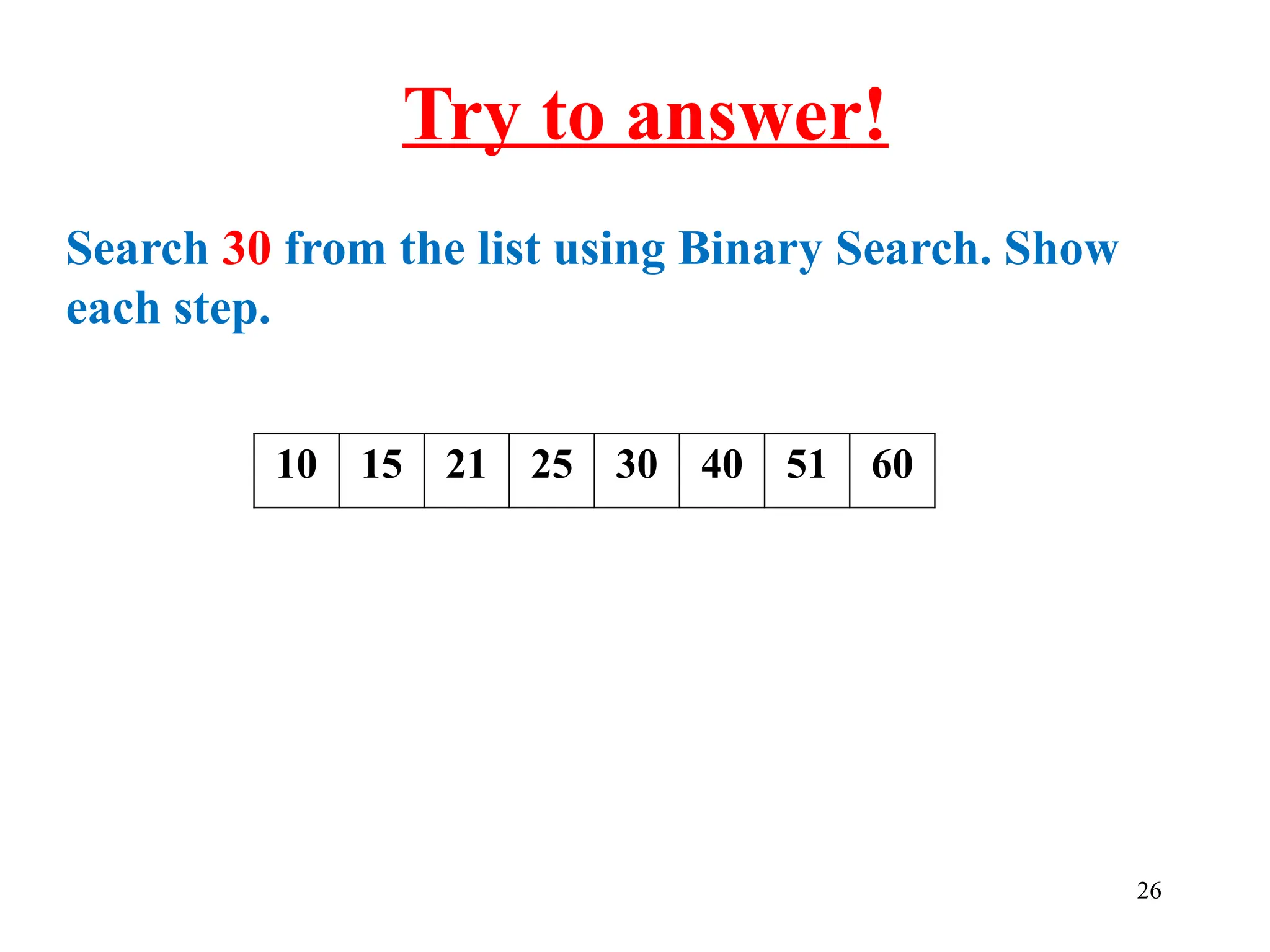
Search 30 fromthe list using Binary Search. Show
each step.
26
Try to answer!
10 15 21 25 30 40 51 60
![Algorithm of Linear Search
9
Algorithm:
i = 1
while i <= n && Z != X[i]
do
i = i+1
if i <= n then
FOUND
else
NOT FOUND
flag = FALSE
for i = 1 to n
if A[i] == key
flag = TRUE;
if flag == TRUE
FOUND
else
NOT FOUND](https://image.slidesharecdn.com/searchingalgorithms-251213172426-f93c326a/75/Searching-Algorithms-pptx-pppppppppppppp-9-2048.jpg)
![Complexity Analysis of Linear Search
10
Algorithm:
flag = FALSE
for i = 1 to n
if A[i] == key
flag = TRUE;
if flag == TRUE
FOUND
else
NOT FOUND
• Best case: O(1)
• Worst Case: O(n)](https://image.slidesharecdn.com/searchingalgorithms-251213172426-f93c326a/75/Searching-Algorithms-pptx-pppppppppppppp-10-2048.jpg)
![Algorithm of Binary Search
18
Algorithm: low = 1 //[Start position]
high = n //[Last position]
flag = false
while low <= high and flag = = false do
mid = (l+h) / 2
Xm = A[mid]
case:
Xm < Z : low = mid + 1
Xm > Z : high = mid - 1
Xm = = Z : flag = true
if flag = = true
FOUND
else
NOT FOUND](https://image.slidesharecdn.com/searchingalgorithms-251213172426-f93c326a/75/Searching-Algorithms-pptx-pppppppppppppp-18-2048.jpg)
![19
low = 0
high = n-1
flag = false
while low <= high and flag = = false do
mid = (low +high) / 2
Xm = A[mid]
case:
Xm < Z : low = mid
+ 1
Xm > Z : high = mid
- 1
Xm = = Z : flag = true
if flag = = true
FOUND
else
NOT FOUND
Step-1: mid = (low + high ) / 2 = (0 + 8) /2 = 4
A[mid] = 45 < 55
low = mid + 1 = 5
mid low
Step-2: mid = (low + high ) / 2 = (5 + 8) /2 = 6
A[mid] = 51 < 55
low = mid + 1 = 7
low
Step-3: mid = (low + high ) / 2 = (7 + 8) /2 = 7
A[mid] = 55 == 55
found
mid
mid
Search 55](https://image.slidesharecdn.com/searchingalgorithms-251213172426-f93c326a/75/Searching-Algorithms-pptx-pppppppppppppp-19-2048.jpg)
![• If we have an array of length 70000000 but sorted, which
searching algorithm will work fast and why??
• Which Searching Algorithm is followed to search any data
from a Dictionary?
• Search item 75 using binary search algorithm from the
following list.
A= [22, 3, 127, 515, 163, 69, 75, 88, 96, 10]
25
Try to answer!](https://image.slidesharecdn.com/searchingalgorithms-251213172426-f93c326a/75/Searching-Algorithms-pptx-pppppppppppppp-25-2048.jpg)