SCLERODERMA
(systemic sclerosis)
Definition
Multisystem collagen vascular
disease of unknown etiology
characterized by
 fibrosis of the skin with
 involvement of the internal
organs.
Pathophysiology
Vasculopathy of small artery and capillary
 Endothelial cell injury
 Adhesion and activation of platelet
 PDGF, thromboxane A2 release
 Vasoconstriction & growth of endothelial cell and fibroblast
 Narrowing or obliteration, increased permeability
Fibrosis
 Aberrant regulation of fibroblast cell growth
 Increased production of extracellular matrix (collagen, fibronectin, and
glycosaminoglycan)
 Thickening of the skin & fibrosis of internal organs
Immunological mechanism
Cell mediated immunity
 Skin: cellular infiltrates in perivascular region and
dermis (T cell, Langerhans cell, plasma cell,
macrophages)
Humoral immunity
 Hypergammaglobulinemia
 Autoantibody production : Antinuclear antibody (+)
>95%
Environmental factors
1. Silica dust
2. Organic solvents
3. Biogenic amines
4. Urea formaldehyde
5. Polyvinyl chloride
6. Rapeseed oil
7. Bleomycin
8. L-tryptophan
9. Silicone implant
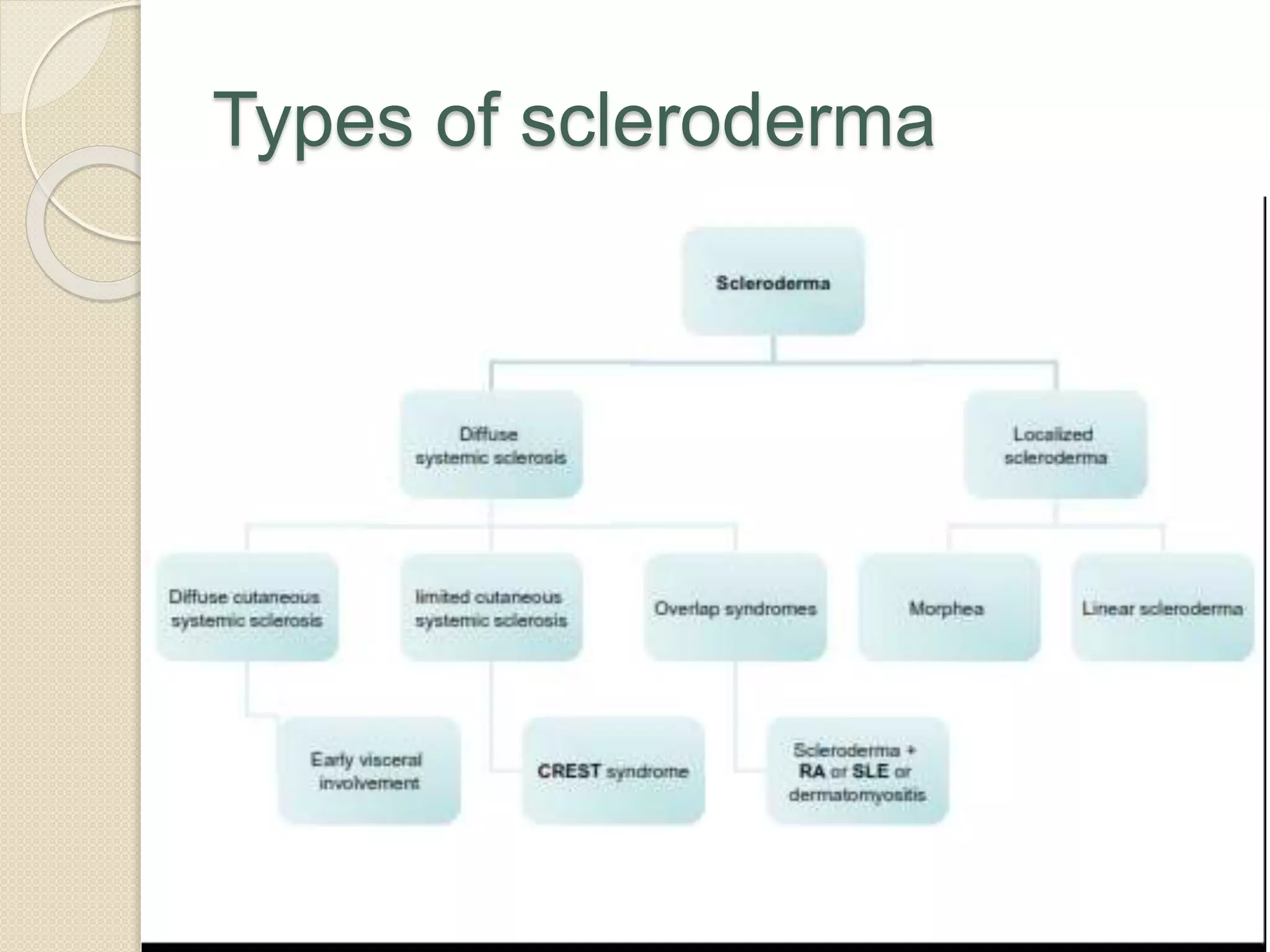
Types of scleroderma
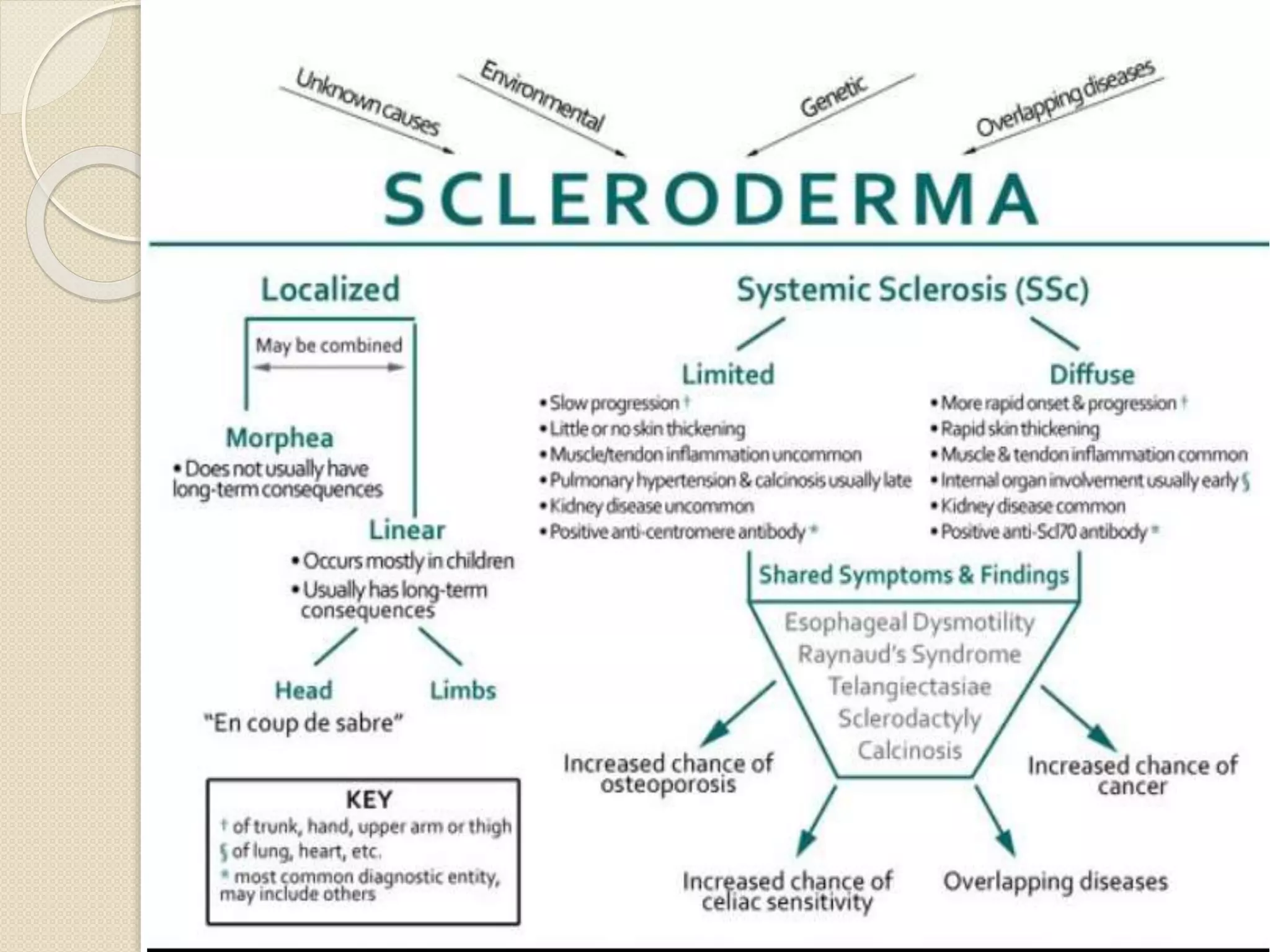
Systemic sclerosis
A multisystem disorder characterized by
 Functional and structural abnormalities of blood
vessels
 Fibrosis of the skin and internal organs
 Immune system activation
 Autoimmunity
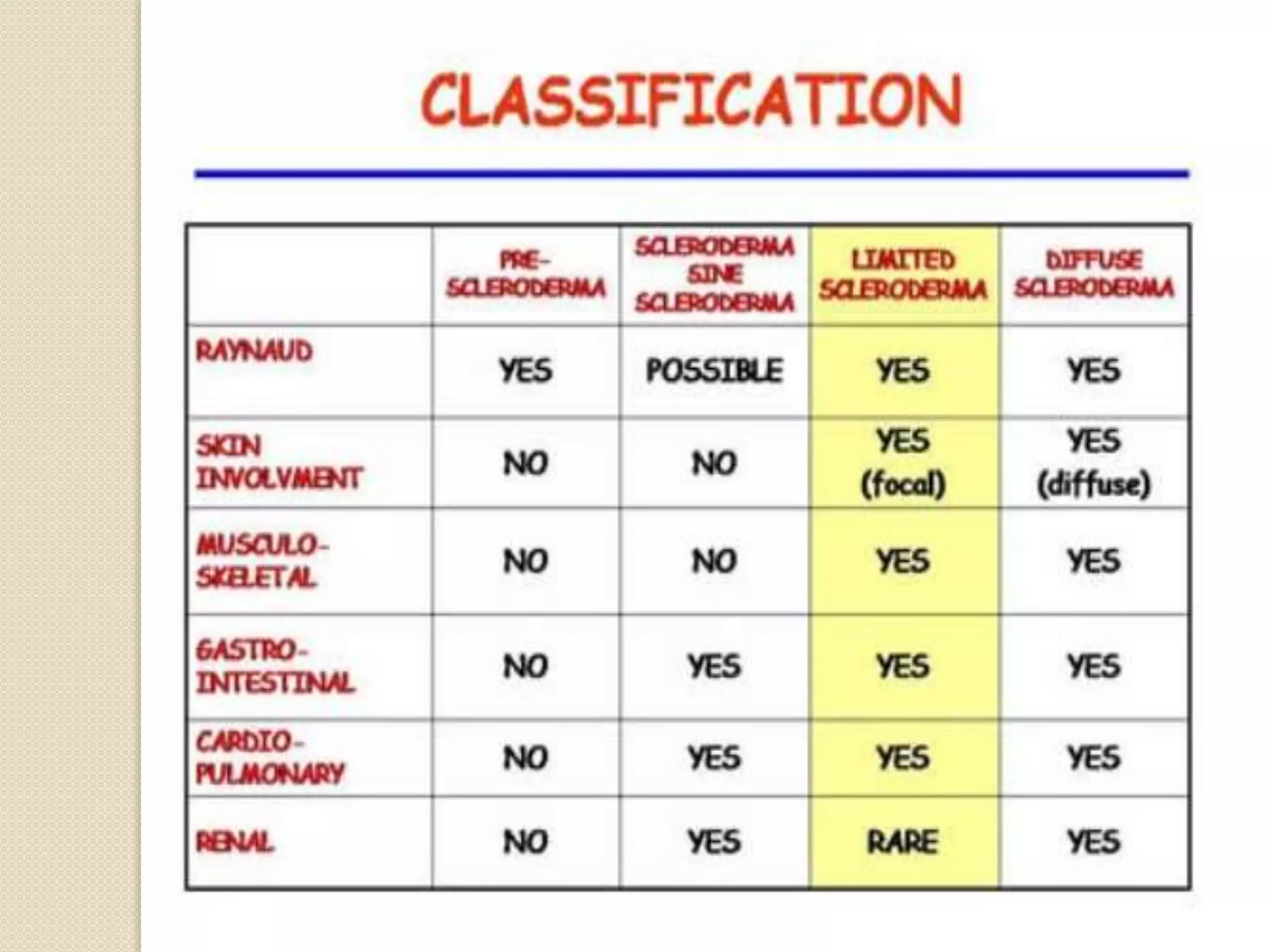
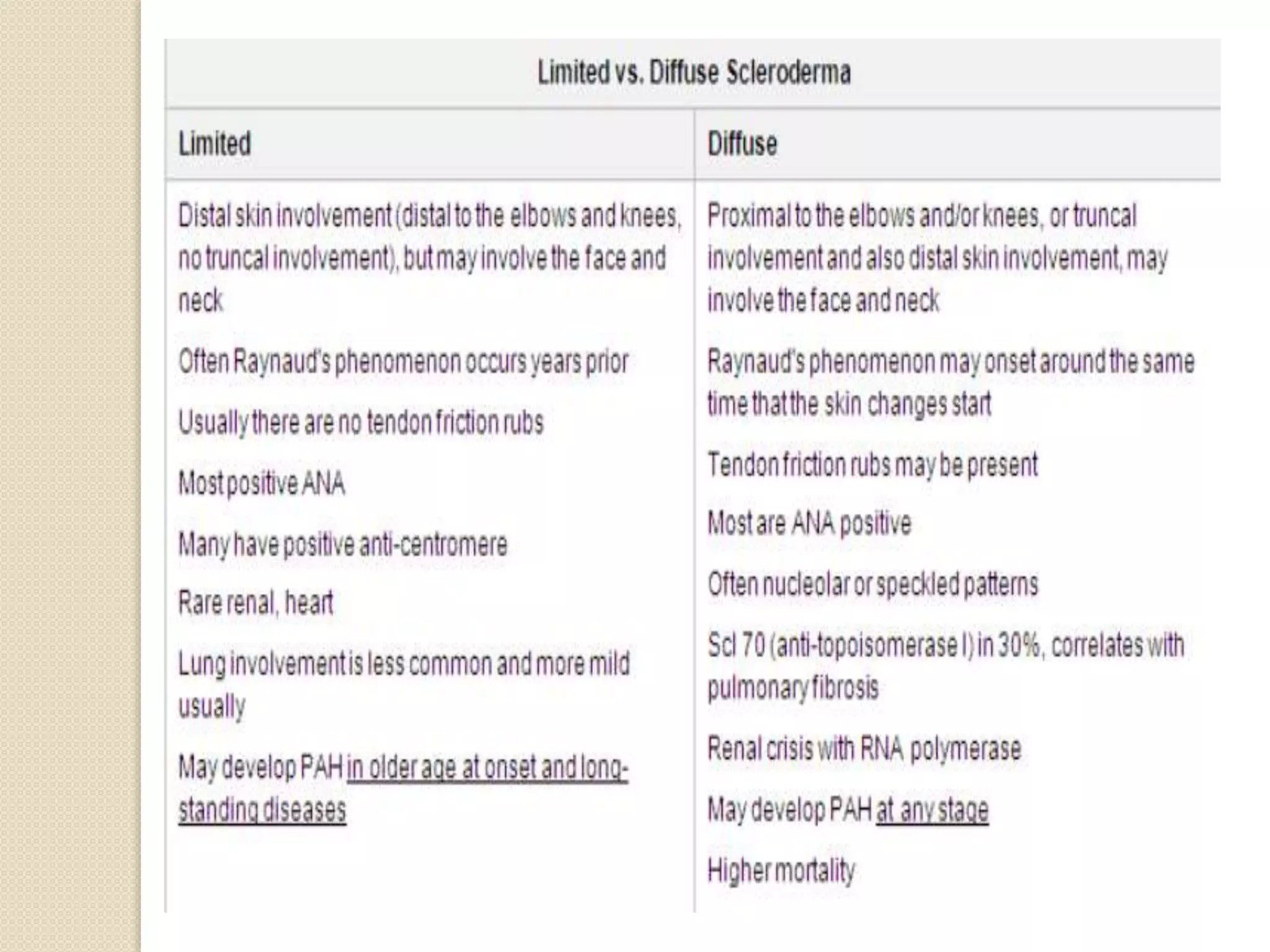
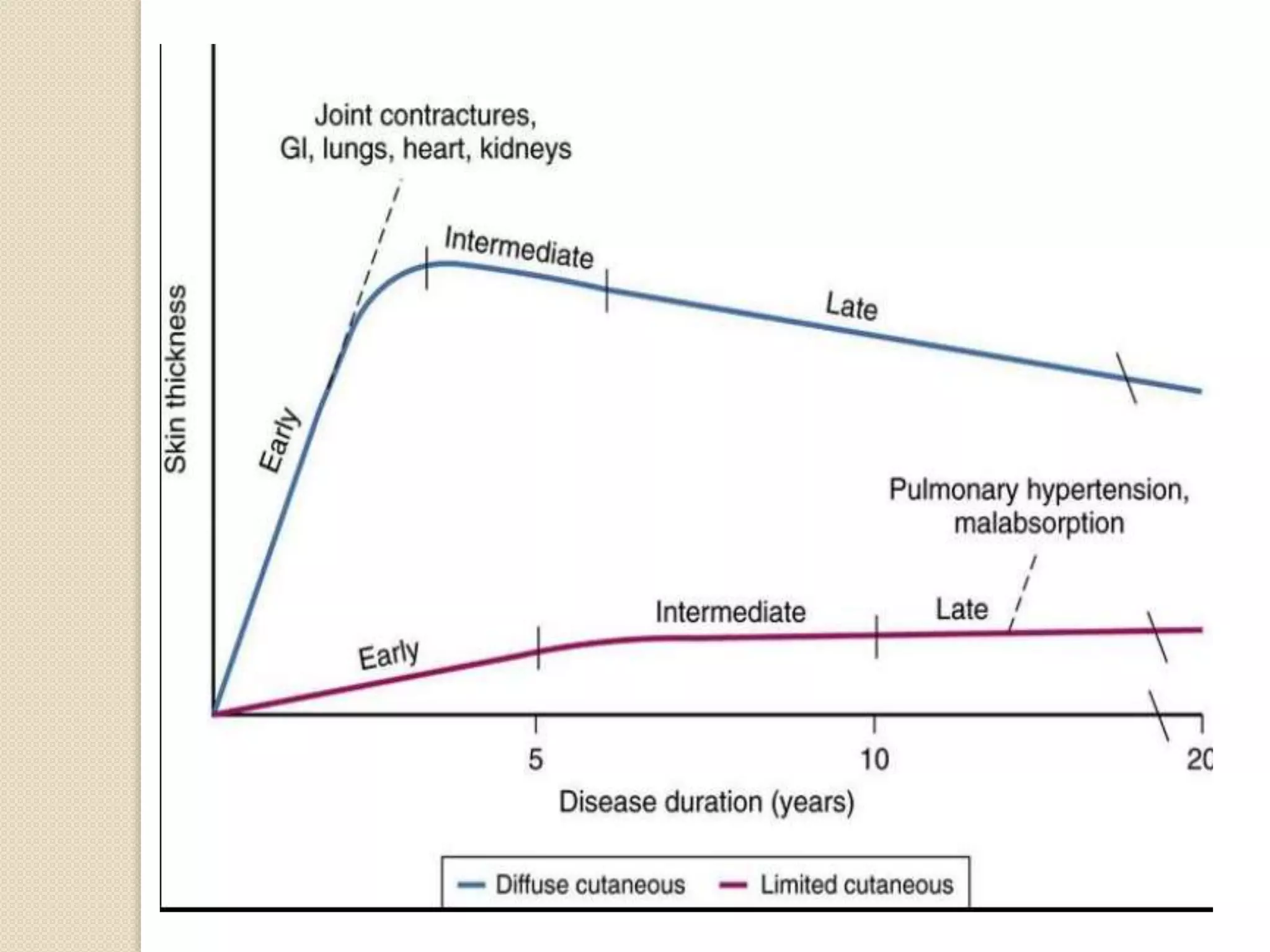
Diffuse cutaneous systemic
sclerosis
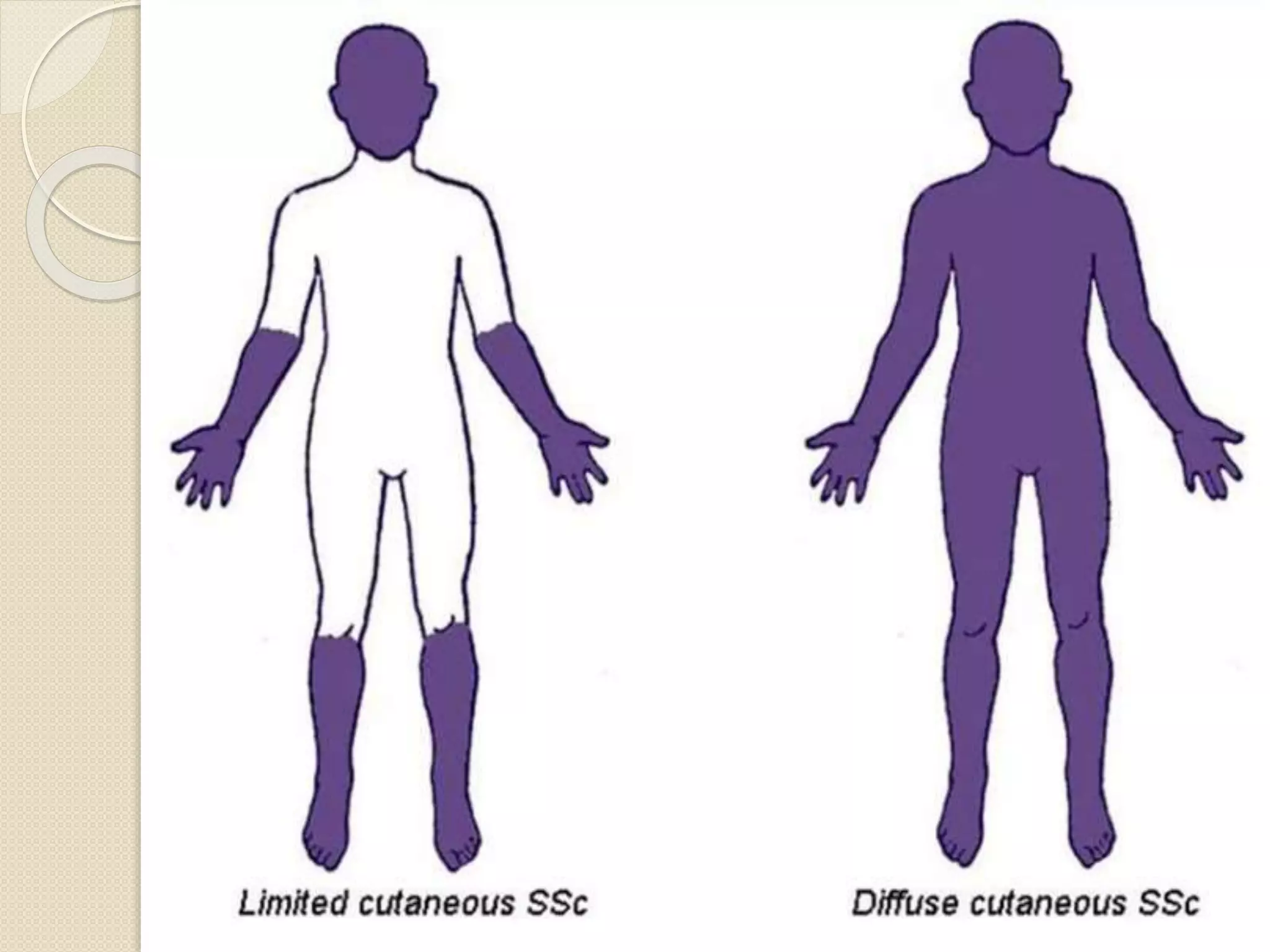
 Proximal skin thickening - distal and proximal
extremity and often the trunk and face
 Tendency to rapid progression of skin change
 Rapid onset of disease following Raynaud’s
phenomenon
 Early appearance of visceral involvement
 Poor prognosis
Limited cutaneous systemic
sclerosis
1) symmetric restricted fibrosis
- affecting the distal extremities and face/neck
2) prolonged delay in appearance of distinctive
internal manifestation
3) prominence of calcinosis and telangiectasia
4) good prognosis
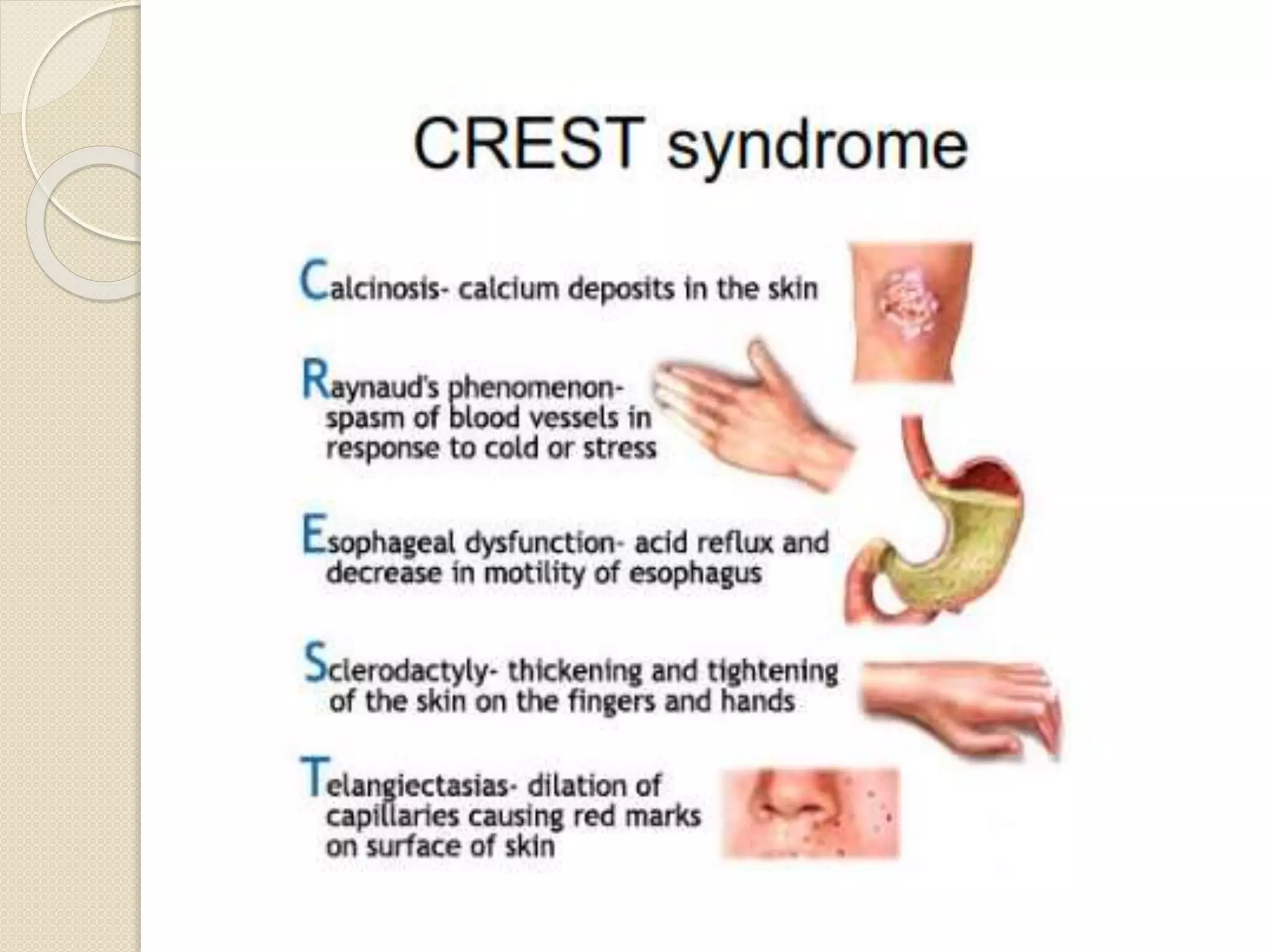
* CREST syndrome
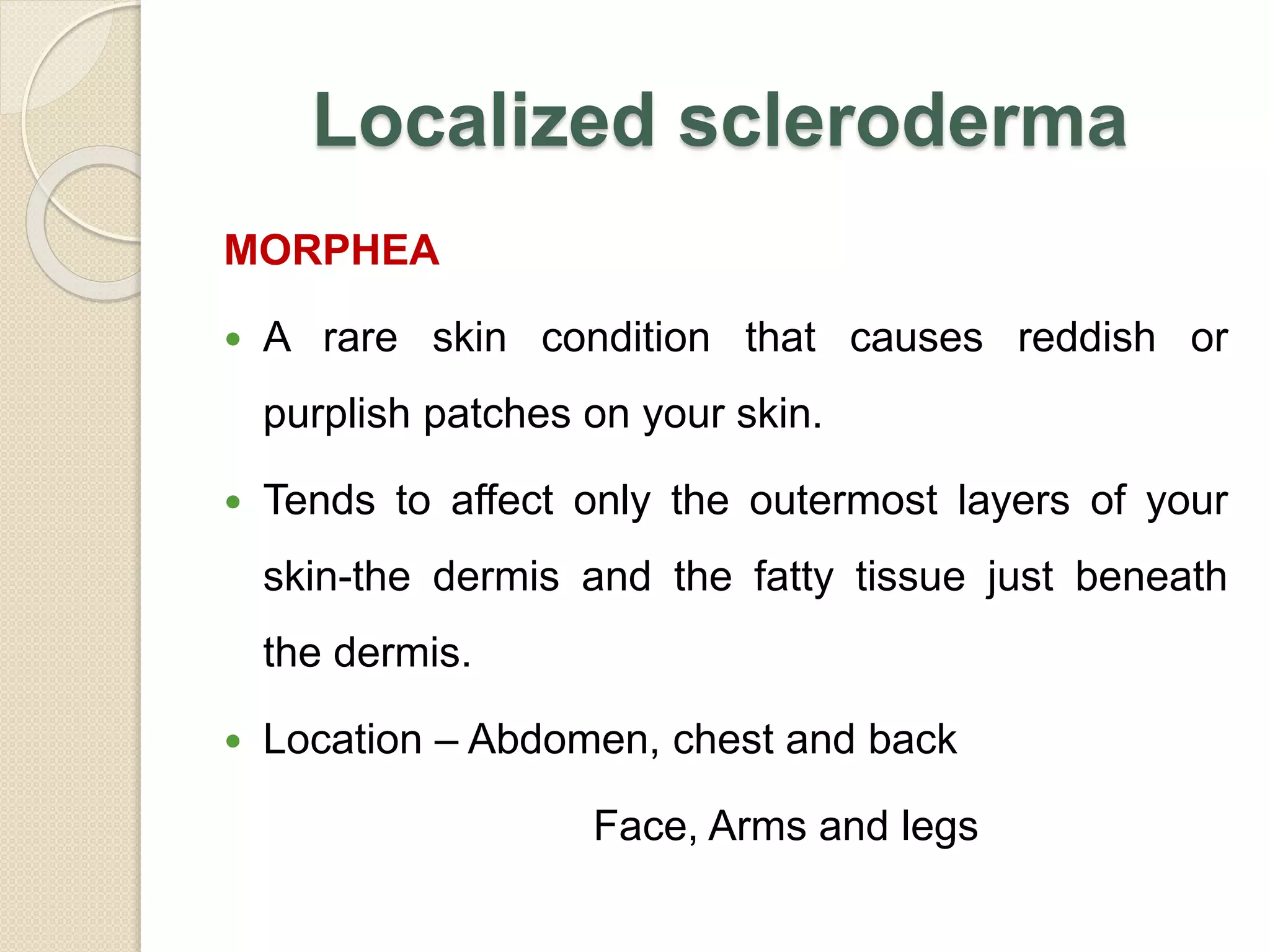
Localized scleroderma
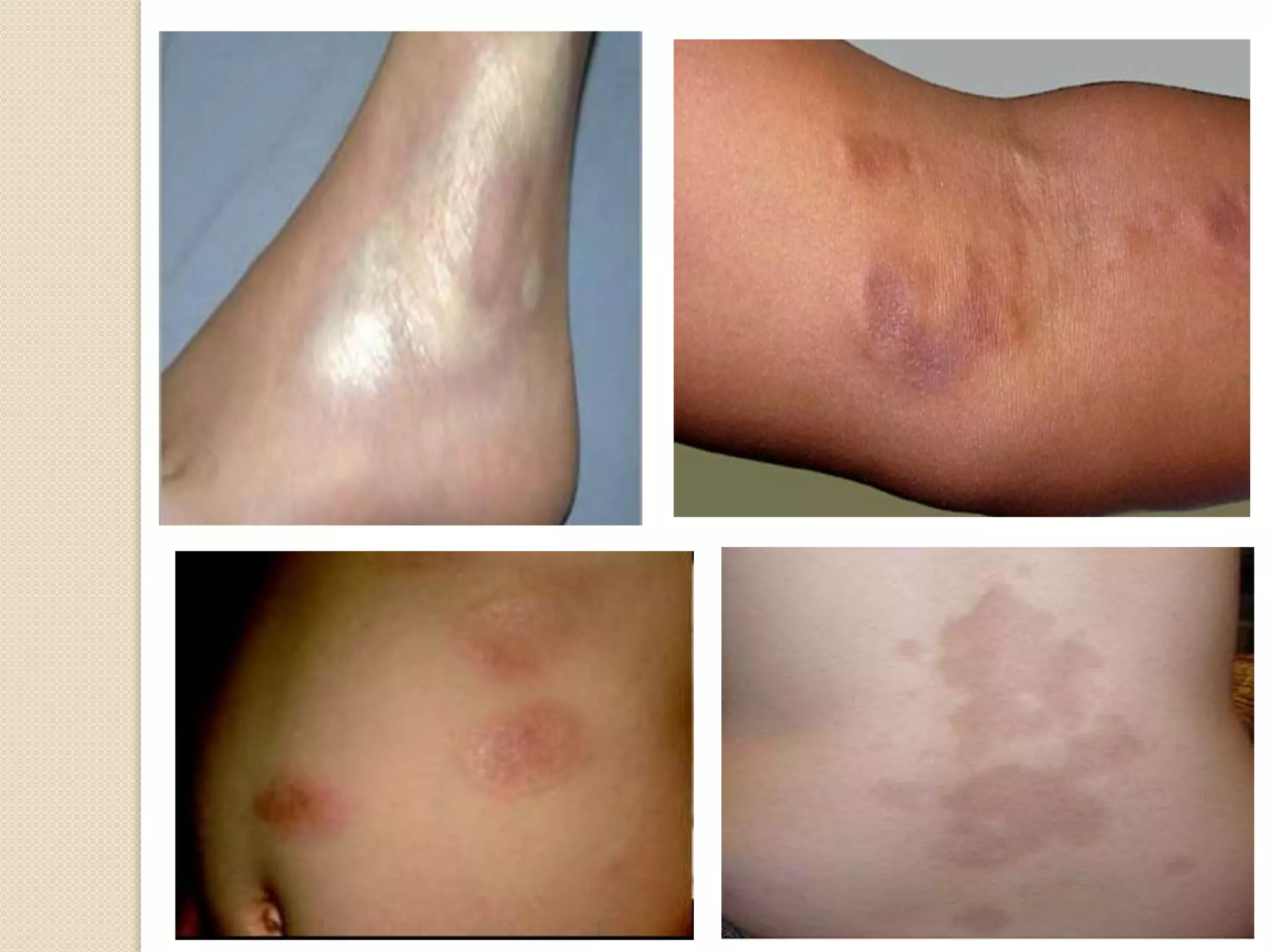
MORPHEA
 A rare skin condition that causes reddish or
purplish patches on your skin.
 Tends to affect only the outermost layers of your
skin-the dermis and the fatty tissue just beneath
the dermis.
 Location – Abdomen, chest and back
Face, Arms and legs
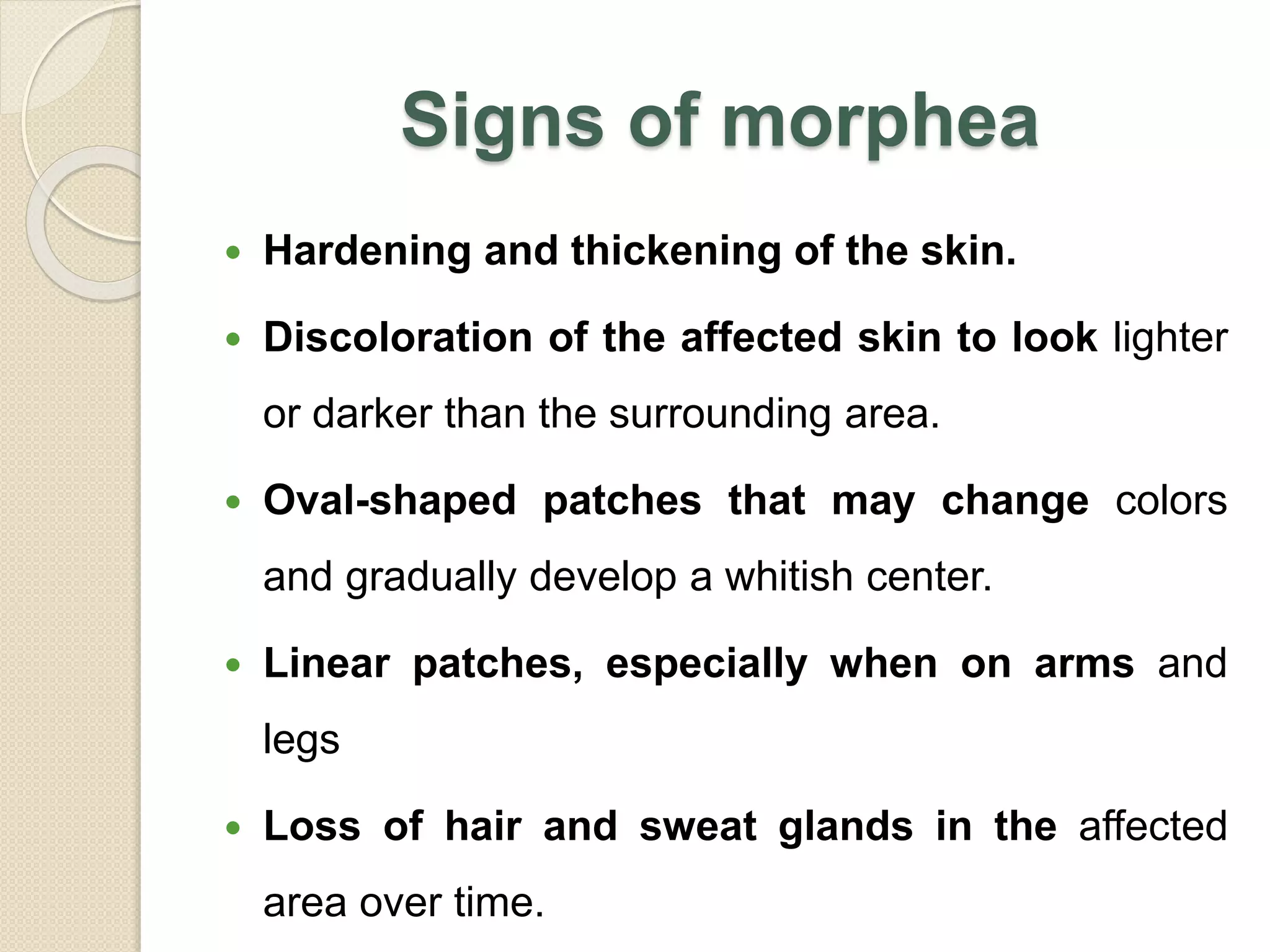
Signs of morphea
 Hardening and thickening of the skin.
 Discoloration of the affected skin to look lighter
or darker than the surrounding area.
 Oval-shaped patches that may change colors
and gradually develop a whitish center.
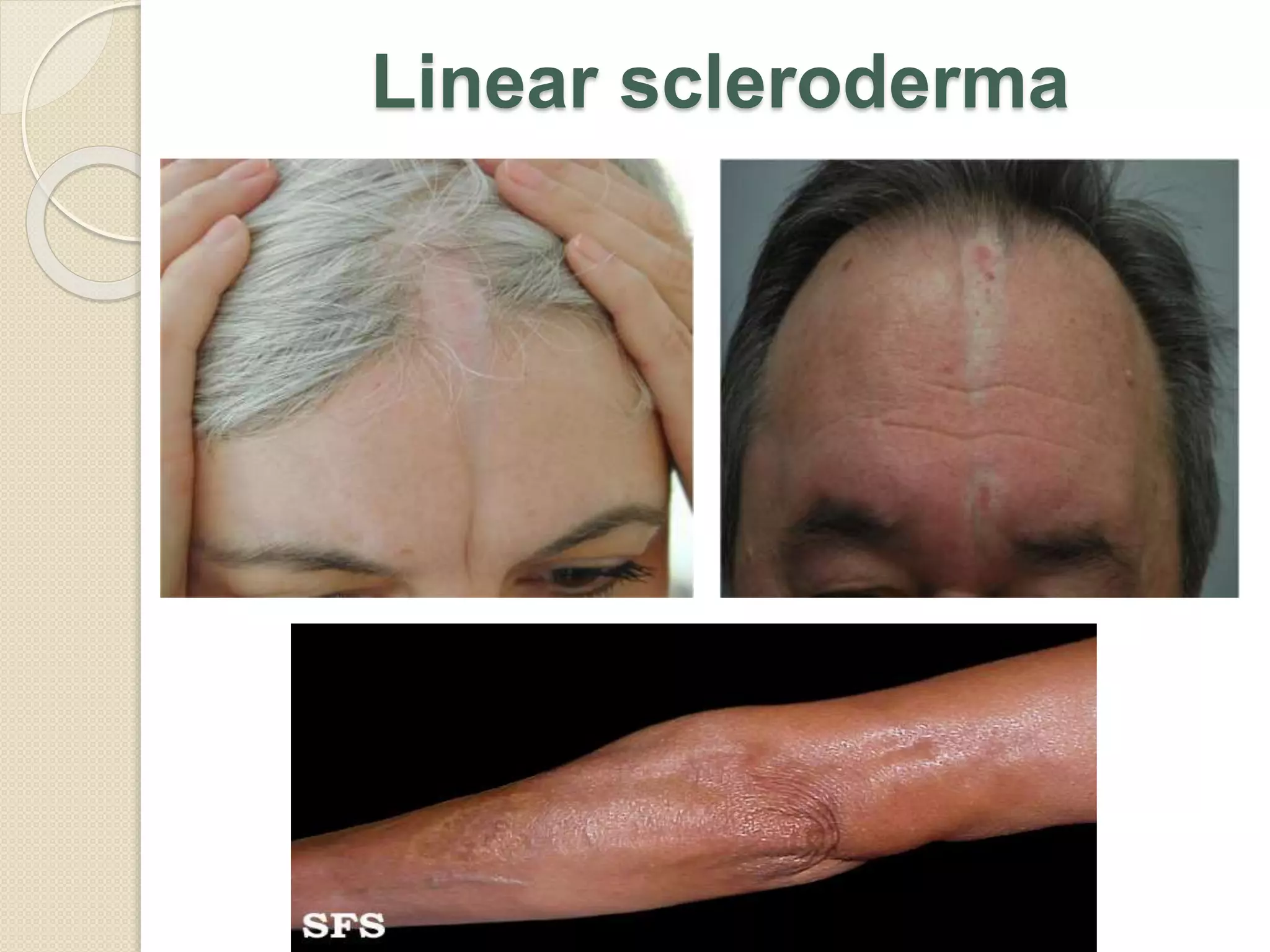
 Linear patches, especially when on arms and
legs
 Loss of hair and sweat glands in the affected
area over time.
Linear scleroderma
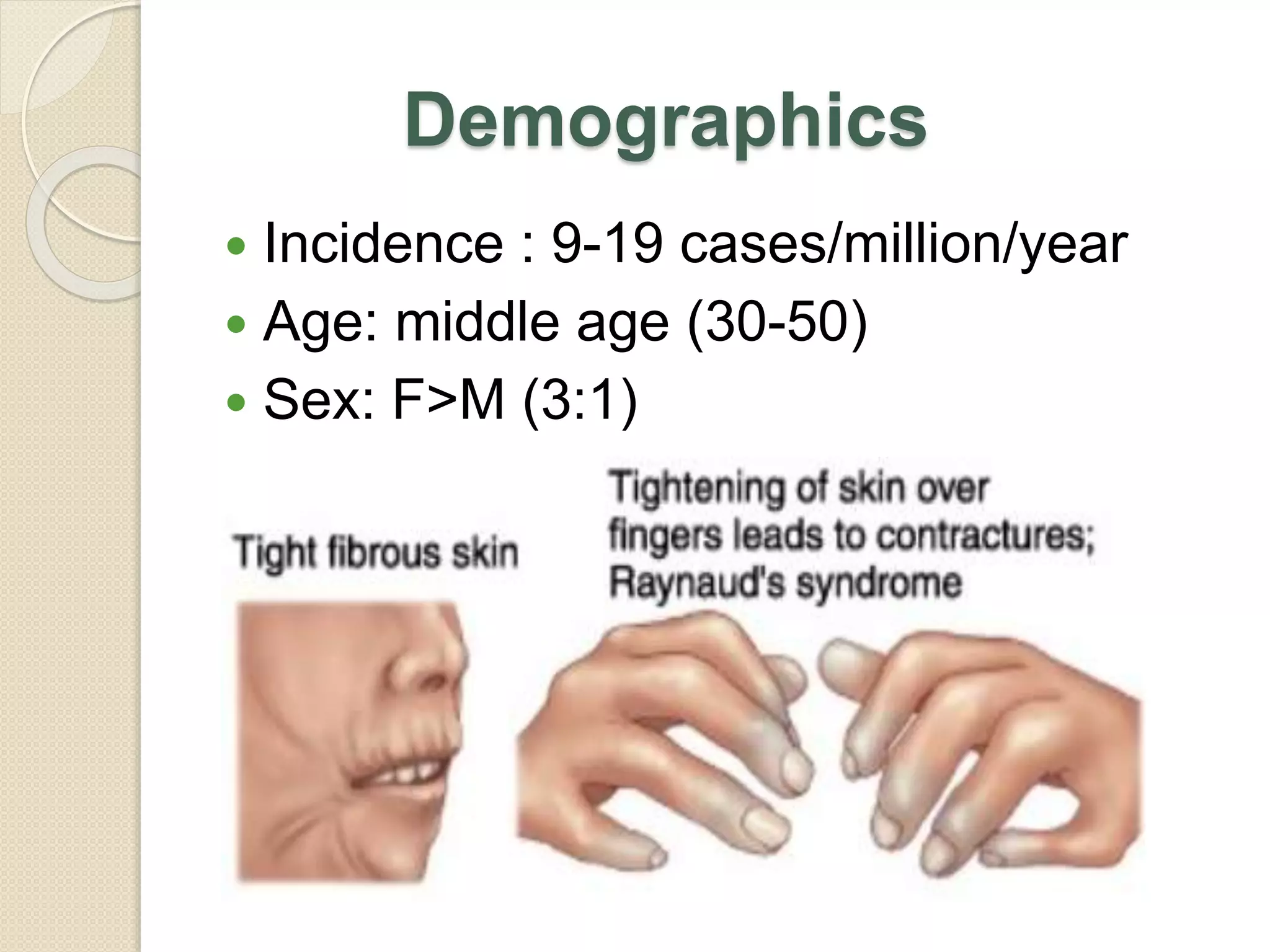
Demographics
 Incidence : 9-19 cases/million/year
 Age: middle age (30-50)
 Sex: F>M (3:1)
Clinical features
Vascular abnormalities
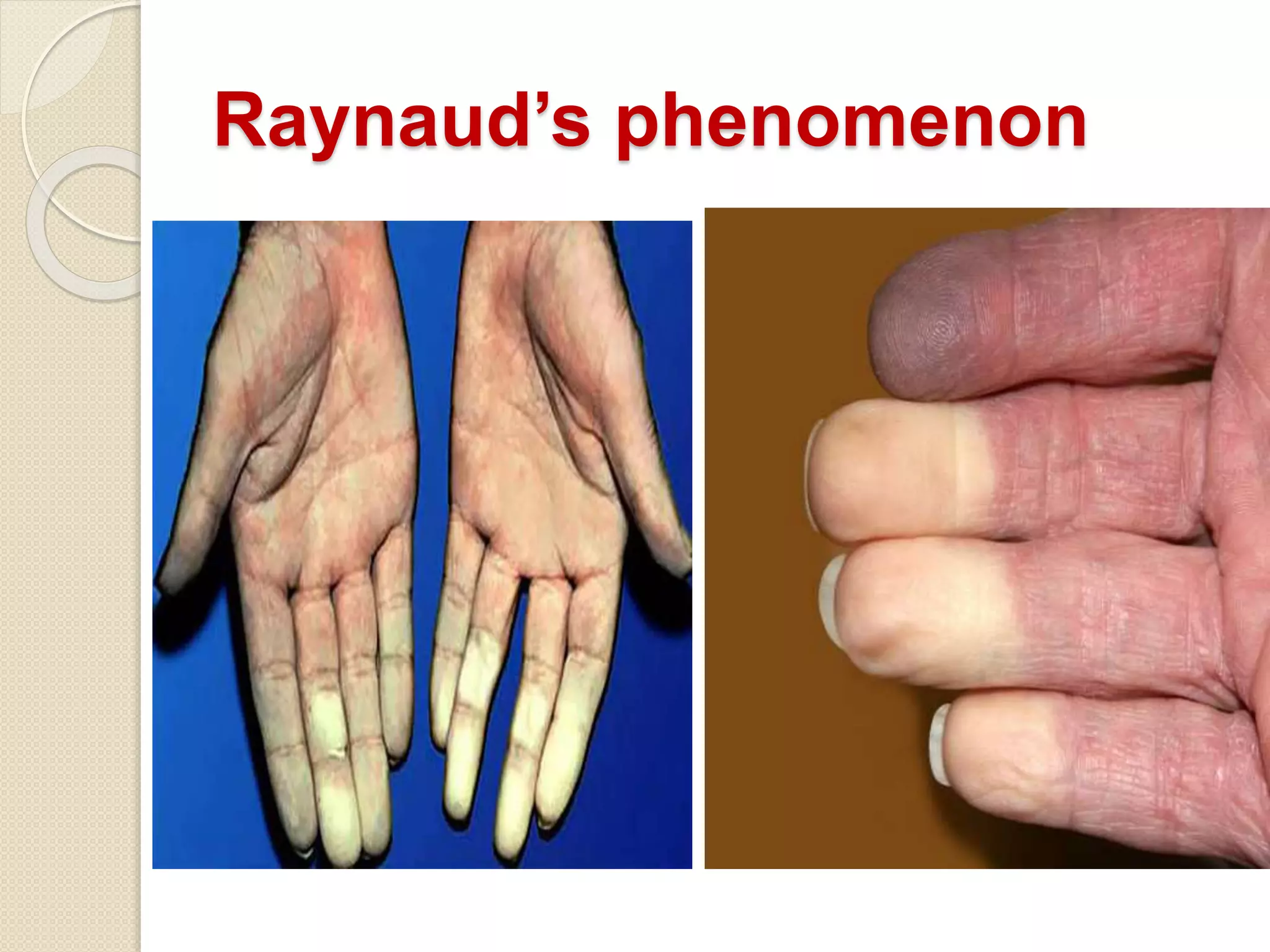
 Raynaud's phenomenon
 Cold hands and feet with reversible skin colour
change (white to blue to red)
 Induced by cold temperature or emotional stress
 Initial complaint in 3/4 of patients
 90% in patients with skin change (prevalence in the
general population: 4-15%)
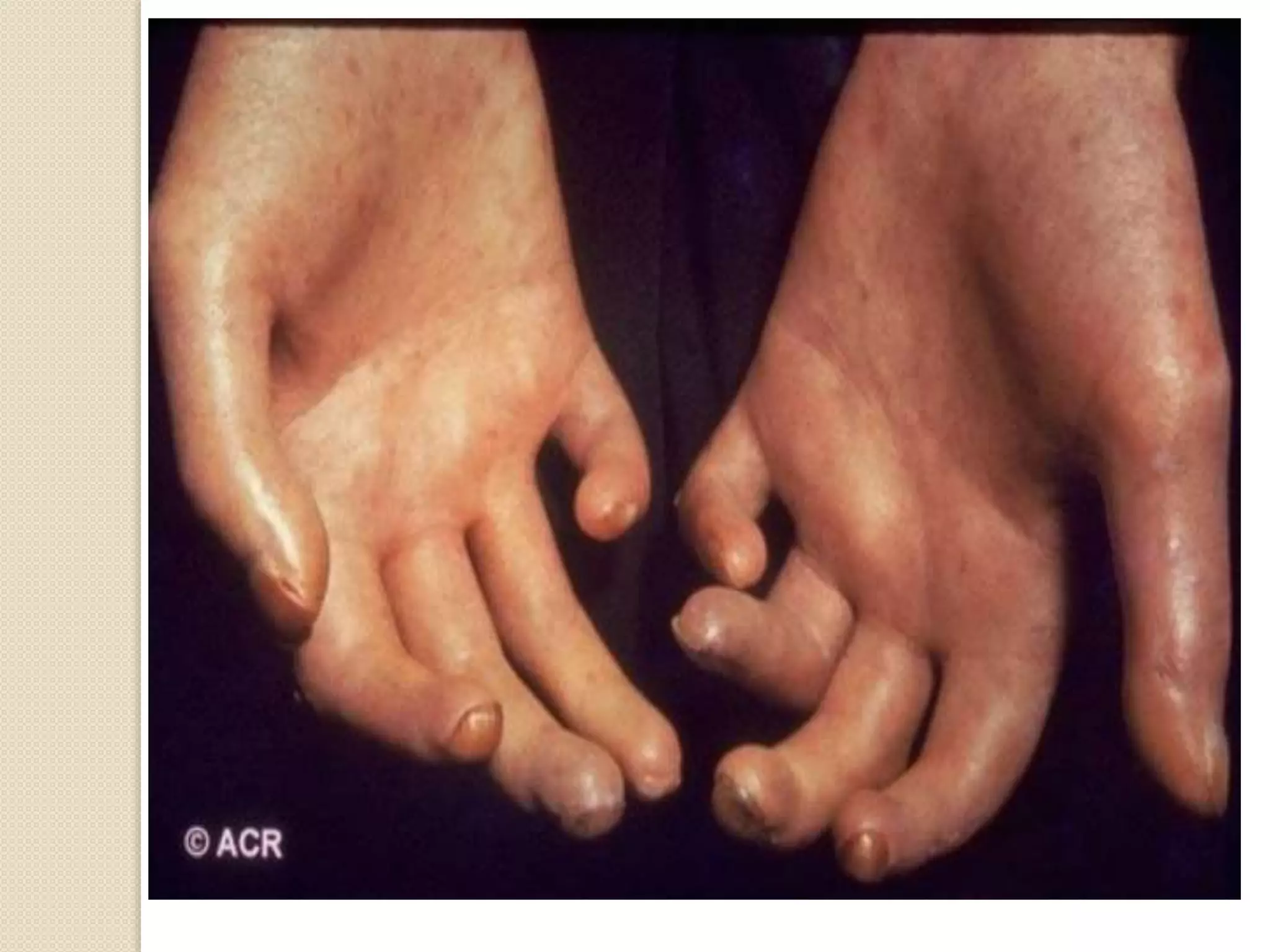
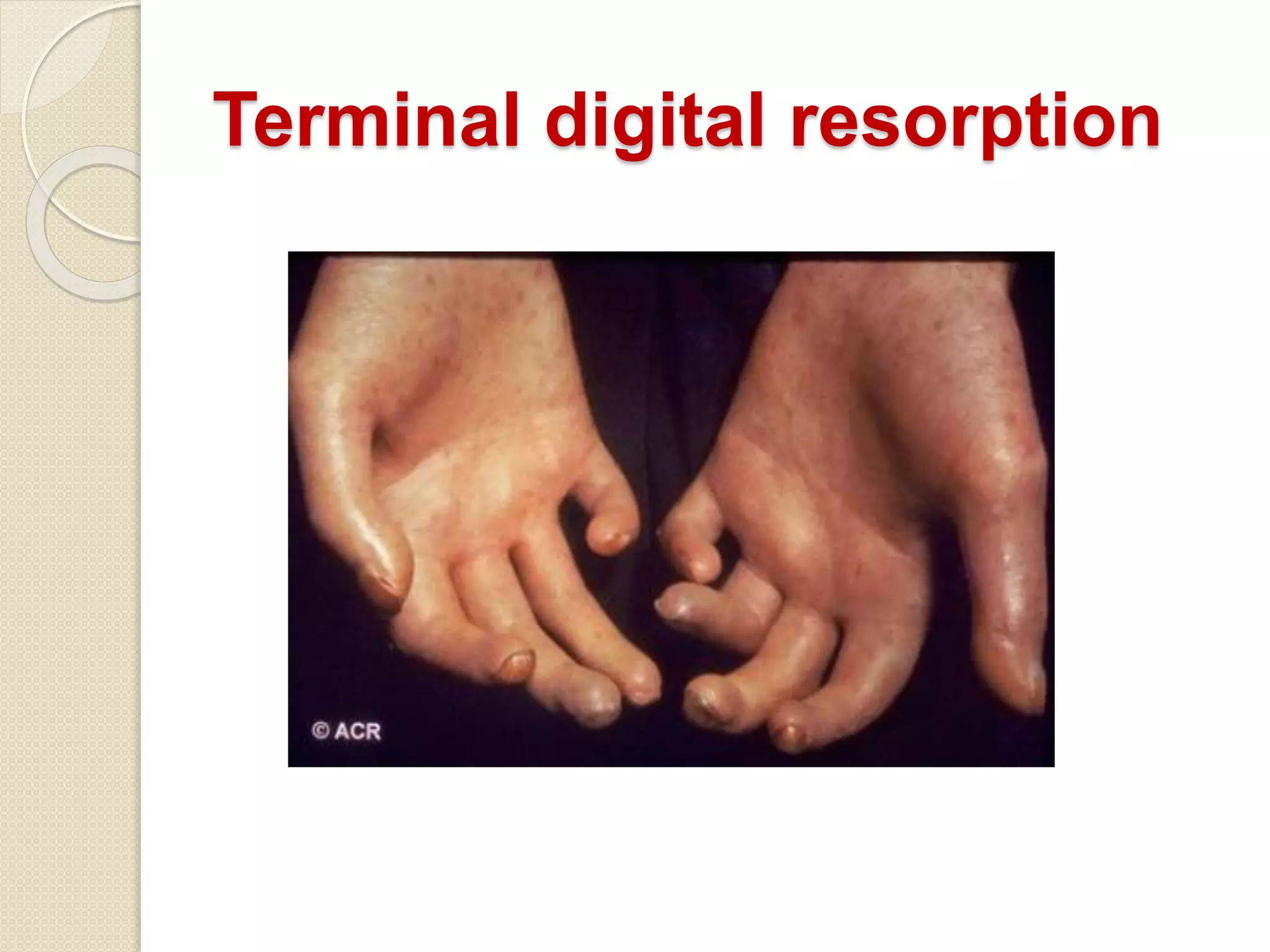
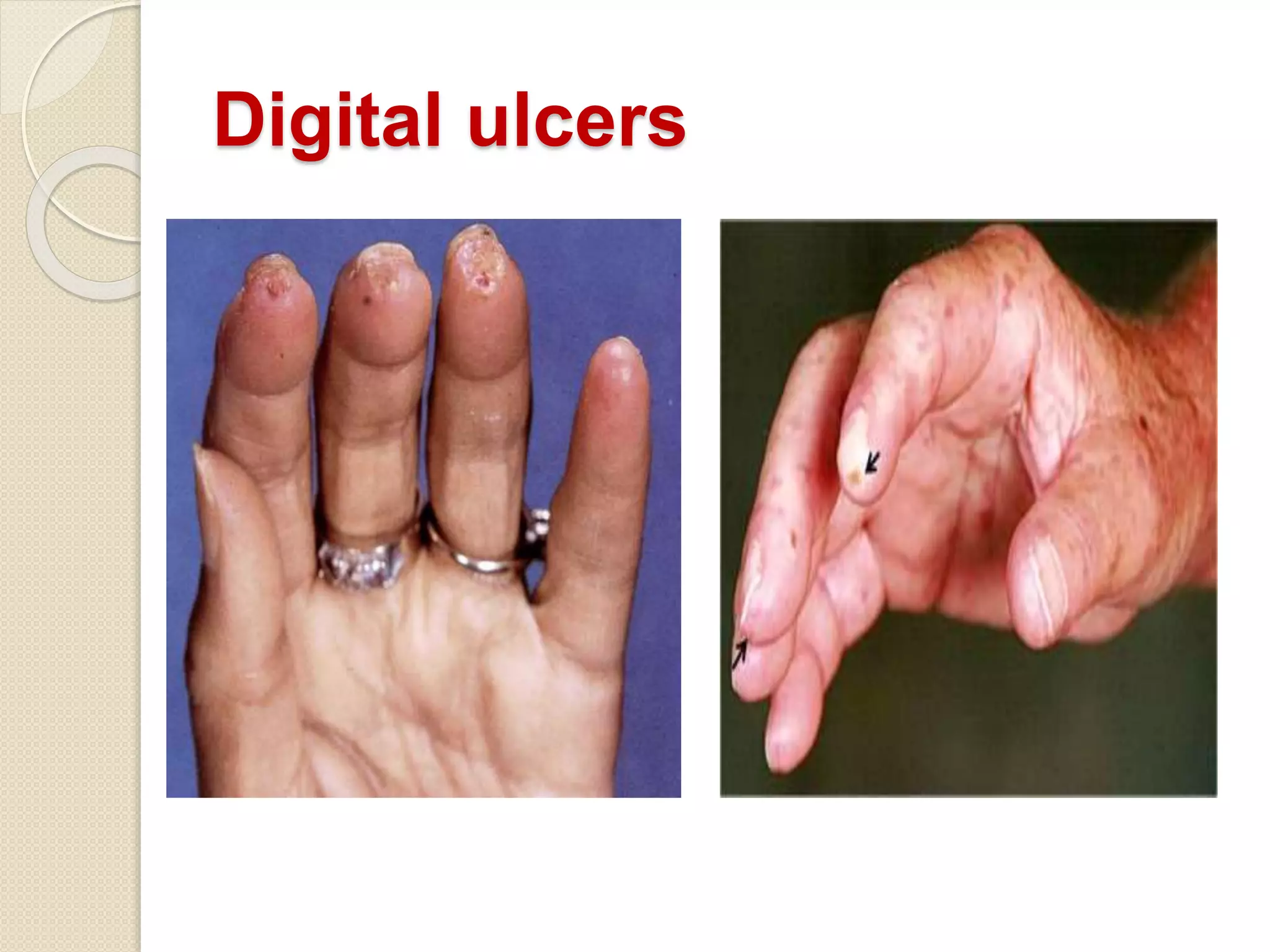
 Digital ischemic injury
Raynaud’s phenomenon
Terminal digital resorption
Digital ulcers
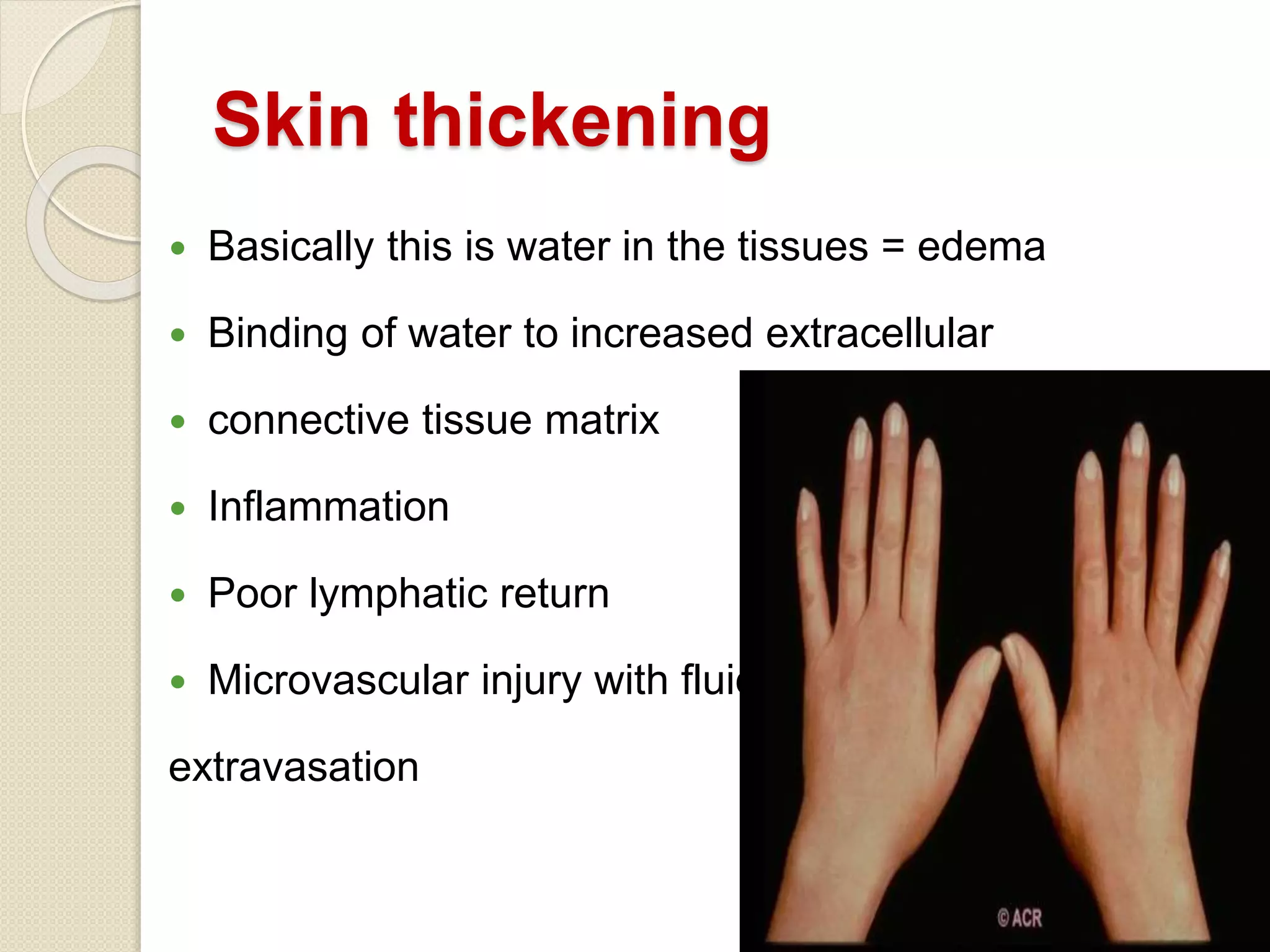
Skin thickening
 Basically this is water in the tissues = edema
 Binding of water to increased extracellular
 connective tissue matrix
 Inflammation
 Poor lymphatic return
 Microvascular injury with fluid
extravasation
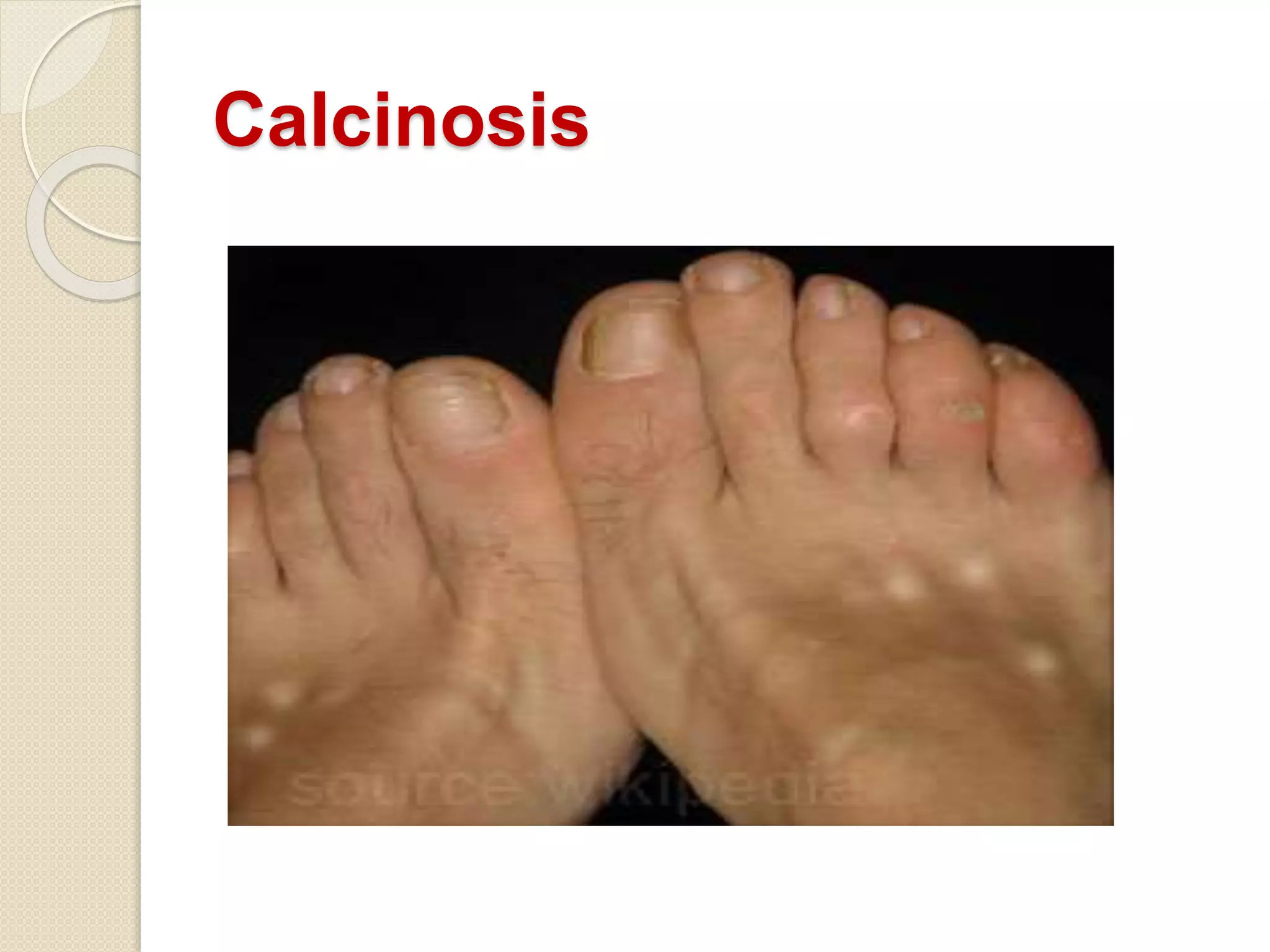
Calcinosis
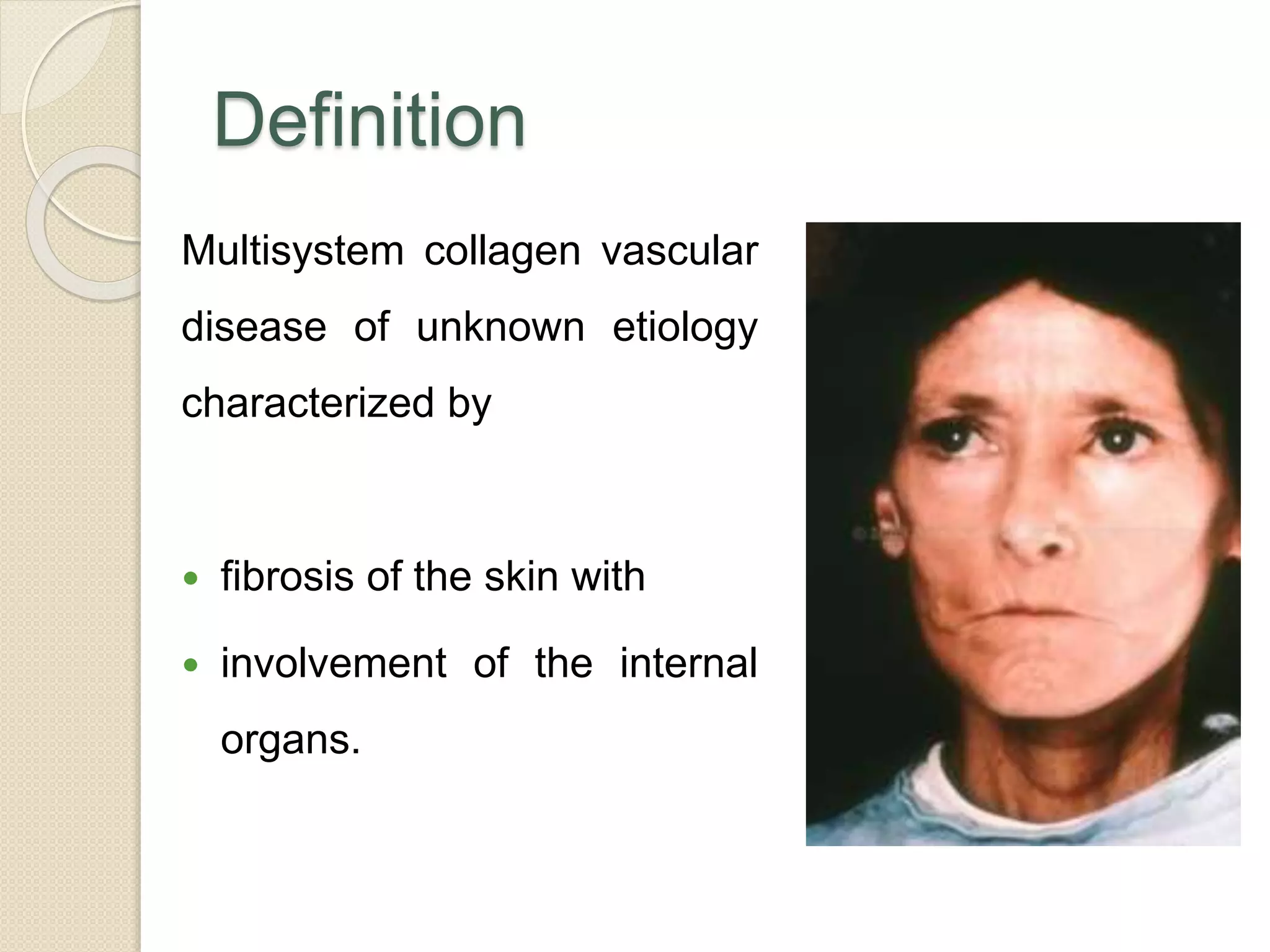
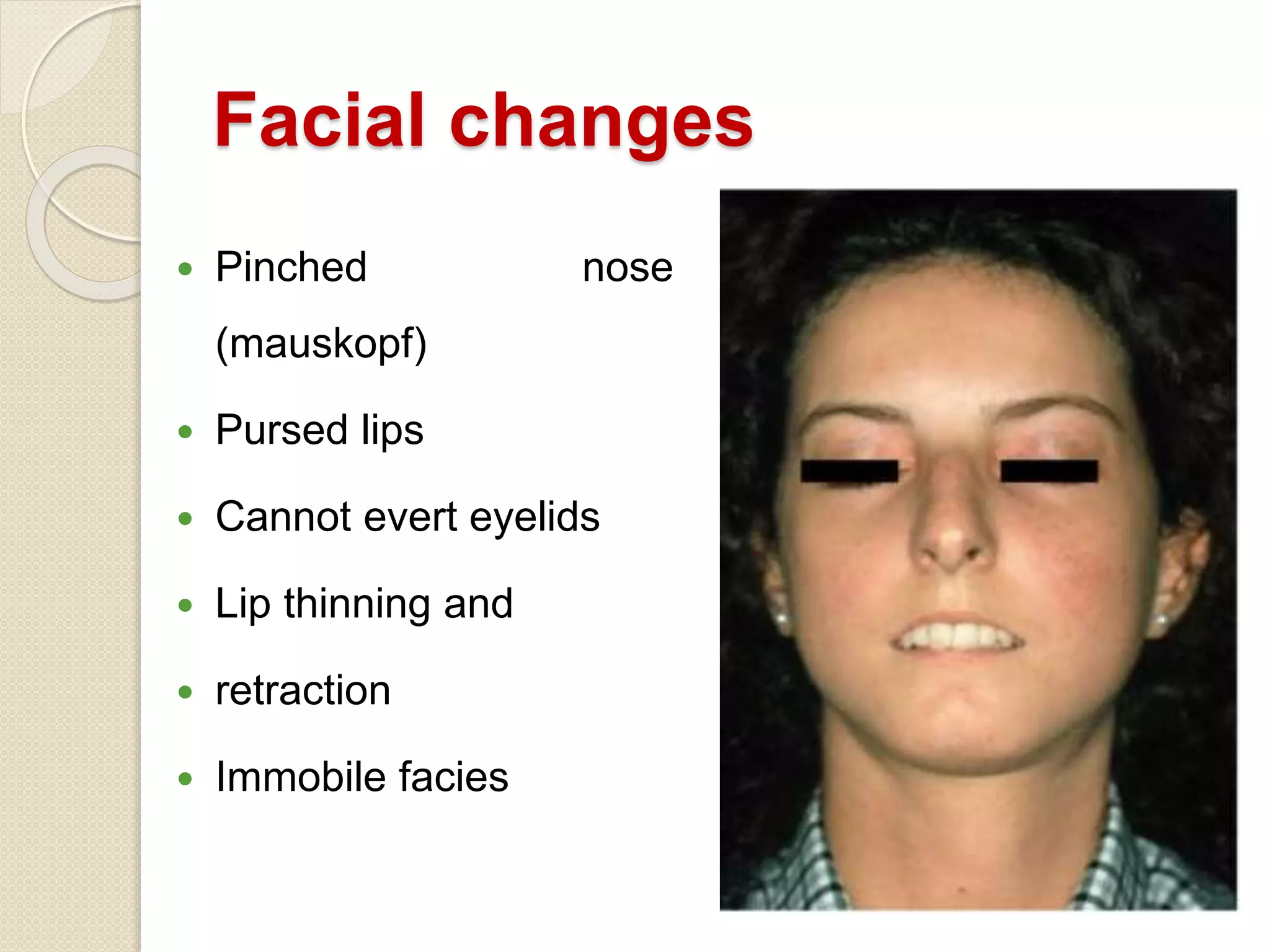
Facial changes
 Pinched nose
(mauskopf)
 Pursed lips
 Cannot evert eyelids
 Lip thinning and
 retraction
 Immobile facies
Intestinal involvement
1. Esophagus: hypomotility and retrosternal pain,
reflux esophagitis, stricture
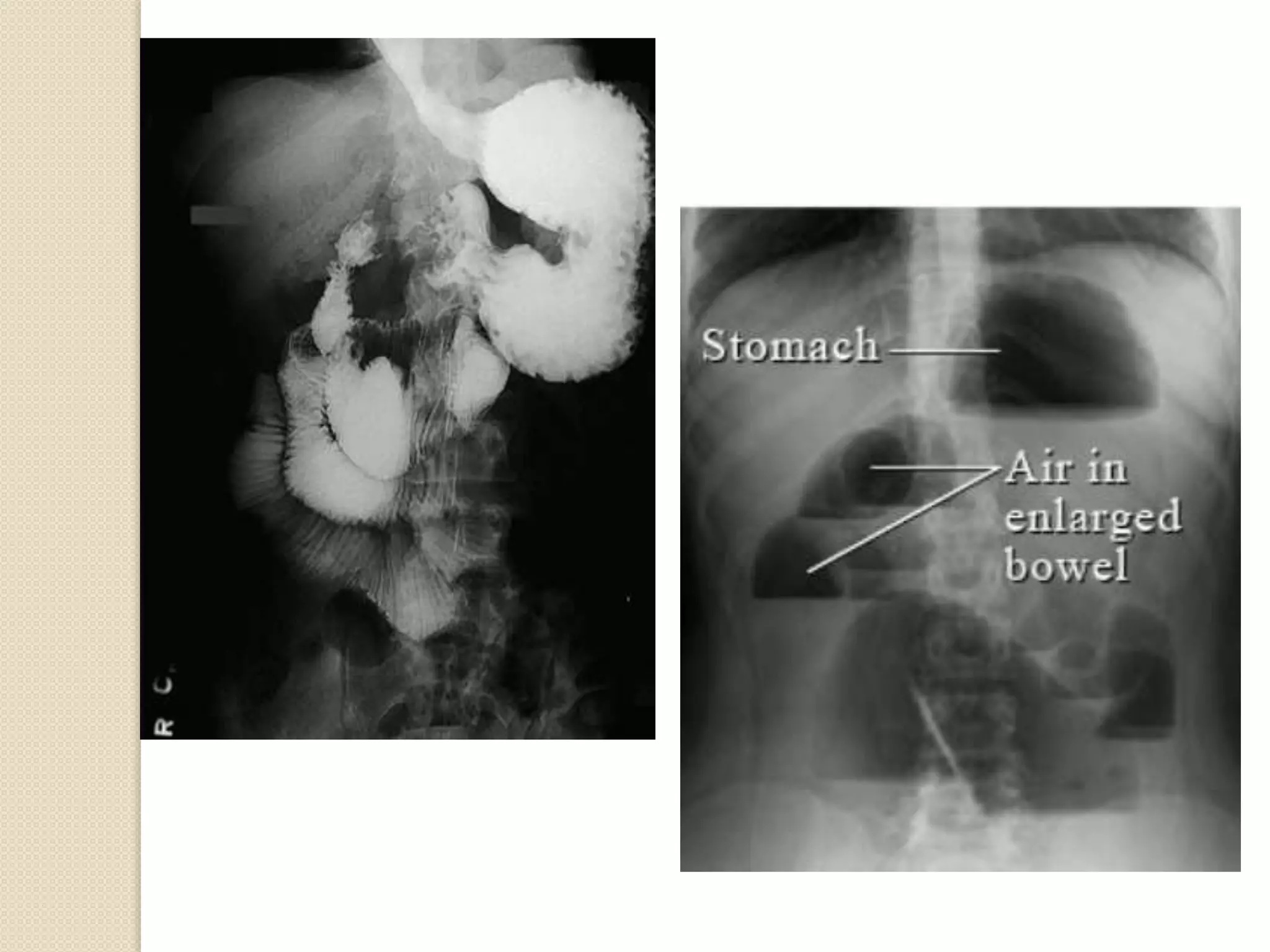
2. Stomach: delayed emptying
3. Small intestine: pseudo-obstruction, paralytic ileus,
malabsorption
4. Large intestine: chronic constipation and fecal
impaction diverticula
Gastrointestinal
 Disordered peristalsis of the lower two thirds of the
esophagus presents as dysphagia
 Impaired function of the lower esophageal sphincter
 Chronic esophageal reflux include erosive esophagitis
with bleeding, Barrett's esophagus, and lower
esophageal stricture
 Involvement of the stomach occurs in systemic sclerosis
and presents clinically as ease of satiety and on
occasion as either functional gastric outlet
obstruction or acute gastric dilatation.
Small bowel involvement
 Intermittent bloating with abdominal cramps,
intermittent or chronic diarrhea, and presentations
suggestive of intestinal obstruction.
 Malabsorption occurs
 Bacterial overgrowth in areas of intestinal stasis
occurs frequently
Colonic involvement
 Is present in the majority of patients with systemic
sclerosis
 Is infrequently a prominent cause of clinical
symptoms
 Constipation, obstipation, and Pseudo-obstruction
may occur and are related to abnormal colonic
motility
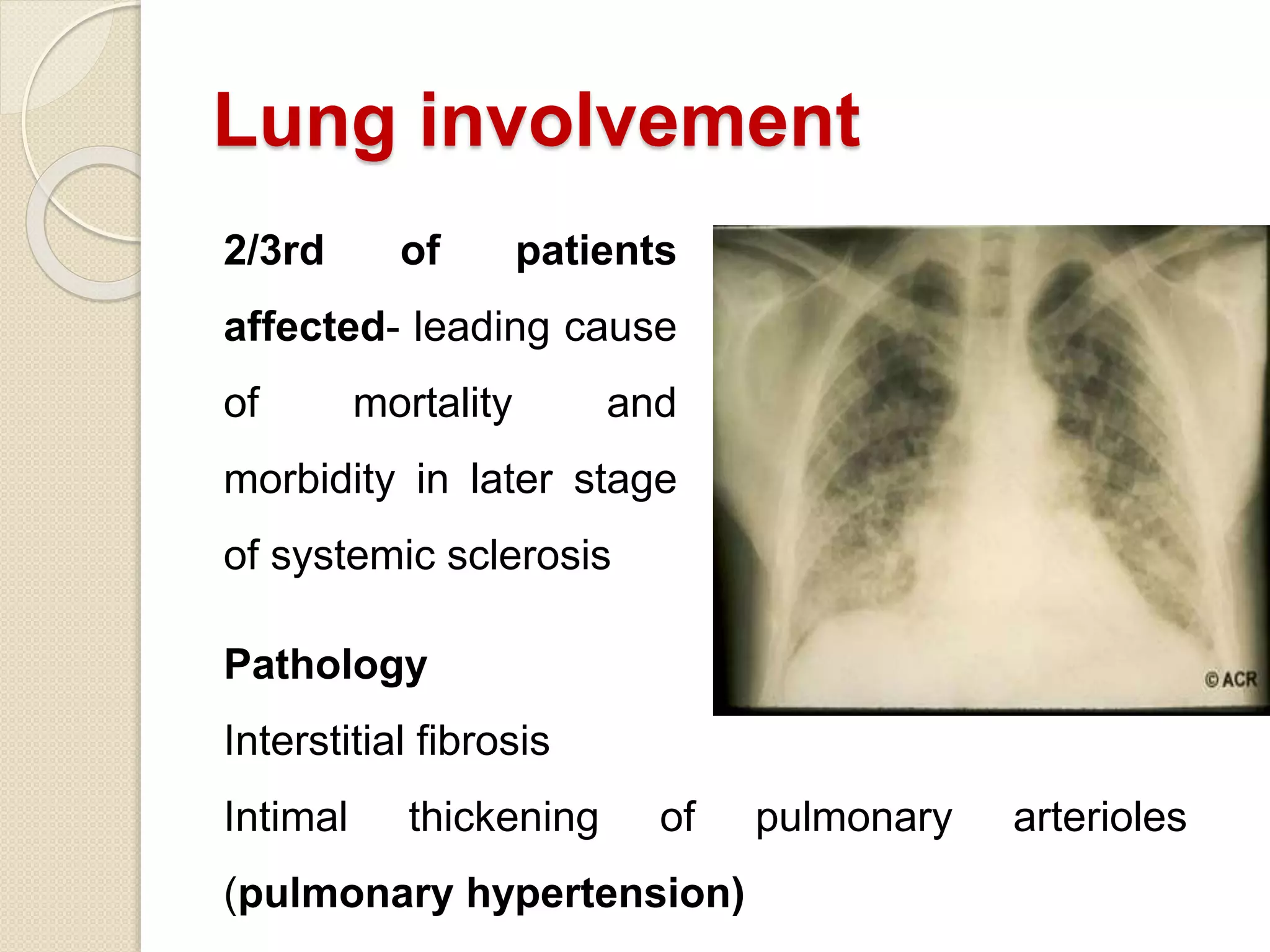
Lung involvement
2/3rd of patients
affected- leading cause
of mortality and
morbidity in later stage
of systemic sclerosis
Pathology
Interstitial fibrosis
Intimal thickening of pulmonary arterioles
(pulmonary hypertension)
Heart involvement (10%)
1. Pericarditis
2. Heart failure
3. Arrhythmia
4. Myocardial fibrosis
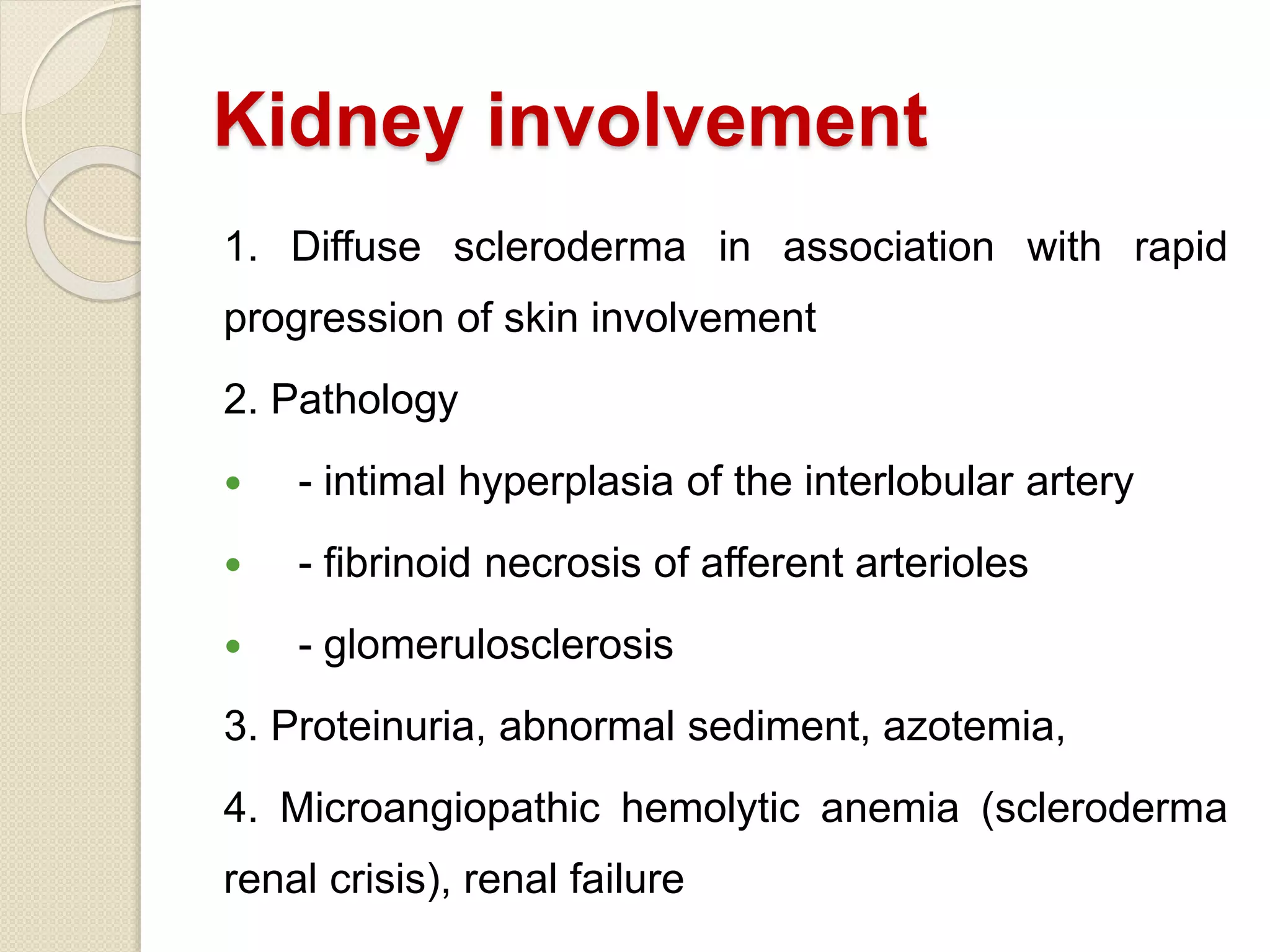
Kidney involvement
1. Diffuse scleroderma in association with rapid
progression of skin involvement
2. Pathology
 - intimal hyperplasia of the interlobular artery
 - fibrinoid necrosis of afferent arterioles
 - glomerulosclerosis
3. Proteinuria, abnormal sediment, azotemia,
4. Microangiopathic hemolytic anemia (scleroderma
renal crisis), renal failure
Summary of major
complication
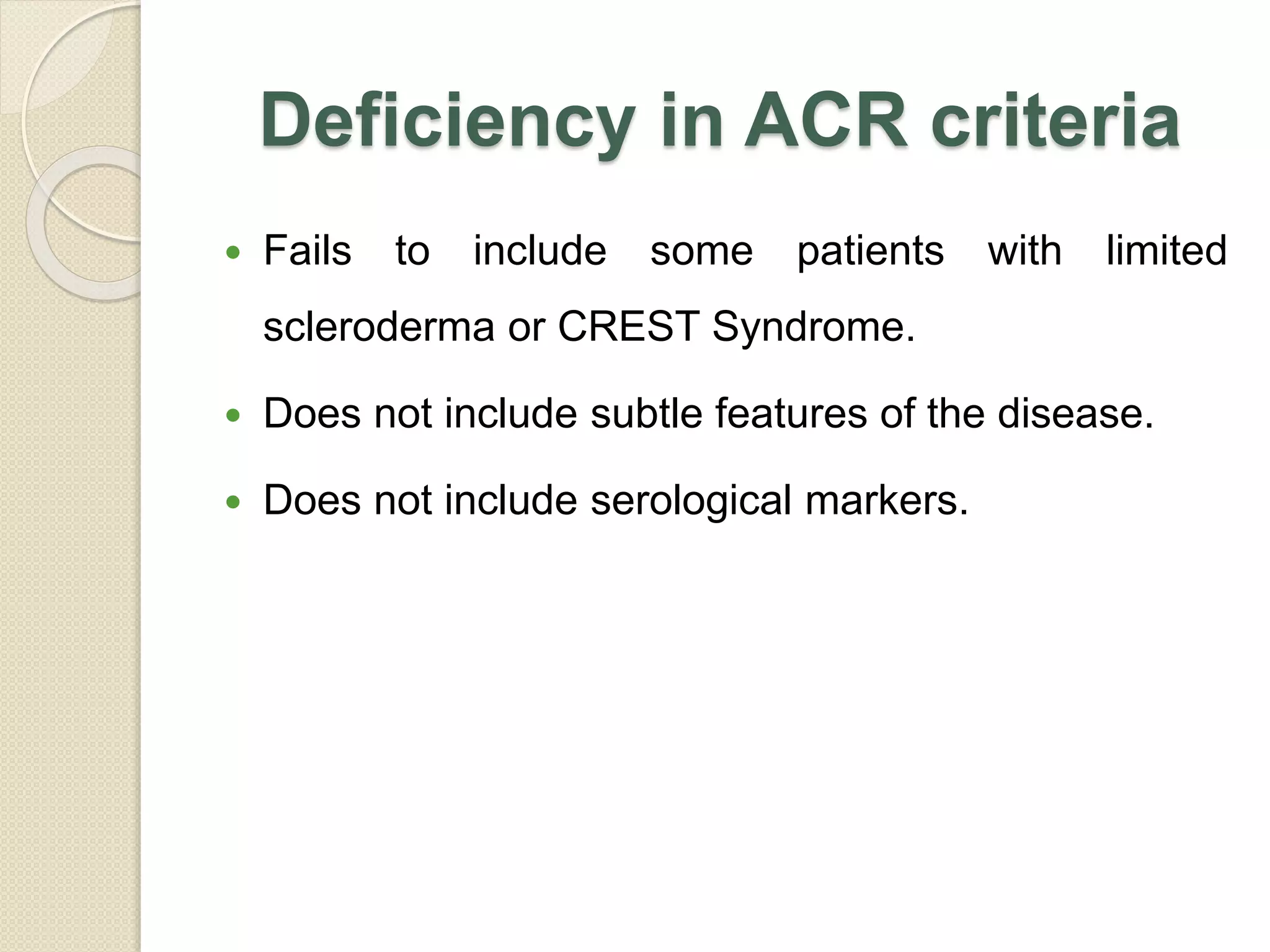
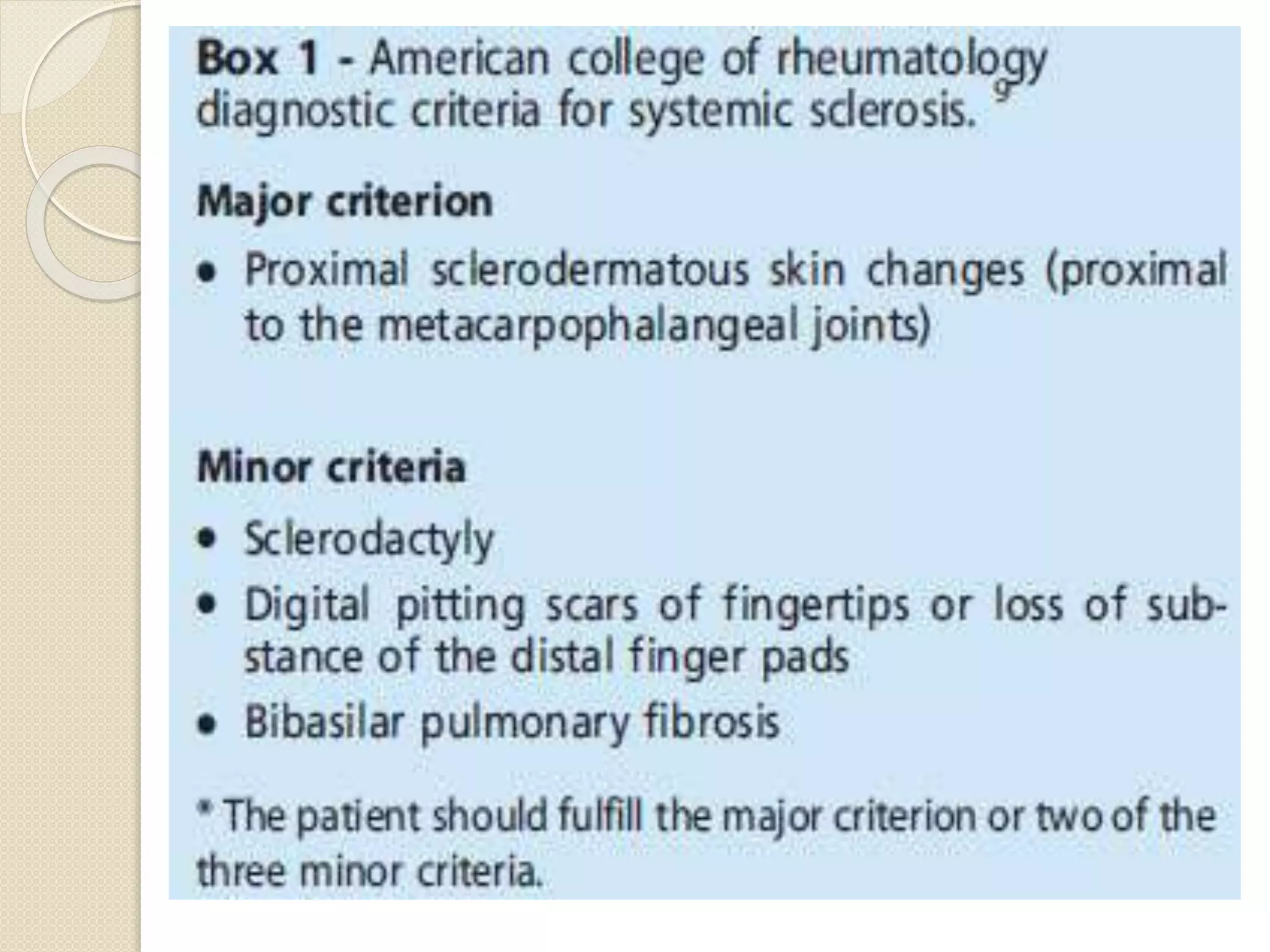
Deficiency in ACR criteria
 Fails to include some patients with limited
scleroderma or CREST Syndrome.
 Does not include subtle features of the disease.
 Does not include serological markers.
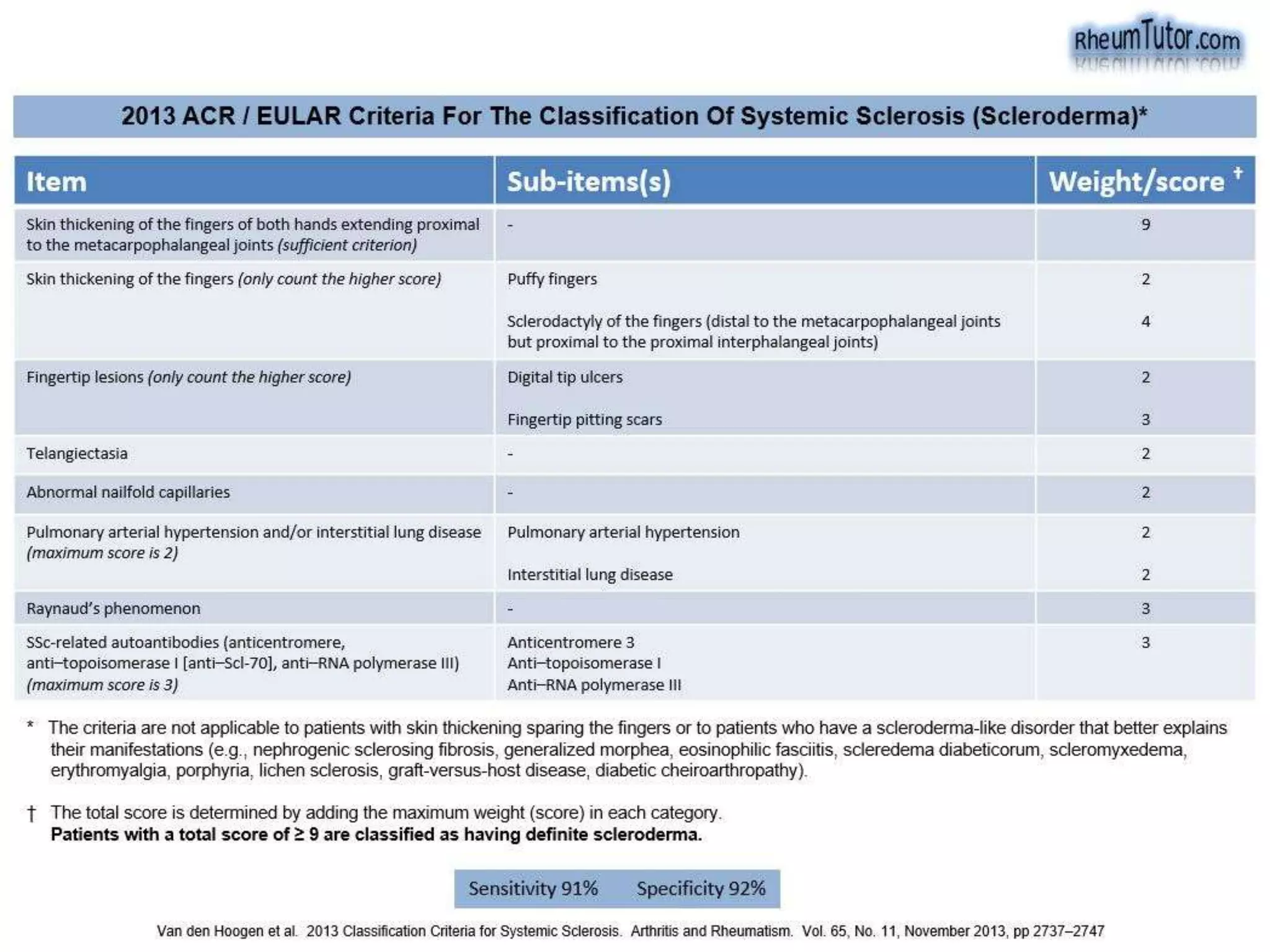
2013 ACR/EULAR
CLASSIFICATION CRITERIA
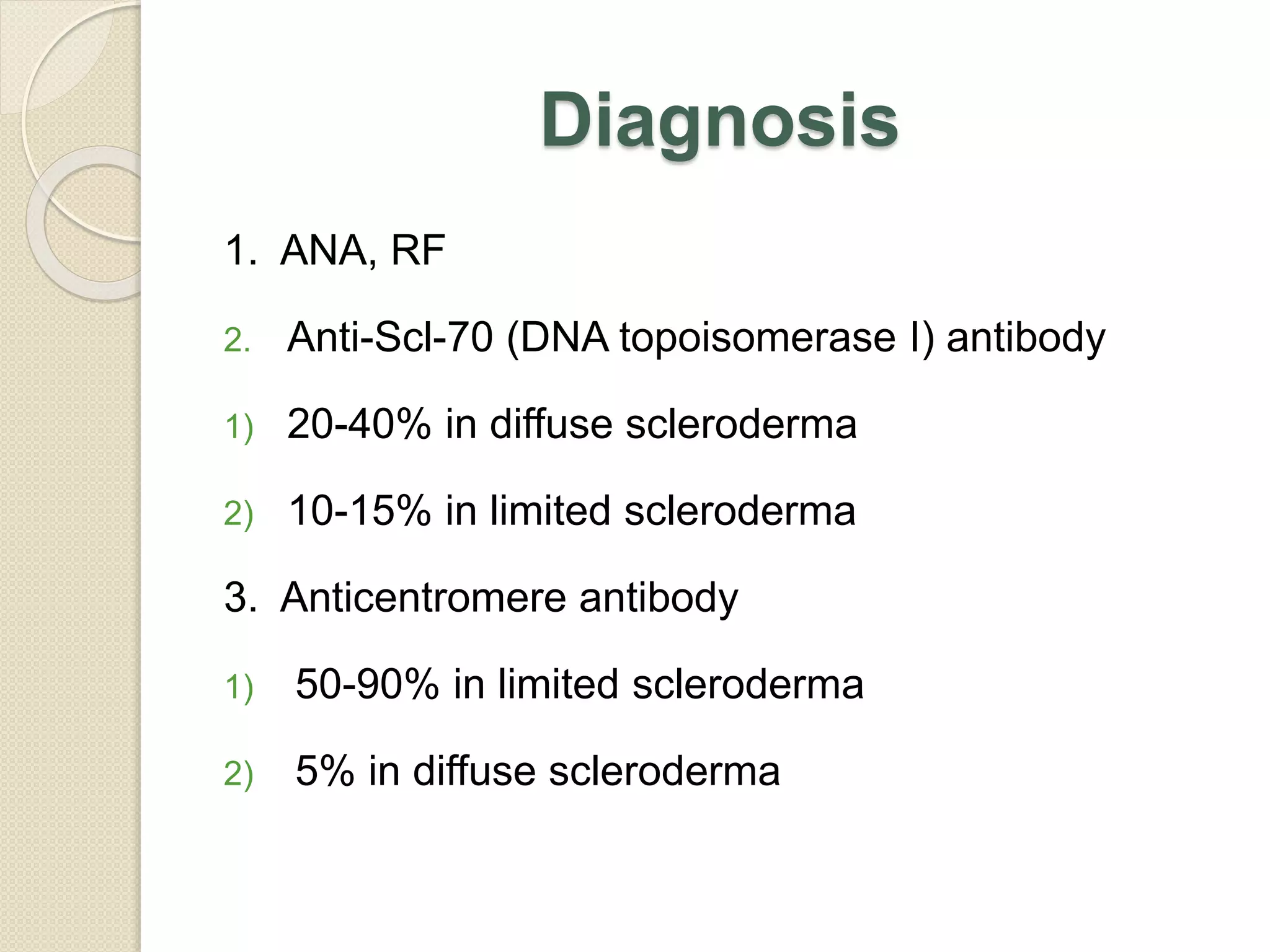
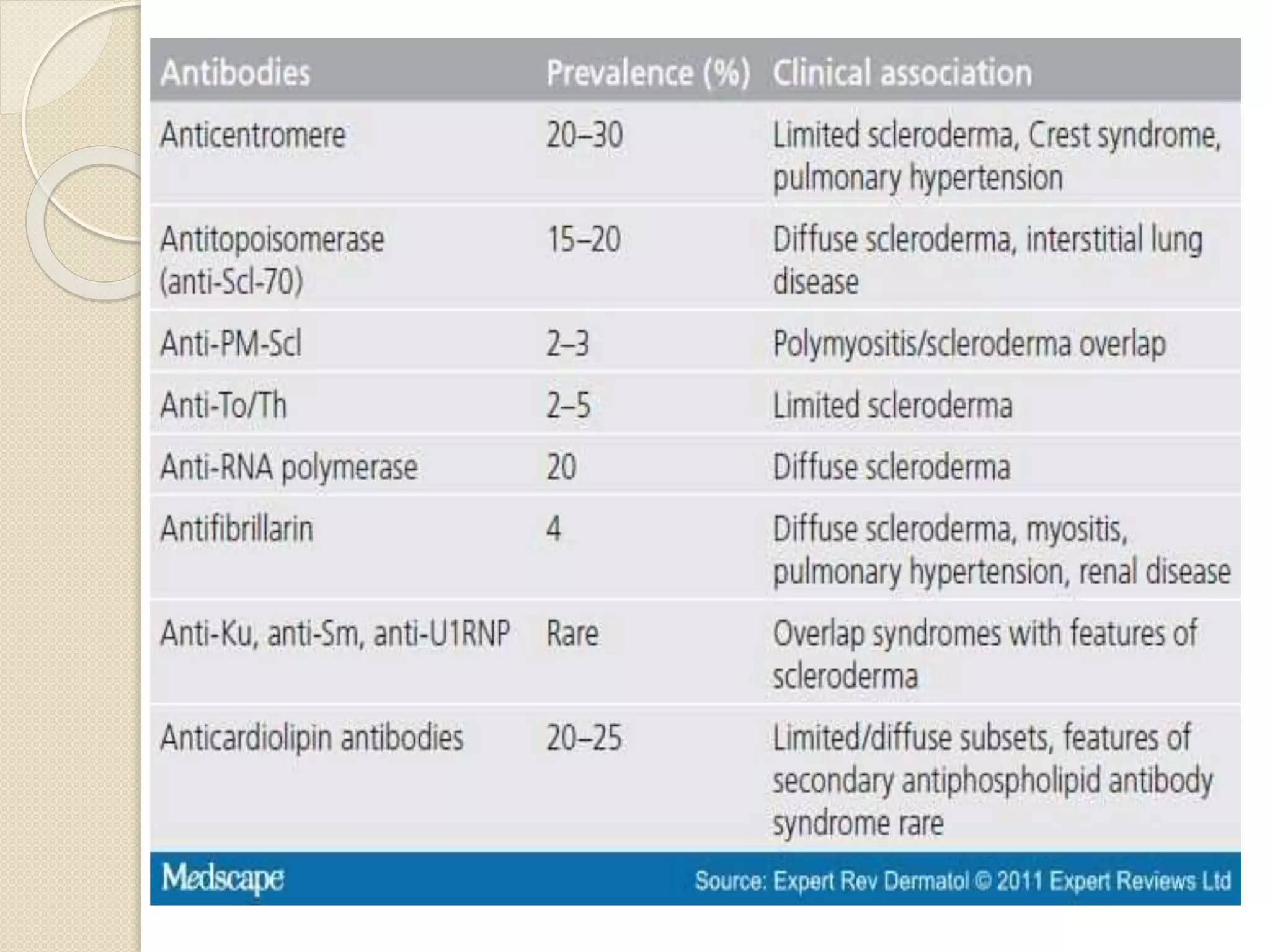
Diagnosis
1. ANA, RF
2. Anti-Scl-70 (DNA topoisomerase I) antibody
1) 20-40% in diffuse scleroderma
2) 10-15% in limited scleroderma
3. Anticentromere antibody
1) 50-90% in limited scleroderma
2) 5% in diffuse scleroderma
Monitoring disease activity
Skin thickness scores:
 The most widely accepted method for monitoring skin
changes in systemic sclerosis is by simple clinical
palpation.
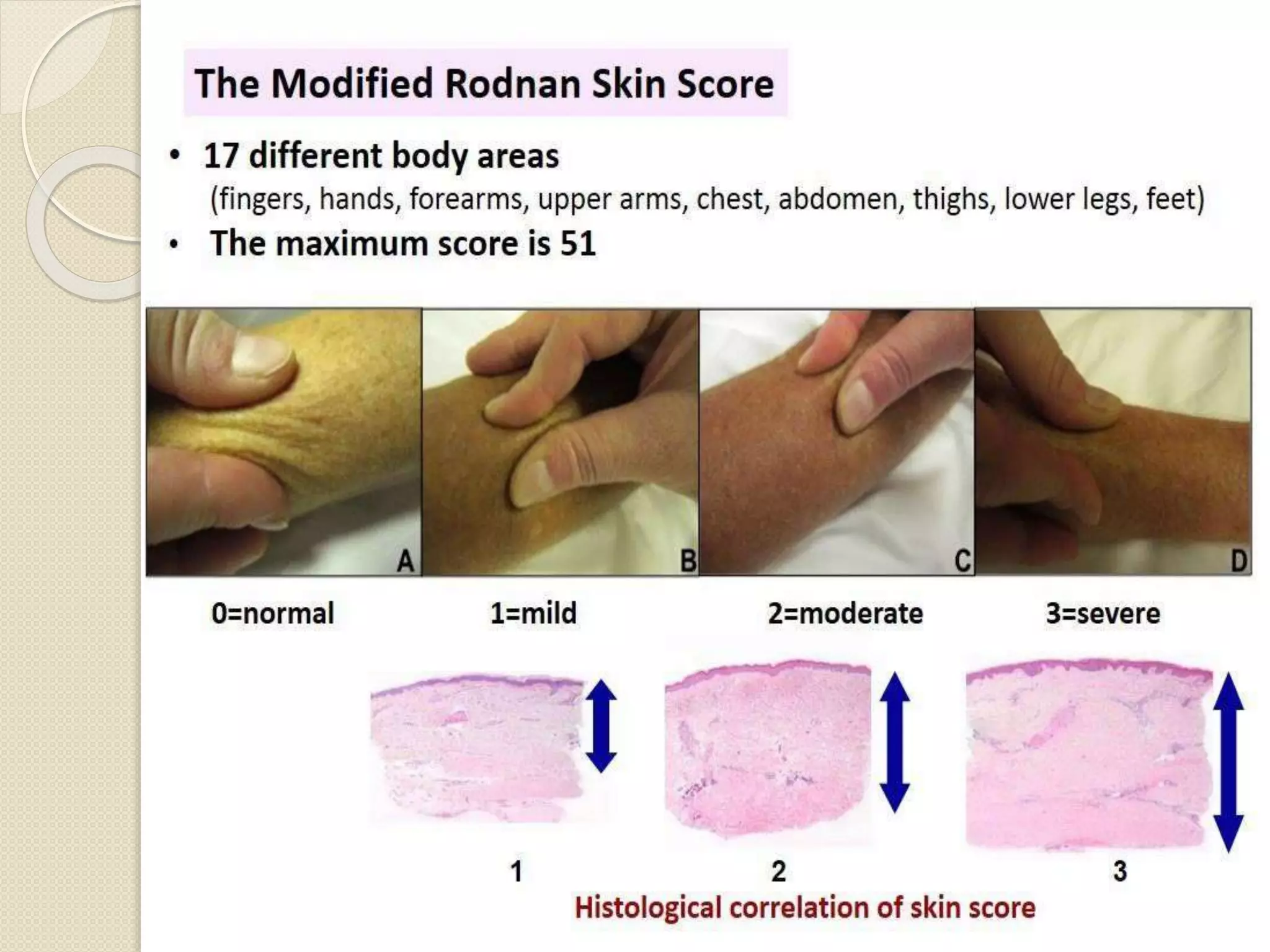
 The modified Rodnan skin score employs a
qualitative rating scale (0, normal skin; 1, mild; 2,
moderate; 3, severe thickening) of the findings on
clinical palpation of 17 body areas
 Is a semi-quantitative tool for clinical research as well
as a measure of clinical progress in the individualIJDVL March-April 2004 Vol 70 Issue 2
Monitoring disease activity
 Health assessment questionnaire (HAQ)–
Disability
Index (DI) has been shown to be the most accurate
predictor of survival.
 It outperformed a variety of clinical and laboratory
features.
 DI score correlates well with total skin thickness
score, reduced fist closure, and proximal muscle
weakness IJDVL March-April 2004 Vol 70 Issue 2
Prognosis
 Quite variable and difficult to predict
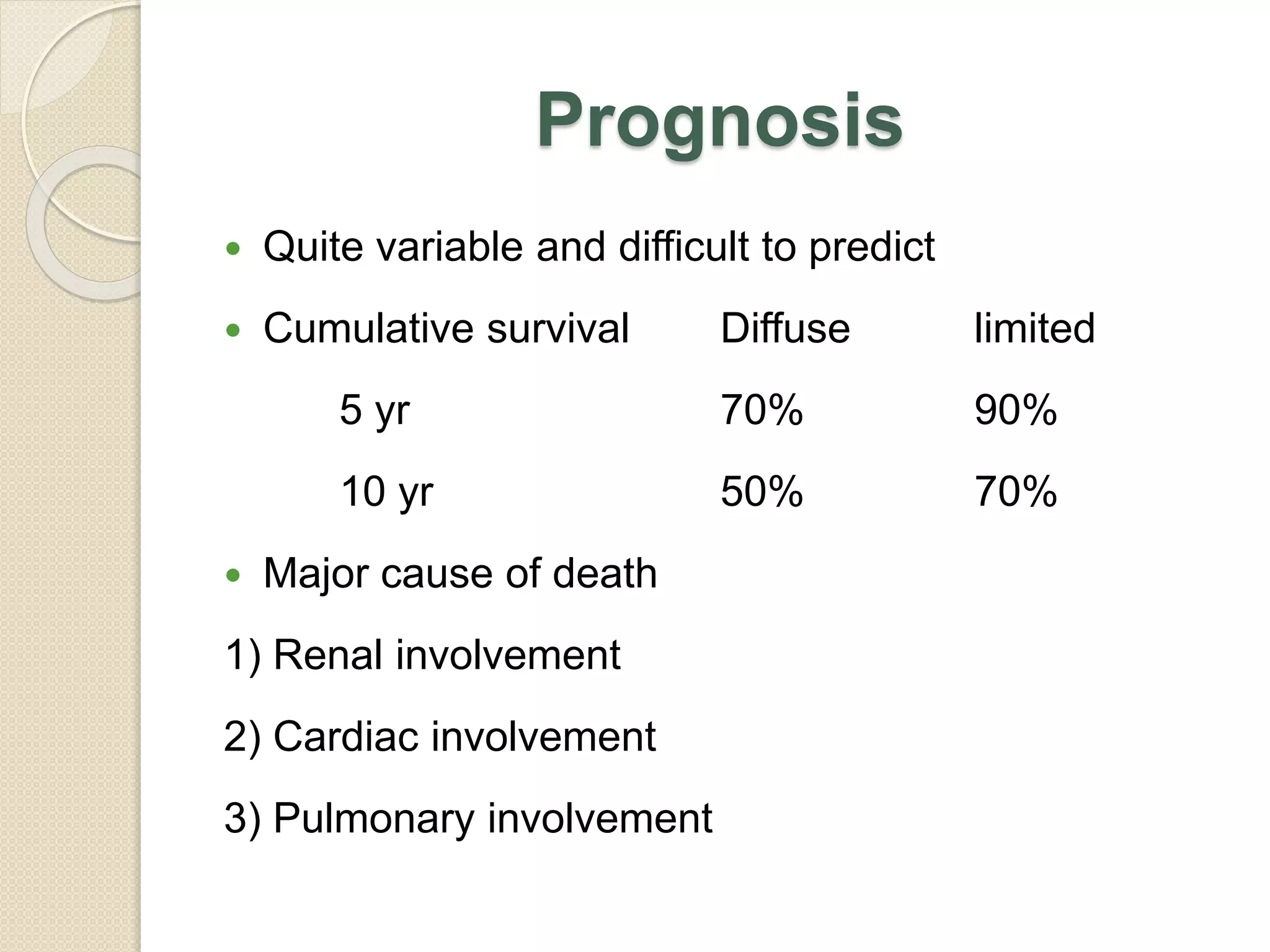
 Cumulative survival Diffuse limited
5 yr 70% 90%
10 yr 50% 70%
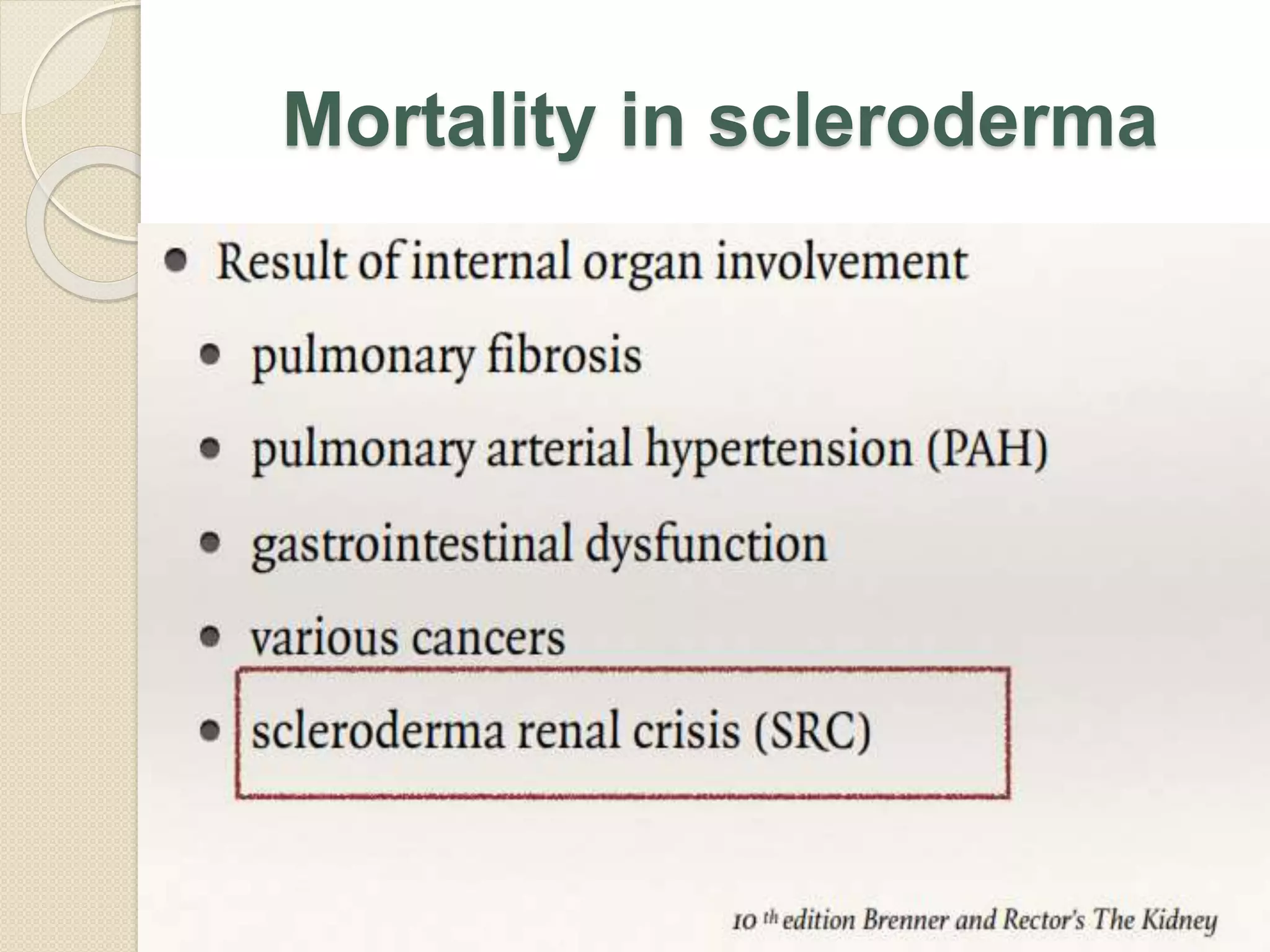
 Major cause of death
1) Renal involvement
2) Cardiac involvement
3) Pulmonary involvement
Mortality in scleroderma
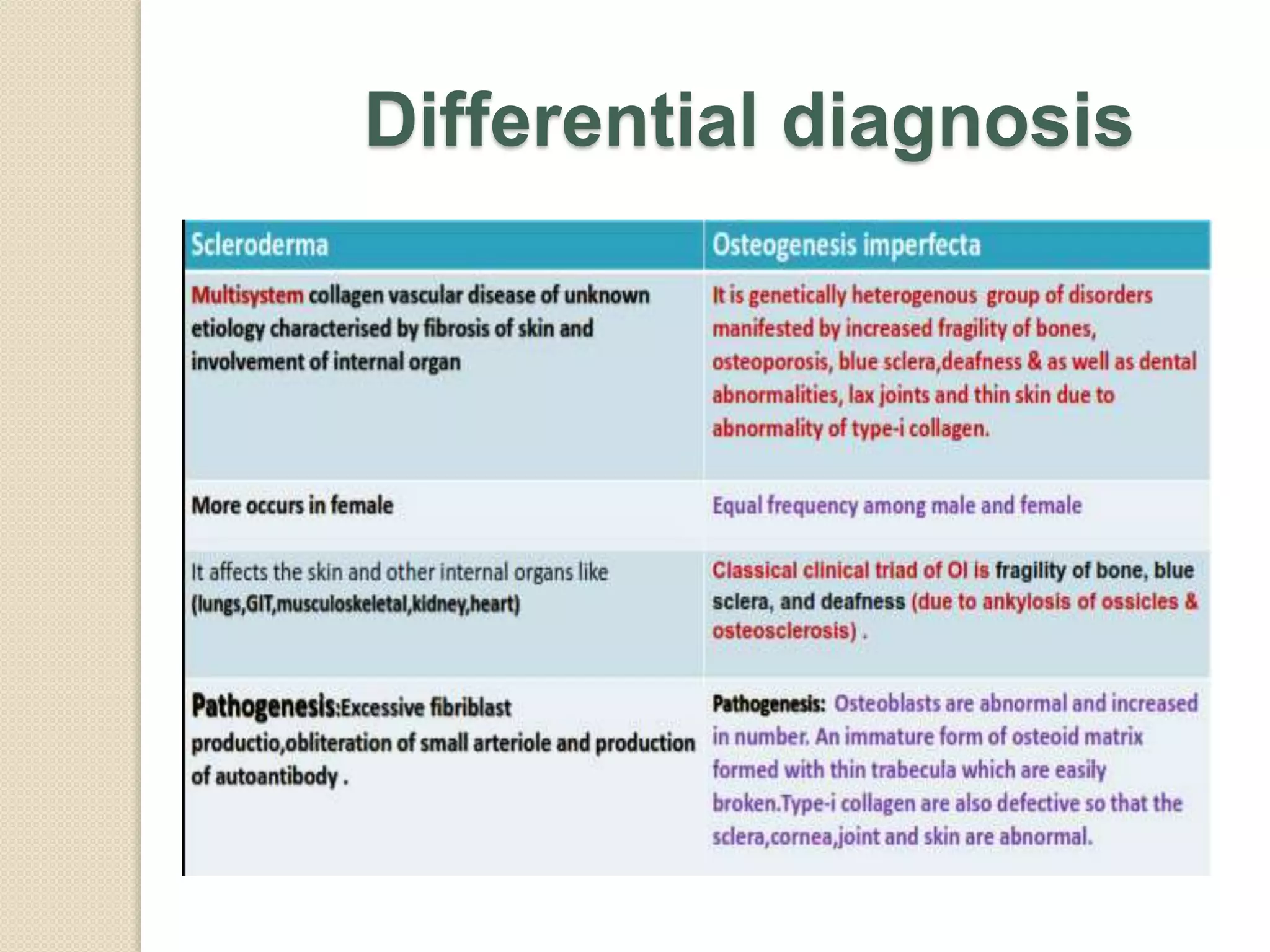
Differential diagnosis
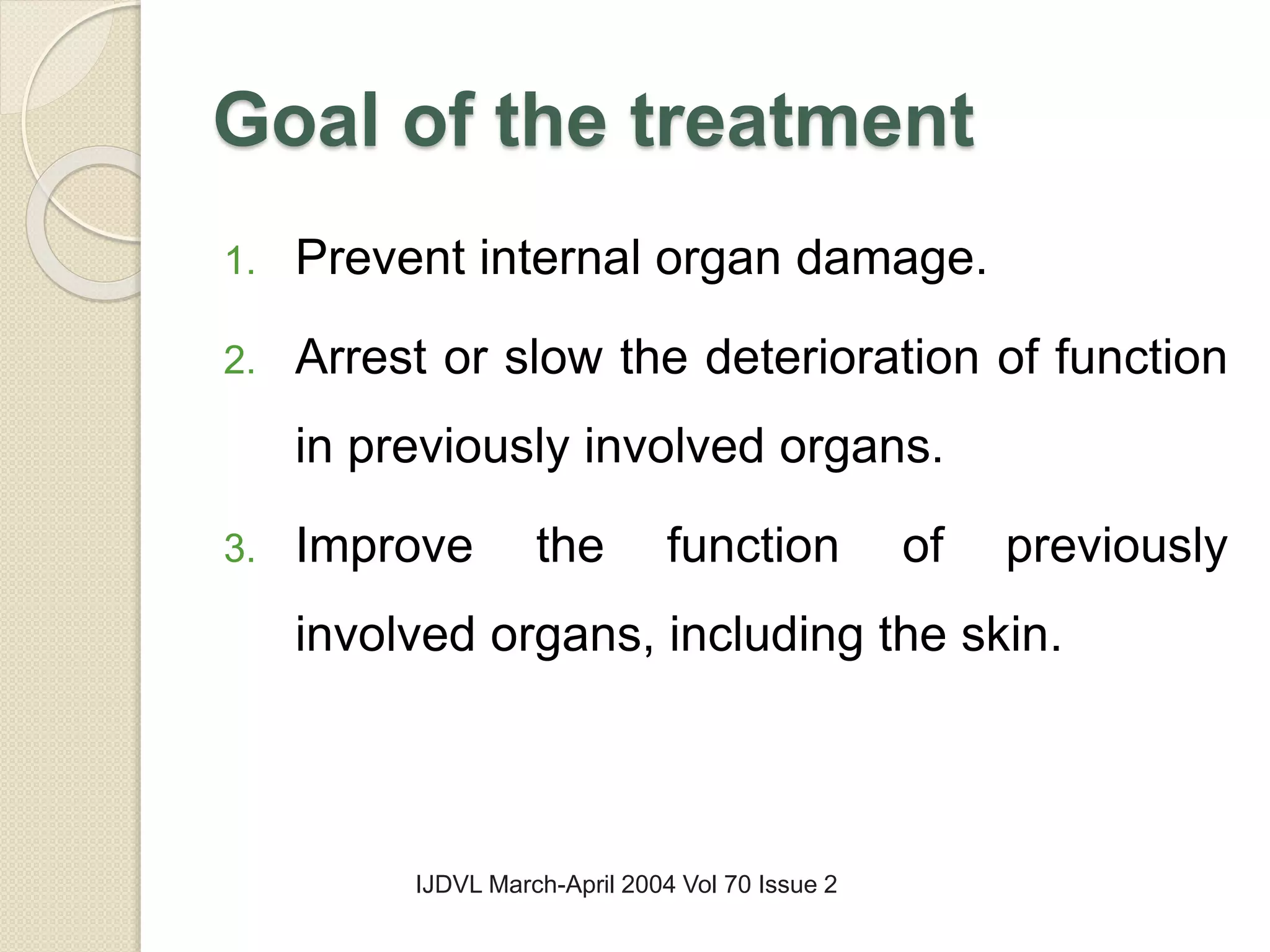
Goal of the treatment
1. Prevent internal organ damage.
2. Arrest or slow the deterioration of function
in previously involved organs.
3. Improve the function of previously
involved organs, including the skin.
IJDVL March-April 2004 Vol 70 Issue 2
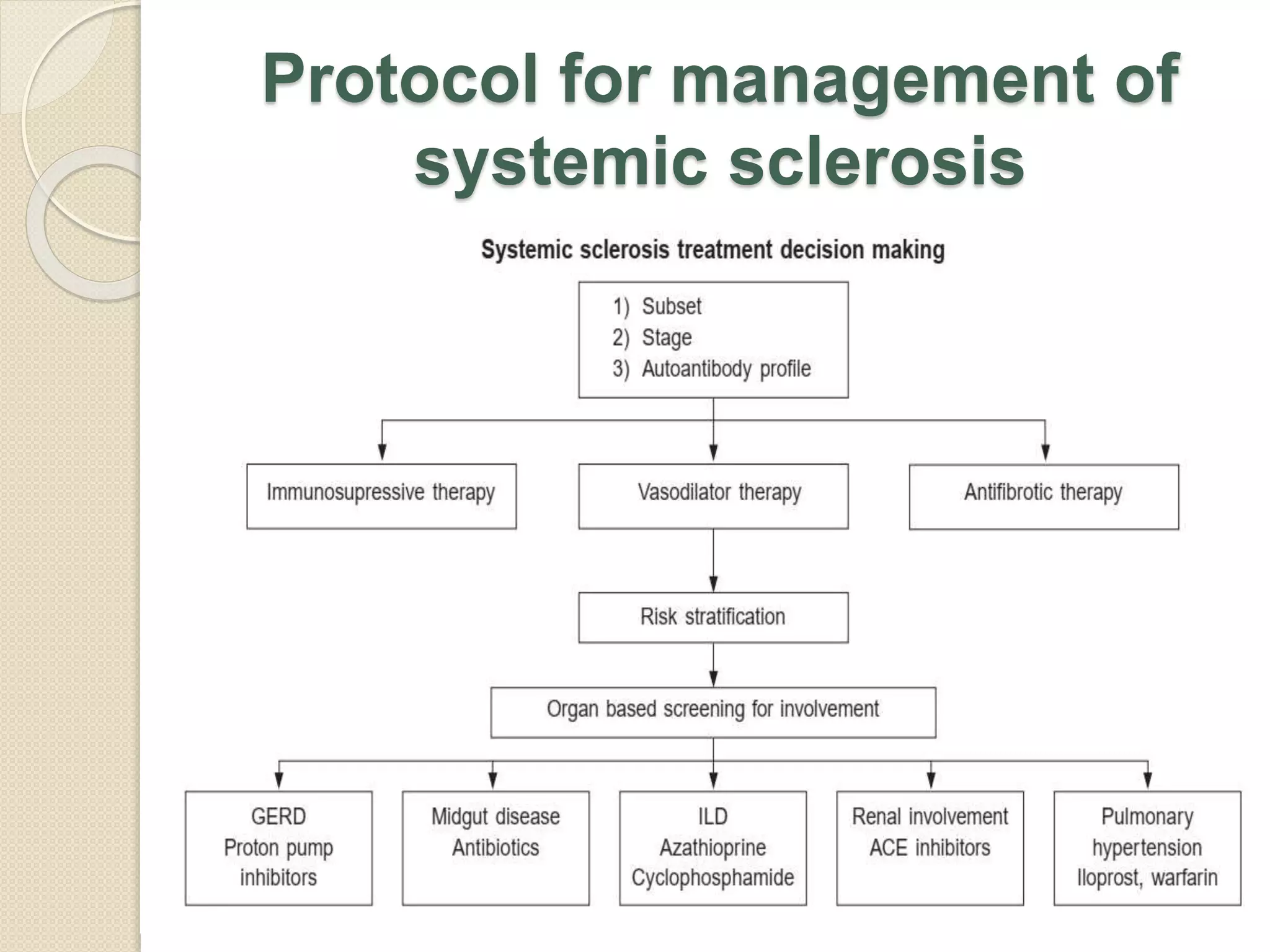
Protocol for management of
systemic sclerosis
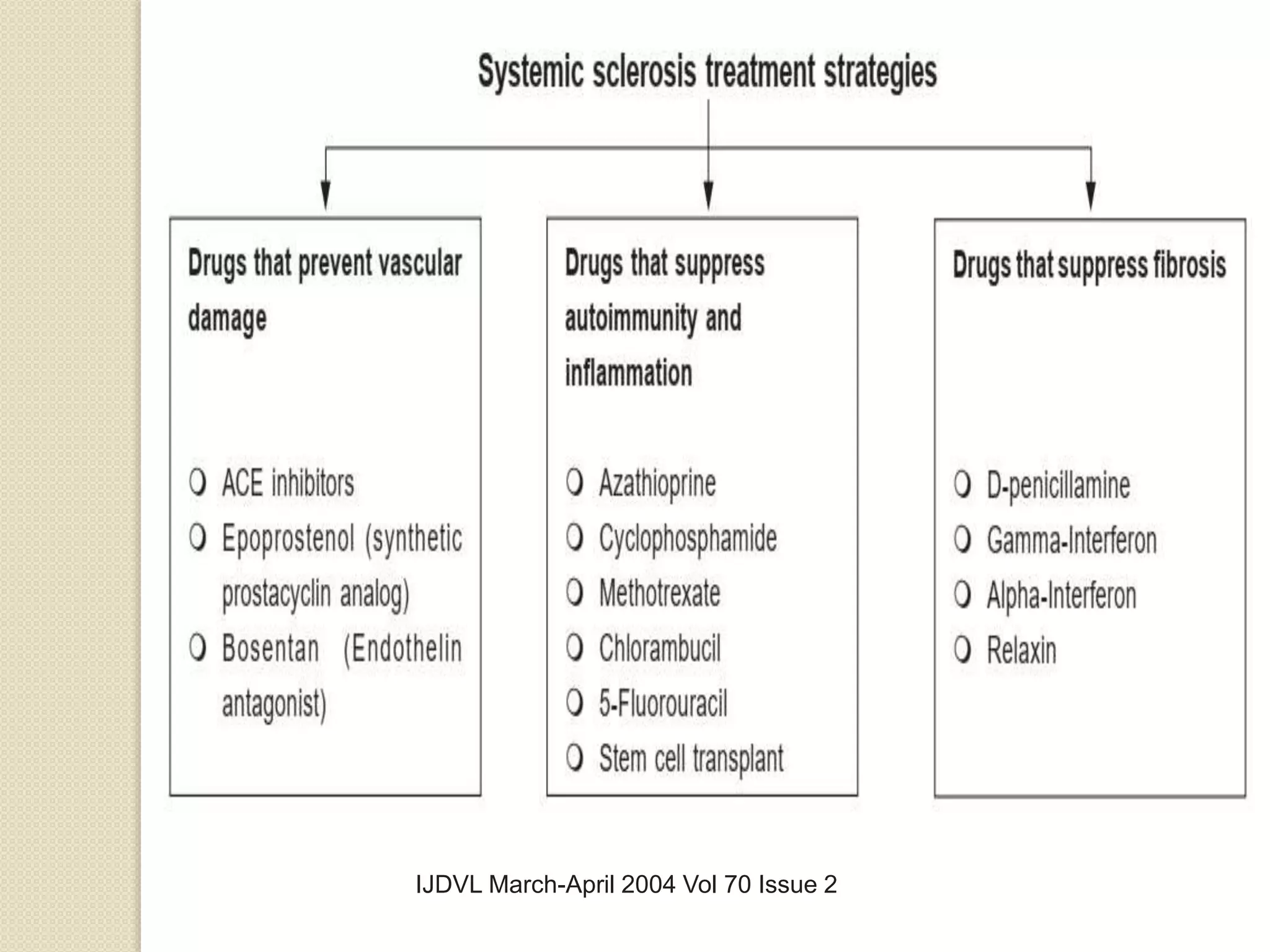
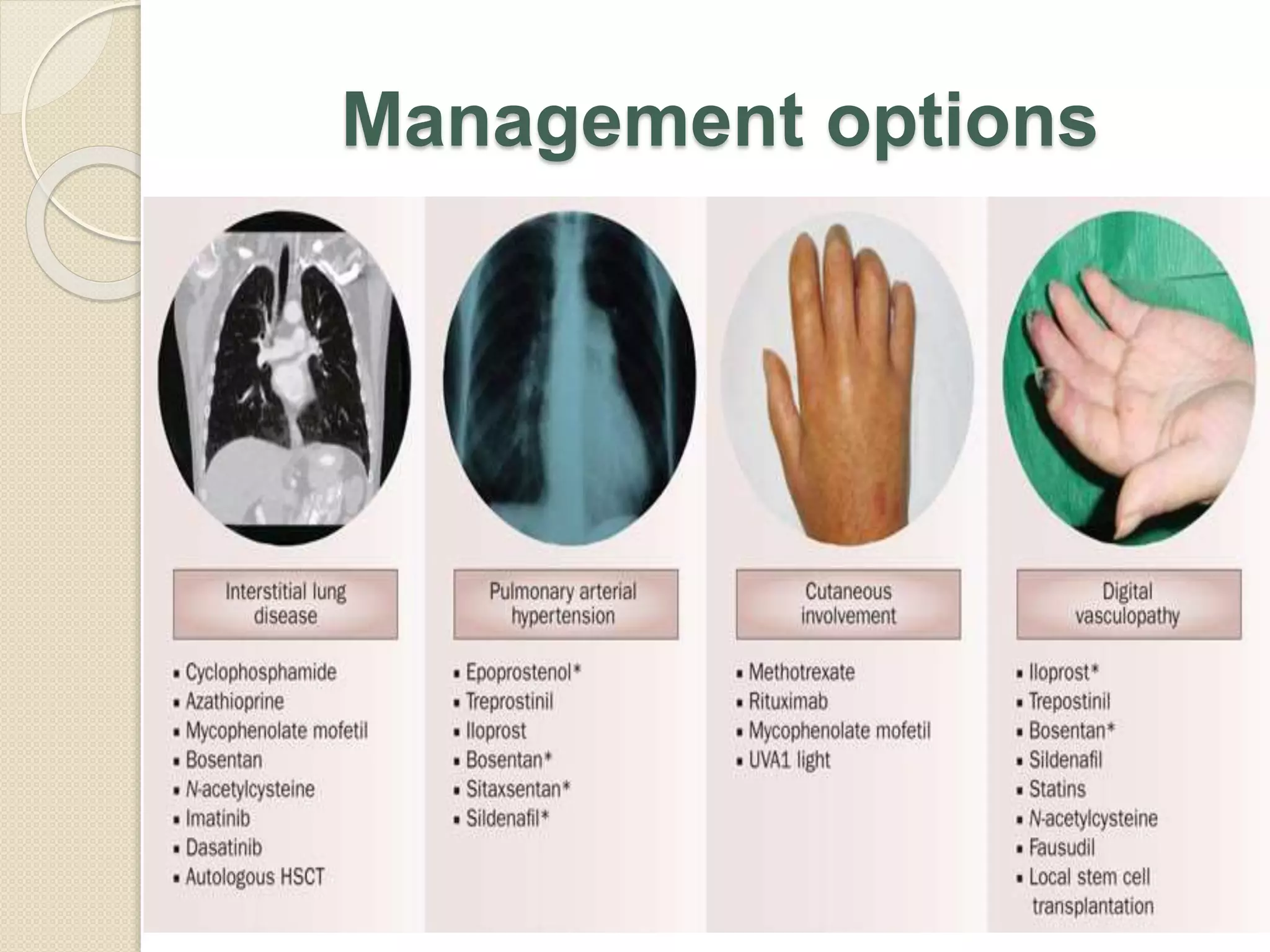
Management options
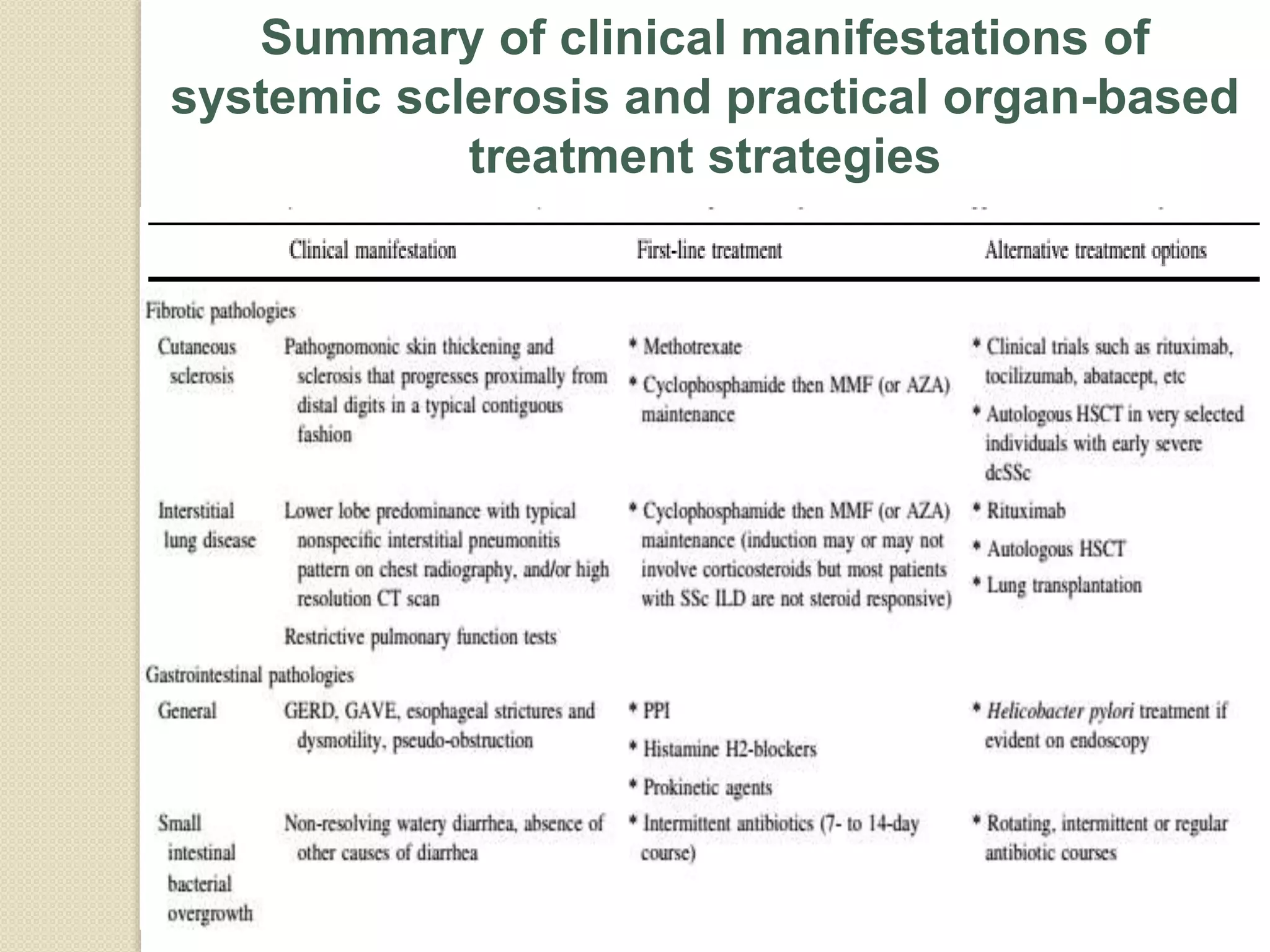
Summary of clinical manifestations of
systemic sclerosis and practical organ-based
treatment strategies
Summary of clinical manifestations of
systemic sclerosis and practical organ-based
treatment strategies
Summary of clinical manifestations of
systemic sclerosis and practical organ-based
treatment strategies
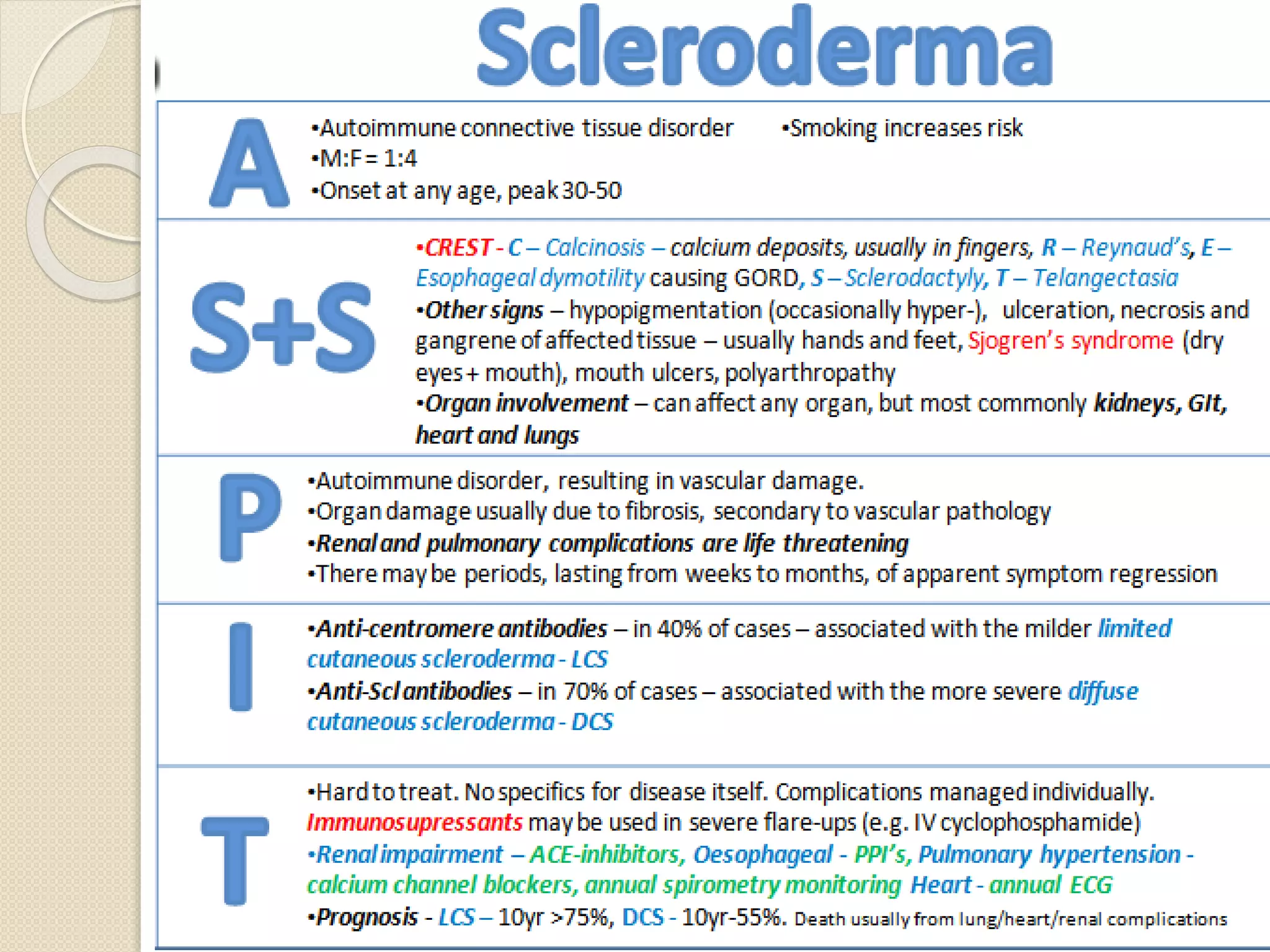
Scleroderma
Scleroderma

Scleroderma

  • 1.
  • 2.
    Definition Multisystem collagen vascular diseaseof unknown etiology characterized by  fibrosis of the skin with  involvement of the internal organs.
  • 5.
    Pathophysiology Vasculopathy of smallartery and capillary  Endothelial cell injury  Adhesion and activation of platelet  PDGF, thromboxane A2 release  Vasoconstriction & growth of endothelial cell and fibroblast  Narrowing or obliteration, increased permeability Fibrosis  Aberrant regulation of fibroblast cell growth  Increased production of extracellular matrix (collagen, fibronectin, and glycosaminoglycan)  Thickening of the skin & fibrosis of internal organs
  • 6.
    Immunological mechanism Cell mediatedimmunity  Skin: cellular infiltrates in perivascular region and dermis (T cell, Langerhans cell, plasma cell, macrophages) Humoral immunity  Hypergammaglobulinemia  Autoantibody production : Antinuclear antibody (+) >95%
  • 7.
    Environmental factors 1. Silicadust 2. Organic solvents 3. Biogenic amines 4. Urea formaldehyde 5. Polyvinyl chloride 6. Rapeseed oil 7. Bleomycin 8. L-tryptophan 9. Silicone implant
  • 8.
  • 9.
    Systemic sclerosis A multisystemdisorder characterized by  Functional and structural abnormalities of blood vessels  Fibrosis of the skin and internal organs  Immune system activation  Autoimmunity
  • 10.
    Diffuse cutaneous systemic sclerosis Proximal skin thickening - distal and proximal extremity and often the trunk and face  Tendency to rapid progression of skin change  Rapid onset of disease following Raynaud’s phenomenon  Early appearance of visceral involvement  Poor prognosis
  • 11.
    Limited cutaneous systemic sclerosis 1)symmetric restricted fibrosis - affecting the distal extremities and face/neck 2) prolonged delay in appearance of distinctive internal manifestation 3) prominence of calcinosis and telangiectasia 4) good prognosis * CREST syndrome
  • 17.
    Localized scleroderma MORPHEA  Arare skin condition that causes reddish or purplish patches on your skin.  Tends to affect only the outermost layers of your skin-the dermis and the fatty tissue just beneath the dermis.  Location – Abdomen, chest and back Face, Arms and legs
  • 18.
    Signs of morphea Hardening and thickening of the skin.  Discoloration of the affected skin to look lighter or darker than the surrounding area.  Oval-shaped patches that may change colors and gradually develop a whitish center.  Linear patches, especially when on arms and legs  Loss of hair and sweat glands in the affected area over time.
  • 20.
  • 22.
    Demographics  Incidence :9-19 cases/million/year  Age: middle age (30-50)  Sex: F>M (3:1)
  • 23.
    Clinical features Vascular abnormalities Raynaud's phenomenon  Cold hands and feet with reversible skin colour change (white to blue to red)  Induced by cold temperature or emotional stress  Initial complaint in 3/4 of patients  90% in patients with skin change (prevalence in the general population: 4-15%)  Digital ischemic injury
  • 24.
  • 25.
  • 26.
  • 27.
    Skin thickening  Basicallythis is water in the tissues = edema  Binding of water to increased extracellular  connective tissue matrix  Inflammation  Poor lymphatic return  Microvascular injury with fluid extravasation
  • 28.
  • 29.
    Facial changes  Pinchednose (mauskopf)  Pursed lips  Cannot evert eyelids  Lip thinning and  retraction  Immobile facies
  • 30.
    Intestinal involvement 1. Esophagus:hypomotility and retrosternal pain, reflux esophagitis, stricture 2. Stomach: delayed emptying 3. Small intestine: pseudo-obstruction, paralytic ileus, malabsorption 4. Large intestine: chronic constipation and fecal impaction diverticula
  • 31.
    Gastrointestinal  Disordered peristalsisof the lower two thirds of the esophagus presents as dysphagia  Impaired function of the lower esophageal sphincter  Chronic esophageal reflux include erosive esophagitis with bleeding, Barrett's esophagus, and lower esophageal stricture  Involvement of the stomach occurs in systemic sclerosis and presents clinically as ease of satiety and on occasion as either functional gastric outlet obstruction or acute gastric dilatation.
  • 32.
    Small bowel involvement Intermittent bloating with abdominal cramps, intermittent or chronic diarrhea, and presentations suggestive of intestinal obstruction.  Malabsorption occurs  Bacterial overgrowth in areas of intestinal stasis occurs frequently
  • 34.
    Colonic involvement  Ispresent in the majority of patients with systemic sclerosis  Is infrequently a prominent cause of clinical symptoms  Constipation, obstipation, and Pseudo-obstruction may occur and are related to abnormal colonic motility
  • 35.
    Lung involvement 2/3rd ofpatients affected- leading cause of mortality and morbidity in later stage of systemic sclerosis Pathology Interstitial fibrosis Intimal thickening of pulmonary arterioles (pulmonary hypertension)
  • 36.
    Heart involvement (10%) 1.Pericarditis 2. Heart failure 3. Arrhythmia 4. Myocardial fibrosis
  • 37.
    Kidney involvement 1. Diffusescleroderma in association with rapid progression of skin involvement 2. Pathology  - intimal hyperplasia of the interlobular artery  - fibrinoid necrosis of afferent arterioles  - glomerulosclerosis 3. Proteinuria, abnormal sediment, azotemia, 4. Microangiopathic hemolytic anemia (scleroderma renal crisis), renal failure
  • 38.
  • 40.
    Deficiency in ACRcriteria  Fails to include some patients with limited scleroderma or CREST Syndrome.  Does not include subtle features of the disease.  Does not include serological markers.
  • 41.
  • 42.
    Diagnosis 1. ANA, RF 2.Anti-Scl-70 (DNA topoisomerase I) antibody 1) 20-40% in diffuse scleroderma 2) 10-15% in limited scleroderma 3. Anticentromere antibody 1) 50-90% in limited scleroderma 2) 5% in diffuse scleroderma
  • 44.
    Monitoring disease activity Skinthickness scores:  The most widely accepted method for monitoring skin changes in systemic sclerosis is by simple clinical palpation.  The modified Rodnan skin score employs a qualitative rating scale (0, normal skin; 1, mild; 2, moderate; 3, severe thickening) of the findings on clinical palpation of 17 body areas  Is a semi-quantitative tool for clinical research as well as a measure of clinical progress in the individualIJDVL March-April 2004 Vol 70 Issue 2
  • 46.
    Monitoring disease activity Health assessment questionnaire (HAQ)– Disability Index (DI) has been shown to be the most accurate predictor of survival.  It outperformed a variety of clinical and laboratory features.  DI score correlates well with total skin thickness score, reduced fist closure, and proximal muscle weakness IJDVL March-April 2004 Vol 70 Issue 2
  • 47.
    Prognosis  Quite variableand difficult to predict  Cumulative survival Diffuse limited 5 yr 70% 90% 10 yr 50% 70%  Major cause of death 1) Renal involvement 2) Cardiac involvement 3) Pulmonary involvement
  • 48.
  • 49.
  • 50.
    Goal of thetreatment 1. Prevent internal organ damage. 2. Arrest or slow the deterioration of function in previously involved organs. 3. Improve the function of previously involved organs, including the skin. IJDVL March-April 2004 Vol 70 Issue 2
  • 51.
    IJDVL March-April 2004Vol 70 Issue 2
  • 52.
    Protocol for managementof systemic sclerosis
  • 53.
  • 54.
    Summary of clinicalmanifestations of systemic sclerosis and practical organ-based treatment strategies
  • 55.
    Summary of clinicalmanifestations of systemic sclerosis and practical organ-based treatment strategies
  • 56.
    Summary of clinicalmanifestations of systemic sclerosis and practical organ-based treatment strategies