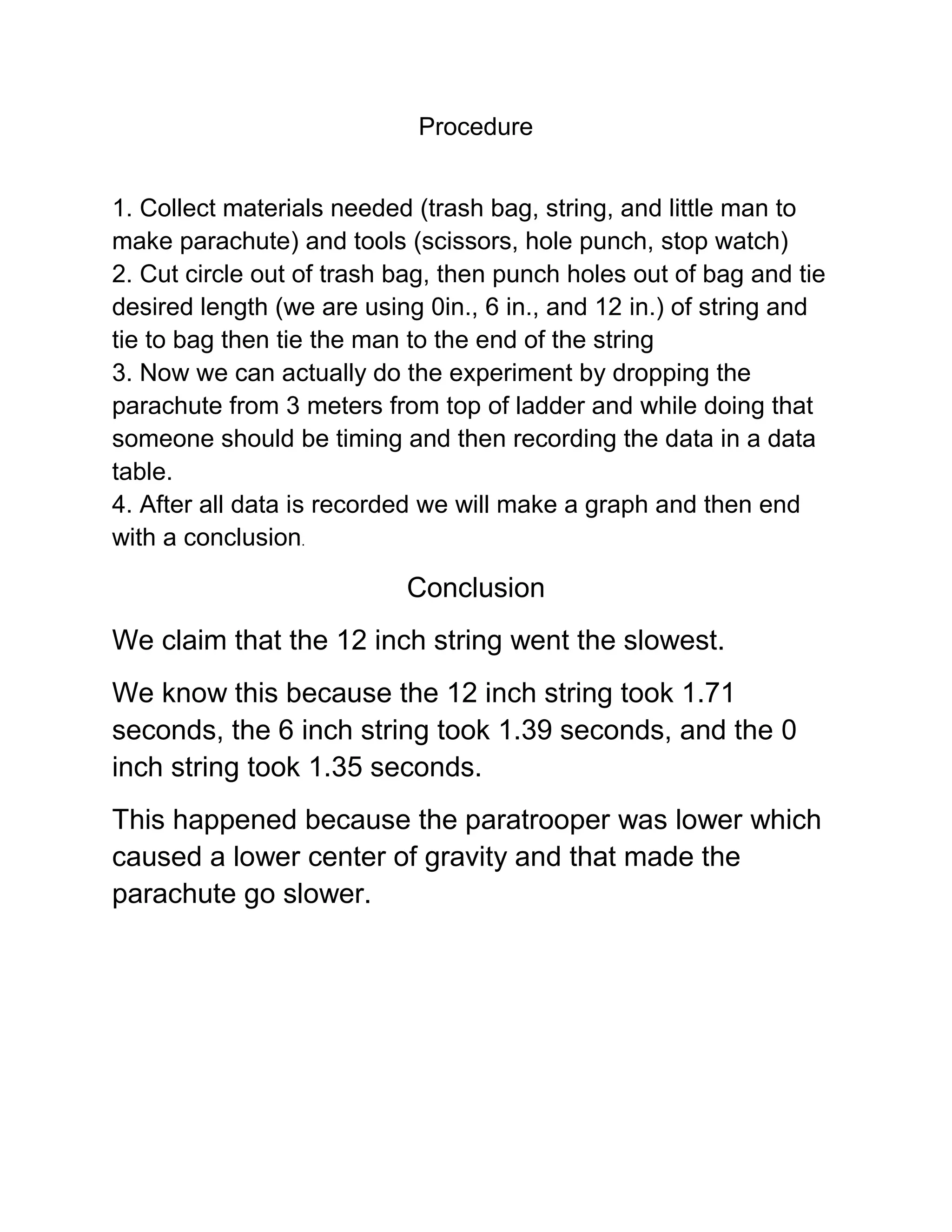
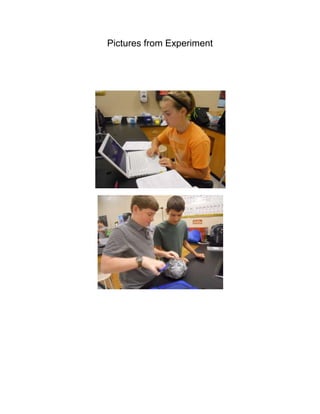
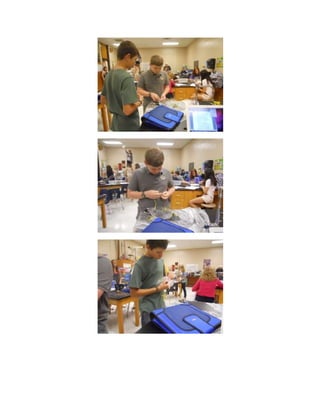
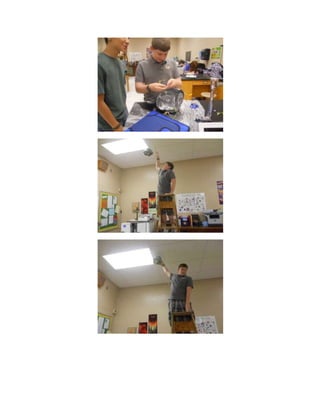
Procedure<br />1. Collect materials needed (trash bag, string, and little man to make parachute) and tools (scissors, hole punch, stop watch)2. Cut circle out of trash bag, then punch holes out of bag and tie desired length (we are using 0in., 6 in., and 12 in.) of string and tie to bag then tie the man to the end of the string3. Now we can actually do the experiment by dropping the parachute from 3 meters from top of ladder and while doing that someone should be timing and then recording the data in a data table.4. After all data is recorded we will make a graph and then end with a conclusion.<br />Conclusion<br />We claim that the 12 inch string went the slowest.<br />We know this because the 12 inch string took 1.71 seconds, the 6 inch string took 1.39 seconds, and the 0 inch string took 1.35 seconds.<br />This happened because the paratrooper was lower which caused a lower center of gravity and that made the parachute go slower.<br />Pictures from Experiment<br />
Science hw
Science hw
Science hw

Science hw

  • 1.
    Procedure<br />1. Collectmaterials needed (trash bag, string, and little man to make parachute) and tools (scissors, hole punch, stop watch)2. Cut circle out of trash bag, then punch holes out of bag and tie desired length (we are using 0in., 6 in., and 12 in.) of string and tie to bag then tie the man to the end of the string3. Now we can actually do the experiment by dropping the parachute from 3 meters from top of ladder and while doing that someone should be timing and then recording the data in a data table.4. After all data is recorded we will make a graph and then end with a conclusion.<br />Conclusion<br />We claim that the 12 inch string went the slowest.<br />We know this because the 12 inch string took 1.71 seconds, the 6 inch string took 1.39 seconds, and the 0 inch string took 1.35 seconds.<br />This happened because the paratrooper was lower which caused a lower center of gravity and that made the parachute go slower.<br />Pictures from Experiment<br />