Scientific Method and Experimental Design
Goal of Science Steps of Scientific Method Hypothesis Independent and Dependent Variable  Experimental Design Sample Size and Validity Data Collection and Organization Conclusions The Characteristics of Science
Science A process, based on observations and experimentation, that provides explanations of natural events or problems Uses the scientific method Conclusions rely on data and facts
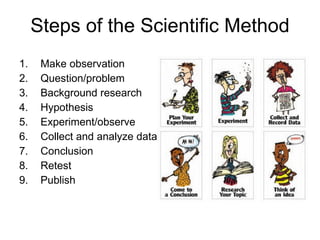
Steps of the Scientific Method Make observation Question/problem Background research Hypothesis Experiment/observe Collect and analyze data Conclusion Retest Publish
An possible explanation of a natural event or observation that can be tested by additional observations or experimentation Must be testable! Written as “If……., then……” statement Hypothesis
Identify 2 crucial variables to write hypothesis Independent variable : The factor that is deliberately manipulated in an experiment ( also called experimental variable ) “ Presumed cause” Dependent variable : The variable that changes in response to changes in the independent variable. It is what is measured in the experiment “ Presumed effect or result” Hypothesis
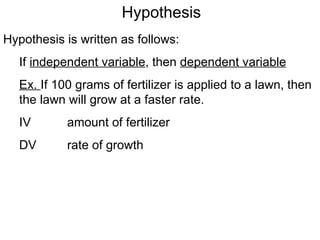
Hypothesis Hypothesis is written as follows: If  independent variable , then  dependent variable Ex.  If 100 grams of fertilizer is applied to a lawn, then the lawn will grow at a faster rate.  IV amount of fertilizer DV rate of growth
Controlled Experiments Tests one variable at a time (experimental variable) Controlled experiments include 2 groups: Experimental Group  Exposed to experimental variable Control Group Not exposed to experimental variable, all  variables held constant  All  extraneous variables  must be held constant in both groups!
Sample Size (N) The number of subjects involved in experimentation Increasing N Decreases impact of chance events and error Increase reliability of results (validity) Sample Size
The extent to which experimental results can be generalized to other settings or situations To increase validity, increase N Ex.  7 tanks, 6 experimental and 1 control Each tank has 100 single celled green organisms All variables held constant except the light Validity
Quantitative Data:  numerical data Ex. Measurement of depth in inches Qualitative Data:  descriptive data collect with your senses Ex. Color Use data tables and charts to more effectively display data for analysis Record and Analyze Data
Conclusion Refers back to the hypothesis “ Supported”  or “rejected”  Use data to support If the same conclusions are supported over a long enough period of time they become theories
The Characteristics of Science Based on the assumption that the natural world can be investigated and explained in terms we can understand. Based on the results of controlled experimentation and observations. The results must be repeatable and verifiable. Must be refutable. If a hypothesis is not supported by evidence it must be rejected or re-worded
 

Science and scientific method 400

  • 1.
    Scientific Method andExperimental Design
  • 2.
    Goal of ScienceSteps of Scientific Method Hypothesis Independent and Dependent Variable Experimental Design Sample Size and Validity Data Collection and Organization Conclusions The Characteristics of Science
  • 3.
    Science A process,based on observations and experimentation, that provides explanations of natural events or problems Uses the scientific method Conclusions rely on data and facts
  • 4.
    Steps of theScientific Method Make observation Question/problem Background research Hypothesis Experiment/observe Collect and analyze data Conclusion Retest Publish
  • 5.
    An possible explanationof a natural event or observation that can be tested by additional observations or experimentation Must be testable! Written as “If……., then……” statement Hypothesis
  • 6.
    Identify 2 crucialvariables to write hypothesis Independent variable : The factor that is deliberately manipulated in an experiment ( also called experimental variable ) “ Presumed cause” Dependent variable : The variable that changes in response to changes in the independent variable. It is what is measured in the experiment “ Presumed effect or result” Hypothesis
  • 7.
    Hypothesis Hypothesis iswritten as follows: If independent variable , then dependent variable Ex. If 100 grams of fertilizer is applied to a lawn, then the lawn will grow at a faster rate. IV amount of fertilizer DV rate of growth
  • 8.
    Controlled Experiments Testsone variable at a time (experimental variable) Controlled experiments include 2 groups: Experimental Group Exposed to experimental variable Control Group Not exposed to experimental variable, all variables held constant All extraneous variables must be held constant in both groups!
  • 9.
    Sample Size (N)The number of subjects involved in experimentation Increasing N Decreases impact of chance events and error Increase reliability of results (validity) Sample Size
  • 10.
    The extent towhich experimental results can be generalized to other settings or situations To increase validity, increase N Ex. 7 tanks, 6 experimental and 1 control Each tank has 100 single celled green organisms All variables held constant except the light Validity
  • 11.
    Quantitative Data: numerical data Ex. Measurement of depth in inches Qualitative Data: descriptive data collect with your senses Ex. Color Use data tables and charts to more effectively display data for analysis Record and Analyze Data
  • 12.
    Conclusion Refers backto the hypothesis “ Supported” or “rejected” Use data to support If the same conclusions are supported over a long enough period of time they become theories
  • 13.
    The Characteristics ofScience Based on the assumption that the natural world can be investigated and explained in terms we can understand. Based on the results of controlled experimentation and observations. The results must be repeatable and verifiable. Must be refutable. If a hypothesis is not supported by evidence it must be rejected or re-worded
  • 14.