Health and Safety
Executive
Health and Safety
Executive
Safe working on or near
roofs
Summary
• Why
• The law
• In practice
• Ladders
• Golden rules
WHY
• Gravity kills
• More fatal accidents in construction
caused by falls than anything else
• Two biggest classes of fatal falls
– are domestic roof level repairs (7 off
ladders, 6 other causes)
– through fragile roof (5 last year), even
more this)
Numbers are provisional 2008/9 stats and typical
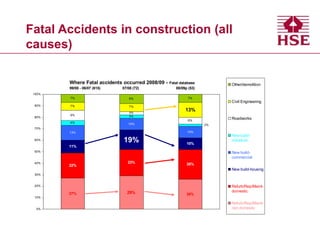
Fatal Accidents in construction (all
causes)
Where Fatal accidents occurred 2008/09 - Fatal database
99/00 - 06/07 (615) 07/08 (72) 08/09p (53)
27%
22%
13%
10%
10%
4%
3%
9%
3%
6%
7%
7% 8% 7%
29% 26%
26%
23%
10%
11%
19%
2%
13%
7%
0%
10%
20%
30%
40%
50%
60%
70%
80%
90%
100%
Other/demolition
Civil Engineering
Roadworks
New build-
industrial
New build-
commercial
New build-housing
Refurb/Rep/Maint-
domestic
Refurb/Rep/Maint-
non domestic
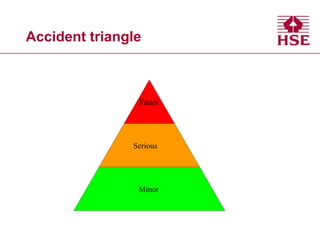
Accident triangle
Fatals
Serious
Minor
The Law
Work at Height Regulations 2005
• Apply to all work activities in all industries
• Apply to all at work by employees,
employers or self employed
• Plan work
• Use the right equipment
• Use competent people
PREVENT FALLS, REDUCE INJURY
The Regulations Hierarchy
• AVOID work at height if you can
• PREVENT falls by using the proper gear,
such as scaffolds or cherry pickers
• MINIMISE the chances of being hurt if
you fall
Applies even to small, quick jobs
Doing nothing is dangerous and illegal
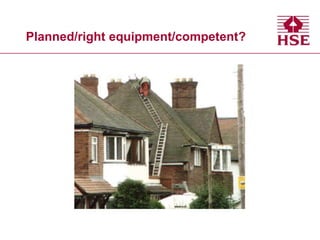
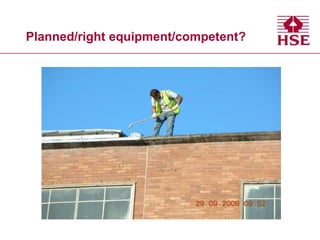
Planned/right equipment/competent?
Risk Assessment
Examples of what to consider include:
• the work activity
• equipment to be used
• location of the work and any hazards
• working environment (weather, lighting)
• condition of existing work surfaces
• duration of the work
• physical capabilities of workers
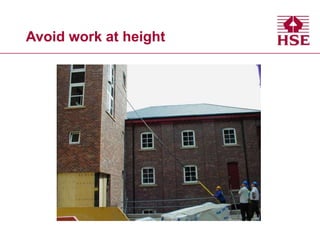
Avoid work at height
Prevent Falls
• Use an existing or ‘safe’ place of work
where no additional measures are
required
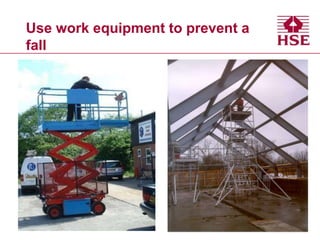
• Use working platforms with guardrails or
powered access platforms
• Use a work restraint system (preventing
someone getting into a position from
which he can fall)
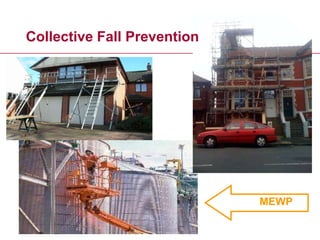
MEWP
Collective Fall Prevention
Minimise the distance and
consequences
• Collective control measures should
always take priority over personal control
measures.
• Collective measures e.g. airbags, nets
etc. are usually passive and require no
action by the user
• Personal protection measures e.g. fall
arrest harnesses are ‘active’ and require
the user to do clip on for them to work
effectively
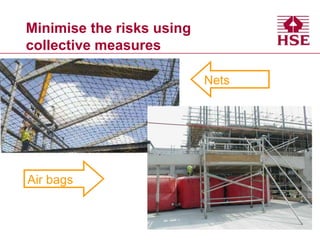
Minimise the risks using
collective measures
Nets
Air bags
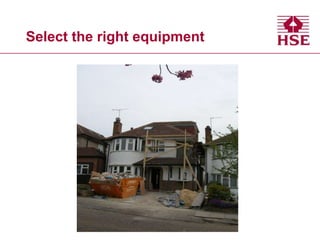
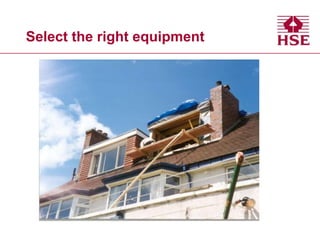
Select the right gear
Think about
• Where you are going to be working (ground
conditions, space, public)
• How far you could fall and how likely you are to
be injured
• How long will the job take and how often will it
need to be done
• What you need to do to rescue someone should
they fall
• Can the building or scaffold etc take the weight
of the workforce and materials need for the job
• Is it the best piece of kit for the job
Select the right equipment
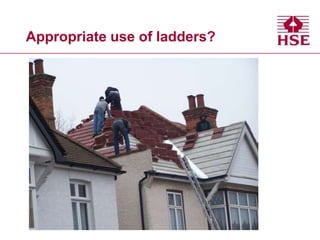
Use of ladders
Not banned but should only work from a ladder
(including step ladder)
• when other equipment such as a tower scaffold
is not suitable
• for light work that takes a few minutes
• of the correct type and in good condition
• placed on firm level ground and properly secured
• and set at the correct length and angle for the
job
Appropriate use of ladders?
Use work equipment to prevent a
fall
Other things to think about
• Prevent tools and materials falling
– Throwing materials or debris (bombing) never
acceptable
• Warn employees about danger areas
• You need to make sure that equipment such as
scaffolds are checked
• After assembly or installation
• At suitable intervals or after exceptional
circumstances
• Scaffold and tower scaffold inspection in each
new position and then every 7 days
• MEWP on site within previous 7 days
Fragile Roofs
• Sheet materials including asbestos
cement or skylights
– Will not support weight
• Walking the bolts not acceptable
• Work from underneath from a mewp
wherever possible (special roof fixings
available to allow this)
Golden rules
• Plan
• Choose right equipment to
– Prevent falls
– Reduce injury
• Competent workers
Don’t chance it

safe-working-on-roofs.ppt

  • 1.
    Health and Safety Executive Healthand Safety Executive Safe working on or near roofs
  • 2.
    Summary • Why • Thelaw • In practice • Ladders • Golden rules
  • 3.
    WHY • Gravity kills •More fatal accidents in construction caused by falls than anything else • Two biggest classes of fatal falls – are domestic roof level repairs (7 off ladders, 6 other causes) – through fragile roof (5 last year), even more this) Numbers are provisional 2008/9 stats and typical
  • 4.
    Fatal Accidents inconstruction (all causes) Where Fatal accidents occurred 2008/09 - Fatal database 99/00 - 06/07 (615) 07/08 (72) 08/09p (53) 27% 22% 13% 10% 10% 4% 3% 9% 3% 6% 7% 7% 8% 7% 29% 26% 26% 23% 10% 11% 19% 2% 13% 7% 0% 10% 20% 30% 40% 50% 60% 70% 80% 90% 100% Other/demolition Civil Engineering Roadworks New build- industrial New build- commercial New build-housing Refurb/Rep/Maint- domestic Refurb/Rep/Maint- non domestic
  • 5.
  • 6.
    The Law Work atHeight Regulations 2005 • Apply to all work activities in all industries • Apply to all at work by employees, employers or self employed • Plan work • Use the right equipment • Use competent people PREVENT FALLS, REDUCE INJURY
  • 7.
    The Regulations Hierarchy •AVOID work at height if you can • PREVENT falls by using the proper gear, such as scaffolds or cherry pickers • MINIMISE the chances of being hurt if you fall Applies even to small, quick jobs Doing nothing is dangerous and illegal
  • 8.
  • 9.
  • 10.
    Risk Assessment Examples ofwhat to consider include: • the work activity • equipment to be used • location of the work and any hazards • working environment (weather, lighting) • condition of existing work surfaces • duration of the work • physical capabilities of workers
  • 11.
  • 12.
    Prevent Falls • Usean existing or ‘safe’ place of work where no additional measures are required • Use working platforms with guardrails or powered access platforms • Use a work restraint system (preventing someone getting into a position from which he can fall)
  • 13.
  • 14.
    Minimise the distanceand consequences • Collective control measures should always take priority over personal control measures. • Collective measures e.g. airbags, nets etc. are usually passive and require no action by the user • Personal protection measures e.g. fall arrest harnesses are ‘active’ and require the user to do clip on for them to work effectively
  • 15.
    Minimise the risksusing collective measures Nets Air bags
  • 16.
    Select the rightgear Think about • Where you are going to be working (ground conditions, space, public) • How far you could fall and how likely you are to be injured • How long will the job take and how often will it need to be done • What you need to do to rescue someone should they fall • Can the building or scaffold etc take the weight of the workforce and materials need for the job • Is it the best piece of kit for the job
  • 17.
  • 18.
  • 19.
    Use of ladders Notbanned but should only work from a ladder (including step ladder) • when other equipment such as a tower scaffold is not suitable • for light work that takes a few minutes • of the correct type and in good condition • placed on firm level ground and properly secured • and set at the correct length and angle for the job
  • 20.
  • 21.
    Use work equipmentto prevent a fall
  • 22.
    Other things tothink about • Prevent tools and materials falling – Throwing materials or debris (bombing) never acceptable • Warn employees about danger areas • You need to make sure that equipment such as scaffolds are checked • After assembly or installation • At suitable intervals or after exceptional circumstances • Scaffold and tower scaffold inspection in each new position and then every 7 days • MEWP on site within previous 7 days
  • 23.
    Fragile Roofs • Sheetmaterials including asbestos cement or skylights – Will not support weight • Walking the bolts not acceptable • Work from underneath from a mewp wherever possible (special roof fixings available to allow this)
  • 24.
    Golden rules • Plan •Choose right equipment to – Prevent falls – Reduce injury • Competent workers Don’t chance it