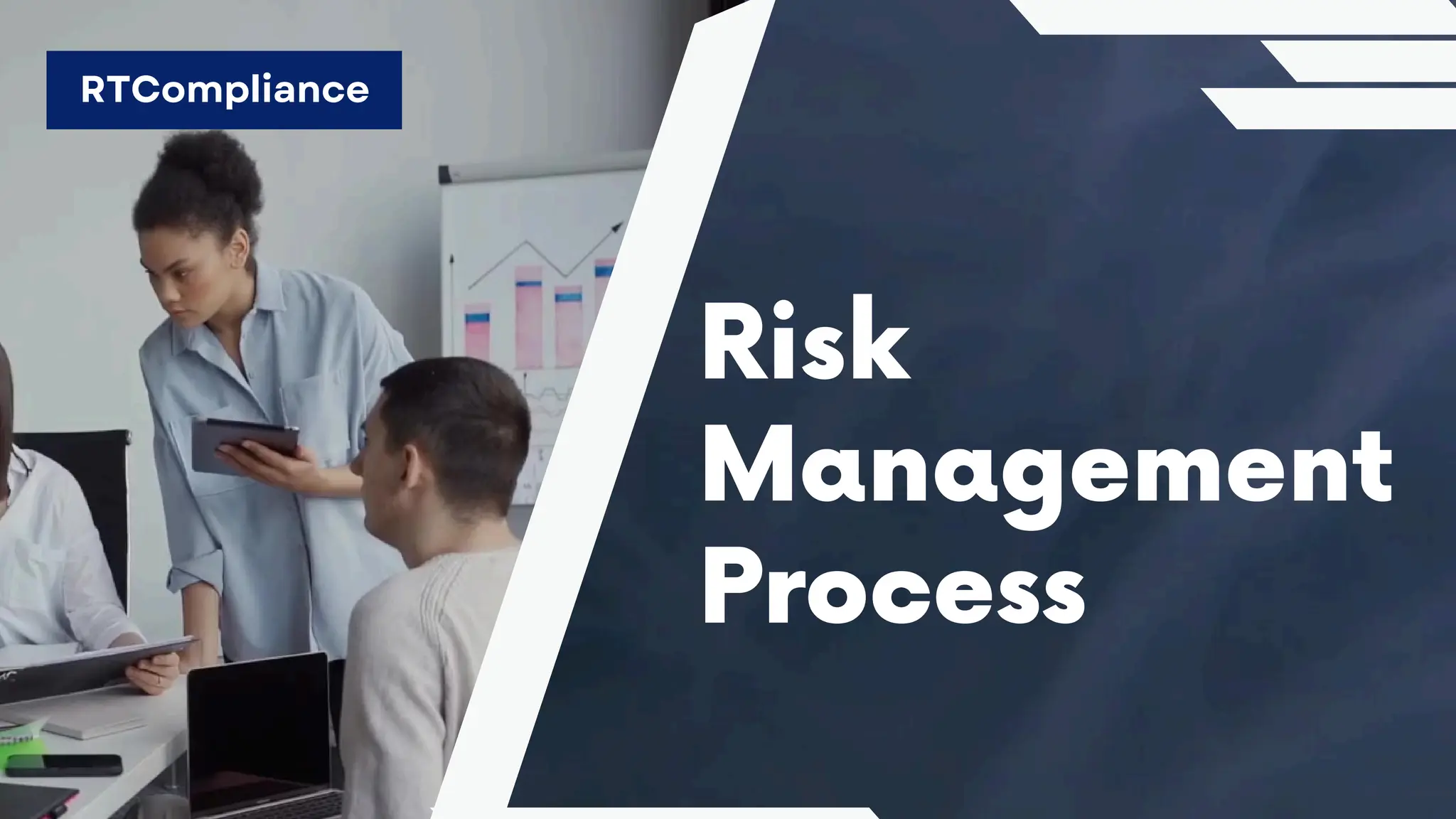
Risk
Management
Process
RTCompliance
RTCompliance
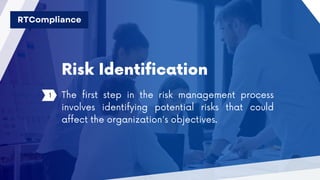
Risk Identification
1 The first step in the risk management process
involves identifying potential risks that could
affect the organization's objectives.
RTCompliance
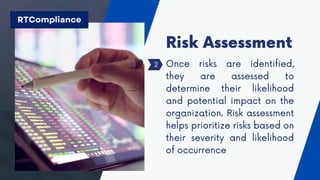
Once risks are identified,
they are assessed to
determine their likelihood
and potential impact on the
organization. Risk assessment
helps prioritize risks based on
their severity and likelihood
of occurrence
Risk Assessment
2
RTCompliance
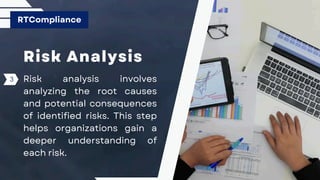
Risk Analysis
Risk analysis involves
analyzing the root causes
and potential consequences
of identified risks. This step
helps organizations gain a
deeper understanding of
each risk.
RTCompliance
3
Risk Treatment
4 In this step, organizations develop and implement
risk treatment plans to address identified risks.
Risk treatment options include risk avoidance, risk
mitigation, risk transfer, or acceptance,
depending on the nature of the risk.
RTCompliance
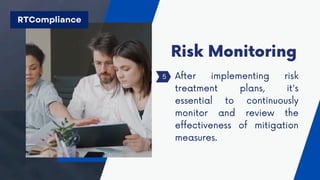
After implementing risk
treatment plans, it's
essential to continuously
monitor and review the
effectiveness of mitigation
measures.
Risk Monitoring
5
RTCompliance
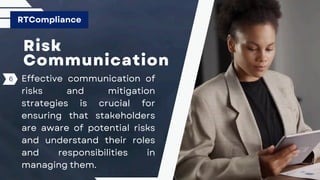
Risk
Communication
Effective communication of
risks and mitigation
strategies is crucial for
ensuring that stakeholders
are aware of potential risks
and understand their roles
and responsibilities in
managing them.
RTCompliance
6
Conclusion
By following these six key steps in the risk
management process, organizations can
proactively identify, assess, and mitigate risks to
protect their assets, reputation, and long-term
viability.
THANK
YOU
RTCompliance
support@rtcompliance.sg
www.rtcompliance.sg
CONTACT US :

Risk Management Process Explained 6 Key Steps for Effective Risk Mitigation.pdf