








Leonardo da Vinci  Transfer of Innovation project REVIVE - Reviewing and Reviving Existing VET Curriculum   REVIVE project, Kick-off meeting Kaunas LLP-LdV-TOI-2008-LT-0022 Dr. Airina Volungeviciene Vytautas Magnus University Distance Study Centre
REVIVE  project seeks to contribute to European cooperation in QA focusing on defining QA factors in VET services More specifically, the project aims at methodology application to ensure quality of VET curriculum at institutional level LLP-LdV-TOI-2008-LT-0022
The main goal of REVIVE project  is to ensure the quality of VET services by reviewing and reviving existing VET Curriculum on the basis of innovative didactical and technological methodology.  LLP-LdV-TOI-2008-LT-0022
Target group VET Curriculum designing institutions, teachers and trainers   LLP-LdV-TOI-2008-LT-0022
Project objectives to select VET Curriculum which does not meet quality criteria and is not functioning properly and to perform SWOT analysis of curriculum  To present pedagogical and technological recommendations for curriculum pedagogical and technological improvement and revival to re-develop Curriculum for distance learning, when selected methodologies will not prescribe one principle, but will allow project actors to develop their own solutions, to improve and evaluate their own practices, on the basis of common principles and criteria LLP-LdV-TOI-2008-LT-0022
Project objectives To update, improve and revive curriculum and to test its applicability To present recommendations for further improvement and QA To present successful cases and highlight methodological input by spreading curriculum cases Europe wide,  To enrich methodology by specific experience of curriculum authors and designers, as well as by end-users’ feedback collected during the project To contribute to national and international quality discussions and actions LLP-LdV-TOI-2008-LT-0022
Partnership Coordinator – Vytautas Magnus University Distance Study Centre Partners: Centre for Social Innovation (ZSI),  Austria  Chamber of Commerce, Industry abs Navigation of Castellon,  Spain Budapest University of Technology and Economics,  Hungary  Lithuanian Association of Adult Education (LAAE), Lithuania Faculty of Electrical Engineering and Information Technology, Slovak University of Technology,  Slovakia  European Distance and E-Learning Network (EDEN),  United Kingdom   LLP-LdV-TOI-2008-LT-0022
LLP-LdV-TOI-2008-LT-0022
How the objectives will be reached? the project will develop and test QA procedures in initial and VET training this will be ensured by the use of pedagogical and technological methodologies transferred to the project Pedagogical methodology will be used to analyse existing Curriculum at VET institutions and to suggest recommendations and quality improvement procedures  Technological methodology will be used to analyse existing tools to suggest recommendations and quality improvement procedures LLP-LdV-TOI-2008-LT-0022
How the objectives will be reached? Methodologies transferred in the project will ensure high quality VET curriculum development It will be direct benefit for institutions and partnership on European level Methodology authors will guide and counsel other partners, as well as staff of partner institutions on quality assurance factors influencing the quality of VET services LLP-LdV-TOI-2008-LT-0022
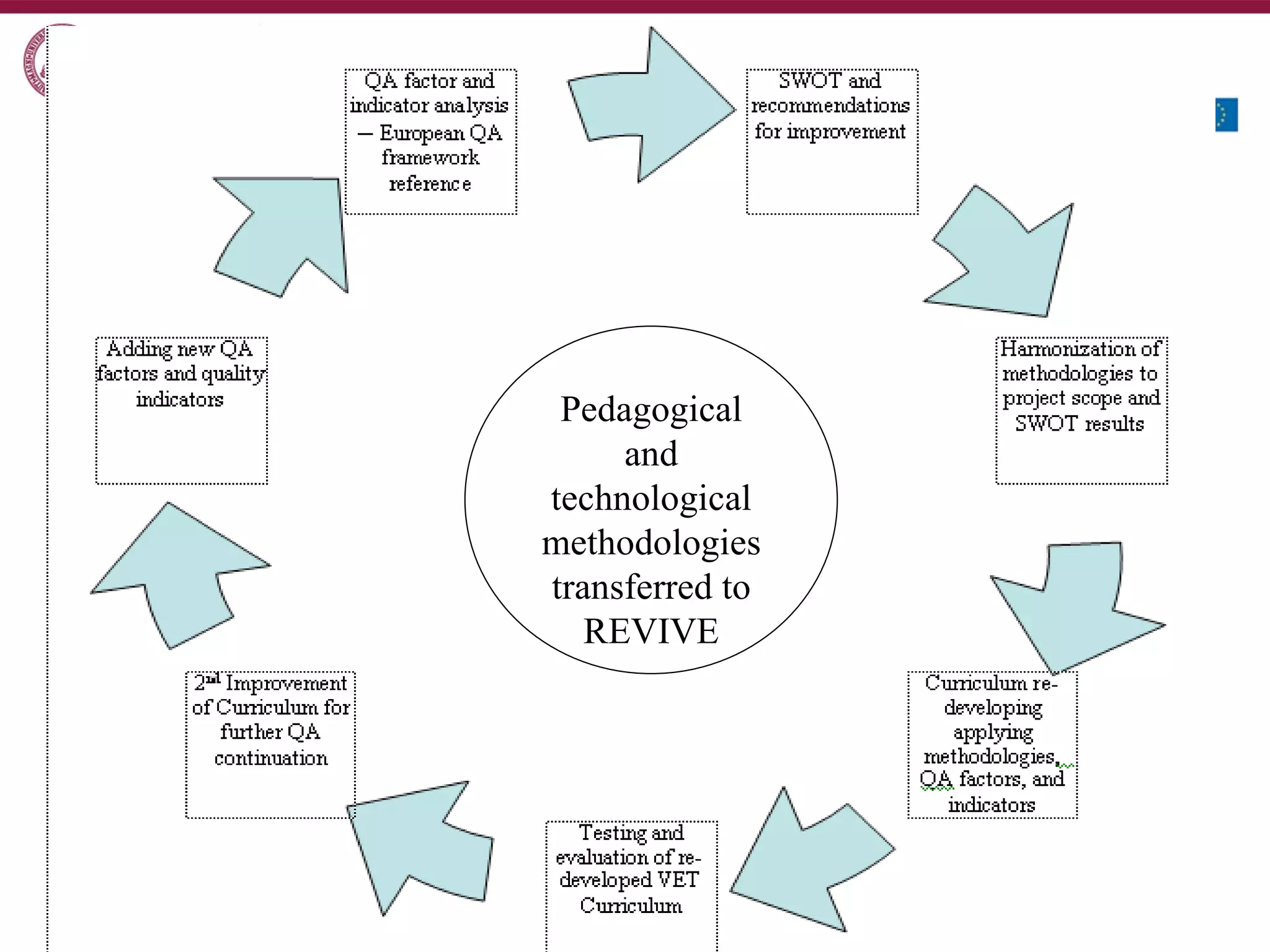
The main phases of project implementation Analysis and X-raying existing Curriculum and deriving recommendations for its improvement Harmonization of pedagogical and technological methodologies  Improving existing VET curriculum and ensuring its quality from pedagogical methodological approach Improving existing VET curriculum from the point of view of technological methodological approach Testing and evaluation, providing recommendations for further quality assurance Ensuring quality requirements for updated curriculum after testing and evaluation LLP-LdV-TOI-2008-LT-0022
LLP-LdV-TOI-2008-LT-0022 Pedagogical and technological methodologies transferred to REVIVE
Pedagogical methodology for reviewing and reviving existing Curriculum LLP-LdV-TOI-2008-LT-0022 Prezentacijos pavadinimas Vardenis, Pavardenis
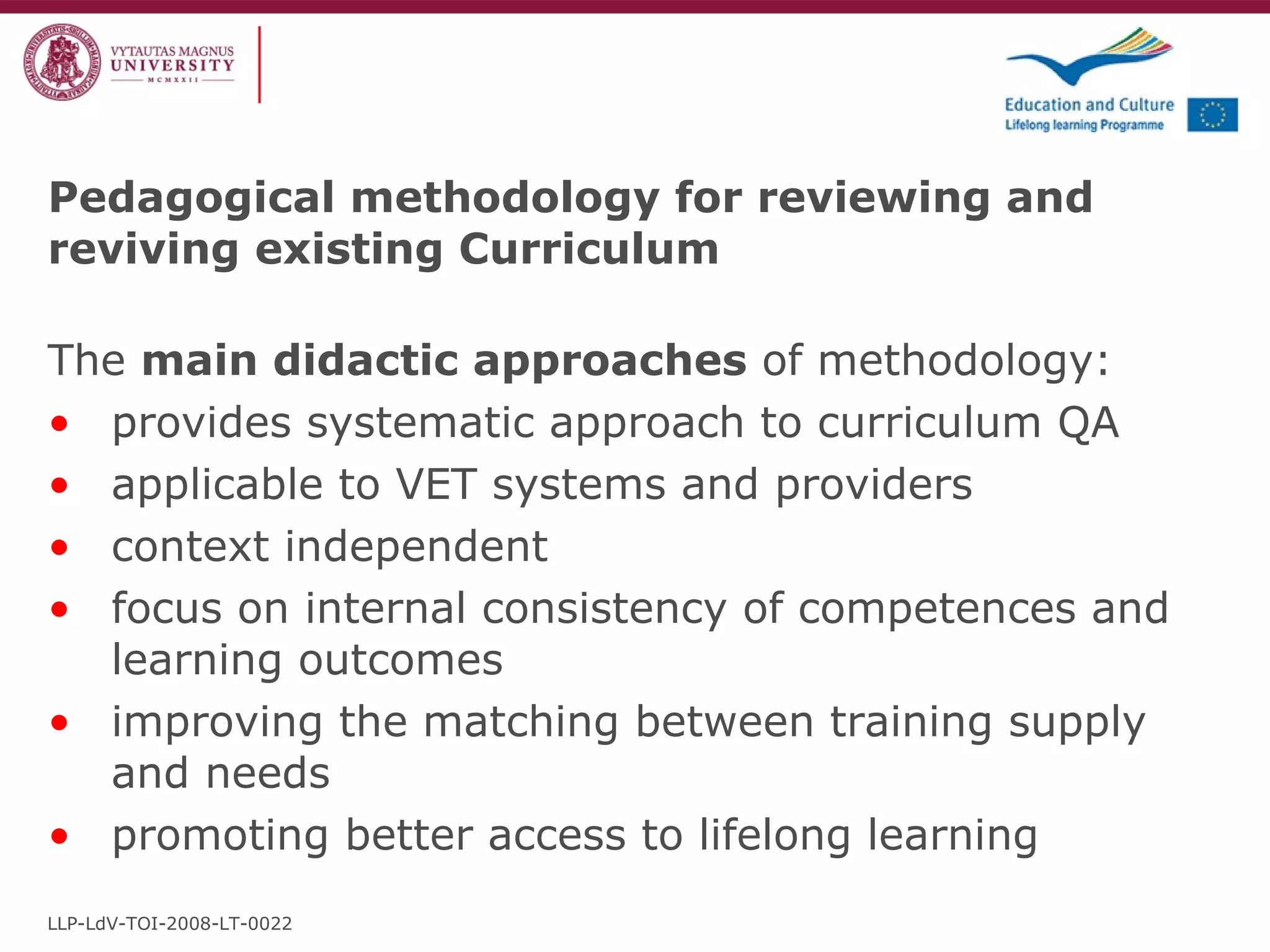
Pedagogical methodology for reviewing and reviving existing Curriculum The  main didactic approaches  of methodology: provides systematic approach to curriculum QA applicable to VET systems and providers context independent focus on internal consistency of competences and learning outcomes improving the matching between training supply and needs promoting better access to lifelong learning LLP-LdV-TOI-2008-LT-0022
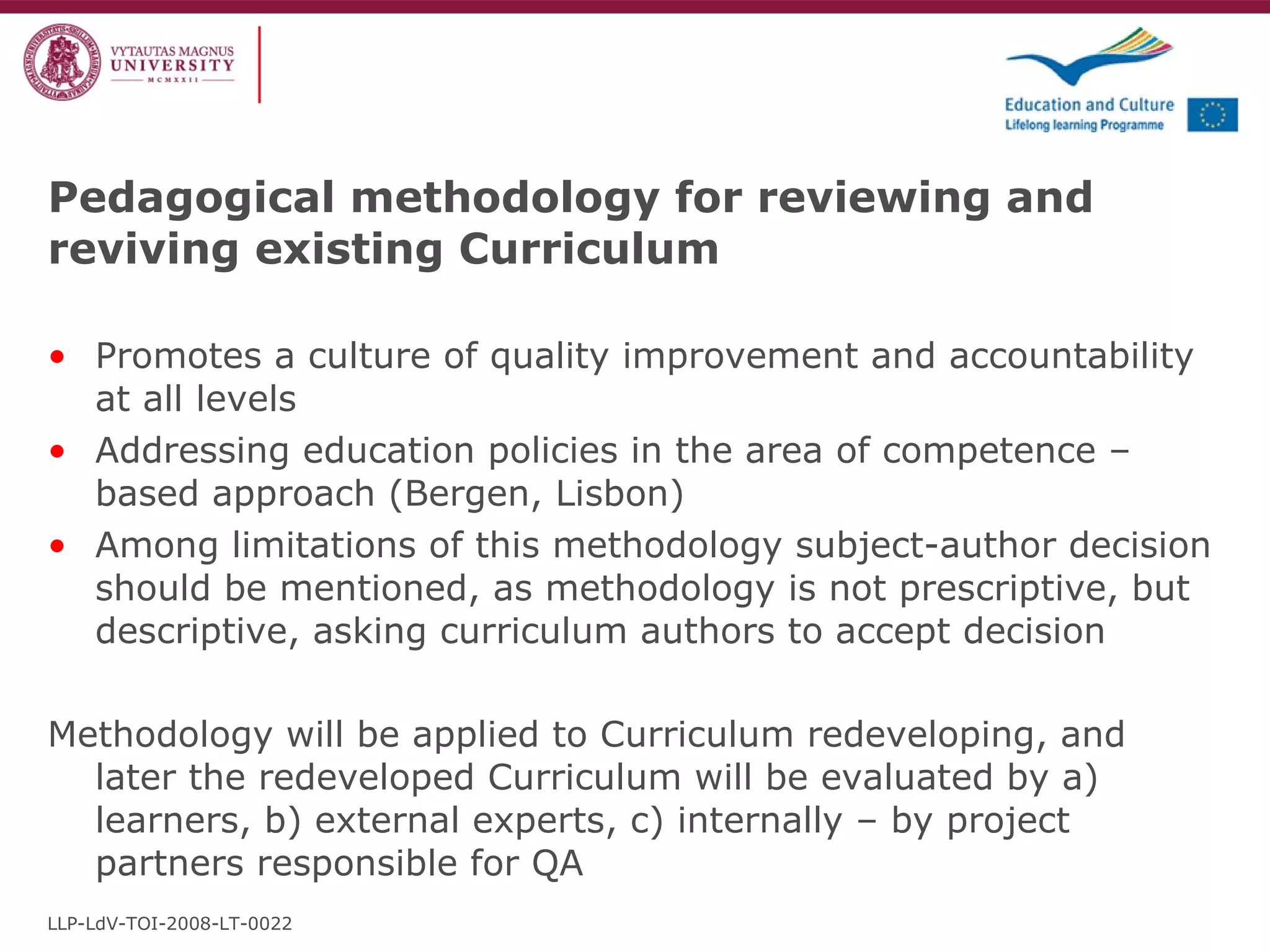
Promotes a culture of quality improvement and accountability at all levels Addressing education policies in the area of competence – based approach (Bergen, Lisbon) Among limitations of this methodology subject-author decision should be mentioned, as methodology is not prescriptive, but descriptive, asking curriculum authors to accept decision Methodology will be applied to Curriculum redeveloping, and later the redeveloped Curriculum will be evaluated by a) learners, b) external experts, c) internally – by project partners responsible for QA Pedagogical methodology for reviewing and reviving existing Curriculum LLP-LdV-TOI-2008-LT-0022
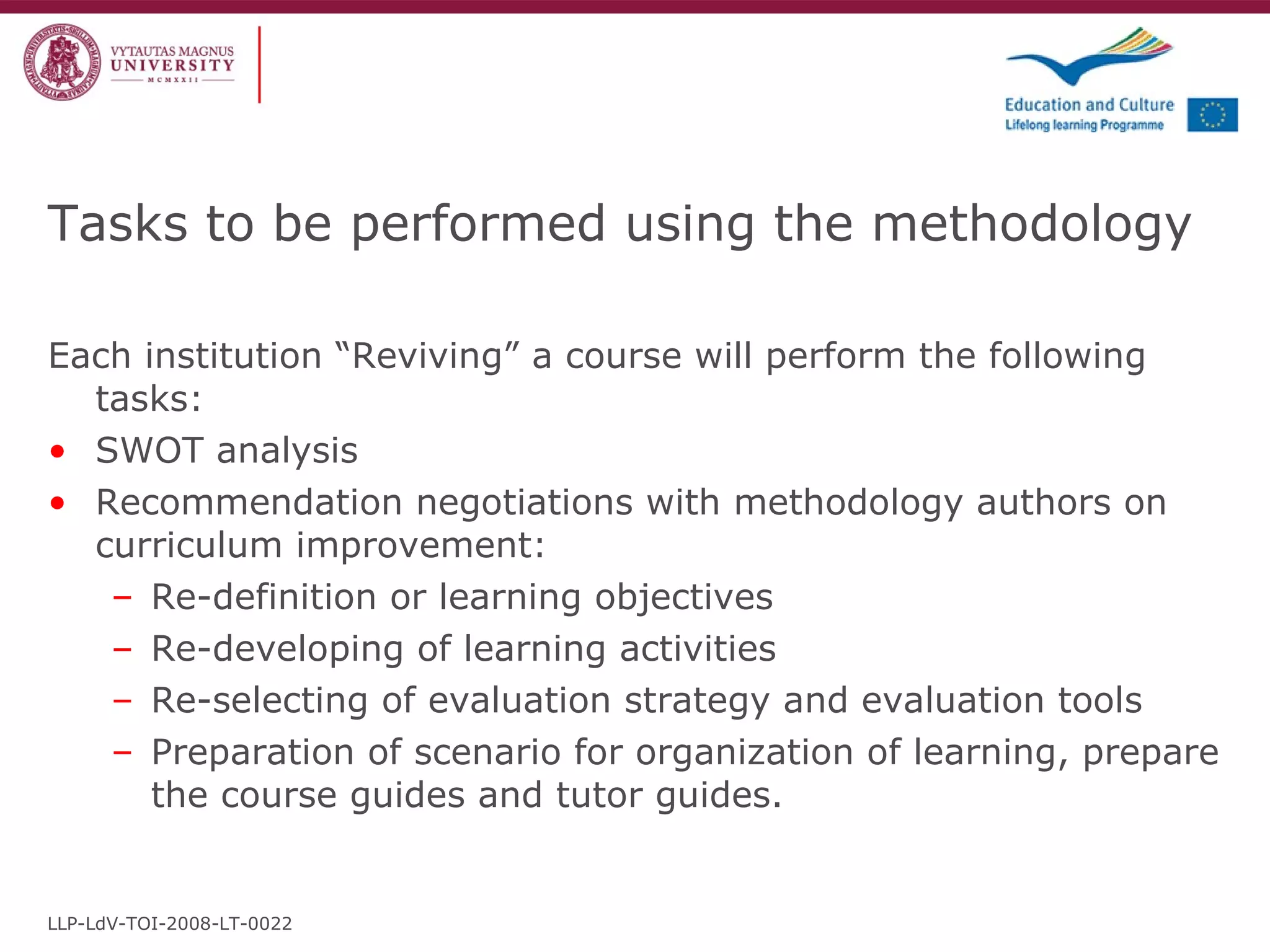
Tasks to be performed using the methodology Each institution “Reviving” a course will perform the following tasks: SWOT analysis  Recommendation negotiations with methodology authors on curriculum improvement: Re-definition or learning objectives Re-developing of learning activities Re-selecting of evaluation strategy and evaluation tools Preparation of scenario for organization of learning, prepare the course guides and tutor guides. LLP-LdV-TOI-2008-LT-0022
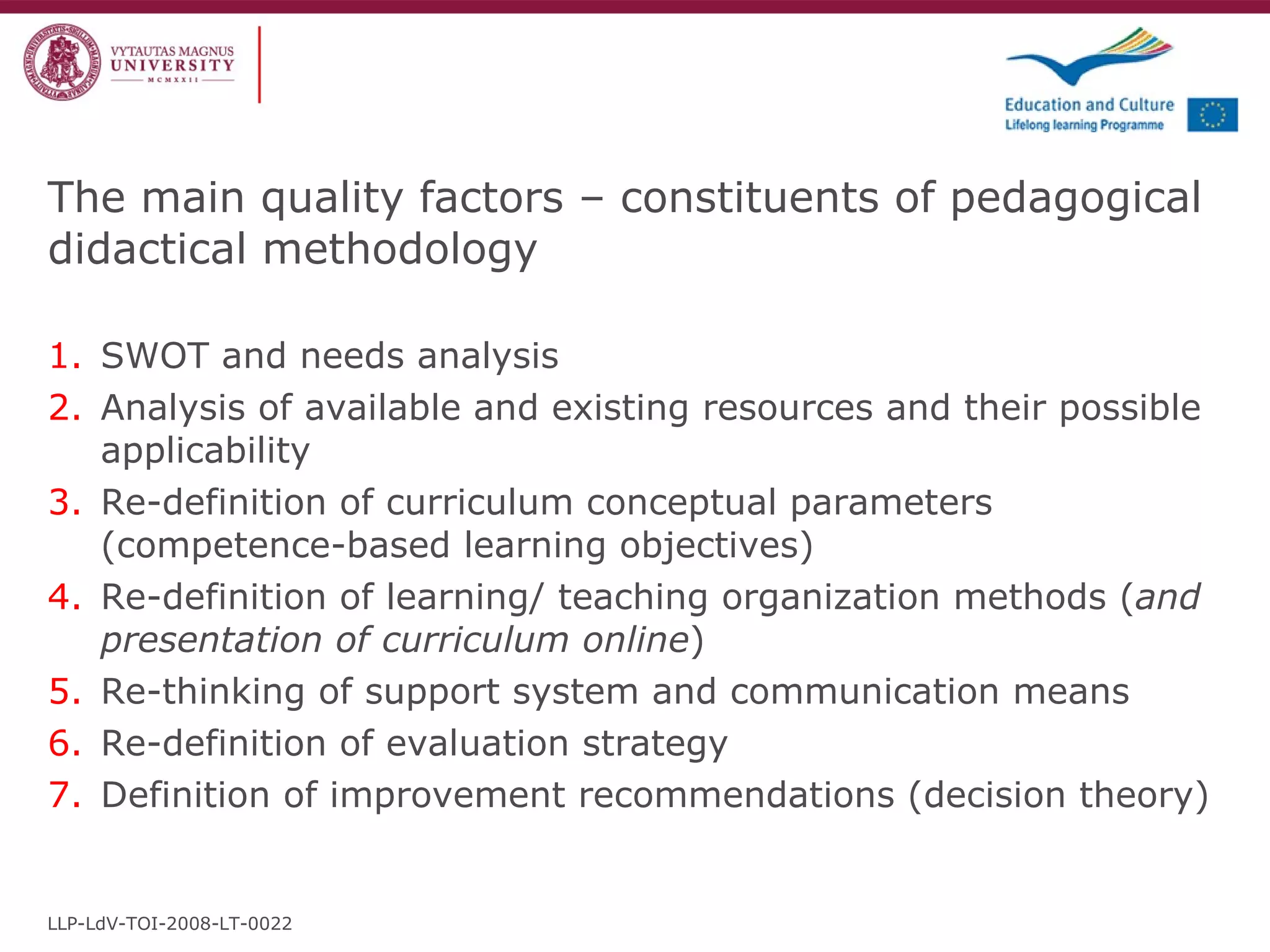
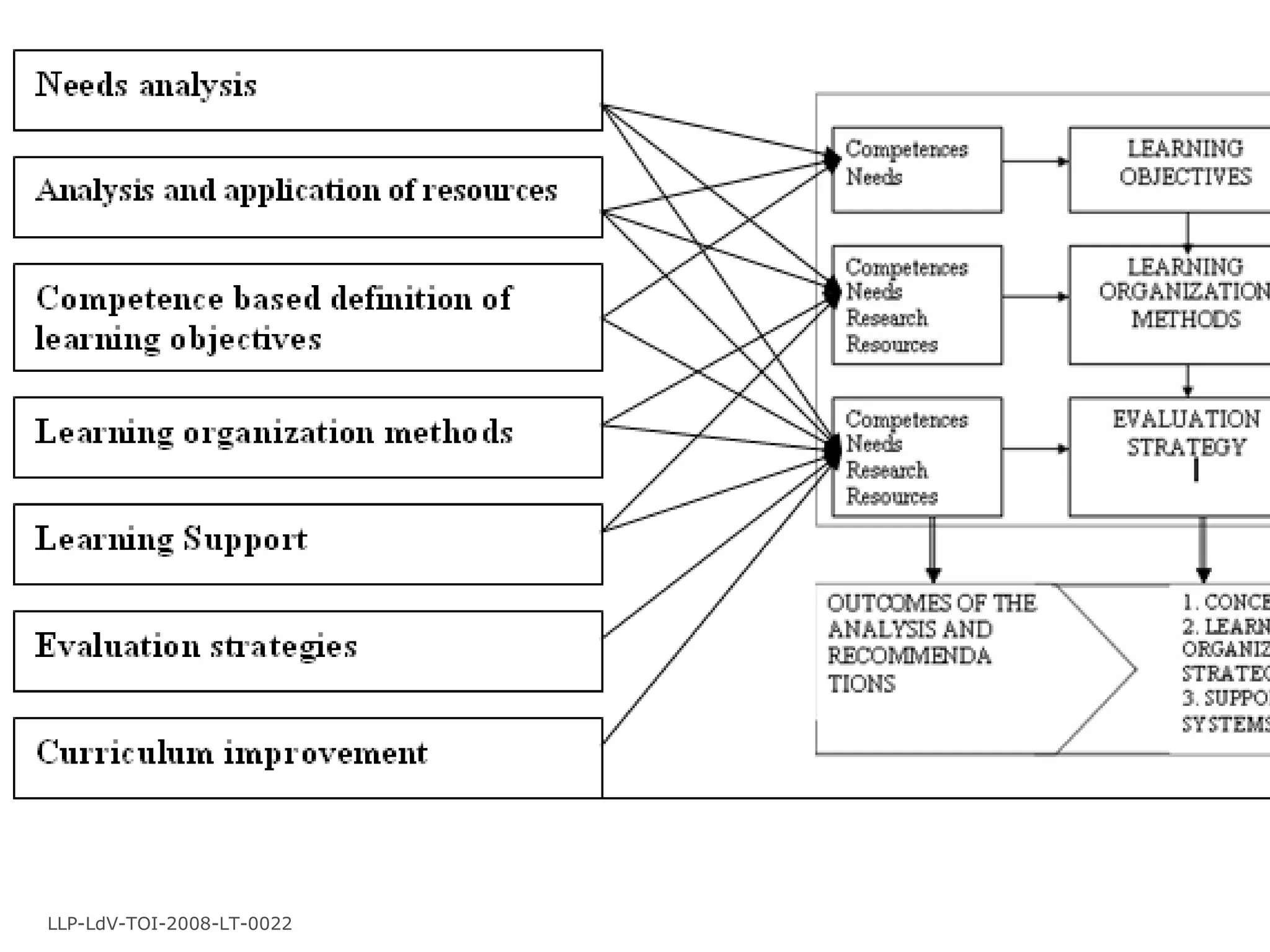
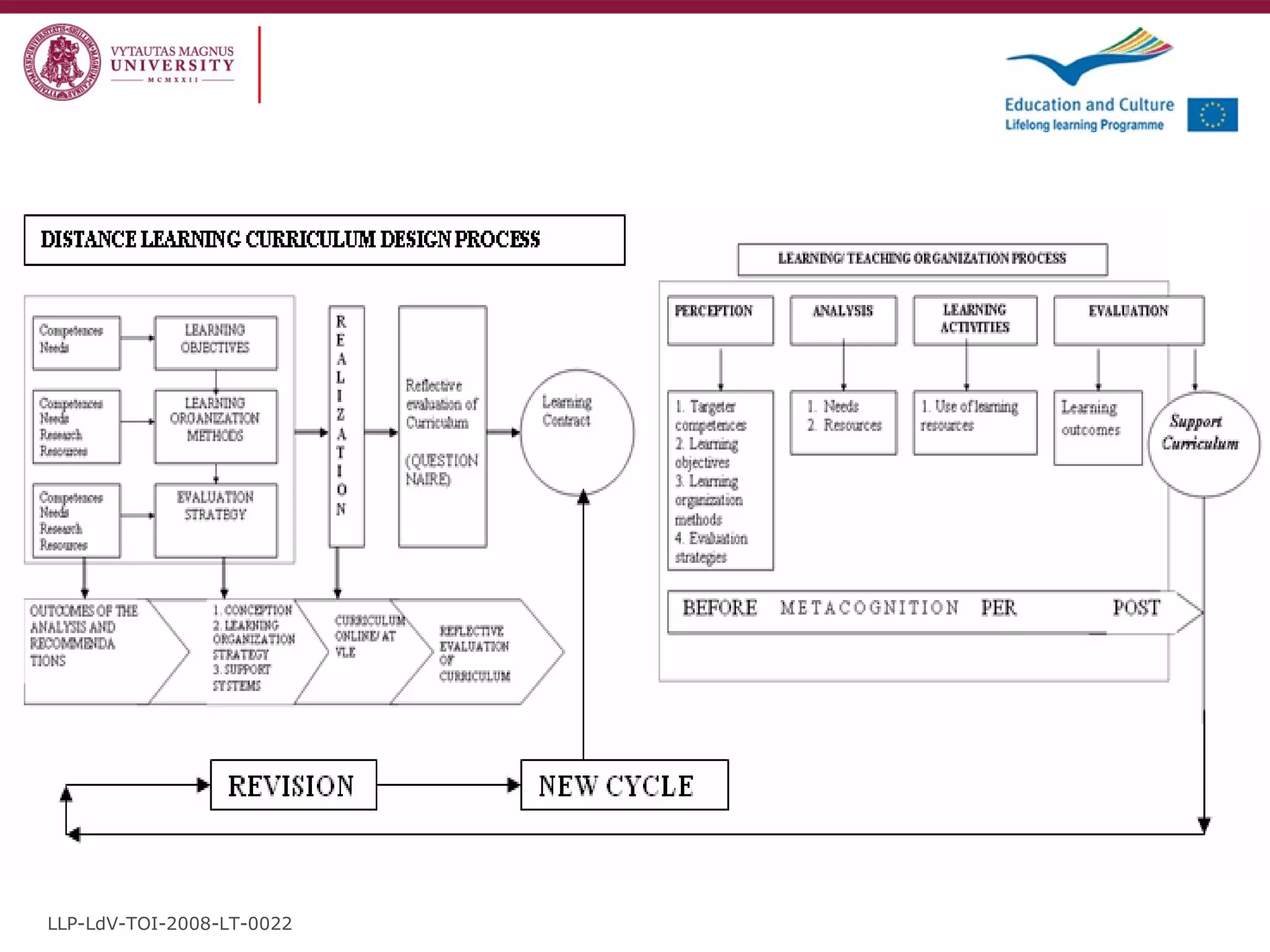
The main quality factors – constituents of pedagogical didactical methodology SWOT and needs analysis Analysis of available and existing resources and their possible applicability Re-definition of curriculum conceptual parameters (competence-based learning objectives) Re-definition of learning/ teaching organization methods ( and presentation of curriculum online ) Re-thinking of support system and communication means Re-definition of evaluation strategy Definition of improvement recommendations (decision theory) LLP-LdV-TOI-2008-LT-0022
LLP-LdV-TOI-2008-LT-0022
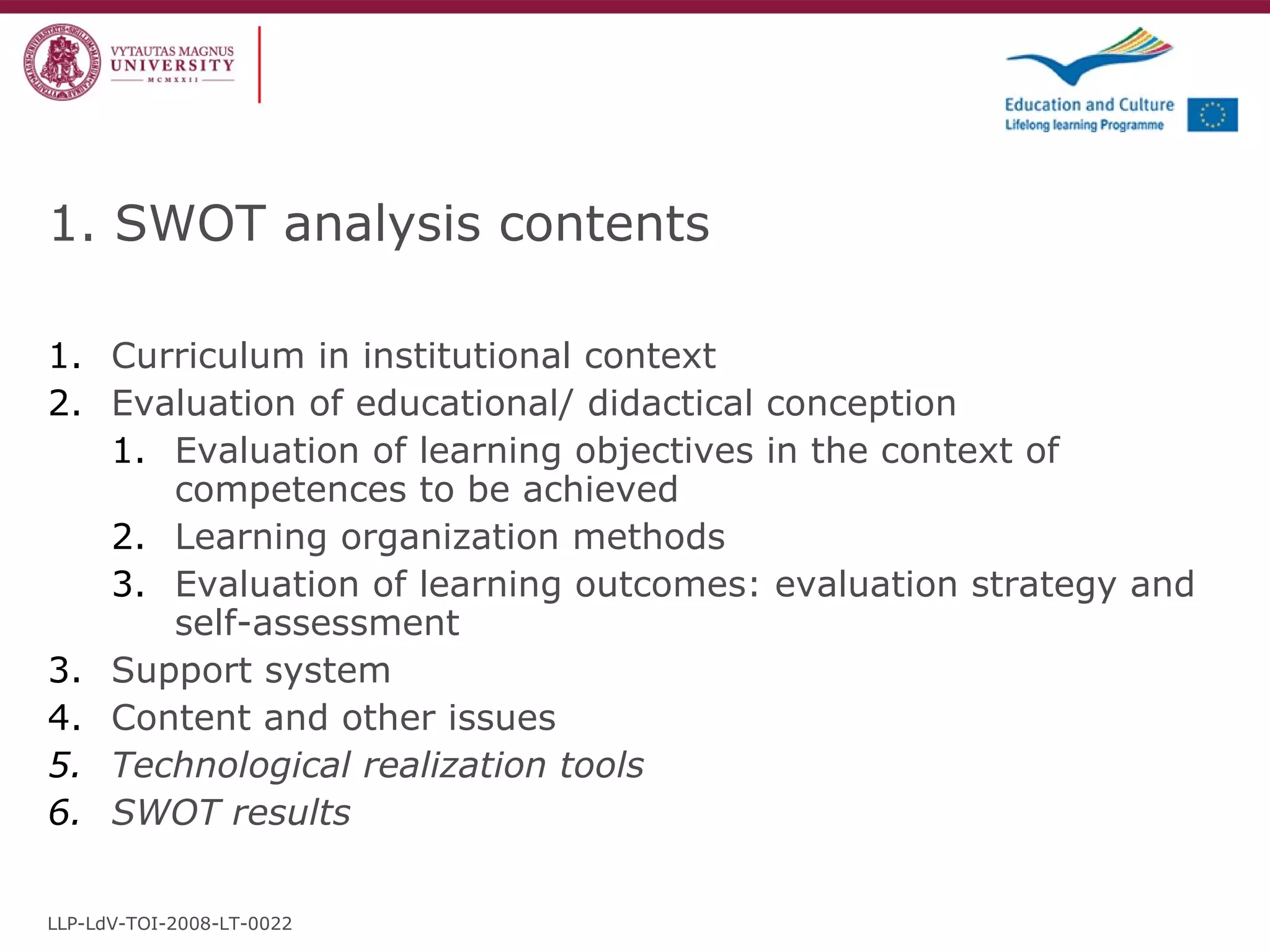
1. SWOT analysis contents Curriculum in institutional context  Evaluation of educational/ didactical conception Evaluation of learning objectives in the context of competences to be achieved Learning organization methods  Evaluation of learning outcomes: evaluation strategy and self-assessment Support system Content and other issues Technological realization tools SWOT results LLP-LdV-TOI-2008-LT-0022
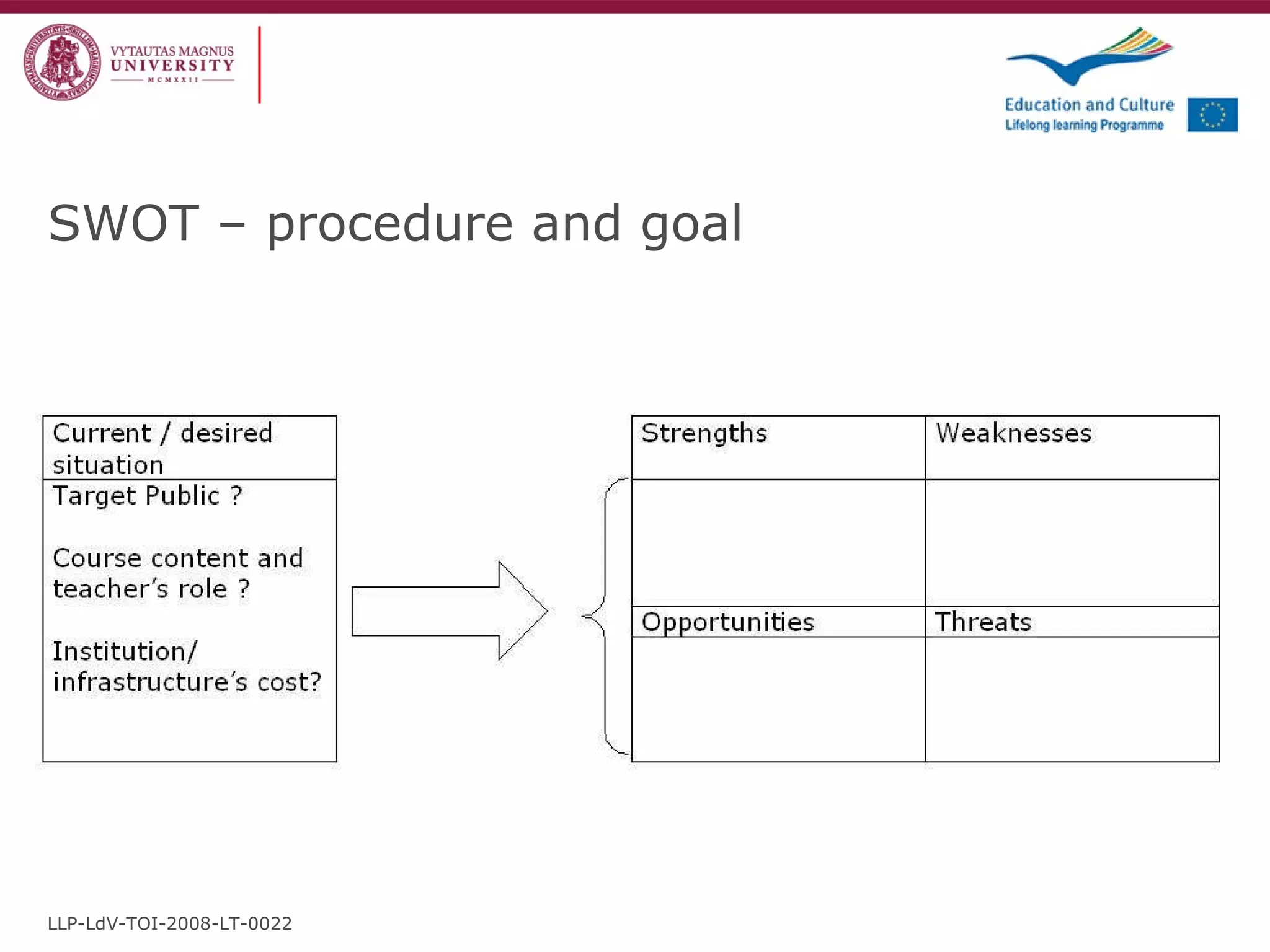
SWOT – procedure and goal LLP-LdV-TOI-2008-LT-0022
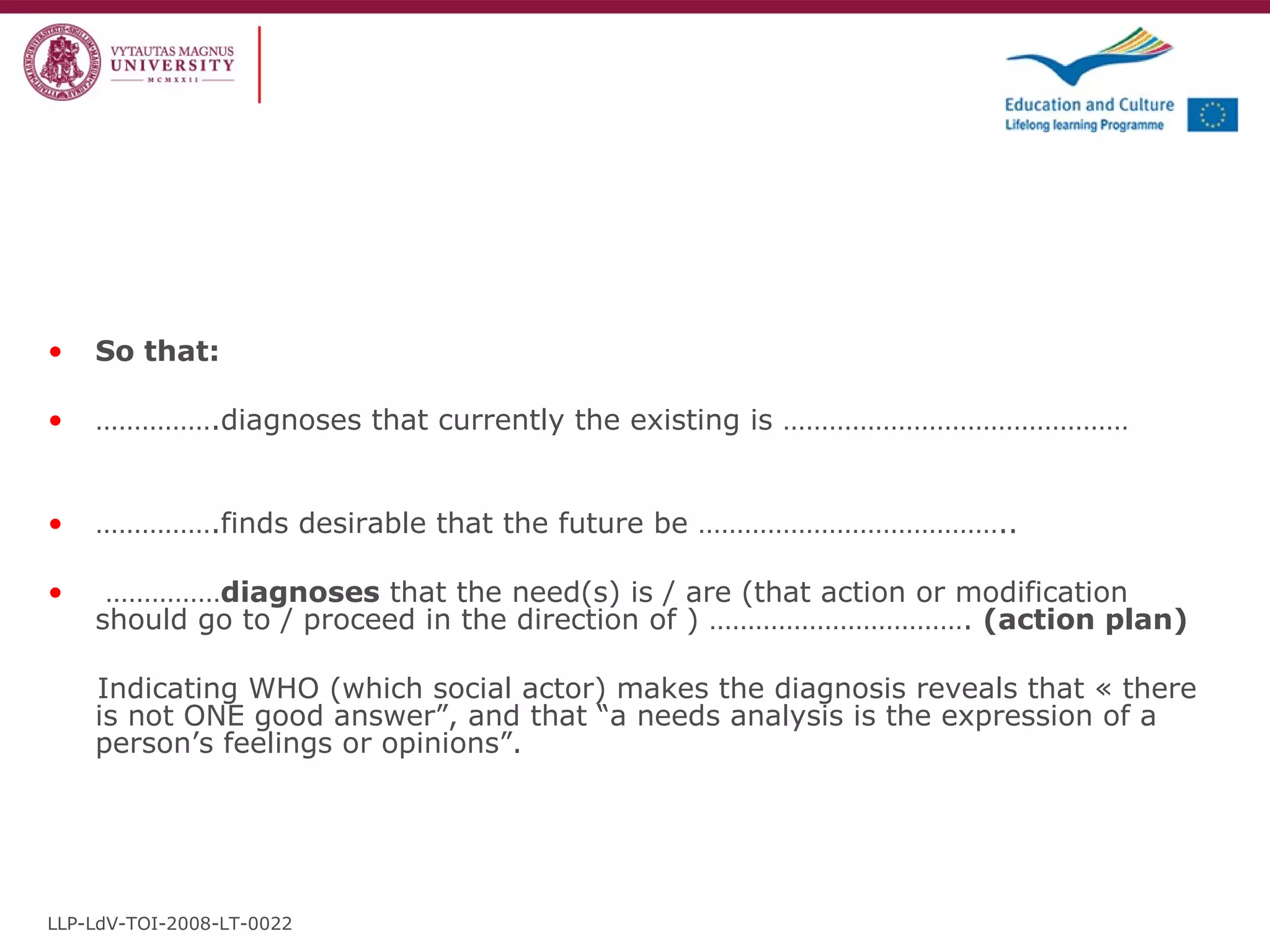
So that:    …………… .diagnoses that currently the existing is ……………………………………… …………… .finds desirable that the future be …………………………………..  …………… diagnoses  that the need(s) is / are (that action or modification should go to / proceed in the direction of ) …………………………….  (action plan)  Indicating WHO (which social actor) makes the diagnosis reveals that « there is not ONE good answer”, and that “a needs analysis is the expression of a person’s feelings or opinions”.  LLP-LdV-TOI-2008-LT-0022
1. SWOT:  1.  Curriculum in institutional context  (1) Institutional needs : Learner needs: Profile of target group Learning organization needs Logistics  Media used Evaluation strategy Financial aspects Is Curriculum designed the way to respond to different target groups ? Is prior learning assessed ? Does Curriculum respond to different learning organization needs of individual learners ? Teacher needs: Personal – professional Teaching facilitation Meeting the learner/ institutional needs  LLP-LdV-TOI-2008-LT-0022
1. SWOT:  2.   Evaluation of educational/ didactical conception (1) Evaluation of learning objectives in the context of competences to be achieved  : Can learning objectives of the curriculum be agreed with the needs of your target group? Are learning objectives formulated on the basis of competences to be achieved? How learning objectives are introduced to target learners? LLP-LdV-TOI-2008-LT-0022
Learning/ teaching organization methods : Are different learning organization methods available for the learners? Can the teacher choose between several teaching and learning organization methods? How learning/ teaching organization methods can be selected (by learning style? No selection is available? By access to content tools?   Is learning organization methods needs analysis suggested for the learners? Can they choose learning strategy themselves? Can the teacher select learning organization methods on the basis of learner needs/ learning styles? Other? Is learning organization based on active learning methods?   1. SWOT: 2. Evaluation of educational/ didactical conception  ( 2 ) LLP-LdV-TOI-2008-LT-0022
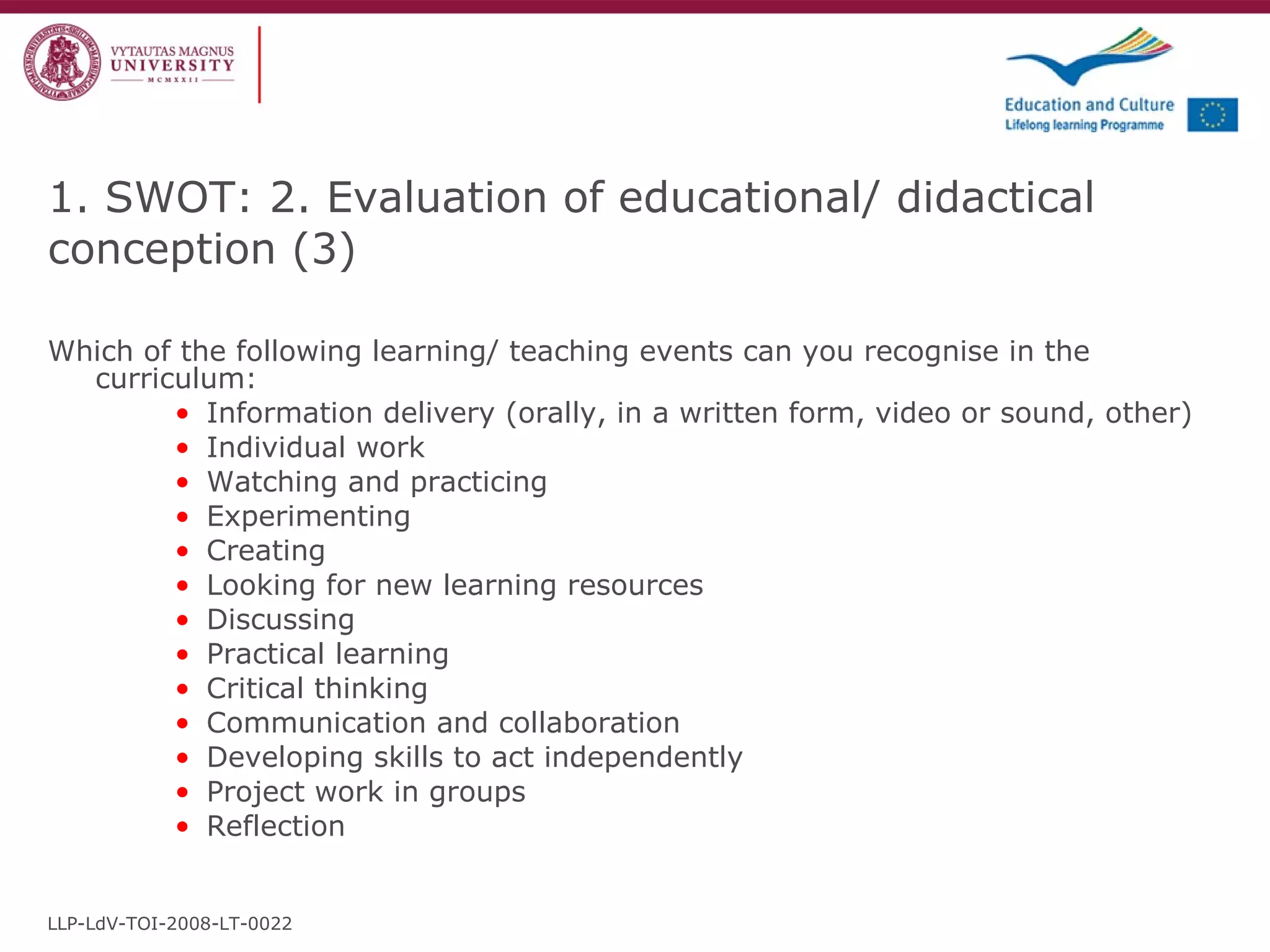
Which of the following learning/ teaching events can you recognise in the curriculum:   Informa tion delivery  ( orally, in a written form, video or sound, other ) Individual work Watching and practicing Experimenting Creating Looking for new learning resources Discussing Practical learning Critical thinking Communication and collaboration Developing skills to act independently Project work in groups Reflection 1. SWOT: 2. Evaluation of educational/ didactical conception  ( 3 ) LLP-LdV-TOI-2008-LT-0022
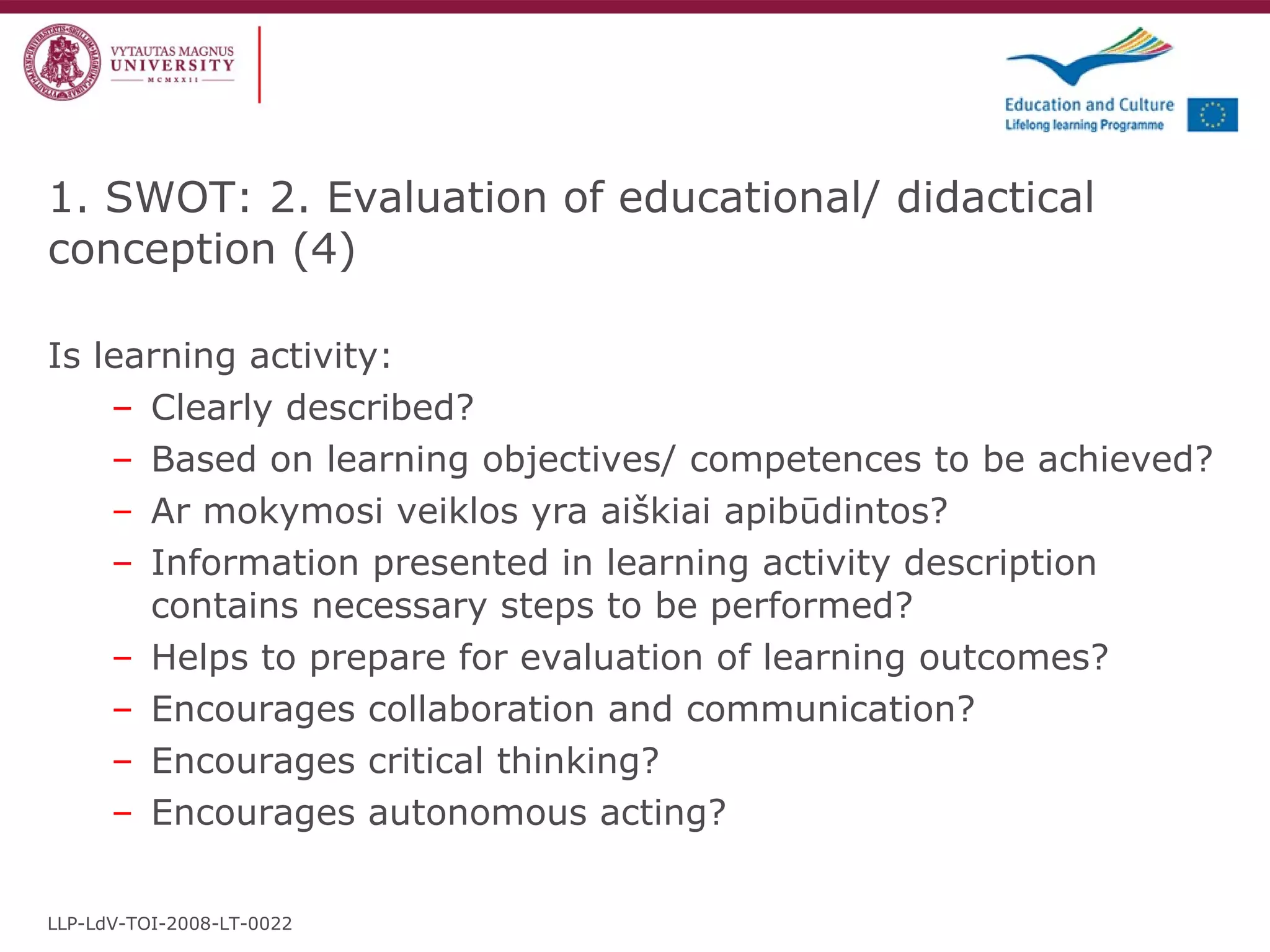
Is learning activity: Clearly described ? Based on learning objectives/ competences to be achieved?   Ar mokymosi veiklos yra aiškiai apibūdintos? Information presented in learning activity description contains necessary steps to be performed ? Helps to prepare for evaluation of learning outcomes ?  Encourages collaboration and communication ? Encourages critical thinking? Encourages autonomous acting?   1. SWOT: 2. Evaluation of educational/ didactical conception  ( 4 ) LLP-LdV-TOI-2008-LT-0022
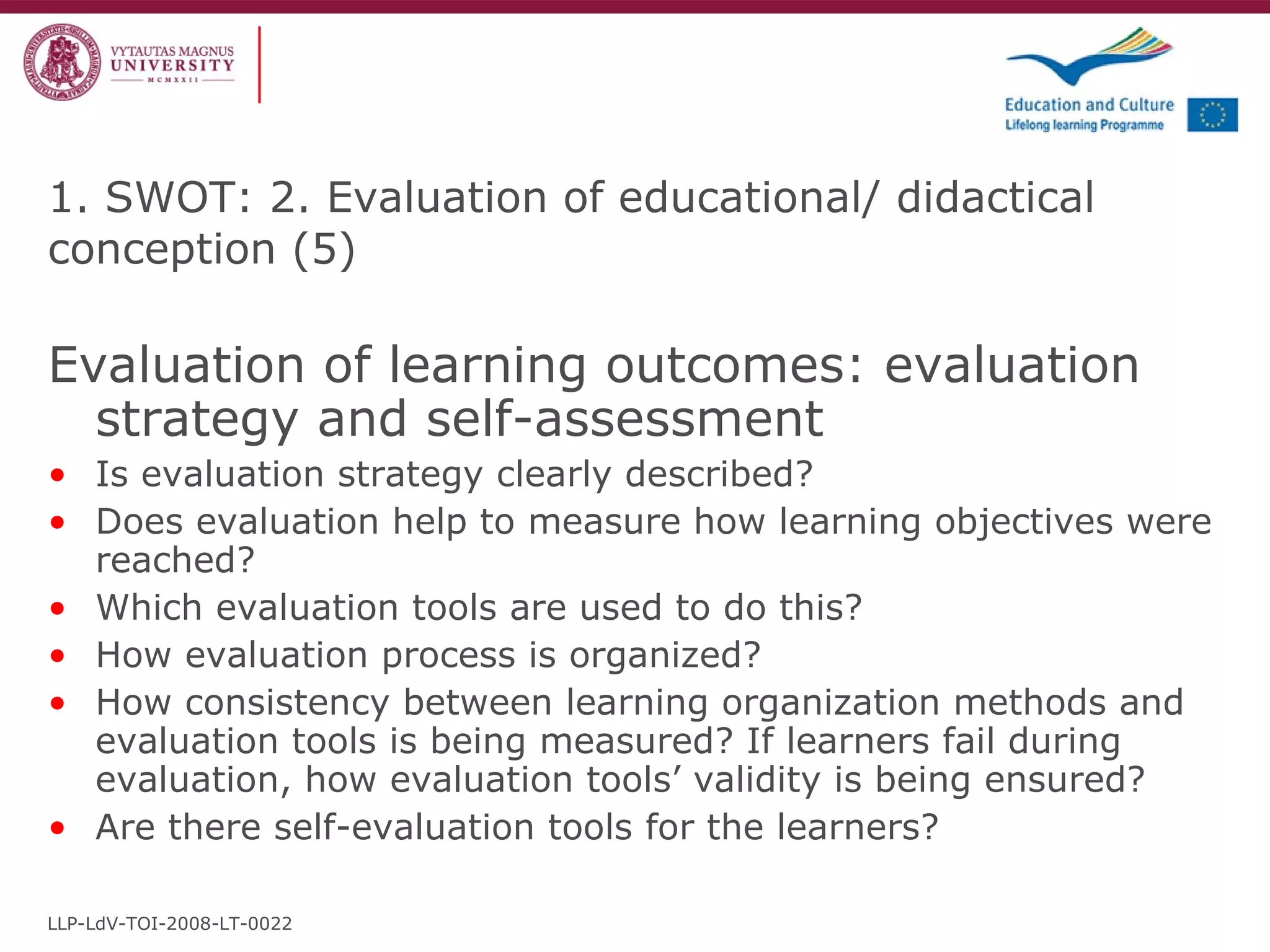
Evaluation of learning outcomes: evaluation strategy and self-assessment Is evaluation strategy clearly described?  Does evaluation help to measure how learning objectives were reached? Which evaluation tools are used to do this? How evaluation process is organized? How consistency between learning organization methods and evaluation tools is being measured? If learners fail during evaluation, how evaluation tools’ validity is being ensured? Are there self-evaluation tools for the learners? 1. SWOT: 2. Evaluation of educational/ didactical conception  ( 5 ) LLP-LdV-TOI-2008-LT-0022
Are there self-evaluation tools for the teachers? Are their learning progression tools available for the learners? How feedback is ensured during learning organization and afterwards? Can the teacher select evaluation tools herself/ himself? Where and how evaluation criteria are present in the Curriculum? Do learners participate in building evaluation strategy? How? Can learners supply assignments repeatedly/ improved? How objectivity is ensured?  1. SWOT: 2. Evaluation of educational/ didactical conception  ( 6 ) LLP-LdV-TOI-2008-LT-0022
1. SWOT: 3. Support systems Are there learning contracts signed with the target group providing possibility for individual study/ learning schedule? How this influences Curriculum design? What kind of learner/ teacher support is being provided at the institution and what could be improved: Administrative, content, social, technical, other? Pre-learning, during learning, after learning? LLP-LdV-TOI-2008-LT-0022
How pre-requisite knowledge and skills are mentioned in the Curriculum? For “reviving” the curriculum, what support would be necessary for you, as curriculum authors? Do you have an idea about learning and teaching support necessary when learning in a distance way? How would you be able to deliver a distance learning course for large groups? Would you be able to divide the audience and have support from colleagues or administration to provide online consultations? 1. SWOT: 3. Support systems LLP-LdV-TOI-2008-LT-0022
1. SWOT:  4 .  Content and other issues   Content used in curriculum  Is it structured and clear? Does it meet learning objectives? Is it updated with the statistical and historical, and descriptive information? Is there bibliography available for the learners? Do you provide online resources with specific accessibility options? (like digital libraries, other?) LLP-LdV-TOI-2008-LT-0022
2. Analysis of available and existing resources and their possible applicability Analysis of similar curriculum design Quality evaluation for different learning resources Analysis of theoretical research findings in the area and their applicability Examples of online design, including the cases of ICT tools Analysis of possibilities to perform collaborative learning, self-learning and sharing, networking and other activities LLP-LdV-TOI-2008-LT-0022
consists more specifically in evaluating the existing tools, the use that has been made of them, and the possibilities of adjustment to attain this ideal situation. Unlikely that an existing solution will completely satisfy the end user but : inspiring broaden the end user horizons more precise about their expectations refine the picture of the ideal product 2. Analysis of available and existing resources and their possible applicability LLP-LdV-TOI-2008-LT-0022
Survey and review existing courses, resources (traditional and online design) so as to avoid “reinventing the wheel” Evaluation of the quality of the information and the use that is made out of it. It is the process that has to be evaluated: the adequacy of the pedagogical choices with the context and the objectives of the training. 2. Analysis of available and existing resources and their possible applicability LLP-LdV-TOI-2008-LT-0022
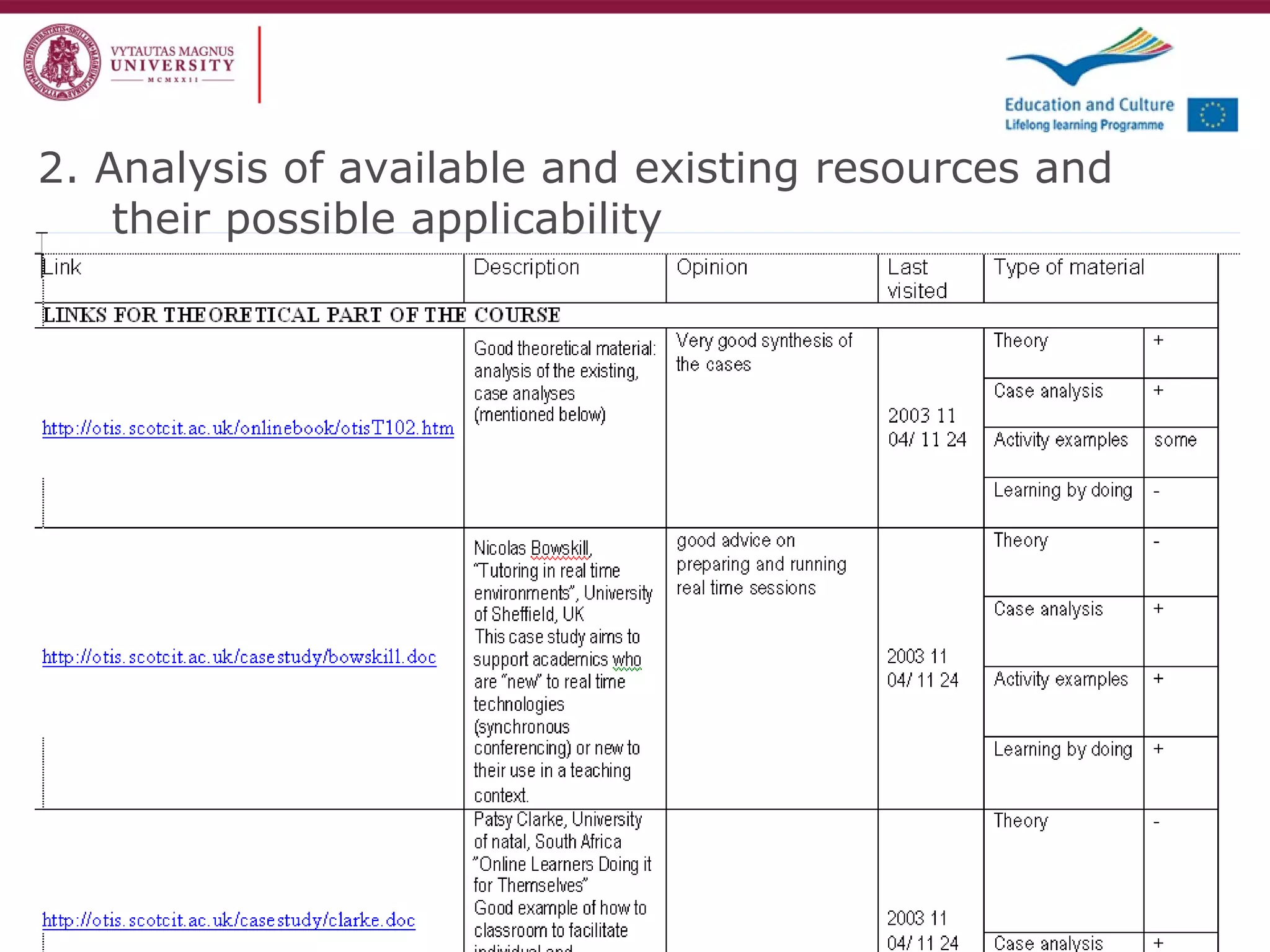
LLP-LdV-TOI-2008-LT-0022 2. Analysis of available and existing resources and their possible applicability
3. Re-definition of curriculum conceptual parameters (competence-based learning objectives) To ensure a higher degree of harmonisation for your future online course between objectives, methods and evaluation. To verify the things that have emerged during the previous stages LLP-LdV-TOI-2008-LT-0022
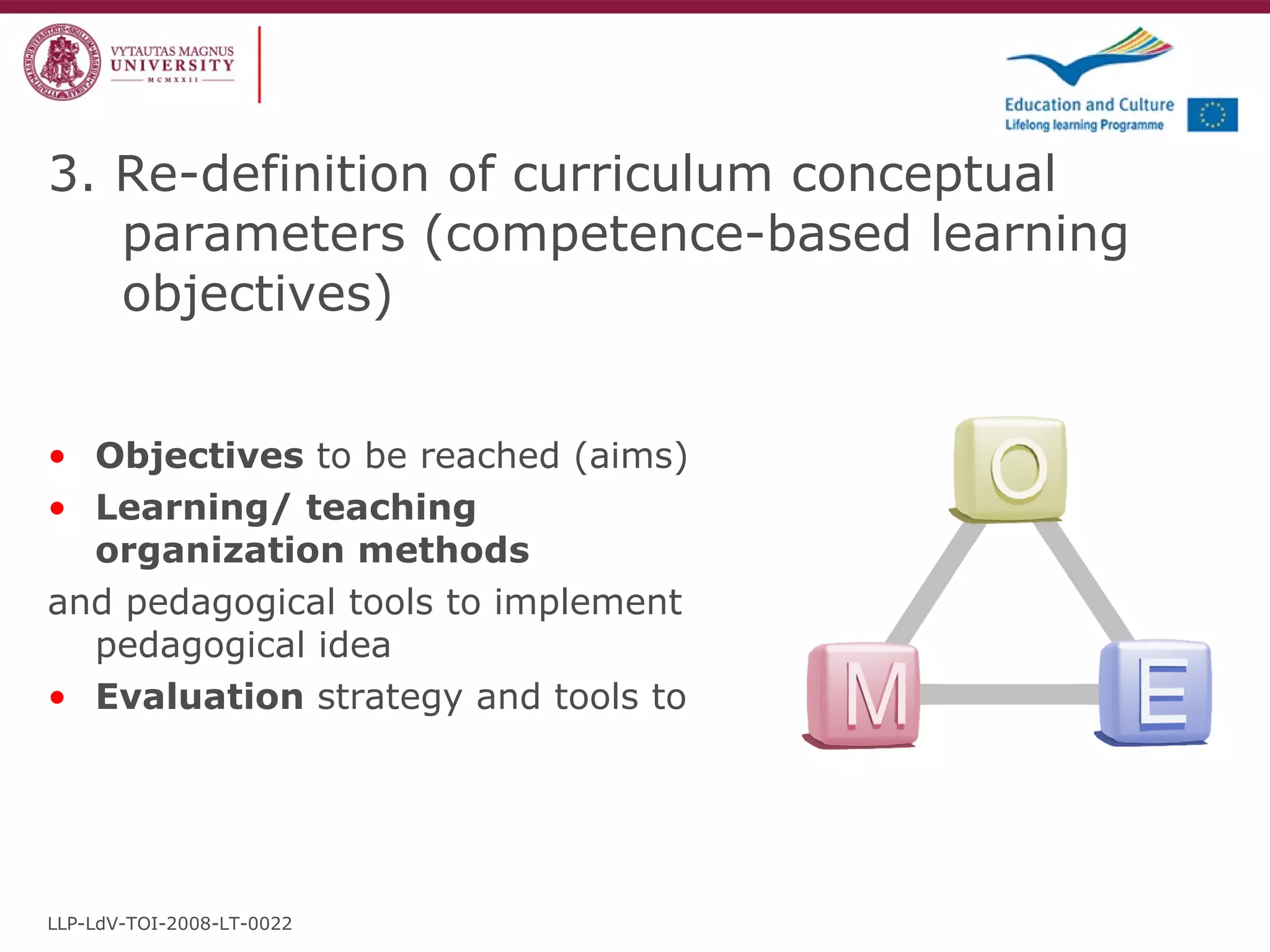
Objectives  to be reached (aims) Learning/ teaching organization methods   and pedagogical tools to implement pedagogical idea Evaluation  strategy and tools to 3. Re-definition of curriculum conceptual parameters (competence-based learning objectives) LLP-LdV-TOI-2008-LT-0022
An ability is an item of knowledge and/or know-how and/or a skill A competency is the "metaprocess" which enables acquired abilities to be applied in a given context at a given moment The objective set by the teacher is the ability to be achieved, and it enables the learning approach to be developed 3.1. Re-definition of  learning objectives
A distinction can be made between three fields of objectives: cognitive  : for intellectual functions; affective  : for sensibility, motivation and emotion; psychomotor : for the senses and for muscular coordination 3.1.  Re-definition of  learning objectives
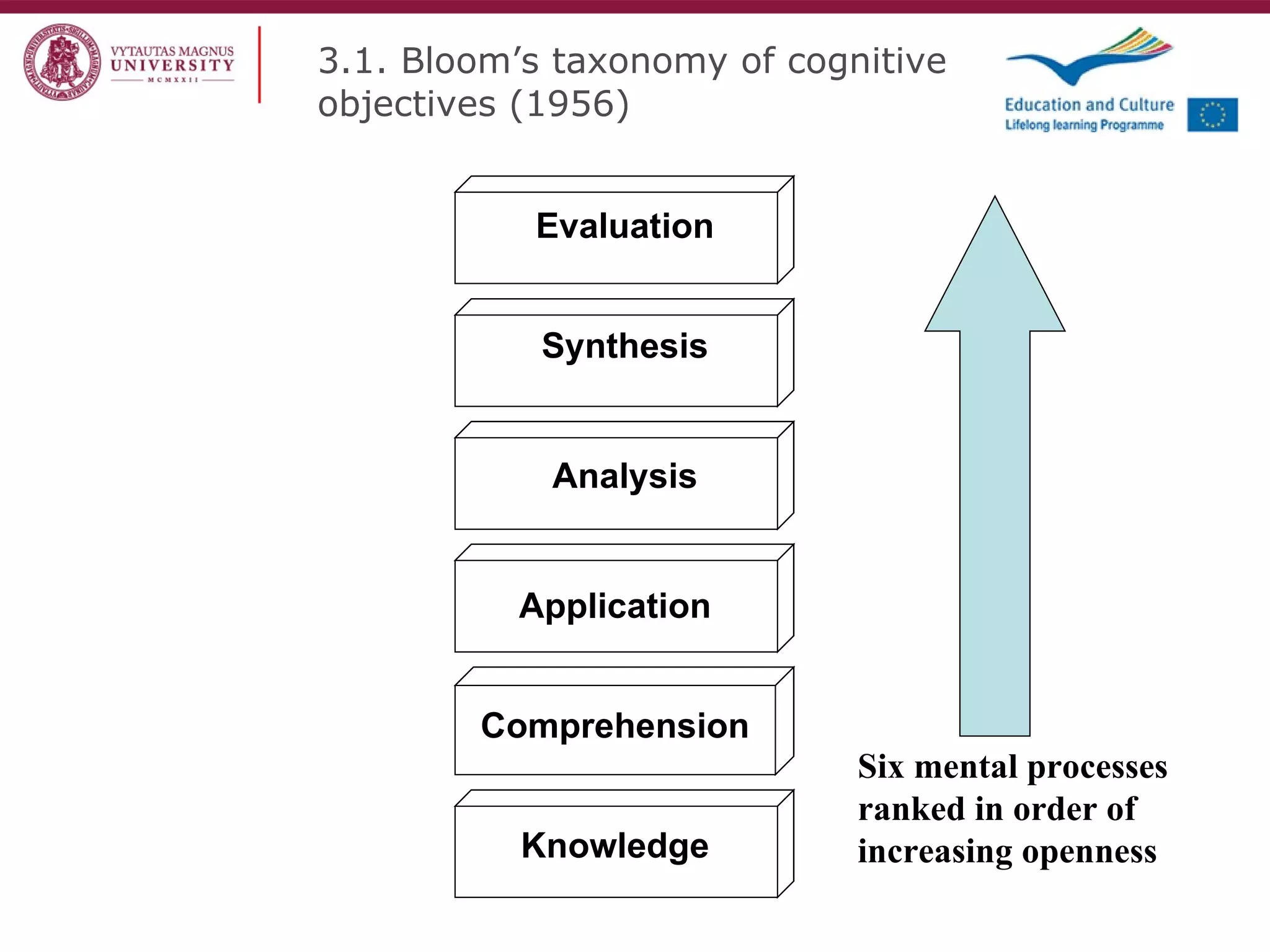
3.1. Bloom’s taxonomy of cognitive objectives (1956) Synthesis Analysis Application Comprehension Knowledge Evaluation Six mental processes  ranked in order of increasing openness
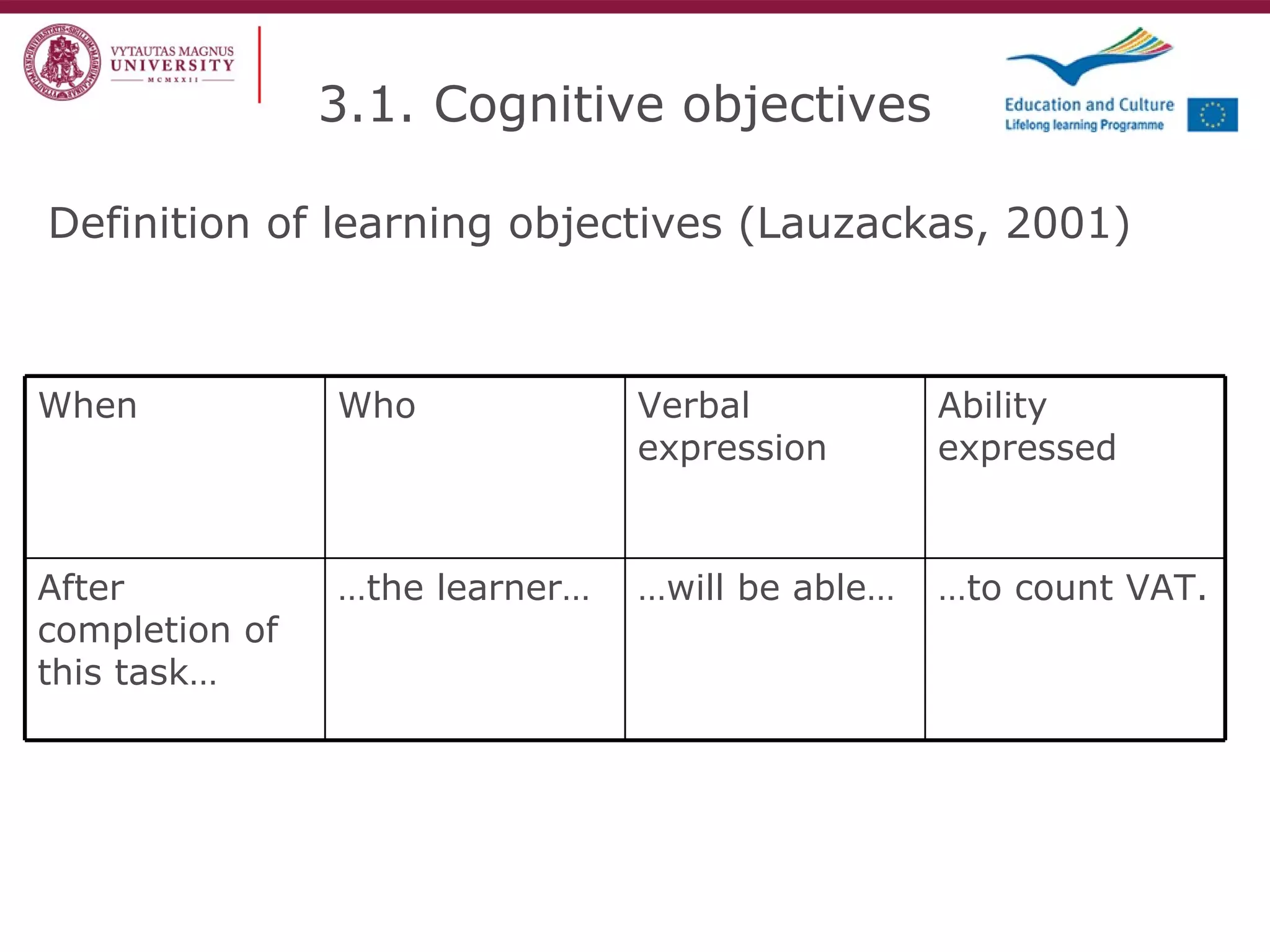
Definition of learning objectives (Lauzackas, 2001) 3.1. Cognitive objectives When Who Verbal expression Ability expressed After completion of this task… … the learner… … will be able… … to count VAT.
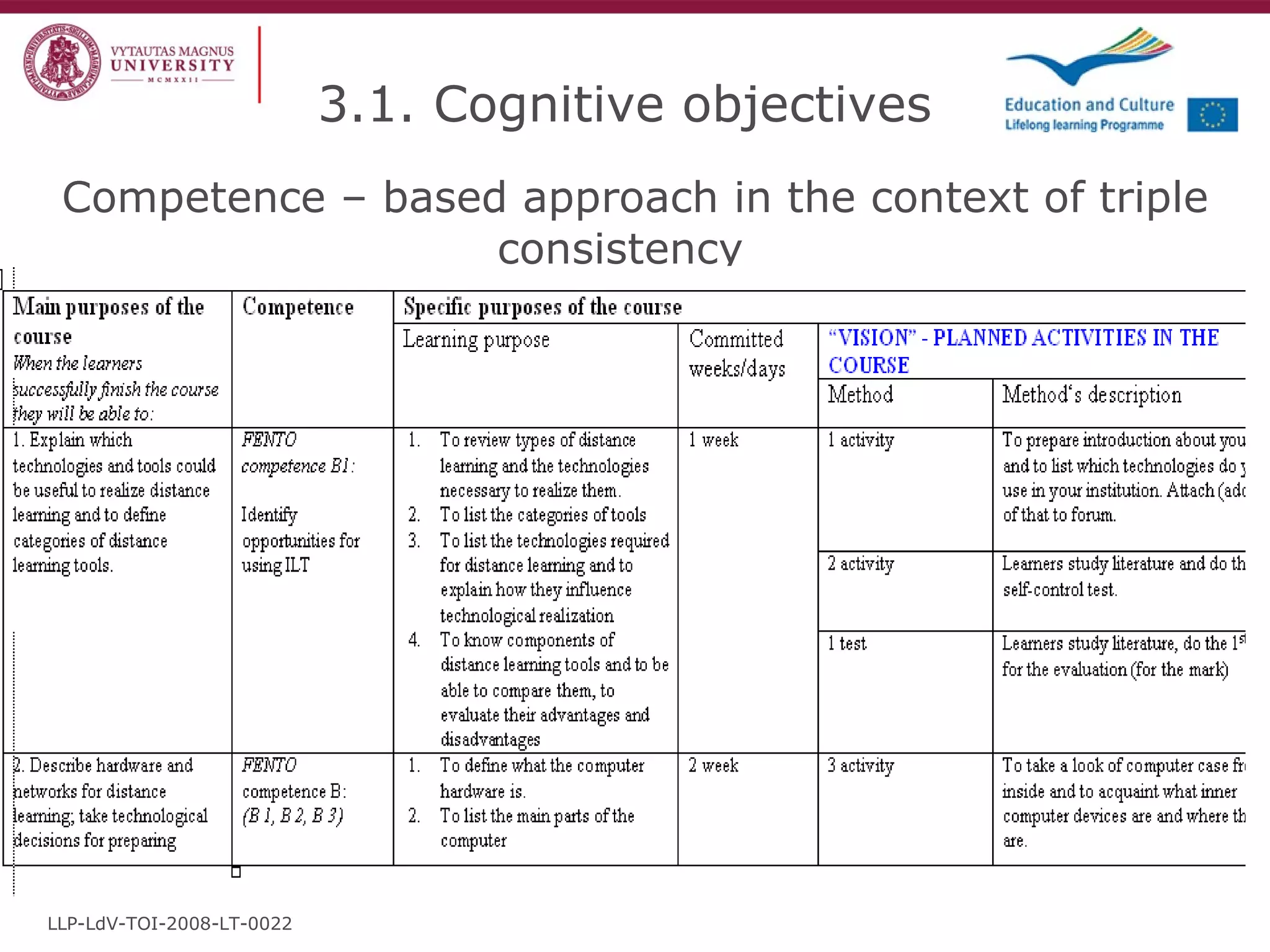
Competence – based approach in the context of triple consistency  LLP-LdV-TOI-2008-LT-0022 3.1. Cognitive objectives
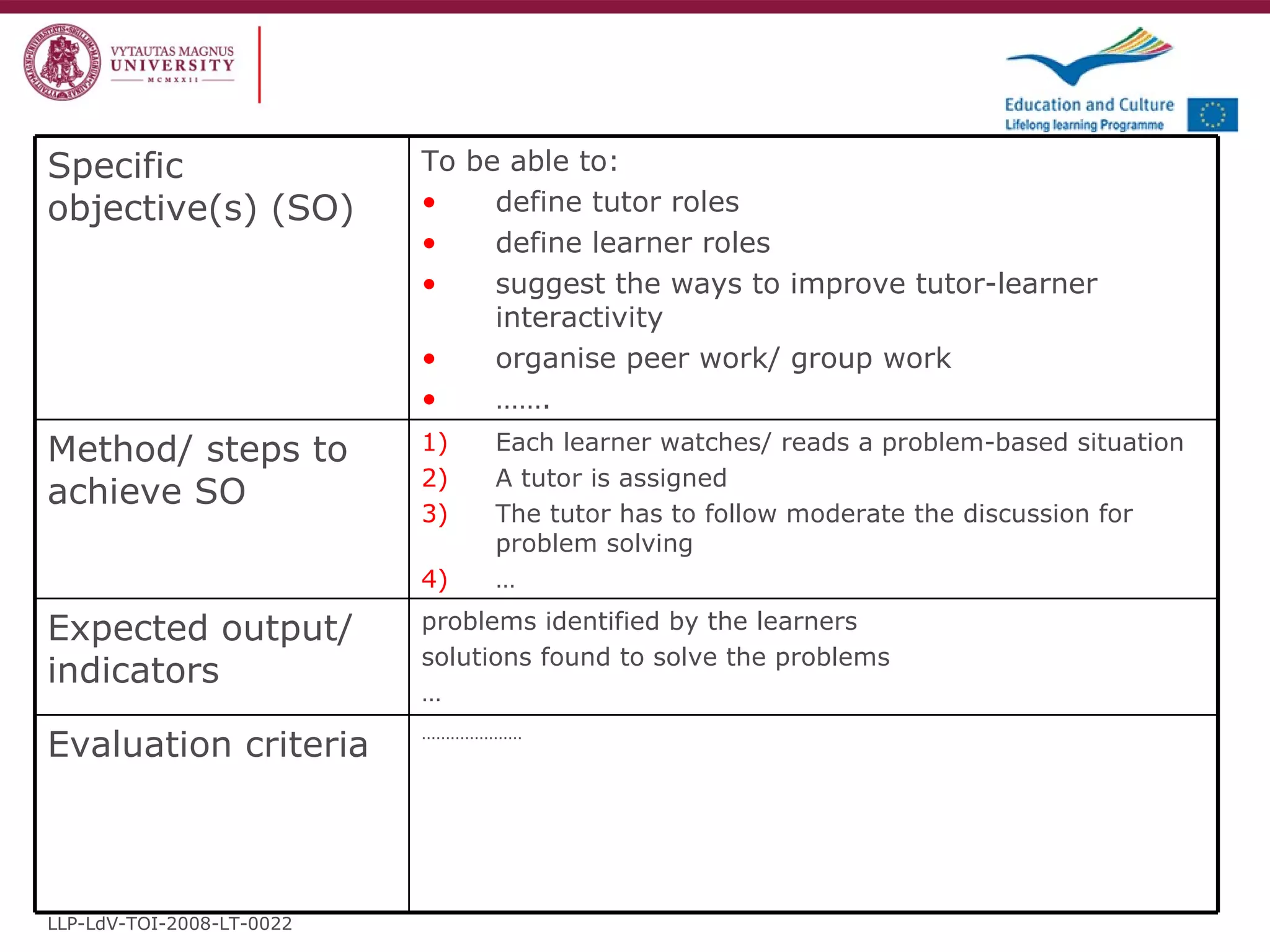
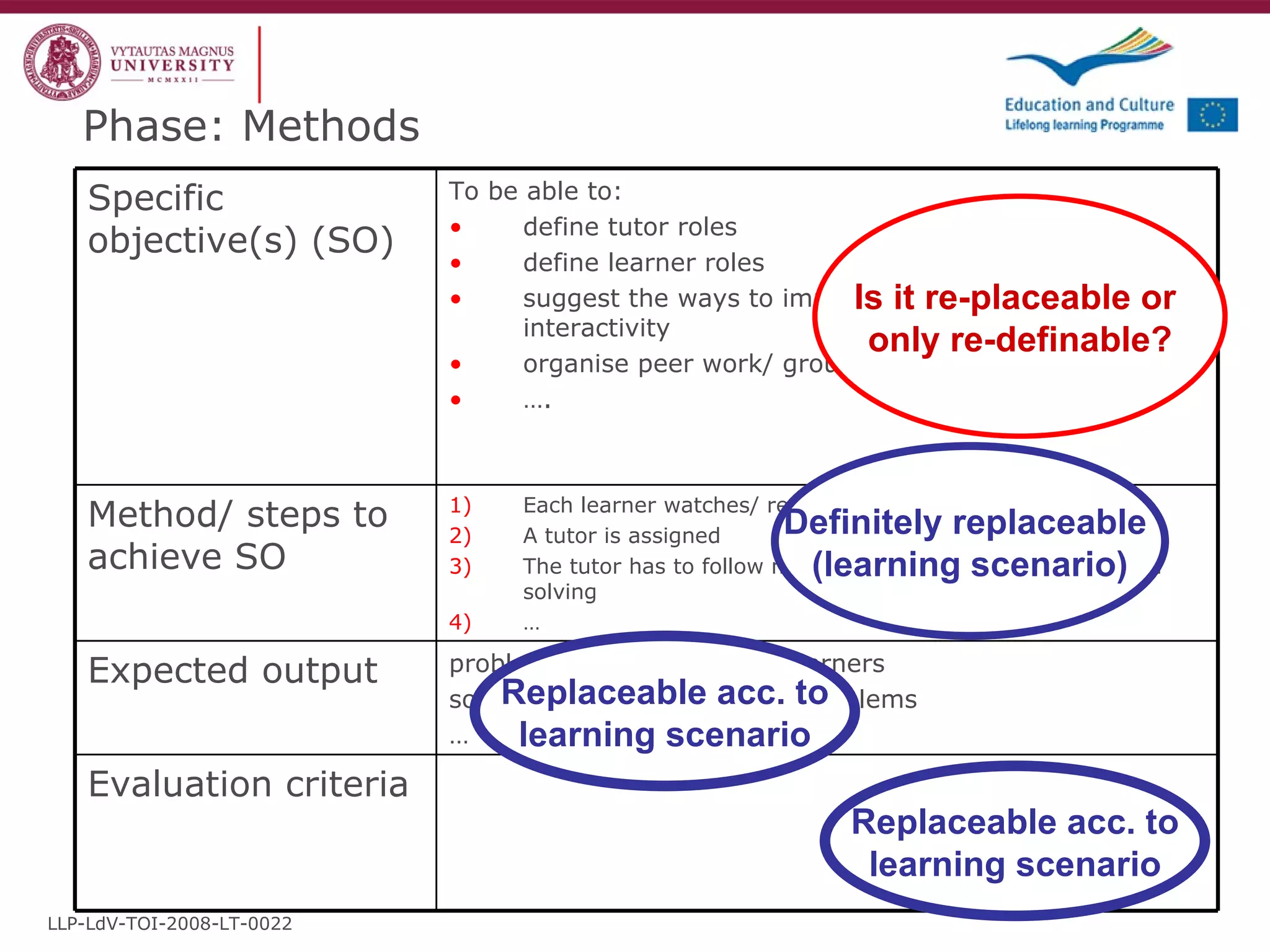
LLP-LdV-TOI-2008-LT-0022 Specific objective(s) (SO) To be able to: define tutor roles define learner roles suggest the ways to improve tutor-learner interactivity organise peer work/ group work …… . Method/ steps to achieve SO Each learner watches/ reads a problem-based situation A tutor is assigned The tutor has to follow moderate the discussion for problem solving … Expected output/ indicators problems identified by the learners solutions found to solve the problems … Evaluation criteria …………………
Phase: Methods LLP-LdV-TOI-2008-LT-0022 Is it re-placeable or  only re-definable? Definitely replaceable  (learning scenario) Replaceable acc. to learning scenario Replaceable acc. to learning scenario Specific objective(s) (SO) To be able to: define tutor roles define learner roles suggest the ways to improve tutor-learner interactivity organise peer work/ group work … . Method/ steps to achieve SO Each learner watches/ reads a problem-based situation A tutor is assigned The tutor has to follow moderate the discussion for problem solving … Expected output problems identified by the learners solutions found to solve the problems … Evaluation criteria
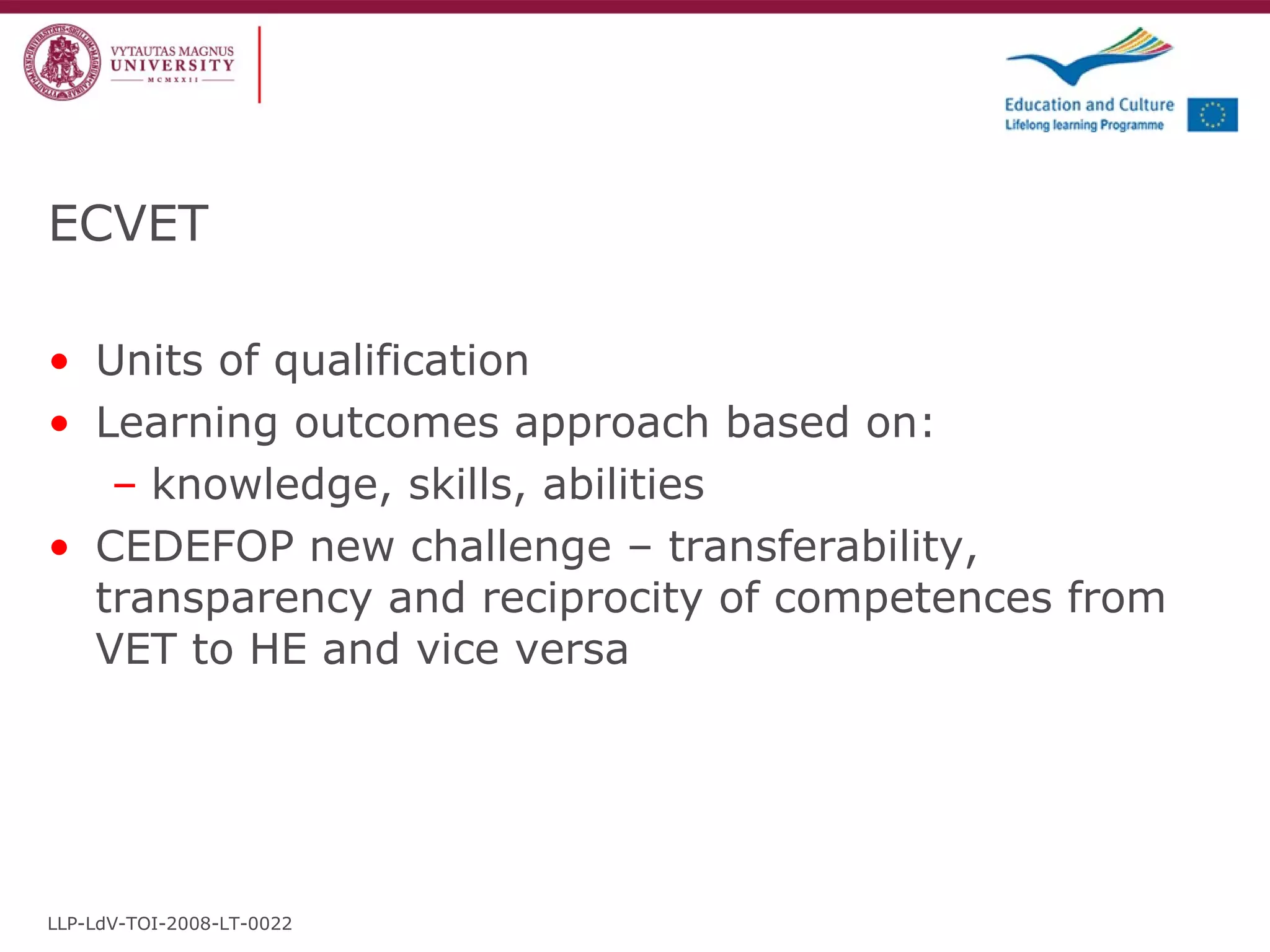
ECVET Units of qualification Learning outcomes approach based on: knowledge, skills, abilities CEDEFOP new challenge – transferability, transparency and reciprocity of competences from VET to HE and vice versa LLP-LdV-TOI-2008-LT-0022
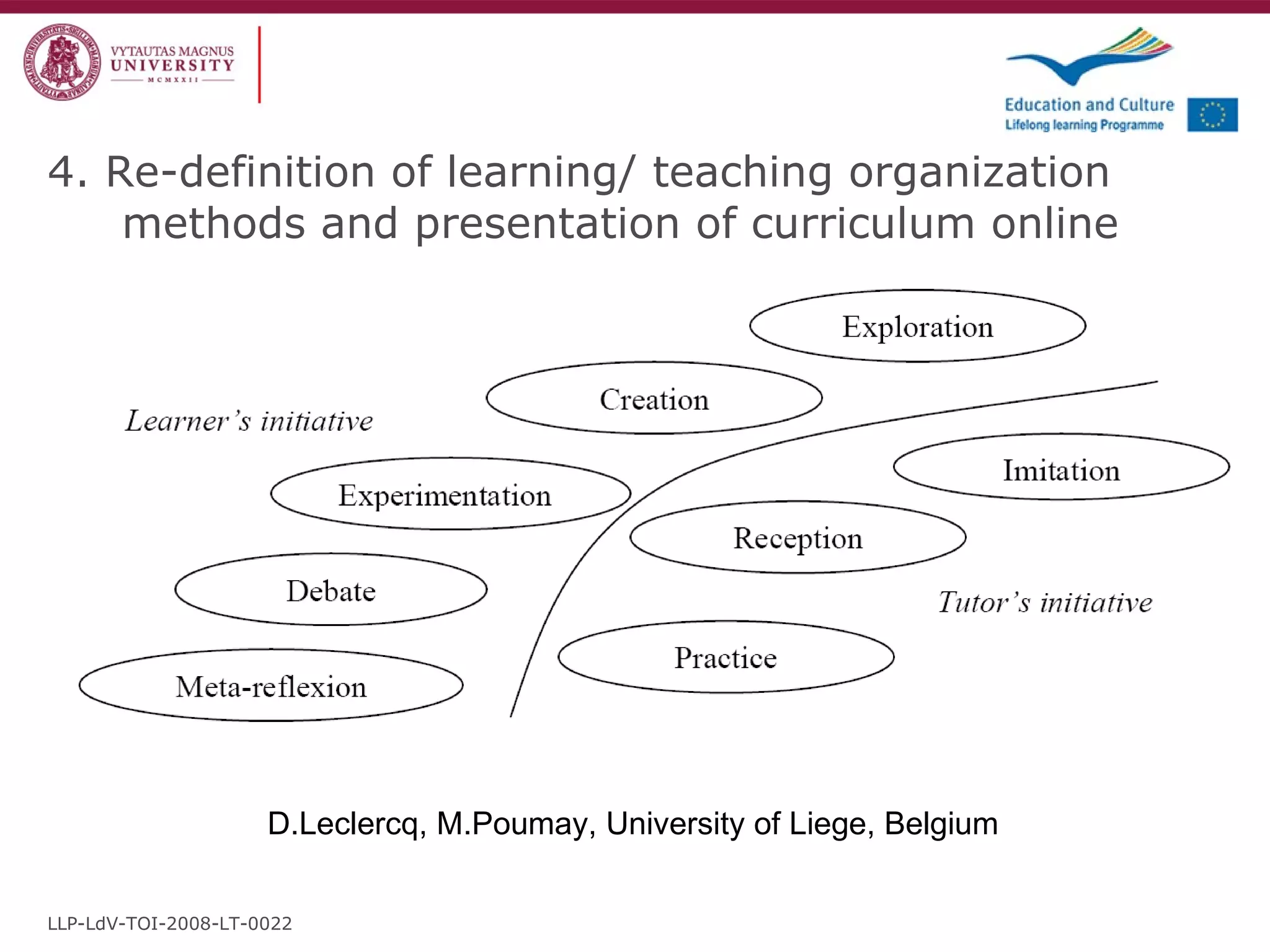
4. Re-definition of learning/ teaching organization methods and presentation of curriculum online LLP-LdV-TOI-2008-LT-0022 D.Leclercq, M.Poumay, University of Liege, Belgium
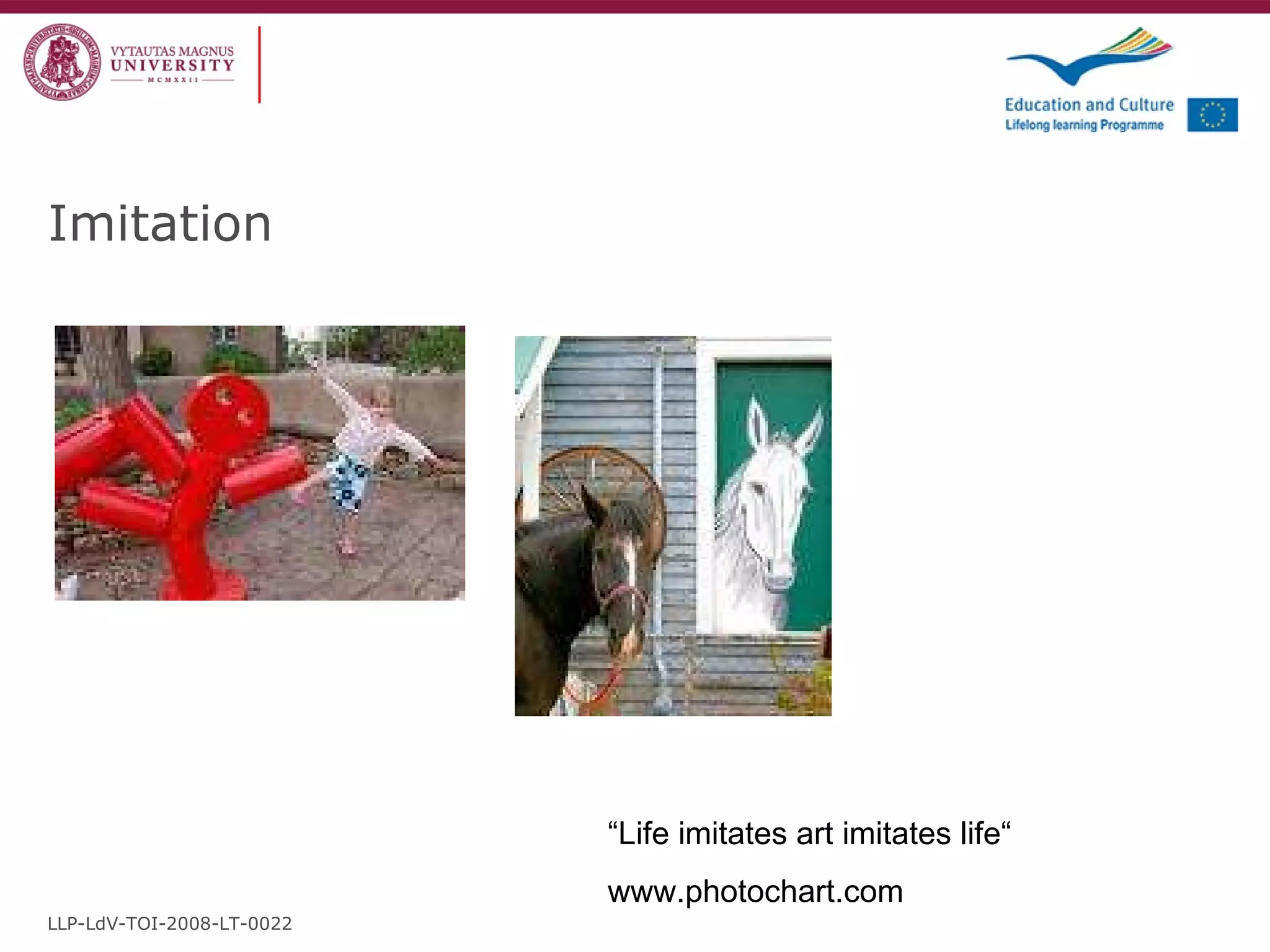
Imitation LLP-LdV-TOI-2008-LT-0022 “ Life imitates art imitates life“ www.photochart.com
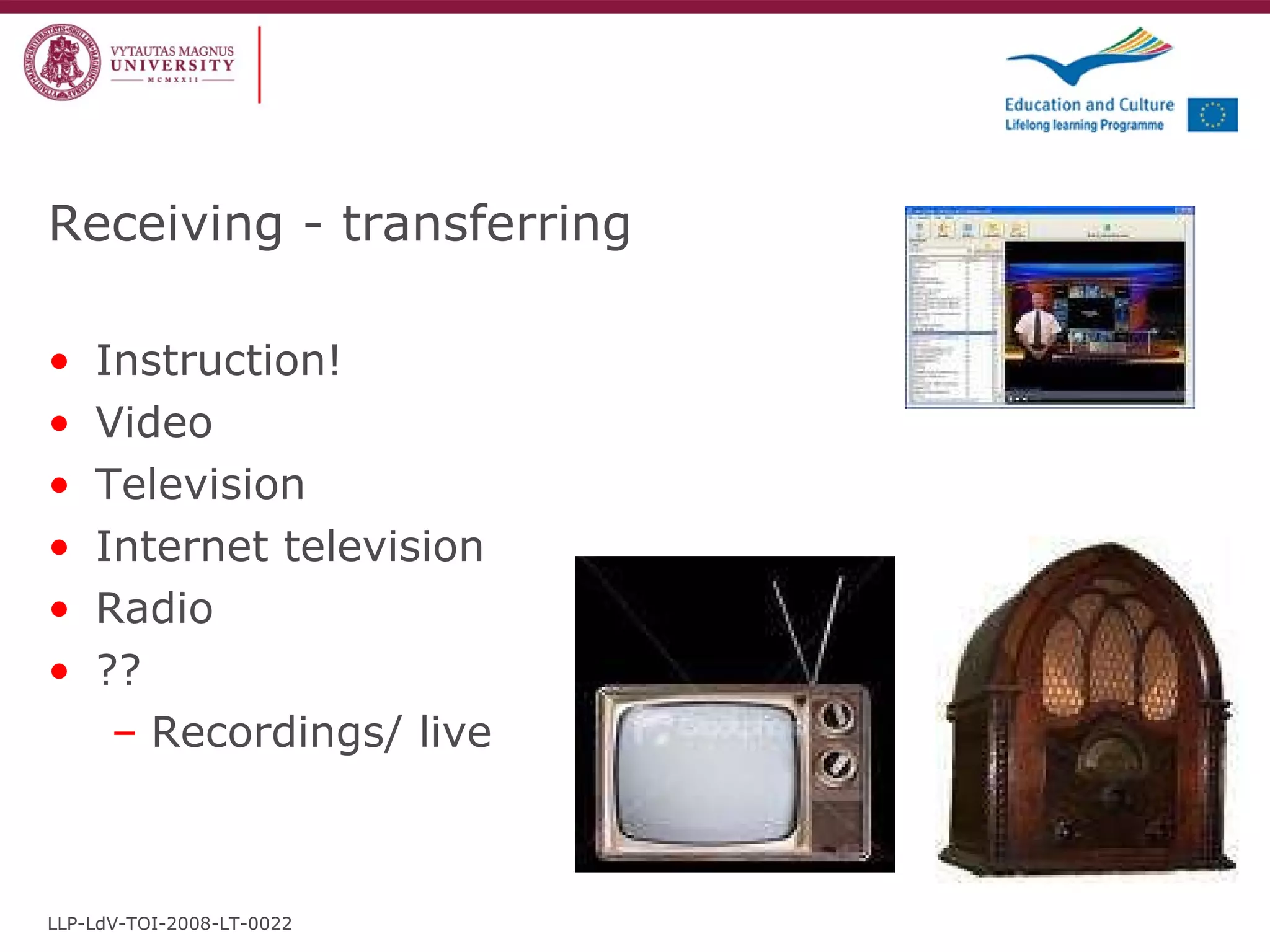
Receiving - transferring Instruction! Video Television Internet television Radio ?? Recordings/ live LLP-LdV-TOI-2008-LT-0022
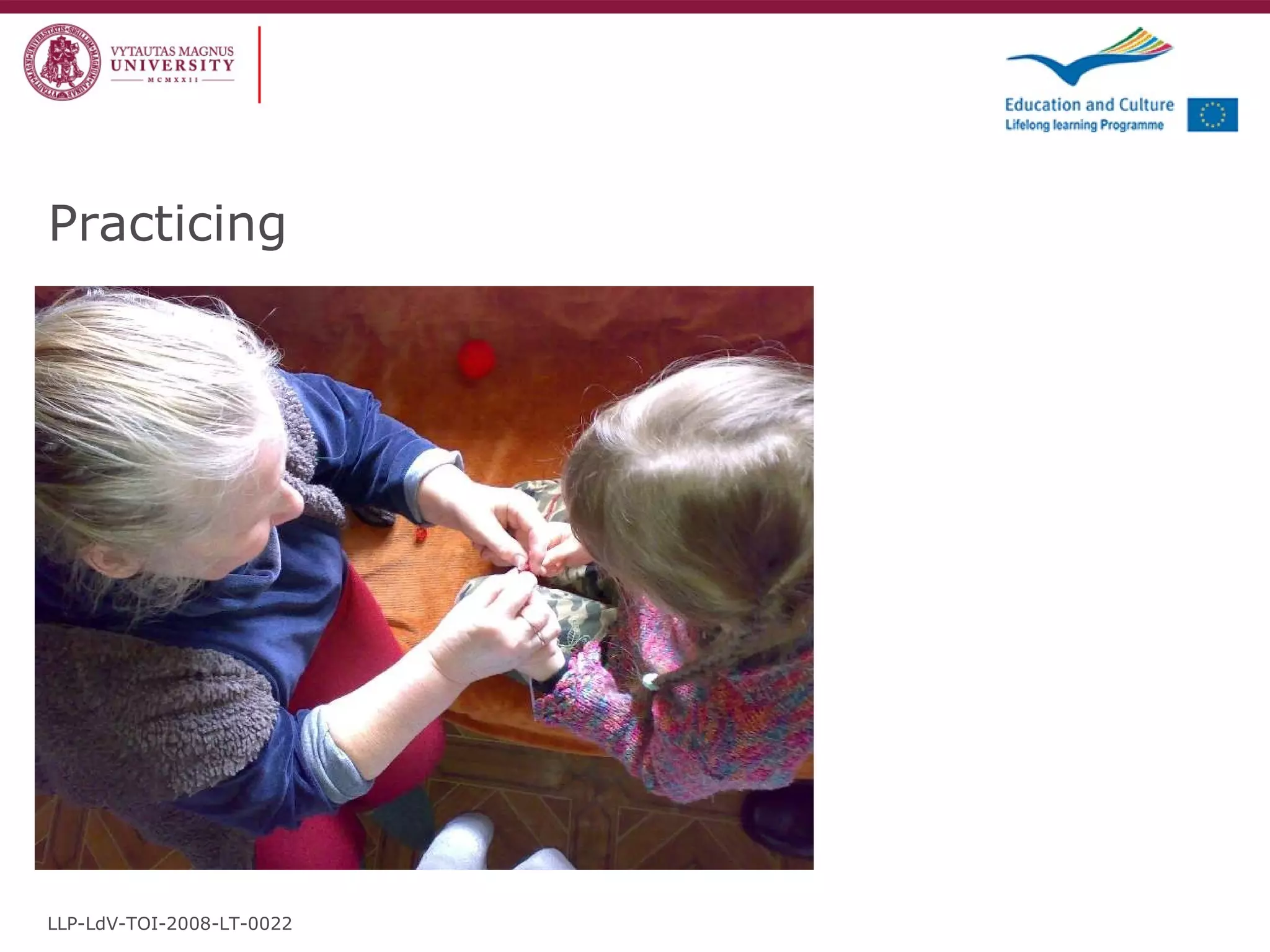
Practicing LLP-LdV-TOI-2008-LT-0022
Creation LLP-LdV-TOI-2008-LT-0022
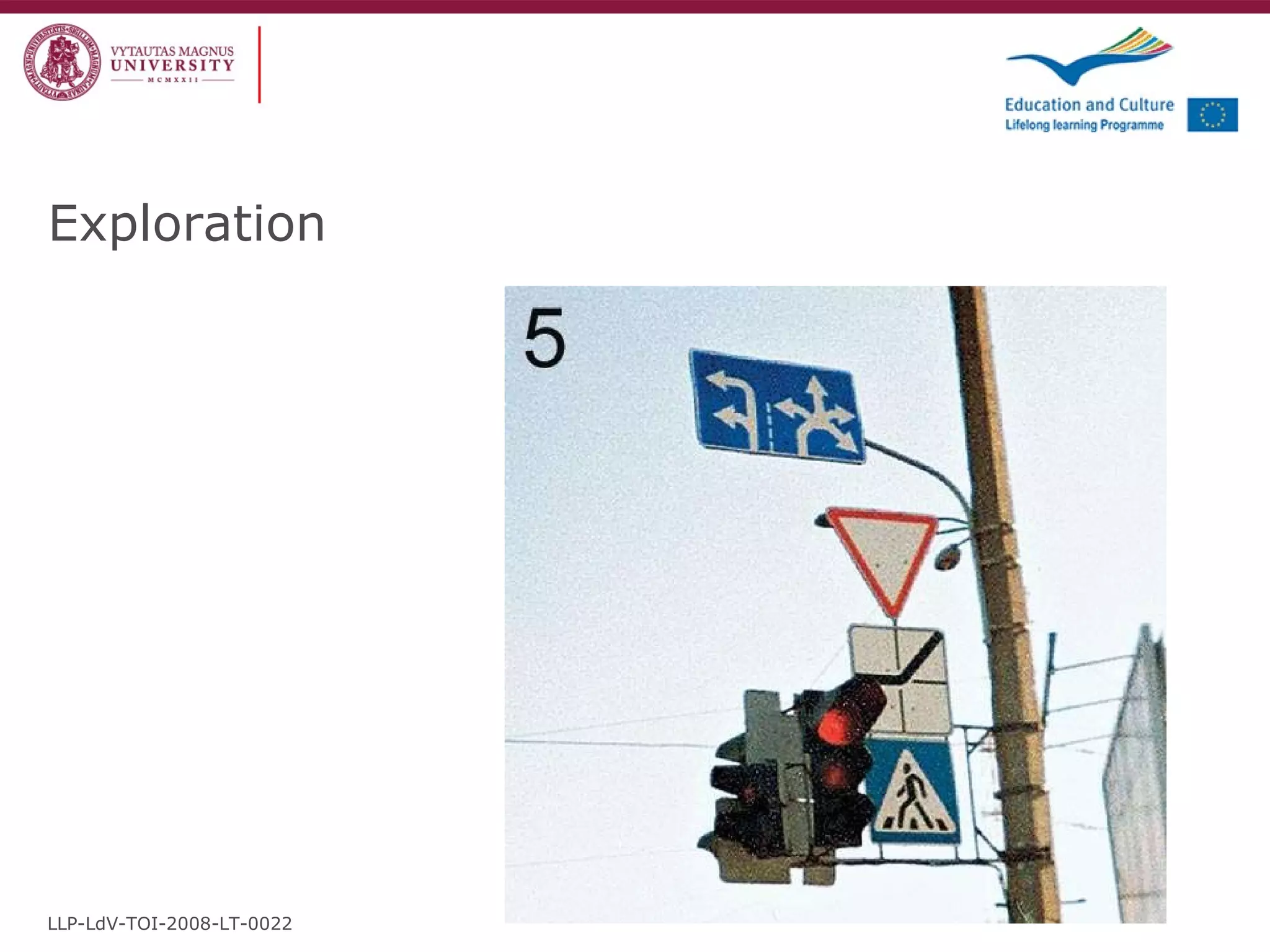
Exploration LLP-LdV-TOI-2008-LT-0022
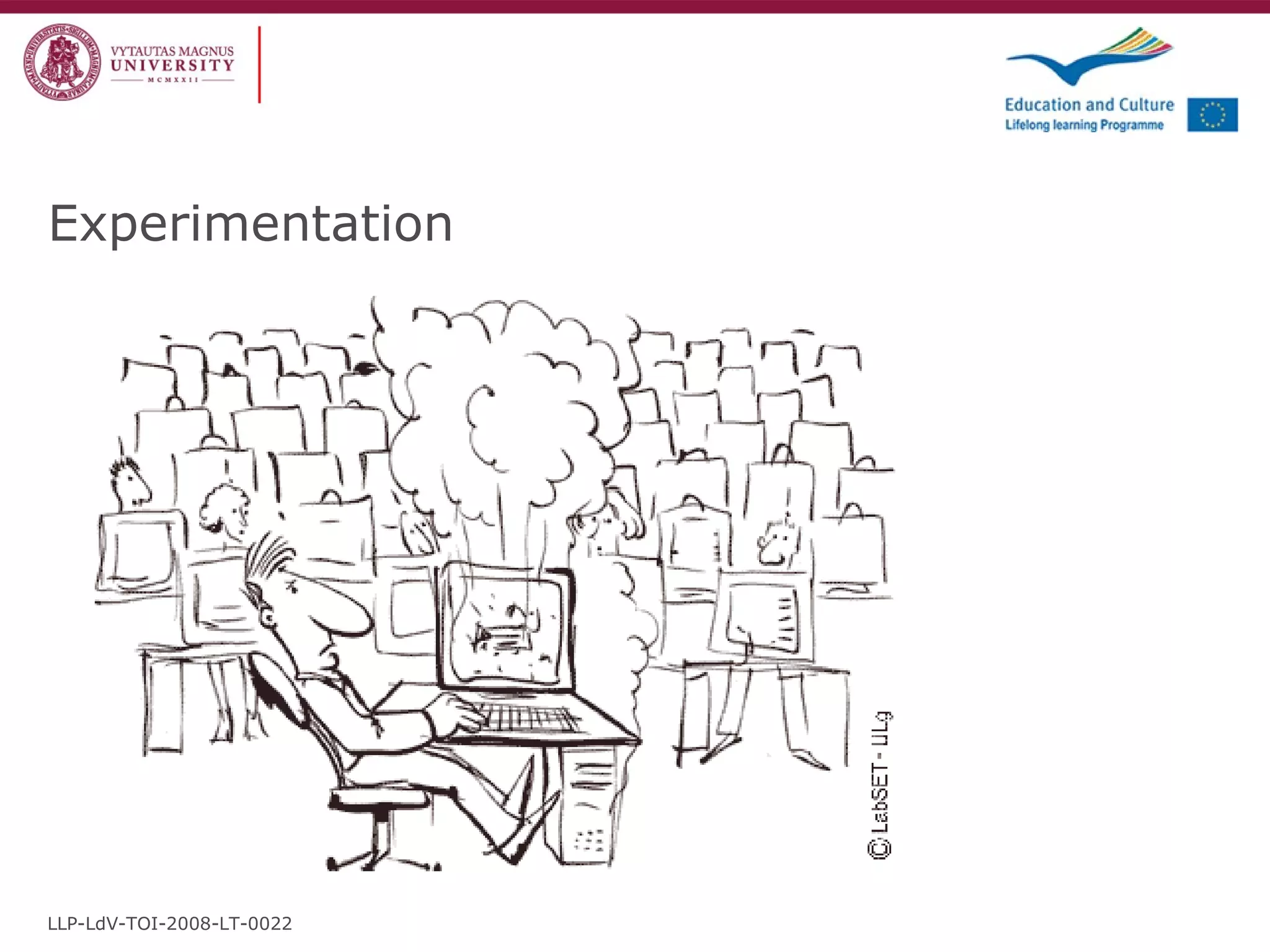
Experimentation LLP-LdV-TOI-2008-LT-0022
Discussing, debating LLP-LdV-TOI-2008-LT-0022
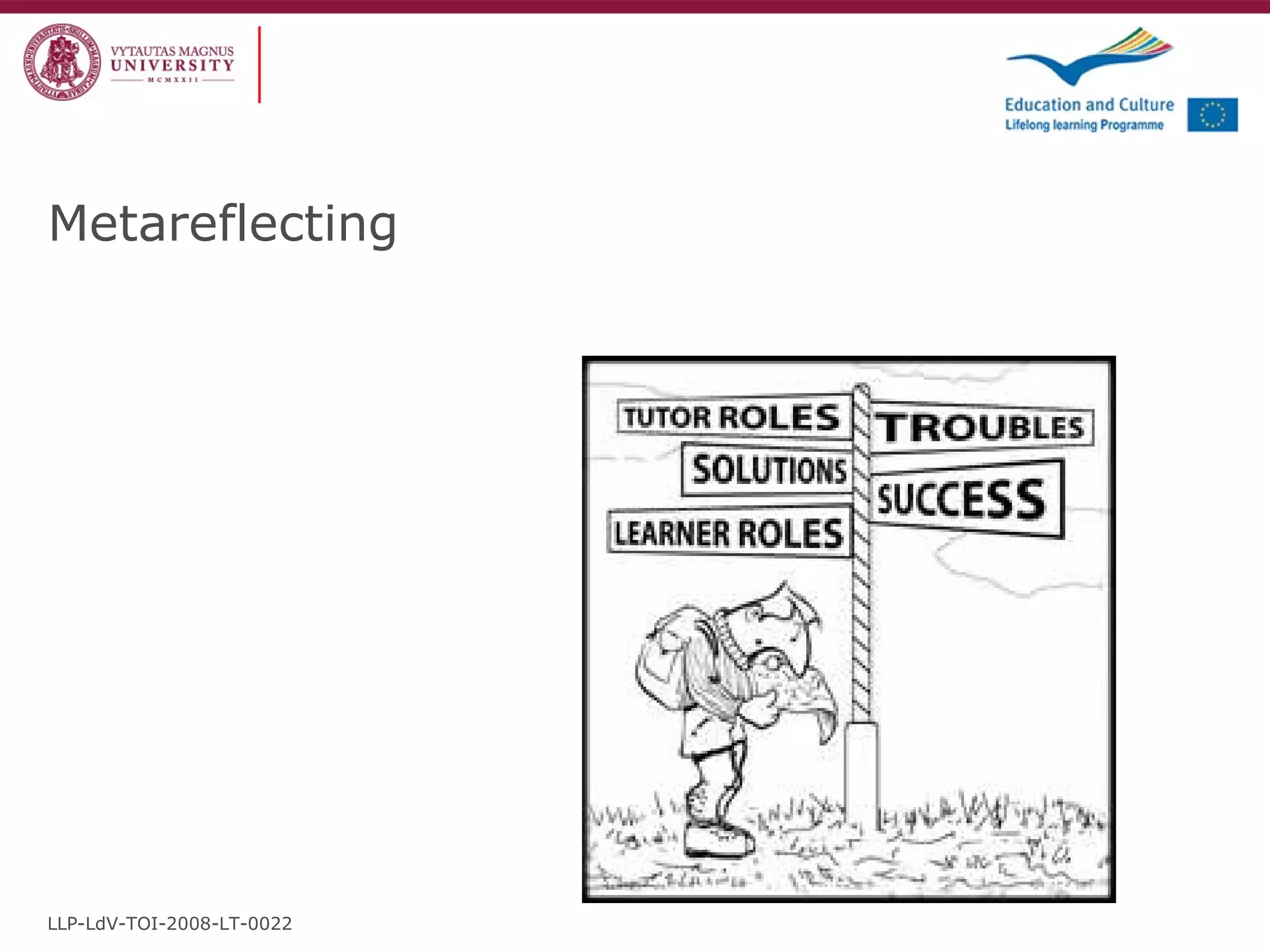
Metareflecting LLP-LdV-TOI-2008-LT-0022
5. Re-thinking of support system and communication means LLP-LdV-TOI-2008-LT-0022
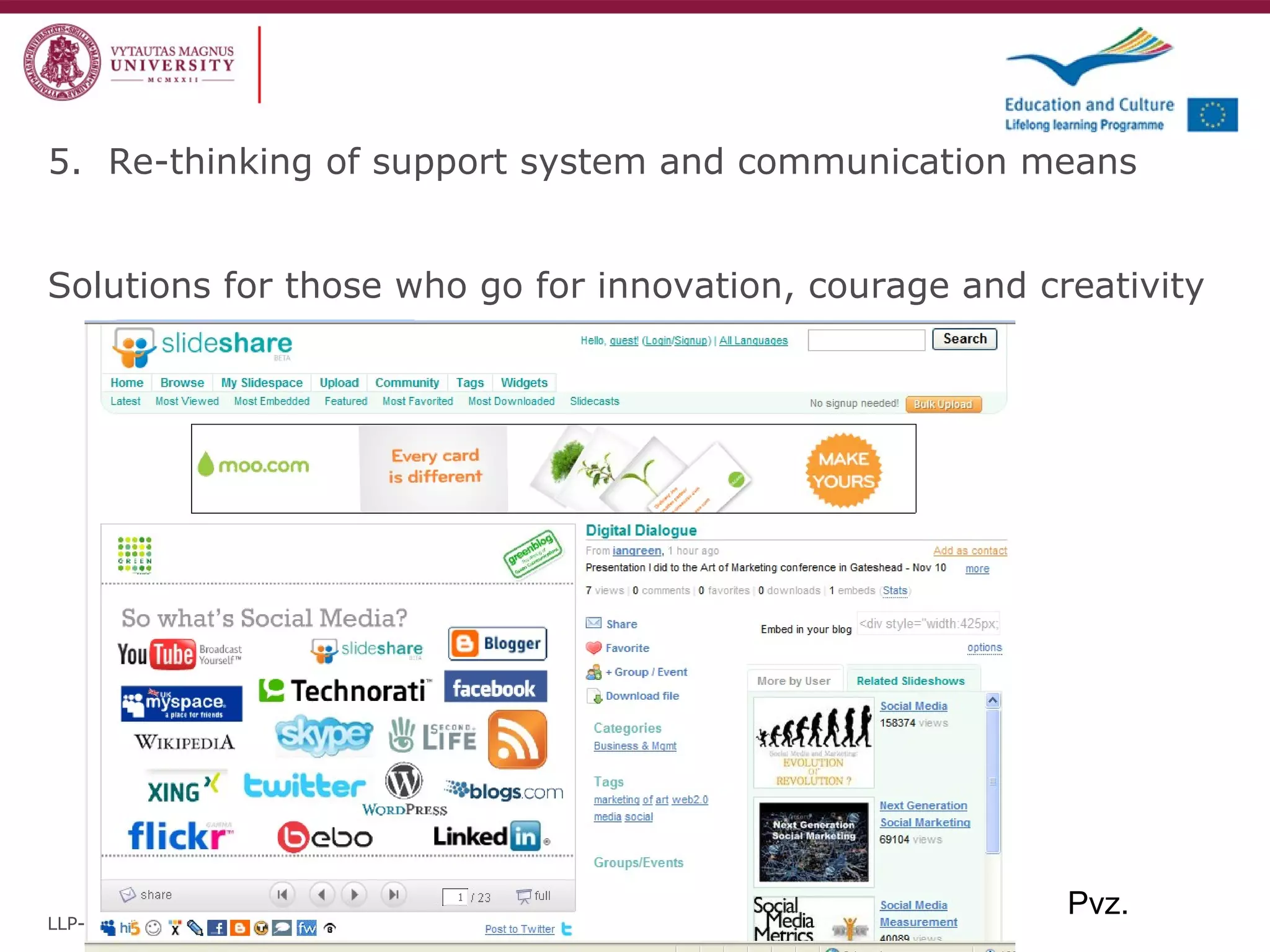
5.  Re-thinking of support system and communication means Solutions for those who go for innovation, courage and creativity LLP-LdV-TOI-2008-LT-0022 Pvz.
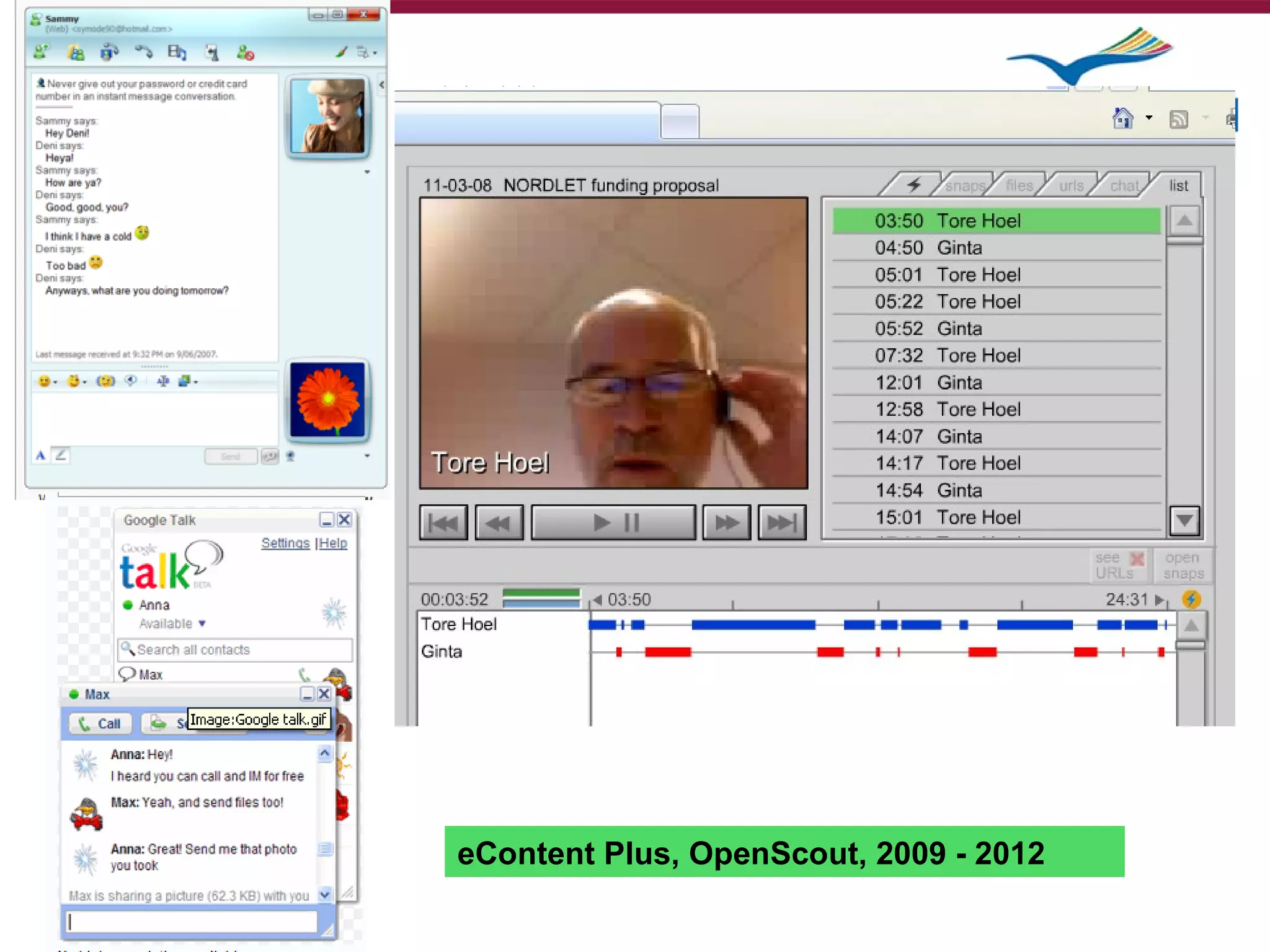
LLP-LdV-TOI-2008-LT-0022 eContent Plus, OpenScout,  2009 - 2012
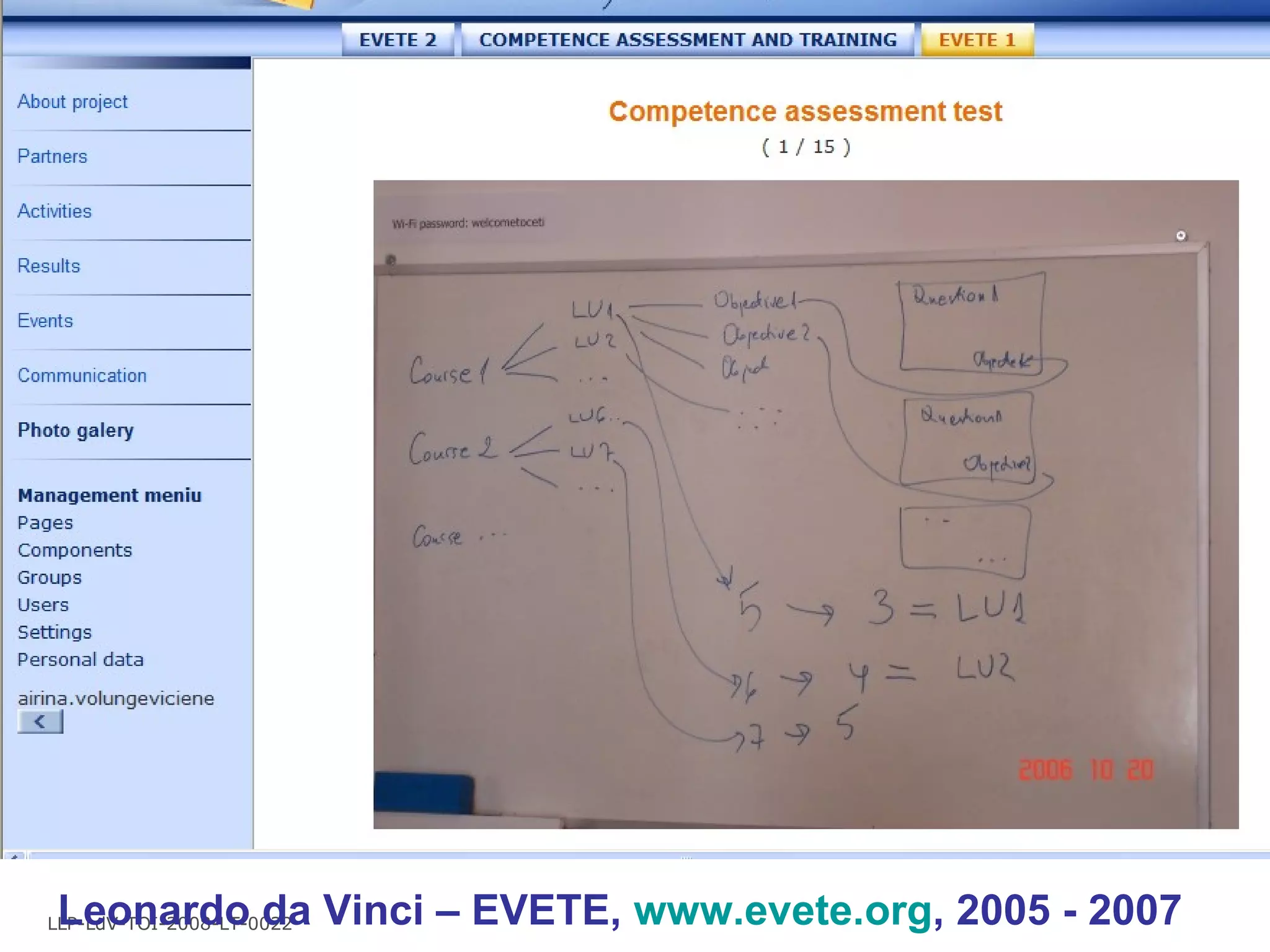
LLP-LdV-TOI-2008-LT-0022 Leonardo da Vinci – EVETE,  www.evete.org , 2005 - 2007
LLP-LdV-TOI-2008-LT-0022
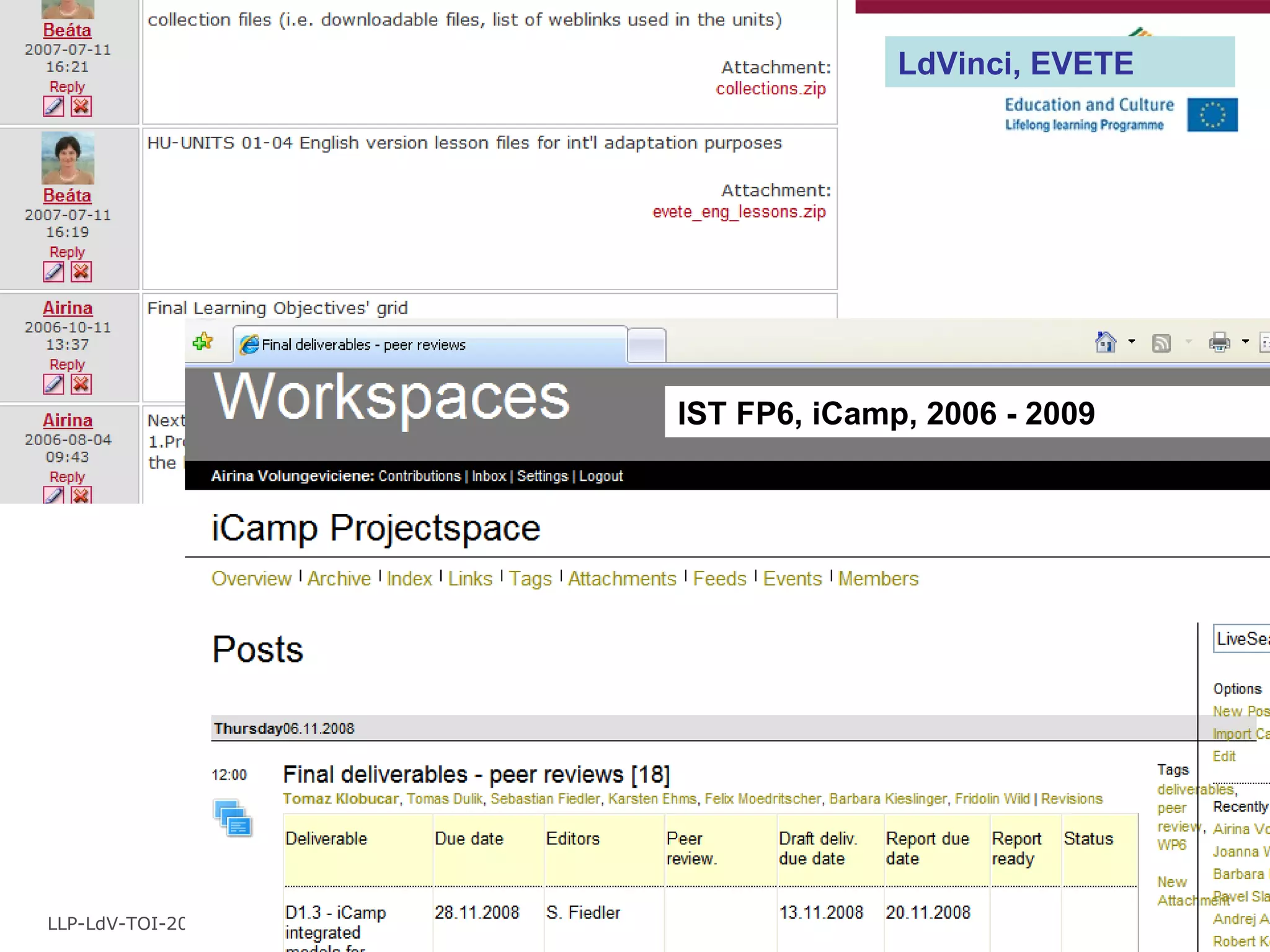
LLP-LdV-TOI-2008-LT-0022 LdVinci, EVETE IST FP6, iCamp, 2006 - 2009
LLP-LdV-TOI-2008-LT-0022
LLP-LdV-TOI-2008-LT-0022 Populia rūs, turtingi mokymosi ištekliai
LLP-LdV-TOI-2008-LT-0022
6. Re-definition of evaluation strategy:  selecting  the evaluation strategy Projects ? Activities ? Peer evaluation strategy ? Tests and questionnaires – most common means of evaluation - ? Other learning events - ? LLP-LdV-TOI-2008-LT-0022
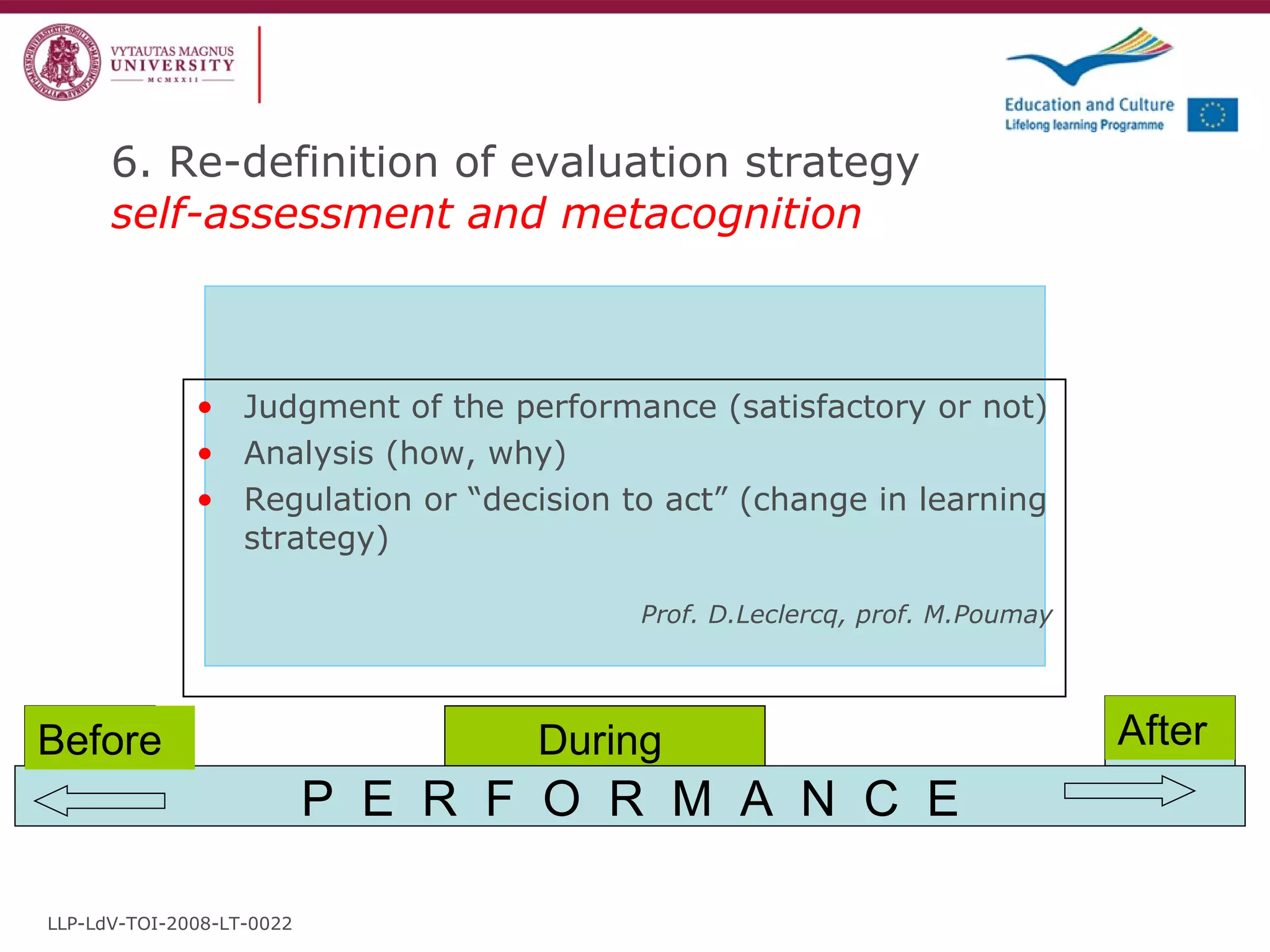
6. Re-definition of evaluation strategy  self-assessment and metacognition Judgment of the performance (satisfactory or not) Analysis (how, why) Regulation or “decision to act” (change in learning strategy) Prof. D.Leclercq, prof. M.Poumay LLP-LdV-TOI-2008-LT-0022 P  E  R  F  O  R  M  A  N  C  E Before During After
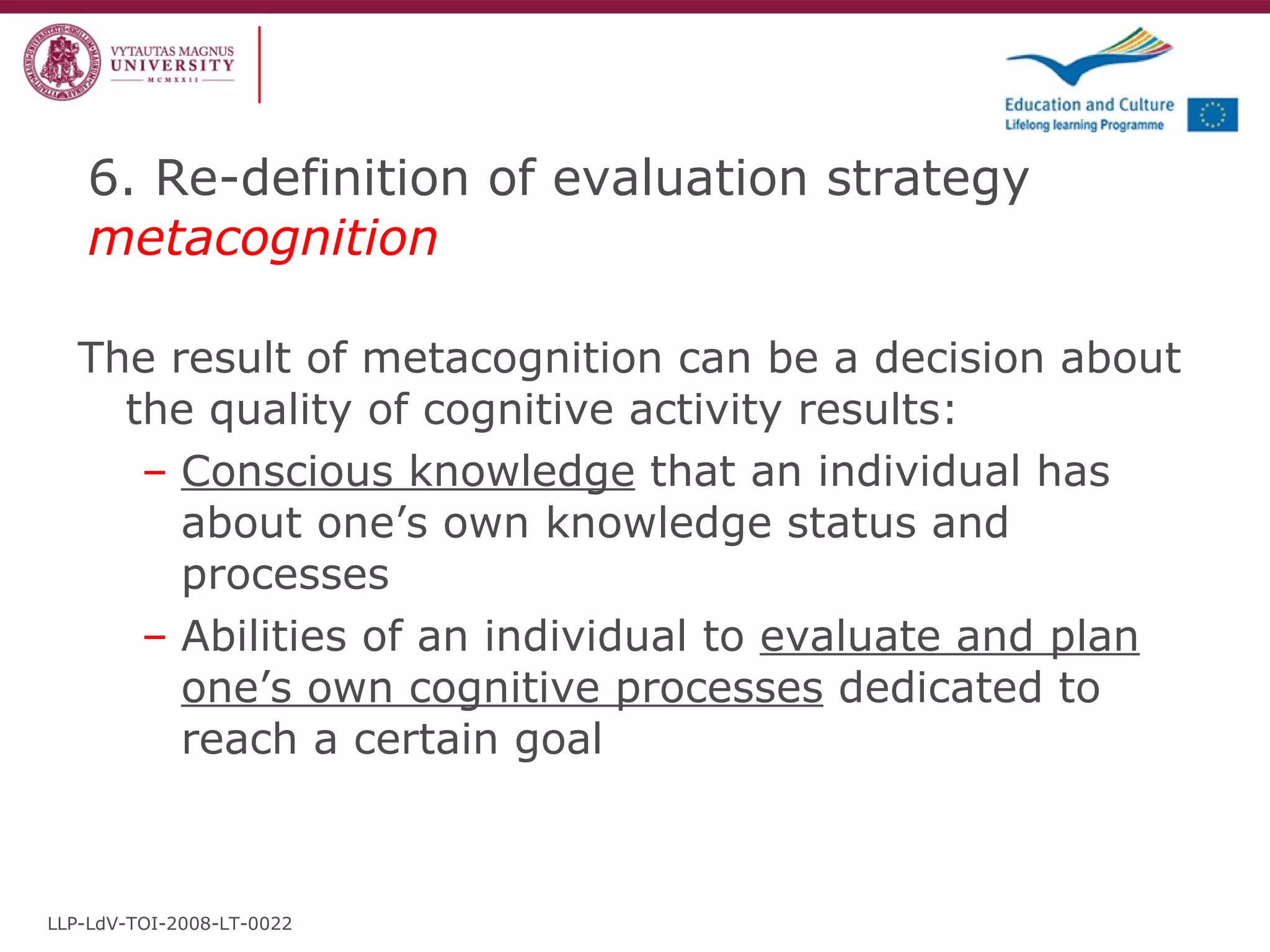
6. Re-definition of evaluation strategy  metacognition The result of metacognition can be a decision about the quality of cognitive activity results: Conscious knowledge  that an individual has about one’s own knowledge status and processes Abilities of an individual to  evaluate and plan one’s own cognitive processes  dedicated to reach a certain goal LLP-LdV-TOI-2008-LT-0022
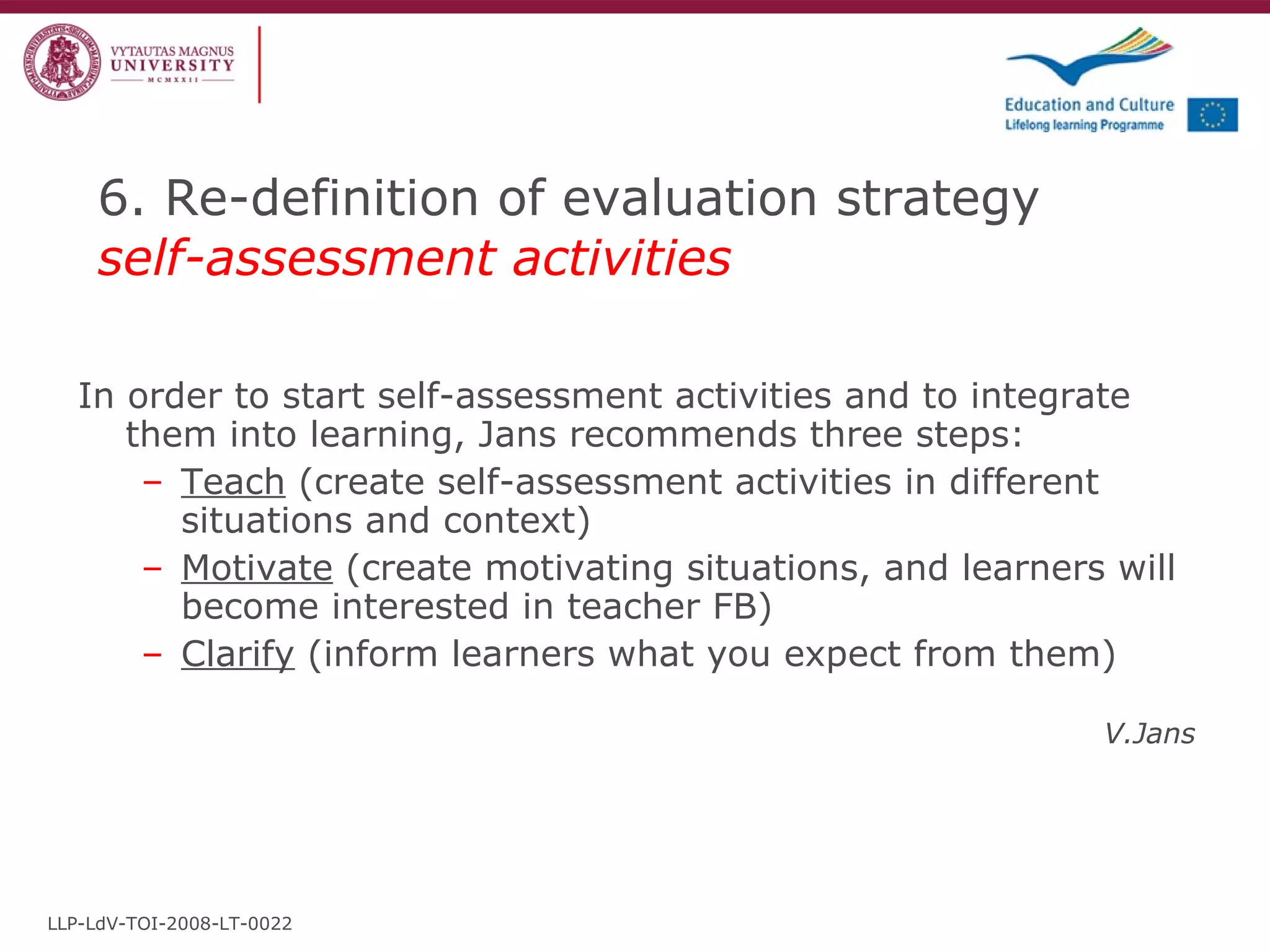
6. Re-definition of evaluation strategy  self-assessment activities In order to start self-assessment activities and to integrate them into learning, Jans recommends three steps: Teach  (create self-assessment activities in different situations and context) Motivate  (create motivating situations, and learners will become interested in teacher FB) Clarify  (inform learners what you expect from them) V.Jans LLP-LdV-TOI-2008-LT-0022
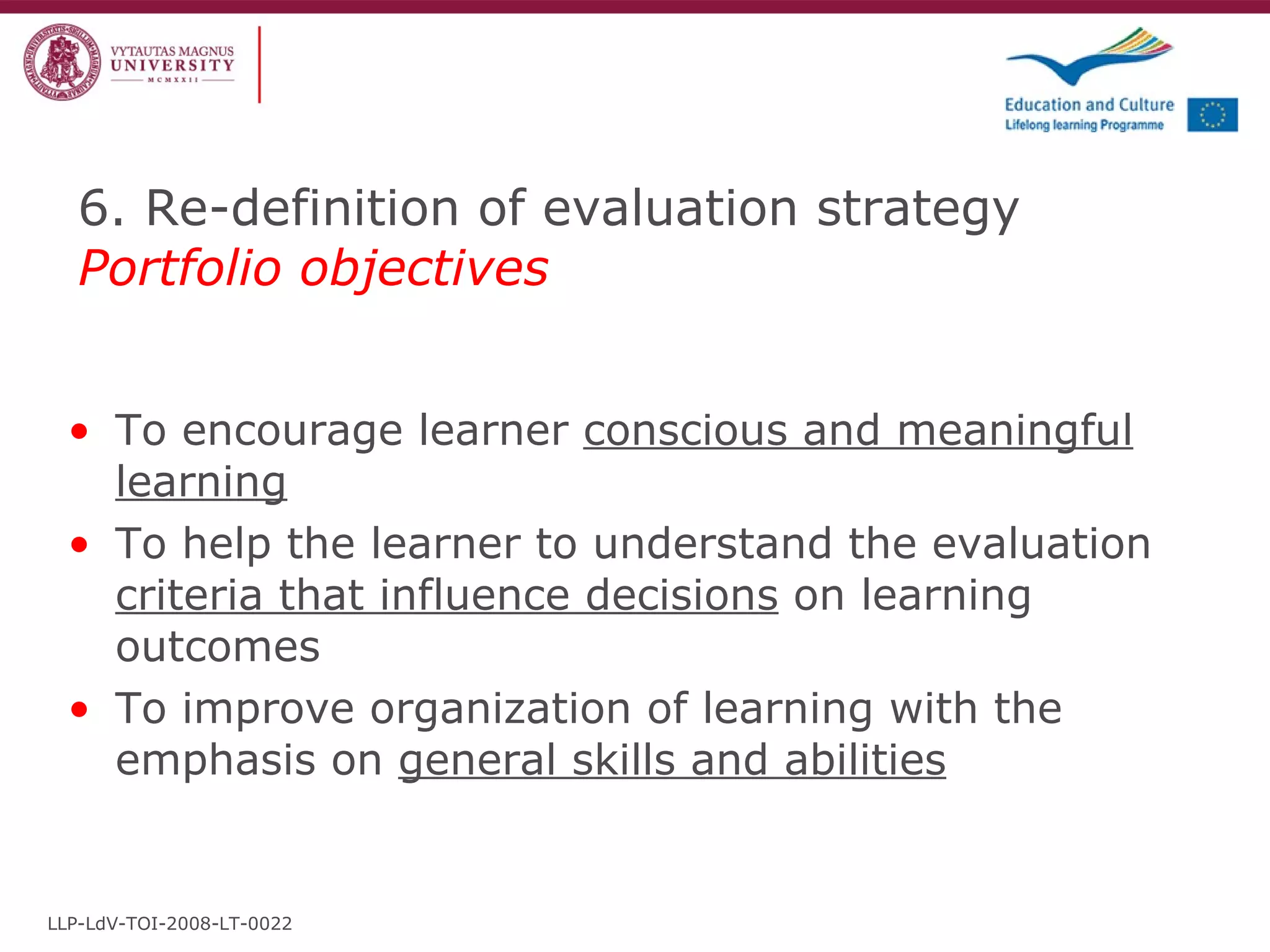
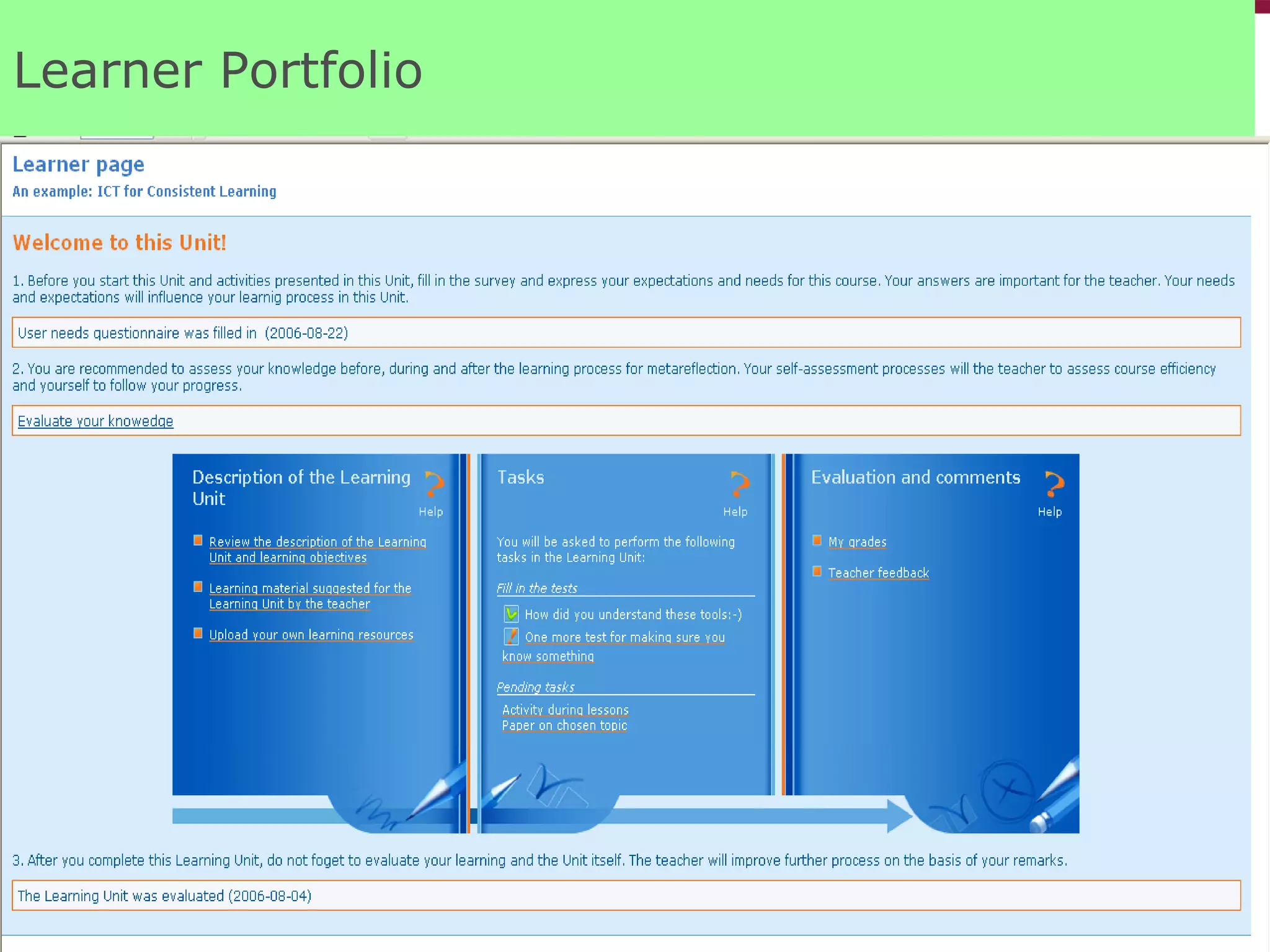
6. Re-definition of evaluation strategy  Portfolio objectives To encourage learner  conscious and meaningful learning To help the learner to understand the evaluation  criteria that influence decisions  on learning outcomes To improve organization of learning with the emphasis on  general skills and abilities LLP-LdV-TOI-2008-LT-0022
Learner Portfolio LLP-LdV-TOI-2008-LT-0022
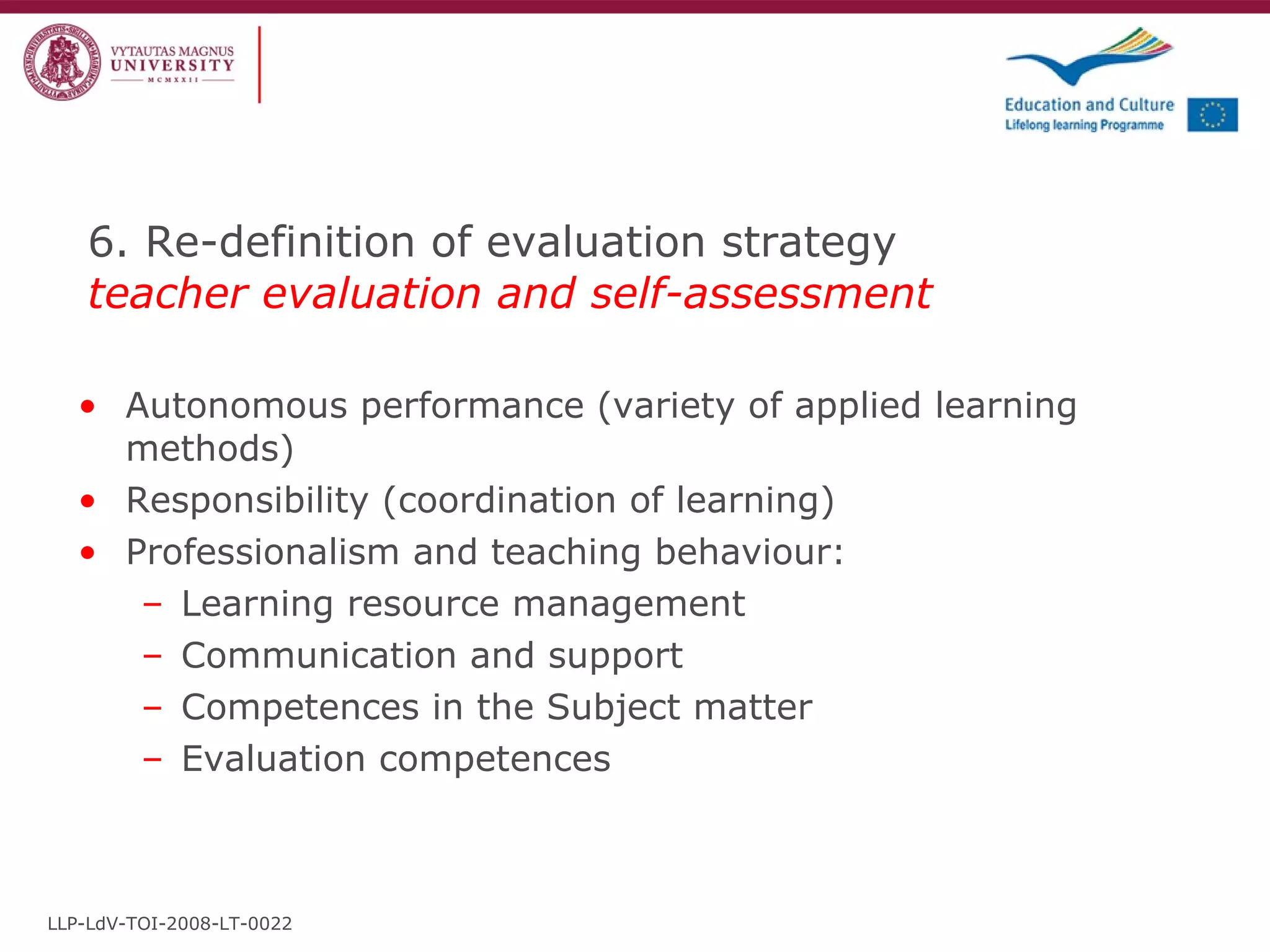
6. Re-definition of evaluation strategy  teacher evaluation and self-assessment Autonomous performance (variety of applied learning methods) Responsibility (coordination of learning) Professionalism and teaching behaviour: Learning resource management Communication and support Competences in the Subject matter Evaluation competences LLP-LdV-TOI-2008-LT-0022
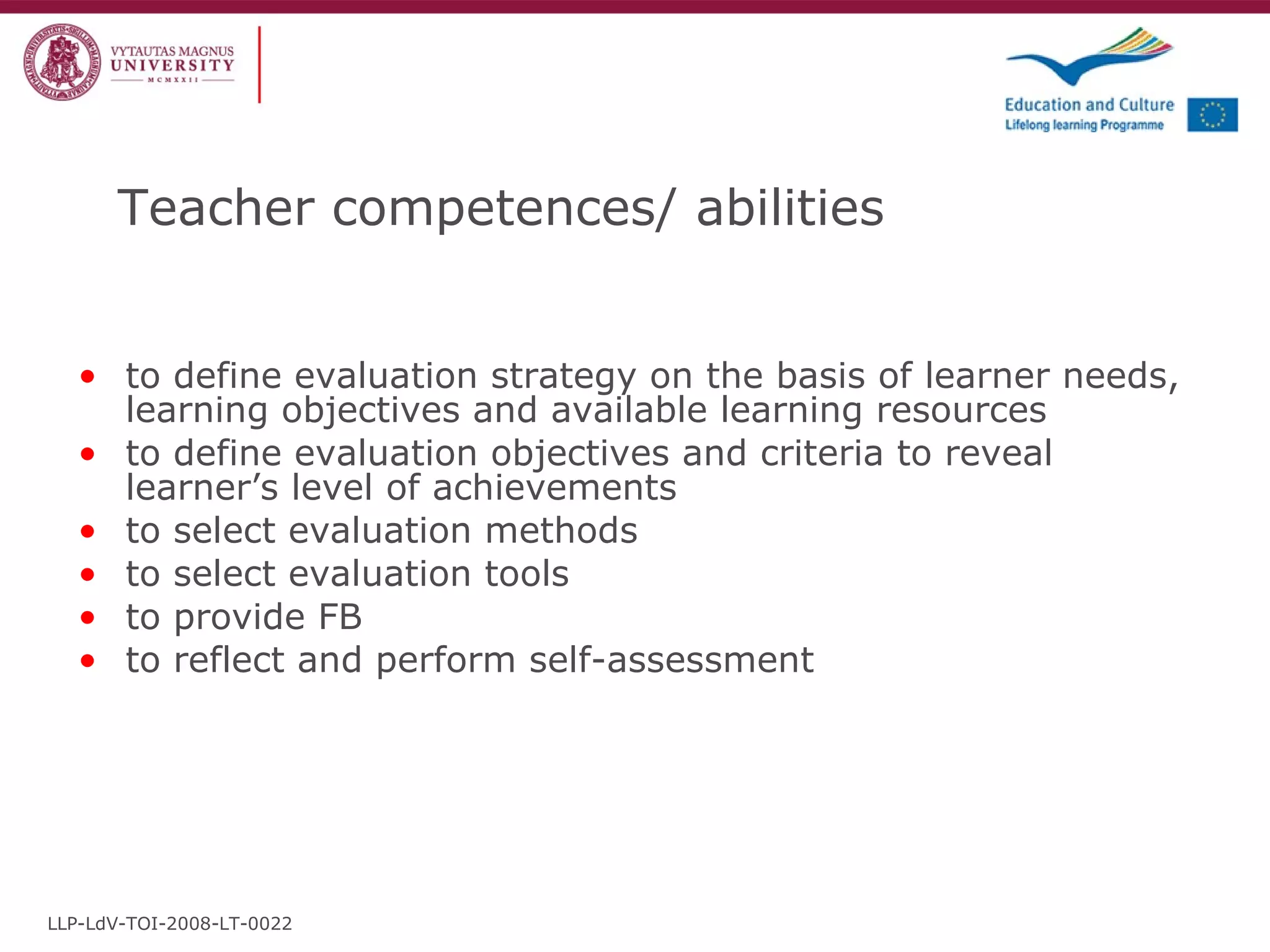
Teacher competences / abilities to define evaluation strategy on the basis of learner needs, learning objectives and available learning resources to define evaluation objectives and criteria to reveal learner’s level of achievements to select evaluation methods to select evaluation tools to provide FB to reflect and perform self-assessment LLP-LdV-TOI-2008-LT-0022
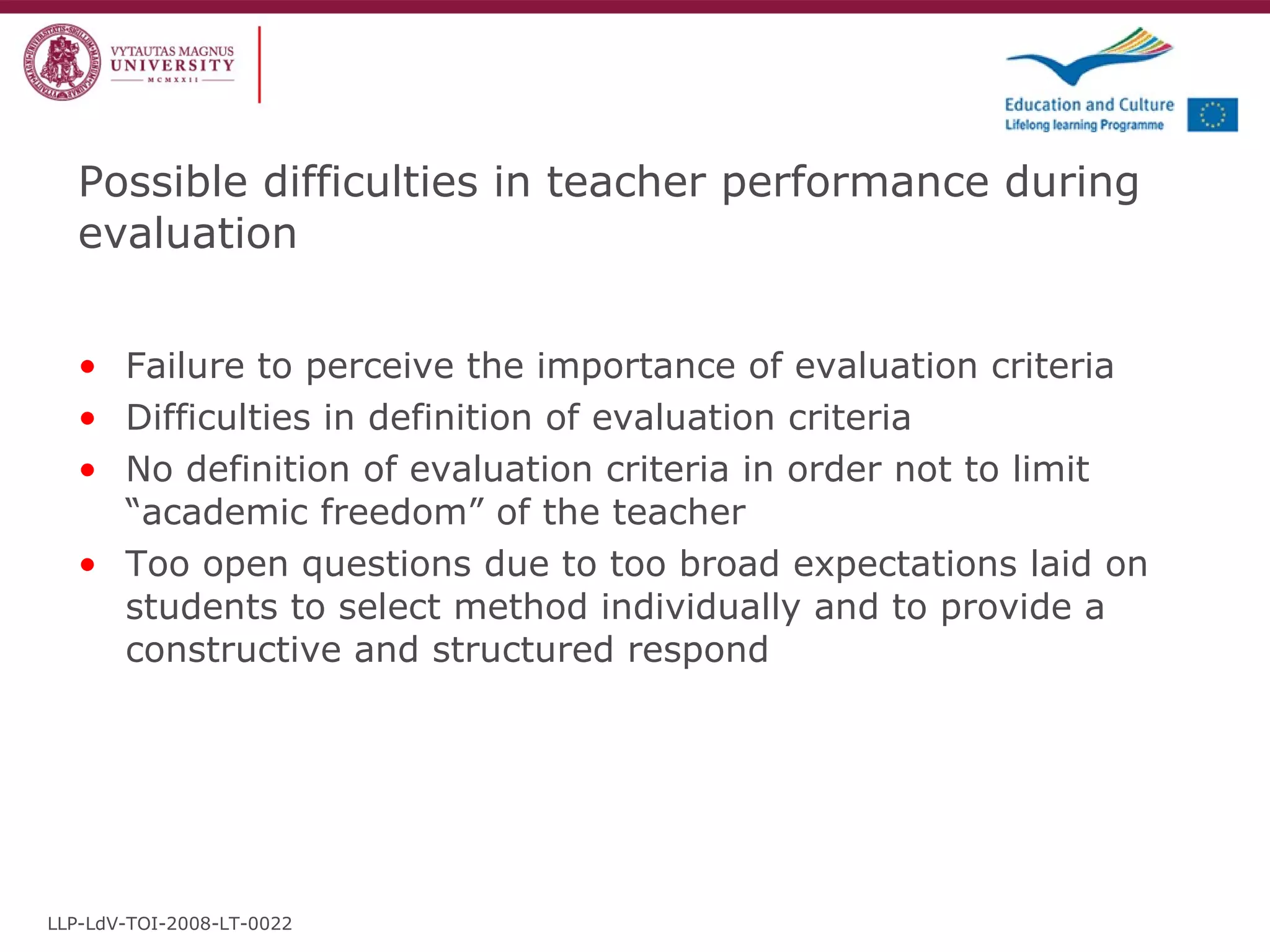
Possible difficulties in teacher performance during evaluation Failure to perceive the importance of evaluation criteria Difficulties in definition of evaluation criteria No definition of evaluation criteria in order not to limit “academic freedom” of the teacher Too open questions due to too broad expectations laid on students to select method individually and to provide a constructive and structured respond LLP-LdV-TOI-2008-LT-0022
Learning consistency with the evaluation Evaluation of quality of skills and knowledge Evaluation of progress/ changes during a certain period of time Diagnosis of learners’ progress Recording of learning results Or encouraging of learner motivation LLP-LdV-TOI-2008-LT-0022
How should learners benefit from evaluation?  Evaluation should respond to learners’ needs for: Individual development Information on learner’s progress and SWOT Increase learning motivation Help and support provision in learning process Provide relation with the portfolio achievements Collaboration possibilities and record of personal achievements Possibilities to select appropriate learning methods Consistency with the learning methods, achievements and plans for the future LLP-LdV-TOI-2008-LT-0022
Conclusions The teacher  should  undertake the whole responsibility  for the evaluation of student’s activity and should raise the following questions: Who is the author of the result? What is the object of evaluation? What type of learning will be assessed? Why will this be evaluated? How will the teacher evaluate? When will evaluation take place? Who will prepare evaluation tasks, tests? Who will present the conclusions and recommendations about the learner’s achievements? Who will present the feedback to the learner about the final results? LLP-LdV-TOI-2008-LT-0022
7. Definition of improvement recommendations ( decision theory, E. de Bonno, and degrees of certainty, Leclercq ) E.de. Bono decision theory Degrees of certainty LLP-LdV-TOI-2008-LT-0022
LLP-LdV-TOI-2008-LT-0022
Then move towards technological recommendations…… LLP-LdV-TOI-2008-LT-0022
Technological didactical methodology Each institution “Reviving” a course will perform the following tasks: a. Select the tools to implement and realize pedagogical scenario b. Preparation of course web-design c. Uploading Curriculum online d. Establishing links to improved courses at the project website (short summary in English) LLP-LdV-TOI-2008-LT-0022
We will survive  As we will be  doing it  together. Airina Volungevi čienė  Vytauts Magnus University Distance Study Centre a.volungeviciene @dsc.vdu.lt LLP-LdV-TOI-2008-LT-0022

REVIVE pedagogical approach

  • 1.
    Leonardo da Vinci Transfer of Innovation project REVIVE - Reviewing and Reviving Existing VET Curriculum REVIVE project, Kick-off meeting Kaunas LLP-LdV-TOI-2008-LT-0022 Dr. Airina Volungeviciene Vytautas Magnus University Distance Study Centre
  • 2.
    REVIVE projectseeks to contribute to European cooperation in QA focusing on defining QA factors in VET services More specifically, the project aims at methodology application to ensure quality of VET curriculum at institutional level LLP-LdV-TOI-2008-LT-0022
  • 3.
    The main goalof REVIVE project is to ensure the quality of VET services by reviewing and reviving existing VET Curriculum on the basis of innovative didactical and technological methodology. LLP-LdV-TOI-2008-LT-0022
  • 4.
    Target group VETCurriculum designing institutions, teachers and trainers LLP-LdV-TOI-2008-LT-0022
  • 5.
    Project objectives toselect VET Curriculum which does not meet quality criteria and is not functioning properly and to perform SWOT analysis of curriculum To present pedagogical and technological recommendations for curriculum pedagogical and technological improvement and revival to re-develop Curriculum for distance learning, when selected methodologies will not prescribe one principle, but will allow project actors to develop their own solutions, to improve and evaluate their own practices, on the basis of common principles and criteria LLP-LdV-TOI-2008-LT-0022
  • 6.
    Project objectives Toupdate, improve and revive curriculum and to test its applicability To present recommendations for further improvement and QA To present successful cases and highlight methodological input by spreading curriculum cases Europe wide, To enrich methodology by specific experience of curriculum authors and designers, as well as by end-users’ feedback collected during the project To contribute to national and international quality discussions and actions LLP-LdV-TOI-2008-LT-0022
  • 7.
    Partnership Coordinator –Vytautas Magnus University Distance Study Centre Partners: Centre for Social Innovation (ZSI), Austria Chamber of Commerce, Industry abs Navigation of Castellon, Spain Budapest University of Technology and Economics, Hungary Lithuanian Association of Adult Education (LAAE), Lithuania Faculty of Electrical Engineering and Information Technology, Slovak University of Technology, Slovakia European Distance and E-Learning Network (EDEN), United Kingdom LLP-LdV-TOI-2008-LT-0022
  • 8.
  • 9.
    How the objectiveswill be reached? the project will develop and test QA procedures in initial and VET training this will be ensured by the use of pedagogical and technological methodologies transferred to the project Pedagogical methodology will be used to analyse existing Curriculum at VET institutions and to suggest recommendations and quality improvement procedures Technological methodology will be used to analyse existing tools to suggest recommendations and quality improvement procedures LLP-LdV-TOI-2008-LT-0022
  • 10.
    How the objectiveswill be reached? Methodologies transferred in the project will ensure high quality VET curriculum development It will be direct benefit for institutions and partnership on European level Methodology authors will guide and counsel other partners, as well as staff of partner institutions on quality assurance factors influencing the quality of VET services LLP-LdV-TOI-2008-LT-0022
  • 11.
    The main phasesof project implementation Analysis and X-raying existing Curriculum and deriving recommendations for its improvement Harmonization of pedagogical and technological methodologies Improving existing VET curriculum and ensuring its quality from pedagogical methodological approach Improving existing VET curriculum from the point of view of technological methodological approach Testing and evaluation, providing recommendations for further quality assurance Ensuring quality requirements for updated curriculum after testing and evaluation LLP-LdV-TOI-2008-LT-0022
  • 12.
    LLP-LdV-TOI-2008-LT-0022 Pedagogical andtechnological methodologies transferred to REVIVE
  • 13.
    Pedagogical methodology forreviewing and reviving existing Curriculum LLP-LdV-TOI-2008-LT-0022 Prezentacijos pavadinimas Vardenis, Pavardenis
  • 14.
    Pedagogical methodology forreviewing and reviving existing Curriculum The main didactic approaches of methodology: provides systematic approach to curriculum QA applicable to VET systems and providers context independent focus on internal consistency of competences and learning outcomes improving the matching between training supply and needs promoting better access to lifelong learning LLP-LdV-TOI-2008-LT-0022
  • 15.
    Promotes a cultureof quality improvement and accountability at all levels Addressing education policies in the area of competence – based approach (Bergen, Lisbon) Among limitations of this methodology subject-author decision should be mentioned, as methodology is not prescriptive, but descriptive, asking curriculum authors to accept decision Methodology will be applied to Curriculum redeveloping, and later the redeveloped Curriculum will be evaluated by a) learners, b) external experts, c) internally – by project partners responsible for QA Pedagogical methodology for reviewing and reviving existing Curriculum LLP-LdV-TOI-2008-LT-0022
  • 16.
    Tasks to beperformed using the methodology Each institution “Reviving” a course will perform the following tasks: SWOT analysis Recommendation negotiations with methodology authors on curriculum improvement: Re-definition or learning objectives Re-developing of learning activities Re-selecting of evaluation strategy and evaluation tools Preparation of scenario for organization of learning, prepare the course guides and tutor guides. LLP-LdV-TOI-2008-LT-0022
  • 17.
    The main qualityfactors – constituents of pedagogical didactical methodology SWOT and needs analysis Analysis of available and existing resources and their possible applicability Re-definition of curriculum conceptual parameters (competence-based learning objectives) Re-definition of learning/ teaching organization methods ( and presentation of curriculum online ) Re-thinking of support system and communication means Re-definition of evaluation strategy Definition of improvement recommendations (decision theory) LLP-LdV-TOI-2008-LT-0022
  • 18.
  • 19.
    1. SWOT analysiscontents Curriculum in institutional context Evaluation of educational/ didactical conception Evaluation of learning objectives in the context of competences to be achieved Learning organization methods Evaluation of learning outcomes: evaluation strategy and self-assessment Support system Content and other issues Technological realization tools SWOT results LLP-LdV-TOI-2008-LT-0022
  • 20.
    SWOT – procedureand goal LLP-LdV-TOI-2008-LT-0022
  • 21.
    So that:   …………… .diagnoses that currently the existing is ……………………………………… …………… .finds desirable that the future be …………………………………..  …………… diagnoses that the need(s) is / are (that action or modification should go to / proceed in the direction of ) ……………………………. (action plan) Indicating WHO (which social actor) makes the diagnosis reveals that « there is not ONE good answer”, and that “a needs analysis is the expression of a person’s feelings or opinions”. LLP-LdV-TOI-2008-LT-0022
  • 22.
    1. SWOT: 1. Curriculum in institutional context (1) Institutional needs : Learner needs: Profile of target group Learning organization needs Logistics Media used Evaluation strategy Financial aspects Is Curriculum designed the way to respond to different target groups ? Is prior learning assessed ? Does Curriculum respond to different learning organization needs of individual learners ? Teacher needs: Personal – professional Teaching facilitation Meeting the learner/ institutional needs LLP-LdV-TOI-2008-LT-0022
  • 23.
    1. SWOT: 2. Evaluation of educational/ didactical conception (1) Evaluation of learning objectives in the context of competences to be achieved : Can learning objectives of the curriculum be agreed with the needs of your target group? Are learning objectives formulated on the basis of competences to be achieved? How learning objectives are introduced to target learners? LLP-LdV-TOI-2008-LT-0022
  • 24.
    Learning/ teaching organizationmethods : Are different learning organization methods available for the learners? Can the teacher choose between several teaching and learning organization methods? How learning/ teaching organization methods can be selected (by learning style? No selection is available? By access to content tools? Is learning organization methods needs analysis suggested for the learners? Can they choose learning strategy themselves? Can the teacher select learning organization methods on the basis of learner needs/ learning styles? Other? Is learning organization based on active learning methods? 1. SWOT: 2. Evaluation of educational/ didactical conception ( 2 ) LLP-LdV-TOI-2008-LT-0022
  • 25.
    Which of thefollowing learning/ teaching events can you recognise in the curriculum: Informa tion delivery ( orally, in a written form, video or sound, other ) Individual work Watching and practicing Experimenting Creating Looking for new learning resources Discussing Practical learning Critical thinking Communication and collaboration Developing skills to act independently Project work in groups Reflection 1. SWOT: 2. Evaluation of educational/ didactical conception ( 3 ) LLP-LdV-TOI-2008-LT-0022
  • 26.
    Is learning activity:Clearly described ? Based on learning objectives/ competences to be achieved? Ar mokymosi veiklos yra aiškiai apibūdintos? Information presented in learning activity description contains necessary steps to be performed ? Helps to prepare for evaluation of learning outcomes ? Encourages collaboration and communication ? Encourages critical thinking? Encourages autonomous acting? 1. SWOT: 2. Evaluation of educational/ didactical conception ( 4 ) LLP-LdV-TOI-2008-LT-0022
  • 27.
    Evaluation of learningoutcomes: evaluation strategy and self-assessment Is evaluation strategy clearly described? Does evaluation help to measure how learning objectives were reached? Which evaluation tools are used to do this? How evaluation process is organized? How consistency between learning organization methods and evaluation tools is being measured? If learners fail during evaluation, how evaluation tools’ validity is being ensured? Are there self-evaluation tools for the learners? 1. SWOT: 2. Evaluation of educational/ didactical conception ( 5 ) LLP-LdV-TOI-2008-LT-0022
  • 28.
    Are there self-evaluationtools for the teachers? Are their learning progression tools available for the learners? How feedback is ensured during learning organization and afterwards? Can the teacher select evaluation tools herself/ himself? Where and how evaluation criteria are present in the Curriculum? Do learners participate in building evaluation strategy? How? Can learners supply assignments repeatedly/ improved? How objectivity is ensured? 1. SWOT: 2. Evaluation of educational/ didactical conception ( 6 ) LLP-LdV-TOI-2008-LT-0022
  • 29.
    1. SWOT: 3.Support systems Are there learning contracts signed with the target group providing possibility for individual study/ learning schedule? How this influences Curriculum design? What kind of learner/ teacher support is being provided at the institution and what could be improved: Administrative, content, social, technical, other? Pre-learning, during learning, after learning? LLP-LdV-TOI-2008-LT-0022
  • 30.
    How pre-requisite knowledgeand skills are mentioned in the Curriculum? For “reviving” the curriculum, what support would be necessary for you, as curriculum authors? Do you have an idea about learning and teaching support necessary when learning in a distance way? How would you be able to deliver a distance learning course for large groups? Would you be able to divide the audience and have support from colleagues or administration to provide online consultations? 1. SWOT: 3. Support systems LLP-LdV-TOI-2008-LT-0022
  • 31.
    1. SWOT: 4 . Content and other issues Content used in curriculum Is it structured and clear? Does it meet learning objectives? Is it updated with the statistical and historical, and descriptive information? Is there bibliography available for the learners? Do you provide online resources with specific accessibility options? (like digital libraries, other?) LLP-LdV-TOI-2008-LT-0022
  • 32.
    2. Analysis ofavailable and existing resources and their possible applicability Analysis of similar curriculum design Quality evaluation for different learning resources Analysis of theoretical research findings in the area and their applicability Examples of online design, including the cases of ICT tools Analysis of possibilities to perform collaborative learning, self-learning and sharing, networking and other activities LLP-LdV-TOI-2008-LT-0022
  • 33.
    consists more specificallyin evaluating the existing tools, the use that has been made of them, and the possibilities of adjustment to attain this ideal situation. Unlikely that an existing solution will completely satisfy the end user but : inspiring broaden the end user horizons more precise about their expectations refine the picture of the ideal product 2. Analysis of available and existing resources and their possible applicability LLP-LdV-TOI-2008-LT-0022
  • 34.
    Survey and reviewexisting courses, resources (traditional and online design) so as to avoid “reinventing the wheel” Evaluation of the quality of the information and the use that is made out of it. It is the process that has to be evaluated: the adequacy of the pedagogical choices with the context and the objectives of the training. 2. Analysis of available and existing resources and their possible applicability LLP-LdV-TOI-2008-LT-0022
  • 35.
    LLP-LdV-TOI-2008-LT-0022 2. Analysisof available and existing resources and their possible applicability
  • 36.
    3. Re-definition ofcurriculum conceptual parameters (competence-based learning objectives) To ensure a higher degree of harmonisation for your future online course between objectives, methods and evaluation. To verify the things that have emerged during the previous stages LLP-LdV-TOI-2008-LT-0022
  • 37.
    Objectives tobe reached (aims) Learning/ teaching organization methods and pedagogical tools to implement pedagogical idea Evaluation strategy and tools to 3. Re-definition of curriculum conceptual parameters (competence-based learning objectives) LLP-LdV-TOI-2008-LT-0022
  • 38.
    An ability isan item of knowledge and/or know-how and/or a skill A competency is the "metaprocess" which enables acquired abilities to be applied in a given context at a given moment The objective set by the teacher is the ability to be achieved, and it enables the learning approach to be developed 3.1. Re-definition of learning objectives
  • 39.
    A distinction canbe made between three fields of objectives: cognitive : for intellectual functions; affective : for sensibility, motivation and emotion; psychomotor : for the senses and for muscular coordination 3.1. Re-definition of learning objectives
  • 40.
    3.1. Bloom’s taxonomyof cognitive objectives (1956) Synthesis Analysis Application Comprehension Knowledge Evaluation Six mental processes ranked in order of increasing openness
  • 41.
    Definition of learningobjectives (Lauzackas, 2001) 3.1. Cognitive objectives When Who Verbal expression Ability expressed After completion of this task… … the learner… … will be able… … to count VAT.
  • 42.
    Competence – basedapproach in the context of triple consistency LLP-LdV-TOI-2008-LT-0022 3.1. Cognitive objectives
  • 43.
    LLP-LdV-TOI-2008-LT-0022 Specific objective(s)(SO) To be able to: define tutor roles define learner roles suggest the ways to improve tutor-learner interactivity organise peer work/ group work …… . Method/ steps to achieve SO Each learner watches/ reads a problem-based situation A tutor is assigned The tutor has to follow moderate the discussion for problem solving … Expected output/ indicators problems identified by the learners solutions found to solve the problems … Evaluation criteria …………………
  • 44.
    Phase: Methods LLP-LdV-TOI-2008-LT-0022Is it re-placeable or only re-definable? Definitely replaceable (learning scenario) Replaceable acc. to learning scenario Replaceable acc. to learning scenario Specific objective(s) (SO) To be able to: define tutor roles define learner roles suggest the ways to improve tutor-learner interactivity organise peer work/ group work … . Method/ steps to achieve SO Each learner watches/ reads a problem-based situation A tutor is assigned The tutor has to follow moderate the discussion for problem solving … Expected output problems identified by the learners solutions found to solve the problems … Evaluation criteria
  • 45.
    ECVET Units ofqualification Learning outcomes approach based on: knowledge, skills, abilities CEDEFOP new challenge – transferability, transparency and reciprocity of competences from VET to HE and vice versa LLP-LdV-TOI-2008-LT-0022
  • 46.
    4. Re-definition oflearning/ teaching organization methods and presentation of curriculum online LLP-LdV-TOI-2008-LT-0022 D.Leclercq, M.Poumay, University of Liege, Belgium
  • 47.
    Imitation LLP-LdV-TOI-2008-LT-0022 “Life imitates art imitates life“ www.photochart.com
  • 48.
    Receiving - transferringInstruction! Video Television Internet television Radio ?? Recordings/ live LLP-LdV-TOI-2008-LT-0022
  • 49.
  • 50.
  • 51.
  • 52.
  • 53.
  • 54.
  • 55.
    5. Re-thinking ofsupport system and communication means LLP-LdV-TOI-2008-LT-0022
  • 56.
    5. Re-thinkingof support system and communication means Solutions for those who go for innovation, courage and creativity LLP-LdV-TOI-2008-LT-0022 Pvz.
  • 57.
  • 58.
    LLP-LdV-TOI-2008-LT-0022 Leonardo daVinci – EVETE, www.evete.org , 2005 - 2007
  • 59.
  • 60.
    LLP-LdV-TOI-2008-LT-0022 LdVinci, EVETEIST FP6, iCamp, 2006 - 2009
  • 61.
  • 62.
    LLP-LdV-TOI-2008-LT-0022 Populia rūs,turtingi mokymosi ištekliai
  • 63.
  • 64.
    6. Re-definition ofevaluation strategy: selecting the evaluation strategy Projects ? Activities ? Peer evaluation strategy ? Tests and questionnaires – most common means of evaluation - ? Other learning events - ? LLP-LdV-TOI-2008-LT-0022
  • 65.
    6. Re-definition ofevaluation strategy self-assessment and metacognition Judgment of the performance (satisfactory or not) Analysis (how, why) Regulation or “decision to act” (change in learning strategy) Prof. D.Leclercq, prof. M.Poumay LLP-LdV-TOI-2008-LT-0022 P E R F O R M A N C E Before During After
  • 66.
    6. Re-definition ofevaluation strategy metacognition The result of metacognition can be a decision about the quality of cognitive activity results: Conscious knowledge that an individual has about one’s own knowledge status and processes Abilities of an individual to evaluate and plan one’s own cognitive processes dedicated to reach a certain goal LLP-LdV-TOI-2008-LT-0022
  • 67.
    6. Re-definition ofevaluation strategy self-assessment activities In order to start self-assessment activities and to integrate them into learning, Jans recommends three steps: Teach (create self-assessment activities in different situations and context) Motivate (create motivating situations, and learners will become interested in teacher FB) Clarify (inform learners what you expect from them) V.Jans LLP-LdV-TOI-2008-LT-0022
  • 68.
    6. Re-definition ofevaluation strategy Portfolio objectives To encourage learner conscious and meaningful learning To help the learner to understand the evaluation criteria that influence decisions on learning outcomes To improve organization of learning with the emphasis on general skills and abilities LLP-LdV-TOI-2008-LT-0022
  • 69.
  • 70.
    6. Re-definition ofevaluation strategy teacher evaluation and self-assessment Autonomous performance (variety of applied learning methods) Responsibility (coordination of learning) Professionalism and teaching behaviour: Learning resource management Communication and support Competences in the Subject matter Evaluation competences LLP-LdV-TOI-2008-LT-0022
  • 71.
    Teacher competences /abilities to define evaluation strategy on the basis of learner needs, learning objectives and available learning resources to define evaluation objectives and criteria to reveal learner’s level of achievements to select evaluation methods to select evaluation tools to provide FB to reflect and perform self-assessment LLP-LdV-TOI-2008-LT-0022
  • 72.
    Possible difficulties inteacher performance during evaluation Failure to perceive the importance of evaluation criteria Difficulties in definition of evaluation criteria No definition of evaluation criteria in order not to limit “academic freedom” of the teacher Too open questions due to too broad expectations laid on students to select method individually and to provide a constructive and structured respond LLP-LdV-TOI-2008-LT-0022
  • 73.
    Learning consistency withthe evaluation Evaluation of quality of skills and knowledge Evaluation of progress/ changes during a certain period of time Diagnosis of learners’ progress Recording of learning results Or encouraging of learner motivation LLP-LdV-TOI-2008-LT-0022
  • 74.
    How should learnersbenefit from evaluation? Evaluation should respond to learners’ needs for: Individual development Information on learner’s progress and SWOT Increase learning motivation Help and support provision in learning process Provide relation with the portfolio achievements Collaboration possibilities and record of personal achievements Possibilities to select appropriate learning methods Consistency with the learning methods, achievements and plans for the future LLP-LdV-TOI-2008-LT-0022
  • 75.
    Conclusions The teacher should undertake the whole responsibility for the evaluation of student’s activity and should raise the following questions: Who is the author of the result? What is the object of evaluation? What type of learning will be assessed? Why will this be evaluated? How will the teacher evaluate? When will evaluation take place? Who will prepare evaluation tasks, tests? Who will present the conclusions and recommendations about the learner’s achievements? Who will present the feedback to the learner about the final results? LLP-LdV-TOI-2008-LT-0022
  • 76.
    7. Definition ofimprovement recommendations ( decision theory, E. de Bonno, and degrees of certainty, Leclercq ) E.de. Bono decision theory Degrees of certainty LLP-LdV-TOI-2008-LT-0022
  • 77.
  • 78.
  • 79.
  • 80.
    Then move towardstechnological recommendations…… LLP-LdV-TOI-2008-LT-0022
  • 81.
    Technological didactical methodologyEach institution “Reviving” a course will perform the following tasks: a. Select the tools to implement and realize pedagogical scenario b. Preparation of course web-design c. Uploading Curriculum online d. Establishing links to improved courses at the project website (short summary in English) LLP-LdV-TOI-2008-LT-0022
  • 82.
    We will survive As we will be doing it together. Airina Volungevi čienė Vytauts Magnus University Distance Study Centre a.volungeviciene @dsc.vdu.lt LLP-LdV-TOI-2008-LT-0022

Editor's Notes

  • #34 The development of an online course is costly in terms of both time and resources. It therefore makes sense to survey existing courses and resources so as to avoid reinventing the wheel. Although it is unlikely that an existing solution will completely satisfy you, this exercise is still relevant. It is always inspiring to gain an idea of the state of the art with regard to online courses developed in your field. It enables you to broaden your horizons, be more precise about your expectations and refine your picture of the ideal product.