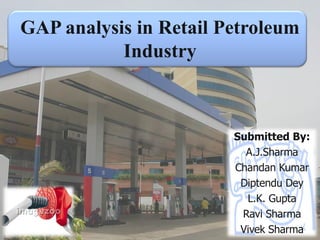
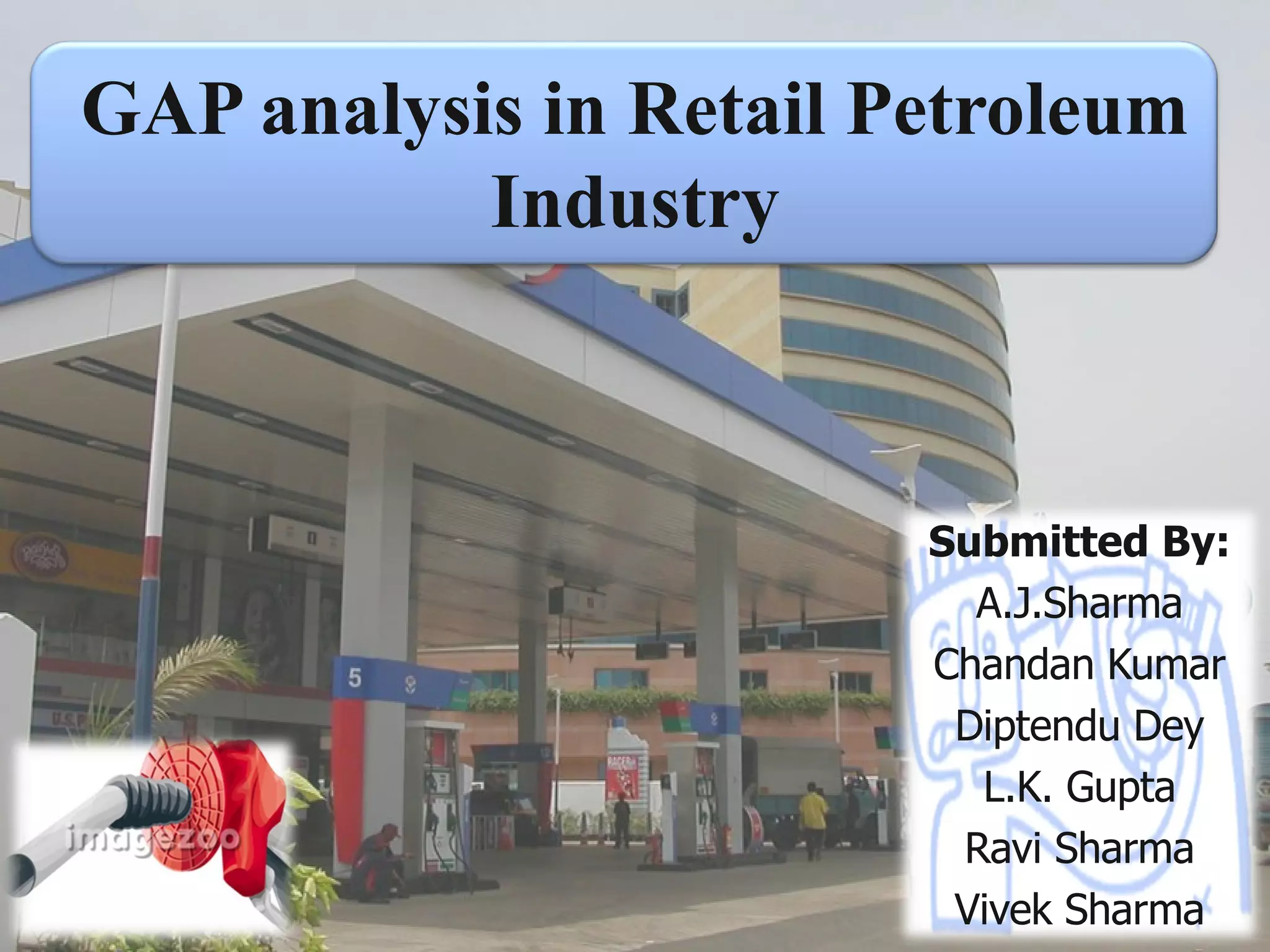
GAP analysis in Retail Petroleum Industry Submitted By: A.J.Sharma Chandan Kumar Diptendu Dey L.K. Gupta Ravi Sharma Vivek Sharma
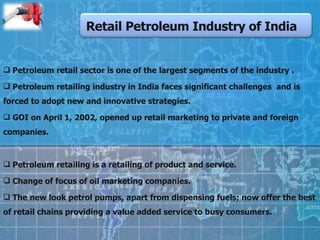
Retail Petroleum Industry of India Petroleum retail sector is one of the largest segments of the industry . Petroleum retailing industry in India faces significant challenges  and is forced to adopt new and innovative strategies. GOI on April 1, 2002, opened up retail marketing to private and foreign companies. Petroleum retailing is a retailing of product and service. Change of focus of oil marketing companies. The new look petrol pumps, apart from dispensing fuels; now offer the best of retail chains providing a value added service to busy consumers.
Retail Petroleum Industry of India Consumer is becoming more and more demanding. Quality & Quantity assurance Quick filling and efficient forecourt service Rewarding loyalty Premium fuels Cashless transactions Non-fuel services Loyalty programs  Smart Fleet (BPCL) Xtrapower (IOCL) Drivetrack (HPCL) Transconnect (Reliance) Petrocard (BPCL)
Studying GAP 4: Sample GAP 4  : Communication gap, when promises do not match performance. The communications that are made to the customers: Quick filling time of not more than 10mins and quick billing. Solving other problems which are non-fuel like brake fluid check,  tyre check, battery check, windshield wiper check. Personal attention to the customers. Round the clock operating hours. Understanding specific needs like the correct quality and quantity. Standard service across all pumps. Analysis of Customers : 150 Samples Analysis of Employees : 30 Samples Companies Considered for Analysis IOCL  HPCL  BPCL
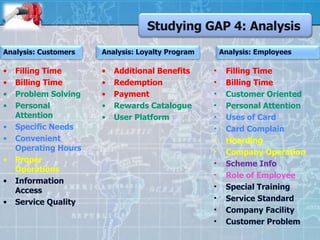
Analysis: Customers Filling Time Billing Time Problem Solving Personal Attention Specific Needs Convenient Operating Hours Proper Operations Information Access Service Quality Additional Benefits Redemption Payment Rewards Catalogue User Platform Studying GAP 4: Analysis Analysis: Loyalty Program Analysis: Employees Filling Time Billing Time Customer Oriented Personal Attention Uses of Card Card Complain Hoarding Company Operation Scheme Info Role of Employee Special Training Service Standard Company Facility Customer Problem
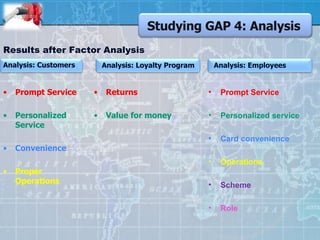
Results after Factor Analysis Prompt Service Personalized Service Convenience Proper Operations Returns Value for money Studying GAP 4: Analysis Analysis: Customers Analysis: Loyalty Program Analysis: Employees Prompt Service Personalized service Card convenience Operations Scheme Role
Reducing billing time by using computerized hand held devices. Training the pump attendants. Customer involvement by rolling out new promotional campaigns. Clear demarcation of responsibility of the pump attendants. Rewards catalogue of the loyalty cards should include more attractive gifts. Recommendations
THANK YOU

Retail Petroleum

  • 1.
    GAP analysis inRetail Petroleum Industry Submitted By: A.J.Sharma Chandan Kumar Diptendu Dey L.K. Gupta Ravi Sharma Vivek Sharma
  • 2.
    Retail Petroleum Industryof India Petroleum retail sector is one of the largest segments of the industry . Petroleum retailing industry in India faces significant challenges and is forced to adopt new and innovative strategies. GOI on April 1, 2002, opened up retail marketing to private and foreign companies. Petroleum retailing is a retailing of product and service. Change of focus of oil marketing companies. The new look petrol pumps, apart from dispensing fuels; now offer the best of retail chains providing a value added service to busy consumers.
  • 3.
    Retail Petroleum Industryof India Consumer is becoming more and more demanding. Quality & Quantity assurance Quick filling and efficient forecourt service Rewarding loyalty Premium fuels Cashless transactions Non-fuel services Loyalty programs Smart Fleet (BPCL) Xtrapower (IOCL) Drivetrack (HPCL) Transconnect (Reliance) Petrocard (BPCL)
  • 4.
    Studying GAP 4:Sample GAP 4 : Communication gap, when promises do not match performance. The communications that are made to the customers: Quick filling time of not more than 10mins and quick billing. Solving other problems which are non-fuel like brake fluid check, tyre check, battery check, windshield wiper check. Personal attention to the customers. Round the clock operating hours. Understanding specific needs like the correct quality and quantity. Standard service across all pumps. Analysis of Customers : 150 Samples Analysis of Employees : 30 Samples Companies Considered for Analysis IOCL HPCL BPCL
  • 5.
    Analysis: Customers FillingTime Billing Time Problem Solving Personal Attention Specific Needs Convenient Operating Hours Proper Operations Information Access Service Quality Additional Benefits Redemption Payment Rewards Catalogue User Platform Studying GAP 4: Analysis Analysis: Loyalty Program Analysis: Employees Filling Time Billing Time Customer Oriented Personal Attention Uses of Card Card Complain Hoarding Company Operation Scheme Info Role of Employee Special Training Service Standard Company Facility Customer Problem
  • 6.
    Results after FactorAnalysis Prompt Service Personalized Service Convenience Proper Operations Returns Value for money Studying GAP 4: Analysis Analysis: Customers Analysis: Loyalty Program Analysis: Employees Prompt Service Personalized service Card convenience Operations Scheme Role
  • 7.
    Reducing billing timeby using computerized hand held devices. Training the pump attendants. Customer involvement by rolling out new promotional campaigns. Clear demarcation of responsibility of the pump attendants. Rewards catalogue of the loyalty cards should include more attractive gifts. Recommendations
  • 8.