Retail Payments
Definition, Process & Key Examples
Understanding Modern Payment Solutions
What Are Retail Payments?
• Transactions between consumers and retailers for goods and services
• Include everyday purchases like groceries, clothing, and electronics
• Core component of modern commerce and economic activity
• Can occur in physical stores or online environments
Key Characteristics of Retail Payments
Speed
Transactions completed instantly or within seconds
Security
Protected customer data and fraud prevention
Convenience
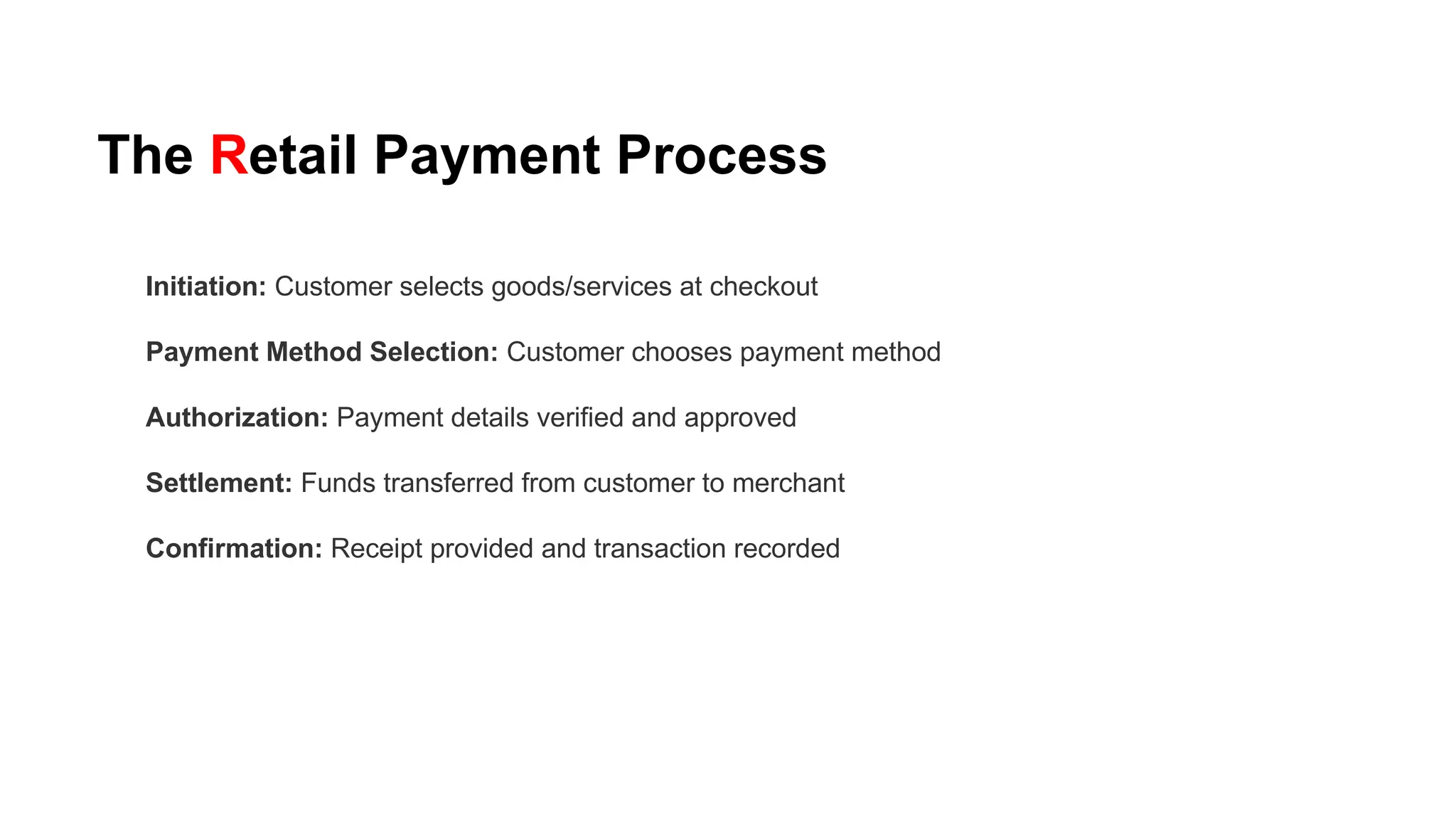
The Retail Payment Process
Initiation: Customer selects goods/services at checkout
Payment Method Selection: Customer chooses payment method
Authorization: Payment details verified and approved
Settlement: Funds transferred from customer to merchant
Confirmation: Receipt provided and transaction recorded
Traditional Payment Methods
Cash: Direct physical exchange, immediate settlement
Credit Cards: Borrowing money to purchase, paid later with interest
Debit Cards: Direct withdrawal from customer bank account
Cheques: Written payment orders, declining in modern retail
Digital Payment Methods
Mobile Wallets: Apple Pay, Google Pay, Samsung Pay for contactless payments
UPI & Digital Transfers: Unified Payments Interface and bank transfers
E-Wallets: PayPal, Amazon Pay, and similar services
Buy Now, Pay Later: Installment-based purchasing without upfront payment
Emerging Technologies
Contactless
NFC tap-to-pay technology for quick transactions
Biometric
Fingerprint and facial recognition payment approval
QR Codes
Point of Sale (POS) Systems
• Integrated hardware and software for transaction processing
• Accepts multiple payment methods simultaneously
• Manages inventory, customer data, and sales reporting
• Enables omnichannel retail (in-store, online, mobile)
Key Example 1: E-Commerce
Online Shopping Platforms: Amazon, eBay, and other marketplaces process millions of retail
payments daily through secure gateways.
• Payment gateways encrypt sensitive customer information
• Integrated fraud detection systems protect both buyer and seller
• Multiple payment options increase conversion rates
Key Example 2: Physical Retail
In-Store Transactions: Supermarkets, restaurants, and retail stores use POS systems for
payments.
• Card readers process credit/debit cards and contactless payments
• Real-time inventory updates after each transaction
• Receipt generation and customer loyalty program integration
Key Example 3: Mobile Payments
Smartphone-Based Transactions: UPI in India and mobile wallets globally revolutionize retail
payments.
• UPI accounts for over 80% of digital retail payments in India
• Tap-and-pay technology reduces checkout time significantly
• Integrated loyalty rewards and transaction history tracking
Benefits for Retailers
• Increased sales through multiple payment options
• Faster checkout process and improved customer experience
• Reduced cash handling and associated security costs
• Data analytics for understanding customer behavior and preferences
Benefits for Consumers
• Convenience with multiple payment method options
• Enhanced security through encryption and fraud protection
• Faster checkout and reduced waiting times
• Rewards and cashback programs through digital payments
Challenges in Retail Payments
• Cybersecurity threats and data breach prevention
• PCI-DSS compliance and regulatory requirements
• Integration of legacy systems with modern payment technologies
• Transaction fees and merchant costs
Future Trends
• Instant payment solutions gaining market adoption
• AI-powered fraud detection and prevention
• Open banking and collaborative payment ecosystems
• Voice and gesture-based payment authentication
Thank You!
Retail payments continue to evolve rapidly with technological advancements
For more information, visit:

Retail Payments: Definition, Process & Key Examples

  • 1.
    Retail Payments Definition, Process& Key Examples Understanding Modern Payment Solutions
  • 2.
    What Are RetailPayments? • Transactions between consumers and retailers for goods and services • Include everyday purchases like groceries, clothing, and electronics • Core component of modern commerce and economic activity • Can occur in physical stores or online environments
  • 3.
    Key Characteristics ofRetail Payments Speed Transactions completed instantly or within seconds Security Protected customer data and fraud prevention Convenience
  • 4.
    The Retail PaymentProcess Initiation: Customer selects goods/services at checkout Payment Method Selection: Customer chooses payment method Authorization: Payment details verified and approved Settlement: Funds transferred from customer to merchant Confirmation: Receipt provided and transaction recorded
  • 5.
    Traditional Payment Methods Cash:Direct physical exchange, immediate settlement Credit Cards: Borrowing money to purchase, paid later with interest Debit Cards: Direct withdrawal from customer bank account Cheques: Written payment orders, declining in modern retail
  • 6.
    Digital Payment Methods MobileWallets: Apple Pay, Google Pay, Samsung Pay for contactless payments UPI & Digital Transfers: Unified Payments Interface and bank transfers E-Wallets: PayPal, Amazon Pay, and similar services Buy Now, Pay Later: Installment-based purchasing without upfront payment
  • 7.
    Emerging Technologies Contactless NFC tap-to-paytechnology for quick transactions Biometric Fingerprint and facial recognition payment approval QR Codes
  • 8.
    Point of Sale(POS) Systems • Integrated hardware and software for transaction processing • Accepts multiple payment methods simultaneously • Manages inventory, customer data, and sales reporting • Enables omnichannel retail (in-store, online, mobile)
  • 9.
    Key Example 1:E-Commerce Online Shopping Platforms: Amazon, eBay, and other marketplaces process millions of retail payments daily through secure gateways. • Payment gateways encrypt sensitive customer information • Integrated fraud detection systems protect both buyer and seller • Multiple payment options increase conversion rates
  • 10.
    Key Example 2:Physical Retail In-Store Transactions: Supermarkets, restaurants, and retail stores use POS systems for payments. • Card readers process credit/debit cards and contactless payments • Real-time inventory updates after each transaction • Receipt generation and customer loyalty program integration
  • 11.
    Key Example 3:Mobile Payments Smartphone-Based Transactions: UPI in India and mobile wallets globally revolutionize retail payments. • UPI accounts for over 80% of digital retail payments in India • Tap-and-pay technology reduces checkout time significantly • Integrated loyalty rewards and transaction history tracking
  • 12.
    Benefits for Retailers •Increased sales through multiple payment options • Faster checkout process and improved customer experience • Reduced cash handling and associated security costs • Data analytics for understanding customer behavior and preferences
  • 13.
    Benefits for Consumers •Convenience with multiple payment method options • Enhanced security through encryption and fraud protection • Faster checkout and reduced waiting times • Rewards and cashback programs through digital payments
  • 14.
    Challenges in RetailPayments • Cybersecurity threats and data breach prevention • PCI-DSS compliance and regulatory requirements • Integration of legacy systems with modern payment technologies • Transaction fees and merchant costs
  • 15.
    Future Trends • Instantpayment solutions gaining market adoption • AI-powered fraud detection and prevention • Open banking and collaborative payment ecosystems • Voice and gesture-based payment authentication
  • 16.
    Thank You! Retail paymentscontinue to evolve rapidly with technological advancements For more information, visit: