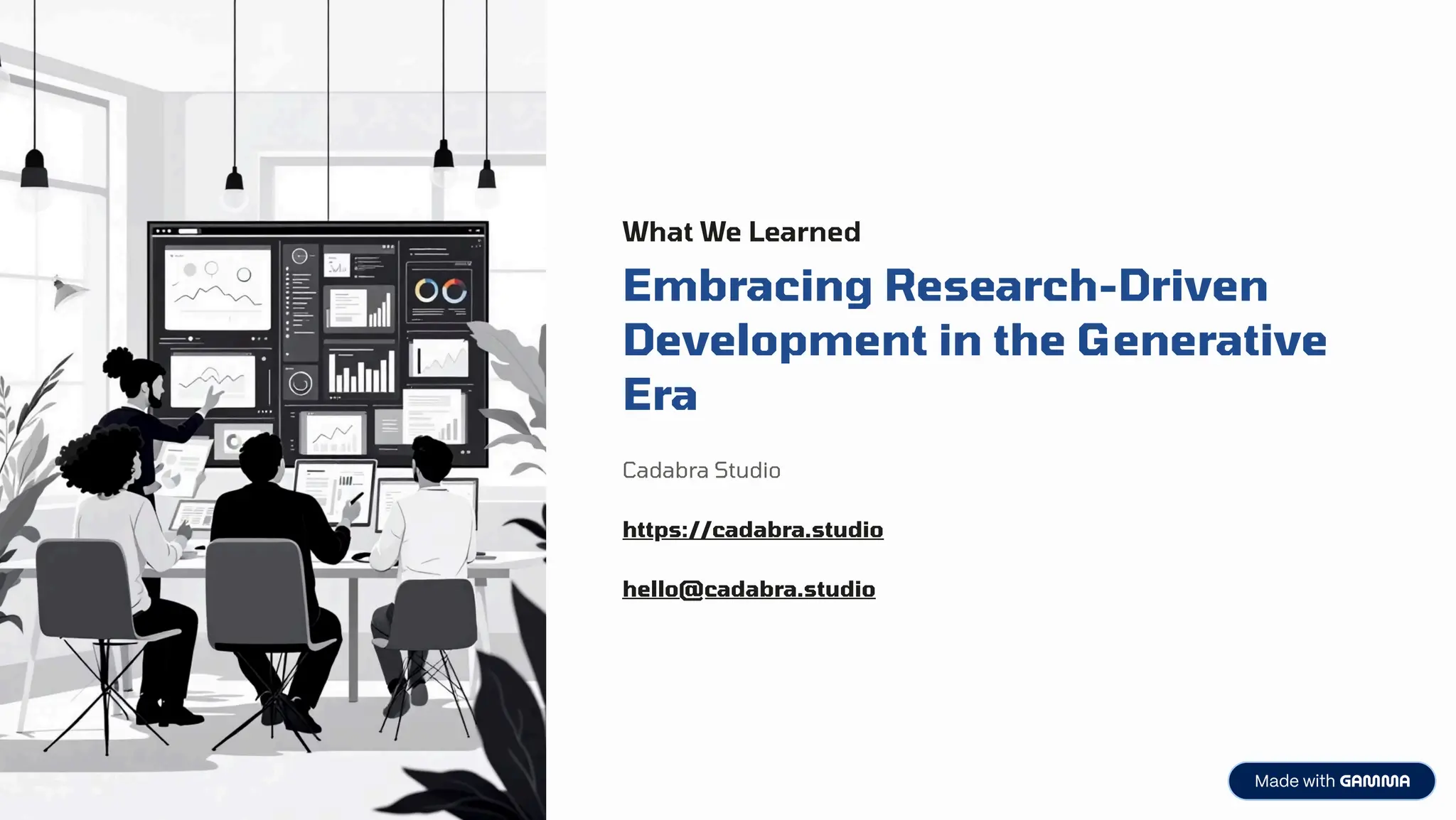
What We Learned
Embracing Research-Driven
Development in the Generative
Era
Cadabra Studio
https://cadabra.studio
hello@cadabra.studio
Entering the Age of Research-Driven
Development
Shift focus from "How fast can we ship?" to
"How much is worth building?"
Generative AI changes production
dynamics, emphasis on direction over
speed
The Dangers of AI-Augmented Systems
Lack of intentionality can introduce
systemic vulnerabilities
AI-driven teams risk technical
fragility without strong research
foundations
Architectural Forensic
Analysis
Treat every line of code as a potential liability
Analyze intersections of business logic and technical feasibility
Context Preservation and IP Integrity
Combat "Architectural Amnesia" by
preserving intentional design
Build Audit-Ready systems for transparent
logic and decisions
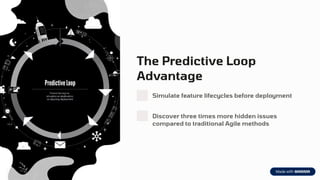
The Predictive Loop
Advantage
Simulate feature lifecycles before deployment
Discover three times more hidden issues
compared to traditional Agile methods
Engineering Excellence Redefined
Choice between Directed Growth or Random
Expansion
Validate future assets through rigorous
technical inquiry
What Would You Do?
We believe we can reframe software delivery from the ground up, where every decision, tool, and
interaction is guided by contextual intelligence. How can we ensure our products are transparent
assets rather than black boxes?
Invite the reader to comment or connect
Repeat contact info:
hello@cadabra.studio
https://cadabra.studio
Medium Article "The Death of Build-First: Why Research-Driven Development is the Only Way
to Survive the Generative Era"
A strategic breakdown of why AI-era development must begin with research—not code.
👉Read on Medium
Notion Deep Dive "Research-First Engineering: How to Build AI-Ready Systems with
Contextual Intelligence"
A blueprint-level exploration of RDD principles, including architectural inversion, intent preservation, and predictive
simulation.
👉Explore on Notion

Research-Driven Development: Navigating the Generative Era in Software

  • 1.
    What We Learned EmbracingResearch-Driven Development in the Generative Era Cadabra Studio https://cadabra.studio hello@cadabra.studio
  • 2.
    Entering the Ageof Research-Driven Development Shift focus from "How fast can we ship?" to "How much is worth building?" Generative AI changes production dynamics, emphasis on direction over speed
  • 3.
    The Dangers ofAI-Augmented Systems Lack of intentionality can introduce systemic vulnerabilities AI-driven teams risk technical fragility without strong research foundations
  • 4.
    Architectural Forensic Analysis Treat everyline of code as a potential liability Analyze intersections of business logic and technical feasibility
  • 5.
    Context Preservation andIP Integrity Combat "Architectural Amnesia" by preserving intentional design Build Audit-Ready systems for transparent logic and decisions
  • 6.
    The Predictive Loop Advantage Simulatefeature lifecycles before deployment Discover three times more hidden issues compared to traditional Agile methods
  • 7.
    Engineering Excellence Redefined Choicebetween Directed Growth or Random Expansion Validate future assets through rigorous technical inquiry
  • 8.
    What Would YouDo? We believe we can reframe software delivery from the ground up, where every decision, tool, and interaction is guided by contextual intelligence. How can we ensure our products are transparent assets rather than black boxes? Invite the reader to comment or connect Repeat contact info: hello@cadabra.studio https://cadabra.studio Medium Article "The Death of Build-First: Why Research-Driven Development is the Only Way to Survive the Generative Era" A strategic breakdown of why AI-era development must begin with research—not code. 👉Read on Medium Notion Deep Dive "Research-First Engineering: How to Build AI-Ready Systems with Contextual Intelligence" A blueprint-level exploration of RDD principles, including architectural inversion, intent preservation, and predictive simulation. 👉Explore on Notion