Intermediate Level
When do we use it?
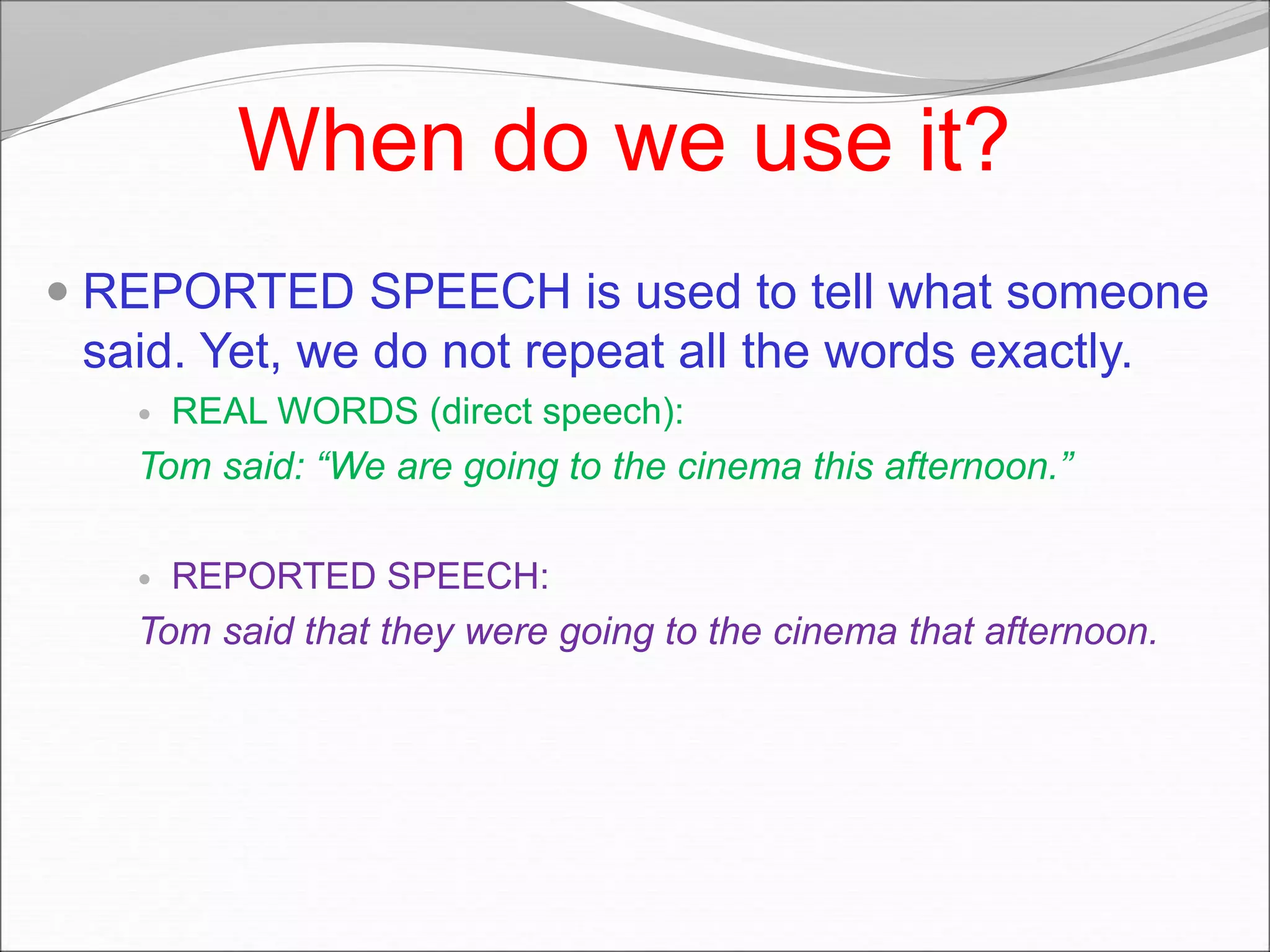
 REPORTED SPEECH is used to tell what someone
said. Yet, we do not repeat all the words exactly.
 REAL WORDS (direct speech):
Tom said: “We are going to the cinema this afternoon.”
 REPORTED SPEECH:
Tom said that they were going to the cinema that afternoon.
Changes
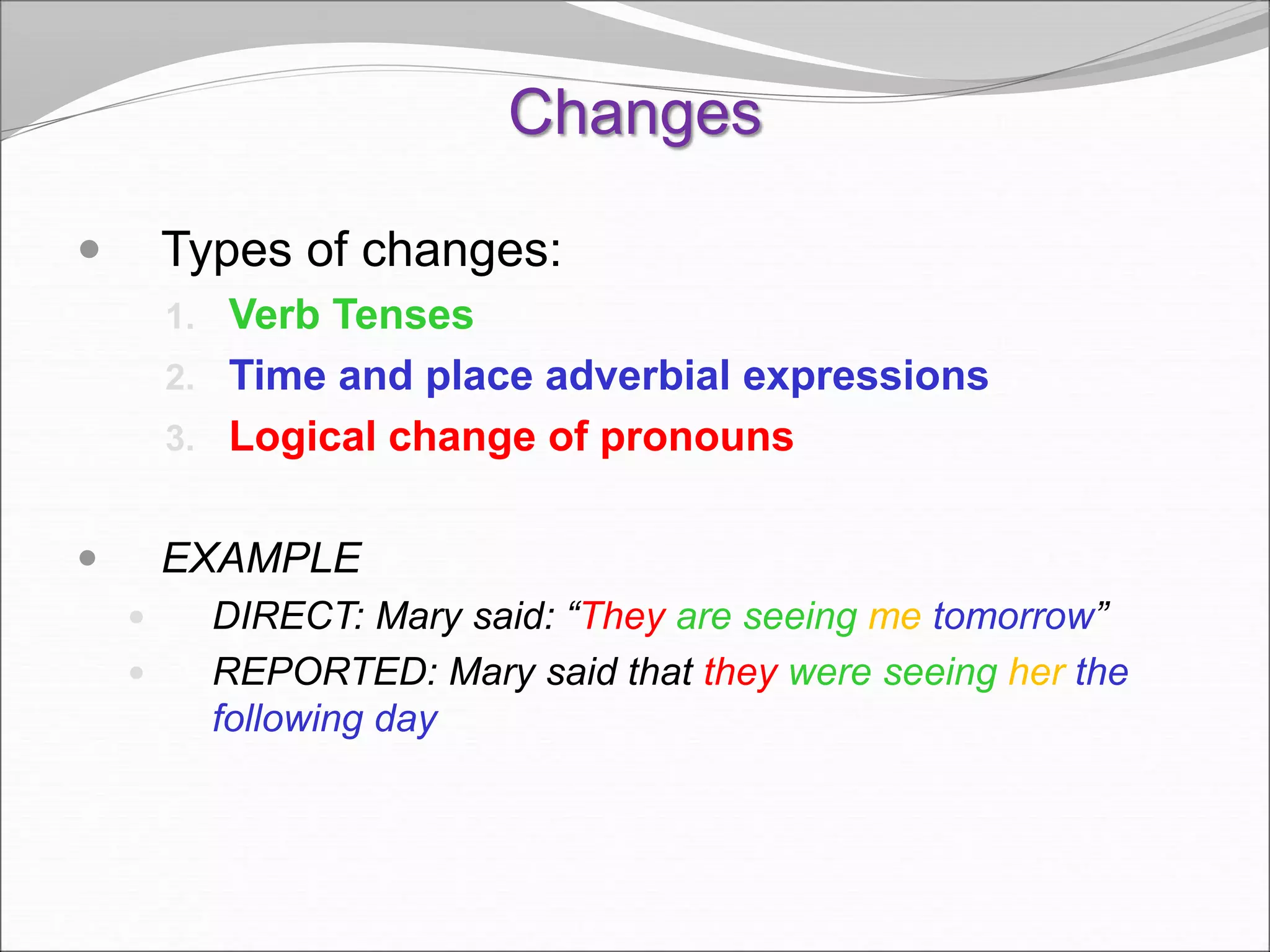
 Types of changes:
1. Verb Tenses
2. Time and place adverbial expressions
3. Logical change of pronouns
 EXAMPLE
 DIRECT: Mary said: “They are seeing me tomorrow”
 REPORTED: Mary said that they were seeing her the
following day
Verb Tenses
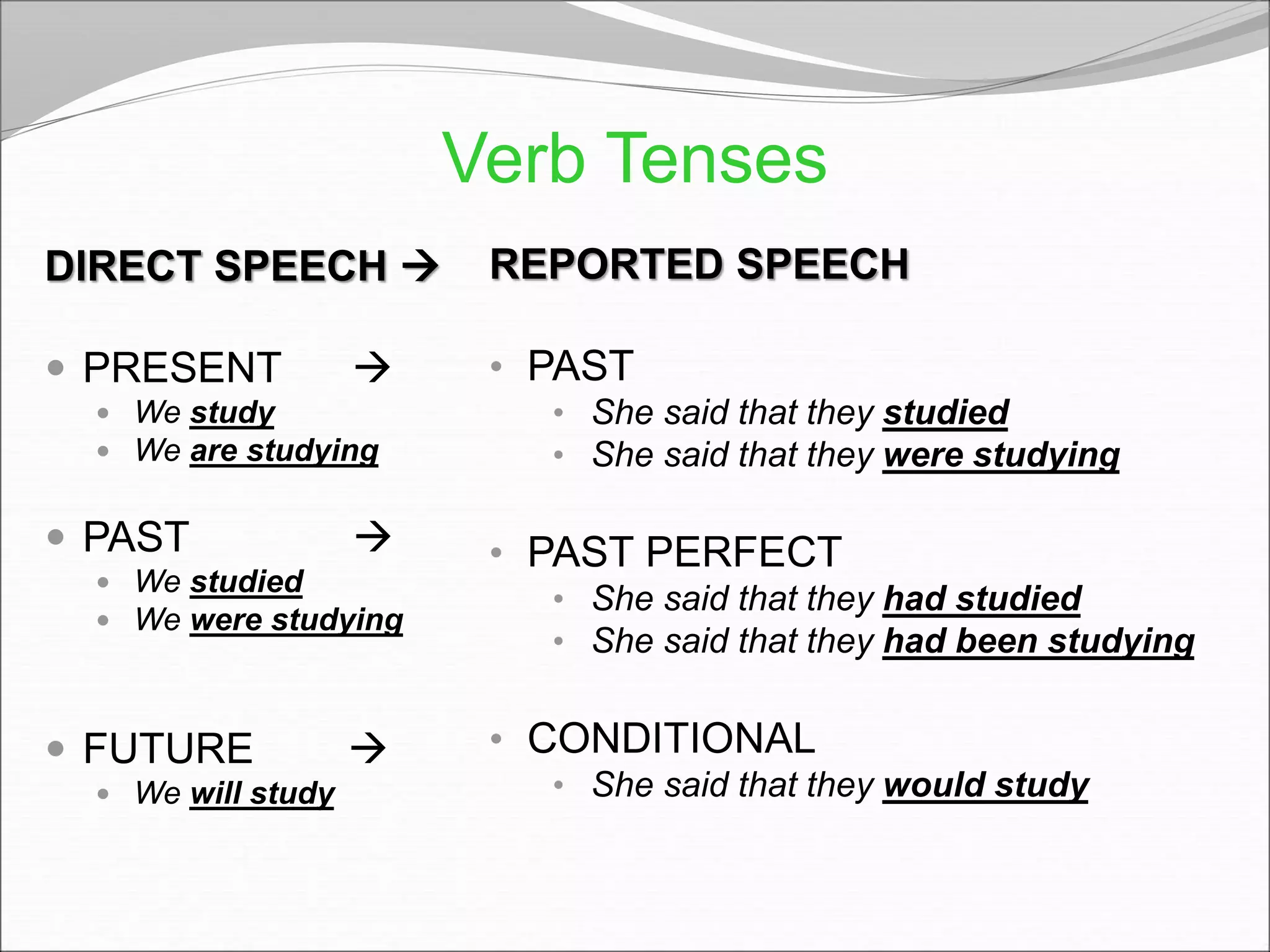
DIRECT SPEECH 
 PRESENT 
 We study
 We are studying
 PAST 
 We studied
 We were studying
 FUTURE 
 We will study
REPORTED SPEECH
• PAST
• She said that they studied
• She said that they were studying
• PAST PERFECT
• She said that they had studied
• She said that they had been studying
• CONDITIONAL
• She said that they would study
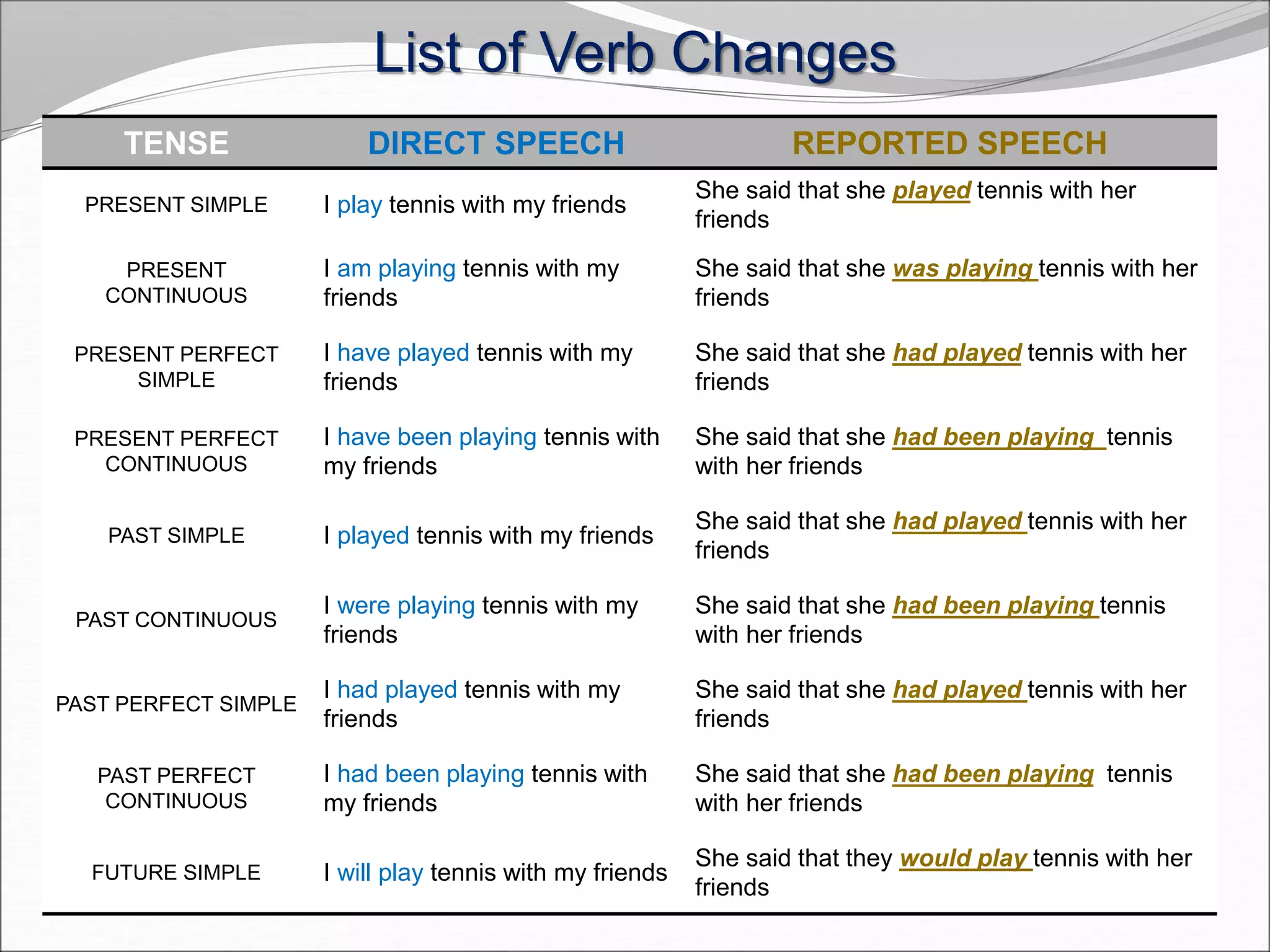
List of Verb Changes
TENSE DIRECT SPEECH REPORTED SPEECH
PRESENT SIMPLE I play tennis with my friends
She said that she played tennis with her
friends
PRESENT
CONTINUOUS
I am playing tennis with my
friends
She said that she was playing tennis with her
friends
PRESENT PERFECT
SIMPLE
I have played tennis with my
friends
She said that she had played tennis with her
friends
PRESENT PERFECT
CONTINUOUS
I have been playing tennis with
my friends
She said that she had been playing tennis
with her friends
PAST SIMPLE I played tennis with my friends
She said that she had played tennis with her
friends
PAST CONTINUOUS
I were playing tennis with my
friends
She said that she had been playing tennis
with her friends
PAST PERFECT SIMPLE
I had played tennis with my
friends
She said that she had played tennis with her
friends
PAST PERFECT
CONTINUOUS
I had been playing tennis with
my friends
She said that she had been playing tennis
with her friends
FUTURE SIMPLE I will play tennis with my friends
She said that they would play tennis with her
friends
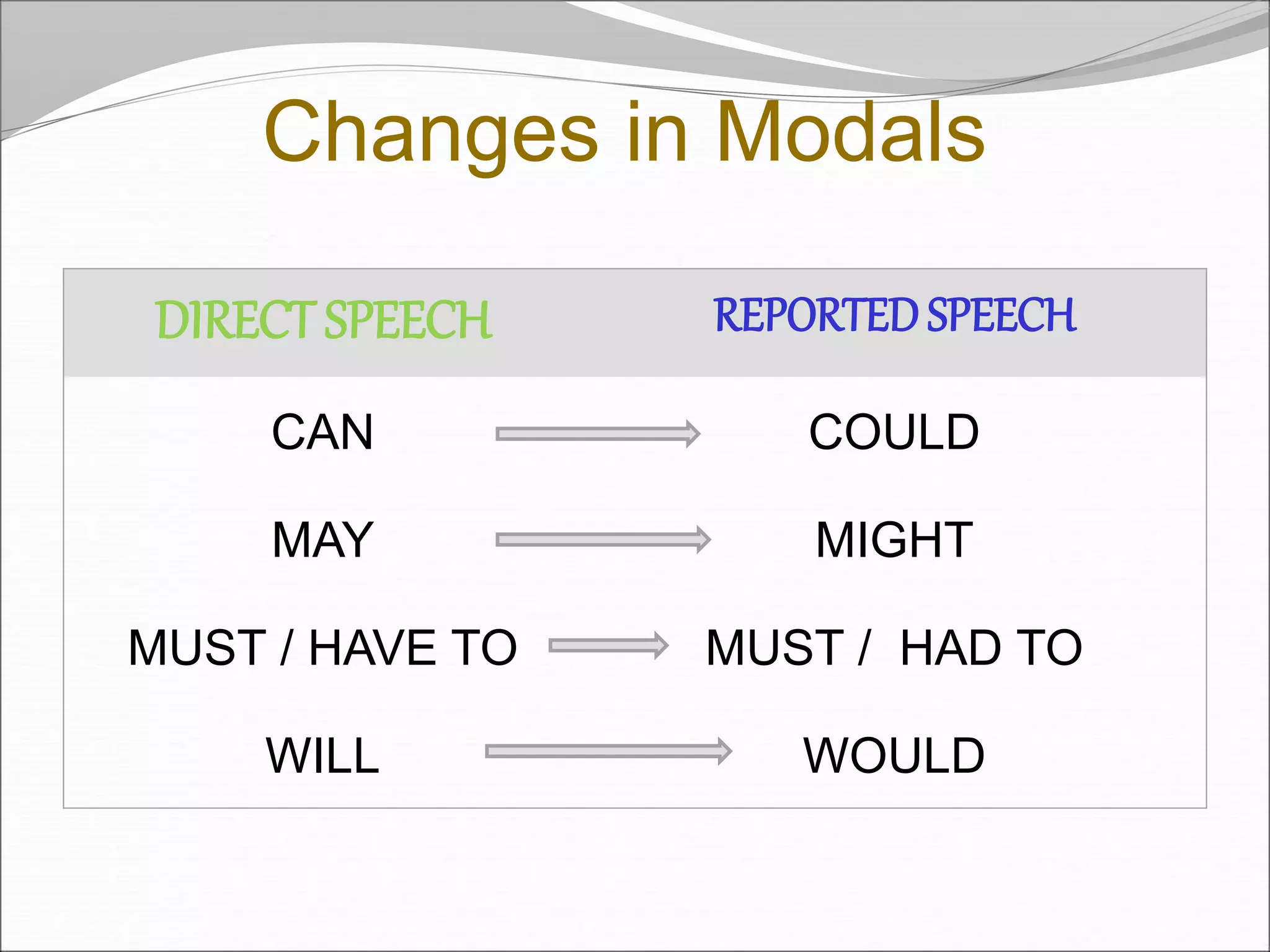
Changes in Modals
DIRECT SPEECH REPORTEDSPEECH
CAN COULD
MAY MIGHT
MUST / HAVE TO MUST / HAD TO
WILL WOULD
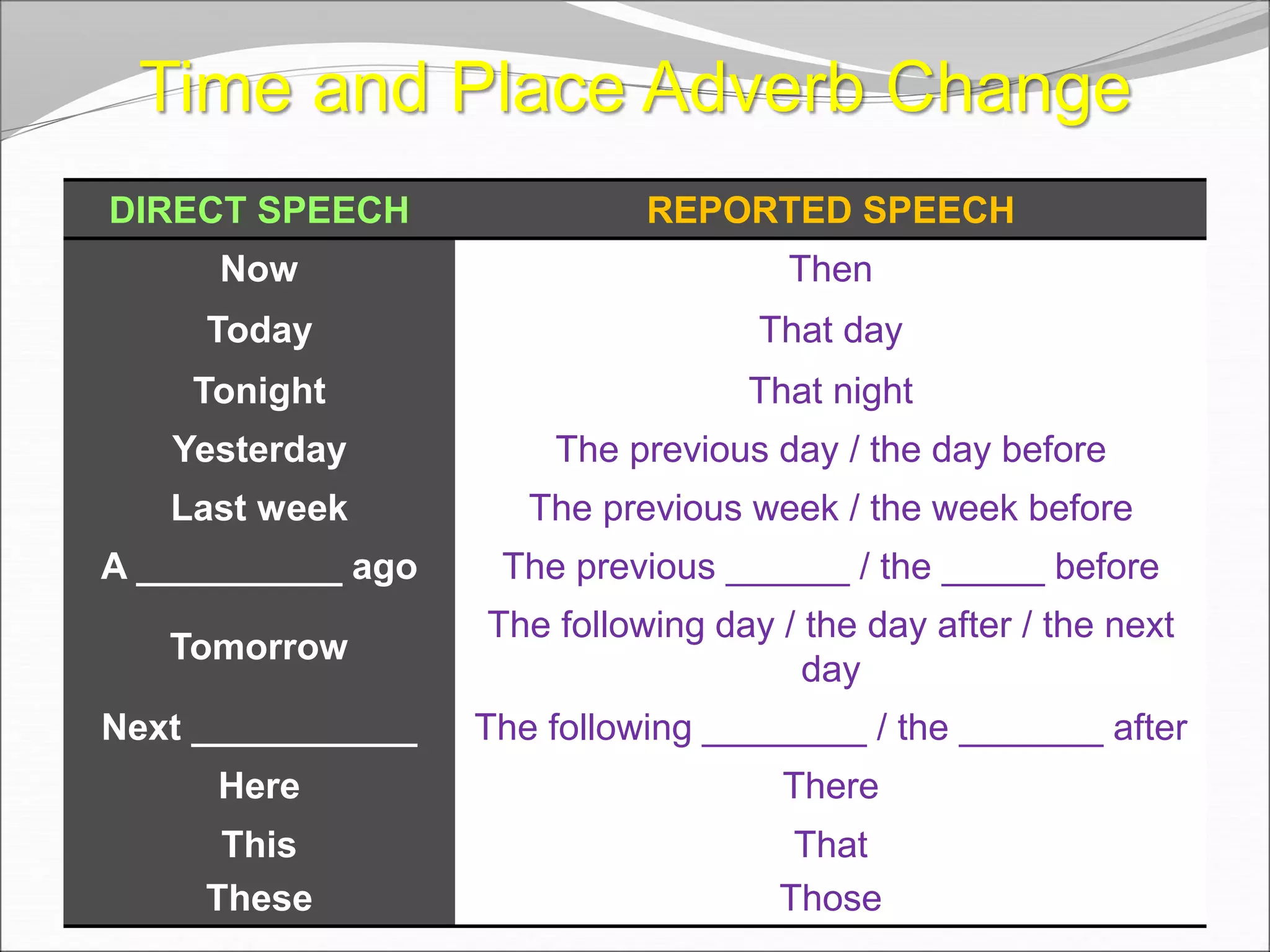
Time and Place Adverb Change
DIRECT SPEECH REPORTED SPEECH
Now Then
Today That day
Tonight That night
Yesterday The previous day / the day before
Last week The previous week / the week before
A __________ ago The previous ______ / the _____ before
Tomorrow
The following day / the day after / the next
day
Next ___________ The following ________ / the _______ after
Here There
This
These
That
Those
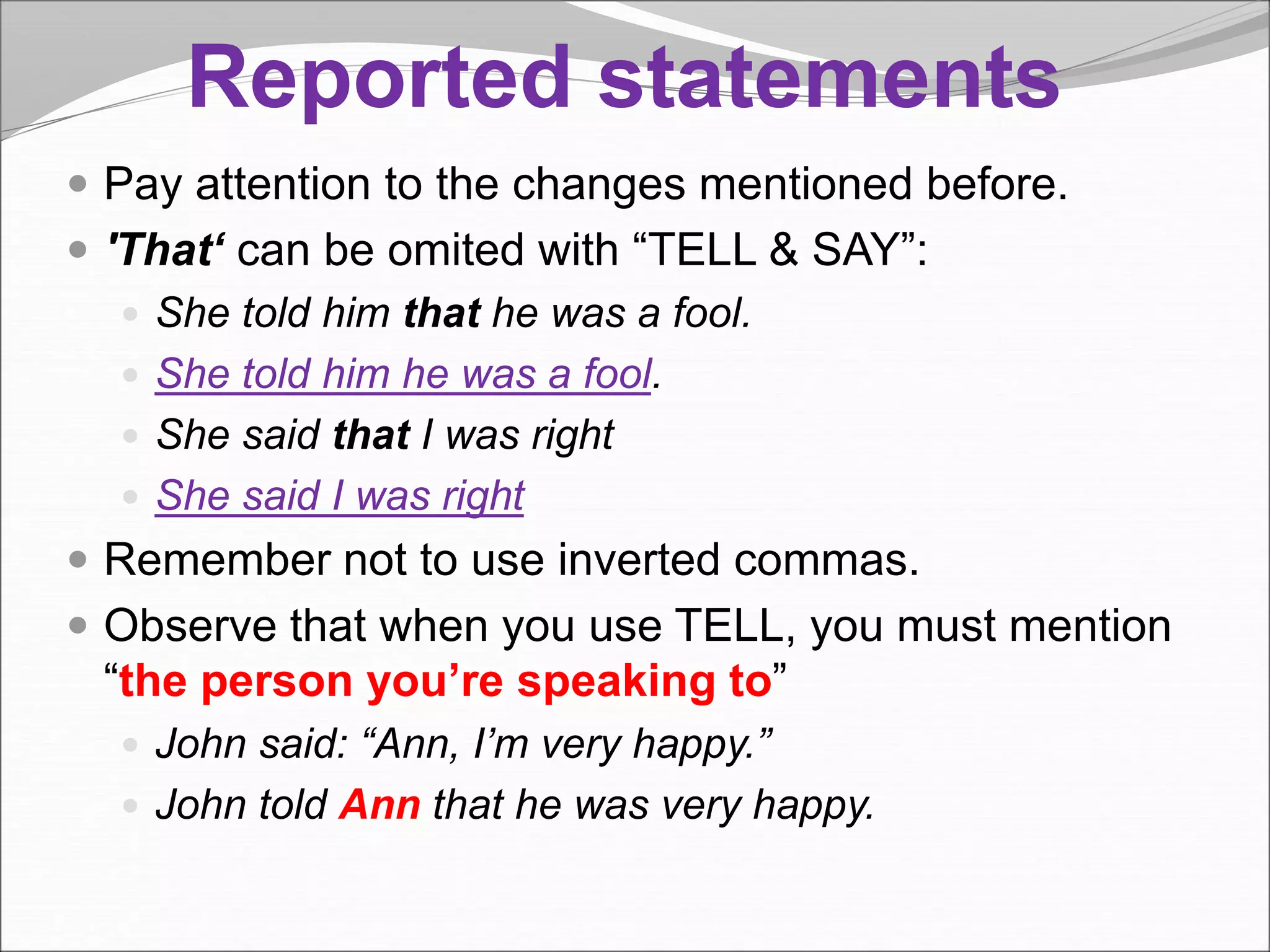
Reported statements
 Pay attention to the changes mentioned before.
 'That‘ can be omited with “TELL & SAY”:
 She told him that he was a fool.
 She told him he was a fool.
 She said that I was right
 She said I was right
 Remember not to use inverted commas.
 Observe that when you use TELL, you must mention
“the person you’re speaking to”
 John said: “Ann, I’m very happy.”
 John told Ann that he was very happy.
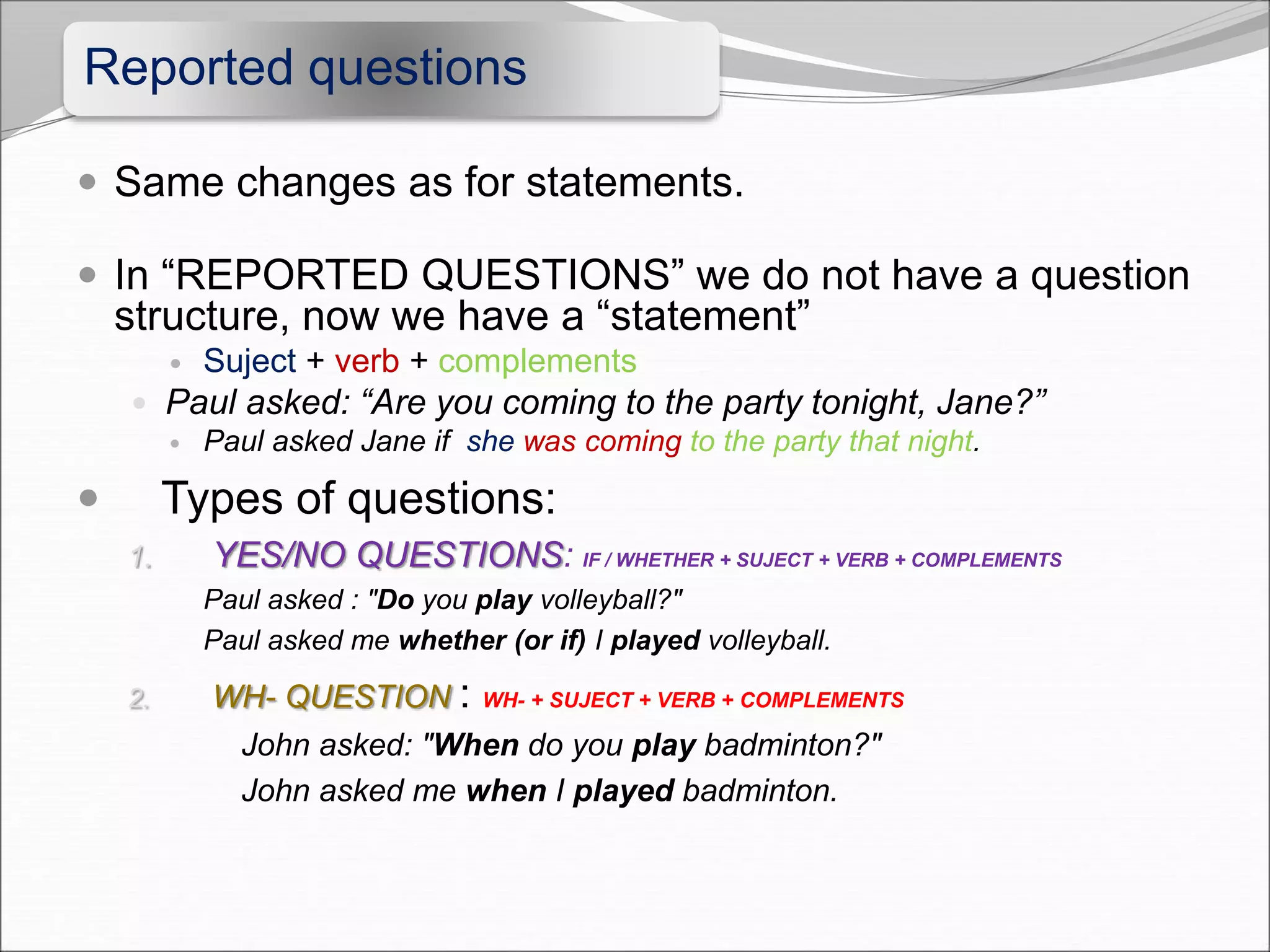
Reported questions
 Same changes as for statements.
 In “REPORTED QUESTIONS” we do not have a question
structure, now we have a “statement”
 Suject + verb + complements
 Paul asked: “Are you coming to the party tonight, Jane?”
 Paul asked Jane if she was coming to the party that night.
 Types of questions:
1. YES/NO QUESTIONS: IF / WHETHER + SUJECT + VERB + COMPLEMENTS
Paul asked : "Do you play volleyball?"
Paul asked me whether (or if) I played volleyball.
2. WH- QUESTION : WH- + SUJECT + VERB + COMPLEMENTS
John asked: "When do you play badminton?"
John asked me when I played badminton.
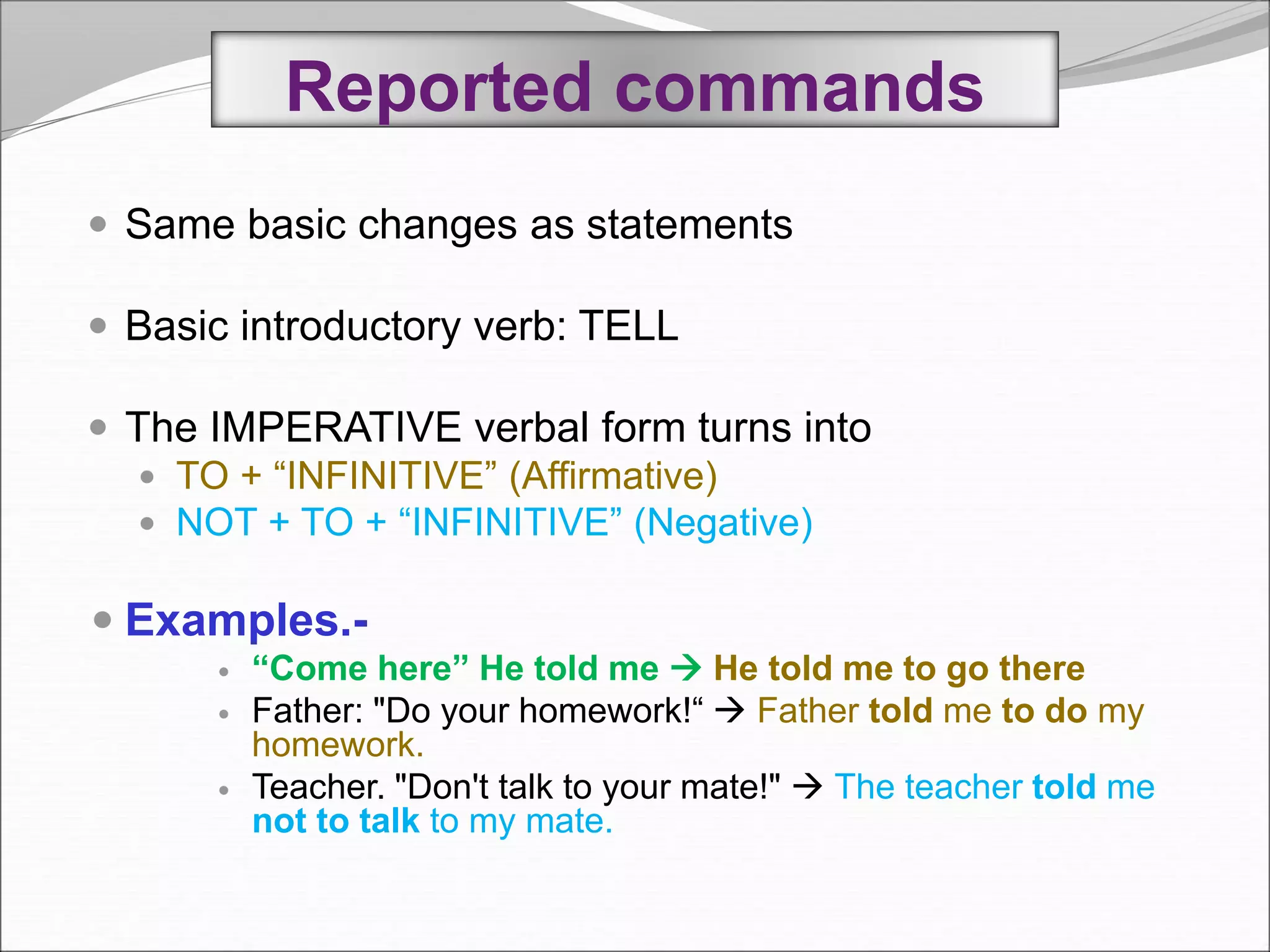
Reported commands
 Same basic changes as statements
 Basic introductory verb: TELL
 The IMPERATIVE verbal form turns into
 TO + “INFINITIVE” (Affirmative)
 NOT + TO + “INFINITIVE” (Negative)
 Examples.-
 “Come here” He told me  He told me to go there
 Father: "Do your homework!“  Father told me to do my
homework.
 Teacher. "Don't talk to your mate!"  The teacher told me
not to talk to my mate.
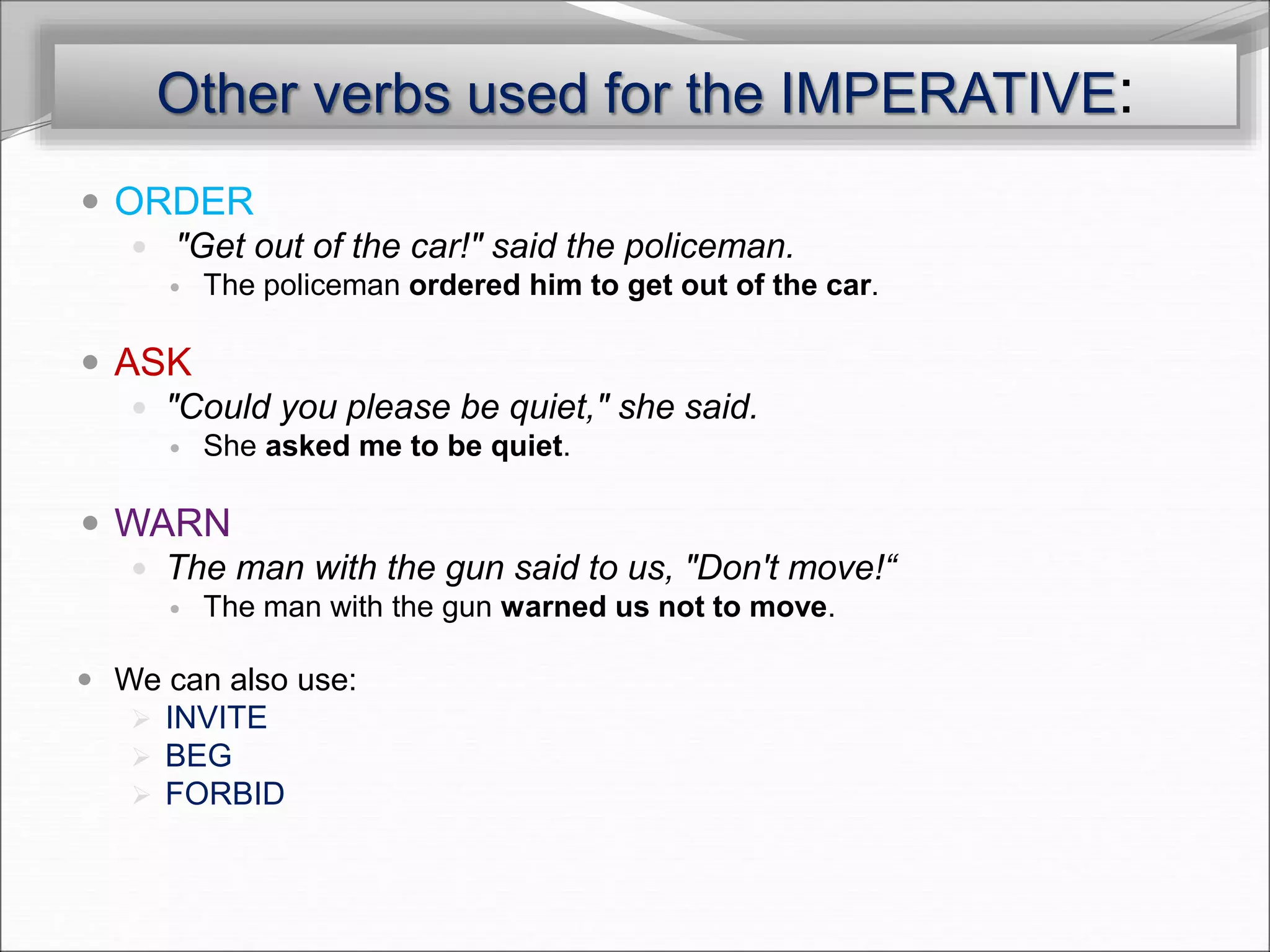
Other verbs used for the IMPERATIVE:
 ORDER
 "Get out of the car!" said the policeman.
 The policeman ordered him to get out of the car.
 ASK
 "Could you please be quiet," she said.
 She asked me to be quiet.
 WARN
 The man with the gun said to us, "Don't move!“
 The man with the gun warned us not to move.
 We can also use:
 INVITE
 BEG
 FORBID

Reported speech

  • 1.
  • 2.
    When do weuse it?  REPORTED SPEECH is used to tell what someone said. Yet, we do not repeat all the words exactly.  REAL WORDS (direct speech): Tom said: “We are going to the cinema this afternoon.”  REPORTED SPEECH: Tom said that they were going to the cinema that afternoon.
  • 3.
    Changes  Types ofchanges: 1. Verb Tenses 2. Time and place adverbial expressions 3. Logical change of pronouns  EXAMPLE  DIRECT: Mary said: “They are seeing me tomorrow”  REPORTED: Mary said that they were seeing her the following day
  • 4.
    Verb Tenses DIRECT SPEECH  PRESENT   We study  We are studying  PAST   We studied  We were studying  FUTURE   We will study REPORTED SPEECH • PAST • She said that they studied • She said that they were studying • PAST PERFECT • She said that they had studied • She said that they had been studying • CONDITIONAL • She said that they would study
  • 5.
    List of VerbChanges TENSE DIRECT SPEECH REPORTED SPEECH PRESENT SIMPLE I play tennis with my friends She said that she played tennis with her friends PRESENT CONTINUOUS I am playing tennis with my friends She said that she was playing tennis with her friends PRESENT PERFECT SIMPLE I have played tennis with my friends She said that she had played tennis with her friends PRESENT PERFECT CONTINUOUS I have been playing tennis with my friends She said that she had been playing tennis with her friends PAST SIMPLE I played tennis with my friends She said that she had played tennis with her friends PAST CONTINUOUS I were playing tennis with my friends She said that she had been playing tennis with her friends PAST PERFECT SIMPLE I had played tennis with my friends She said that she had played tennis with her friends PAST PERFECT CONTINUOUS I had been playing tennis with my friends She said that she had been playing tennis with her friends FUTURE SIMPLE I will play tennis with my friends She said that they would play tennis with her friends
  • 6.
    Changes in Modals DIRECTSPEECH REPORTEDSPEECH CAN COULD MAY MIGHT MUST / HAVE TO MUST / HAD TO WILL WOULD
  • 7.
    Time and PlaceAdverb Change DIRECT SPEECH REPORTED SPEECH Now Then Today That day Tonight That night Yesterday The previous day / the day before Last week The previous week / the week before A __________ ago The previous ______ / the _____ before Tomorrow The following day / the day after / the next day Next ___________ The following ________ / the _______ after Here There This These That Those
  • 8.
    Reported statements  Payattention to the changes mentioned before.  'That‘ can be omited with “TELL & SAY”:  She told him that he was a fool.  She told him he was a fool.  She said that I was right  She said I was right  Remember not to use inverted commas.  Observe that when you use TELL, you must mention “the person you’re speaking to”  John said: “Ann, I’m very happy.”  John told Ann that he was very happy.
  • 9.
    Reported questions  Samechanges as for statements.  In “REPORTED QUESTIONS” we do not have a question structure, now we have a “statement”  Suject + verb + complements  Paul asked: “Are you coming to the party tonight, Jane?”  Paul asked Jane if she was coming to the party that night.  Types of questions: 1. YES/NO QUESTIONS: IF / WHETHER + SUJECT + VERB + COMPLEMENTS Paul asked : "Do you play volleyball?" Paul asked me whether (or if) I played volleyball. 2. WH- QUESTION : WH- + SUJECT + VERB + COMPLEMENTS John asked: "When do you play badminton?" John asked me when I played badminton.
  • 10.
    Reported commands  Samebasic changes as statements  Basic introductory verb: TELL  The IMPERATIVE verbal form turns into  TO + “INFINITIVE” (Affirmative)  NOT + TO + “INFINITIVE” (Negative)  Examples.-  “Come here” He told me  He told me to go there  Father: "Do your homework!“  Father told me to do my homework.  Teacher. "Don't talk to your mate!"  The teacher told me not to talk to my mate.
  • 11.
    Other verbs usedfor the IMPERATIVE:  ORDER  "Get out of the car!" said the policeman.  The policeman ordered him to get out of the car.  ASK  "Could you please be quiet," she said.  She asked me to be quiet.  WARN  The man with the gun said to us, "Don't move!“  The man with the gun warned us not to move.  We can also use:  INVITE  BEG  FORBID