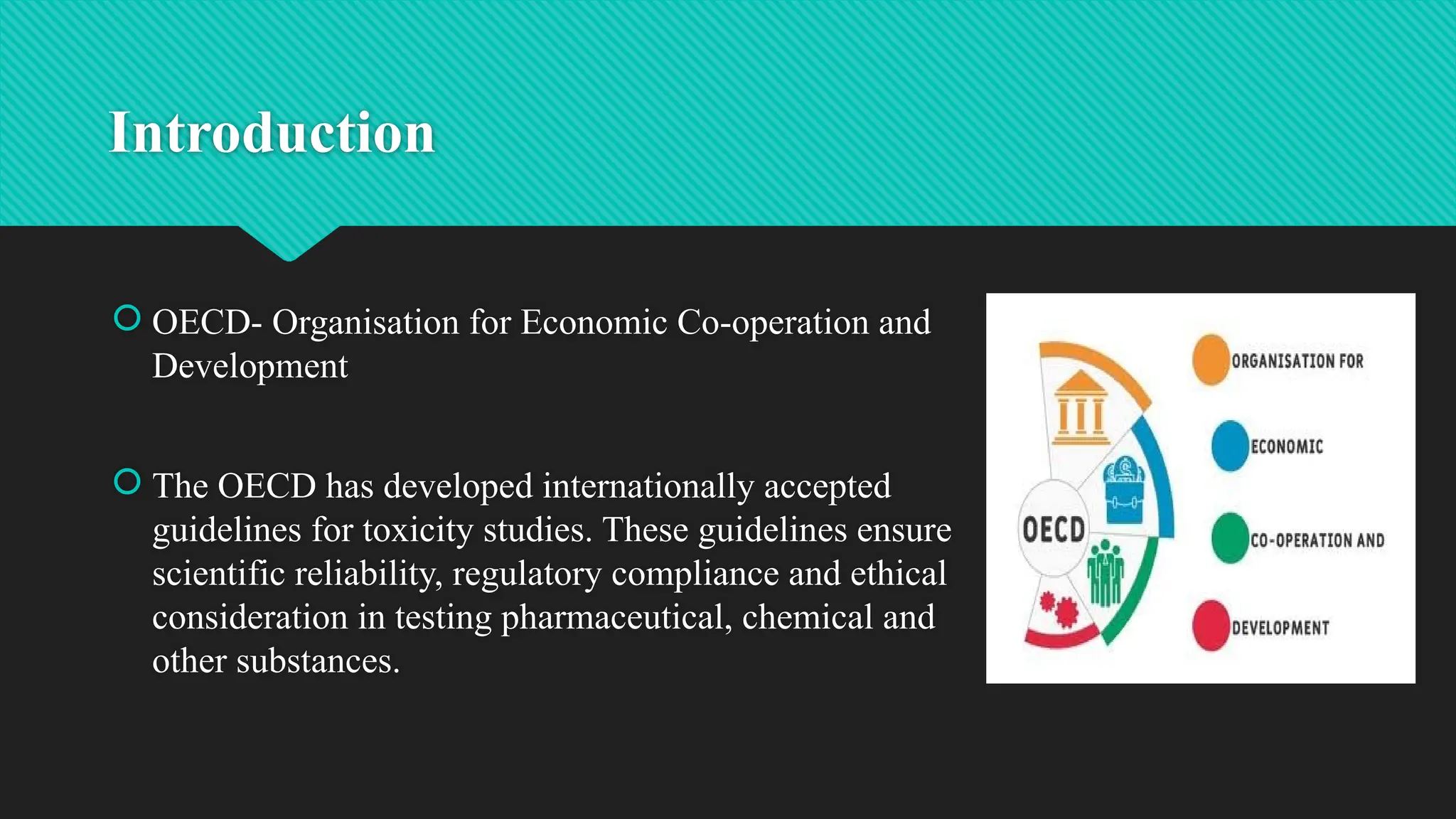
Regulatory guidelines
for Conducting Toxicity
studies OECD
Submitted by:
Sant Kumar
M.Pharm (2nd
Semester)
Department of Pharmaceutical science
Gurugram University
Submitted to:
Prof. Dhirender Kaushik
Introduction
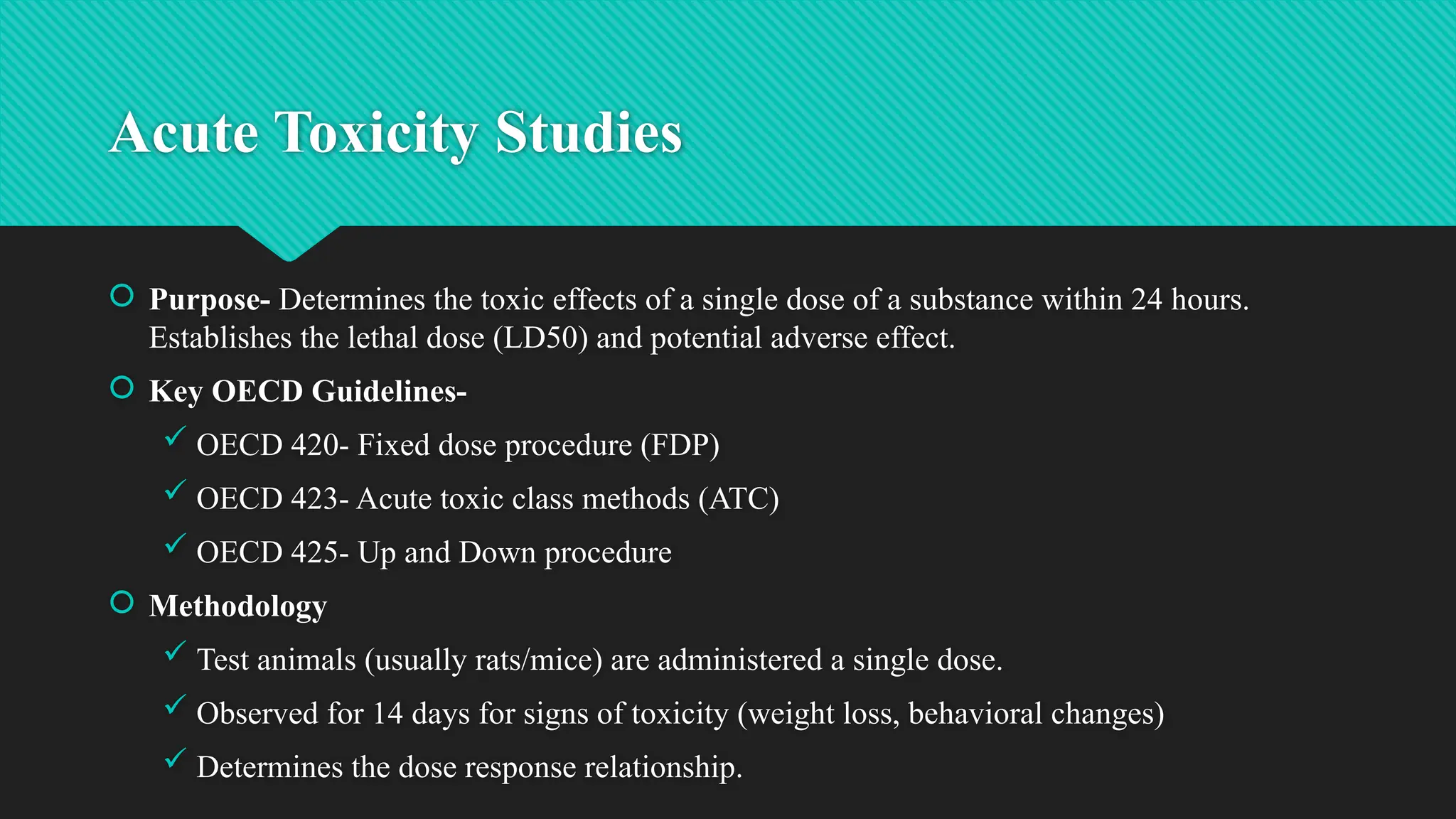
 OECD- Organisation for Economic Co-operation and
Development
 The OECD has developed internationally accepted
guidelines for toxicity studies. These guidelines ensure
scientific reliability, regulatory compliance and ethical
consideration in testing pharmaceutical, chemical and
other substances.
Acute Toxicity Studies
 Purpose- Determines the toxic effects of a single dose of a substance within 24 hours.
Establishes the lethal dose (LD50) and potential adverse effect.
 Key OECD Guidelines-
 OECD 420- Fixed dose procedure (FDP)
 OECD 423- Acute toxic class methods (ATC)
 OECD 425- Up and Down procedure
 Methodology
 Test animals (usually rats/mice) are administered a single dose.
 Observed for 14 days for signs of toxicity (weight loss, behavioral changes)
 Determines the dose response relationship.
Repeated Dose Toxicity Studies
 Purpose - Evaluate toxicity after prolonged exposure (14-90 days). Identifies target organs
affected by the chemicals.
 Key OECD guidelines –
 OECD 407- 28 days (Subacute toxicity)
 OECD 408- 90 days (Sub-chronic toxicity)
 OECD 409- 1 year(Chronic toxicity)
Methodology - Animals are exposed daily to different doses of the test compound Parameters
monitored- Hematology and Biochemistry LFT & KFT Organ weights (Heart, Liver, Kidney,etc.)
Histopathology (Microscopic examination of organs)
Genotoxicity studies
 Purpose - Assess a substances potential to cause DNA damage or mutation.
Important for cancer risk evaluation.
 Key OECD guidelines –
 OECD 471- Ames test(Bacterial Reverse Mutation test)
 OECD 473- In vitro chromosomal Aberration test
 OECD 476- In vitro mammalian cell gene mutation test
 Methodology –
 OECD 471(Ames Test)- Uses bacteria (Salmonella) to detect mutations.
 OECD 473- Examines chromosomal Aberration in mammalian cells.
 OECD 476- Studies gene mutations in mammalian cell (e.g.- Chinese Hamster ovary cells)
Carcinogenicity Studies
 Purpose - Determines if long-term exposure leads to cancer. Essential for drugs
used in chronic condition (eg- diabetes, hypertension)
 Key OECD guidelines –
 OECD 451- Carcinogenicity study
 OECD 452- Chronic Toxicity study
 OECD 453- Combined chronic toxicity/Carcinogenicity
 Methodology –
 Conducted in rats/mice for 2 years (lifetime exposure)
 Parameters monitored- Tumour incidence and histopathology Genetic and molecular
markers of cancers Biochemical changes (DNA damage, Oxidative stress)
Reproductive and developmental toxicity studies
 Purpose- Evaluate affects on fertility pregnancy and fetal developments Ensures drugs
are safe for pregnant women.
 Key OECD guidelines
 OECD 414- Prenatal development Toxicity study
 OECD 415- One generation Reproduction study
 OECD 416- Two generation Reproduction study
 Methodology –
 OECD 414- Pregnant animals exposed to test compound; features examined for abnormalities.
 OECD 415- Assess effects on male and female fertility
 OECD 416- Studies multiple generation to detect heritable effects.
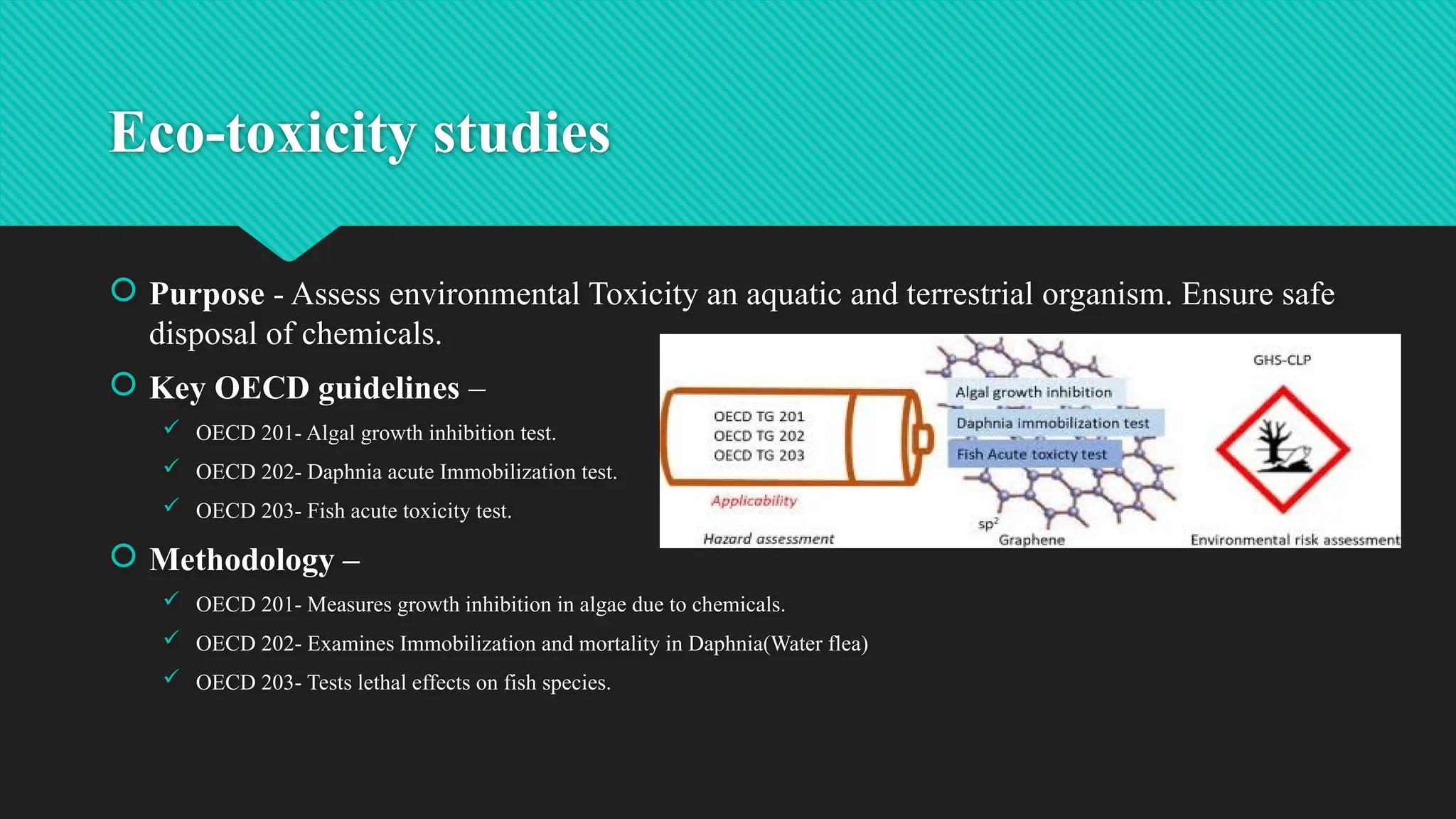
Eco-toxicity studies
 Purpose - Assess environmental Toxicity an aquatic and terrestrial organism. Ensure safe
disposal of chemicals.
 Key OECD guidelines –
 OECD 201- Algal growth inhibition test.
 OECD 202- Daphnia acute Immobilization test.
 OECD 203- Fish acute toxicity test.
 Methodology –
 OECD 201- Measures growth inhibition in algae due to chemicals.
 OECD 202- Examines Immobilization and mortality in Daphnia(Water flea)
 OECD 203- Tests lethal effects on fish species.
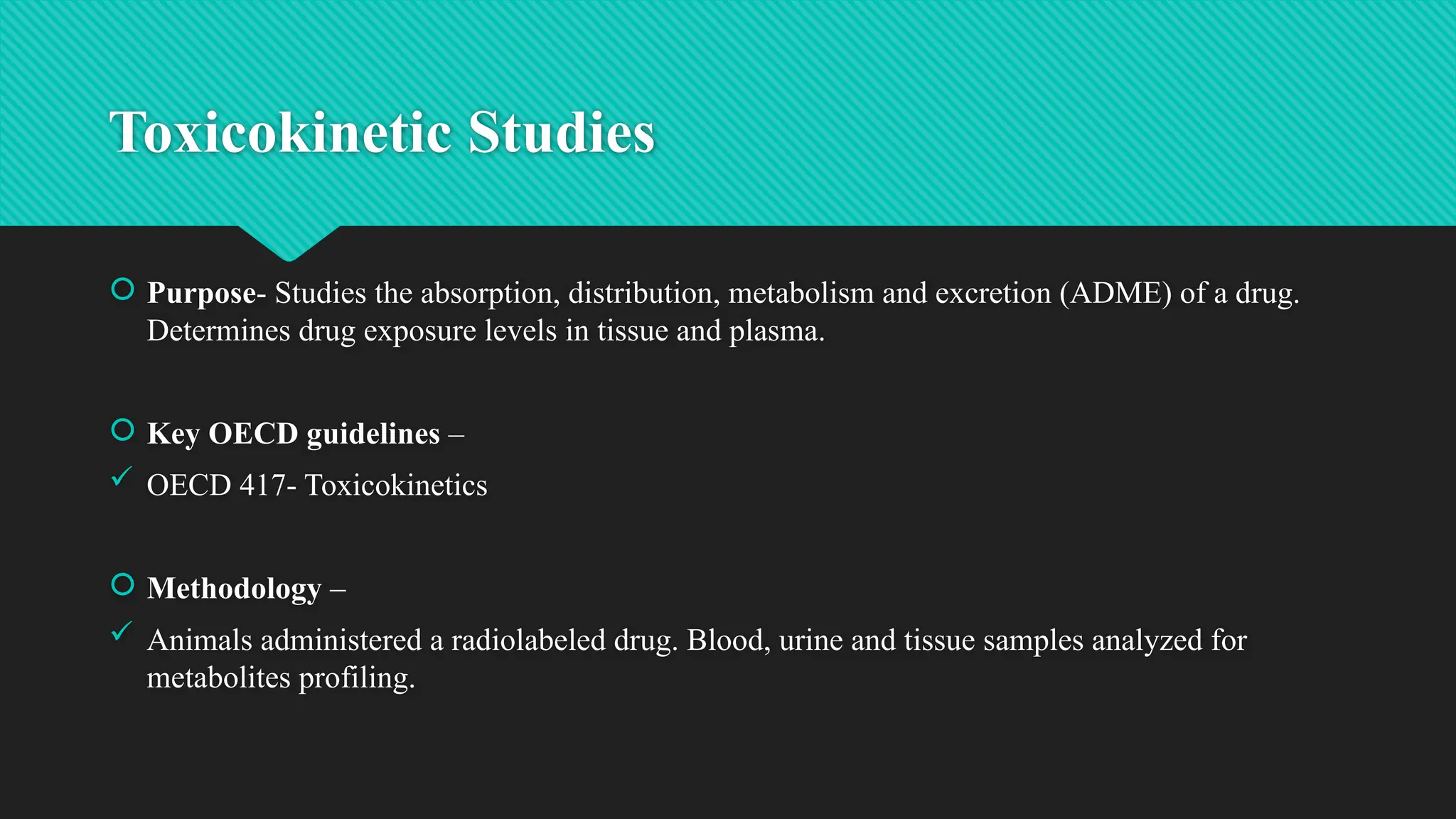
Toxicokinetic Studies
 Purpose- Studies the absorption, distribution, metabolism and excretion (ADME) of a drug.
Determines drug exposure levels in tissue and plasma.
 Key OECD guidelines –
 OECD 417- Toxicokinetics
 Methodology –
 Animals administered a radiolabeled drug. Blood, urine and tissue samples analyzed for
metabolites profiling.
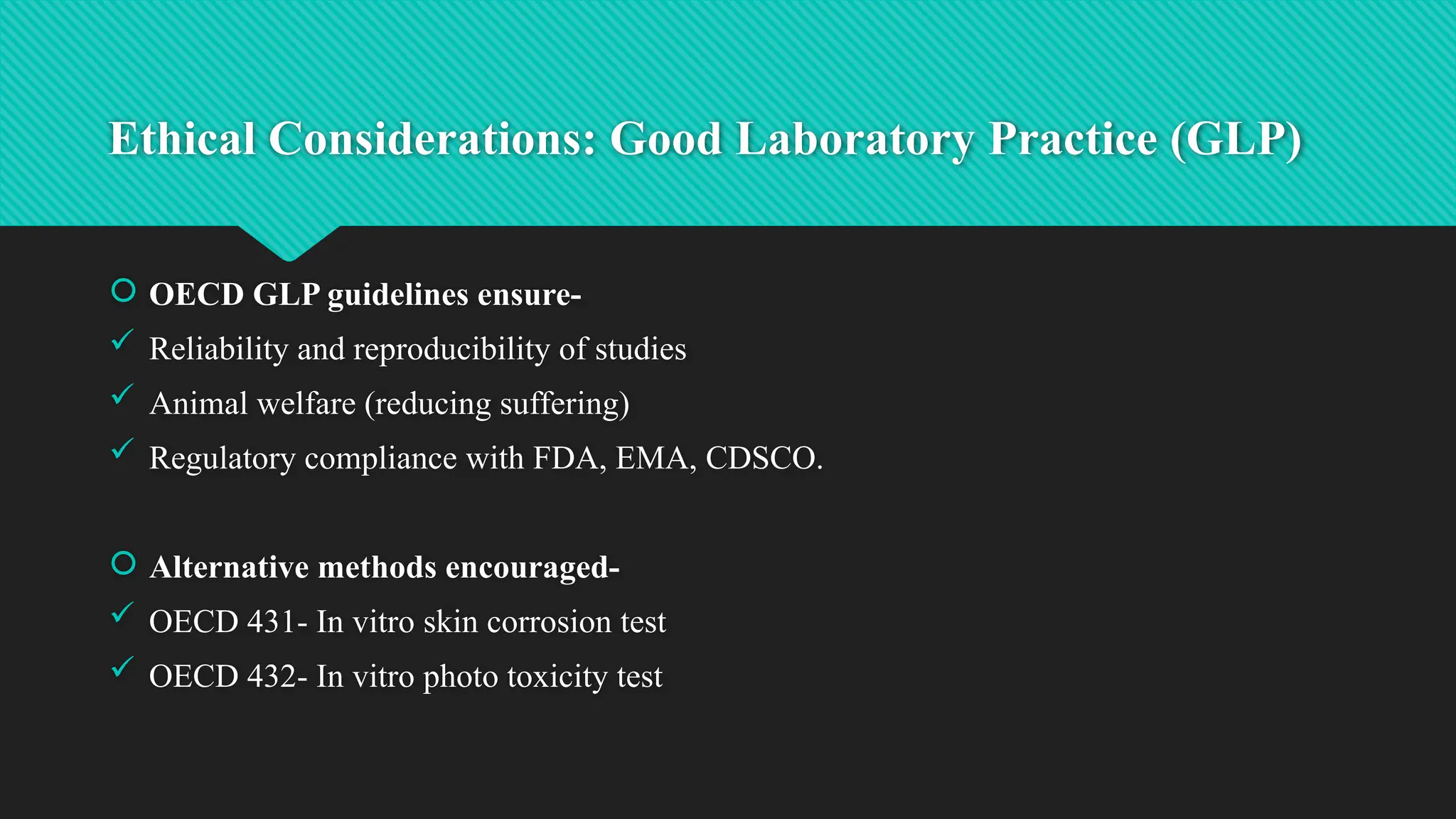
Ethical Considerations: Good Laboratory Practice (GLP)
 OECD GLP guidelines ensure-
 Reliability and reproducibility of studies
 Animal welfare (reducing suffering)
 Regulatory compliance with FDA, EMA, CDSCO.
 Alternative methods encouraged-
 OECD 431- In vitro skin corrosion test
 OECD 432- In vitro photo toxicity test
Conclusion
 The OECD toxicity study
guidelines ensure human safety,
environmental protection and
regulatory approval. These
studies are mandatory for drug
development and help assess
risks before clinical trials.
References
 OECD Guidelines for the Testing of Chemicals
URL:-https://www.oecd.org/chemicalsafety/testing/oecdguidelinesforthetestingofchemicals.
htm
 OECD provides standardized test methods for assessing chemical hazards, widely used by
regulatory agencies globally.
 Good Laboratory Practice (GLP) – OECD Principles
Reference: OECD, "OECD Principles of Good Laboratory Practice (GLP)", Series on
Principles of GLP and Compliance Monitoring
URL: https://www.oecd.org/chemicalsafety/testing/good-laboratory-practiceglp.htm
Ensures quality and integrity of toxicity studies used in regulatory submissions.
 OECD Test Guidelines for Toxicity Studies
Covers acute, subacute, chronic, reproductive, and developmental toxicity tests.
Full List:
https://www.oecd.org/env/ehs/testing/oecd-guidelines-testing-chemicals-section4-health-
effects.htm
 OECD Mutual Acceptance of Data (MAD) System.
Reference: OECD "Mutual Acceptance of Data (MAD) in the Assessment of Chemicals“
URL: https://www.oecd.org/chemicalsafety/mutualacceptanceofdatamad.htm
Ensures data generated in one OECD country is accepted by others, reducing duplication of
animal testing.

Regulatory guidelines for Conducting Toxicity studies OECD

  • 1.
    Regulatory guidelines for ConductingToxicity studies OECD Submitted by: Sant Kumar M.Pharm (2nd Semester) Department of Pharmaceutical science Gurugram University Submitted to: Prof. Dhirender Kaushik
  • 2.
    Introduction  OECD- Organisationfor Economic Co-operation and Development  The OECD has developed internationally accepted guidelines for toxicity studies. These guidelines ensure scientific reliability, regulatory compliance and ethical consideration in testing pharmaceutical, chemical and other substances.
  • 3.
    Acute Toxicity Studies Purpose- Determines the toxic effects of a single dose of a substance within 24 hours. Establishes the lethal dose (LD50) and potential adverse effect.  Key OECD Guidelines-  OECD 420- Fixed dose procedure (FDP)  OECD 423- Acute toxic class methods (ATC)  OECD 425- Up and Down procedure  Methodology  Test animals (usually rats/mice) are administered a single dose.  Observed for 14 days for signs of toxicity (weight loss, behavioral changes)  Determines the dose response relationship.
  • 4.
    Repeated Dose ToxicityStudies  Purpose - Evaluate toxicity after prolonged exposure (14-90 days). Identifies target organs affected by the chemicals.  Key OECD guidelines –  OECD 407- 28 days (Subacute toxicity)  OECD 408- 90 days (Sub-chronic toxicity)  OECD 409- 1 year(Chronic toxicity) Methodology - Animals are exposed daily to different doses of the test compound Parameters monitored- Hematology and Biochemistry LFT & KFT Organ weights (Heart, Liver, Kidney,etc.) Histopathology (Microscopic examination of organs)
  • 5.
    Genotoxicity studies  Purpose- Assess a substances potential to cause DNA damage or mutation. Important for cancer risk evaluation.  Key OECD guidelines –  OECD 471- Ames test(Bacterial Reverse Mutation test)  OECD 473- In vitro chromosomal Aberration test  OECD 476- In vitro mammalian cell gene mutation test  Methodology –  OECD 471(Ames Test)- Uses bacteria (Salmonella) to detect mutations.  OECD 473- Examines chromosomal Aberration in mammalian cells.  OECD 476- Studies gene mutations in mammalian cell (e.g.- Chinese Hamster ovary cells)
  • 6.
    Carcinogenicity Studies  Purpose- Determines if long-term exposure leads to cancer. Essential for drugs used in chronic condition (eg- diabetes, hypertension)  Key OECD guidelines –  OECD 451- Carcinogenicity study  OECD 452- Chronic Toxicity study  OECD 453- Combined chronic toxicity/Carcinogenicity  Methodology –  Conducted in rats/mice for 2 years (lifetime exposure)  Parameters monitored- Tumour incidence and histopathology Genetic and molecular markers of cancers Biochemical changes (DNA damage, Oxidative stress)
  • 7.
    Reproductive and developmentaltoxicity studies  Purpose- Evaluate affects on fertility pregnancy and fetal developments Ensures drugs are safe for pregnant women.  Key OECD guidelines  OECD 414- Prenatal development Toxicity study  OECD 415- One generation Reproduction study  OECD 416- Two generation Reproduction study  Methodology –  OECD 414- Pregnant animals exposed to test compound; features examined for abnormalities.  OECD 415- Assess effects on male and female fertility  OECD 416- Studies multiple generation to detect heritable effects.
  • 8.
    Eco-toxicity studies  Purpose- Assess environmental Toxicity an aquatic and terrestrial organism. Ensure safe disposal of chemicals.  Key OECD guidelines –  OECD 201- Algal growth inhibition test.  OECD 202- Daphnia acute Immobilization test.  OECD 203- Fish acute toxicity test.  Methodology –  OECD 201- Measures growth inhibition in algae due to chemicals.  OECD 202- Examines Immobilization and mortality in Daphnia(Water flea)  OECD 203- Tests lethal effects on fish species.
  • 9.
    Toxicokinetic Studies  Purpose-Studies the absorption, distribution, metabolism and excretion (ADME) of a drug. Determines drug exposure levels in tissue and plasma.  Key OECD guidelines –  OECD 417- Toxicokinetics  Methodology –  Animals administered a radiolabeled drug. Blood, urine and tissue samples analyzed for metabolites profiling.
  • 10.
    Ethical Considerations: GoodLaboratory Practice (GLP)  OECD GLP guidelines ensure-  Reliability and reproducibility of studies  Animal welfare (reducing suffering)  Regulatory compliance with FDA, EMA, CDSCO.  Alternative methods encouraged-  OECD 431- In vitro skin corrosion test  OECD 432- In vitro photo toxicity test
  • 11.
    Conclusion  The OECDtoxicity study guidelines ensure human safety, environmental protection and regulatory approval. These studies are mandatory for drug development and help assess risks before clinical trials.
  • 12.
    References  OECD Guidelinesfor the Testing of Chemicals URL:-https://www.oecd.org/chemicalsafety/testing/oecdguidelinesforthetestingofchemicals. htm  OECD provides standardized test methods for assessing chemical hazards, widely used by regulatory agencies globally.  Good Laboratory Practice (GLP) – OECD Principles Reference: OECD, "OECD Principles of Good Laboratory Practice (GLP)", Series on Principles of GLP and Compliance Monitoring URL: https://www.oecd.org/chemicalsafety/testing/good-laboratory-practiceglp.htm Ensures quality and integrity of toxicity studies used in regulatory submissions.
  • 13.
     OECD TestGuidelines for Toxicity Studies Covers acute, subacute, chronic, reproductive, and developmental toxicity tests. Full List: https://www.oecd.org/env/ehs/testing/oecd-guidelines-testing-chemicals-section4-health- effects.htm  OECD Mutual Acceptance of Data (MAD) System. Reference: OECD "Mutual Acceptance of Data (MAD) in the Assessment of Chemicals“ URL: https://www.oecd.org/chemicalsafety/mutualacceptanceofdatamad.htm Ensures data generated in one OECD country is accepted by others, reducing duplication of animal testing.