Download to read offline
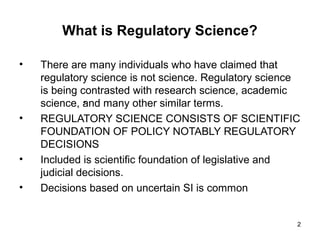
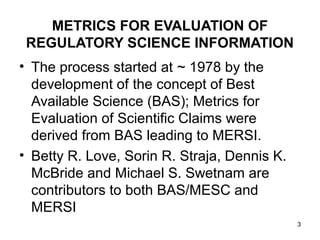
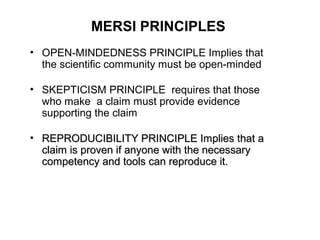
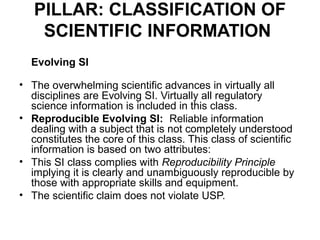
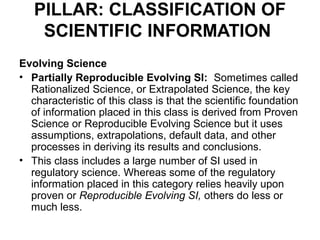
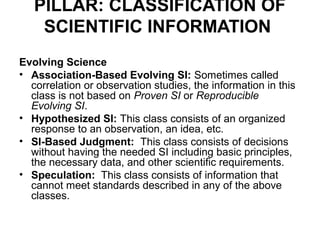
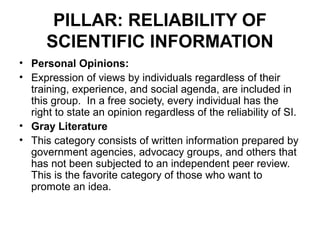
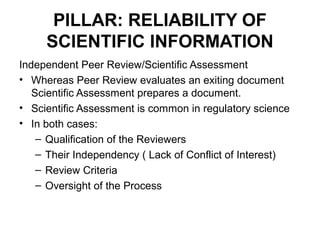
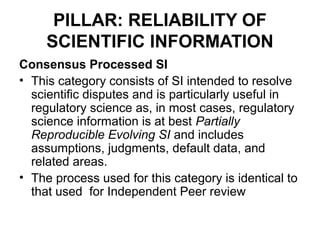
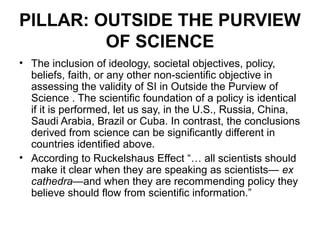
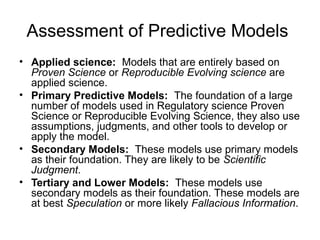
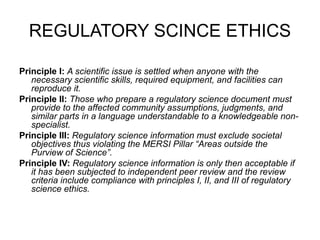
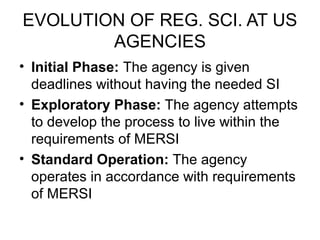

Regulatory science consists of the scientific foundation for regulatory and policy decisions, and uses principles like open-mindedness, skepticism, and reproducibility to evaluate scientific claims and classify information as proven, evolving, or speculative. Key aspects of regulatory science include classifying scientific information, assessing reliability, and ensuring ethics by excluding non-scientific factors and requiring transparency and independent review. Regulatory agencies evolve in developing regulatory science standards from an initial exploratory phase to standard operations that follow metrics for evaluating scientific information.


