Reflection
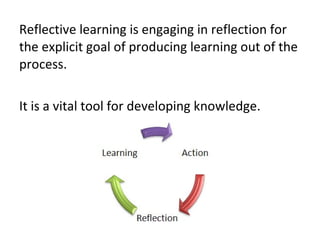
Reflective learning is engaging in reflection for the explicit goal of producing learning out of the process. It is a vital tool for developing knowledge.
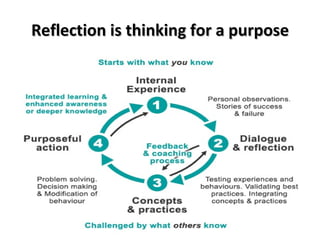
Reflection is thinking for a purpose
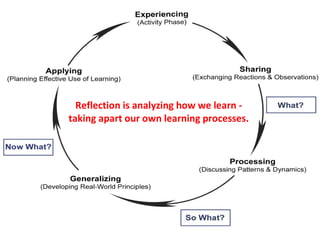
Reflection is analyzing how we learn - taking apart our own learning processes.
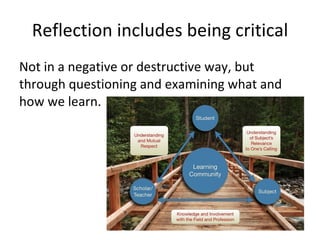
Reflection includes being critical Not in a negative or destructive way, but through questioning and examining what and how we learn.
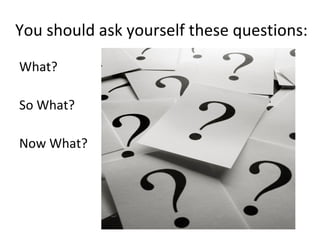
You should ask yourself these questions:  What?  So What?  Now What?
What? —What happened? —What did you observe? —What issue is being addressed?
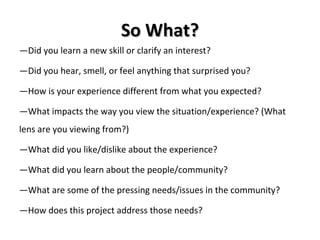
So What? — Did you learn a new skill or clarify an interest? — Did you hear, smell, or feel anything that surprised you? — How is your experience different from what you expected? — What impacts the way you view the situation/experience? (What lens are you viewing from?) — What did you like/dislike about the experience? — What did you learn about the people/community? — What are some of the pressing needs/issues in the community? — How does this project address those needs?
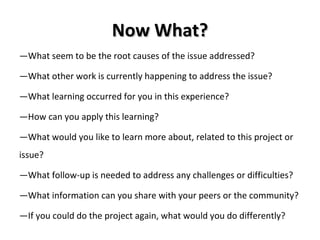
Now What? — What seem to be the root causes of the issue addressed? — What other work is currently happening to address the issue? — What learning occurred for you in this experience? — How can you apply this learning? — What would you like to learn more about, related to this project or issue? — What follow-up is needed to address any challenges or difficulties? — What information can you share with your peers or the community? — If you could do the project again, what would you do differently?
You should ask yourself these questions …:  Taken from : http://www.servicelearning.umn.edu/info/reflection.html

Reflection

  • 1.
  • 2.
    Reflective learning isengaging in reflection for the explicit goal of producing learning out of the process. It is a vital tool for developing knowledge.
  • 3.
  • 4.
    Reflection is analyzinghow we learn - taking apart our own learning processes.
  • 5.
    Reflection includes beingcritical Not in a negative or destructive way, but through questioning and examining what and how we learn.
  • 6.
    You should askyourself these questions: What? So What? Now What?
  • 7.
    What? —What happened?—What did you observe? —What issue is being addressed?
  • 8.
    So What? —Did you learn a new skill or clarify an interest? — Did you hear, smell, or feel anything that surprised you? — How is your experience different from what you expected? — What impacts the way you view the situation/experience? (What lens are you viewing from?) — What did you like/dislike about the experience? — What did you learn about the people/community? — What are some of the pressing needs/issues in the community? — How does this project address those needs?
  • 9.
    Now What? —What seem to be the root causes of the issue addressed? — What other work is currently happening to address the issue? — What learning occurred for you in this experience? — How can you apply this learning? — What would you like to learn more about, related to this project or issue? — What follow-up is needed to address any challenges or difficulties? — What information can you share with your peers or the community? — If you could do the project again, what would you do differently?
  • 10.
    You should askyourself these questions …: Taken from : http://www.servicelearning.umn.edu/info/reflection.html