(Re)connection: The importance
of space/place & interaction
Dr Lee Fallin EdD SFHEA FRGS @LeeFallin #TEAWinter2022
Why space and place?
“It should be a truism that
university design needs to
recognize that space has social
dimensions, as well as the more
obvious material ones; but,
unfortunately, it is not.”
(Temple, 2014:xxvii)
What do I mean by
space and place?
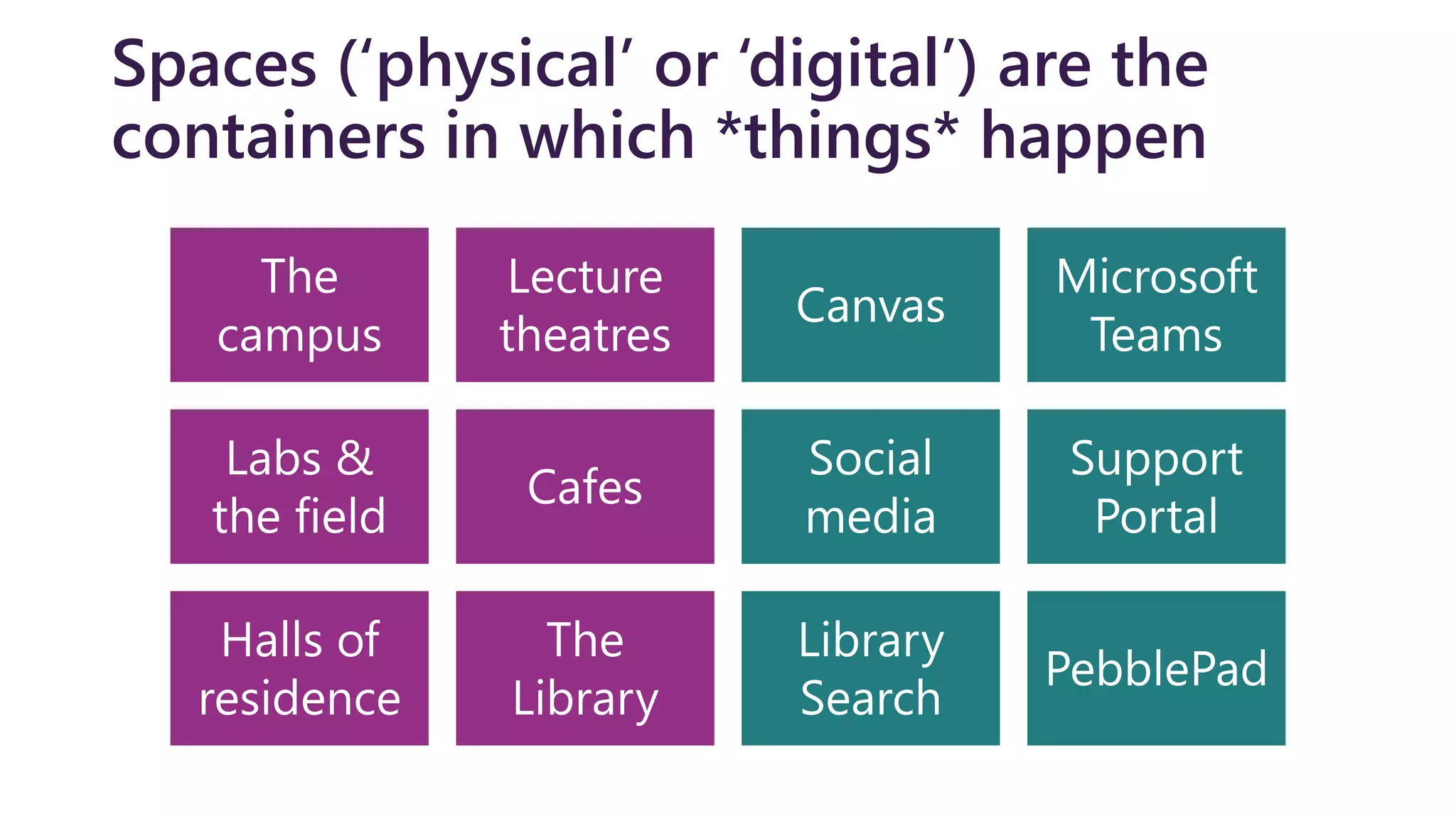
Spaces (‘physical’ or ‘digital’) are the
containers in which *things* happen
The
campus
Lecture
theatres
Canvas
Microsoft
Teams
Labs &
the field
Cafes
Social
media
Support
Portal
Halls of
residence
The
Library
Library
Search
PebblePad
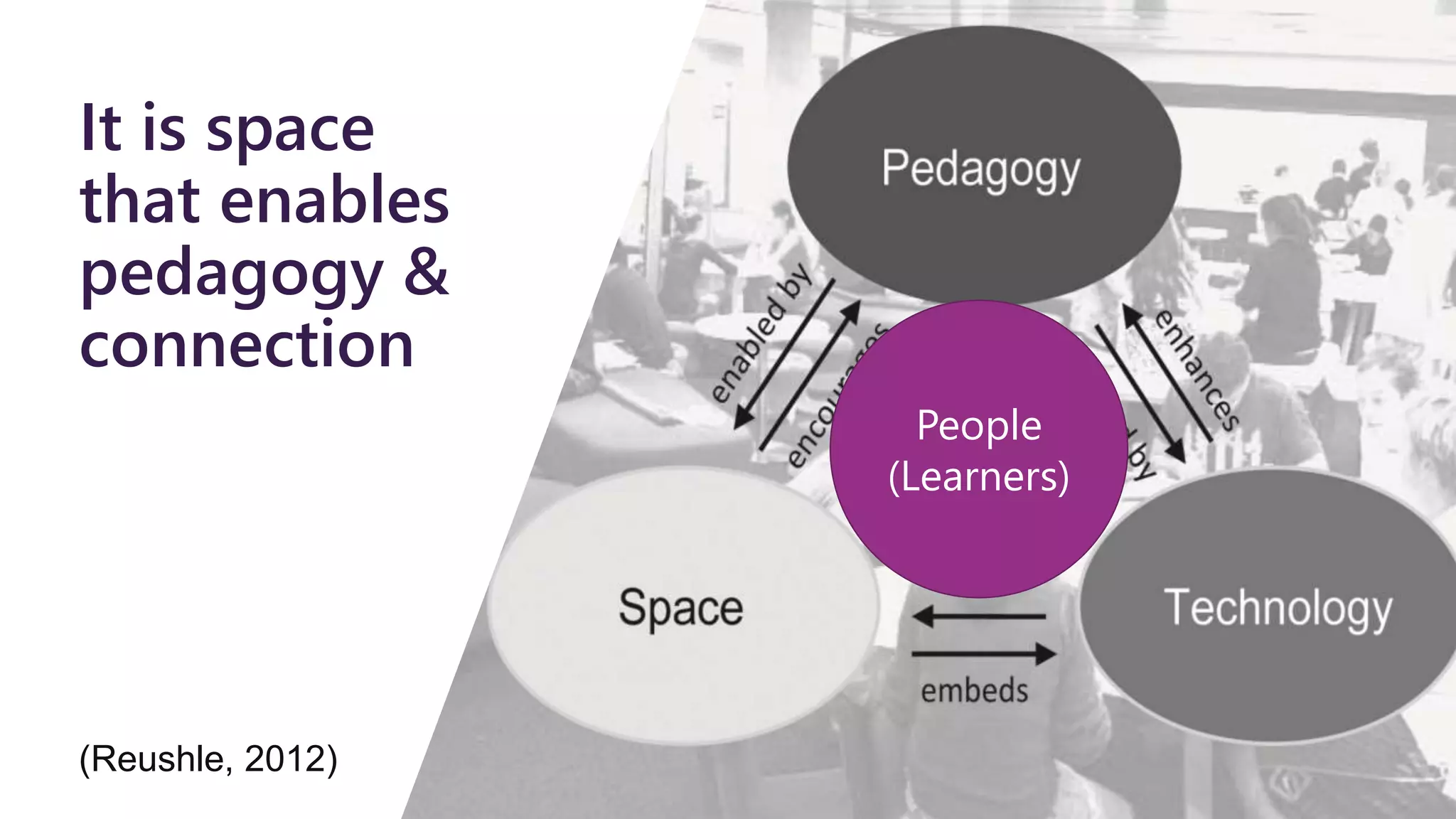
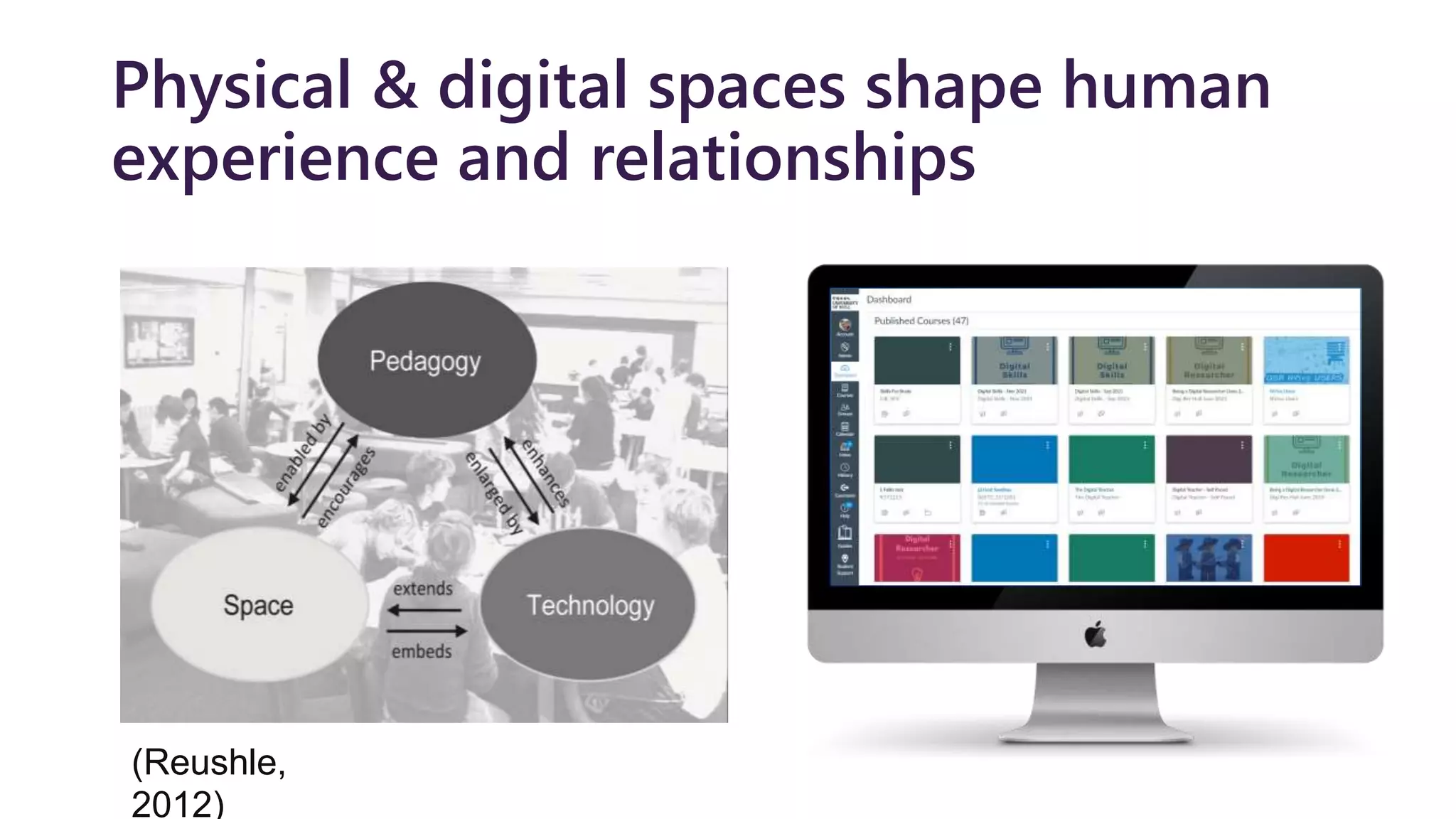
It is space
that enables
pedagogy &
connection
(Reushle, 2012)
People
(Learners)
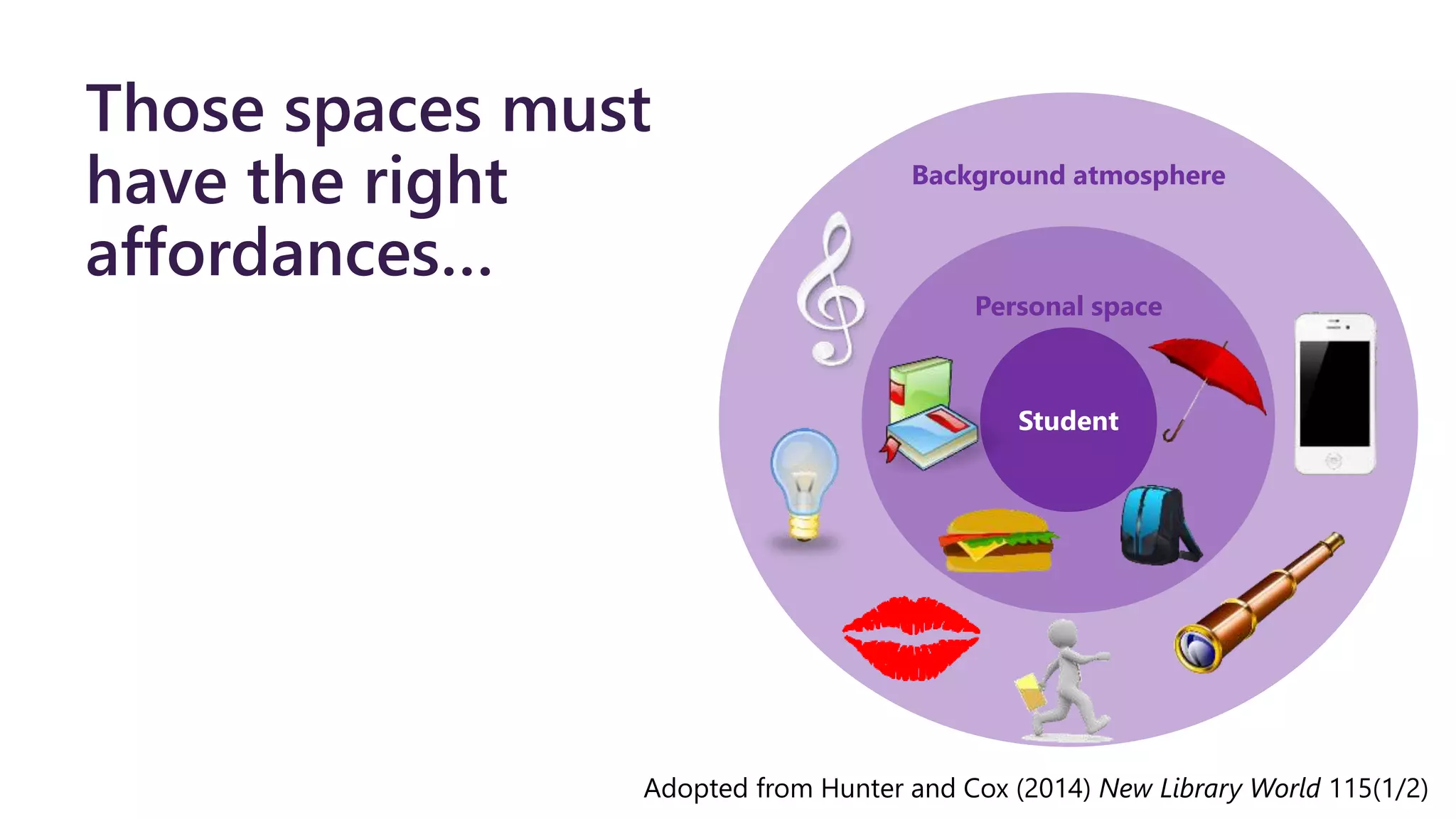
Those spaces must
have the right
affordances…
Adopted from Hunter and Cox (2014) New Library World 115(1/2)
Background atmosphere
Personal space
Student
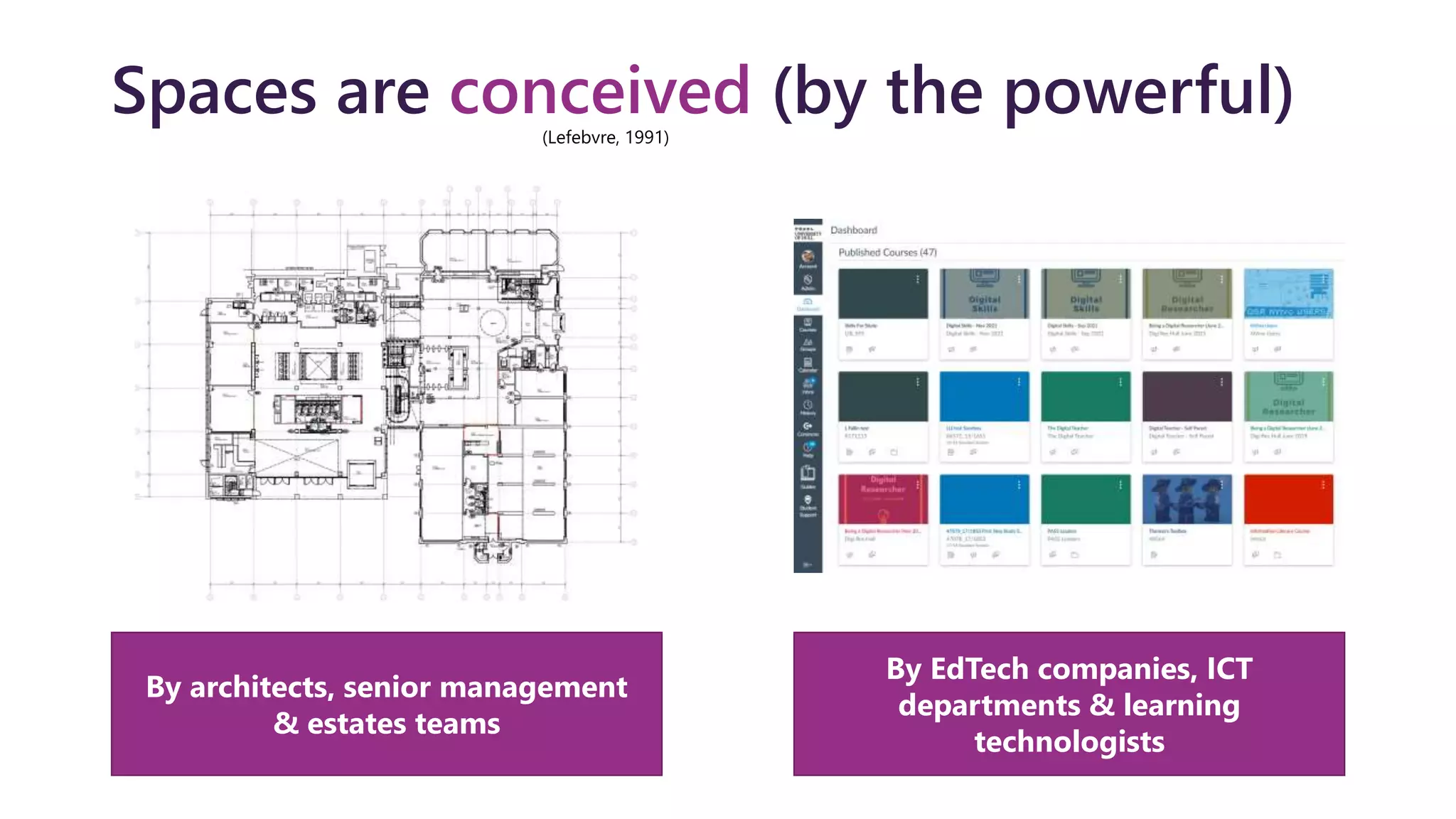
Spaces are conceived (by the powerful)
(Lefebvre, 1991)
By architects, senior management
& estates teams
By EdTech companies, ICT
departments & learning
technologists
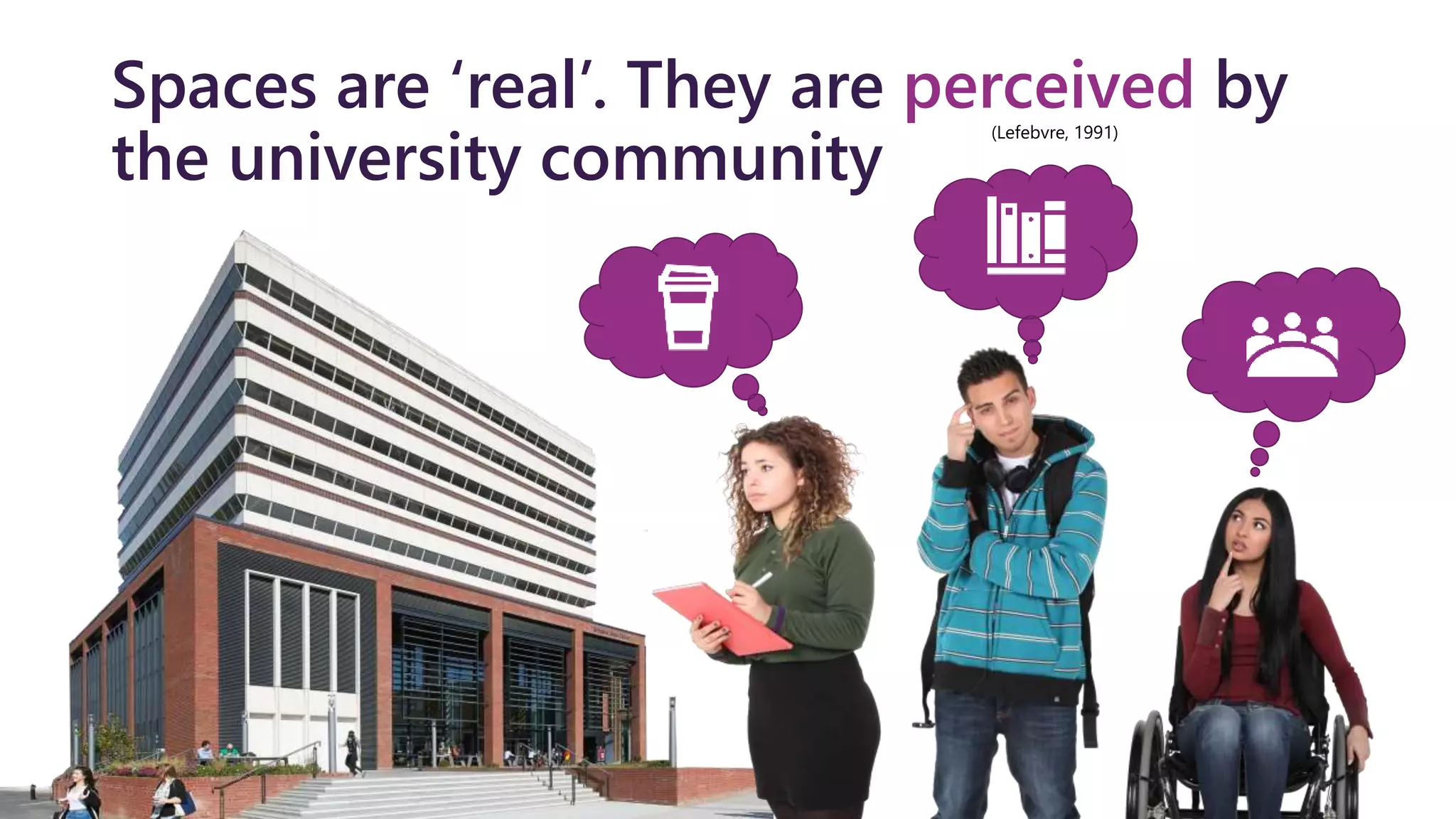
Spaces are ‘real’. They are perceived by
the university community
(Lefebvre, 1991)
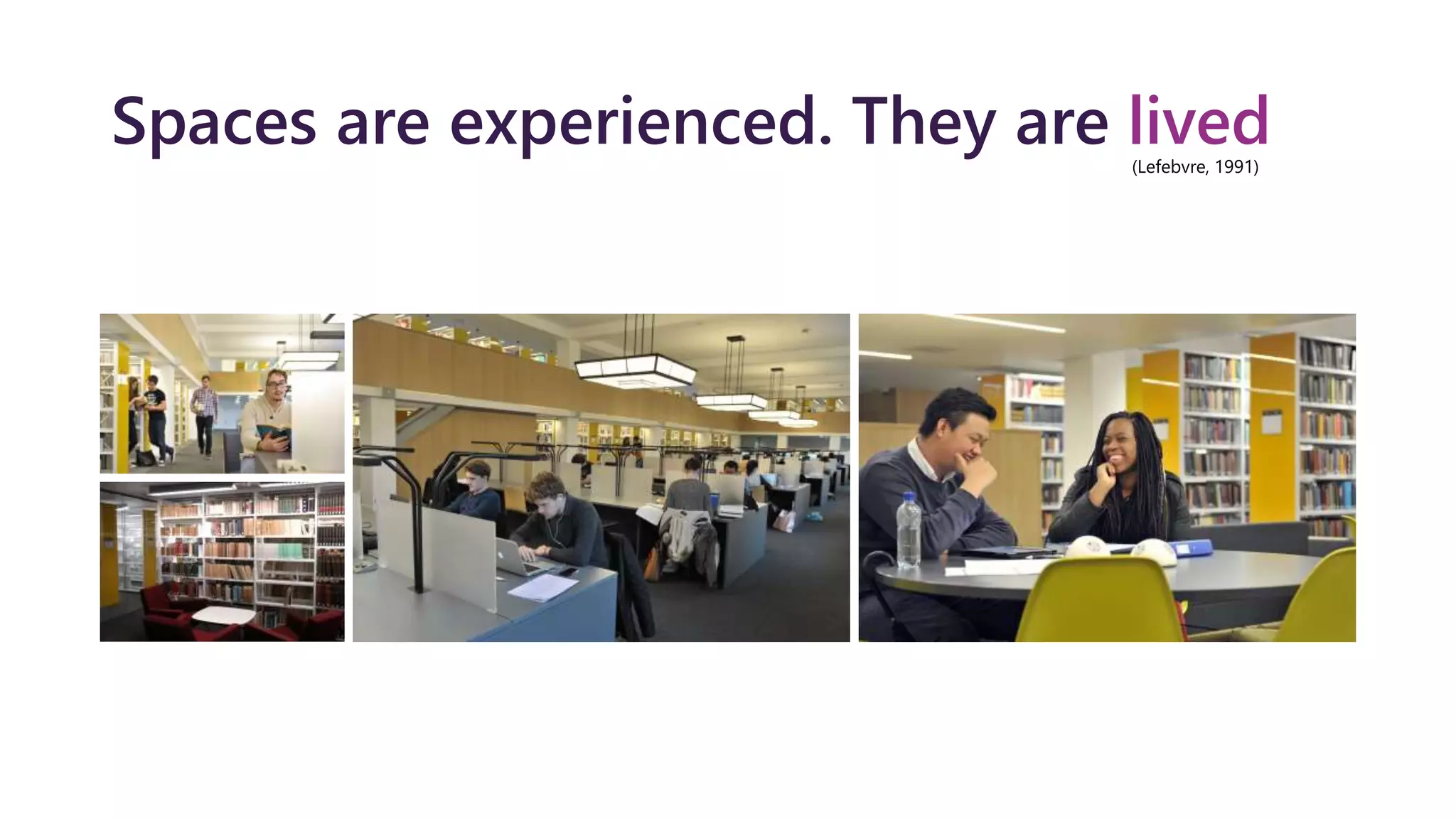
Spaces are experienced. They are lived
(Lefebvre, 1991)
…and the difference with place?
Place is ownership and connection
‘My place’
(Cresswell, 2004)
Place is privacy and belonging
‘My place’ is not
‘your place’
(Cresswell, 2004)
Place is a sense of being somewhere
This is a nice
place to be
(Cresswell, 2004)
Place is order and hierarchy
They ‘put me in
my place’
(Cresswell, 2004)
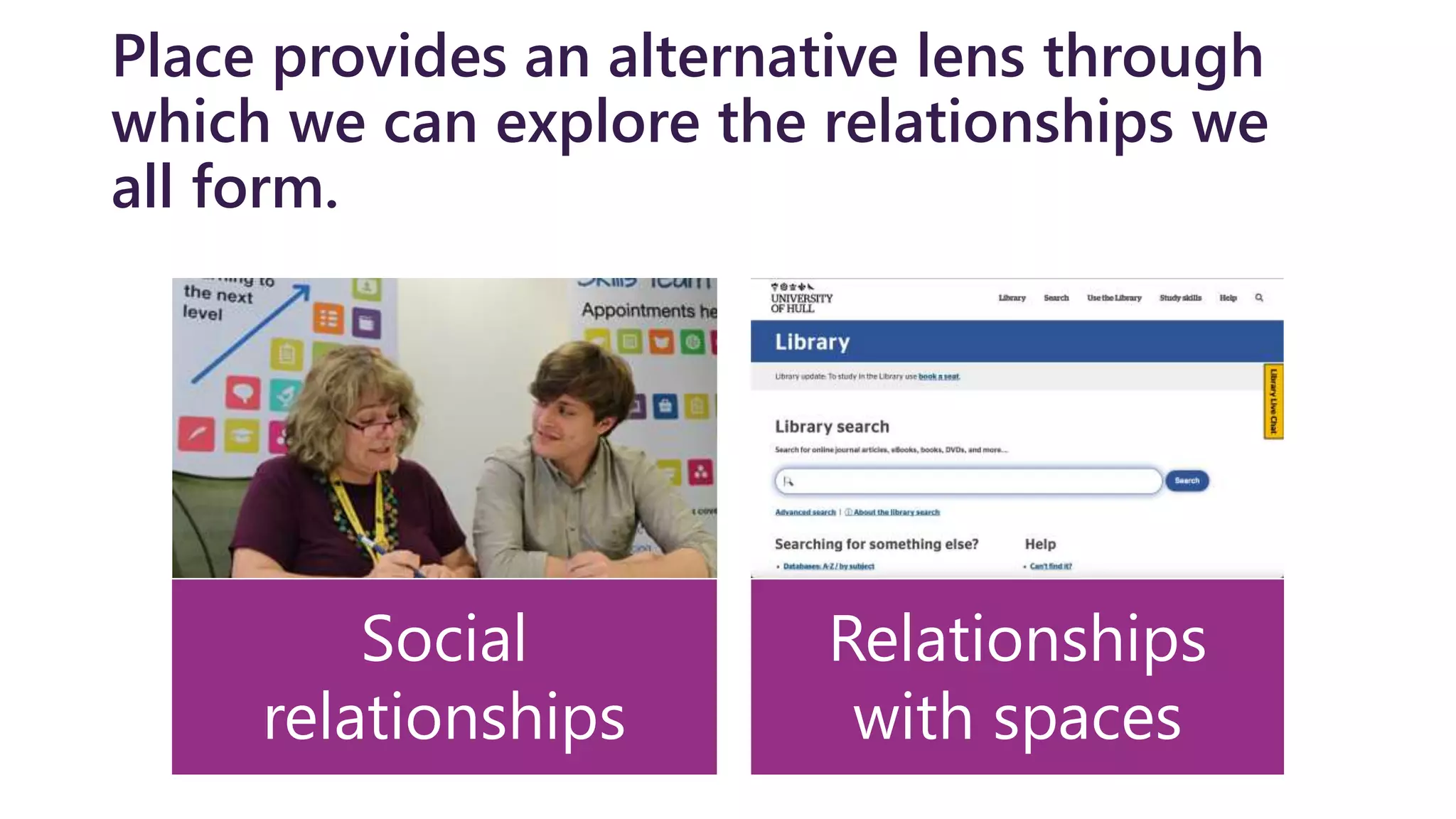
Place provides an alternative lens through
which we can explore the relationships we
all form.
Social
relationships
Relationships
with spaces
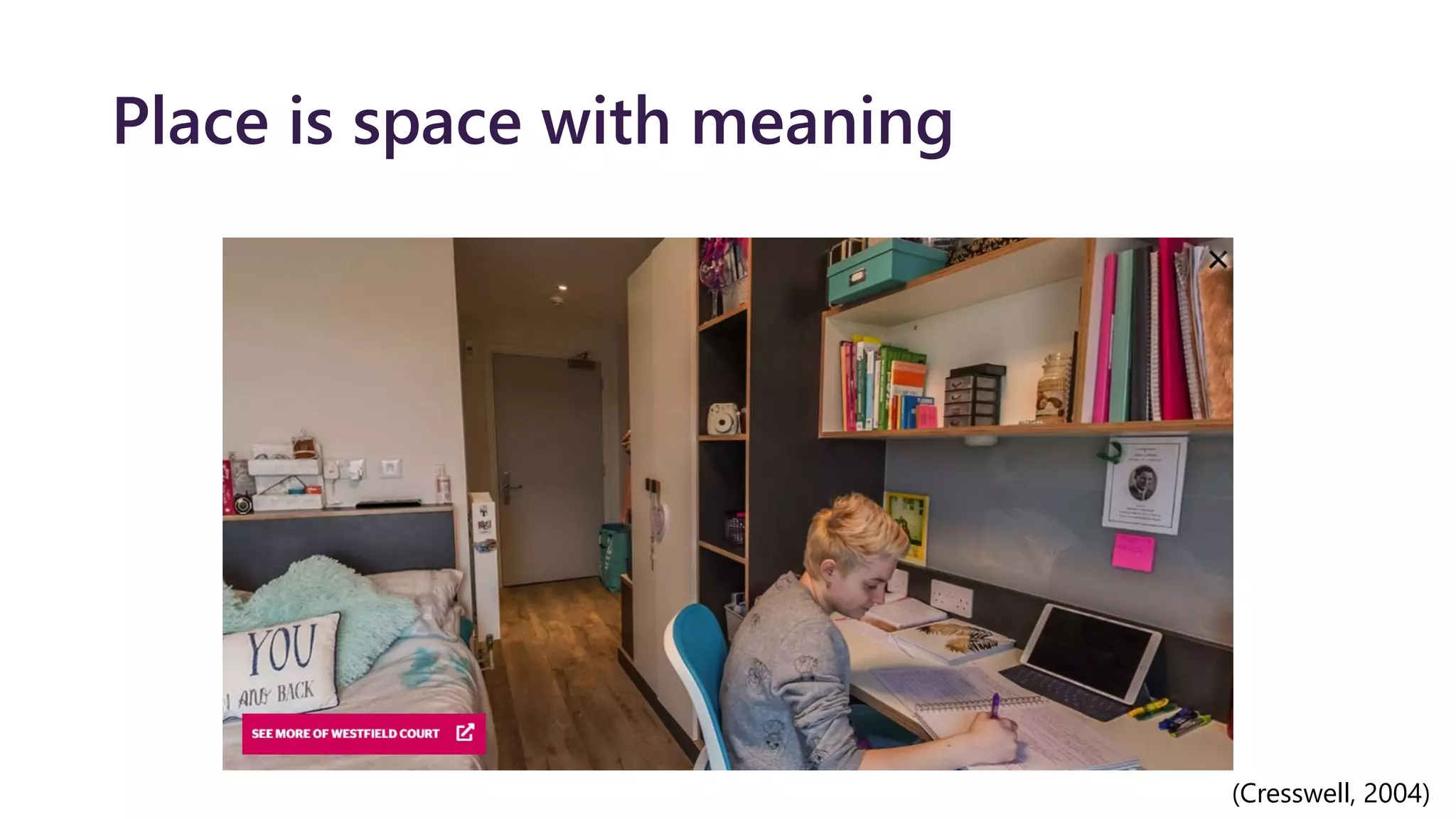
Place is space with meaning
My university
My course
My lecturers
My course friends
My essay
(Cresswell, 2004)
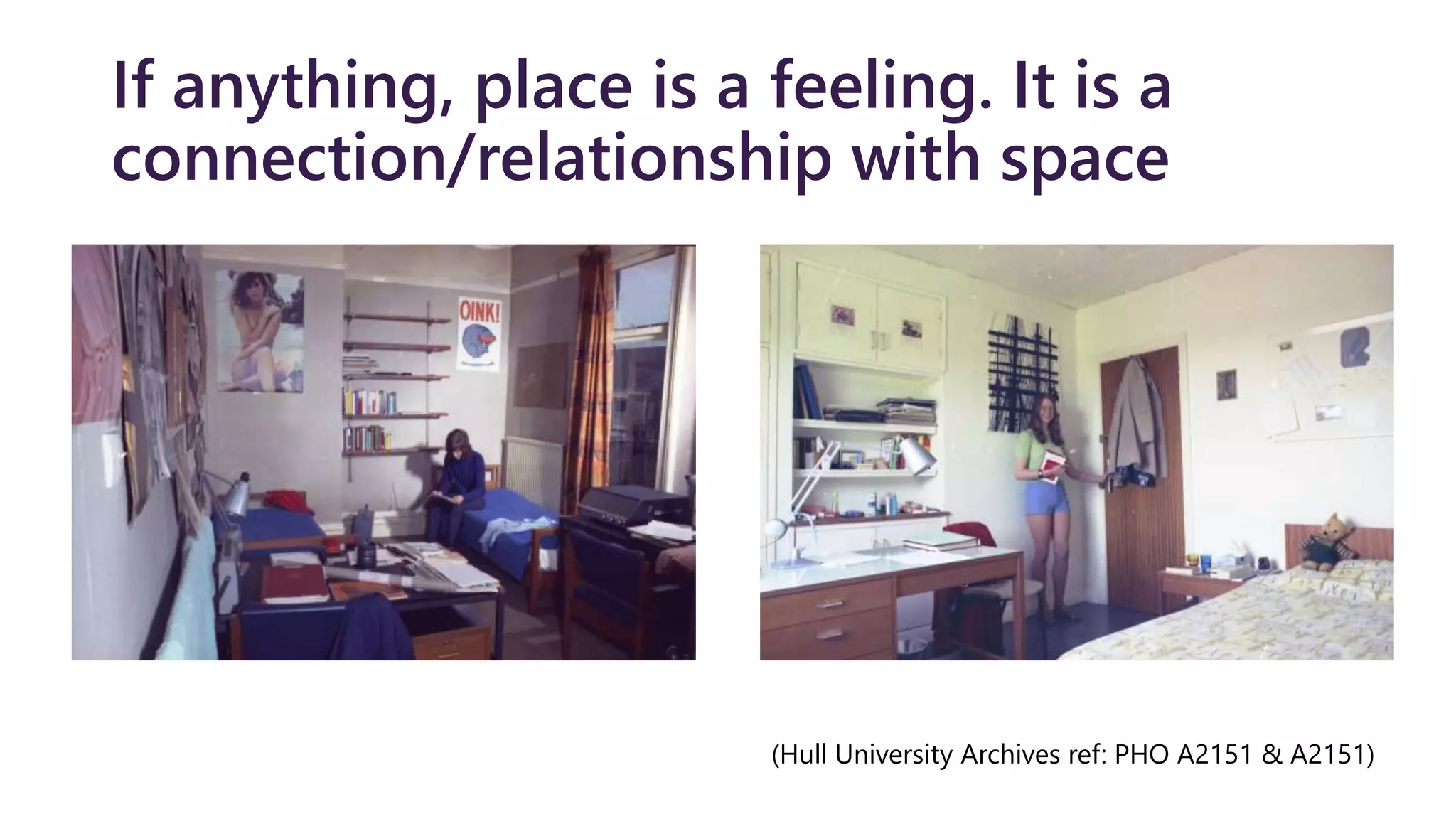
If anything, place is a feeling. It is a
connection/relationship with space
(Hull University Archives ref: PHO A2151 & A2151)
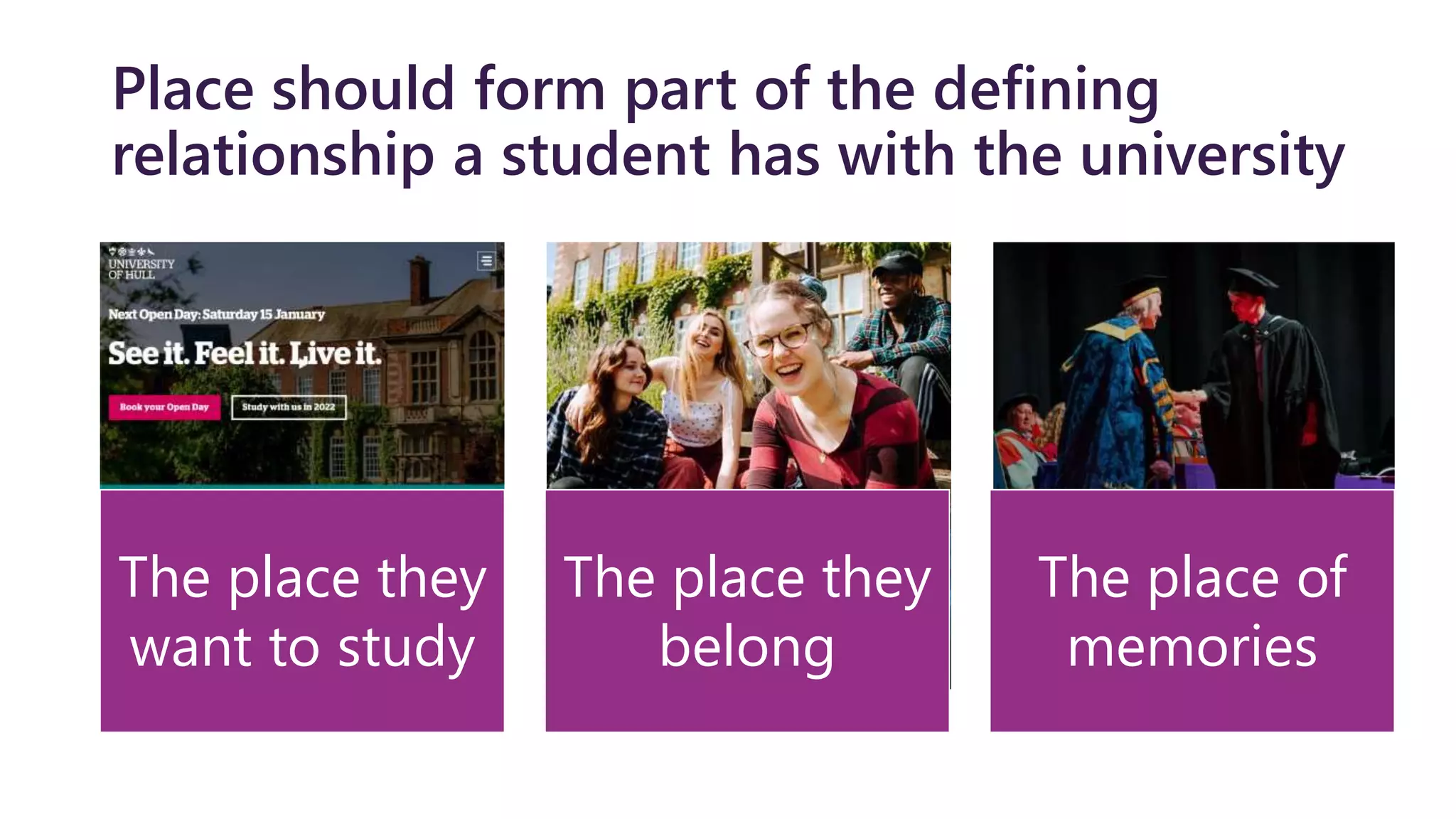
Place should form part of the defining
relationship a student has with the university
The place they
want to study
The place they
belong
The place of
memories
Developing effective
spaces and places is
essential for positive
learning relationships
Building effective
places is within our
power. We make the
spaces a place.
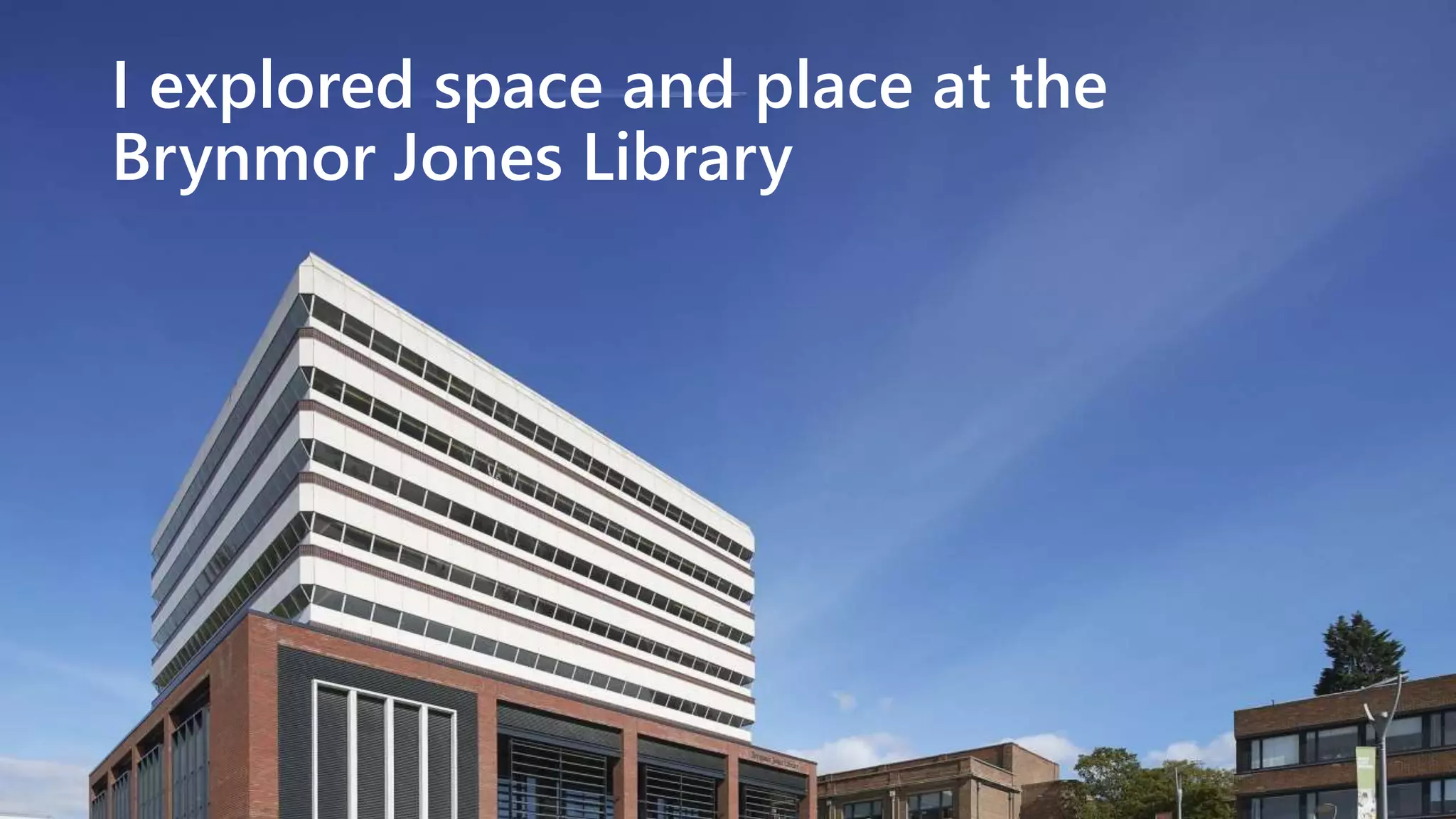
I explored space and place at the
Brynmor Jones Library
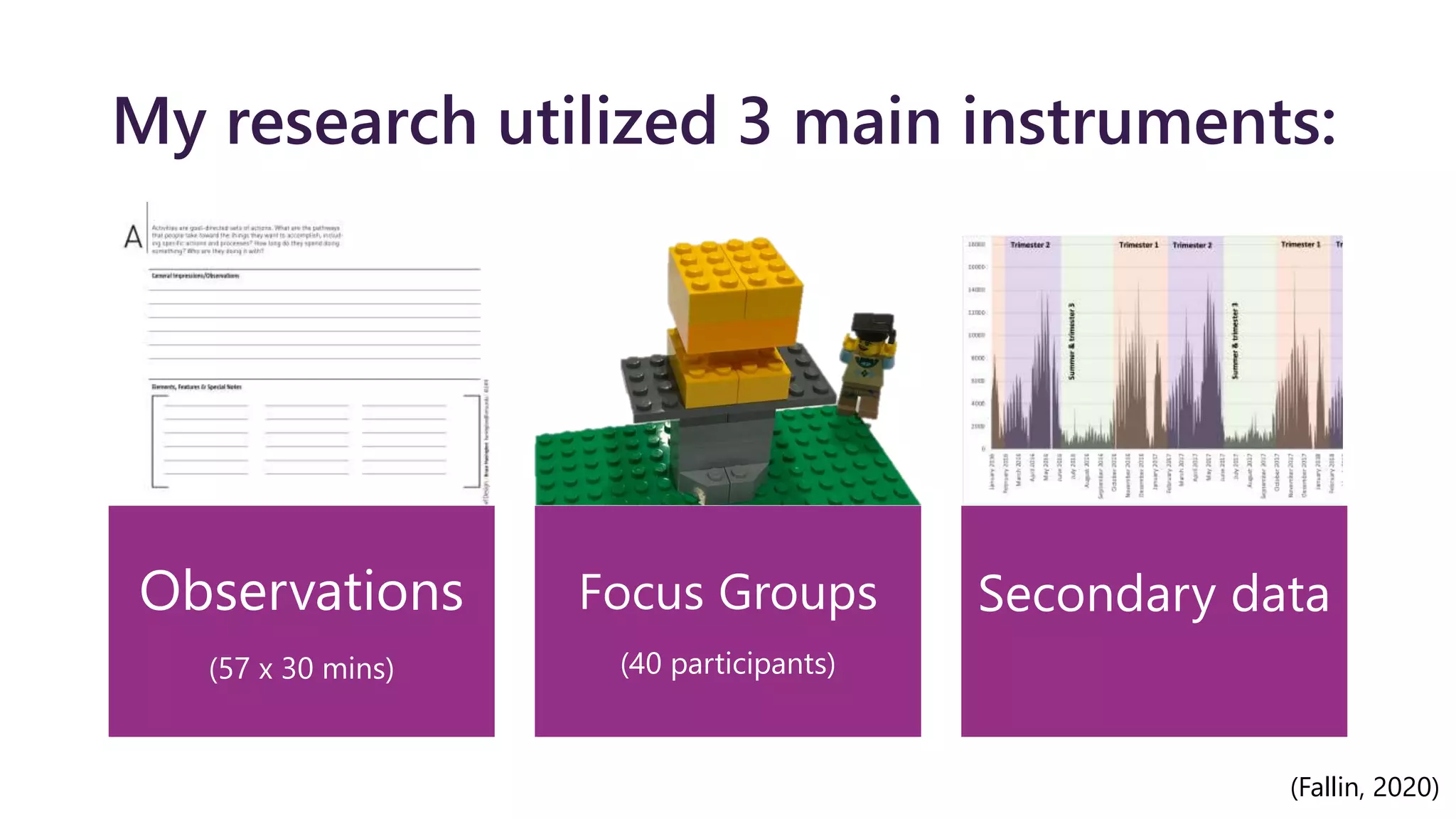
My research utilized 3 main instruments:
Observations
(57 x 30 mins)
Focus Groups
(40 participants)
Secondary data
(Fallin, 2020)
The library as a space
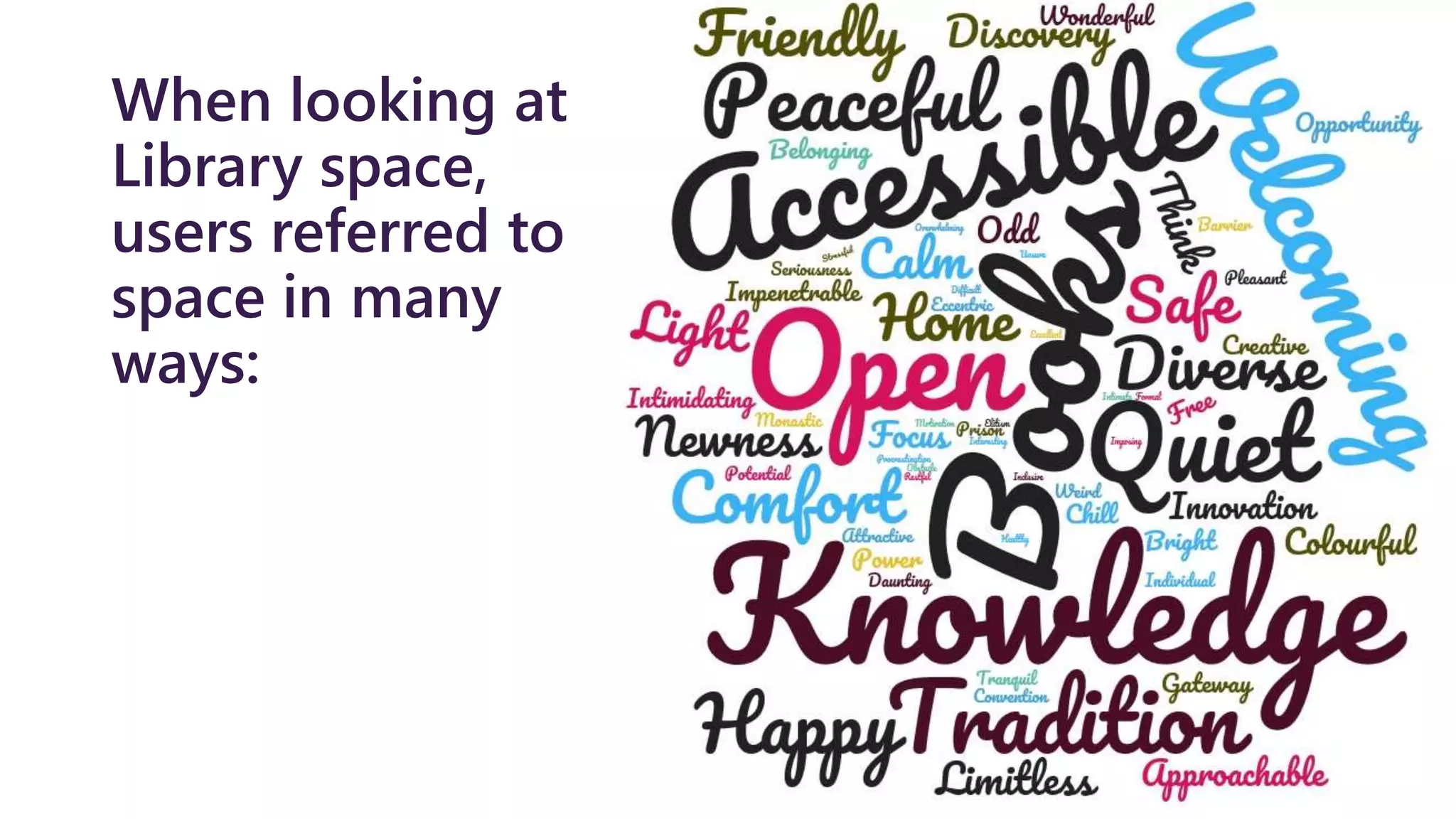
When looking at
Library space,
users referred to
space in many
ways:
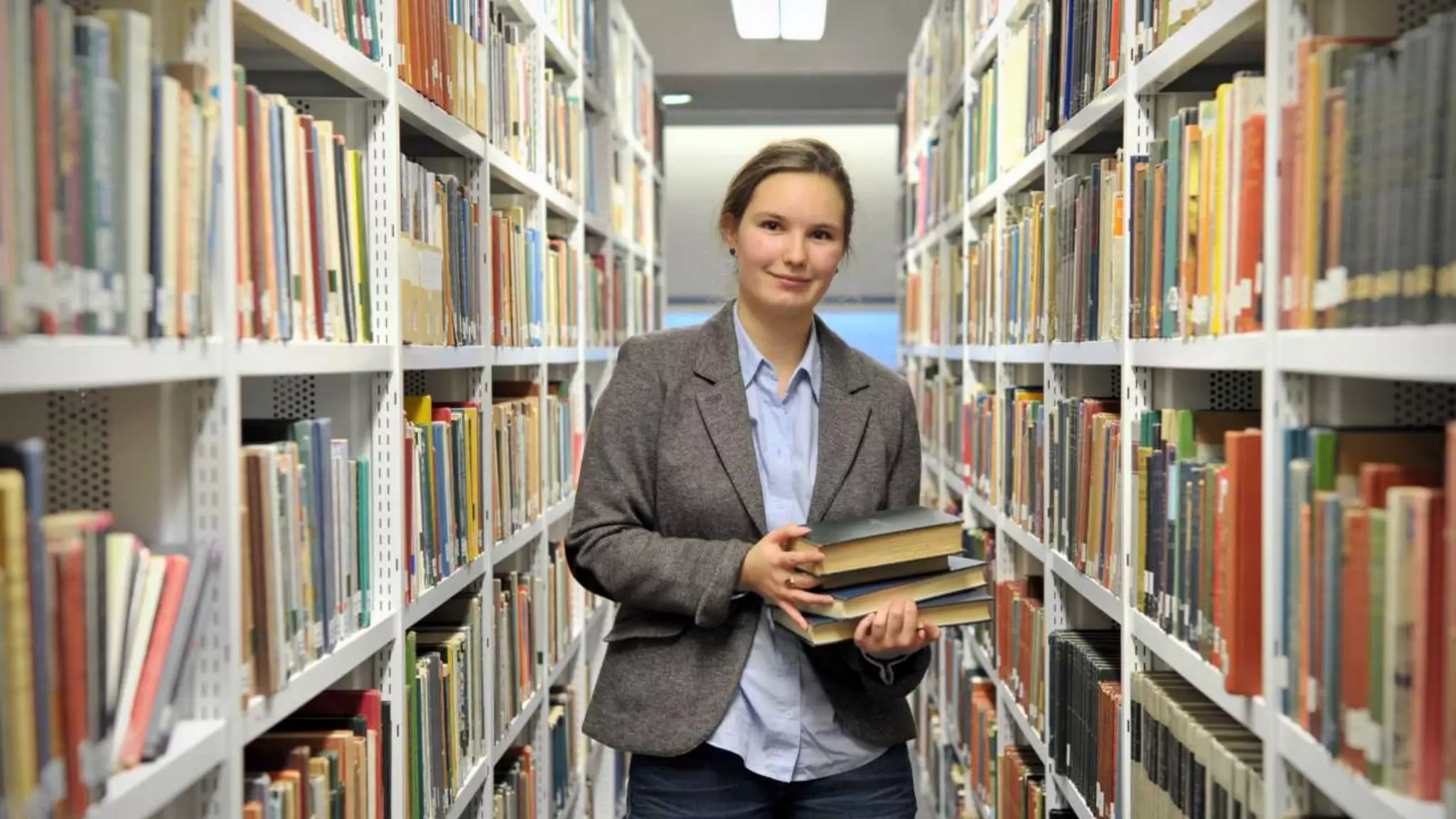
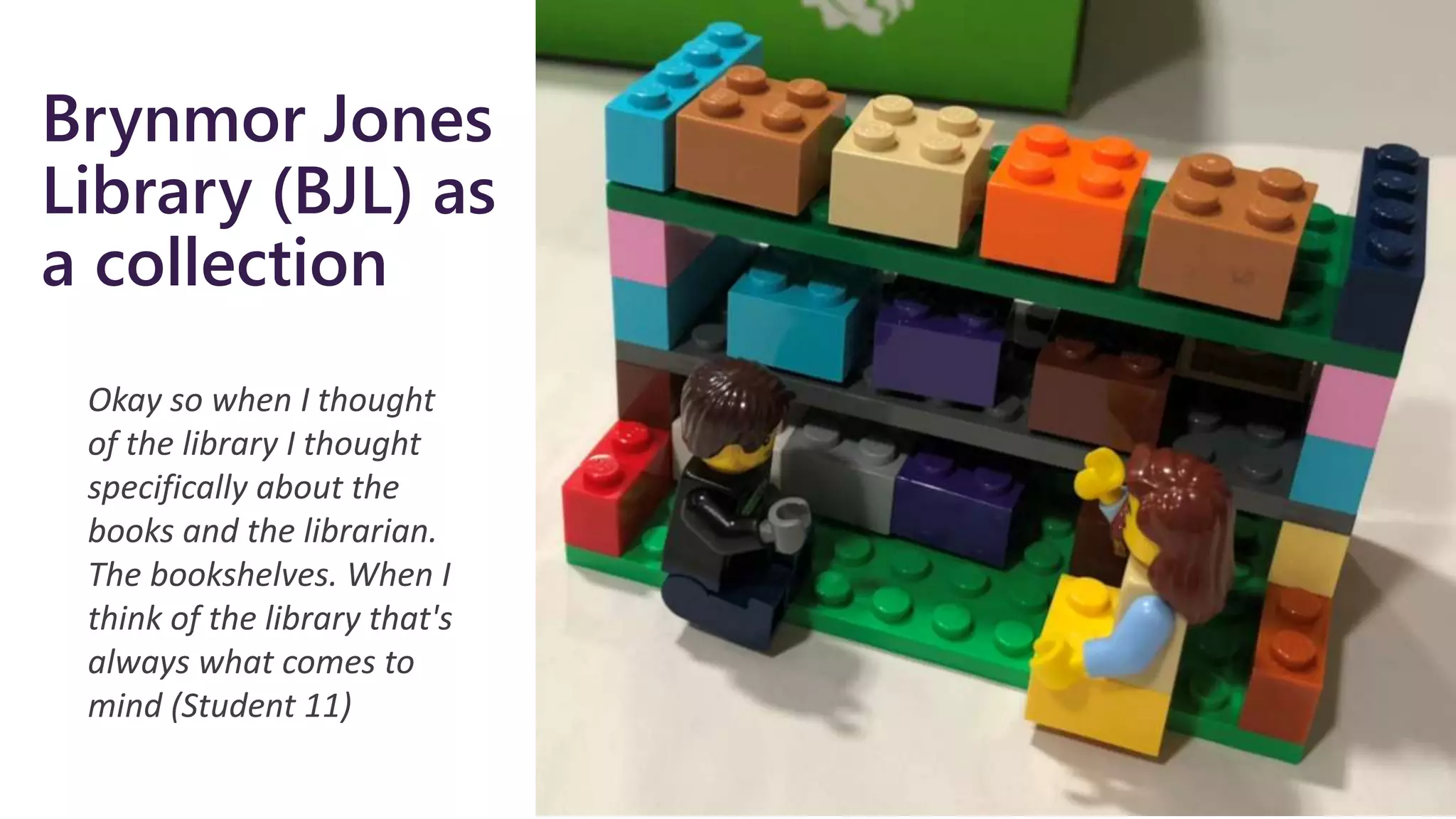
Brynmor Jones
Library (BJL) as
a collection
Okay so when I thought
of the library I thought
specifically about the
books and the librarian.
The bookshelves. When I
think of the library that's
always what comes to
mind (Student 11)
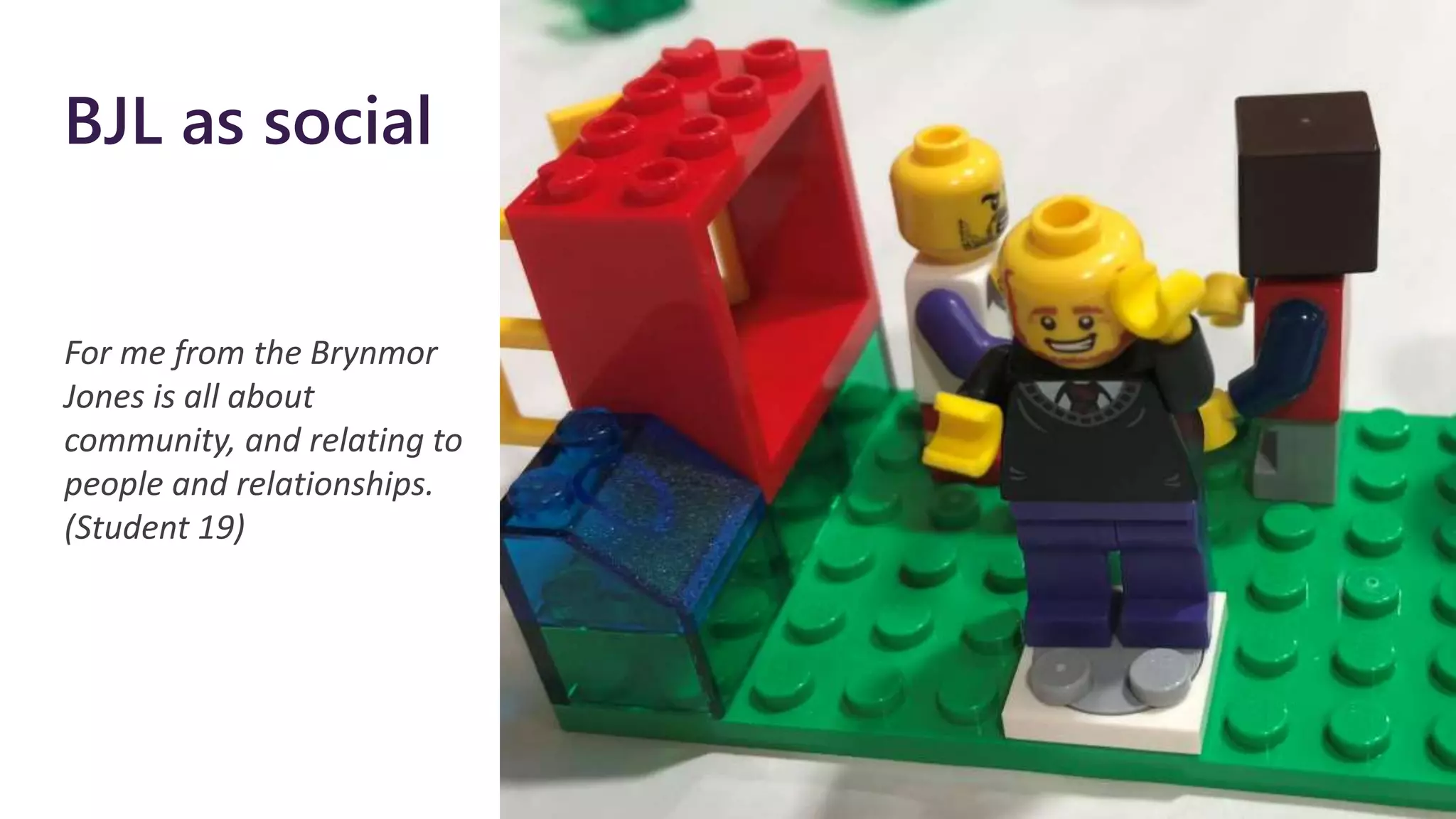
BJL as social
For me from the Brynmor
Jones is all about
community, and relating to
people and relationships.
(Student 19)
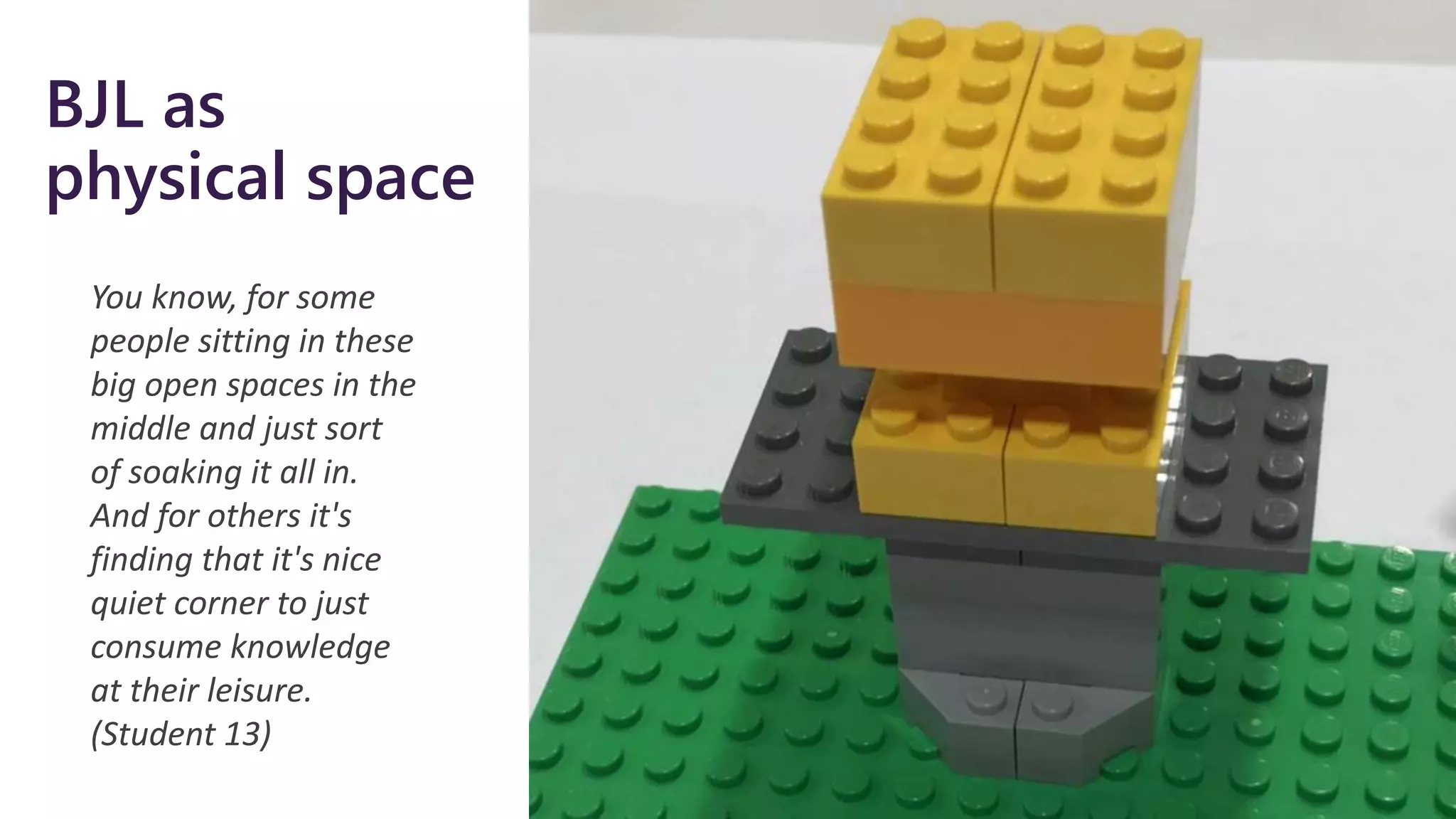
BJL as
physical space
You know, for some
people sitting in these
big open spaces in the
middle and just sort
of soaking it all in.
And for others it's
finding that it's nice
quiet corner to just
consume knowledge
at their leisure.
(Student 13)
BJL as
exclusive
I kind of, when I think
of academic libraries
I think of it as sort of
gated access […]
there's probably
some level of
closedness to an
academic library
(Student 11)
The library as a place
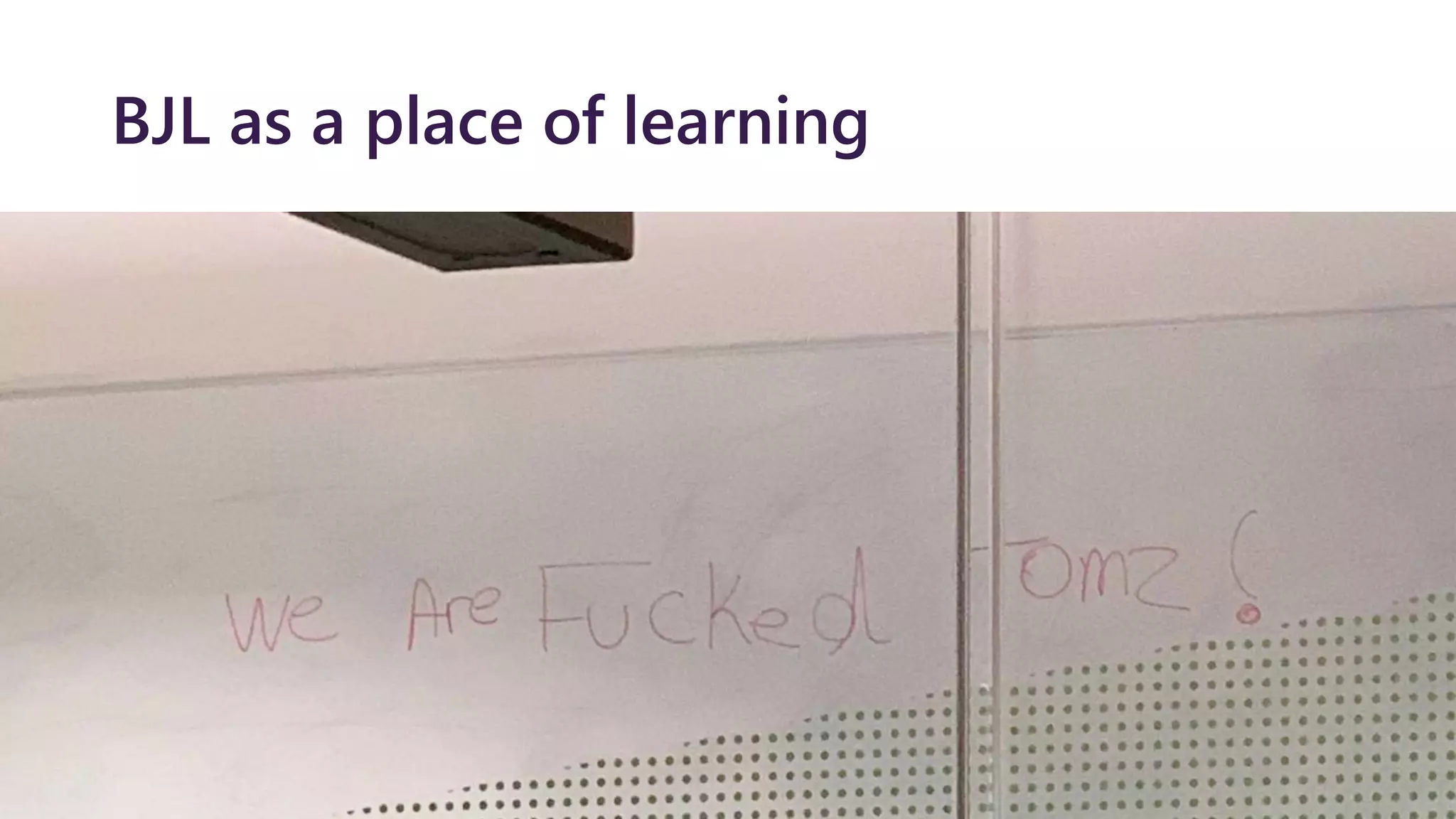
BJL as a place of learning
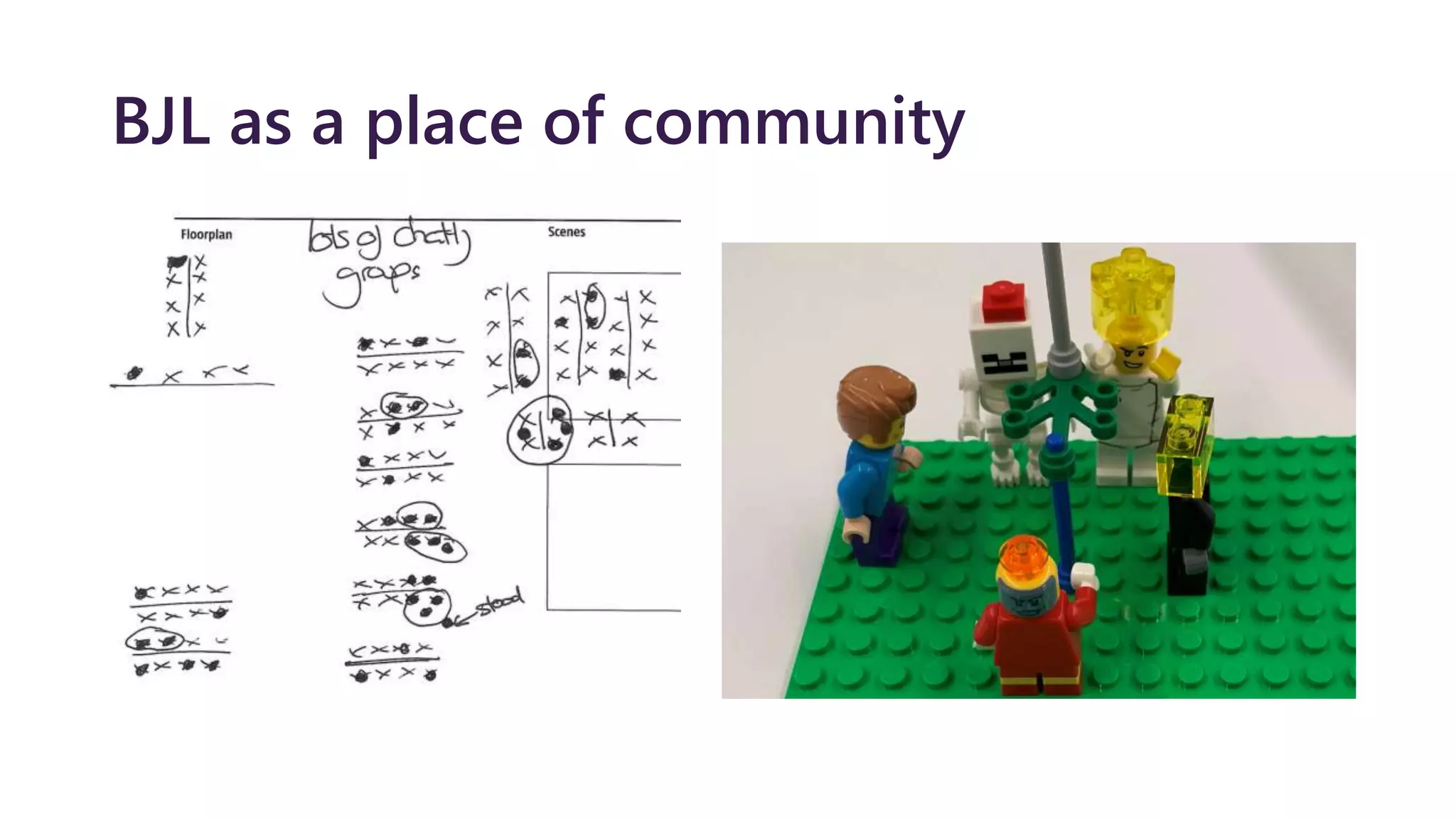
BJL as a place of community
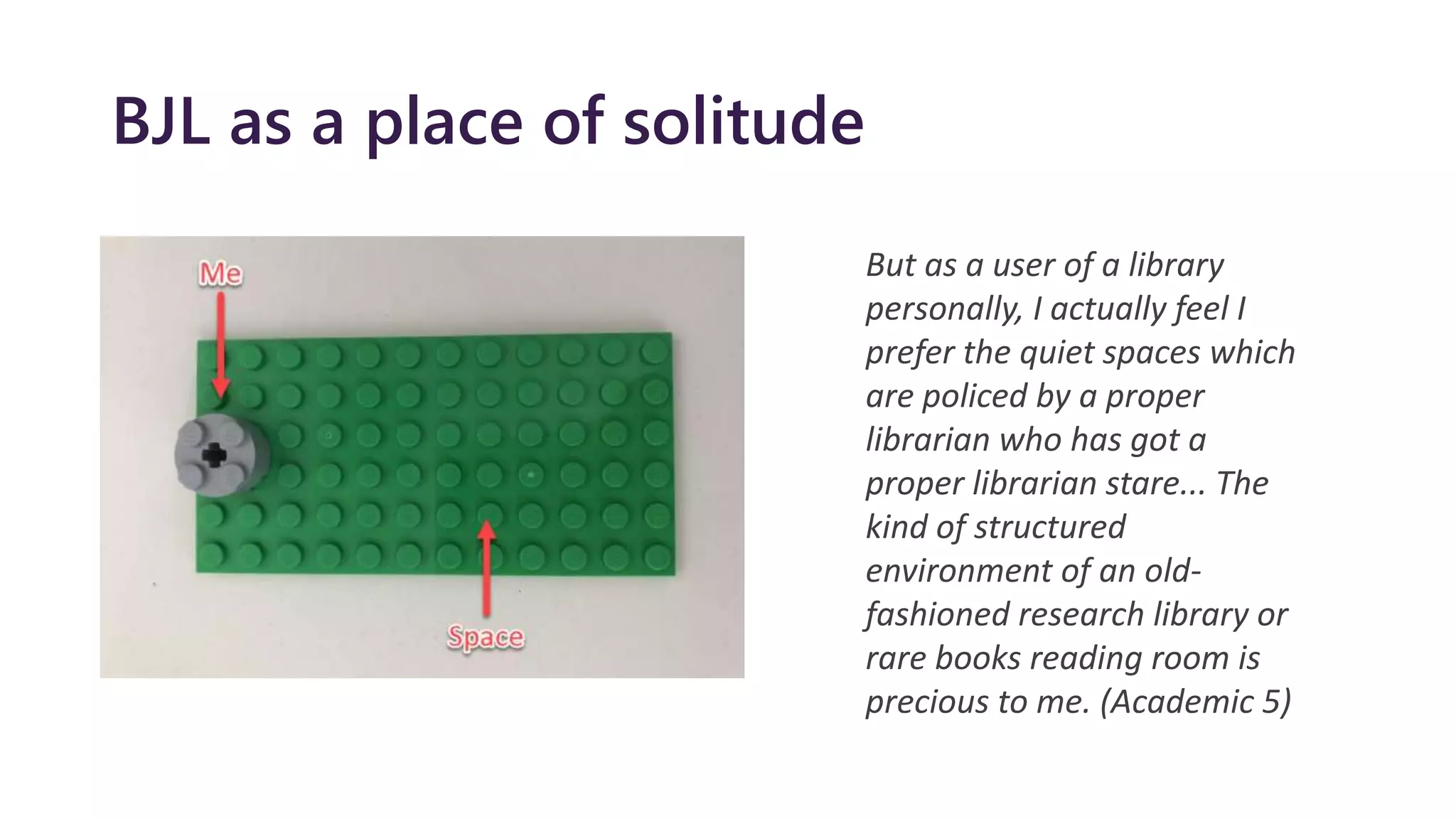
BJL as a place of solitude
But as a user of a library
personally, I actually feel I
prefer the quiet spaces which
are policed by a proper
librarian who has got a
proper librarian stare... The
kind of structured
environment of an old-
fashioned research library or
rare books reading room is
precious to me. (Academic 5)
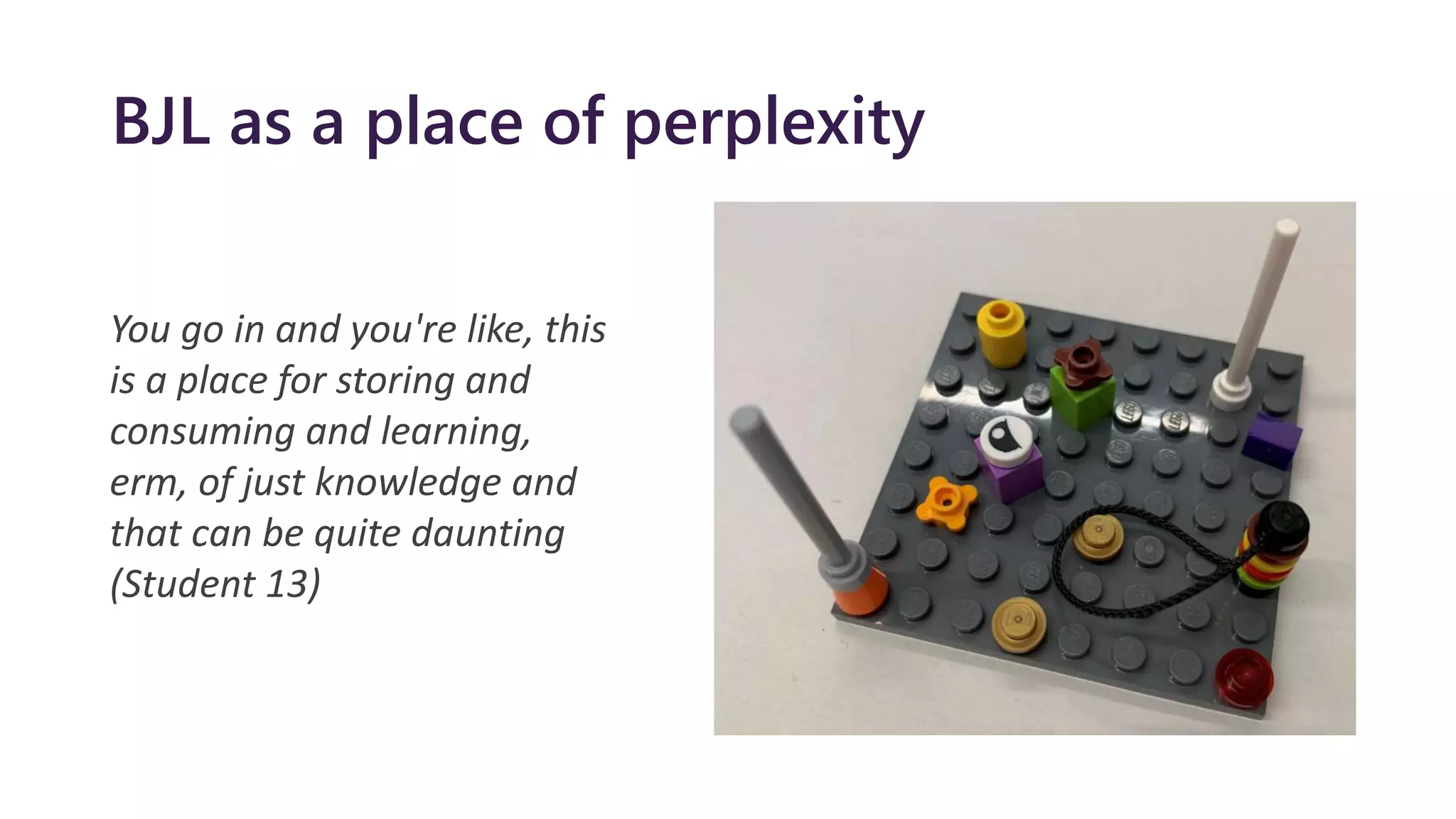
BJL as a place of perplexity
You go in and you're like, this
is a place for storing and
consuming and learning,
erm, of just knowledge and
that can be quite daunting
(Student 13)
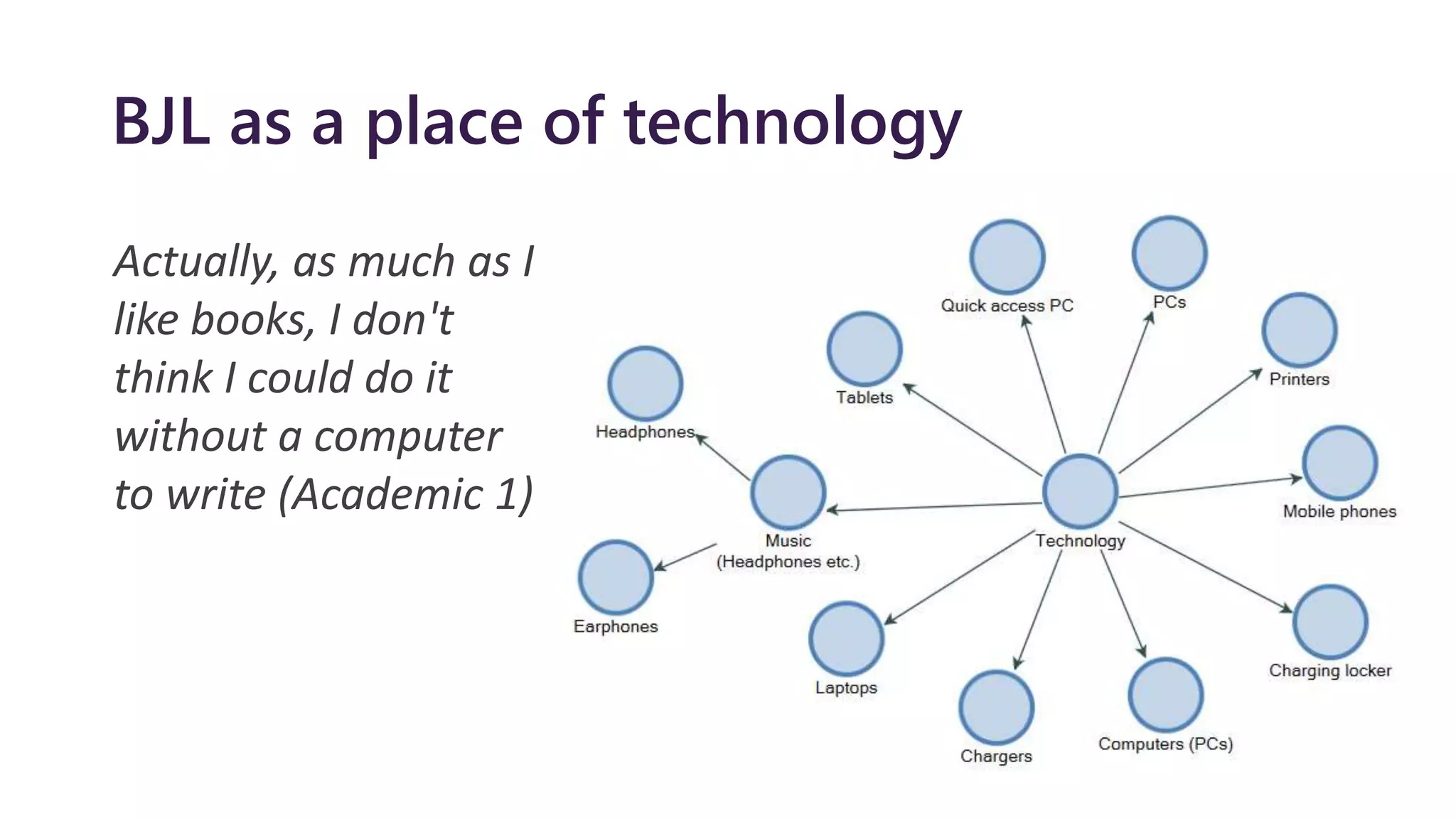
BJL as a place of technology
Actually, as much as I
like books, I don't
think I could do it
without a computer
to write (Academic 1)
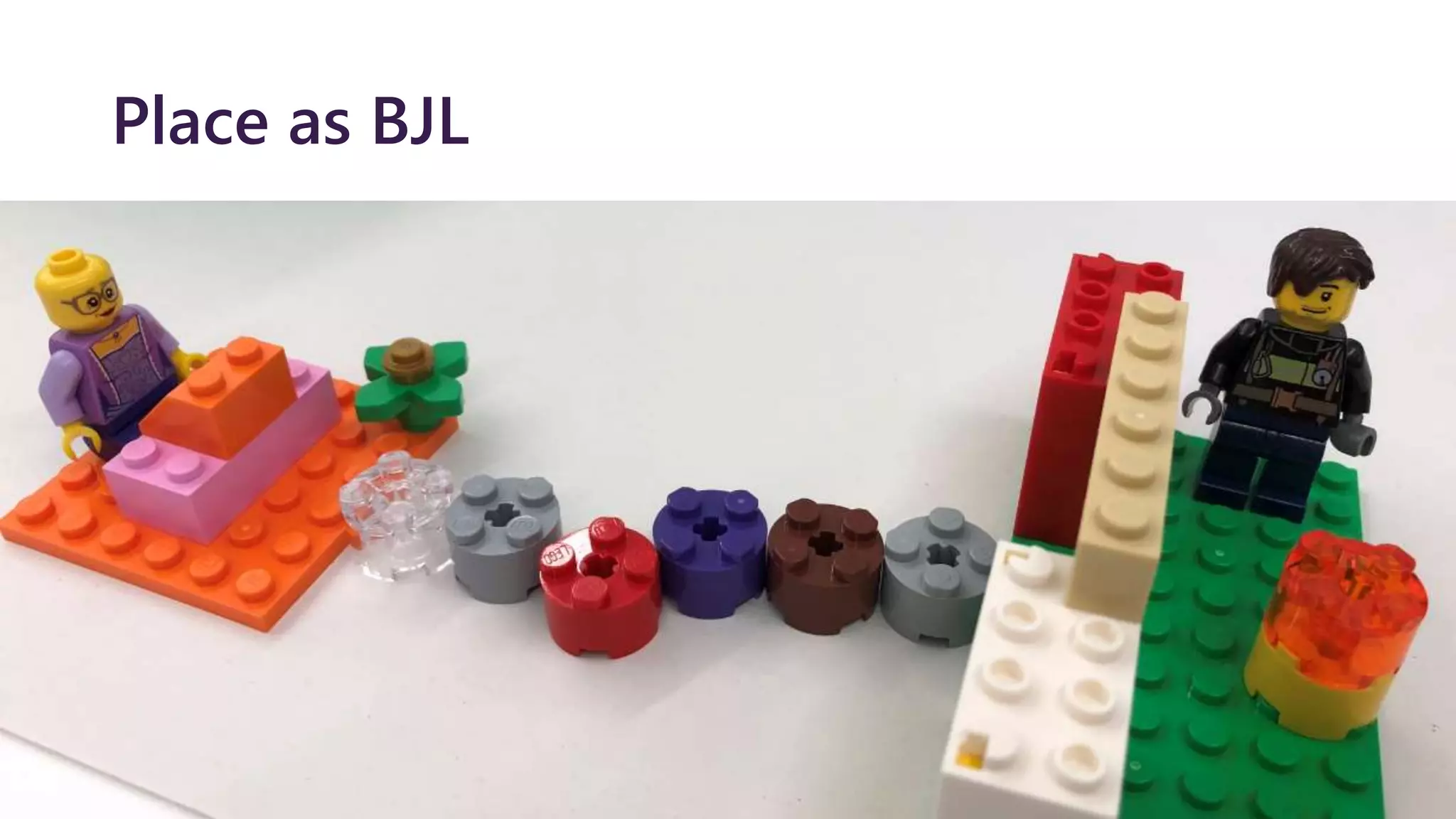
Place as BJL
Estates and tech teams provide us with
spaces – it is us that make them places.
I feel like the people are really at the heart of
the library and that without them that it, that
the library wouldn't be what it was. It wouldn't
be a place of learning because there would be
no one here to learn. (Library staff 10)
it's difficult to distinguish
learning from social
socialization (Academic 4)
Some reflections
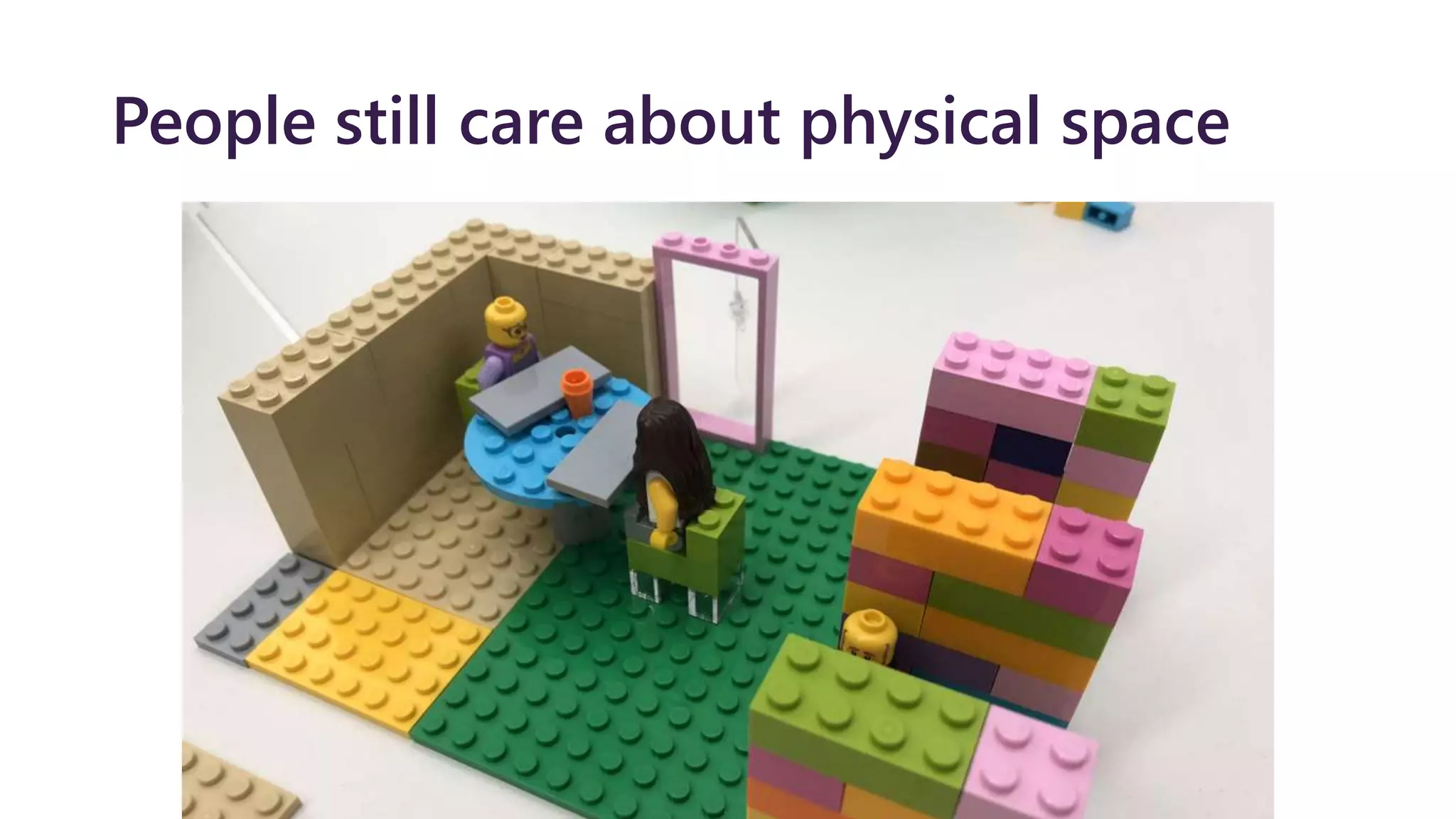
People still care about physical space
Multiple online spaces from multiple providers
makes it difficult to establish a place
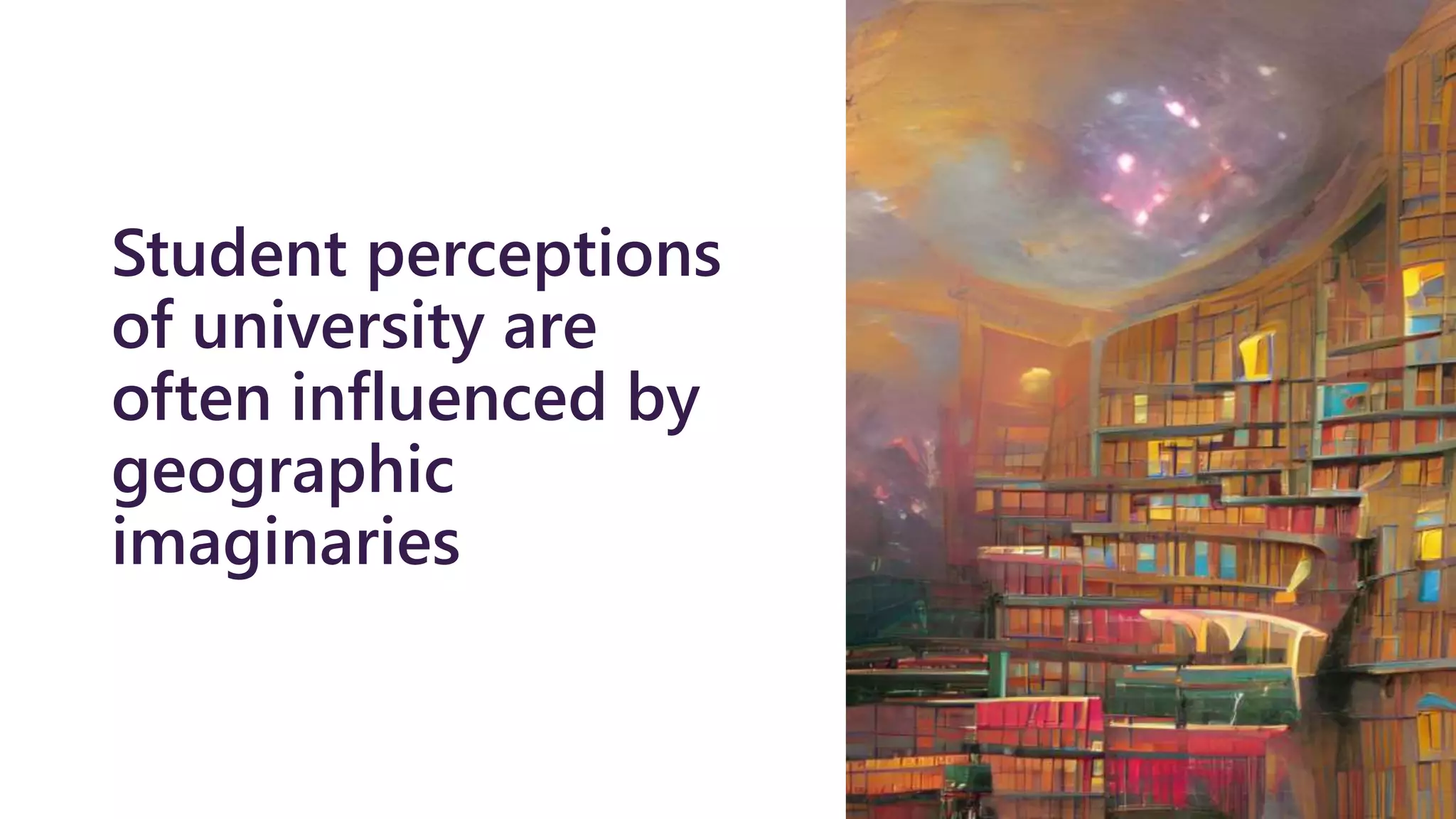
Student perceptions
of university are
often influenced by
geographic
imaginaries
Physical & digital spaces shape human
experience and relationships
(Reushle,
2012)
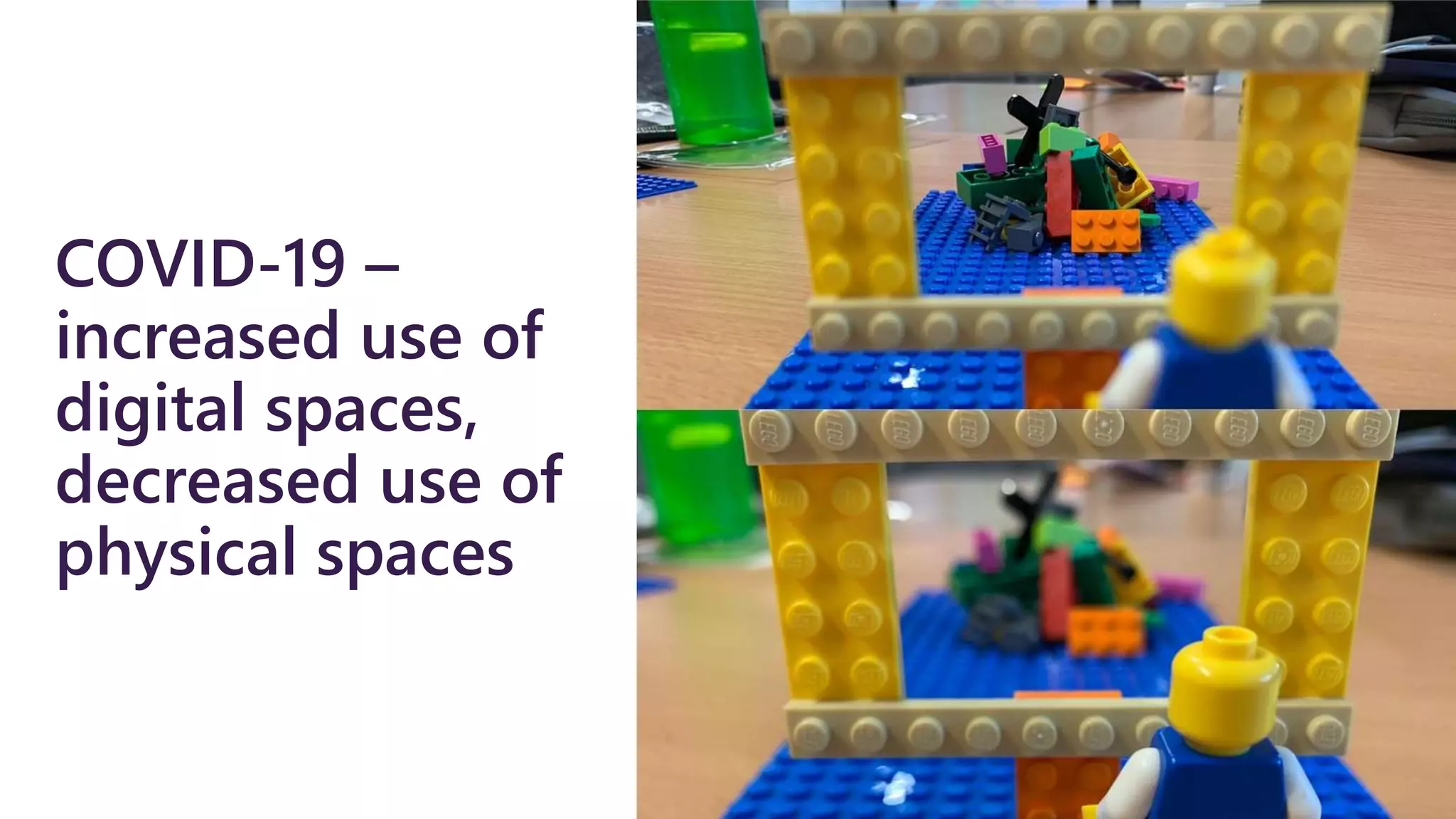
COVID-19 –
increased use of
digital spaces,
decreased use of
physical spaces
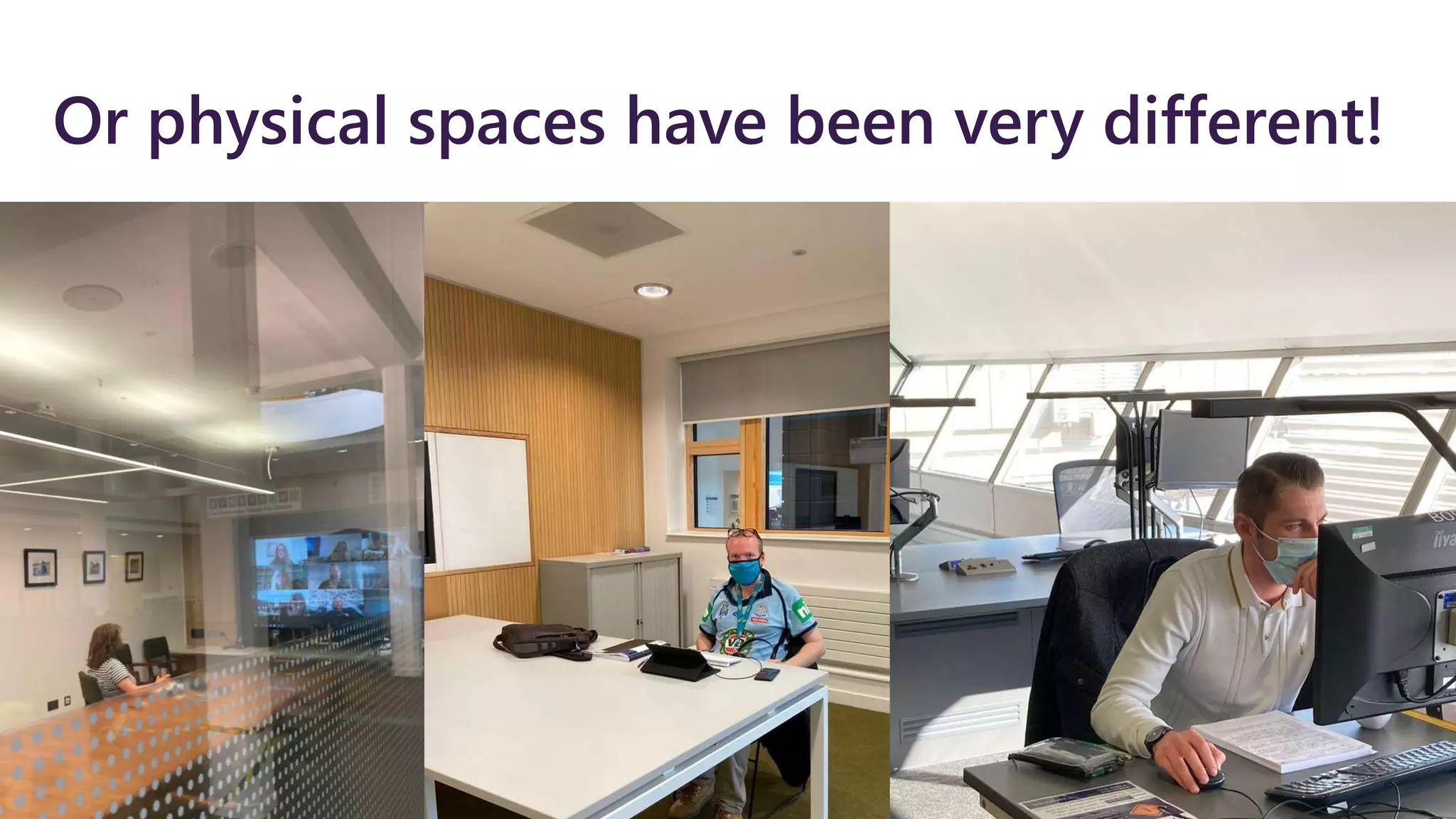
Or physical spaces have been very different!
In the pandemic we lost the in-between
’places’ – Have we yet claimed them back?
So many conversions
and connections were
lost – and continue to
be lost
Public Realm is emerging as the new
‘anchor’ in placemaking | The Crown Estate
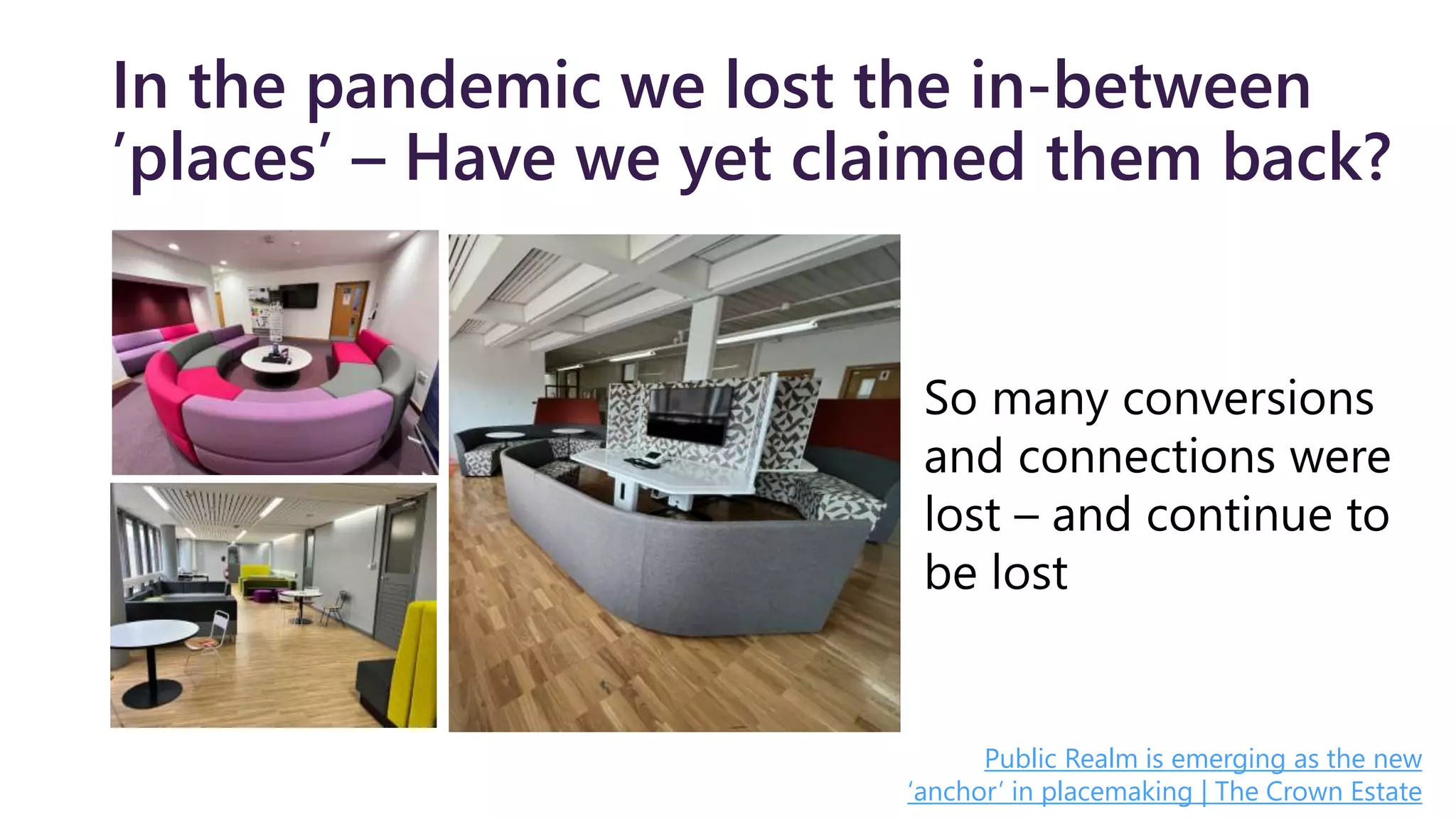
Those places to wait for a lecture
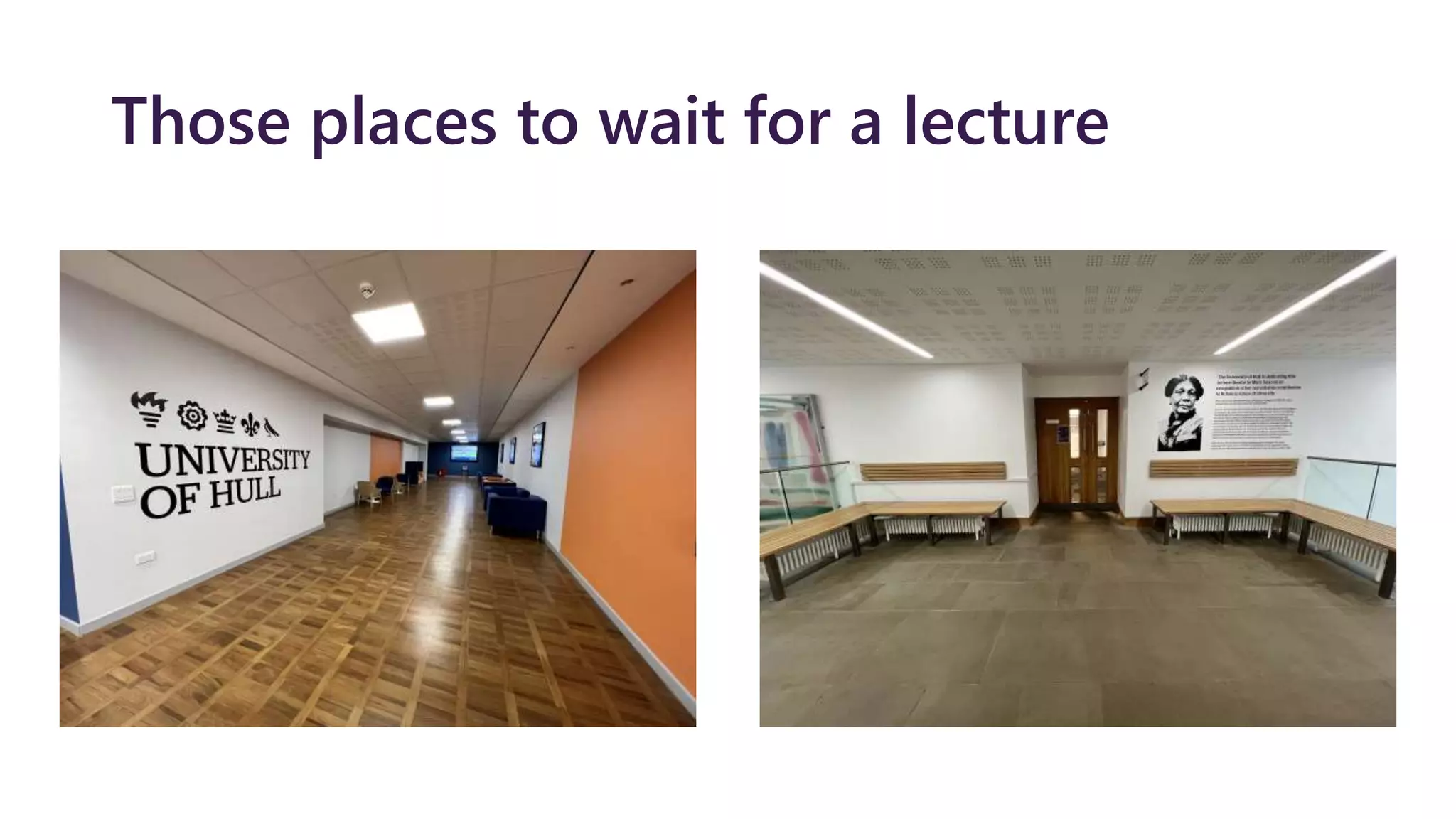
The places to grab a drink in-between
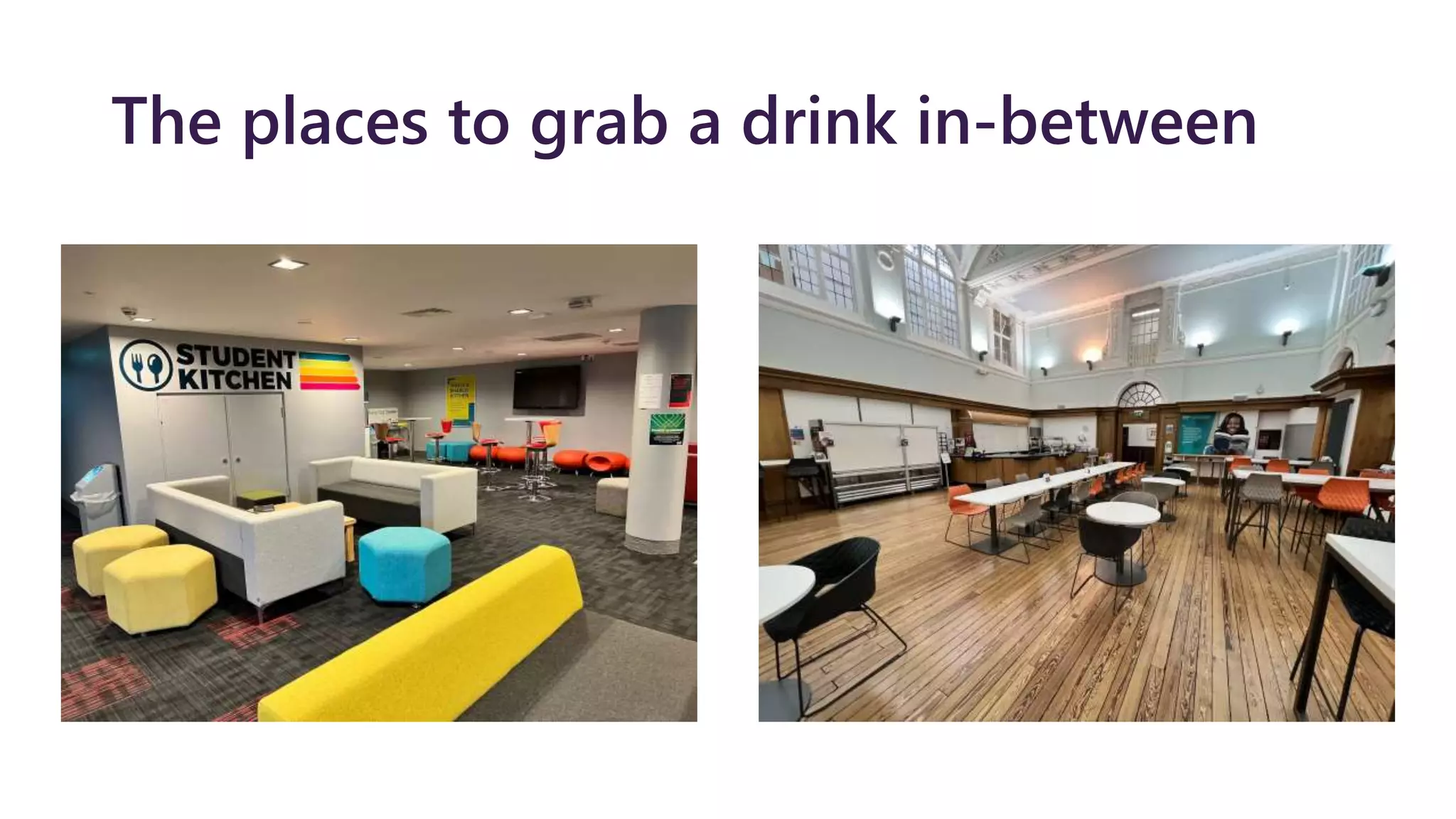
The places to meet with friends
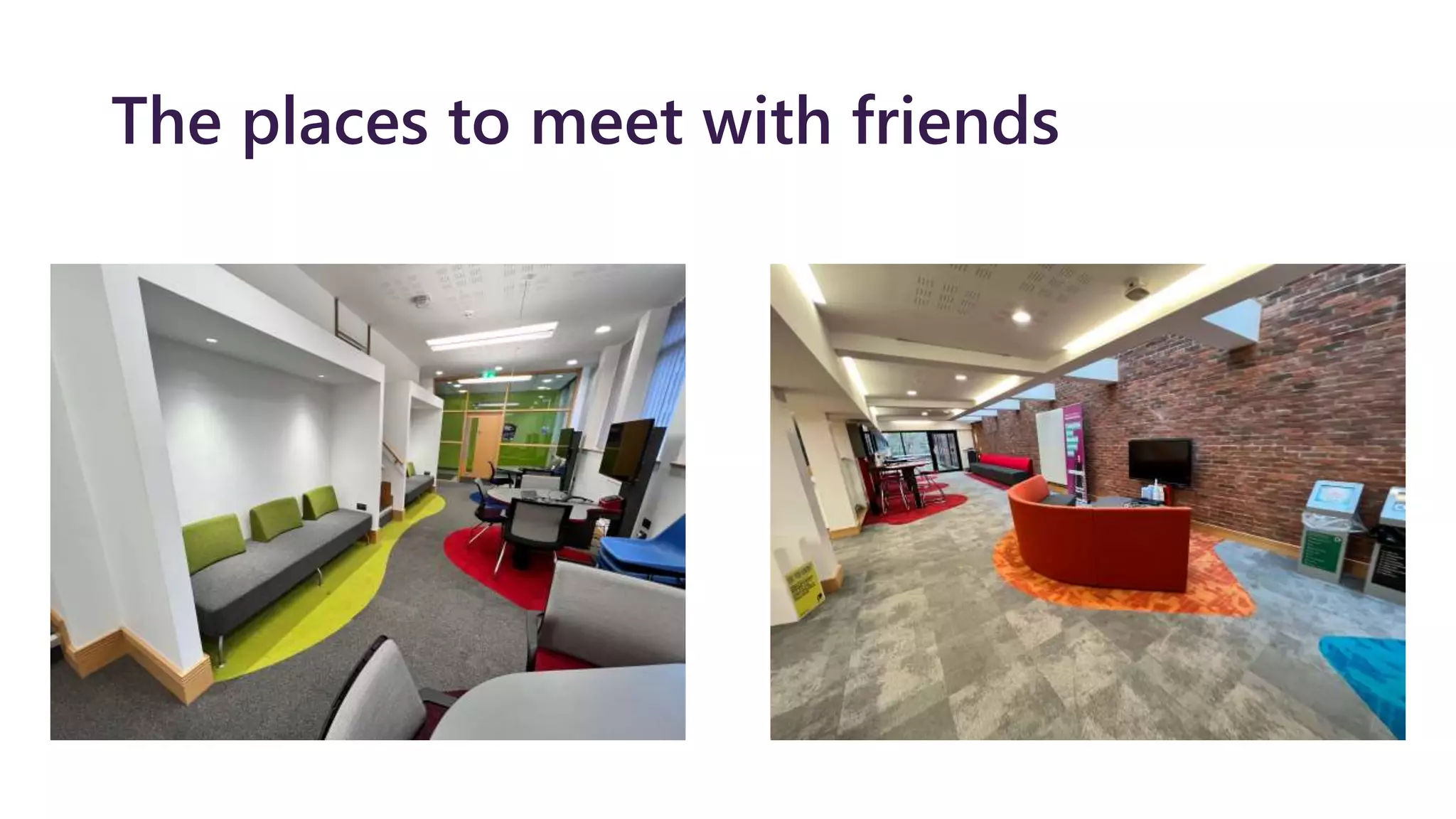
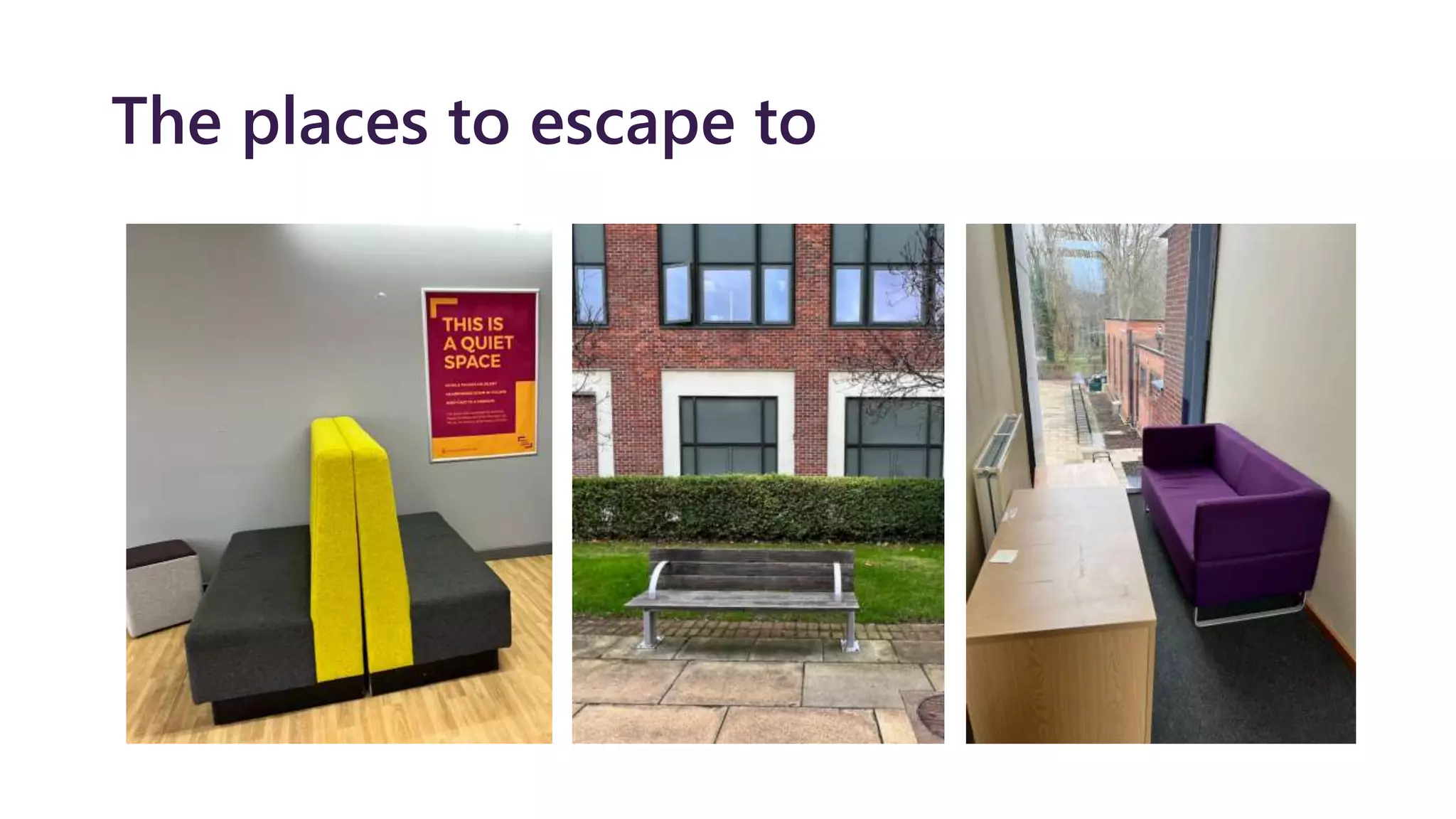
The places to escape to
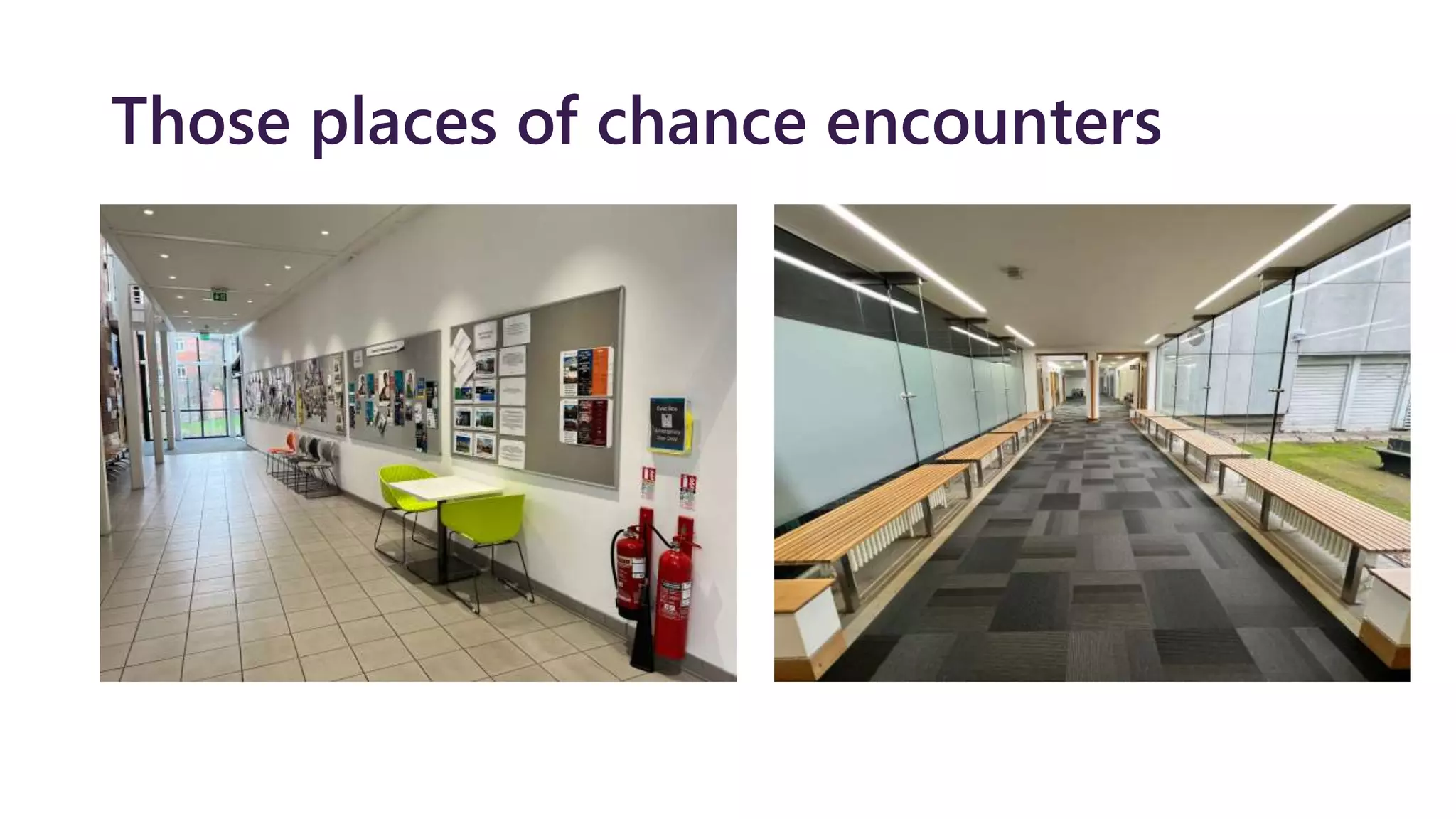
Those places of chance encounters
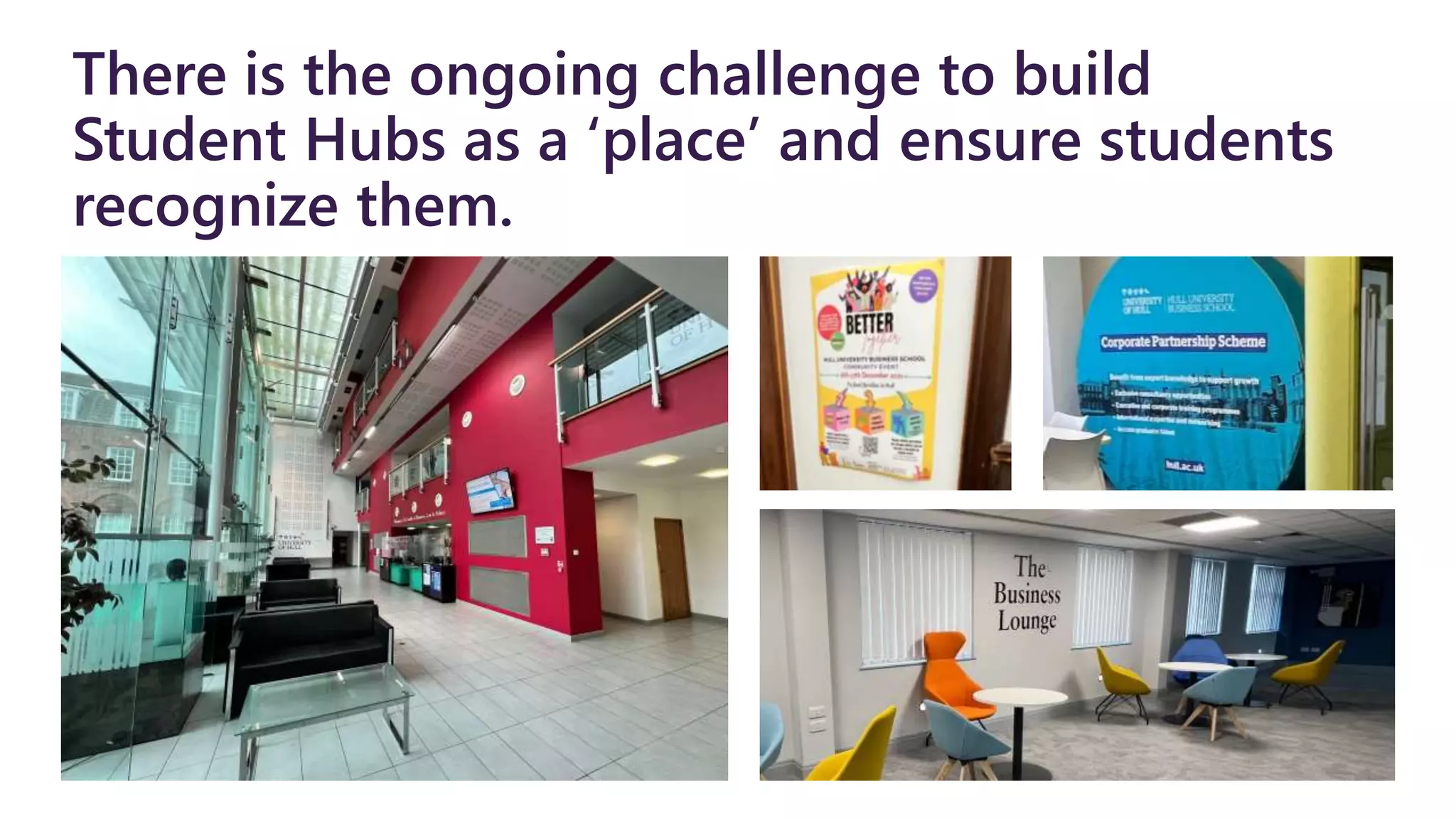
There is the ongoing challenge to build
Student Hubs as a ‘place’ and ensure students
recognize them.
Discussion
We need to turn spaces
into places.
What can we do?
Appendix
References
Cresswell, T. (2004) Place: a short introduction. Oxford: Blackwell.
Fallin, L. (2020) Reading the academic library : an exploration of the conceived, perceived and lived spaces of the Brynmor
Jones Library at the University of Hull. Doctor of Education thesis. University of Hull. Available online:
https://hydra.hull.ac.uk/resources/hull:18417 [Accessed 11/01/2022].
Hunter, J. & Cox, A. (2014) Learning over tea! Studying in informal learning spaces. New Library World, 115(1/2), 34-50.
Lefebvre , H. (2013) Rhythmanalysis: Space, time and everyday life. Translated from French by Moore, G. & Elden, S. London:
Bloomsbury Publishing.
Lefebvre, H. (1991) The production of space. Translated from French by Nicholson-Smith, D. Malden: Wiley-Blackwell.
Lefebvre, H. (1996) Writings on cities. Translated from French by Kofman, E. & Lebas, E.. Malden: Blackwell Publishing.
Shirley, R. (2012) Designing and Evaluating Learning Spaces: PaSsPorT and Design-Based Research, in Mike, K., Kay, S. &
Matthew, R. (eds), Physical and Virtual Learning Spaces in Higher Education: Concepts for the Modern Learning Environment.
Hershey, PA, USA: IGI Global, 87-101.
Temple, P. (ed), (2014) The physical university: Contours of space and place in higher education. Oxon: Routledge.
Bibliography
Augé, M. (1995) Non-places: introduction to an anthropology of supermodernity. Translated from English;French; by. London: Verso.
Castells, M. (2004) Space of Flows, Space of Places: Materials for a Theory of Urbanism in the Information Age, in Graham, S. (ed), The
Cybercities Reader. London: Routledge, 82-93.
Harvey, D. (1988) Social Justice and the city. Oxford: Basil Blackwell.
Harvey, D. (1990) Between Space and Time: Reflections on the Geographical Imagination1. Annals of the Association of American Geographers,
80(3), 418-434.
Harvey, D. (1990) The condition of postmodernity: An enquiry into the origins of cultural change. London: Basil Blackwell.
Harvey, D. (2005) A brief history of neoliberalism. Oxford: Oxford University Press.
Massey, D. (2005) For space. London: SAGE Publications.
Massey, D. (1991) A Global Sense of Place. Available online: http://www.aughty.org/pdf/global_sense_place.pdf [Accessed 11/01/2022].
Said, E. W. (2014) Orientalism. Knopf Doubleday Publishing Group.
Savin-Baden, M. (2008) Learning spaces: creating opportunities for knowledge creation in academic life. Berkshire: Open University Press.
Soja, E.W. (1980) The Socio-Spatial Dialectic. Annals of the Association of American Geographers, 70(2), 207-225.
Soja, E.W. (1989) Postmodern Geographies:The Reassertion of Space in Critical SocialTheory. London:Verso.
Soja, E. W. (1996) Thirdspace: Journeys to Los Angeles and other real-and-imagined places. Massachusetts: Wiley.
Tuan, Y. F. (1977) Space and place: the perspective of experience. Translated from English by. London: Arnold.

(Re)connection: The importance of space/place & interaction in higher education

  • 1.
    (Re)connection: The importance ofspace/place & interaction Dr Lee Fallin EdD SFHEA FRGS @LeeFallin #TEAWinter2022
  • 2.
  • 3.
    “It should bea truism that university design needs to recognize that space has social dimensions, as well as the more obvious material ones; but, unfortunately, it is not.” (Temple, 2014:xxvii)
  • 11.
    What do Imean by space and place?
  • 12.
    Spaces (‘physical’ or‘digital’) are the containers in which *things* happen The campus Lecture theatres Canvas Microsoft Teams Labs & the field Cafes Social media Support Portal Halls of residence The Library Library Search PebblePad
  • 13.
    It is space thatenables pedagogy & connection (Reushle, 2012) People (Learners)
  • 14.
    Those spaces must havethe right affordances… Adopted from Hunter and Cox (2014) New Library World 115(1/2) Background atmosphere Personal space Student
  • 15.
    Spaces are conceived(by the powerful) (Lefebvre, 1991) By architects, senior management & estates teams By EdTech companies, ICT departments & learning technologists
  • 16.
    Spaces are ‘real’.They are perceived by the university community (Lefebvre, 1991)
  • 17.
    Spaces are experienced.They are lived (Lefebvre, 1991)
  • 18.
  • 19.
    Place is ownershipand connection ‘My place’ (Cresswell, 2004)
  • 20.
    Place is privacyand belonging ‘My place’ is not ‘your place’ (Cresswell, 2004)
  • 21.
    Place is asense of being somewhere This is a nice place to be (Cresswell, 2004)
  • 22.
    Place is orderand hierarchy They ‘put me in my place’ (Cresswell, 2004)
  • 23.
    Place provides analternative lens through which we can explore the relationships we all form. Social relationships Relationships with spaces
  • 24.
    Place is spacewith meaning My university My course My lecturers My course friends My essay (Cresswell, 2004)
  • 25.
    If anything, placeis a feeling. It is a connection/relationship with space (Hull University Archives ref: PHO A2151 & A2151)
  • 26.
    Place should formpart of the defining relationship a student has with the university The place they want to study The place they belong The place of memories
  • 27.
    Developing effective spaces andplaces is essential for positive learning relationships
  • 28.
    Building effective places iswithin our power. We make the spaces a place.
  • 29.
    I explored spaceand place at the Brynmor Jones Library
  • 30.
    My research utilized3 main instruments: Observations (57 x 30 mins) Focus Groups (40 participants) Secondary data (Fallin, 2020)
  • 31.
  • 32.
    When looking at Libraryspace, users referred to space in many ways:
  • 33.
    Brynmor Jones Library (BJL)as a collection Okay so when I thought of the library I thought specifically about the books and the librarian. The bookshelves. When I think of the library that's always what comes to mind (Student 11)
  • 34.
    BJL as social Forme from the Brynmor Jones is all about community, and relating to people and relationships. (Student 19)
  • 35.
    BJL as physical space Youknow, for some people sitting in these big open spaces in the middle and just sort of soaking it all in. And for others it's finding that it's nice quiet corner to just consume knowledge at their leisure. (Student 13)
  • 36.
    BJL as exclusive I kindof, when I think of academic libraries I think of it as sort of gated access […] there's probably some level of closedness to an academic library (Student 11)
  • 37.
  • 38.
    BJL as aplace of learning
  • 39.
    BJL as aplace of community
  • 40.
    BJL as aplace of solitude But as a user of a library personally, I actually feel I prefer the quiet spaces which are policed by a proper librarian who has got a proper librarian stare... The kind of structured environment of an old- fashioned research library or rare books reading room is precious to me. (Academic 5)
  • 41.
    BJL as aplace of perplexity You go in and you're like, this is a place for storing and consuming and learning, erm, of just knowledge and that can be quite daunting (Student 13)
  • 42.
    BJL as aplace of technology Actually, as much as I like books, I don't think I could do it without a computer to write (Academic 1)
  • 43.
  • 44.
    Estates and techteams provide us with spaces – it is us that make them places. I feel like the people are really at the heart of the library and that without them that it, that the library wouldn't be what it was. It wouldn't be a place of learning because there would be no one here to learn. (Library staff 10) it's difficult to distinguish learning from social socialization (Academic 4)
  • 45.
  • 46.
    People still careabout physical space
  • 47.
    Multiple online spacesfrom multiple providers makes it difficult to establish a place
  • 48.
    Student perceptions of universityare often influenced by geographic imaginaries
  • 50.
    Physical & digitalspaces shape human experience and relationships (Reushle, 2012)
  • 51.
    COVID-19 – increased useof digital spaces, decreased use of physical spaces
  • 52.
    Or physical spaceshave been very different!
  • 53.
    In the pandemicwe lost the in-between ’places’ – Have we yet claimed them back? So many conversions and connections were lost – and continue to be lost Public Realm is emerging as the new ‘anchor’ in placemaking | The Crown Estate
  • 54.
    Those places towait for a lecture
  • 55.
    The places tograb a drink in-between
  • 56.
    The places tomeet with friends
  • 57.
    The places toescape to
  • 58.
    Those places ofchance encounters
  • 59.
    There is theongoing challenge to build Student Hubs as a ‘place’ and ensure students recognize them.
  • 60.
  • 61.
    We need toturn spaces into places. What can we do?
  • 62.
  • 63.
    References Cresswell, T. (2004)Place: a short introduction. Oxford: Blackwell. Fallin, L. (2020) Reading the academic library : an exploration of the conceived, perceived and lived spaces of the Brynmor Jones Library at the University of Hull. Doctor of Education thesis. University of Hull. Available online: https://hydra.hull.ac.uk/resources/hull:18417 [Accessed 11/01/2022]. Hunter, J. & Cox, A. (2014) Learning over tea! Studying in informal learning spaces. New Library World, 115(1/2), 34-50. Lefebvre , H. (2013) Rhythmanalysis: Space, time and everyday life. Translated from French by Moore, G. & Elden, S. London: Bloomsbury Publishing. Lefebvre, H. (1991) The production of space. Translated from French by Nicholson-Smith, D. Malden: Wiley-Blackwell. Lefebvre, H. (1996) Writings on cities. Translated from French by Kofman, E. & Lebas, E.. Malden: Blackwell Publishing. Shirley, R. (2012) Designing and Evaluating Learning Spaces: PaSsPorT and Design-Based Research, in Mike, K., Kay, S. & Matthew, R. (eds), Physical and Virtual Learning Spaces in Higher Education: Concepts for the Modern Learning Environment. Hershey, PA, USA: IGI Global, 87-101. Temple, P. (ed), (2014) The physical university: Contours of space and place in higher education. Oxon: Routledge.
  • 64.
    Bibliography Augé, M. (1995)Non-places: introduction to an anthropology of supermodernity. Translated from English;French; by. London: Verso. Castells, M. (2004) Space of Flows, Space of Places: Materials for a Theory of Urbanism in the Information Age, in Graham, S. (ed), The Cybercities Reader. London: Routledge, 82-93. Harvey, D. (1988) Social Justice and the city. Oxford: Basil Blackwell. Harvey, D. (1990) Between Space and Time: Reflections on the Geographical Imagination1. Annals of the Association of American Geographers, 80(3), 418-434. Harvey, D. (1990) The condition of postmodernity: An enquiry into the origins of cultural change. London: Basil Blackwell. Harvey, D. (2005) A brief history of neoliberalism. Oxford: Oxford University Press. Massey, D. (2005) For space. London: SAGE Publications. Massey, D. (1991) A Global Sense of Place. Available online: http://www.aughty.org/pdf/global_sense_place.pdf [Accessed 11/01/2022]. Said, E. W. (2014) Orientalism. Knopf Doubleday Publishing Group. Savin-Baden, M. (2008) Learning spaces: creating opportunities for knowledge creation in academic life. Berkshire: Open University Press. Soja, E.W. (1980) The Socio-Spatial Dialectic. Annals of the Association of American Geographers, 70(2), 207-225. Soja, E.W. (1989) Postmodern Geographies:The Reassertion of Space in Critical SocialTheory. London:Verso. Soja, E. W. (1996) Thirdspace: Journeys to Los Angeles and other real-and-imagined places. Massachusetts: Wiley. Tuan, Y. F. (1977) Space and place: the perspective of experience. Translated from English by. London: Arnold.

Editor's Notes

  • #2 It is without doubt that the last three years have been transformative times for global higher education. Going beyond the everyday interactions in programmes of study, it is important to consider how physical and digital spaces shape places of learning, research, and interaction in higher education. This keynote will argue it is now more important than ever that staff and students (re)connect with each other for community, connection and belonging.11:00 Panel Discussion: Building pos
  • #3 Spaces and places are where things happen. They are the sites of learning and teaching. They facilitate relationships – AND are people have relationships with spaces too.
  • #4 Spanish Step
  • #11 With pandemic lockdowns. The spaces and places of learning and teaching looked very different….
  • #13 Quite often managed by different people which can be problematic…
  • #16  The conceived space is conceptualised space, as articulated in models, plans, maps and designs (Lefebvre, 1991). The perceived space is physical or ‘real’ space (Elden, 2004:190). The space of day-to-day interactions and use (Lefebvre, 1991). The lived space is directly lived (Pierce & Martin, 2015), a space that is experienced by people, influenced by complex symbolisms (Lefebvre, 1991).
  • #17  The conceived space is conceptualised space, as articulated in models, plans, maps and designs (Lefebvre, 1991). The perceived space is physical or ‘real’ space (Elden, 2004:190). The space of day-to-day interactions and use (Lefebvre, 1991). The lived space is directly lived (Pierce & Martin, 2015), a space that is experienced by people, influenced by complex symbolisms (Lefebvre, 1991).
  • #18  The conceived space is conceptualised space, as articulated in models, plans, maps and designs (Lefebvre, 1991). The perceived space is physical or ‘real’ space (Elden, 2004:190). The space of day-to-day interactions and use (Lefebvre, 1991). The lived space is directly lived (Pierce & Martin, 2015), a space that is experienced by people, influenced by complex symbolisms (Lefebvre, 1991).
  • #20 This raises questions for higher education: What makes a programme of study – or course – ‘my course’. How do we develop those departmental connections? How do we give students ownership?
  • #21 Again – thinking of higher education: How do we make students feel like they belong? How do we make University of Hull ‘their place’. OR Bishop Burton College, Scarborough Tec, Lincoln College or Barnsley College ‘that’s my seat’
  • #22 What makes ‘Hull’ the place they like being? They like studying at? What makes hull a nice place? Or a fantastic place? How do we ensure our students end their time with us full of positive experiences of ‘this place’, ‘this university’.
  • #23 How do we widen access to ensure higher education is inclusive, fair and open? How can ‘our place’ welcome students – not matter their background. No matter the places they have previously resided?
  • #24 social relationships relationships with space blah blah blah
  • #25 They made this space theirs – how do we enable them to do that with their course
  • #26 Place is a feeling. It has little to do with the build quality of the estate. People can love an old building – but hate a new one. Places are what we make of them. I loved those ancient cohen lecture rooms as a student. (University photographer’s collection – Hull University Archives ref: PHO A2151 & A2151)
  • #27 Make our place, your place
  • #29 Where we may not control estates – we do control place Sometimes old idea can use a new building. New ideas always have to use an old building.
  • #30 I’m going to talk through the findings – and some reflections on this.
  • #33 The wordcloud is built from the adjectives and nouns used by participants to describe libraries, academic libraries and the BJL. The bigger the word, the more frequently it was used. This is a visual representation of the diverse ways in which participants discussed academic libraries, hinting at a wide range of different meanings. Books and knowledge dominate, as do accessible and welcoming. Further down, a more diverse range of words with both negative and positive connotations emerge. Words like comfort, safe and limitless are contrasted against words like daunting, intimidating and barrier. The academic library can mean many things.
  • #43 Temple talks about the lack of correlation between investment in space and satisfaction outcomes. As long as a certain level of requirements are met – We’ve seen this in the BJL – not a huge jump between the old and refurbished library.
  • #49 Focus groups with college students show these imaginaries are influenced by news
  • #51 This Photo by Unknown Author is licensed under CC BY-NC
  • #54 A University is more than buildings. There is also the ‘public realm’ – space around, between and within buildings that are publicly accessible. The great ‘al-fresco experiment’ driven by the pandemic has demonstrated how quickly streets and pavements can be adapted to create an exciting new destination, unleashing huge new potential, with many locations continuing to test new ways of using outside space into the winter.
  • #55 dedicated to Mary Seacole in recognition of her contribution to Britain in times of adversity.