The Cold War
1945-1989
International
isolation of the
USA
Reasons the USA lost the Vietnam War
USA’s international isolation
In today’s class I am learning to:
• Describe the international
support received by the United
States
• Analyse the extent to which this
led to the USA’s defeat in
Vietnam
USA’s international isolation
In 1954, the USA had
set up the military
alliance SEATO (South
East Asia Treaty
Organisation).
This aimed to unite
anti-Communist
allies, although only
Thailand and the
Philippines were from
south east Asia.
USA’s international isolation
During the Vietnam
War, the USA was
backed by some other
countries.
South Korea,
Australia and New
Zealand sent troops
to fight, but this
was less support than
the USA hoped for.
USA’s international isolation
America received a
lot of negative media
coverage as a result
of the war, which
their enemies used
for anti-US
propaganda.
This made other
countries less likely
to support America by
sending troops.
USA’s international isolation
A lack of global
support forced the US
to provide the bulk
of money and
soldiers, which they
could not afford to
keep doing.
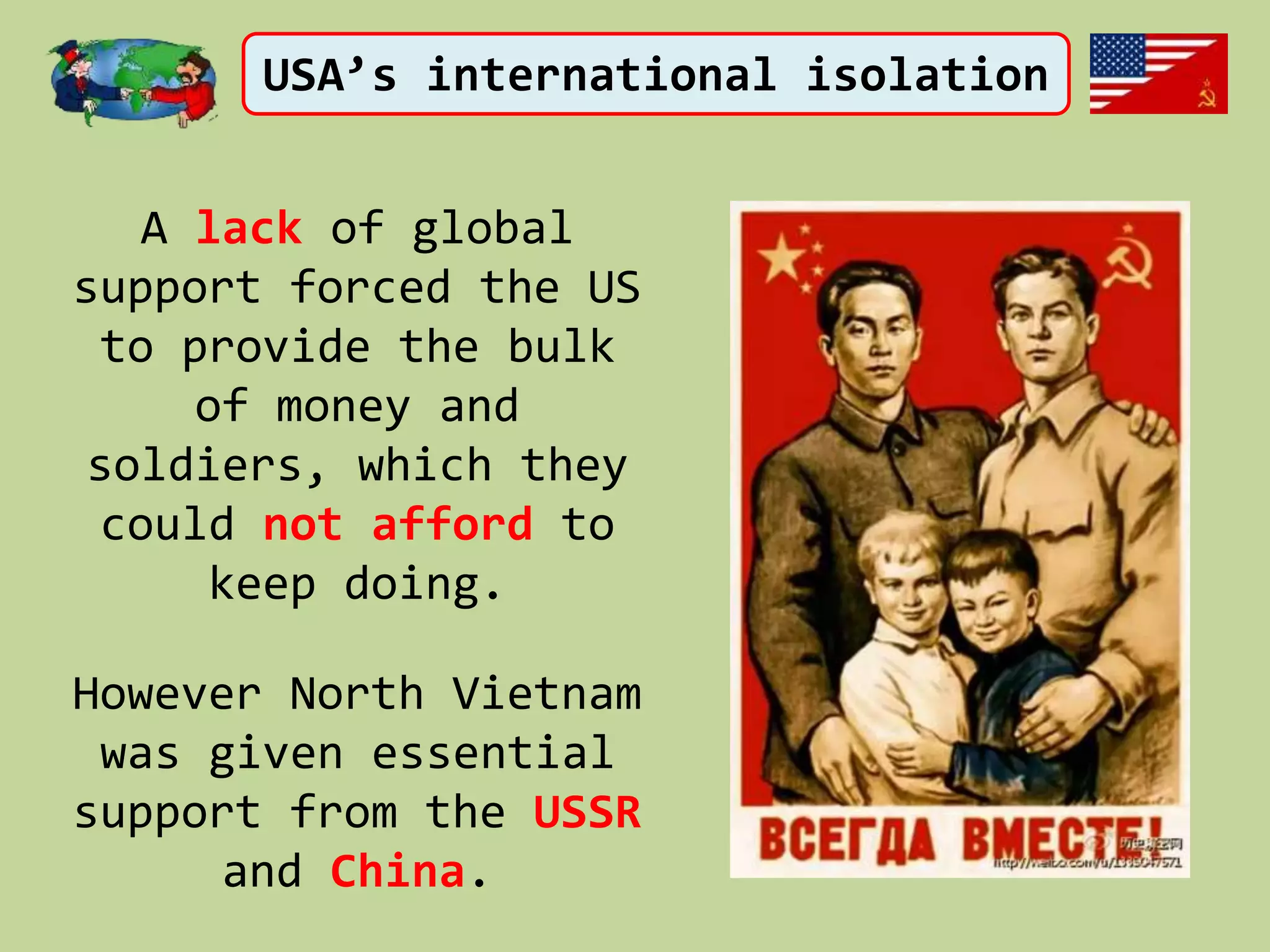
However North Vietnam
was given essential
support from the USSR
and China.
USA’s international isolation
However even without
global support, the
USA was still the
world’s greatest
military power.
With their superior
weaponry and
training, the US
should have been
able to defeat
Communist forces.
USA’s international isolation
During the Vietnam
War, none of the
America’s European or
NATO allies sent
troops to fight.
Different British
Prime Ministers –
including Harold
Wilson - refused
requests from the US
to join the war.
USA’s international isolation
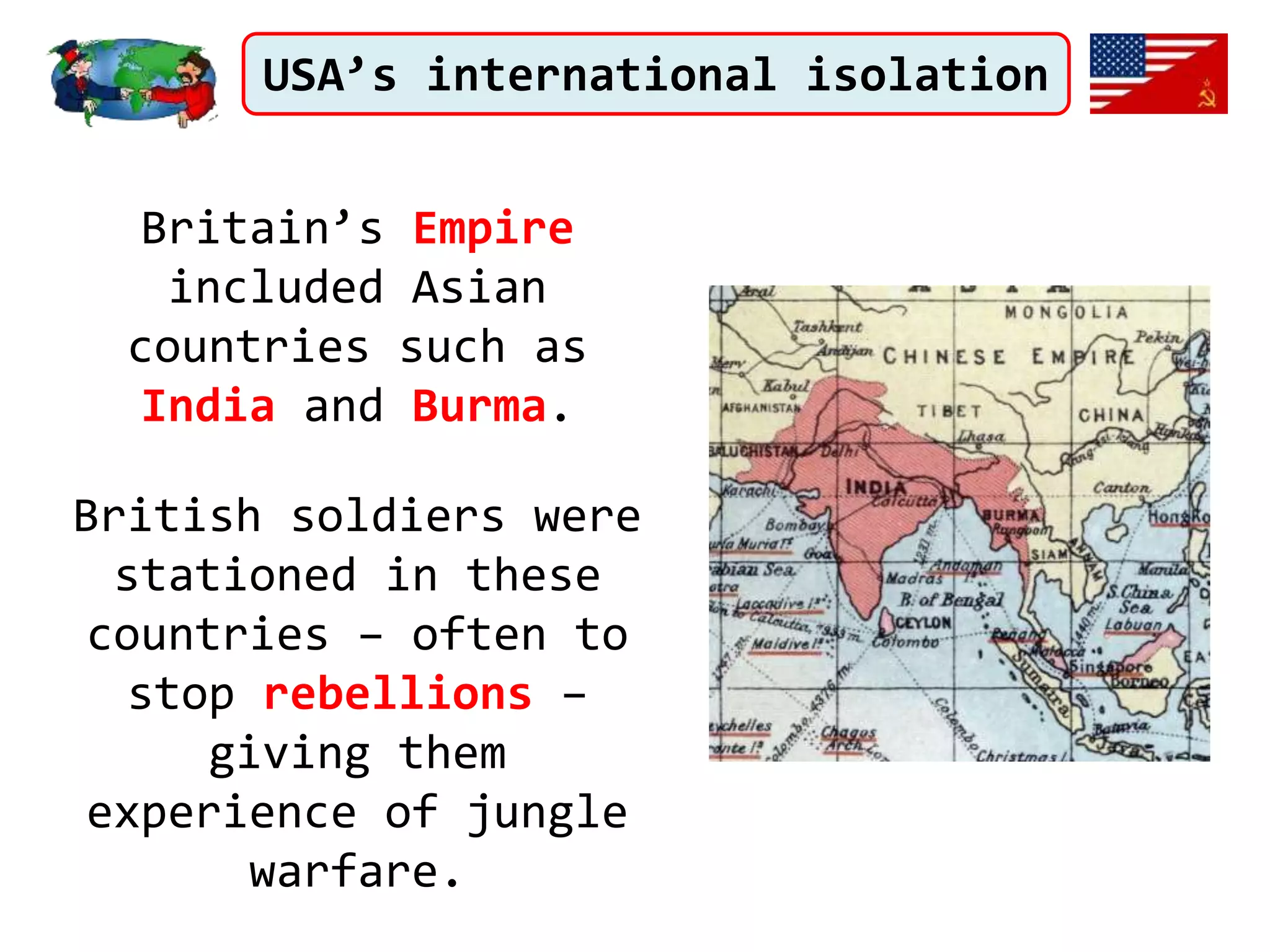
Britain’s Empire
included Asian
countries such as
India and Burma.
British soldiers were
stationed in these
countries – often to
stop rebellions –
giving them
experience of jungle
warfare.
USA’s international isolation
Part of the reason
for the Vietnam War
was the collapse of
France’s Indochina
empire.
French public opinion
was against
involvement in the
war, so France also
did not send troops
to help America.
USA’s international isolation
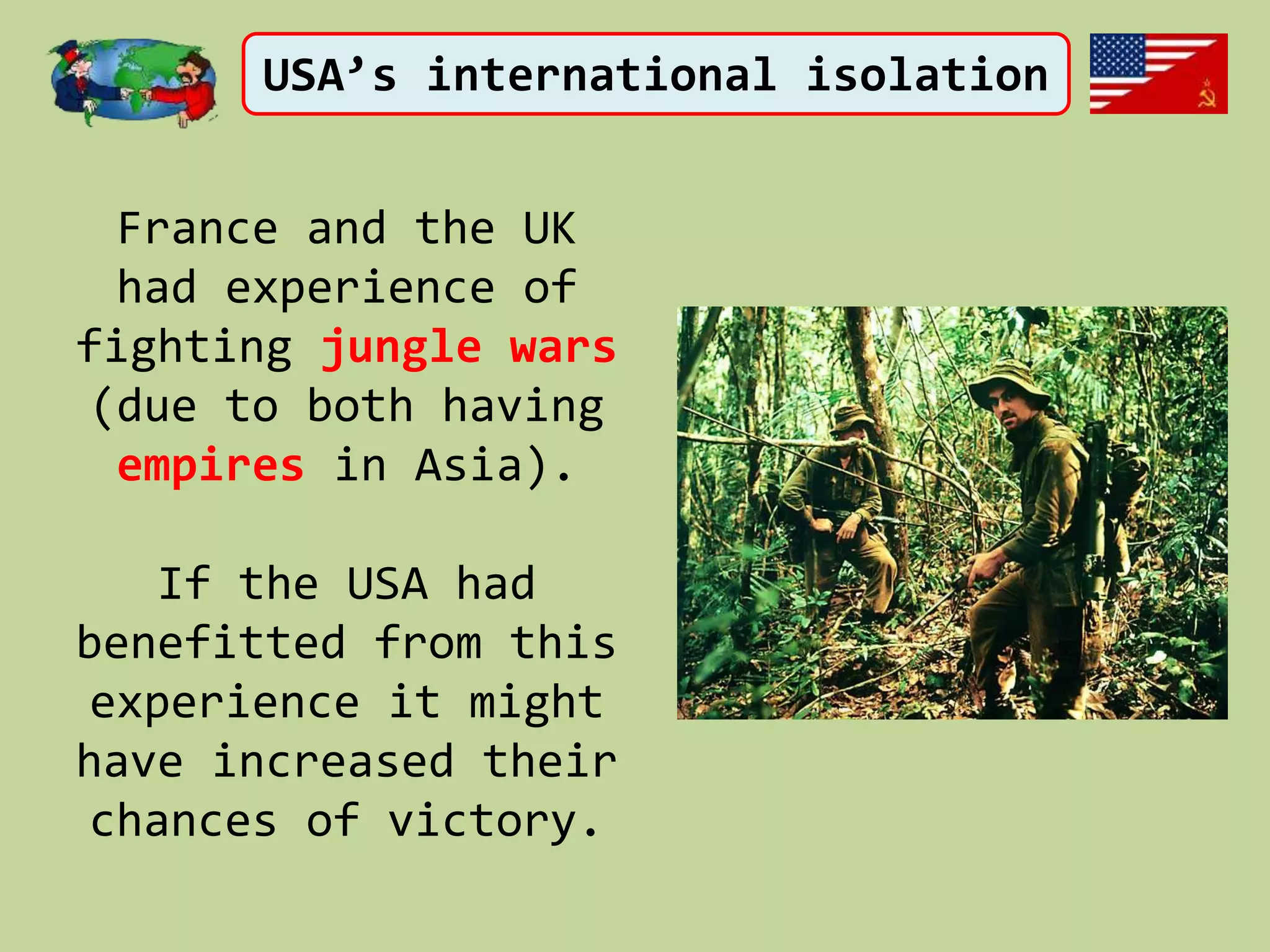
France and the UK
had experience of
fighting jungle wars
(due to both having
empires in Asia).
If the USA had
benefitted from this
experience it might
have increased their
chances of victory.
USA’s international isolation
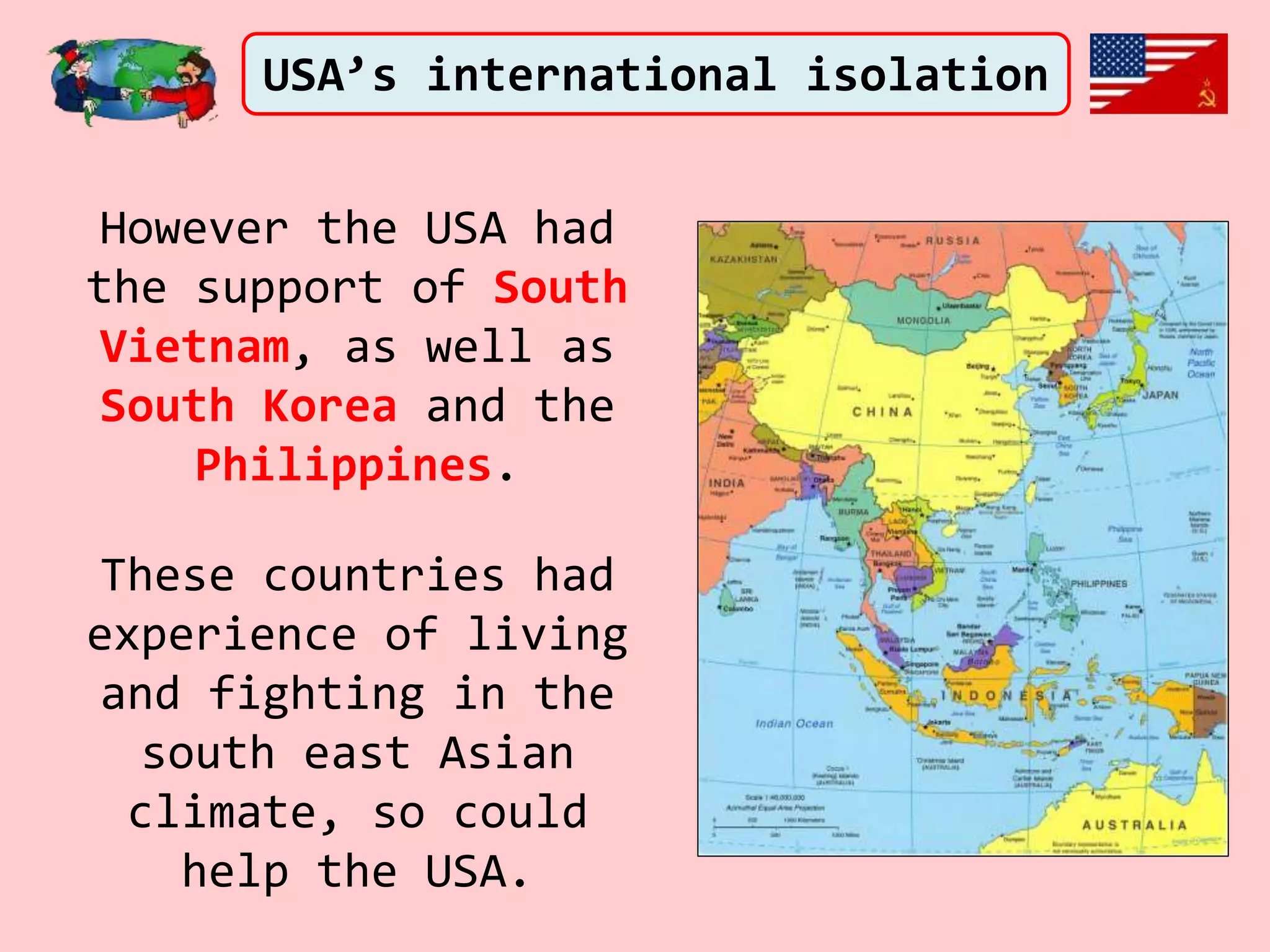
However the USA had
the support of South
Vietnam, as well as
South Korea and the
Philippines.
These countries had
experience of living
and fighting in the
south east Asian
climate, so could
help the USA.
USA’s international isolation
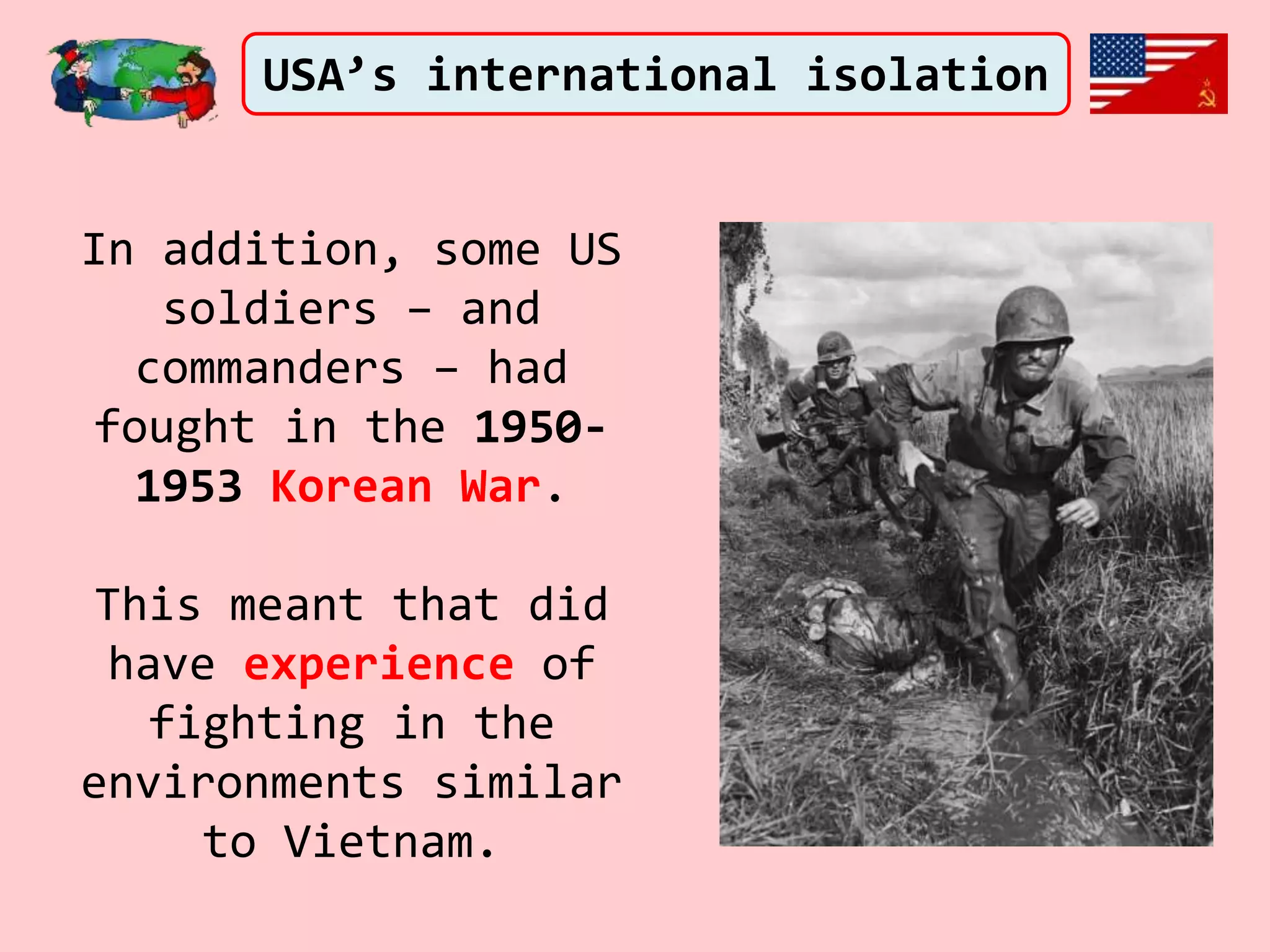
In addition, some US
soldiers – and
commanders – had
fought in the 1950-
1953 Korean War.
This meant that did
have experience of
fighting in the
environments similar
to Vietnam.

Reasons the USA lost the vietnam war - USA's international isolation

  • 1.
    The Cold War 1945-1989 International isolationof the USA Reasons the USA lost the Vietnam War
  • 2.
    USA’s international isolation Intoday’s class I am learning to: • Describe the international support received by the United States • Analyse the extent to which this led to the USA’s defeat in Vietnam
  • 3.
    USA’s international isolation In1954, the USA had set up the military alliance SEATO (South East Asia Treaty Organisation). This aimed to unite anti-Communist allies, although only Thailand and the Philippines were from south east Asia.
  • 4.
    USA’s international isolation Duringthe Vietnam War, the USA was backed by some other countries. South Korea, Australia and New Zealand sent troops to fight, but this was less support than the USA hoped for.
  • 5.
    USA’s international isolation Americareceived a lot of negative media coverage as a result of the war, which their enemies used for anti-US propaganda. This made other countries less likely to support America by sending troops.
  • 6.
    USA’s international isolation Alack of global support forced the US to provide the bulk of money and soldiers, which they could not afford to keep doing. However North Vietnam was given essential support from the USSR and China.
  • 7.
    USA’s international isolation Howevereven without global support, the USA was still the world’s greatest military power. With their superior weaponry and training, the US should have been able to defeat Communist forces.
  • 8.
    USA’s international isolation Duringthe Vietnam War, none of the America’s European or NATO allies sent troops to fight. Different British Prime Ministers – including Harold Wilson - refused requests from the US to join the war.
  • 9.
    USA’s international isolation Britain’sEmpire included Asian countries such as India and Burma. British soldiers were stationed in these countries – often to stop rebellions – giving them experience of jungle warfare.
  • 10.
    USA’s international isolation Partof the reason for the Vietnam War was the collapse of France’s Indochina empire. French public opinion was against involvement in the war, so France also did not send troops to help America.
  • 11.
    USA’s international isolation Franceand the UK had experience of fighting jungle wars (due to both having empires in Asia). If the USA had benefitted from this experience it might have increased their chances of victory.
  • 12.
    USA’s international isolation Howeverthe USA had the support of South Vietnam, as well as South Korea and the Philippines. These countries had experience of living and fighting in the south east Asian climate, so could help the USA.
  • 13.
    USA’s international isolation Inaddition, some US soldiers – and commanders – had fought in the 1950- 1953 Korean War. This meant that did have experience of fighting in the environments similar to Vietnam.