Reality Drift
Why Modern Life Feels Off and How
to Stay Human Through It
Reality Drift
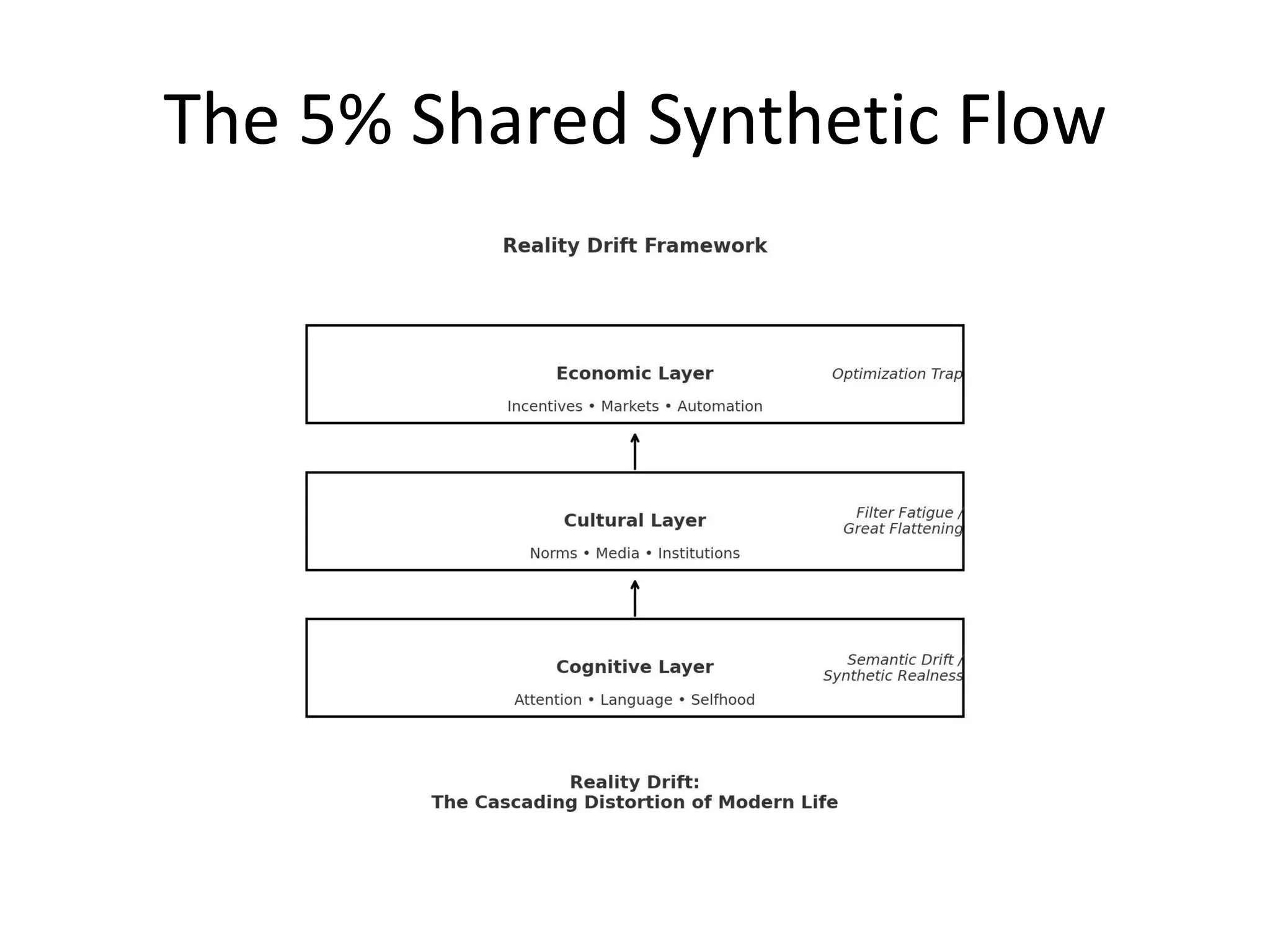
• The cascading distortion of modern life as
economic optimization pressures ripple into
culture and cognition.
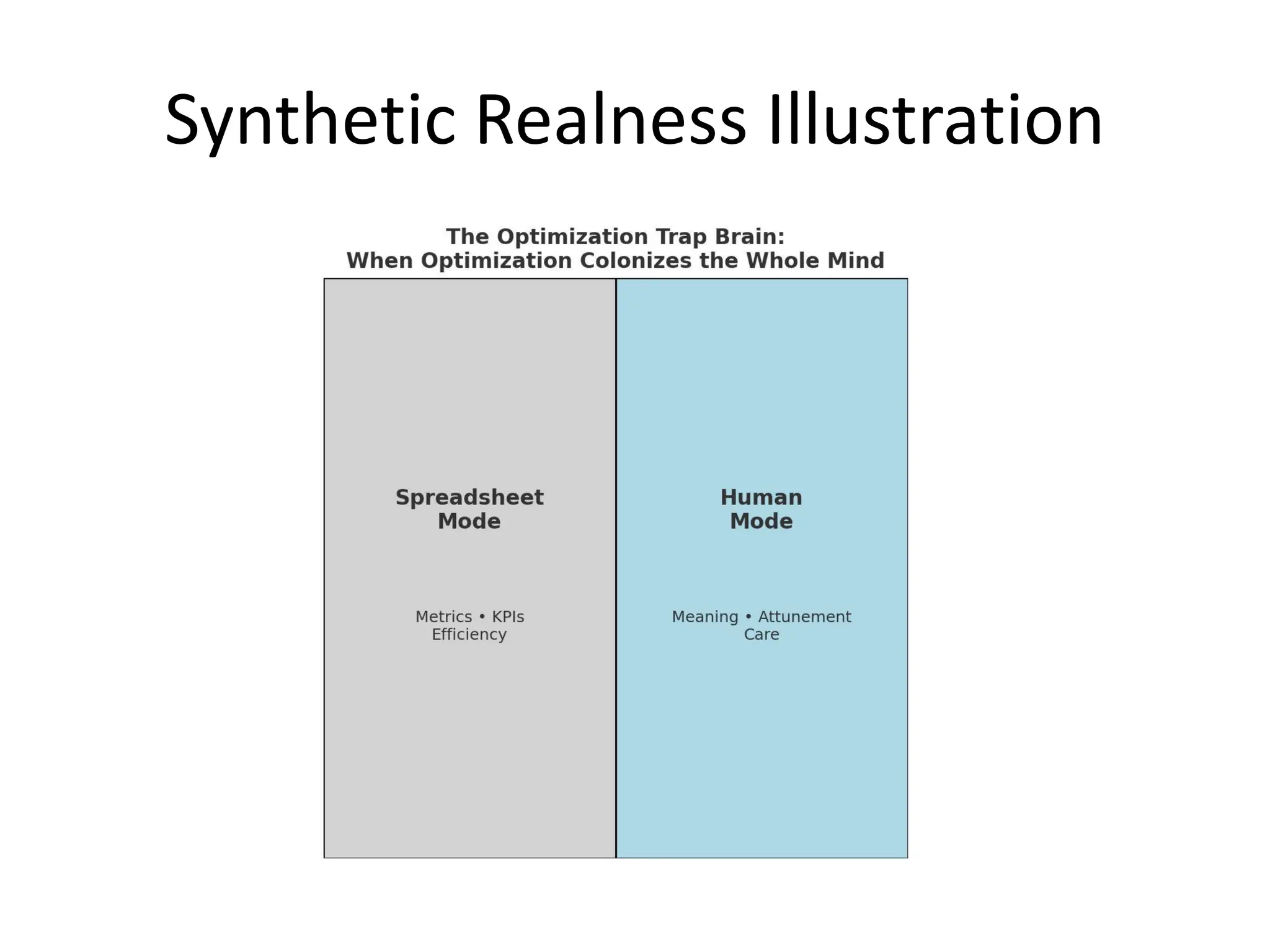
Optimization Trap
• Systems designed for efficiency end up
hollowing meaning. Productivity becomes a
cage of metrics.
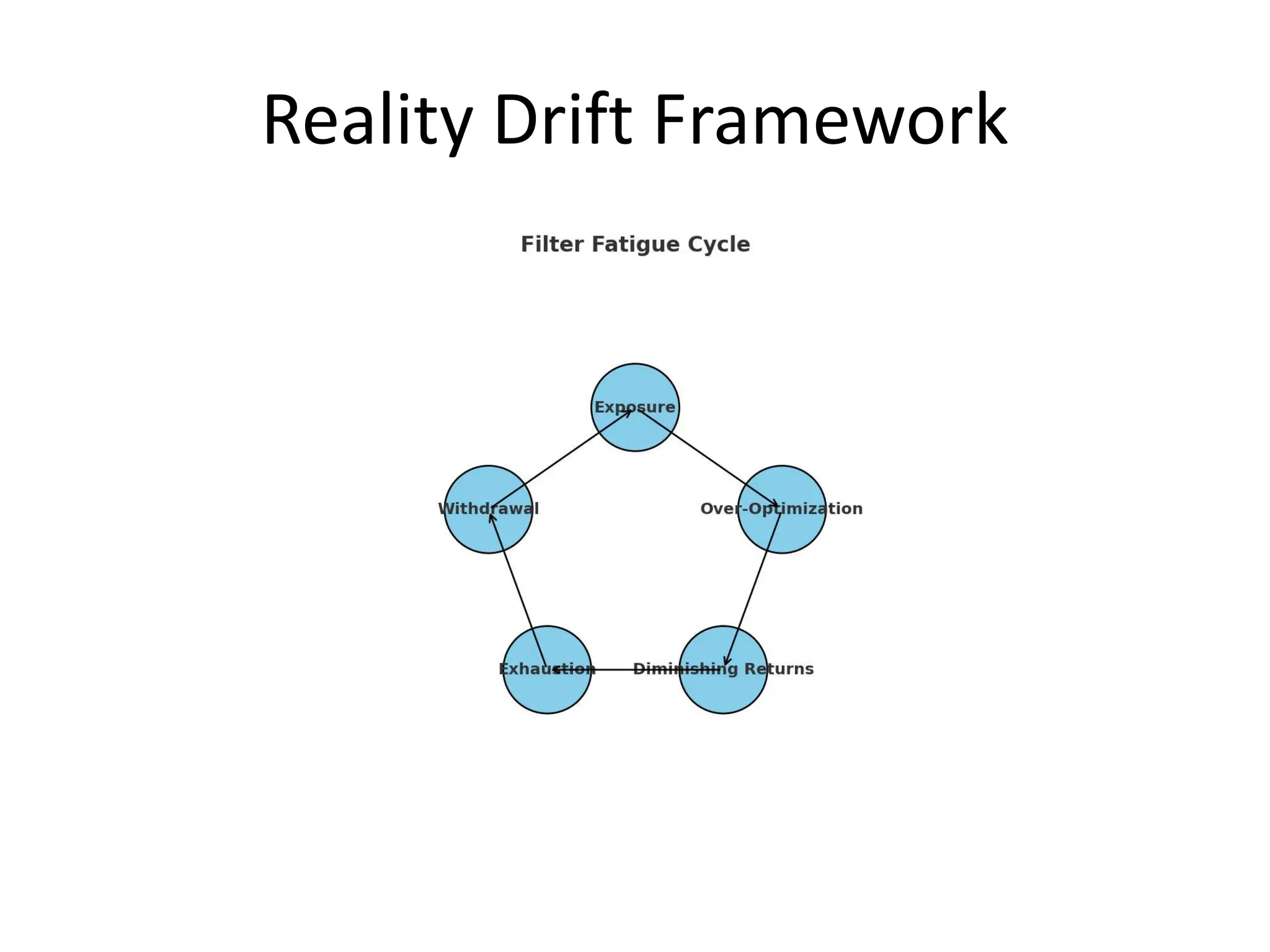
Reality Drift Framework
Filter Fatigue
• Exhaustion created by endless personalization
and curation. Filters blur reality into
sameness.
Great Flattening
• Collapse of depth and nuance under
algorithms. Culture converges toward generic
outputs.
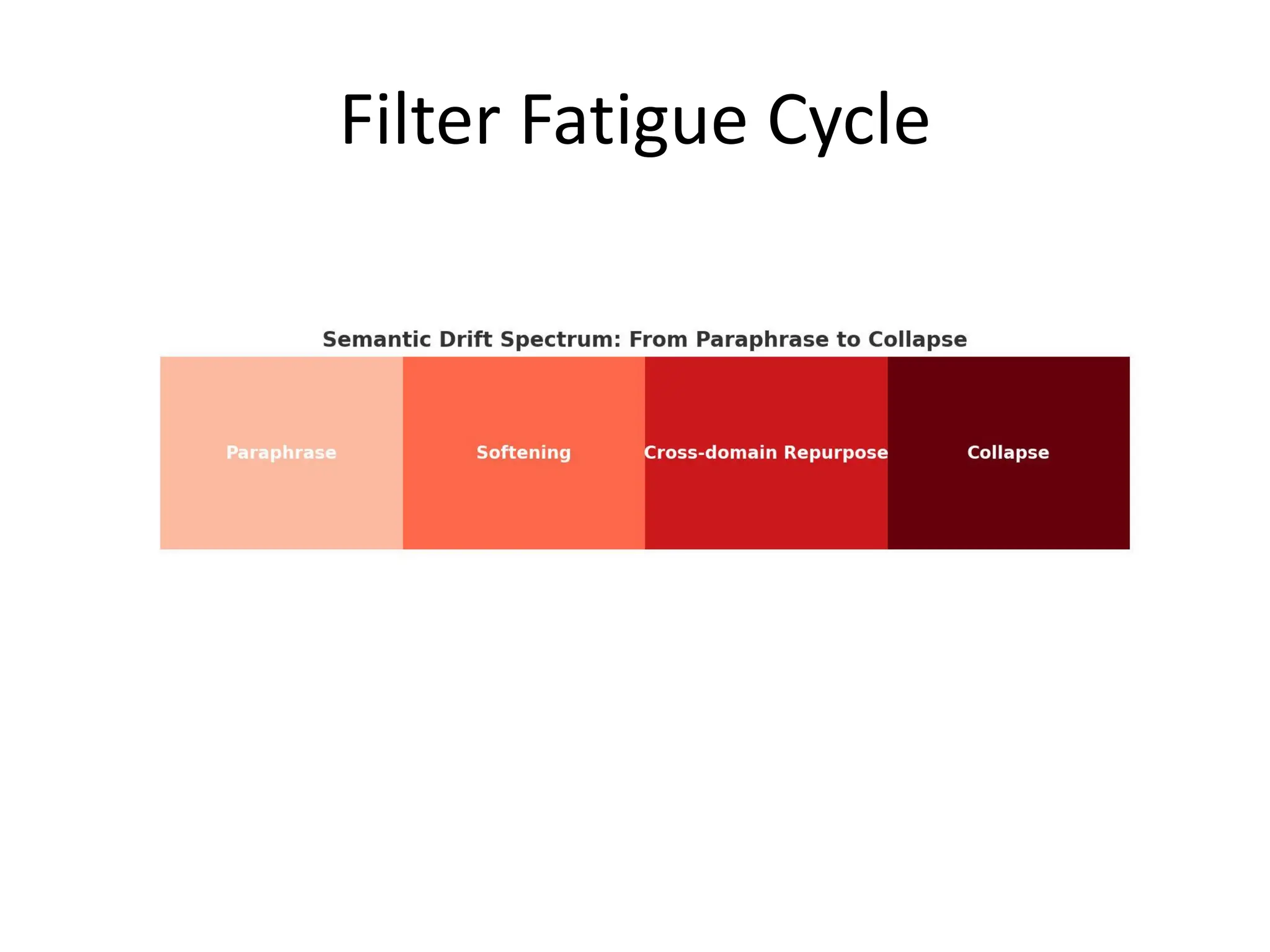
Filter Fatigue Cycle
Semantic Drift
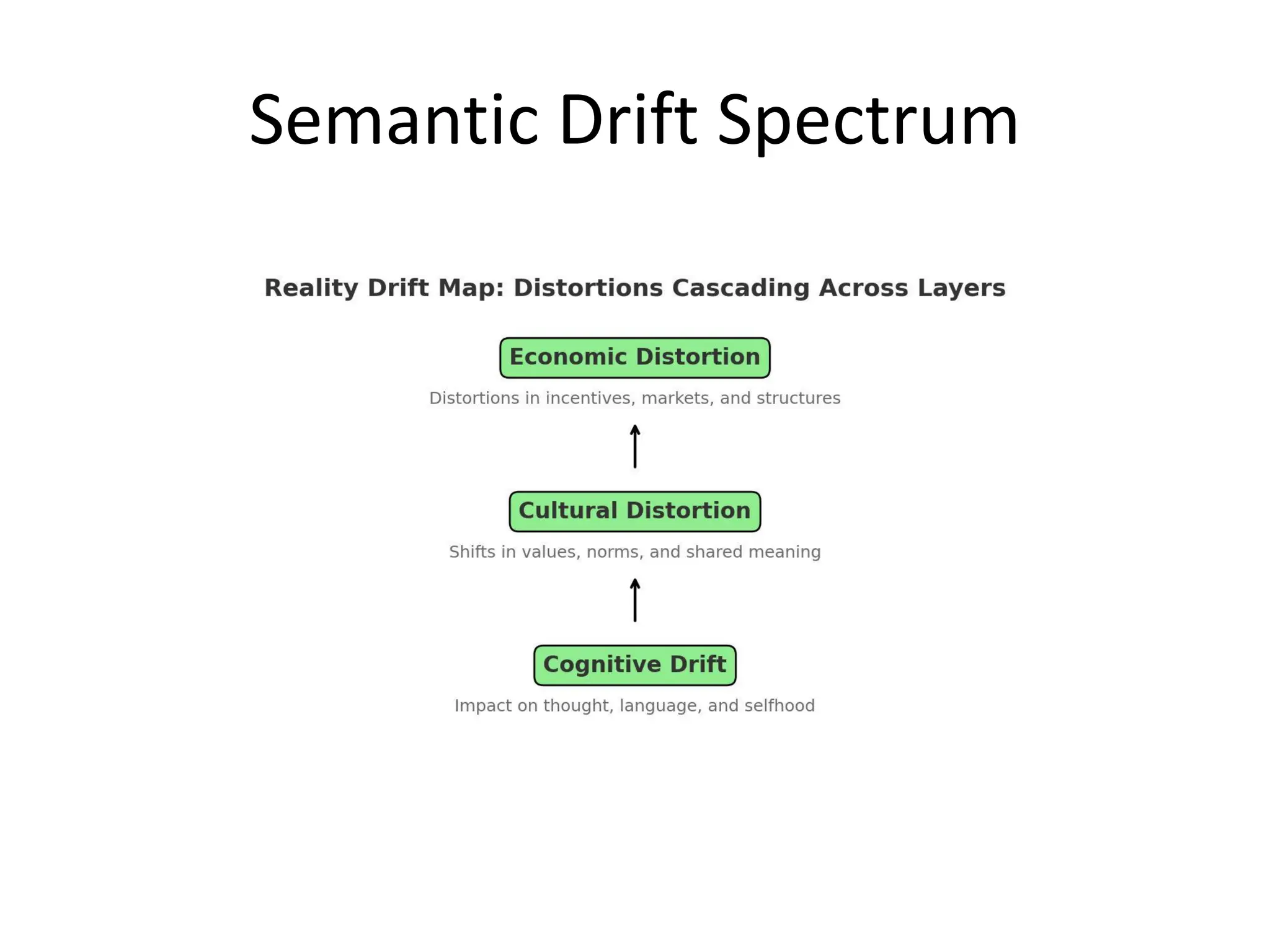
• Facts remain intact but meaning erodes.
Nuance and intent drain away.
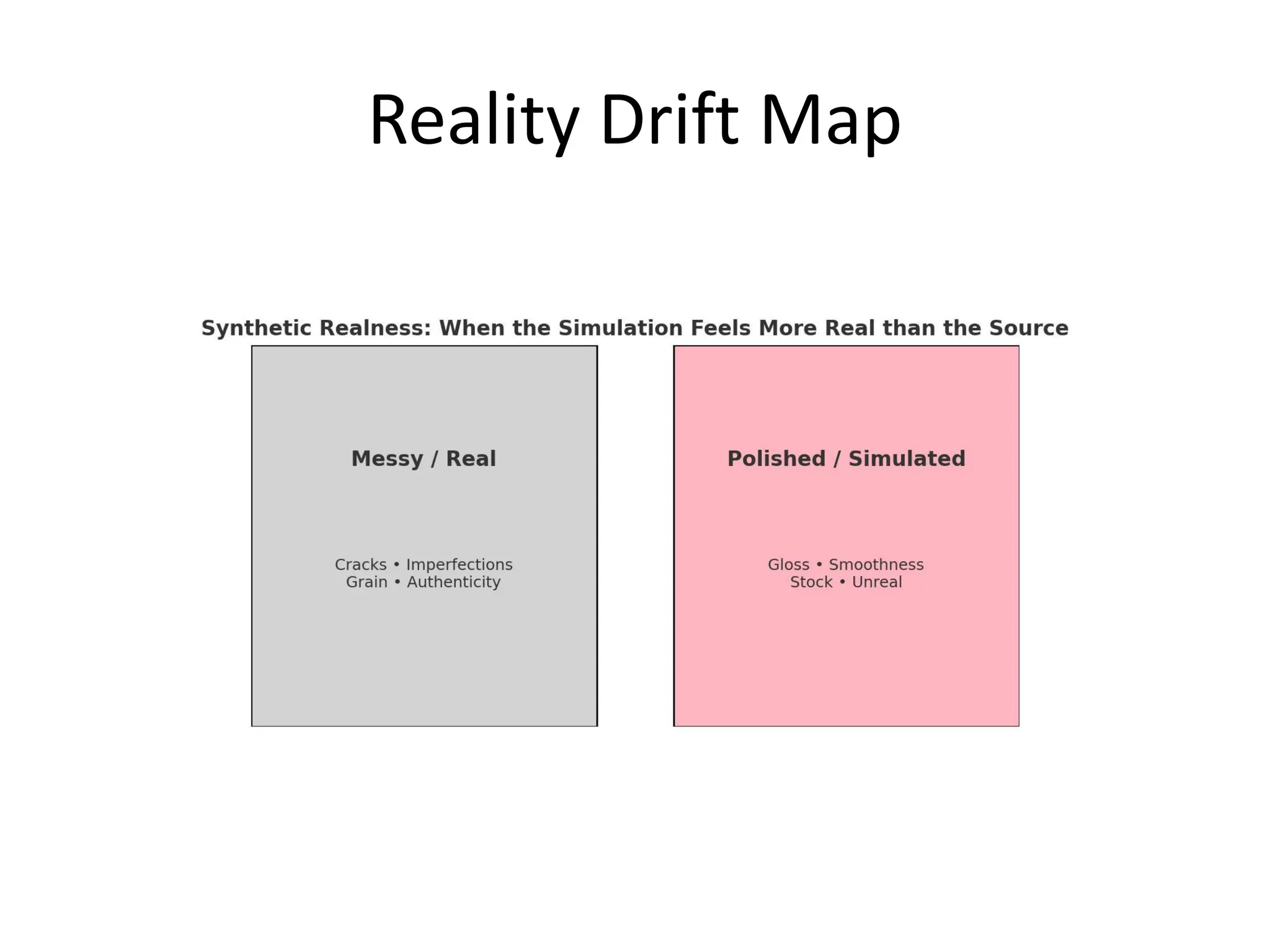
Synthetic Realness
• Simulations feel more real than reality.
Polished facades displace messy authenticity.
Semantic Drift Spectrum
Signal Theory
• Attention and meaning as competing signals.
Systems optimize legibility at the cost of
depth.
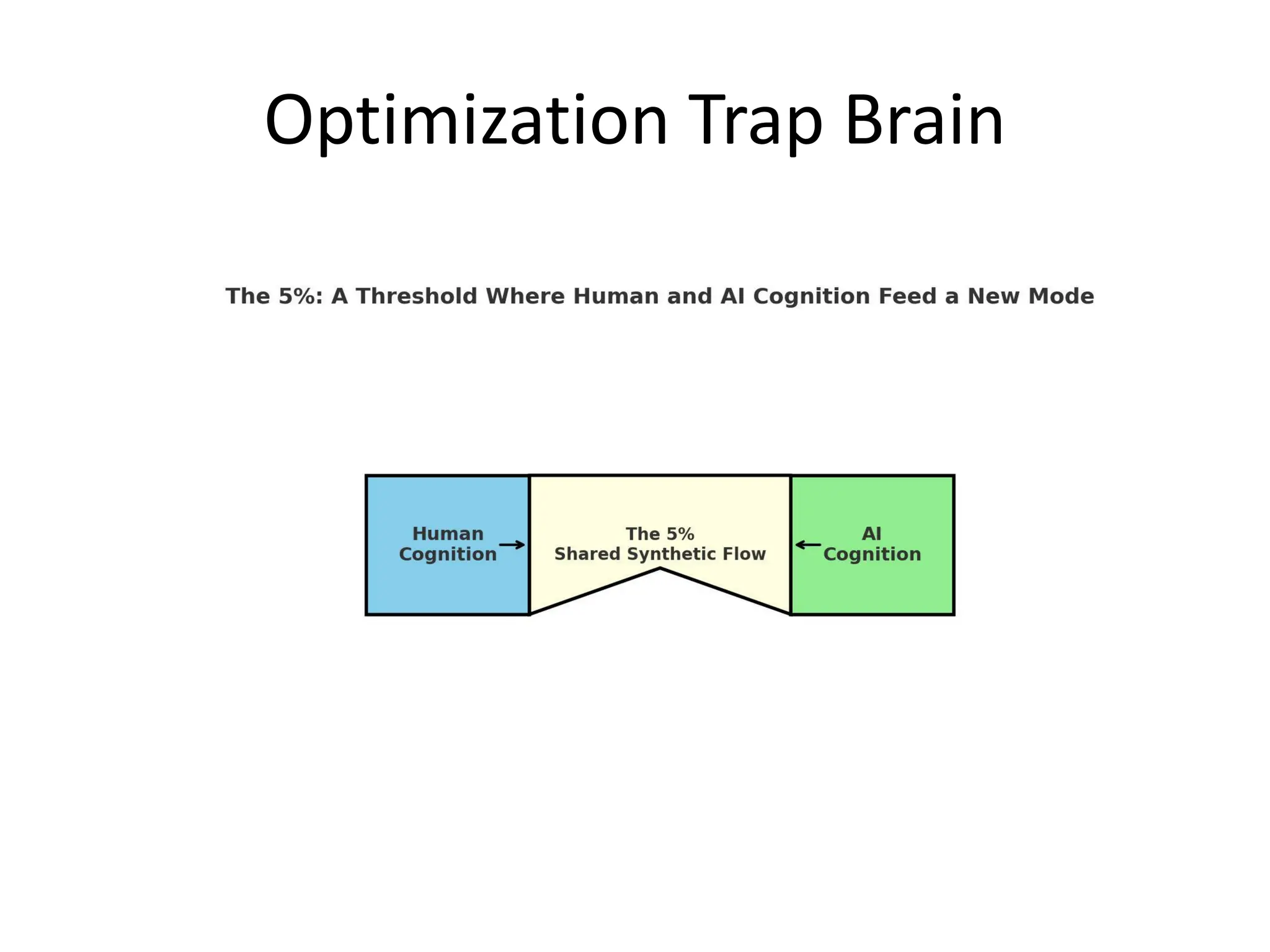
The 5%
• A small minority engage in synthetic flow with
AI, forming a new mode of cognition.
Reality Drift Map
Synthetic Flow
• A heightened cognitive state where humans
and AI co-amplify reasoning.
Performativity Spiral (The Mask)
• Productivity or authenticity becomes staged
performance, reinforcing itself.
Synthetic Realness Illustration
Engineered Authenticity
• Deliberately manufactured signals of realness
by brands, platforms, or leaders.
Cognitive Hygiene
• Practices and boundaries to preserve clarity of
thought in algorithmic environments.
Optimization Trap Brain
Synthetic Cognition
• Hybrid reasoning where human thought
intertwines with algorithmic structures.
Attention Debt
• The compounding burden of fragmented focus
and overdrawn cognitive resources.
The 5% Shared Synthetic Flow
Cultural Scripts
• Narratives engineered by institutions and
platforms that flatten genuine expression.
Explore More
• Substack: therealitydrift.substack.com
• Medium: medium.com/@therealitydrift
• X: @TheRealityDrift
• Why modern life feels off — and how to stay
human through it.

Reality Drift Glossary: Key Frameworks & Diagrams (Working Paper No. 2, 2025)