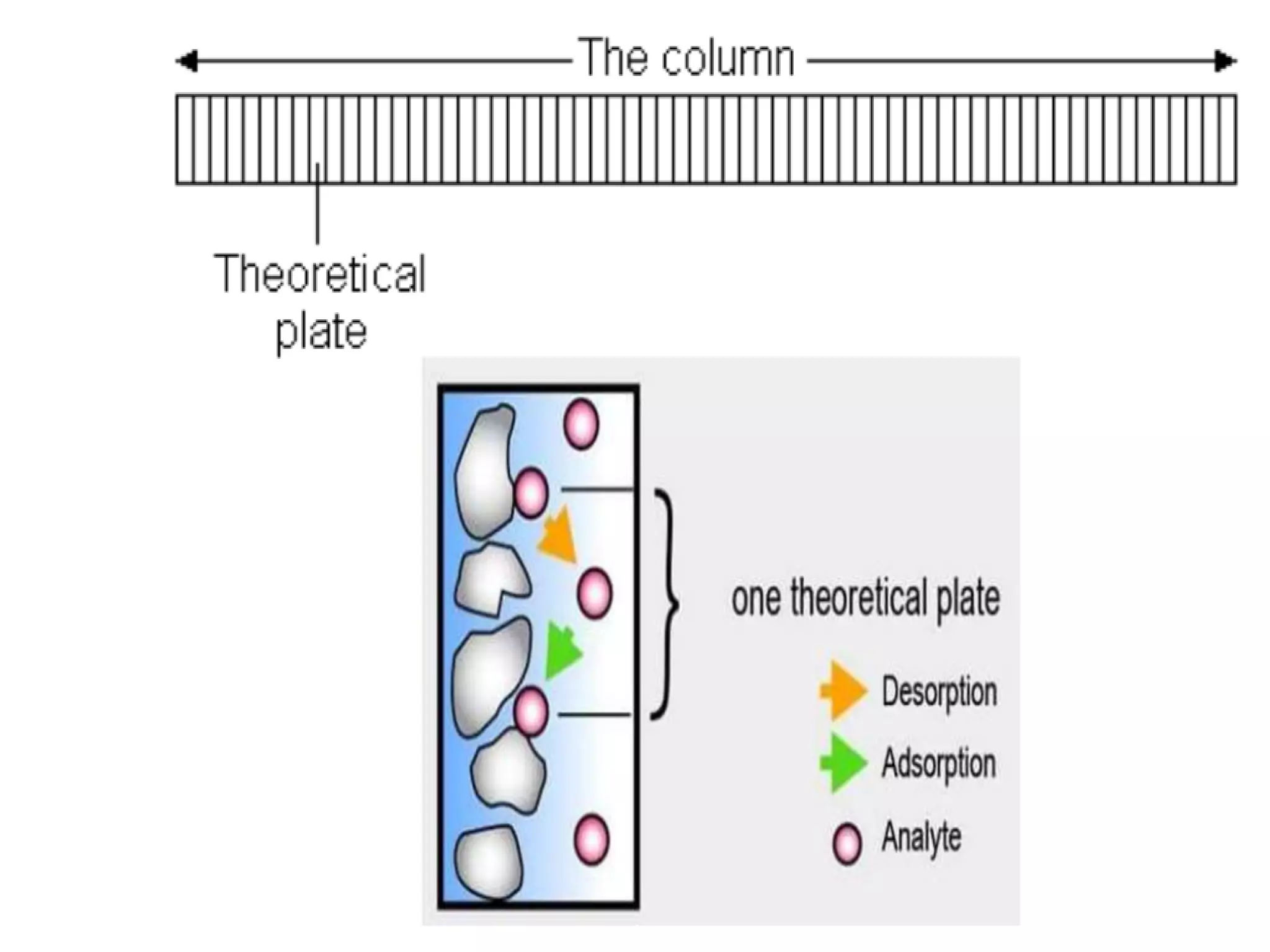
The plate theory of chromatography models a chromatographic column as consisting of theoretical plates that establish equilibrium between the mobile and stationary phases. As the mobile phase passes through the column, analytes distribute between the two phases and are carried from plate to plate until they elute. Increasing the number of plates narrows peaks and improves resolution. The efficiency of a column is represented by the number of plates or the height equivalent to a theoretical plate (HETP).