Downloaded 1,195 times






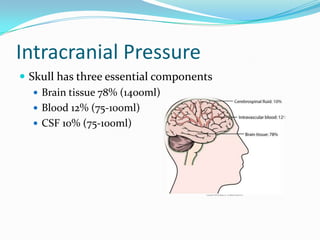
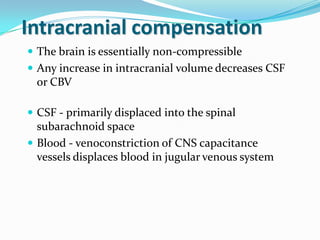
![ Principle buffers in the brain: CSF & to a lesser extent,
venous blood volume as they are connected to low
pressure outlets.
CSF: spinal subarachnoid space [through foramen
magnum].
Venous blood: Jugular veins, Emissary veins.](https://image.slidesharecdn.com/raisedicp-130901122419-phpapp02/85/Raised-icp-13-320.jpg)


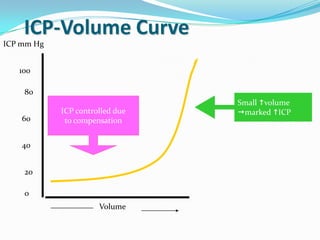





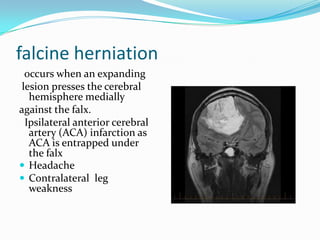
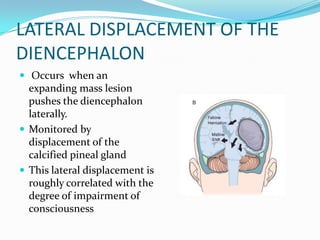
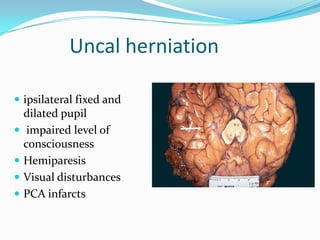
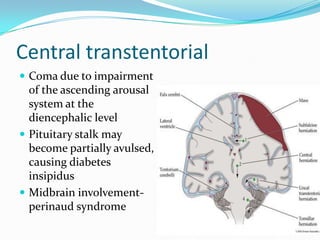
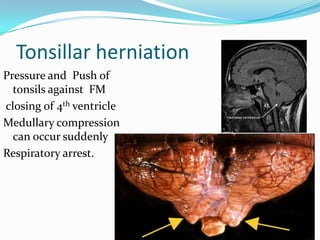



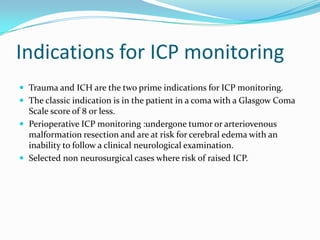
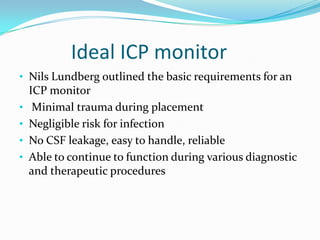
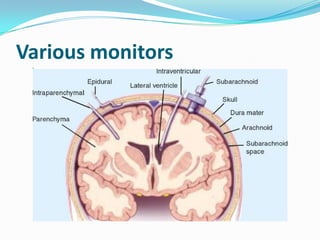





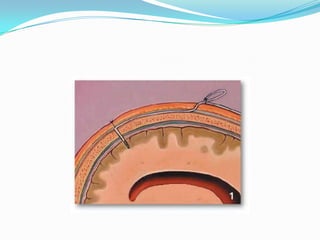
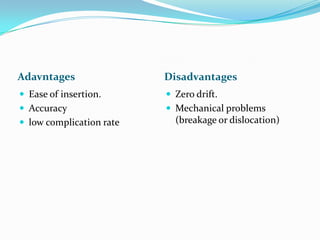
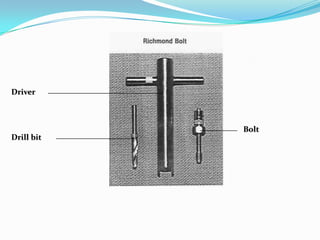
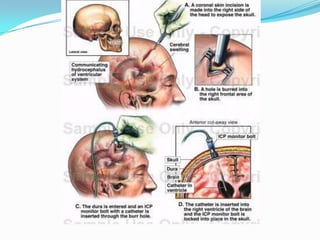
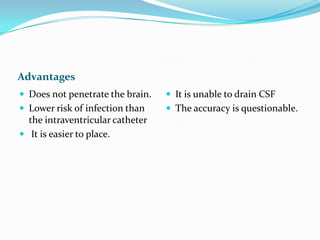
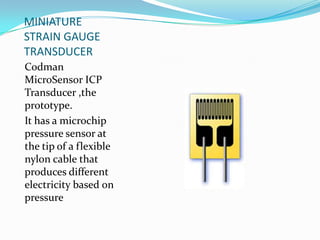

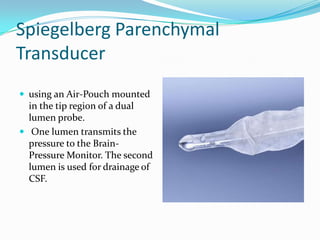

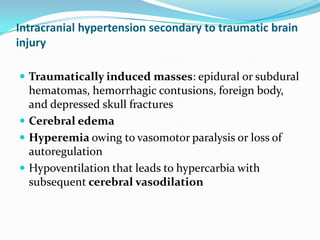
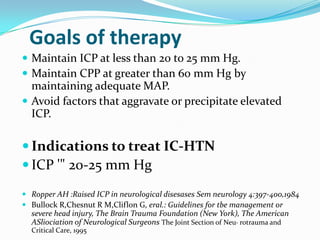
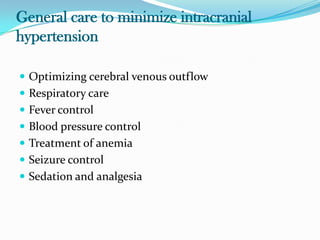
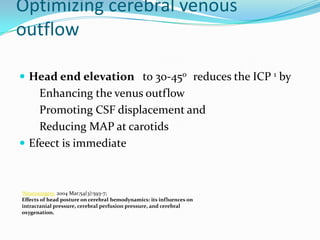




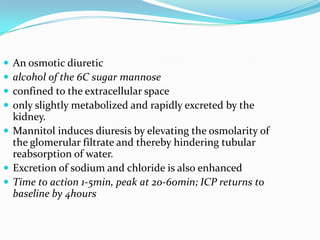






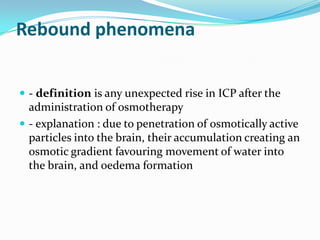
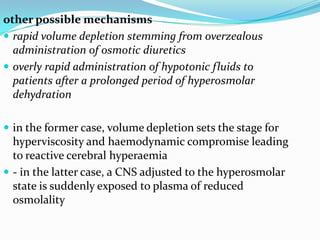

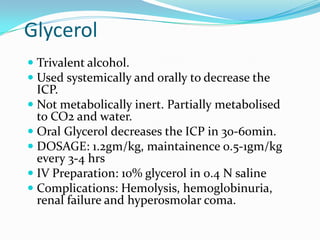















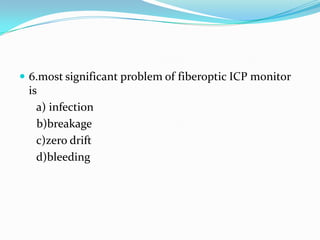
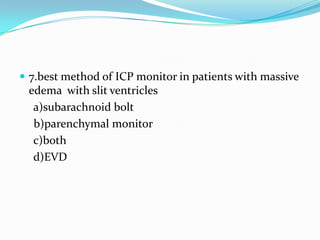
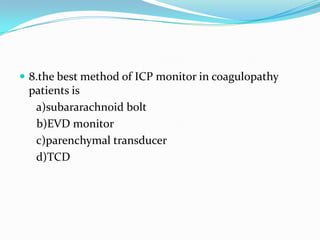



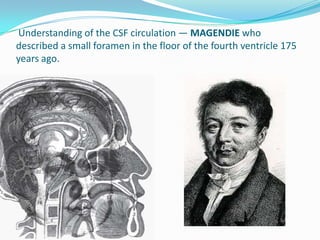
The document discusses the historical understanding and physiological mechanisms of intracranial pressure (ICP). It notes that George Kellie in 1823 helped define the closed box concept of the skull. The key points are: 1) ICP is maintained by a balance between brain tissue, blood, and cerebrospinal fluid volumes within the fixed skull space. 2) Common causes of increased ICP include brain tumors, hemorrhages, edema from injuries or infections. 3) Monitoring devices include external ventricular drains and fiberoptic monitors, though all have advantages and disadvantages. 4) Increased ICP can cause herniation and shift brain tissues, reducing blood flow and oxygen, potentially leading to


![PERI-PROSTHETIC FRACTURE NAIL-PLATE CONSTRUCT [NPC].pptx](https://cdn.slidesharecdn.com/ss_thumbnails/drarunkumardrmohamedashrafperiprostheticfrasturenail-plateconstructnpc-260209164459-7e9d15a1-thumbnail.jpg?width=640&height=640&fit=bounds)


![CTEV [ clubfoot] DR ARUN LAL ,DR MOHAMED ASHRAF travancore medical college k...](https://cdn.slidesharecdn.com/ss_thumbnails/ctevclubfootdrarunlaldrmohamedashraftravancoremedicalcollegekollamkeralaindia-260208063247-18fc466c-thumbnail.jpg?width=640&height=640&fit=bounds)


