RAID LEVELS 
BY 
SRIPATI MAHAPATRA
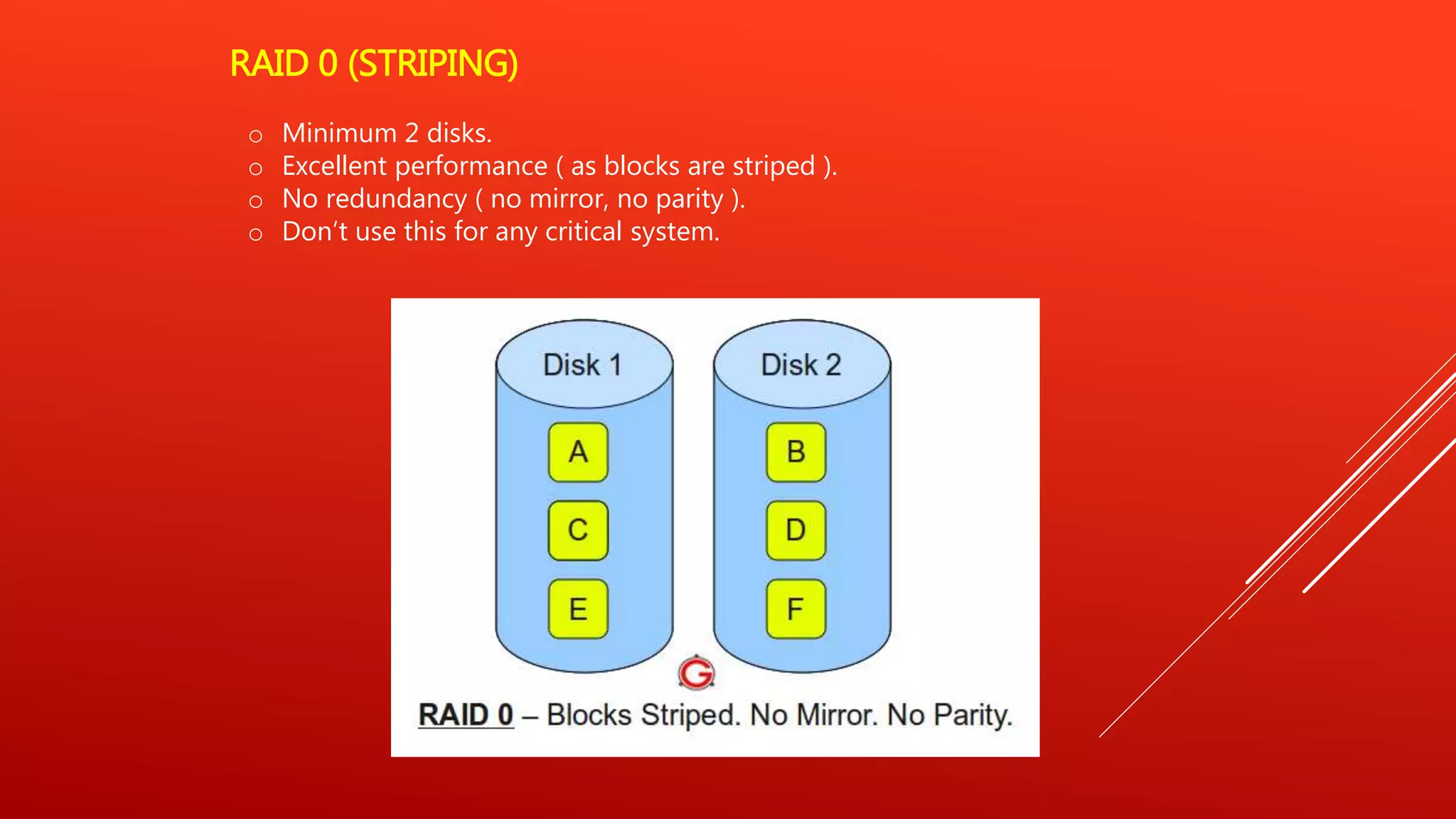
RAID 0 (STRIPING) 
o Minimum 2 disks. 
o Excellent performance ( as blocks are striped ). 
o No redundancy ( no mirror, no parity ). 
o Don’t use this for any critical system.
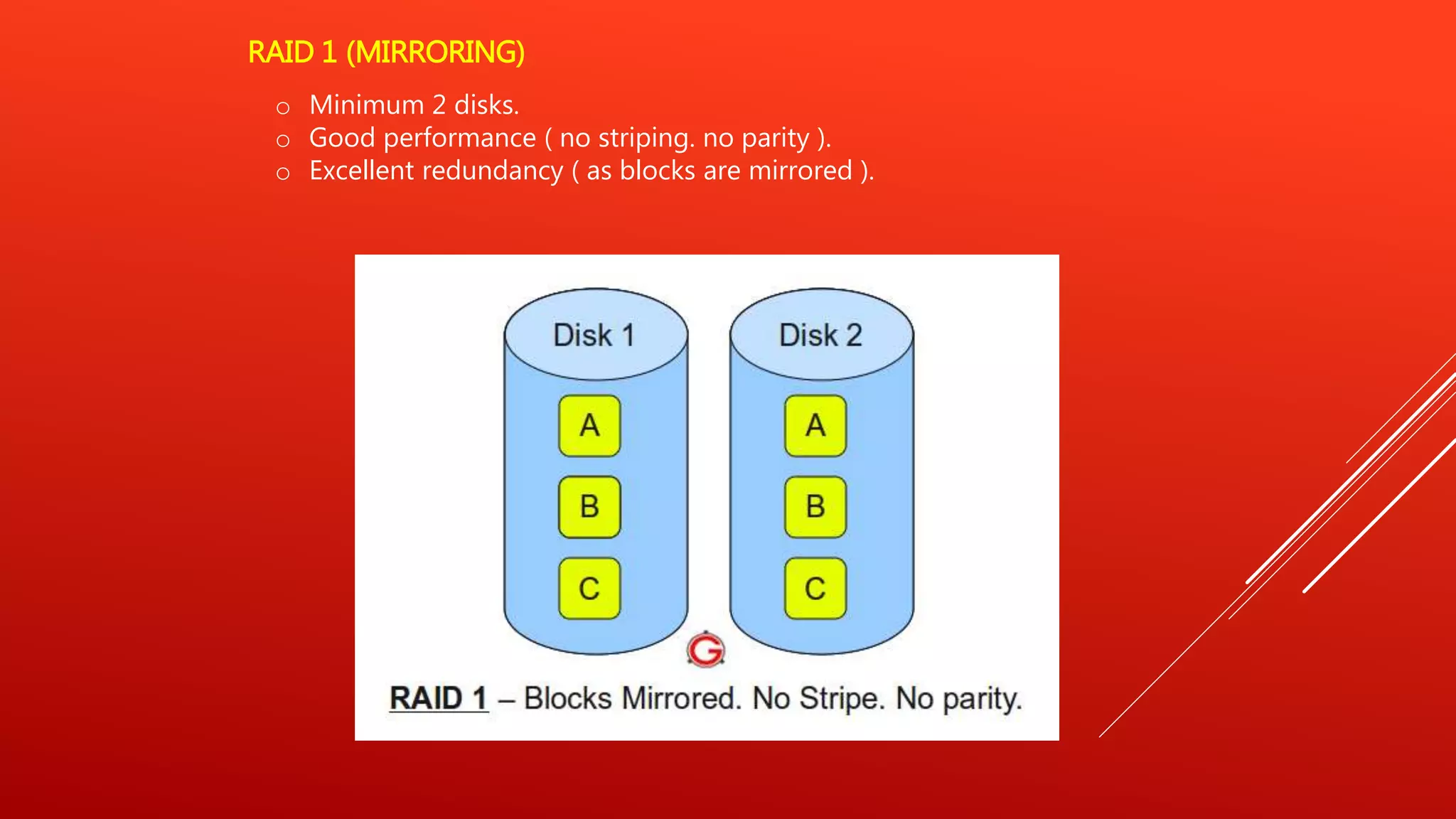
RAID 1 (MIRRORING) 
o Minimum 2 disks. 
o Good performance ( no striping. no parity ). 
o Excellent redundancy ( as blocks are mirrored ).
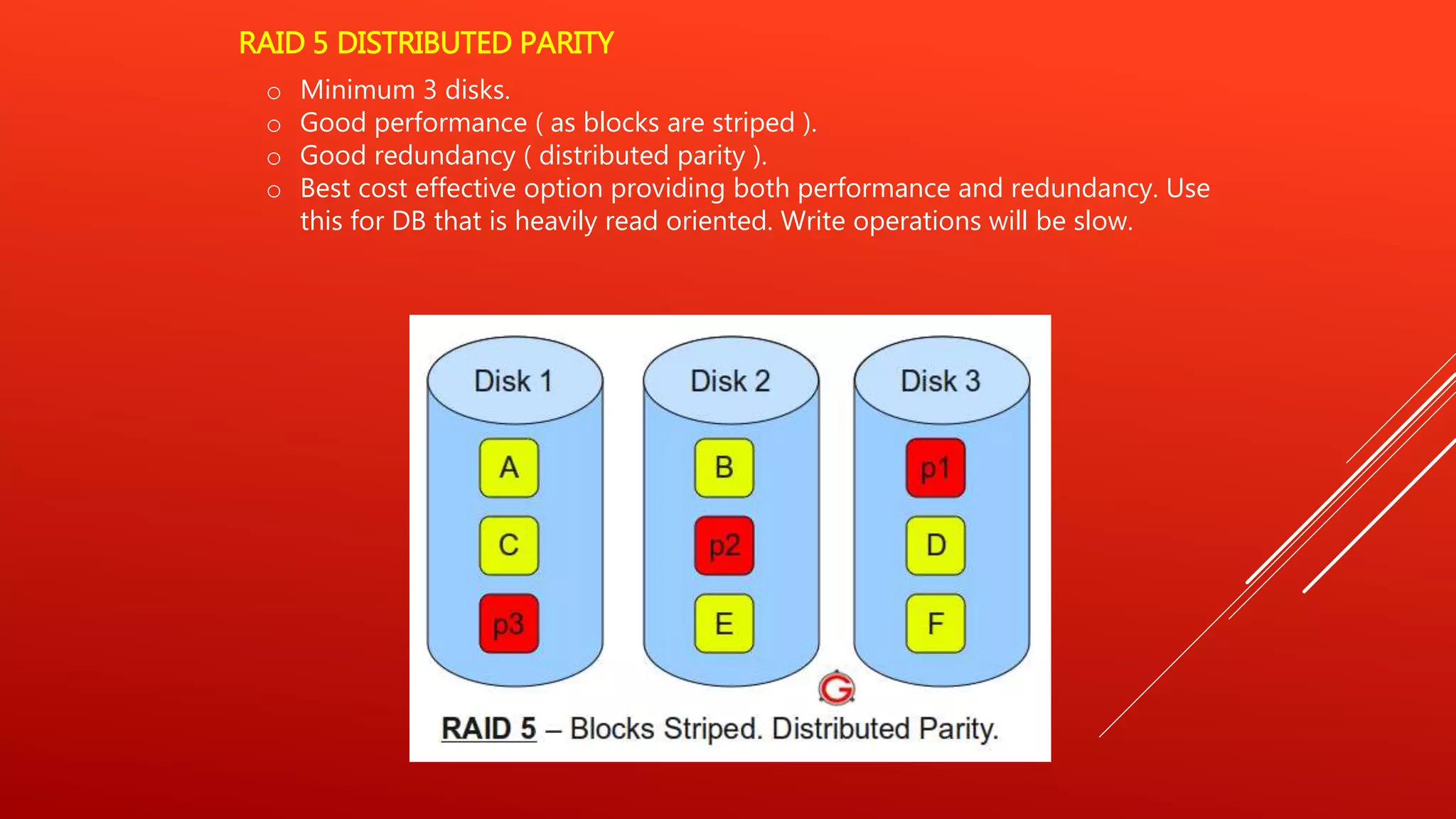
RAID 5 DISTRIBUTED PARITY 
o Minimum 3 disks. 
o Good performance ( as blocks are striped ). 
o Good redundancy ( distributed parity ). 
o Best cost effective option providing both performance and redundancy. Use 
this for DB that is heavily read oriented. Write operations will be slow.
RAID 6 (BLOCK STRIPING) 
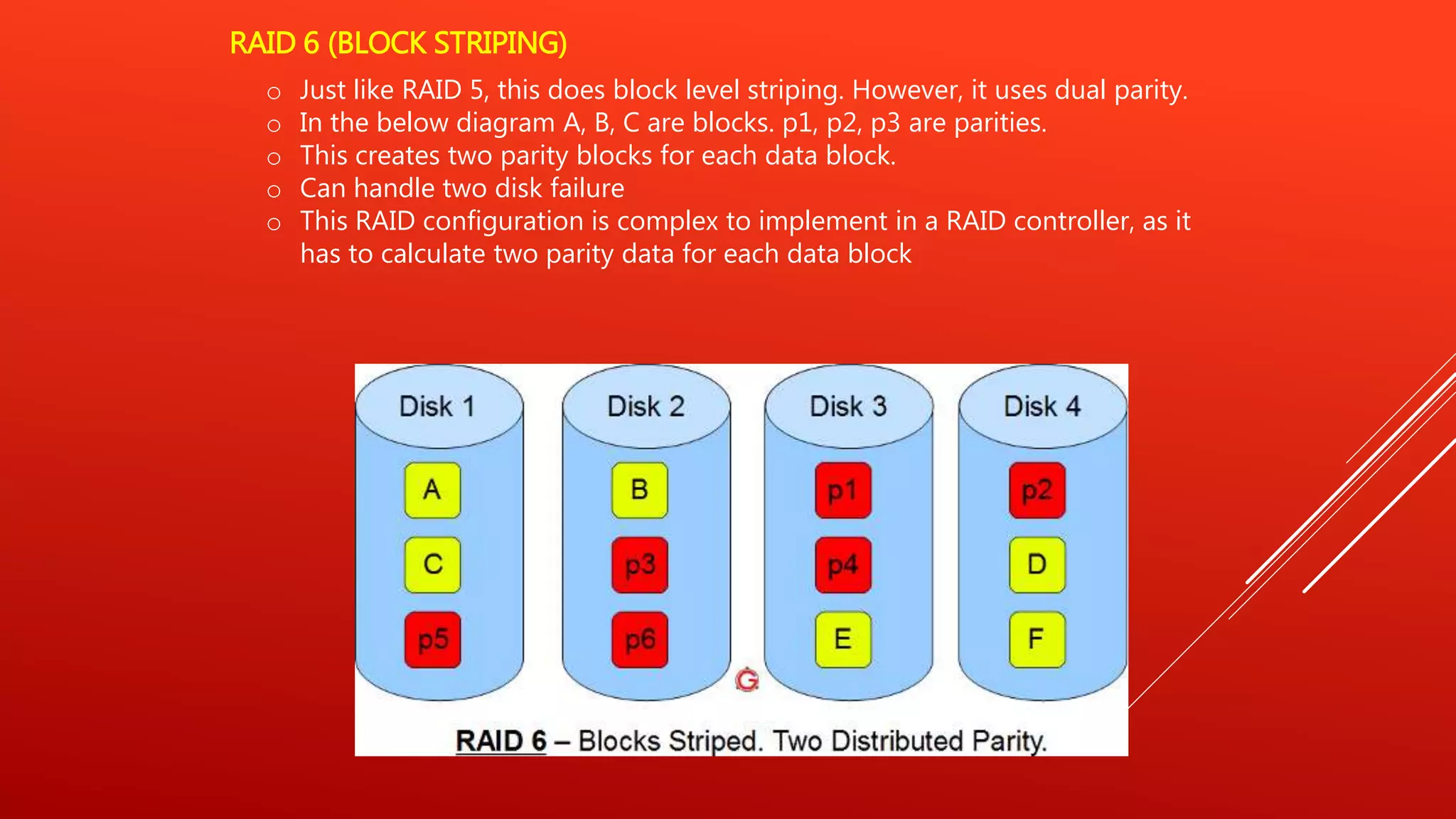
o Just like RAID 5, this does block level striping. However, it uses dual parity. 
o In the below diagram A, B, C are blocks. p1, p2, p3 are parities. 
o This creates two parity blocks for each data block. 
o Can handle two disk failure 
o This RAID configuration is complex to implement in a RAID controller, as it 
has to calculate two parity data for each data block
RAID 10 (MIRRORING AND STRIPING) 
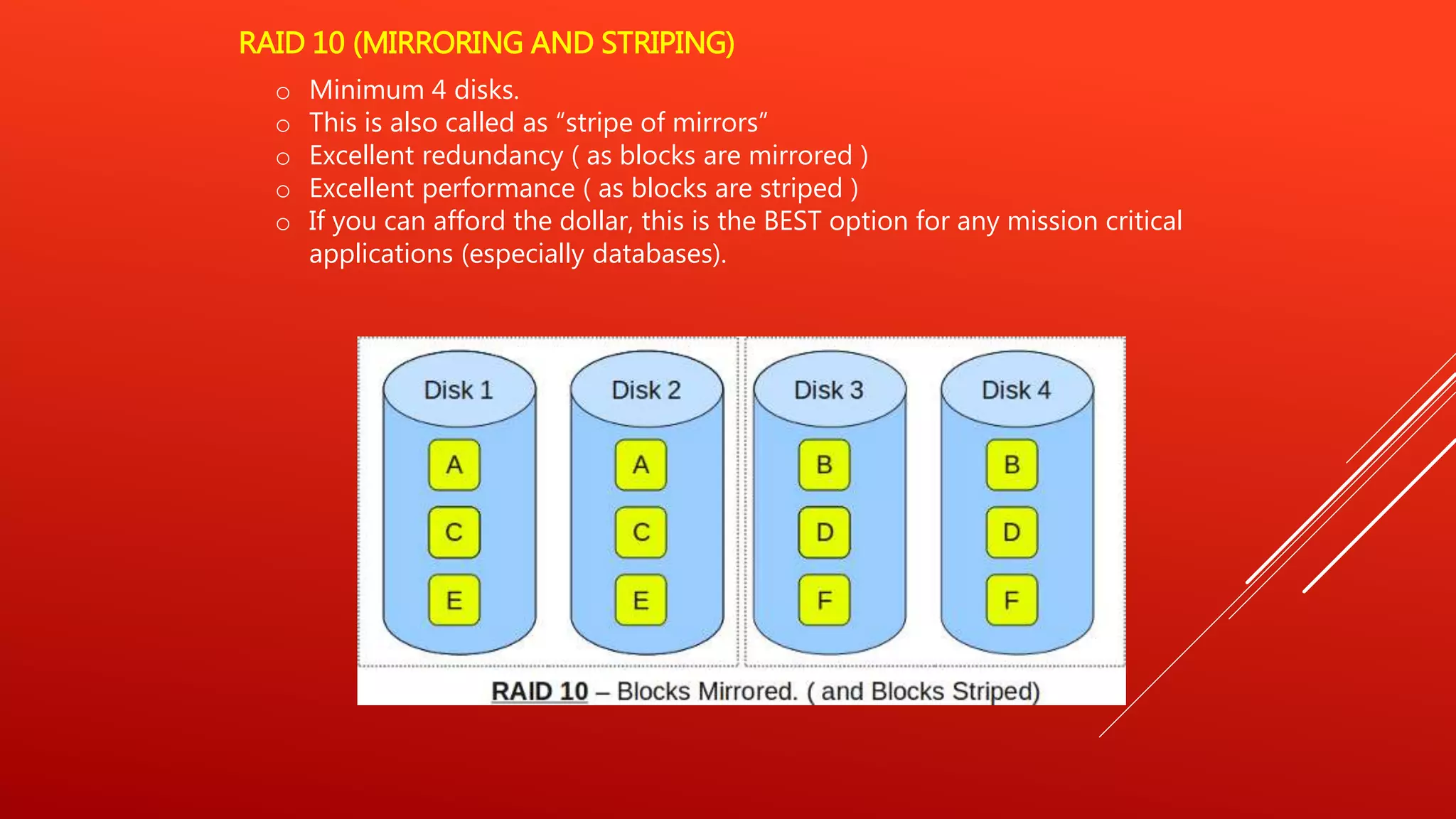
o Minimum 4 disks. 
o This is also called as “stripe of mirrors” 
o Excellent redundancy ( as blocks are mirrored ) 
o Excellent performance ( as blocks are striped ) 
o If you can afford the dollar, this is the BEST option for any mission critical 
applications (especially databases).
RAID 0+1 
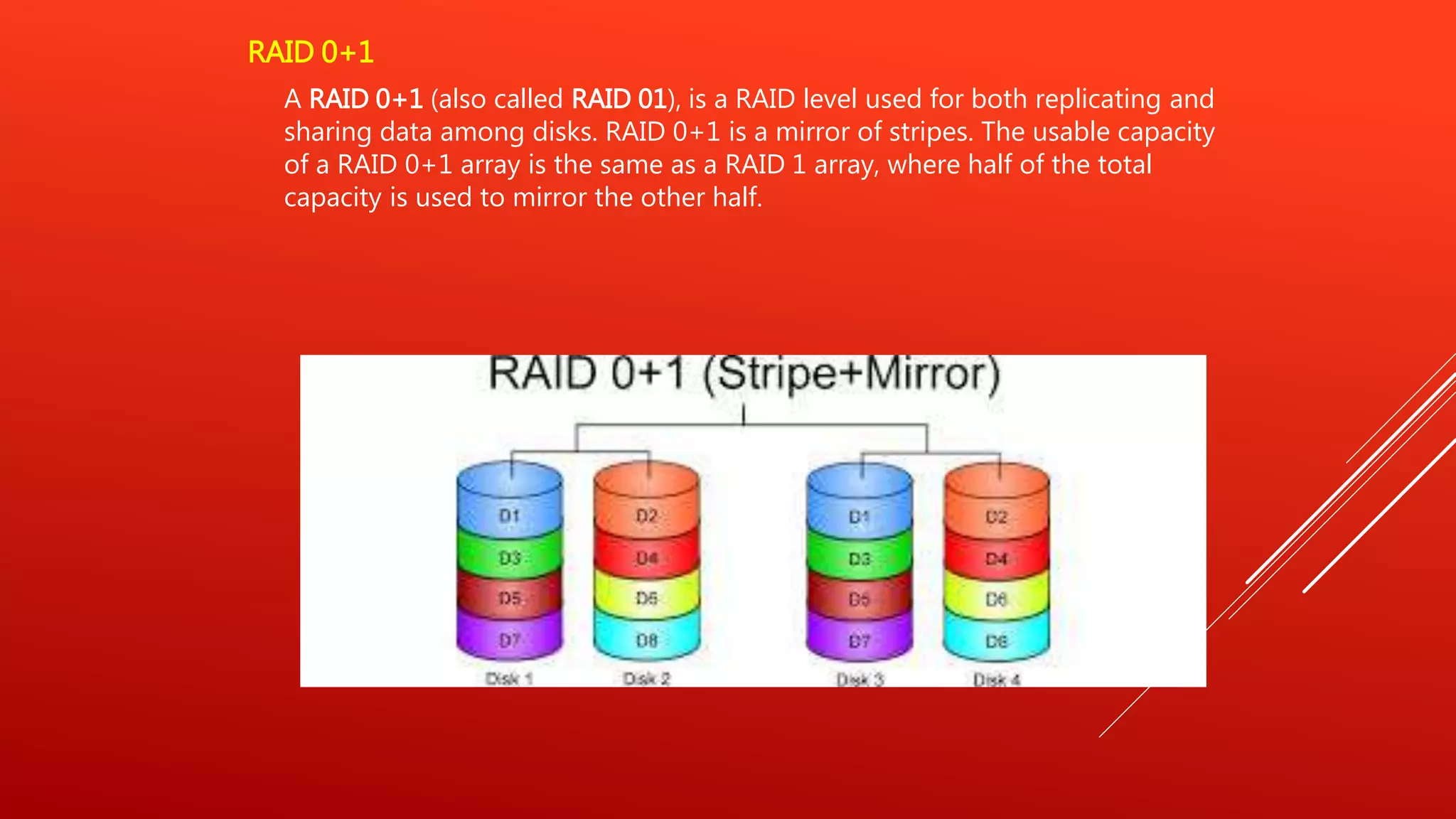
A RAID 0+1 (also called RAID 01), is a RAID level used for both replicating and 
sharing data among disks. RAID 0+1 is a mirror of stripes. The usable capacity 
of a RAID 0+1 array is the same as a RAID 1 array, where half of the total 
capacity is used to mirror the other half.

Raid Levels

  • 1.
    RAID LEVELS BY SRIPATI MAHAPATRA
  • 2.
    RAID 0 (STRIPING) o Minimum 2 disks. o Excellent performance ( as blocks are striped ). o No redundancy ( no mirror, no parity ). o Don’t use this for any critical system.
  • 3.
    RAID 1 (MIRRORING) o Minimum 2 disks. o Good performance ( no striping. no parity ). o Excellent redundancy ( as blocks are mirrored ).
  • 4.
    RAID 5 DISTRIBUTEDPARITY o Minimum 3 disks. o Good performance ( as blocks are striped ). o Good redundancy ( distributed parity ). o Best cost effective option providing both performance and redundancy. Use this for DB that is heavily read oriented. Write operations will be slow.
  • 5.
    RAID 6 (BLOCKSTRIPING) o Just like RAID 5, this does block level striping. However, it uses dual parity. o In the below diagram A, B, C are blocks. p1, p2, p3 are parities. o This creates two parity blocks for each data block. o Can handle two disk failure o This RAID configuration is complex to implement in a RAID controller, as it has to calculate two parity data for each data block
  • 6.
    RAID 10 (MIRRORINGAND STRIPING) o Minimum 4 disks. o This is also called as “stripe of mirrors” o Excellent redundancy ( as blocks are mirrored ) o Excellent performance ( as blocks are striped ) o If you can afford the dollar, this is the BEST option for any mission critical applications (especially databases).
  • 7.
    RAID 0+1 ARAID 0+1 (also called RAID 01), is a RAID level used for both replicating and sharing data among disks. RAID 0+1 is a mirror of stripes. The usable capacity of a RAID 0+1 array is the same as a RAID 1 array, where half of the total capacity is used to mirror the other half.