Question tags
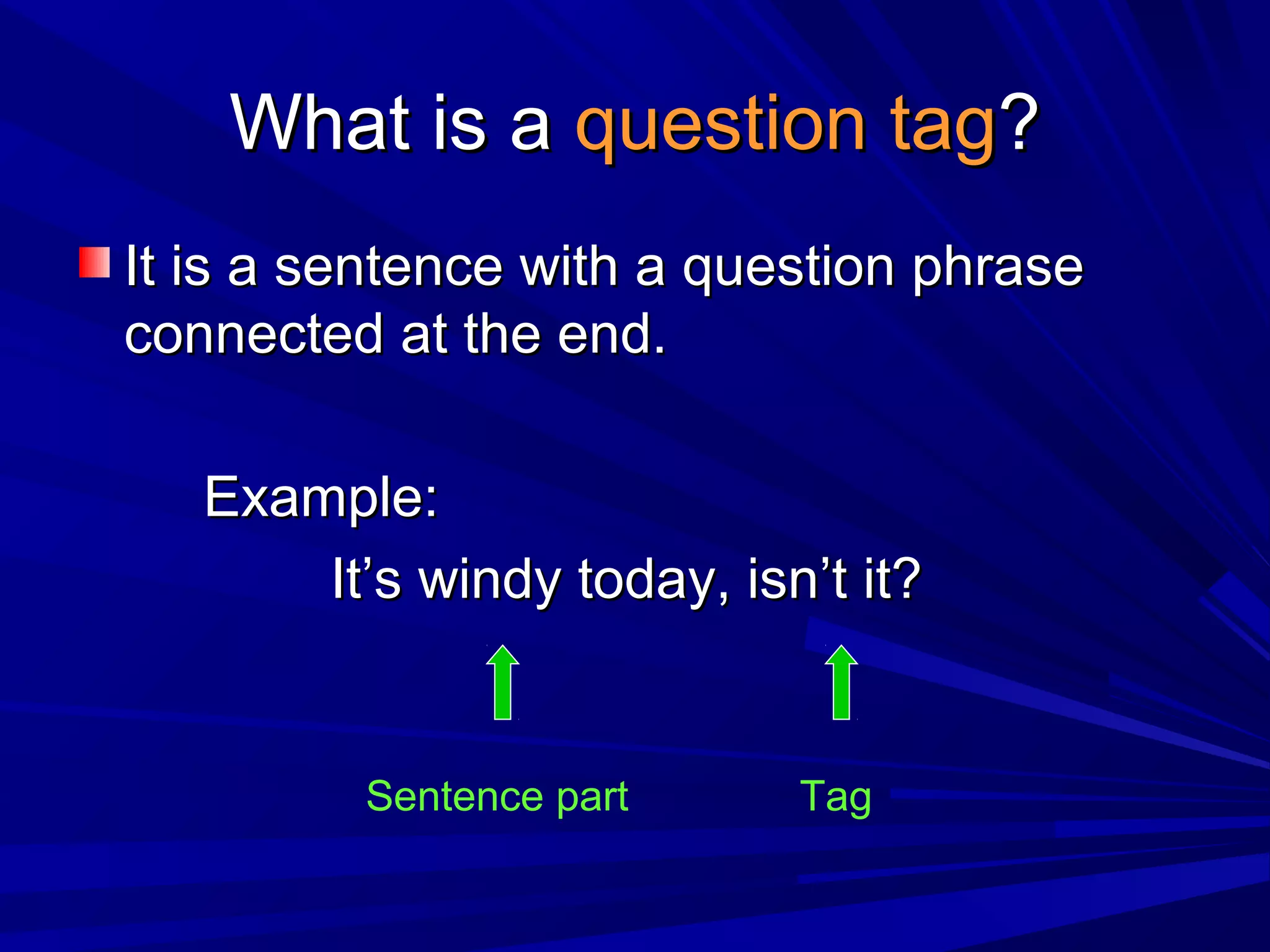
What is a question tag?
It is a sentence with a question phrase
connected at the end.

   Example:
       It’s windy today, isn’t it?


         Sentence part      Tag
Forming Question
                    Tags

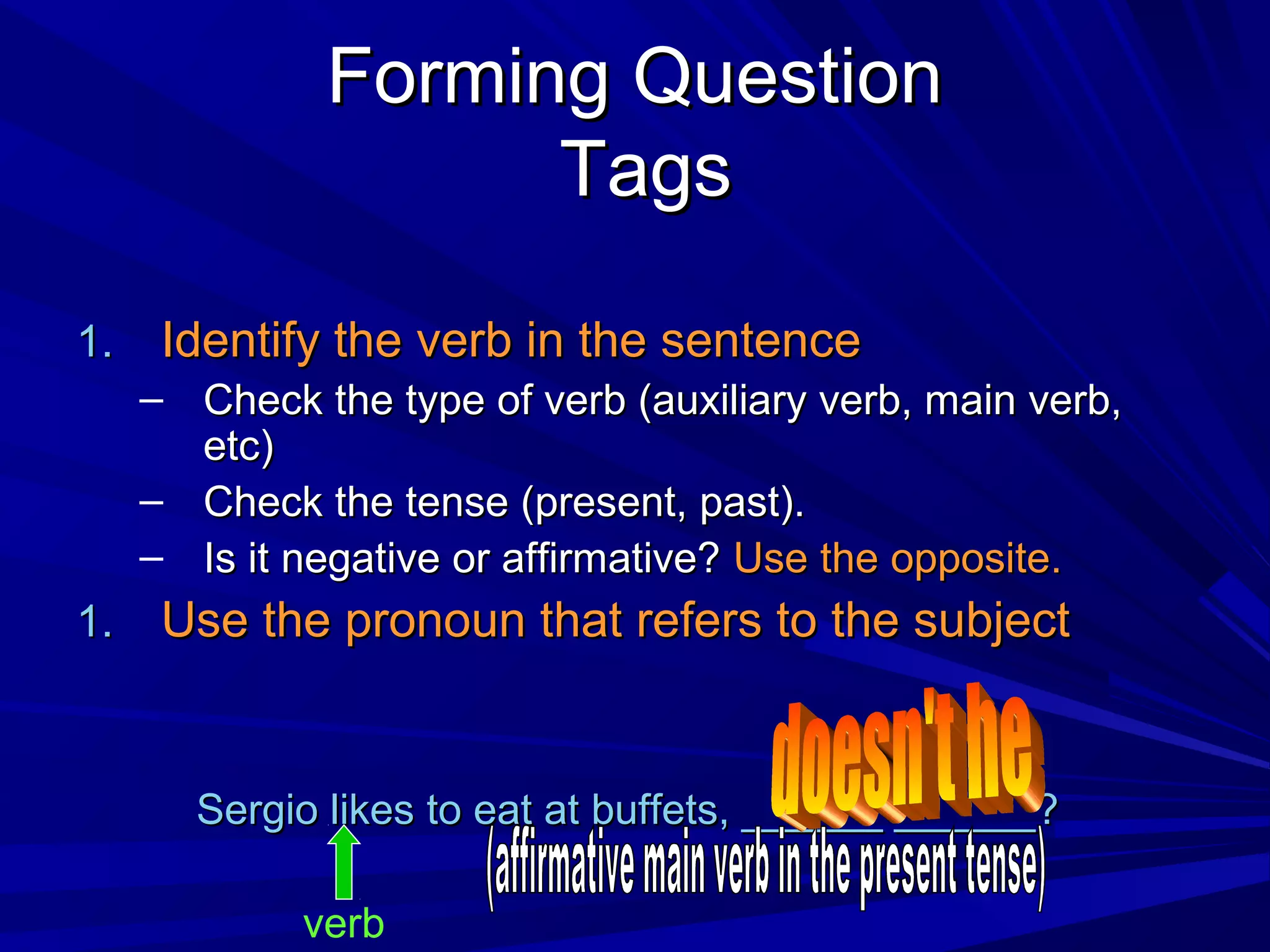
1.    Identify the verb in the sentence
     – Check the type of verb (auxiliary verb, main verb,
       etc)
     – Check the tense (present, past).
     – Is it negative or affirmative? Use the opposite.
1.    Use the pronoun that refers to the subject


       Sergio likes to eat at buffets, ______ ______?

             verb
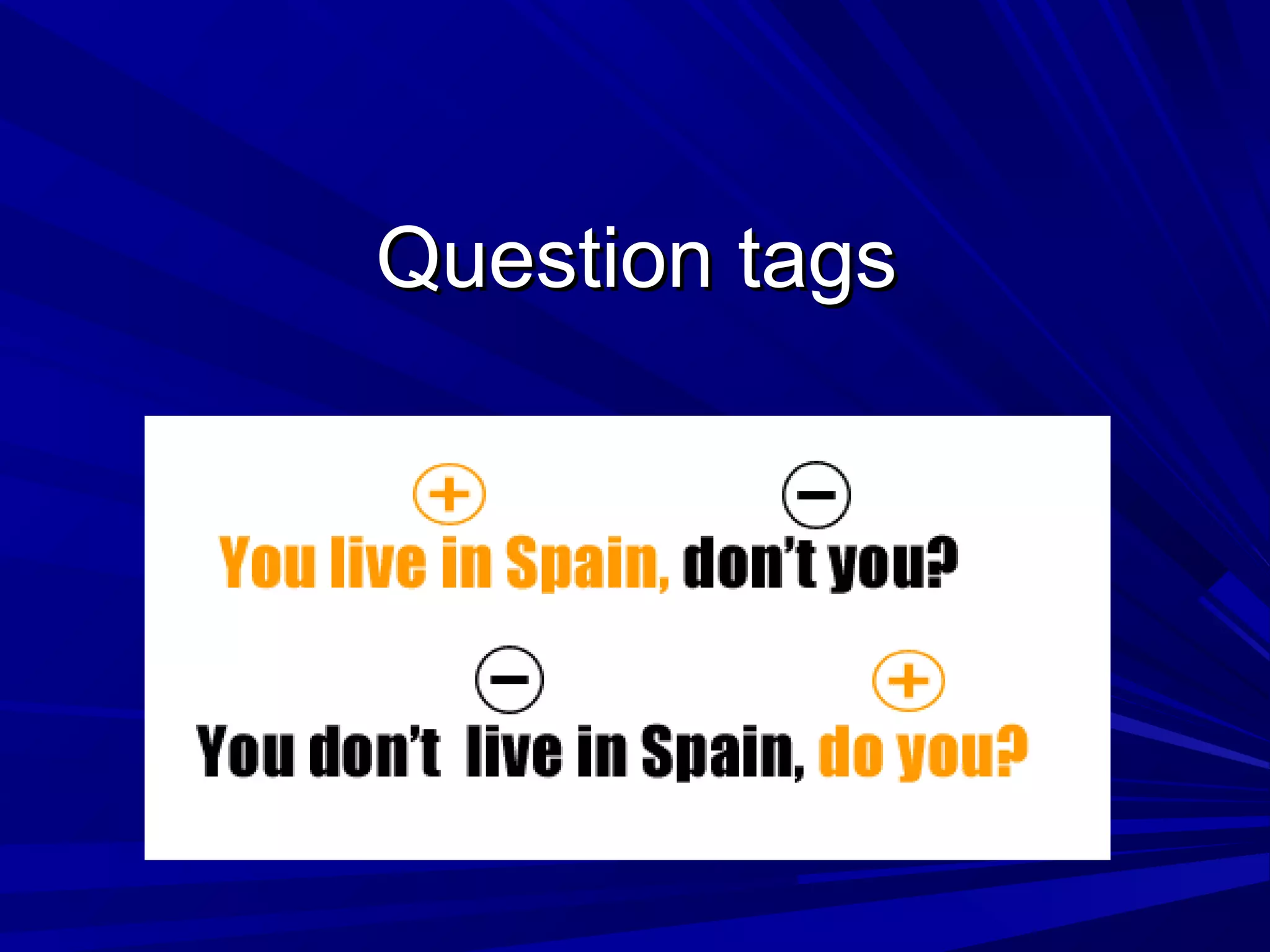
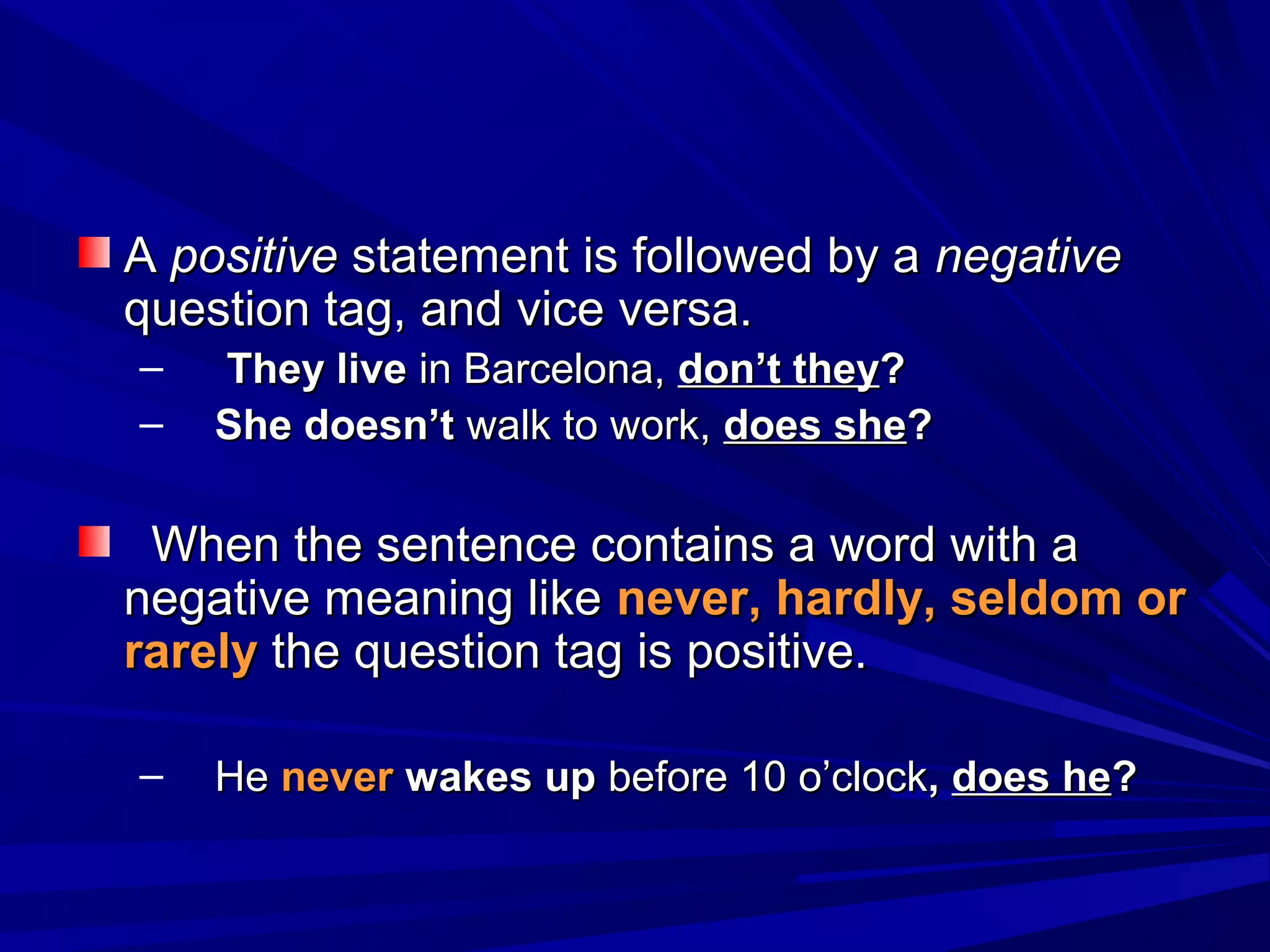
A positive statement is followed by a negative
question tag, and vice versa.
–   They live in Barcelona, don’t they?
–   She doesn’t walk to work, does she?

 When the sentence contains a word with a
negative meaning like never, hardly, seldom or
rarely the question tag is positive.

–   He never wakes up before 10 o’clock, does he?
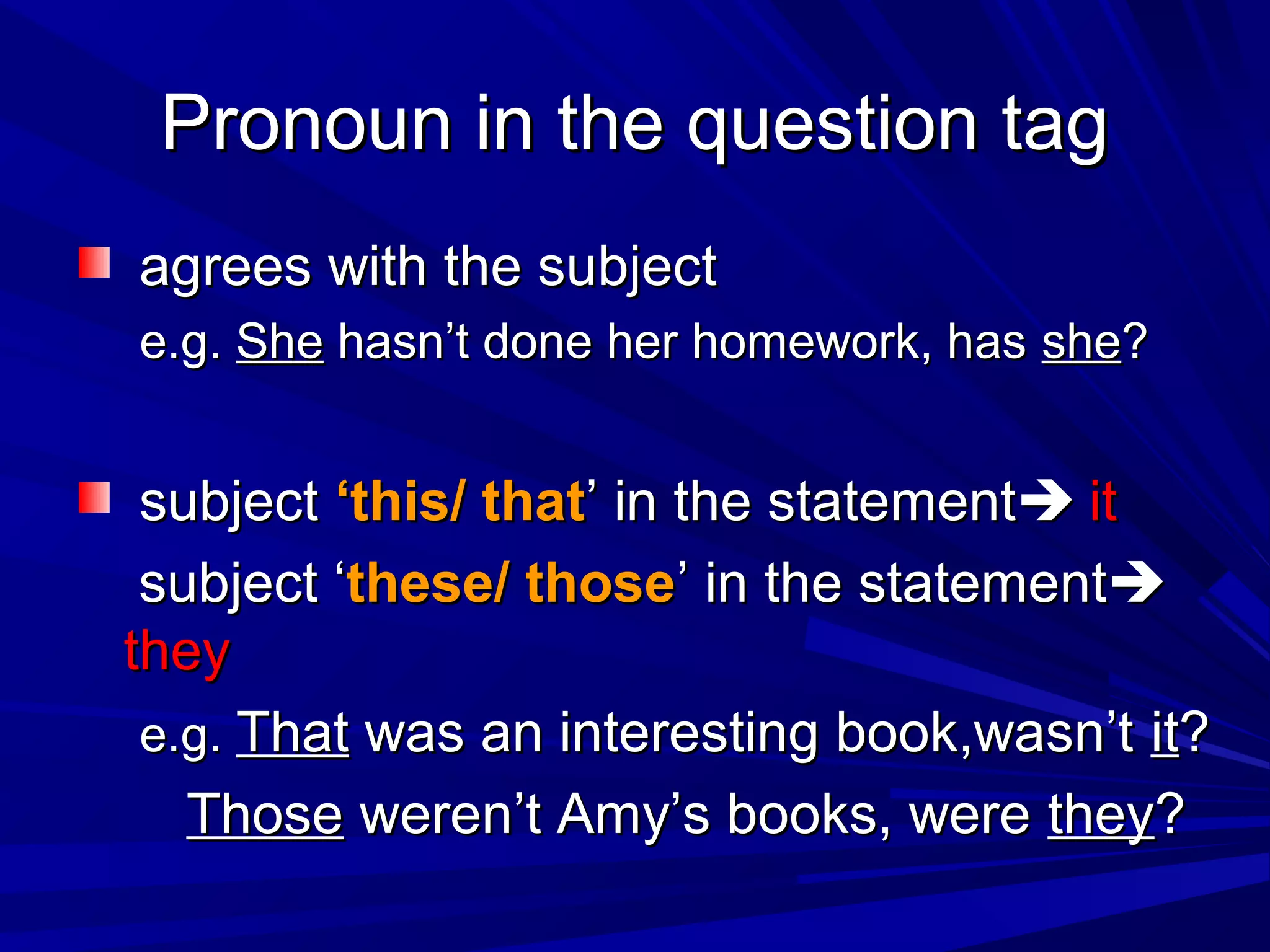
Pronoun in the question tag
agrees with the subject
e.g. She hasn’t done her homework, has she?


 subject ‘this/ that’ in the statement it
 subject ‘these/ those’ in the statement
they
 e.g. That was an interesting book,wasn’t it?
   Those weren’t Amy’s books, were they?
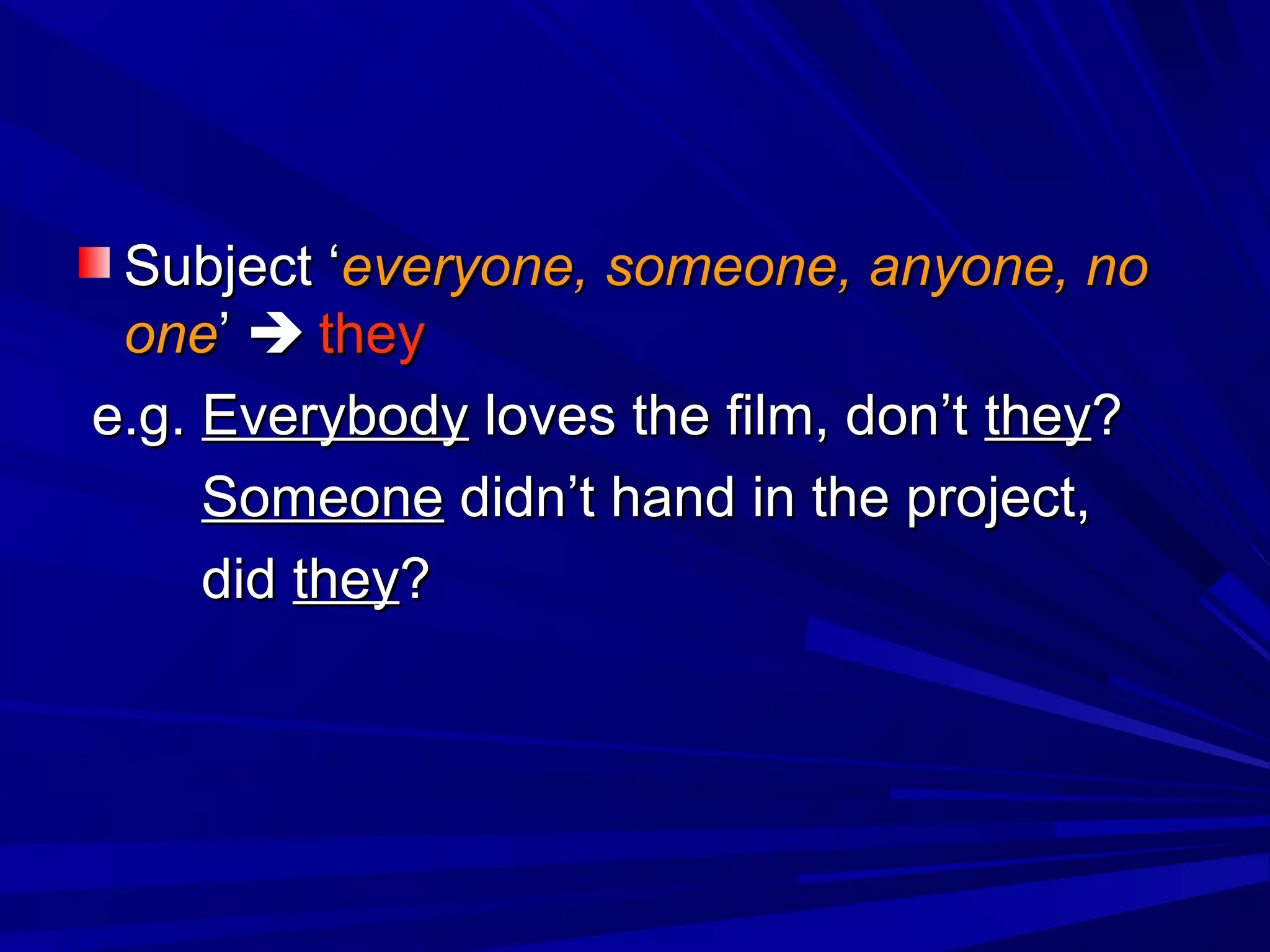
Subject ‘everyone, someone, anyone, no
 one’  they
e.g. Everybody loves the film, don’t they?
     Someone didn’t hand in the project,
     did they?
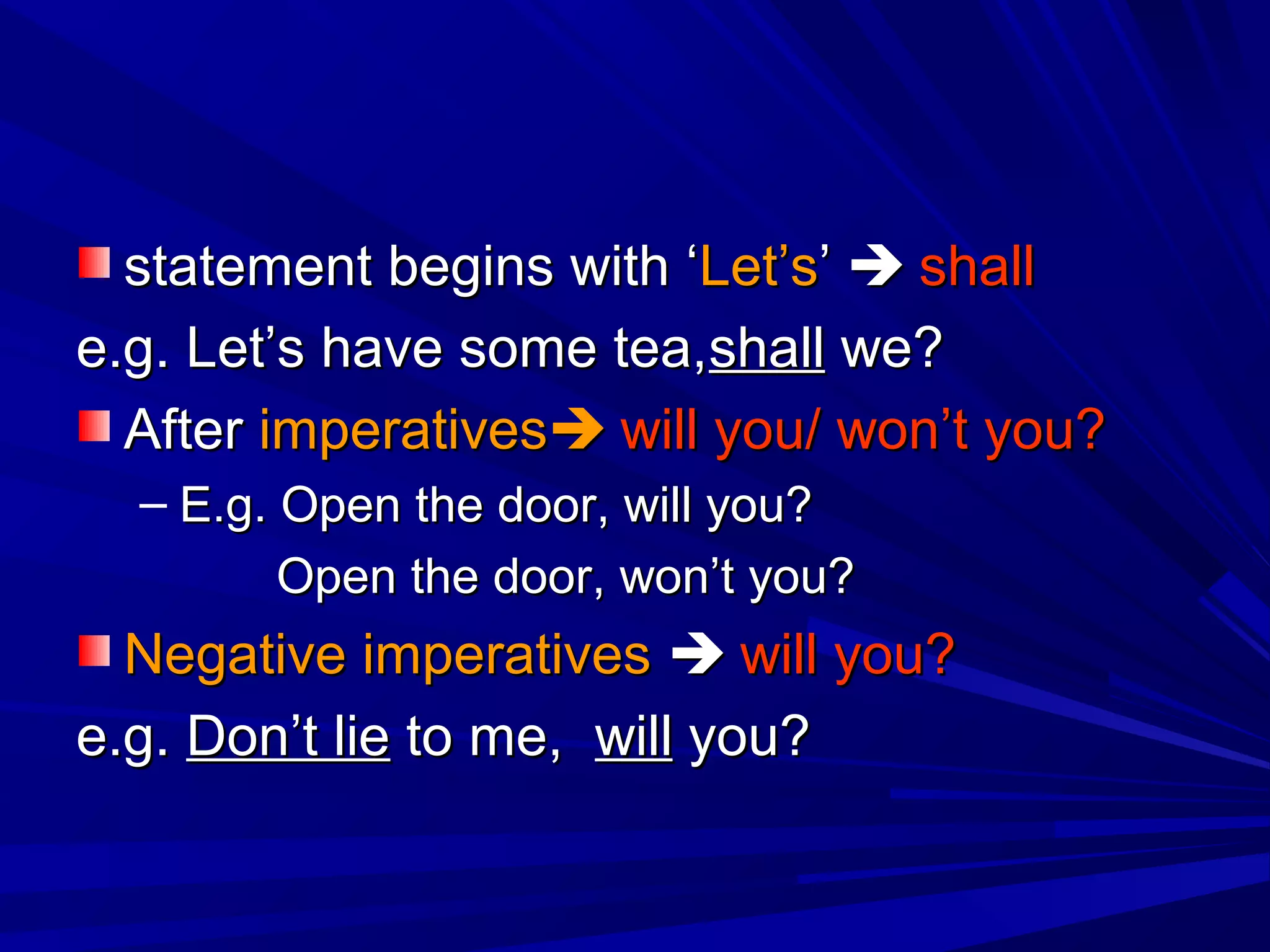
statement begins with ‘Let’s’  shall
e.g. Let’s have some tea,shall we?
  After imperatives will you/ won’t you?
  – E.g. Open the door, will you?
        Open the door, won’t you?
  Negative imperatives  will you?
e.g. Don’t lie to me, will you?
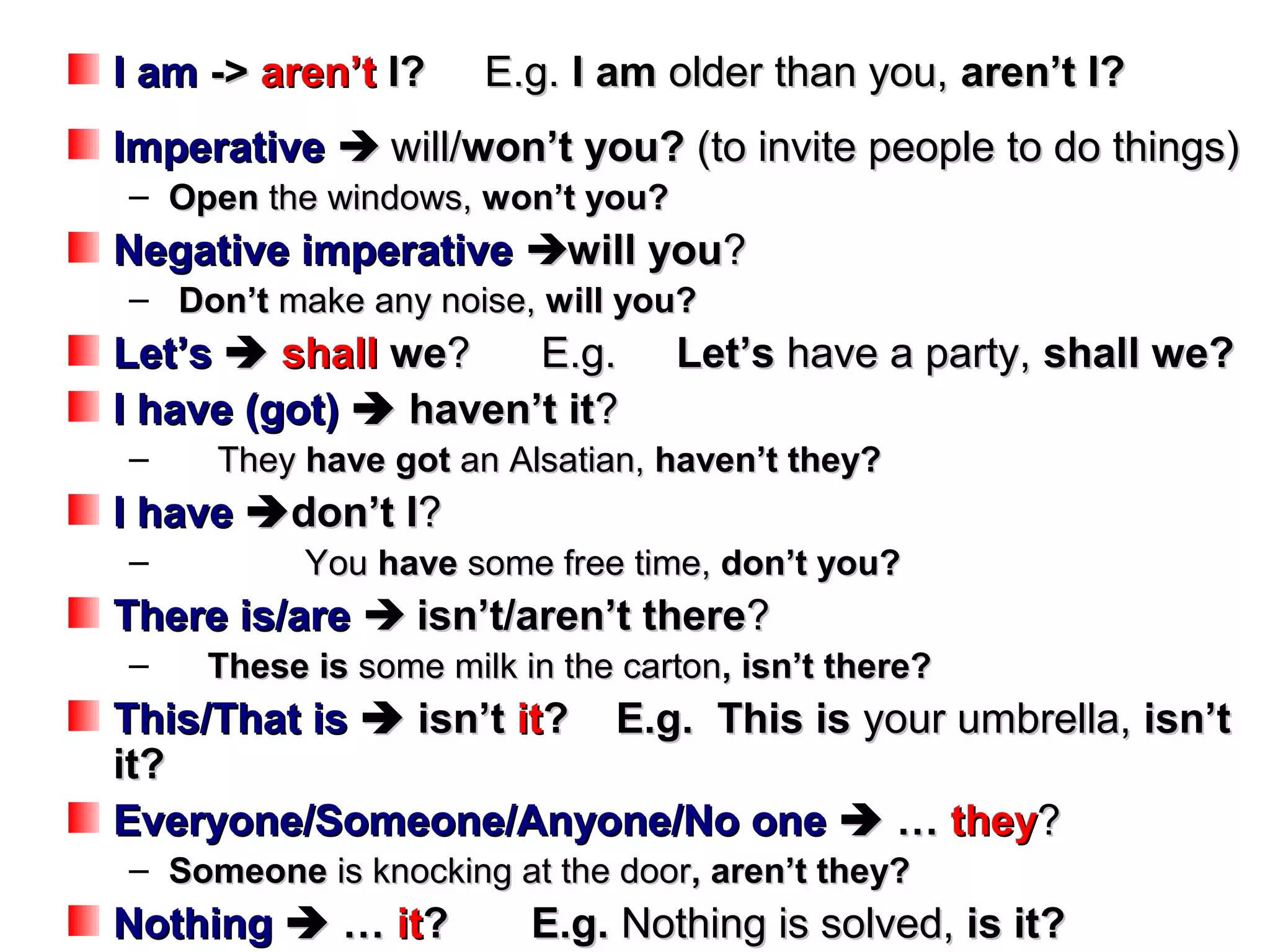
I am -> aren’t I?     E.g. I am older than you, aren’t I?
Imperative  will/won’t you? (to invite people to do things)
– Open the windows, won’t you?
Negative imperative will you?
– Don’t make any noise, will you?
Let’s  shall we?    E.g.         Let’s have a party, shall we?
I have (got)  haven’t it?
–    They have got an Alsatian, haven’t they?
I have  don’t I?
–          You have some free time, don’t you?
There is/are  isn’t/aren’t there?
–    These is some milk in the carton, isn’t there?
This/That is  isn’t it? E.g. This is your umbrella, isn’t
it?
Everyone/Someone/Anyone/No one  … they?
– Someone is knocking at the door, aren’t they?
Nothing  … it?          E.g. Nothing is solved, is it?
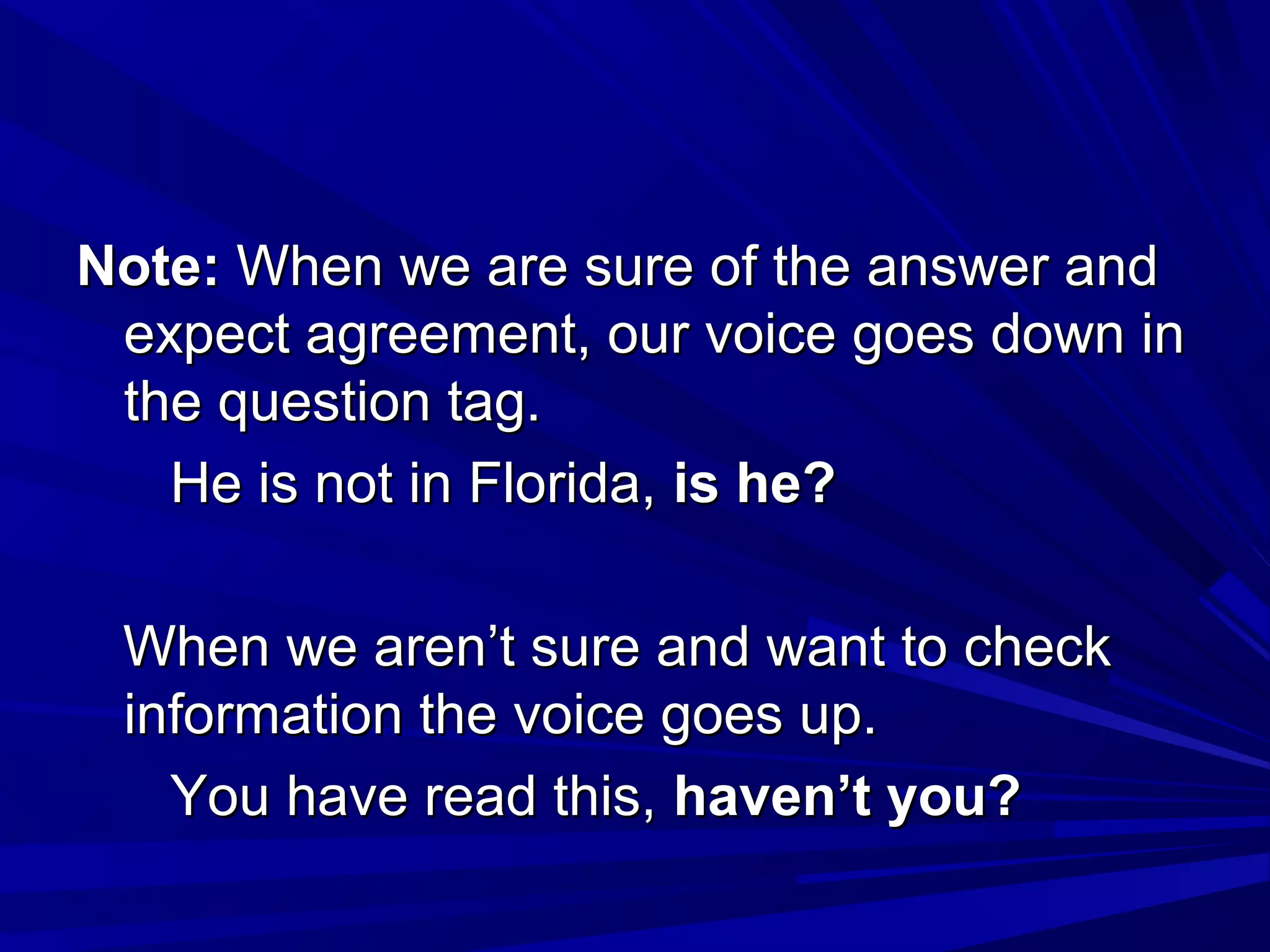
Note: When we are sure of the answer and
 expect agreement, our voice goes down in
 the question tag.
   He is not in Florida, is he?

 When we aren’t sure and want to check
 information the voice goes up.
   You have read this, haven’t you?

Question tags

  • 1.
  • 2.
    What is aquestion tag? It is a sentence with a question phrase connected at the end. Example: It’s windy today, isn’t it? Sentence part Tag
  • 3.
    Forming Question Tags 1. Identify the verb in the sentence – Check the type of verb (auxiliary verb, main verb, etc) – Check the tense (present, past). – Is it negative or affirmative? Use the opposite. 1. Use the pronoun that refers to the subject Sergio likes to eat at buffets, ______ ______? verb
  • 4.
    A positive statementis followed by a negative question tag, and vice versa. – They live in Barcelona, don’t they? – She doesn’t walk to work, does she? When the sentence contains a word with a negative meaning like never, hardly, seldom or rarely the question tag is positive. – He never wakes up before 10 o’clock, does he?
  • 5.
    Pronoun in thequestion tag agrees with the subject e.g. She hasn’t done her homework, has she? subject ‘this/ that’ in the statement it subject ‘these/ those’ in the statement they e.g. That was an interesting book,wasn’t it? Those weren’t Amy’s books, were they?
  • 6.
    Subject ‘everyone, someone,anyone, no one’  they e.g. Everybody loves the film, don’t they? Someone didn’t hand in the project, did they?
  • 7.
    statement begins with‘Let’s’  shall e.g. Let’s have some tea,shall we? After imperatives will you/ won’t you? – E.g. Open the door, will you? Open the door, won’t you? Negative imperatives  will you? e.g. Don’t lie to me, will you?
  • 8.
    I am ->aren’t I? E.g. I am older than you, aren’t I? Imperative  will/won’t you? (to invite people to do things) – Open the windows, won’t you? Negative imperative will you? – Don’t make any noise, will you? Let’s  shall we? E.g. Let’s have a party, shall we? I have (got)  haven’t it? – They have got an Alsatian, haven’t they? I have  don’t I? – You have some free time, don’t you? There is/are  isn’t/aren’t there? – These is some milk in the carton, isn’t there? This/That is  isn’t it? E.g. This is your umbrella, isn’t it? Everyone/Someone/Anyone/No one  … they? – Someone is knocking at the door, aren’t they? Nothing  … it? E.g. Nothing is solved, is it?
  • 9.
    Note: When weare sure of the answer and expect agreement, our voice goes down in the question tag. He is not in Florida, is he? When we aren’t sure and want to check information the voice goes up. You have read this, haven’t you?