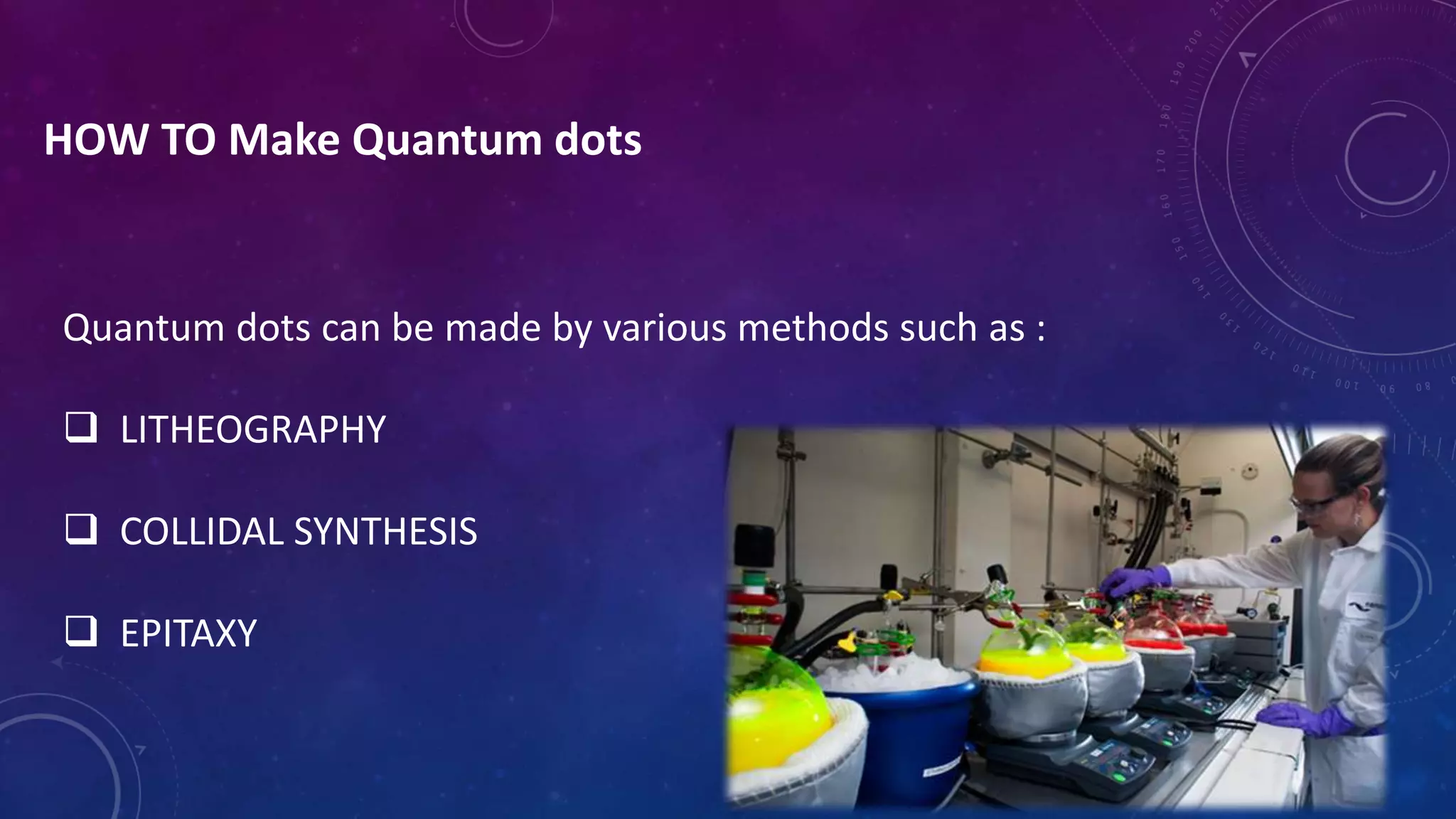
Quantum dots can be made through lithography, colloidal synthesis, or epitaxy. Lithography uses a polymer mask and electron beam to pattern metal layers on quantum wells. Colloidal synthesis immerses semiconductor microcrystals in glass to form nearly equal sized microcrystals. Epitaxy involves growing smaller bandgap semiconductors on larger bandgap compounds, restricting growth with a mask to form quantum dots. Potential applications of quantum dots include computing, LEDs, photovoltaics, medical imaging, cell imaging, cancer detection and targeted drug delivery.
HOW TO MakeQuantum dots
Quantum dots can be made by various methods such as :
LITHEOGRAPHY
COLLIDAL SYNTHESIS
EPITAXY
6.
Lithography
Quantum wells arecovered with a polymer mask and
exposed to an electron or ion beam.
The surface is covered with a thin layer of metal, then
cleaned and only the exposed areas keep the metal layer.
Pillars are etched into the entire surface.
Multiple layers are applied this way to build up the
properties and size wanted.
Disadvantages: slow, contamination, low density,
defect formation.
7.
Colloidal Synthesis
Immersion ofsemiconductor microcrystals in glass dielectric
matrices.
Taking a silicate glass with 1% semiconducting phase (CdS, CuCl,
CdSe, or CuBr).
Heating for several hours at high temperature.
Formation of microcrystals of nearly equal size.
Typically group II-VI materials (e.g. CdS, CdSe)
Size variations (“size dispersion”).
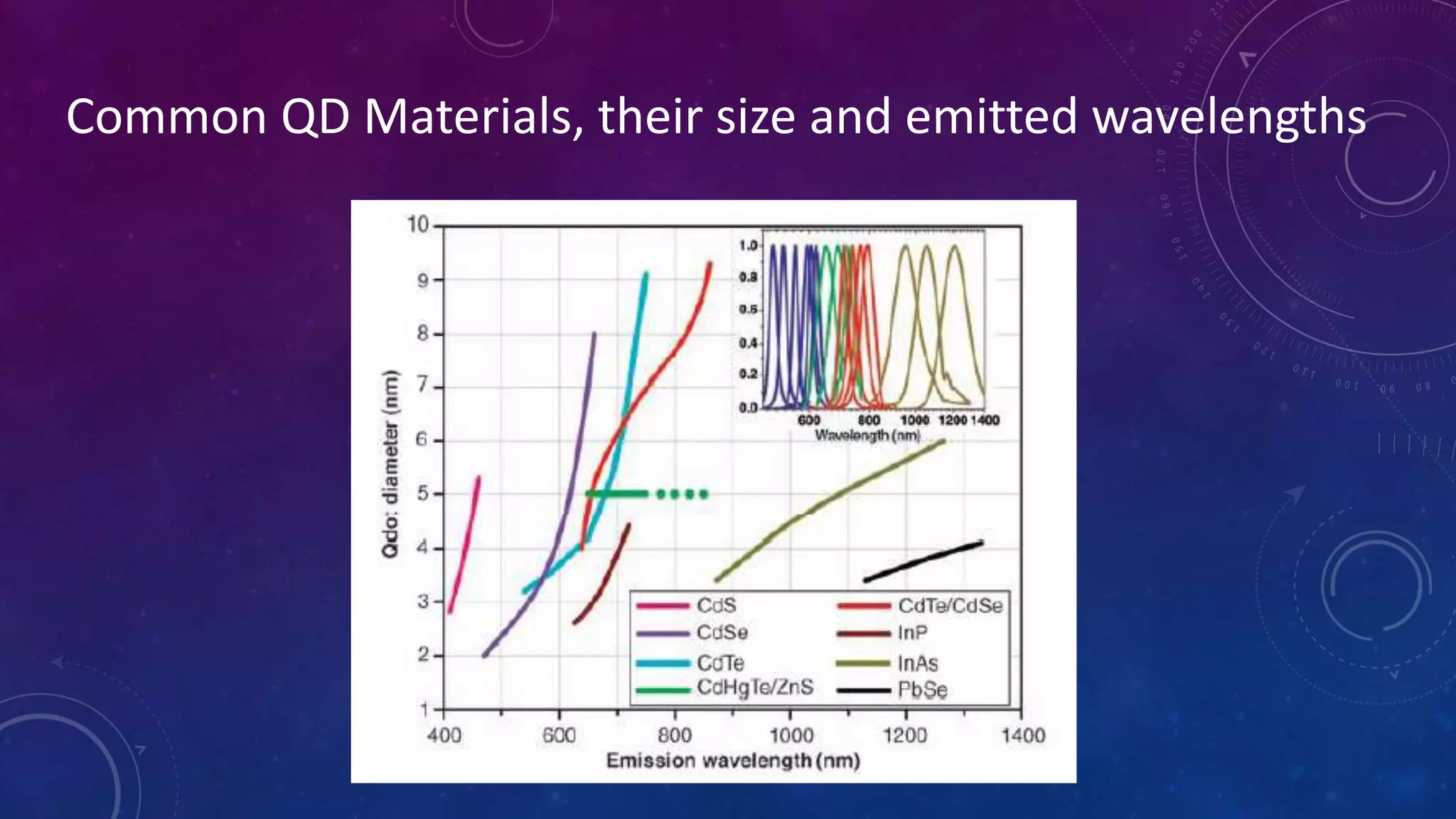
i.e: (PbS), (PbSe), (CdSe), (CdS), (InAs), (InP)
8.
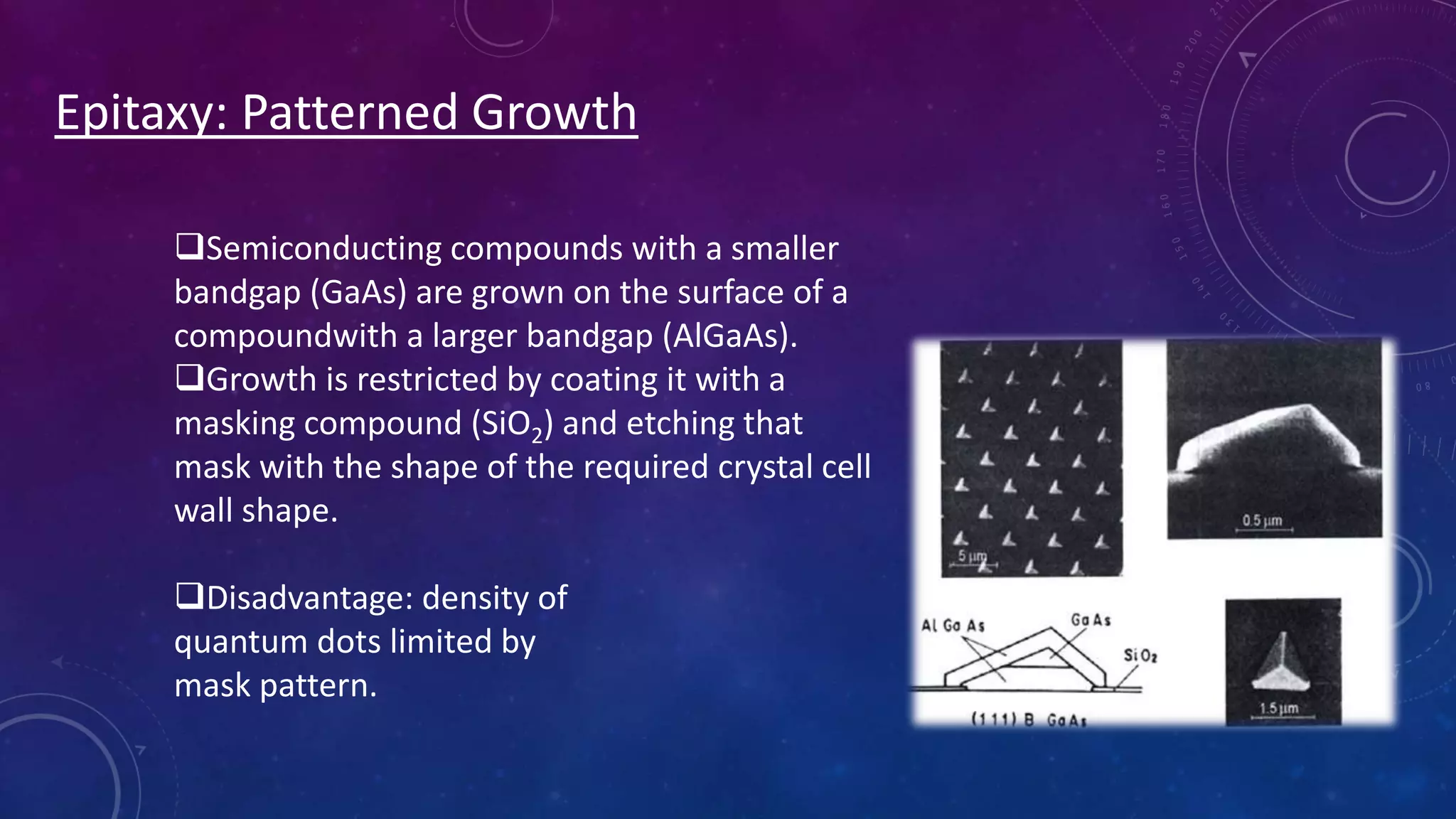
Epitaxy: Patterned Growth
Semiconductingcompounds with a smaller
bandgap (GaAs) are grown on the surface of a
compoundwith a larger bandgap (AlGaAs).
Growth is restricted by coating it with a
masking compound (SiO2) and etching that
mask with the shape of the required crystal cell
wall shape.
Disadvantage: density of
quantum dots limited by
mask pattern.
9.
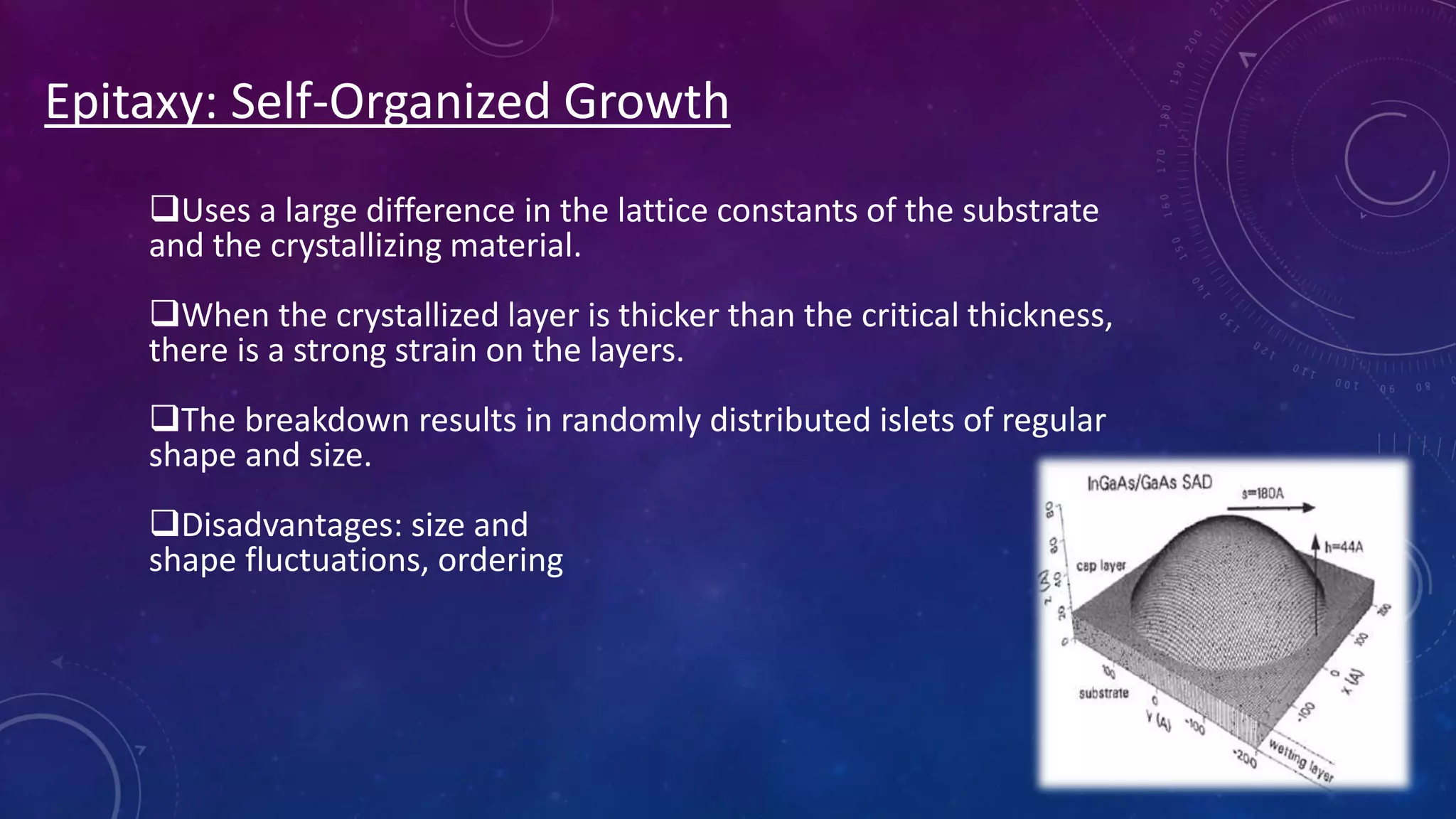
Epitaxy: Self-Organized Growth
Usesa large difference in the lattice constants of the substrate
and the crystallizing material.
When the crystallized layer is thicker than the critical thickness,
there is a strong strain on the layers.
The breakdown results in randomly distributed islets of regular
shape and size.
Disadvantages: size and
shape fluctuations, ordering
10.
Cadmium-free quantum dots
Inmany regions of the world there is now, or soon to be, legislation
to restrict and in some cases ban heavy metals in many household
appliances such as IT & telecommunication equipment, Lighting
equipment , Electrical & electronic tools, Toys, leisure & sports
equipment.
For QDs to be commercially viable in many applications they MUST
NOT CONTAIN cadmium or other restricted elements LIKE mercury,
lead, chromium.
So research has been able to create non-toxic quantum dots
using silicon.
Computing
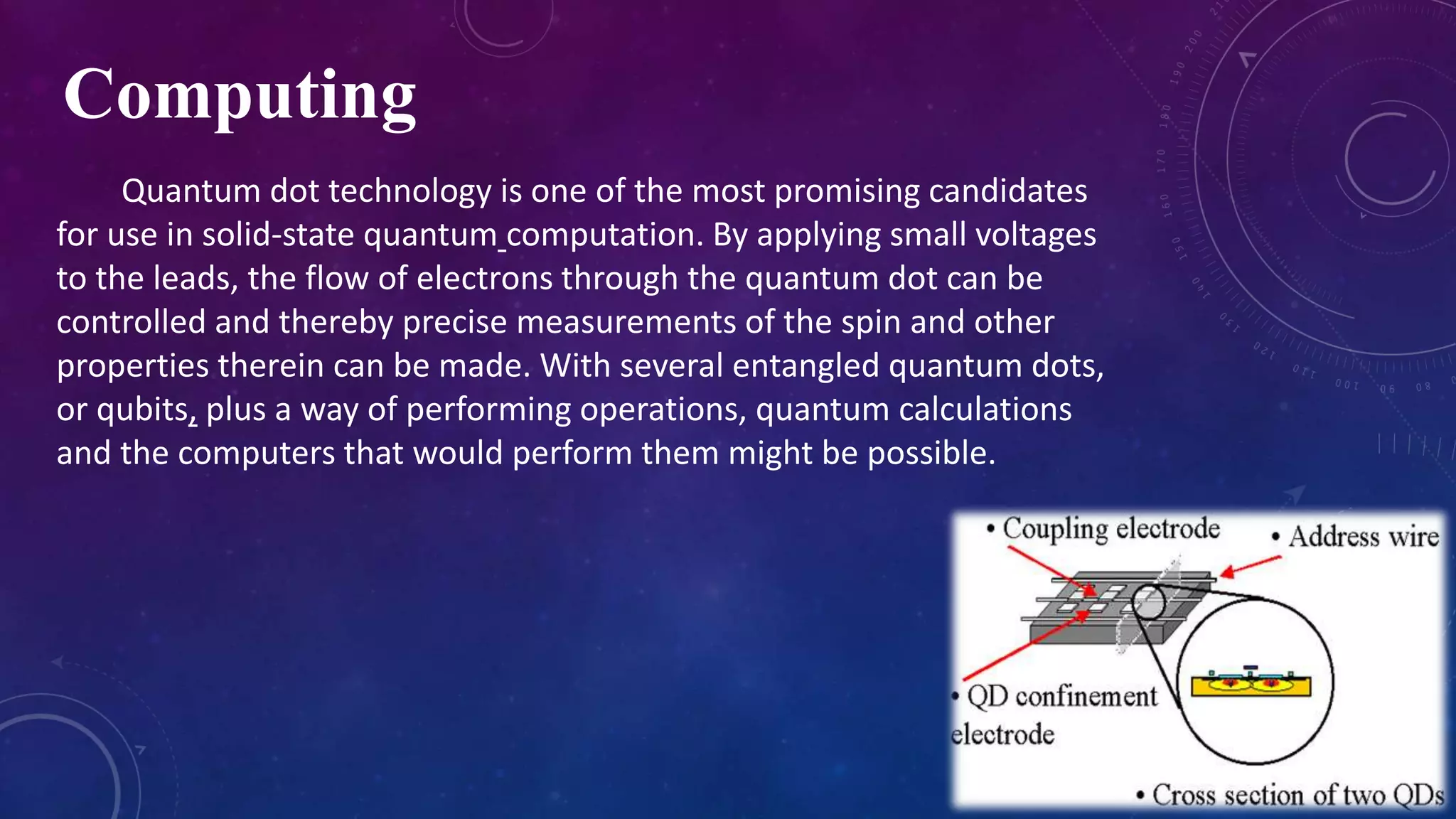
Quantum dot technologyis one of the most promising candidates
for use in solid-state quantum computation. By applying small voltages
to the leads, the flow of electrons through the quantum dot can be
controlled and thereby precise measurements of the spin and other
properties therein can be made. With several entangled quantum dots,
or qubits, plus a way of performing operations, quantum calculations
and the computers that would perform them might be possible.
14.
Q-LED
Quantum dots maysome day light your homes,
offices, streets,
and entire cities.
Quantum dot LED’s can now produce any color
of light, including
white.
Quantum dot LED’s are extremely energy
efficient. They use only
a few watts, while a regular incandescent
lamp uses 30 or more
watts for the same amount of light
15.
Photovoltaic Devices:-
Quantum dotsmay be able to increase the efficiency and
reduce the cost of today's typical silicon photovoltaic cells.Quantum
dot photovoltaic would theoretically be cheaper to manufacture, as
they can be made "using simple chemical reactions."
16.
Solar Cells
Photovoltaic effect:
p-nJunction.
Sunlight excites electrons and creates electron-hole pairs.
Electrons concentrate on one side of the cell and holes on
the other side.
Connecting the 2 sides creates electricity
17.
Medical imaging
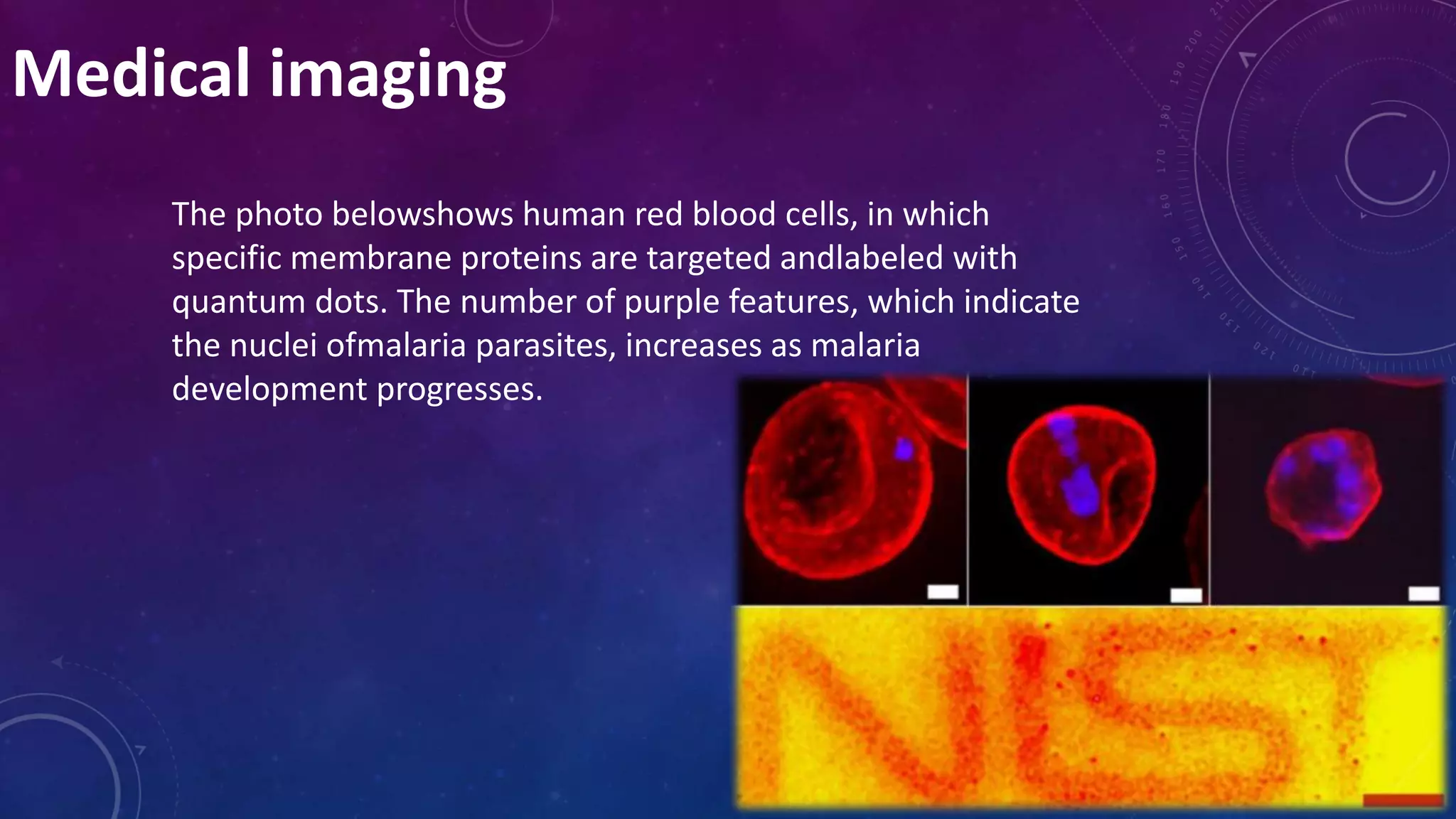
The photobelowshows human red blood cells, in which
specific membrane proteins are targeted andlabeled with
quantum dots. The number of purple features, which indicate
the nuclei ofmalaria parasites, increases as malaria
development progresses.
18.
Cell imaging
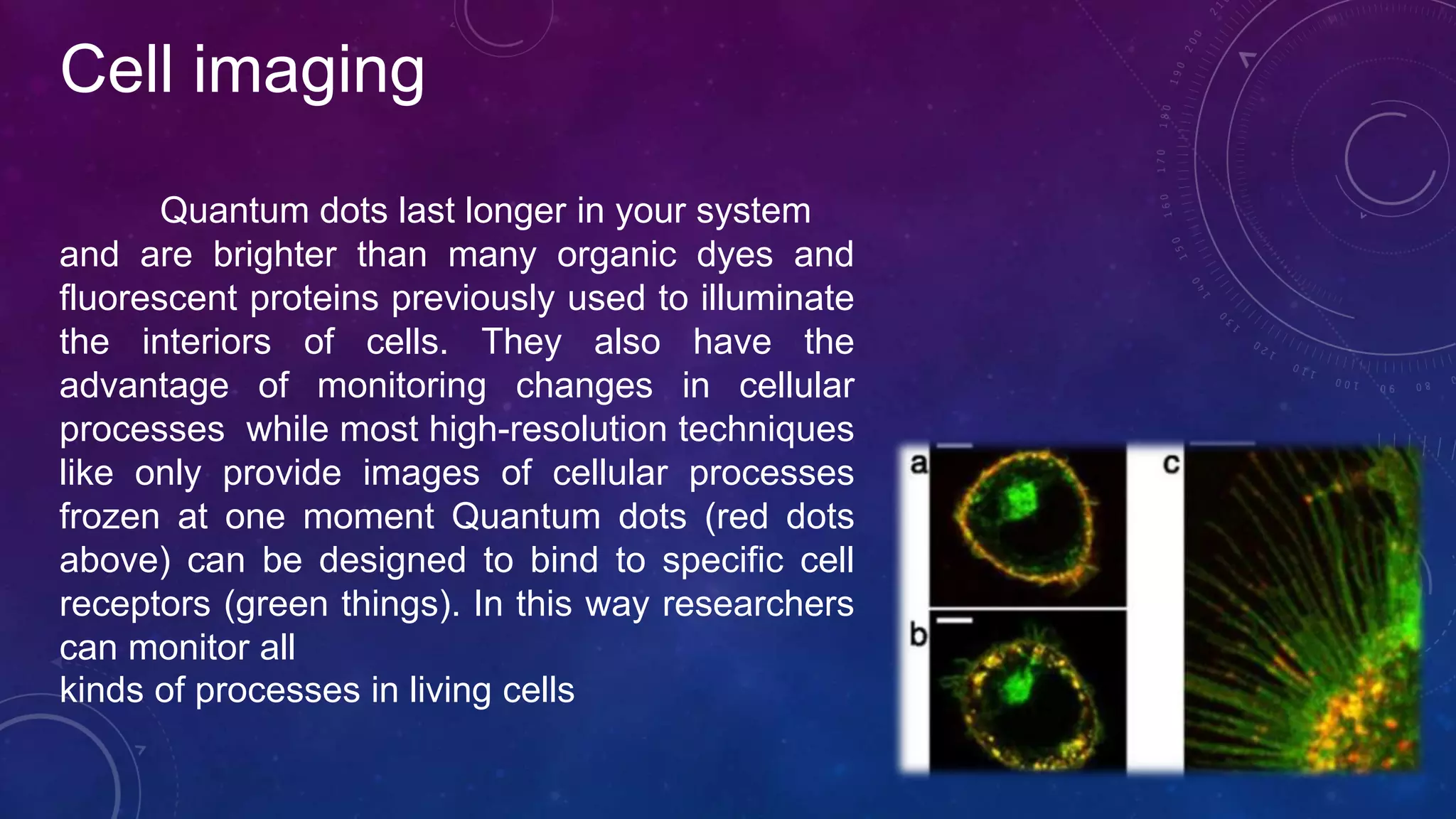
Quantum dotslast longer in your system
and are brighter than many organic dyes and
fluorescent proteins previously used to illuminate
the interiors of cells. They also have the
advantage of monitoring changes in cellular
processes while most high-resolution techniques
like only provide images of cellular processes
frozen at one moment Quantum dots (red dots
above) can be designed to bind to specific cell
receptors (green things). In this way researchers
can monitor all
kinds of processes in living cells
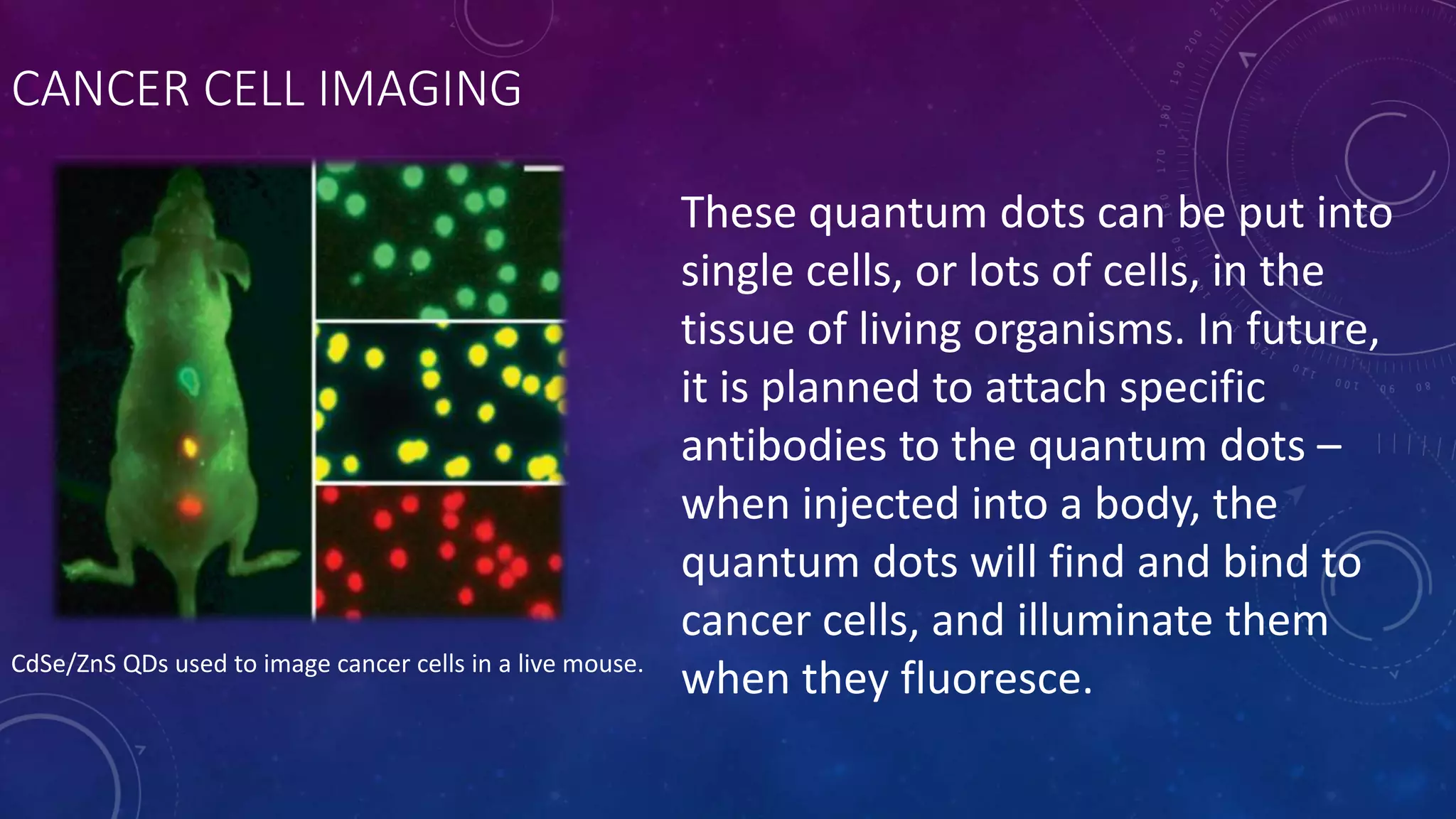
These quantum dotscan be put into
single cells, or lots of cells, in the
tissue of living organisms. In future,
it is planned to attach specific
antibodies to the quantum dots –
when injected into a body, the
quantum dots will find and bind to
cancer cells, and illuminate them
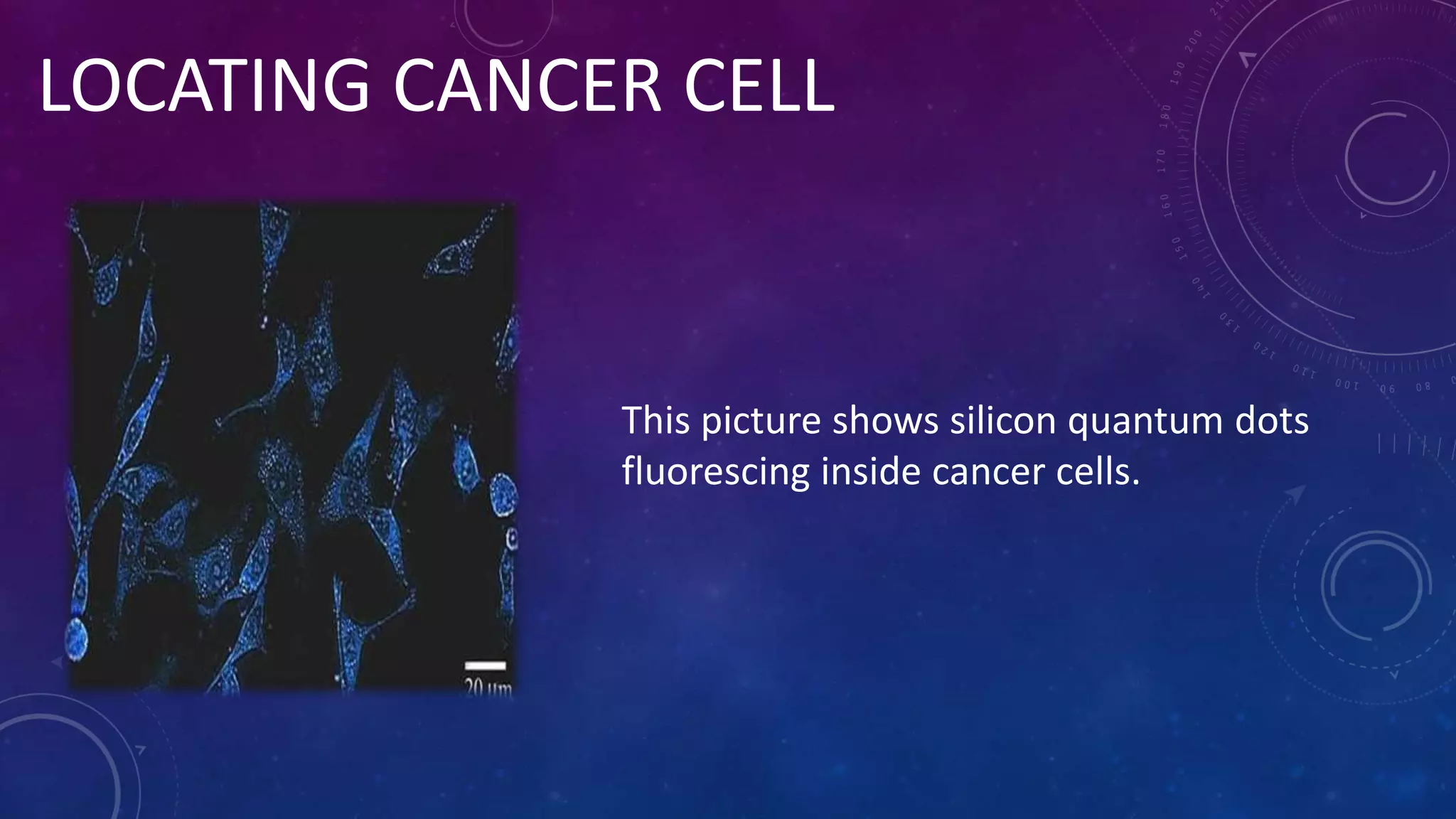
when they fluoresce.CdSe/ZnS QDs used to image cancer cells in a live mouse.
CANCER CELL IMAGING
21.
TARGETED DRUG DELIVERY
Inthis we attach drug molecules to
the quantum dots, which will then be
able to deliver the drug just to the
cancer cells where it is needed.
Current anti-cancer drugs tend to have
a range of unpleasant side-effects,
because they affect the whole body, not
just the cancer.








![Vibe Coding vs. Spec-Driven Development [Free Meetup]](https://cdn.slidesharecdn.com/ss_thumbnails/vibecodingvsspecdrivendevelopment-251209105622-43f455e7-thumbnail.jpg?width=640&height=640&fit=bounds)


