Quantity Food
Production
Equipment &
Technology in Kitchen
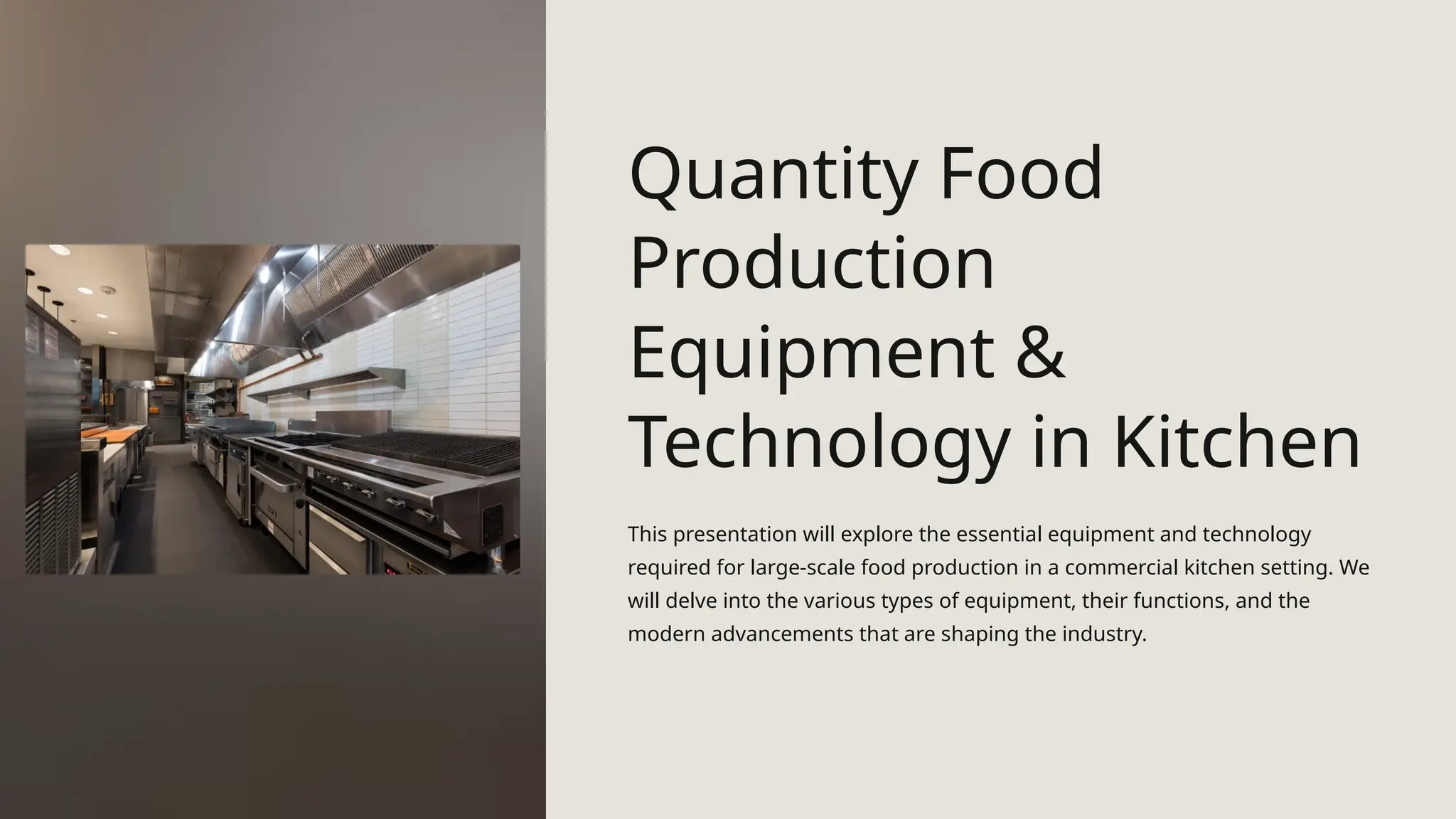
This presentation will explore the essential equipment and technology
required for large-scale food production in a commercial kitchen setting. We
will delve into the various types of equipment, their functions, and the
modern advancements that are shaping the industry.
Equipment Required for Mass/Volume Feeding
Cooking Equipment
- Kettles and Braising
Pans: Large capacity
for soups, stews, and
braised dishes. - Tilting
Skillets: Versatile for
cooking a variety of
dishes. - Ovens: Deck
ovens, convection
ovens, and combi
ovens for baking,
roasting, and
steaming. - Ranges:
Heavy-duty ranges for
high-volume cooking. -
Grills and Griddles: For
large quantities of
grilled or fried items. -
Fryers: Large-capacity
fryers for deep frying.
Preparation
Equipment
- Food Processors: For
chopping, slicing, and
dicing. - Mixers: Heavy-
duty mixers for
doughs and batters. -
Slicers: For meats and
cheeses. - Peelers and
Choppers: For
vegetables and fruits.
Storage Equipment
- Refrigerators and
Freezers: Walk-in and
reach-in units for large
storage needs. -
Shelving: For
organized storage of
dry goods and non-
perishables.
Serving Equipment
- Buffet Stations: Hot
and cold serving
stations. - Chafing
Dishes: For keeping
food warm during
service. - Dispensers:
Beverage and soup
dispensers.
Heat and Cold Generating Equipment
Heat Generating Equipment
- Ovens: Including convection, deck, and combi
ovens. - Ranges: Gas and electric ranges for
cooking. - Grills: Charcoal, gas, and electric grills. -
Steamers: For cooking vegetables and other items
with steam. - Fryers: Deep fryers for high-volume
frying.
Cold Generating Equipment
- Refrigerators: Walk-in, reach-in, and under-
counter units. - Freezers: Walk-in and reach-in
freezers. - Ice Machines: For producing large
quantities of ice. - Blast Chillers: For rapidly cooling
food to safe temperatures.
Care and Maintenance of Equipment
1 Regular Cleaning
Follow manufacturer's guidelines for cleaning
each piece of equipment. Use appropriate
cleaning agents to prevent damage.
2 Preventive Maintenance
Schedule regular inspections and servicing.
Replace worn-out parts promptly to avoid
breakdowns.
3 Proper Usage
Train staff on correct operation techniques.
Avoid overloading equipment beyond its
capacity.
4 Storage
Store equipment properly when not in use to
prevent damage. Keep equipment in a dry, cool
place to avoid corrosion.
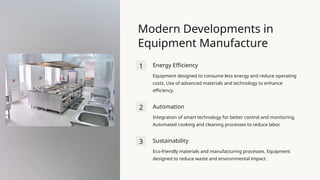
Modern Developments in
Equipment Manufacture
1 Energy Efficiency
Equipment designed to consume less energy and reduce operating
costs. Use of advanced materials and technology to enhance
efficiency.
2 Automation
Integration of smart technology for better control and monitoring.
Automated cooking and cleaning processes to reduce labor.
3 Sustainability
Eco-friendly materials and manufacturing processes. Equipment
designed to reduce waste and environmental impact.
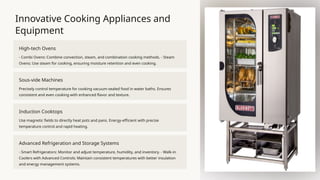
Innovative Cooking Appliances and
Equipment
High-tech Ovens
- Combi Ovens: Combine convection, steam, and combination cooking methods. - Steam
Ovens: Use steam for cooking, ensuring moisture retention and even cooking.
Sous-vide Machines
Precisely control temperature for cooking vacuum-sealed food in water baths. Ensures
consistent and even cooking with enhanced flavor and texture.
Induction Cooktops
Use magnetic fields to directly heat pots and pans. Energy-efficient with precise
temperature control and rapid heating.
Advanced Refrigeration and Storage Systems
- Smart Refrigerators: Monitor and adjust temperature, humidity, and inventory. - Walk-in
Coolers with Advanced Controls: Maintain consistent temperatures with better insulation
and energy management systems.
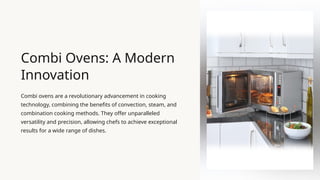
Combi Ovens: A Modern
Innovation
Combi ovens are a revolutionary advancement in cooking
technology, combining the benefits of convection, steam, and
combination cooking methods. They offer unparalleled
versatility and precision, allowing chefs to achieve exceptional
results for a wide range of dishes.
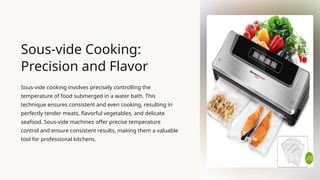
Sous-vide Cooking:
Precision and Flavor
Sous-vide cooking involves precisely controlling the
temperature of food submerged in a water bath. This
technique ensures consistent and even cooking, resulting in
perfectly tender meats, flavorful vegetables, and delicate
seafood. Sous-vide machines offer precise temperature
control and ensure consistent results, making them a valuable
tool for professional kitchens.
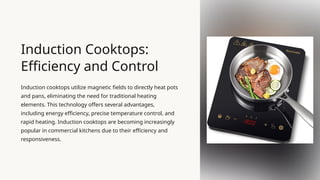
Induction Cooktops:
Efficiency and Control
Induction cooktops utilize magnetic fields to directly heat pots
and pans, eliminating the need for traditional heating
elements. This technology offers several advantages,
including energy efficiency, precise temperature control, and
rapid heating. Induction cooktops are becoming increasingly
popular in commercial kitchens due to their efficiency and
responsiveness.
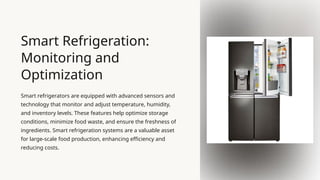
Smart Refrigeration:
Monitoring and
Optimization
Smart refrigerators are equipped with advanced sensors and
technology that monitor and adjust temperature, humidity,
and inventory levels. These features help optimize storage
conditions, minimize food waste, and ensure the freshness of
ingredients. Smart refrigeration systems are a valuable asset
for large-scale food production, enhancing efficiency and
reducing costs.
Thank you
For any queries, please contact
Prof Neeraj Chaudhary
Fms Shoolini University
Email :
Neerajchaudhary@university.com
Mobile : +91-8580945983
11

QUANTITY FOOD EQUIPMENT & TECHNOLOGY.pptx

  • 1.
    Quantity Food Production Equipment & Technologyin Kitchen This presentation will explore the essential equipment and technology required for large-scale food production in a commercial kitchen setting. We will delve into the various types of equipment, their functions, and the modern advancements that are shaping the industry.
  • 2.
    Equipment Required forMass/Volume Feeding Cooking Equipment - Kettles and Braising Pans: Large capacity for soups, stews, and braised dishes. - Tilting Skillets: Versatile for cooking a variety of dishes. - Ovens: Deck ovens, convection ovens, and combi ovens for baking, roasting, and steaming. - Ranges: Heavy-duty ranges for high-volume cooking. - Grills and Griddles: For large quantities of grilled or fried items. - Fryers: Large-capacity fryers for deep frying. Preparation Equipment - Food Processors: For chopping, slicing, and dicing. - Mixers: Heavy- duty mixers for doughs and batters. - Slicers: For meats and cheeses. - Peelers and Choppers: For vegetables and fruits. Storage Equipment - Refrigerators and Freezers: Walk-in and reach-in units for large storage needs. - Shelving: For organized storage of dry goods and non- perishables. Serving Equipment - Buffet Stations: Hot and cold serving stations. - Chafing Dishes: For keeping food warm during service. - Dispensers: Beverage and soup dispensers.
  • 3.
    Heat and ColdGenerating Equipment Heat Generating Equipment - Ovens: Including convection, deck, and combi ovens. - Ranges: Gas and electric ranges for cooking. - Grills: Charcoal, gas, and electric grills. - Steamers: For cooking vegetables and other items with steam. - Fryers: Deep fryers for high-volume frying. Cold Generating Equipment - Refrigerators: Walk-in, reach-in, and under- counter units. - Freezers: Walk-in and reach-in freezers. - Ice Machines: For producing large quantities of ice. - Blast Chillers: For rapidly cooling food to safe temperatures.
  • 4.
    Care and Maintenanceof Equipment 1 Regular Cleaning Follow manufacturer's guidelines for cleaning each piece of equipment. Use appropriate cleaning agents to prevent damage. 2 Preventive Maintenance Schedule regular inspections and servicing. Replace worn-out parts promptly to avoid breakdowns. 3 Proper Usage Train staff on correct operation techniques. Avoid overloading equipment beyond its capacity. 4 Storage Store equipment properly when not in use to prevent damage. Keep equipment in a dry, cool place to avoid corrosion.
  • 5.
    Modern Developments in EquipmentManufacture 1 Energy Efficiency Equipment designed to consume less energy and reduce operating costs. Use of advanced materials and technology to enhance efficiency. 2 Automation Integration of smart technology for better control and monitoring. Automated cooking and cleaning processes to reduce labor. 3 Sustainability Eco-friendly materials and manufacturing processes. Equipment designed to reduce waste and environmental impact.
  • 6.
    Innovative Cooking Appliancesand Equipment High-tech Ovens - Combi Ovens: Combine convection, steam, and combination cooking methods. - Steam Ovens: Use steam for cooking, ensuring moisture retention and even cooking. Sous-vide Machines Precisely control temperature for cooking vacuum-sealed food in water baths. Ensures consistent and even cooking with enhanced flavor and texture. Induction Cooktops Use magnetic fields to directly heat pots and pans. Energy-efficient with precise temperature control and rapid heating. Advanced Refrigeration and Storage Systems - Smart Refrigerators: Monitor and adjust temperature, humidity, and inventory. - Walk-in Coolers with Advanced Controls: Maintain consistent temperatures with better insulation and energy management systems.
  • 7.
    Combi Ovens: AModern Innovation Combi ovens are a revolutionary advancement in cooking technology, combining the benefits of convection, steam, and combination cooking methods. They offer unparalleled versatility and precision, allowing chefs to achieve exceptional results for a wide range of dishes.
  • 8.
    Sous-vide Cooking: Precision andFlavor Sous-vide cooking involves precisely controlling the temperature of food submerged in a water bath. This technique ensures consistent and even cooking, resulting in perfectly tender meats, flavorful vegetables, and delicate seafood. Sous-vide machines offer precise temperature control and ensure consistent results, making them a valuable tool for professional kitchens.
  • 9.
    Induction Cooktops: Efficiency andControl Induction cooktops utilize magnetic fields to directly heat pots and pans, eliminating the need for traditional heating elements. This technology offers several advantages, including energy efficiency, precise temperature control, and rapid heating. Induction cooktops are becoming increasingly popular in commercial kitchens due to their efficiency and responsiveness.
  • 10.
    Smart Refrigeration: Monitoring and Optimization Smartrefrigerators are equipped with advanced sensors and technology that monitor and adjust temperature, humidity, and inventory levels. These features help optimize storage conditions, minimize food waste, and ensure the freshness of ingredients. Smart refrigeration systems are a valuable asset for large-scale food production, enhancing efficiency and reducing costs.
  • 11.
    Thank you For anyqueries, please contact Prof Neeraj Chaudhary Fms Shoolini University Email : Neerajchaudhary@university.com Mobile : +91-8580945983 11