Python for Business
        Intelligence


Štefan Urbánek ■ @Stiivi ■ stefan.urbanek@continuum.io ■ PyData NYC, October 2012
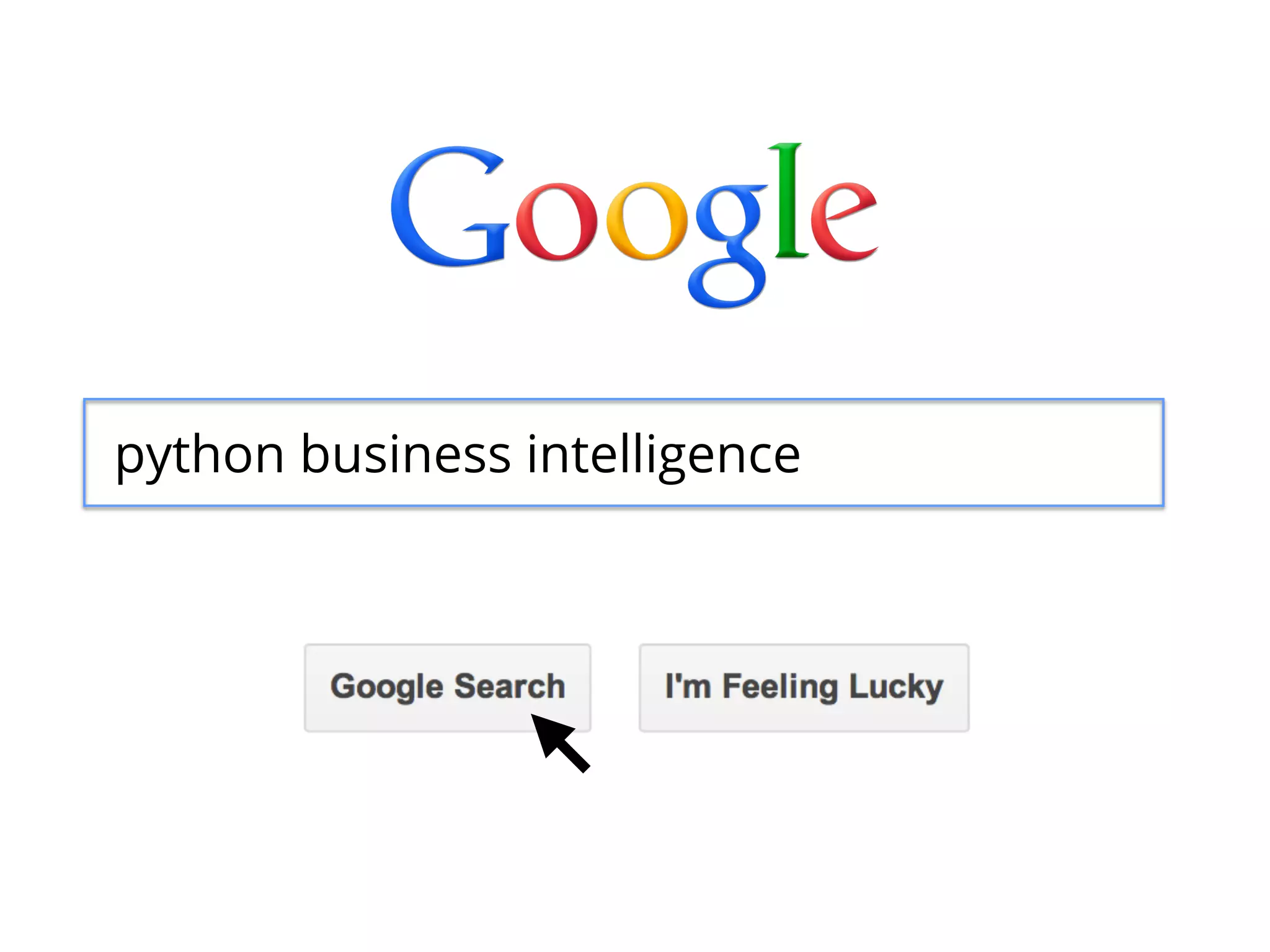
python business intelligence


                )
Results

Q/A and articles with Java
  solution references


               (not listed here)
Why?
Overview

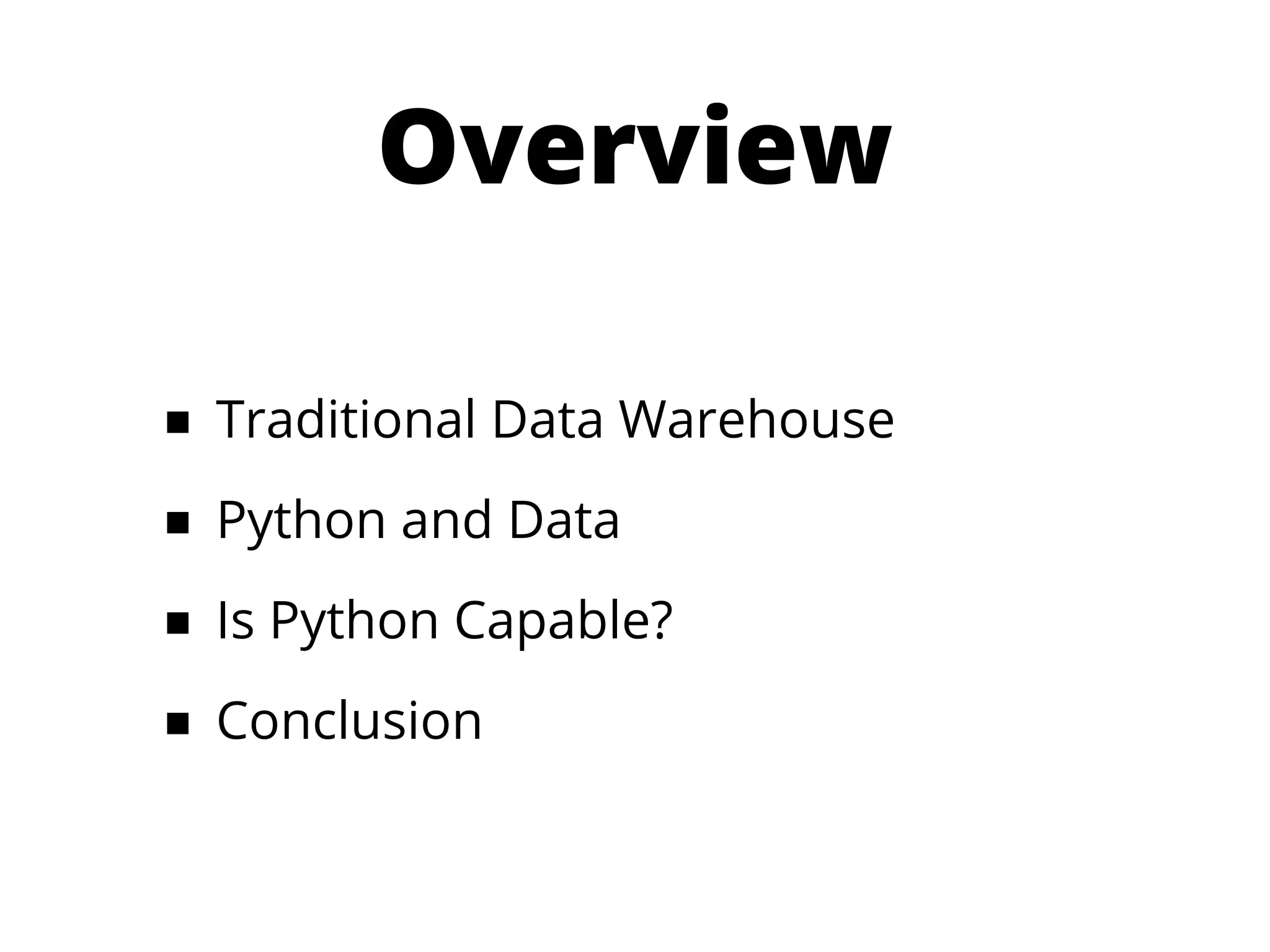
■ Traditional Data Warehouse
■ Python and Data
■ Is Python Capable?
■ Conclusion
Business
Intelligence
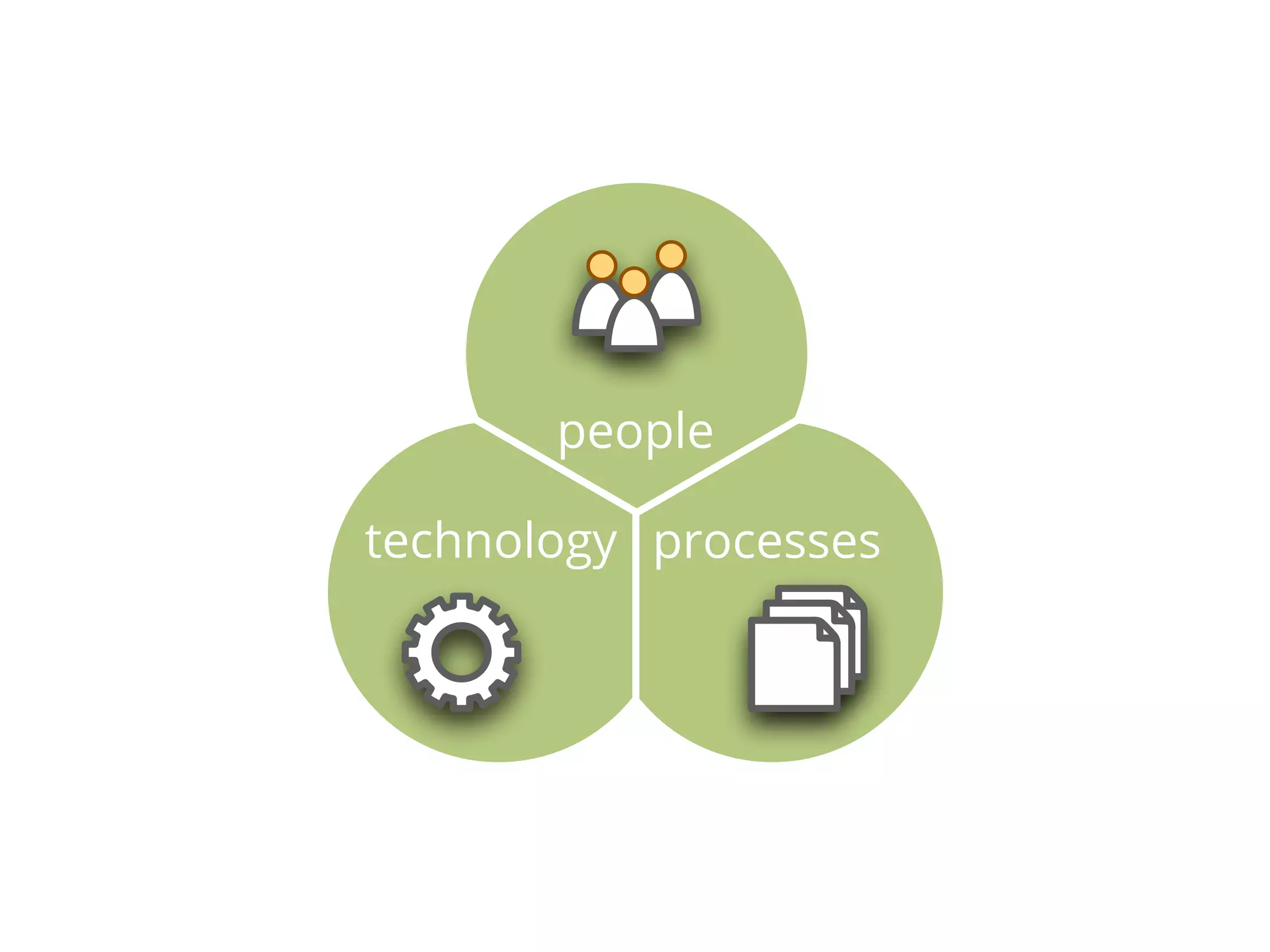
people

technology processes
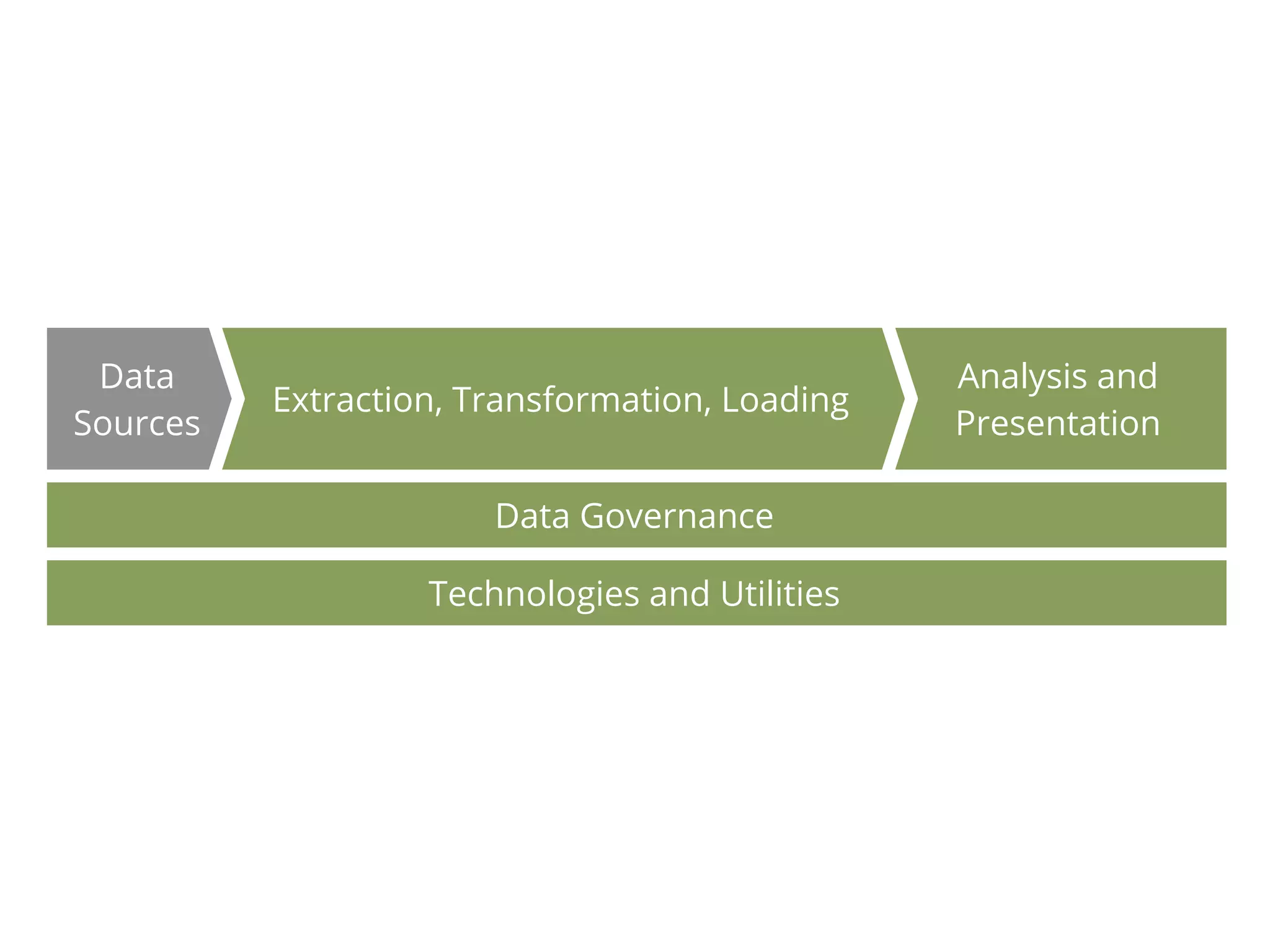
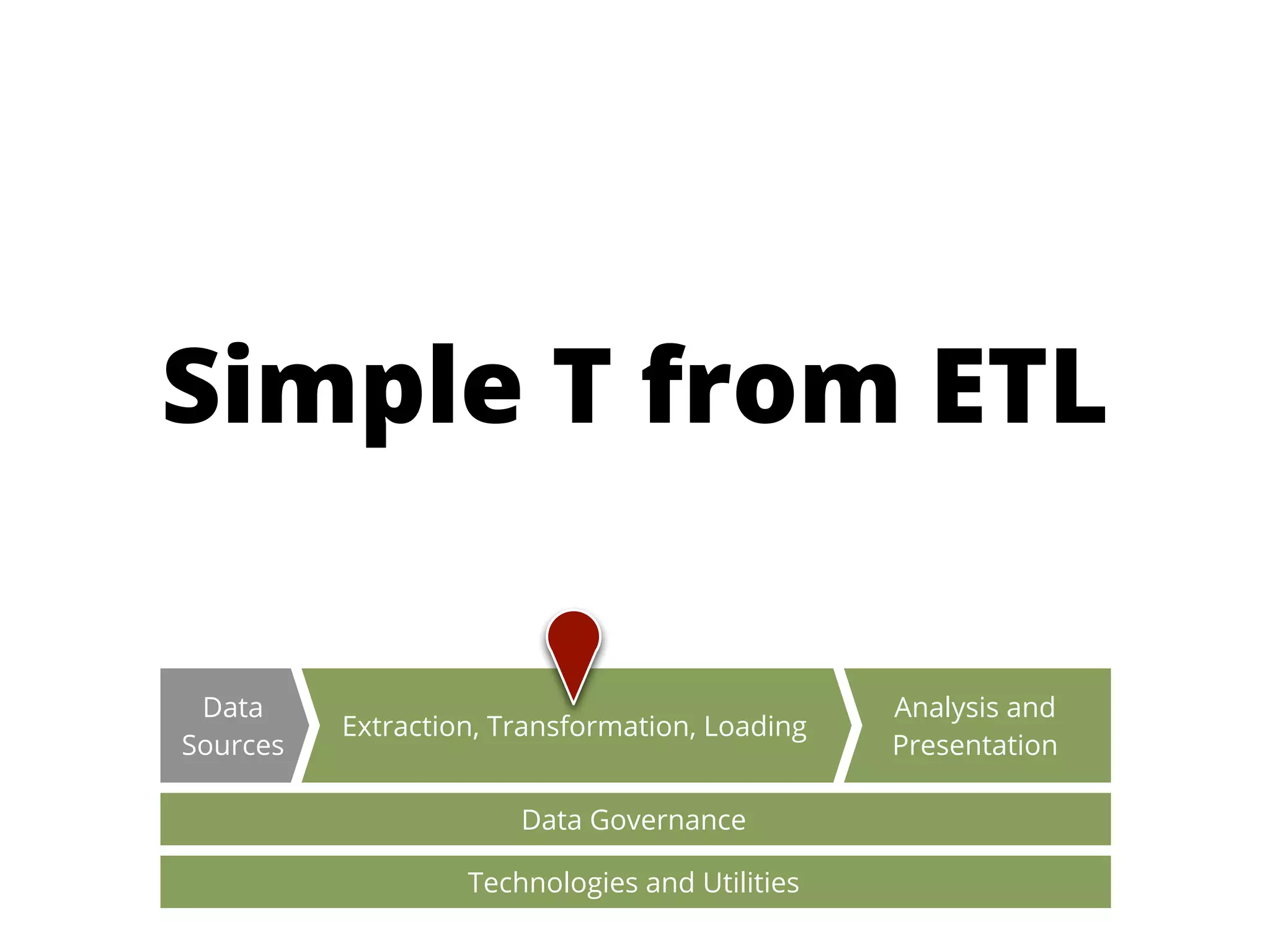
Data                                           Analysis and
          Extraction, Transformation, Loading
Sources                                         Presentation

                       Data Governance

                   Technologies and Utilities
Traditional Data
  Warehouse
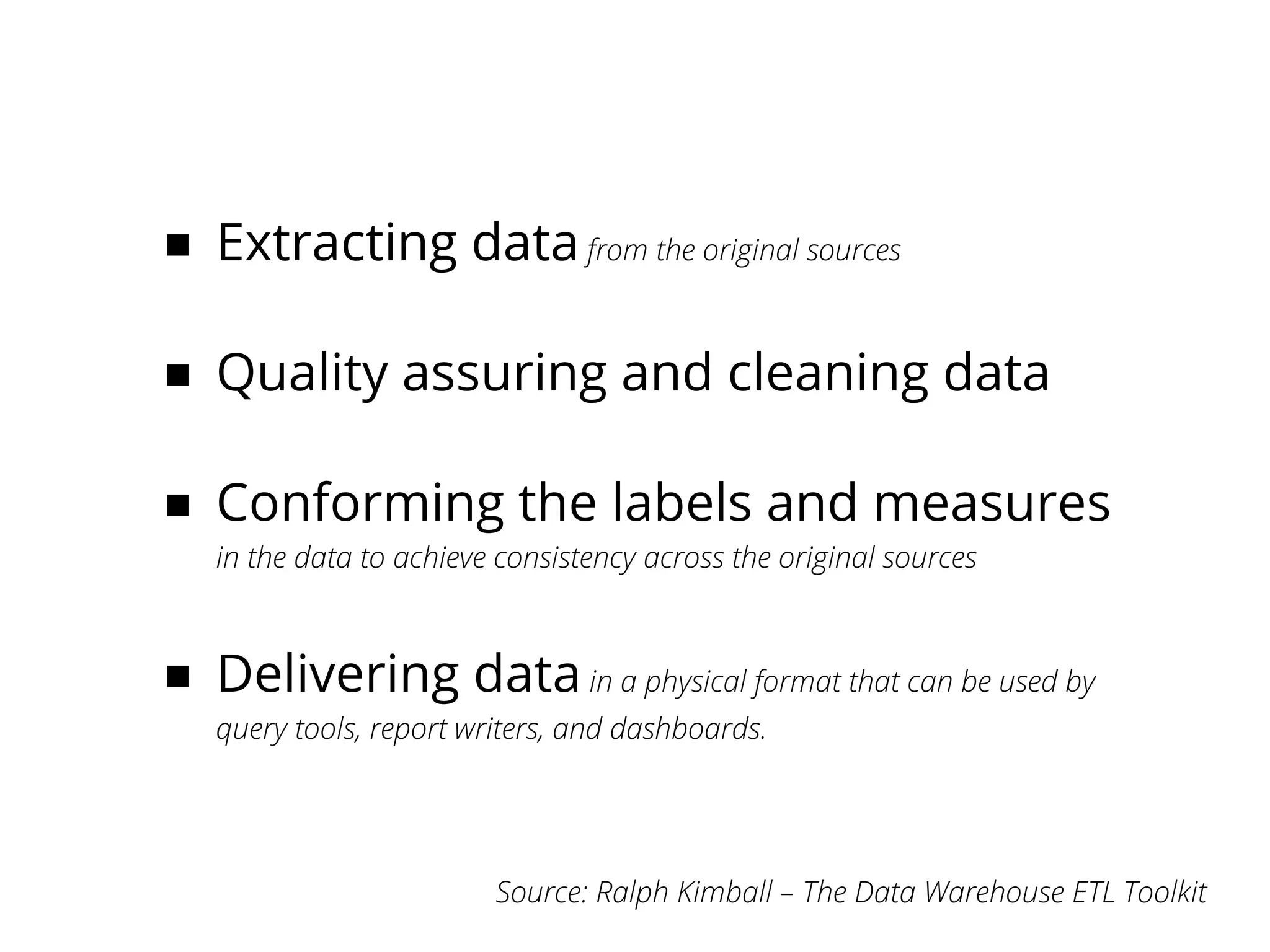
■ Extracting data from the original sources

■ Quality assuring and cleaning data

■ Conforming the labels and measures
   in the data to achieve consistency across the original sources


■ Delivering data in a physical format that can be used by
   query tools, report writers, and dashboards.


                         Source: Ralph Kimball – The Data Warehouse ETL Toolkit
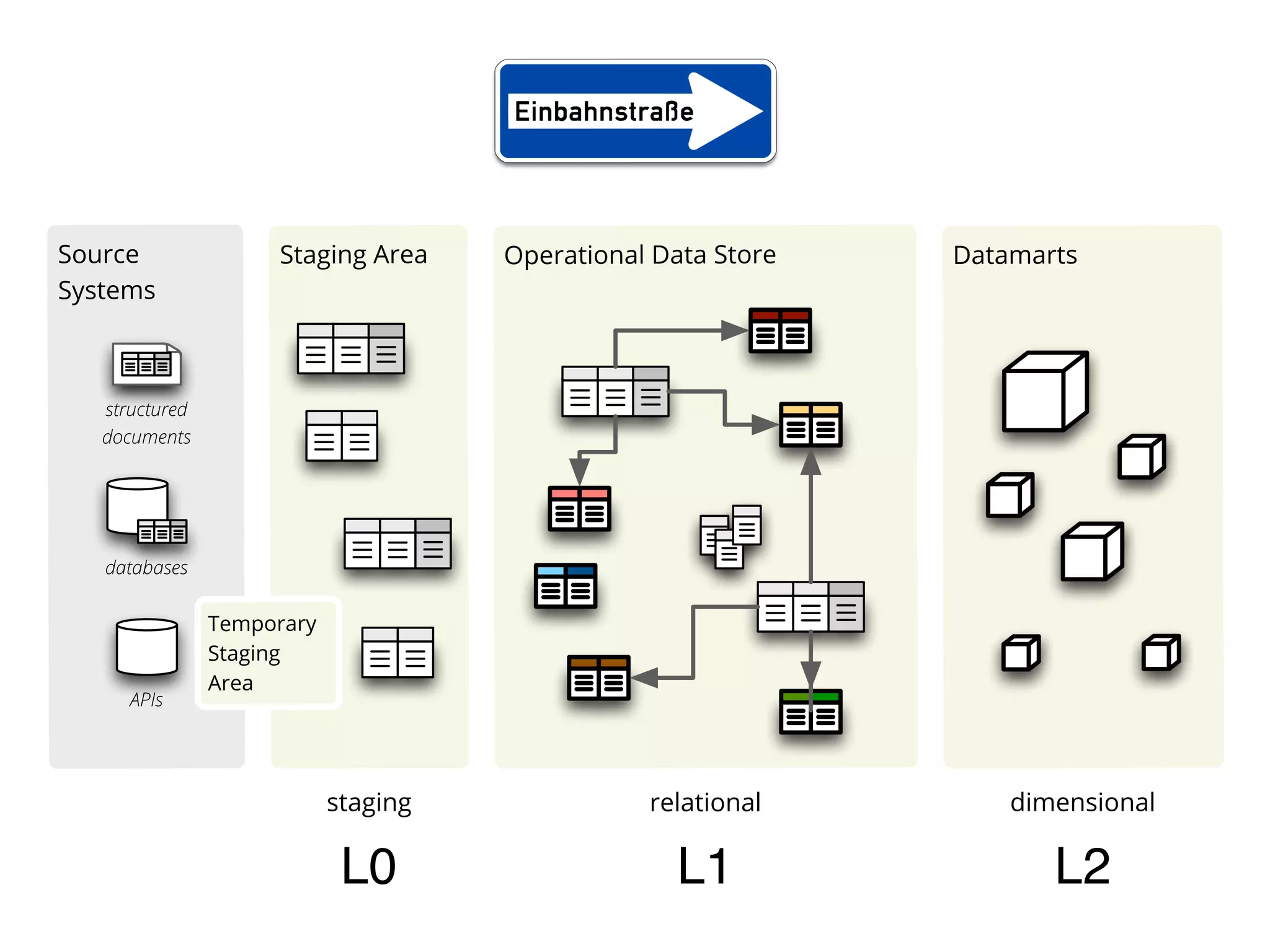
Source               Staging Area     Operational Data Store   Datamarts
Systems


   structured
   documents


   databases

                Temporary
                Staging
                Area
      APIs


                            staging              relational        dimensional

                             L0                    L1                 L2
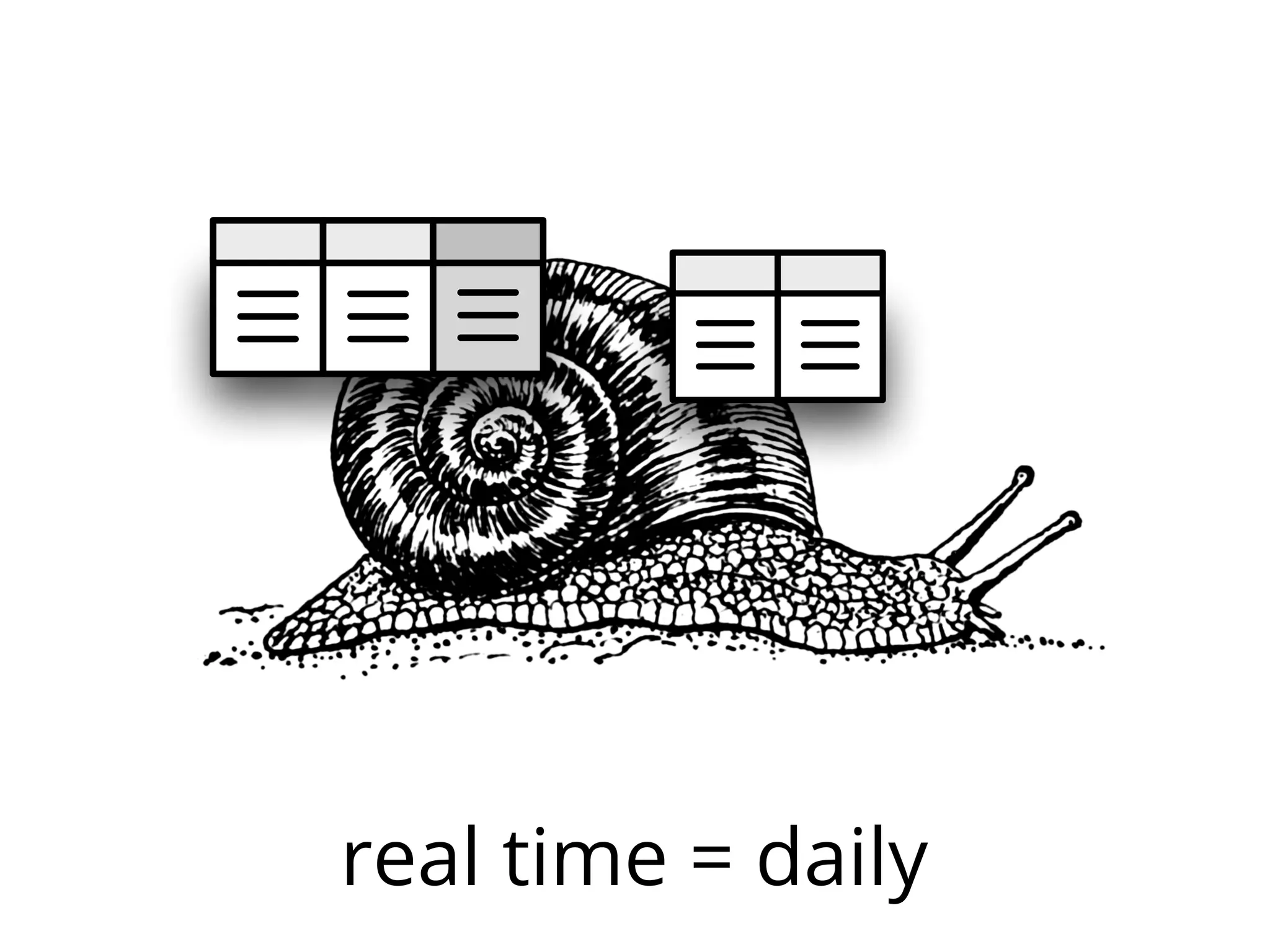
real time = daily
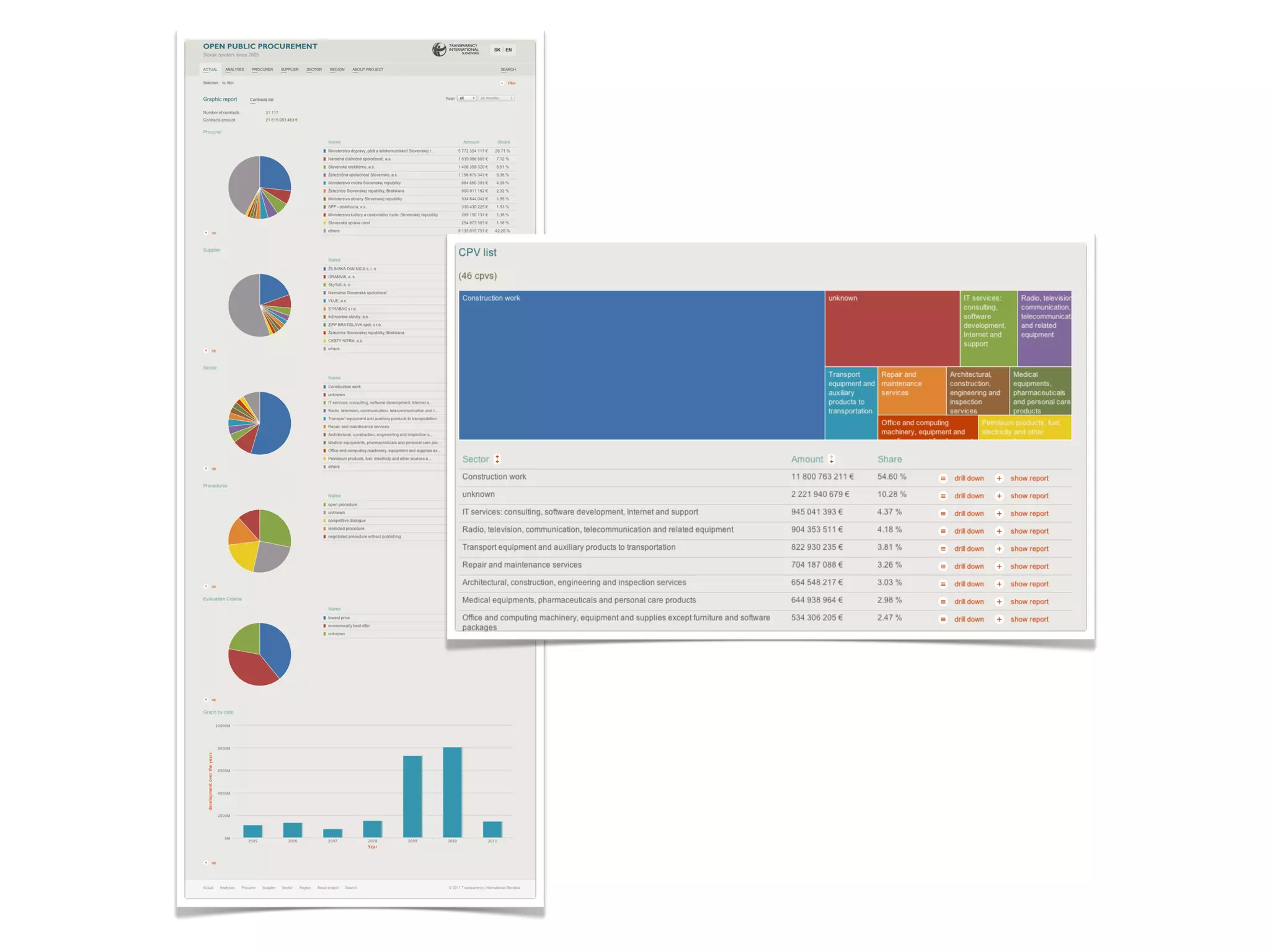
Multi-dimensional
    Modeling
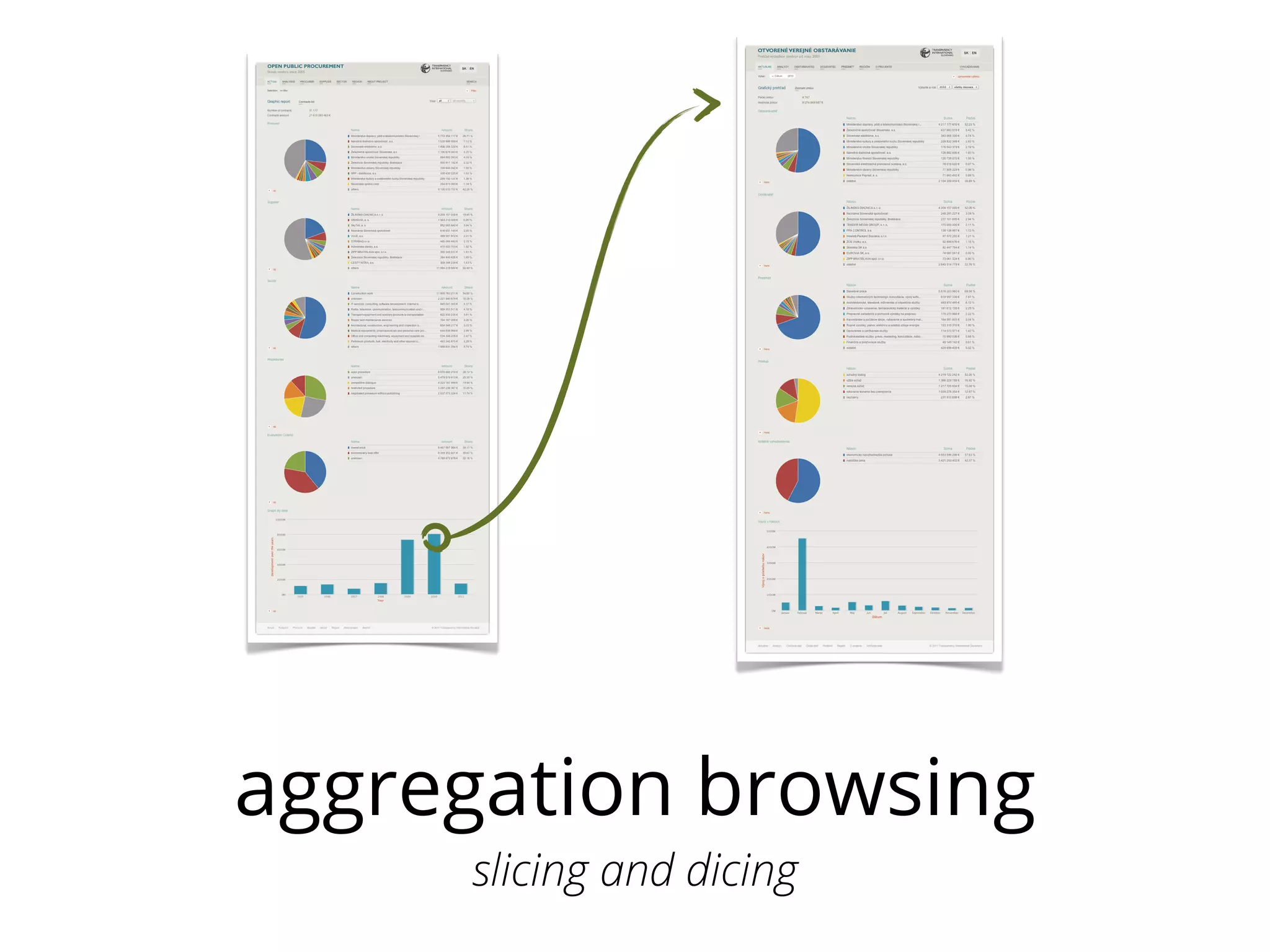
aggregation browsing
     slicing and dicing
business / analyst’s
       point of view

regardless of physical schema implementation
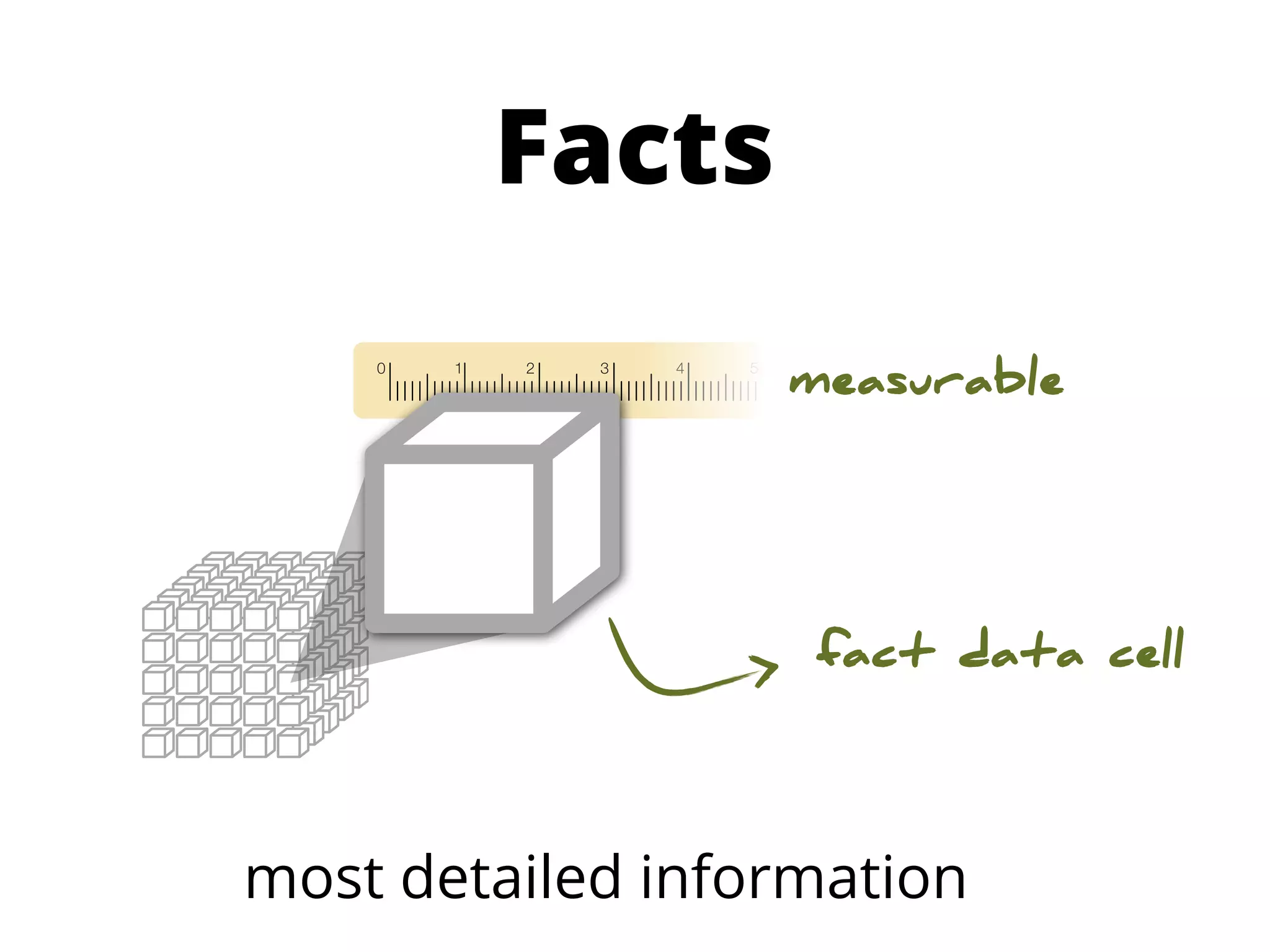
Facts

                  measurable


     fact

                   fact data cell


most detailed information
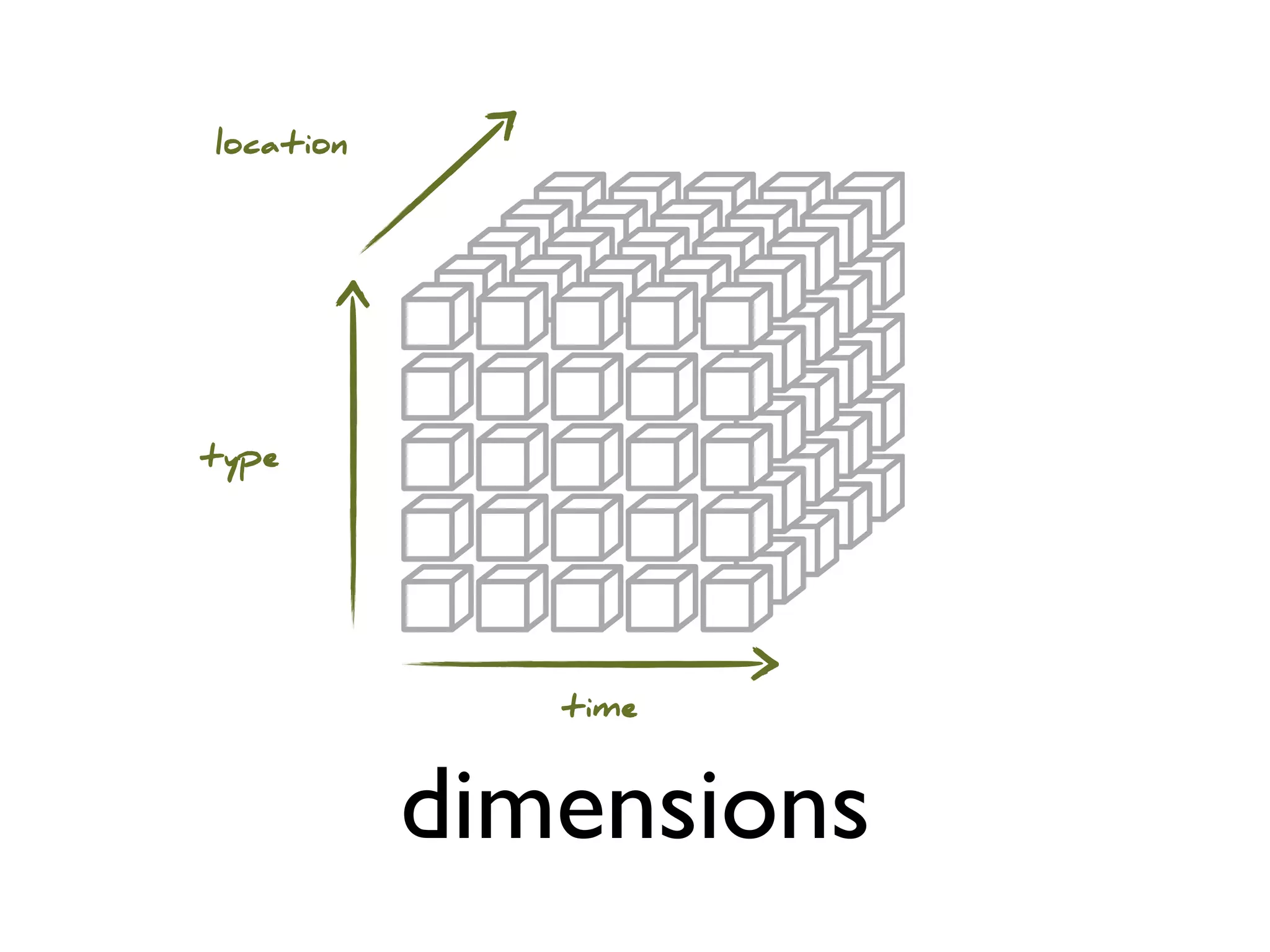
location


type


              time


           dimensions
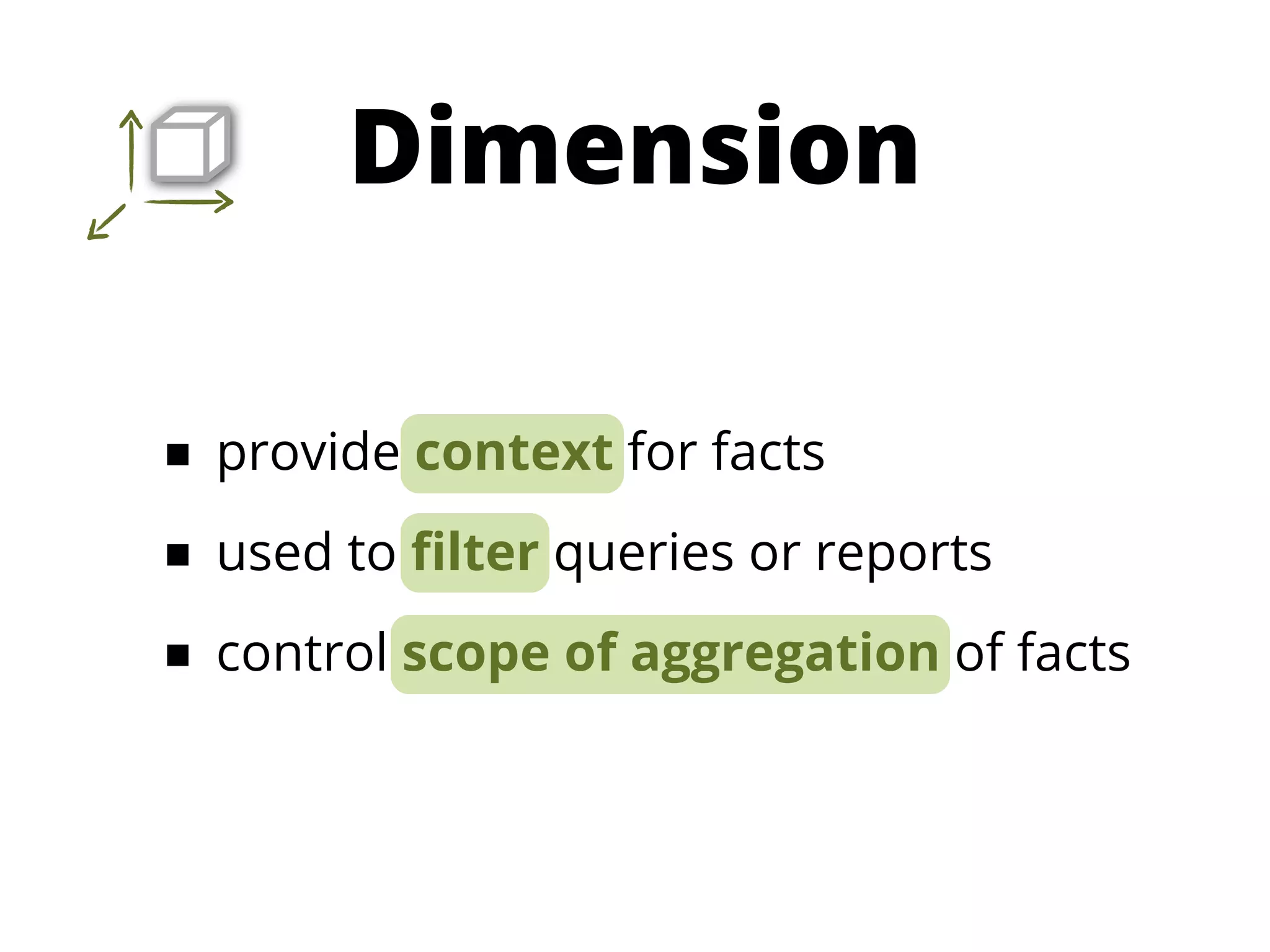
Dimension

■ provide context for facts
■ used to filter queries or reports
■ control scope of aggregation of facts
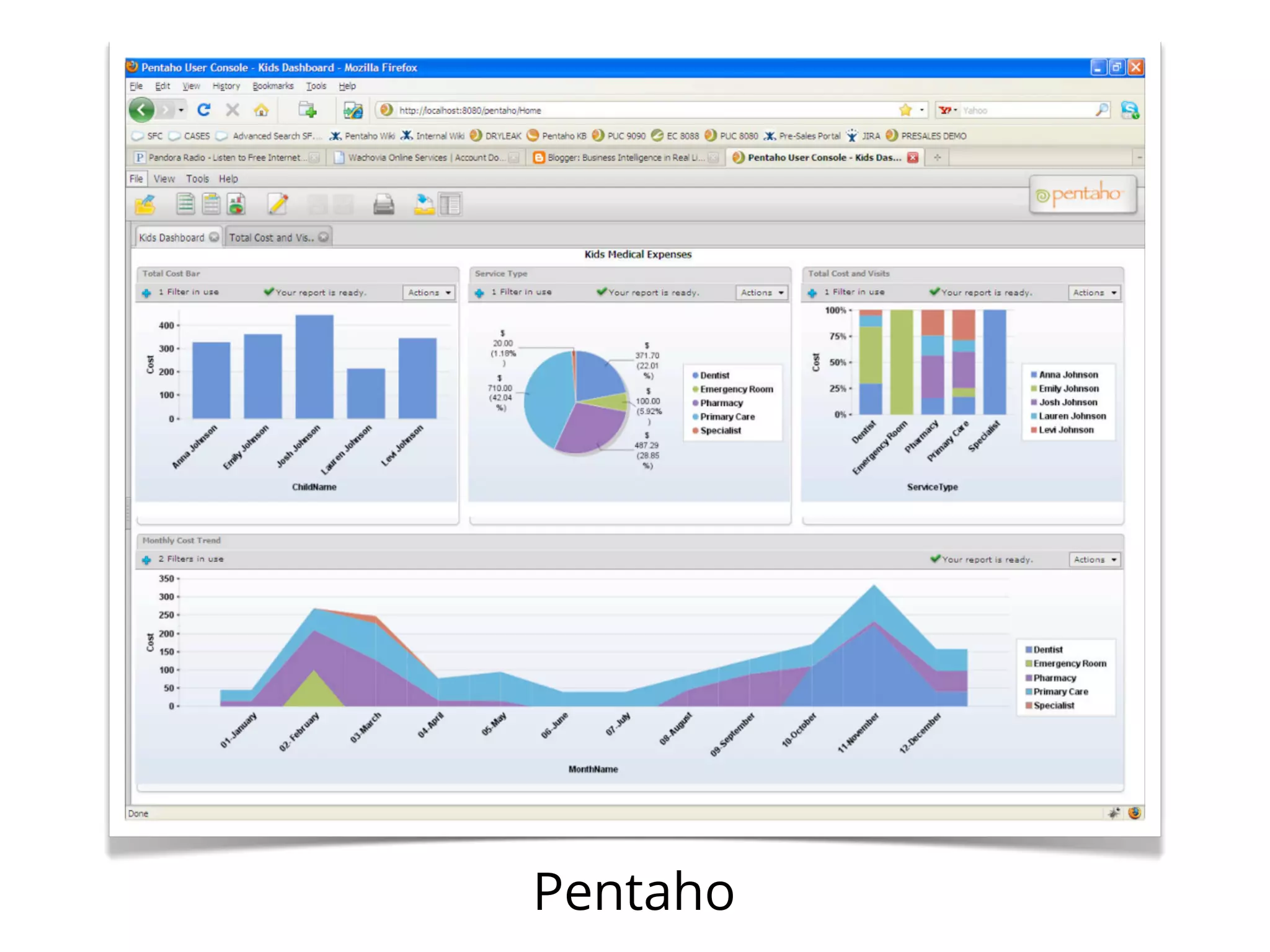
Pentaho
Python and Data
   community perception*


                           *as of Oct 2012
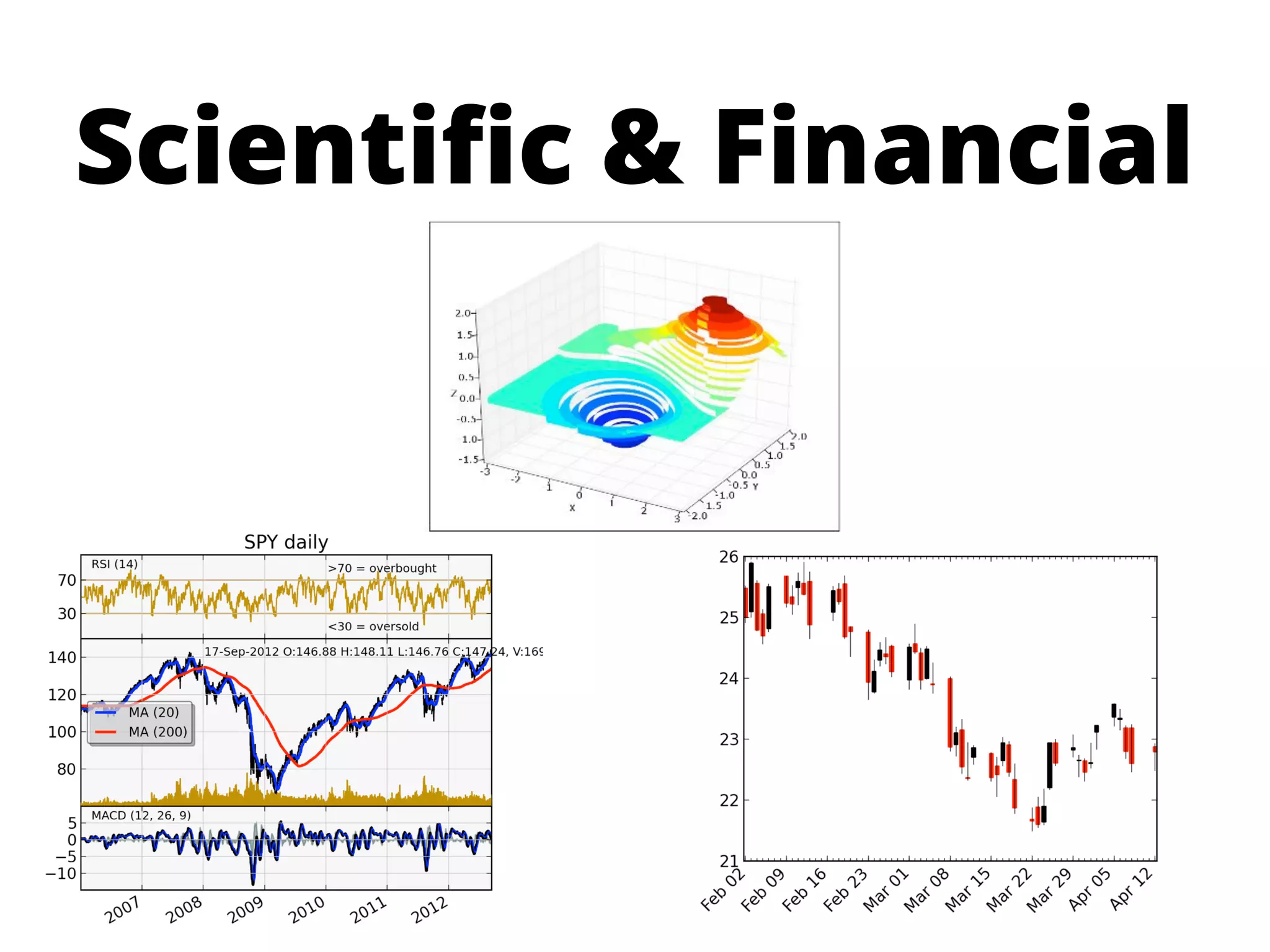
Scientific & Financial
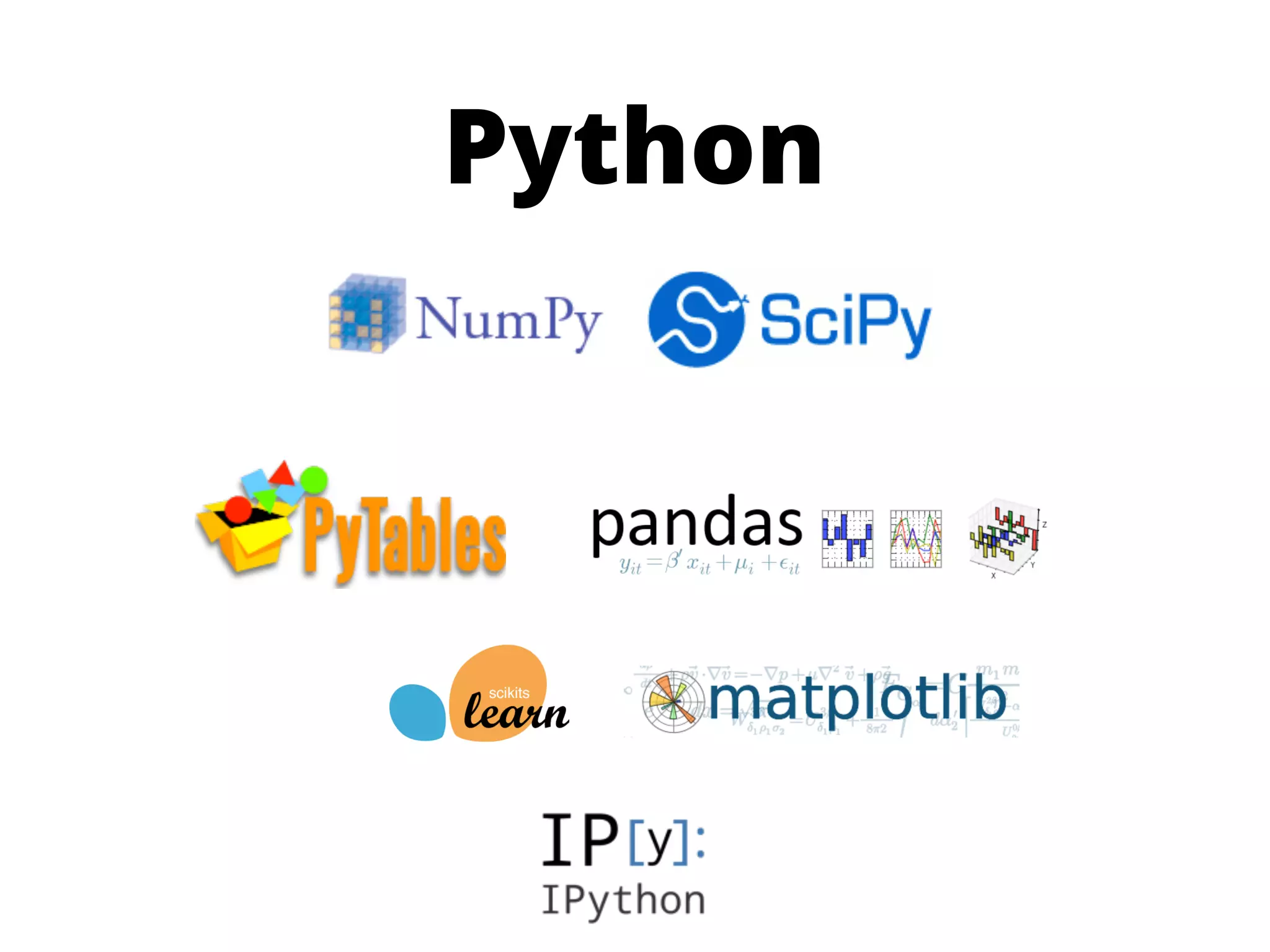
Python
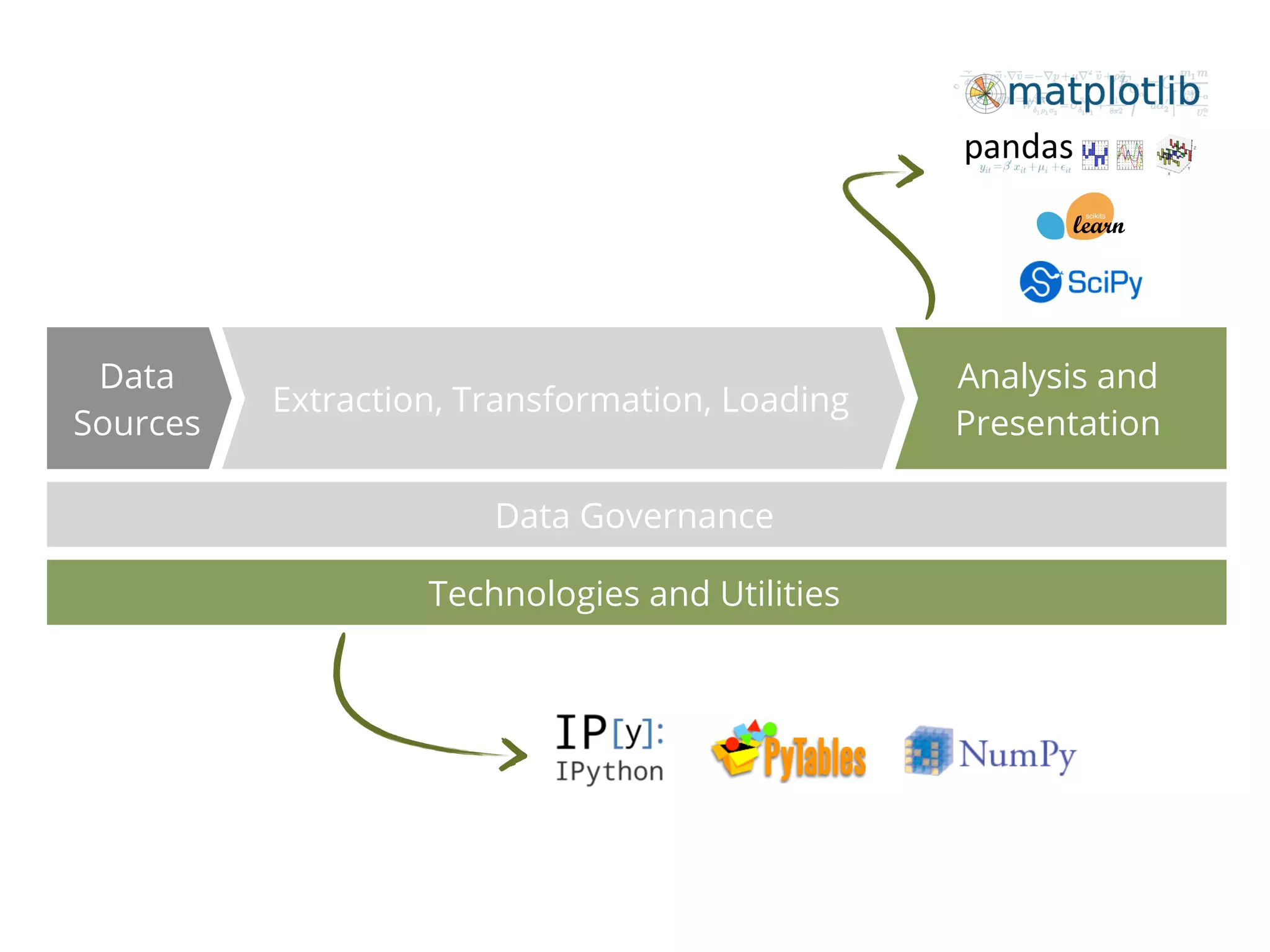
Data                                           Analysis and
          Extraction, Transformation, Loading
Sources                                         Presentation

                       Data Governance

                   Technologies and Utilities
Scientific Data
      T1[s]     T2[s]     T3[s]     T4[s]
P1     112,68    941,67    171,01    660,48

P2      96,15    306,51    725,88    877,82

P3     313,39    189,31     41,81    428,68

P4     760,62    983,48    371,21    281,19

P5     838,56     39,27    389,42    231,12


     n-dimensional array of numbers
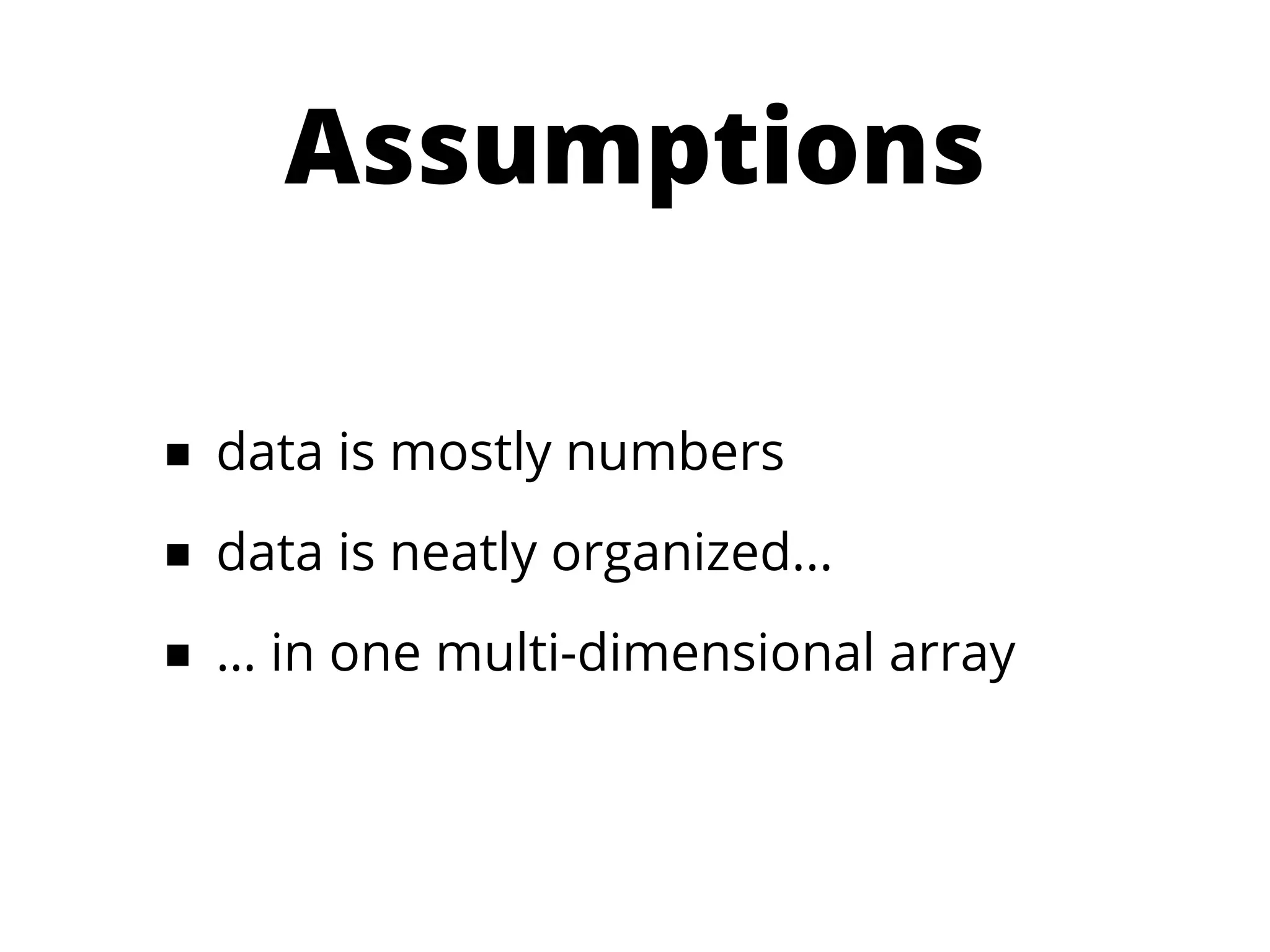
Assumptions

■ data is mostly numbers
■ data is neatly organized...
■ … in one multi-dimensional array
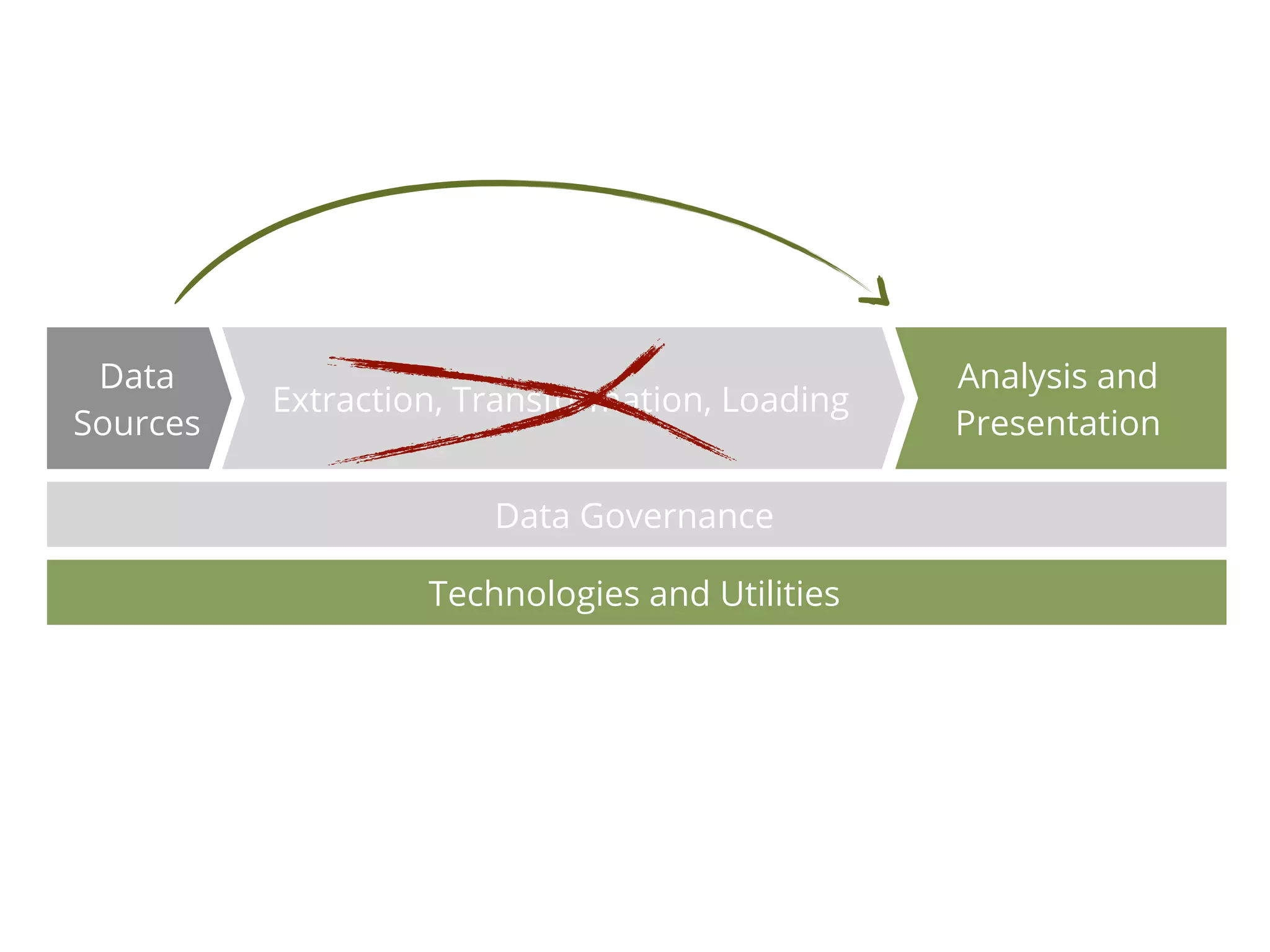
Data                                           Analysis and
          Extraction, Transformation, Loading
Sources                                         Presentation

                       Data Governance

                   Technologies and Utilities
Business Data
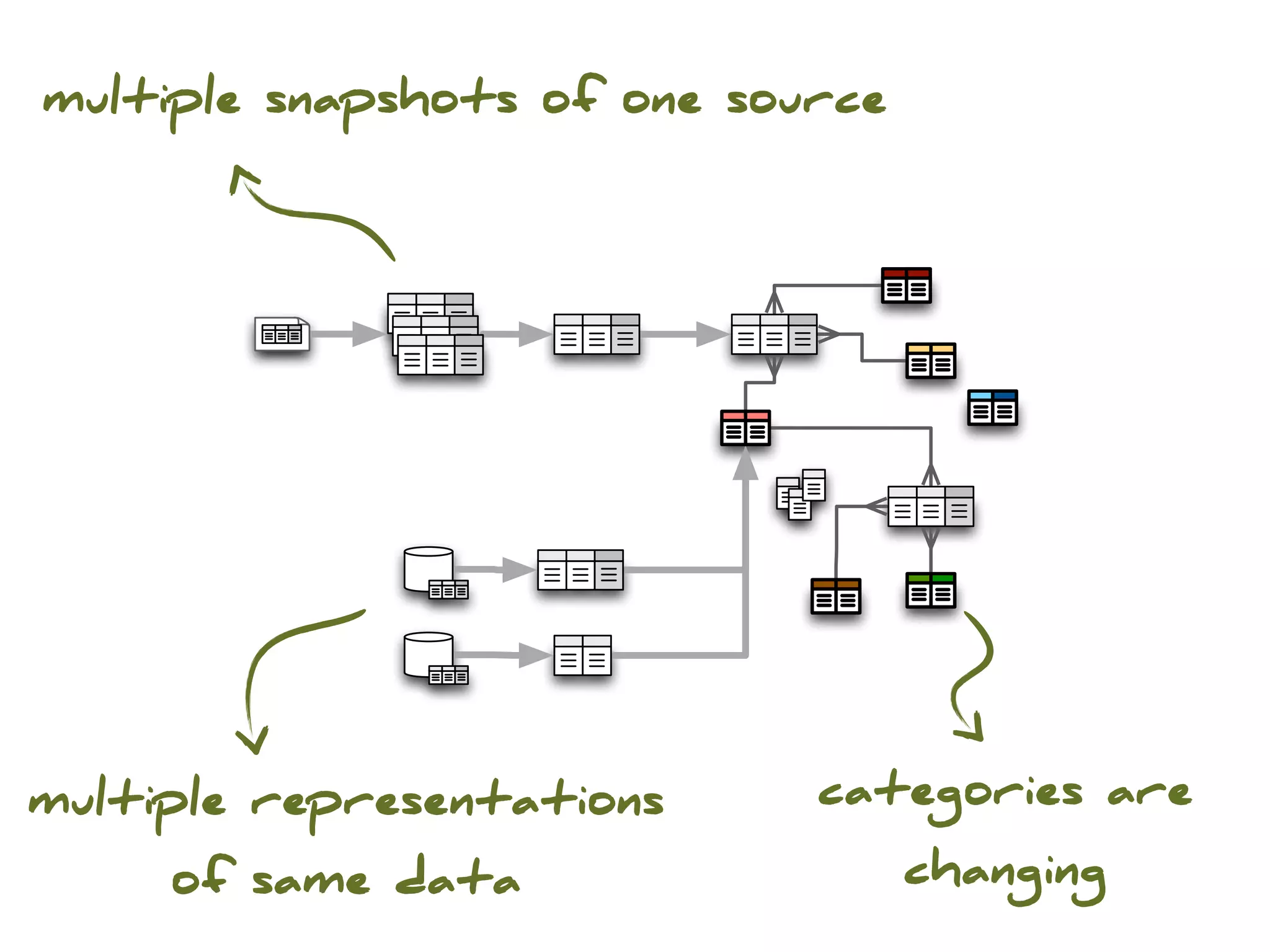
multiple snapshots of one source


multiple representations     categories are

     of same data                  changing
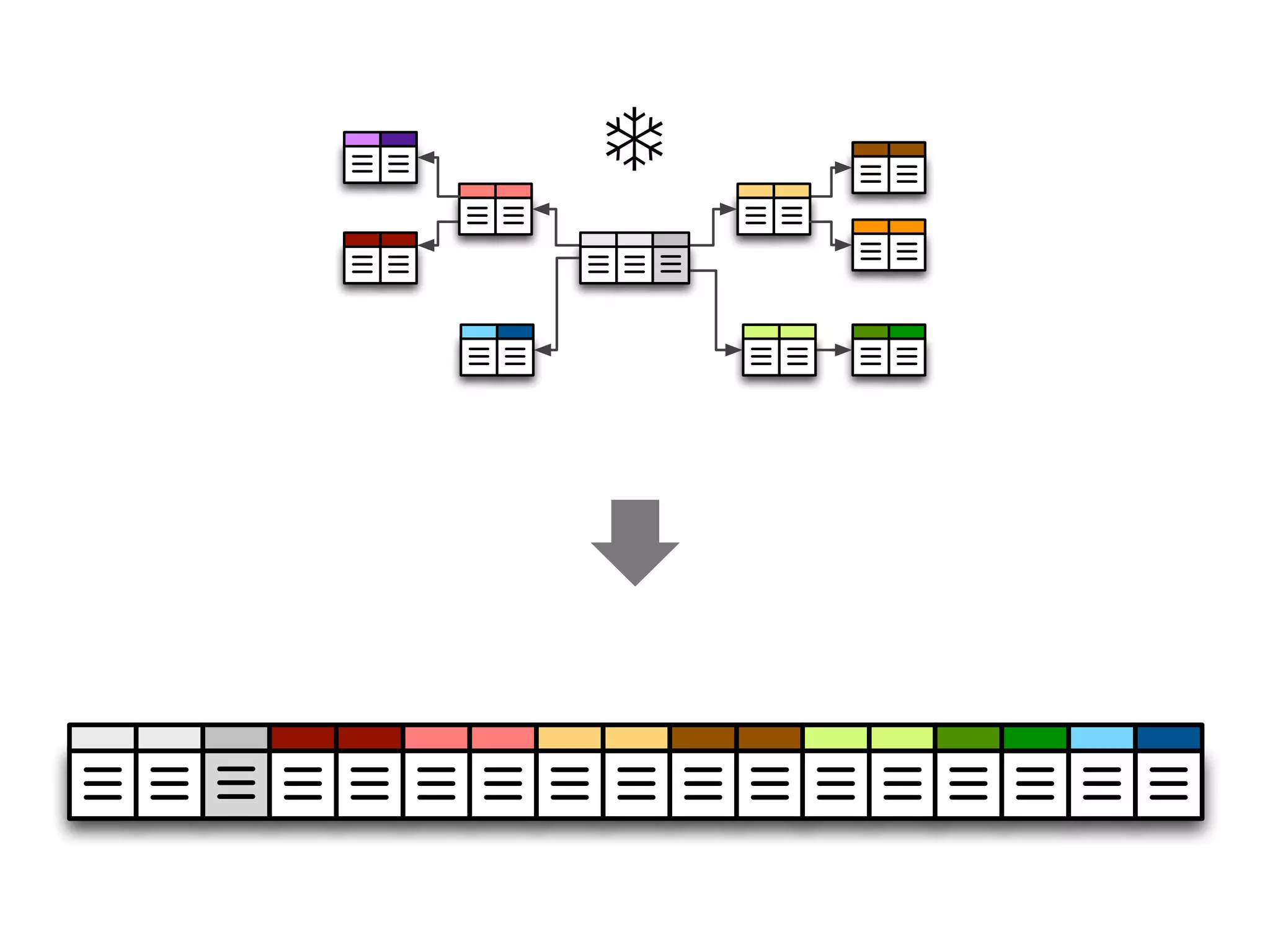
❄
Is Python Capable?
     very basic examples
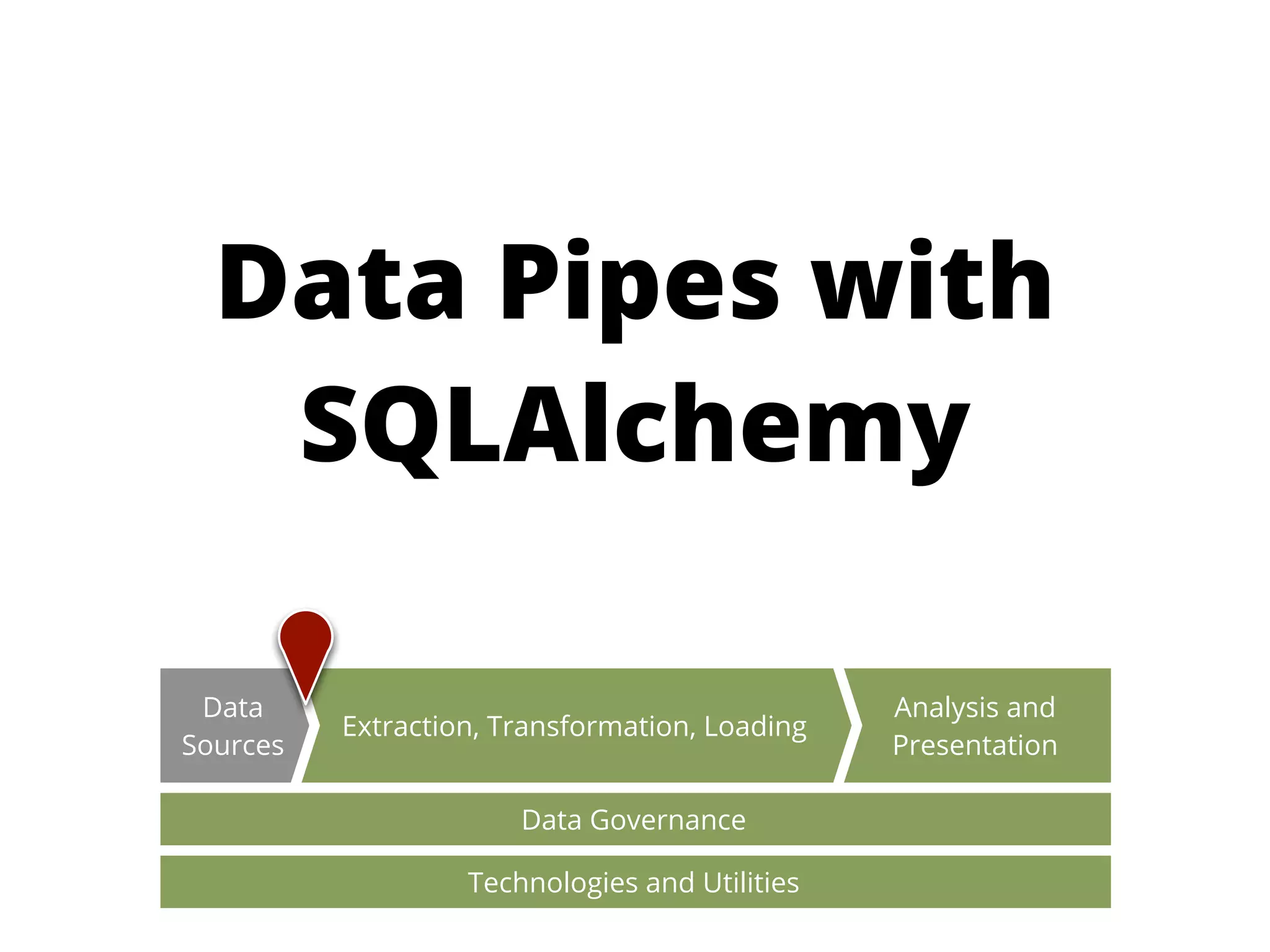
Data Pipes with
   SQLAlchemy

 Data                                           Analysis and
          Extraction, Transformation, Loading
Sources                                         Presentation

                       Data Governance

                   Technologies and Utilities
■ connection: create_engine
■ schema reflection: MetaData,   Table

■ expressions: select(),   insert()
src_engine = create_engine("sqlite:///data.sqlite")
src_metadata = MetaData(bind=src_engine)
src_table = Table('data', src_metadata, autoload=True)


target_engine = create_engine("postgres://localhost/sandbox")
target_metadata = MetaData(bind=target_engine)
target_table = Table('data', target_metadata)
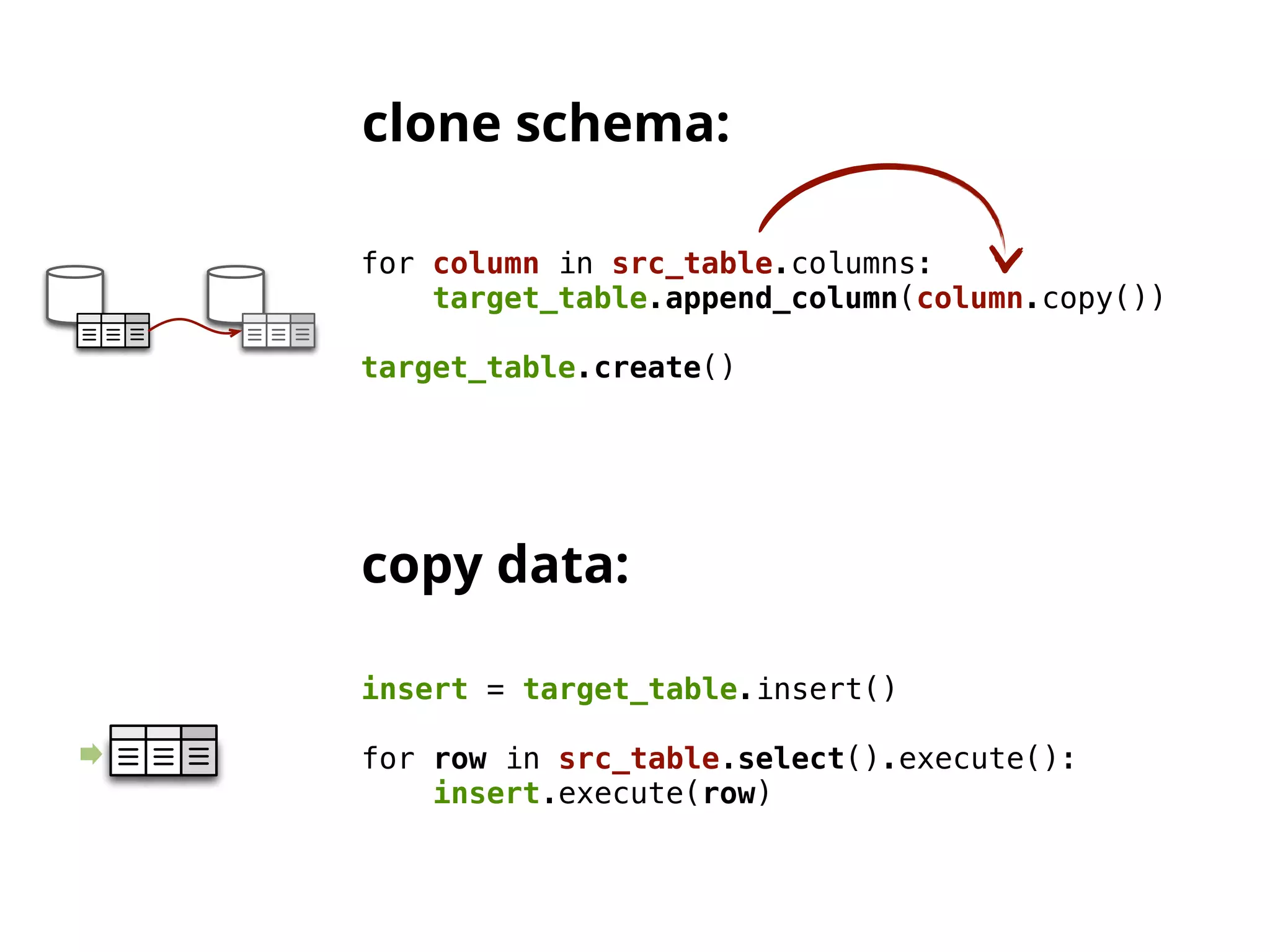
clone schema:

for column in src_table.columns:
    target_table.append_column(column.copy())

target_table.create()


copy data:

insert = target_table.insert()

for row in src_table.select().execute():
    insert.execute(row)
magic used:

metadata reflection
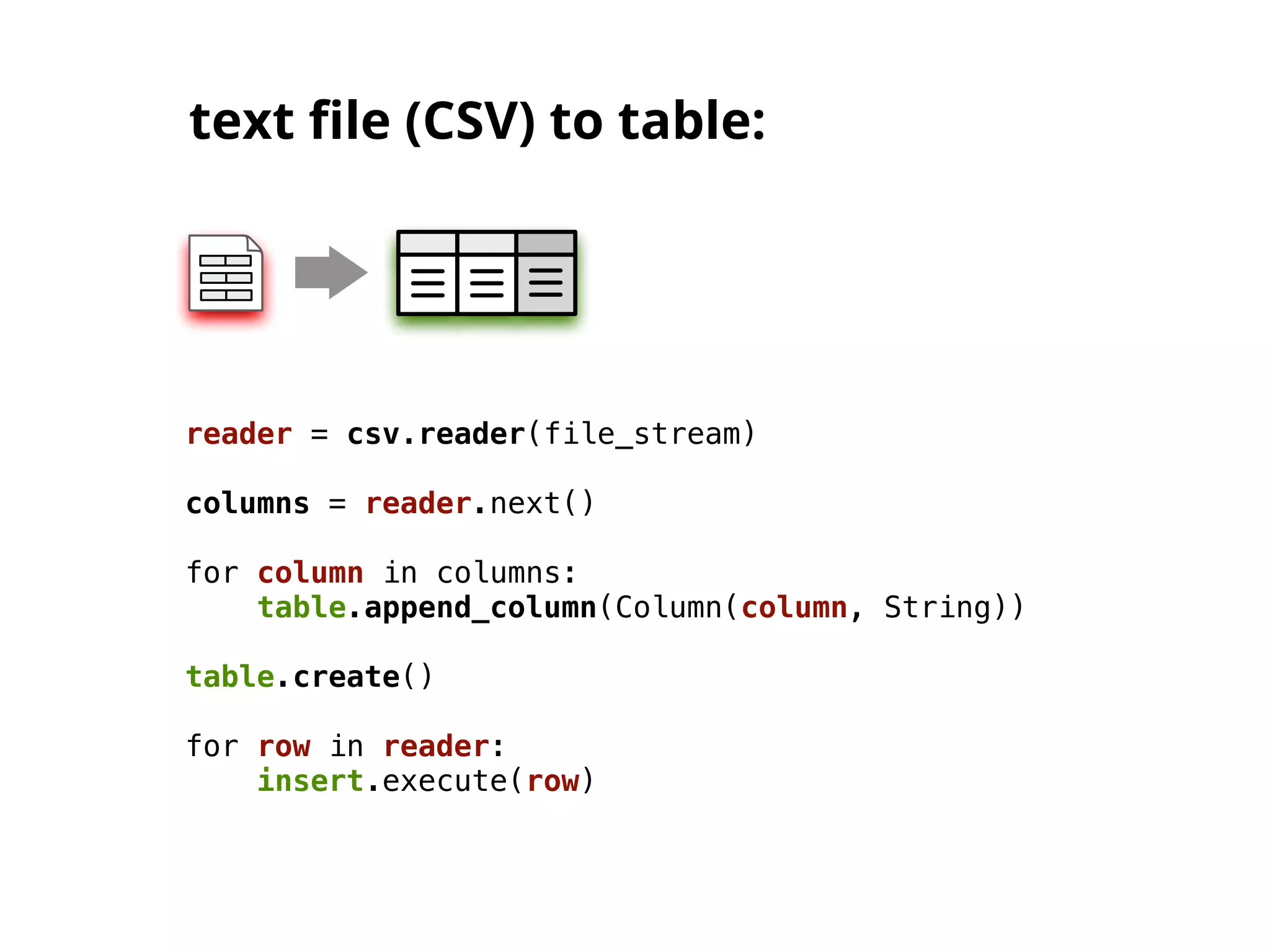
text file (CSV) to table:


reader = csv.reader(file_stream)

columns = reader.next()

for column in columns:
    table.append_column(Column(column, String))

table.create()

for row in reader:
    insert.execute(row)
Simple T from ETL

 Data                                           Analysis and
          Extraction, Transformation, Loading
Sources                                         Presentation

                       Data Governance

                   Technologies and Utilities
transformation = [

 ('fiscal_year',         {"w function": int,
                          ". field":"fiscal_year"}),
 ('region_code',         {"4 mapping": region_map,
                          ". field":"region"}),
 ('borrower_country',    None),
 ('project_name',        None),
 ('procurement_type',    None),
 ('major_sector_code',   {"4 mapping": sector_code_map,
                          ". field":"major_sector"}),
 ('major_sector',        None),
 ('supplier',            None),
 ('contract_amount',     {"w function": currency_to_number,
                          ". field": 'total_contract_amount'}
 ]


     target fields        source transformations
Transformation

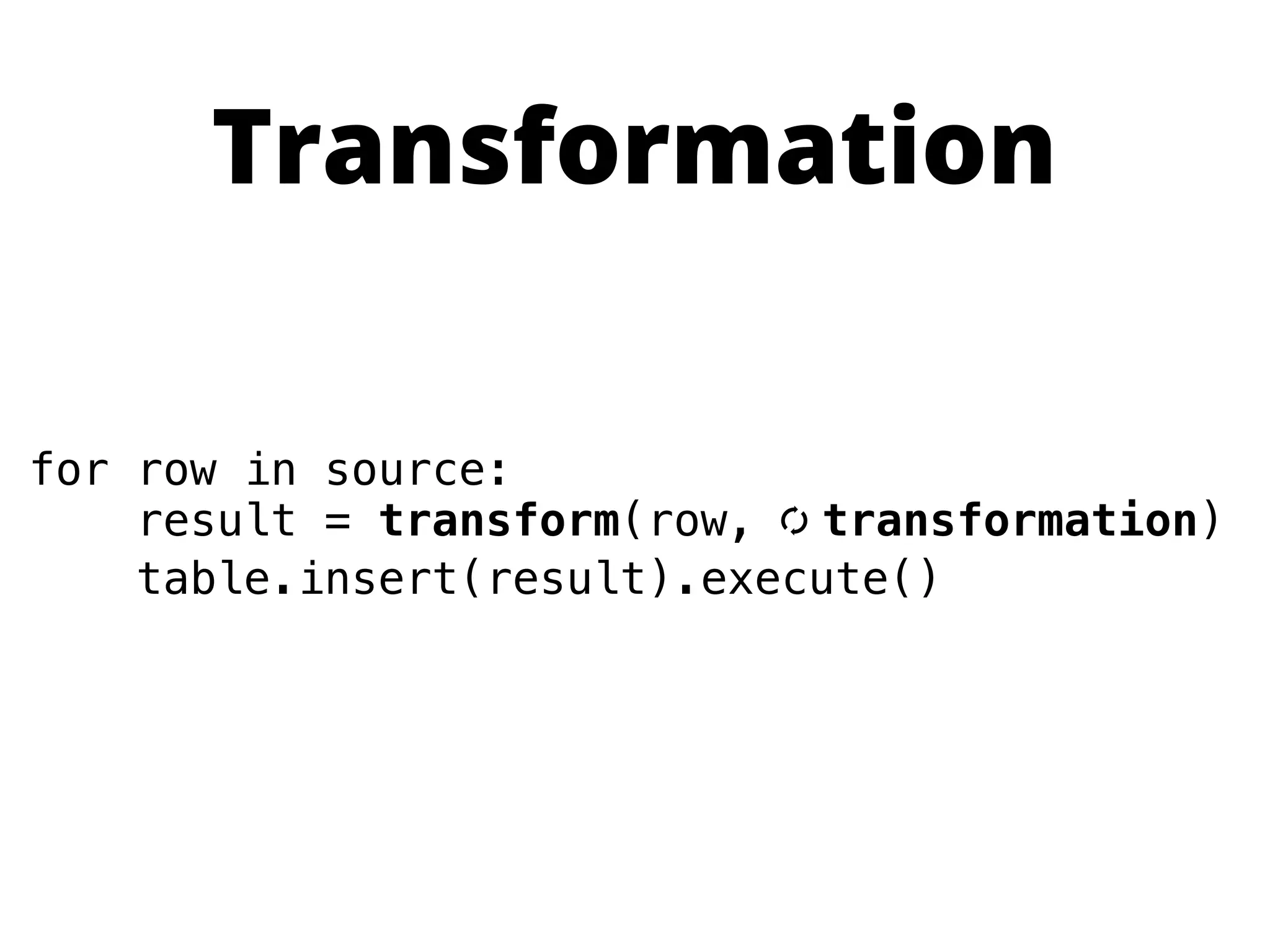
for row in source:
    result = transform(row, [ transformation)
    table.insert(result).execute()
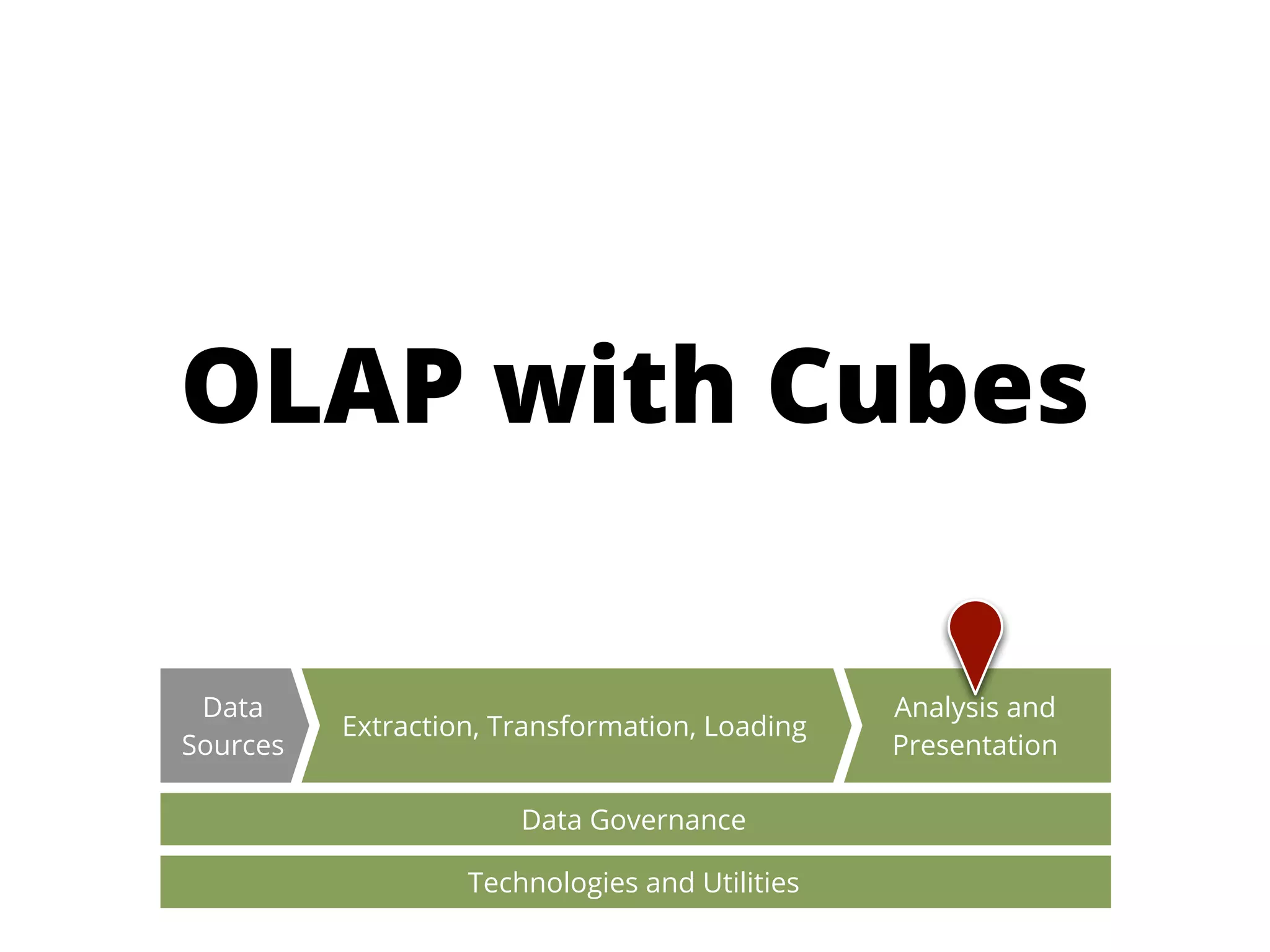
OLAP with Cubes

 Data                                           Analysis and
          Extraction, Transformation, Loading
Sources                                         Presentation

                       Data Governance

                   Technologies and Utilities
Model
           {
               “name” = “My Model”
               “description” = ....

               “cubes” = [...]
               “dimensions” = [...]
           }


cubes                          dimensions
measures                        levels, attributes, hierarchy
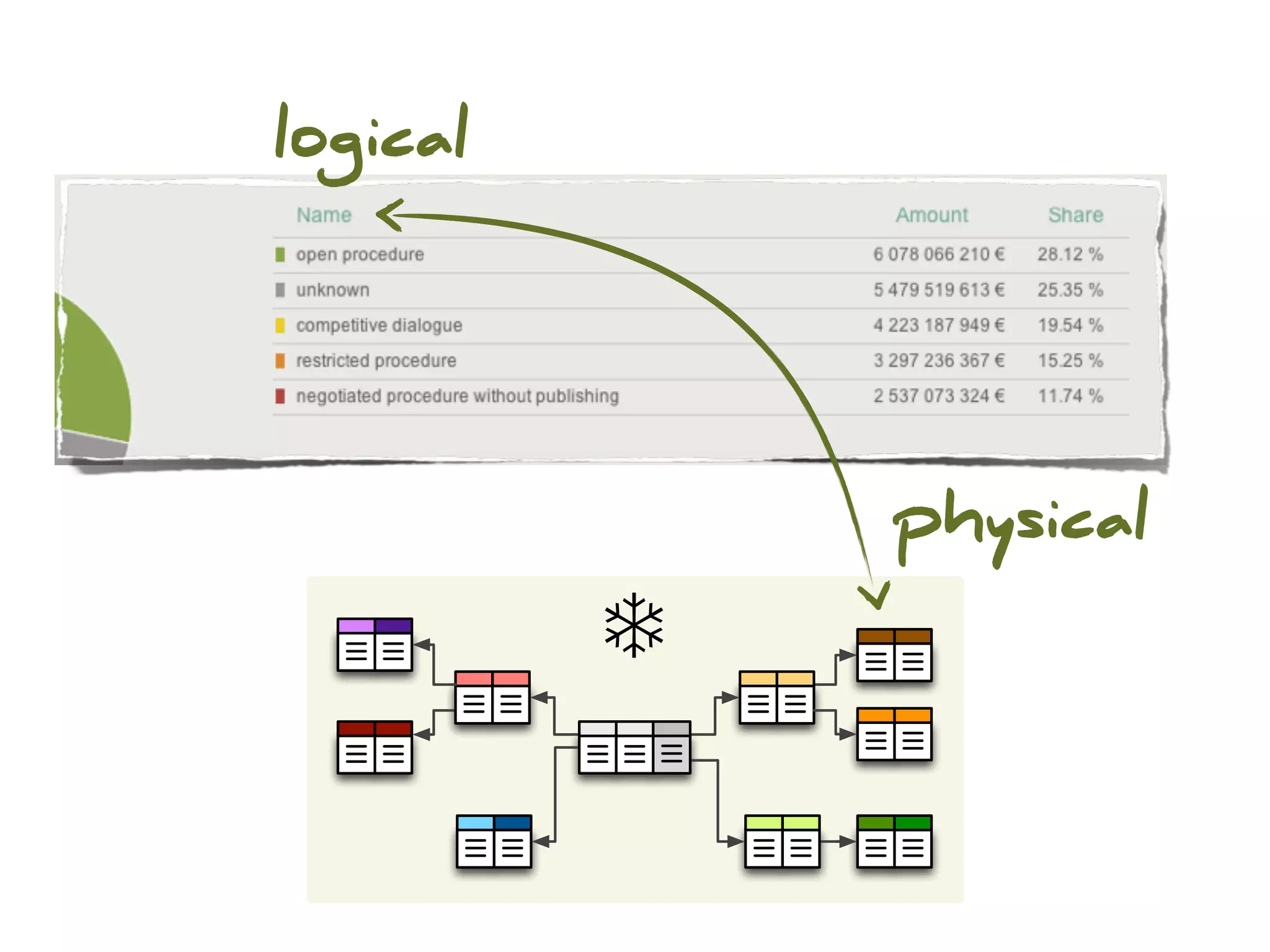
logical


              physical

          ❄
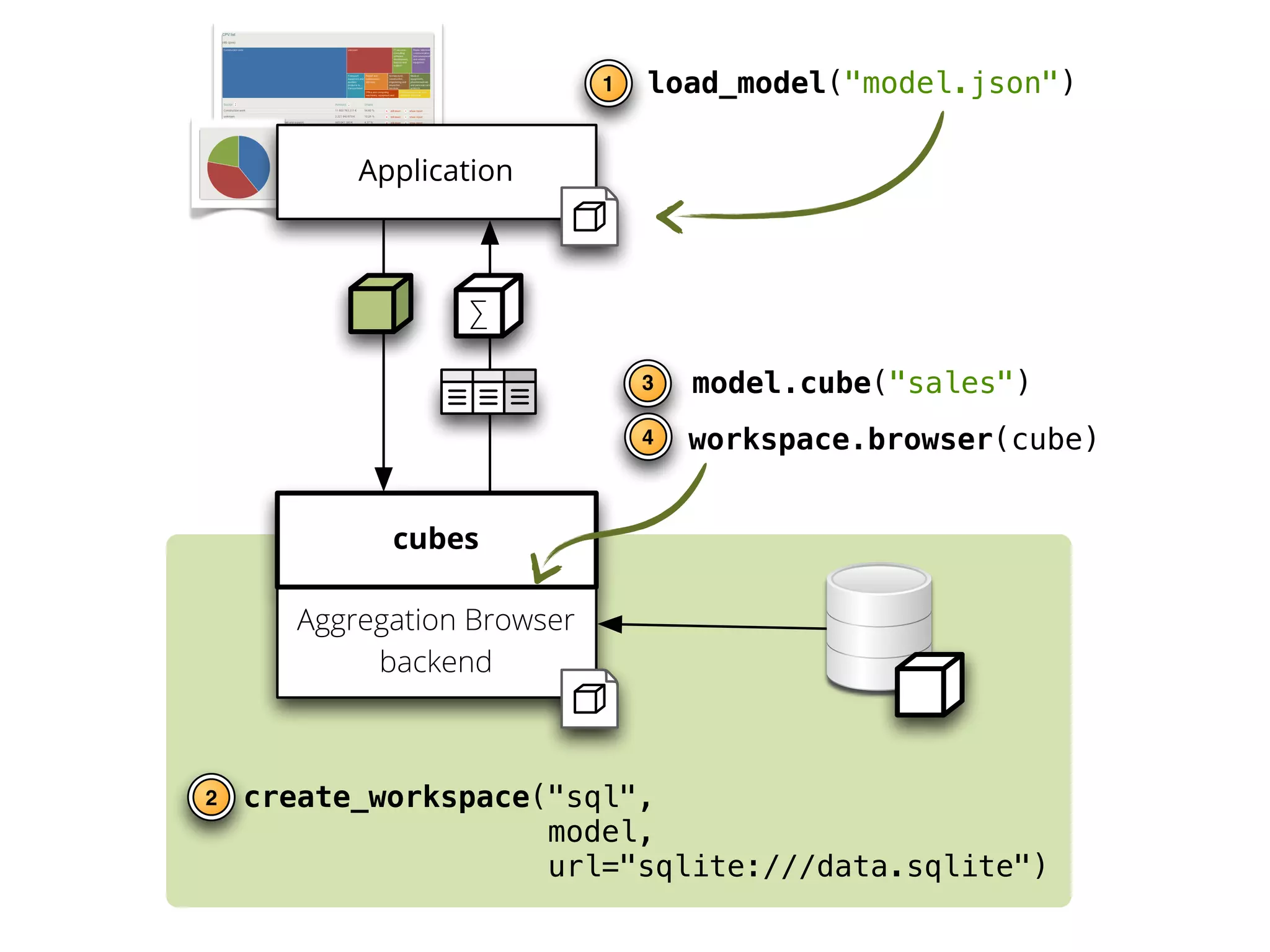
1   load_model("model.json")

           Application


                  ∑

                                 3   model.cube("sales")
                                 4   workspace.browser(cube)


             cubes

       Aggregation Browser
            backend


2   create_workspace("sql",
                     model,
                     url="sqlite:///data.sqlite")
browser.aggregate(o cell,
                  . drilldown=[9 "sector"])


                        drill-down
for row in result.table_rows(“sector”):


          row.record["amount_sum"]
q row.label                     k row.key
whole cube


                                           o cell = Cell(cube)
                                           browser.aggregate(o cell)
                Total


                                          browser.aggregate(o cell,
                                                       drilldown=[9 “date”])


2006 2007 2008 2009 2010


                                          ✂ cut = PointCut(9 “date”, [2010])
                                          o cell = o cell.slice(✂ cut)

                                          browser.aggregate(o cell,
                                                       drilldown=[9 “date”])
Jan   Feb Mar Apr March April May   ...
How can Python
  be Useful
just the   Language
 ■ saves maintenance resources
 ■ shortens development time
 ■ saves your from going insane
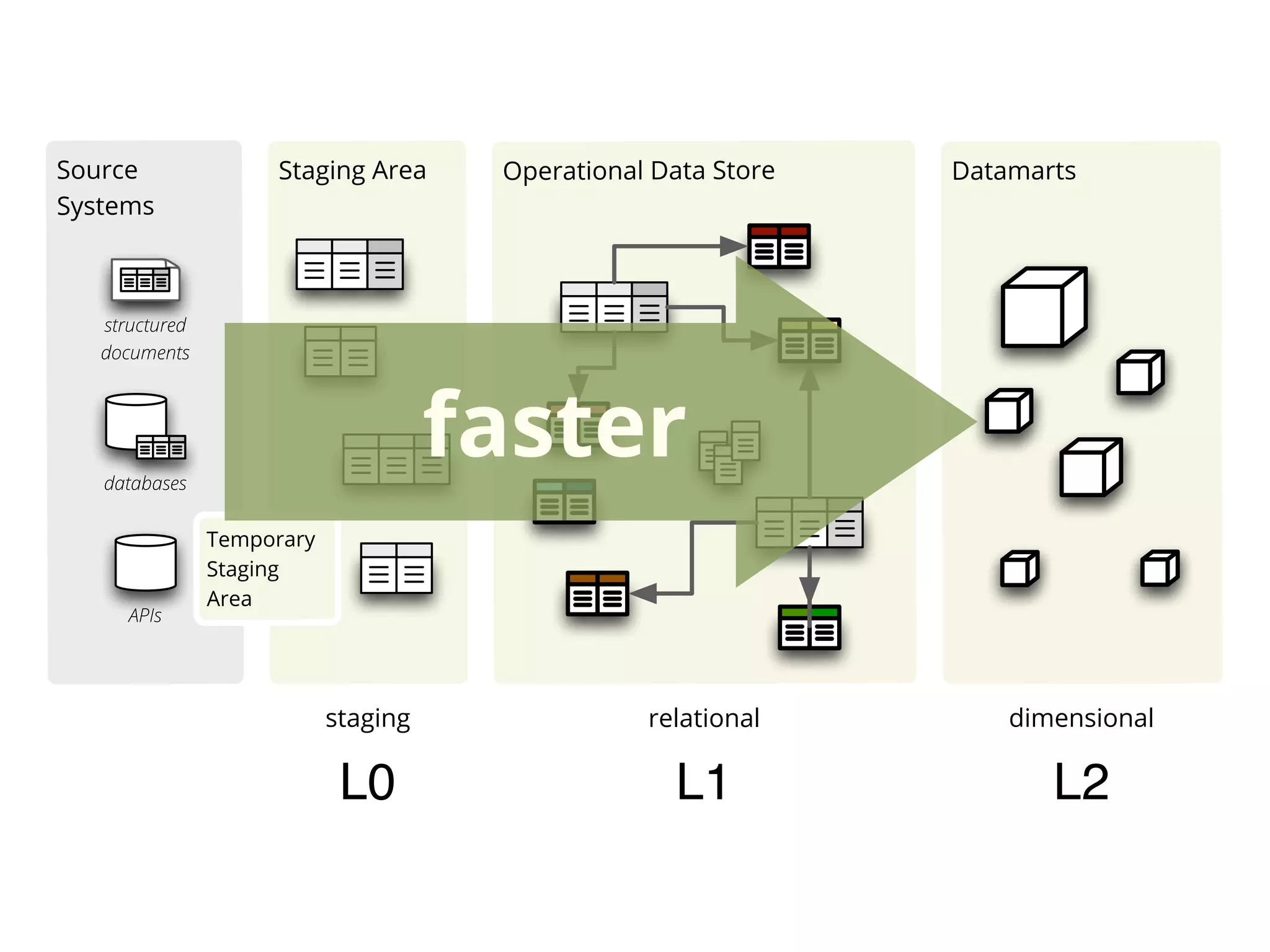
Source               Staging Area      Operational Data Store   Datamarts
Systems


   structured
   documents


   databases
                                      faster
                Temporary
                Staging
                Area
      APIs


                            staging               relational        dimensional

                             L0                     L1                 L2
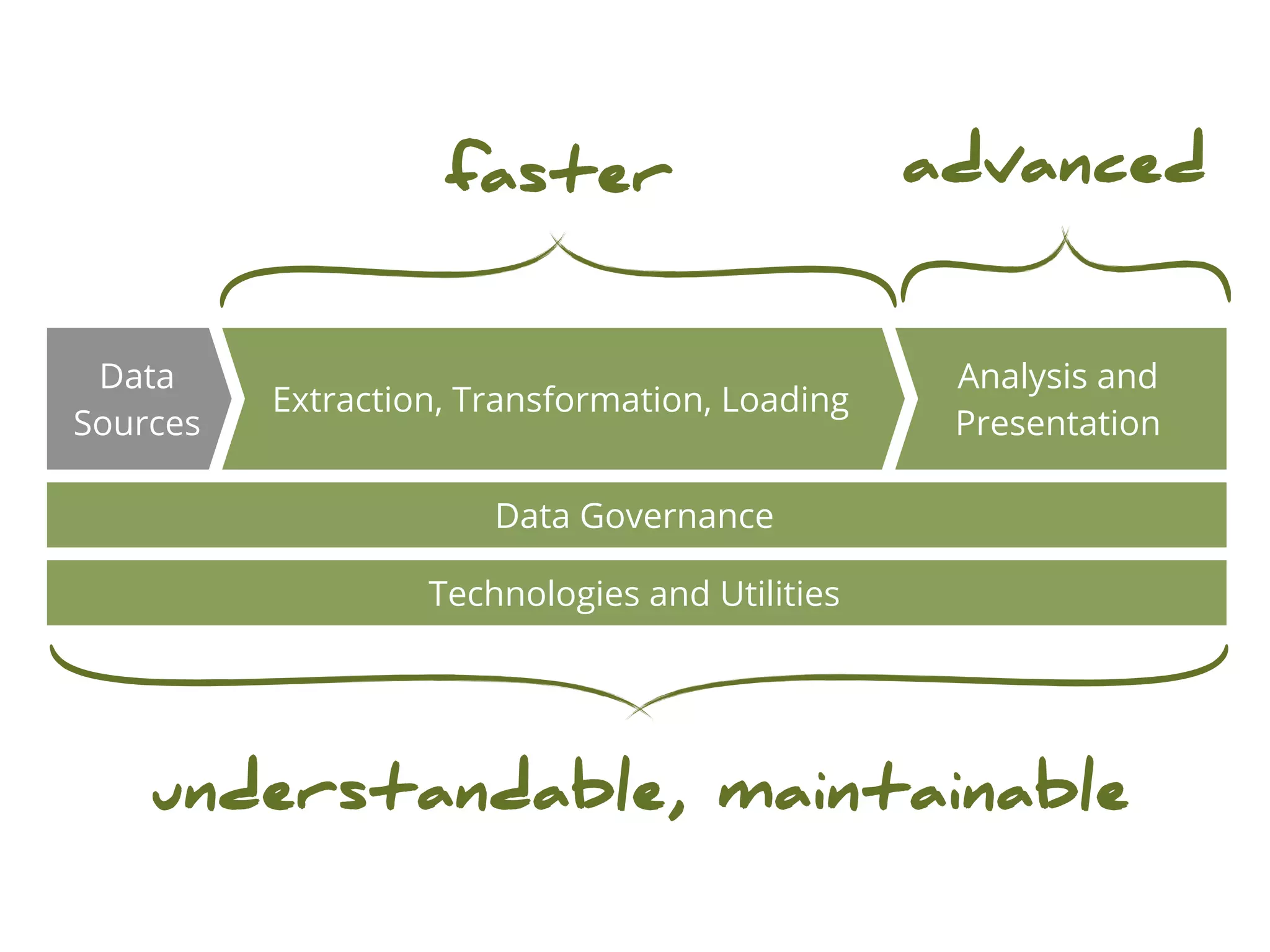
faster                      advanced


 Data                                            Analysis and
          Extraction, Transformation, Loading
Sources                                          Presentation

                       Data Governance

                   Technologies and Utilities


    understandable, maintainable
Conclusion
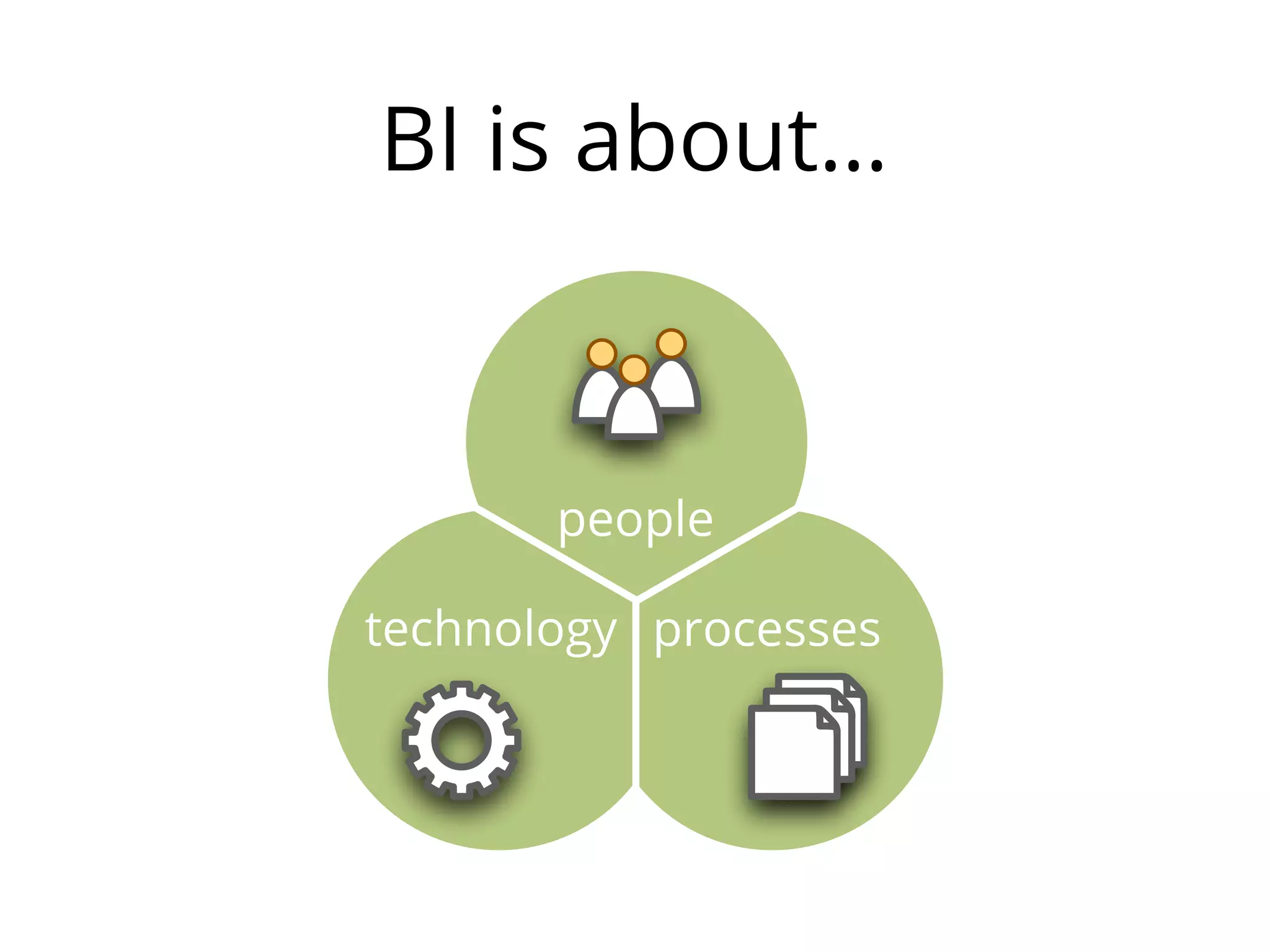
BI is about…


       people

technology processes
don’t forget
 metadata
Future

who is going to fix your COBOL Java tool
 if you have only Python guys around?
is capable, let’s start
Thank You
      [t


          Twitter:

        @Stiivi
     DataBrewery blog:

blog.databrewery.org
          Github:

  github.com/Stiivi

Python business intelligence (PyData 2012 talk)

  • 1.
    Python for Business Intelligence Štefan Urbánek ■ @Stiivi ■ stefan.urbanek@continuum.io ■ PyData NYC, October 2012
  • 2.
  • 3.
    Results Q/A and articleswith Java solution references (not listed here)
  • 5.
  • 6.
    Overview ■ Traditional DataWarehouse ■ Python and Data ■ Is Python Capable? ■ Conclusion
  • 7.
  • 8.
  • 9.
    Data Analysis and Extraction, Transformation, Loading Sources Presentation Data Governance Technologies and Utilities
  • 10.
  • 11.
    ■ Extracting datafrom the original sources ■ Quality assuring and cleaning data ■ Conforming the labels and measures in the data to achieve consistency across the original sources ■ Delivering data in a physical format that can be used by query tools, report writers, and dashboards. Source: Ralph Kimball – The Data Warehouse ETL Toolkit
  • 12.
    Source Staging Area Operational Data Store Datamarts Systems structured documents databases Temporary Staging Area APIs staging relational dimensional L0 L1 L2
  • 13.
  • 14.
  • 16.
    aggregation browsing slicing and dicing
  • 17.
    business / analyst’s point of view regardless of physical schema implementation
  • 18.
    Facts measurable fact fact data cell most detailed information
  • 19.
    location type time dimensions
  • 20.
    Dimension ■ provide contextfor facts ■ used to filter queries or reports ■ control scope of aggregation of facts
  • 21.
  • 22.
    Python and Data community perception* *as of Oct 2012
  • 23.
  • 24.
  • 25.
    Data Analysis and Extraction, Transformation, Loading Sources Presentation Data Governance Technologies and Utilities
  • 26.
    Scientific Data T1[s] T2[s] T3[s] T4[s] P1 112,68 941,67 171,01 660,48 P2 96,15 306,51 725,88 877,82 P3 313,39 189,31 41,81 428,68 P4 760,62 983,48 371,21 281,19 P5 838,56 39,27 389,42 231,12 n-dimensional array of numbers
  • 27.
    Assumptions ■ data ismostly numbers ■ data is neatly organized... ■ … in one multi-dimensional array
  • 28.
    Data Analysis and Extraction, Transformation, Loading Sources Presentation Data Governance Technologies and Utilities
  • 29.
  • 30.
    multiple snapshots ofone source multiple representations categories are of same data changing
  • 31.
  • 32.
    Is Python Capable? very basic examples
  • 33.
    Data Pipes with SQLAlchemy Data Analysis and Extraction, Transformation, Loading Sources Presentation Data Governance Technologies and Utilities
  • 34.
    ■ connection: create_engine ■schema reflection: MetaData, Table ■ expressions: select(), insert()
  • 35.
    src_engine = create_engine("sqlite:///data.sqlite") src_metadata= MetaData(bind=src_engine) src_table = Table('data', src_metadata, autoload=True) target_engine = create_engine("postgres://localhost/sandbox") target_metadata = MetaData(bind=target_engine) target_table = Table('data', target_metadata)
  • 36.
    clone schema: for columnin src_table.columns: target_table.append_column(column.copy()) target_table.create() copy data: insert = target_table.insert() for row in src_table.select().execute(): insert.execute(row)
  • 37.
  • 38.
    text file (CSV)to table: reader = csv.reader(file_stream) columns = reader.next() for column in columns: table.append_column(Column(column, String)) table.create() for row in reader: insert.execute(row)
  • 39.
    Simple T fromETL Data Analysis and Extraction, Transformation, Loading Sources Presentation Data Governance Technologies and Utilities
  • 40.
    transformation = [ ('fiscal_year', {"w function": int, ". field":"fiscal_year"}), ('region_code', {"4 mapping": region_map, ". field":"region"}), ('borrower_country', None), ('project_name', None), ('procurement_type', None), ('major_sector_code', {"4 mapping": sector_code_map, ". field":"major_sector"}), ('major_sector', None), ('supplier', None), ('contract_amount', {"w function": currency_to_number, ". field": 'total_contract_amount'} ] target fields source transformations
  • 41.
    Transformation for row insource: result = transform(row, [ transformation) table.insert(result).execute()
  • 42.
    OLAP with Cubes Data Analysis and Extraction, Transformation, Loading Sources Presentation Data Governance Technologies and Utilities
  • 43.
    Model { “name” = “My Model” “description” = .... “cubes” = [...] “dimensions” = [...] } cubes dimensions measures levels, attributes, hierarchy
  • 44.
    logical physical ❄
  • 45.
    1 load_model("model.json") Application ∑ 3 model.cube("sales") 4 workspace.browser(cube) cubes Aggregation Browser backend 2 create_workspace("sql", model, url="sqlite:///data.sqlite")
  • 46.
    browser.aggregate(o cell, . drilldown=[9 "sector"]) drill-down
  • 47.
    for row inresult.table_rows(“sector”): row.record["amount_sum"] q row.label k row.key
  • 48.
    whole cube o cell = Cell(cube) browser.aggregate(o cell) Total browser.aggregate(o cell, drilldown=[9 “date”]) 2006 2007 2008 2009 2010 ✂ cut = PointCut(9 “date”, [2010]) o cell = o cell.slice(✂ cut) browser.aggregate(o cell, drilldown=[9 “date”]) Jan Feb Mar Apr March April May ...
  • 49.
    How can Python be Useful
  • 50.
    just the Language ■ saves maintenance resources ■ shortens development time ■ saves your from going insane
  • 51.
    Source Staging Area Operational Data Store Datamarts Systems structured documents databases faster Temporary Staging Area APIs staging relational dimensional L0 L1 L2
  • 52.
    faster advanced Data Analysis and Extraction, Transformation, Loading Sources Presentation Data Governance Technologies and Utilities understandable, maintainable
  • 53.
  • 54.
    BI is about… people technology processes
  • 55.
  • 56.
    Future who is goingto fix your COBOL Java tool if you have only Python guys around?
  • 57.
  • 58.
    Thank You [t Twitter: @Stiivi DataBrewery blog: blog.databrewery.org Github: github.com/Stiivi