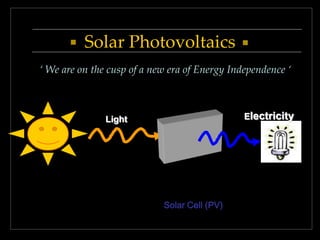
Solar Photovoltaics
‘ We are on the cusp of a new era of Energy Independence ‘

Electricity

Light

Solar Cell (PV)
Broad Outline
Physics of Photovoltaic Generation
PV Technologies and Advancement

Environmental Aspect
Applications
Concluding remarks
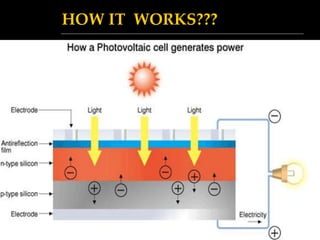
HOW IT WORKS???
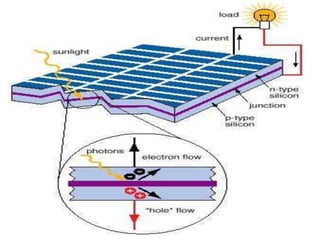
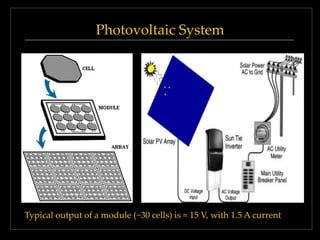
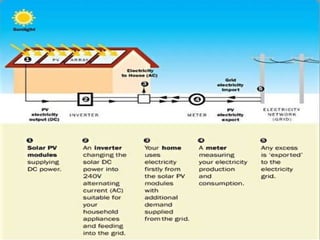
Photovoltaic System

Typical output of a module (~30 cells) is ≈ 15 V, with 1.5 A current
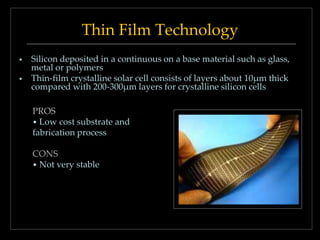
Thin Film Technology



Silicon deposited in a continuous on a base material such as glass,
metal or polymers
Thin-film crystalline solar cell consists of layers about 10μm thick
compared with 200-300μm layers for crystalline silicon cells
PROS
• Low cost substrate and
fabrication process
CONS
• Not very stable
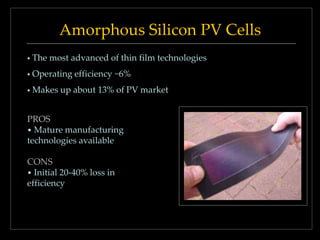
Amorphous Silicon PV Cells


The most advanced of thin film technologies



Operating efficiency ~6%



Makes up about 13% of PV market

PROS
• Mature manufacturing
technologies available
CONS
• Initial 20-40% loss in
efficiency
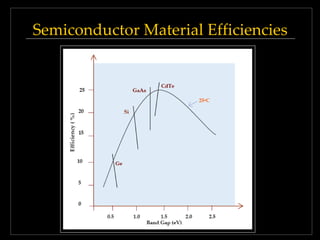
Semiconductor Material Efficiencies
Emerging Technologies
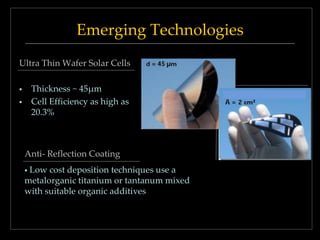
Ultra Thin Wafer Solar Cells
Thickness ~ 45μm
Cell Efficiency as high as
20.3%




Anti- Reflection Coating
Low cost deposition techniques use a
metalorganic titanium or tantanum mixed
with suitable organic additives

BENEFITS..
• The very first benefit of using this technology is
that solar energy is renewable.
• This is a 100% environment-friendly.
• Contrary to fossil fuels, this technology is not
going to release any greenhouse gases, harmful
agents, volatile material or carbon dioxide into
the environment.
• Solar panels are highly durable and reliable.
These systems don’t have any moving systems
and hence they don’t require any replacement.
11
Environmental Aspects


Exhaustion of raw materials



CO2 emission during fabrication process



Disposal problems of hazardous semiconductor material

In spite of all these environmental concerns,
Solar Photovoltaic is one of the cleanest form of energy
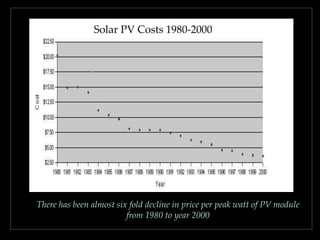
Solar PV Costs 1980-2000

There has been almost six fold decline in price per peak watt of PV module
from 1980 to year 2000
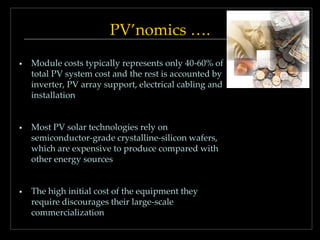
PV’nomics ….


Module costs typically represents only 40-60% of
total PV system cost and the rest is accounted by
inverter, PV array support, electrical cabling and
installation



Most PV solar technologies rely on
semiconductor-grade crystalline-silicon wafers,
which are expensive to produce compared with
other energy sources



The high initial cost of the equipment they
require discourages their large-scale
commercialization
‘ The basic commercialization problem PV
technology has faced for 20 years : markets will
explode when module costs decline, but module
costs can't decline much, until the market grows
much larger ‘
-PV Insider's Report
The Other Side
•

Use newer and cheaper materials like amorphous
silicon , CuInSe2 , CdTe.

•

Thin-film solar cells use less than 1% of the raw
material (silicon) compared to wafer based solar cells,
leading to a significant price drop per kWh.

•

Incentives may bring down the cost of solar energy
down to 10-12 cents per kilowatt hour - which can
imply a payback of 5 to 7 years.
However ….
•

If a location is not currently connected to the ‚grid‛, it is less
expensive to install PV panels than to either extend the grid or set
up small-scale electricity production .

•

PV : Best suited for remote site applications having moderate/small
power requirements consuming applications even where the grid is
in existence.

•

Isolated mountaintops and other rural areas are ideal for standalone PV systems where maintenance and power accessibility
makes PV the ideal technology.
Applications @ PV
•

•

•

•
•

Water Pumping: PV powered pumping systems are excellent
,simple ,reliable – life 20 yrs
Commercial Lighting: PV powered lighting systems are reliable
and low cost alternative. Security, billboard sign, area, and outdoor
lighting are all viable applications for PV
Consumer electronics: Solar powered watches, calculators, and
cameras are all everyday applications for PV technologies.
Telecommunications
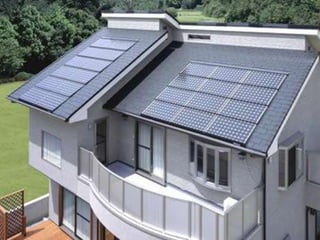
Residential Power: A residence located more than a mile from the
electric grid can install a PV system more inexpensively than
extending the electric grid
(Over 500,000 homes worldwide use PV power as their only source
of electricity)
Building Integrated systems


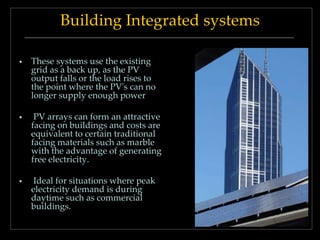
These systems use the existing
grid as a back up, as the PV
output falls or the load rises to
the point where the PV's can no
longer supply enough power



PV arrays can form an attractive
facing on buildings and costs are
equivalent to certain traditional
facing materials such as marble
with the advantage of generating
free electricity.



Ideal for situations where peak
electricity demand is during
daytime such as commercial
buildings.
‚ By the year 2030, India should achieve
Energy Independence through solar power
and other forms of renewable energy ‛
Dr. A. P. J. Abdul Kalam
President of India
Independence Day Speech, 2005
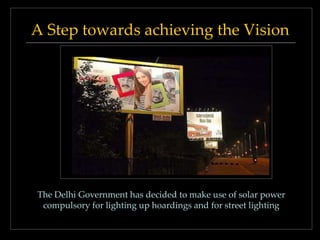
A Step towards achieving the Vision

The Delhi Government has decided to make use of solar power
compulsory for lighting up hoardings and for street lighting
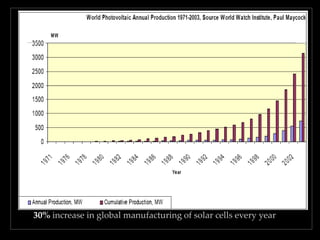
30% increase in global manufacturing of solar cells every year
Concluding Remarks
•

The key to successful solar energy installation is to use quality
components that have long lifetimes and require minimal
maintenance.

•

The future is bright for continued PV technology dissemination.
PV technology fills a significant need in supplying electricity,
creating local jobs and promoting economic development in rural
areas, avoiding the external environmental costs associated with
traditional electrical generation technologies.

•

Major power policy reforms and tax incentives will play a major role
if all the above said is to be effectively realized.
‘ Can technological developments and the
transition to a culture that is more aware
of the need to safeguard the environment
help create a world powered by the Sun’s
Energy ? ‘

Pv cell

  • 1.
    Solar Photovoltaics ‘ Weare on the cusp of a new era of Energy Independence ‘ Electricity Light Solar Cell (PV)
  • 2.
    Broad Outline Physics ofPhotovoltaic Generation PV Technologies and Advancement Environmental Aspect Applications Concluding remarks
  • 3.
  • 5.
    Photovoltaic System Typical outputof a module (~30 cells) is ≈ 15 V, with 1.5 A current
  • 7.
    Thin Film Technology   Silicondeposited in a continuous on a base material such as glass, metal or polymers Thin-film crystalline solar cell consists of layers about 10μm thick compared with 200-300μm layers for crystalline silicon cells PROS • Low cost substrate and fabrication process CONS • Not very stable
  • 8.
    Amorphous Silicon PVCells  The most advanced of thin film technologies  Operating efficiency ~6%  Makes up about 13% of PV market PROS • Mature manufacturing technologies available CONS • Initial 20-40% loss in efficiency
  • 9.
  • 10.
    Emerging Technologies Ultra ThinWafer Solar Cells Thickness ~ 45μm Cell Efficiency as high as 20.3%   Anti- Reflection Coating Low cost deposition techniques use a metalorganic titanium or tantanum mixed with suitable organic additives 
  • 11.
    BENEFITS.. • The veryfirst benefit of using this technology is that solar energy is renewable. • This is a 100% environment-friendly. • Contrary to fossil fuels, this technology is not going to release any greenhouse gases, harmful agents, volatile material or carbon dioxide into the environment. • Solar panels are highly durable and reliable. These systems don’t have any moving systems and hence they don’t require any replacement. 11
  • 12.
    Environmental Aspects  Exhaustion ofraw materials  CO2 emission during fabrication process  Disposal problems of hazardous semiconductor material In spite of all these environmental concerns, Solar Photovoltaic is one of the cleanest form of energy
  • 13.
    Solar PV Costs1980-2000 There has been almost six fold decline in price per peak watt of PV module from 1980 to year 2000
  • 14.
    PV’nomics ….  Module coststypically represents only 40-60% of total PV system cost and the rest is accounted by inverter, PV array support, electrical cabling and installation  Most PV solar technologies rely on semiconductor-grade crystalline-silicon wafers, which are expensive to produce compared with other energy sources  The high initial cost of the equipment they require discourages their large-scale commercialization
  • 15.
    ‘ The basiccommercialization problem PV technology has faced for 20 years : markets will explode when module costs decline, but module costs can't decline much, until the market grows much larger ‘ -PV Insider's Report
  • 16.
    The Other Side • Usenewer and cheaper materials like amorphous silicon , CuInSe2 , CdTe. • Thin-film solar cells use less than 1% of the raw material (silicon) compared to wafer based solar cells, leading to a significant price drop per kWh. • Incentives may bring down the cost of solar energy down to 10-12 cents per kilowatt hour - which can imply a payback of 5 to 7 years.
  • 17.
    However …. • If alocation is not currently connected to the ‚grid‛, it is less expensive to install PV panels than to either extend the grid or set up small-scale electricity production . • PV : Best suited for remote site applications having moderate/small power requirements consuming applications even where the grid is in existence. • Isolated mountaintops and other rural areas are ideal for standalone PV systems where maintenance and power accessibility makes PV the ideal technology.
  • 18.
    Applications @ PV • • • • • WaterPumping: PV powered pumping systems are excellent ,simple ,reliable – life 20 yrs Commercial Lighting: PV powered lighting systems are reliable and low cost alternative. Security, billboard sign, area, and outdoor lighting are all viable applications for PV Consumer electronics: Solar powered watches, calculators, and cameras are all everyday applications for PV technologies. Telecommunications Residential Power: A residence located more than a mile from the electric grid can install a PV system more inexpensively than extending the electric grid (Over 500,000 homes worldwide use PV power as their only source of electricity)
  • 19.
    Building Integrated systems  Thesesystems use the existing grid as a back up, as the PV output falls or the load rises to the point where the PV's can no longer supply enough power  PV arrays can form an attractive facing on buildings and costs are equivalent to certain traditional facing materials such as marble with the advantage of generating free electricity.  Ideal for situations where peak electricity demand is during daytime such as commercial buildings.
  • 21.
    ‚ By theyear 2030, India should achieve Energy Independence through solar power and other forms of renewable energy ‛ Dr. A. P. J. Abdul Kalam President of India Independence Day Speech, 2005
  • 22.
    A Step towardsachieving the Vision The Delhi Government has decided to make use of solar power compulsory for lighting up hoardings and for street lighting
  • 23.
    30% increase inglobal manufacturing of solar cells every year
  • 24.
    Concluding Remarks • The keyto successful solar energy installation is to use quality components that have long lifetimes and require minimal maintenance. • The future is bright for continued PV technology dissemination. PV technology fills a significant need in supplying electricity, creating local jobs and promoting economic development in rural areas, avoiding the external environmental costs associated with traditional electrical generation technologies. • Major power policy reforms and tax incentives will play a major role if all the above said is to be effectively realized.
  • 25.
    ‘ Can technologicaldevelopments and the transition to a culture that is more aware of the need to safeguard the environment help create a world powered by the Sun’s Energy ? ‘