Downloaded 248 times
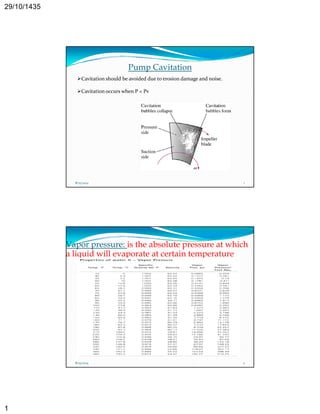
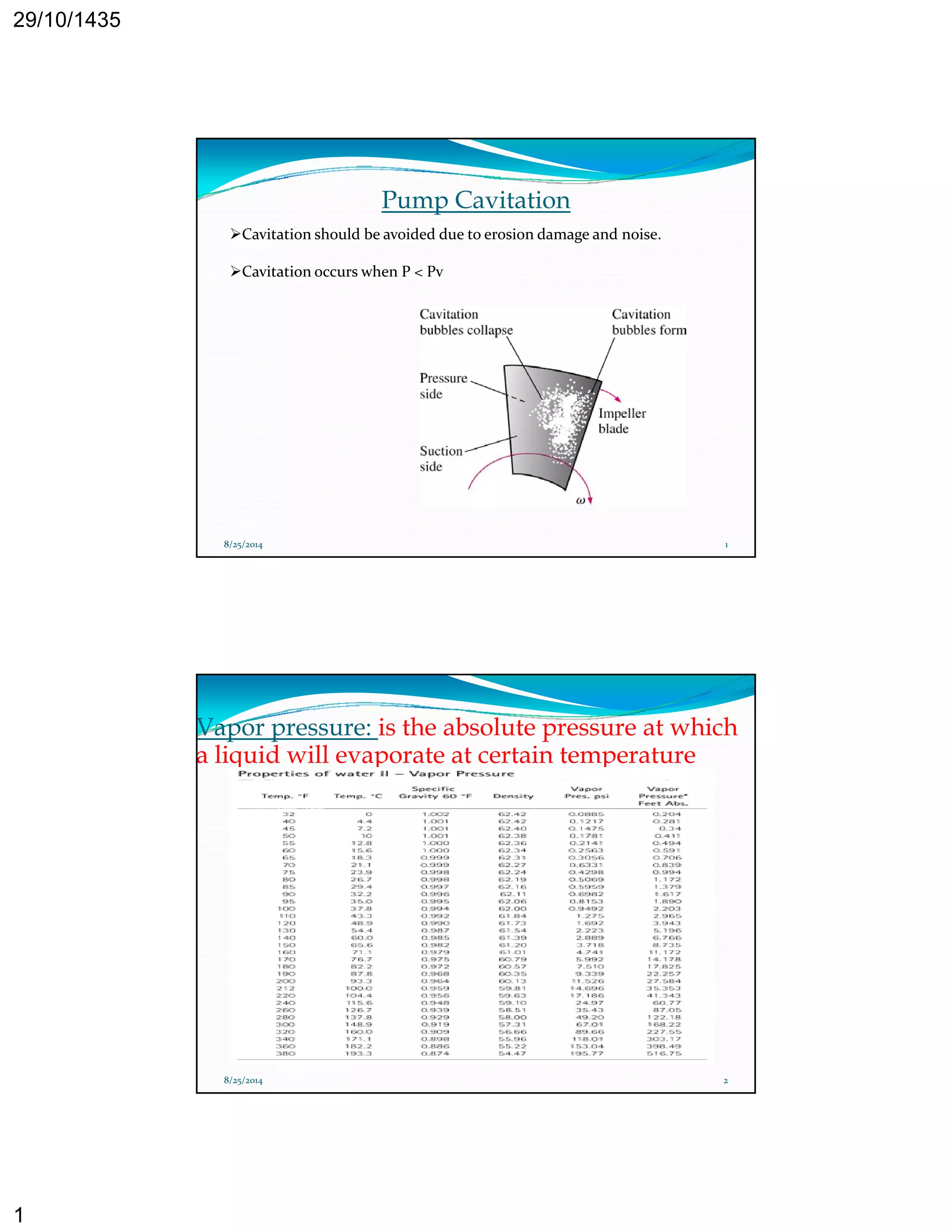
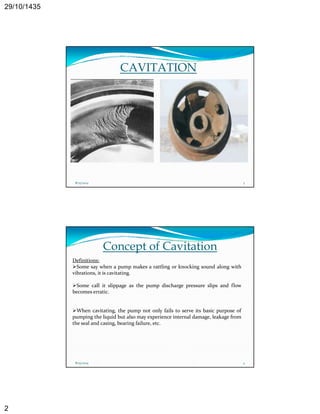
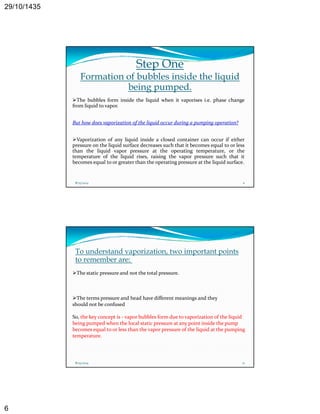
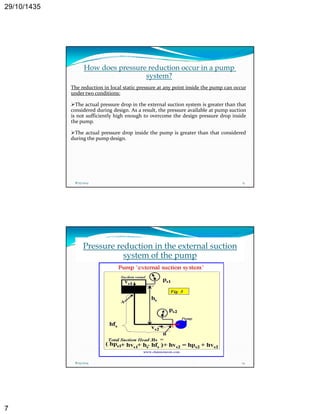
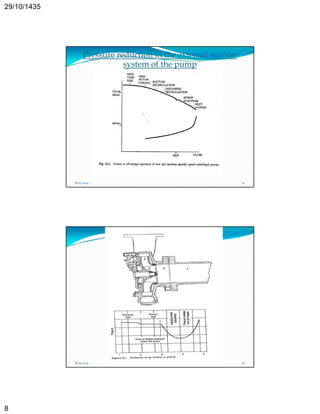
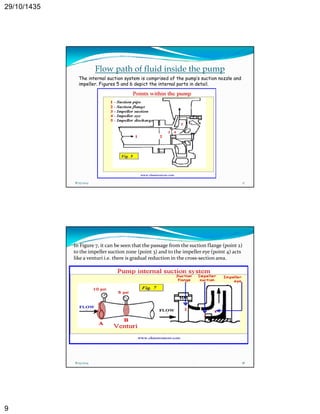
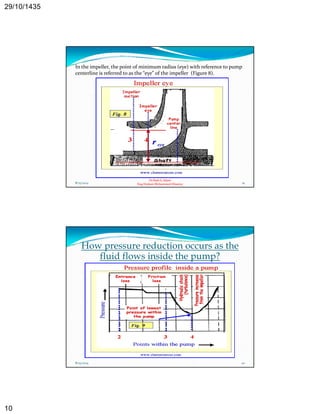
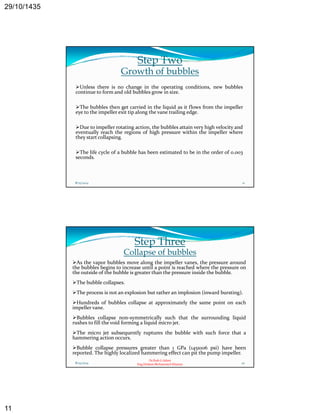
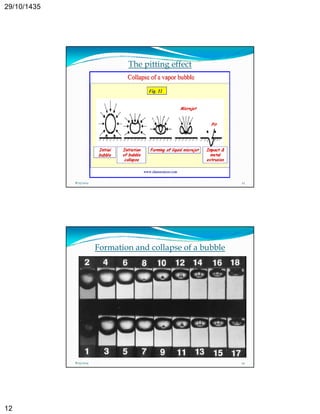
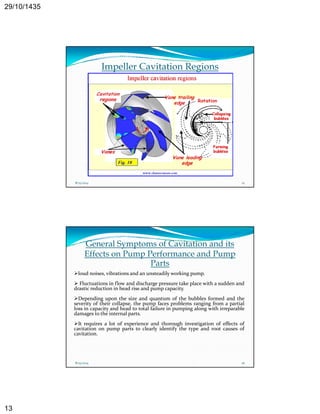
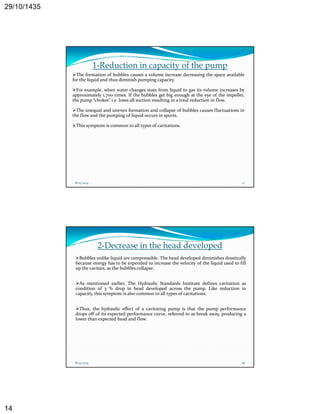
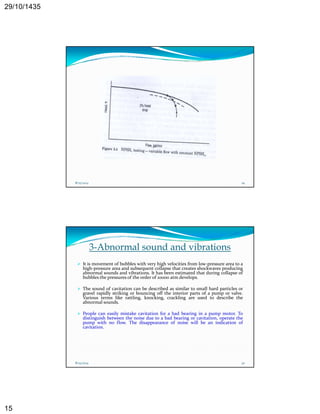
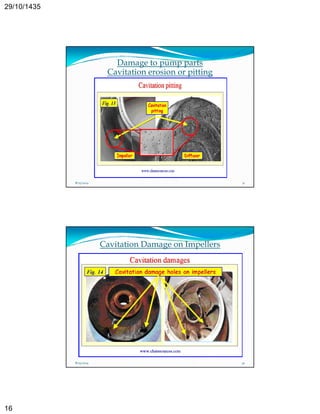
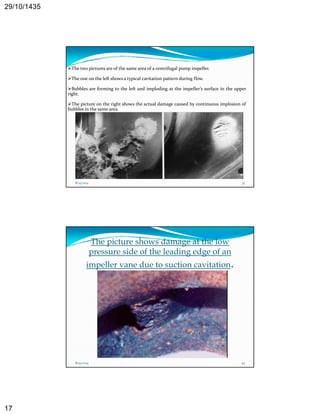
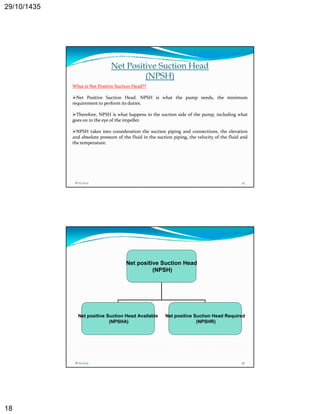
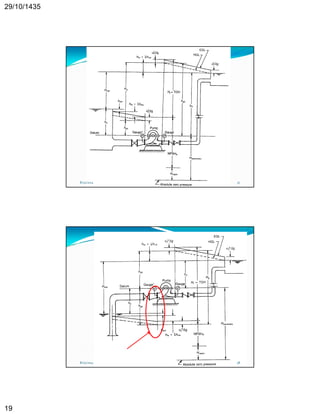
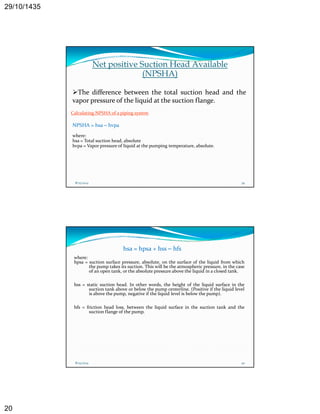
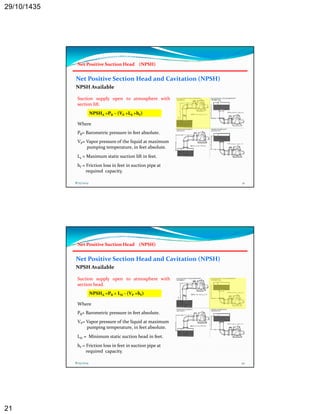
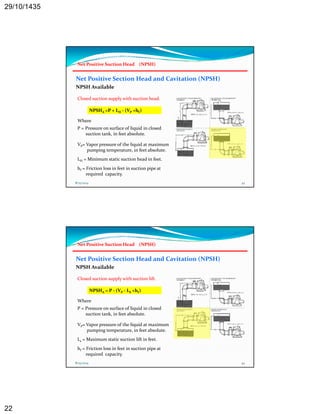
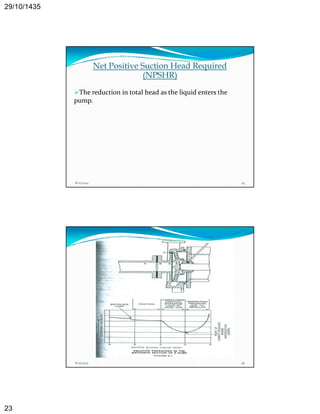
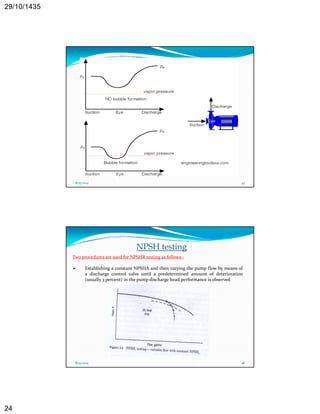
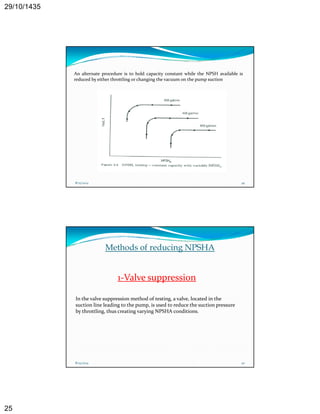
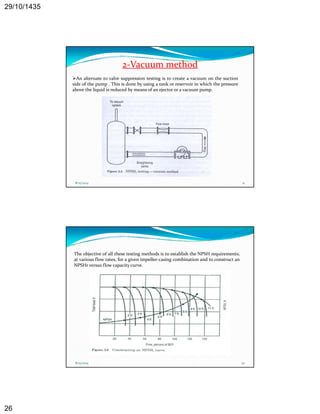
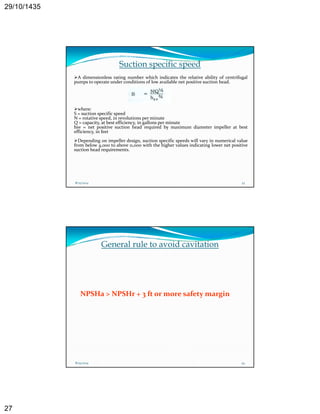
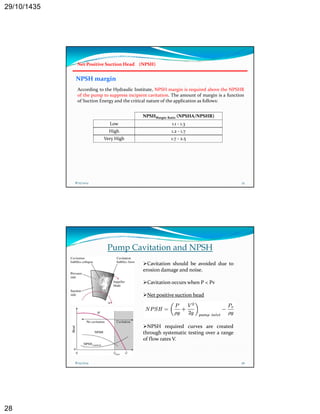
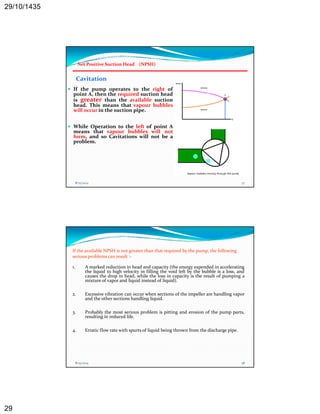
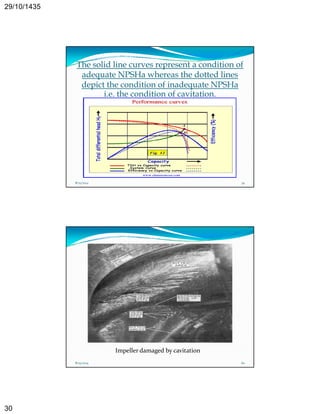
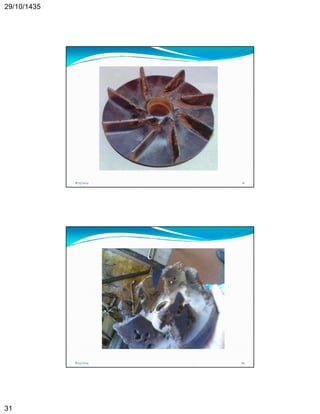
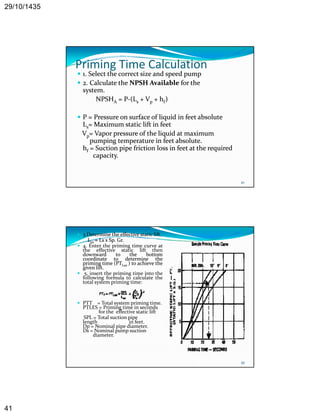

Cavitation occurs in pumps when the local pressure drops below the vapor pressure of the liquid being pumped, causing vapor bubbles to form. These bubbles grow until the pressure increases and causes them to rapidly collapse. This collapse creates shockwaves that can cause damage to pump components over time. To avoid cavitation, the net positive suction head available (NPSHA) must exceed the pump's required NPSH (NPSHR), accounting for suction pressure, elevation, and friction losses. Symptoms of cavitation include noise, vibration, reduced flow and pressure, and pitting wear of impellers and casings.


