Psychotropics
in children
Presenter :
 Dr Prabidhi Adhikari
Moderators:
 Prof.Dr Mohan Belbase
 Lect.Dr Md. Ainuddin Bagban
Contents
 Introduction and history
 Pharmacokinetics and Pharmacodynamics
 General principle of prescription
 BPAD
 Depression
 Anxiety disorder
 PTSD
 OCD
 Psychosis
 Aggression
 Rapid tranquilization
 References
Introduction
 Psychotropic: A drug or other substance that affects how the brain works and causes
changes in mood, awareness, thoughts, feelings, or behavior.
 According to the World Health Organization (WHO),
 A child is a person under the age of 18 years unless the applicable laws recognize
an earlier age of majority.
 Adolescence is the phase of life between childhood and adulthood, from ages 10 to
19
History
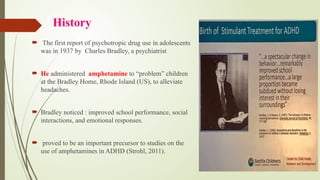
 The first report of psychotropic drug use in adolescents
was in 1937 by Charles Bradley, a psychiatrist
 He administered amphetamine to “problem” children
at the Bradley Home, Rhode Island (US), to alleviate
headaches.
 Bradley noticed : improved school performance, social
interactions, and emotional responses.
 proved to be an important precursor to studies on the
use of amphetamines in ADHD (Strohl, 2011).
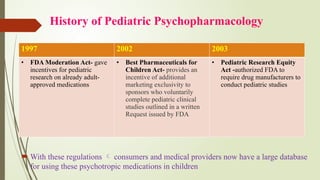
History of Pediatric Psychopharmacology
 With these regulations  consumers and medical providers now have a large database
for using these psychotropic medications in children
1997 2002 2003
• FDA Moderation Act- gave
incentives for pediatric
research on already adult-
approved medications
• Best Pharmaceuticals for
Children Act- provides an
incentive of additional
marketing exclusivity to
sponsors who voluntarily
complete pediatric clinical
studies outlined in a written
Request issued by FDA
• Pediatric Research Equity
Act -authorized FDA to
require drug manufacturers to
conduct pediatric studies
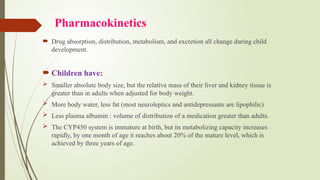
Pharmacokinetics
 Drug absorption, distribution, metabolism, and excretion all change during child
development.
 Children have:
 Smaller absolute body size, but the relative mass of their liver and kidney tissue is
greater than in adults when adjusted for body weight.
 More body water, less fat (most neuroleptics and antidepressants are lipophilic)
 Less plasma albumin : volume of distribution of a medication greater than adults.
 The CYP450 system is immature at birth, but its metabolizing capacity increases
rapidly, by one month of age it reaches about 20% of the mature level, which is
achieved by three years of age.
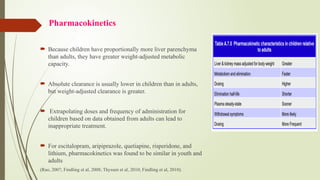
Pharmacokinetics
 Because children have proportionally more liver parenchyma
than adults, they have greater weight-adjusted metabolic
capacity.
 Absolute clearance is usually lower in children than in adults,
but weight-adjusted clearance is greater.
 Extrapolating doses and frequency of administration for
children based on data obtained from adults can lead to
inappropriate treatment.
 For escitalopram, aripiprazole, quetiapine, risperidone, and
lithium, pharmacokinetics was found to be similar in youth and
adults
(Rao, 2007; Findling et al, 2008; Thyssen et al, 2010; Findling et al, 2010).
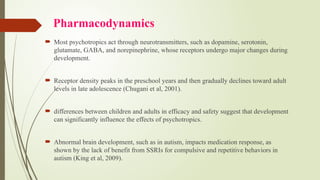
Pharmacodynamics
 Most psychotropics act through neurotransmitters, such as dopamine, serotonin,
glutamate, GABA, and norepinephrine, whose receptors undergo major changes during
development.
 Receptor density peaks in the preschool years and then gradually declines toward adult
levels in late adolescence (Chugani et al, 2001).
 differences between children and adults in efficacy and safety suggest that development
can significantly influence the effects of psychotropics.
 Abnormal brain development, such as in autism, impacts medication response, as
shown by the lack of benefit from SSRIs for compulsive and repetitive behaviors in
autism (King et al, 2009).
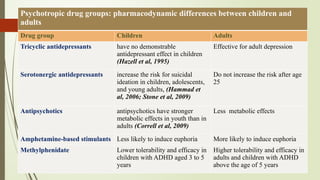
Psychotropic drug groups: pharmacodynamic differences between children and
adults
Drug group Children Adults
Tricyclic antidepressants have no demonstrable
antidepressant effect in children
(Hazell et al, 1995)
Effective for adult depression
Serotonergic antidepressants increase the risk for suicidal
ideation in children, adolescents,
and young adults, (Hammad et
al, 2006; Stone et al, 2009)
Do not increase the risk after age
25
Antipsychotics antipsychotics have stronger
metabolic effects in youth than in
adults (Correll et al, 2009)
Less metabolic effects
Amphetamine-based stimulants Less likely to induce euphoria More likely to induce euphoria
Methylphenidate Lower tolerability and efficacy in
children with ADHD aged 3 to 5
years
Higher tolerability and efficacy in
adults and children with ADHD
above the age of 5 years
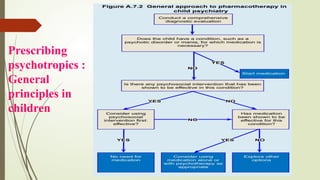
Prescribing
psychotropics :
General
principles in
children
Bipolar affective disorders
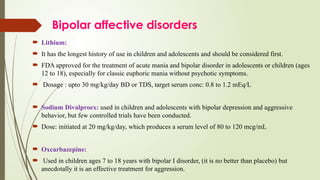
 Lithium:
 It has the longest history of use in children and adolescents and should be considered first.
 FDA approved for the treatment of acute mania and bipolar disorder in adolescents or children (ages
12 to 18), especially for classic euphoric mania without psychotic symptoms.
 Dosage : upto 30 mg/kg/day BD or TDS, target serum conc: 0.8 to 1.2 mEq/L
 Sodium Divalproex: used in children and adolescents with bipolar depression and aggressive
behavior, but few controlled trials have been conducted.
 Dose: initiated at 20 mg/kg/day, which produces a serum level of 80 to 120 mcg/mL
 Oxcarbazepine:
 Used in children ages 7 to 18 years with bipolar I disorder, (it is no better than placebo) but
anecdotally it is an effective treatment for aggression.
Bipolar affective disorders
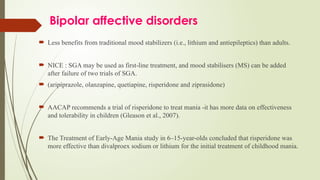
 Less benefits from traditional mood stabilizers (i.e., lithium and antiepileptics) than adults.
 NICE : SGA may be used as first line treatment, and mood stabilisers (MS) can be added
‐
after failure of two trials of SGA.
 (aripiprazole, olanzapine, quetiapine, risperidone and ziprasidone)
 AACAP recommends a trial of risperidone to treat mania -it has more data on effectiveness
and tolerability in children (Gleason et al., 2007).
 The Treatment of Early-Age Mania study in 6–15-year-olds concluded that risperidone was
more effective than divalproex sodium or lithium for the initial treatment of childhood mania.
Bipolar affective disorders
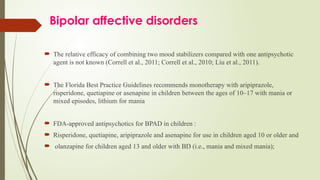
 The relative efficacy of combining two mood stabilizers compared with one antipsychotic
agent is not known (Correll et al., 2011; Correll et al., 2010; Liu et al., 2011).
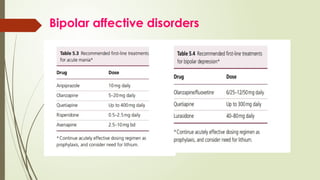
 The Florida Best Practice Guidelines recommends monotherapy with aripiprazole,
risperidone, quetiapine or asenapine in children between the ages of 10–17 with mania or
mixed episodes, lithium for mania
 FDA-approved antipsychotics for BPAD in children :
 Risperidone, quetiapine, aripiprazole and asenapine for use in children aged 10 or older and
 olanzapine for children aged 13 and older with BD (i.e., mania and mixed mania);
Bipolar affective disorders
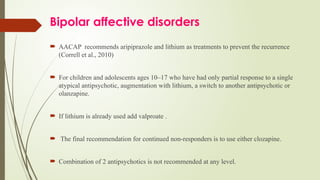
 AACAP recommends aripiprazole and lithium as treatments to prevent the recurrence
(Correll et al., 2010)
 For children and adolescents ages 10–17 who have had only partial response to a single
atypical antipsychotic, augmentation with lithium, a switch to another antipsychotic or
olanzapine.
 If lithium is already used add valproate .
 The final recommendation for continued non-responders is to use either clozapine.
 Combination of 2 antipsychotics is not recommended at any level.
Bipolar affective disorders
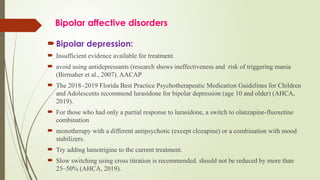
 Bipolar depression:
 Insufficient evidence available for treatment.
 avoid using antidepressants (research shows ineffectiveness and risk of triggering mania
(Birmaher et al., 2007). AACAP
 The 2018–2019 Florida Best Practice Psychotherapeutic Medication Guidelines for Children
and Adolescents recommend lurasidone for bipolar depression (age 10 and older) (AHCA,
2019).
 For those who had only a partial response to lurasidone, a switch to olanzapine-fluoxetine
combination
 monotherapy with a different antipsychotic (except clozapine) or a combination with mood
stabilizers.
 Try adding lamotrigine to the current treatment.
 Slow switching using cross titration is recommended. should not be reduced by more than
25–50% (AHCA, 2019).
Bipolar affective disorders
Depression
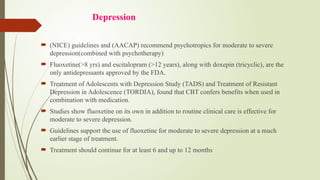
 (NICE) guidelines and (AACAP) recommend psychotropics for moderate to severe
depression(combined with psychotherapy)
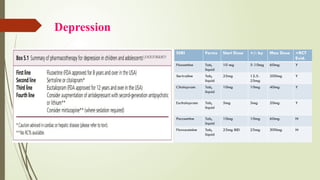
 Fluoxetine(>8 yrs) and escitalopram (>12 years), along with doxepin (tricyclic), are the
only antidepressants approved by the FDA.
 Treatment of Adolescents with Depression Study (TADS) and Treatment of Resistant
Depression in Adolescence (TORDIA), found that CBT confers benefits when used in
combination with medication.
 Studies show fluoxetine on its own in addition to routine clinical care is effective for
moderate to severe depression.
 Guidelines support the use of fluoxetine for moderate to severe depression at a much
earlier stage of treatment.
 Treatment should continue for at least 6 and up to 12 months
Depression
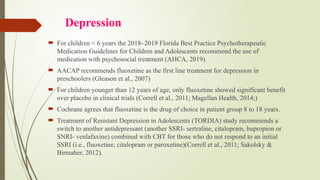
 For children < 6 years the 2018–2019 Florida Best Practice Psychotherapeutic
Medication Guidelines for Children and Adolescents recommend the use of
medication with psychosocial treatment (AHCA, 2019).
 AACAP recommends fluoxetine as the first line treatment for depression in
preschoolers (Gleason et al., 2007)
 For children younger than 12 years of age, only fluoxetine showed significant benefit
over placebo in clinical trials (Correll et al., 2011; Magellan Health, 2014;)
 Cochrane agrees that fluoxetine is the drug of choice in patient group 8 to 18 years.
 Treatment of Resistant Depression in Adolescents (TORDIA) study recommends a
switch to another antidepressant (another SSRI- sertraline, citalopram, bupropion or
SNRI- venlafaxine) combined with CBT for those who do not respond to an initial
SSRI (i.e., fluoxetine, citalopram or paroxetine)(Correll et al., 2011; Sakolsky &
Birmaher, 2012).
Depression
 Sertraline, citalopram and escitalopram are quickly metabolized by children and twice daily
dosing should be considered; should also be started at low doses and titrated weekly up to
minimum effective doses
 sertraline 50–100mg, citalopram 20mg and escitalopram 10mg
 augmentation of an SSRI with bupropion, thyroxine, lithium, buspirone, mirtazapine,
aripiprazole, quetiapine or risperidone may be considered.
 Tricyclic antidepressants (TCAs) are not effective in pre pubertal children.
‐
 They are more cardiotoxic in young people than in adults so baseline electrocardiograms
(ECGs) should be done.
 May have marginal efficacy in adolescents.
 In practice, tricyclics are not recommended in children and adolescents.
 Young people require higher mg/kg doses of TCA than adults.
 Paroxetine are NOT recommended for children.
Depression
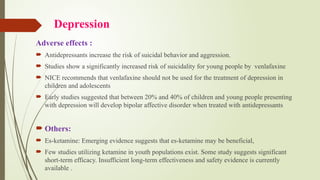
Adverse effects :
 Antidepressants increase the risk of suicidal behavior and aggression.
 Studies show a significantly increased risk of suicidality for young people by venlafaxine
 NICE recommends that venlafaxine should not be used for the treatment of depression in
children and adolescents
 Early studies suggested that between 20% and 40% of children and young people presenting
with depression will develop bipolar affective disorder when treated with antidepressants
 Others:
 Es-ketamine: Emerging evidence suggests that es-ketamine may be beneficial,
 Few studies utilizing ketamine in youth populations exist. Some study suggests significant
short-term efficacy. Insufficient long-term effectiveness and safety evidence is currently
available .
Depression
Obsessive-compulsive disorder (OCD)
 The AACAP parameter specifies that for youth with moderate to severe OCD,
medication is indicated as a secondary intervention in addition to CBT (Geller, D. A.
et al., 2012, p. 104).
 The most commonly used medications include SSRIs and a single tricyclic
antidepressant (clomipramine).
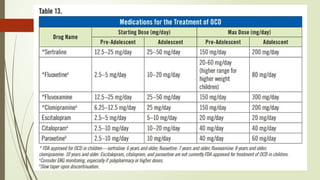
 Three SSRI medications have FDA approval for treatment of OCD in children and
adolescents:
 Sertraline (ages 6 and older), fluoxetine (ages 7 and older), and fluvoxamine (ages 8
and older).
 The tricyclic antidepressant, clomipramine, is also FDA approved for children aged
10 and over (Kodish et al., 2011)
Obsessive-compulsive disorder (OCD)
 clomipramine was superior to each of the SSRIs, where they were comparably effective.
 However, professional consensus supports the use of SSRIs over clomipramine because of
tolerability and safety in children and adolescents (Geller, D. A. et al., 2012).
 The AACAP recommends the newer SSRIs for use in preschoolers only when in
accordance with professional consensus and FDA recommendations (Gleason et al., 2007).
 The Pediatric OCD Treatment Study (POTS I) demonstrated that combined treatment was
superior to either CBT or sertraline alone (Correll et al., 2011; Franklin et al.,; Geller,).
 Further, the POTS II Study revealed that especially for children with a family history of
OCD, CBT with exposure/response prevention should be augmented with SSRI treatment
for maximum effect (Garcia et al., 2010).
Obsessive-compulsive disorder (OCD)
 after two failed SSRI adequate trials, clomipramine should be considered for OCD.
(Kodish et al. )
 augmentation with a low dose of risperidone
 In cases of no response or familial preference, buspirone or mirtazapine alone or as an
augmentation may be tried.
 Emerging research studies have suggested a possible role for the drug D-
cycloserine(GABA inhibitor) as a possible treatment for OCD.
 A new drug, Troriluzole(glutamate modulator), is undergoing pivotal phase 3 trials and
has shown promise in the treatment of OCD.
Anxiety disorders
 AACAP guidelines suggest Drug treatment for moderate to severe anxiety symptoms.
‐ ‐
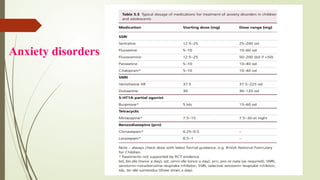
 The AACAP recommend SSRIs for the treatment of social anxiety disorder, GAD, or panic
disorder in children and adolescents ages 6–18 (Walter et al., 2020).
 Florida Best Practice Psychotherapeutic Medication Guidelines for Children and Adolescents
recommend that treatment for anxiety disorders in children under age 6.
 SSRIs are the medications of choice
 sufficient data available are for fluoxetine, fluvoxamine, paroxetine and sertraline (Walter et
al., 2020).
 A Cochrane systematic review showed no significant difference among SSRIs
 Fluoxetine is recommended for 8–10 weeks with maximum dosing of 5–10 mg/day.
 Sertraline may be considered where fluoxetine is unsuccessful.
Anxiety disorders
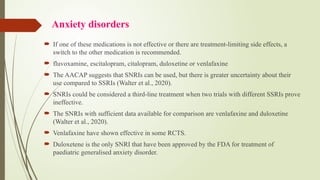
 If one of these medications is not effective or there are treatment-limiting side effects, a
switch to the other medication is recommended.
 fluvoxamine, escitalopram, citalopram, duloxetine or venlafaxine
 The AACAP suggests that SNRIs can be used, but there is greater uncertainty about their
use compared to SSRIs (Walter et al., 2020).
 SNRIs could be considered a third line treatment when two trials with different SSRIs prove
‐
ineffective.
 The SNRIs with sufficient data available for comparison are venlafaxine and duloxetine
(Walter et al., 2020).
 Venlafaxine have shown effective in some RCTS.
 Duloxetene is the only SNRI that have been approved by the FDA for treatment of
paediatric generalised anxiety disorder.
Anxiety disorders
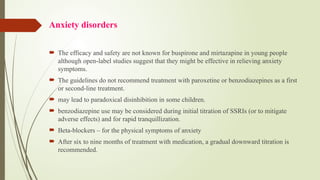
 The efficacy and safety are not known for buspirone and mirtazapine in young people
although open label studies suggest that they might be effective in relieving anxiety
‐
symptoms.
 The guidelines do not recommend treatment with paroxetine or benzodiazepines as a first
or second-line treatment.
 may lead to paradoxical disinhibition in some children.
 benzodiazepine use may be considered during initial titration of SSRIs (or to mitigate
adverse effects) and for rapid tranquillization.
 Beta-blockers – for the physical symptoms of anxiety
 After six to nine months of treatment with medication, a gradual downward titration is
recommended.
Anxiety disorders
Post-traumatic stress disorder (PTSD)
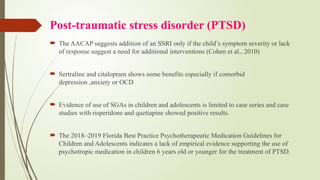
 The AACAP suggests addition of an SSRI only if the child’s symptom severity or lack
of response suggest a need for additional interventions (Cohen et al., 2010)
 Sertraline and citalopram shows some benefits especially if comorbid
depression ,anxiety or OCD
 Evidence of use of SGAs in children and adolescents is limited to case series and case
studies with risperidone and quetiapine showed positive results.
 The 2018–2019 Florida Best Practice Psychotherapeutic Medication Guidelines for
Children and Adolescents indicates a lack of empirical evidence supporting the use of
psychotropic medication in children 6 years old or younger for the treatment of PTSD.
Post-traumatic stress disorder (PTSD)
 For children older than 6 years whose PTSD symptoms include impaired sleep,
psychotherapy augmentation with prazosin may be considered; and for persistent intrusive
symptoms or increased arousal/reactivity, psychotherapy augmentation with clonidine or
guanfacine may be considered.
 The guidelines do not recommend the use of SSRIs, benzodiazepines or SGAs for the
treatment of PTSD in children and adolescents.
 The use of two or more medications that reduce sympathetic arousal concurrently, e.g.,
prazosin, guanfacine or clonidine, is not recommended (AHCA, 2019).
 Other studies of α- and α-adrenergic blocking agents (i.e., clonidine, use of extended release
guanfacine ) have shown promise in decreasing PTSD symptoms, such as basal heart rate,
anxiety, impulsivity and hyperarousal, in children and youth (Cohen et al., 2010; Strawn et
al., 2010) (Connor et al., 2013).
Post-traumatic stress disorder (PTSD)
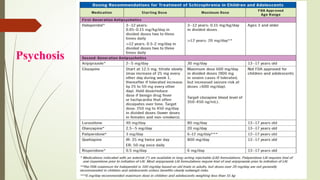
Psychosis
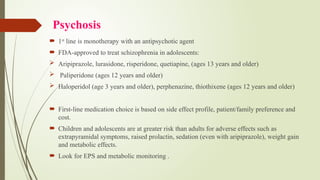
 1st
line is monotherapy with an antipsychotic agent
 FDA-approved to treat schizophrenia in adolescents:
 Aripiprazole, lurasidone, risperidone, quetiapine, (ages 13 years and older)
 Paliperidone (ages 12 years and older)
 Haloperidol (age 3 years and older), perphenazine, thiothixene (ages 12 years and older)
 First-line medication choice is based on side effect profile, patient/family preference and
cost.
 Children and adolescents are at greater risk than adults for adverse effects such as
extrapyramidal symptoms, raised prolactin, sedation (even with aripiprazole), weight gain
and metabolic effects.
 Look for EPS and metabolic monitoring .
Psychosis
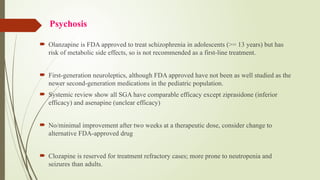
 Olanzapine is FDA approved to treat schizophrenia in adolescents (>= 13 years) but has
risk of metabolic side effects, so is not recommended as a first-line treatment.
 First-generation neuroleptics, although FDA approved have not been as well studied as the
newer second-generation medications in the pediatric population.
 Systemic review show all SGA have comparable efficacy except ziprasidone (inferior
efficacy) and asenapine (unclear efficacy)
 No/minimal improvement after two weeks at a therapeutic dose, consider change to
alternative FDA-approved drug
 Clozapine is reserved for treatment refractory cases; more prone to neutropenia and
seizures than adults.
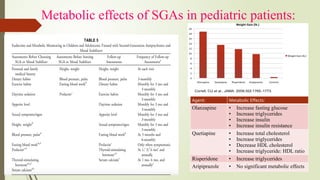
Metabolic effects of SGAs in pediatric patients:
Agent: Metabolic Effects:
Olanzapine • Increase fasting glucose
• Increase triglycerides
• Increase insulin
• Increase insulin resistance
Quetiapine • Increase total cholesterol
• Increase triglycerides
• Decrease HDL cholesterol
• Increase triglyceride: HDL ratio
Risperidone • Increase triglycerides
Aripiprazole • No significant metabolic effects
Psychosis
Attention-deficit/hyperactivity disorder (ADHD)
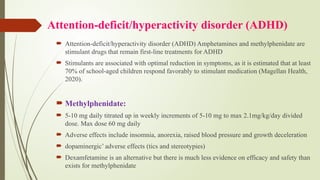
 Attention-deficit/hyperactivity disorder (ADHD) Amphetamines and methylphenidate are
stimulant drugs that remain first-line treatments for ADHD
 Stimulants are associated with optimal reduction in symptoms, as it is estimated that at least
70% of school-aged children respond favorably to stimulant medication (Magellan Health,
2020).
 Methylphenidate:
 5-10 mg daily titrated up in weekly increments of 5-10 mg to max 2.1mg/kg/day divided
dose. Max dose 60 mg daily
 Adverse effects include insomnia, anorexia, raised blood pressure and growth deceleration
 dopaminergic’ adverse effects (tics and stereotypies)
 Dexamfetamine is an alternative but there is much less evidence on efficacy and safety than
exists for methylphenidate
Attention-deficit/hyperactivity disorder (ADHD)
 Adverse effects:
 Stimulants can cause a dose-related delay in physical growth(weight and height).
 After 14 months of treatment, children treated with stimulant medication for ADHD grew on
average 1.4 cm less in height than peers treated with behavior therapy (MTA Cooperative
Group, 2004).
 A growth deficit was found to persist in future years in children medicated for three years
(Swanson et al, 2007).
 The effect on height is more evident when treatment is done before the onset of puberty (Díez-
Suárez et al, 2017).
 Drug holidays: Recommended by many pediatricians, especially during the summer months
 Driven by concerns that kids aren’t eating enough, achieving expected growth
 Often driven by difficulty tolerating stimulant-related side effects
Attention-deficit/hyperactivity disorder (ADHD)
 Adverse effects:
 As stimulants have abuse potential, treatment in childhood may sensitize the brain and
thus increase the risk of substance abuse in adulthood (Vitiello, 2001).
 unwanted cardiovascular outcomes, including sudden death (Gould et al, 2009);
 have a small detectable acute effect on heart rate and blood pressure (Vitiello et al,
2012).
 children with ASD and comorbid ADHD symptoms are more sensitive to the adverse
effects of methylphenidate (Research Units on Pediatric Psychopharmacology Autism
Network, 2005b)
Attention-deficit/hyperactivity disorder (ADHD)
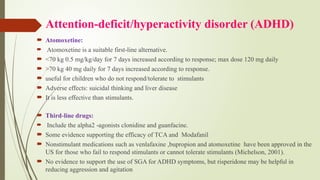
 Atomoxetine:
 Atomoxetine is a suitable first line alternative.
‐
 <70 kg 0.5 mg/kg/day for 7 days increased according to response; max dose 120 mg daily
 >70 kg 40 mg daily for 7 days increased according to response.
 useful for children who do not respond/tolerate to stimulants
 Adverse effects: suicidal thinking and liver disease
 It is less effective than stimulants.
 Third line drugs:
‐
 Include the alpha2 agonists clonidine and guanfacine.
‐
 Some evidence supporting the efficacy of TCA and Modafanil
 Nonstimulant medications such as venlafaxine ,bupropion and atomoxetine have been approved in the
US for those who fail to respond stimulants or cannot tolerate stimulants (Michelson, 2001).
 No evidence to support the use of SGA for ADHD symptoms, but risperidone may be helpful in
reducing aggression and agitation
Disruptive behavioral disorders/aggression
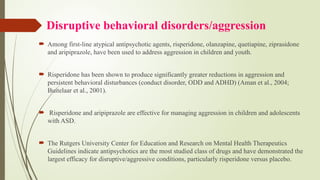
 Among first-line atypical antipsychotic agents, risperidone, olanzapine, quetiapine, ziprasidone
and aripiprazole, have been used to address aggression in children and youth.
 Risperidone has been shown to produce significantly greater reductions in aggression and
persistent behavioral disturbances (conduct disorder, ODD and ADHD) (Aman et al., 2004;
Buitelaar et al., 2001).
 Risperidone and aripiprazole are effective for managing aggression in children and adolescents
with ASD.
 The Rutgers University Center for Education and Research on Mental Health Therapeutics
Guidelines indicate antipsychotics are the most studied class of drugs and have demonstrated the
largest efficacy for disruptive/aggressive conditions, particularly risperidone versus placebo.
Disruptive behavioral disorders/aggression
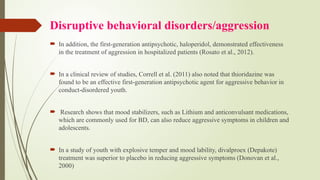
 In addition, the first-generation antipsychotic, haloperidol, demonstrated effectiveness
in the treatment of aggression in hospitalized patients (Rosato et al., 2012).
 In a clinical review of studies, Correll et al. (2011) also noted that thioridazine was
found to be an effective first-generation antipsychotic agent for aggressive behavior in
conduct-disordered youth.
 Research shows that mood stabilizers, such as Lithium and anticonvulsant medications,
which are commonly used for BD, can also reduce aggressive symptoms in children and
adolescents.
 In a study of youth with explosive temper and mood lability, divalproex (Depakote)
treatment was superior to placebo in reducing aggressive symptoms (Donovan et al.,
2000)
Disruptive behavioral disorders/aggression
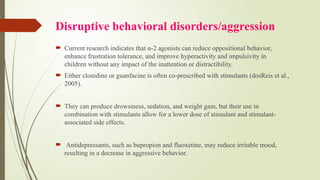
 Current research indicates that α-2 agonists can reduce oppositional behavior,
enhance frustration tolerance, and improve hyperactivity and impulsivity in
children without any impact of the inattention or distractibility.
 Either clonidine or guanfacine is often co-prescribed with stimulants (dosReis et al.,
2005).
 They can produce drowsiness, sedation, and weight gain, but their use in
combination with stimulants allow for a lower dose of stimulant and stimulant-
associated side effects.
 Antidepressants, such as bupropion and fluoxetine, may reduce irritable mood,
resulting in a decrease in aggressive behavior.
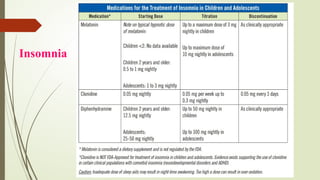
Insomnia
Insomnia
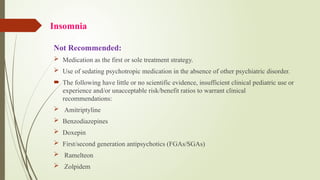
Not Recommended:
 Medication as the first or sole treatment strategy.
 Use of sedating psychotropic medication in the absence of other psychiatric disorder.
 The following have little or no scientific evidence, insufficient clinical pediatric use or
experience and/or unacceptable risk/benefit ratios to warrant clinical
recommendations:
 Amitriptyline
 Benzodiazepines
 Doxepin
 First/second generation antipsychotics (FGAs/SGAs)
 Ramelteon
 Zolpidem
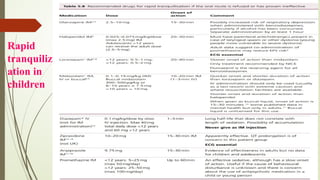
Rapid
tranquiliz
ation in
children
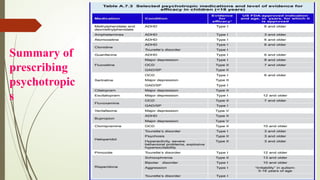
Summary of
prescribing
psychotropic
s
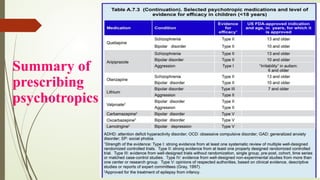
Summary of
prescribing
psychotropics
Take home points
 Children are not small adults.
 Strong stigma against using medications in treating pediatric mental illness.
 The FDA does not approve 80% of the psychotropics for use in children.
 Fewer evidence-based studies in children than adult psychiatry
 Often have to use your best judgment based on adult literature and clinical experience
References
The Maudsley Prescribing Guidelines in Psychiatry 13th
Edition
Principles in using psychotropic medication in children
and Adolescents 2019 edition, principles of
Pharmacotherapy, IACAPAP textbook of child and
adolescent mental health
Florida Best Practice Psychotherapeutic Medication
Guidelines for Children and Adolescents
Comprehensive textbook of psychiatry -11th
edition
Sthals Essential Psychopharmacology for Children and
Adolescents-1st
edition
THANK
YOU

psycotropics in children presentation - Copy.pptx

  • 1.
    Psychotropics in children Presenter : Dr Prabidhi Adhikari Moderators:  Prof.Dr Mohan Belbase  Lect.Dr Md. Ainuddin Bagban
  • 2.
    Contents  Introduction andhistory  Pharmacokinetics and Pharmacodynamics  General principle of prescription  BPAD  Depression  Anxiety disorder  PTSD  OCD  Psychosis  Aggression  Rapid tranquilization  References
  • 3.
    Introduction  Psychotropic: Adrug or other substance that affects how the brain works and causes changes in mood, awareness, thoughts, feelings, or behavior.  According to the World Health Organization (WHO),  A child is a person under the age of 18 years unless the applicable laws recognize an earlier age of majority.  Adolescence is the phase of life between childhood and adulthood, from ages 10 to 19
  • 4.
    History  The firstreport of psychotropic drug use in adolescents was in 1937 by Charles Bradley, a psychiatrist  He administered amphetamine to “problem” children at the Bradley Home, Rhode Island (US), to alleviate headaches.  Bradley noticed : improved school performance, social interactions, and emotional responses.  proved to be an important precursor to studies on the use of amphetamines in ADHD (Strohl, 2011).
  • 5.
    History of PediatricPsychopharmacology  With these regulations  consumers and medical providers now have a large database for using these psychotropic medications in children 1997 2002 2003 • FDA Moderation Act- gave incentives for pediatric research on already adult- approved medications • Best Pharmaceuticals for Children Act- provides an incentive of additional marketing exclusivity to sponsors who voluntarily complete pediatric clinical studies outlined in a written Request issued by FDA • Pediatric Research Equity Act -authorized FDA to require drug manufacturers to conduct pediatric studies
  • 6.
    Pharmacokinetics  Drug absorption,distribution, metabolism, and excretion all change during child development.  Children have:  Smaller absolute body size, but the relative mass of their liver and kidney tissue is greater than in adults when adjusted for body weight.  More body water, less fat (most neuroleptics and antidepressants are lipophilic)  Less plasma albumin : volume of distribution of a medication greater than adults.  The CYP450 system is immature at birth, but its metabolizing capacity increases rapidly, by one month of age it reaches about 20% of the mature level, which is achieved by three years of age.
  • 7.
    Pharmacokinetics  Because childrenhave proportionally more liver parenchyma than adults, they have greater weight-adjusted metabolic capacity.  Absolute clearance is usually lower in children than in adults, but weight-adjusted clearance is greater.  Extrapolating doses and frequency of administration for children based on data obtained from adults can lead to inappropriate treatment.  For escitalopram, aripiprazole, quetiapine, risperidone, and lithium, pharmacokinetics was found to be similar in youth and adults (Rao, 2007; Findling et al, 2008; Thyssen et al, 2010; Findling et al, 2010).
  • 8.
    Pharmacodynamics  Most psychotropicsact through neurotransmitters, such as dopamine, serotonin, glutamate, GABA, and norepinephrine, whose receptors undergo major changes during development.  Receptor density peaks in the preschool years and then gradually declines toward adult levels in late adolescence (Chugani et al, 2001).  differences between children and adults in efficacy and safety suggest that development can significantly influence the effects of psychotropics.  Abnormal brain development, such as in autism, impacts medication response, as shown by the lack of benefit from SSRIs for compulsive and repetitive behaviors in autism (King et al, 2009).
  • 9.
    Psychotropic drug groups:pharmacodynamic differences between children and adults Drug group Children Adults Tricyclic antidepressants have no demonstrable antidepressant effect in children (Hazell et al, 1995) Effective for adult depression Serotonergic antidepressants increase the risk for suicidal ideation in children, adolescents, and young adults, (Hammad et al, 2006; Stone et al, 2009) Do not increase the risk after age 25 Antipsychotics antipsychotics have stronger metabolic effects in youth than in adults (Correll et al, 2009) Less metabolic effects Amphetamine-based stimulants Less likely to induce euphoria More likely to induce euphoria Methylphenidate Lower tolerability and efficacy in children with ADHD aged 3 to 5 years Higher tolerability and efficacy in adults and children with ADHD above the age of 5 years
  • 10.
  • 11.
    Bipolar affective disorders Lithium:  It has the longest history of use in children and adolescents and should be considered first.  FDA approved for the treatment of acute mania and bipolar disorder in adolescents or children (ages 12 to 18), especially for classic euphoric mania without psychotic symptoms.  Dosage : upto 30 mg/kg/day BD or TDS, target serum conc: 0.8 to 1.2 mEq/L  Sodium Divalproex: used in children and adolescents with bipolar depression and aggressive behavior, but few controlled trials have been conducted.  Dose: initiated at 20 mg/kg/day, which produces a serum level of 80 to 120 mcg/mL  Oxcarbazepine:  Used in children ages 7 to 18 years with bipolar I disorder, (it is no better than placebo) but anecdotally it is an effective treatment for aggression.
  • 12.
    Bipolar affective disorders Less benefits from traditional mood stabilizers (i.e., lithium and antiepileptics) than adults.  NICE : SGA may be used as first line treatment, and mood stabilisers (MS) can be added ‐ after failure of two trials of SGA.  (aripiprazole, olanzapine, quetiapine, risperidone and ziprasidone)  AACAP recommends a trial of risperidone to treat mania -it has more data on effectiveness and tolerability in children (Gleason et al., 2007).  The Treatment of Early-Age Mania study in 6–15-year-olds concluded that risperidone was more effective than divalproex sodium or lithium for the initial treatment of childhood mania.
  • 13.
    Bipolar affective disorders The relative efficacy of combining two mood stabilizers compared with one antipsychotic agent is not known (Correll et al., 2011; Correll et al., 2010; Liu et al., 2011).  The Florida Best Practice Guidelines recommends monotherapy with aripiprazole, risperidone, quetiapine or asenapine in children between the ages of 10–17 with mania or mixed episodes, lithium for mania  FDA-approved antipsychotics for BPAD in children :  Risperidone, quetiapine, aripiprazole and asenapine for use in children aged 10 or older and  olanzapine for children aged 13 and older with BD (i.e., mania and mixed mania);
  • 14.
    Bipolar affective disorders AACAP recommends aripiprazole and lithium as treatments to prevent the recurrence (Correll et al., 2010)  For children and adolescents ages 10–17 who have had only partial response to a single atypical antipsychotic, augmentation with lithium, a switch to another antipsychotic or olanzapine.  If lithium is already used add valproate .  The final recommendation for continued non-responders is to use either clozapine.  Combination of 2 antipsychotics is not recommended at any level.
  • 15.
    Bipolar affective disorders Bipolar depression:  Insufficient evidence available for treatment.  avoid using antidepressants (research shows ineffectiveness and risk of triggering mania (Birmaher et al., 2007). AACAP  The 2018–2019 Florida Best Practice Psychotherapeutic Medication Guidelines for Children and Adolescents recommend lurasidone for bipolar depression (age 10 and older) (AHCA, 2019).  For those who had only a partial response to lurasidone, a switch to olanzapine-fluoxetine combination  monotherapy with a different antipsychotic (except clozapine) or a combination with mood stabilizers.  Try adding lamotrigine to the current treatment.  Slow switching using cross titration is recommended. should not be reduced by more than 25–50% (AHCA, 2019).
  • 16.
  • 17.
    Depression  (NICE) guidelinesand (AACAP) recommend psychotropics for moderate to severe depression(combined with psychotherapy)  Fluoxetine(>8 yrs) and escitalopram (>12 years), along with doxepin (tricyclic), are the only antidepressants approved by the FDA.  Treatment of Adolescents with Depression Study (TADS) and Treatment of Resistant Depression in Adolescence (TORDIA), found that CBT confers benefits when used in combination with medication.  Studies show fluoxetine on its own in addition to routine clinical care is effective for moderate to severe depression.  Guidelines support the use of fluoxetine for moderate to severe depression at a much earlier stage of treatment.  Treatment should continue for at least 6 and up to 12 months
  • 18.
    Depression  For children< 6 years the 2018–2019 Florida Best Practice Psychotherapeutic Medication Guidelines for Children and Adolescents recommend the use of medication with psychosocial treatment (AHCA, 2019).  AACAP recommends fluoxetine as the first line treatment for depression in preschoolers (Gleason et al., 2007)  For children younger than 12 years of age, only fluoxetine showed significant benefit over placebo in clinical trials (Correll et al., 2011; Magellan Health, 2014;)  Cochrane agrees that fluoxetine is the drug of choice in patient group 8 to 18 years.  Treatment of Resistant Depression in Adolescents (TORDIA) study recommends a switch to another antidepressant (another SSRI- sertraline, citalopram, bupropion or SNRI- venlafaxine) combined with CBT for those who do not respond to an initial SSRI (i.e., fluoxetine, citalopram or paroxetine)(Correll et al., 2011; Sakolsky & Birmaher, 2012).
  • 19.
    Depression  Sertraline, citalopramand escitalopram are quickly metabolized by children and twice daily dosing should be considered; should also be started at low doses and titrated weekly up to minimum effective doses  sertraline 50–100mg, citalopram 20mg and escitalopram 10mg  augmentation of an SSRI with bupropion, thyroxine, lithium, buspirone, mirtazapine, aripiprazole, quetiapine or risperidone may be considered.  Tricyclic antidepressants (TCAs) are not effective in pre pubertal children. ‐  They are more cardiotoxic in young people than in adults so baseline electrocardiograms (ECGs) should be done.  May have marginal efficacy in adolescents.  In practice, tricyclics are not recommended in children and adolescents.  Young people require higher mg/kg doses of TCA than adults.  Paroxetine are NOT recommended for children.
  • 20.
    Depression Adverse effects : Antidepressants increase the risk of suicidal behavior and aggression.  Studies show a significantly increased risk of suicidality for young people by venlafaxine  NICE recommends that venlafaxine should not be used for the treatment of depression in children and adolescents  Early studies suggested that between 20% and 40% of children and young people presenting with depression will develop bipolar affective disorder when treated with antidepressants  Others:  Es-ketamine: Emerging evidence suggests that es-ketamine may be beneficial,  Few studies utilizing ketamine in youth populations exist. Some study suggests significant short-term efficacy. Insufficient long-term effectiveness and safety evidence is currently available .
  • 21.
  • 22.
    Obsessive-compulsive disorder (OCD) The AACAP parameter specifies that for youth with moderate to severe OCD, medication is indicated as a secondary intervention in addition to CBT (Geller, D. A. et al., 2012, p. 104).  The most commonly used medications include SSRIs and a single tricyclic antidepressant (clomipramine).  Three SSRI medications have FDA approval for treatment of OCD in children and adolescents:  Sertraline (ages 6 and older), fluoxetine (ages 7 and older), and fluvoxamine (ages 8 and older).  The tricyclic antidepressant, clomipramine, is also FDA approved for children aged 10 and over (Kodish et al., 2011)
  • 23.
    Obsessive-compulsive disorder (OCD) clomipramine was superior to each of the SSRIs, where they were comparably effective.  However, professional consensus supports the use of SSRIs over clomipramine because of tolerability and safety in children and adolescents (Geller, D. A. et al., 2012).  The AACAP recommends the newer SSRIs for use in preschoolers only when in accordance with professional consensus and FDA recommendations (Gleason et al., 2007).  The Pediatric OCD Treatment Study (POTS I) demonstrated that combined treatment was superior to either CBT or sertraline alone (Correll et al., 2011; Franklin et al.,; Geller,).  Further, the POTS II Study revealed that especially for children with a family history of OCD, CBT with exposure/response prevention should be augmented with SSRI treatment for maximum effect (Garcia et al., 2010).
  • 24.
    Obsessive-compulsive disorder (OCD) after two failed SSRI adequate trials, clomipramine should be considered for OCD. (Kodish et al. )  augmentation with a low dose of risperidone  In cases of no response or familial preference, buspirone or mirtazapine alone or as an augmentation may be tried.  Emerging research studies have suggested a possible role for the drug D- cycloserine(GABA inhibitor) as a possible treatment for OCD.  A new drug, Troriluzole(glutamate modulator), is undergoing pivotal phase 3 trials and has shown promise in the treatment of OCD.
  • 26.
    Anxiety disorders  AACAPguidelines suggest Drug treatment for moderate to severe anxiety symptoms. ‐ ‐  The AACAP recommend SSRIs for the treatment of social anxiety disorder, GAD, or panic disorder in children and adolescents ages 6–18 (Walter et al., 2020).  Florida Best Practice Psychotherapeutic Medication Guidelines for Children and Adolescents recommend that treatment for anxiety disorders in children under age 6.  SSRIs are the medications of choice  sufficient data available are for fluoxetine, fluvoxamine, paroxetine and sertraline (Walter et al., 2020).  A Cochrane systematic review showed no significant difference among SSRIs  Fluoxetine is recommended for 8–10 weeks with maximum dosing of 5–10 mg/day.  Sertraline may be considered where fluoxetine is unsuccessful.
  • 27.
    Anxiety disorders  Ifone of these medications is not effective or there are treatment-limiting side effects, a switch to the other medication is recommended.  fluvoxamine, escitalopram, citalopram, duloxetine or venlafaxine  The AACAP suggests that SNRIs can be used, but there is greater uncertainty about their use compared to SSRIs (Walter et al., 2020).  SNRIs could be considered a third line treatment when two trials with different SSRIs prove ‐ ineffective.  The SNRIs with sufficient data available for comparison are venlafaxine and duloxetine (Walter et al., 2020).  Venlafaxine have shown effective in some RCTS.  Duloxetene is the only SNRI that have been approved by the FDA for treatment of paediatric generalised anxiety disorder.
  • 28.
    Anxiety disorders  Theefficacy and safety are not known for buspirone and mirtazapine in young people although open label studies suggest that they might be effective in relieving anxiety ‐ symptoms.  The guidelines do not recommend treatment with paroxetine or benzodiazepines as a first or second-line treatment.  may lead to paradoxical disinhibition in some children.  benzodiazepine use may be considered during initial titration of SSRIs (or to mitigate adverse effects) and for rapid tranquillization.  Beta-blockers – for the physical symptoms of anxiety  After six to nine months of treatment with medication, a gradual downward titration is recommended.
  • 29.
  • 30.
    Post-traumatic stress disorder(PTSD)  The AACAP suggests addition of an SSRI only if the child’s symptom severity or lack of response suggest a need for additional interventions (Cohen et al., 2010)  Sertraline and citalopram shows some benefits especially if comorbid depression ,anxiety or OCD  Evidence of use of SGAs in children and adolescents is limited to case series and case studies with risperidone and quetiapine showed positive results.  The 2018–2019 Florida Best Practice Psychotherapeutic Medication Guidelines for Children and Adolescents indicates a lack of empirical evidence supporting the use of psychotropic medication in children 6 years old or younger for the treatment of PTSD.
  • 31.
    Post-traumatic stress disorder(PTSD)  For children older than 6 years whose PTSD symptoms include impaired sleep, psychotherapy augmentation with prazosin may be considered; and for persistent intrusive symptoms or increased arousal/reactivity, psychotherapy augmentation with clonidine or guanfacine may be considered.  The guidelines do not recommend the use of SSRIs, benzodiazepines or SGAs for the treatment of PTSD in children and adolescents.  The use of two or more medications that reduce sympathetic arousal concurrently, e.g., prazosin, guanfacine or clonidine, is not recommended (AHCA, 2019).  Other studies of α- and α-adrenergic blocking agents (i.e., clonidine, use of extended release guanfacine ) have shown promise in decreasing PTSD symptoms, such as basal heart rate, anxiety, impulsivity and hyperarousal, in children and youth (Cohen et al., 2010; Strawn et al., 2010) (Connor et al., 2013).
  • 32.
  • 33.
    Psychosis  1st line ismonotherapy with an antipsychotic agent  FDA-approved to treat schizophrenia in adolescents:  Aripiprazole, lurasidone, risperidone, quetiapine, (ages 13 years and older)  Paliperidone (ages 12 years and older)  Haloperidol (age 3 years and older), perphenazine, thiothixene (ages 12 years and older)  First-line medication choice is based on side effect profile, patient/family preference and cost.  Children and adolescents are at greater risk than adults for adverse effects such as extrapyramidal symptoms, raised prolactin, sedation (even with aripiprazole), weight gain and metabolic effects.  Look for EPS and metabolic monitoring .
  • 34.
    Psychosis  Olanzapine isFDA approved to treat schizophrenia in adolescents (>= 13 years) but has risk of metabolic side effects, so is not recommended as a first-line treatment.  First-generation neuroleptics, although FDA approved have not been as well studied as the newer second-generation medications in the pediatric population.  Systemic review show all SGA have comparable efficacy except ziprasidone (inferior efficacy) and asenapine (unclear efficacy)  No/minimal improvement after two weeks at a therapeutic dose, consider change to alternative FDA-approved drug  Clozapine is reserved for treatment refractory cases; more prone to neutropenia and seizures than adults.
  • 35.
    Metabolic effects ofSGAs in pediatric patients: Agent: Metabolic Effects: Olanzapine • Increase fasting glucose • Increase triglycerides • Increase insulin • Increase insulin resistance Quetiapine • Increase total cholesterol • Increase triglycerides • Decrease HDL cholesterol • Increase triglyceride: HDL ratio Risperidone • Increase triglycerides Aripiprazole • No significant metabolic effects
  • 36.
  • 37.
    Attention-deficit/hyperactivity disorder (ADHD) Attention-deficit/hyperactivity disorder (ADHD) Amphetamines and methylphenidate are stimulant drugs that remain first-line treatments for ADHD  Stimulants are associated with optimal reduction in symptoms, as it is estimated that at least 70% of school-aged children respond favorably to stimulant medication (Magellan Health, 2020).  Methylphenidate:  5-10 mg daily titrated up in weekly increments of 5-10 mg to max 2.1mg/kg/day divided dose. Max dose 60 mg daily  Adverse effects include insomnia, anorexia, raised blood pressure and growth deceleration  dopaminergic’ adverse effects (tics and stereotypies)  Dexamfetamine is an alternative but there is much less evidence on efficacy and safety than exists for methylphenidate
  • 38.
    Attention-deficit/hyperactivity disorder (ADHD) Adverse effects:  Stimulants can cause a dose-related delay in physical growth(weight and height).  After 14 months of treatment, children treated with stimulant medication for ADHD grew on average 1.4 cm less in height than peers treated with behavior therapy (MTA Cooperative Group, 2004).  A growth deficit was found to persist in future years in children medicated for three years (Swanson et al, 2007).  The effect on height is more evident when treatment is done before the onset of puberty (Díez- Suárez et al, 2017).  Drug holidays: Recommended by many pediatricians, especially during the summer months  Driven by concerns that kids aren’t eating enough, achieving expected growth  Often driven by difficulty tolerating stimulant-related side effects
  • 39.
    Attention-deficit/hyperactivity disorder (ADHD) Adverse effects:  As stimulants have abuse potential, treatment in childhood may sensitize the brain and thus increase the risk of substance abuse in adulthood (Vitiello, 2001).  unwanted cardiovascular outcomes, including sudden death (Gould et al, 2009);  have a small detectable acute effect on heart rate and blood pressure (Vitiello et al, 2012).  children with ASD and comorbid ADHD symptoms are more sensitive to the adverse effects of methylphenidate (Research Units on Pediatric Psychopharmacology Autism Network, 2005b)
  • 40.
    Attention-deficit/hyperactivity disorder (ADHD) Atomoxetine:  Atomoxetine is a suitable first line alternative. ‐  <70 kg 0.5 mg/kg/day for 7 days increased according to response; max dose 120 mg daily  >70 kg 40 mg daily for 7 days increased according to response.  useful for children who do not respond/tolerate to stimulants  Adverse effects: suicidal thinking and liver disease  It is less effective than stimulants.  Third line drugs: ‐  Include the alpha2 agonists clonidine and guanfacine. ‐  Some evidence supporting the efficacy of TCA and Modafanil  Nonstimulant medications such as venlafaxine ,bupropion and atomoxetine have been approved in the US for those who fail to respond stimulants or cannot tolerate stimulants (Michelson, 2001).  No evidence to support the use of SGA for ADHD symptoms, but risperidone may be helpful in reducing aggression and agitation
  • 41.
    Disruptive behavioral disorders/aggression Among first-line atypical antipsychotic agents, risperidone, olanzapine, quetiapine, ziprasidone and aripiprazole, have been used to address aggression in children and youth.  Risperidone has been shown to produce significantly greater reductions in aggression and persistent behavioral disturbances (conduct disorder, ODD and ADHD) (Aman et al., 2004; Buitelaar et al., 2001).  Risperidone and aripiprazole are effective for managing aggression in children and adolescents with ASD.  The Rutgers University Center for Education and Research on Mental Health Therapeutics Guidelines indicate antipsychotics are the most studied class of drugs and have demonstrated the largest efficacy for disruptive/aggressive conditions, particularly risperidone versus placebo.
  • 42.
    Disruptive behavioral disorders/aggression In addition, the first-generation antipsychotic, haloperidol, demonstrated effectiveness in the treatment of aggression in hospitalized patients (Rosato et al., 2012).  In a clinical review of studies, Correll et al. (2011) also noted that thioridazine was found to be an effective first-generation antipsychotic agent for aggressive behavior in conduct-disordered youth.  Research shows that mood stabilizers, such as Lithium and anticonvulsant medications, which are commonly used for BD, can also reduce aggressive symptoms in children and adolescents.  In a study of youth with explosive temper and mood lability, divalproex (Depakote) treatment was superior to placebo in reducing aggressive symptoms (Donovan et al., 2000)
  • 43.
    Disruptive behavioral disorders/aggression Current research indicates that α-2 agonists can reduce oppositional behavior, enhance frustration tolerance, and improve hyperactivity and impulsivity in children without any impact of the inattention or distractibility.  Either clonidine or guanfacine is often co-prescribed with stimulants (dosReis et al., 2005).  They can produce drowsiness, sedation, and weight gain, but their use in combination with stimulants allow for a lower dose of stimulant and stimulant- associated side effects.  Antidepressants, such as bupropion and fluoxetine, may reduce irritable mood, resulting in a decrease in aggressive behavior.
  • 44.
  • 45.
    Insomnia Not Recommended:  Medicationas the first or sole treatment strategy.  Use of sedating psychotropic medication in the absence of other psychiatric disorder.  The following have little or no scientific evidence, insufficient clinical pediatric use or experience and/or unacceptable risk/benefit ratios to warrant clinical recommendations:  Amitriptyline  Benzodiazepines  Doxepin  First/second generation antipsychotics (FGAs/SGAs)  Ramelteon  Zolpidem
  • 46.
  • 47.
  • 48.
  • 49.
    Take home points Children are not small adults.  Strong stigma against using medications in treating pediatric mental illness.  The FDA does not approve 80% of the psychotropics for use in children.  Fewer evidence-based studies in children than adult psychiatry  Often have to use your best judgment based on adult literature and clinical experience
  • 50.
    References The Maudsley PrescribingGuidelines in Psychiatry 13th Edition Principles in using psychotropic medication in children and Adolescents 2019 edition, principles of Pharmacotherapy, IACAPAP textbook of child and adolescent mental health Florida Best Practice Psychotherapeutic Medication Guidelines for Children and Adolescents Comprehensive textbook of psychiatry -11th edition Sthals Essential Psychopharmacology for Children and Adolescents-1st edition
  • 51.

Editor's Notes

  • #5 A year later 1998- FDA passed regulations to require drug manufacturers to evaluate safety and effectiveness of new drugs and biological products in pediatric patients
  • #7 The phase I oxidative processes are mediated by cytochrome 450 (CYP450) microsomal enzymes, which are concentrated primarily in the liver.
  • #8 The impact of these developmental changes on drug activity, efficacy, and safety are still not well understood.
  • #19  In case of severe depression or psychotic symptoms, ECT may be considered for adolescents (AHCA, 2019)